Micro Exam 3
 Call Kai
 Learn
Learn Practice Test
 Spaced Repetition
 Match
Match Flashcards
 Knowt Play
1/88

There's no tags or description
Looks like no tags are added yet.
Name | Mastery | Learn | Test | Matching | Spaced | Call with Kai |
|---|
No analytics yet
Send a link to your students to track their progress
89 Terms
What is a virion?
A complete, fully developed viral particle
What is a capsid in a virus?
It is a coat made of protein subunits called capsomeres that protects the viral genome
What genome makes up a virus?
Viruses can have DNA or RNA, which can be single- or double-stranded, and linear or circular
What is an envelope in the context of viruses?
A lipid, protein, and carbohydrate coating derived from the host cell
Why are viruses considered obligatory intracellular parasites?
They require living host cells to multiply and cannot reproduce independently
What is the typical size range of viruses?
Viruses range from approximately 20 nm to 1000 nm in length.
What's the consequence of a virus lacking ribosomes?
Cannot synthesize proteins; no ATP-generating mechanism, no "metabolism"
What is the function of viral proteins that protrude through the capsid?
They mediate attachment of the virus to host cells and determine the tissues and organisms the virus can infect = "antigens" to which antibodies bind
Where do proteins in viruses come from if no ribosomes are present?
The host cell
Does either bacteria or viruses have intracellular parasites?
Viruses
Does either bacteria or viruses have a plasma membrane?
Bacteria
Does either bacteria or viruses undergo binary fission?
Bacteria
Does either bacteria or viruses pass through bacteriological filters?
Viruses
Does either bacteria or viruses posses both DNA or RNA?
Bacteria
Does either bacteria or viruses have ATP-generating metabolism?
Bacteria
Does either bacteria or viruses have ribosomes?
Bacteria
Are either bacteria or viruses sensitive to antibiotics?
Bacteria
Are either bacteria or viruses sensitive to interferon?
Viruses
What is the host range of a virus?
The spectrum of host cells that a virus can infect, often specific to certain types of cells
What is pathogenicity vs. virulence
Pathogenicity is whether something can cause disease while virulence is the measure of damage caused
What are the factors that affect the host range?
Whether the virus can get into the host cell, if the cell has the right machinery for the virus to replicate, and if the infectious virus can get out of the cell and spread the infection
What are bacteriophages?
Viruses that infect bacteria
What are the general morphologies of viruses?
Helical, polyhedral, enveloped, or complex
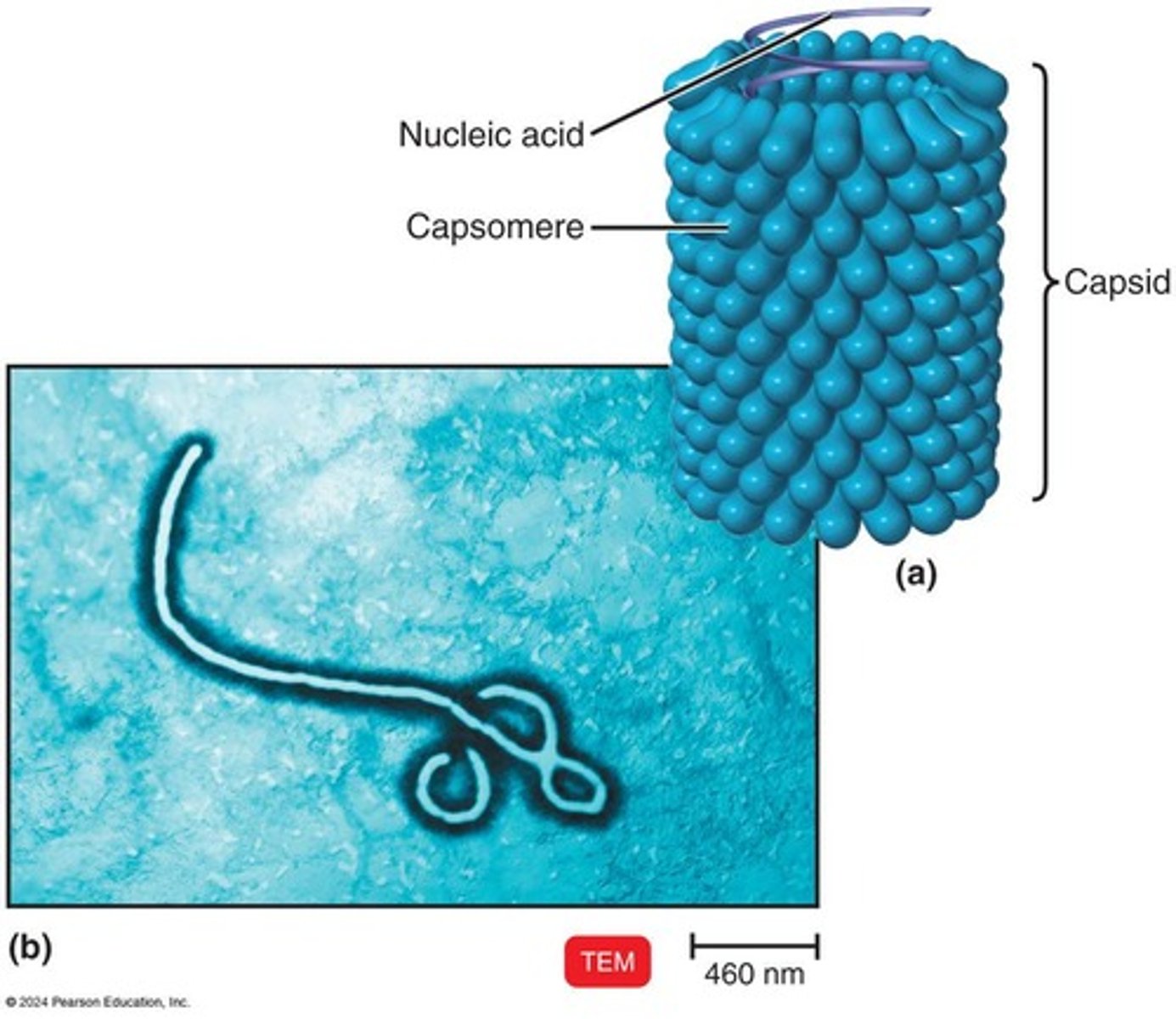
Helical viruses
Hollow, cylindrical capsid
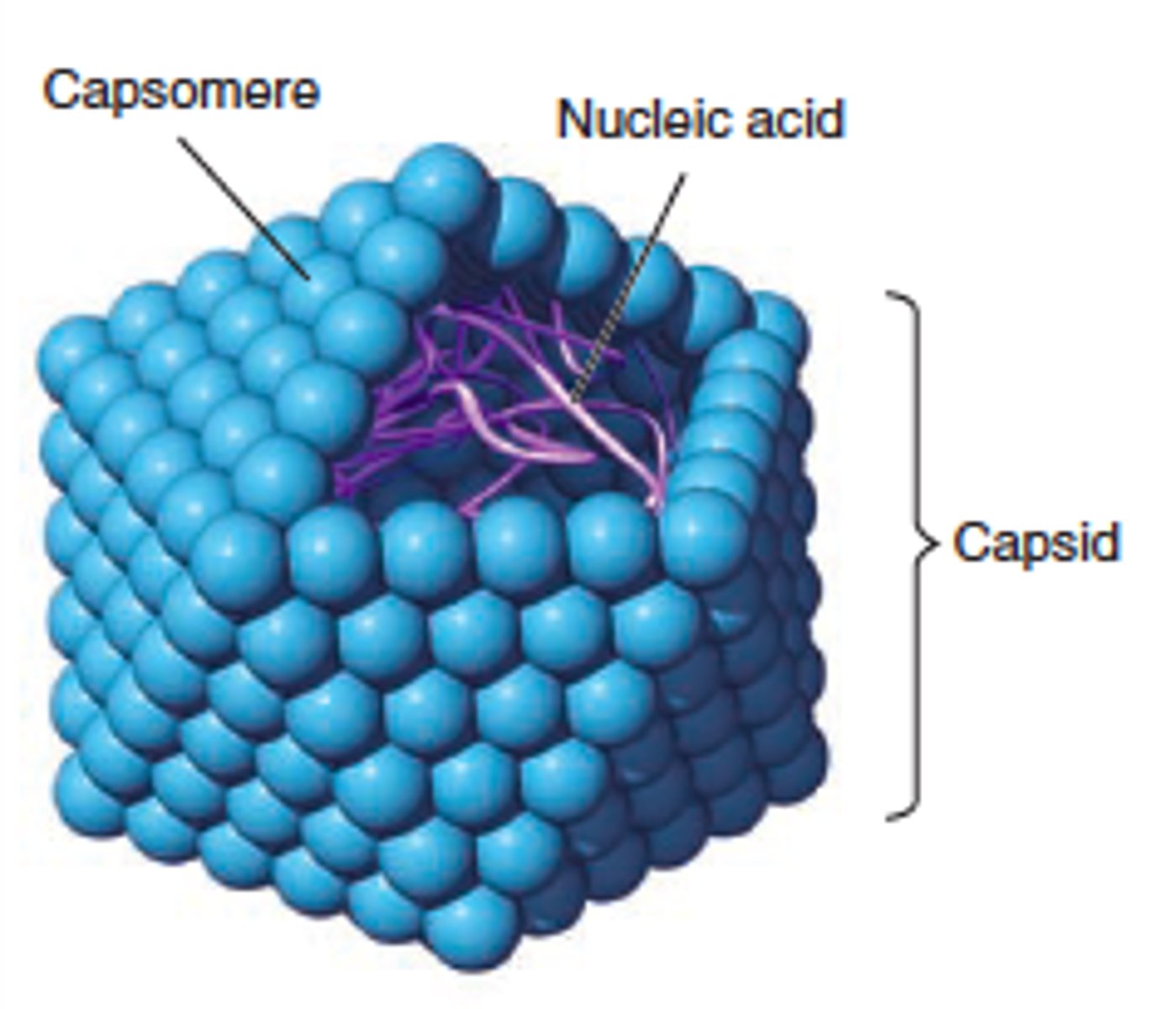
Polyhedral viruses
Many-sided
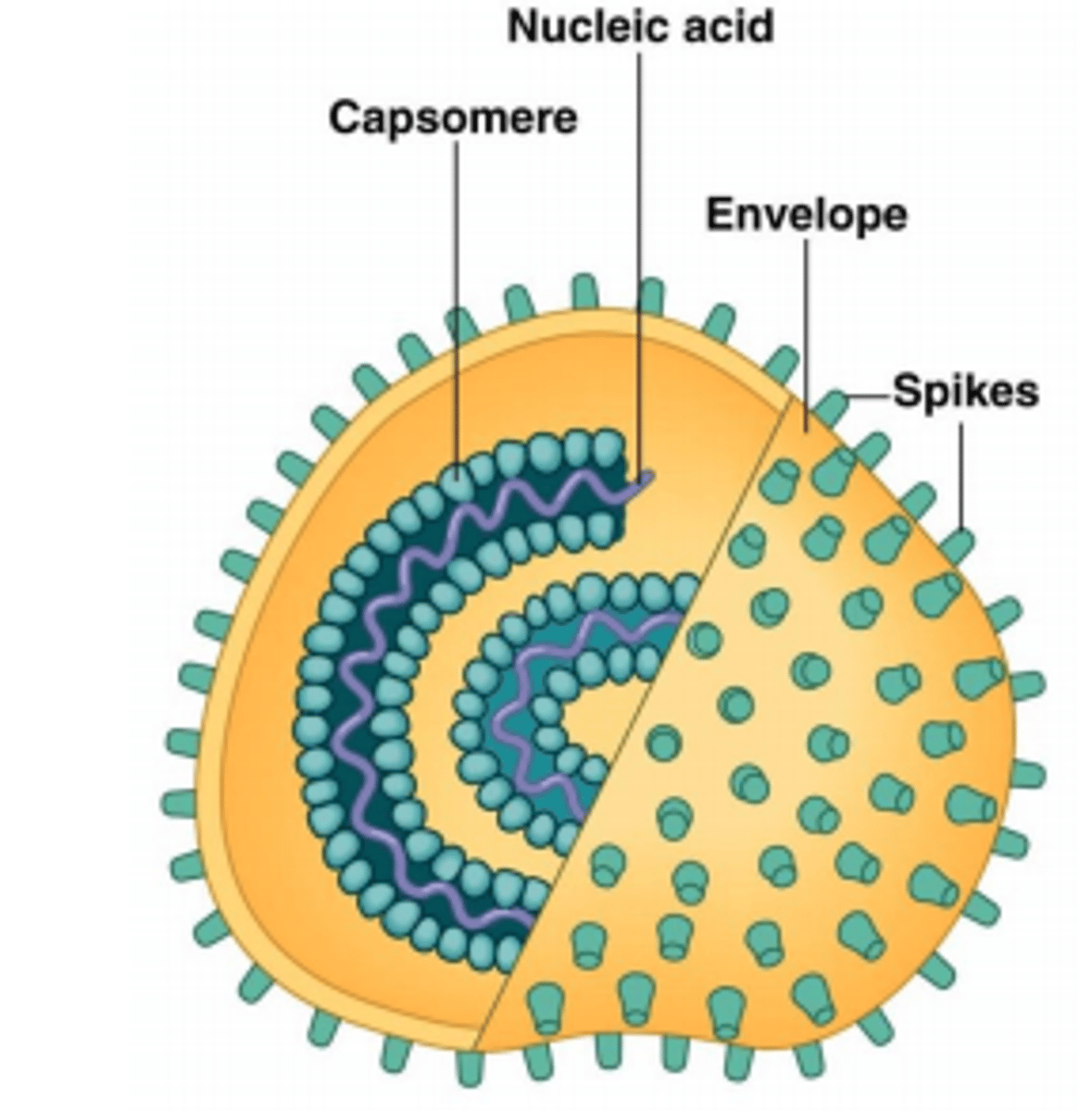
Enveloped viruses
Contain proteins in envelope
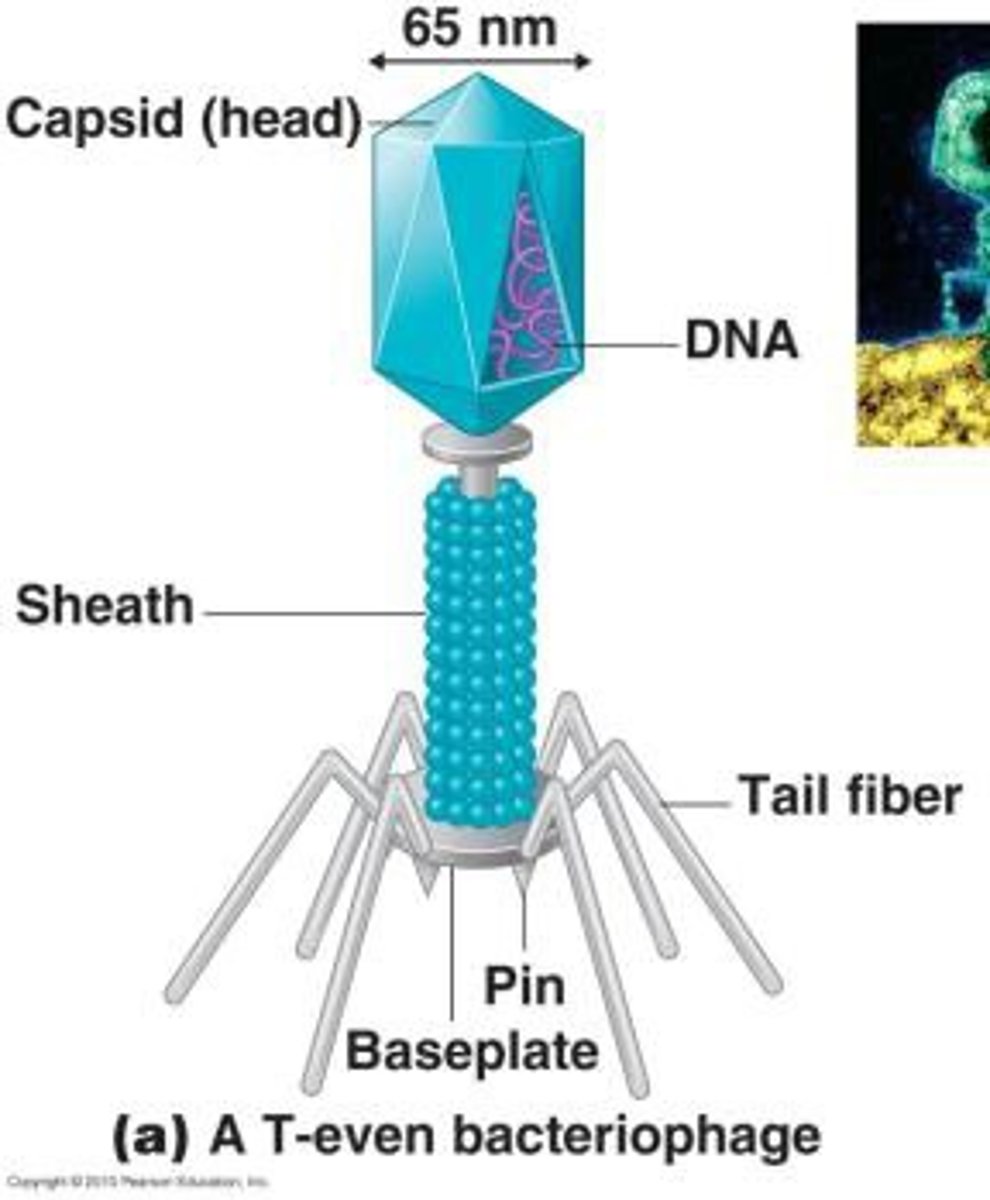
Complex viruses
Complicated structures
How are viruses classified?
Nucleic acid type, replication strategy, capsid symmetry, and presence of an envelope
How are bacteriophages grown in the laboratory?
Viruses must be grown in living cells and bacteriophages are grown in bacteria which form plaques on the surface of agar
What are plaque-forming units (PFU)?
Plaque corresponding to a single virus
How are animal viruses grown in embryonated eggs?
Virus is injected into the egg and the viral growth is signaled by changes or death of the embryo
How are animal viruses grown in cell cultures?
Tissues are treated with enzymes to separate cells and virally infected cells are detected by their deterioration, known as the cytopathic effect (CPE)
What are cytopathic effects (CPE)?
Visible effects of viral infection on a cell
What are serological tests?
Western blotting—reaction of the virus with antibodies
What are the methods of viral identification for nucleic acids?
RFLPs (restriction fragment length polymorphism) and PCR
What does a western blot do?
Uses antibodies to detect specific proteins in a mixture
What are the steps of a western blot?
1. Proteins (in a mixture) are separated by size using gel electrophoresis
2. Separated proteins are transferred from the gel to a "membrane,"
maintaining their pattern of separation (this is the "blotting" part)
3. Proteins of interest in the mixture are bound to a "primary" antibody that recognizes them
4. The primary antibody is visualized using a "secondary" antibody coupled to an enzyme
5. The enzyme is exposed to its substrate, and catalyzes a reaction that produces detectable light
How does viral multiplication occur?
It must invade a host cell and take over the host's metabolic machinery using the one-step growth curve
What is the significance of the lytic cycle in bacteriophages?
It leads to the lysis and death of the host cell, resulting in the release of new virions
What occurs during the lysogenic cycle of a bacteriophage?
The phage DNA integrates into the host cell DNA, becoming a prophage and remaining latent
What is phage conversion?
When a host cell exhibits new properties due to the presence of a lysogenic phage
What are the steps of viral multiplication in animal cells?
Attachment, entry, uncoating, biosynthesis, maturation, and release.
What is the primary method for growing bacteriophages in the laboratory?
Bacteriophages are grown in bacteria, forming plaques on agar surfaces.
What is the cytopathic effect (CPE)?
The deterioration of virally infected cells, which can be detected in cell cultures.
What is a Western blot used for?
To detect specific proteins in a mixture, often used diagnostically for viral infections.
What is the role of PCR in viral identification?
It is used to amplify and detect viral nucleic acids for identification purposes.
How do enveloped viruses typically release from host cells?
By budding from the host cell membrane.
What is the difference between the lytic and lysogenic cycles?
The lytic cycle results in cell death and release of virions, while the lysogenic cycle integrates viral DNA into the host genome without immediate cell death.
What is the function of tail fibers in T-even bacteriophages?
They attach the phage to the host cell during the attachment phase of the lytic cycle.
What is the significance of the primary antibody in a Western blot?
It binds to specific proteins of interest in the sample being tested.
What happens during the maturation phase of viral multiplication?
Nucleic acid and capsid proteins assemble to form new virions.
What is the role of enzymes during the uncoating phase of viral multiplication?
They facilitate the removal of the viral capsid to release the viral genome into the host cell.
What is the purpose of plaque-forming units (PFU) in virology?
To quantify the number of infectious viral particles in a sample.
Where do DNA viruses replicate their DNA?
In the nucleus of the host using viral enzymes.
How do DNA viruses synthesize their capsid?
In the cytoplasm using host cell enzymes.
Name an example of a DNA virus.
Adenoviridae, Poxviridae, Herpesviridae, Papovaviridae, Hepadnaviridae.
How do RNA viruses multiply in host cells?
In the cytoplasm using RNA-dependent RNA polymerase.
What is the function of + (sense) strand ssRNA in viruses?
It serves as mRNA for protein synthesis.
What happens to - (antisense) strand ssRNA in viruses?
It is transcribed to a + strand to serve as mRNA for protein synthesis.
What is an example of an RNA virus?
Coronaviridae, Orthomyxoviridae, Rhabdoviridae, Reoviridae.
What is the role of reverse transcriptase in retroviruses?
It produces DNA from the viral RNA genome.
What is a provirus?
Viral DNA integrated into the host chromosome.
What is the main risk factor for cervical cancer?
Infection with high-risk human papillomaviruses (HPVs).
How does the E6 protein from HPV contribute to cancer?
It binds to p53, leading to its degradation and loss of function.
What is the function of the p53 protein in cells?
It regulates the cell cycle and prevents DNA damage propagation.
What type of cancer is associated with oncogenic viruses?
Sarcoma and adenocarcinomas.
What is latency in viral infections?
A state where the virus remains dormant in the host cell.
What is antigenic drift in influenza viruses?
Small changes in glycoproteins that evade the host immune system.
What is antigenic shift in influenza viruses?
Gene exchange between different influenza viruses leading to new strains.
What is the impact of HIV on the immune system?
It infects helper T cells, leading to a weakened immune response.
What is AIDS?
A cluster of symptoms that occur when CD4 T cell levels are very low.
What are some common symptoms of HIV infection?
Fever, fatigue, swollen lymph nodes, and other flu-like symptoms.
What is the global impact of HIV?
It has claimed over 40 million lives and continues to spread globally.
What are oncogenes?
Genes that can transform normal cells into cancerous cells.
What is the role of viral proteins in oncogenesis?
They can inhibit tumor suppressors or transform host cells.
What is a persistent viral infection?
An infection that occurs gradually over a long period and is generally fatal.
What is an example of a latent viral infection?
Cold sores caused by herpesvirus or shingles from Varicella.
How does the immune system respond to acute viral infections?
Through inflammation and specific immune responses including antibodies and T cells.
What are the two viral families that have double-stranded DNA and are non-enveloped?
Adenoviridae, Polyomaviridae
What are the two viral families that have double-stranded DNA and are enveloped?
Poxivirdae, Herpesviridae
What viral family has single-stranded DNA and is non-enveloped?
Parvoviridae
What viral family has double-stranded DNA and is non-eneveloped?
Reoviridae
What are two viral families that have single-stranded RNA, + strand and are non-enveloped?
Picornaviridae, Hepeviridae Caliciviridae
What are three viral families that have single-stranded RNA, + strand and are enveloped?
Coronaviridae, Togaviridae Matonaviridae, and Flaviviridae
What are three viral families that have single-stranded RNA, - strand and are enveloped?
Paramyxoviridae, Rhabdoviridae, and Filoviridae
What viral family has single-stranded RNA, - strand and is a virusoid or satellite RNA?
Deltaviridae
What are three viral families that have multiple strands of RNA and are enveloped?
Orthomyxoviridae, Arenaviridae, and Peribunyaviridae
What viral family has single-stranded RNA, produce DNA, and is enveloped?
Retroviridae
What viral family has double-stranded DNA, use reverse transcriptase, and is enveloped?
Hepadnaviridae

