Relative Dating of Rock Layers by Principles
 Call Kai
 Learn
Learn Practice Test
 Spaced Repetition
 Match
Match Flashcards
 Knowt Play
1/21

There's no tags or description
Looks like no tags are added yet.
Name | Mastery | Learn | Test | Matching | Spaced | Call with Kai |
|---|
No analytics yet
Send a link to your students to track their progress
22 Terms
D
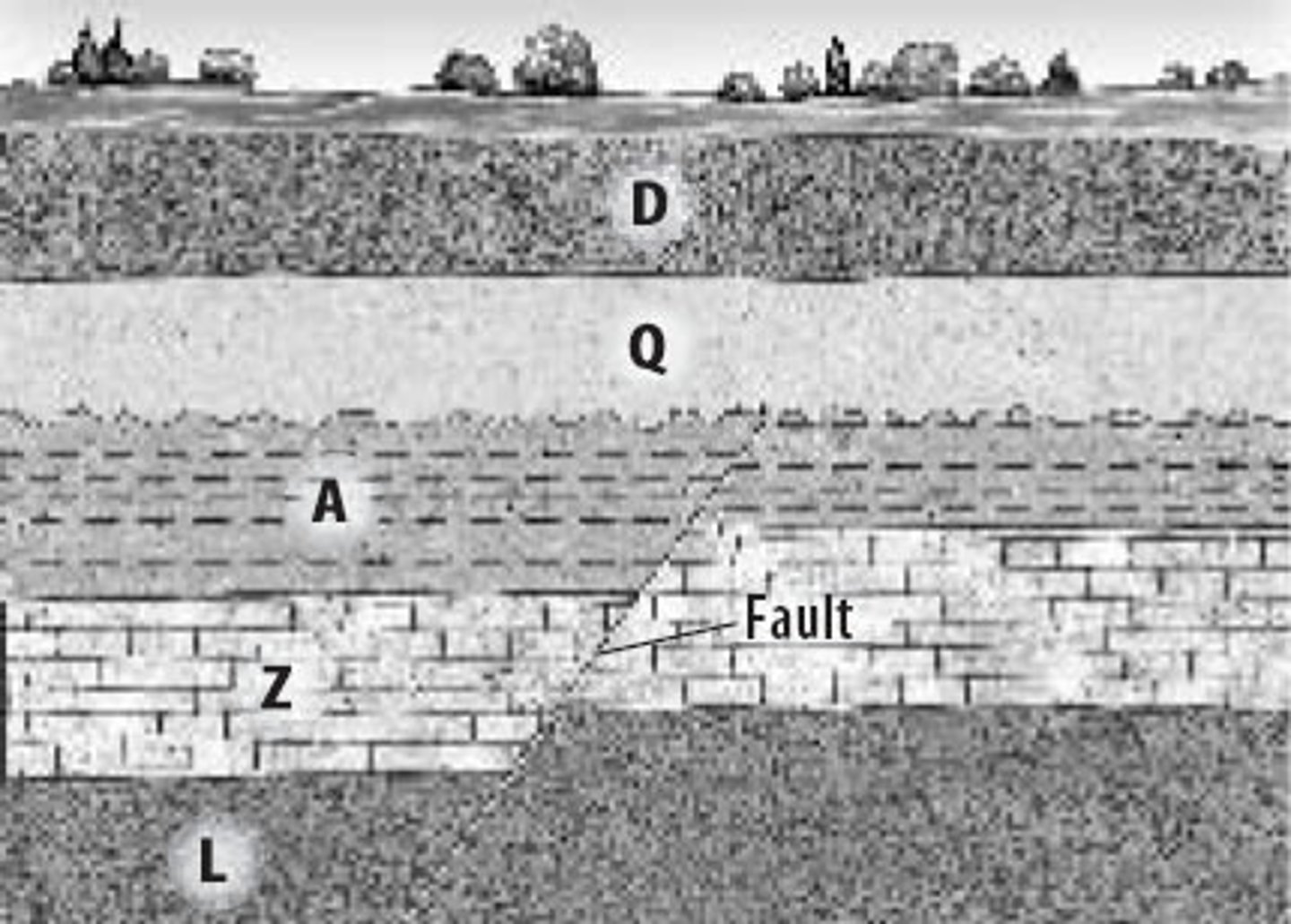
Which answer correctly places the layers of rock in the proper order from oldest to youngest?
a. D, Q, A, Z, fault, L b. D,Q,A, fault,Z, L
c. L,Z,fault,A,Q, D d. L,Z,A,fault,Q,D
C
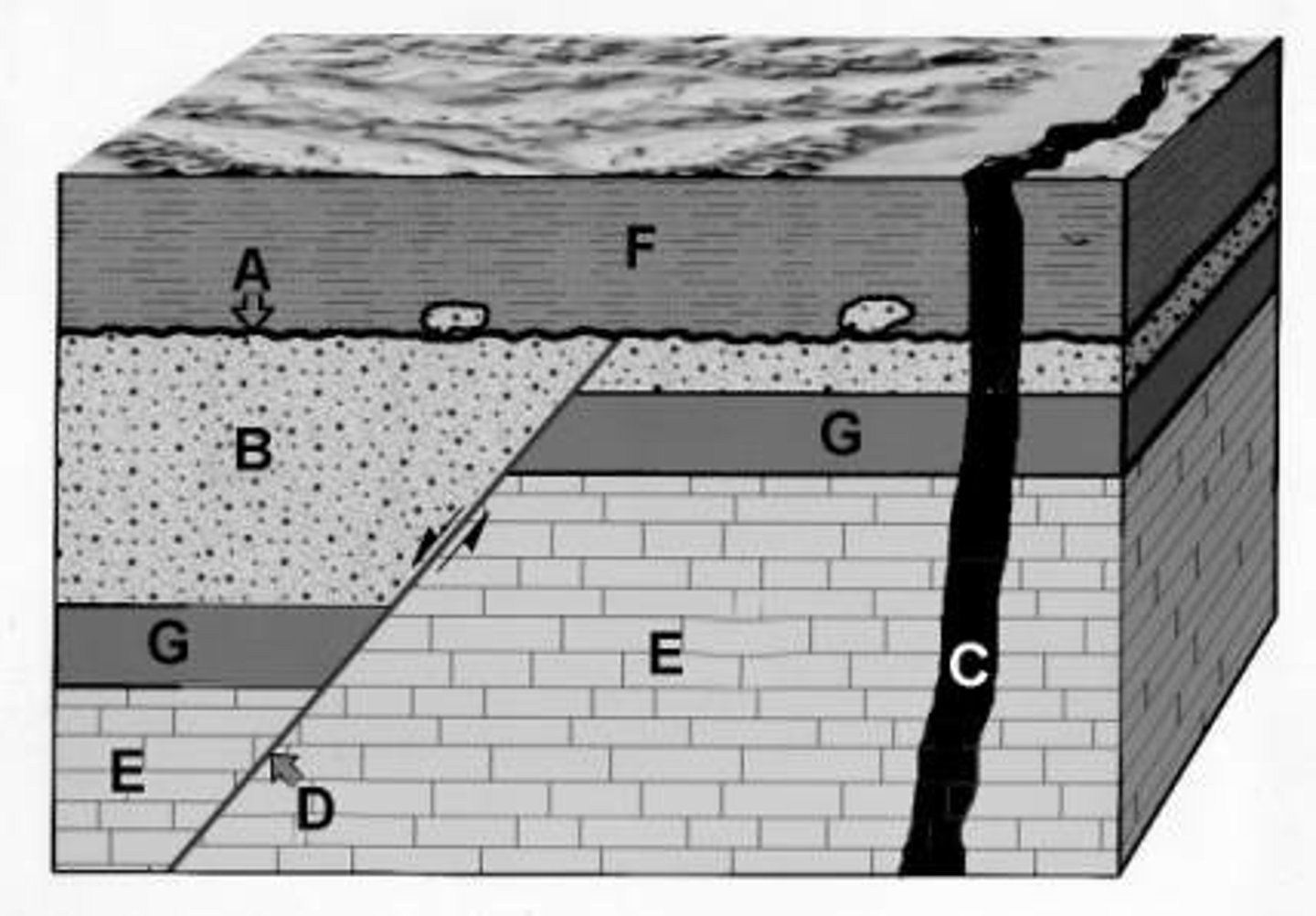
Which answer gives the correct order of layers from oldest to youngest?
a. unconformity A,F,B,G,E, C,fault D
b. unconformity A,F,fault D,G,B,C
c. E,G,B,fault D, unconformity A,F,C
d. E,G,B,F, fault D, unconformity A,C
D
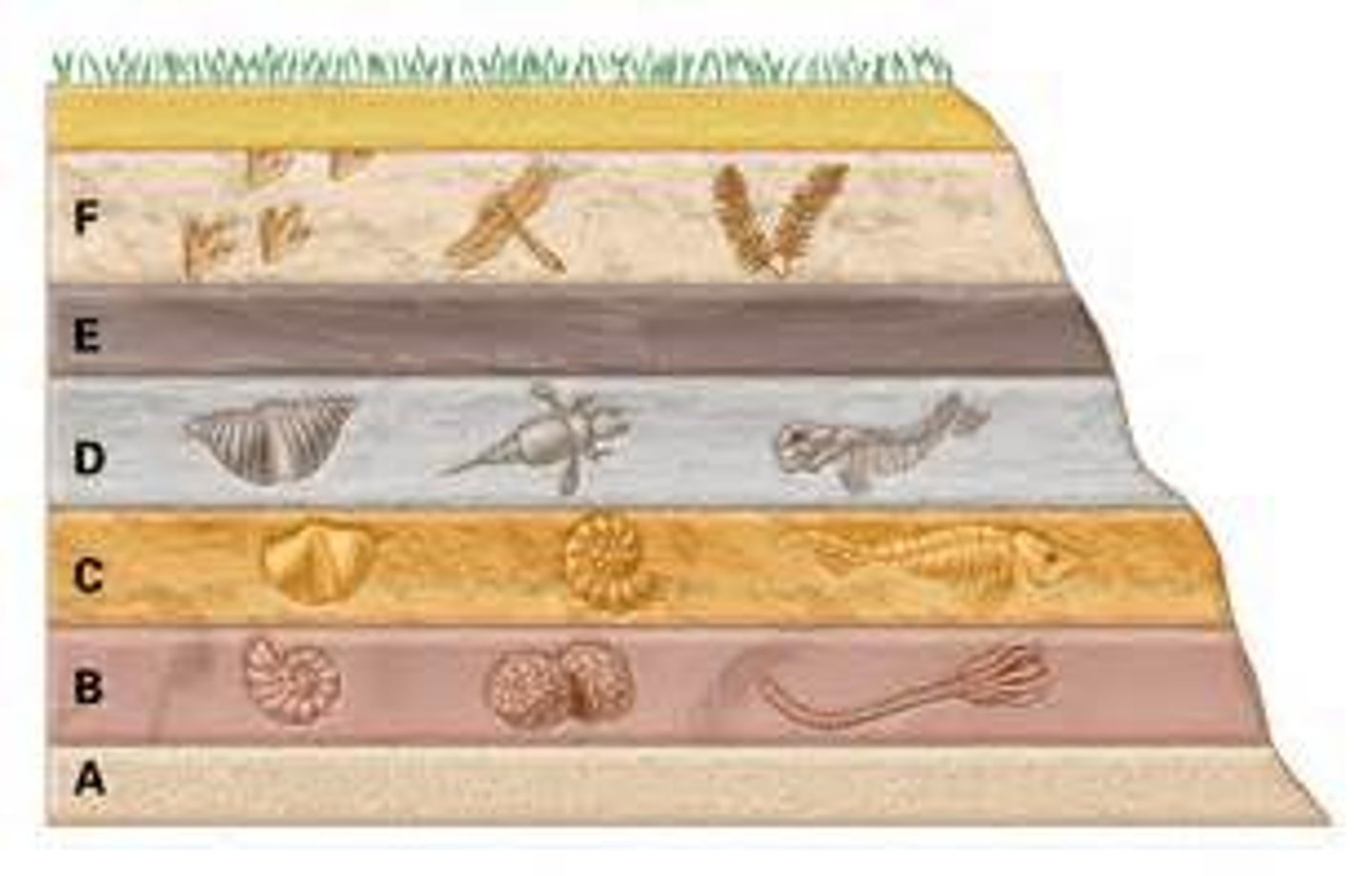
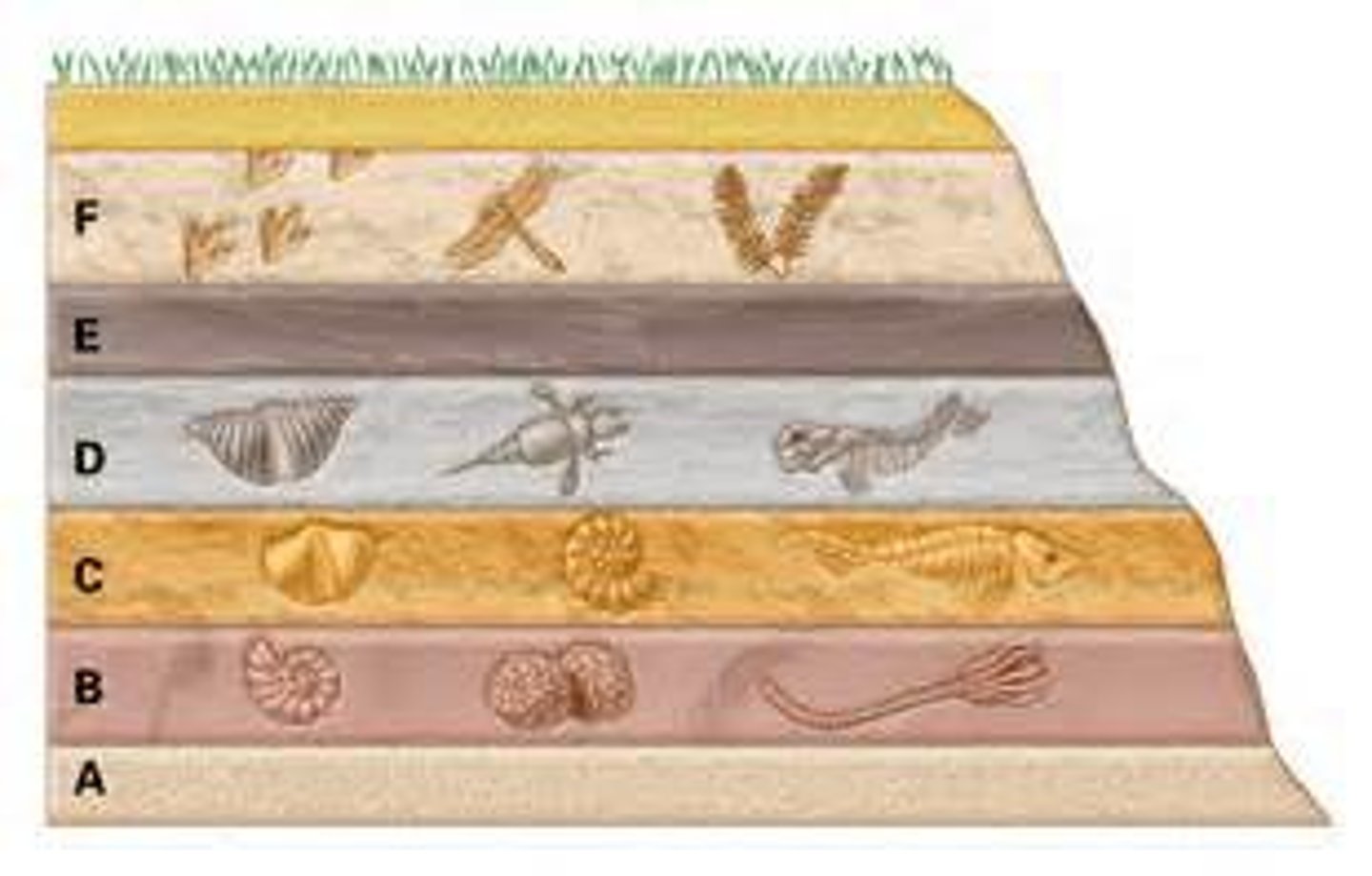
Which law of geology tells me that layer A is older than layer B?
A. law of Original Horizontality
B. law of really old dirt
C. Cross Cutting
D. Superposition
D
Why would the third fossil to the right in layer D be a good example for an index fossil?
A. it is a fish
B. it is different than the others in its layer
C. it is really old
D. it is only found over a short period of time in one geologic layer
D
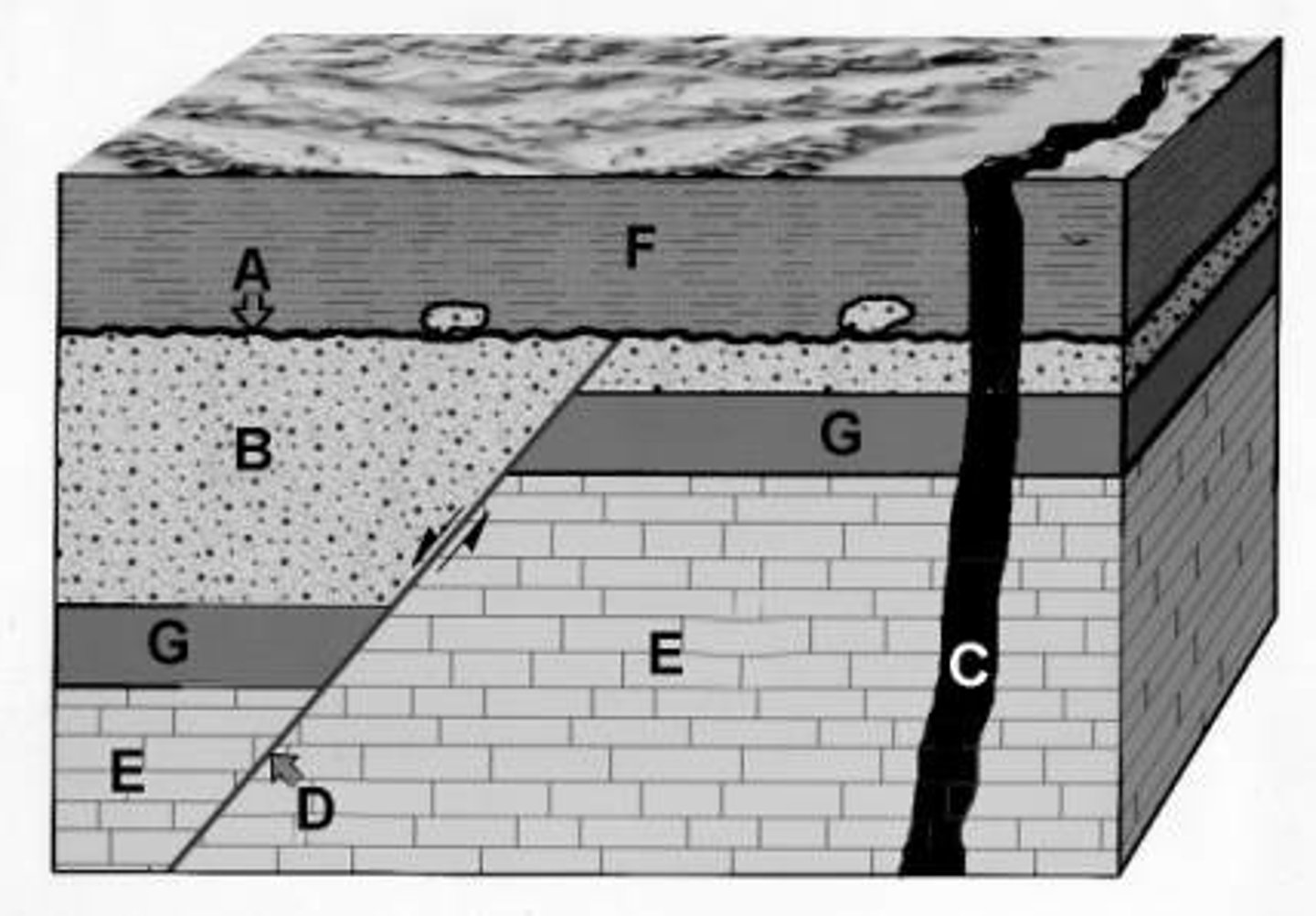
What geologic law is used to show that intrusion C is younger than layer F?
A. law of horizontality
B. law of superposition
C. law of really old dirt
D. law of crosscutting relationship
B
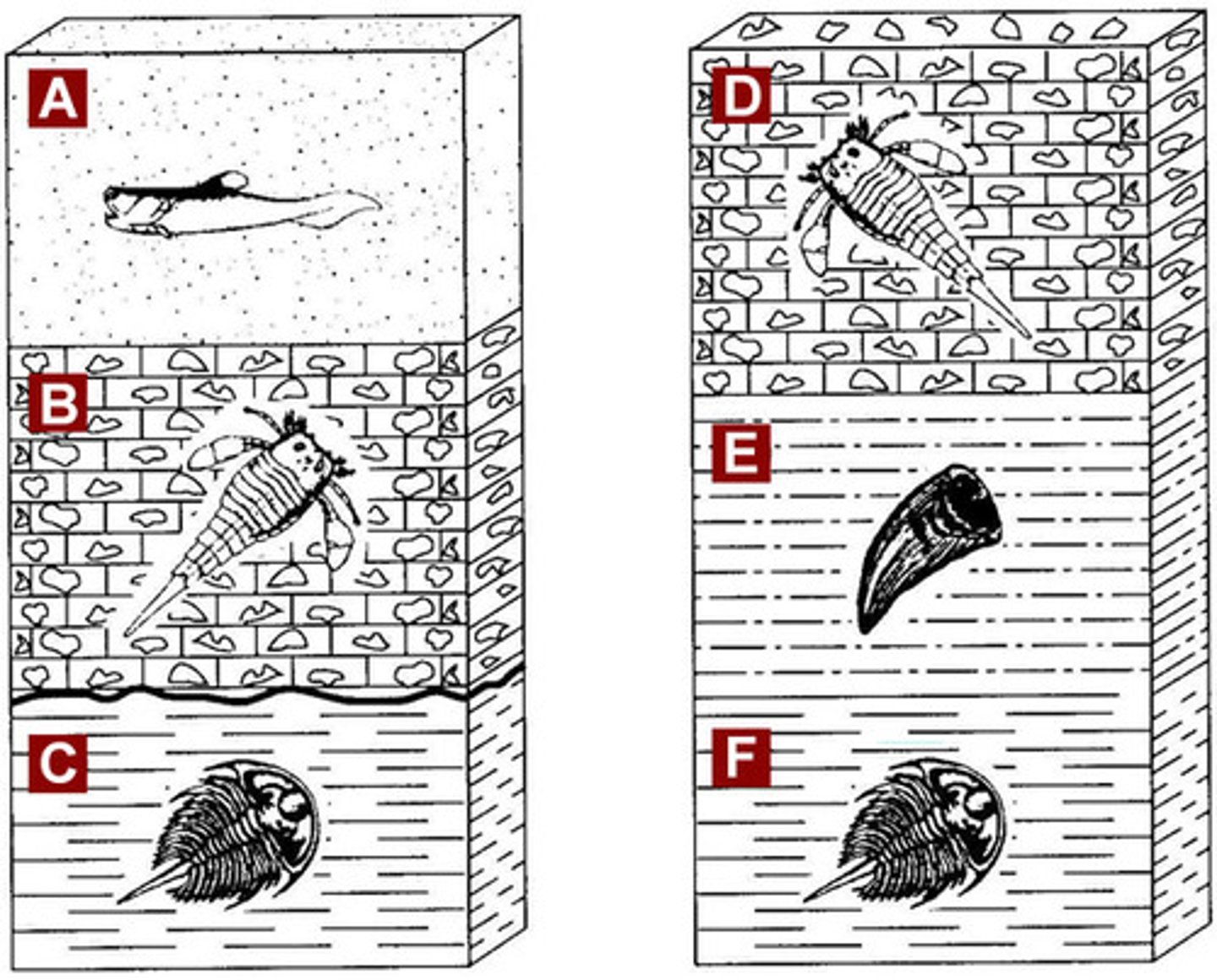
This example is a good example of comparing two rock sites many hundreds of miles apart to make the geologic time scale. It is an example of fossil ____________.
A. cross cutting B. correlation
C. horizontality D. oldness
B
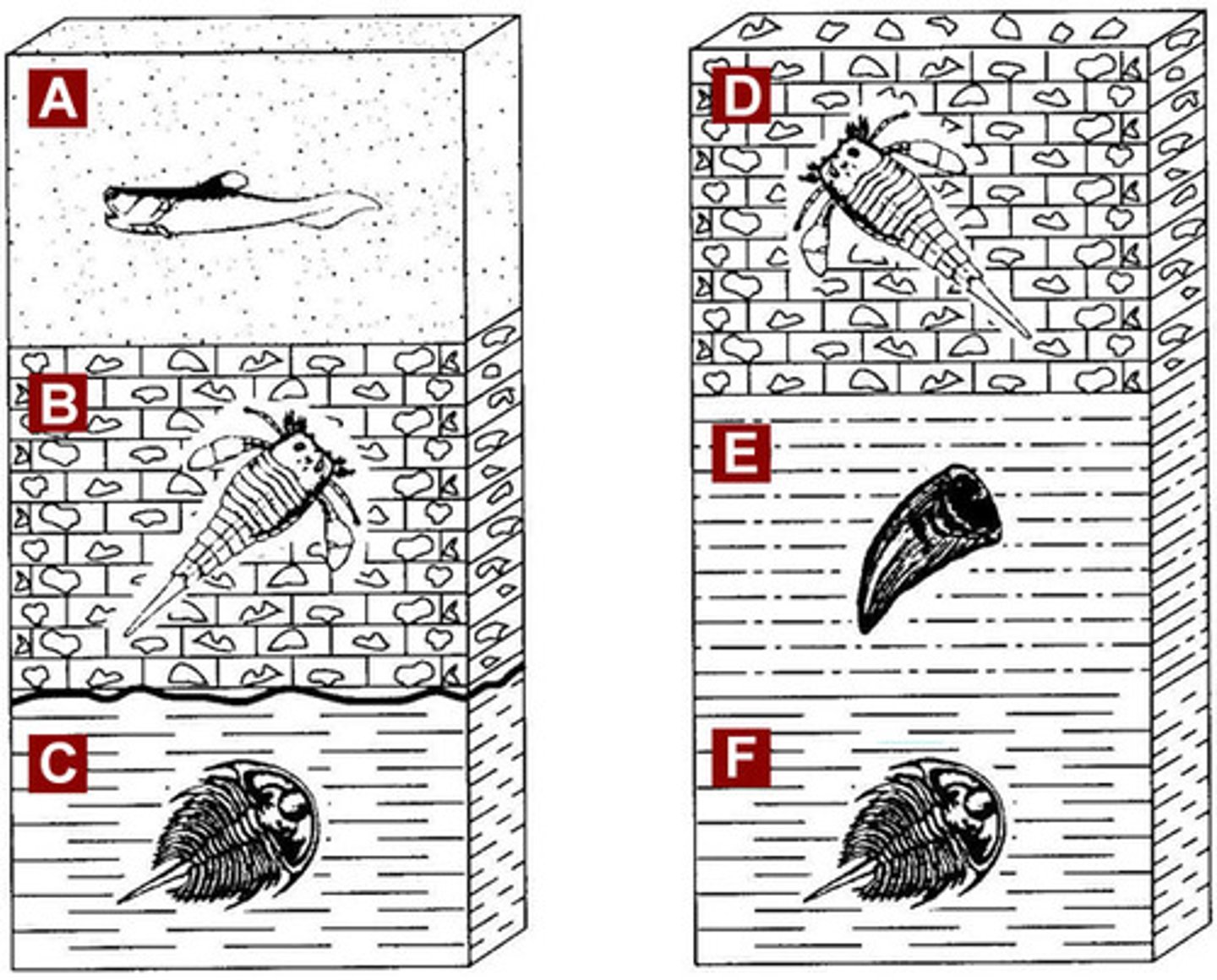
These two rock stratas were taken from two different states. Why is fossil E missing in the left column?
A. never existed B. unconformity
C. disconformity D. cross cutting
C
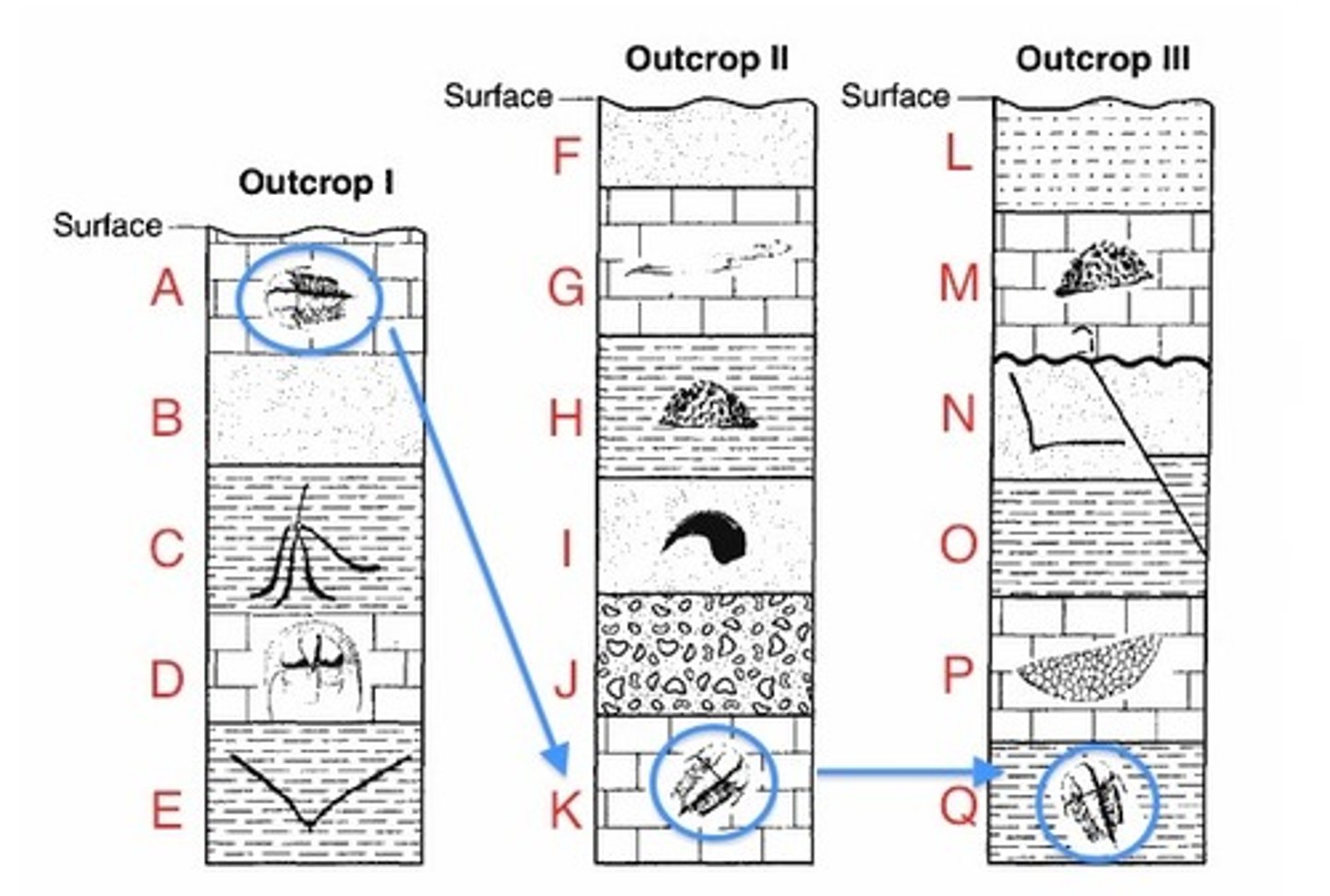
Is fossil A older or younger than fossil H?
A. older, because it is found above m
B. younger, because it is found above H
C. older , because it is found below H
D. younger because is is found below H
C
Which geologic law helps determine the relative ages of 3 and 6?
A.. original horizontality
B. law of superposition
C. law of cross cutting
D. law of unconformity
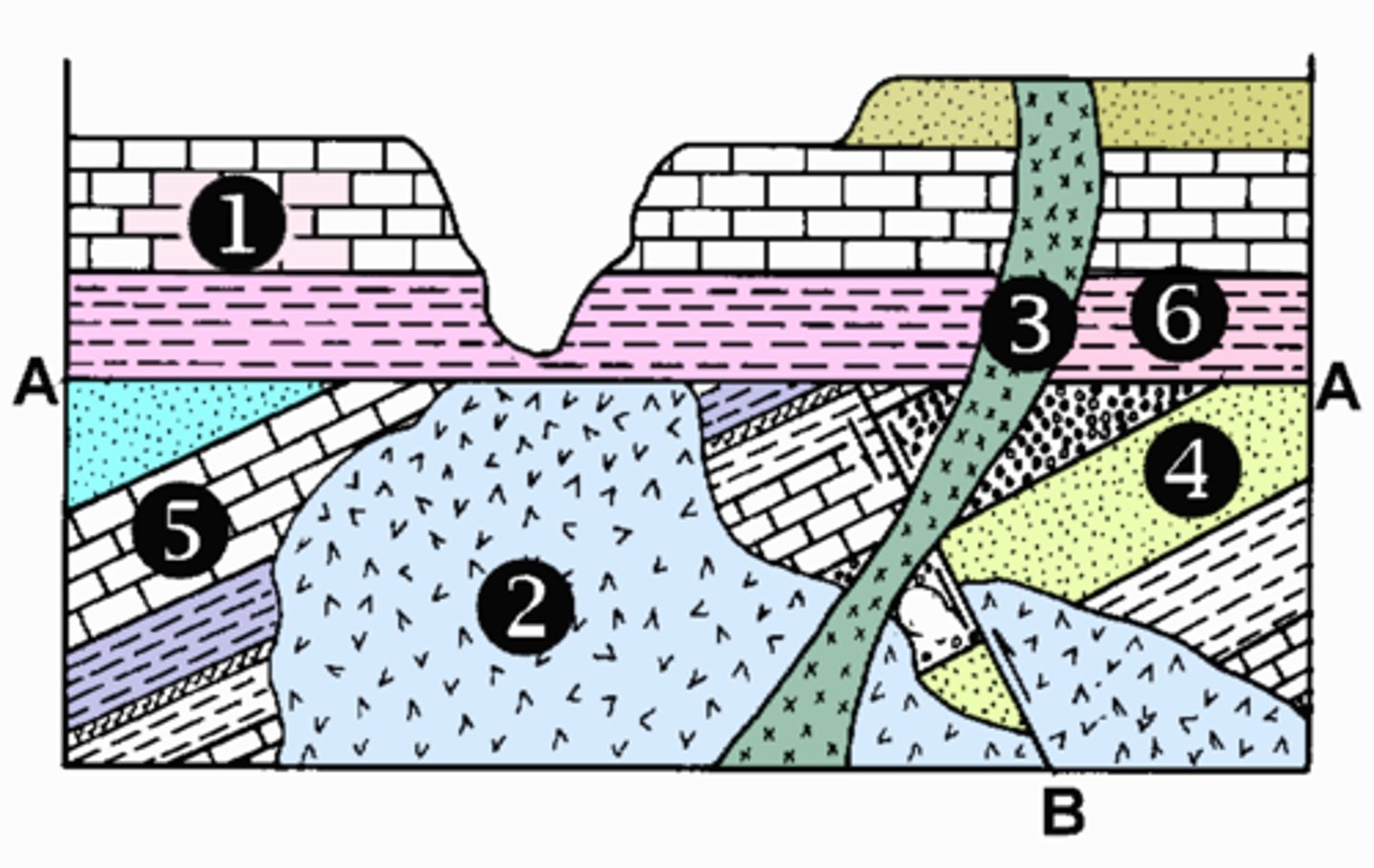
B
Which geologic law helps to determine the relative ages of layers 1 and 5?
A.. original horizontality
B. law of superposition
C. law of cross cutting
D. law of unconformity
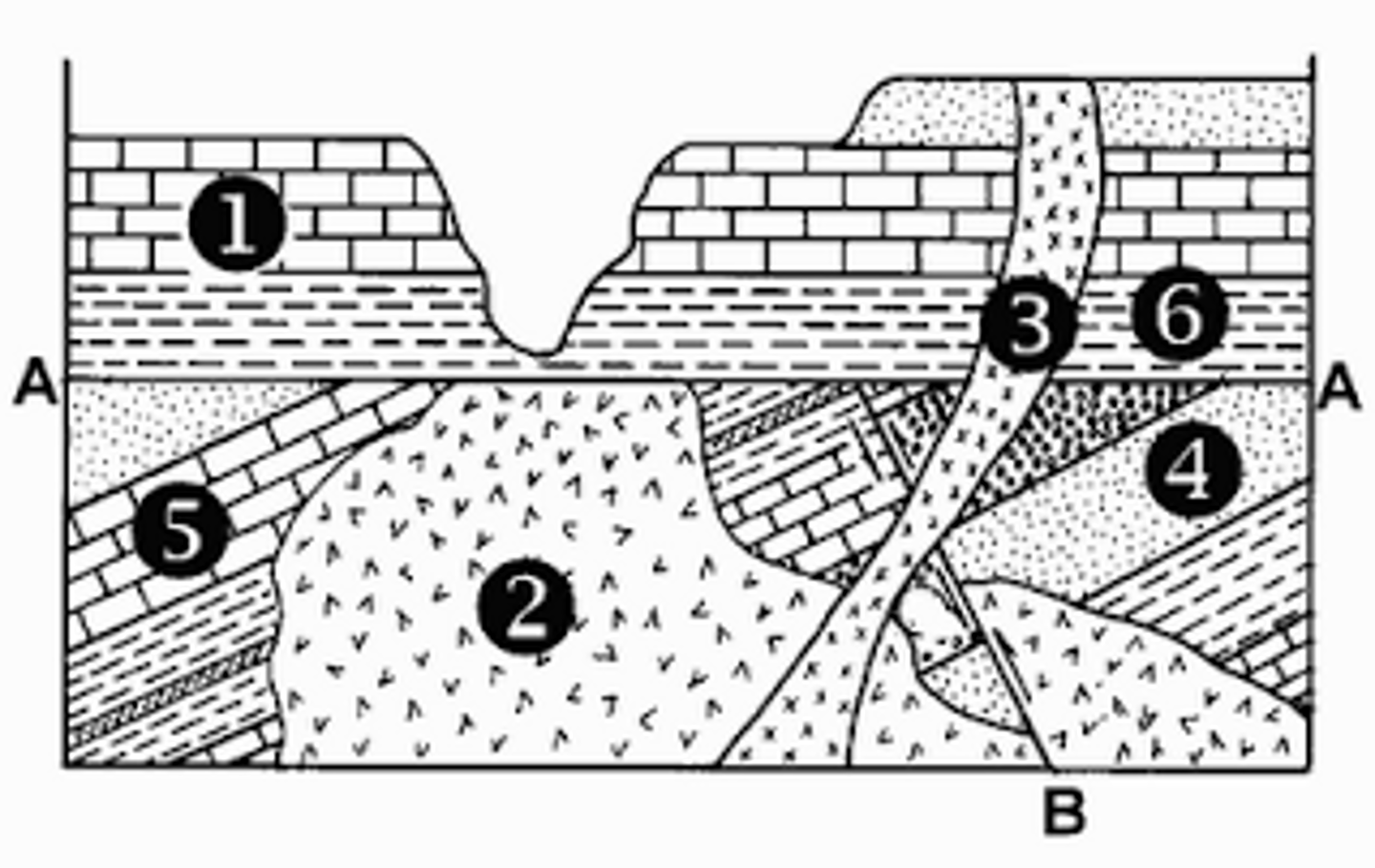
B
Which occurred first , the fault D or layer B?
A. fault D
B. layer B
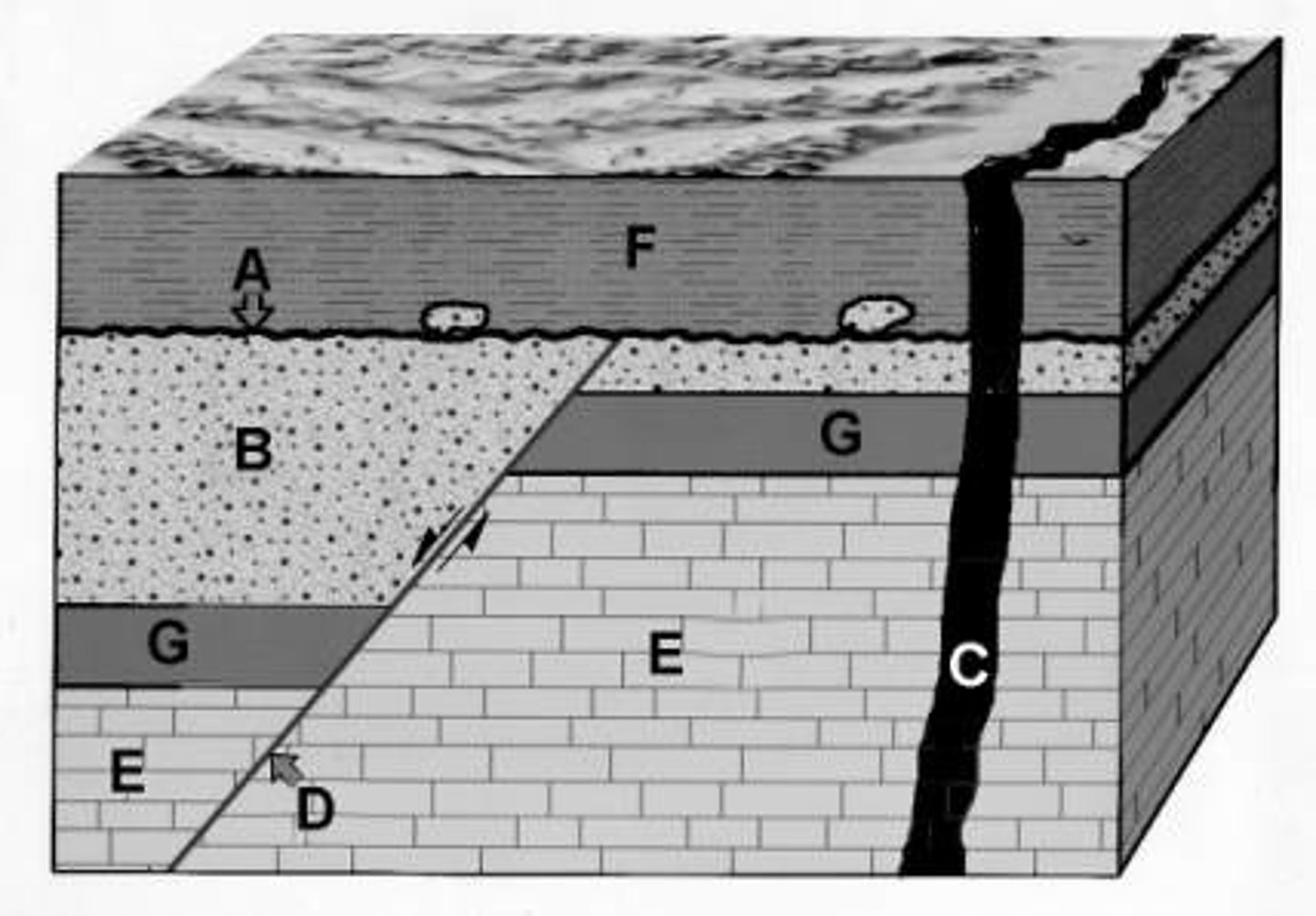
D
What number is the oldest layer?
A. 4 B. 10 C. 9 D. 5
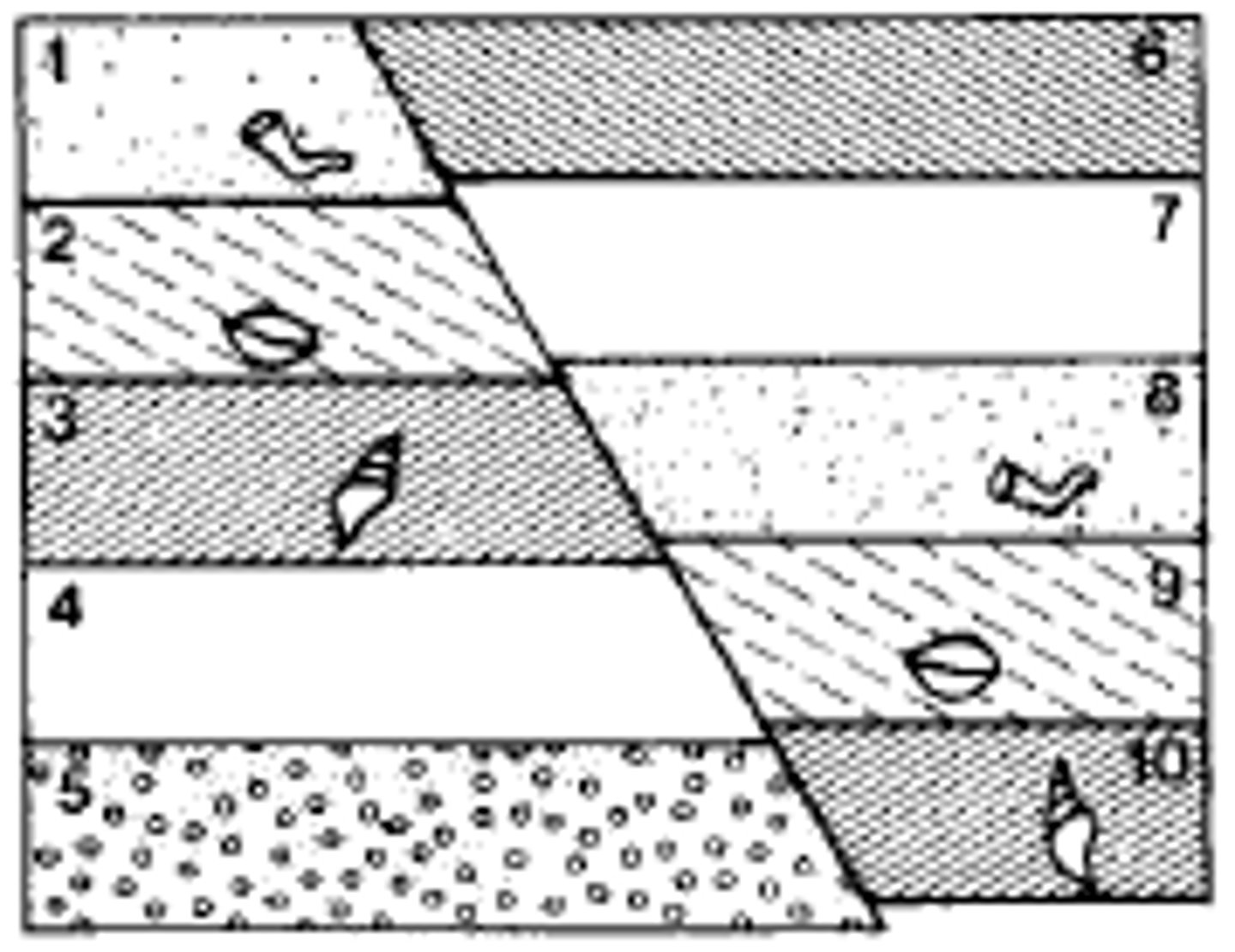
B
Which fossil is the index fossil in these four strata?
A. dark batwing brachiopod B. curled snail shell C. arthropod with legs
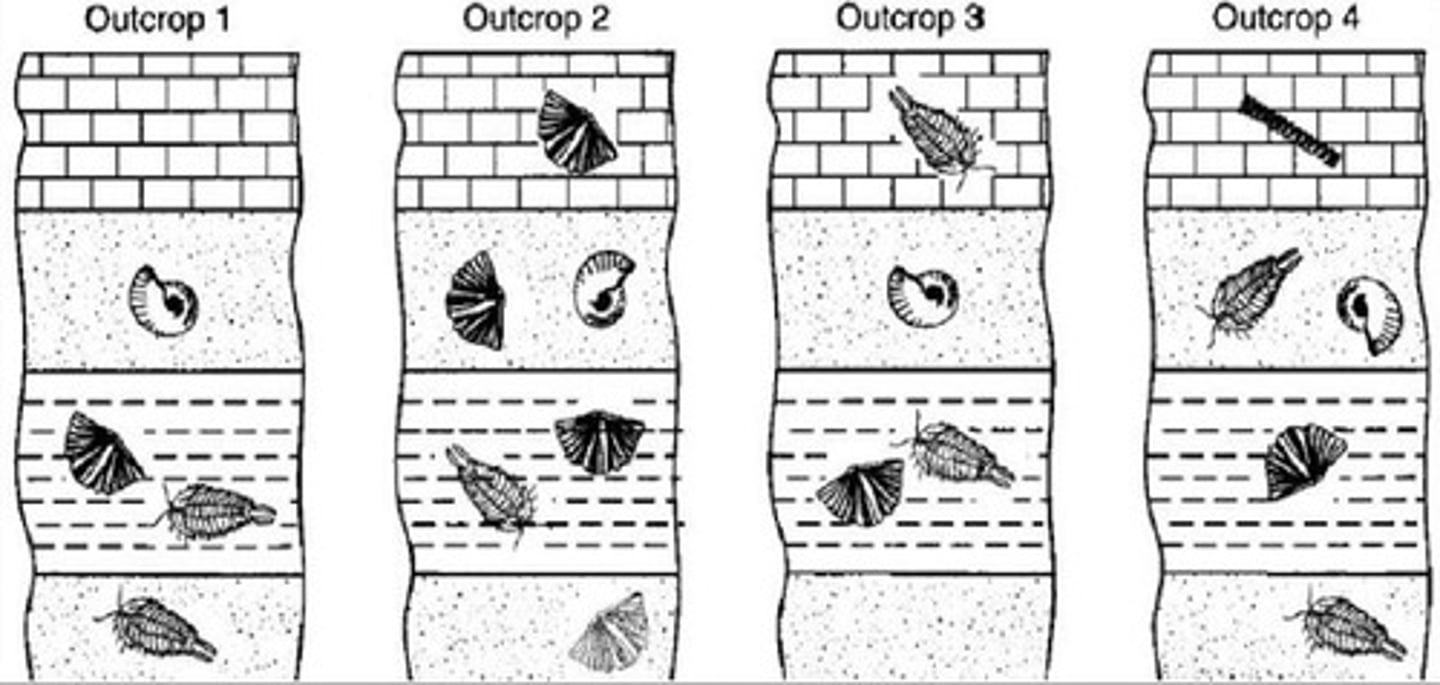
D
Give a reason that the curled snail shell is the best index fossil?
A. it is oldest B. it is found in more than one layer
C. it has lived through many rock layers
D. it was present in only one short period of time
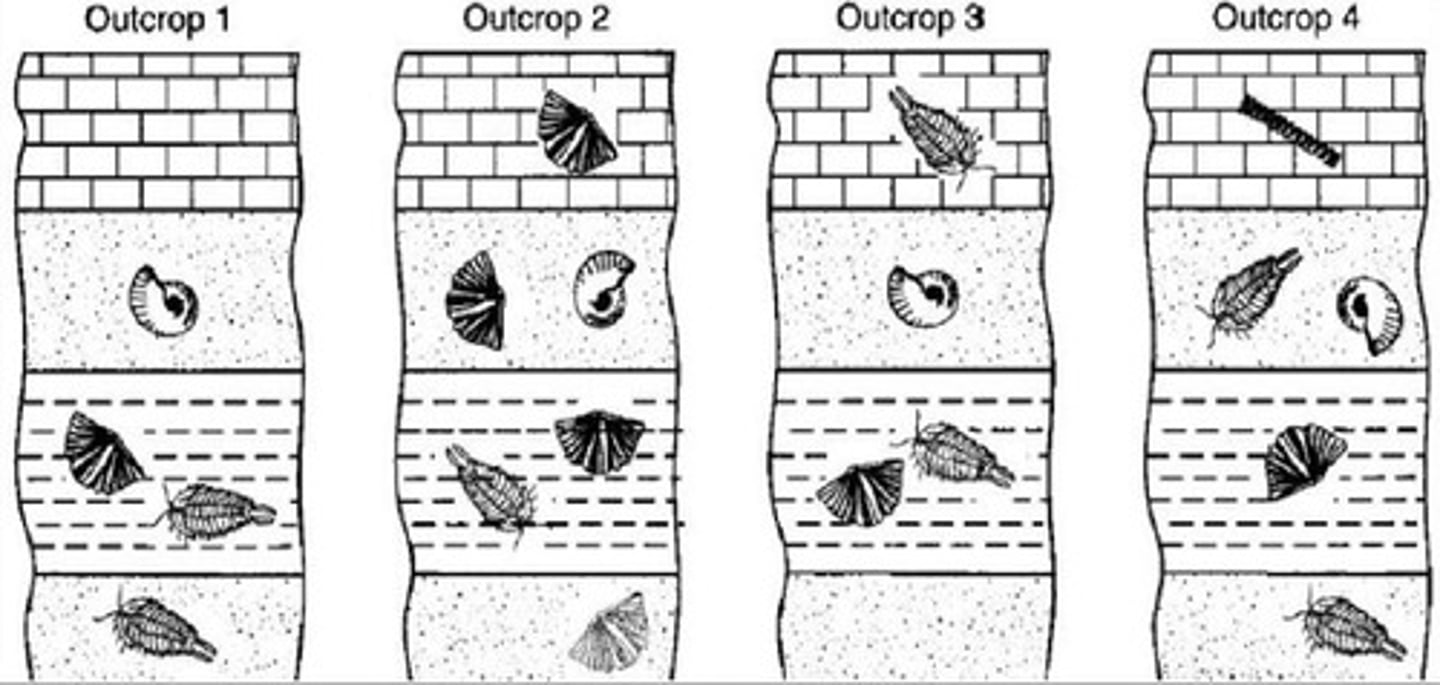
A
Which fossil is youngest?
A. 1 B. 2 C. 3 D. 4
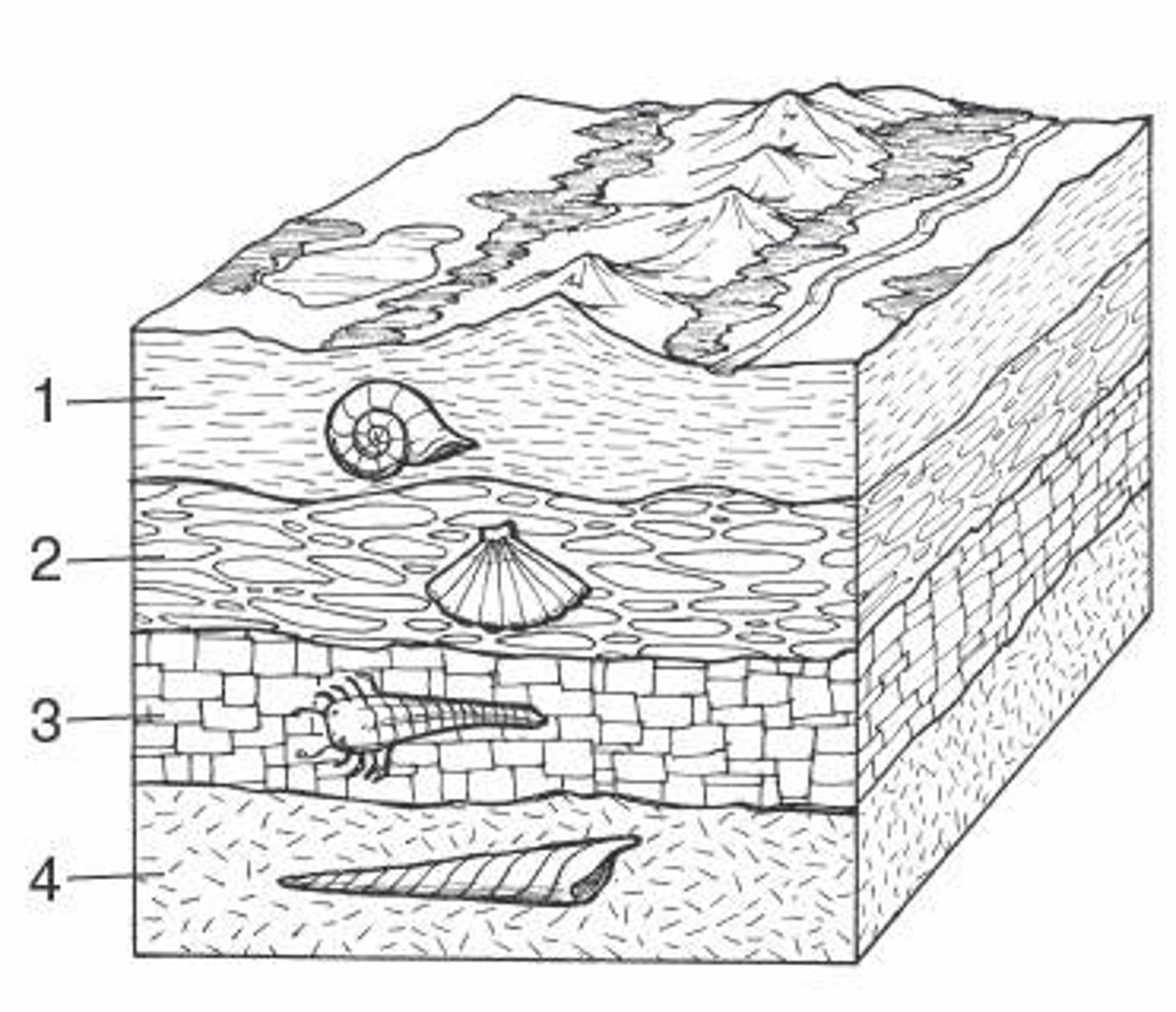
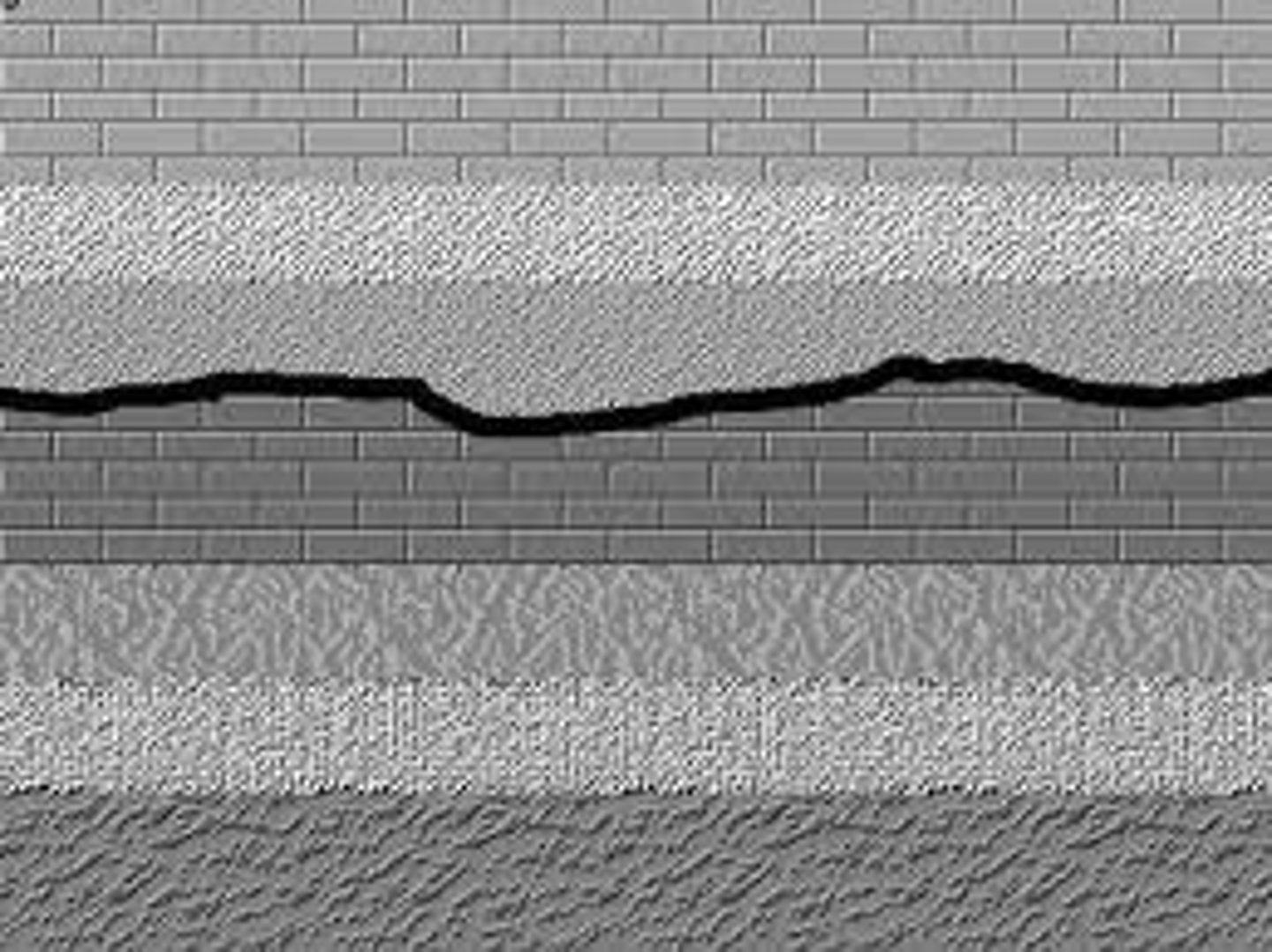
A
What do we call a jagged erosional surface located between two sets of parallel rock layer beds?
A. unconformity B. nonconformity
D
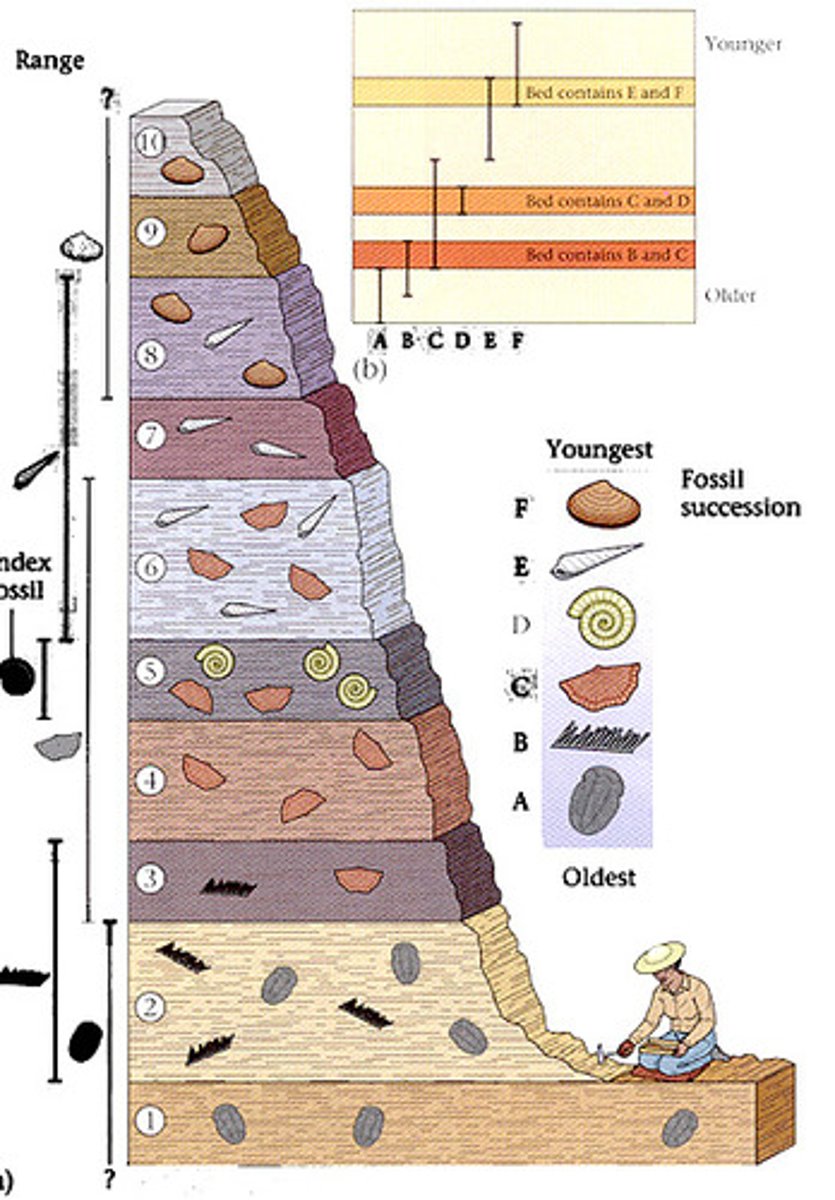
Which fossil is the best index fossil?
A. A B. B C. C D. D
C
The oldest rocks in a rock bed are located on the ........
A. side
B. top
C. bottom
B
The geologic law that states that older layers are found under younger layers.......................
A. law of original horizontality
B. law of superpositon
C. law of cross cutting
C
The geologic law that states that if an igneous rock melts across another layer that the igneous rock is younger than the layer of rock...................
A. law of original horizontality
B. law of superposition
C. law of cross cutting
D
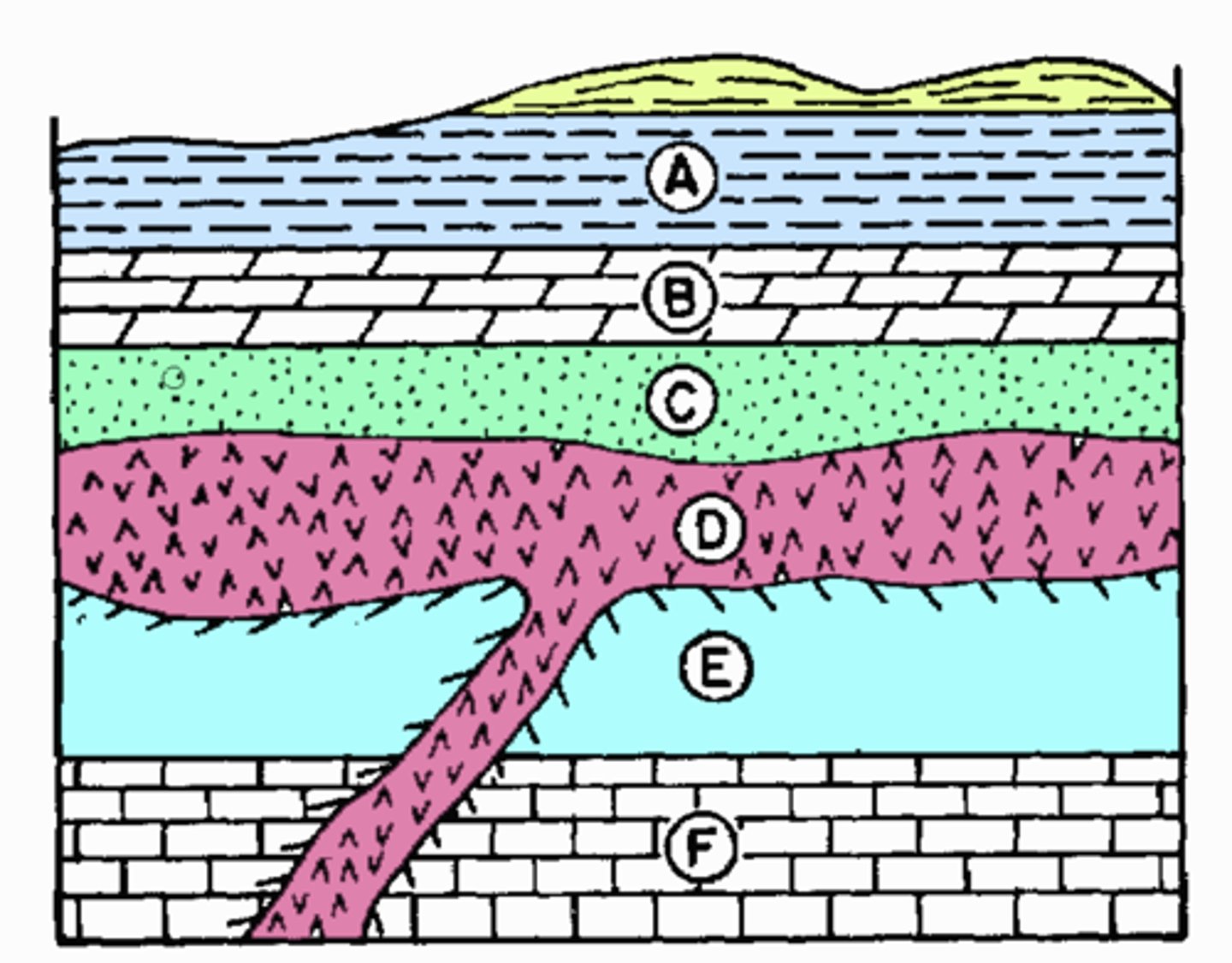
Which answer has the strata in the correct order from oldest to youngest?
a. A,B,C,C,E, F b. A,B,C,E, D, F
c. F,E,C,D,B,A d. F,E,D,C,B,A
Still learning (20)
You've started learning these terms. Keep it up!

