non-vascular land plants (bryophytes)
 Studied by 0 people
 Call Kai
 Learn
Learn Practice Test
 Spaced Repetition
 Match
Match Flashcards
 Knowt Play
1/11

There's no tags or description
Looks like no tags are added yet.
Name | Mastery | Learn | Test | Matching | Spaced | Call with Kai |
|---|
No analytics yet
Send a link to your students to track their progress
12 Terms
viridiplantae
monophyletic group within the archaeplastids
green land plants + green algae
chlorophytes are within the viridiplantae
around when did plants transition to land?
800 mya
archaeplastids in the tree of life
archaeplastids is the super group
contains the viridiplantae: green algae and land plants
contain the embryophytes: land plants
non-vascular land plants characteristics
monophyletic in the tree of life
major and difficult transition - only happened once
non vascular plants: earliest branching group of land plants (paraphyletic)
what are 4 advantages of plants moving onto land?
less predators
more direct sunlight (get more energy for photosynthesis)
less competitors
more access to resources and space
what are 5 challenges of plants moving onto
lack of transport mechanisms (can’t get resources as easily)
dehydration
exposed to more harmful uv radiation
gravity, need to build more solid structires
dispersal/reproduction (gametes can no longer swim in water)
what are the big 3 key innovations that plants found to survive on land
pigments protecting them from uv (chlorophyll, flavonoids, carotenoids, anthocyanins)
cuticle to help with dehydration: watertight sealant covering parts aboveground, made of hydrocarbons, lipids and wax
reproductive innovations
what are the main 3 reproductive innovations that plants developed to be on land
spores encased in tough coat of sporopollenin: resist dessication, disperses by the wind and survives longer
protective reproductive organ gametangia: protects gametes from drying and physical damage
embryo retention: zygotes develop on the parent plant, female plant nourishes it (sporophyte grows out of gametophyte)
bryophytes basic characteristics
mosses, liverworts, hornworts
no vascular tissue or complex transport of nutrients
no true roots, can grow on rocks/shallow soil
absorb nutrients and water through ‘leaves’
stuck near water bodies (need moisture for reproduction)
no strong cuticle
small and slow growing
thin leaves
describe bryophyte reproduction
alternation of generations
gametophyte-dominant
unisex (male of female) or bisexual (both)
use spores for dispersal (not seeds)
need water: sperm swims through water to find egg
explain the 5 stages of bryophyte reproduction, specify if the stage is haploid or diploid
sporophyte stage (diploid): grows our of gametophyte bed
sporophyte produces spores (haploid) via meiosis, released and disperse by wind
spores (haploid) land, germinate and grow gametophytes (haploid) via mitosis
gametophytes produce gametes (haploid) via mitosis. when enough water, males swim through water columns to find females
when found, fertilization occurs and sporophyte (diploid) stage grows
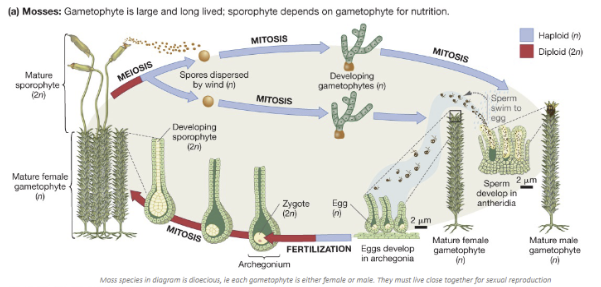
moss characteristics
fragile, wimpy, thin bodies
only land plant found on all seven continents
sphagnum (peat moss): forms when plant doesn’t fully decay (acidic or anaerobic envir.), most efficient C sink on planet - used as fuel
 Note
Note  Flashcards (421)