Ch. 26 Anatomy Lecture
 Call Kai
 Learn
Learn Practice Test
 Spaced Repetition
 Match
Match Flashcards
 Knowt Play
1/97

There's no tags or description
Looks like no tags are added yet.
Name | Mastery | Learn | Test | Matching | Spaced | Call with Kai |
|---|
No analytics yet
Send a link to your students to track their progress
98 Terms
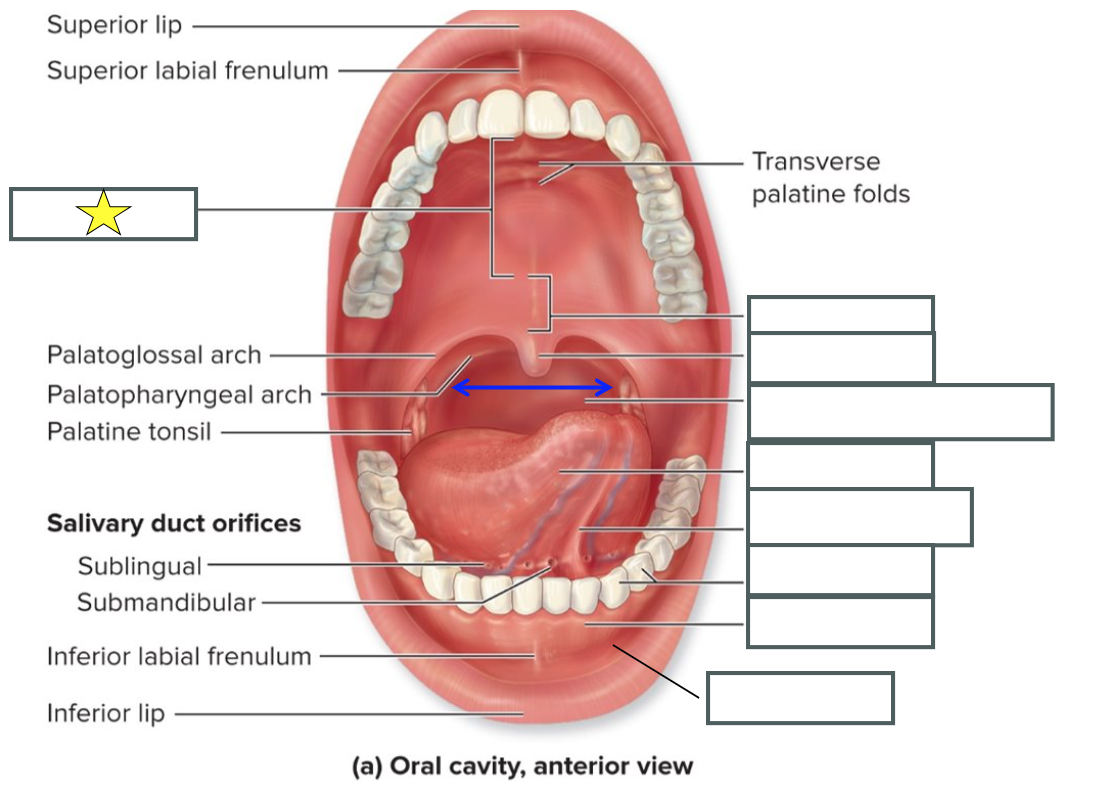
Hard palate
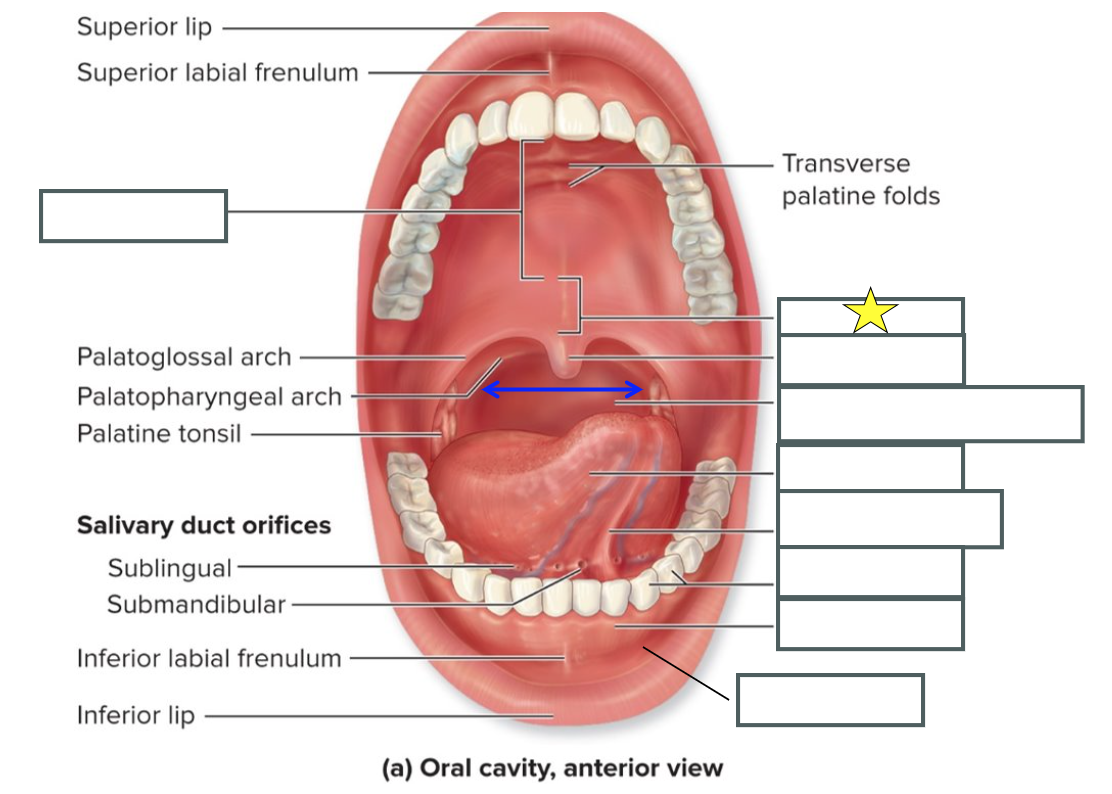
Soft palate
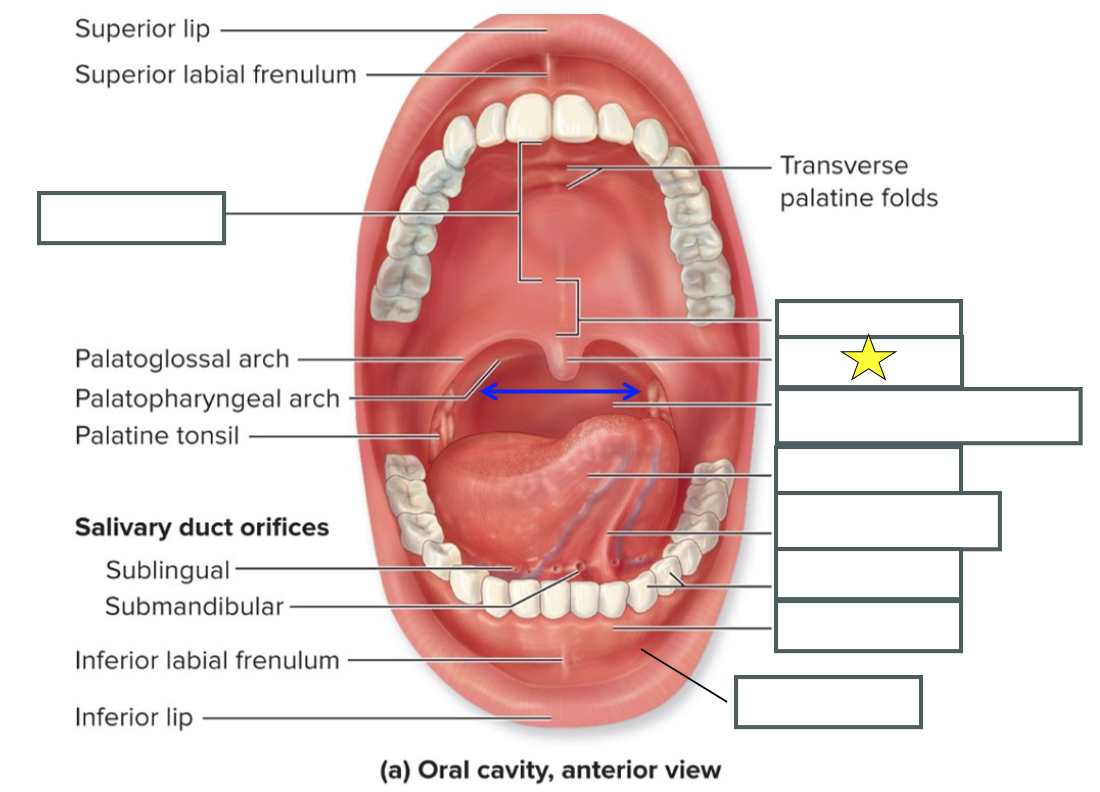
Uvula
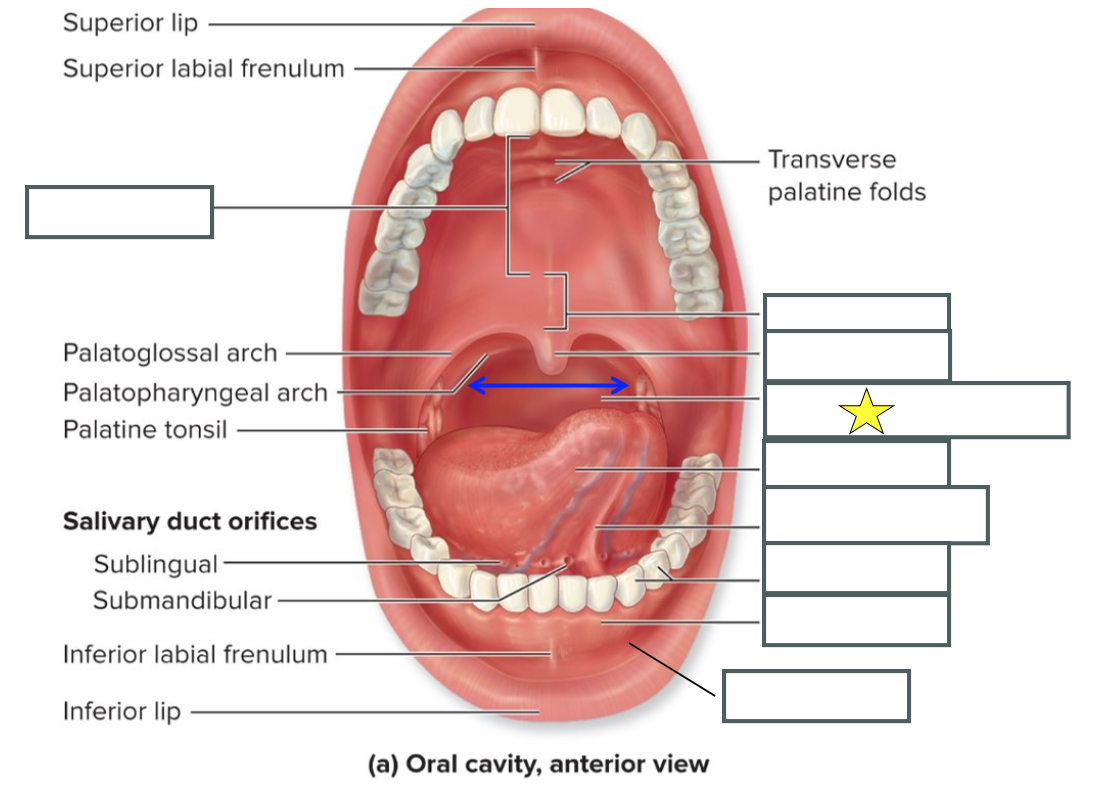
Fauces
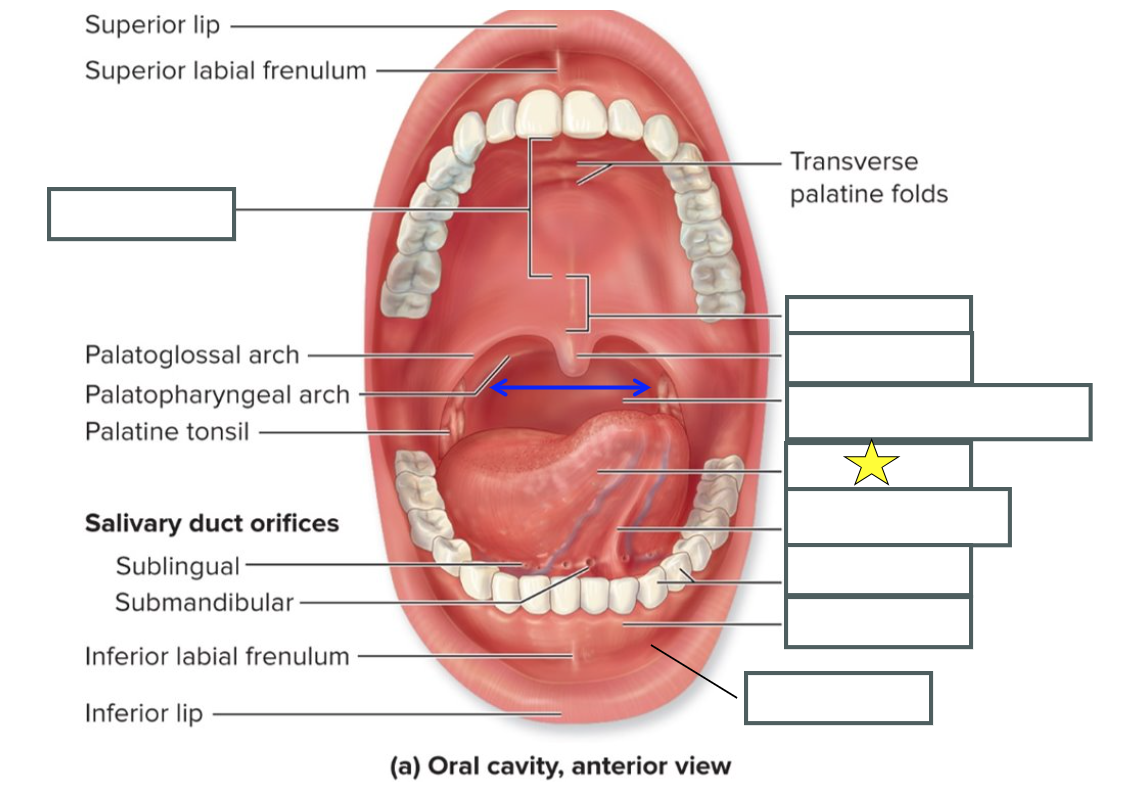
Tongue
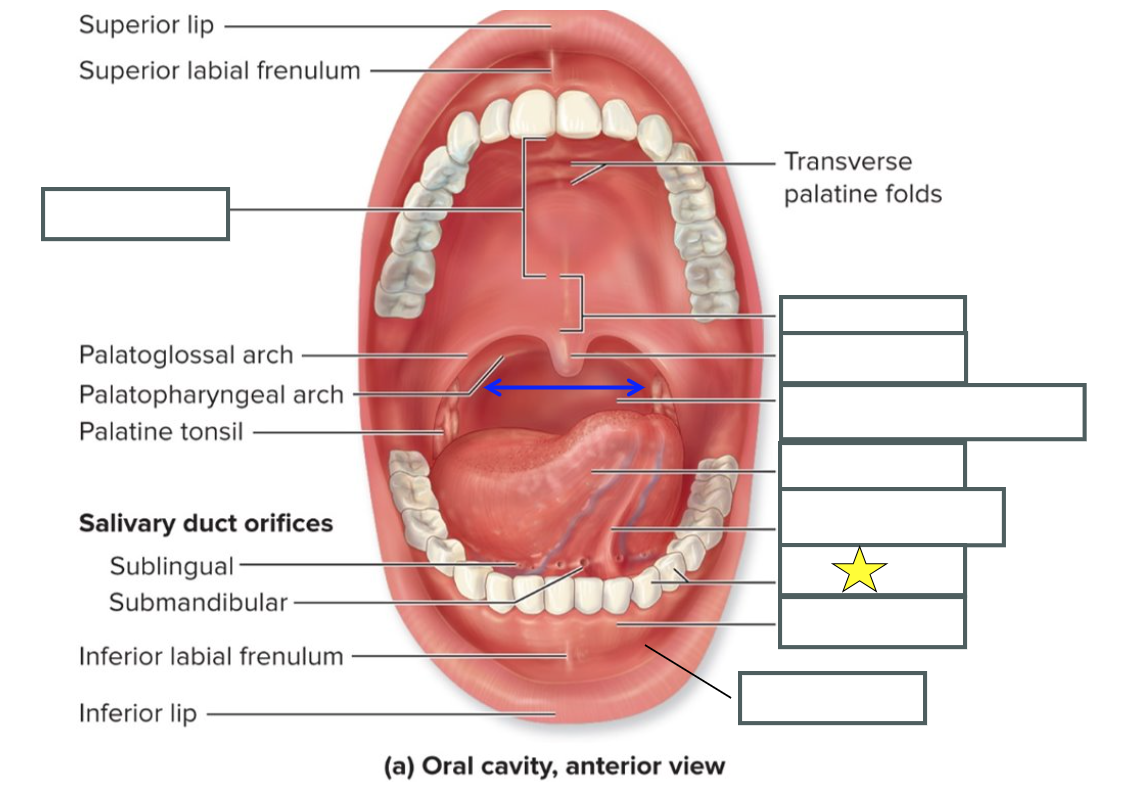
Teeth
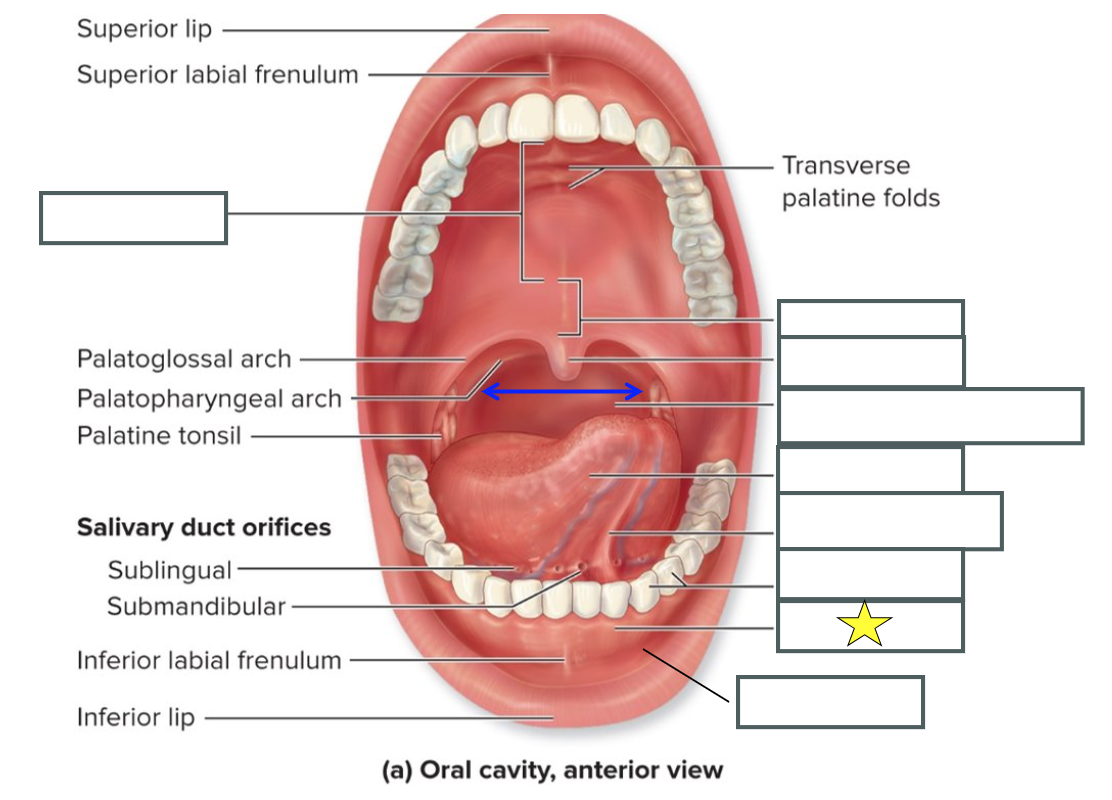
Gingivae
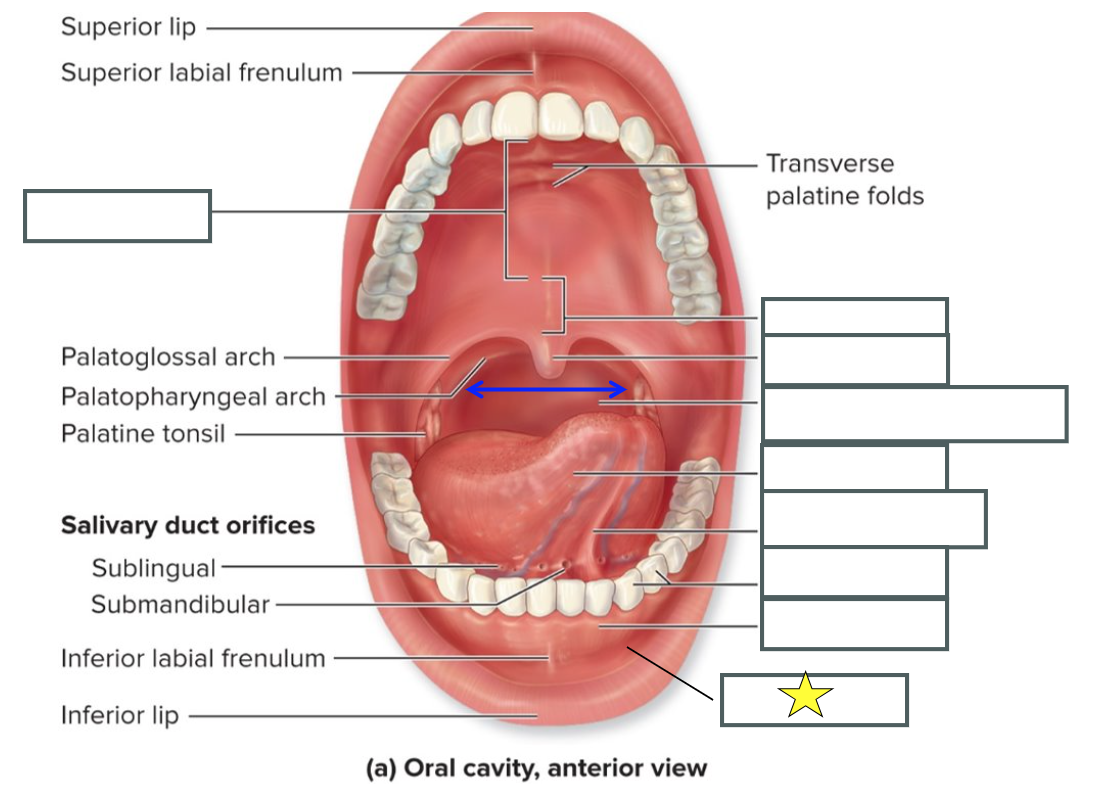
Vestibule
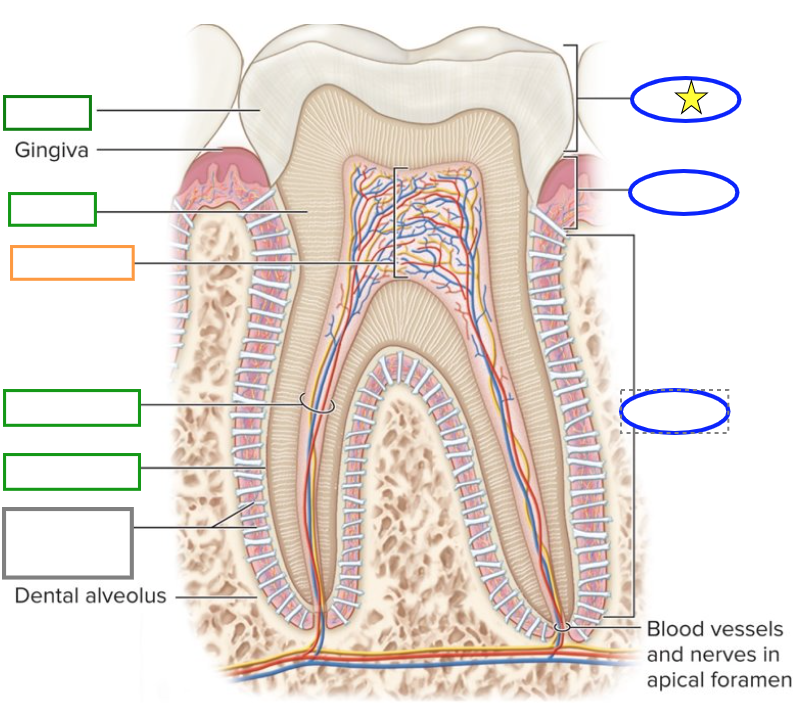
Crown
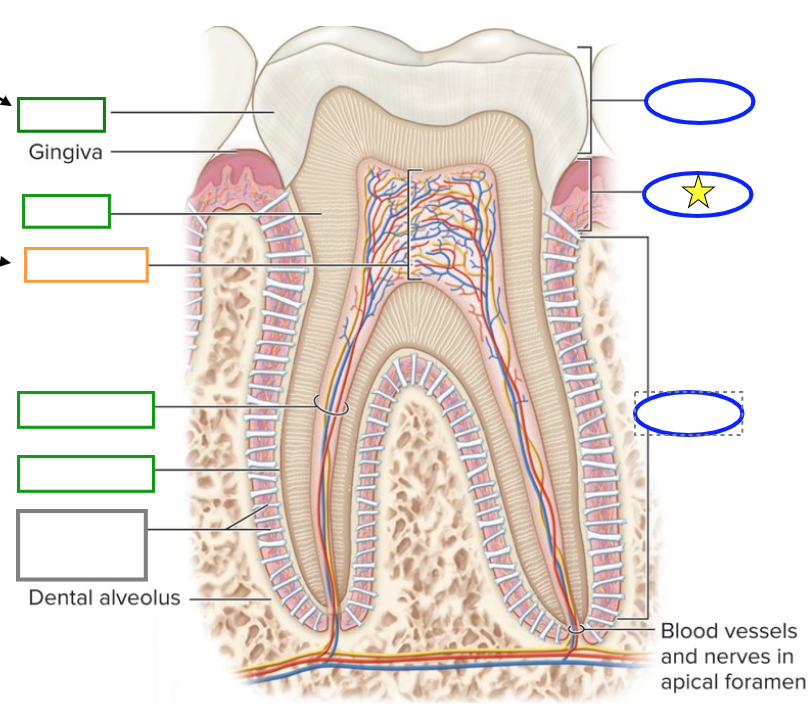
Neck
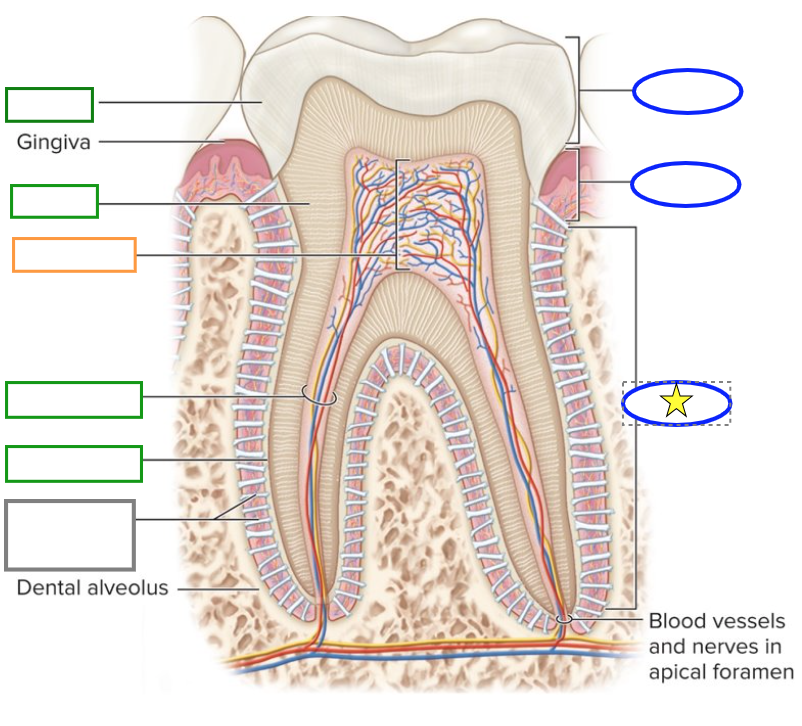
Root
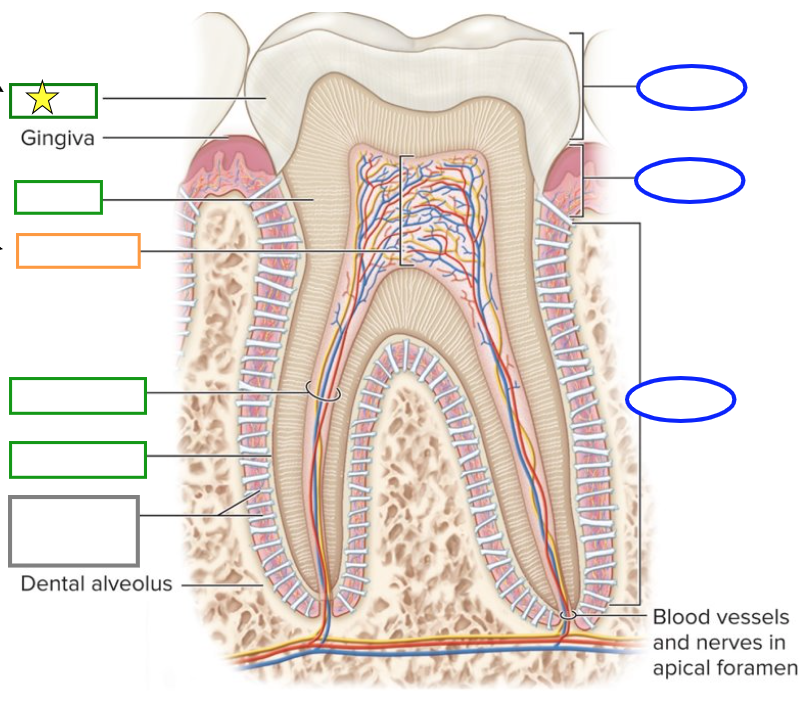
Enamel
Hardest substance in the body
Made with calcium phosphate
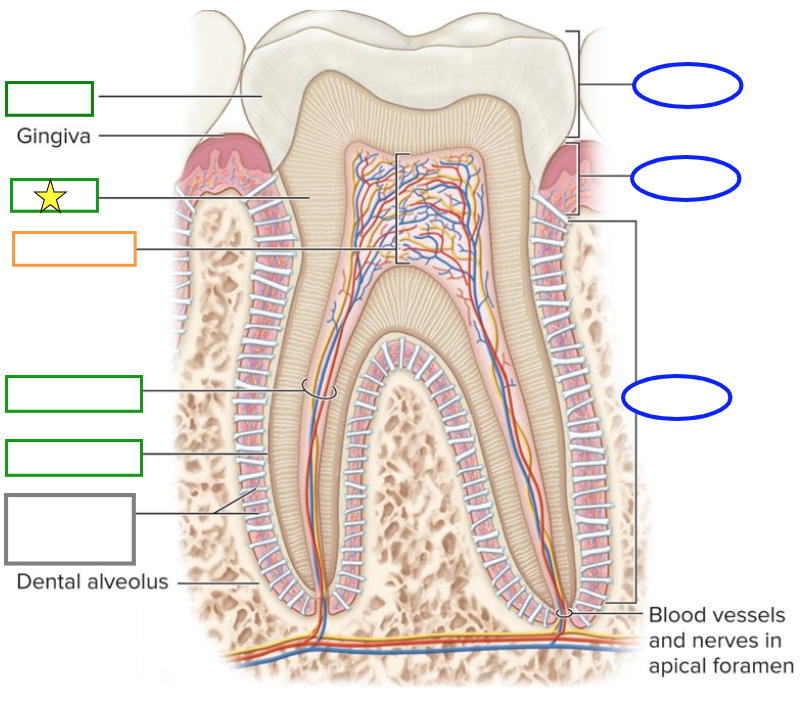
Dentin
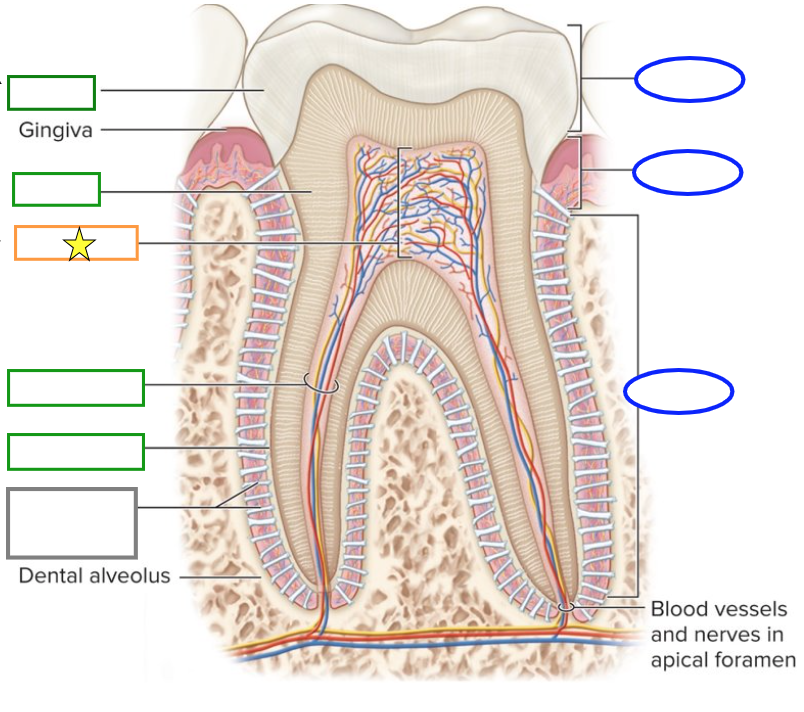
Pulp and pulp cavity
Consists of nerves, blood vessels, and soft connective tissue
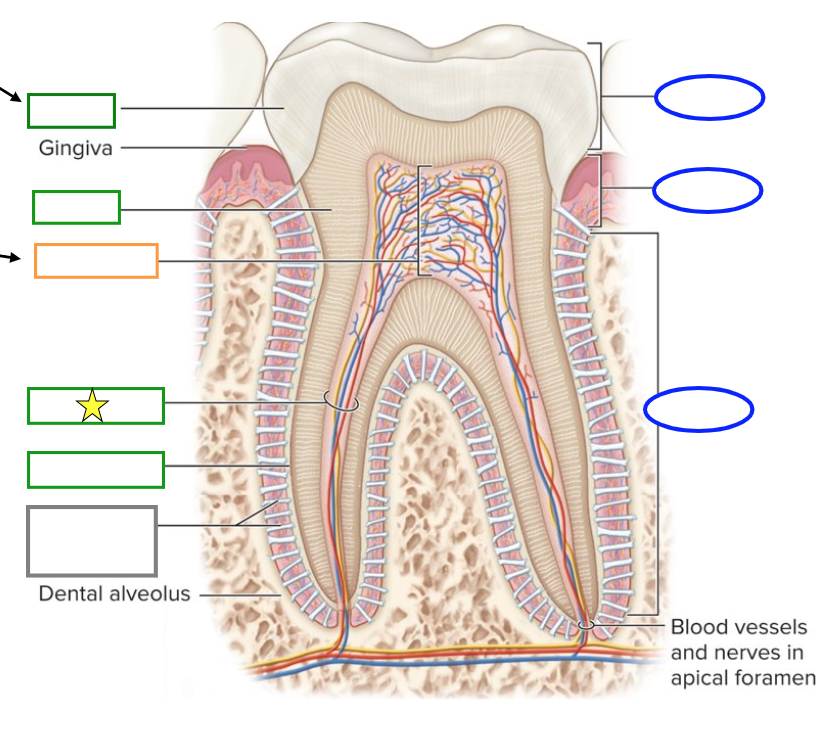
Root canal
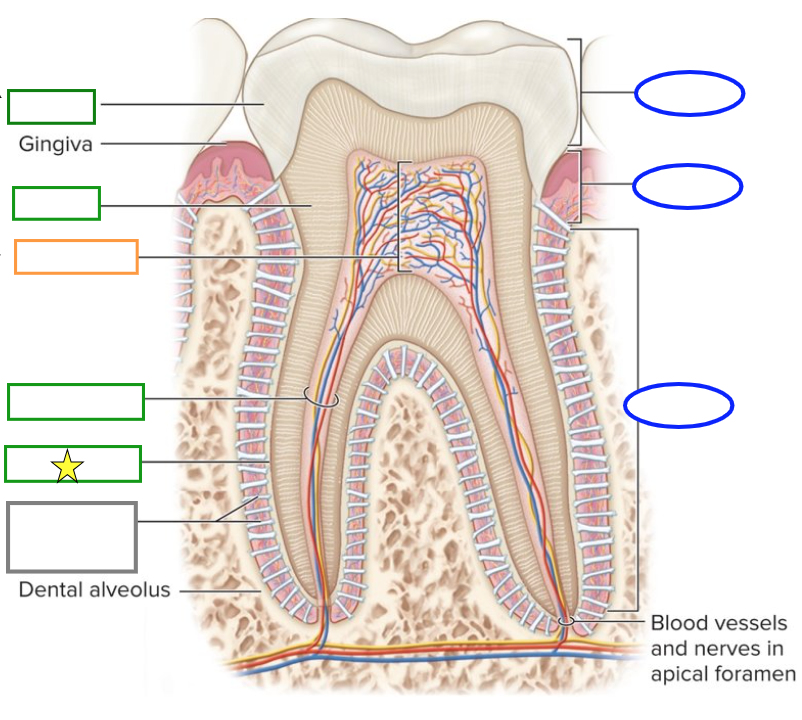
Cementum
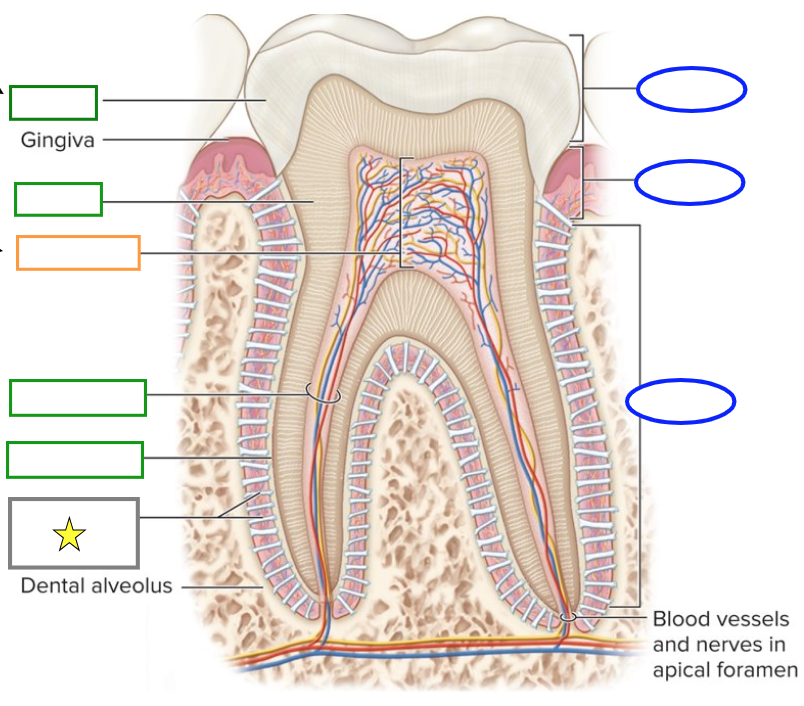
Periodontal ligaments
Hold teeth in bone
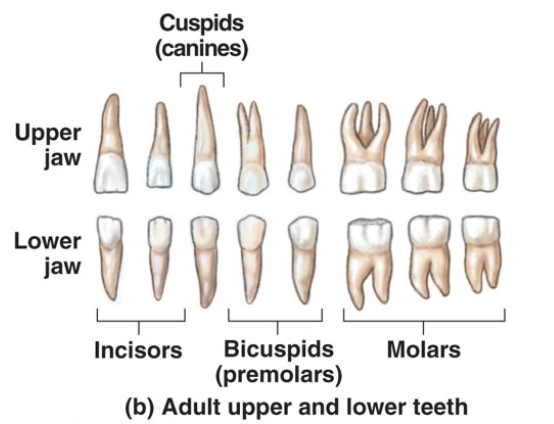
Deciduous teeth
20 temporary teeth
Adult teeth
32 permanent teeth
Papillae
Houses taste buds
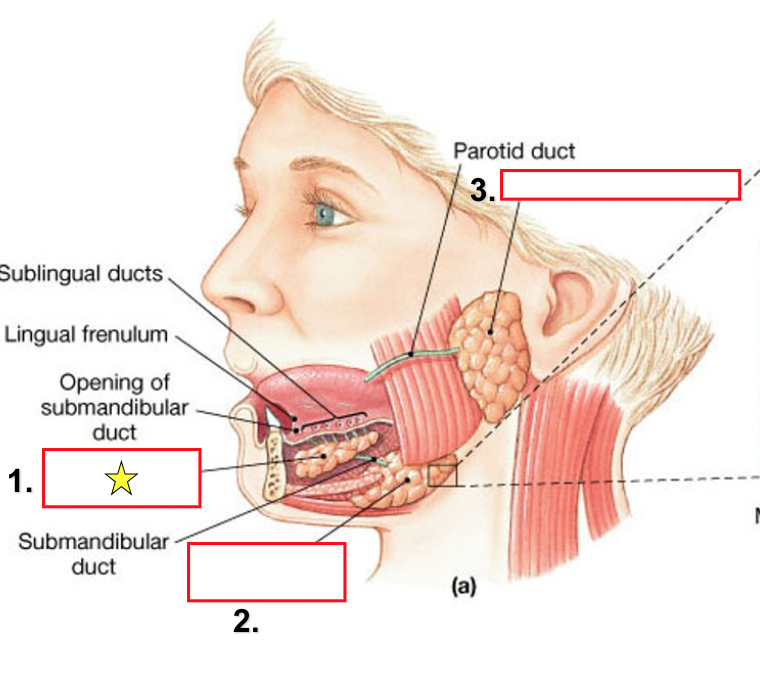
Sublingual salivary gland
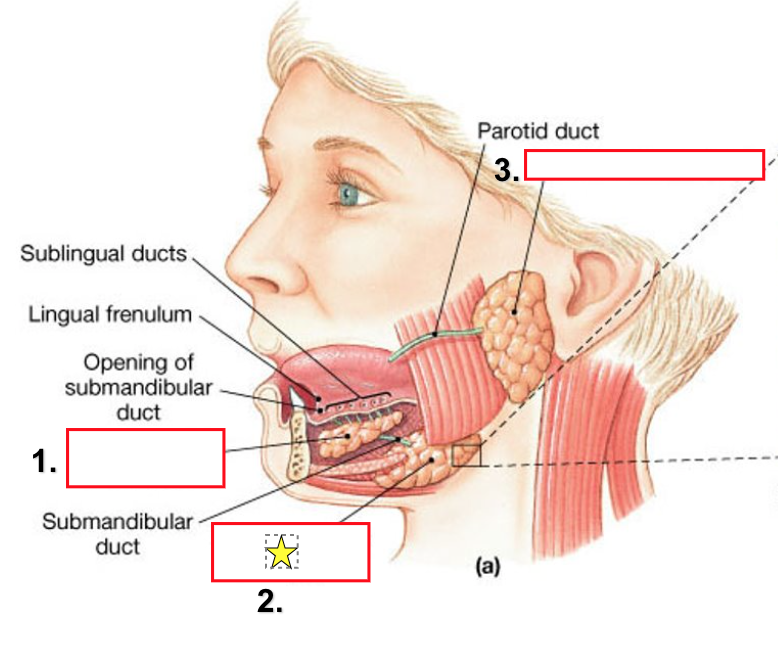
Submandibular salivary gland
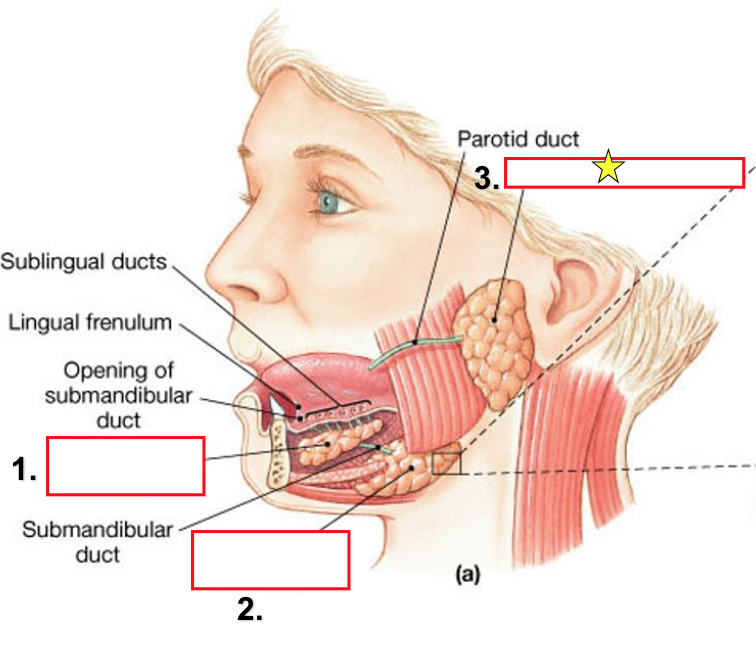
Parotid salivary gland
What is saliva made of?
Mucin
Electrolytes
Antibodies
Enzymes
Salivary amylase
Begins chemical digestion of complex carbohydrates
Lingual lipase
Begins chemical digestion of triglycerides
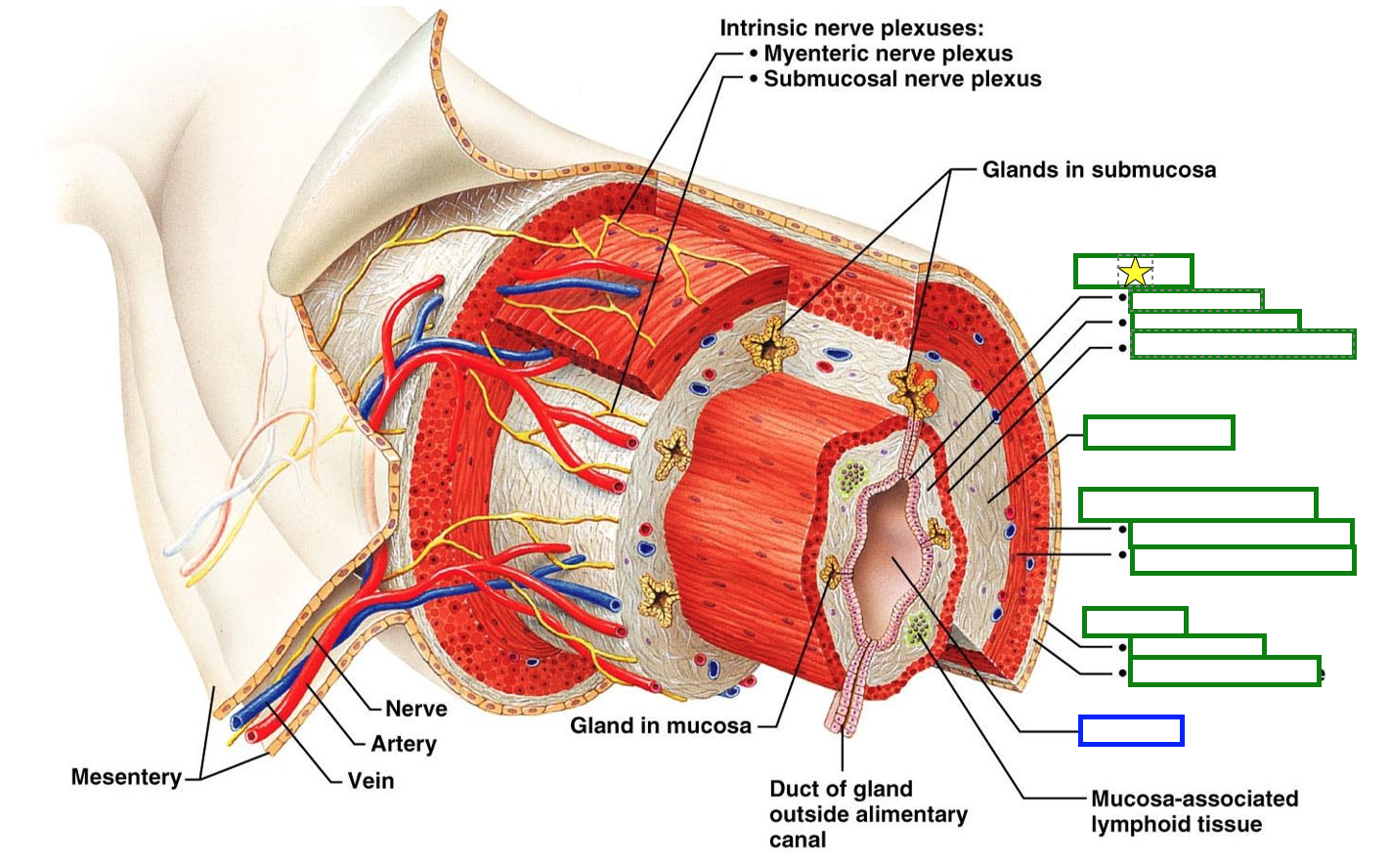
Mucosa
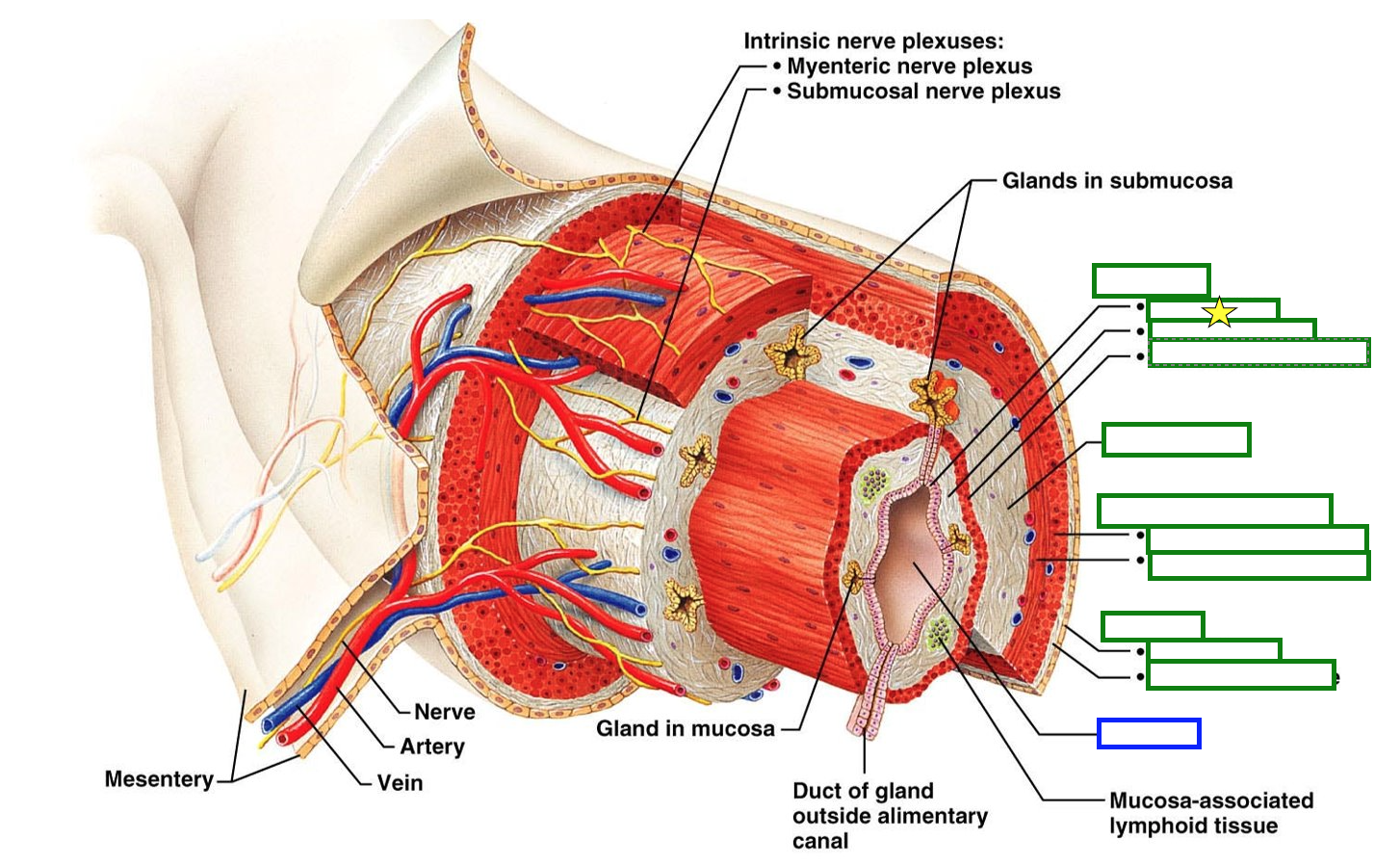
Mucosal epithelium
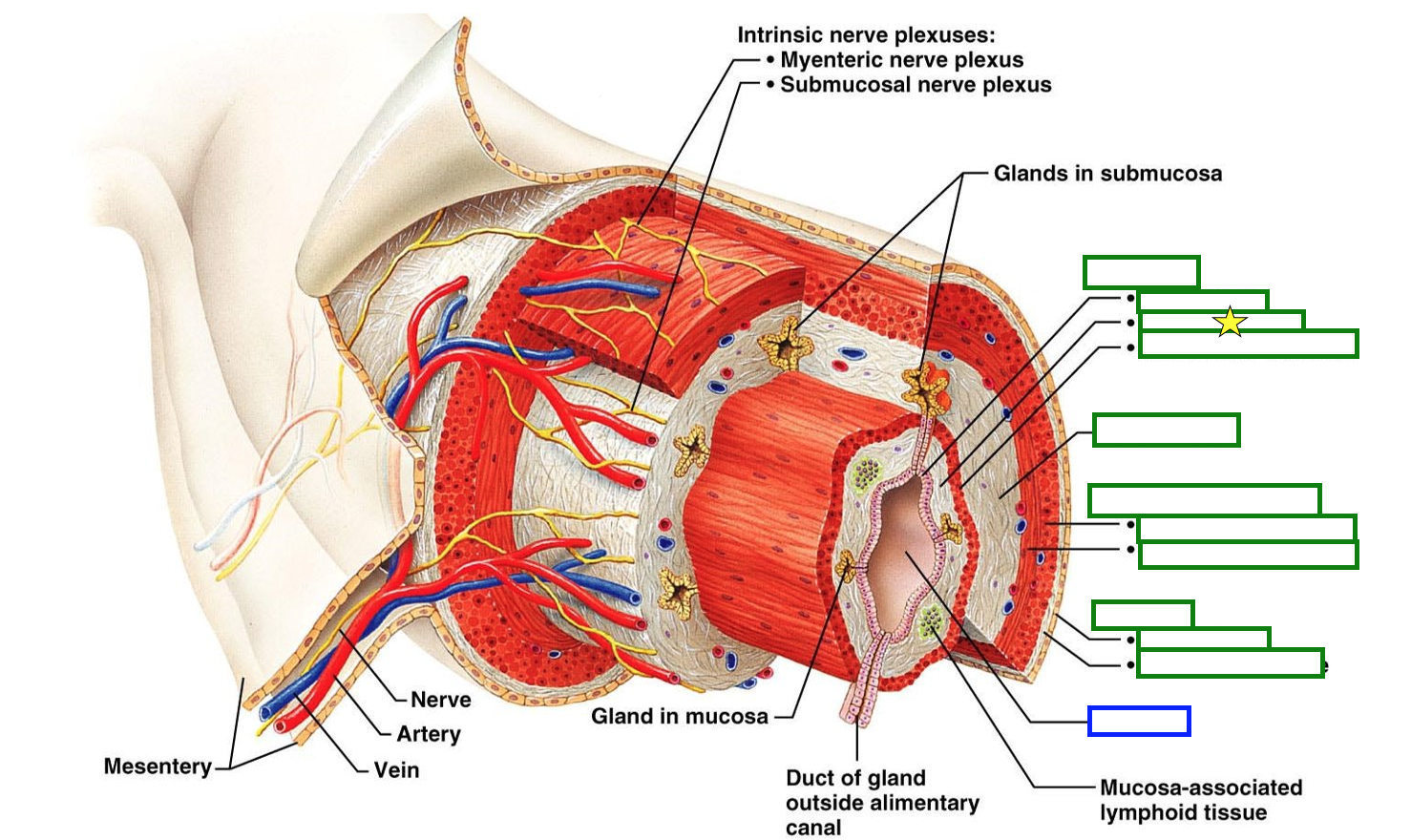
Lamina propia
Mostly areola connective tissue
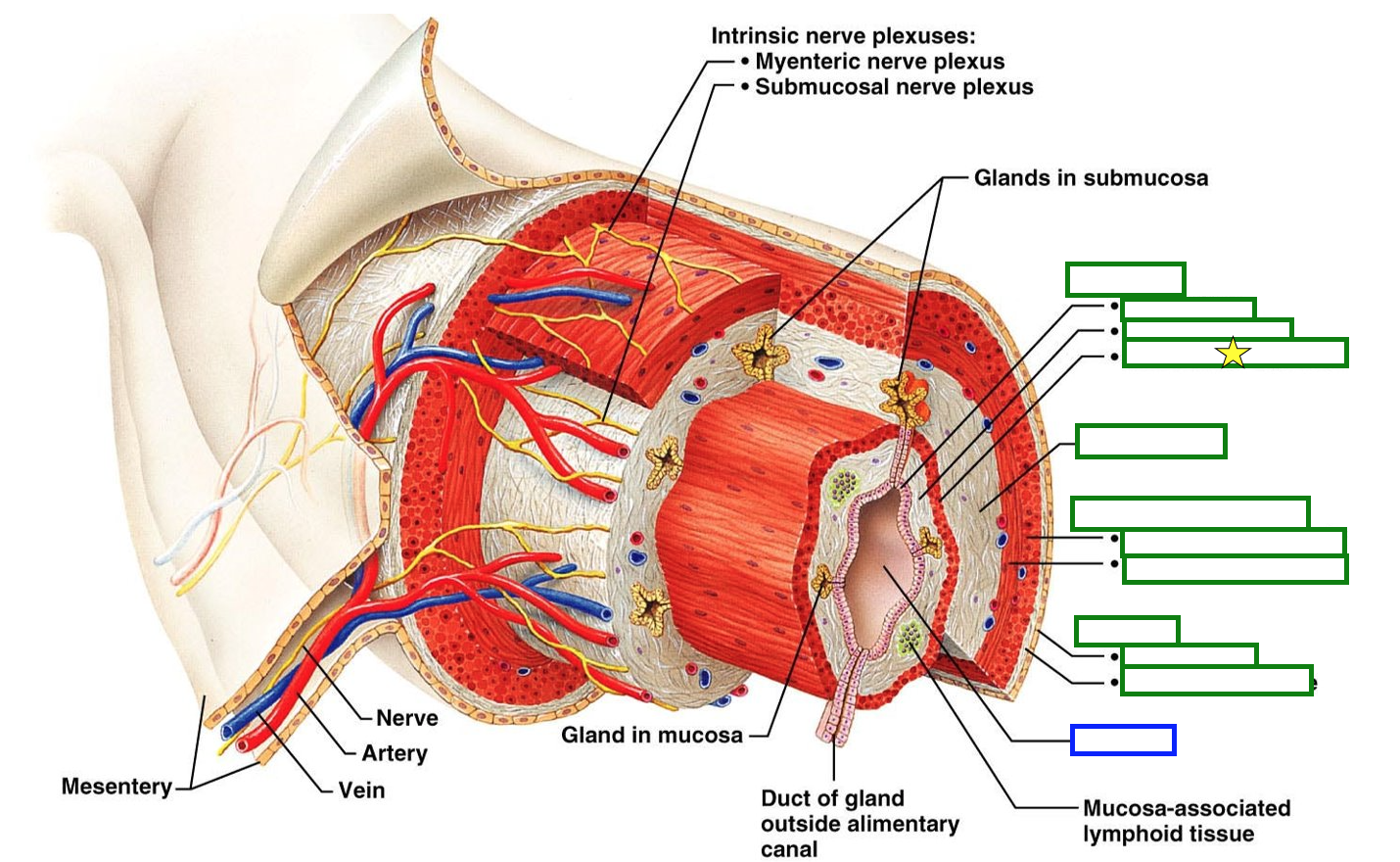
Muscularis mucosae
Smooth muscle
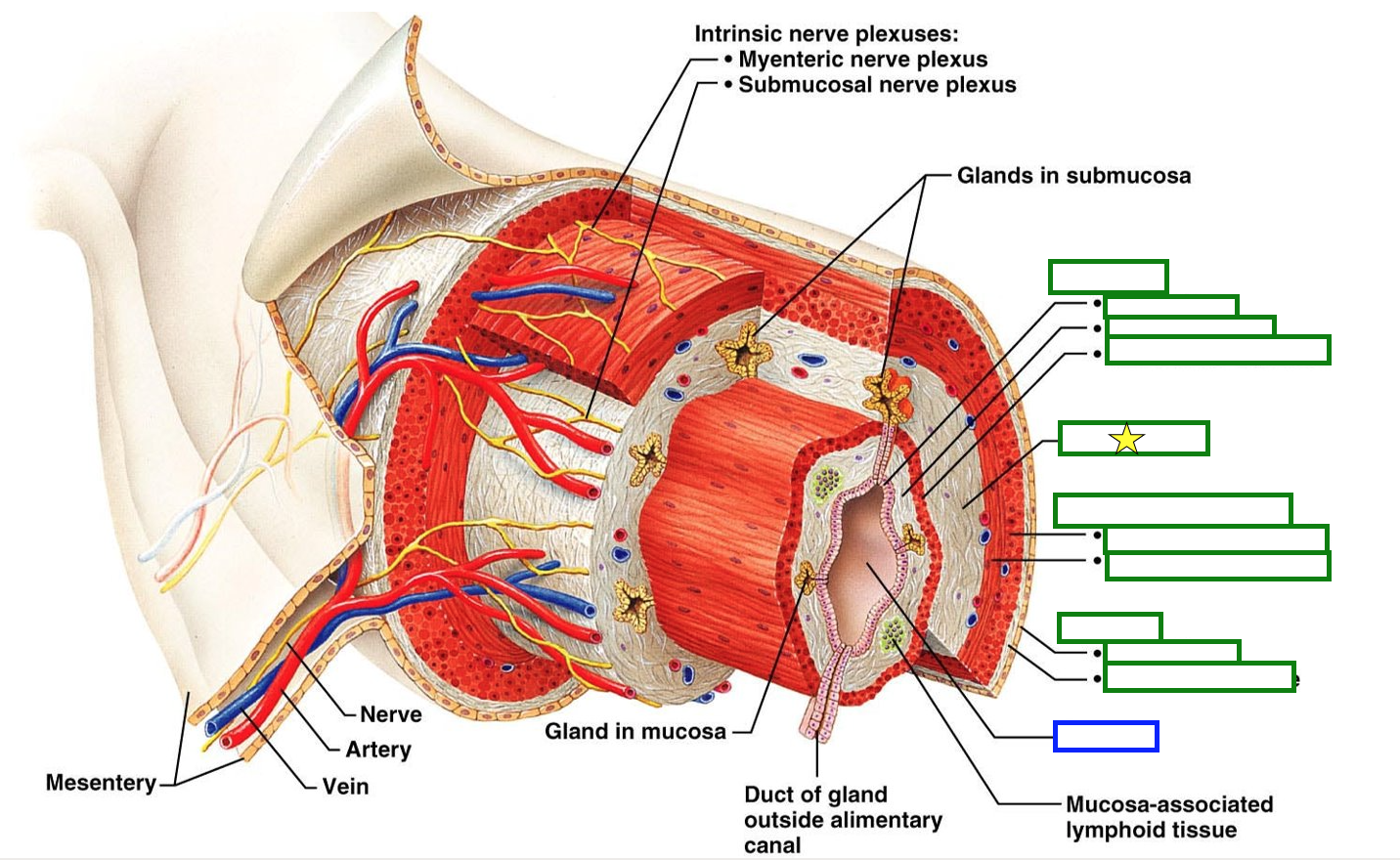
Submucosa
Mostly areolar connective tissue
Houses many nerves, blood vessels, and lymphatic vessels
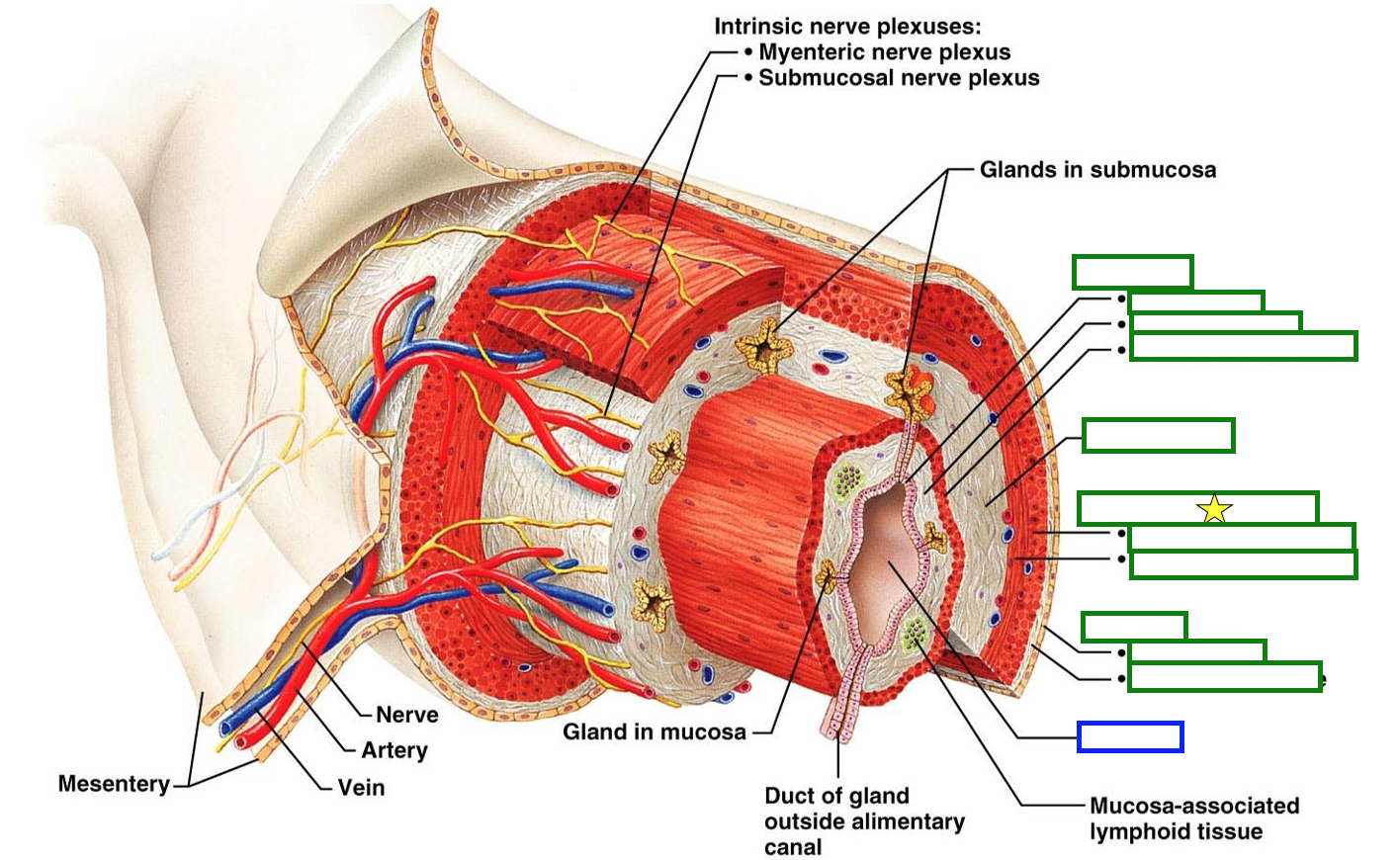
Muscularis externa
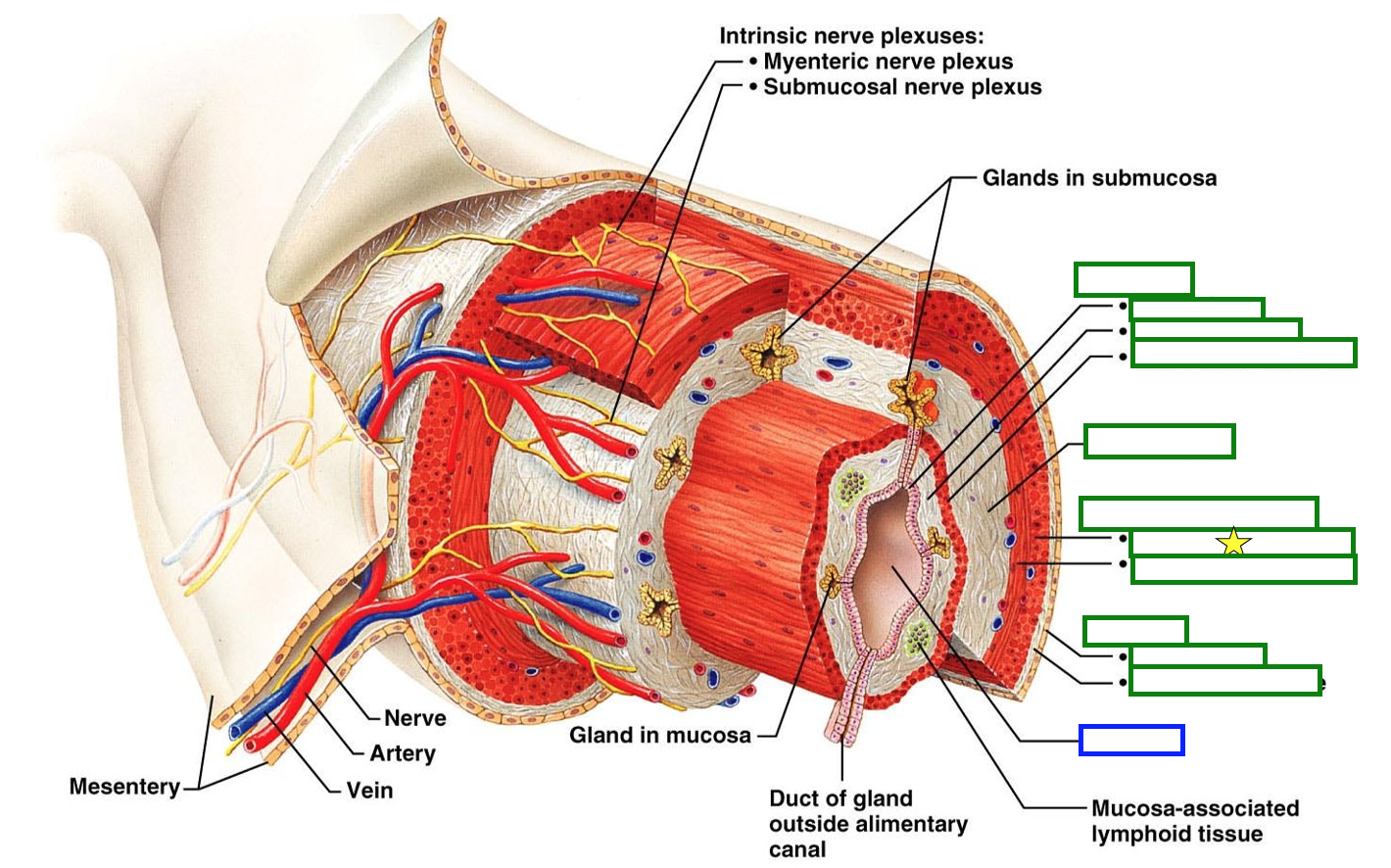
Longitudinal muscle
Allows shortening and lengthening
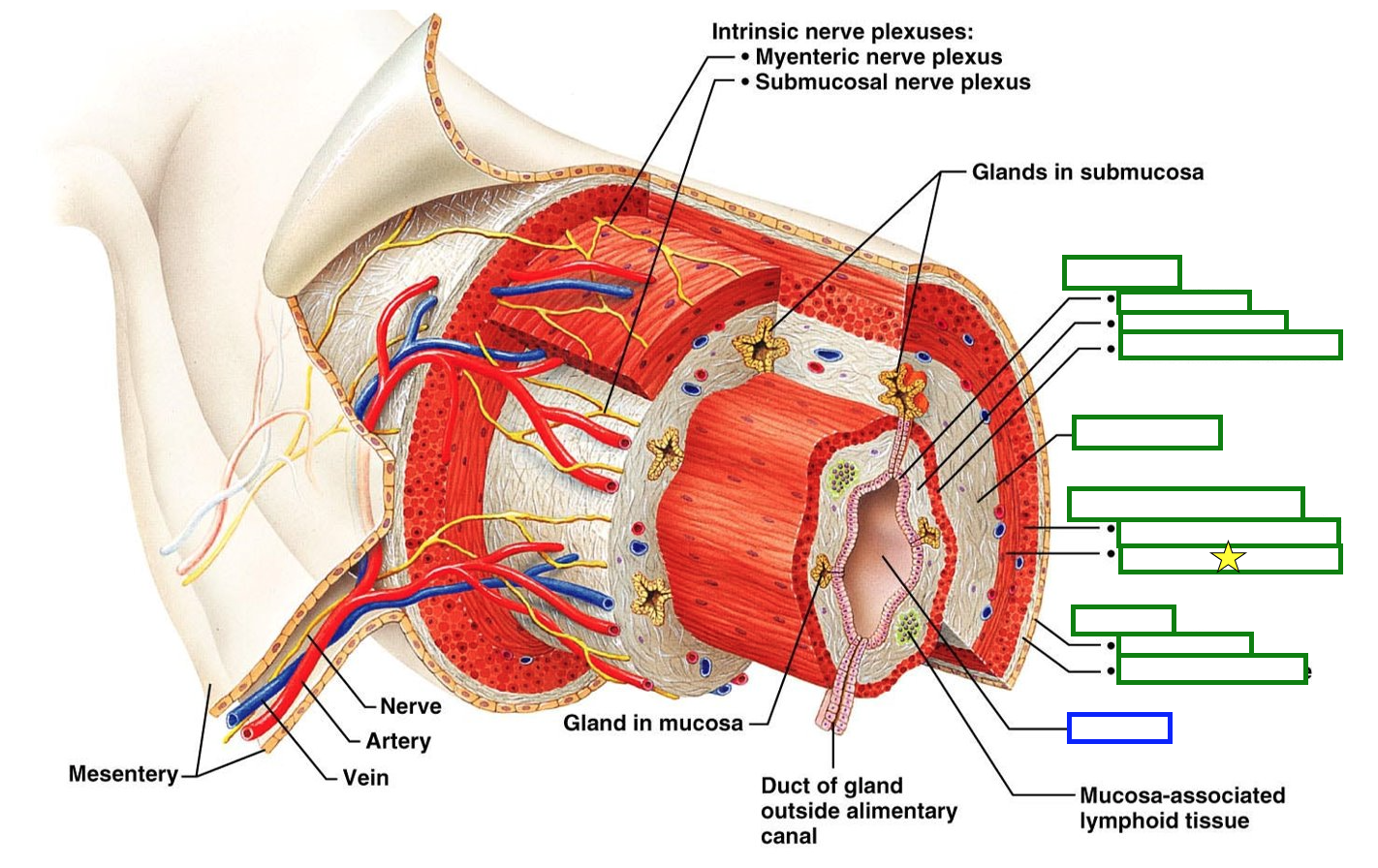
Circular muscle
Allows constriction and dilation
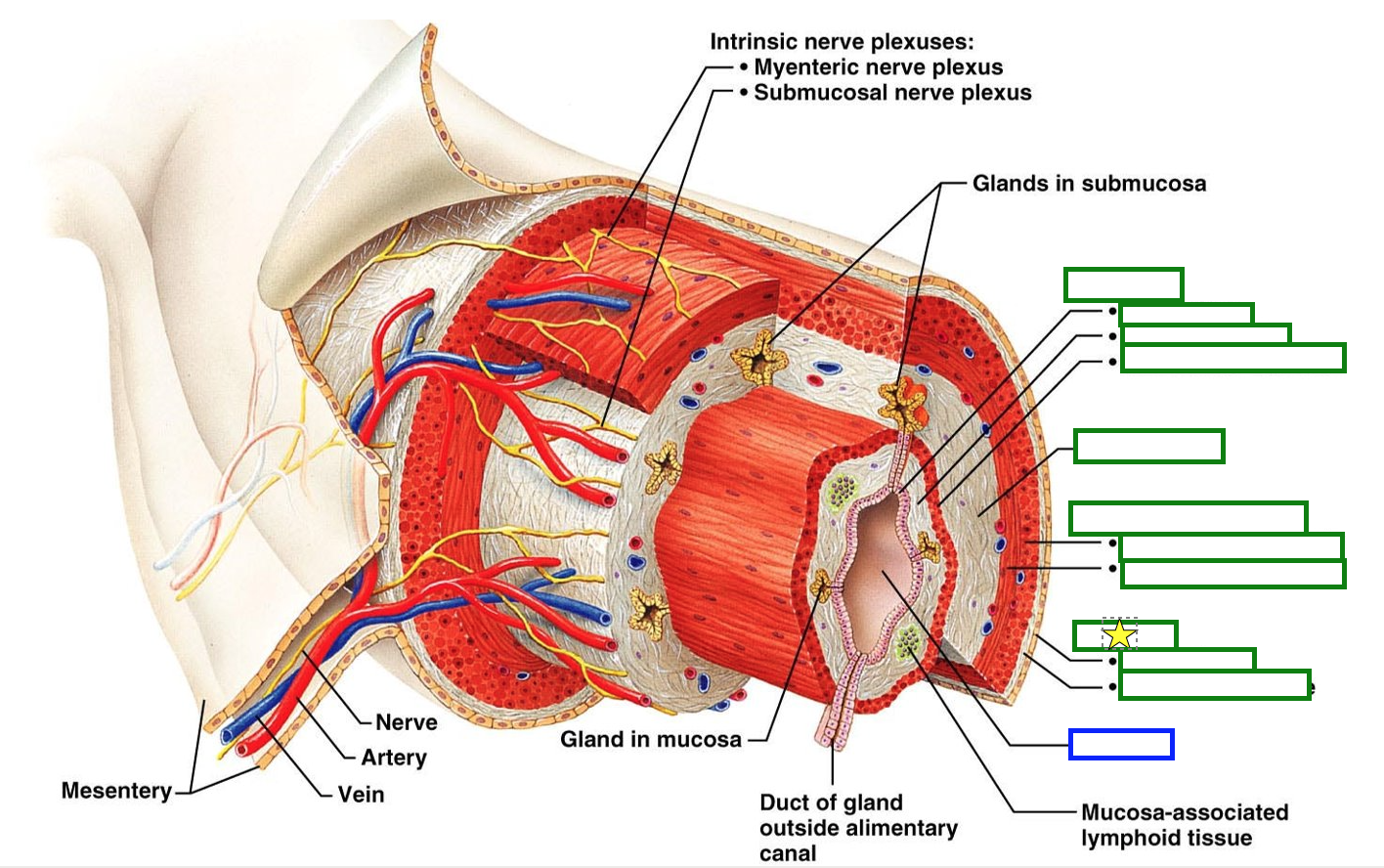
Serosa
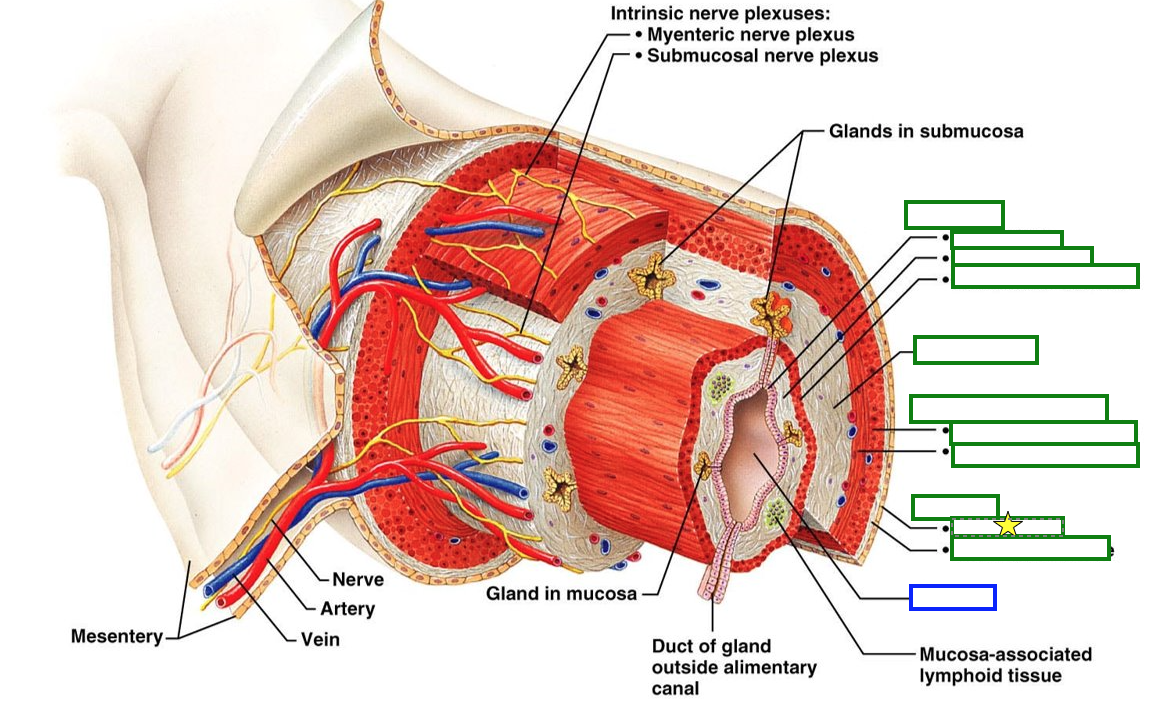
Epithelial layer of serosa aka visceral peritoneum
Mostly simple squamous epithelium
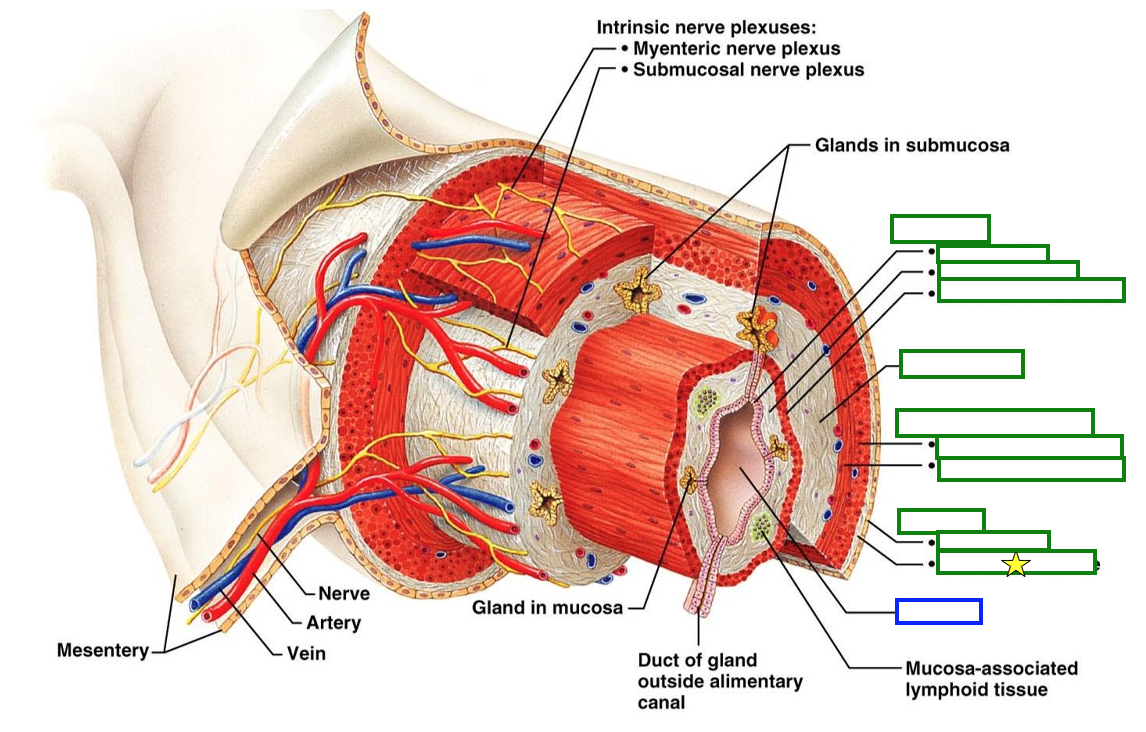
Connective tissue layer of serosa
Mostly areola connective tissue
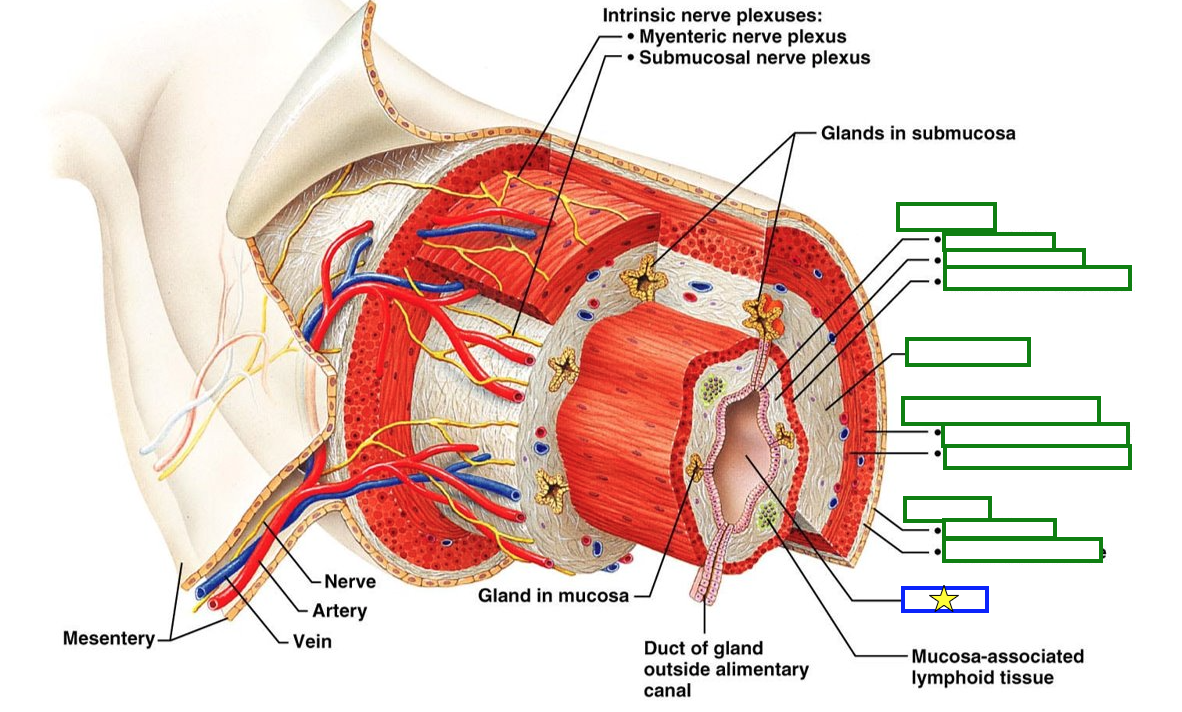
Lumen
Esophagus
Muscular tube leading from mouth to stomach
Function: movement of food by peristalsis; does not contribute to digestion
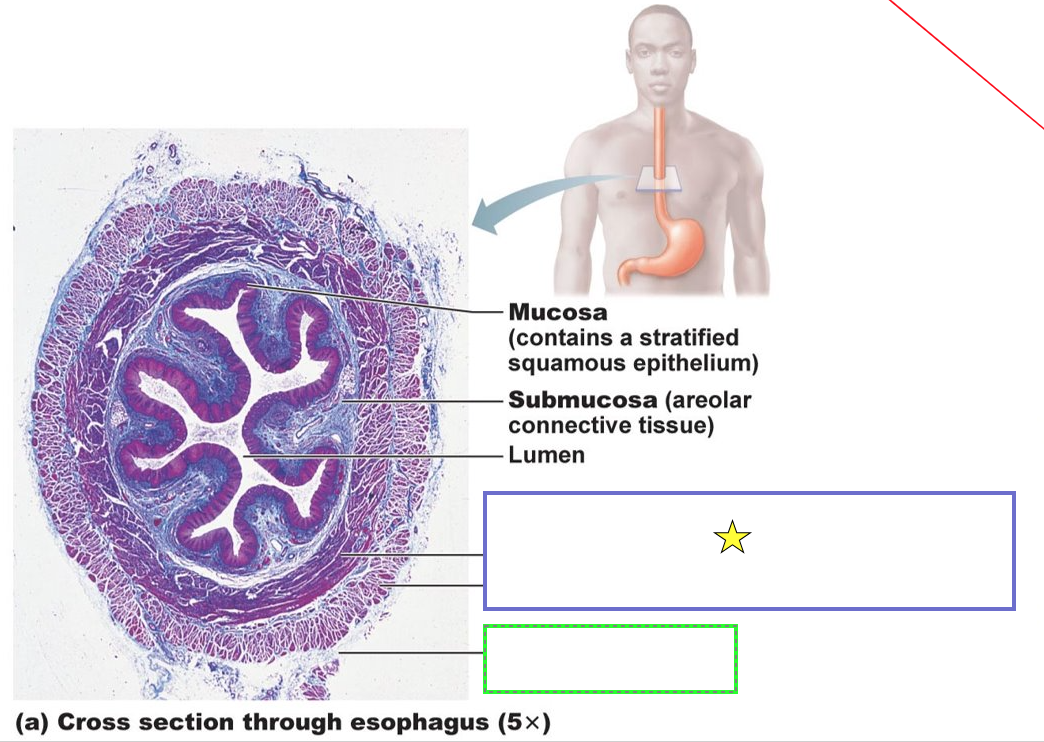
Muscular externa
Upper third = skeletal muscle; lower third = smooth muscle
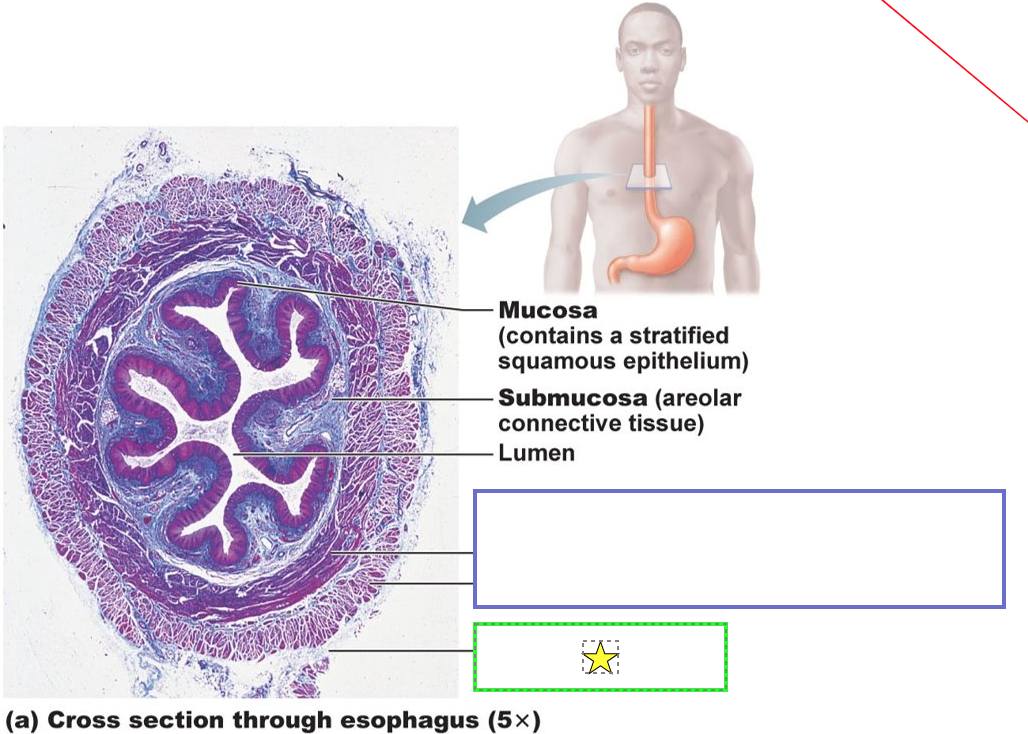
Adventitia
Only connective tissue; therefore, not serosa
Esophageal sphincter
Regulates the entrance and exit from the esophagus
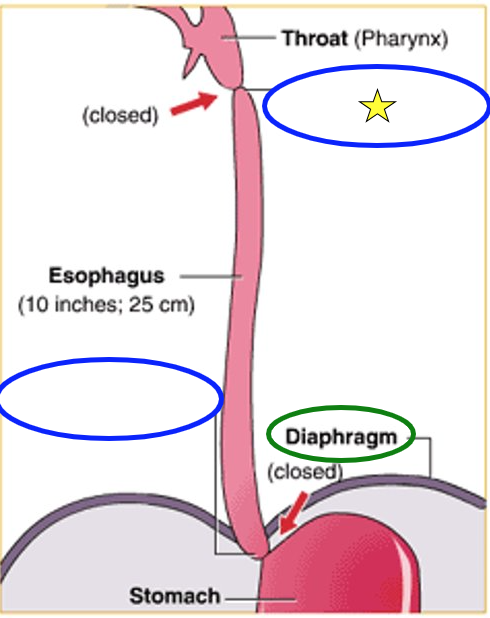
Upper esophageal sphincter
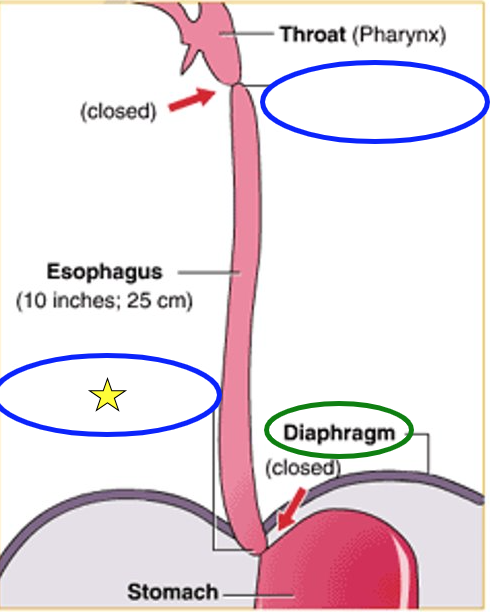
Lower esophageal sphincter
Aka gastroesophageal or cardiac sphincter
GERD
Gastroesophageal reflux disease
Lower esophageal sphincter does not close properly, allowing stomach acid to enter the esophagus
Parietal peritoneum
Membrane lining of the abdominal cavity
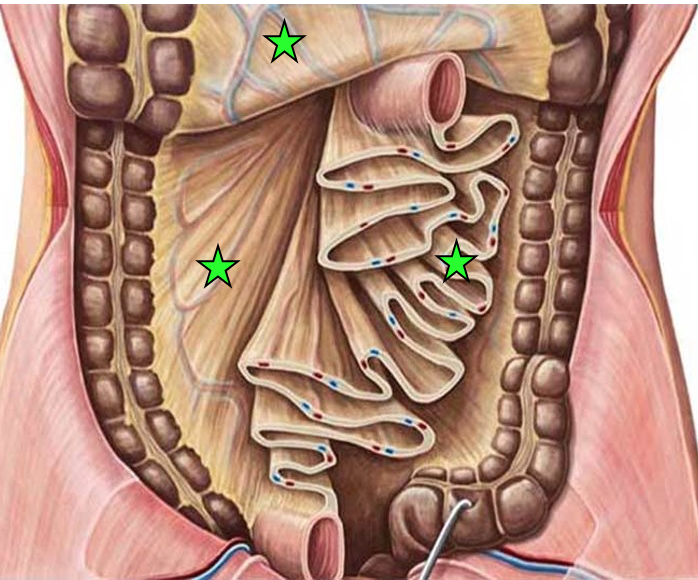
Mesenteries
Folds of the peritoneum that support and stabilize organs, holds fat, and houses vessels
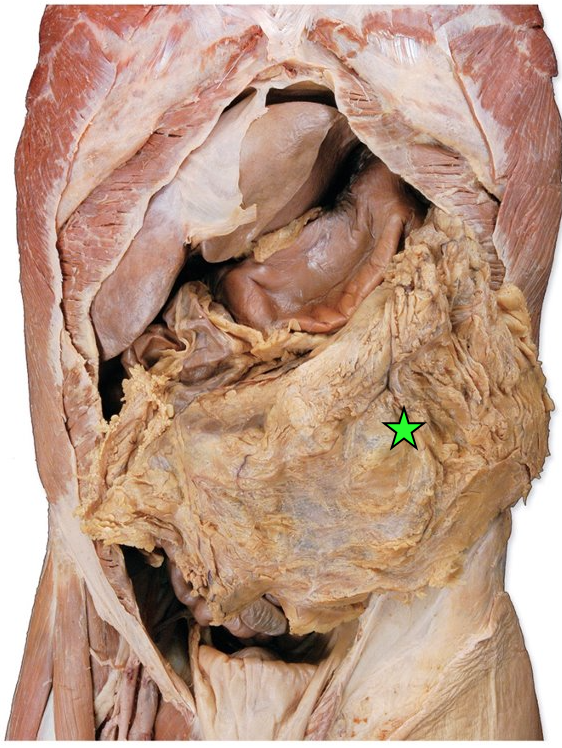
Greater omentum
Mesentery that hangs over abdominal organs
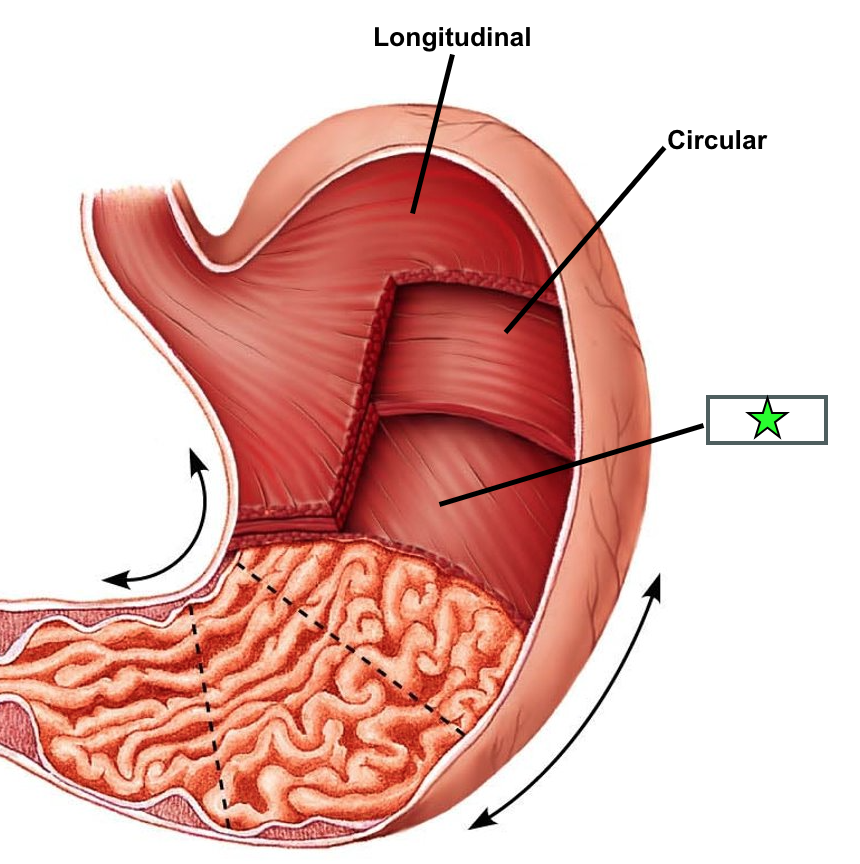
Oblique muscle layer
Allows the stomach to twist for churning
Stomach has 3 layers of muscle
What is the rugae made of?
Mucosa and submucosa
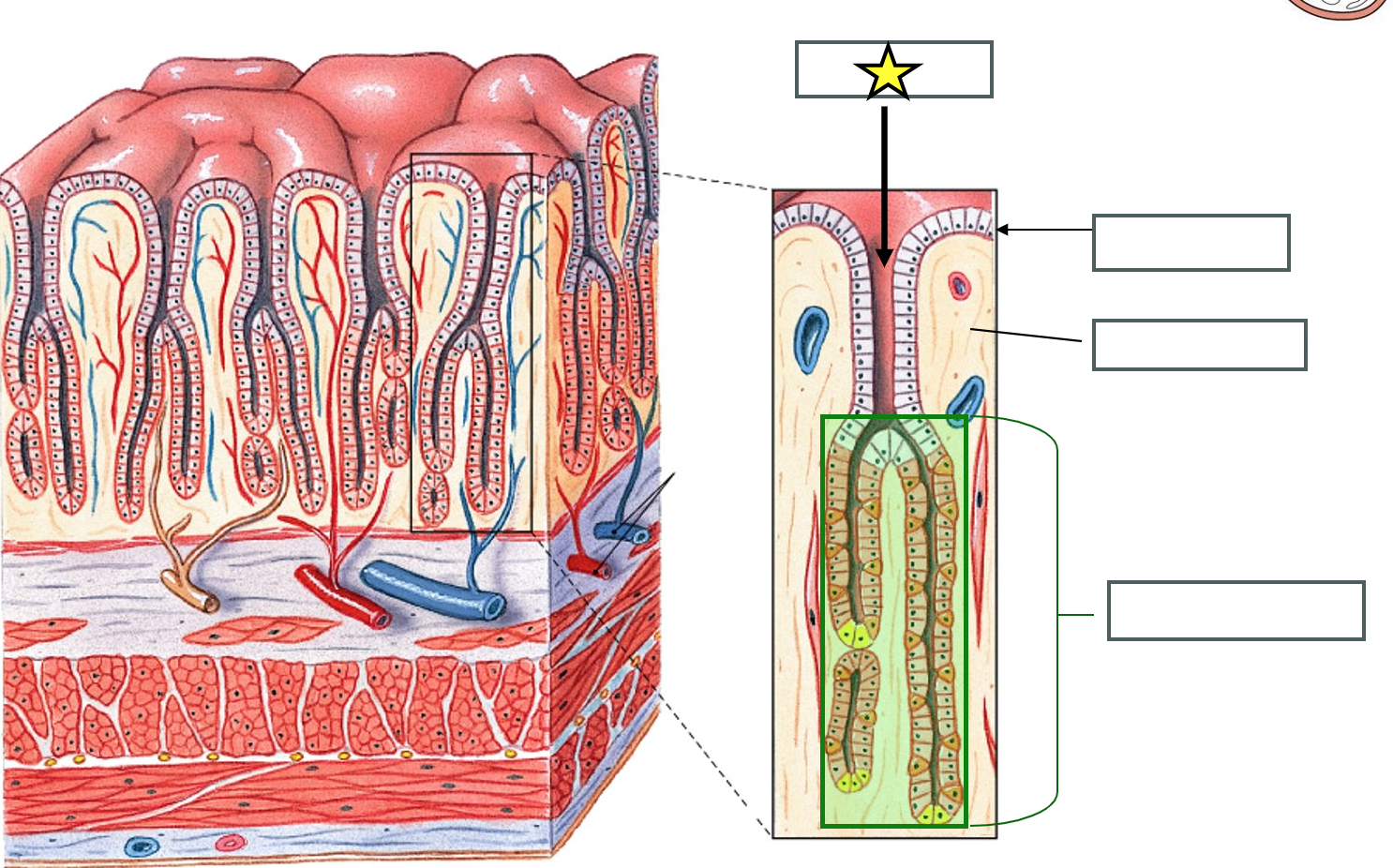
Gastric pit
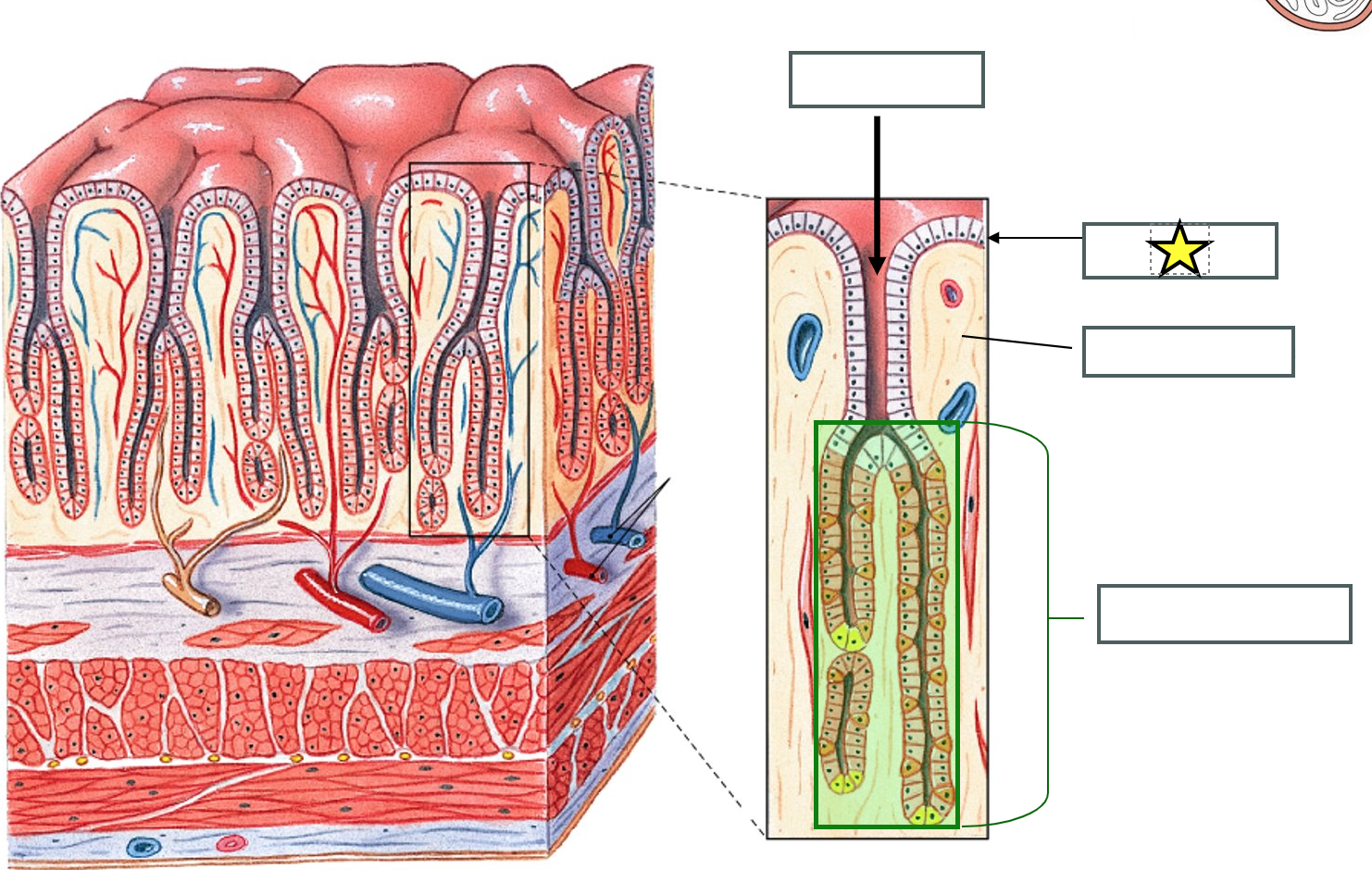
Simple columnar epithelium
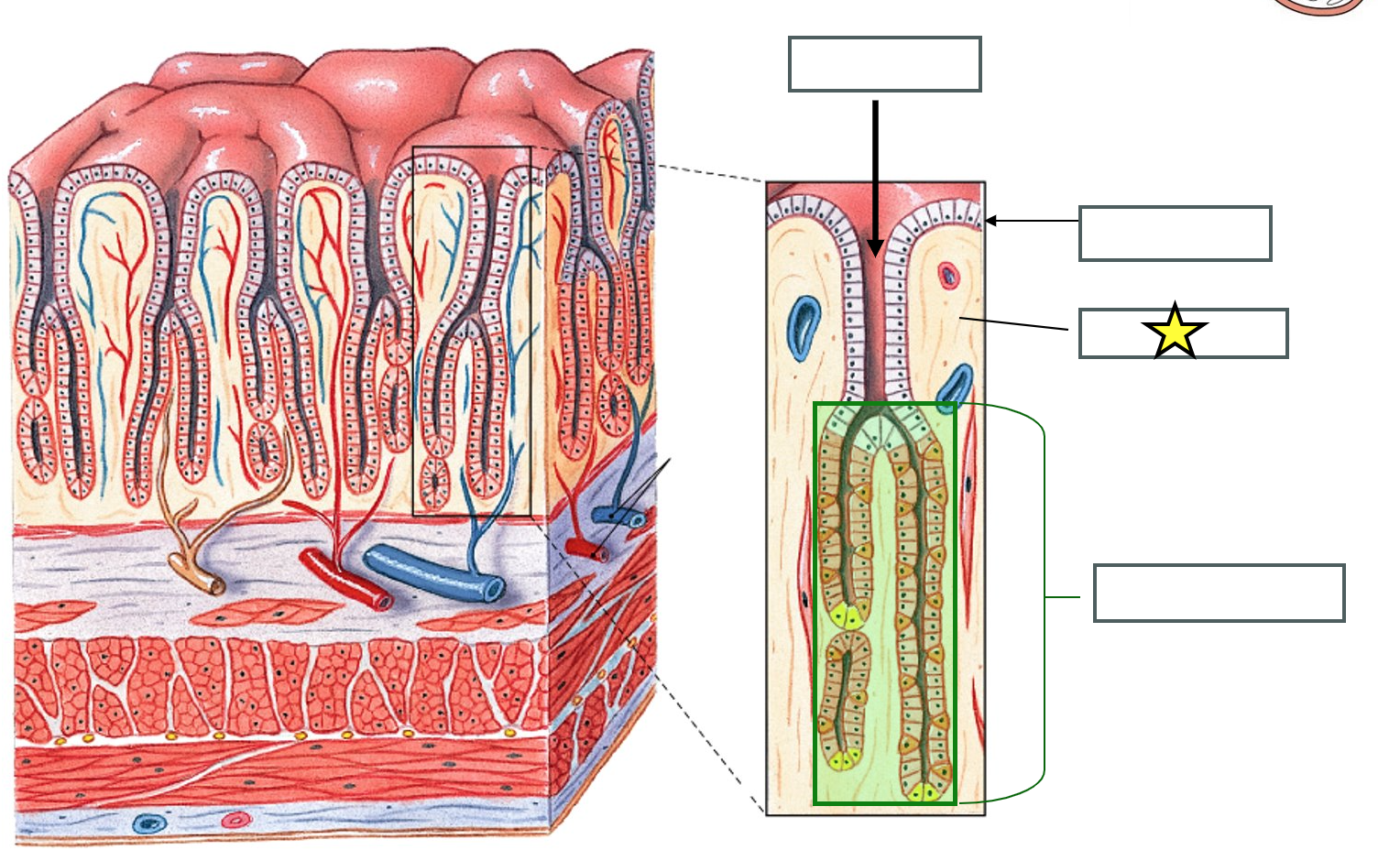
Lamina propia
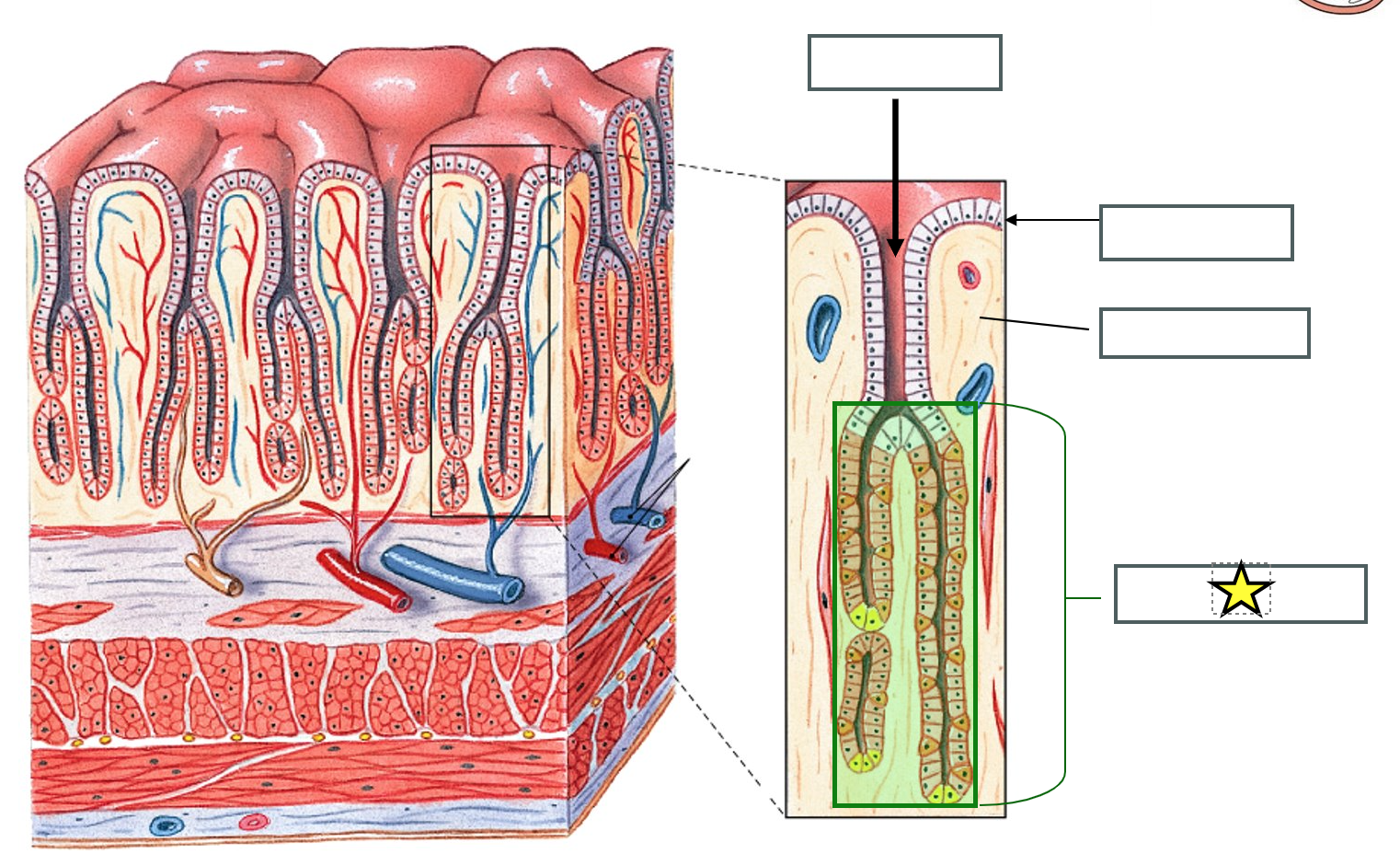
Gastric gland
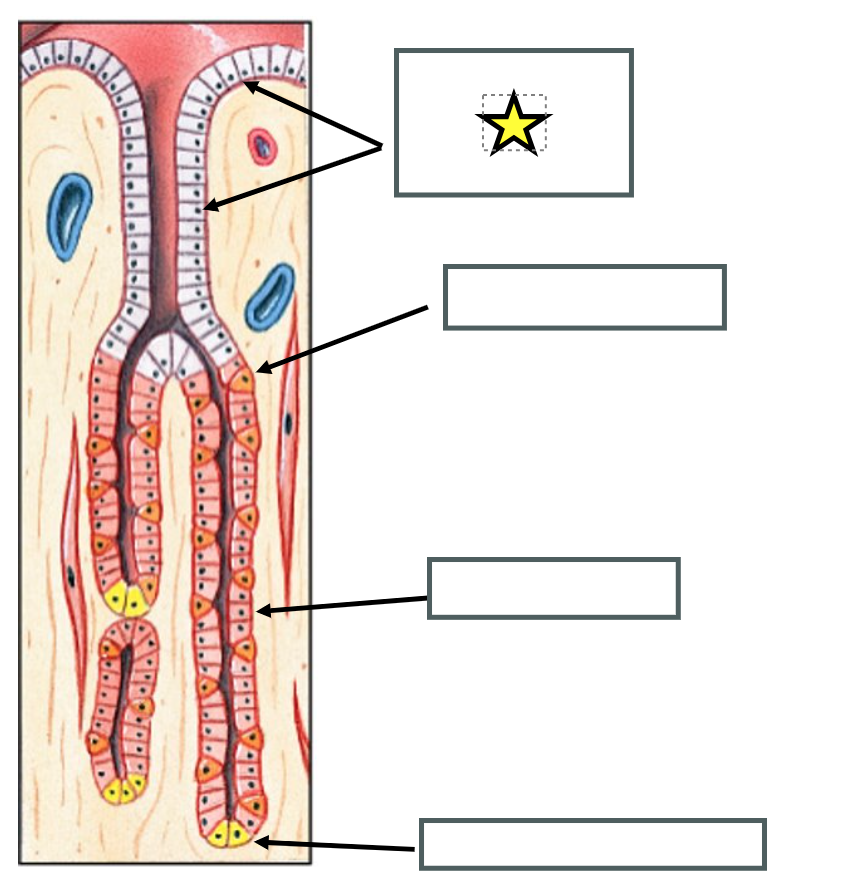
Surface mucus cells
Secretes alkaline mucus to protect from stomach acid
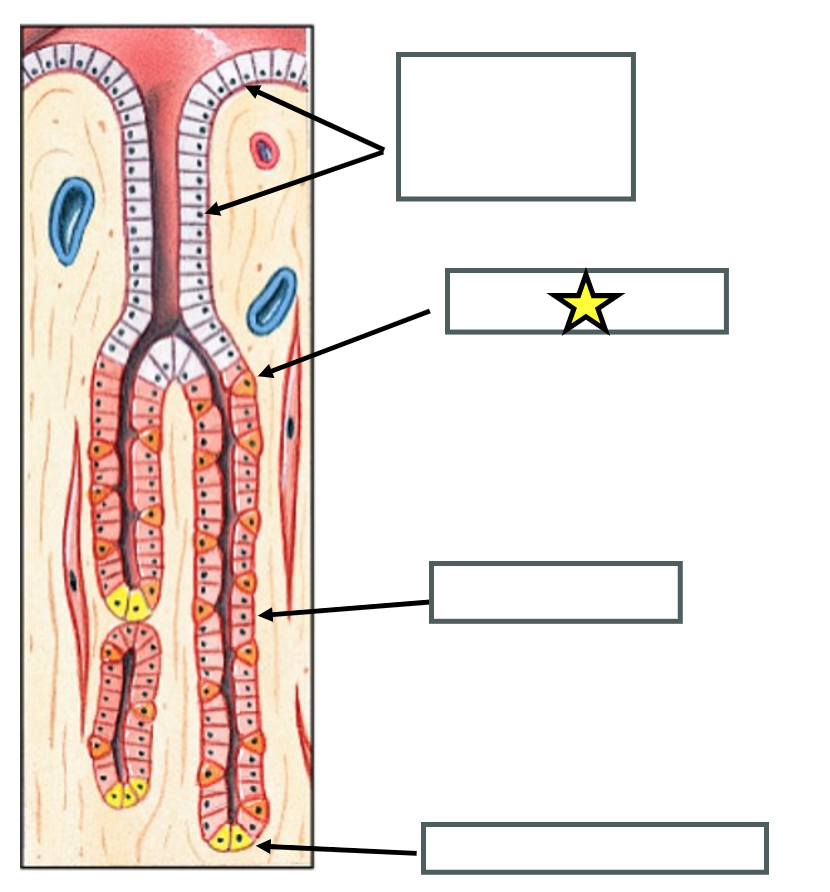
Parietal cells
Secret hydrochloric acid and intrinsic factor
Function of hydrochloric acid secreted by parietal cells
Kills microorganisms
Denatures proteins
Function of intrinsic factor secreted by parietal cells
Necessary for the absorption of vit b12 in the small intenstines
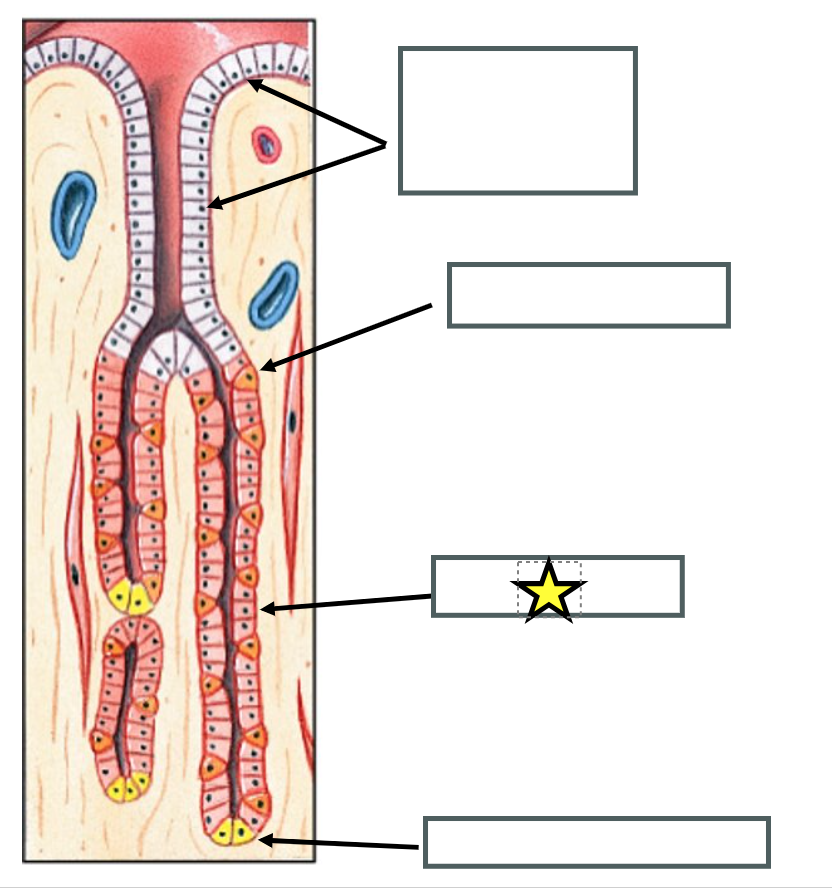
Chief cells
Secretes pepsinogen
Pepsinogen
Precursor to pepsin
Pepsin breaks down proteins
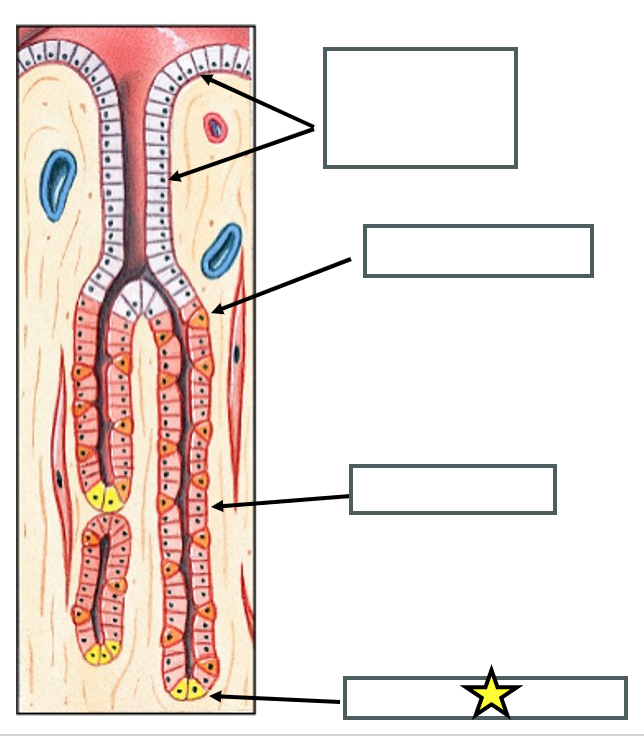
Enteroendocrine cells
Secretes gastrin, somatostatin, histamine, and other hormones (coordinates digestion)
Chyme
Stomach secretions and food
Digestive functions of stomach
Chemical breakdown of proteins
No absorption of nutrients (except alcohol and some drugs)
Duodenum
Mixes chyme, pancreatic secretions, and bile
Shallow plicae
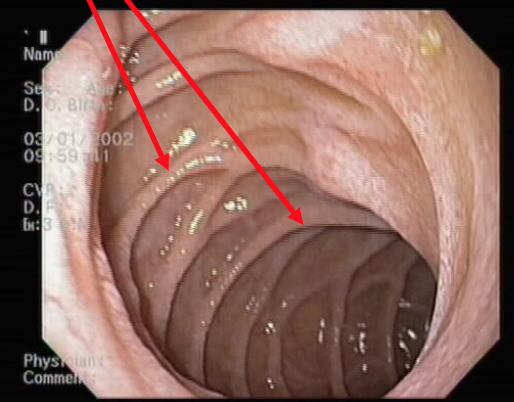
Plicae
Circular folds of the submucosa
Increase surface area of small intestine for absorption
Jejunum
Where final chemical digestion and most absorption of nutrients occurs
Deep plicae and villi
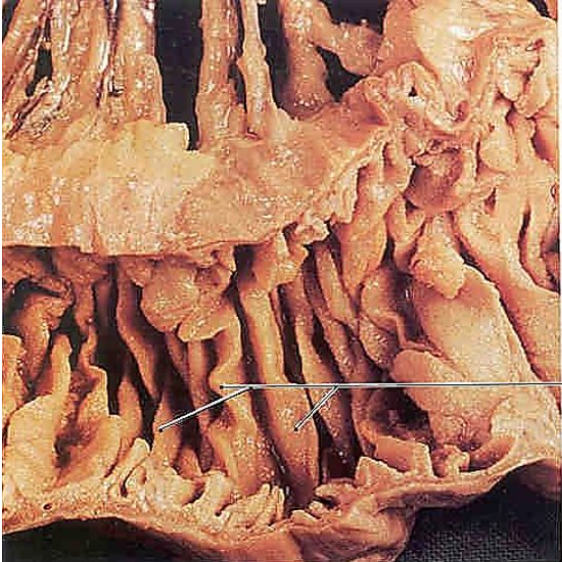
Villi
Fingerlike folds in the mucosa layer
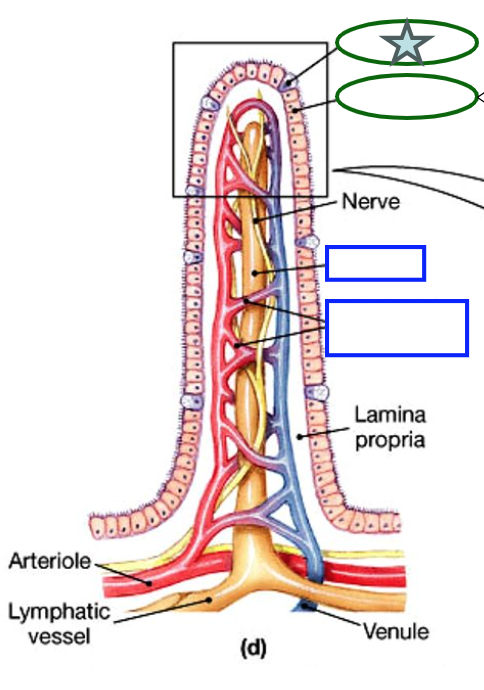
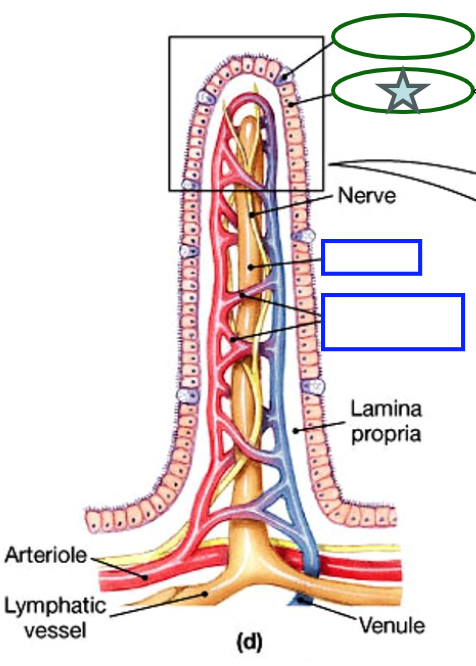
Contains microvilli
Microvilli
Folds on the apical surface of epithelial cells of small intestine
Increases surface area and absorption on the cellular level
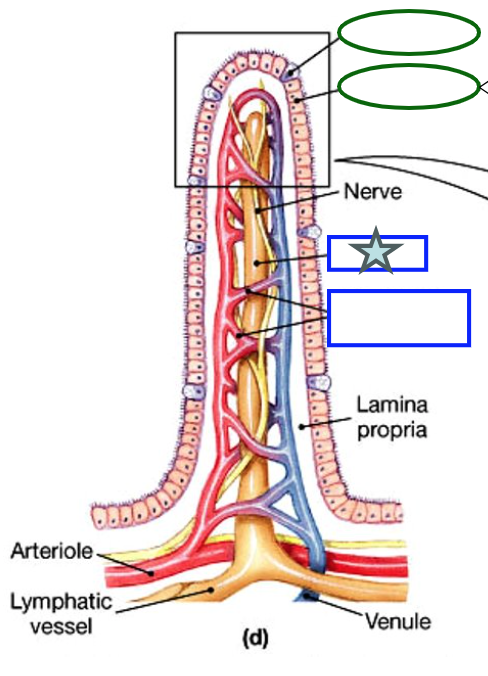
Lacteal
Absorbs fats
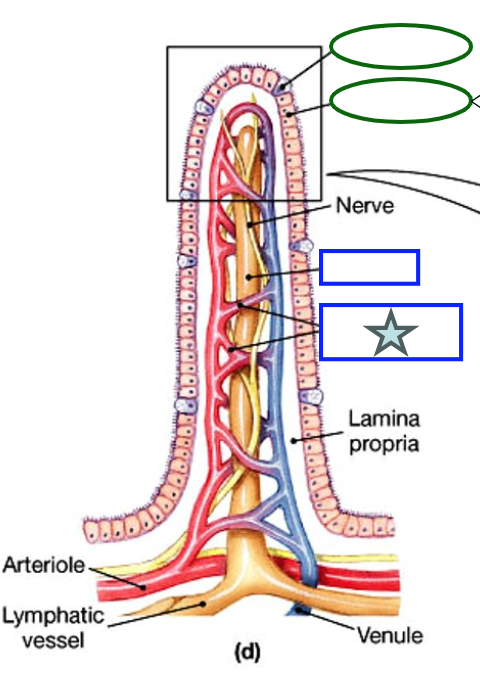
Capillary network
Absorbs nutrients
Ileum
Absorption of vit B12
Has vili and less prominent plicae
Has peyer’s patches (MALT) to protect from bacteria in large intestine
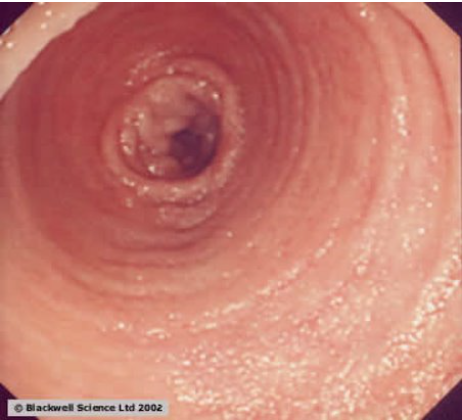
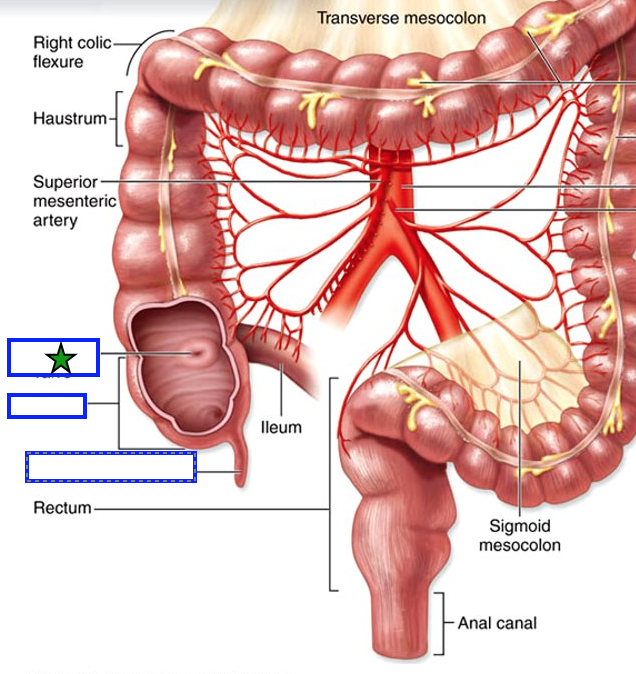
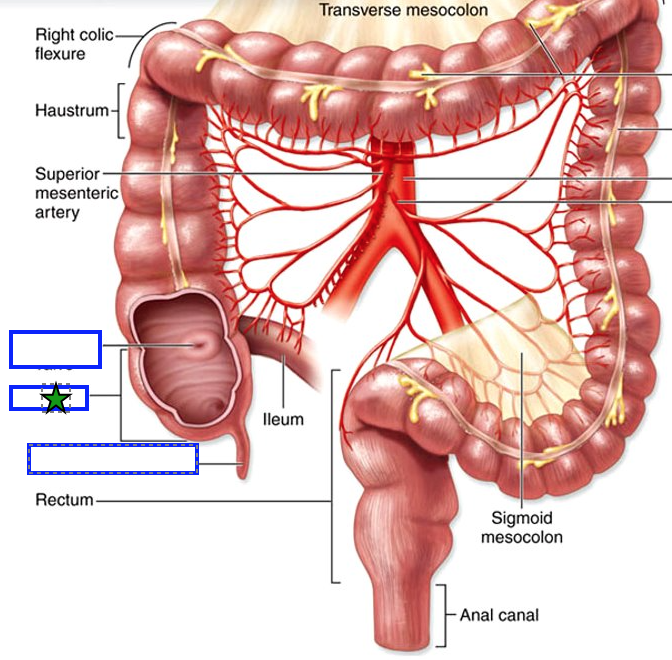
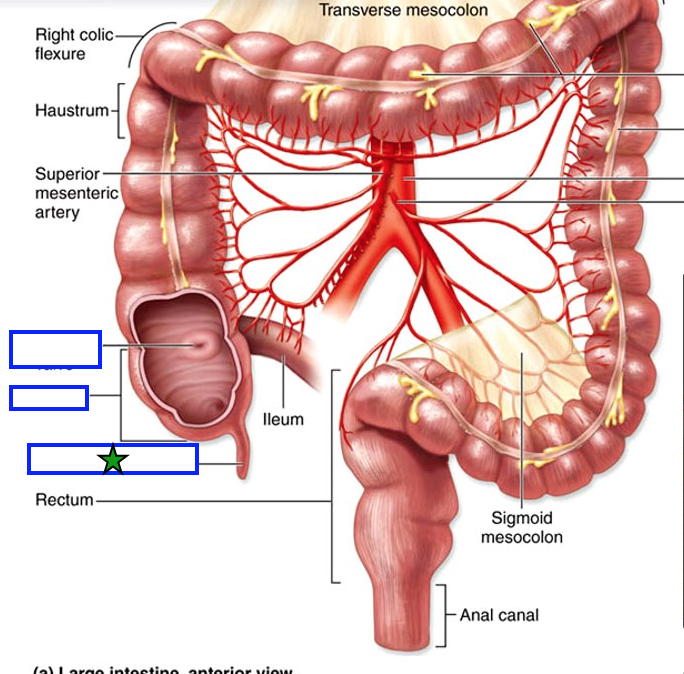
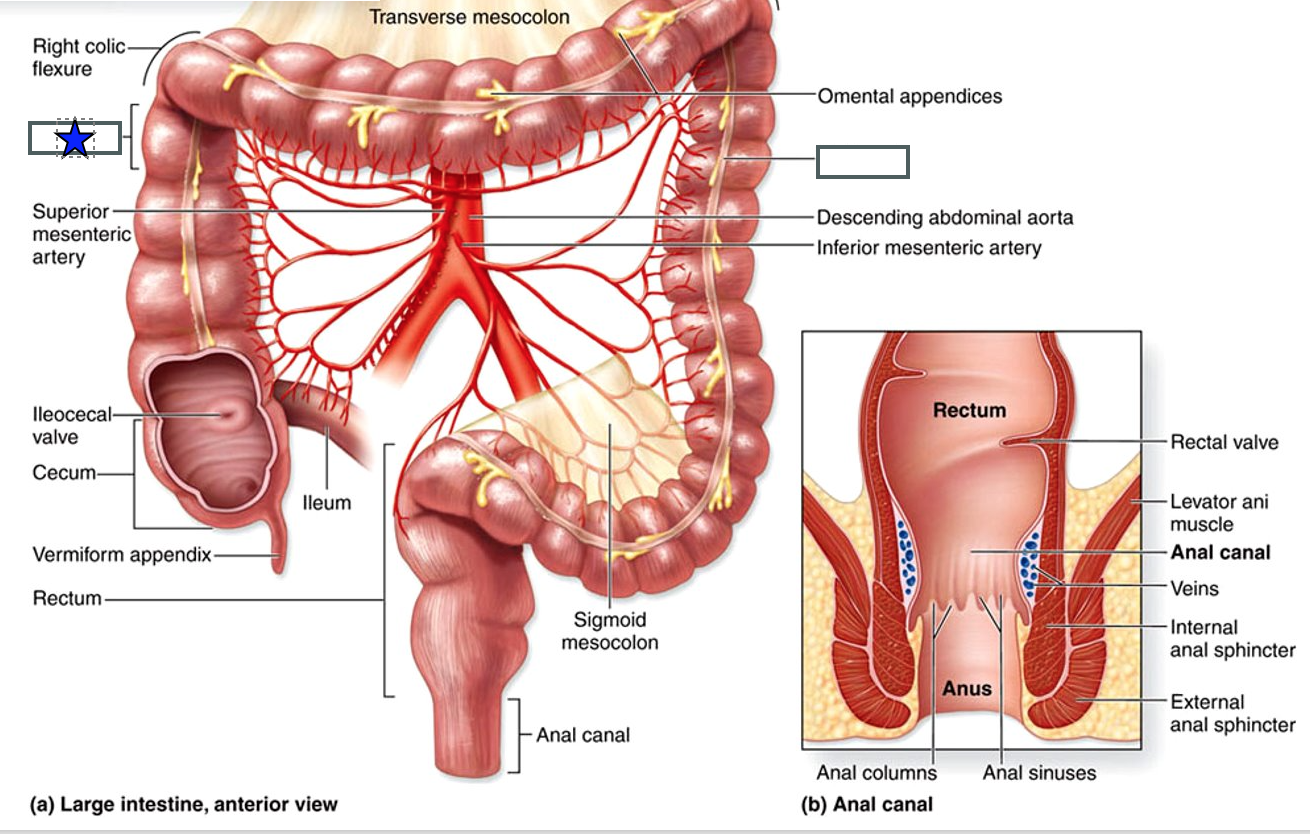
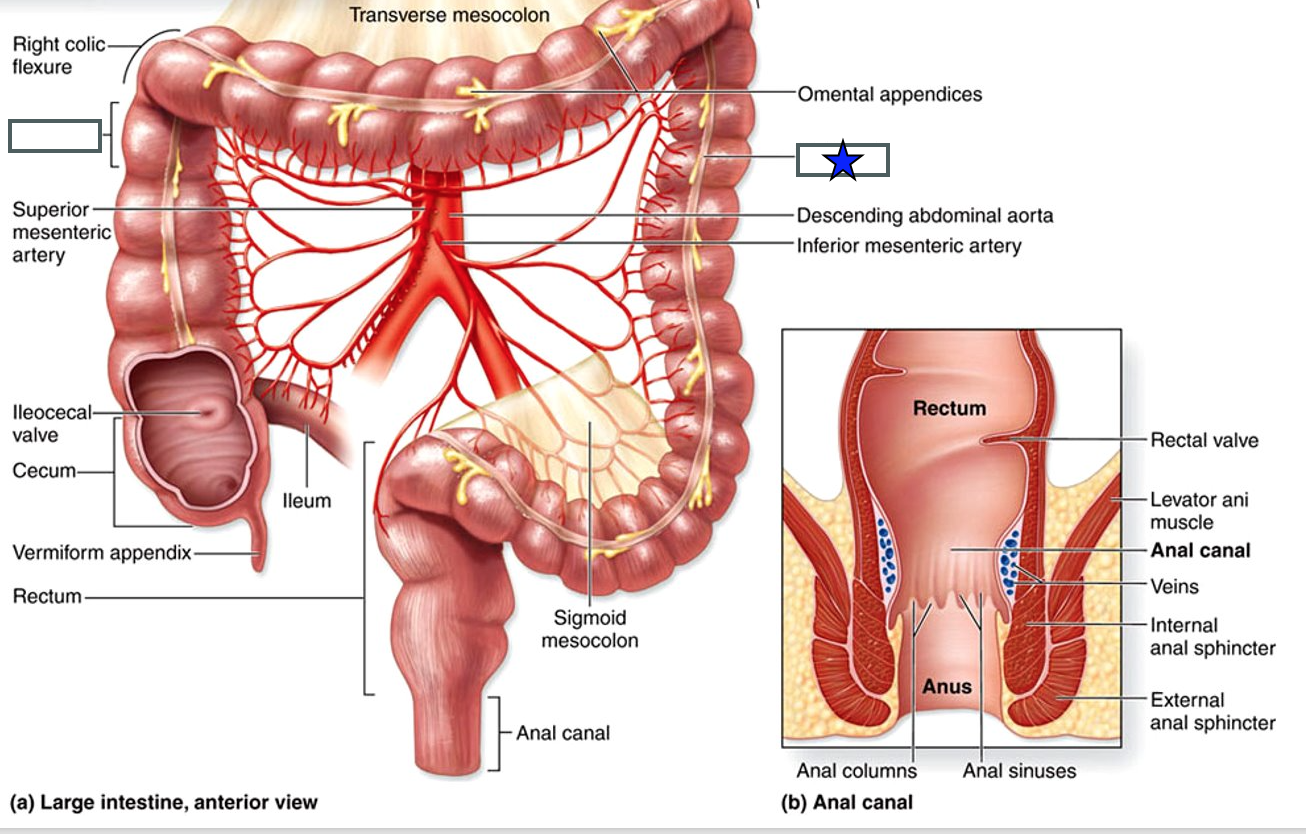
Large intestine
No folds
Lots of goblet cells for mucus
Function: absorbs water, vit K, biotin, and vit B5; stores fecal matter
Watch video
Watch video
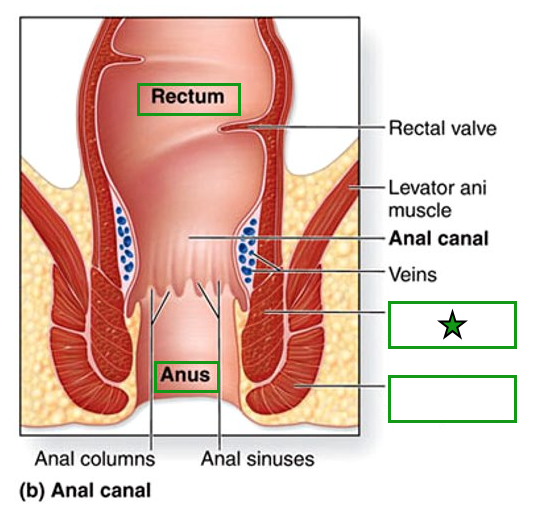
Smooth muscle (involuntary contraction)
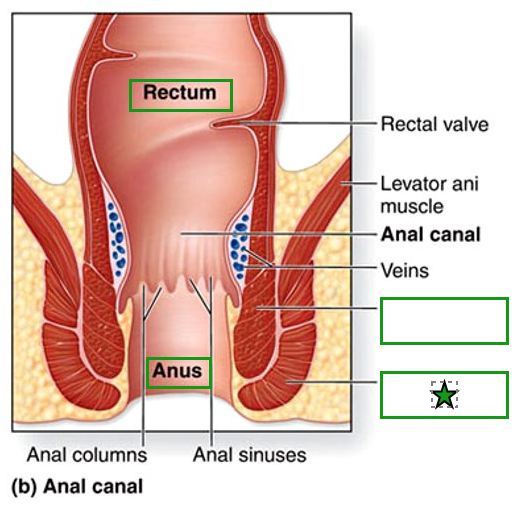
Skeletal muscle (voluntary contraction)
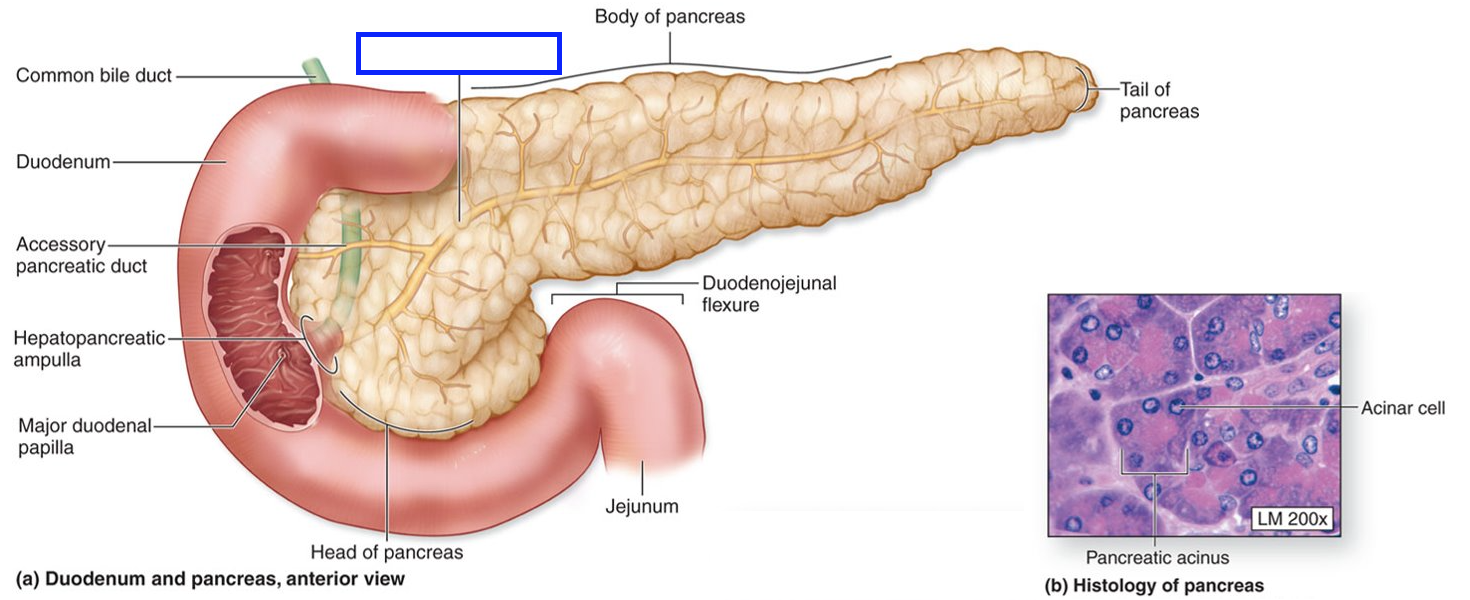
Pancreas
Dual glandular
Pancreatic acini: cells that make digestive enzymes and dumps them into duodenum via pancreatic duct
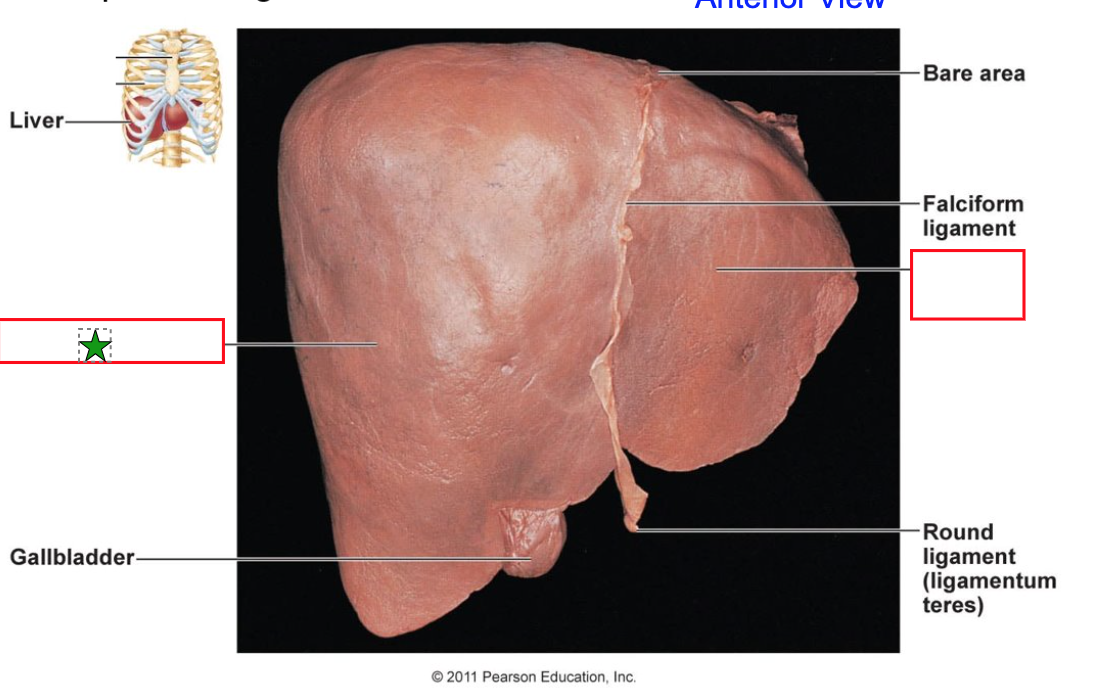
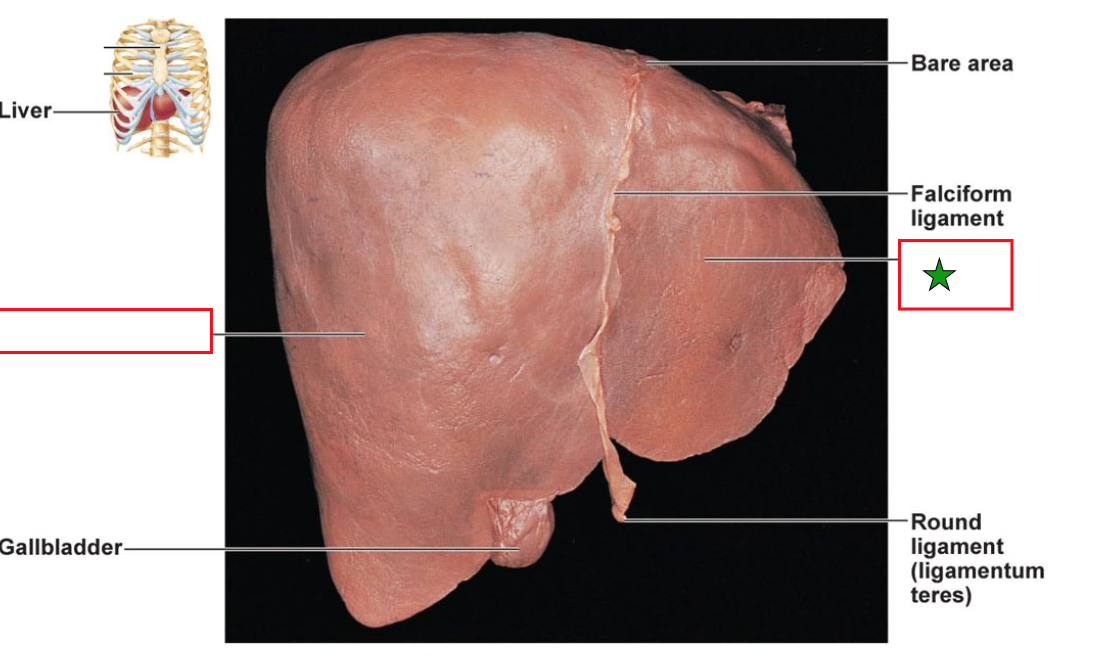
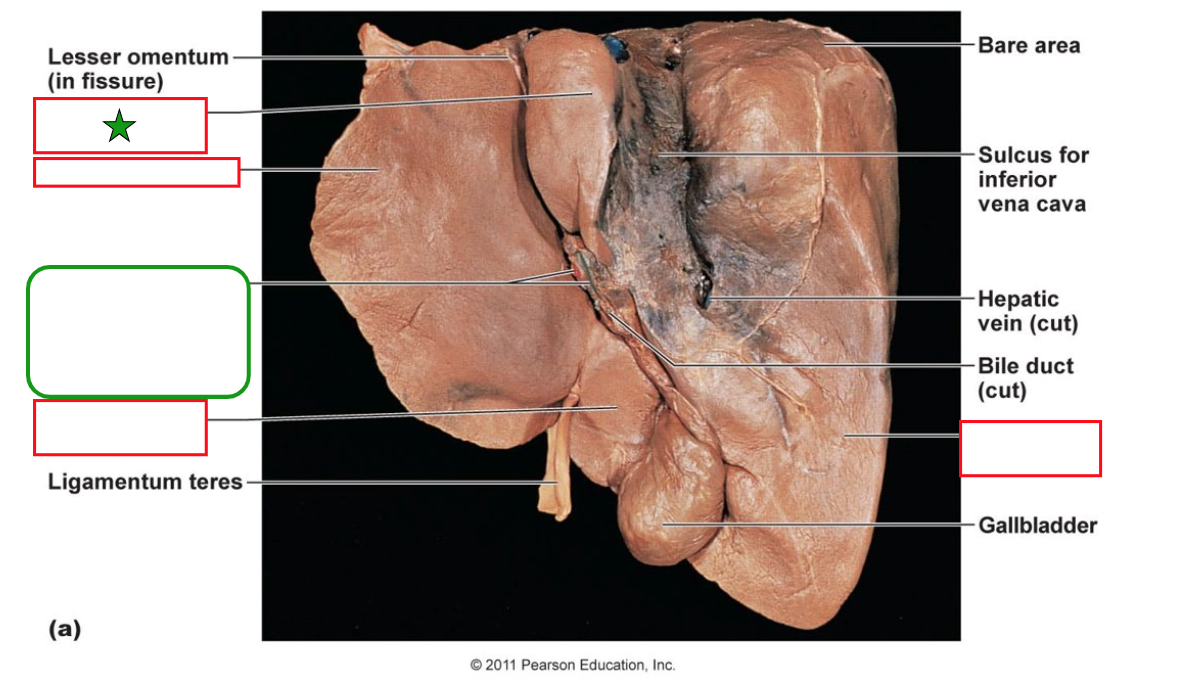
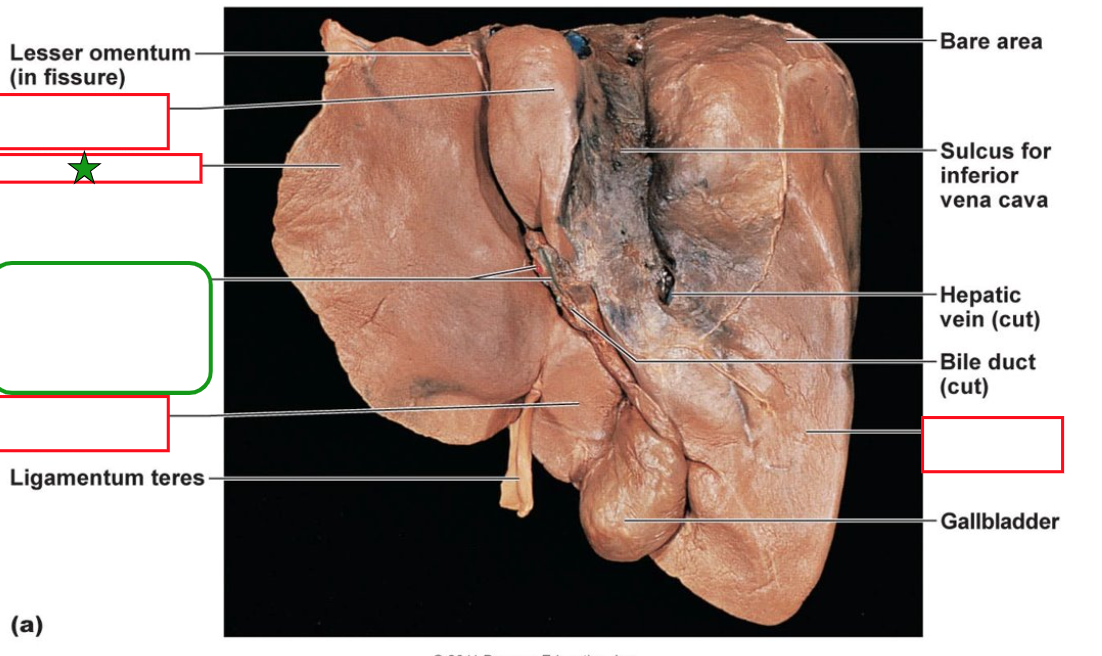
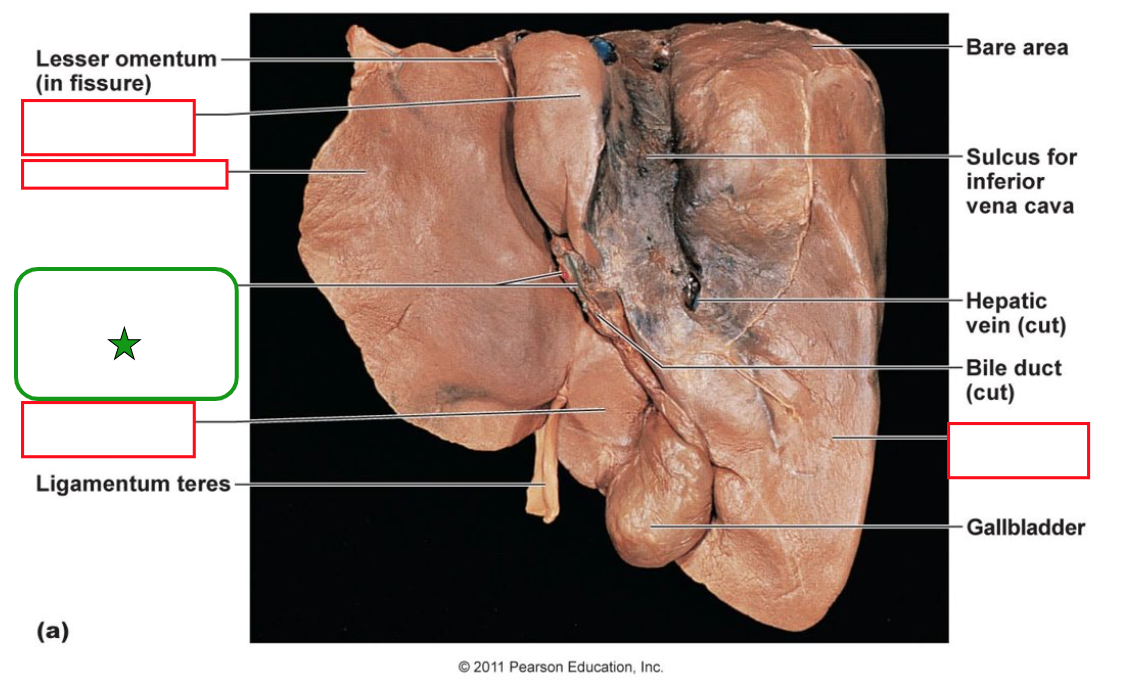
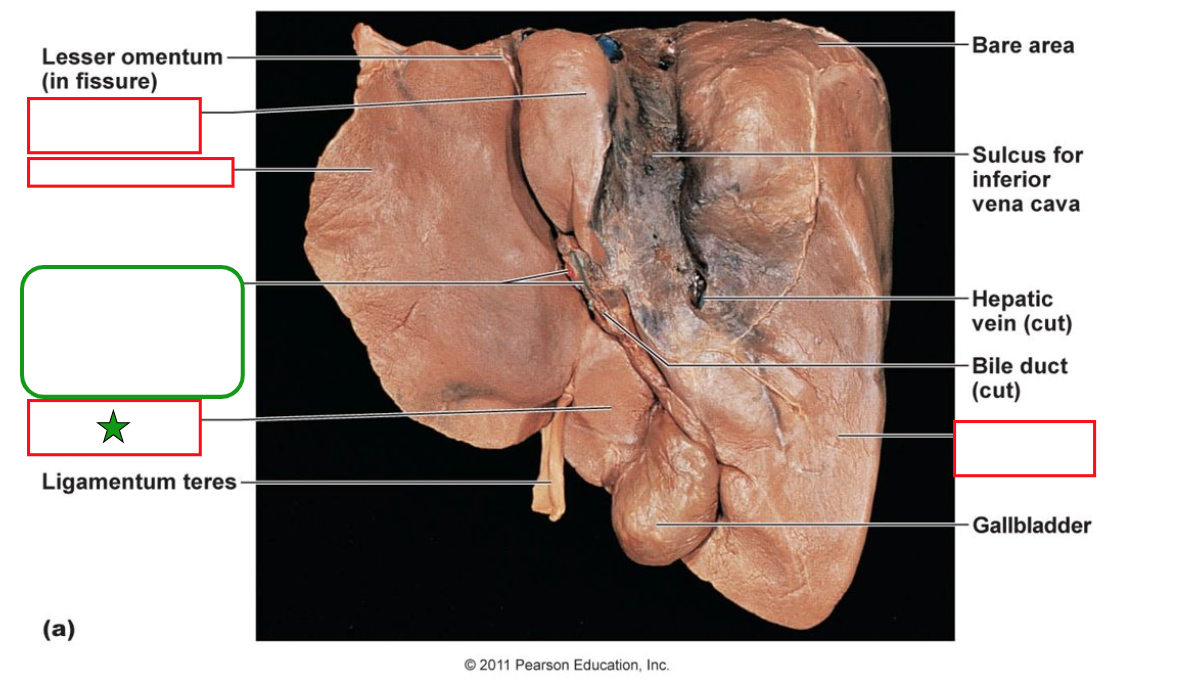
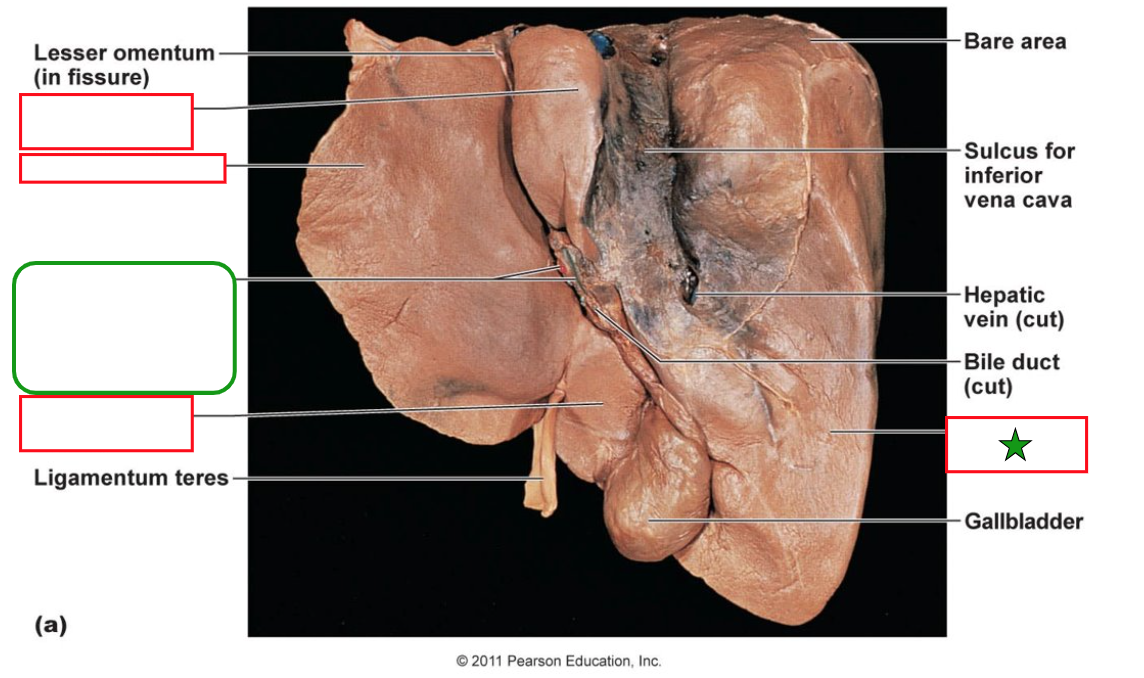
Lobules
Functional unit of liver
Filters blood from the hepatic portal veins
Liver functions
Metabolic regulation
Hematological regulation
Bile production
Galbladder
Stores bile
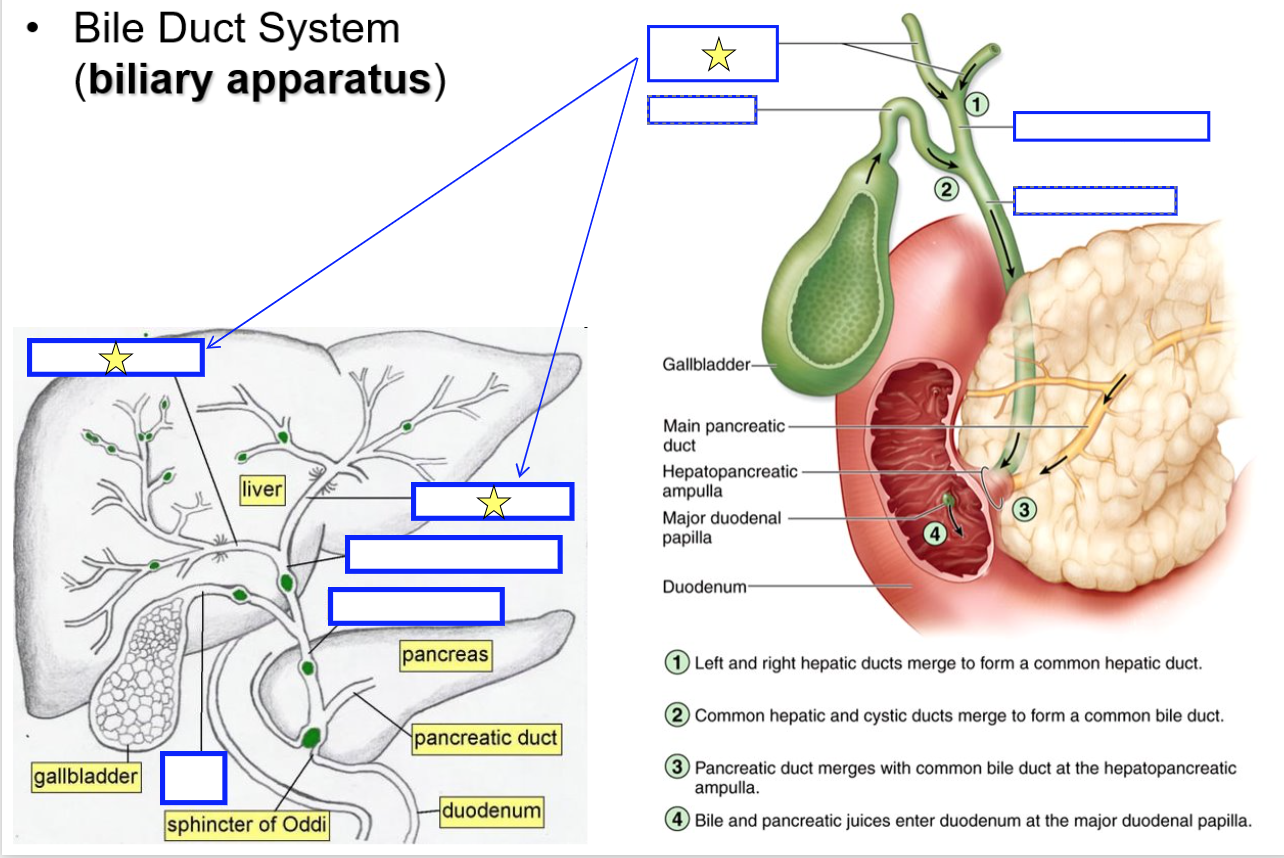
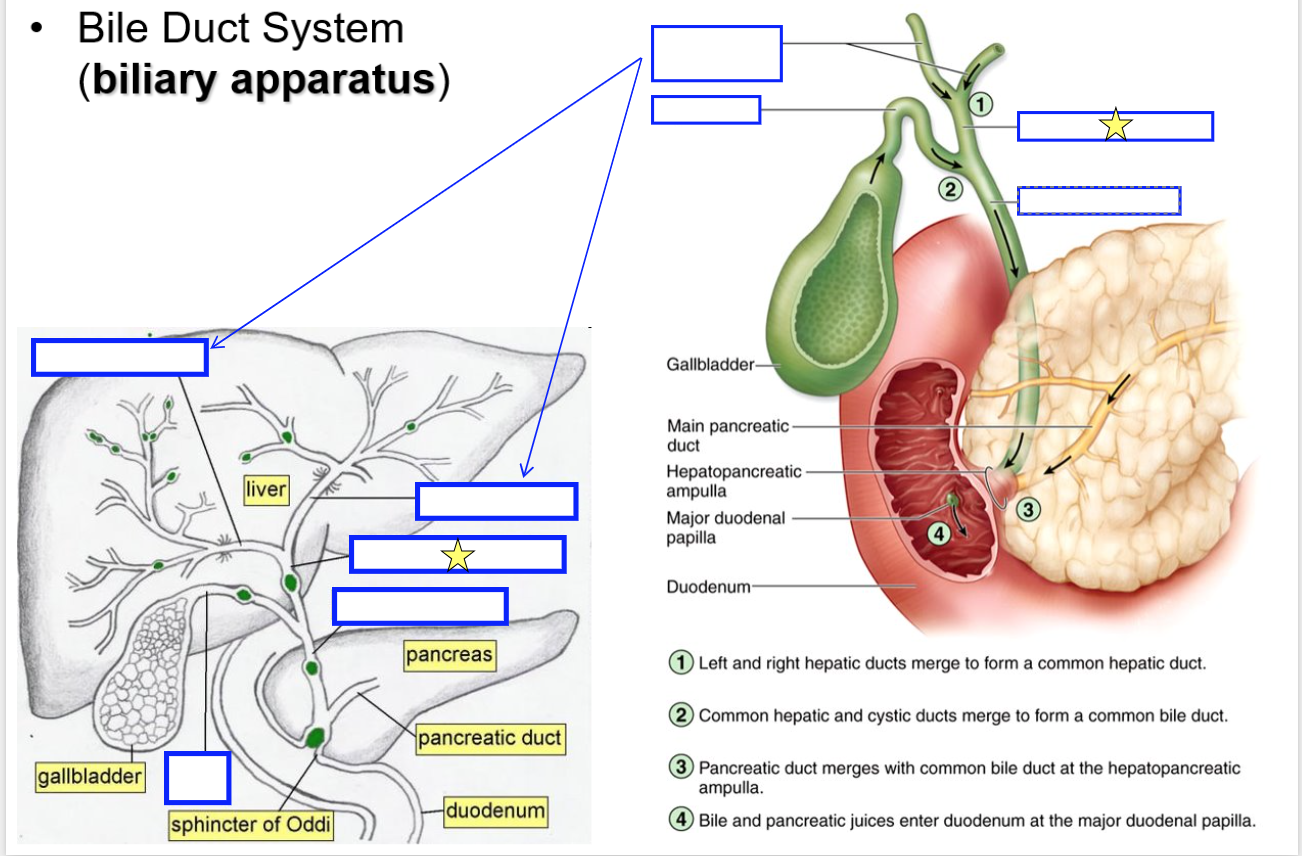
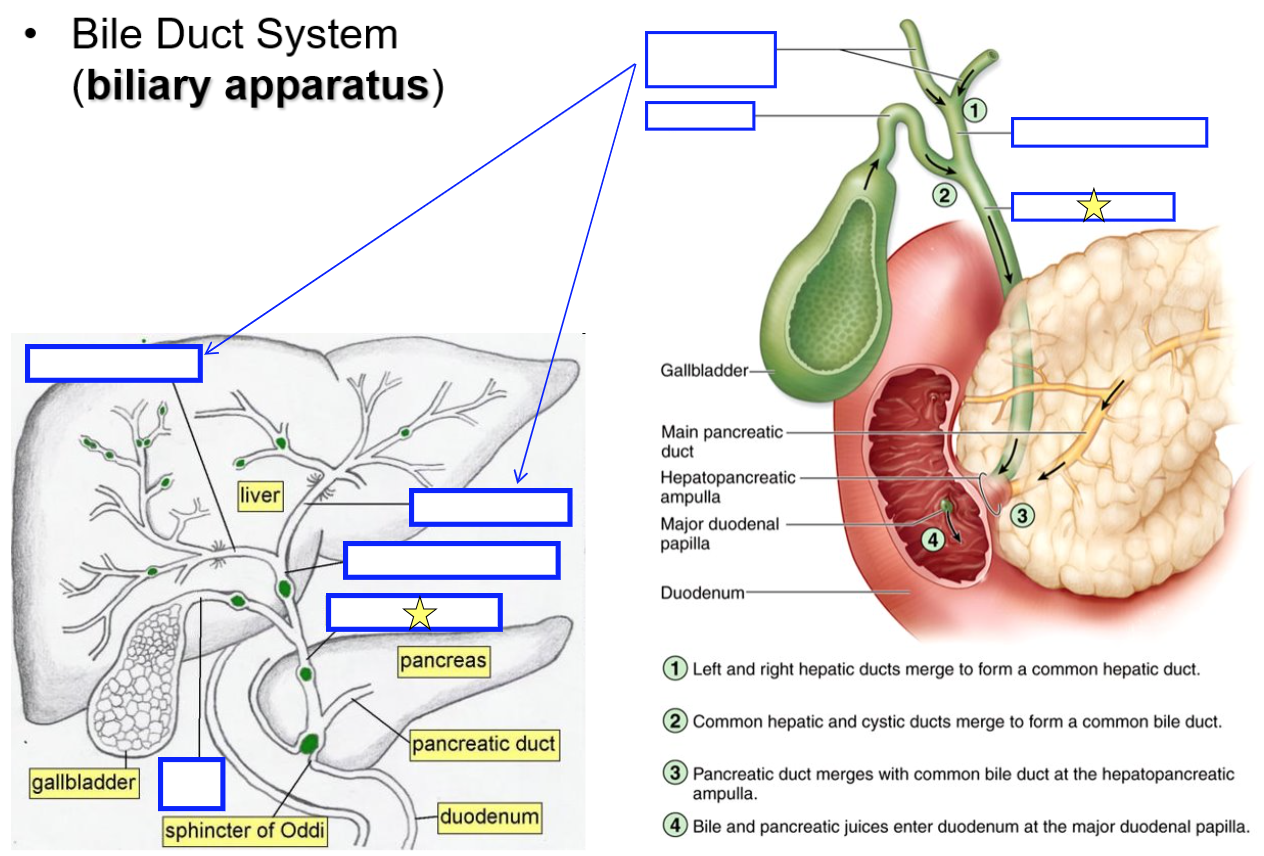
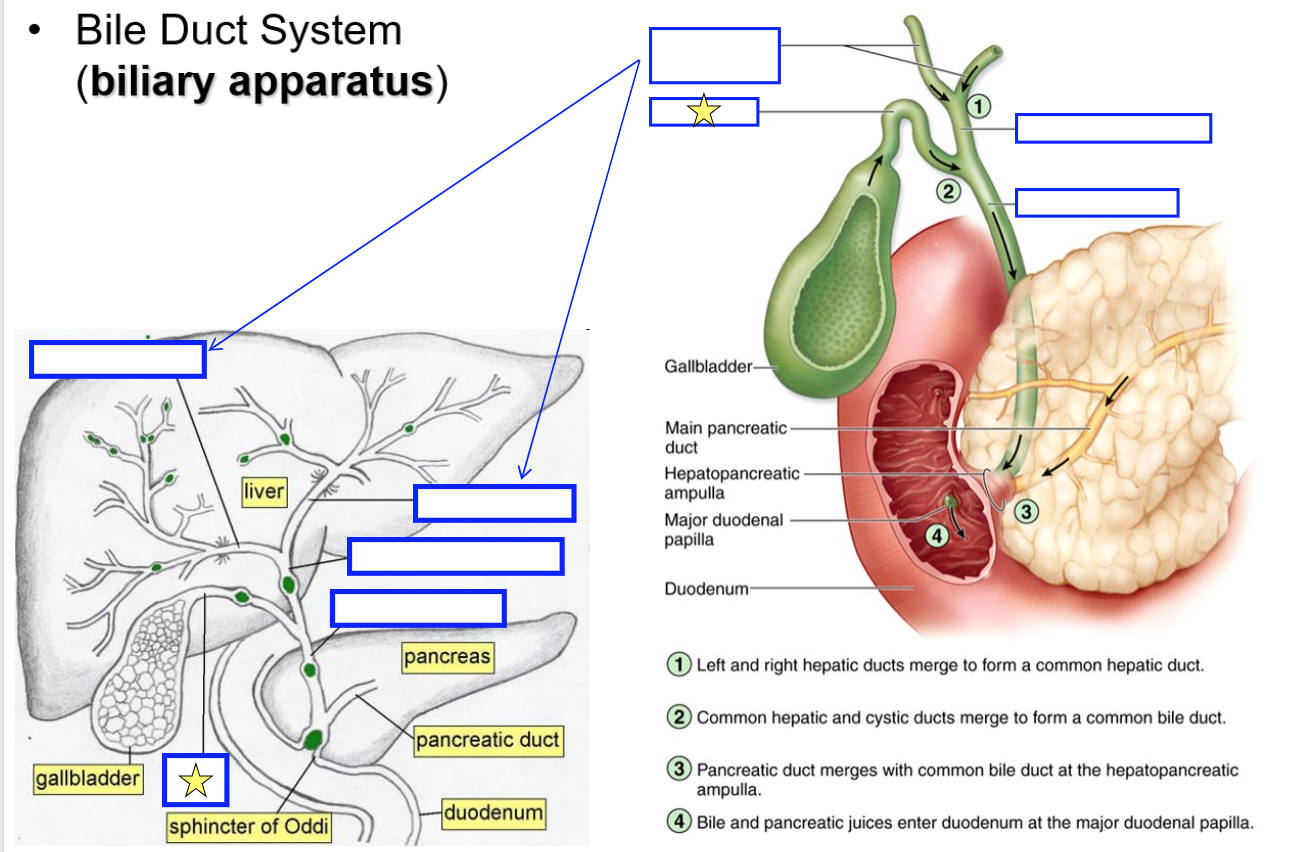
Cholelithiasis
Gallstones
Composed of cholesterol

