Bio111 Cellular Respiration
 Call Kai
 Learn
Learn Practice Test
 Spaced Repetition
 Match
Match Flashcards
 Knowt Play
1/20

There's no tags or description
Looks like no tags are added yet.
Name | Mastery | Learn | Test | Matching | Spaced | Call with Kai |
|---|
No analytics yet
Send a link to your students to track their progress
21 Terms
Cellular Respiration
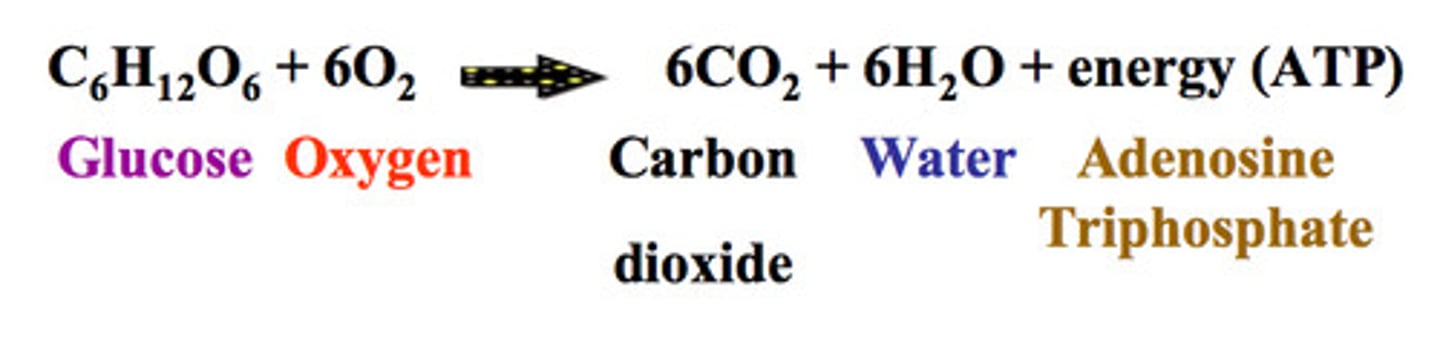
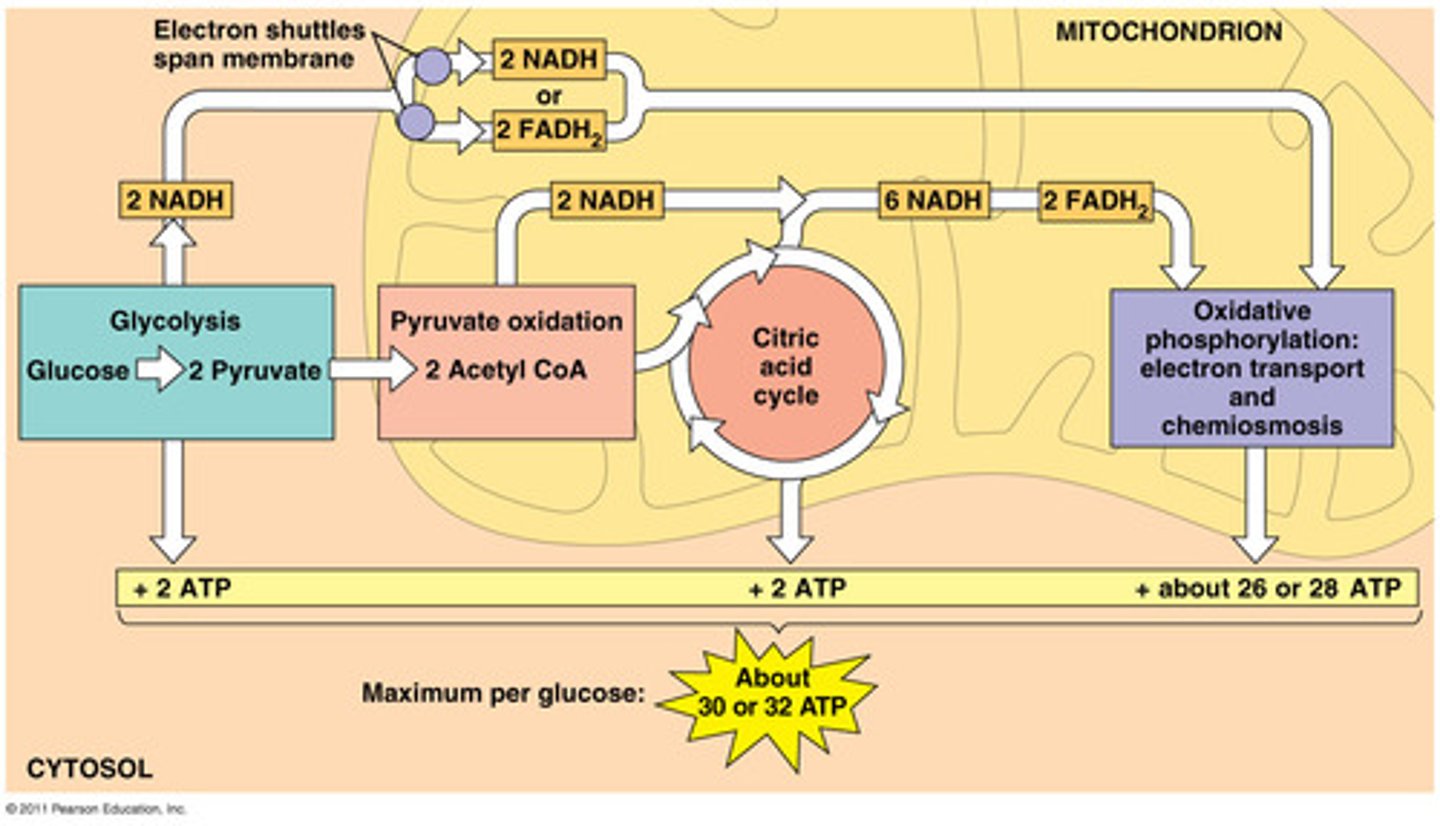
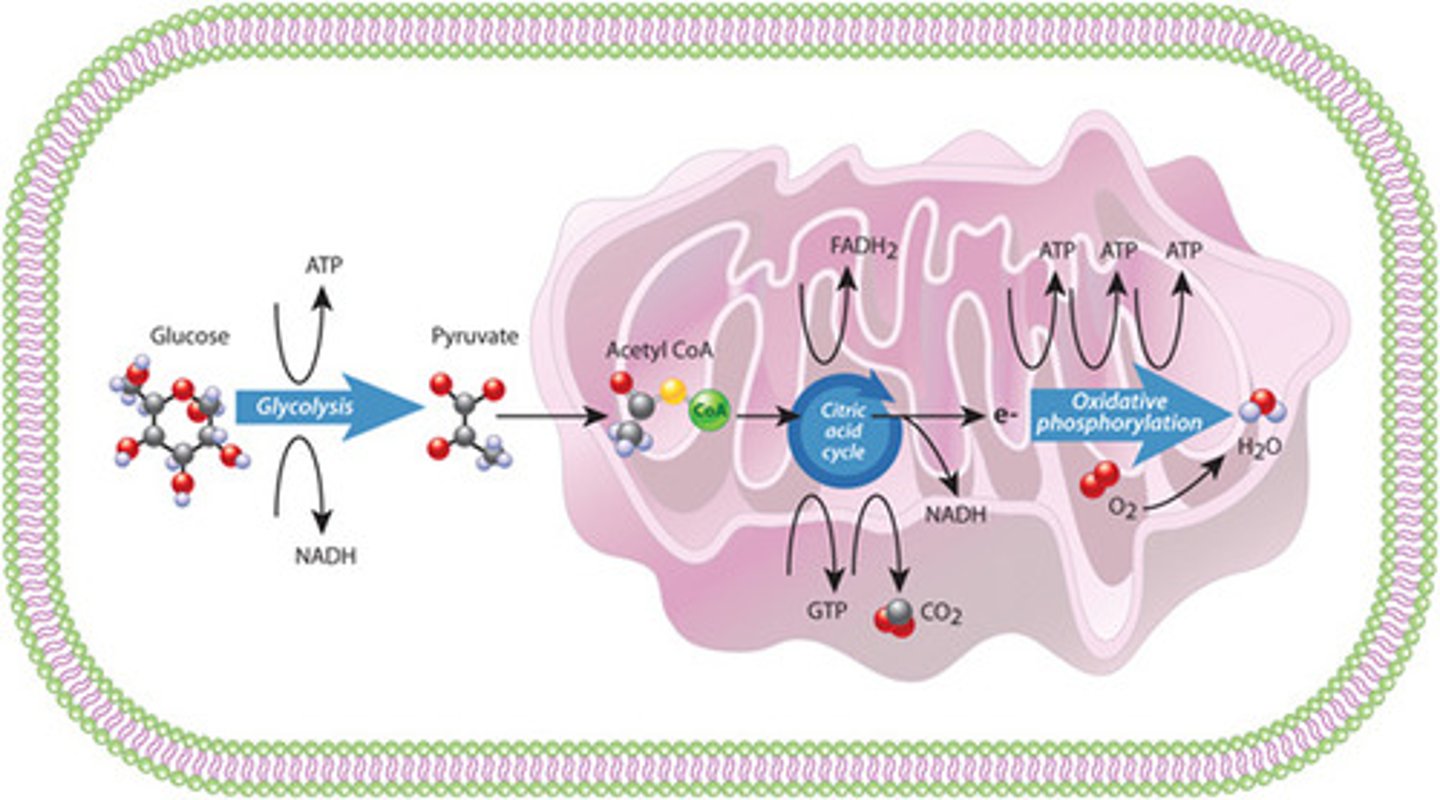
Cell process where glucose and oxygen are converted to ATP, carbon dioxide, and water.
Aerobic respiration
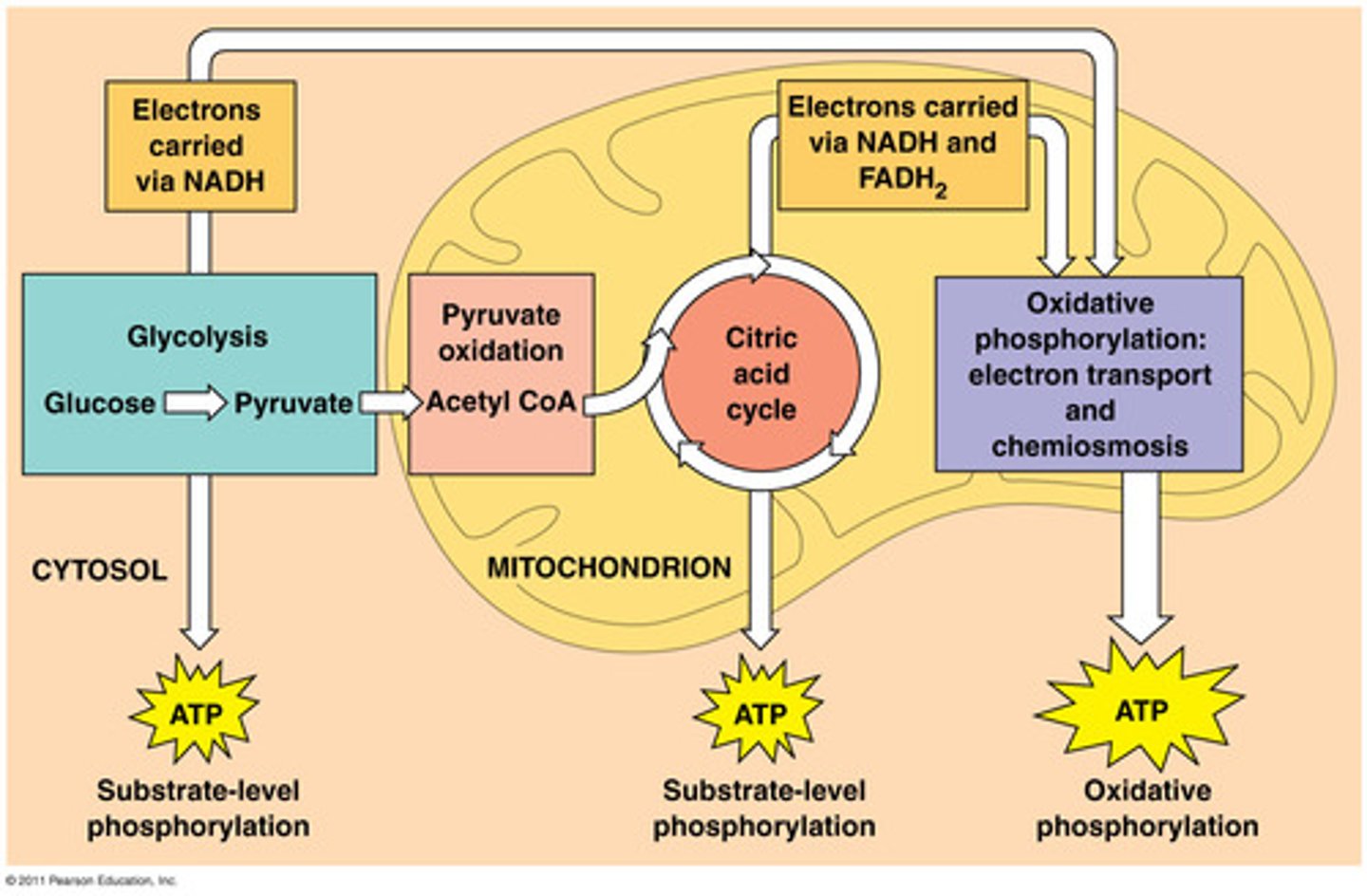
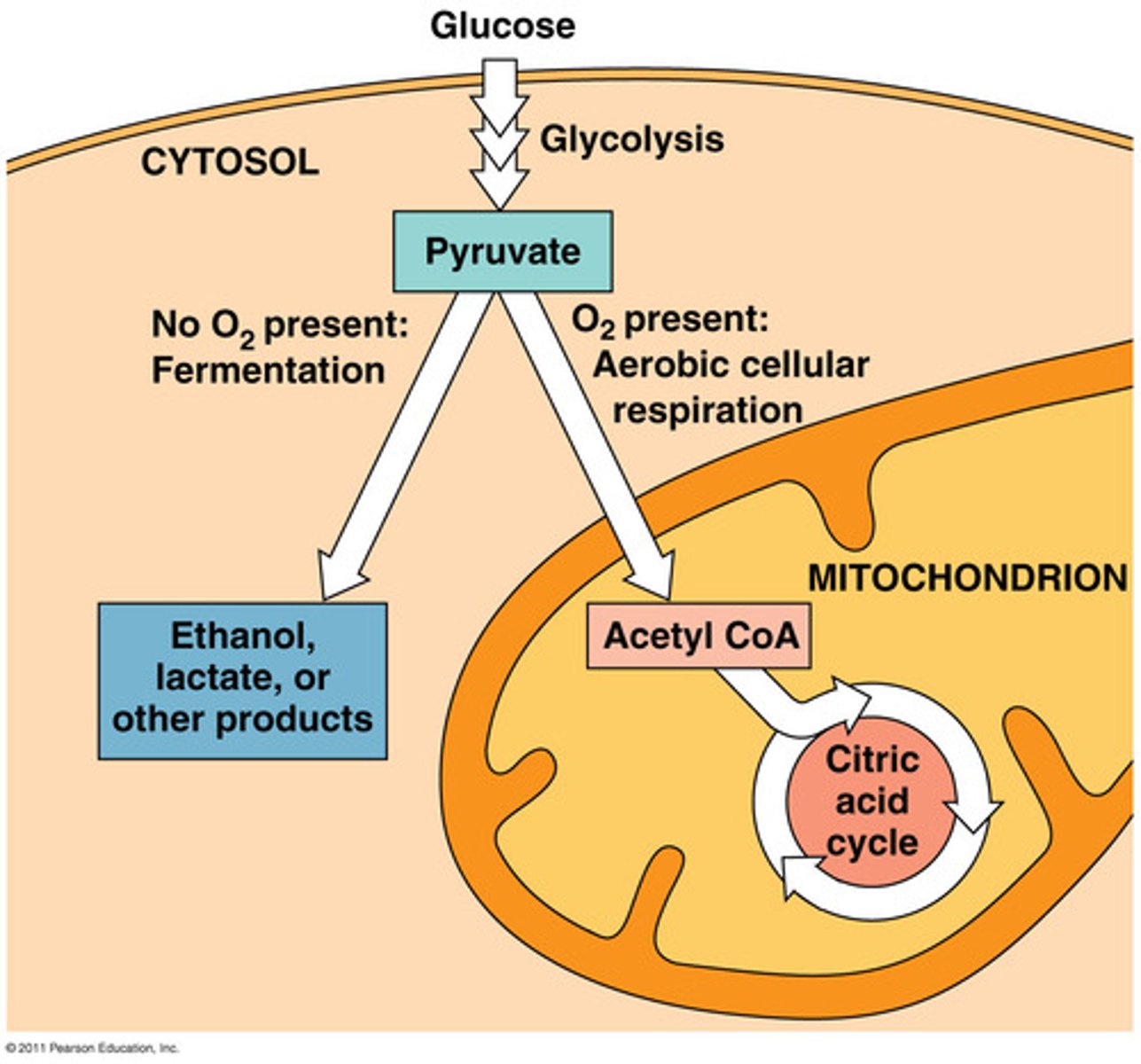
Cellular respiration that requires oxygen and uses glycolysis, the Kreb's cycle, and the electron transport system.
Alcoholic Fermentation
Anaerobic respiration that converts pyruvate to ethanol to recycle NADH back to NAD+; is not reversible
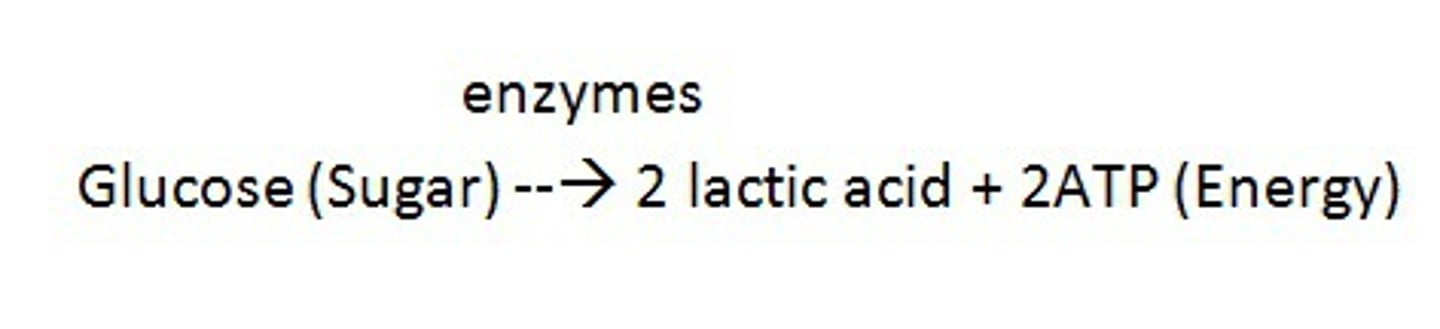
Lactic Acid Respiration
Anaerobic respiration that converts pyruvate to lactic acid in order to recycle NAD+; is reversible when oxygen becomes available
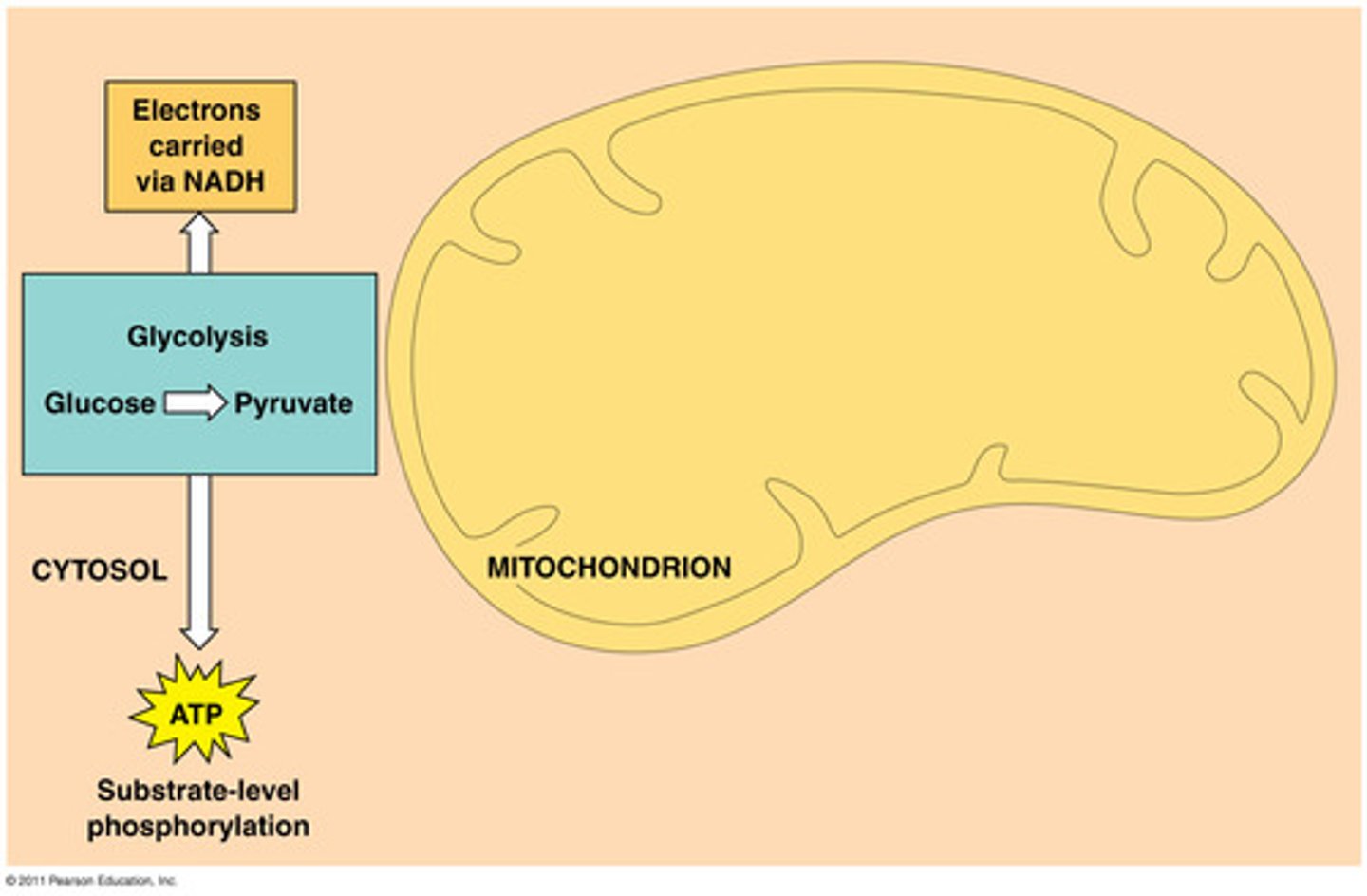
Glycolysis
First stage of aerobic AND anaerobic cellular respiration that occurs in the cytoplasm. Breaks glucose down into two pyruvic acid molecules making 2 ATP and 2 NADH
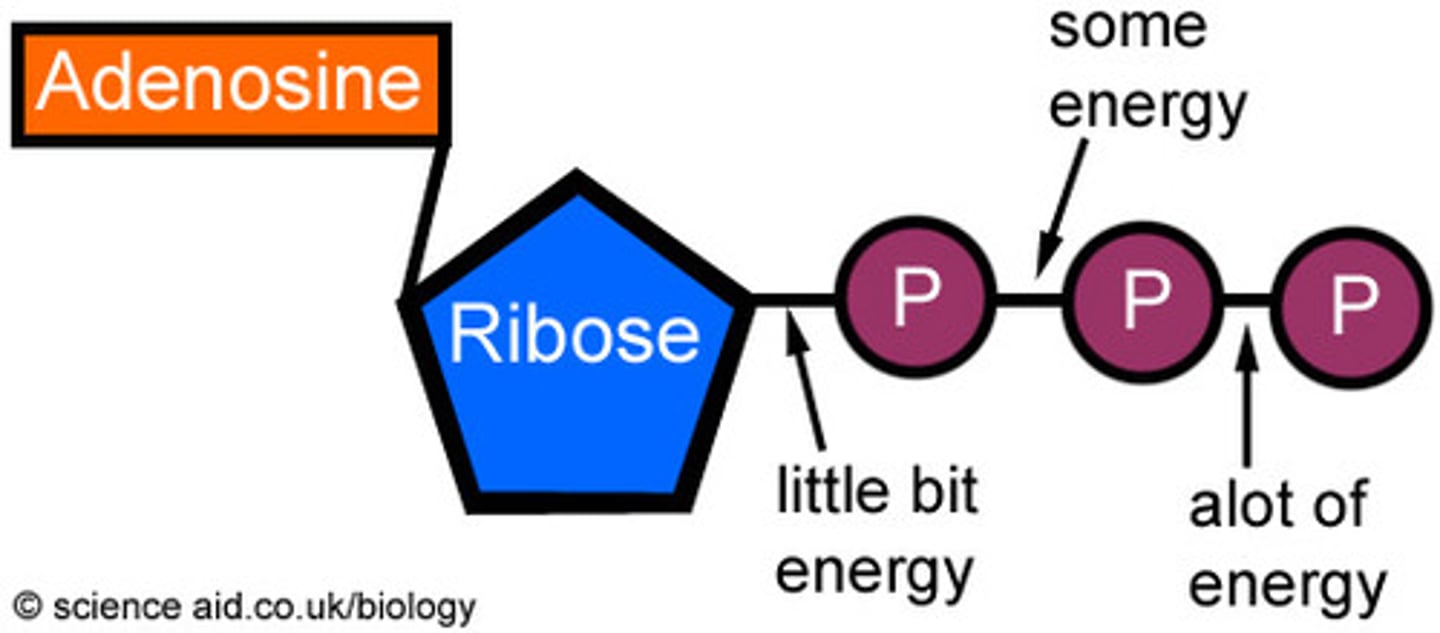
ATP
Adenosine triphosphate. Source of short-term cellular energy.
Pyruvate
3 carbon sugar produced when glucose is split during glycolysis
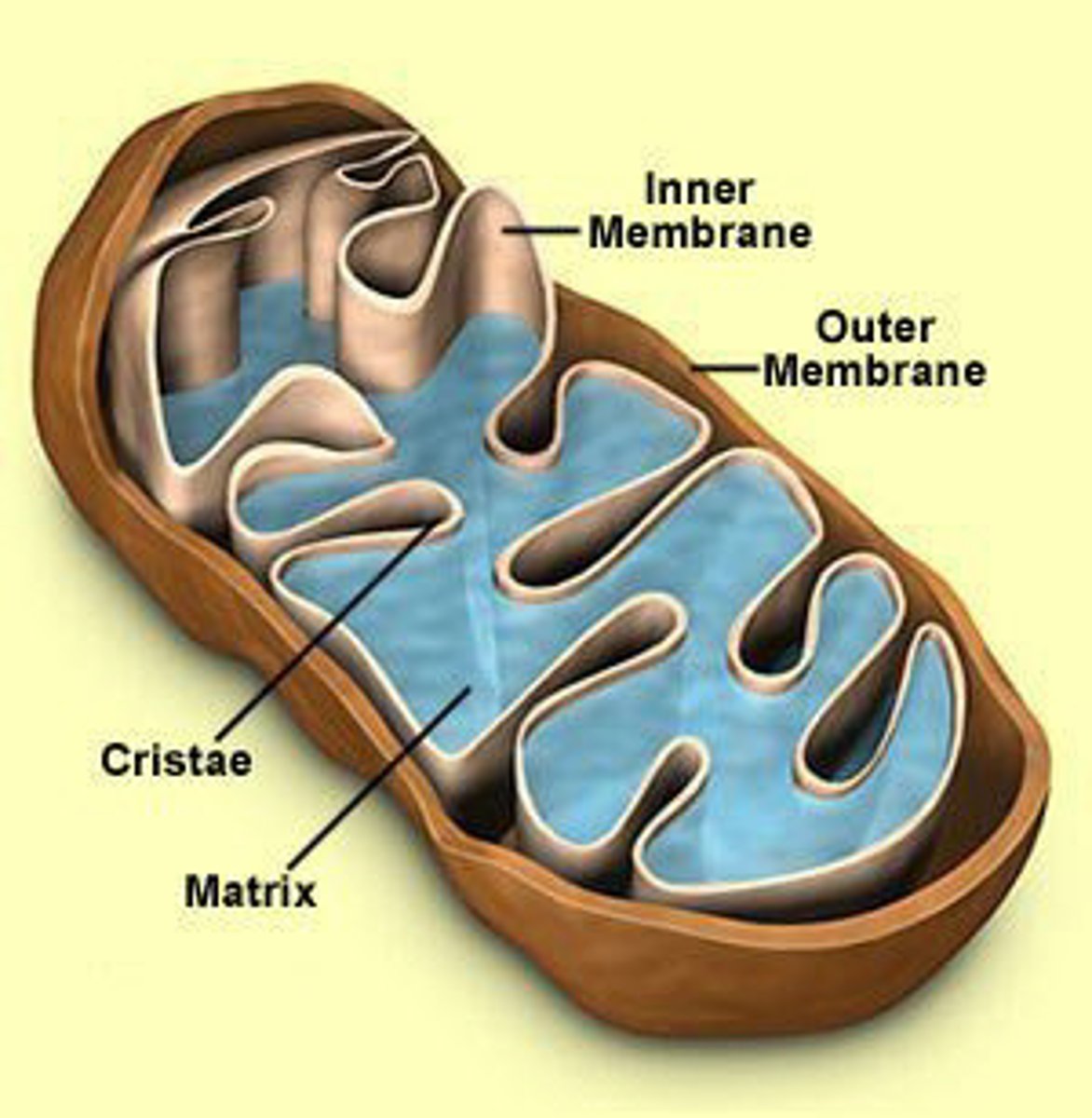
Mitochondria
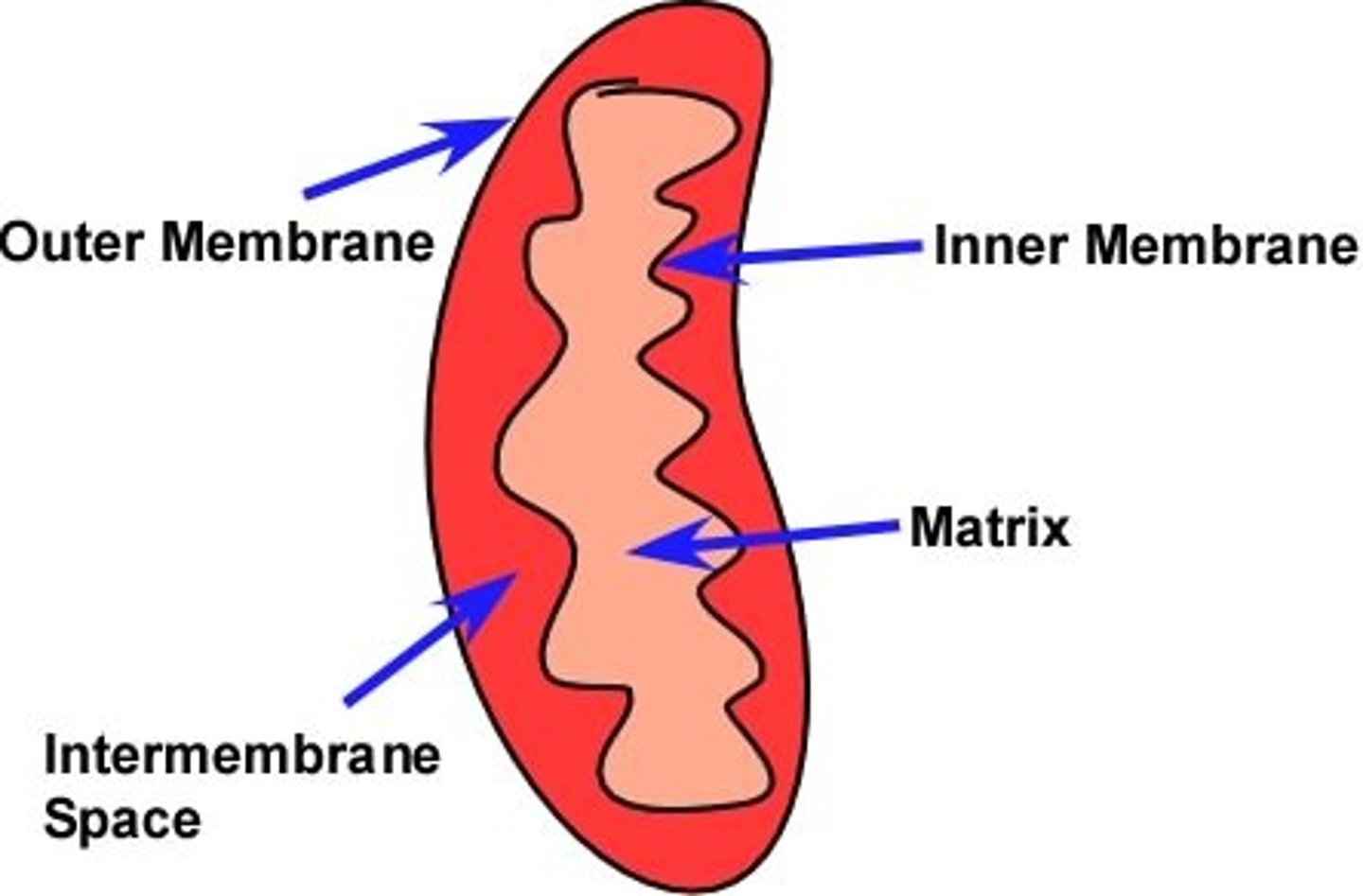
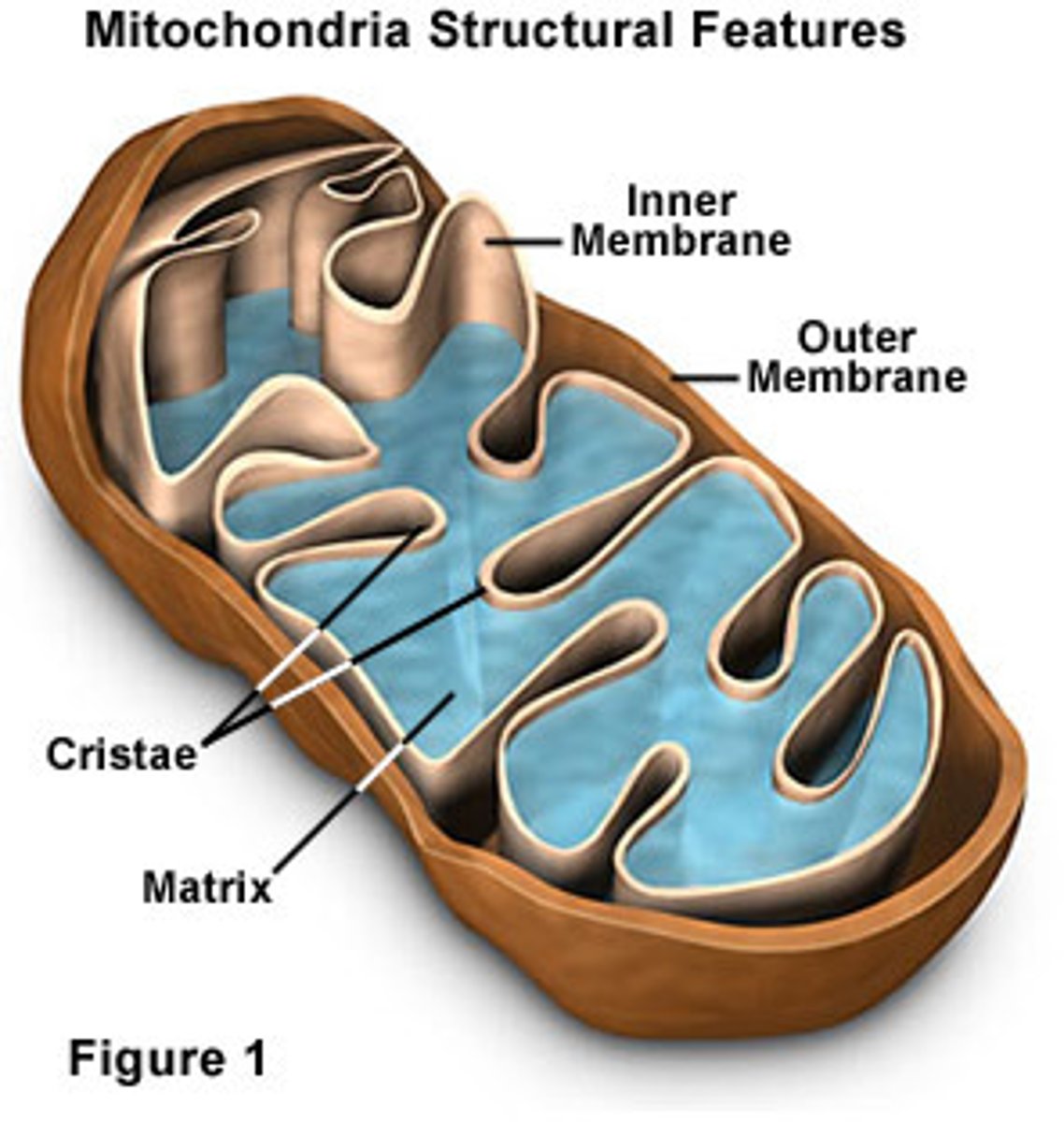
Organelle found in all eukaryotic organisms that is the site of aerobic cellular respiration
ATP synthase
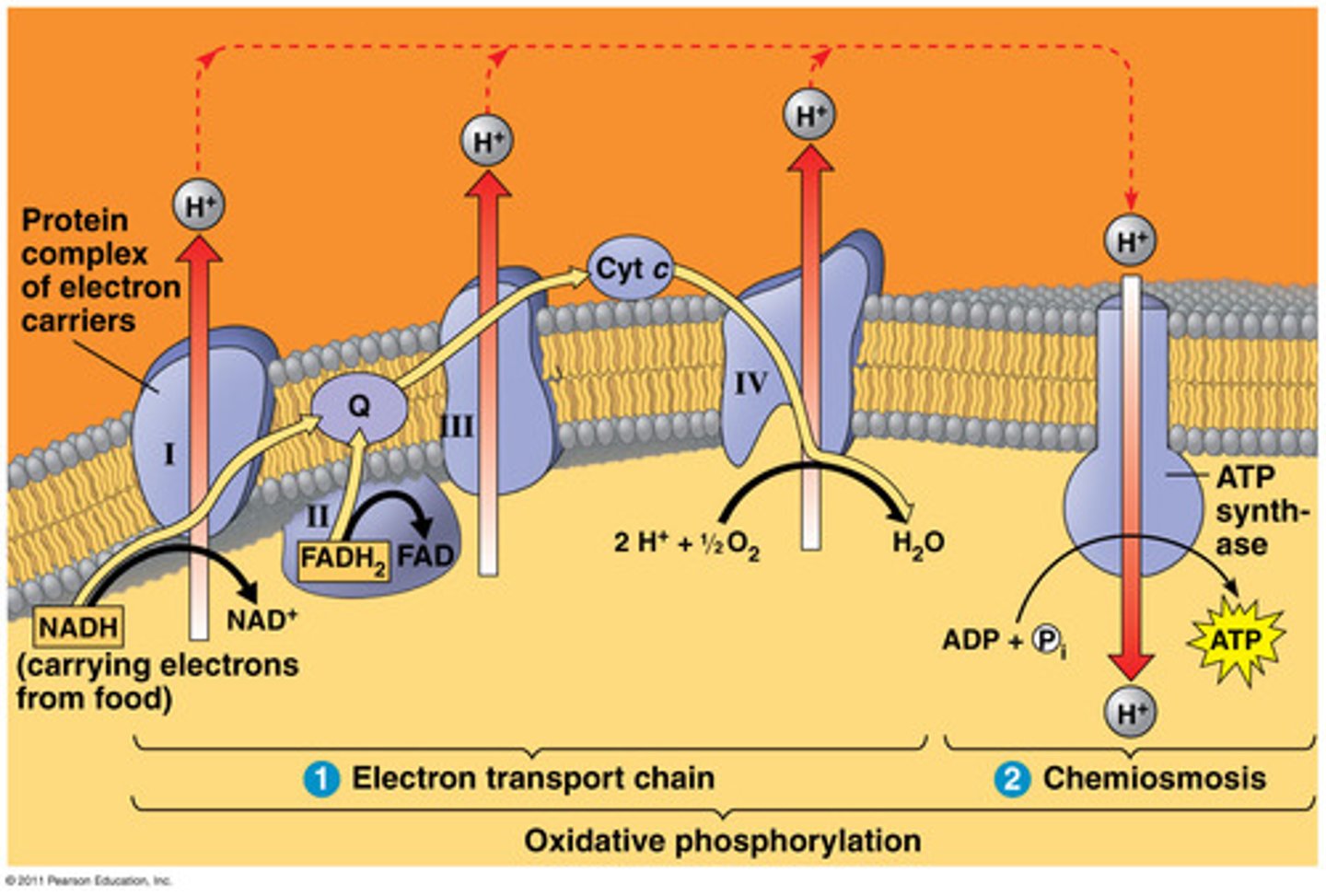
Enzyme in the inner mitochondrial membrane that catalyzes oxidative phosphorylation of ADP to ATP
Krebs Cycle
Pyruvate from glycolysis is broken down releasing CO2 and producing 2 NADH, 1 FADH2, and 1 ATP per pyruvate. Each glucose produces 2 pyruvate, so this process occurs twice per glucose.
Electron Transport Chain
Step of aerobic respiration that takes the high energy electrons from the NADH and FADH2 made in glycolysis and the Krebs cycle to create a proton gradient across the inner mitochondrial membrane
Cytoplasm (cytosol)
Place where cells perform glycolysis
Cellular Respiration Chemical Equation
C6H12O2 + 6O2 ------> 6CO2 + 6H20 + Energy (ATP)
NADH and FADH2
Electron carrying molecules produced in Glycolysis and the Kreb's cycle.
CO2
This gas is produced during the Kreb's cycle as the pyruvate is broken down.
Matrix
The fluid of the mitochondria where the Kreb's cycle happens.
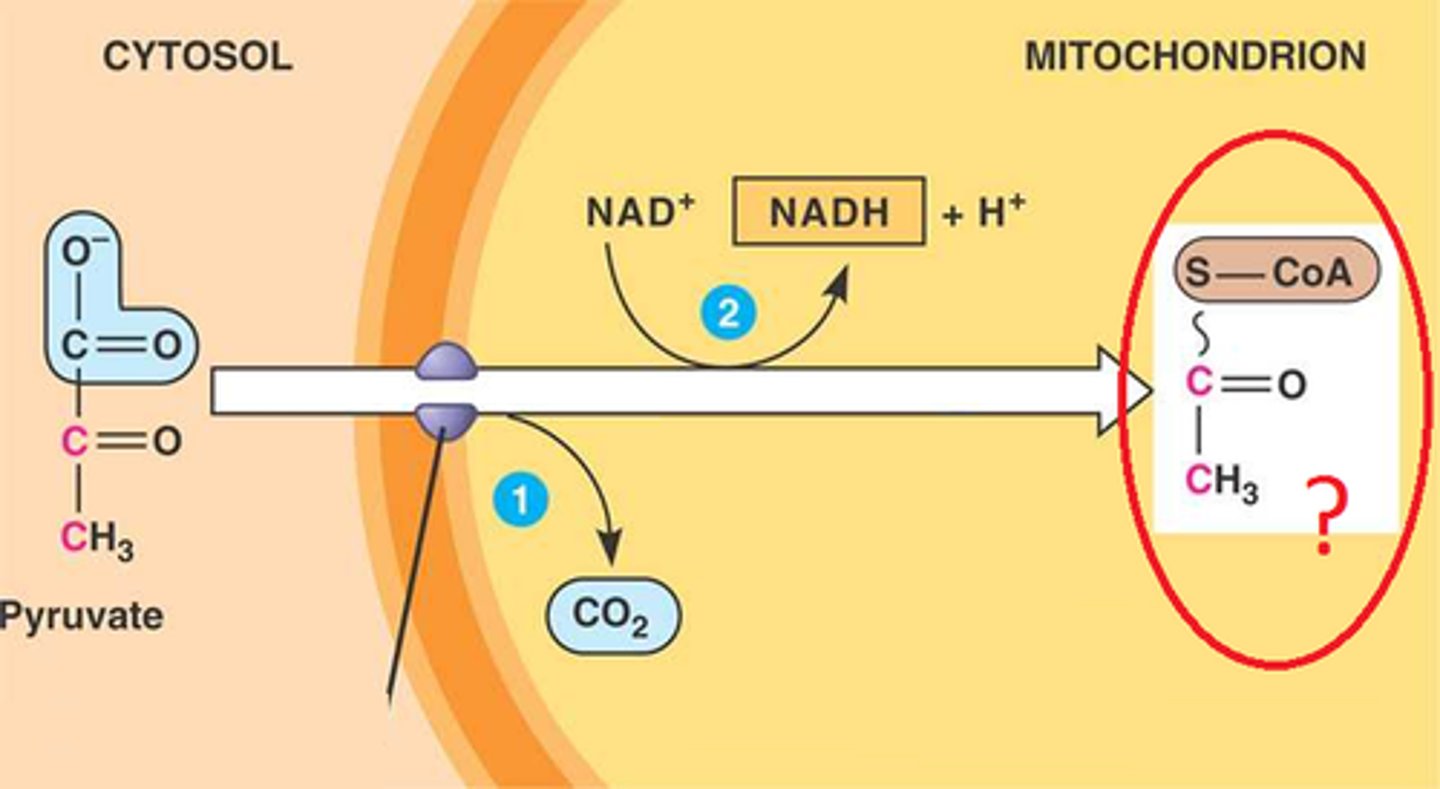
Acetyl CoA
pyruvate is oxidized to this molecule prior to entering the Krebs cycle
oxygen
the final electron acceptor in the electron transport chain; it combines with hydrogen and free electrons to form water
Oxidative phosphorylation
Process that forms ATP from ADP and free inorganic phosphate using the ATP synthase enzyme
Chemiosmosis
The use of energy in a H+ gradient to drive cellular work
Intermembrane space
the fluid filled space between the inner and outer mitochondrial membranes