GB2 Lab quiz- fungi and spounges
 Call Kai
 Learn
Learn Practice Test
 Spaced Repetition
 Match
Match Flashcards
 Knowt Play
1/44

There's no tags or description
Looks like no tags are added yet.
Name | Mastery | Learn | Test | Matching | Spaced | Call with Kai |
|---|
No analytics yet
Send a link to your students to track their progress
45 Terms
What lineage
Opisthokonta
Opisthokonta includes what two kingdoms
Kingdom Animalia
Kingdom Fungi
Fungi are ____ that utilize ____ ______
heterotrophs, external digestion
Fungi release _____ that break down _____ and _____
enzymes, lignin, cellulose
What are fungi made of
mycelium
hypha
cell wall
What are the 5 fungal Phyla
Chytridiomycota
Zygomycota
Glomeromycota
Ascomycota
Basidiomycota
Characteristics of Chytridiomycota
swimming gametes and spores
aquatic fungi
bad for amphibians
Characteristics of Zygomycota
zygosporangia
Characteristics of Glomeromycota
fungi associated w/ roots (mycorrhizae)
asexual spores
plants receives nutrients and moisture from
fungi receives carbohydrates
Characteristics of Ascomycota
yeast, mildew, truffles, cup fungi
help us make cheese, alcohol, bread, antibiotics
sexual = ascus, ascospores [8] (N), and ascocarp
asexual = conidiophores, conidia
Characteristics of Basidiomycota
mushrooms, puffballs
basidia, basidiospores (2N) and basidiocarp
Plasmogamy
fusion of the cytoplasm
Heterokaryotic
a cell/hyphae contains genetically distinct nuclei
Kariogamy
fusion of the nuclei to form a diploid zygote
(zygote undergoes meiosis to form haploid spores)
What is sexual reproduction for fungi
no males and females
mating types (carry different alleles)
thousands of mating types
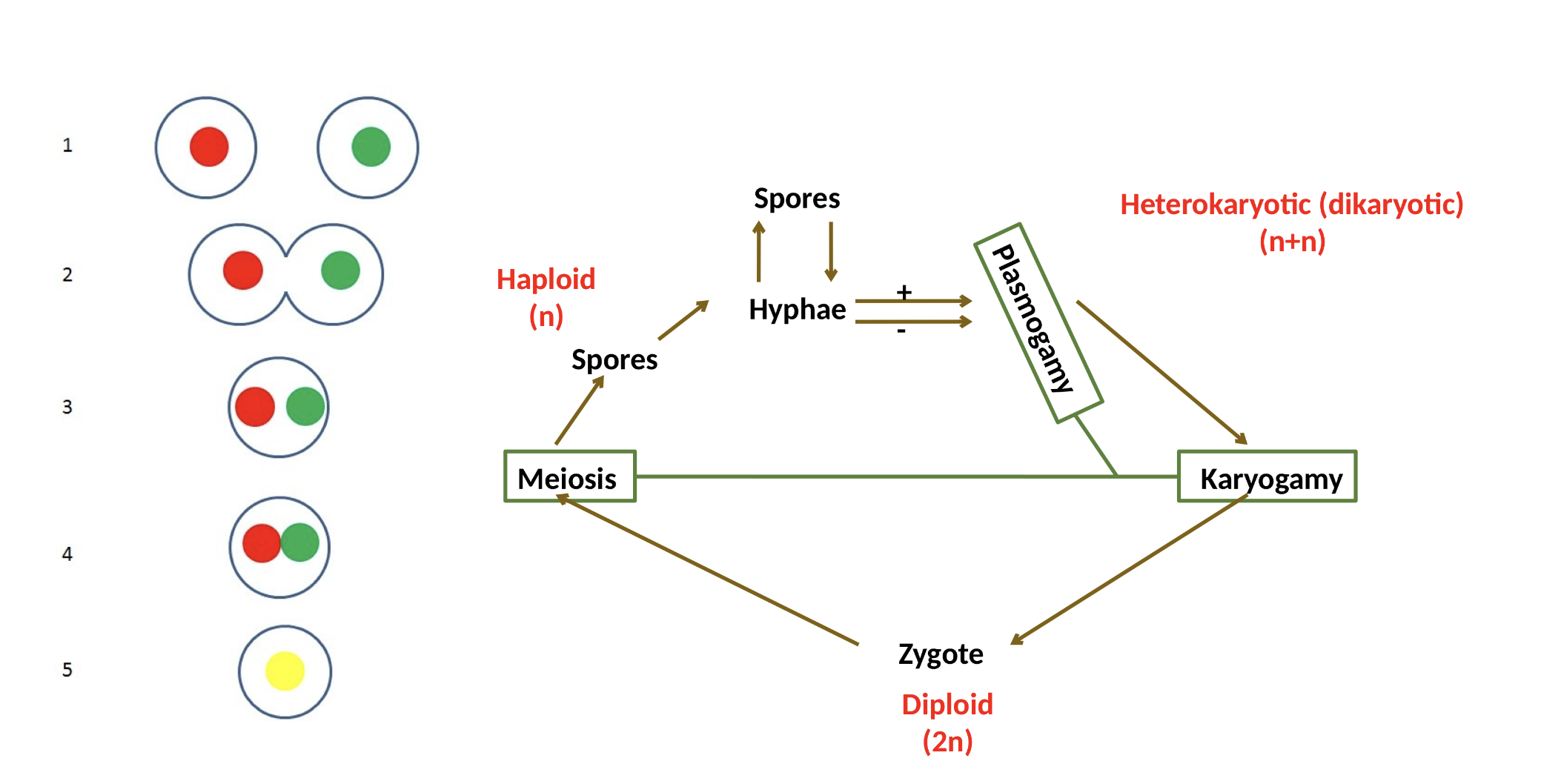
what is this
reproduction of fungi
Fungi are _______
decomposers
fungi cell walls contain _____, _____, and ______
proteins, glucans, chitin
What are lichens
symbiote between fungi (ascomycete/basidiomycete) and algae (cyanobacteria, photosynthetic)
What is Phylum Porifera
spounges
Characteristics of Porifera (sponges) animals
invertebrets, multicellular, asymmetrical, no tissues
Characteristics of Porifera (sponges) movemen
sessile(none), attach to substrates
Characteristics of Porifera (sponges) reproduction
asexually— budding or fragmentation
sexually- hermaphroditic (M+F)
Characteristics of Porifera (sponges) feeding
filter feeders
filter feeding
uptake of nutrients by chanocytes
Ostia _____
Osculum _____
H2O in
H2O out
Songilla Gemmules for
asexual reproduction
Spongocoel, contains ____, _____, ____, ____, and ____
inside cavity
ostia, spicules, amoebocytes, mesohyl, choanocytes
Ostia
pores
Spicules
support and protection
can be made from: silica, Ca, spongin
Amoebocytes
act as a circulatory system
move up + down
Mesohyl
gel like
Choanocytes
specialized cells that allow sponges to filter + eat
Phylum Cnidaria has 4 classes
Hydrozoa
Schyphozoa
Cubozoa
Anthazoa
Phylum Cnidaria movement
nerve nets
nerve nets
coordinate cell contractions
Phylum Cnidaria feeding
cnidocytes
cnidocytes
entangle/stun prey
Class Hydrozoa
polyp dominant
Hydra(solitary) and Obelia(colonies)
Class Anthozoa
corals and sea anemones
polyp form only
Calcium in shells
feed via zooxanthellae (think of coral bleaching)
zooxanthellae
photosynthetic
what produces the color of coral
provide C + O — get N2
Class Scyphozoa
jellyfish
movement via muscular ring to propel
reproduction via gonads (M/F)
feeding via cnidocytes and oral arms
Class Cubozoa
medsua form only
VERY small but fatal
gelatinous cubes that float through the water
Phylum Ctenophora
comb jellies
have one mouth, two anal pores, and 8 rows of ciliated combs
Phylum Ctenophora characteristics
no polyp/medusa form
radial symmetry
DO NOT STING
have colloblasts (sticky cells)
nerve nets + ganglia
sensory cells (detect light and gravity)
move via cilia

