System Interactions
 Call Kai
 Learn
Learn Practice Test
 Spaced Repetition
 Match
Match Flashcards
 Knowt Play
1/39

There's no tags or description
Looks like no tags are added yet.
Name | Mastery | Learn | Test | Matching | Spaced | Call with Kai |
|---|
No analytics yet
Send a link to your students to track their progress
40 Terms
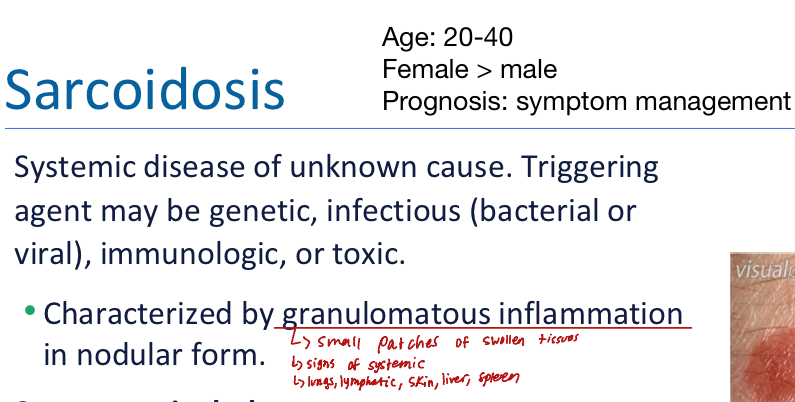
What’s the name? What type of disease? What’s the cause? What’s the trigger?
What is it characterized by? Hallmark sign? 5 locations it can be at?
Age range?
Gender?
Prognosis?
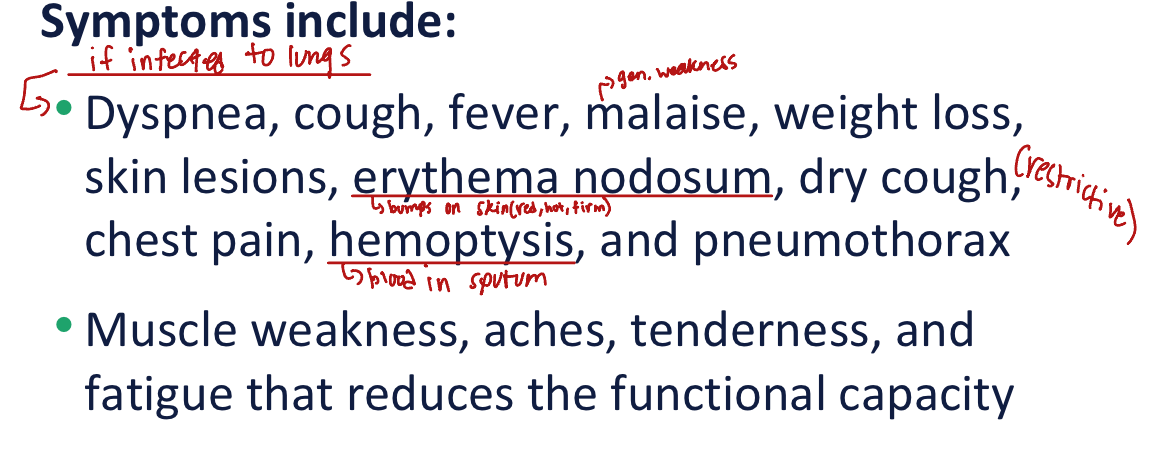
Sarcoidosis: symptoms:
If what organ is affected ? What’s type of cardiopulmon disease? What 4 things stand out?
What 4 things will reduce which capacity ?
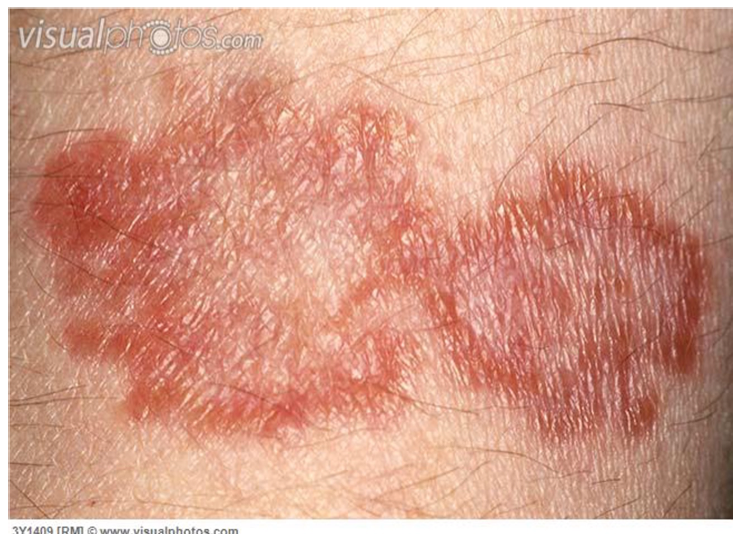
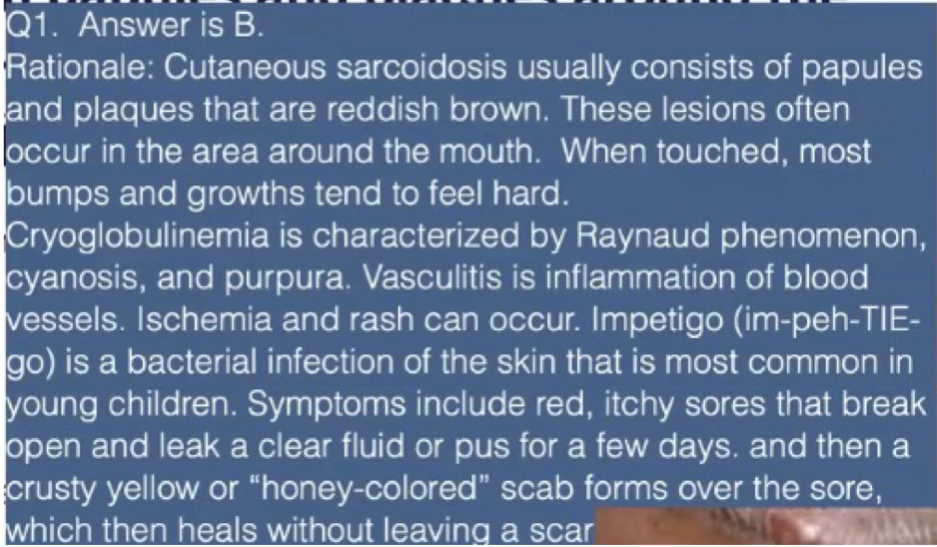
A patient has reddish brown papules and plaques around the mouth. The area is warm and tender to the touch. Which of the following conditions does the patient MOST LIKELY have?
A. Cryoglobulinemia
B. Cutaneous sarcoidosis
C. Impetigo
D. Vasculitis
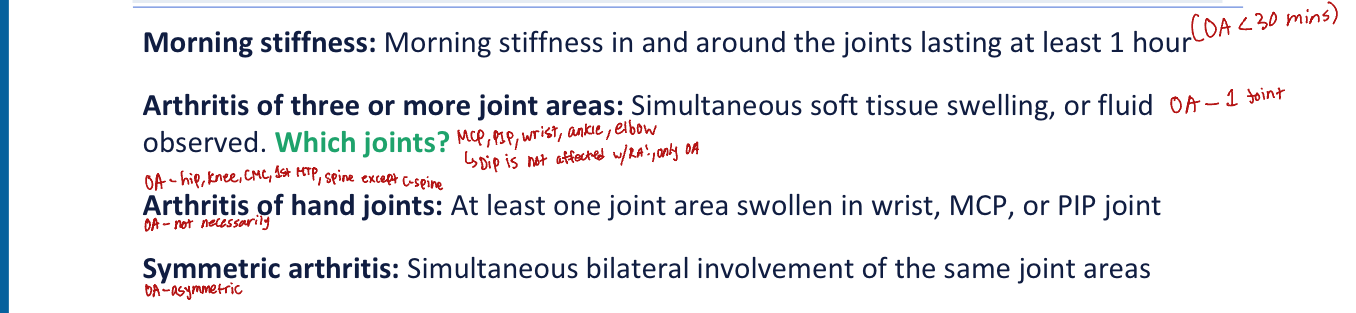
Cri teria for Diagnosis of Rheumatoid Arthritis (RA): compare it to OA
Morning stifffness?
How many and which joints?
How about in the hands?
Symmetrical ?
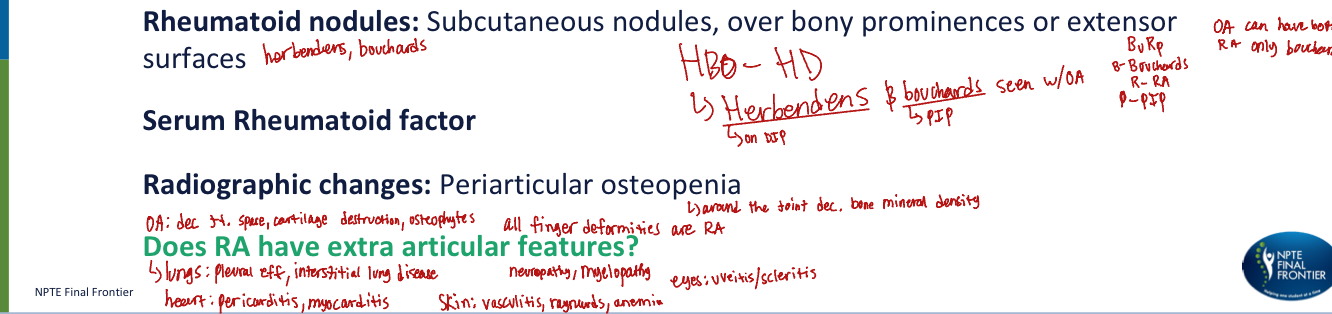
Cri teria for Diagnosis of Rheumatoid Arthritis (RA): compared to OA
Nodules?
(+) in which test?
Radiography changes?
Does RA have extra articualr features: hand deformities are ra/oa? 2 lung issues? 2 neuro issues? 2 heart issues? 3 skin issues? 2 eye issues?
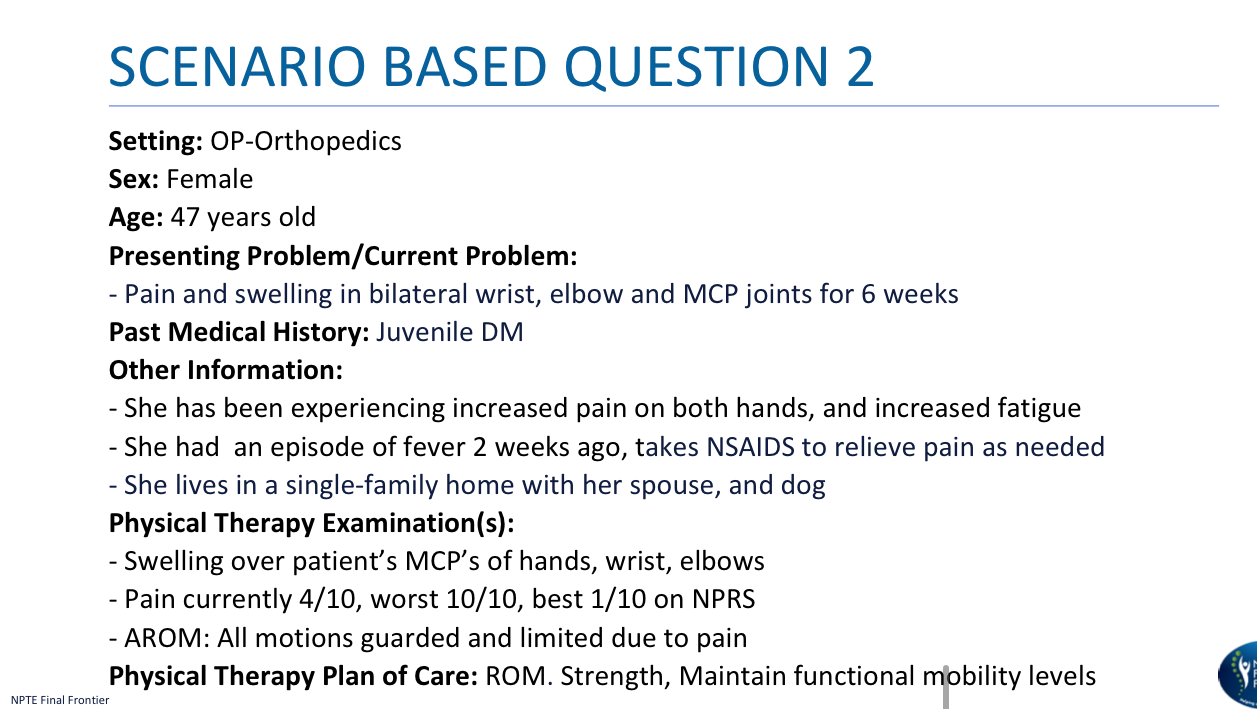
Which of the following symptoms are MOST LIKELY to be expected along with this presentation?
A. Less than 30 mins of stiffness in
the morning B. Asymmetrical involvement of
bilateral metacarpophalangeal
joints and proximal
interphalangeal joints C. Negative serum rheumatoid
factor D. Bony decalcification adjacent to
affected joints on radiographs
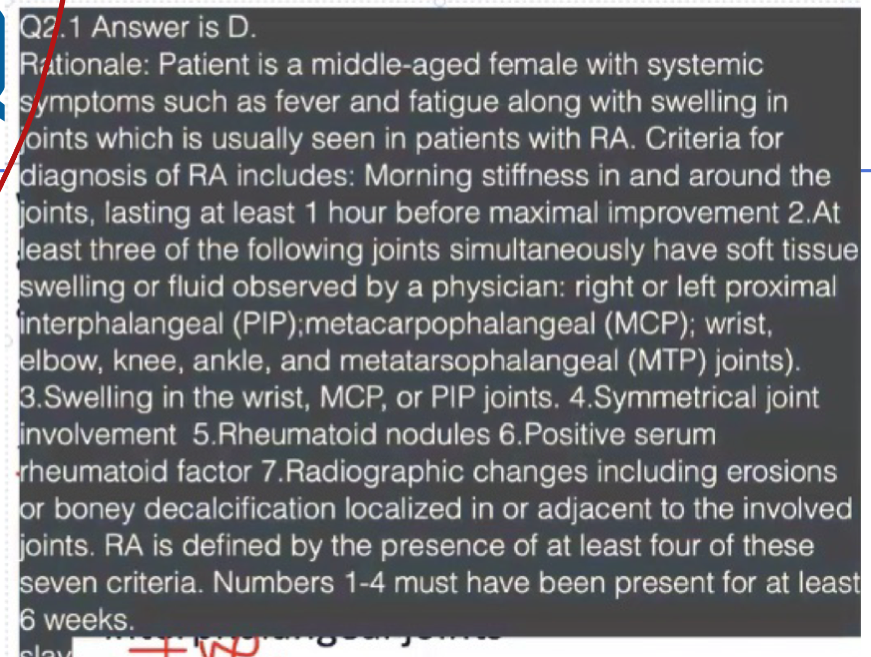
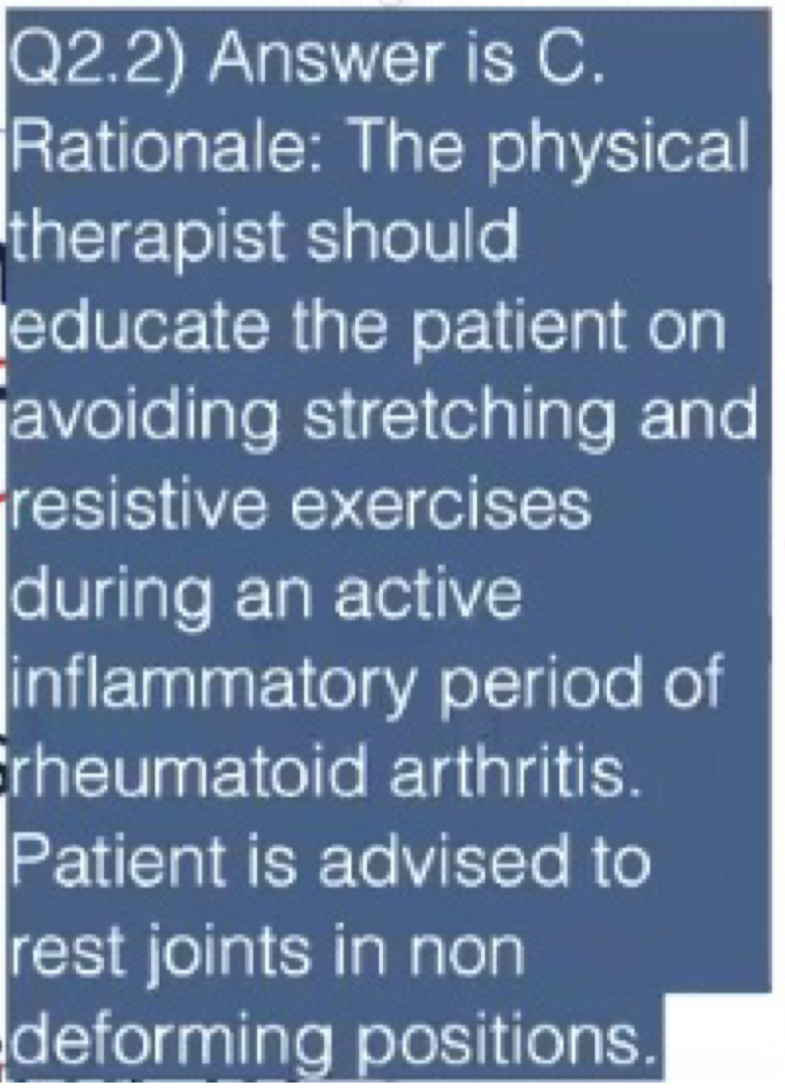
Which of the following interventions is MOST APPROPRIATE at this time? A. Resistive exercises to end
range B. Using a grip exerciser to
improve hand function C. Splints with wrists in neutral
position D. Passive stretching exercises
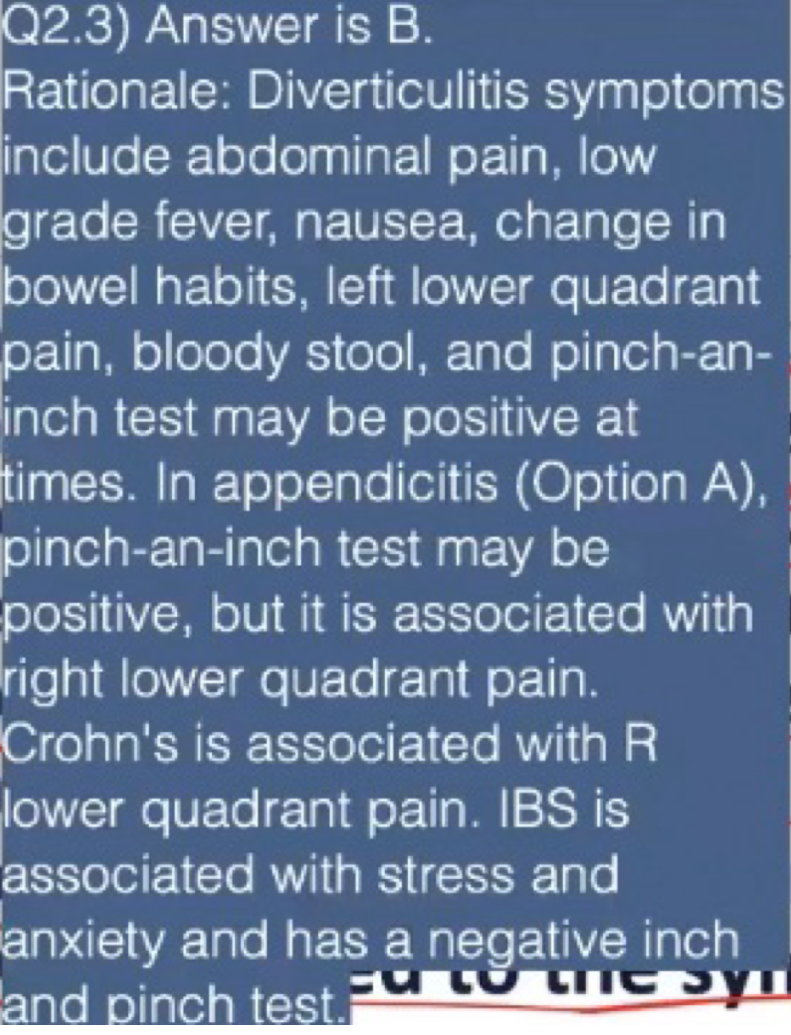
The patient mentioned that she has been experiencing left lower abdominal pain, nausea, blood in her stools and has a decreased appetite since the last few days. The "pinch-an-inch" test result is positive. Which condition is MOST LIKELY related to the symptoms described?
A. Appendicitis B. Diverticulitis C. Crohn's disease D. Irritable bowel syndrome
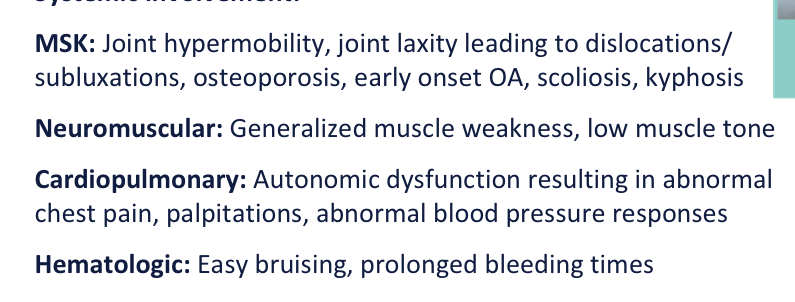
Ehl ers-Danlos Syndrome (EDS)
What type of disorder ? What’s are the 5 hallmark signs ?
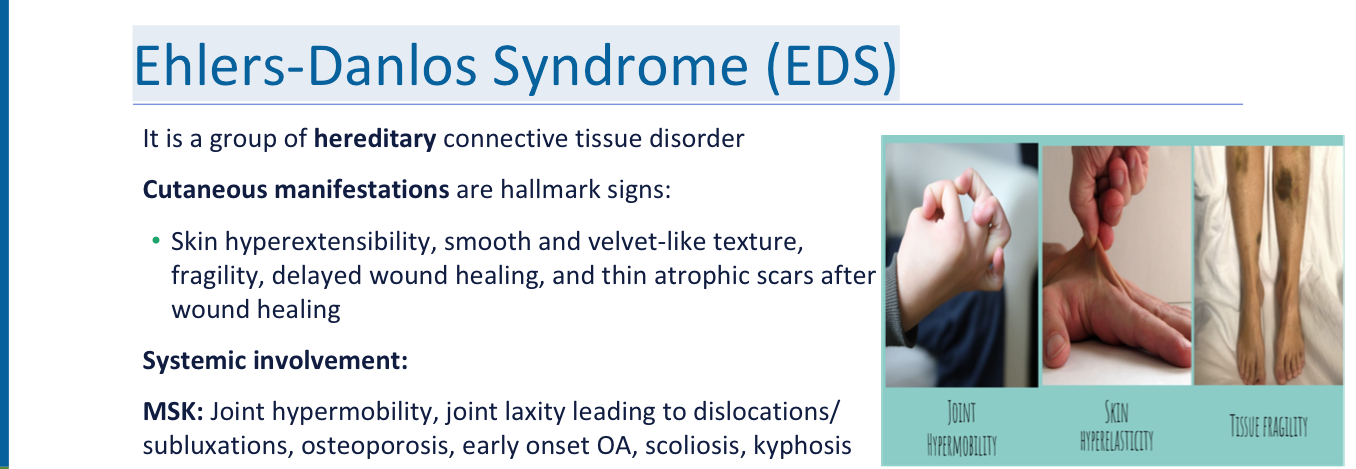
Ehl ers-Danlos Syndrome (EDS)
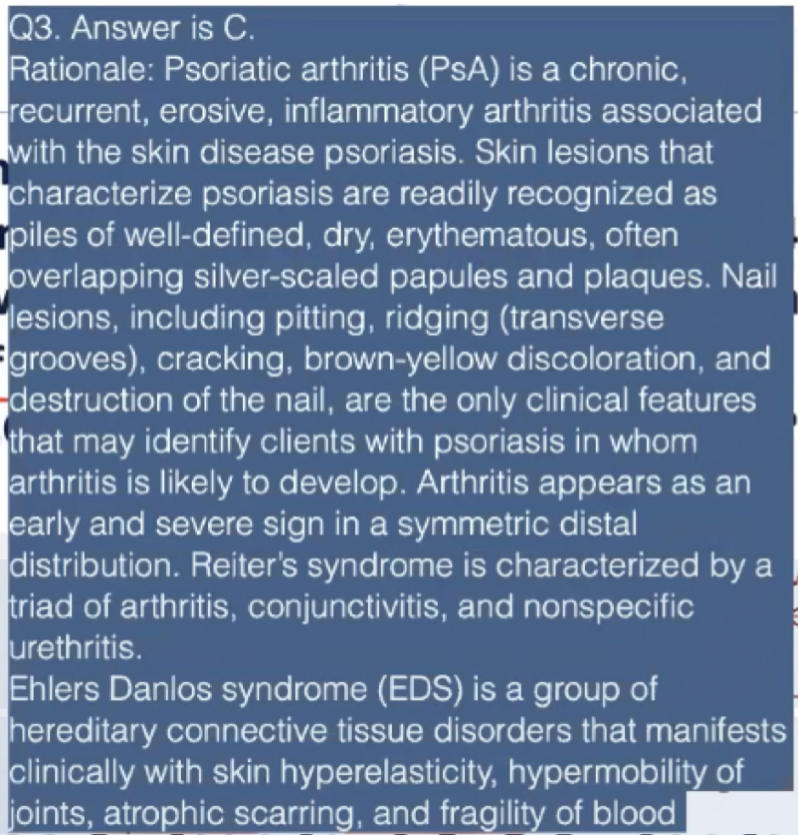
The patient reports severe stiffness in the hands (especially the distal interphalangeal joints), knees, elbows and toes that tends to last for at least 45 minutes every morning then improves with movement. During assessment, the therapist also notices diffuse swelling of the fingers and brownish-yellow discoloration of the nails. What is the MOST LIKELY cause of these symptoms?
A. Ehlers-Danlos syndrome
B. Rheumatoid arthritis
C. Psoriatic arthritis
D. Reiter’s syndrome
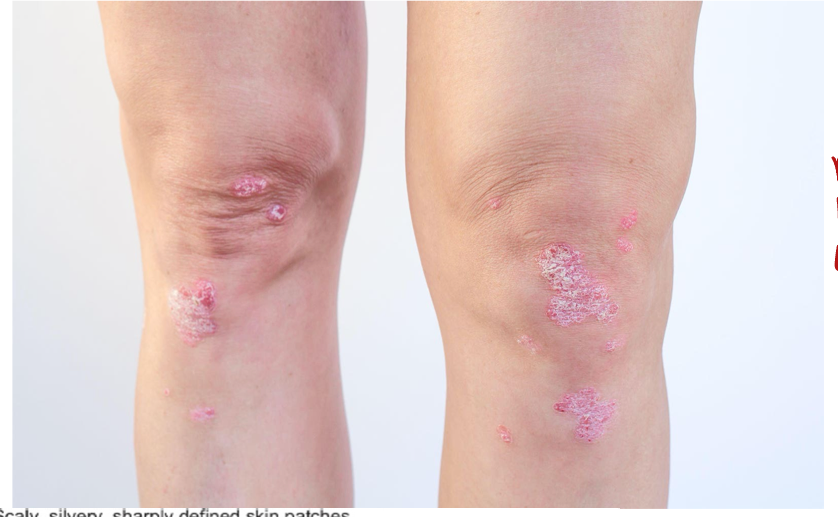
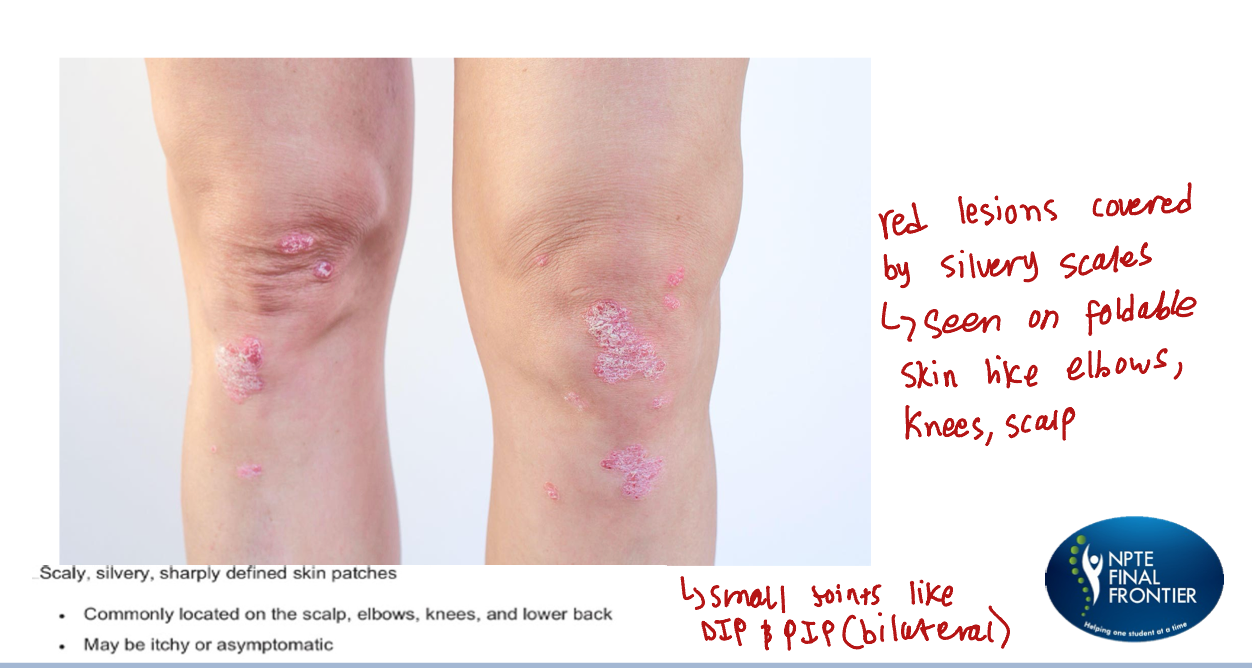
Which 4 areas can you find this? What is it? Describe it
Which hand joints as well?
Bilateral or unilateral?
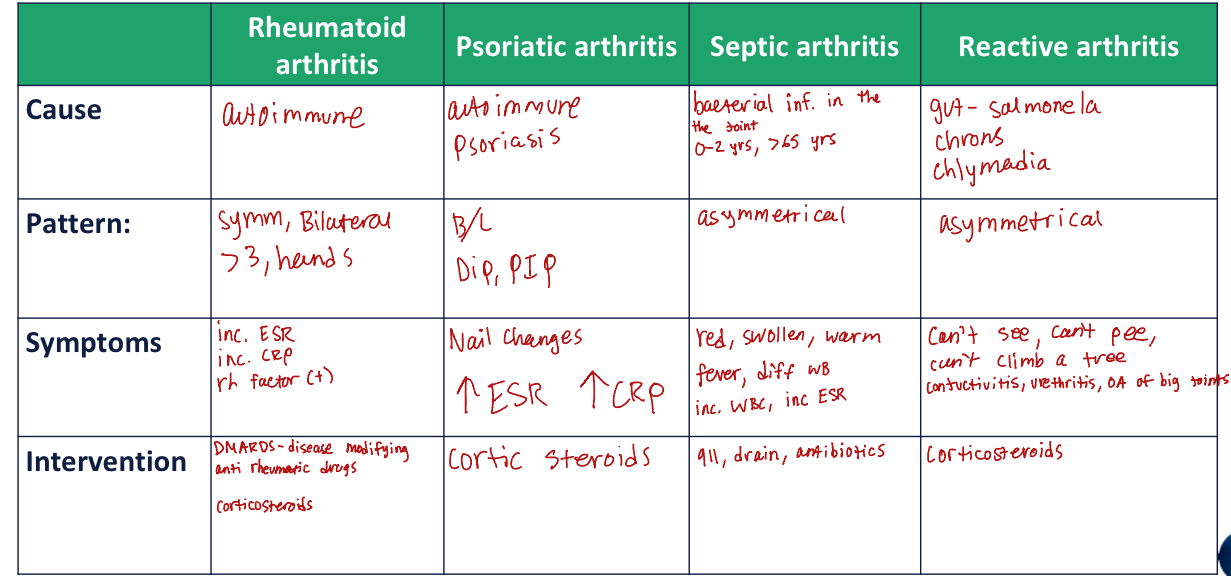
Types of Arthritis
RA: 1
PA: 1
Septic: 1 and where? Age groups?
Reactive: 3


Types of Arthritis
Pattern for each?
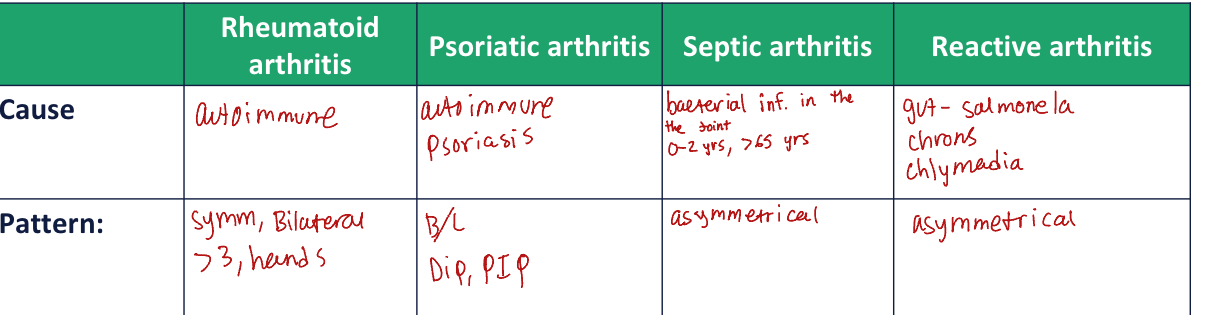
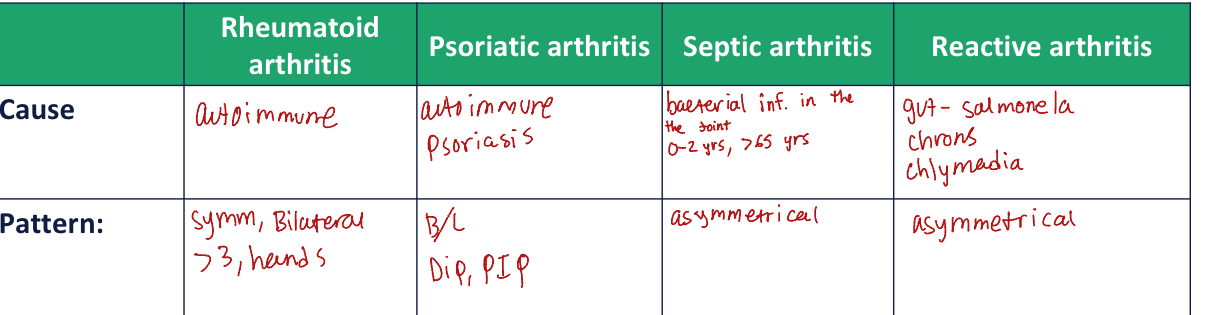
Types of Arthritis
Symptoms for each?
3
3
7
TIP, 3
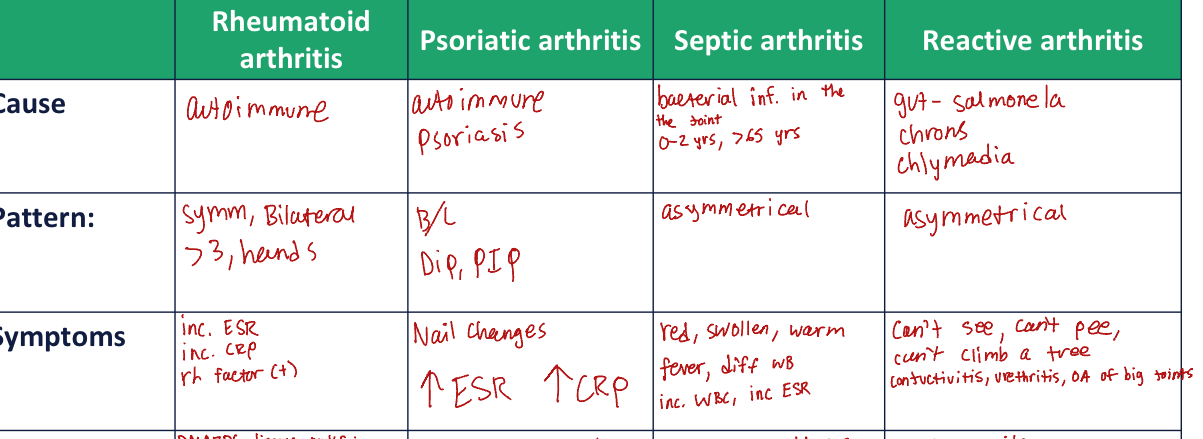
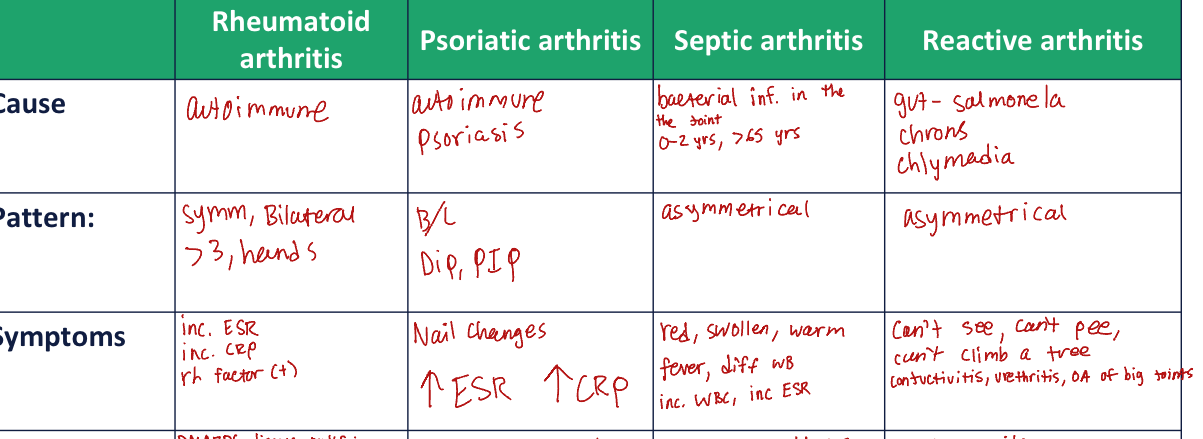
Types of Arthritis
Intervention for each:
2
1
3
1
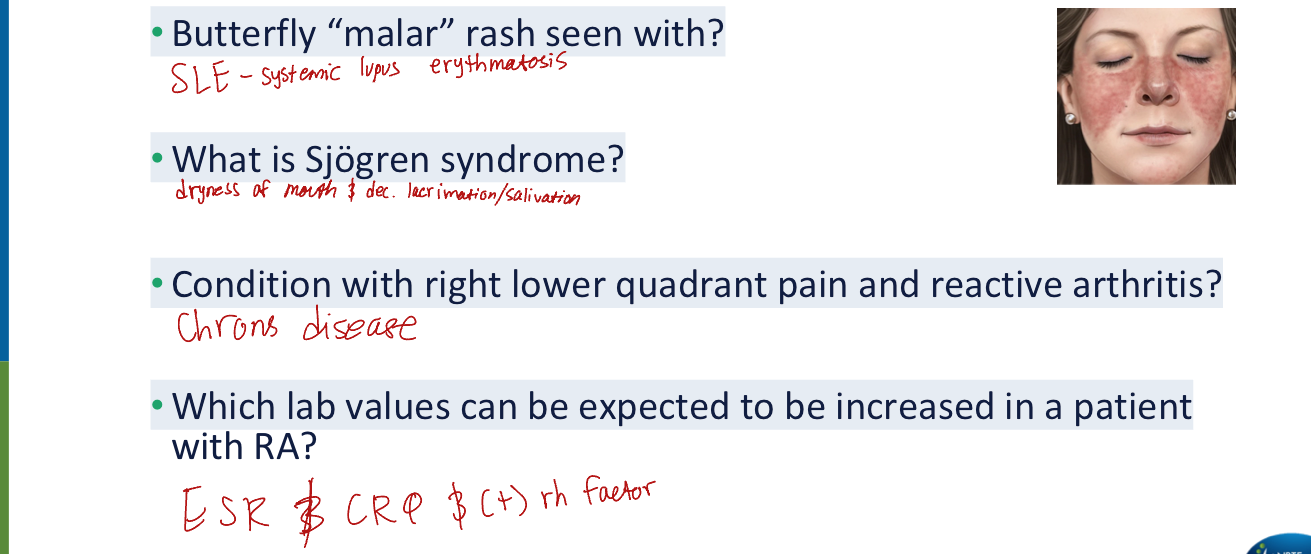
L et’s Guess these Autoimmune Disorders!
• Butterfly “malar” rash seen with?
• What is Sjögren syndrome?
• Condition with right lower quadrant pain and reactive arthritis?
• Which lab values can be expected to be increased in a patient w/ RA?
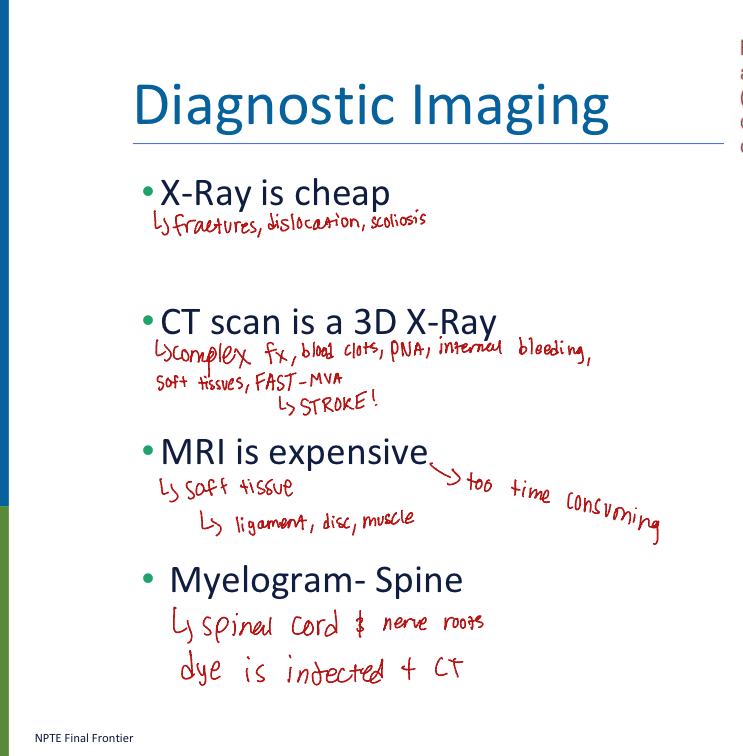
Diagnostic Imaging:
X ray is what? What 3 types of things can it look at?
CT scan is what? What 5 things can it look at? What makes it special and for which 2 dx?
MRI is what? What 3 things?
Meylogram is for what? What other thing and what do they inject and combine it with?
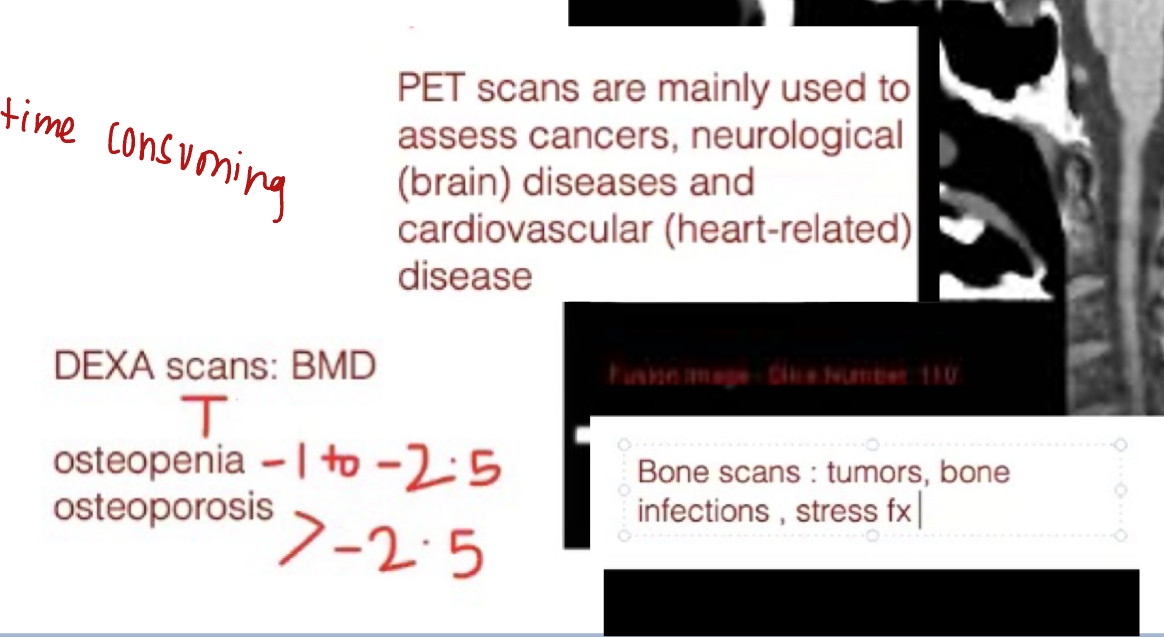
Diagnostic Imaging:
PET scans are to assess what 3 things?
DEX scans for what? How can you assess osteopenia/osteoperosis?
Bone scan are to assess what 3 things?
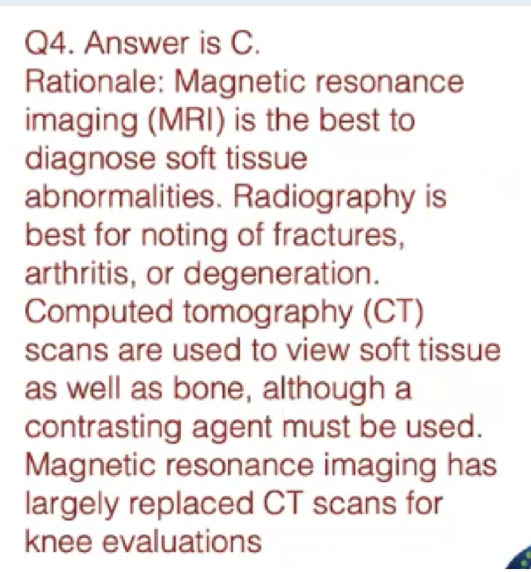
A patient presents to an outpatient clinic with reports of knee pain and the clinician suspects a ligament involvement. Which of the following is the MOST APPROPRIATE diagnostic test to confirm these findings?
A. Anterior drawer test
B. Radiography (X-Ray)
C. Magnetic Resonance Imaging (MRI)
D. Computed Tomography (CT) scan
ELEC TRODIAGNOSTICS
What is NCV?
What does it detect?

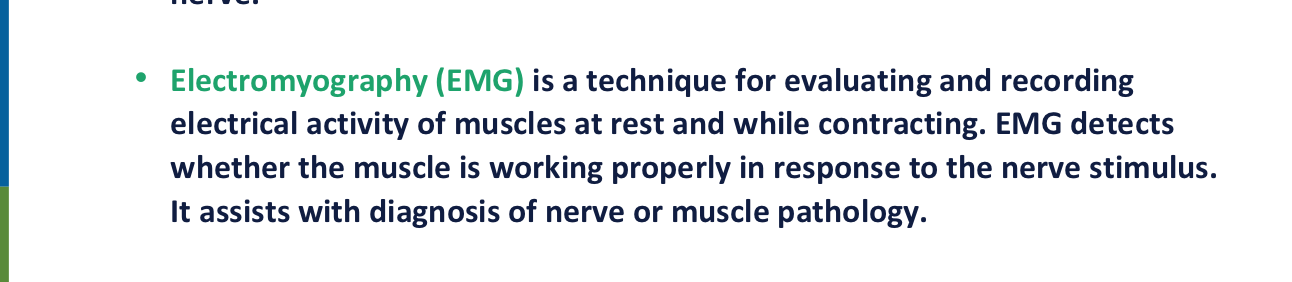
ELEC TRODIAGNOSTICS
What is EMG?
It detects what 2 things?
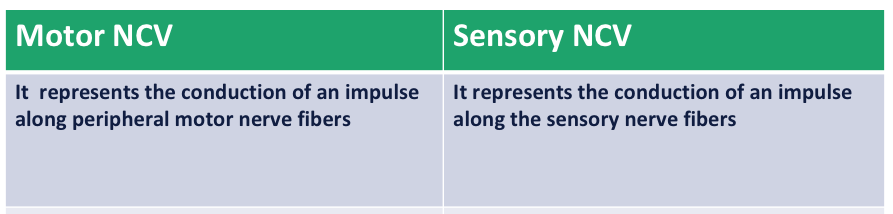
NC V
What does motor and sensory NCV represent?
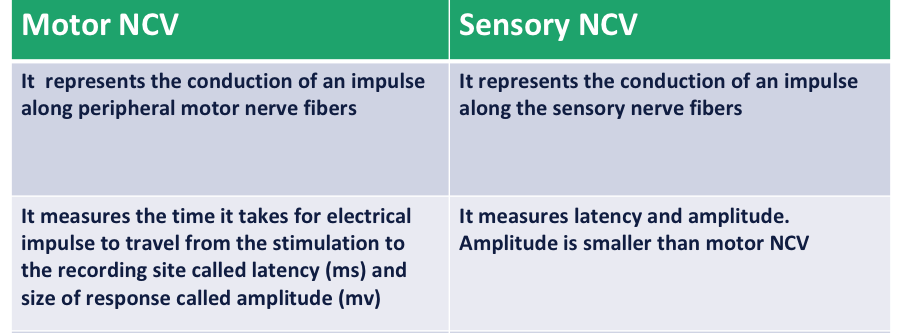
NC V
Motor and sensory NCV :
What do they measure?
Amplitude is small in which one?
NC V
Don’t memorize the muscles
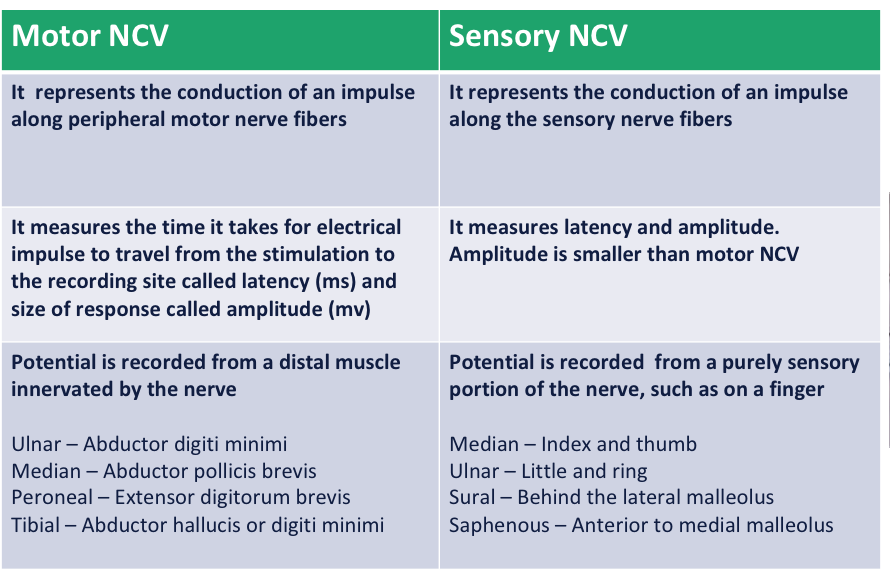
NCV speed decreases d/t what? How does it affect latency and amplitude ?

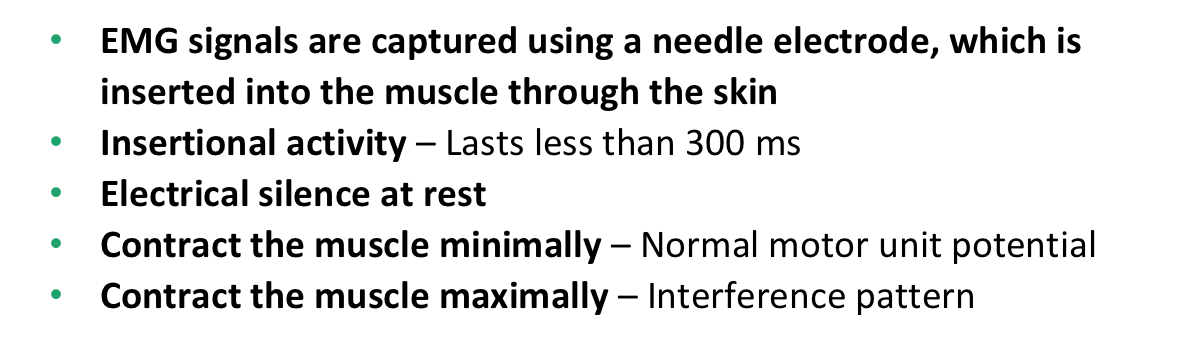
EMG:
How are they captured? How long does it last?
How should it be at rest? NORMAL
What’s the pattern if you contract minimally and maximally?

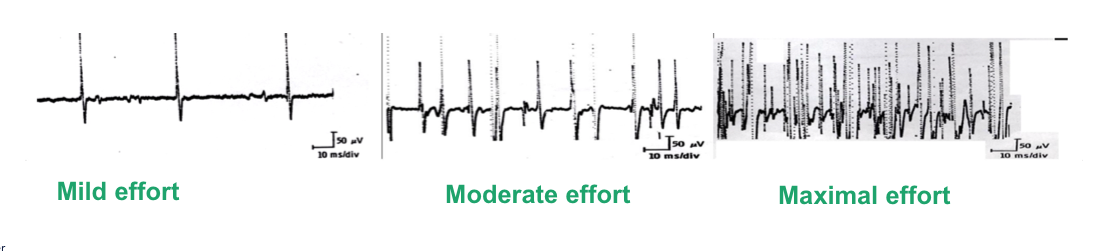
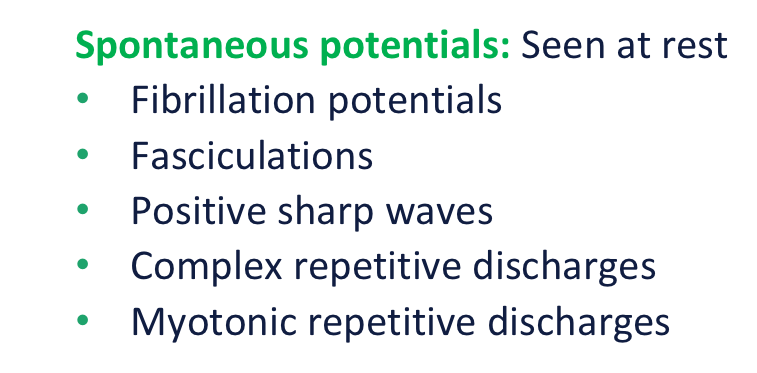
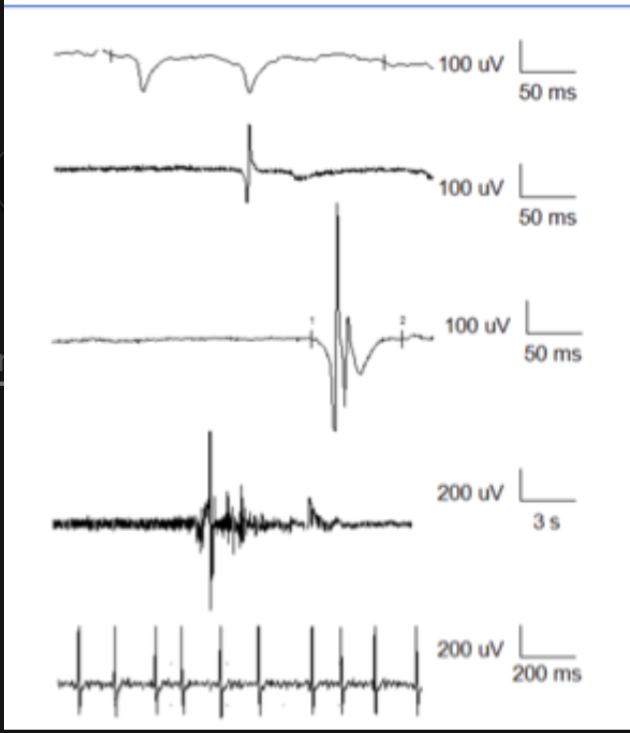
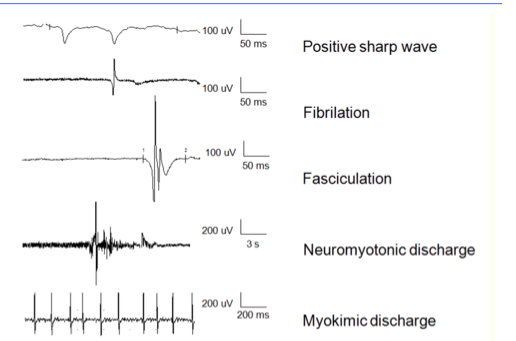
Abno rmal potentials:
What are the 5 Spontaneous potentials seen at REST?
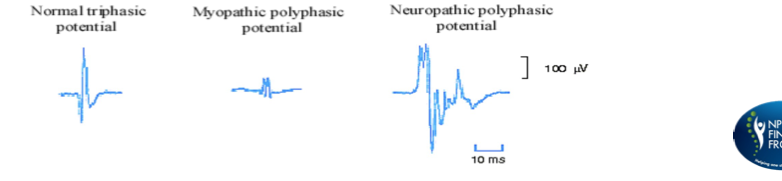
Abno rmal potentials:
Which potiential is seen w/ contraction? How many phases?

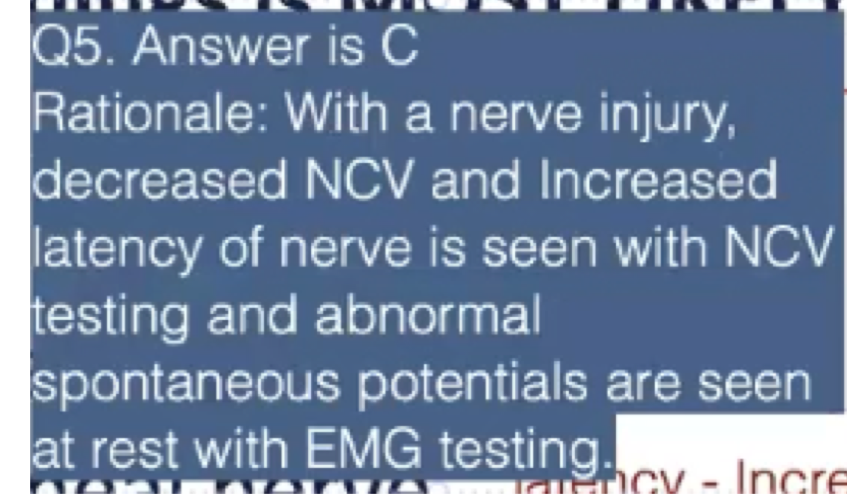
A patient presents with loss of sensation on the anterior leg and weakness of dorsiflexors after sustaining a fracture of the proximal fibula. Which of the following findings is MOST LIKELY to be seen with electrodiagnostic testing? A. Increased motor NCV of the peroneal nerve B. Decreased latency of the peroneal nerve C. Fibrillation potentials seen at rest during EMG testing of tibialis
anterior D. Electrical silence seen at rest during EMG testing
A patient underwent a total knee replacement surgery last week and is on anticoagulant therapy. Which of the following medications should be AVOIDED by the patient?
A. Diphenhydramine (Benadryl) to avoid risk of ecchymosis
B. Methotrexate (Trexall) to avoid risk of hypotension
C. Atenolol (Tenormin) to avoid risk of hypotension
D. Acetylsalicylic acid (Aspirin) to avoid risk of ecchymosis

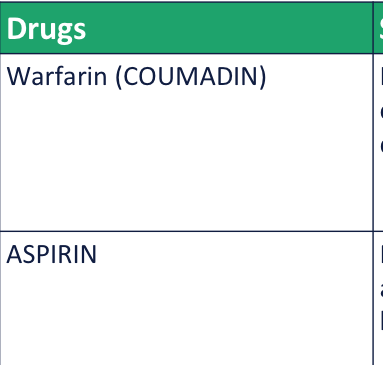
Anti coagulant Therapy
What are the desired effects for both?
4
2
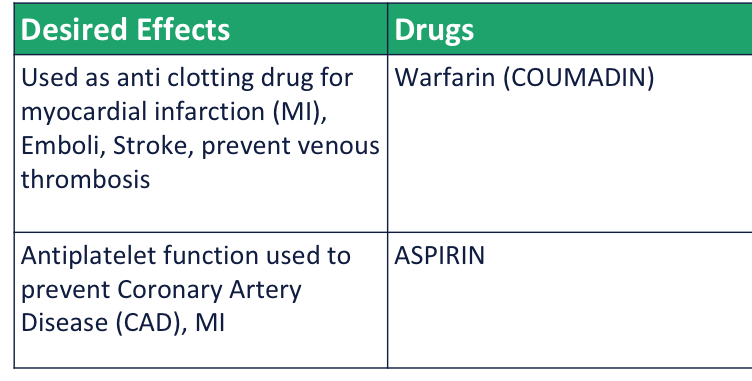
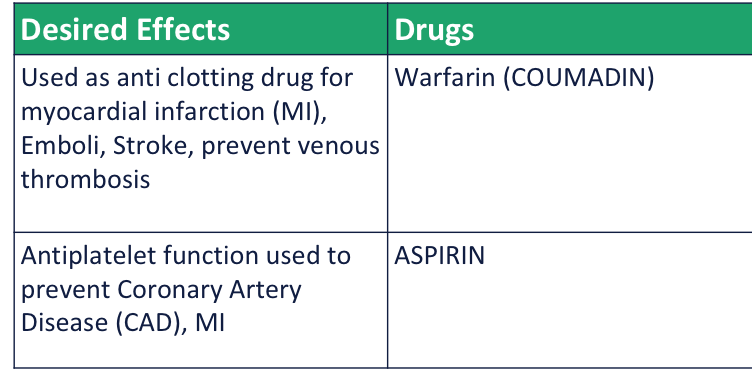
Anti coagulant Therapy
Side effects for both:
1 can lead to what?
When to not use it and why?
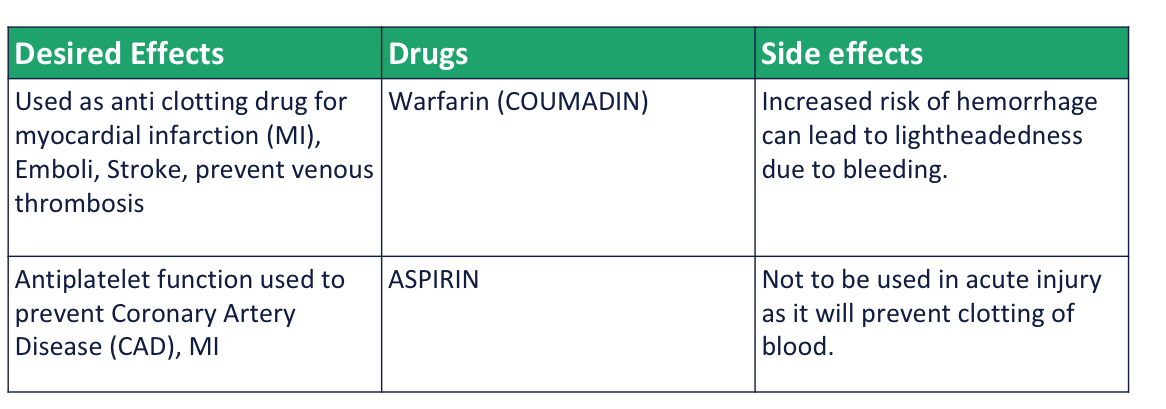
A RE YOU PHARMAC READY:
What is Lipitor:
Desired effect ?
Side effect: 3 things? What are 3 s/s that could happen?


True or False?
TRUE
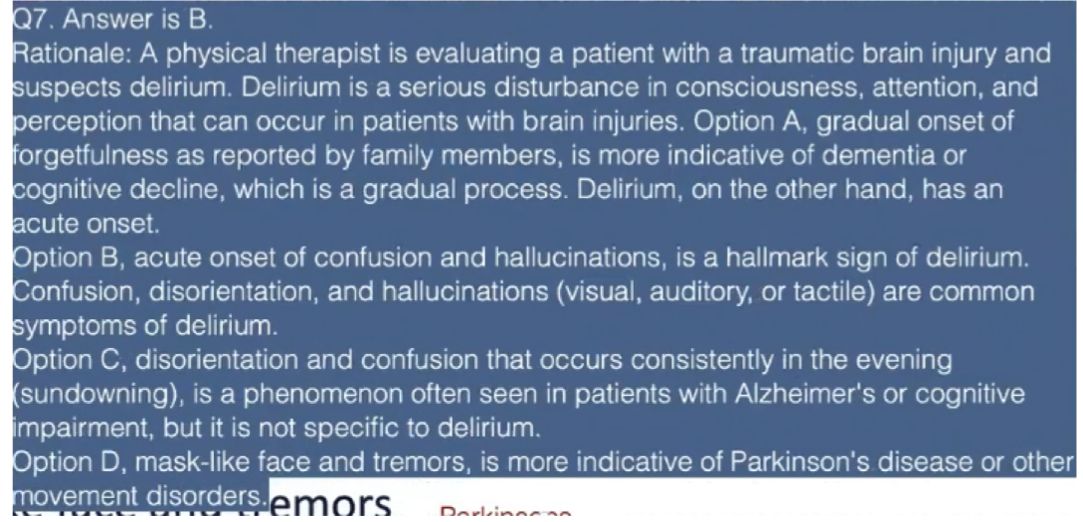
A physical therapist is evaluating a patient with a traumatic brain injury and suspects delirium. Which of the following signs would confirm the physical therapist's suspicion? A. Gradual onset of forgetfulness as reported by family members B. Acute onset of confusion and hallucinations C. Disorientation and confusion that occurs consistently in the
evening (sundowning) D. Mask-like face and tremors