Business - The Marketing Mix (Chap 3)
 Call Kai
 Learn
Learn Practice Test
 Spaced Repetition
 Match
Match Flashcards
 Knowt Play
1/44

Earn XP
Description and Tags
AQA Alevel Business - Miss L
Name | Mastery | Learn | Test | Matching | Spaced | Call with Kai |
|---|
No analytics yet
Send a link to your students to track their progress
45 Terms
Whats the 7 Ps - Marketing Mix
Product, Place, Promotion, Price, People, Process, Physical Enviroment
What is considered a product when talking about the marketing mix?
Services, digital products, experiences, events, property, information (e.g market research)
Why is adding value important
to differentiate products, enhance customer satisfaction, and increase loyalty. It can lead to competitive advantage and higher profitability.
how can adding value be done
including extras in a bundle, (e.g insurrence, warrenty etc) higher quality, extension products, extra features
two types of marketing
industrial marketing, consumer marketing
another term for industrial marketing
B2B (Business to Business)
three products go into industrial marketing
materials/parts, capital items (big investments e.g machienary), supplies and services
characteristics of industrial marketing
specialist buyers and sellers (greater understanding of products), buyer-seller relationship, quality, pricing and support
what is consumer marketing
aimed at individuals and households
what 3 products go into consumer marketing
convenience products, shopping products and specialty products.
what is meant by convience products
products bought regularly by habit and by a large population (often low prices so people dont think about it) e.g bread, milk etc
what is shopping products
consumed/purchased less frequently, customers focus on quality,price, brand and style, sold in fewer outputs e.g furniture, clothes etc
what is speciality products
Products with unique characteristics or brand identification that consumers make special efforts to purchase, consumers are more selective, price is often not a deciding factor → high profit margins but low sales. They are often high-end items and have limited distribution.
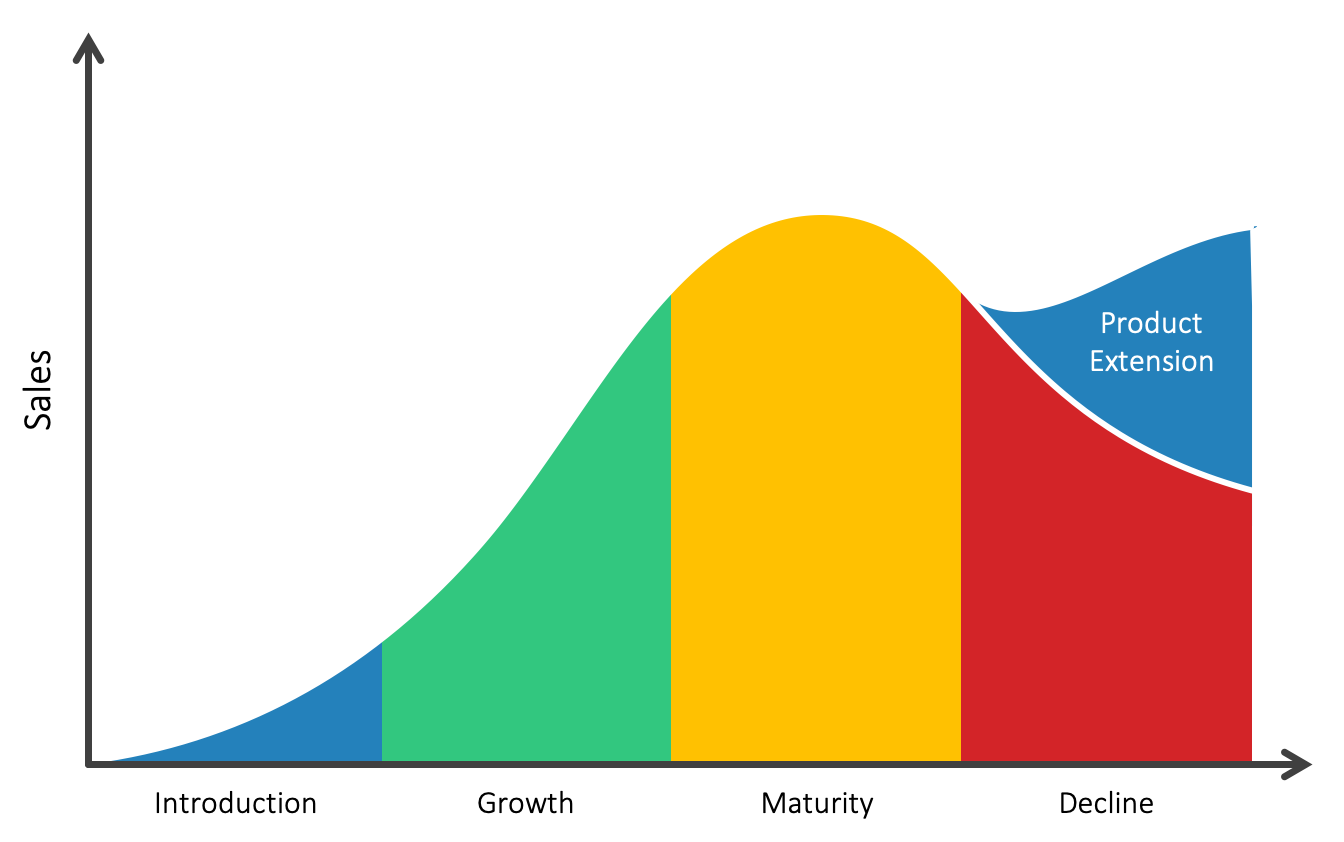
What phase happens before introduction and explain
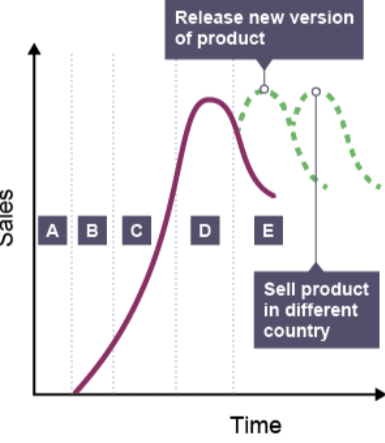
R & D (Research & Development) - no income as its not launched and has high costs
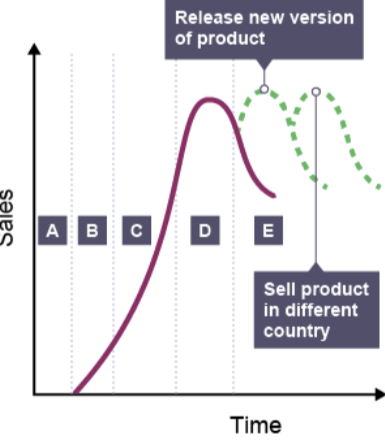
What happens in phase B
Introduction - high promotion, slow sales, cash flow tends to be negative (as profit doesn’t match costs)
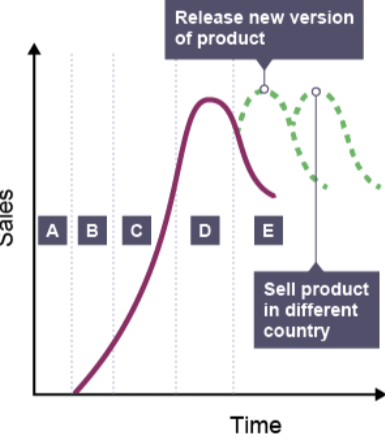
What happens in happens in phase C
Growth - starts to breakeven (become profitable), starts getting word of mouth (known), can last years and sales increase significantly as the product becomes more established in the market.
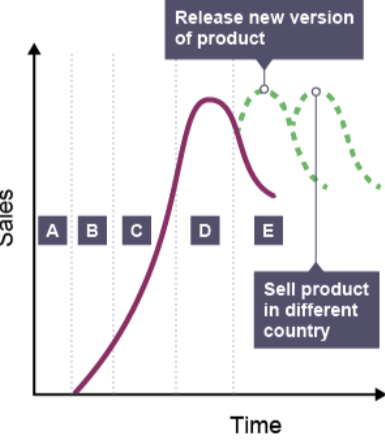
What happens in phase D
Maturity - sales peak, market saturation occurs, competition increases, promotional costs may decline
What happens in phase E
Decline - sales decrease, market shrinks, and companies may reduce investment in the product
What happens during product extension
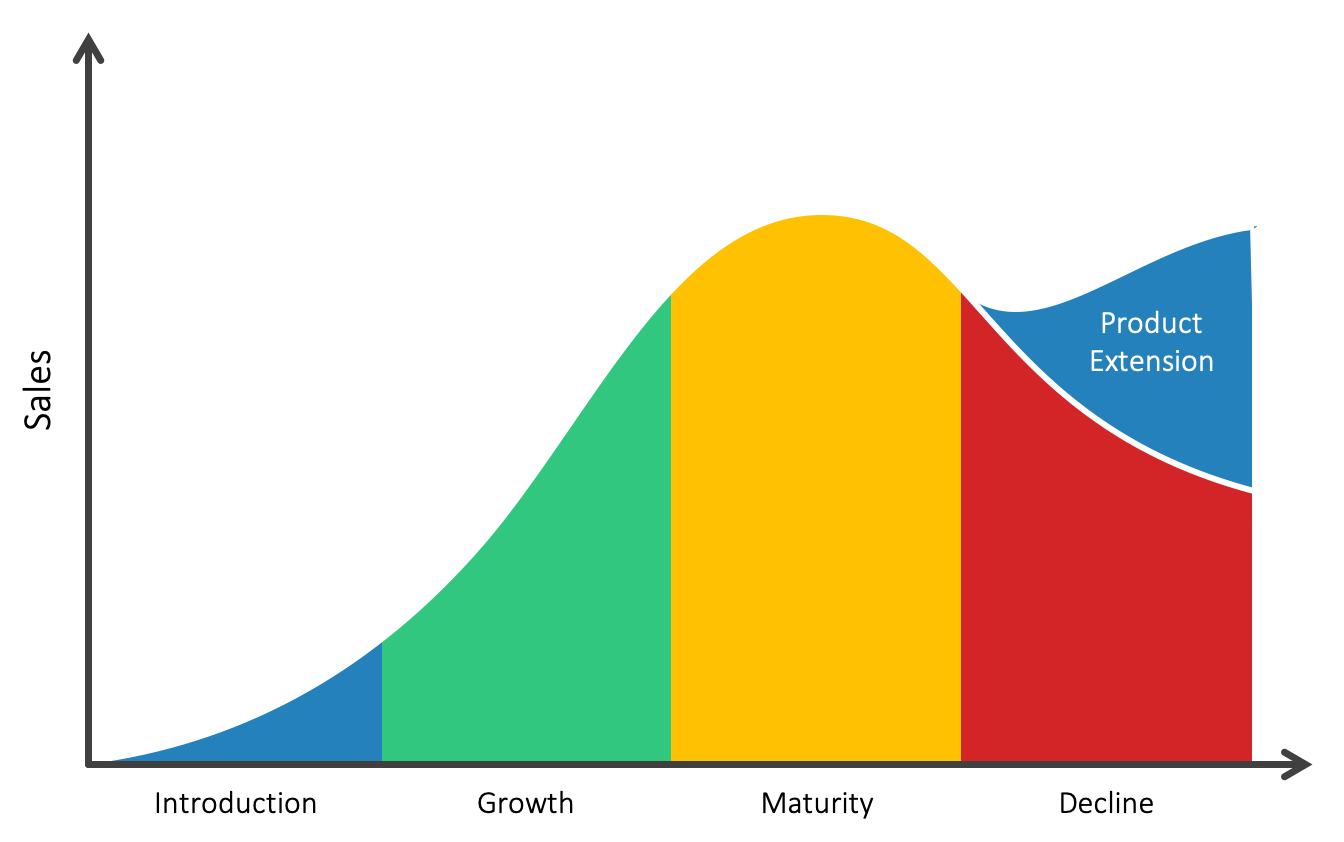
Strategies to prolong product life cycle and maintain sales by making modifications, enhancing features, or targeting new markets.
whats the product portfolio
Businesses plan their marketing to spread the risk and should be analysed regularly. This will help businesses understand their product’s place in the market
whats the Boston Matrix
a strategic management tool used to evaluate a company's products or business units based on their market growth and market share.

whats a question mark in the boston matrix
A product in the Boston Matrix with low market share but high market growth potential, indicating uncertainty about its success. It may require significant investment to increase market share.

Whats a dog in the Boston matrix
A product in the Boston Matrix with low market share and low market growth, often considered a poor performer that may be phased out, low chance of becoming cash flows, and typically does not justify further investment. Often companies keep it if it has loyal costumers for that specific product e.g cadbury fruit & nut

Whats the star in the boston matrix
A product in the Boston Matrix characterized by high market share and high market growth, indicating strong performance and the potential to generate significant revenue. Stars often require ongoing investment to sustain growth.
Whats the cash cow in the boston matrix
A product in the Boston Matrix with high market share and low market growth, generating consistent revenue and requiring less investment. Cash cows are important for financing other products in a company's portfolio. Cash cows usually pay for the development of a new product as it is steady income
in what circumstances should businesses cease the prodcution of dogs
Businesses should cease production of dogs when the product consistently fails to generate profit, shows no potential for growth, and does not align with their strategic goals. Additionally, if the costs of maintaining the product outweigh its benefits, it may be wise to discontinue it.
when might businesses not cease production of dogs
Businesses might not cease production of dogs if the product serves a niche market, has loyal customers, or provides strategic value in terms of brand presence or cross-promotion. Additionally, if discontinuing the product would negatively impact customer perception or market positioning, they may choose to maintain it.
what is penetration pricing
A pricing strategy where a product is initially offered at a low price to attract customers and gain market share quickly. This approach aims to encourage trial, increase sales volume, and build a customer base.
what is price skimming
A pricing strategy where a product is initially sold at a high price to maximize profits from early adopters before gradually lowering the price to attract a broader customer base.
when does price skimming not work
Price skimming may not work when competitors quickly enter the market with similar products, or when the product has a short life cycle. Additionally, if the target market is highly price-sensitive or if there is low demand, this strategy may prove ineffective.
which business might use price skimming
Businesses in technology, luxury goods, or pharmaceuticals often use price skimming, as these markets can capitalize on early adopters willing to pay a premium for new or exclusive products.
what is dynamic pricing
A pricing strategy that allows businesses to set flexible prices based on current market demands, competitor pricing, and customer behavior. This approach enables companies to maximize their revenue by adjusting prices in real-time.
which businesses use dynamic pricing
E-commerce retailers, airlines, and ride-sharing companies commonly use dynamic pricing, adjusting their rates based on demand fluctuations and market conditions.
what influences pricing decisions
Factors like production costs, competition, market demand, and customer perceptions.
what influences the choice of promotional mix
costs & budget, campaign objectives, target market, positioning and competition in the market.
place meaning
place refers to the distribution channels used to deliver products to customers.
#

