Alertness
 Studied by 0 people
 Call Kai
 Learn
Learn Practice Test
 Spaced Repetition
 Match
Match Flashcards
 Knowt Play
1/26

Earn XP
Description and Tags
Driving test
Name | Mastery | Learn | Test | Matching | Spaced | Call with Kai |
|---|
No analytics yet
Send a link to your students to track their progress
27 Terms
What should you do before making a U-Turn?
Slow down
Ensure the road is clear in both directions.
Make sure the road is wide enough for you to carry out the manoeuvre safely.
Use your mirrors and look around to check its safe before turning across the road.
What should you do when approaching hump bridges?
Slow down and be cautious as there may not be enough room to pass an oncoming vehicle.
Be aware of pedestrians on the road.
Where should you avoid overtaking?
When approaching a dip in the road.
What should you do if your mobile phone rings while you’re driving or riding?
Leave it until you have stopped in a safe space.
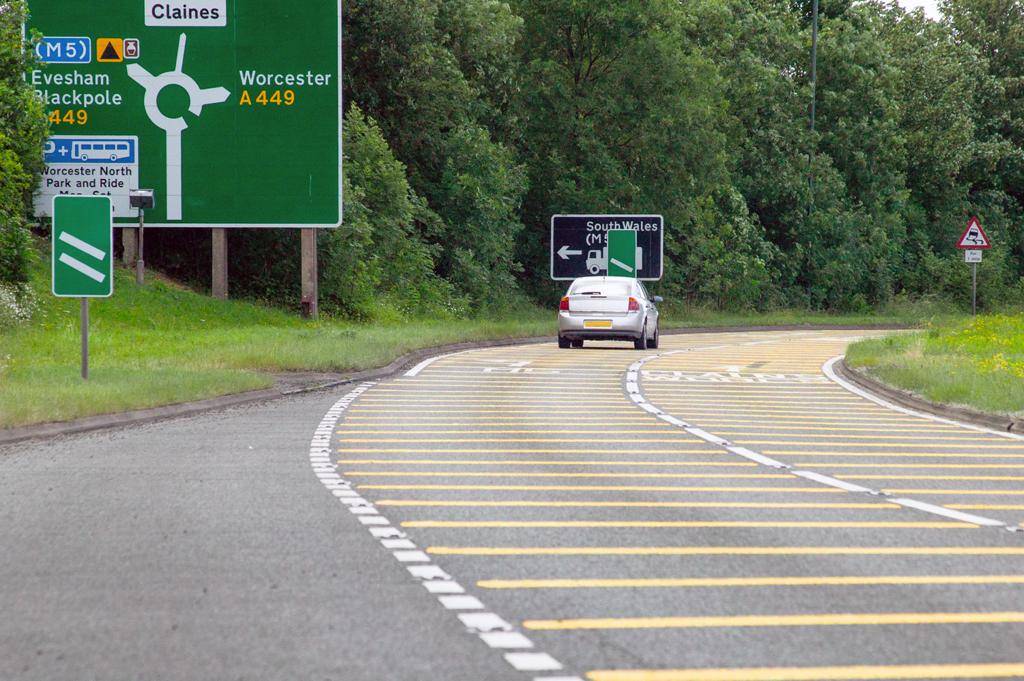
Why are these yellow lines painted across the road?
To make you aware of your speed.
These lines are often found on the approach to a roundabout or a dangerous junction.
What should you do when you're approaching traffic lights that have been green for some time?
Be ready to stop.
What should you do before slowing down or stopping your vehicle?
Use your mirrors to check what is happening behind you. Assess what’s ahead and make sure you give the correct signal if it will help other road users.
You're following a large vehicle. Why should you stay a safe distance behind it?
You’ll give the driver a chance to see you in their mirrors. It will also allow you to see the road ahead by looking past the large vehicle.
Why should you use your mirrors when you see a hazard ahead?
To assess how your actions will affect the traffic behind.
You're waiting to turn right at the end of a road. What should you do if your view is obstructed by parked vehicles?
Edge forward slowly and keep looking all the time. Don’t cause other road users to change speed or direction as you emerge.
There are objects hanging from your interior mirror. Why could this be a hazard?
Your view could be obstructed.
You're on a long motorway journey. What should you do if you start to feel sleepy?
Leave the motorway and stop in a safe place.
Why should you switch your headlights on when it first starts to get dark?
So others can see you more easily.
You're driving your car. When may you use a hand-held mobile phone?
When you’re parked safely.
You're driving on a wet road. What should you do if you have to stop your vehicle in an emergency?
Keep both hands on the steering wheel so you can control the vehicle’s direction of travel.
hat should you do when you move off from behind a parked car?
Use both the interior and exterior mirrors to check that the road is clear. Look around to check the blind spots and, if necessary, give a signal to warn other road users of your intentions. Also look well ahead as you'll have to steer out into the road to pass the parked car.
How should you pass a cyclist on the road?
Allow the cyclist plenty of room in case they wobble or swerve around a pothole or raised drain.
Look well ahead before you start to overtake, because you'll need to cross the hazard line.
Look for entrances where vehicles could be waiting to pull out.
When do windscreen pillars cause a serious obstruction to your view?
When approaching bends and junctions.
What should you do if you can't see clearly behind when you're reversing?
Ask someone to guide you.
What does the term ‘blind spot’ mean?
An area not visible to the driver.
You're turning right onto a dual carriageway. What should you do before emerging?
Make sure that the central reservation is deep enough to protect your vehicle. If it isn't, you should treat the dual carriageway as one road and check that it’s clear in both directions before pulling out.
You're waiting to emerge from a junction. The windscreen pillar is restricting your view. What should you be particularly aware of?
Pedestrians, motorcyclists, and cyclists.
How can you make sure that a satellite navigation (sat nav) system doesn't distract you when you're driving?
Set the sat nav before starting your journey, or pull up in a safe place before making any changes to it.
What does alertness mean?
Being wide awake and concentrating
Looking out for hazards
Noticing all road signs and markings.
What are the impacts of being unfit to drive?
Your reaction times may be slower
You may be unable to judge distances properly
Your actions may be less well co-ordinated than usual
What are the main causes for distraction?
Loud music in the car
Passengers (usually children)
Events happening outside (such as accidents)
Using a mobile phone
 Note
Note  Flashcards (129)