Microbiology Exam 3
 Studied by 1 person
 Call Kai
 Learn
Learn Practice Test
 Spaced Repetition
 Match
Match Flashcards
 Knowt Play
1/136

There's no tags or description
Looks like no tags are added yet.
Name | Mastery | Learn | Test | Matching | Spaced | Call with Kai |
|---|
No analytics yet
Send a link to your students to track their progress
137 Terms
Food Microbiology is a mix of…..
“kill pathogenic microbes” and “encourage growth of useful microbes”
What is used in canning to sterilize food?
High pressure and High temperature
-Commercial canning is done under pressure while home canning is sometimes done under pressure using a retort.
_____ is a major method of food preservation
Canning
Commercial Canning Process
Blanching in hot water or steam denatures enzymes that might alter color, texture, or flavor.
Can are filled to capacity, leaving minimal dead space
Steam is used to exhaust, or drive out, dissolved air
The cans are sealed
Cans are sterilized by pressurized steam in a retort, similar to an autoclave
Cans are then cooled by submersion in a water bath or by spraying them with water
Endospore-Forming Microbes
-Not all are killed
-obligate thermophiles that don’t grow at normal temperatures
Thermophilic anaerobic spoilage
Cans left at a high temperatures and spoil due to the growth of _______.
Flat sour spoilage
Spoilage with no gas production.
Mesophilic Microbes
Spoil if food is not processed well enough and/or if there is contamination after processing-canner didn’t get hot enough, microbes got in.
Aseptic Packaging
Sterilized packaging is filled with liquid foods
Radiation
X-rays or gamma radiation to sterilize foods
-different doses will have different effects
High-Pressure food Preservation
Submerge in tanks of pressurized water
-Kills many pathogenic bacteria and non-pathogenic bacteria that shorten shelf life
Food Production-Cheese
-Separate the curd (made of the protein casein after processing by the enzyme rennin) from whey
-The curd is ripened by various lactic acid producing microbes
-Cheddar and Swiss-various lactic acid bacteria
-Propionibacterium species forms CO2 that forms the holes in Swiss cheese
-Cambert, Blue and Roquefort cheeses are ripened by Penicillium molds
Yogurt Production
-Thickened milk inoculated with various microbes
-Lactobacillus bulgaricus, Streptococcus thermophilus, Lactobacillus acidophilus, and Lactobacillus case
Butter/buttermilk production-The aroma and flavor is from diacetyls from lactic acid bacteria
Kefir and Kumiss-lactic acid and lactose fermenting yeasts
Cacao, Beer, Wine, Breadmaking Production
____-fermented
_______-Saccharomyces cerevisiae
___and______-made anaerobically so yeasts ferment sugars into alcohol
_______ yeasts are encouraged to work aerobically to produce the air pockets in bread.
-lactic acid bacteria are also involved in rye and sourdough for their distinctive flavors
Barley, Lager yeast and ale yeast, Sake, Wine Production
___-malted to form amylases and the malt is extracted
______-faster and forms clumps that float due to CO2
______-slower and sinks
_____-unmalted rice, uses Aspergillus to convert starch to sugars
_____-made from grapes
-uses lactic acid to reduce the amount of malic acid
Acetobacter and Gluconobacter convert ethanol (apple cider also) to acetic acid to turn wine into vinegar
Winemaking Process
Grapes are tested and picked
Grapes are crushed and destemmed
Sulfite is added to kill undesirable yeasts and bacteria
Yeast inoculum is added
Fermentation occur
Result is pressed to separate solids from wine
Wine is clarified in settling vats
Wine is filtered
Wine is aged
Wine is bottled
Industrial Fermentation
Large scale cultivation of bacteria to produce stuff
-biotechnology comes into play a lot with this
Bioreactor
A large vessel where aeration, temperature, pH and nutrients can be closely monitored so microbes can produce products.
Batch production
all harvested at once
Continuous flow production
Some is removed at a time
Primary metabolite
formed at the same time as new cells (in log phase)
Secondary metabolite
formed after the logarithmic growth phase, in the stationary phase
Metabolomics
Study of all the cellular processes using chemical fingerprints of cellular metabolism
Strain
differs from others of the same species in a significant way
-contains or lacks a different enzyme
____improvement is a big thing-mutagenesis
site-directed mutagenesis
Allows engineers to change specific DNA bases to modify a single amino acid if necessary
Amino Acids and Citric Acids
-Glutamic acid for monosodium glutamate (MSG)
-Lysine and Methionine for feed additives
-Phenylalanine and aspartic acids as ingredients for aspartame
Enzymes
•Amylases for corn syrup, paper sizing (like textbook pages), glucose from starch
-The first biotechnology patent in the USA was for microbiological production of amylase
•Glucose isomerase – convert glucose to fructose
•Proteases – reduce amount of gluten in wheat, meat tenderizers, detergents
•Rennin – for cheesemaking, previous from fungi, now from genetically modified bacteria
Antibiotics
all originally microbial products, still any are
-Streptomyces hygroscopius – different strains make almost 200 antibiotics
Steroids, estrogen, and progesterone
are all difficult to isolate from animal sources or chemically synthesize, but easy for microbes to make
Vaccines
•Antiviral vaccines in chicken eggs or cell cultures
•Bacterial usually requires large quantities of the bacteria (attenuated or not)
•Vaccines often consist of polysaccharides from the bacteria
•Recombinant DNA technology for subunit vaccines – contain only antigenic fragments that stimulate the best immune response
•HepB vaccine
Microbes as Products
•Saccharomyces cerevisiae is an industrial product on its own
-Used by bakers and brewers
•Rhizobium and Bradyrhizobium to inoculate legumes for nodule growth
-Part of the nitrogen cycle – nodules fix nitrogen from N2 to NO3
•Bacillus thuringiensis is used as a natural insect control-used in farming
-Produces the insecticidal Bt-toxin
-Used in farming and in mosquito control
Energy Sources
•Microbes convert biomass to energy sources (bioconversion)
•Methane
•Ethanol
-E10
•Other biofuels derived from cellulose have more interest now
•Algae sourced oil and other biofuels is theoretically attractive
-Biodisel and possibly jet fuel
Biotechnology
•The use of organisms/cell components to make a product
•Recombinant DNA is a natural occurrence in microbes
Recombinant DNA
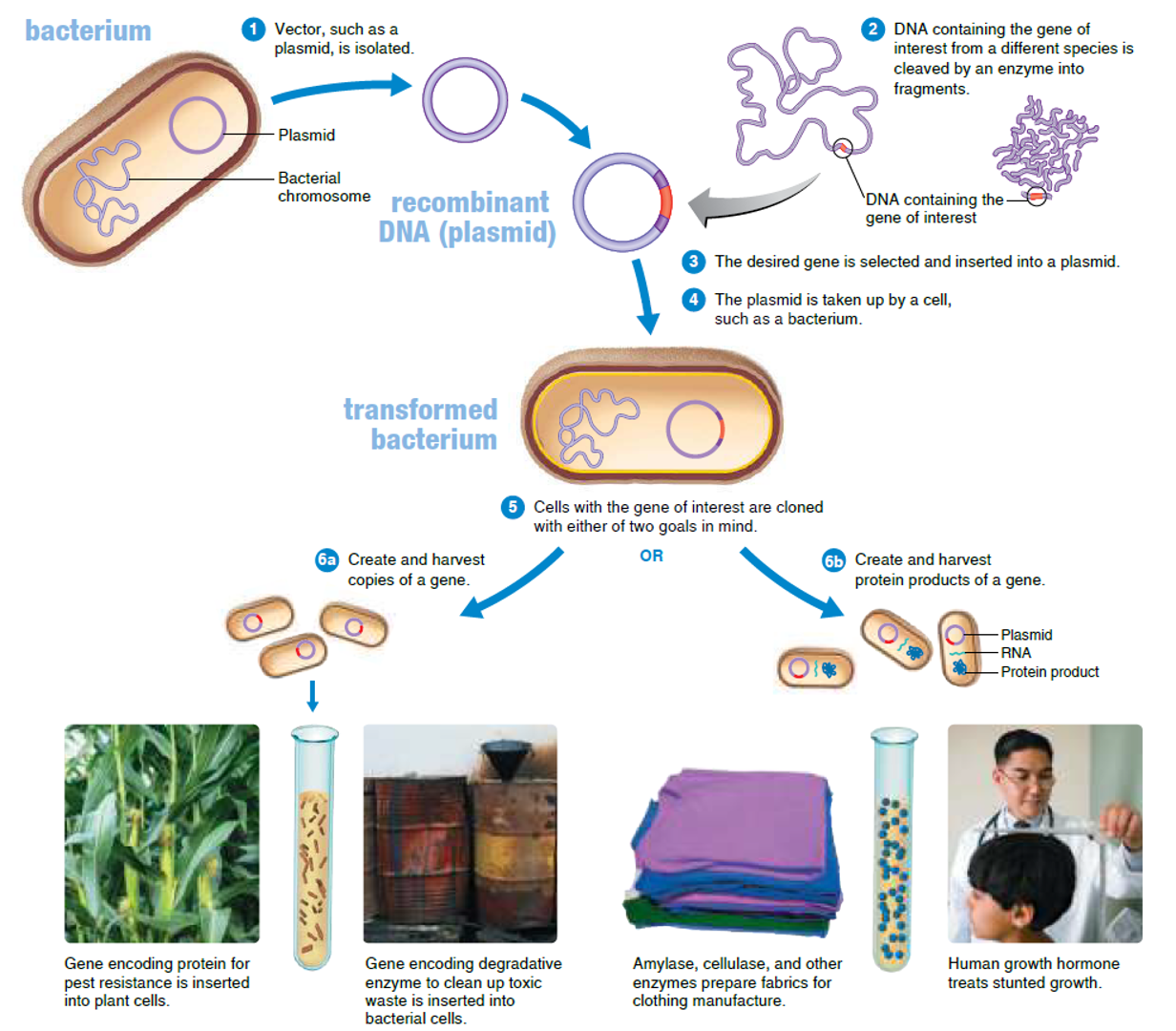
Recombinant DNA Information
•A vector is a DNA molecule used to insert foreign DNA into a cell
-Must be self-replicating – plasmid or viral genome
•Insert a gene of interest into the vector
Introduce the vector into the cell – cell produces the product
-Sometimes the product is what the gene codes for
-Sometimes the product is the plasmid itself!
Artificial Selection
•Yeast strains can be selected for better tasting beer, or tolerating the higher alcohol content of wine
•Antibiotic producing strain have been selected for
Mutations
•Penicillium was randomly mutated using radiation – the strains with the highest amount of penicillin produced were selected
Biotechnology Tools-Site Directed Mutagenesis
modify a single amino acid in a gene to change the protein
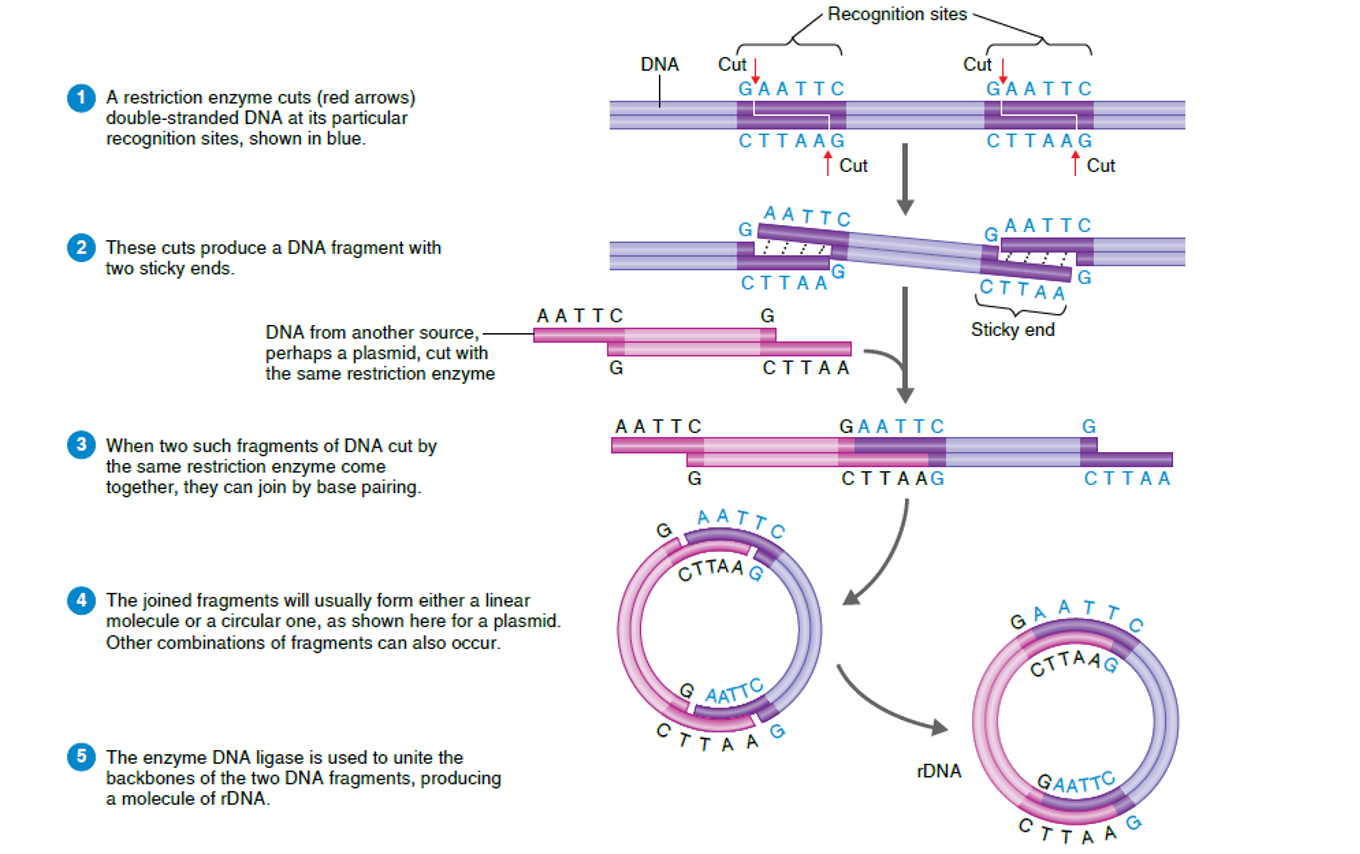
Restriction Enzymes
•Endoenzymes that form breaks in DNA at specific sequences
•Originally observed in phage defense
Blunt Ends
Ends where both strands of DNA are broke at the same base
AGTG| |CACT
TCAC| |GTGA
Sticky ends
•the DNA strands are broken at different bases, leaving short segments of ssDNA-offset
GTGCA|C
C|ACGTG
•can be used for combining DNA from multiple sources
-DNA ligase will rejoin the sticky ends
Restriction Enzymes
Vectors
-Must be self replicating in a cell and also be large enough to manipulate outside of the cell
-Most are bacterial plasmids
—Origin of replication
—R gene for selection
—Restriction enzyme sites
-Viral genomes can also act as _____
-Shuttle _____ can exist in multiple species
What does PCR stand for?
Polymerase Chain Reaction
Thermus aquaticus
•thermophilic bacterium that has a DNA polymerase that can survive the melting temperature of DNA
PCR
•PCR is very useful, but has limits
-Can only amplify shorter sequences – usually sub 10kb
•Can be used for diagnostics
-Amplify using primers specific to a specific species or strain, gives a yes/no answer fast
Real-time PCR/Quantitative PCR
•a method for quantifying DNA after replication using fluorescent dyes
-Method 1: tag dsDNA with fluorescent dyes
-Method 2: DNA polymerase breaks down probes that contain a fluorescent dye and a quencher
-This quantification is often used for diagnostics
Reverse transcriptase PCR
• reverse transcriptase from a retrovirus DNA from RNA
-Used to diagnose viruses with RNA genomes
ddPCR
•Digital Droplet PCR. Like qPCR but tiny and more accurate.
Gel Electrophoresis
•Agarose (different than agar) is solidified in a slab
•DNA is inserted
•An electric current is used to pull the DNA from the start to the end
•Due to the network of agarose, smaller DNA fragments move faster than larger DNA fragments
Putting it all together pt 1
•Insert plasmid into bacteria – transformation
-Chemically competent cells – chemically induced to allow the cell to take up foreign DNA
-Electroporation – using an electrical current to form pores in the cell membrane, allowing foreign DNA to enter
—Must be protoplasts – no cell walls
-Gene gun – exactly what it says on the tin
—Use DNA coated gold micro-beads and fire them at the cells – often used in plants
Putting it all together ot 2
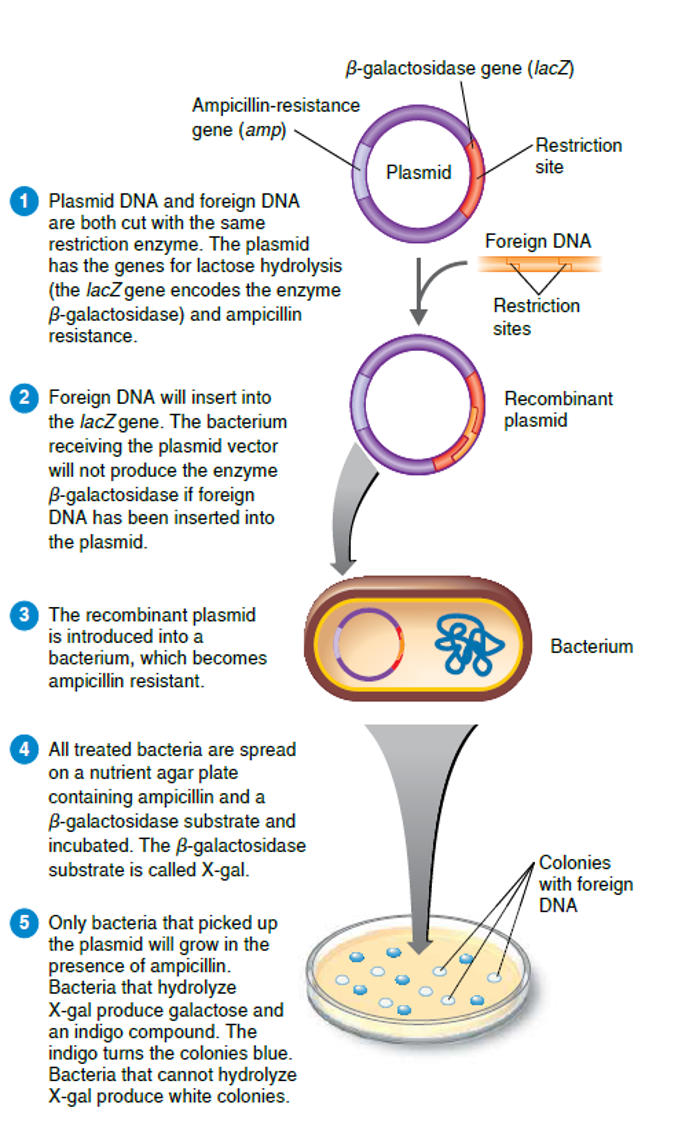
•Select colonies or cells with the foreign DNA in them.
-Antibiotic resistance is the first screen – often ampicillin or kanamycin
-A second screen is often blue-white screening
-lacZ will convert X-gal to a blue pigment – by inserting the gene of interest into lacZ, it’s possible to tell what microbes have the gene of interest.
Putting it all together
1995
First free-living cell-Haemophilus influenzae
1977
First genome sequenced-bacteriophage
2003
First human genome completed-started in 1990
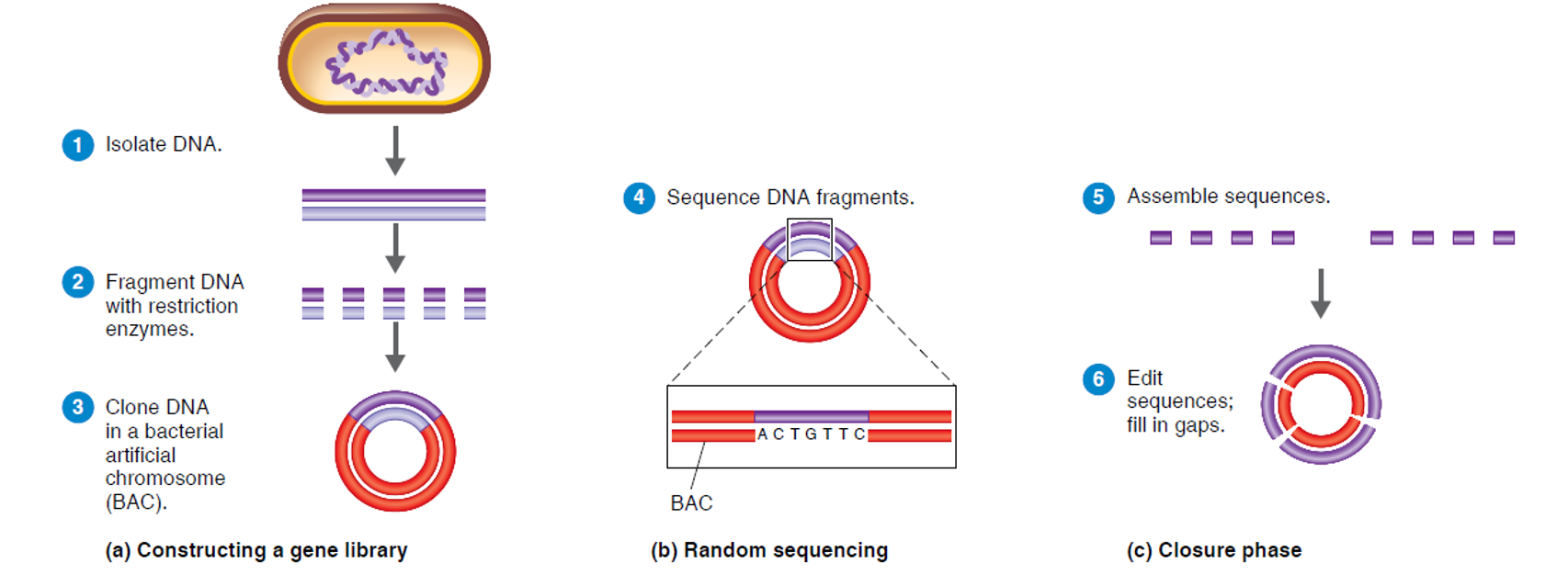
Shotgun sequencing
sequencing of small, random pieces of DNA, that are then assembled by a computer
Bioinformatics
Field of genomics(ish) specifically via computer-assisted analysis
DNA Sequencing-Shotgun
Genomics
Study of all the genes in a genome
Proteomics
Study of all proteins in a cell
Transcriptomics
Study of how genes are transcribed
Metabolomics
Study of the metabolism in a cell
Metagenomics
•sequencing and studying of DNA from environmental sources
-Only way some microbes have been catalogued!
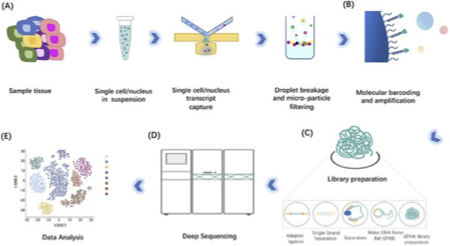
Biotechnology – Single Cell Sequencing
•Often studying the transcriptome of a single cell
•Used for studying diseases
Agricultural Use
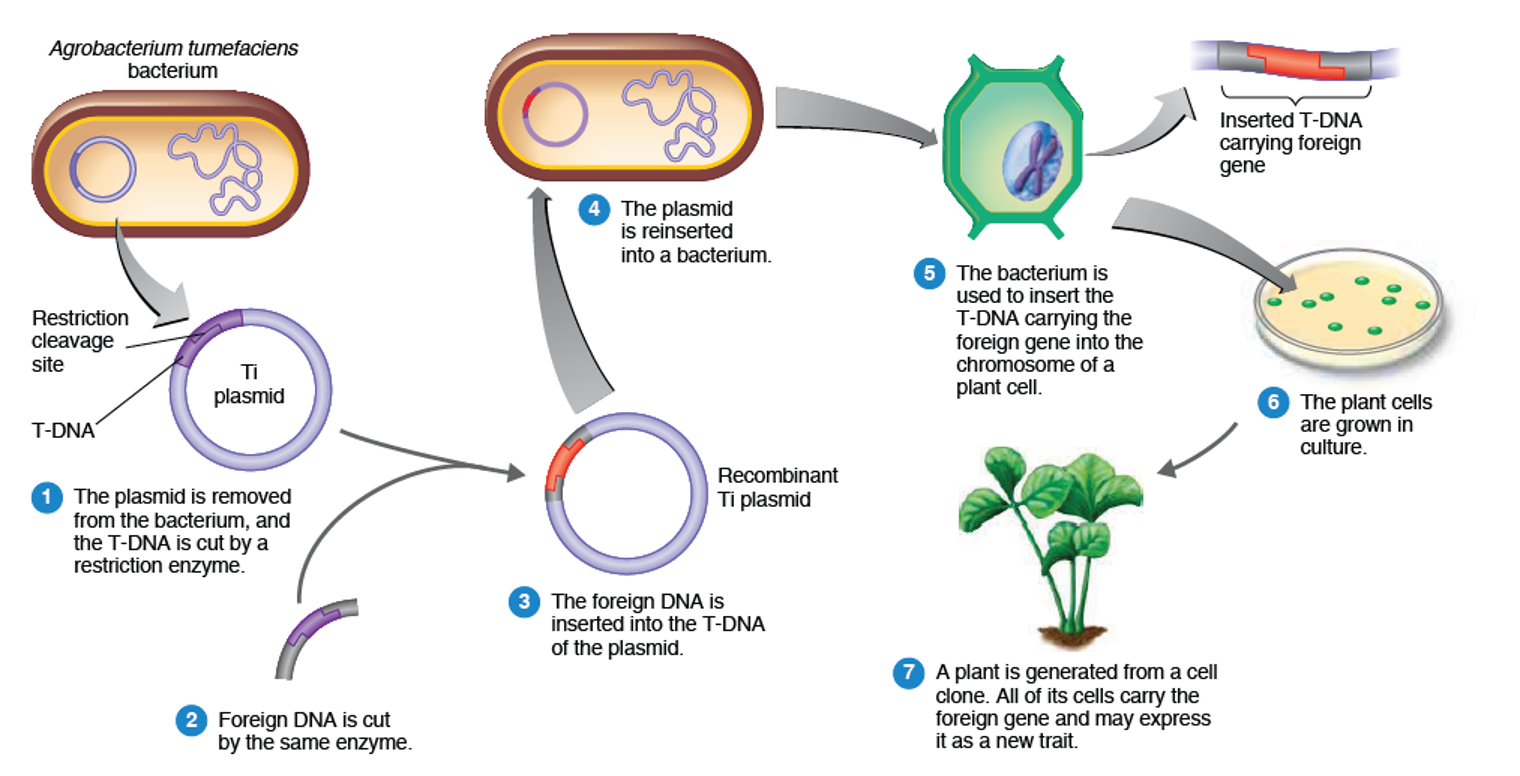
•Often, a gene gun is used to introduce recombinant DNA
•Agrobacterium-mediated transformation is much more elegant
•Agrobacterium tumefaciens inserts DNA on a Ti plasmid (tumor inducing plasmid) and the DNA incorporates into the genome of the plant
Agrobacterium Mediated Transformation
Ethical Issues
•Gene escape – especially in cases of resistance or pathogenicity
•Bt toxin and modified plants have been shown to kill bees and monarch caterpillars that consume Bt-toxin laced pollen
•Genetically modified crops resistant to herbicide have lead to massive amounts of herbicide resistance in weed species.
•Genetic testing and counselling
Microbes live in a variety of habitats because of their abilities to
Use a variety of carbon and energy sources
Grow under different physical conditions
Extremophiles
live in extreme environments
ph
temperature
salinity
Symbiosis
Two differing organisms living together in close association that is beneficial to one or both of them
example: Ruminants (such as sheep and cows) and the bacteria in the rumen
Mycorrhizae (example of animal-microbe symbiosis)
contribute to plant growth
fungus root
-Endomycorrhizae – form vesicles (smooth oval bodies) and arbuscules (tiny bushlike structures inside plant cells) - arbuscular
-Ectomycorrhizae – form mycelial mantle over the small roots of trees (mainly pine and oak).
Mycorrhizae
Fungi living in close association with plant roots
Extend surface area of roots and increase the absorption of nutrients, especially phosphorous
Plants can be very reliant on these mycorrhizae
Biogeochemical Cycles
-1 gram of soil may contain up to 1 billion bacteria
-1 milliliter of ocean water can contain up to 1 million bacteria.
-Involved in the recycling (oxidation and reduction) of chemical elements
-Many are symbionts of plants (rhizobia)
-Microbes in soil metabolize organic matter, form detritus (non-living particulate organic matter).
-Saprotrophic bacteria and fungi
Factors affecting microbial abundance in soils
Moisture content
-Moist soils support microbial growth and diversity better than dry soils
Oxygen
-Oxygen dissolves poorly in water
-Moist soils are lower in oxygen than dry soils
-Anaerobes predominate in waterlogged soils
pH
-Highly acidic and highly basic soils favor fungi
Temperature
-Most soil organisms are mesophiles
-Live well in areas without extreme summer or winter
Nutrient availability
-Most soil microbes utilize organic matter
-Microbial community size determined by how much organic material is available
Microbial populations present in the soil
-Bacteria are numerous and found in all soil layers
-Archaea present but are difficult to culture and study
-Fungi are also populous group of microorganisms
-Animal viruses are rarely found free in soil; bacteriophage are highly abundant in soil
-Algae live on or near the soil surface
-Most protozoa require oxygen and remain in the topsoil
Microbes perform a number of functions
-Cycle elements and convert them to usable form
-Degrade dead organisms and their wastes
-Produce compounds with potential human uses
The Carbon Cycle
-The primary biogeochemical cycle
-Carbon fixation – any process in which gaseous carbon dioxide is converted into a solid organic compound.
-Photosynthetic fixation – photoautotrophs

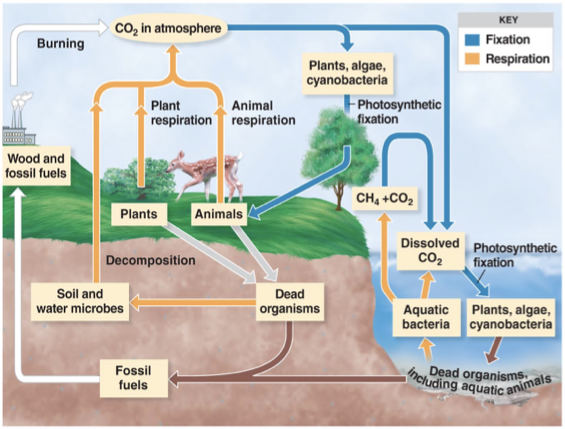
The return of CO2 to the atmosphere by respiration closely balances its removal by fixation. However, the burning of fossil fuels adds more CO2 resulting in a steady increase.
The Nitrogen Cycle
-Molecular nitrogen (N2) makes up almost 80% of the atmosphere
-For organisms to assimilate and use nitrogen it must be fixed – taken up and combined into organic compounds.
—Ammonification
—Fixation
—Nitrification
—Denitrification

The Nitrogen Cycle-Ammonification
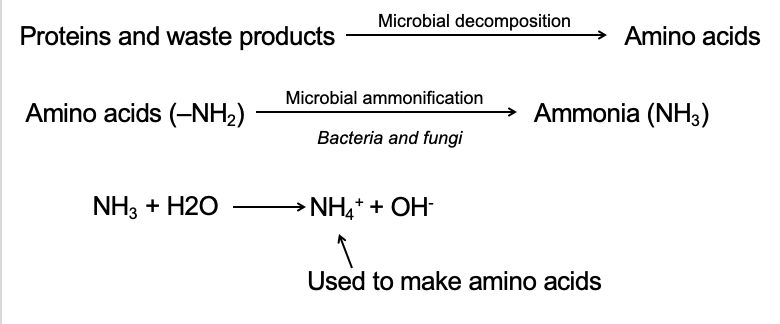
The Nitrogen Cycle-Nitrogen

The Nitrogen Cycle-Denitrification

The Nitrogen Cycle-Nitrogen Fixation

Nitrogen Fixation-Rhizosphere
-Cyanobacteria: heterocysts (a specialized structure carrying nitrogenase enzymes)
-Azotobacter
-Beijerinckia
-Clostridium pasteurianum
Nitrogen Fixation-Lichens
-symbiotic relationship between a fungus and:
—Cyanobacteria
—Algae
Nitrogen Fixation-Root Nodules
Species invade and form bacteria filled nodules on the roots
-Rhizobium
-Bradyrhizobium
-Frankia
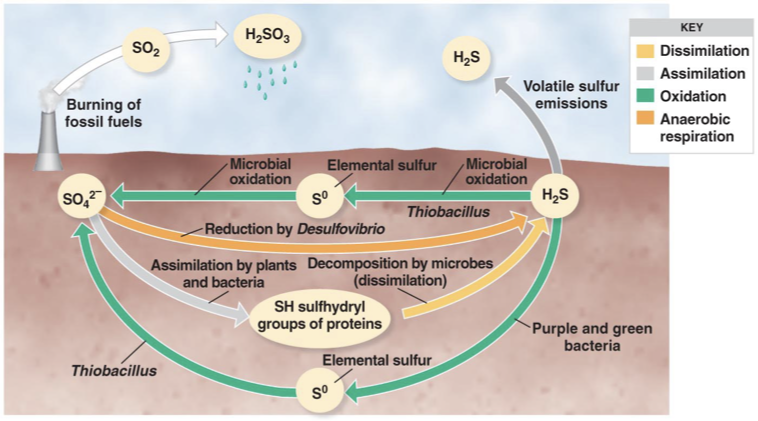
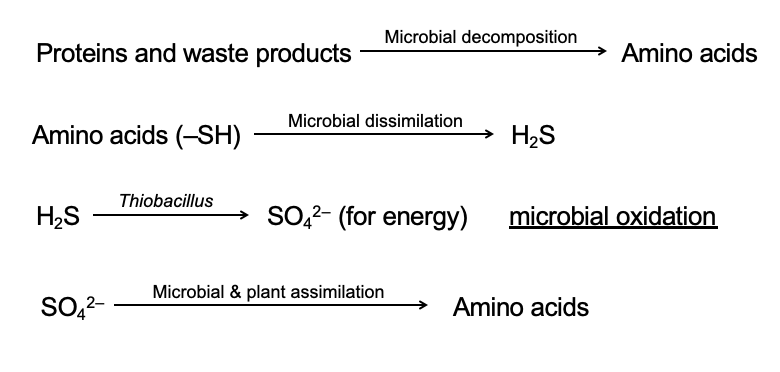
The Sulfur Cycle
Seawater Microbiota
-Divides into zones based on light and O2 availability
-Includes abyssal zone dominated by archea
—Phytoplankton (forms basis of oceanic food chain)
Chemical Water Pollution
-Resistant chemicals may be concentrated in the aquatic food chain
-Microbes can also be used to detoxify or degrade pollutants
Microbial Water Pollution
-Microbes are filtered from water that percolates into groundwater
-Some pathogens are transmitted to humans in drinking and recreational water
-With the addition of nutrients, these can be large problems.
Eutrophication
-Overabundance of nutrients in lakes and streams
-Caused by
—Addition of organic matter
—Or inorganic matter
—.Phosphates
—.Nitrogen
—.Which cause algal blooms – red tides
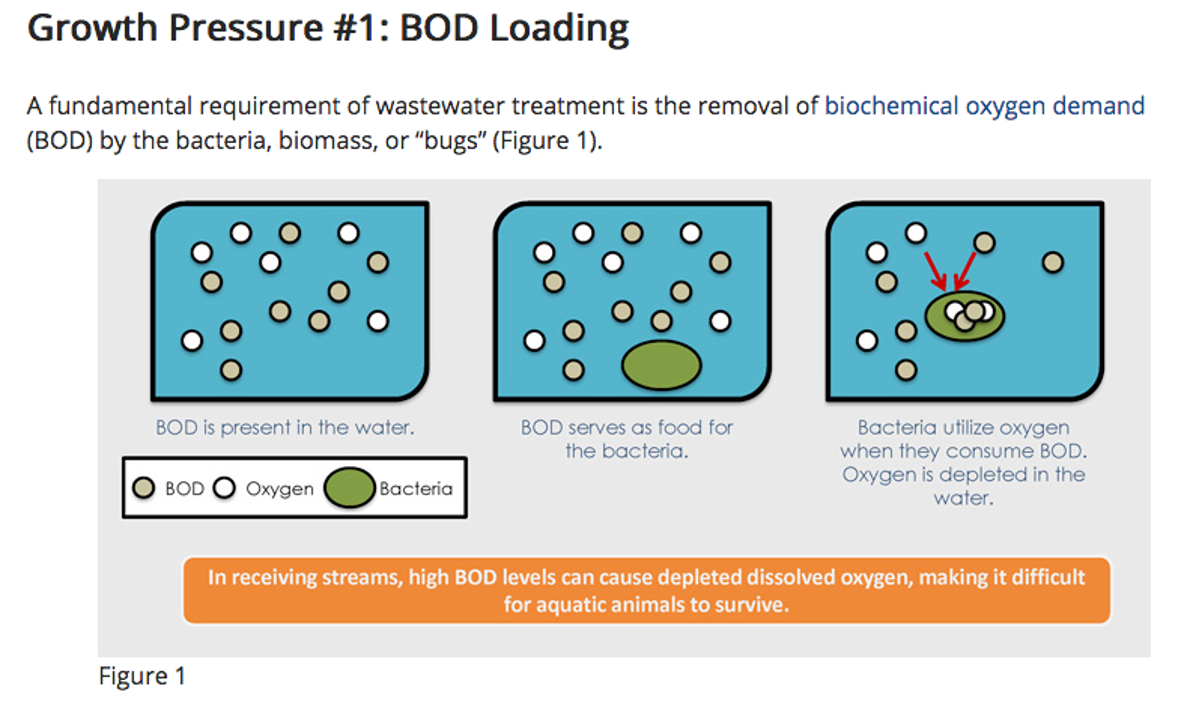
Biochemical Oxygen Demand (BOD)
-Biochemical oxygen demand or B.O.D. is the amount of dissolved oxygen needed by organisms in a body of water to break down organic material present
Water Purity Tests-Indicator organisms
-Used to detect fecal contamination
-Coliforms
-Enterococcus
Water Purity Tests-Most Probable number
/100 ml of water
-One of the indirect methods for getting the concentrations of bacteria in a sample
Coliforms
-Aerobic or facultatively anaerobic, gram-negative, non–endospore forming rods that ferment lactose to acid plus gas within 48 hours, at 35oC
Municipal Water Purification Treatment
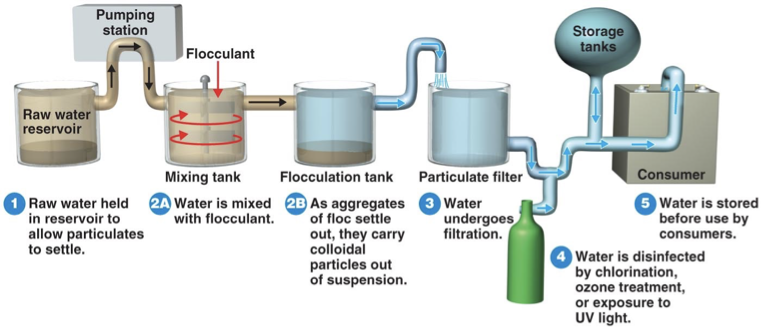
Primary treatment
Settling and screening of solids
Secondary treatment
-Removal of much of the BOD
-Disinfection (kind of)
-Water can be used for irrigation
Tertiary treatment (if applicable)
-Removal of remaining BOD, N, and P
-Disinfection
-Water is drinkable
 Note
Note  Flashcards (24)