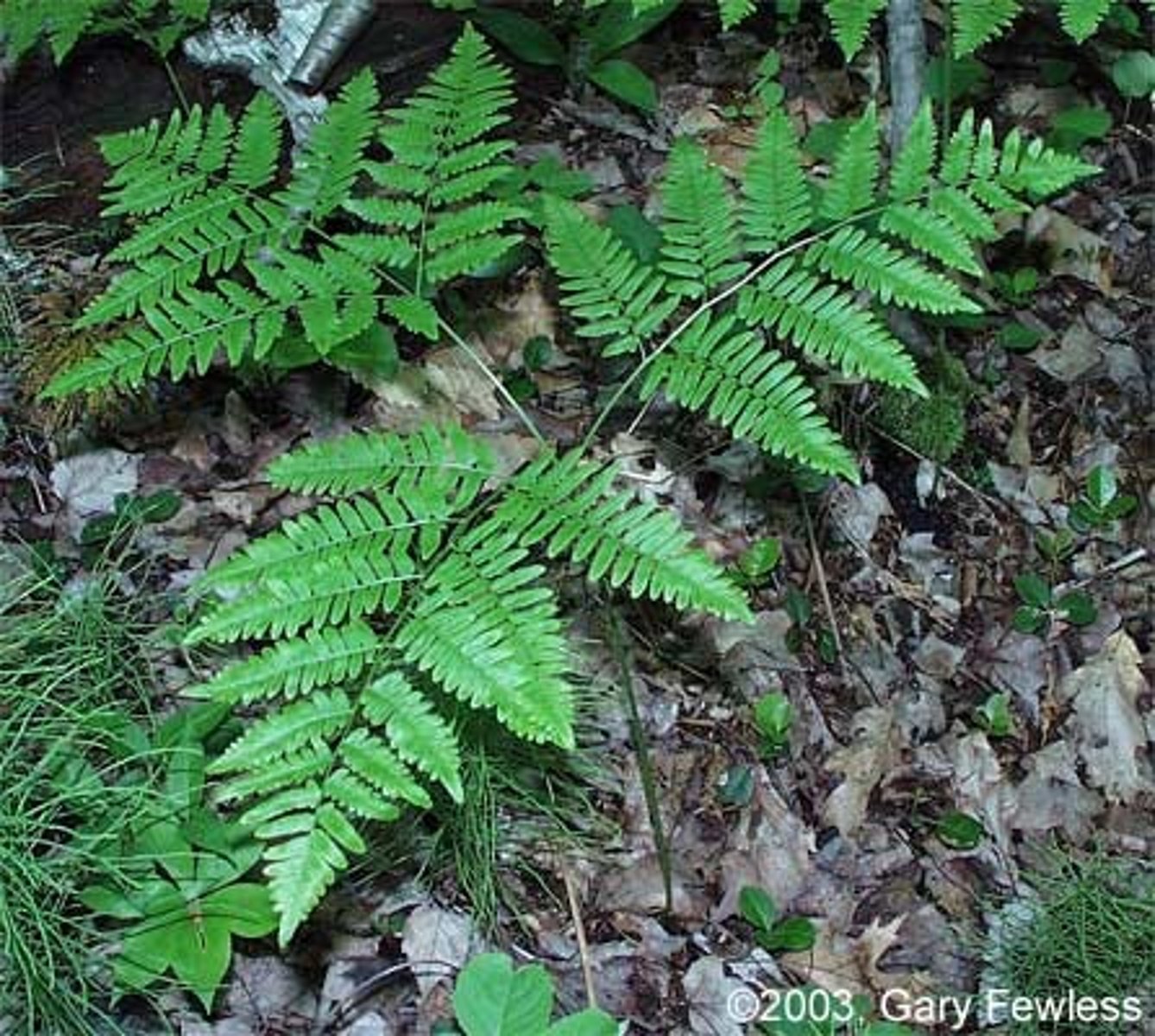
FRST 210 Lab final species
 Call Kai
 Learn
Learn Practice Test
 Spaced Repetition
 Match
Match Flashcards
 Knowt Play
1/65

There's no tags or description
Looks like no tags are added yet.
Name | Mastery | Learn | Test | Matching | Spaced | Call with Kai |
|---|
No analytics yet
Send a link to your students to track their progress
66 Terms
Pinaceae
- family that most of the species for this term are a part of.
- large woody trees
- Needles either single or in fascicles
- woody cones with bract and seed scales - winged seeds.
Pinus
- Genus of trees
- needles in fascicles (# needles in a bundle is used for IDing species)
- bundle sheath surrounds base of fascicle.
- compound buds look like candles.
- 2seeds per cone scale.
Hard pines
- sub genus pinus
- fascicles: 2s or 3s.
- needles: hard, stiff, pointy
- Bundle sheath: persistent
- Umbo: middle of seed scale, armored.
Soft pines
- sub genus strobus
- fascicles: 5s.
- needles: soft, flexible, blue/green color mix.
- Bundle sheath: deciduous
- Umbo: tip seed scale, not armored.
- seed scales are thinner and more flexible.
Pinus contorta (lodgepole pine)
- Hard pine
- fascicles: 2s
- needles: twisted, flat, dull green
- Bundle sheath: persistent
- Umbo: armored with a prickle.
- cones: seed cones open in fire, pollen cones are yellow and egg shaped. Cones point backwards towards trunk.
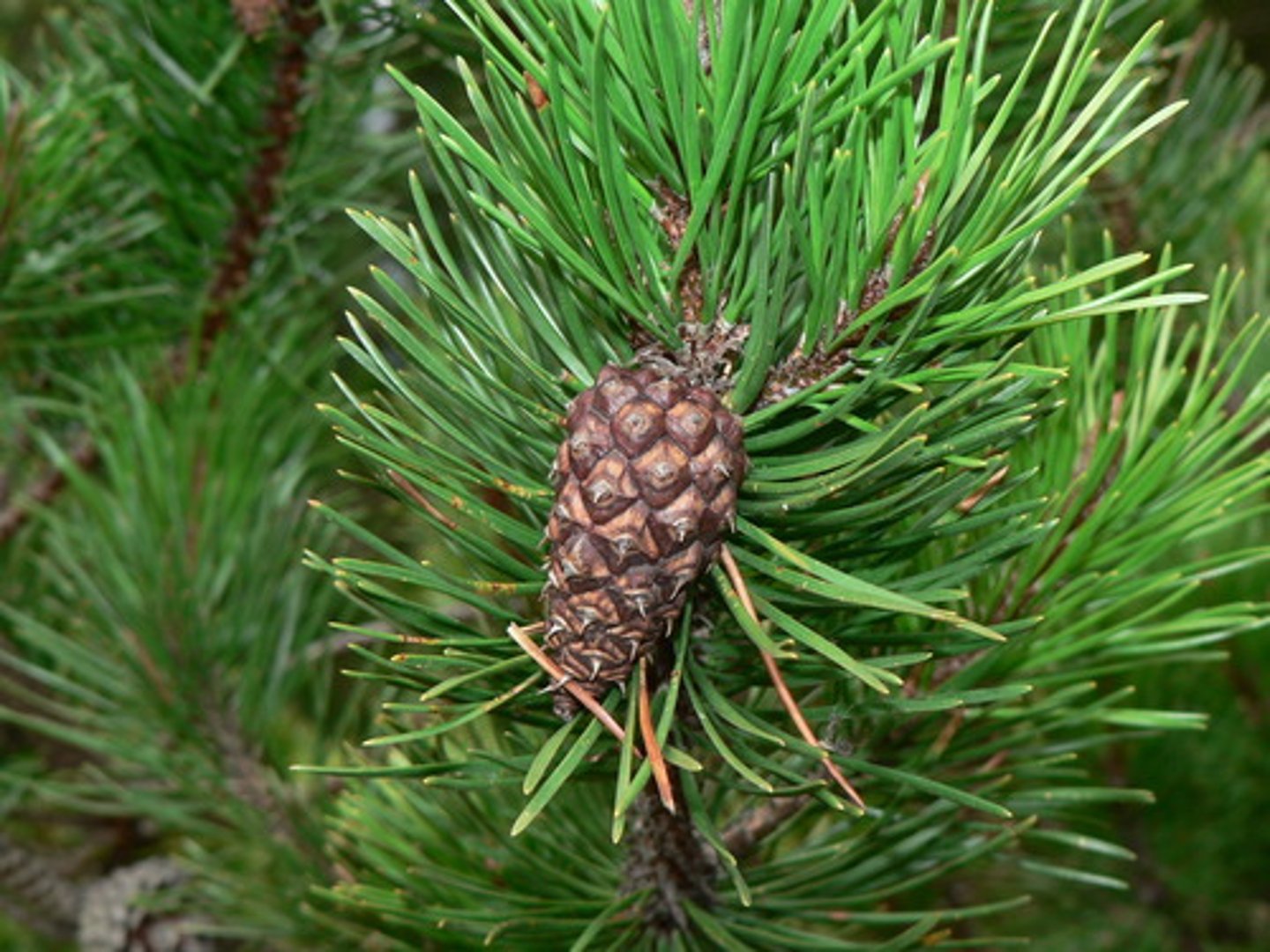
Pinus banksiana
- Hard pine
- fascicles: 2s
- needles: twisted slightly
- Bundle sheath: persistent
- growth form: short and scrubby
- cones: seed cones are bent and point away from trunk.
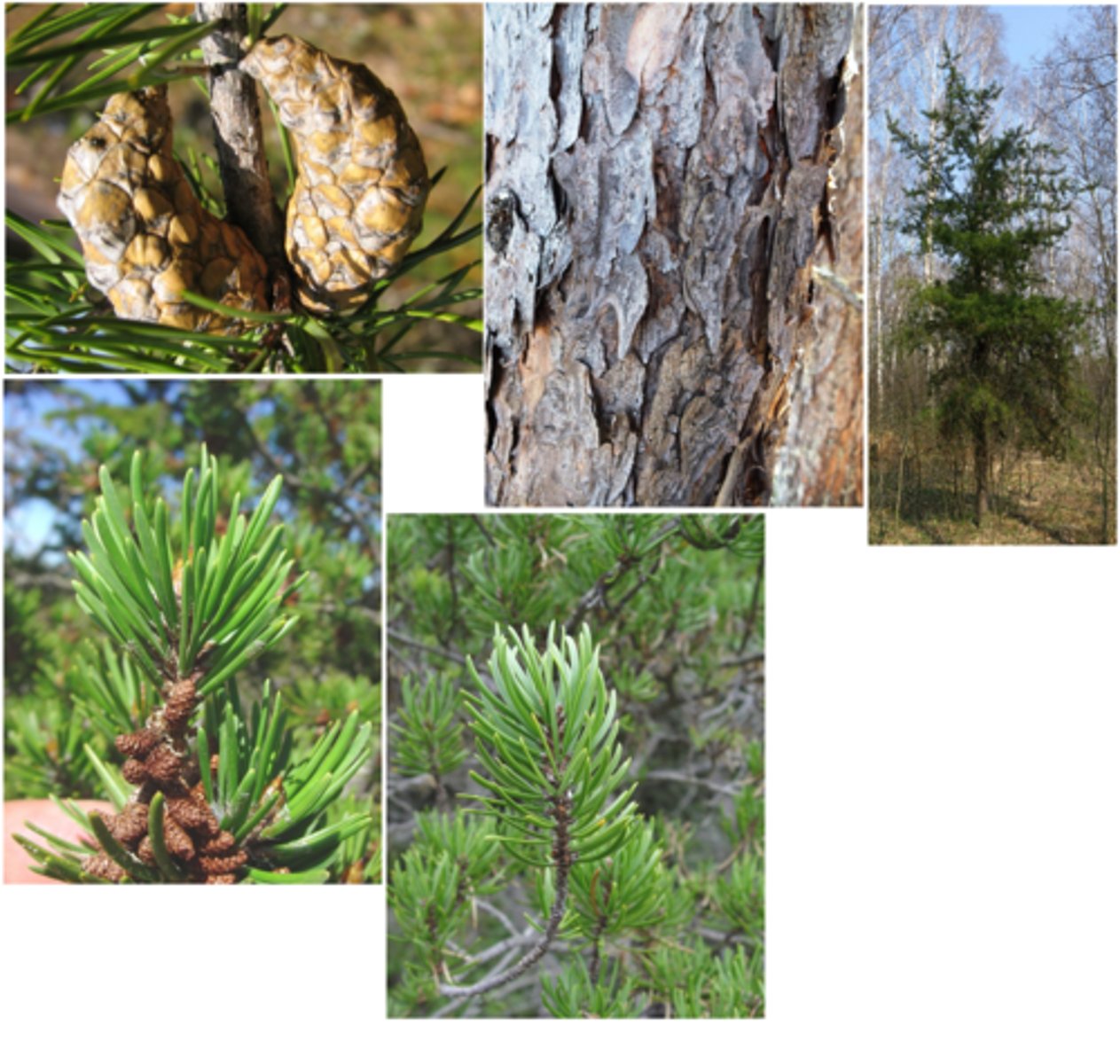
Pinus sylvestris
- Hard pine
- fascicles: 2s
- needles: cross over and wrap around each other, bluish color.
- Bundle sheath: persistent
- bark: orange colored
- cones: conical and smallish.
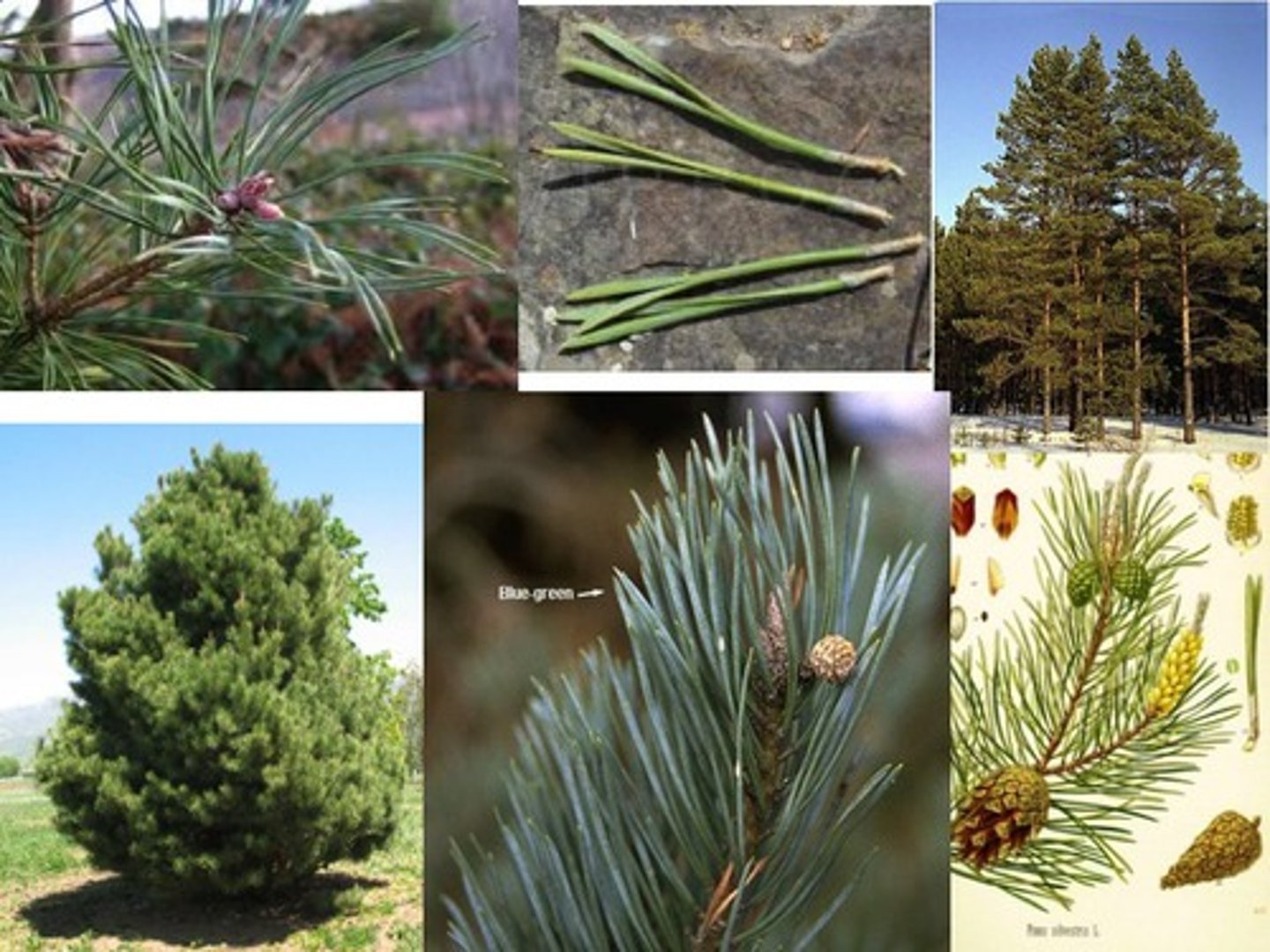
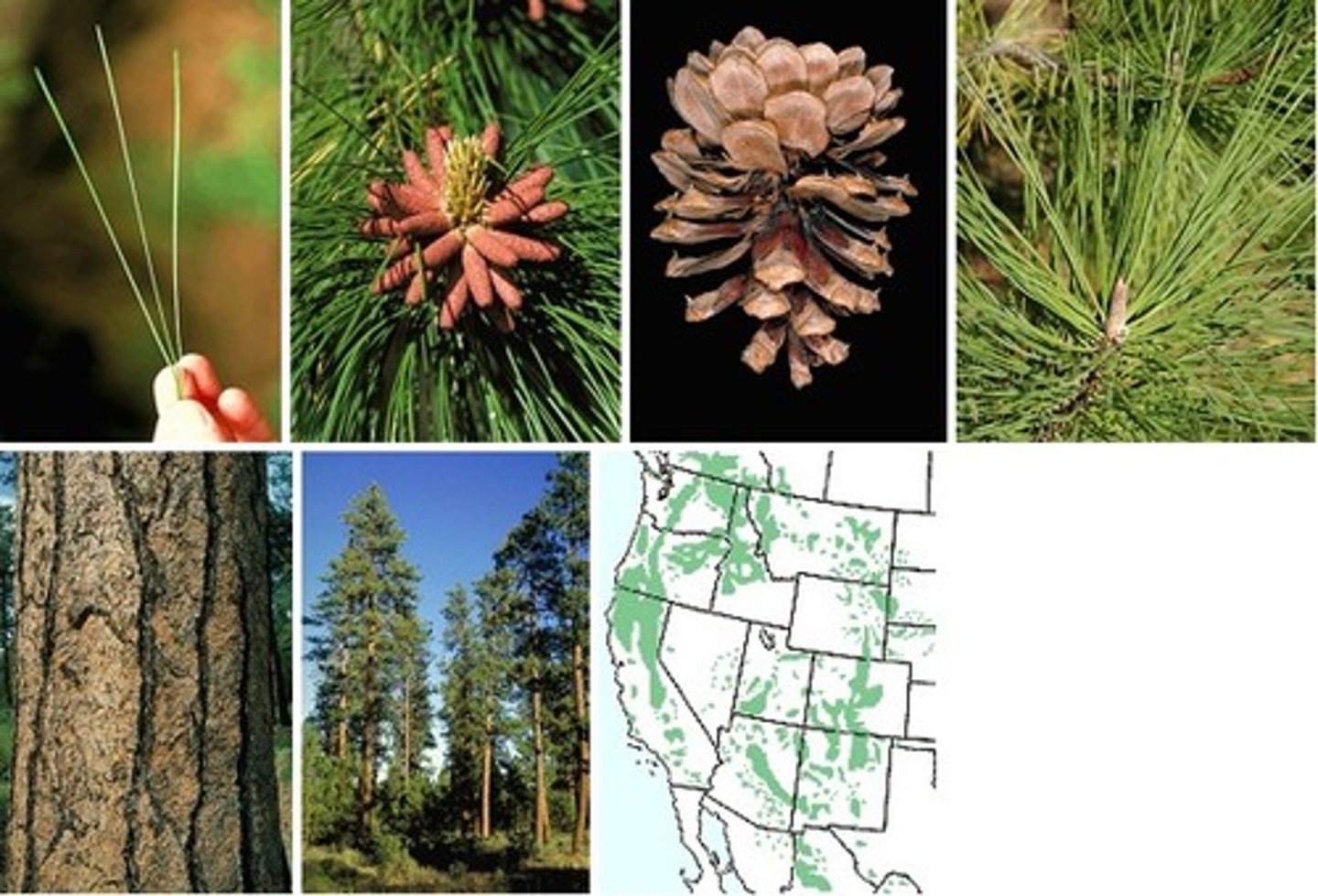
pinus ponderosa
- Hard pine
- fascicles: 3s
- needles: long
- Bundle sheath: persistent, thick
- umbo: sharp and armored.
- cones: cylindrical or conical.
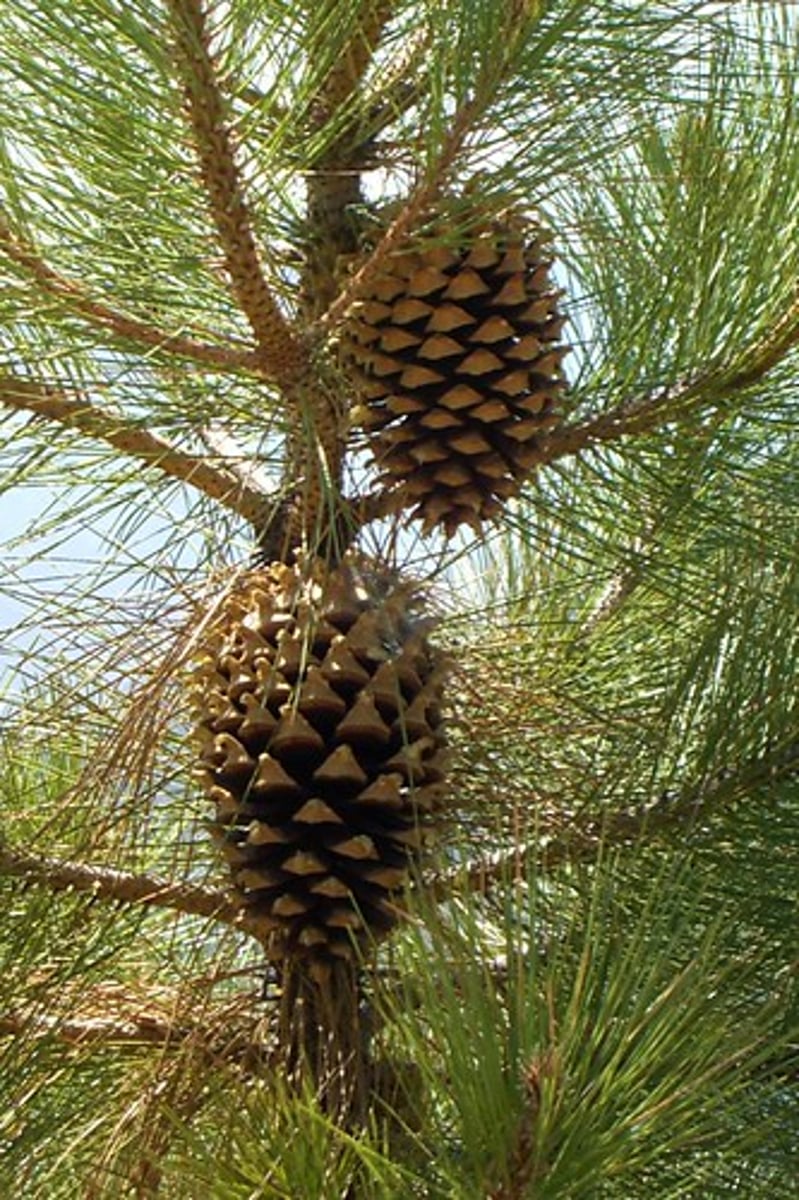
Pinus coulteri
- Hard pine
- fascicles: 3s
- needles: long
- umbo: hooks/teeth
- cones: MASSIVE
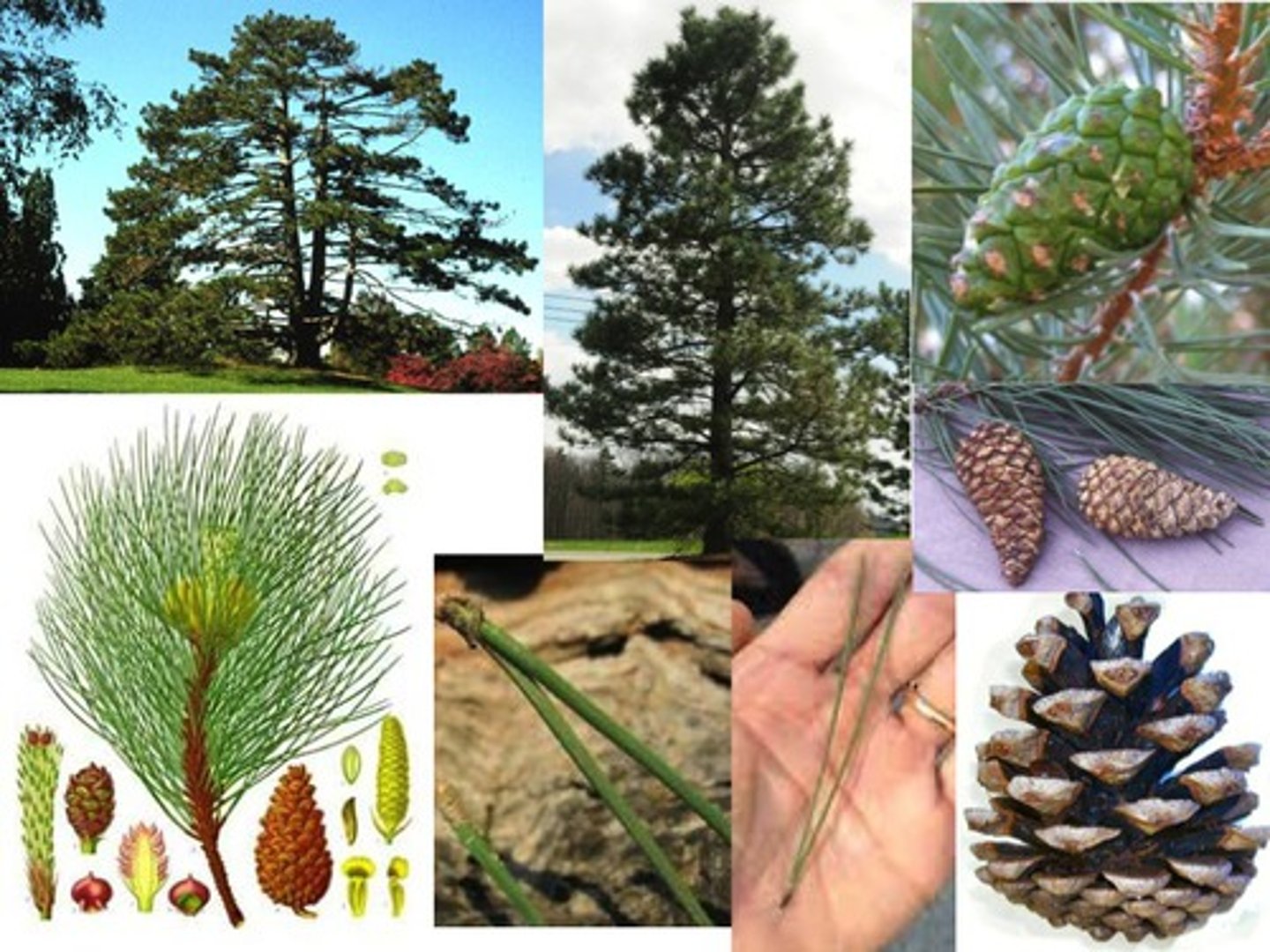
Pinus nigra
- Hard pine
- fascicles: 2s
- needles: dark green, thick, course, long.
- umbo: smooth
- cones: 2 toned color
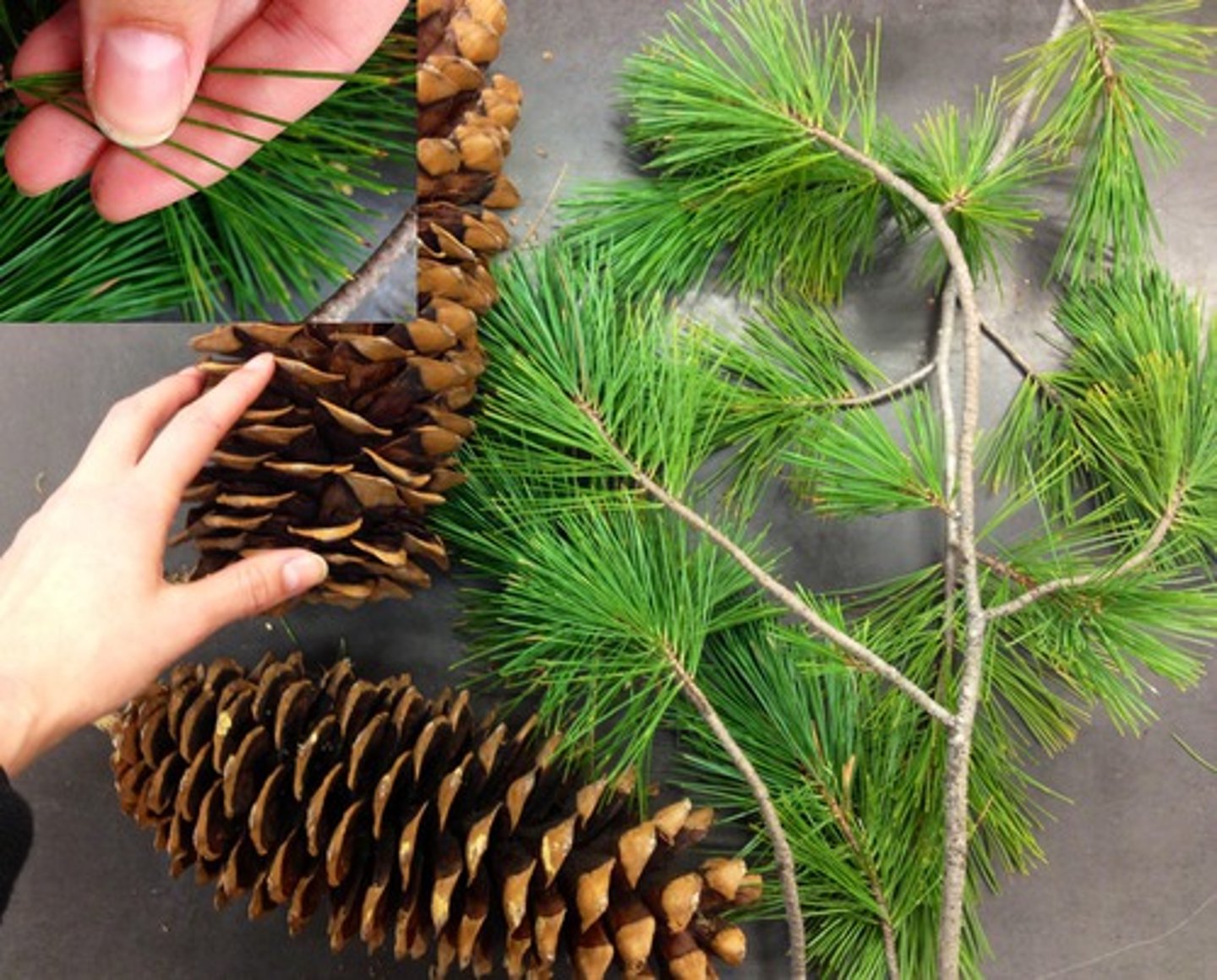
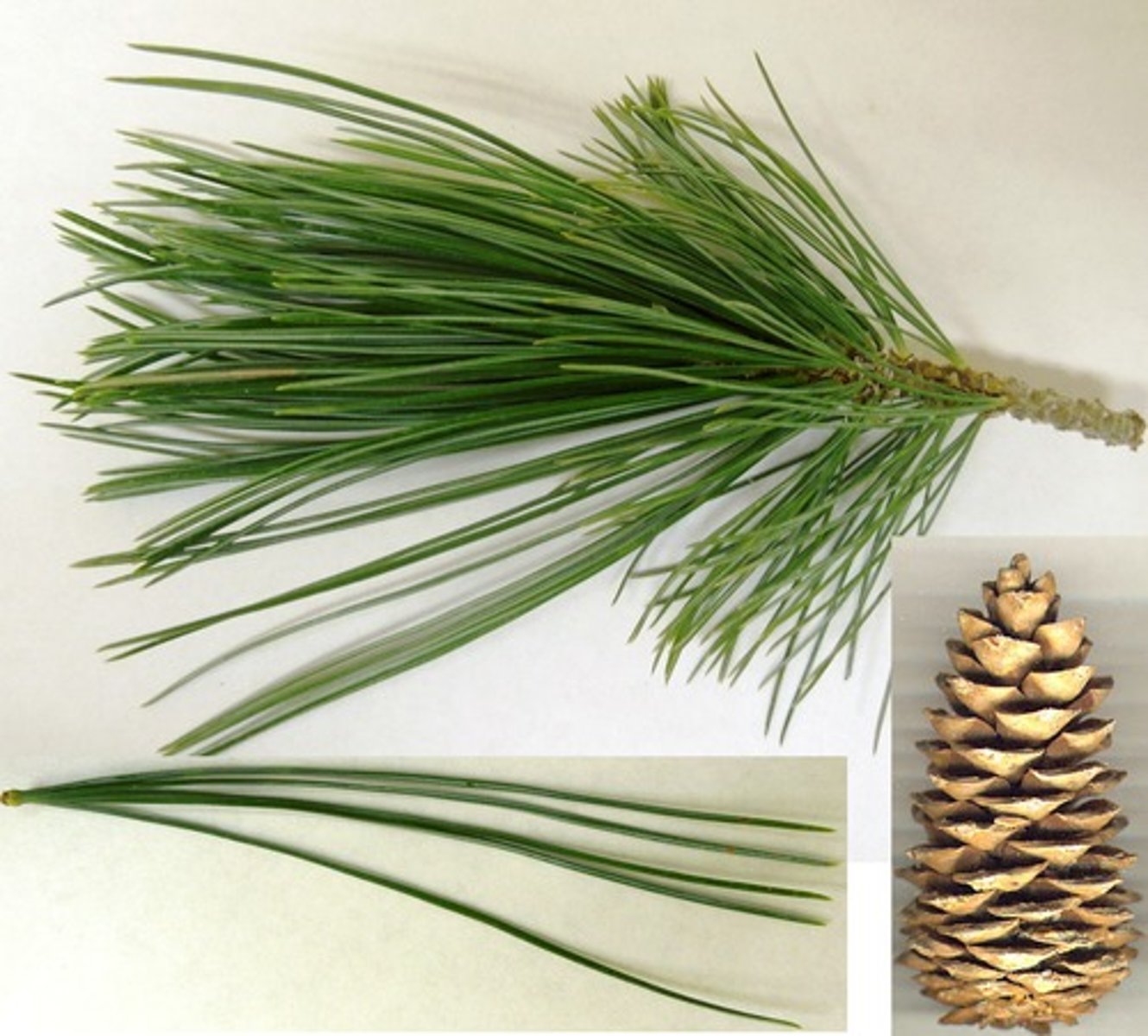
Pinus lambertiana
- soft pine
- fascicles: 5s
- needles: long
- cones: MASSIVE (length)
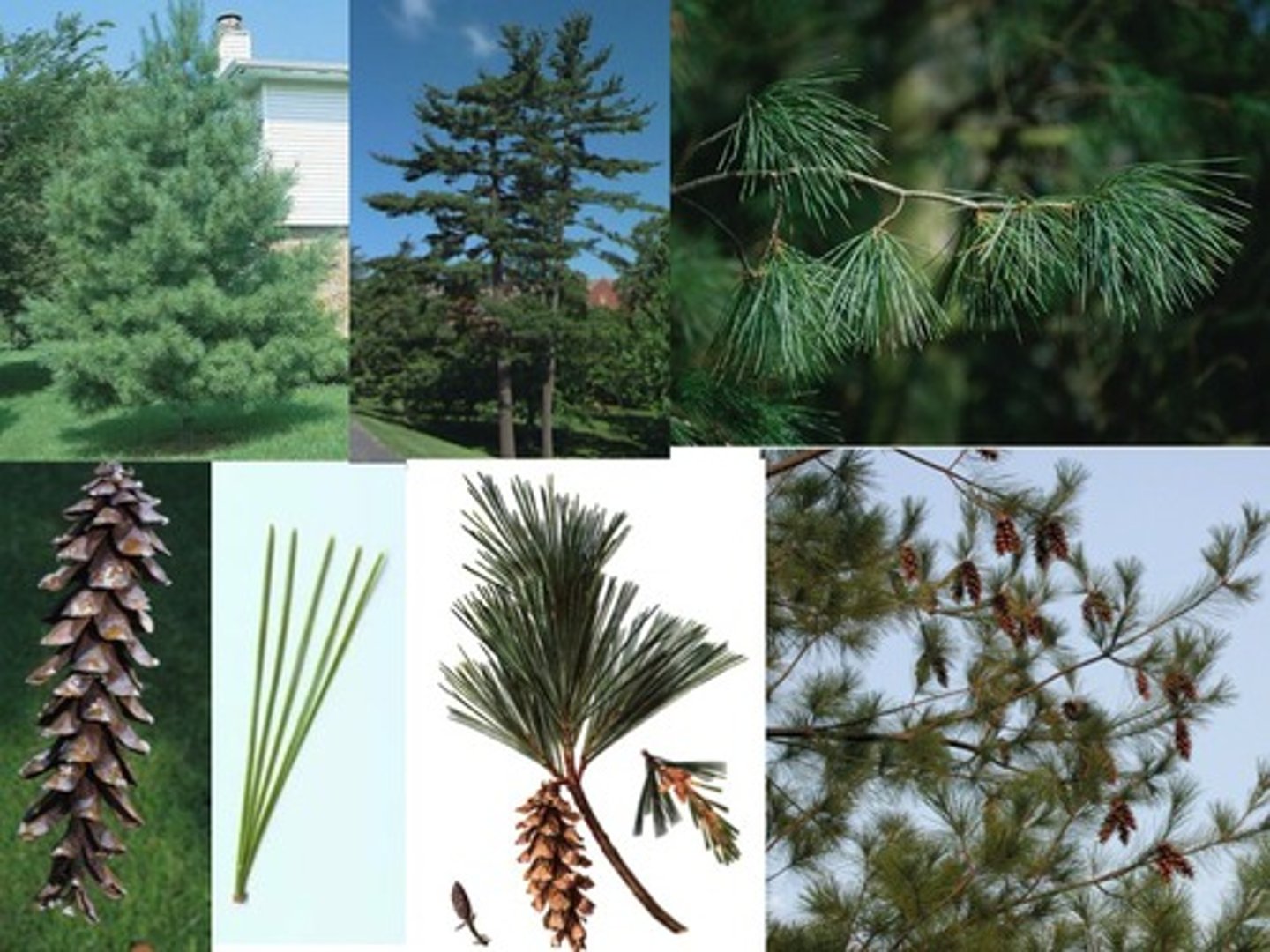
Pinus strobus
- soft pine
- fascicles: 5s
- needles: green color on adaxial side and bluish on abaxial due to 2 prominent bands of stomata, soft, strait.
- cones: slender, long, scales are round.
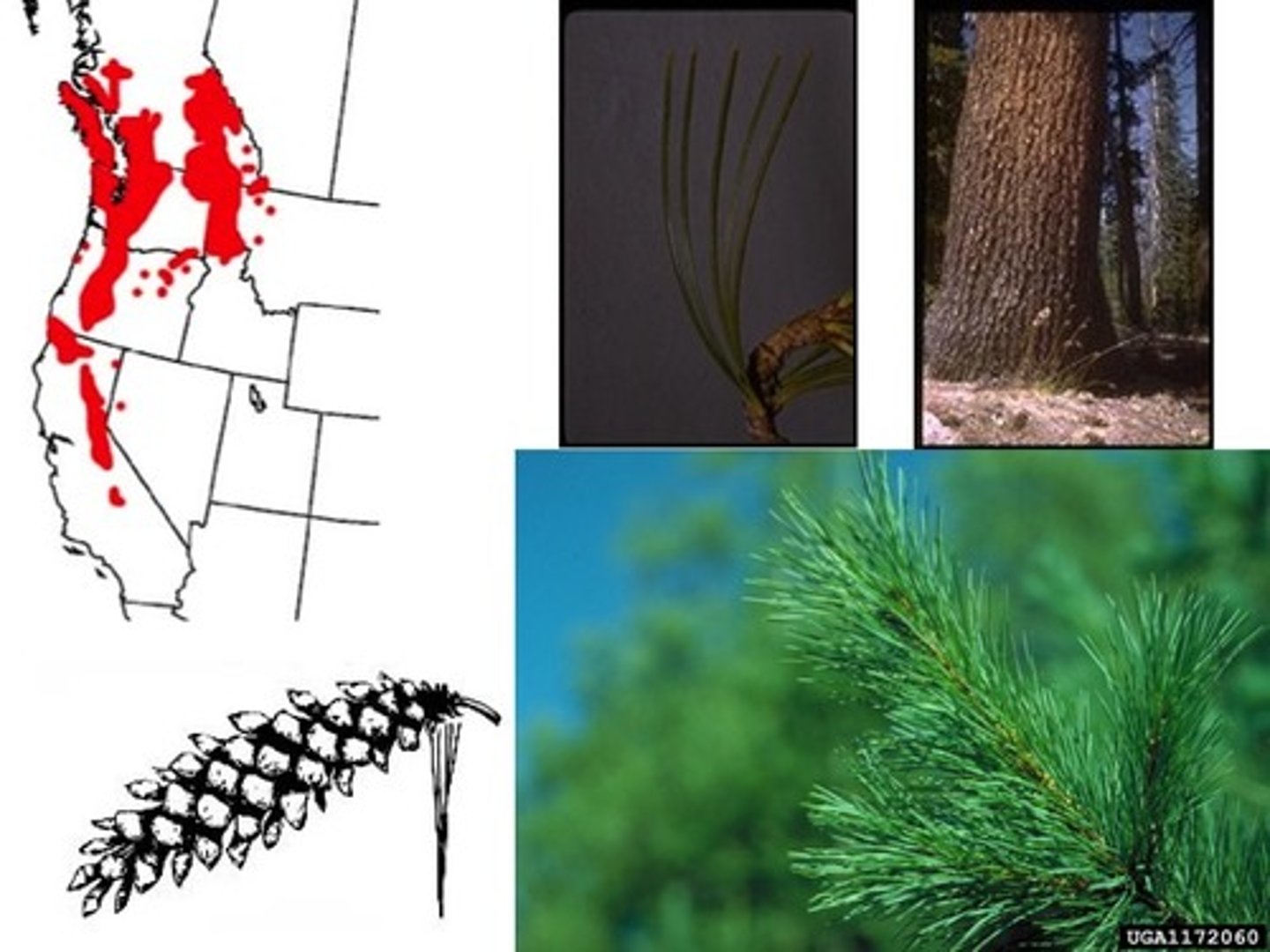
pinus monticola
- soft pine
- fascicles: 5s
- needles: green on adaxial and blue on abaxial due to 4 prominent stomatal bands, soft, flexible, curvy.
- cones: slightly wider and more flexible than other soft pines.
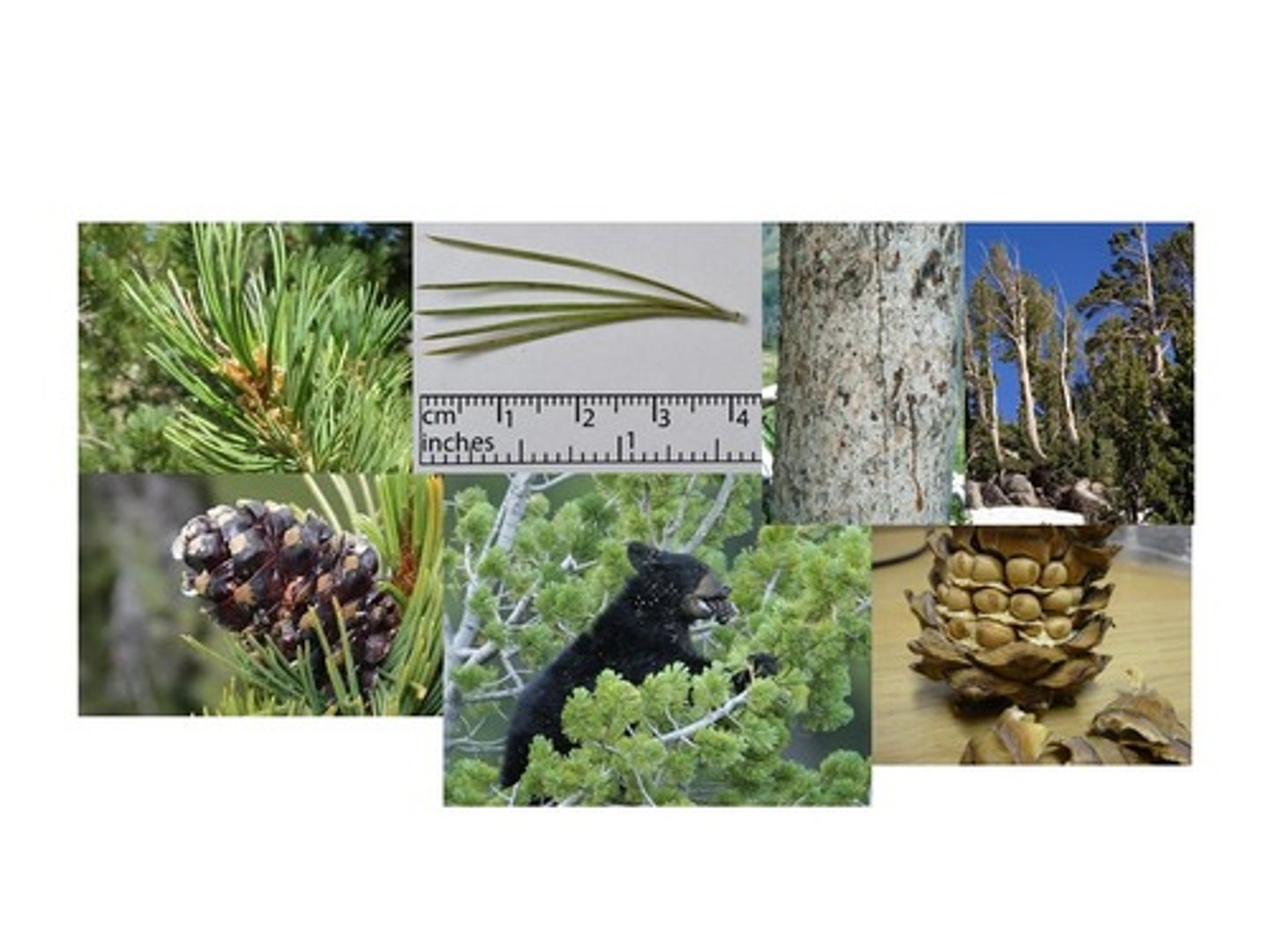
Pinus albicaulis (white bark pine)
- soft pine
- fascicles: 5s
- needles: short, thick, clustered, green/blue color.
- cones: seed scales fused together and rely on animals breaking into them to disperse seeds.
Pinus flexilis
- soft pine
- fascicles: 5s
- needles: longish, blue/green color
- cones: thick spoon shaped scales that open at maturity.
- branches: very flexible to shed snow.
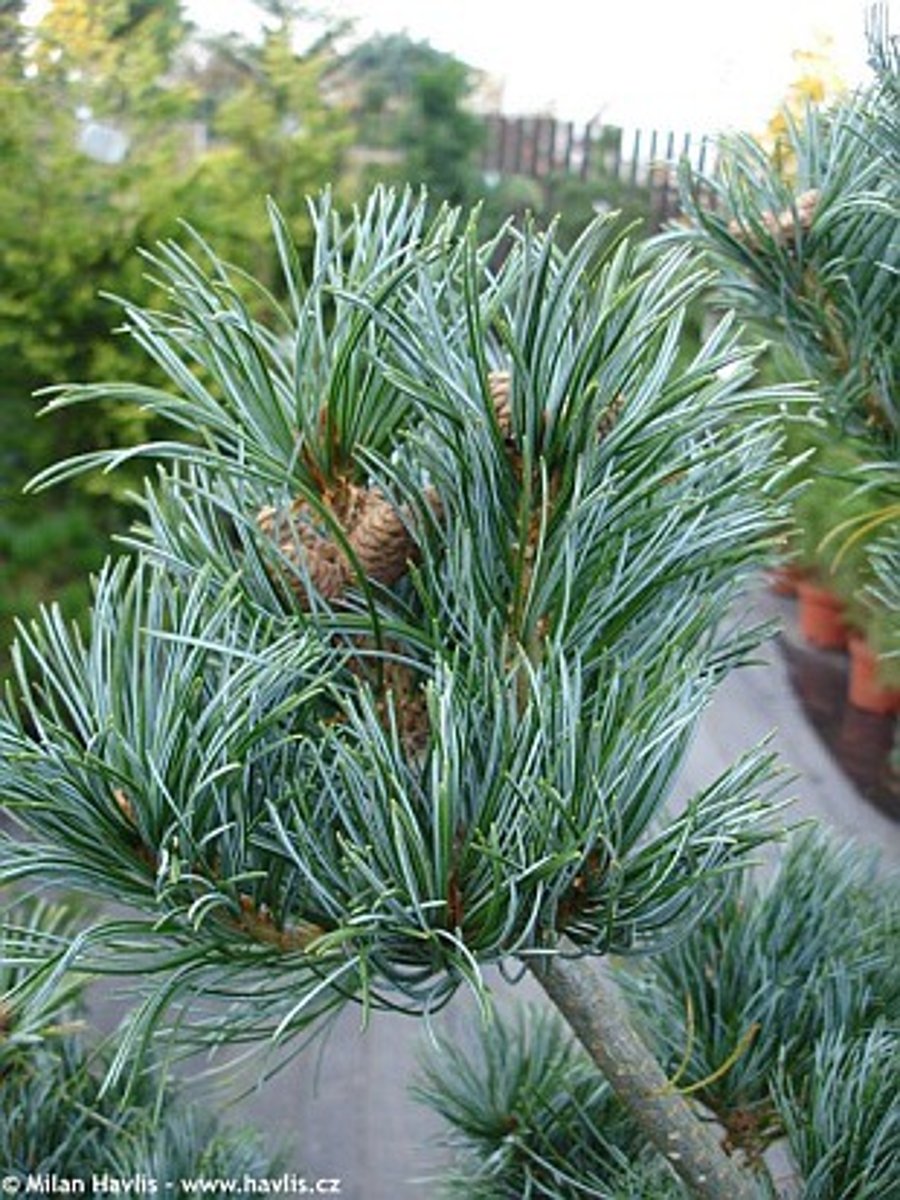
Pinus parviflora
- soft pine
- fascicles: 5s
- needles: bluest and brightest of any pine.
- cones: wide, thick, resinous (sticky)
- growth form: small to medium tree
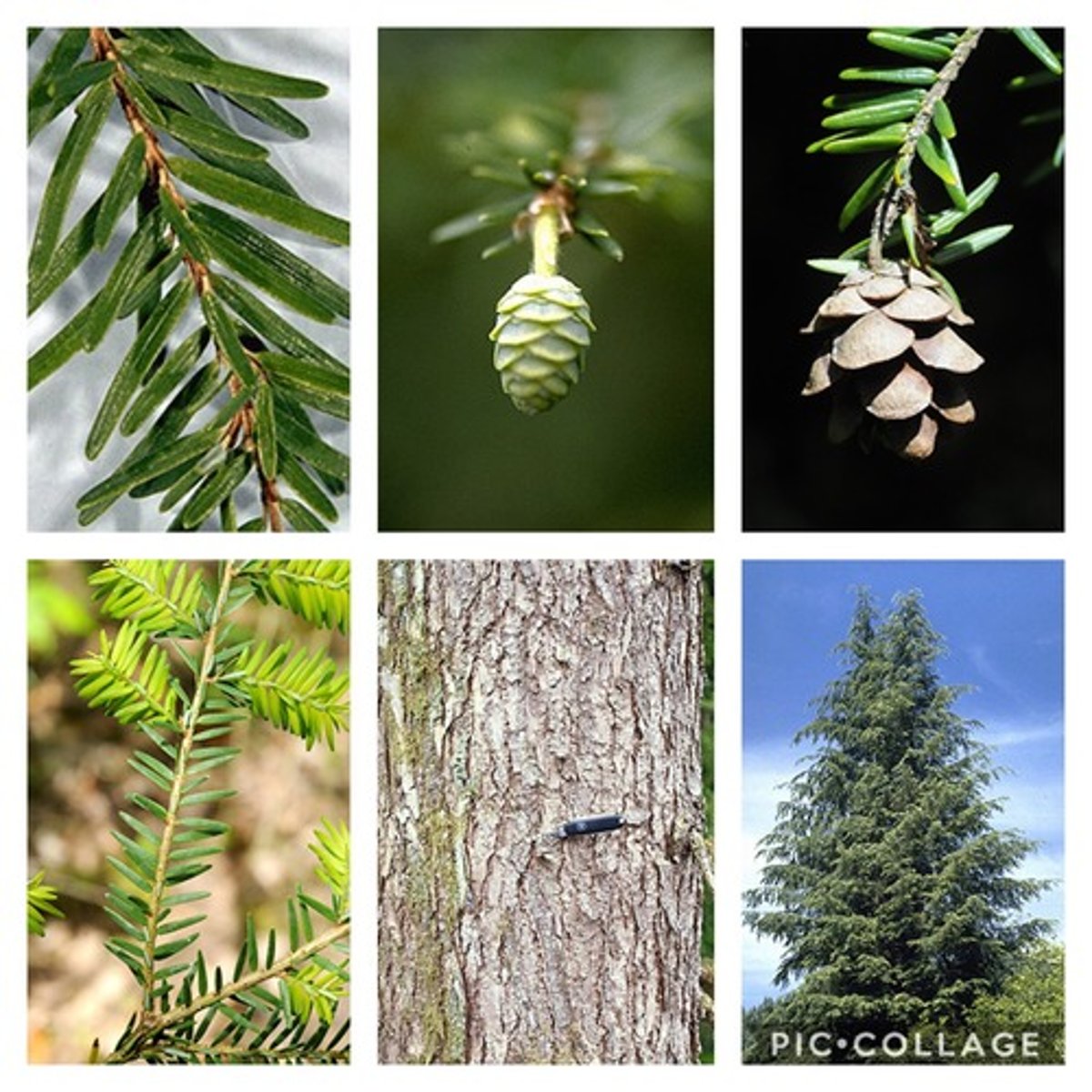
Tsuga Heterophylla (western hemlock)
- hemlock
- needles: singles, all different lengths and directions, dark green adaxial, and white abaxial.
- cones: tiny and papery.
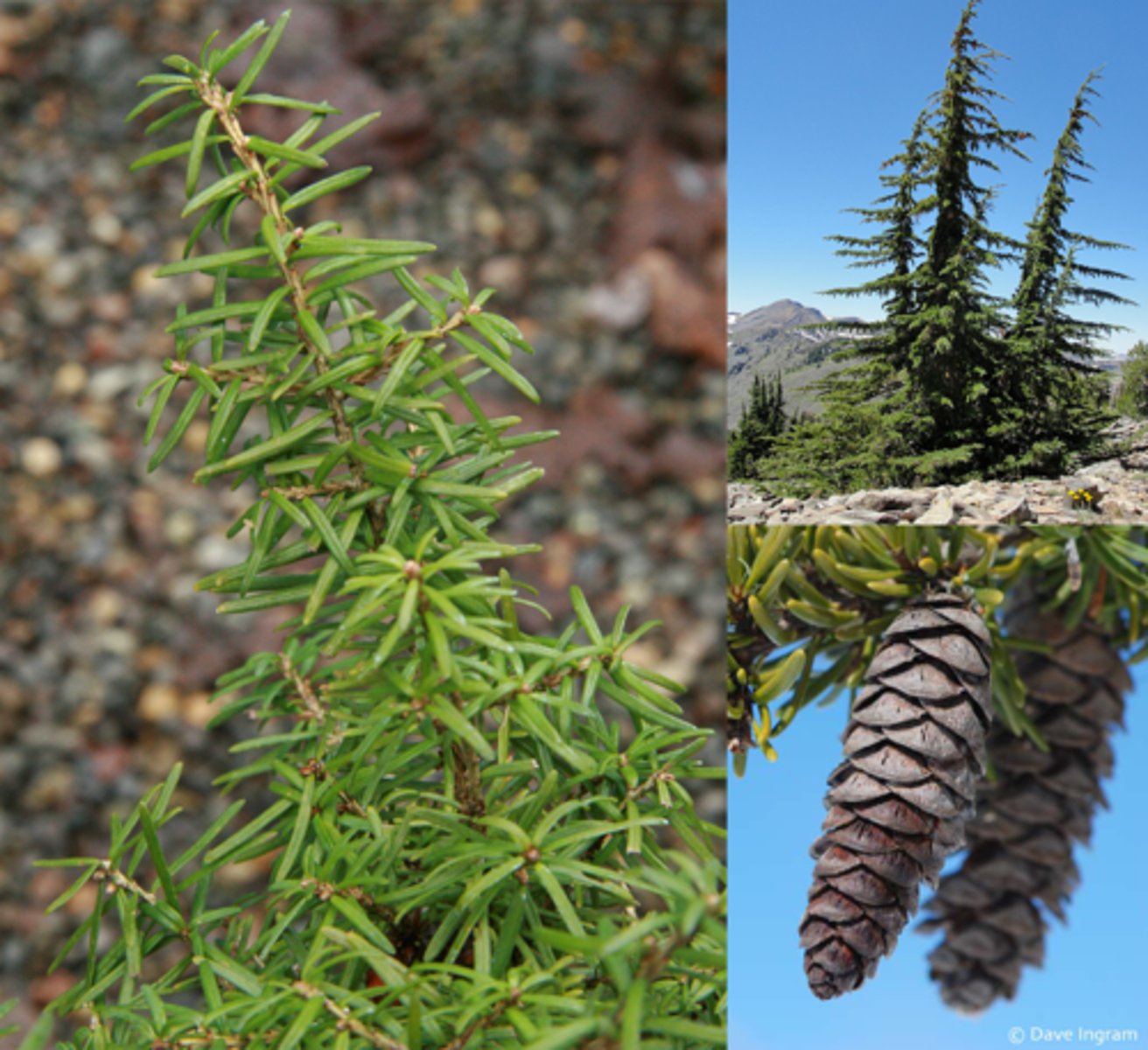
Tsuga mertensiana (mountain hemlock)
- hemlock
- needles: singles, uniform length, spiraled, dark green on both sides with faint lines of white dots.
- cones: oblong, papery
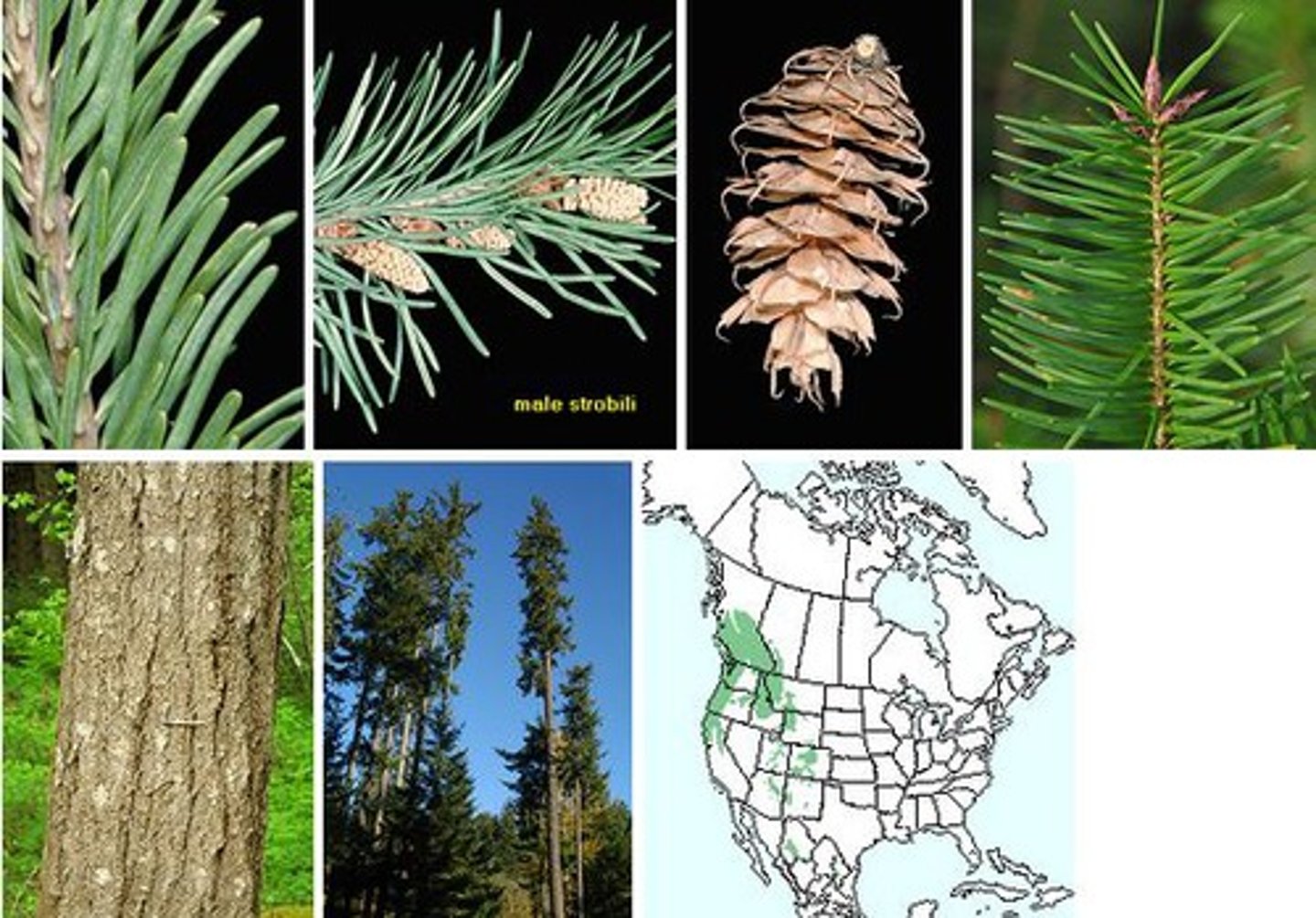
Pseudotsuga menziesii (Douglas fir)
- hemlock
- needles: singles, flat
- buds: red, imbricate, pointy.
- cones: bract scales look like mouse tails.
Picea (spruce)
- genus of pinaceae family
- needles: 4 sided, pointed, can be very sharp, held on pegs (little bumps), single.
- cones: papery, pendulous.
- Buds: Scales are papery
Abies (fir)
- Genus of pinaceae family
- needles: stiff/thick, flat, blunt, notched, single, circular attachment.
- buds: blunt and resinous.
- cones: errect on branches, fall apart at maturity.
Larix (larch)
- Genus of pinaceae family
- needles: deciduous, singles, soft, flat
- short shoots: common
- cones: small
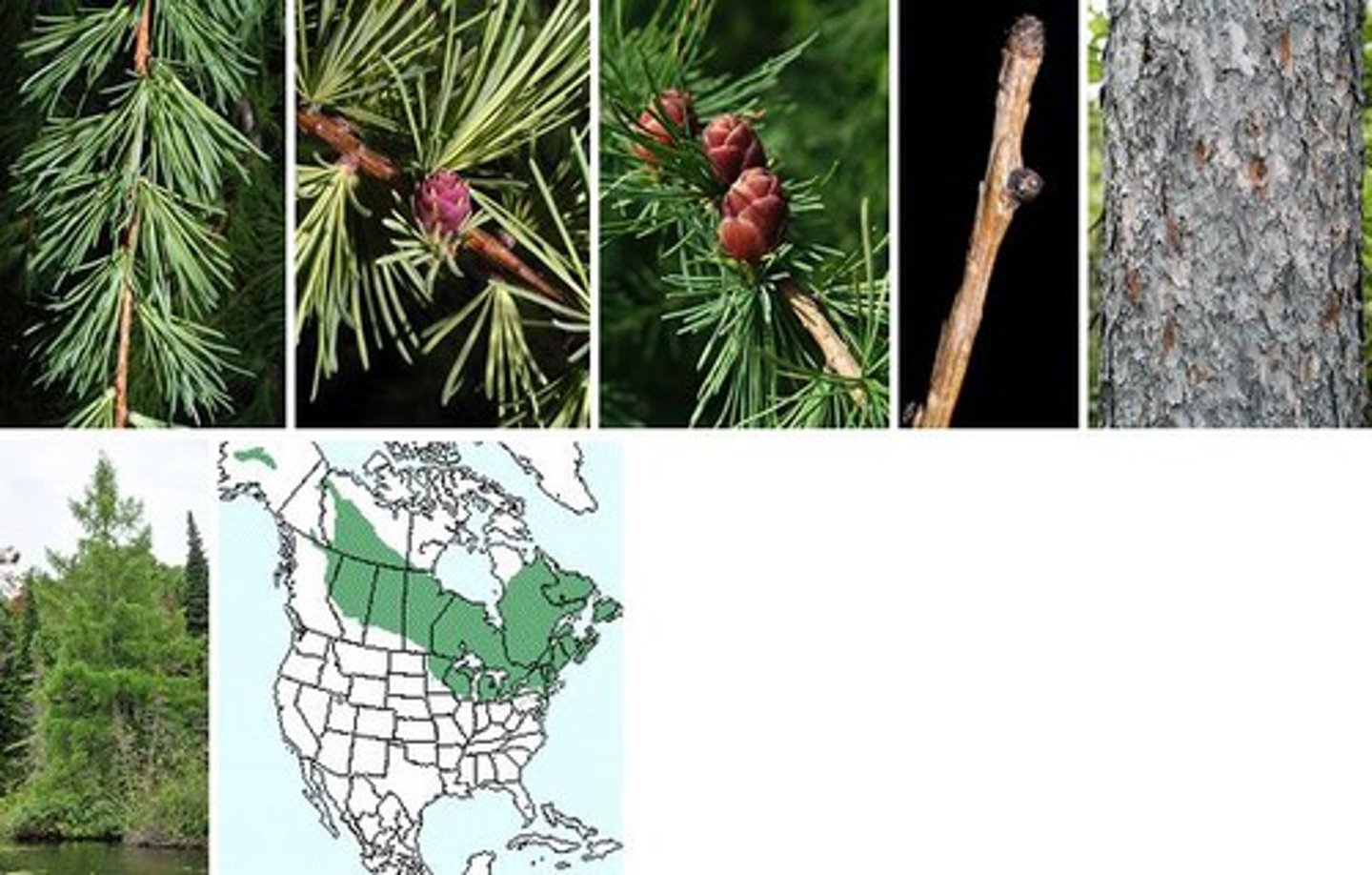
Larix Laricina
- needles: longest, deciduous
- twigs: hairless
- cones: smallest, plentiful, rounded seed cone scales, no bract scales.
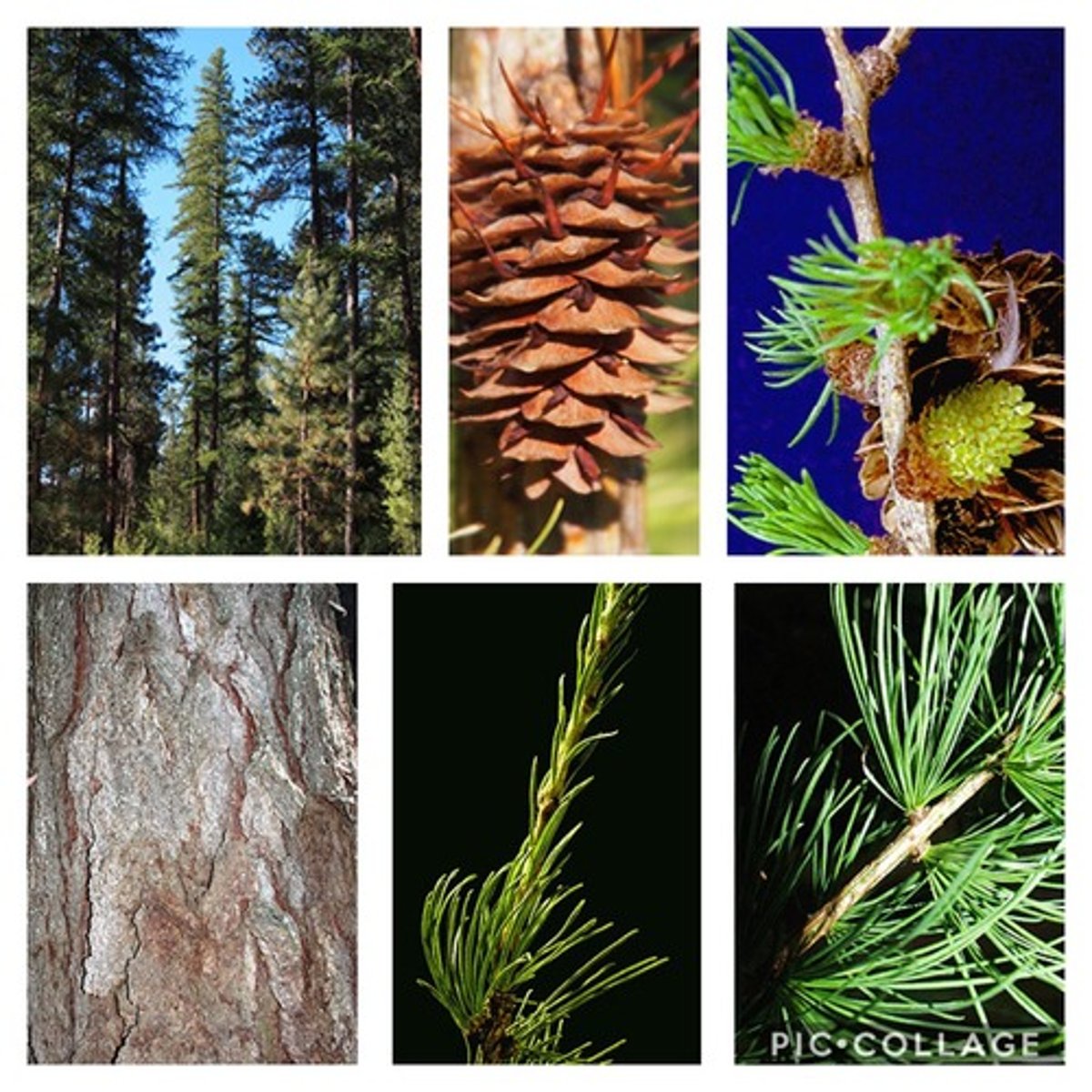
Larix accidentalis
- needles: deciduous, shorter.
- short shoots: common
- cones: longer and darker, long bract scale if present
Trunk: thick layered bark
Twigs: slightly hairy
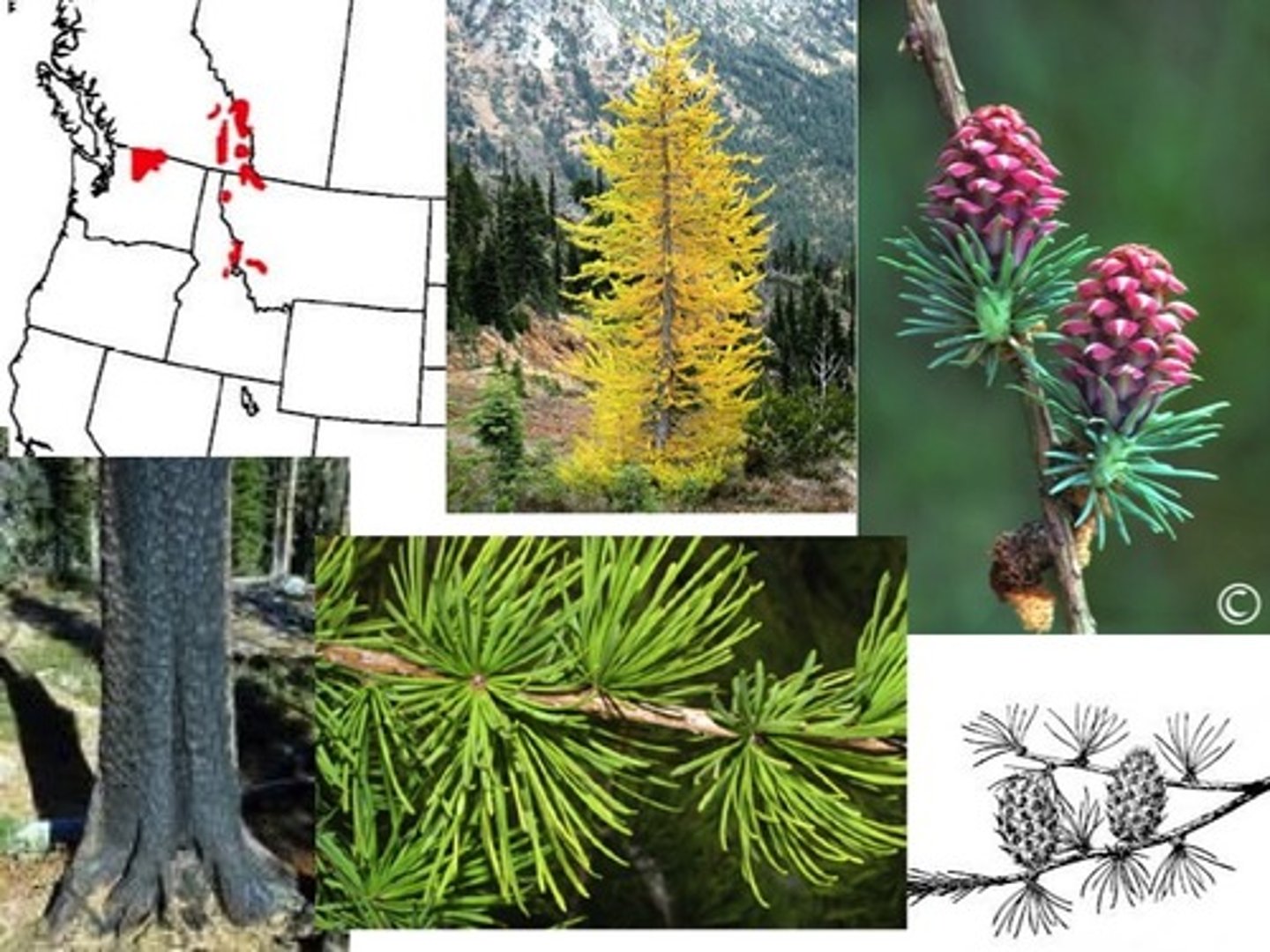
Larix lyalli
- needles: deciduous
- twigs: very hairy, short shoots plentiful
- cones: have a black bract scale with brown stripe, shorter, wider.
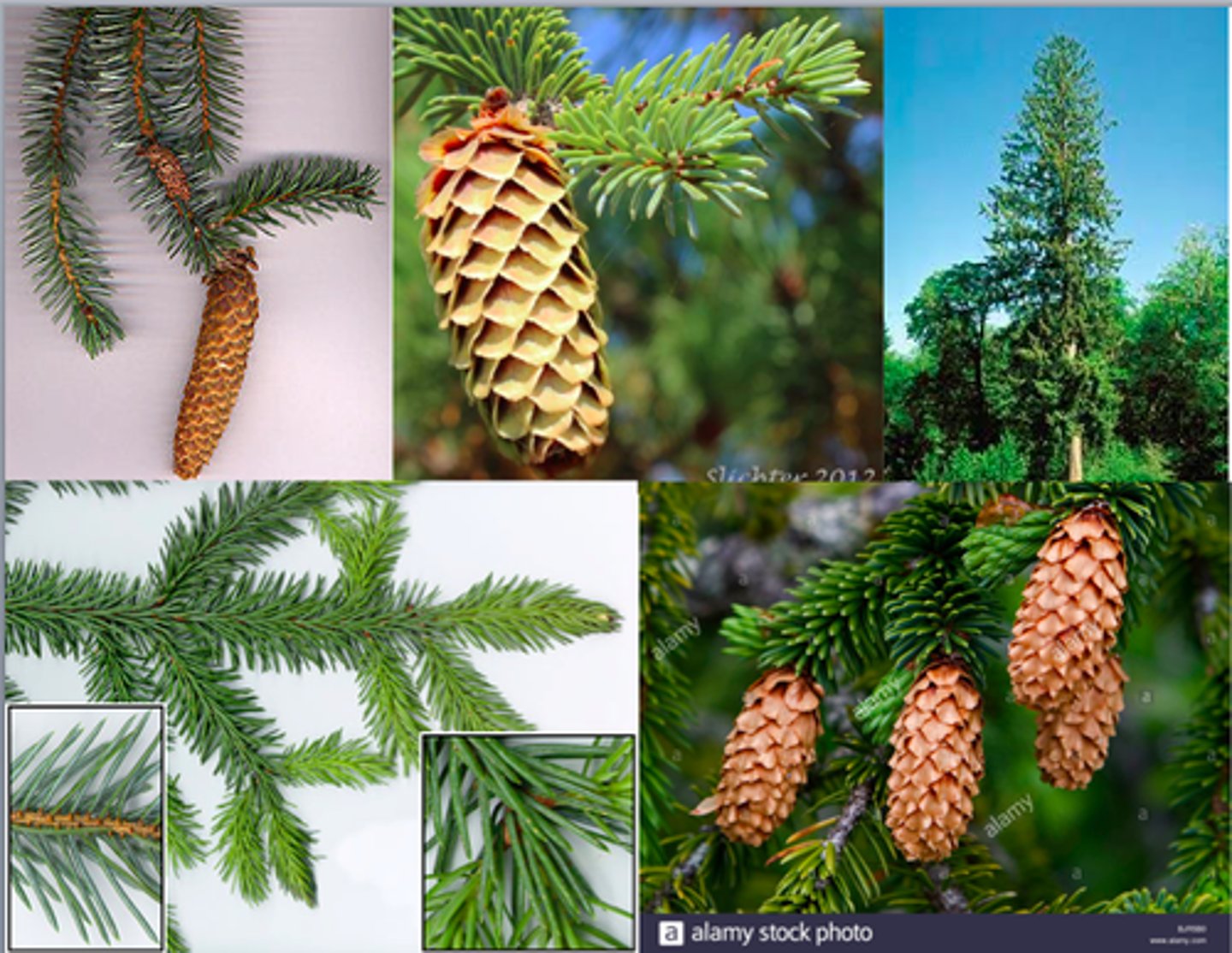
Picea Sitchensis (Sitka Spruce)
- needles: very pointy, sharp, long, strait, neatly spiraled, singles, 2 toned (Abaxial is blue, adaxial is greenish).
- cones: papery, pendulous, jagged seed scale edges, small visible bract that is a pointed shape.
Picea Englemannii
- needles: sharp, slight curve
- short shoots: common
- cones: shorter, jagged + pointed scales, no bract scale.
- Growth form: tallest tree in alpine areas, narrow.
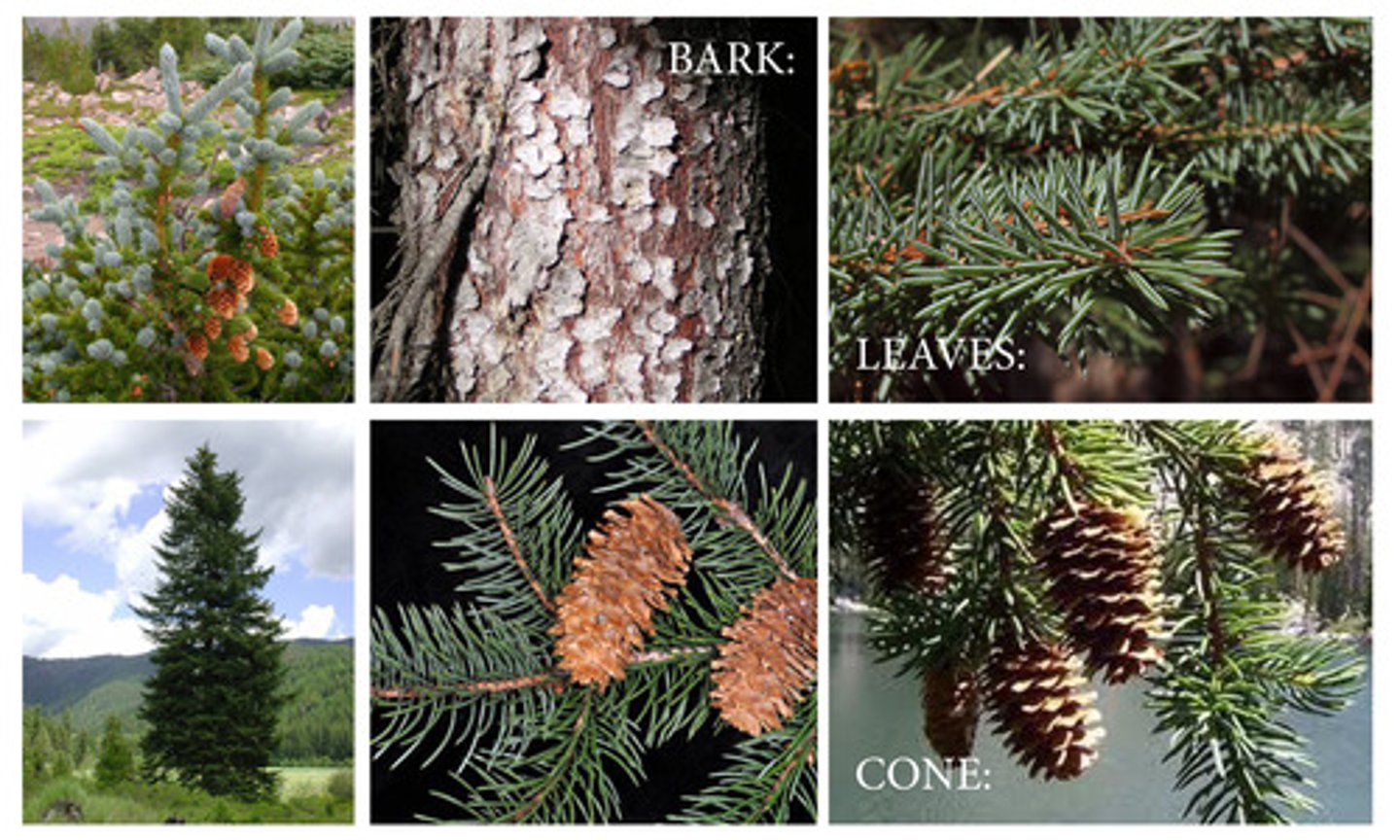
Picea glauca
- needles: pointed but not sharp, sage green, curved.
- Twigs: orange/light brown
- Cones: small, no bract, smooth seed scales.
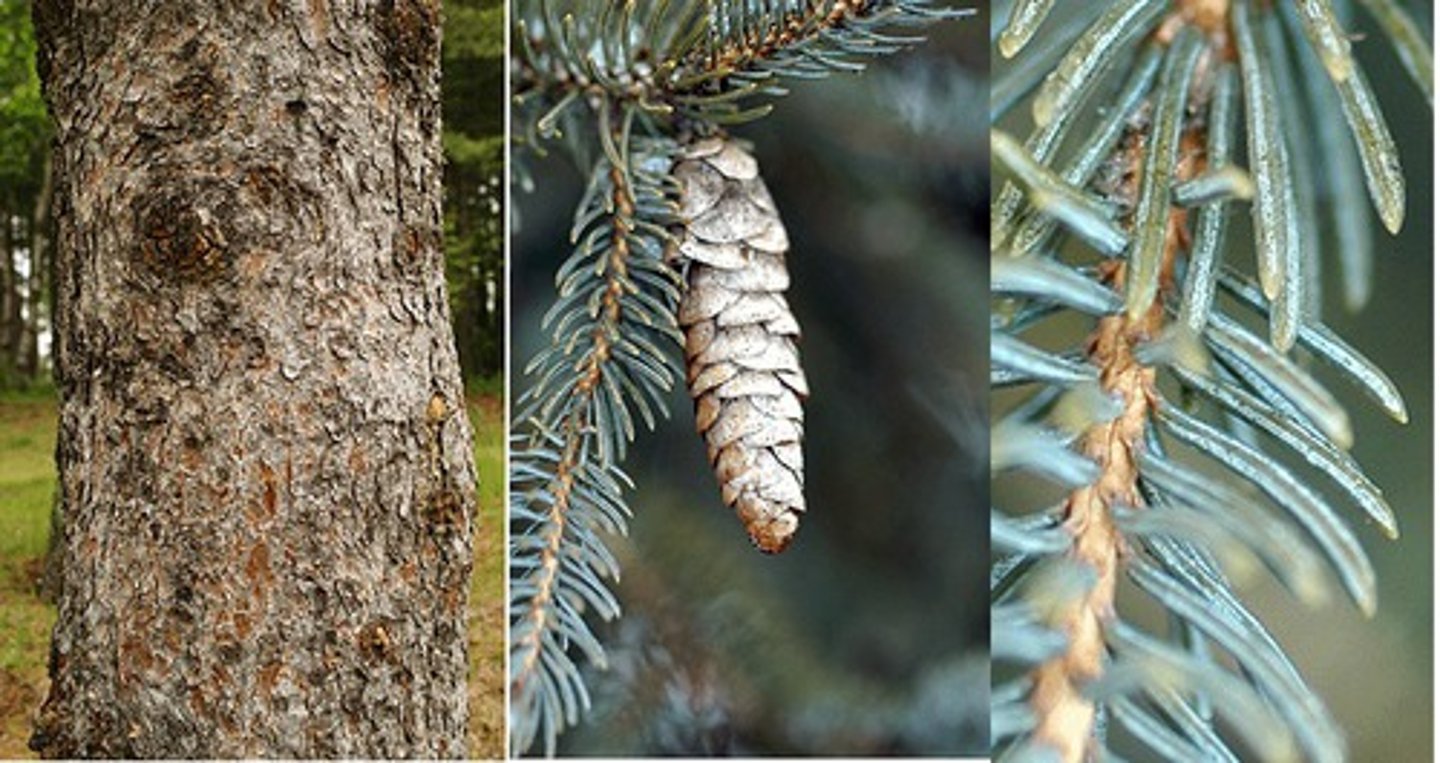
Picea pungens
- needles: very sharp, long, curved, thick
- Twigs: very orange
- Cones: no bract, long, ragged edge.
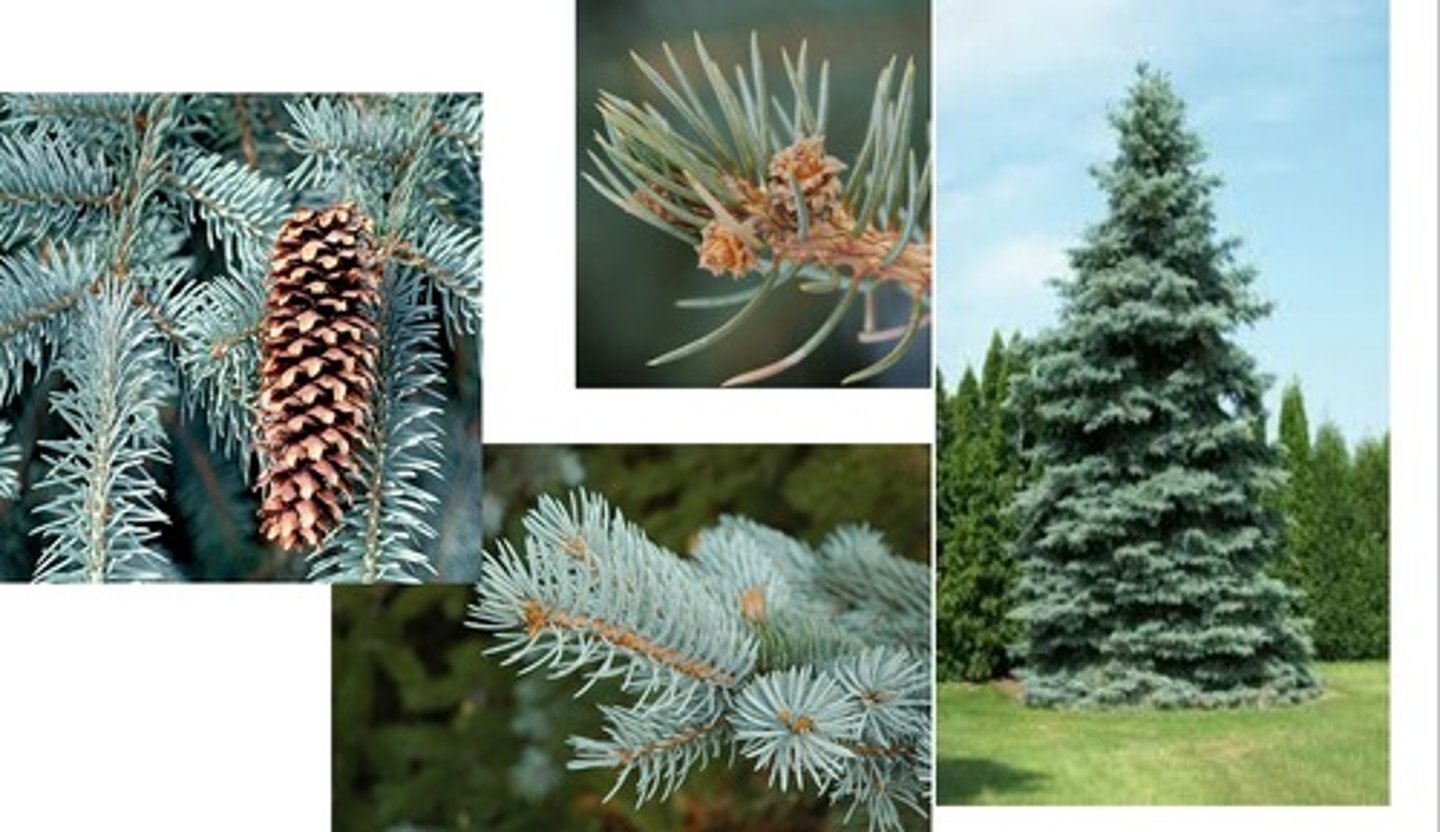
Picea abies
- needles: dark green, softer
- form: droopy
- Cones: largest of all picea, smooth scales, no bract
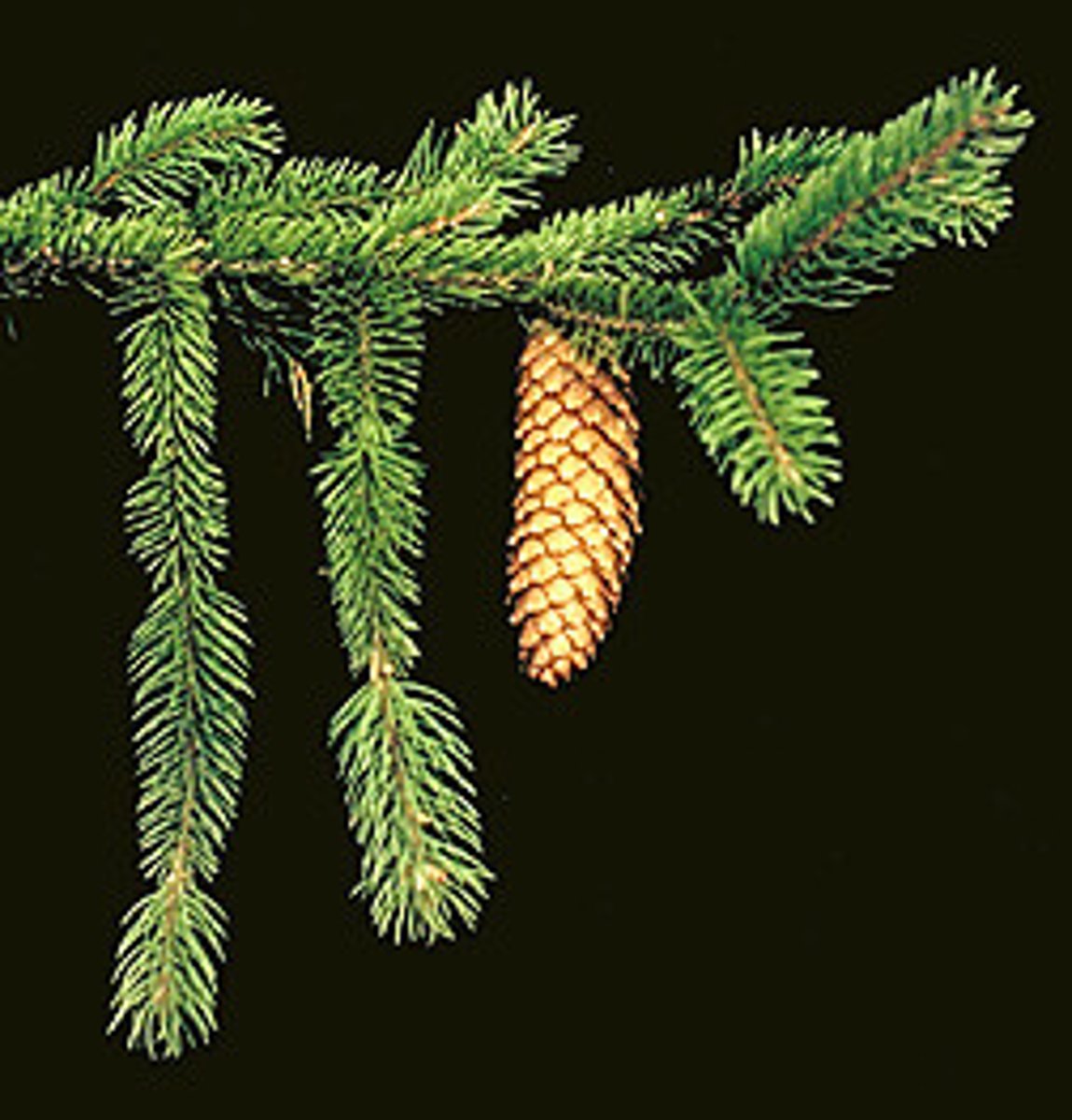
Picea mariana
- needles: thin, short, green, soft
- form: club
- Cones: tiny, smooth seed scales.
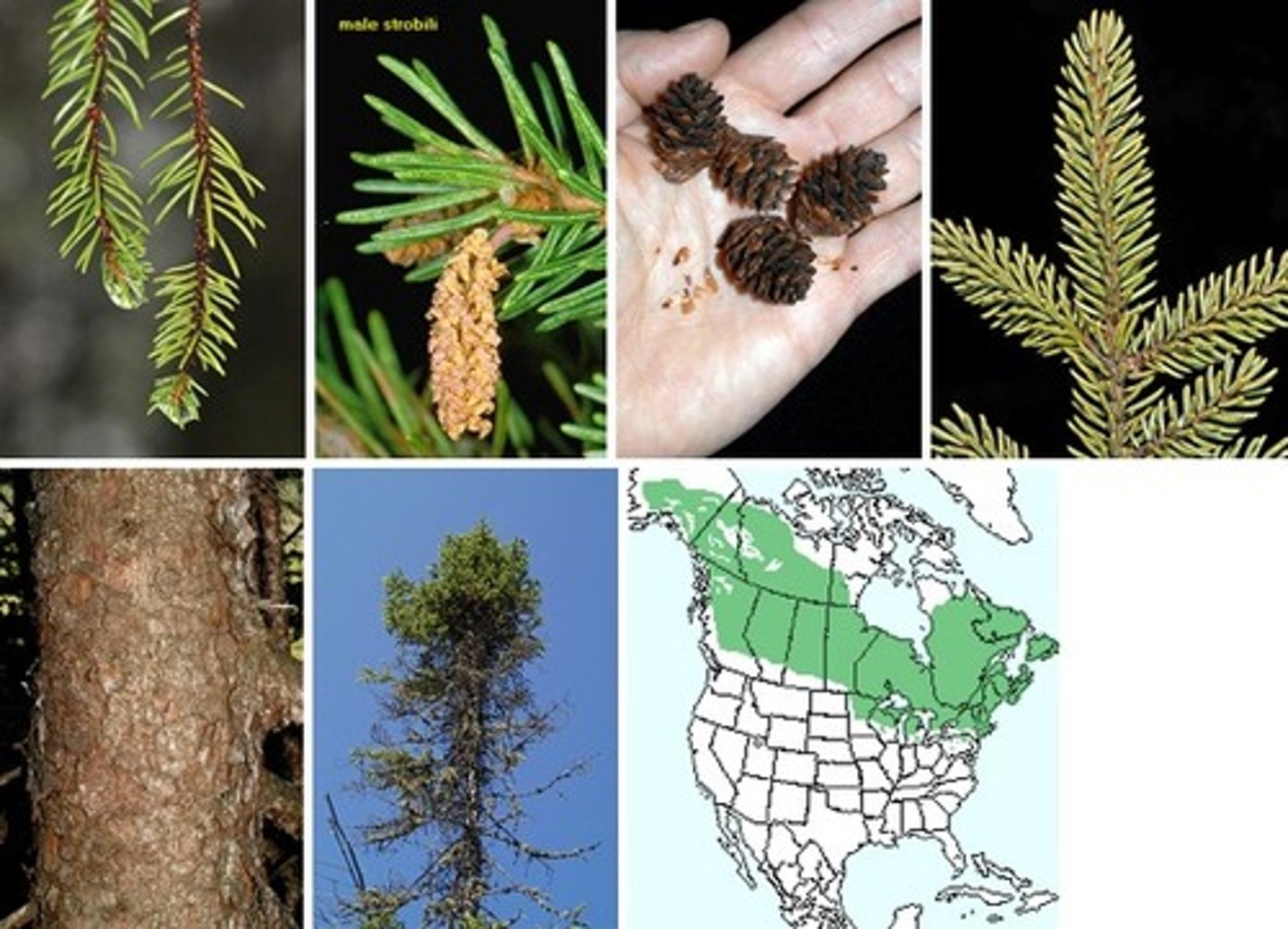
Picea omorika
- needles: flat, thick, green adaxial, blue abaxial.
- form: downward sweeping branches.
- Cones: rounded slightly irregular scales
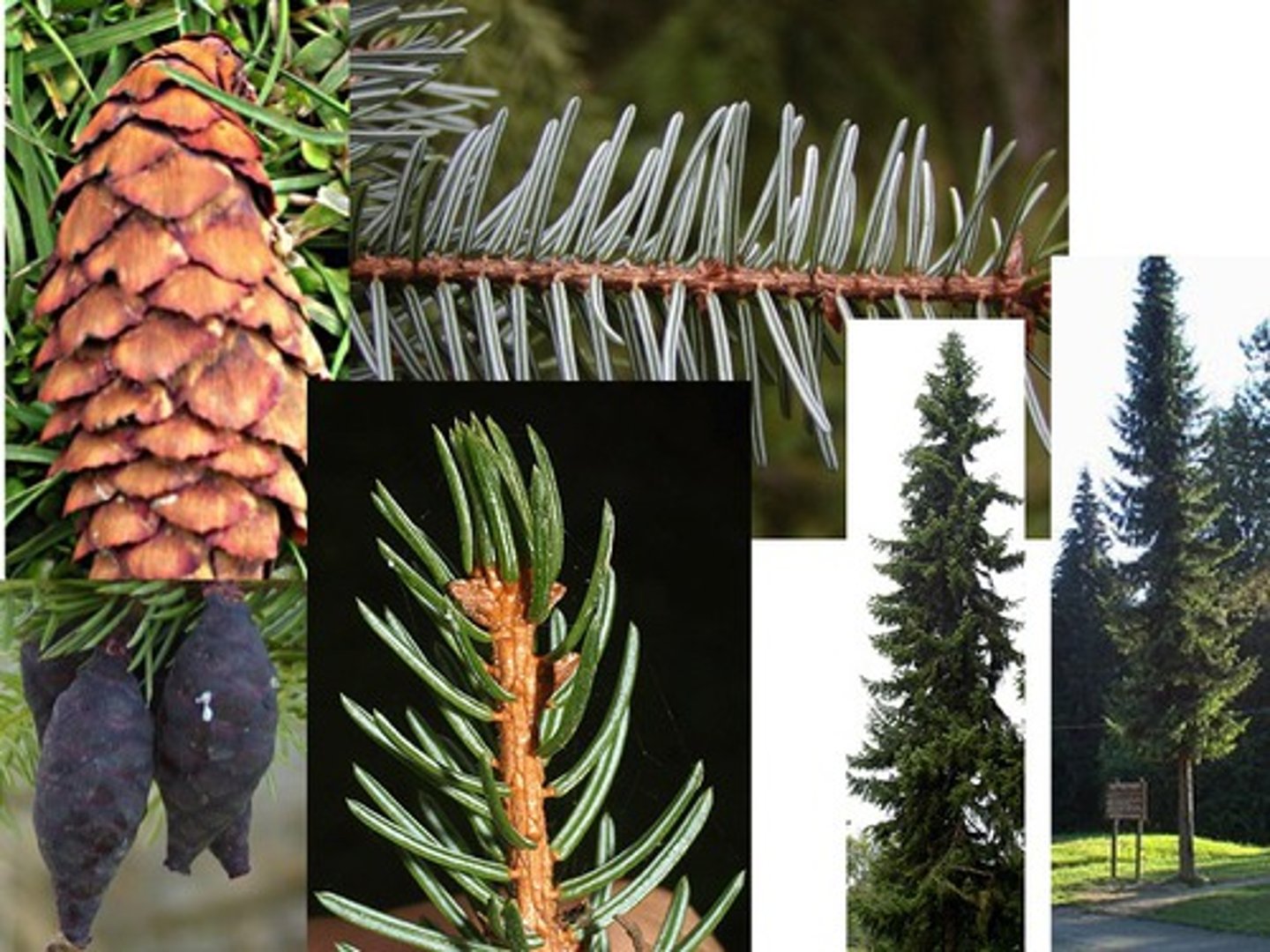
Abies procera
- needles: point upwards at sky
- buds: rounded
- Cones: giant, biggest of abies, large visible bract scale looks like Fd's.
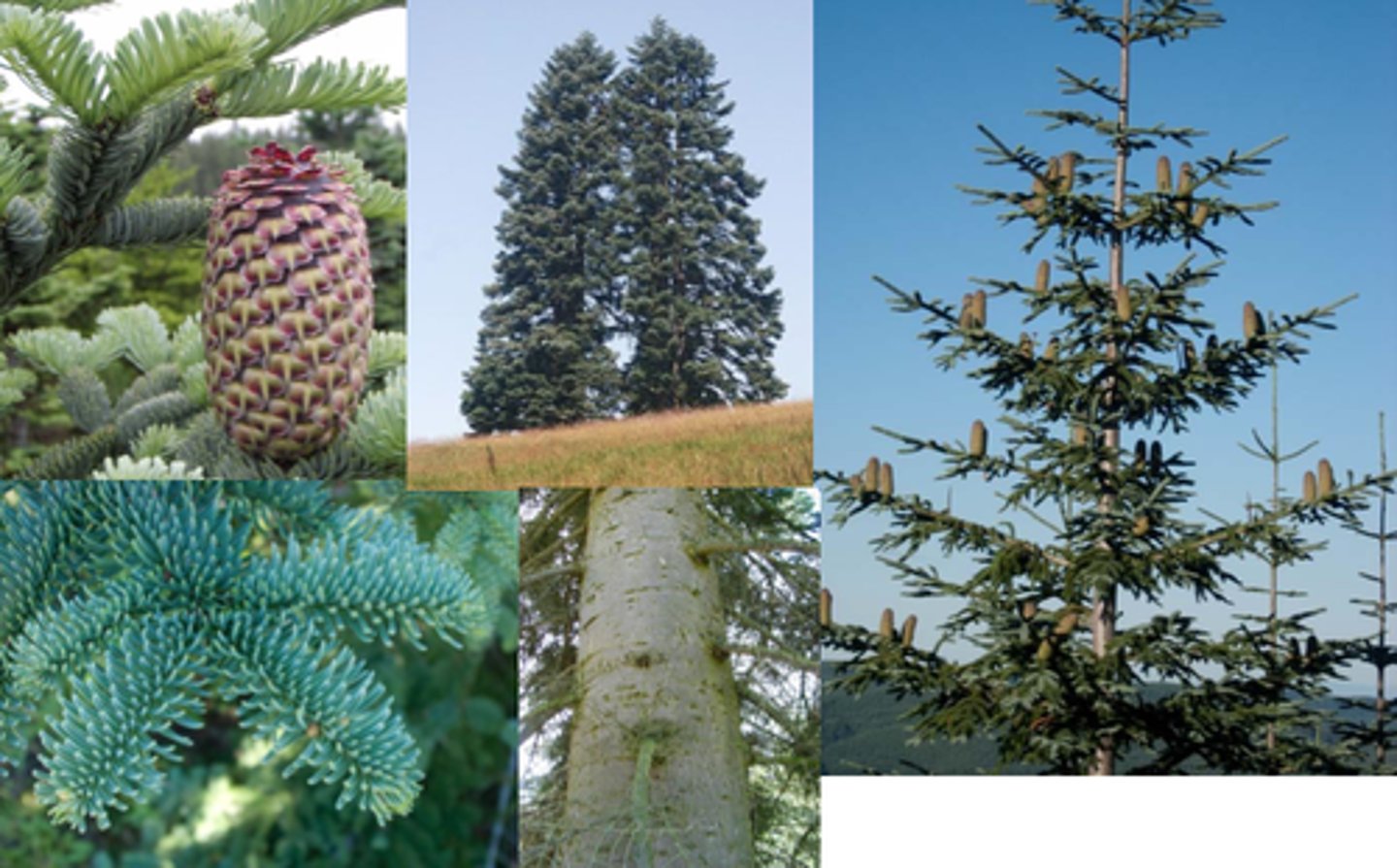
Abies grandis
- needles: long, face out from twig, looks opposite (but actually spiraled), strongly notched, shiny adaxial, white abaxial
- Twigs: very fregrant
- Cones: small, dark color, no bract
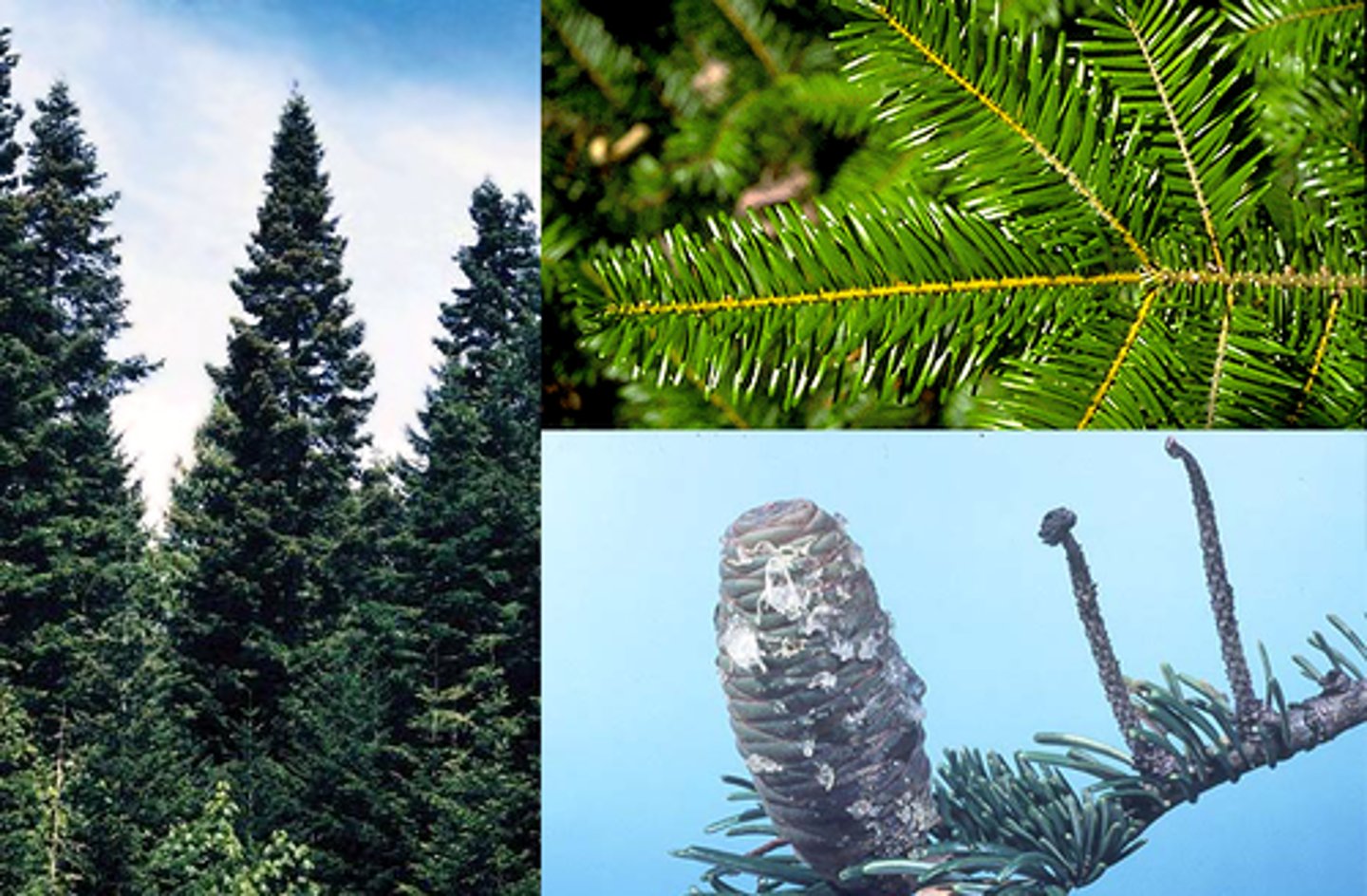
Abies lasiocarpa
- needles: thick, clustered, curved upwards.
- Twigs: woody sent, less citrusy
- Cones: resinous, purple/black color, wide-ish
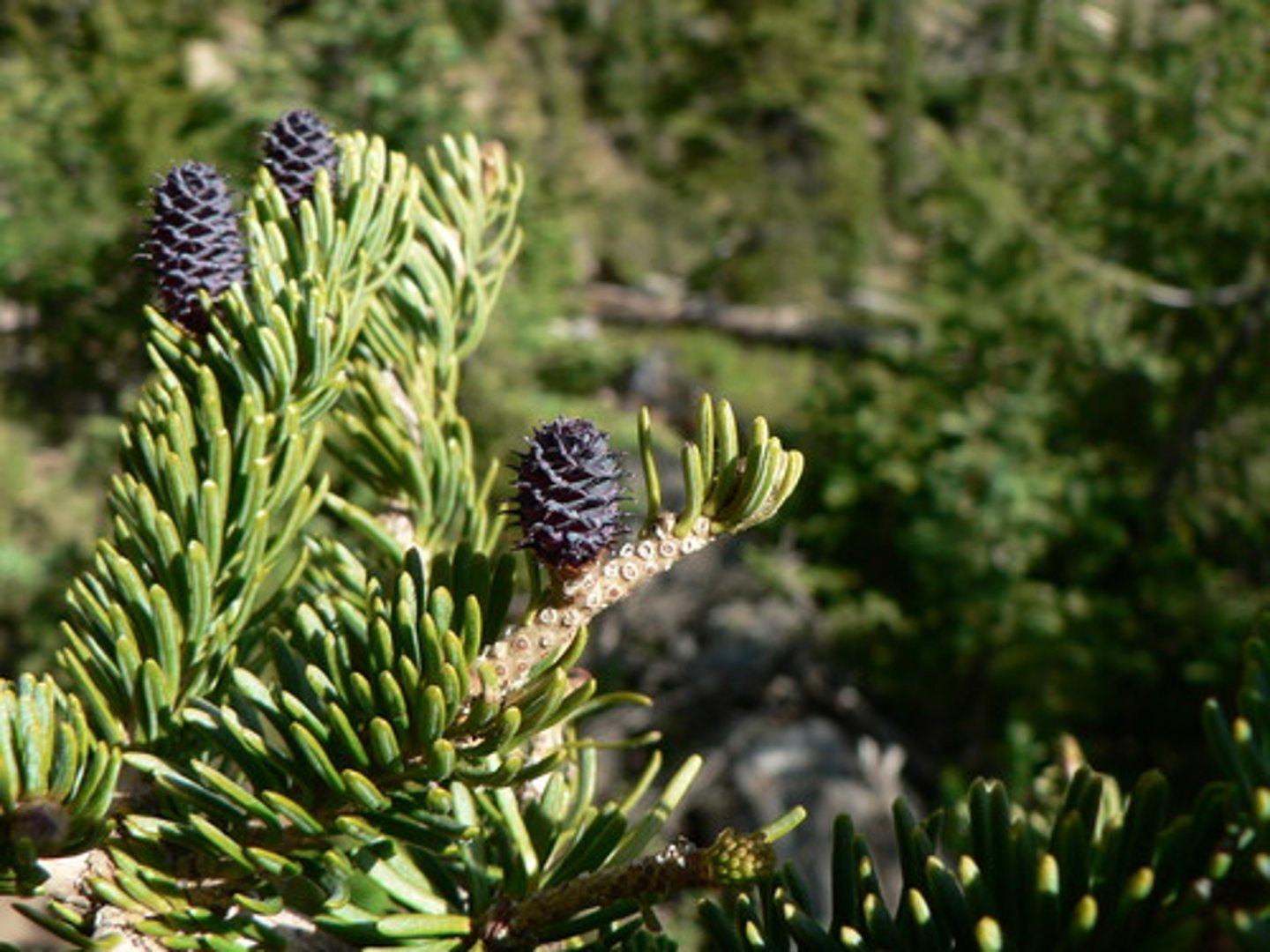
Abies amabilis
- needles: short, white abaxial, shiny adaxial, notched
- Twigs: outward needles on sides, forward needles on top
- Cones: Looks like grandis, but smaller
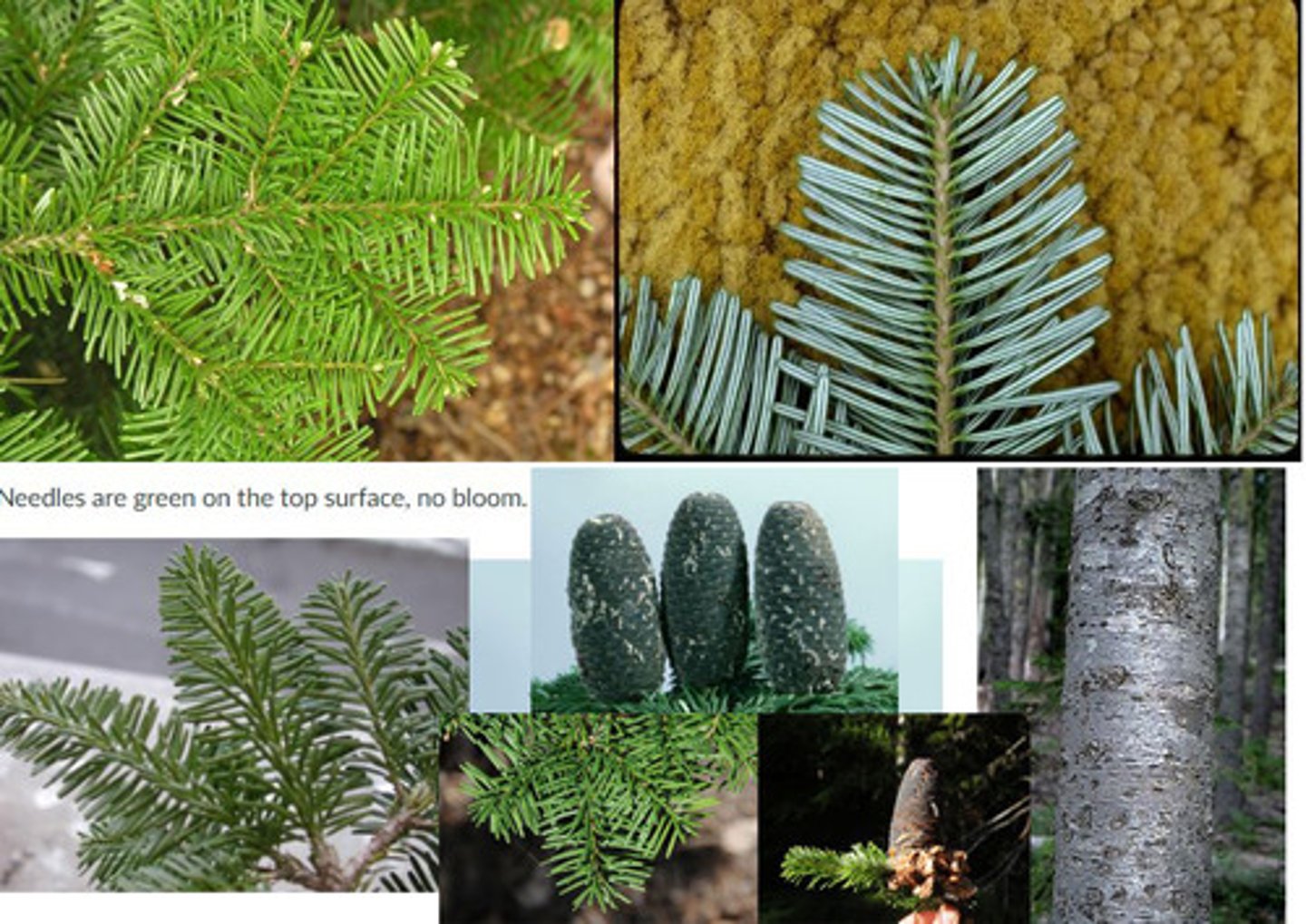
Abies balsamea
- needles: short, curved up, space between them
- Twigs: can see resinous areas at all branching points, piny wood smell
- buds: waxy and purple.
- Cones: small, purple/black, resinous, smooth scales.
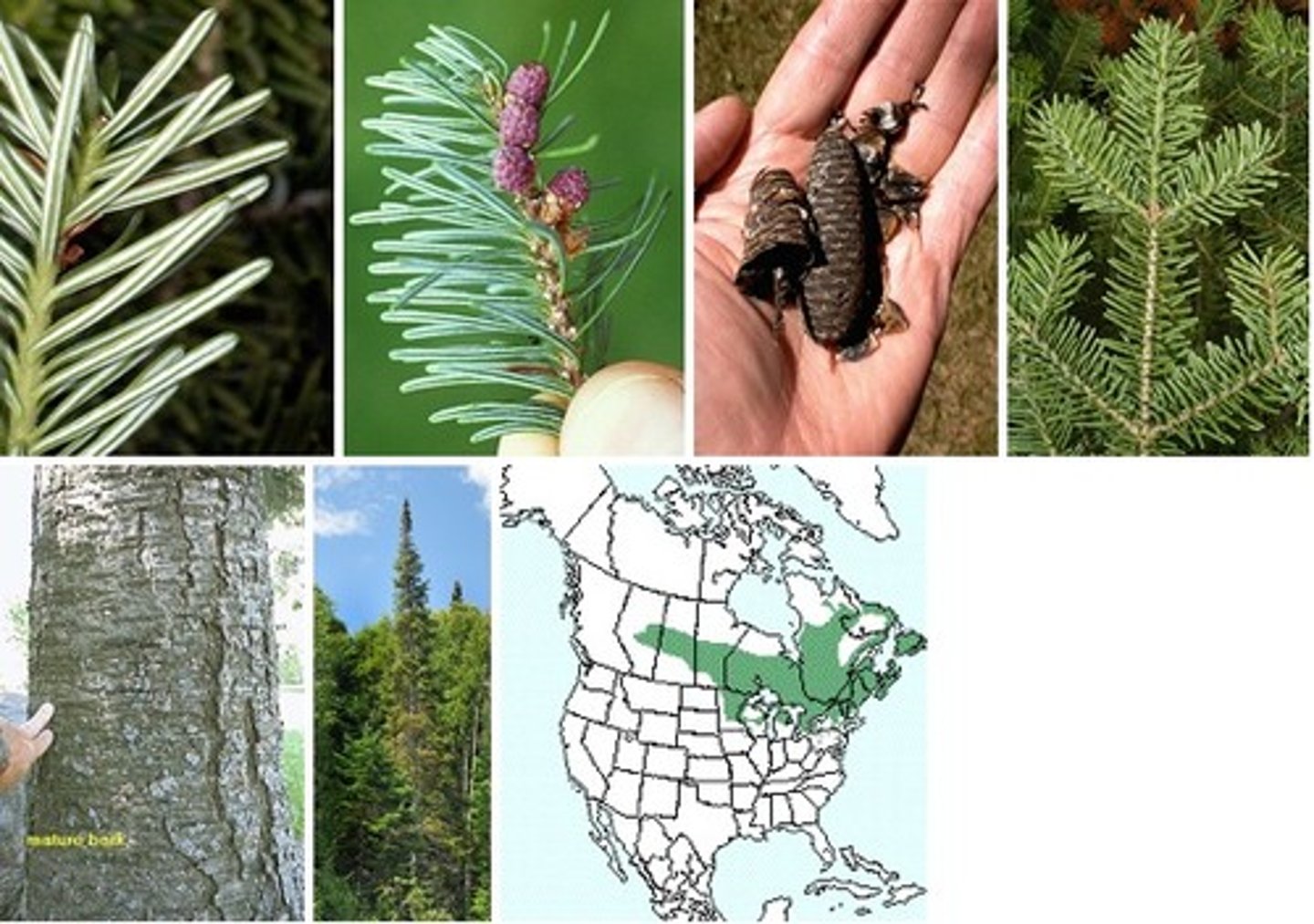
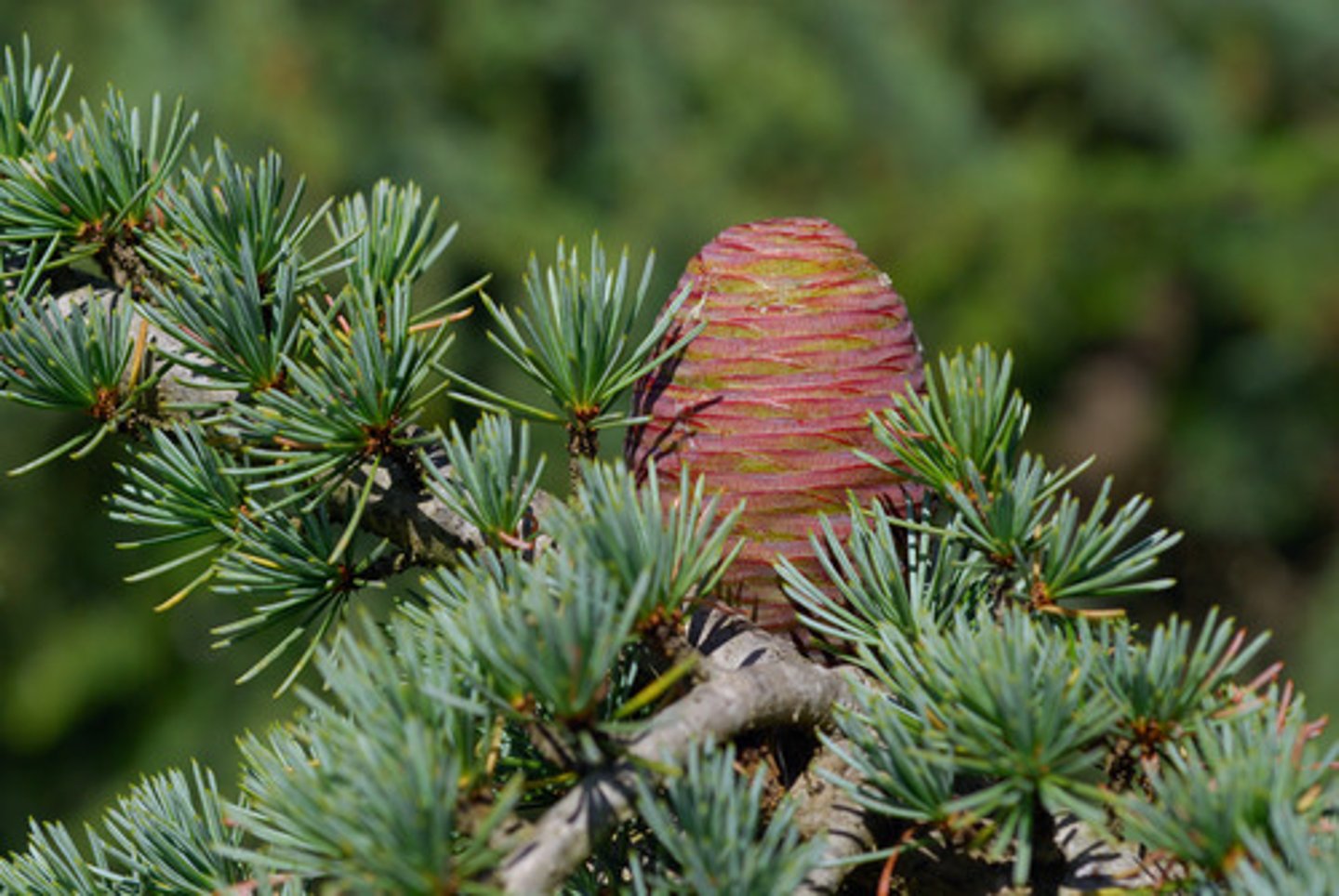
Cedrus atlantica
- needles: densely clustered, spiraled, blue/green color
- Cones: wide and egg shaped.
Cupressaceae (cypress)
-2nd largest family of conifers
- needles, awls, or scales
- awls and scales are the most common.
- needles can be soft or sharp.
- cones: globular, scales dehiscent, bract and seed scale are fused, sometimes fleshy.
- vegetative buds are less common.
Thuja plicata (Western red cedar)
- scales: thin, dull white undersides, round joint between scales.
- Twigs: smells citrusy, stiff.
- Cones: small, open upright on tree, egg shaped.
- Trunk: butresed.
- monecious
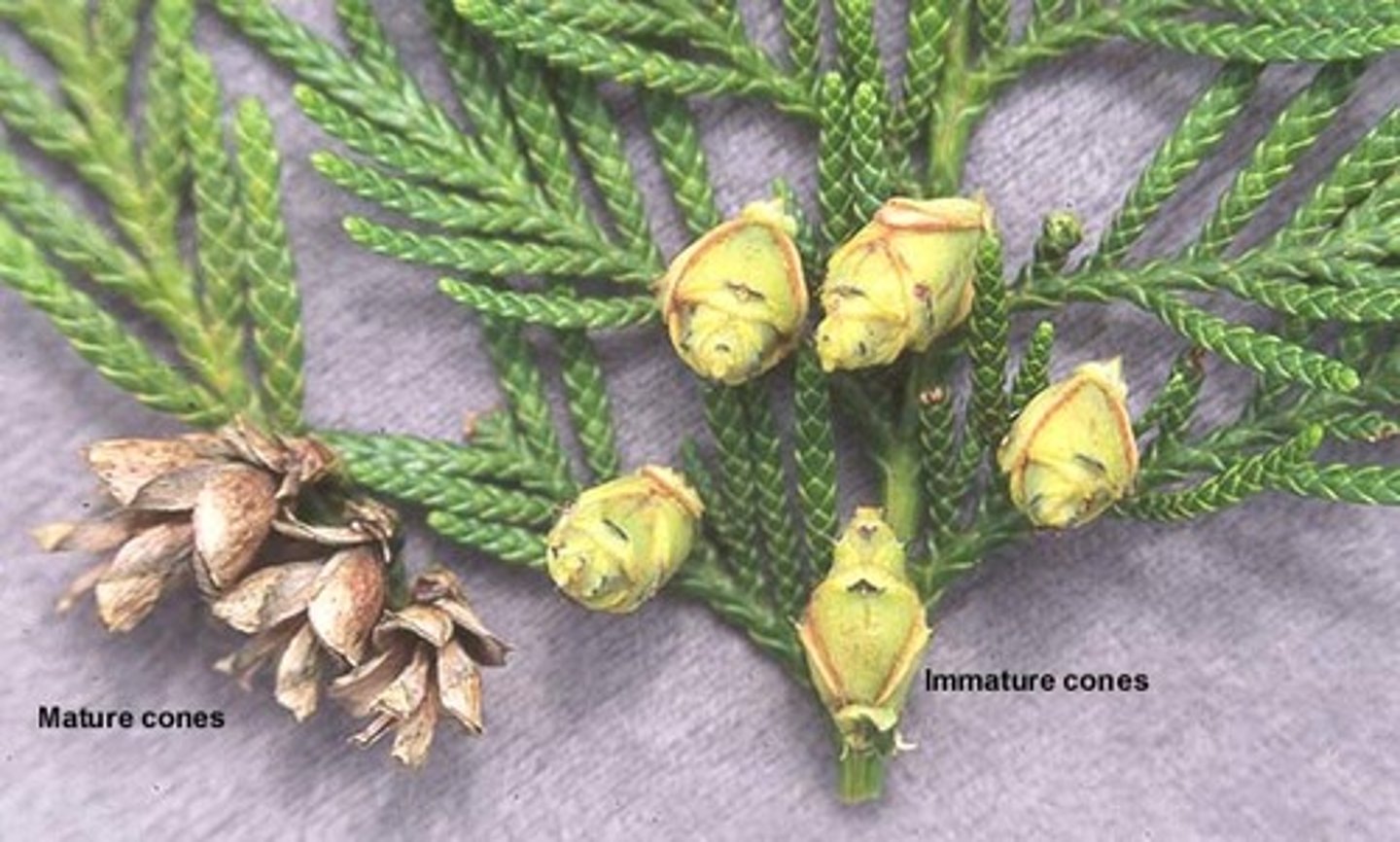
Calocedrus decurrens
- scales: joints look linear like a whine glass.
- cones: pendulous, 2 large scales.
- monecious
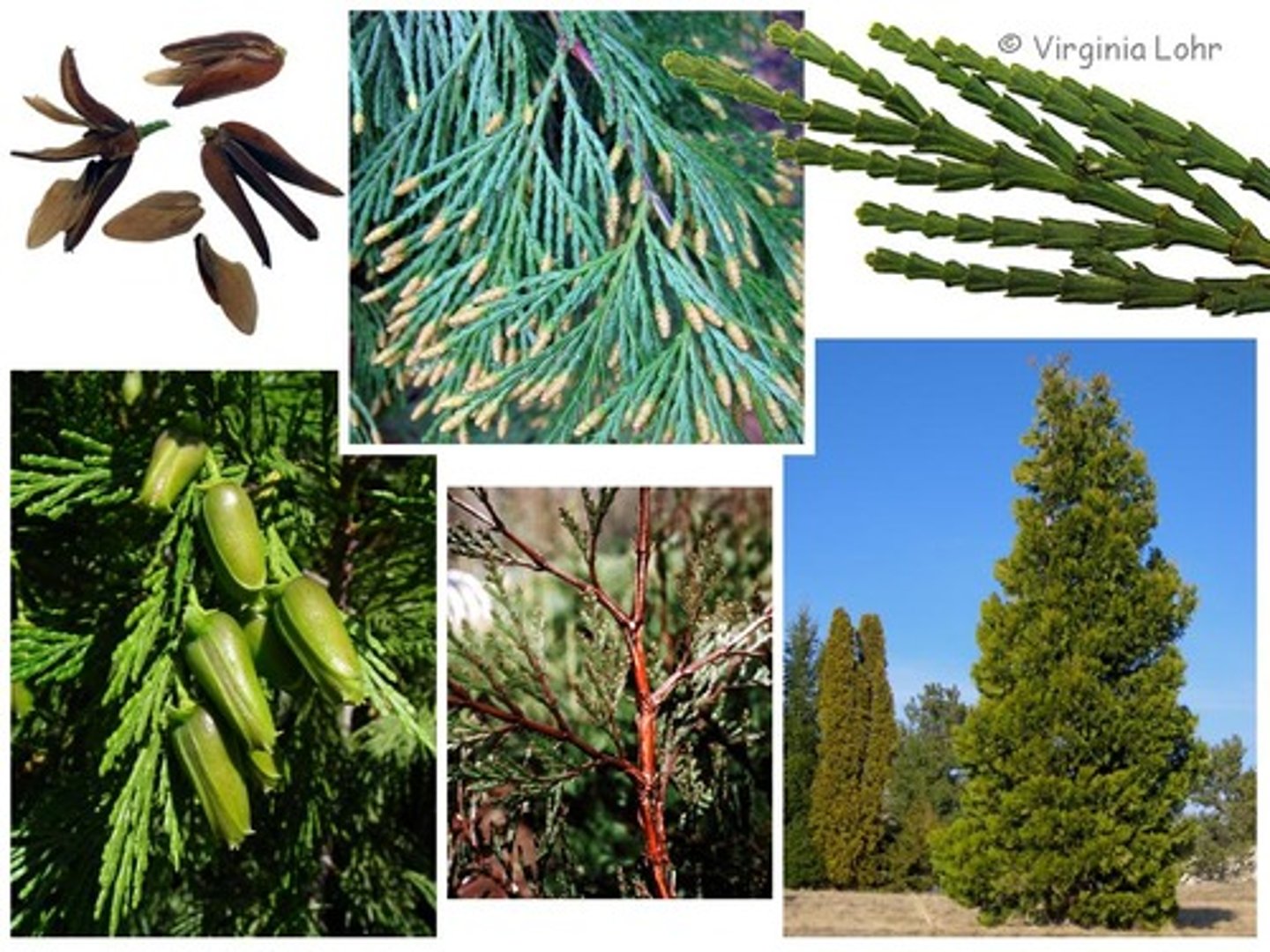
Callitropsis nootkatensis
- scales: 4 rows, feels thick
- Pollen cones: Tiny, yellow, spherical
- Seed cones: spherical, horned scales, blue/purple due to glaucaus wax.
- monecious
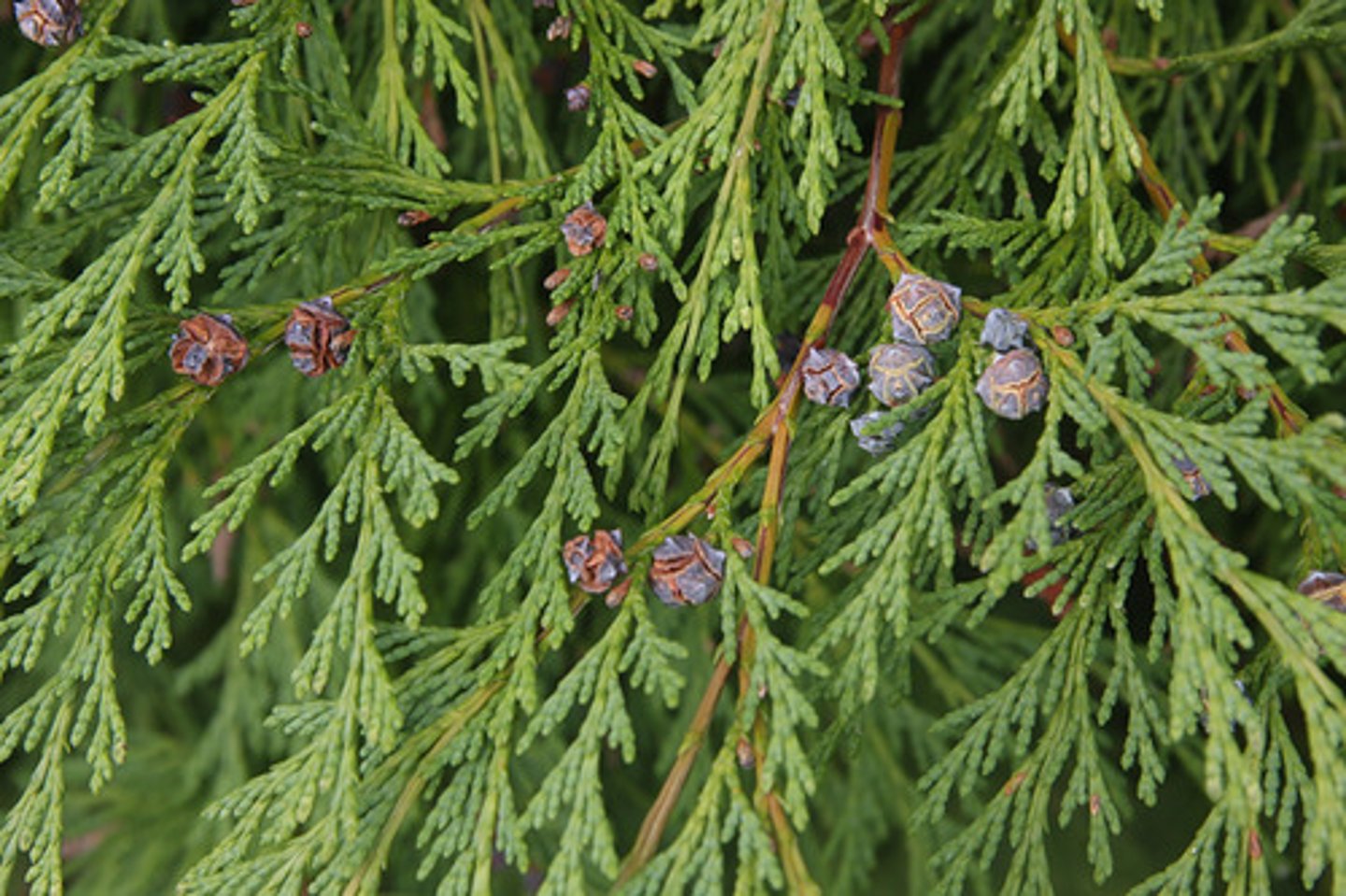
Juniperous Communis
- cones: fleshy
- dioecious
- needles: sharp, whorled, white stomata on top.
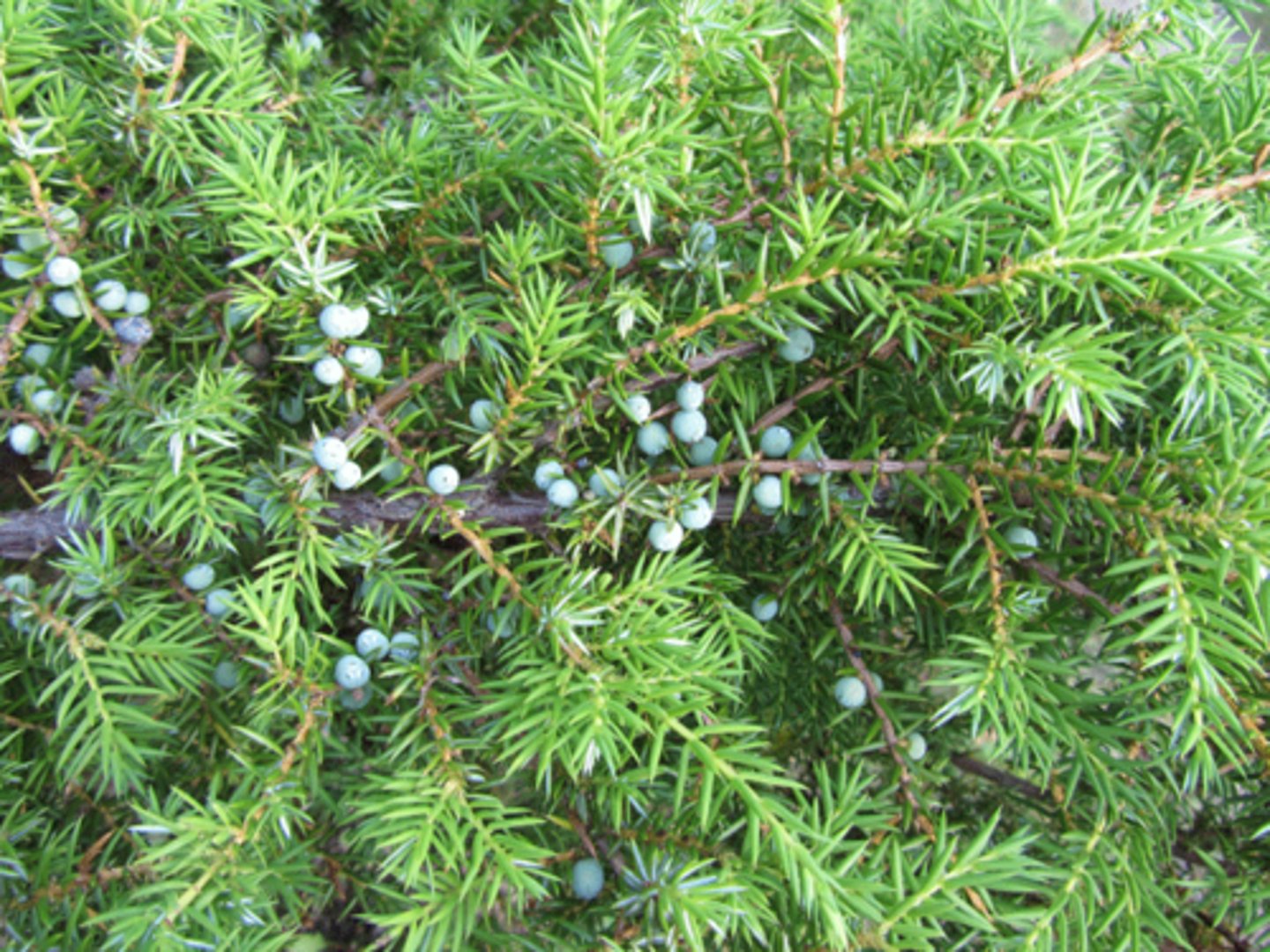
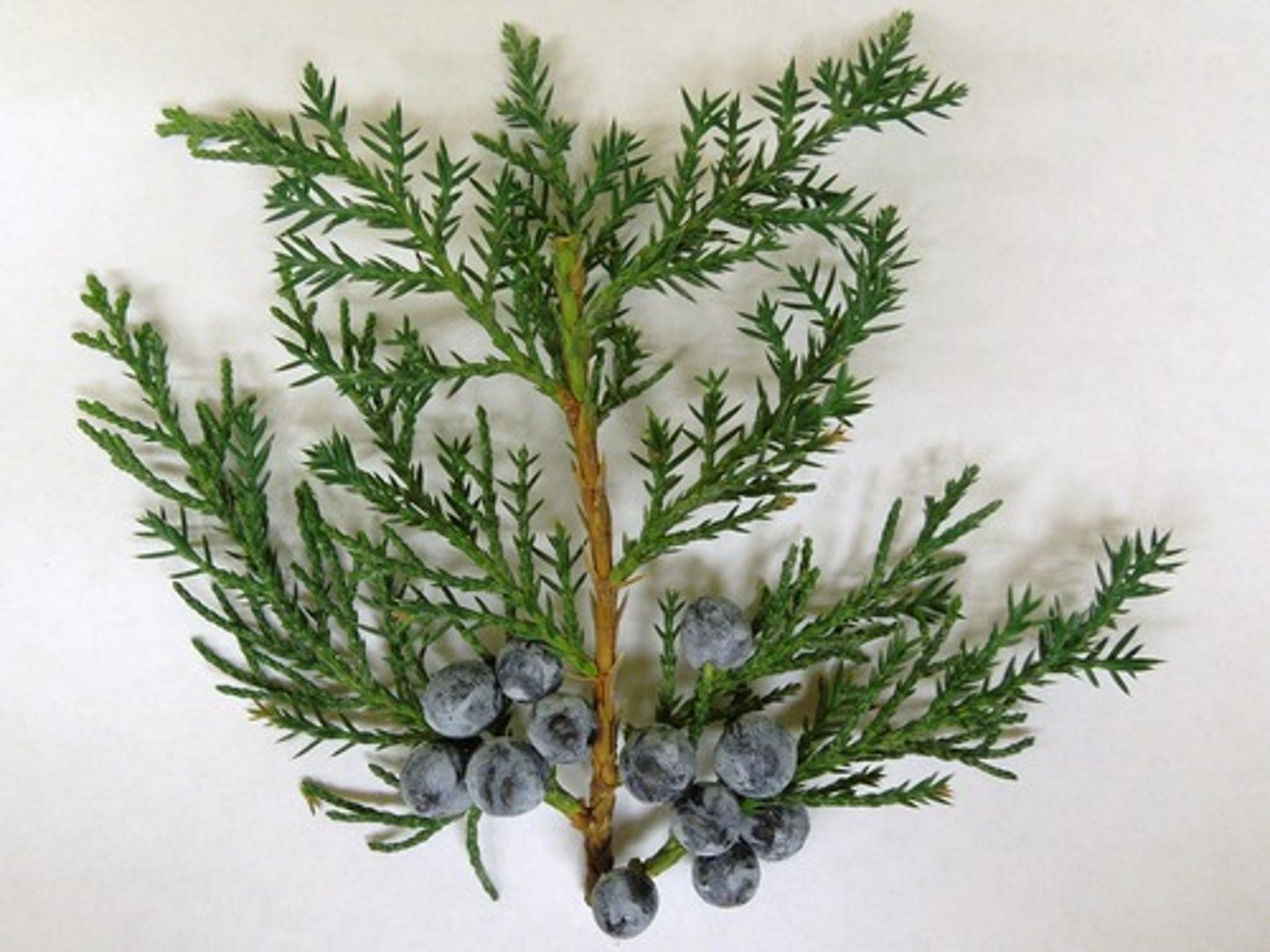
Juniperus scopulorum
- Scales: opposite pairs, bluish green
- cones: fleshy, blue
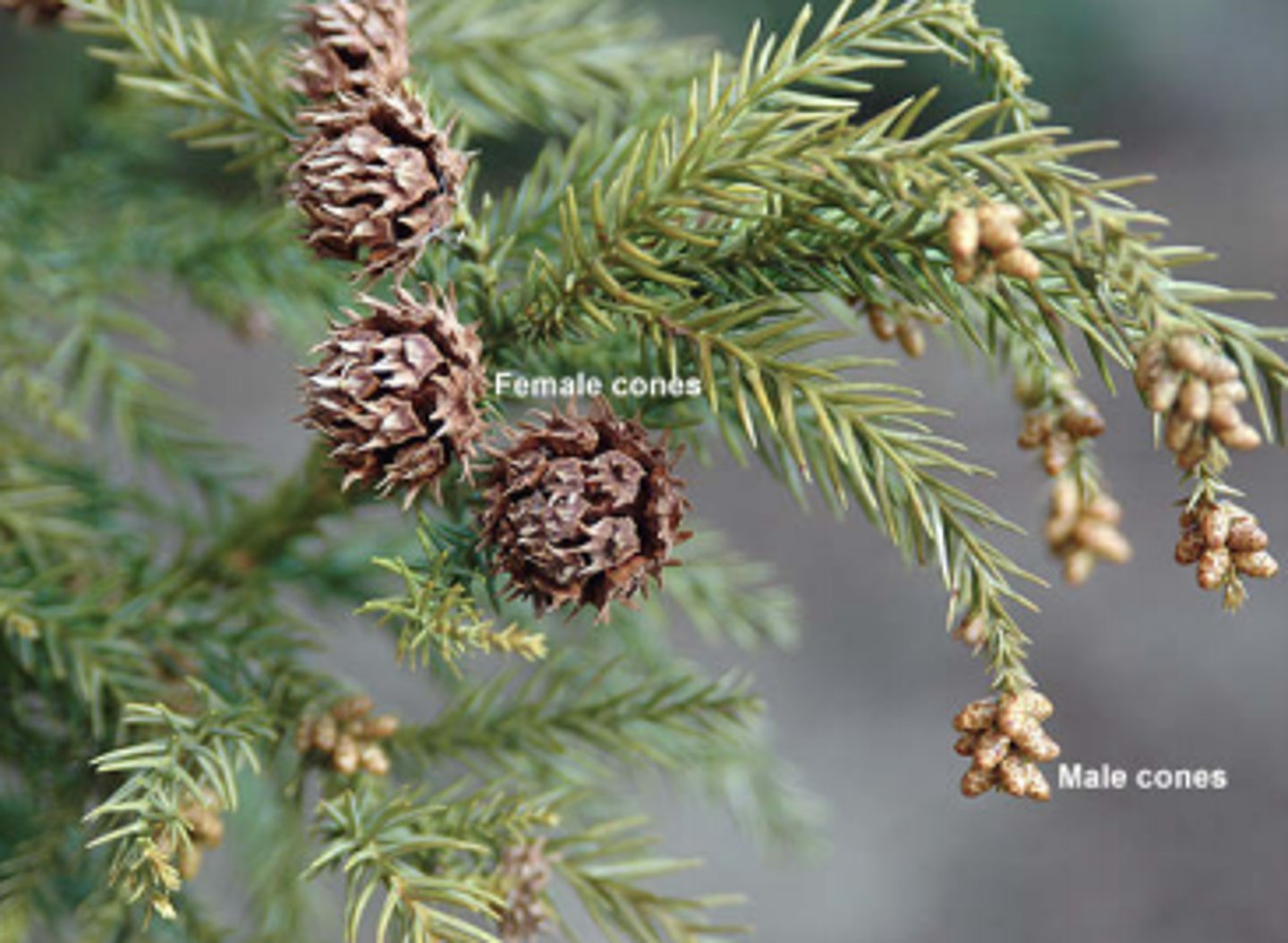
Cryptomeria japonica
- Awls: hooked, soft, green/yellow
- Cones: round, solitary at ends of shoots.
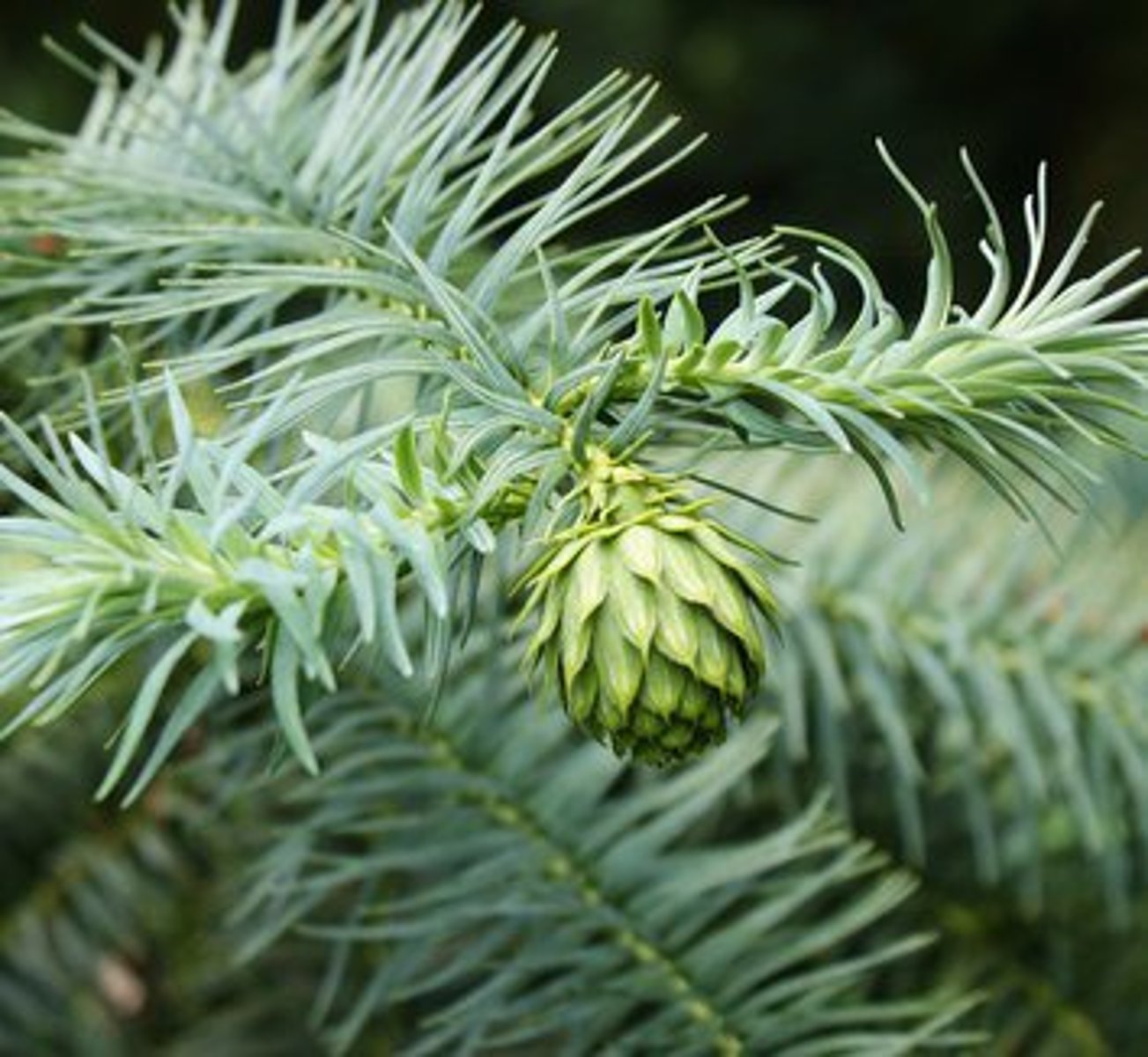
Cunninghamia lanceolata
- Needles: thick, long, spiraled but twisted to look flat, 2 stomatal bands, pointed.
- Pollen cones: many, tight terminal clusters.
- Seed cones: many, shiny, hooked flexible scales, terminal.
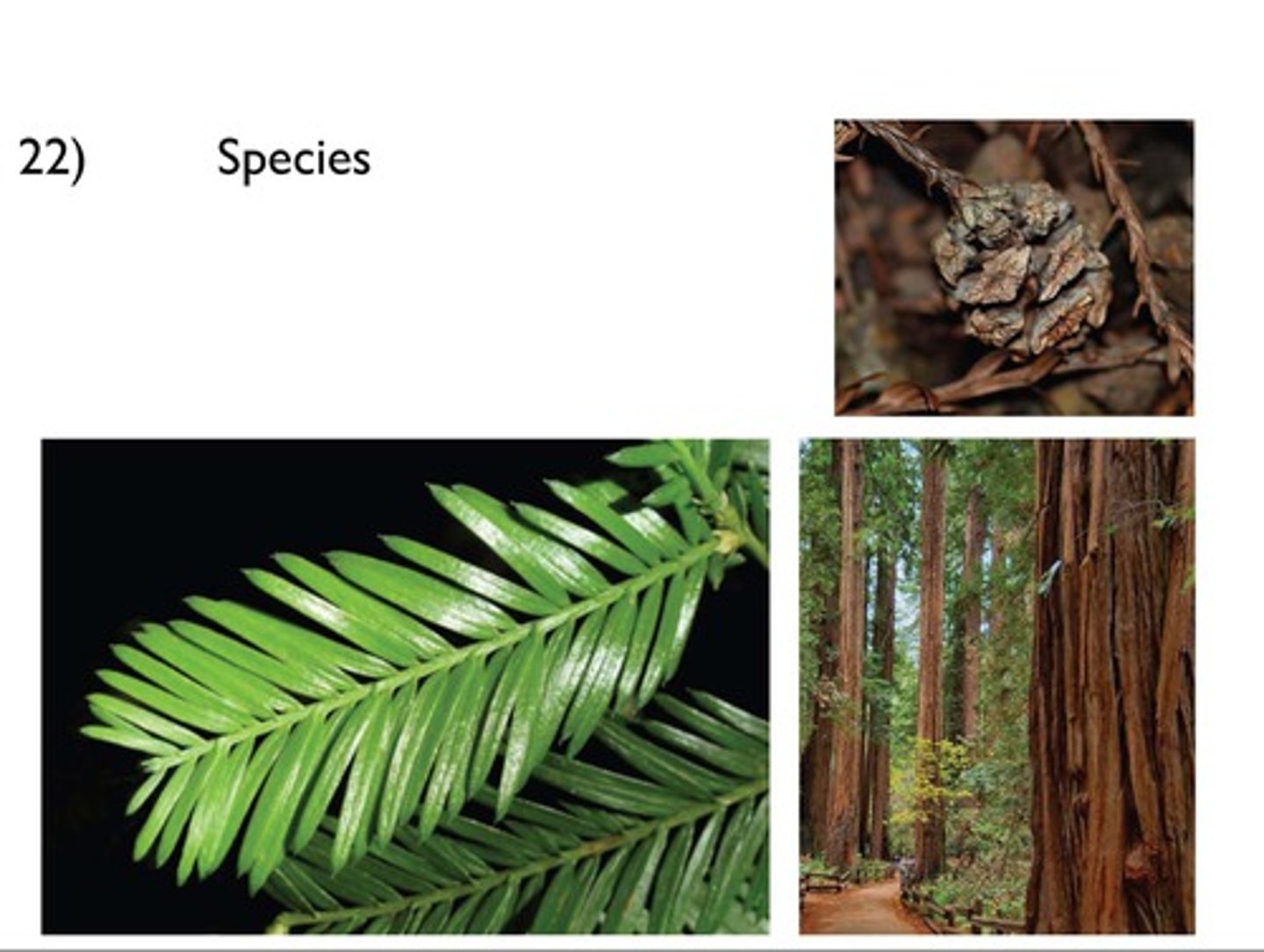
Sequoia Sempervirens
- Needles: dark green/blue, pointed but not sharp, bright stomatal bands
- Twigs: Remnant areas of where buds used to be (brown tissue at yearly growth locations).
- Cones: solitary, terminal, wrinkled scales
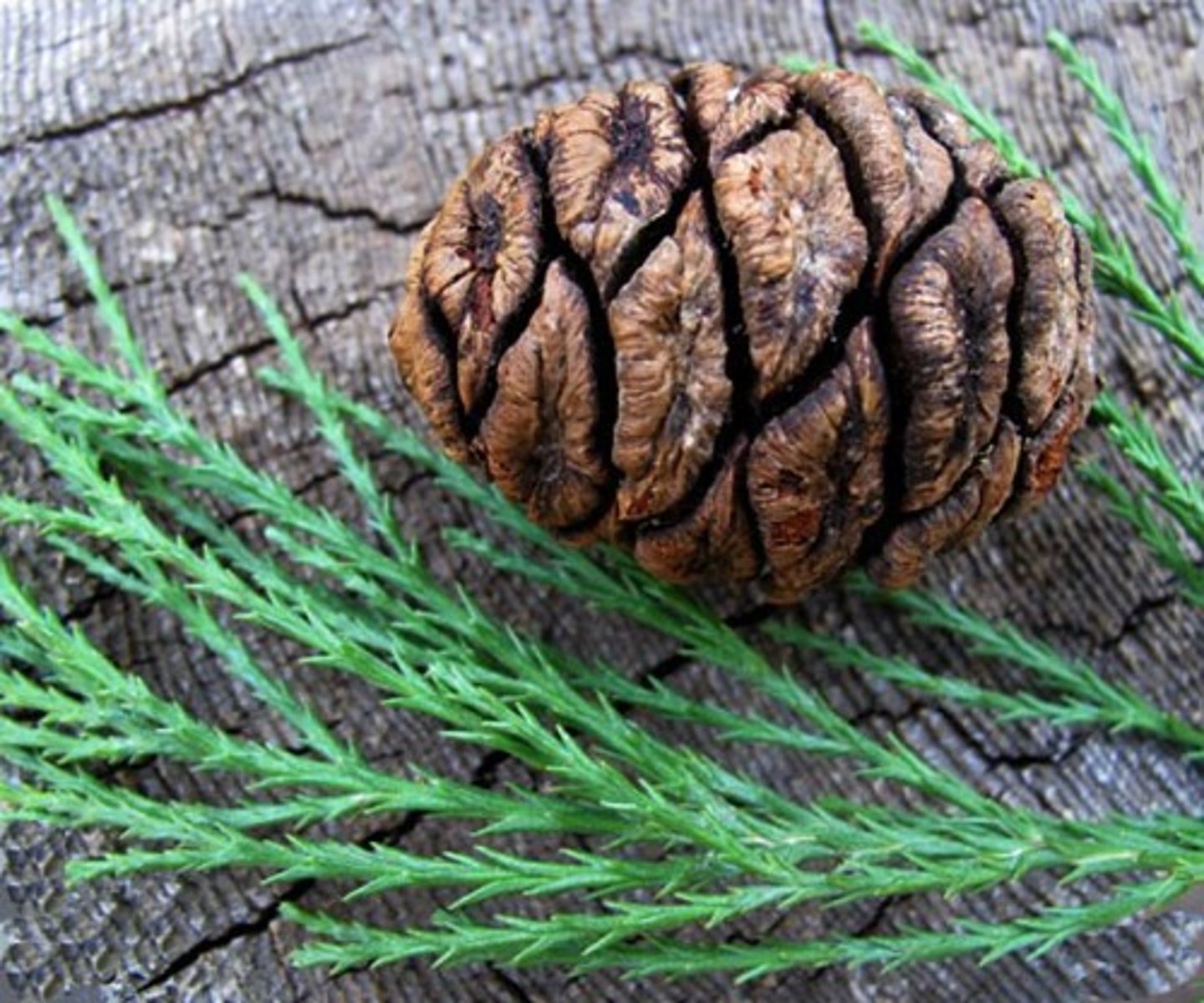
Sequoiadendron giganteum
- Scales and awls: can be sharp
- Branches: whip like
- seed cones: larger, wrinkled scales
- pollen cones: small, round, yellow
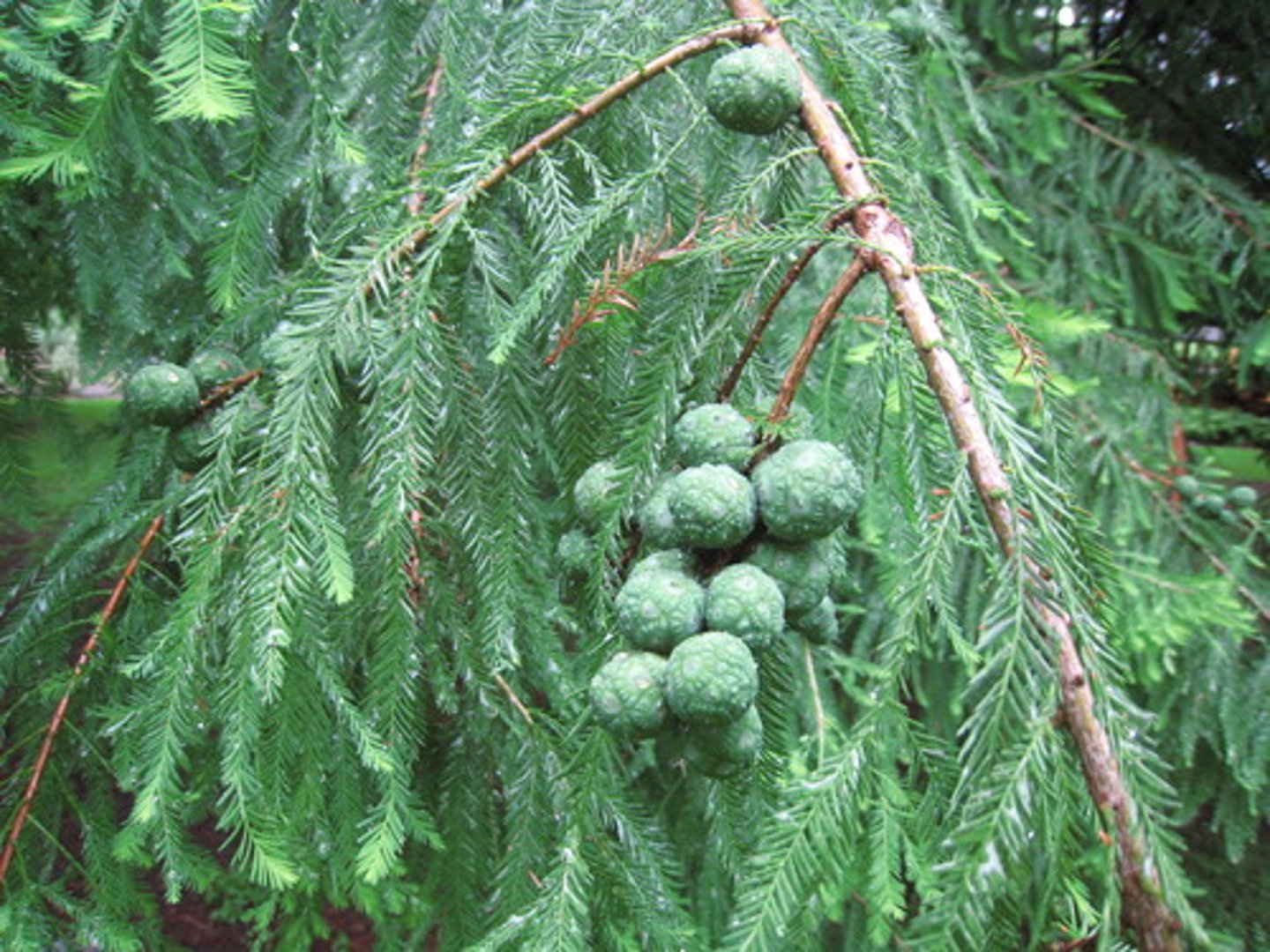
Taxodium distichum
- needles: alternate, deciduous, once pinnate, soft.
- Cones: globular, scales mush together to look like animal scat, disintegrate at maturity.
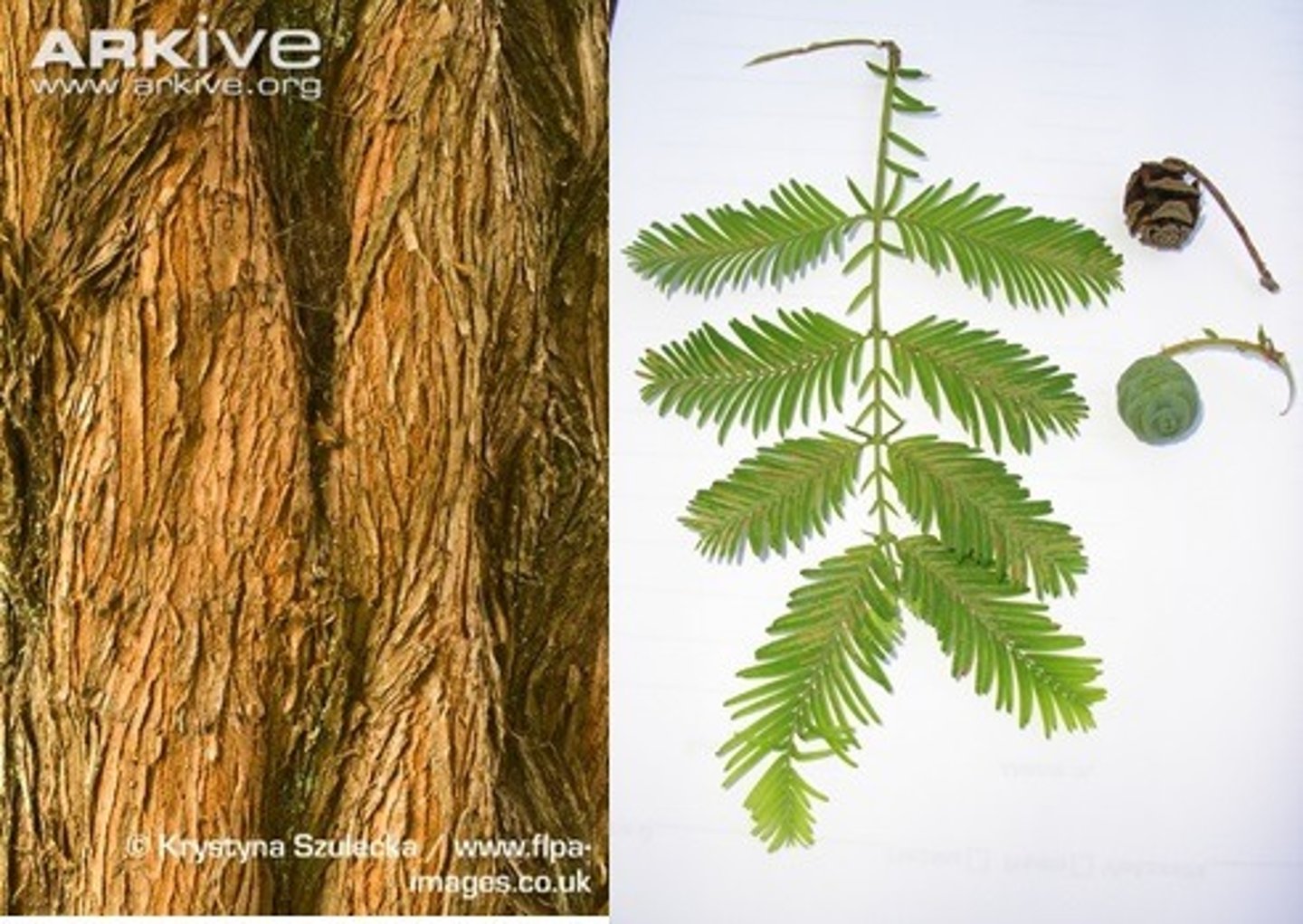
Metasequoia glyptostroibes
- needles: soft, opposite, bipinnate
- cones: globular, very well defined scales, smooth scale edges.
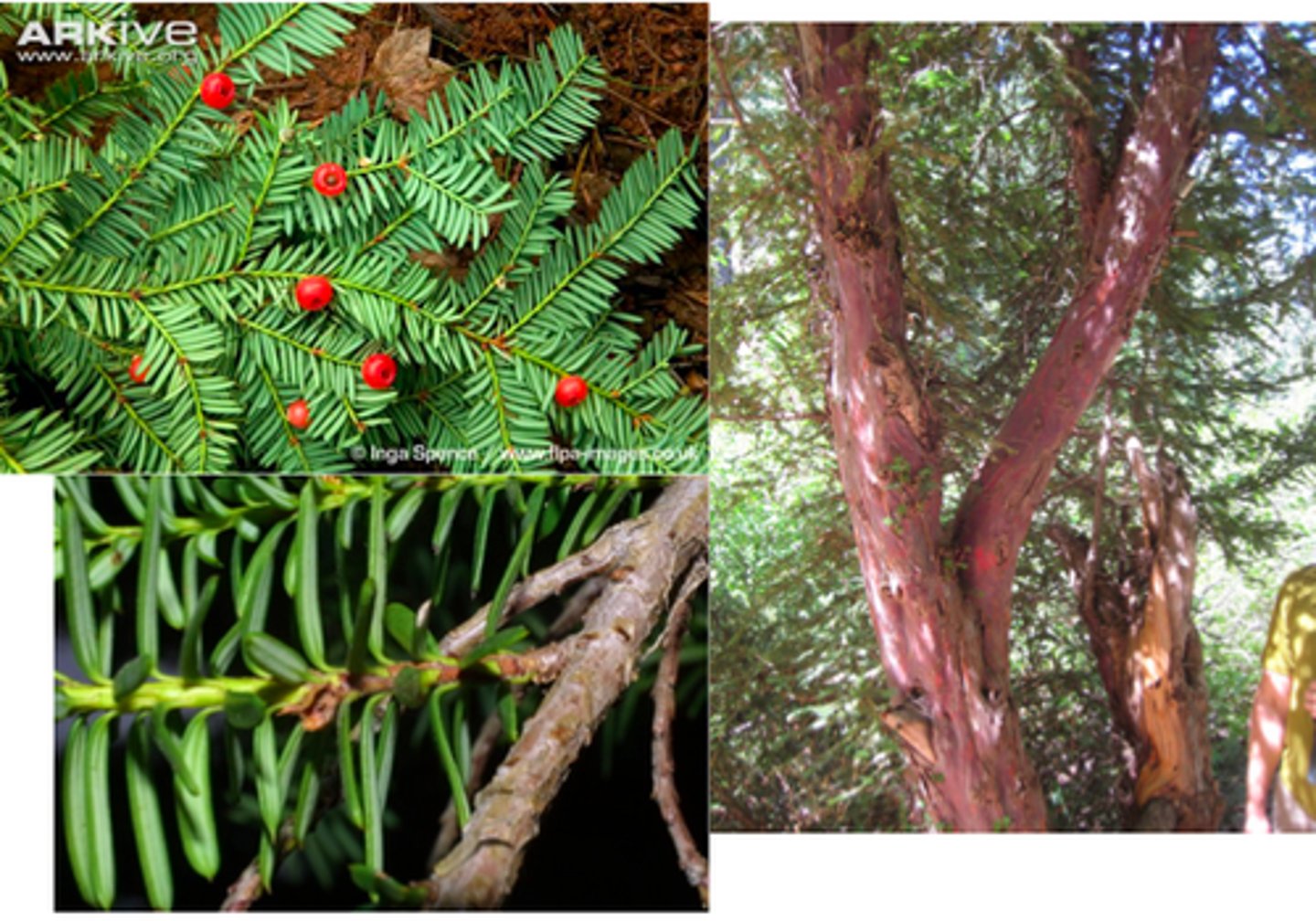
Taxus brevifolia
- needles: thick, pointed, grove in upper surface, 2 ranked, dark green.
- Aril: seed pokes out of the top of red fleshy tissue.
- bark: red/brown/orange
- dioecious
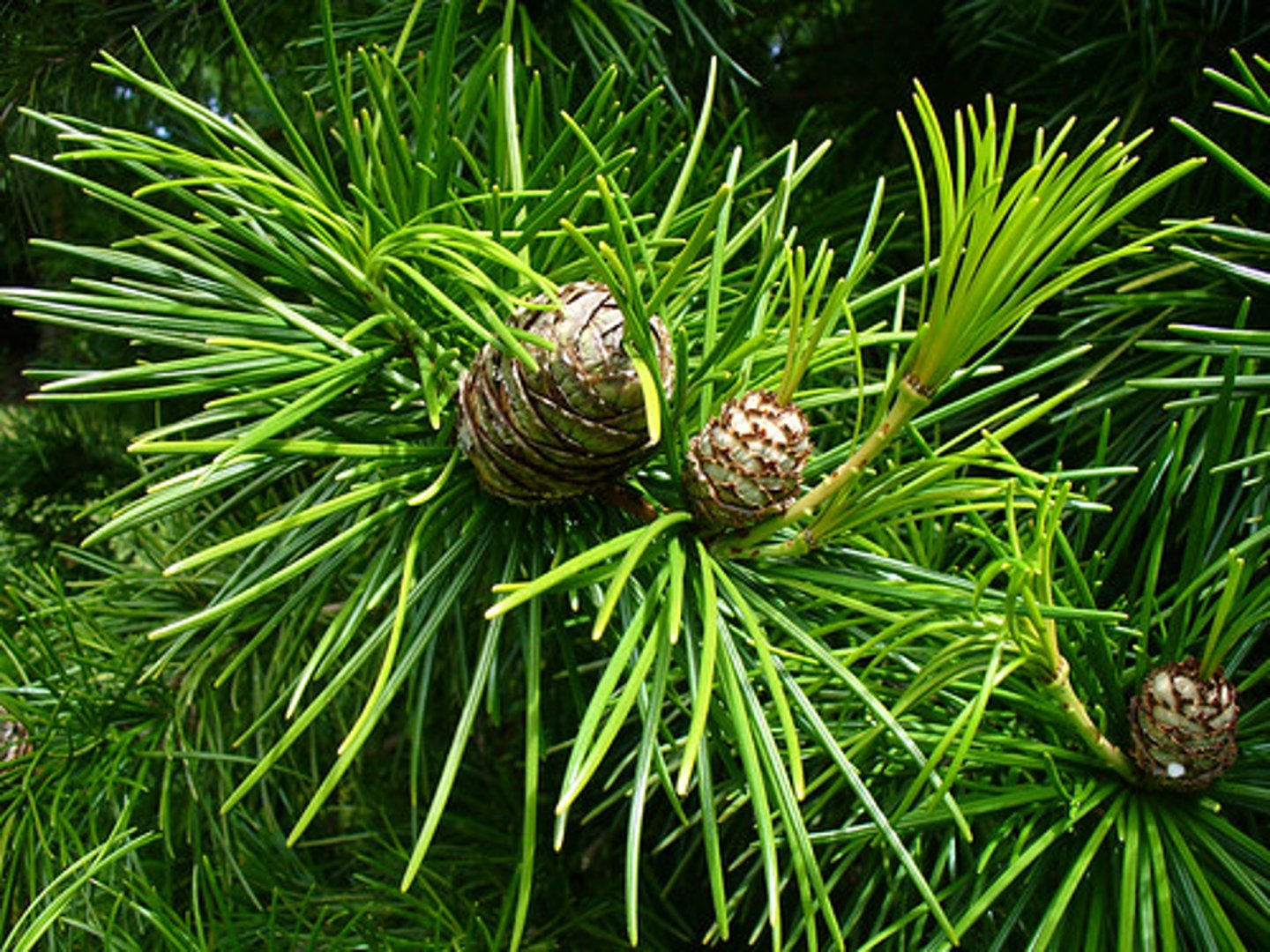
Sciadopitaceae
- Clados: Photosynthetic stem tissues that look like needles, whorled.
- True leaves: Little brown scales on the twig.
- Cones: flexible, fan shaped.
- monecious
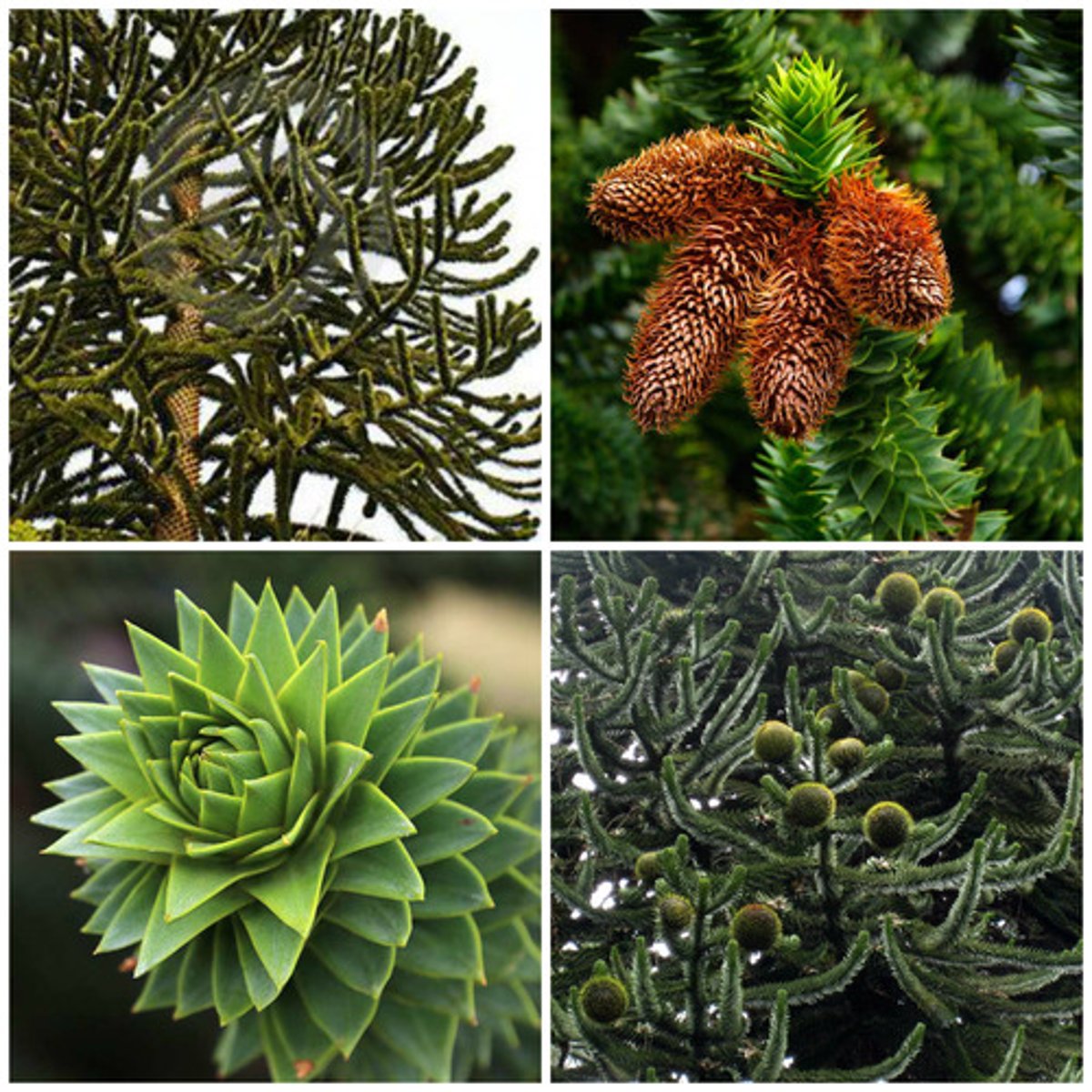
Araucaria araucana
- Awls: thick, sharp, spiraled, dark green, shiny.
- male cones: longer, hooked edges.
- female cones: round, fall apart at maturity, large-ish.
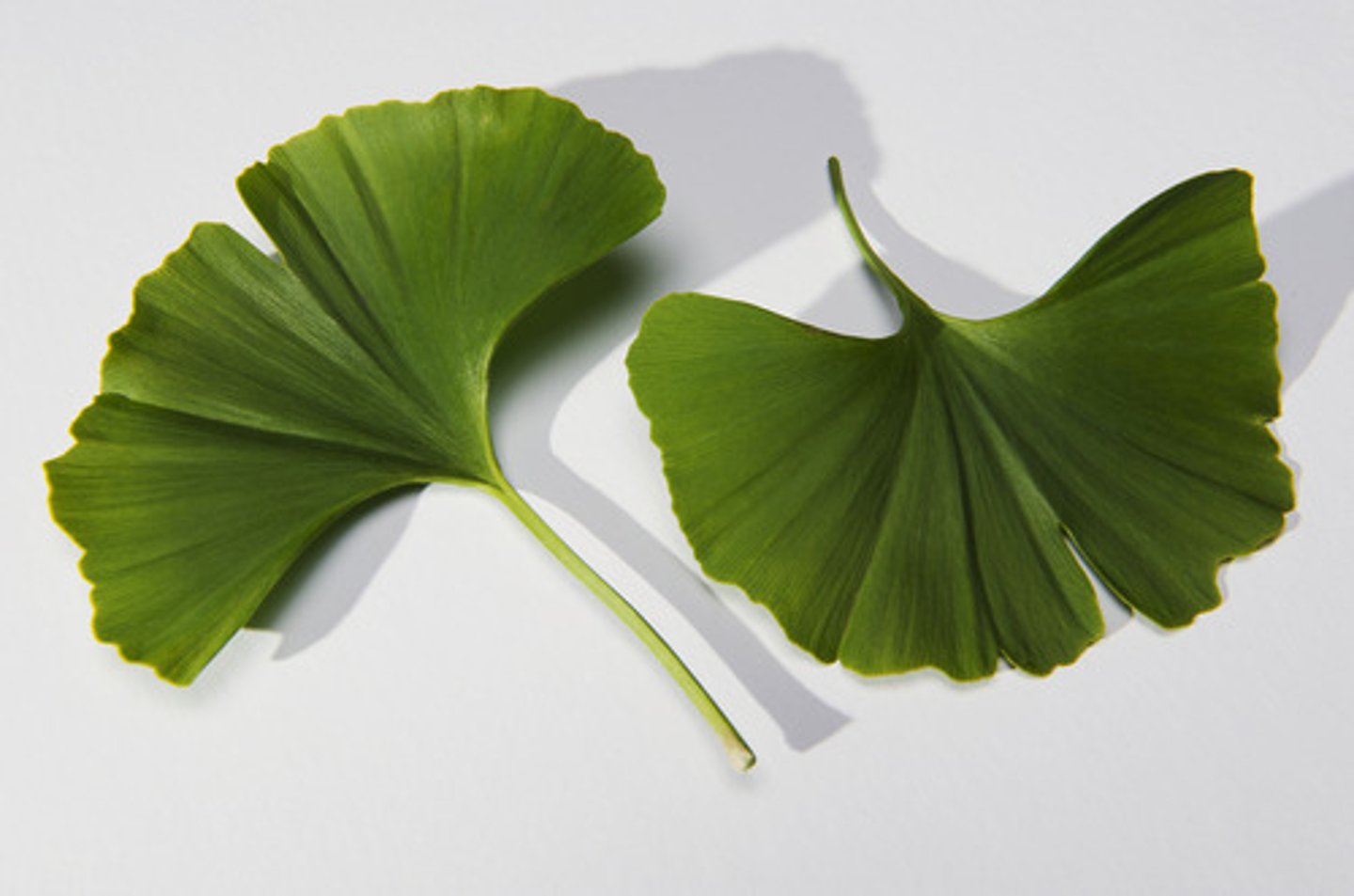
Gingko biloba
Hylocomnium splendens
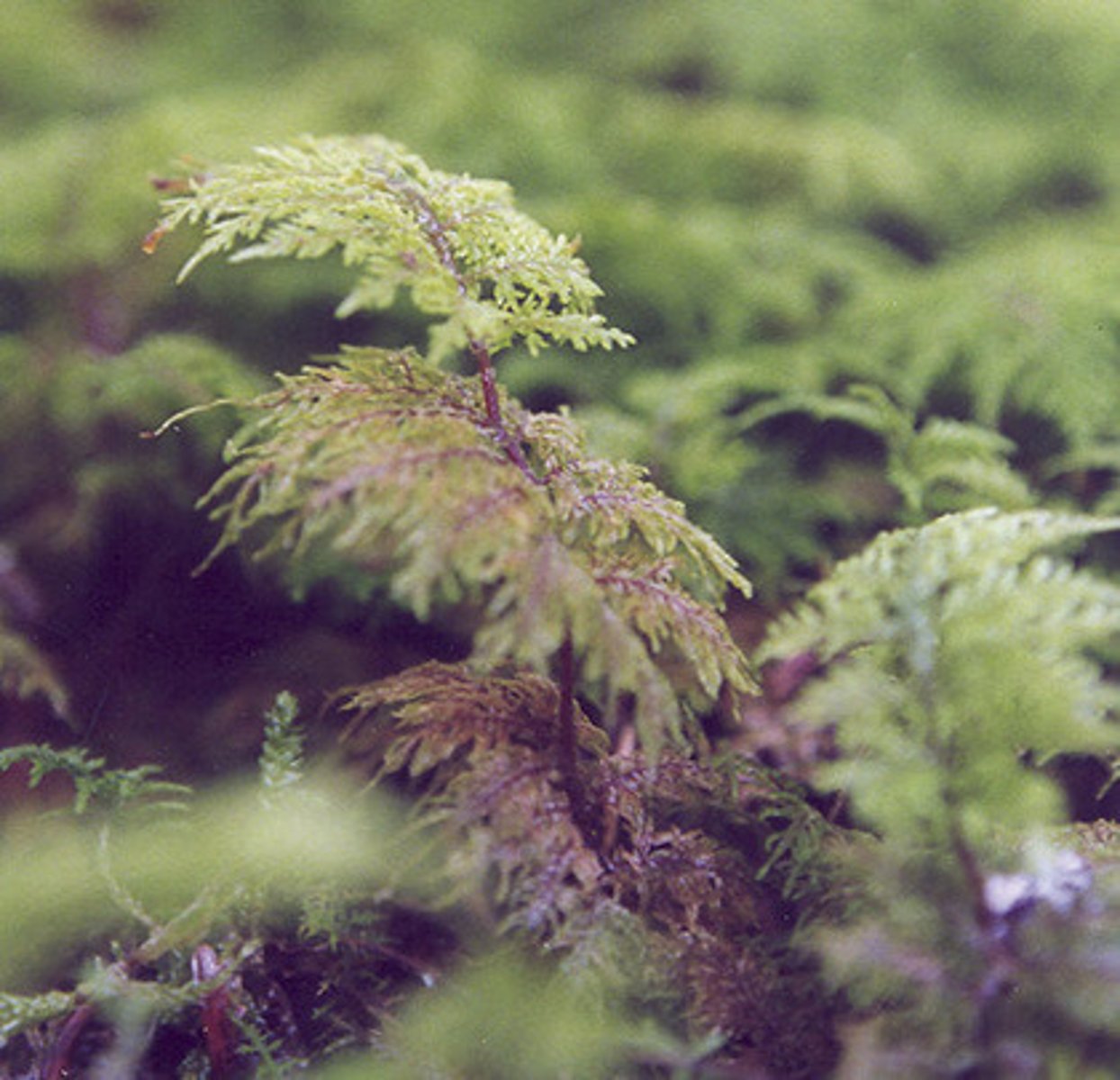
Kindbergia oregana
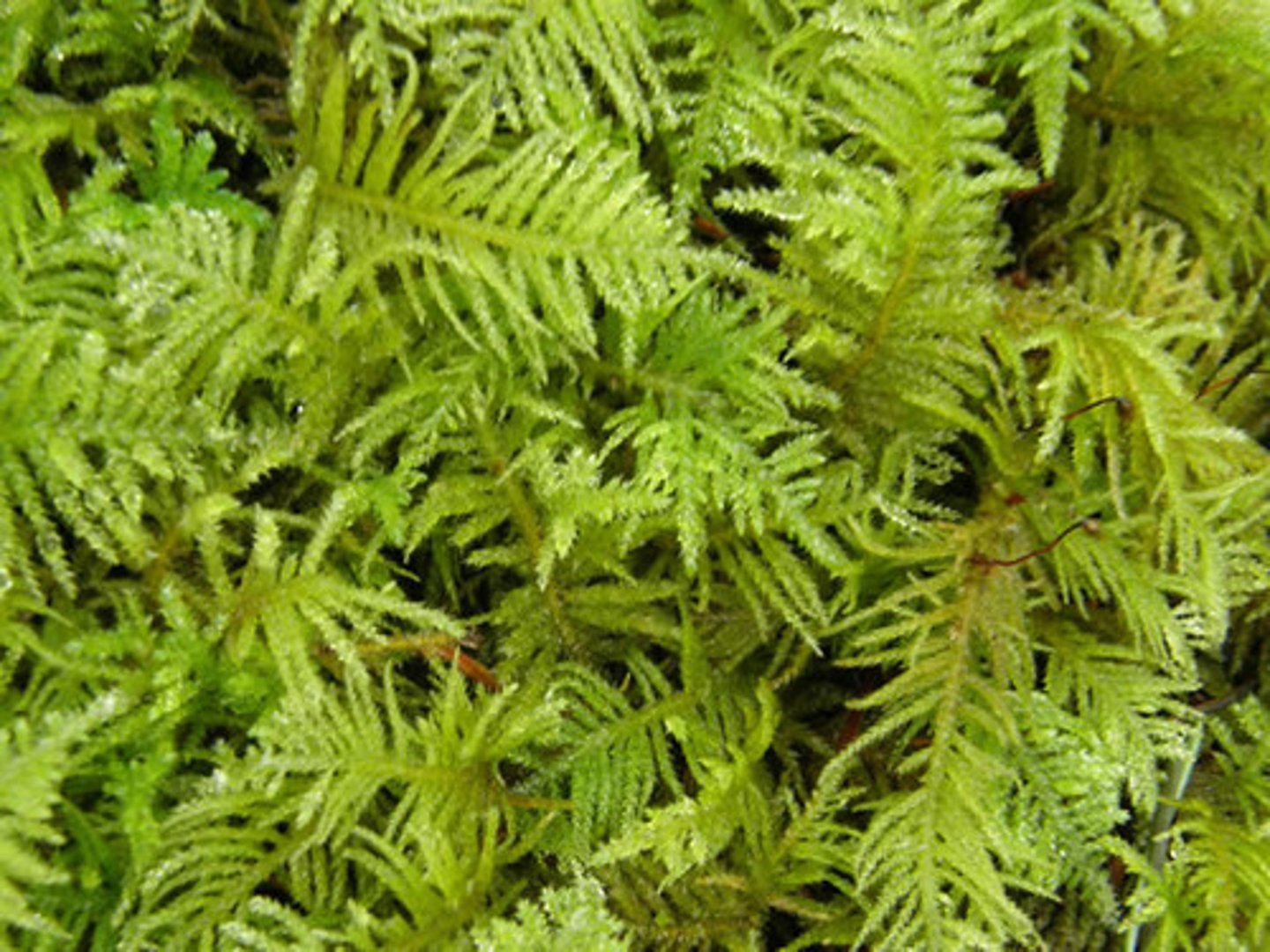
Plagiothecium undulatum
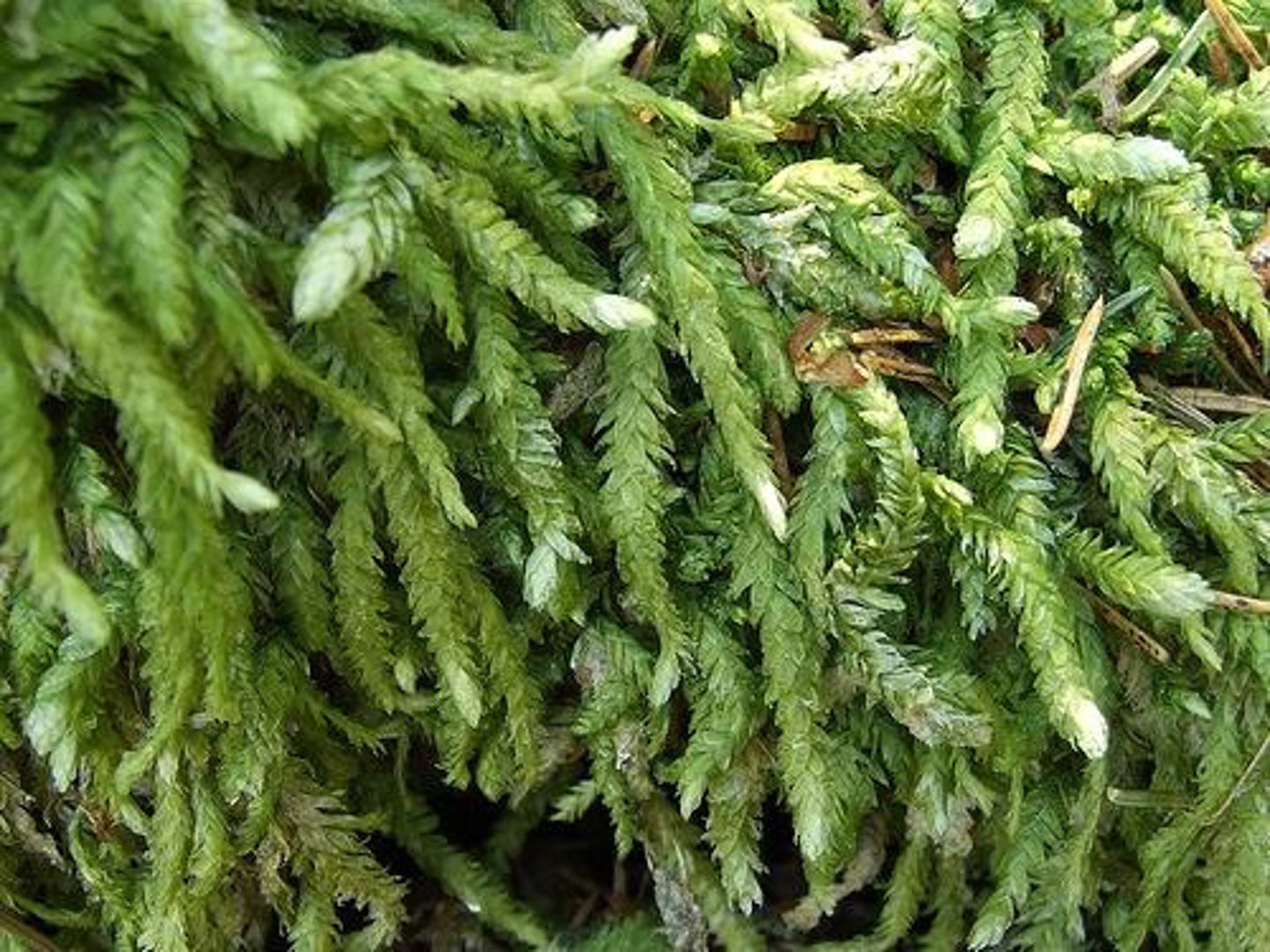
Plagomnium insigne
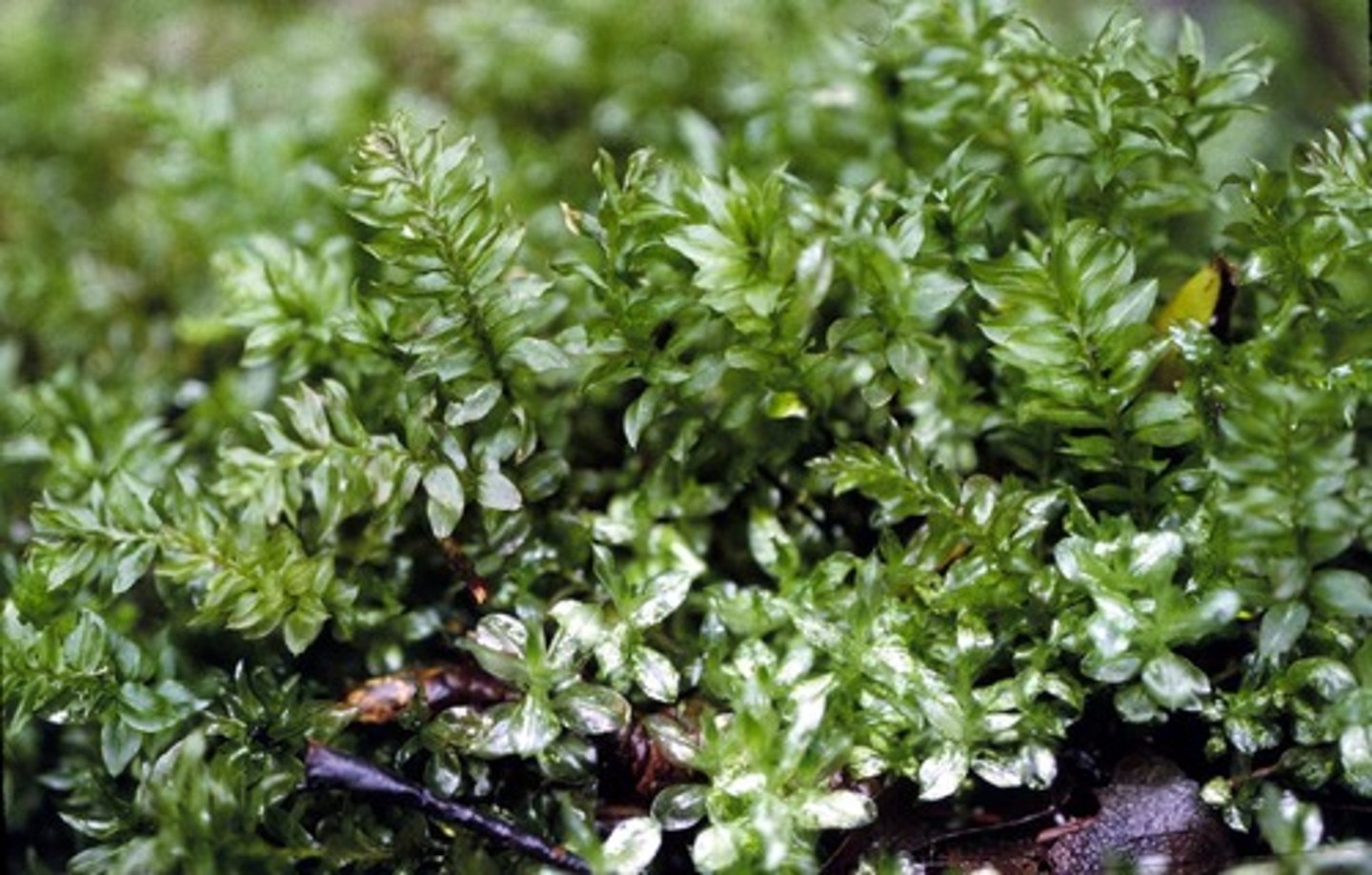
Neckera douglasii
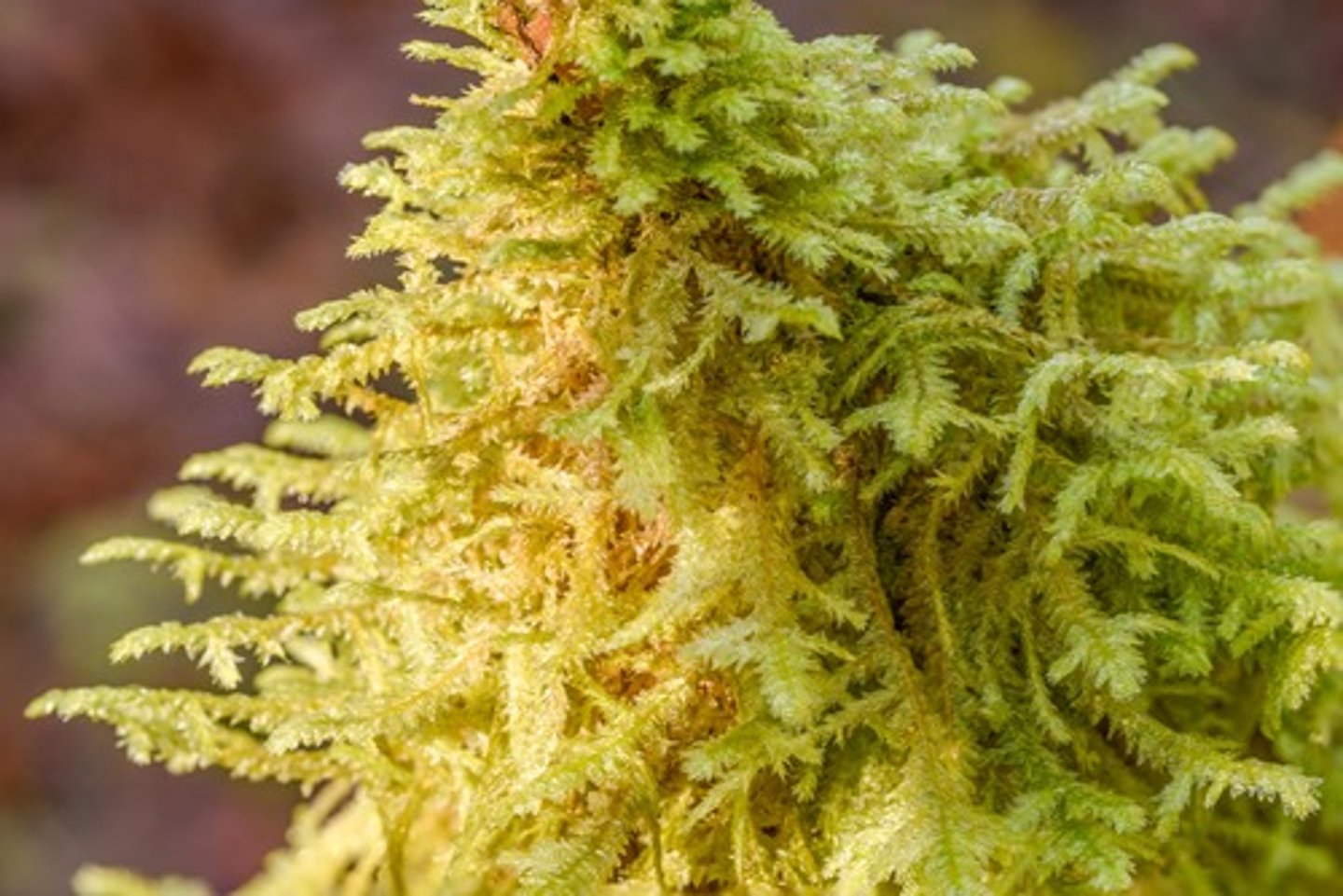
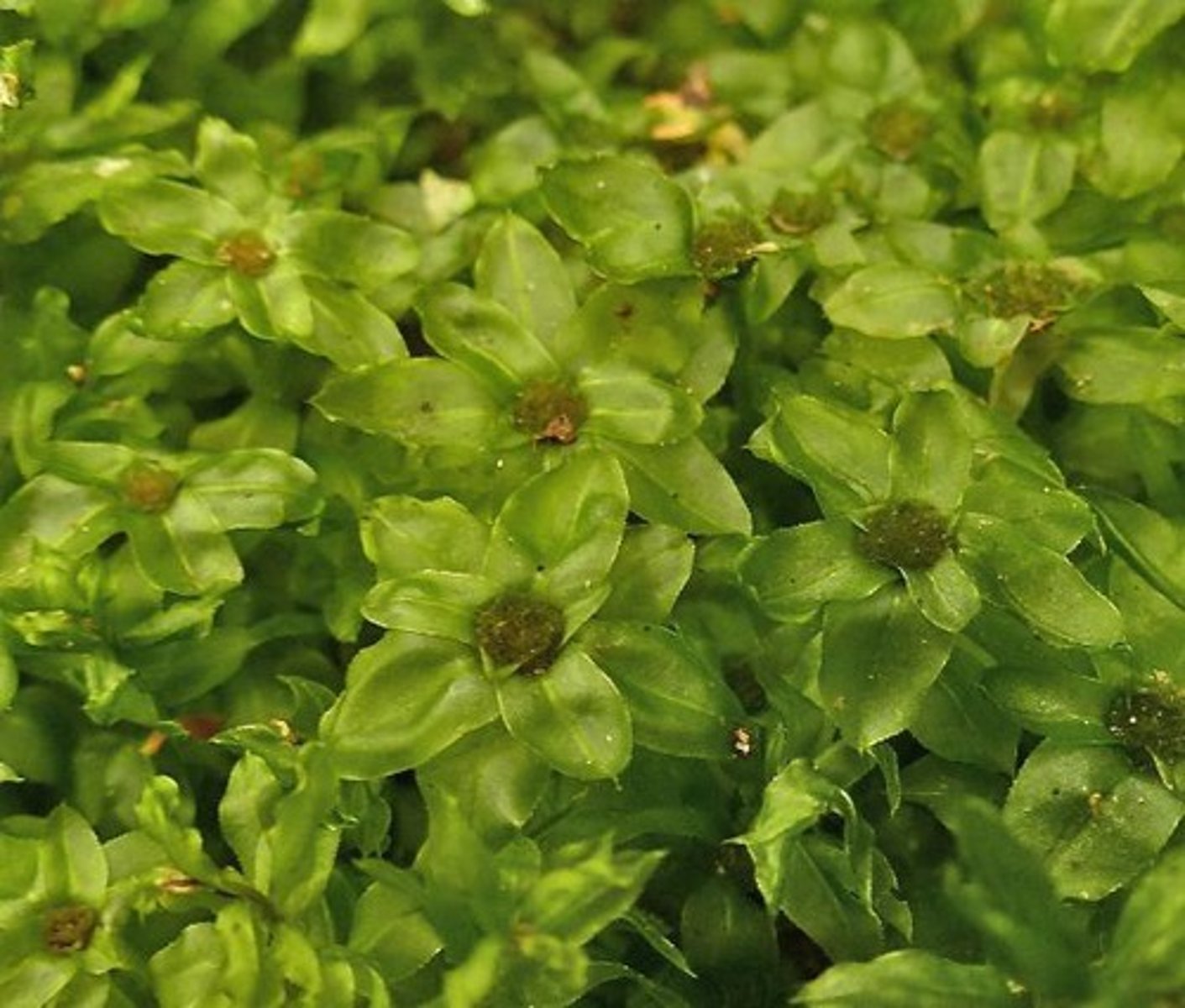
Rhizomnium glabrescens
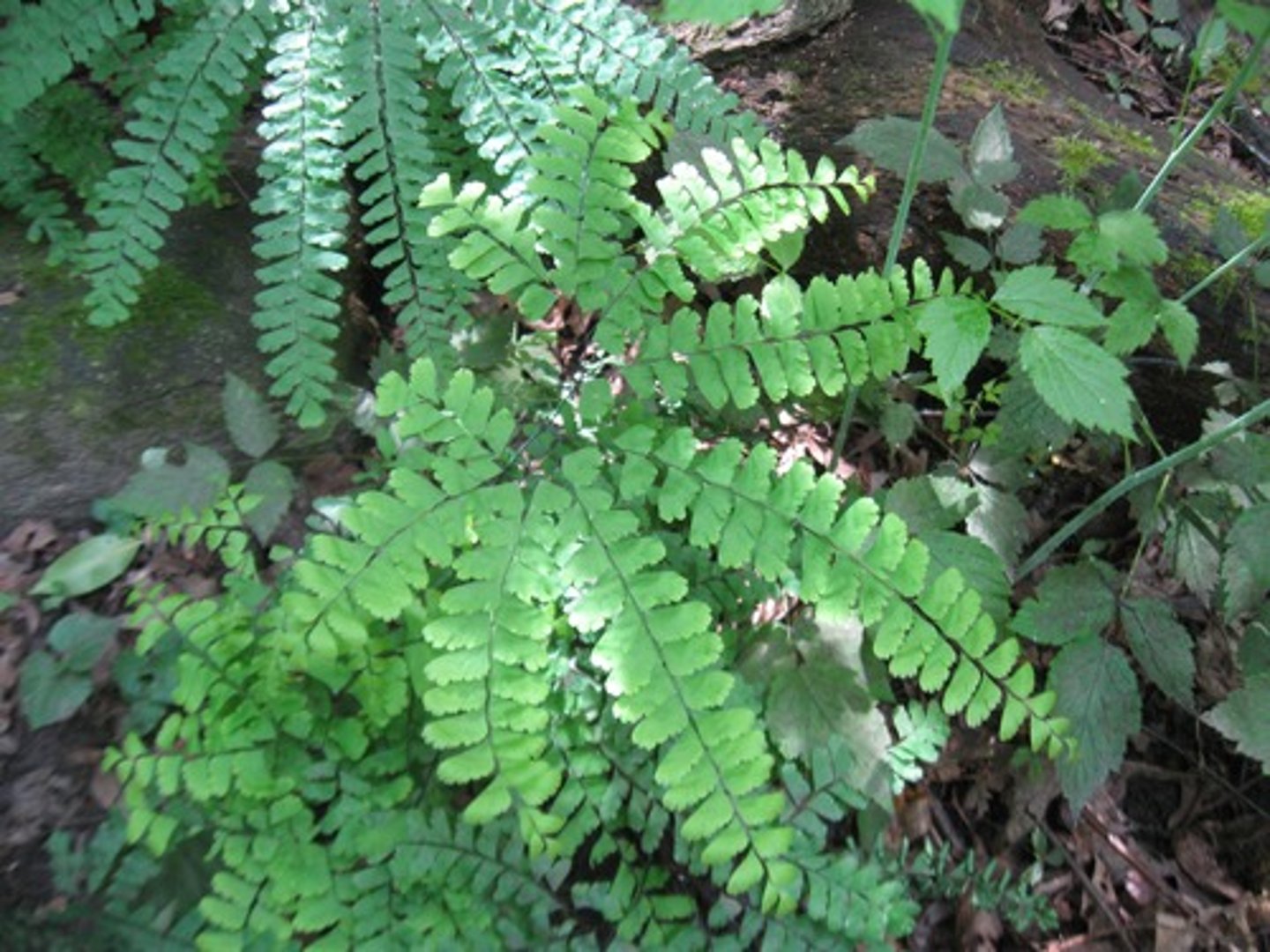
Adiantum pedatum
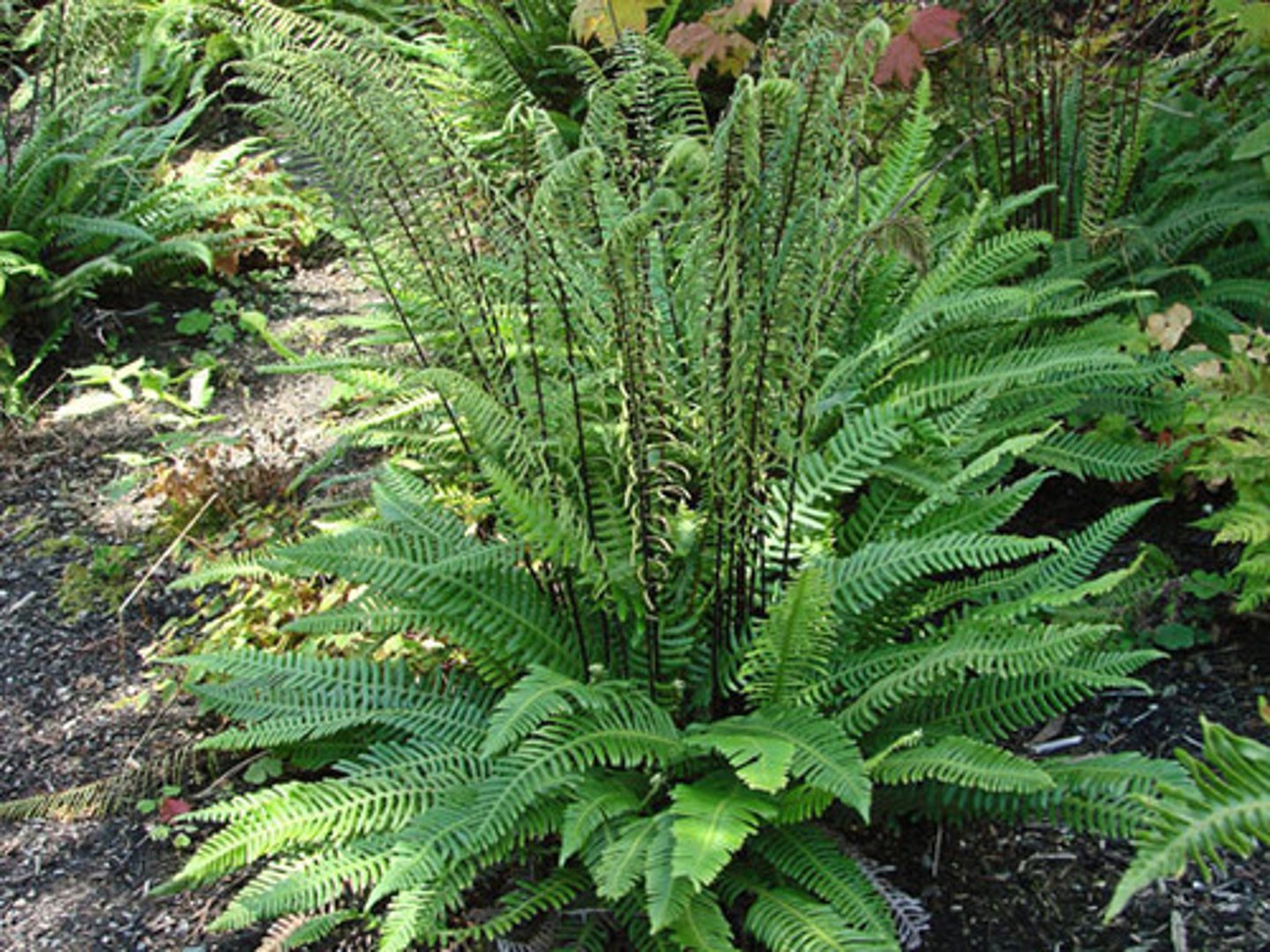
Blechnum spicant
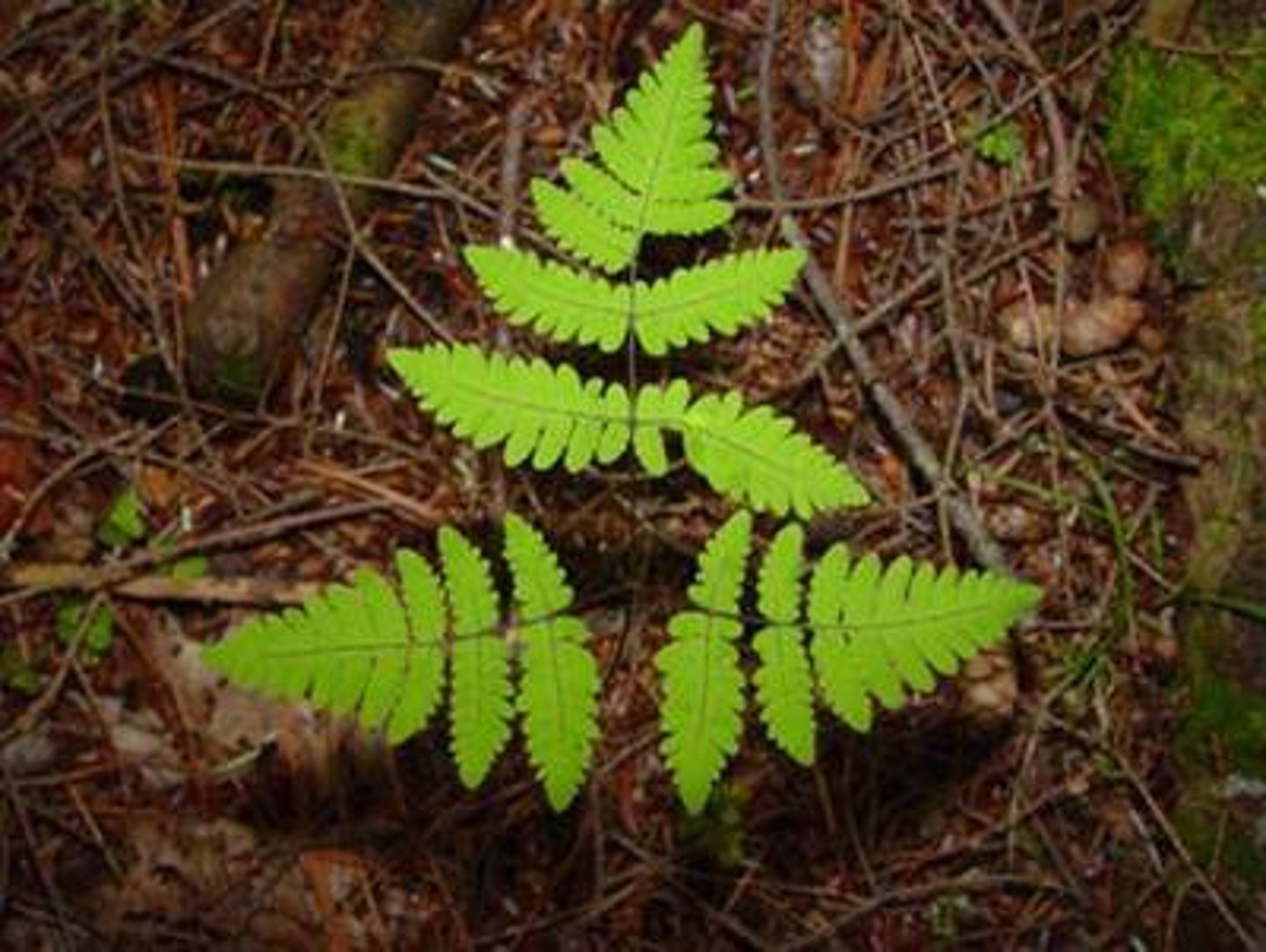
Gymnocarpium dryopteris
oak fern
Polypodium glycyrrhiza
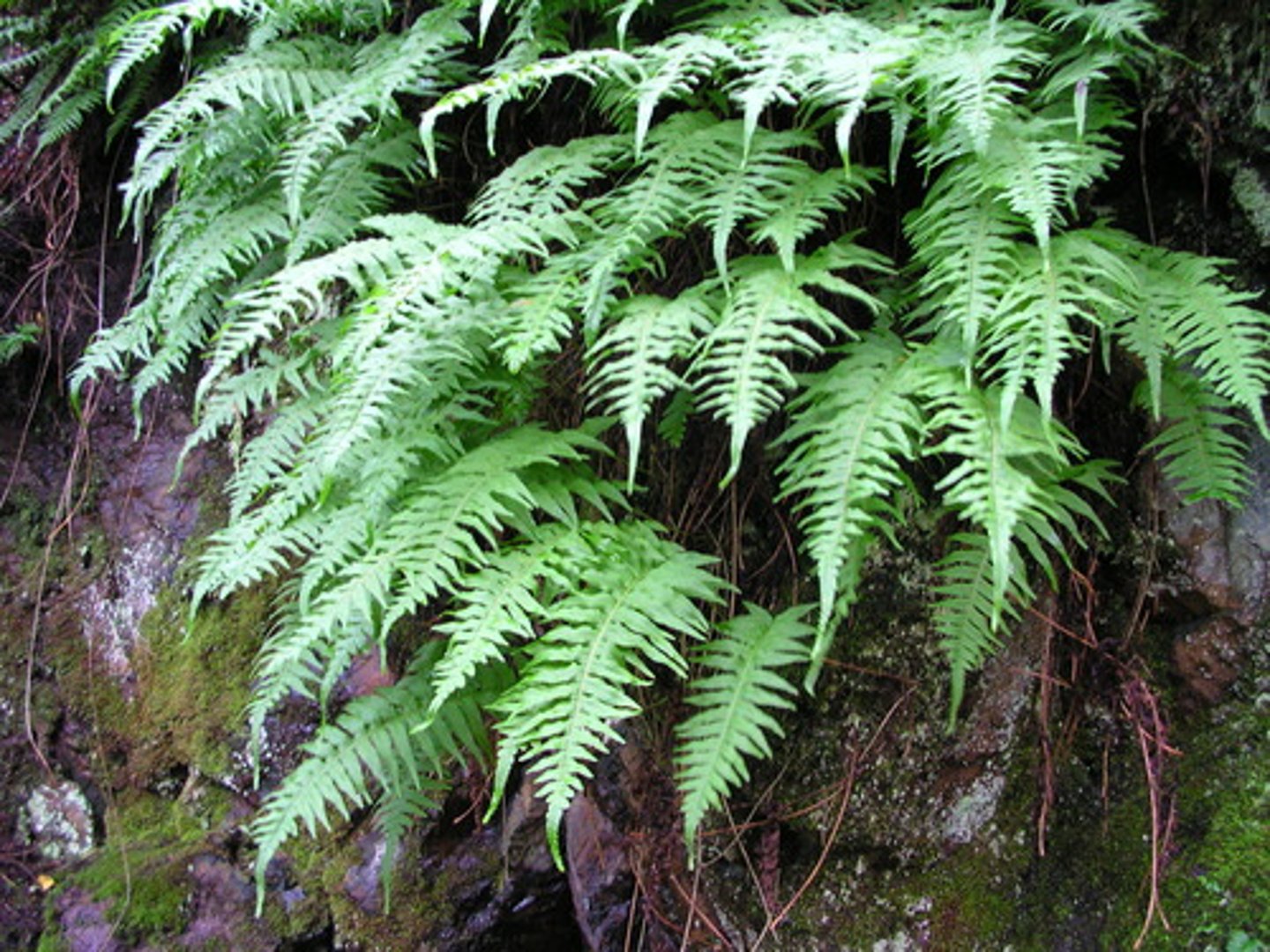
Polystichum munitum
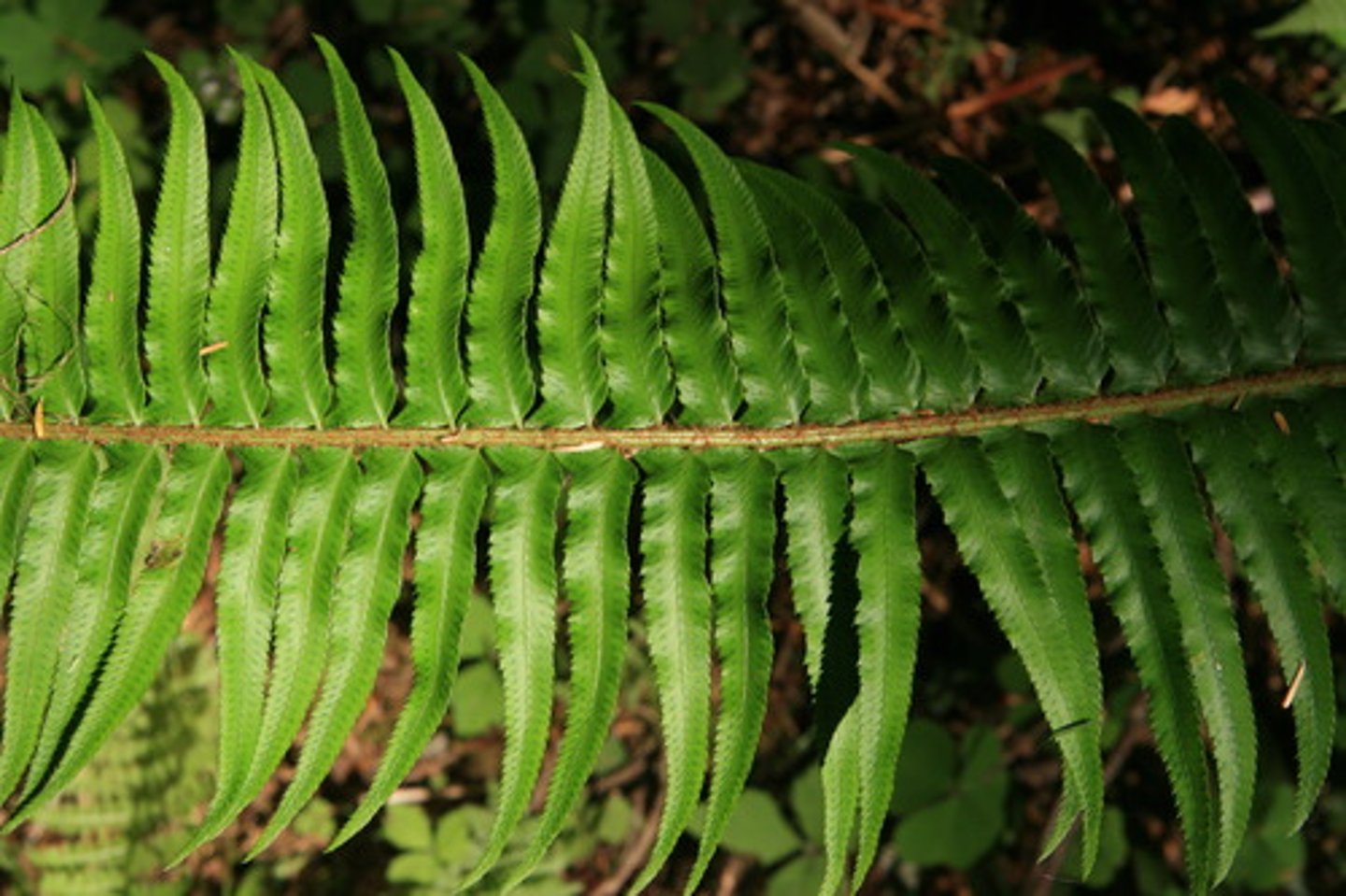
Pteridum aquilium
bracken fern