Physics - Translational Motion
 Studied by 2 people
 Call Kai
 Learn
Learn Practice Test
 Spaced Repetition
 Match
Match Flashcards
 Knowt Play
1/25

Earn XP
Description and Tags
Kinematics, Newton's Laws, Free Body Diagrams, Work & Energy, Momentum & Impulse
Name | Mastery | Learn | Test | Matching | Spaced | Call with Kai |
|---|
No analytics yet
Send a link to your students to track their progress
26 Terms
Newton’s 1st Law
Inertia; objects in motion stay in motion
Fnet = 0 at equilibrium
Newton’s 2nd Law
F = ma
Newton’s 3rd Law
Equal and opposite reations
Fa:b = - Fb:a
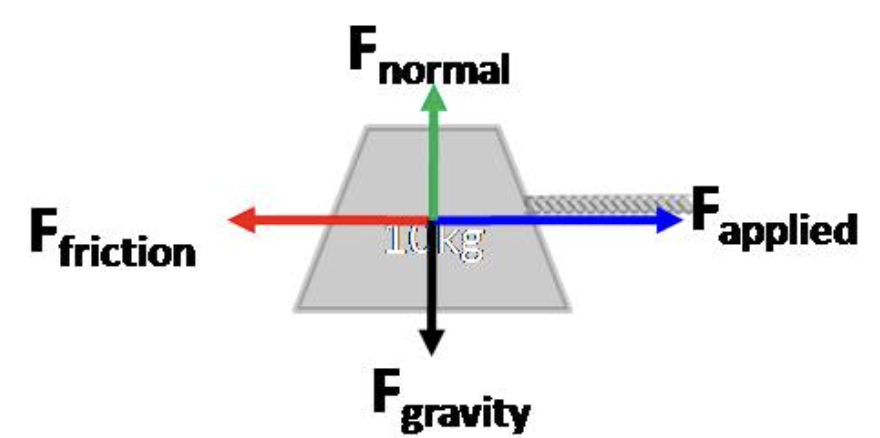
In a free body diagram on a flat surface FN (normal force) points:
Up
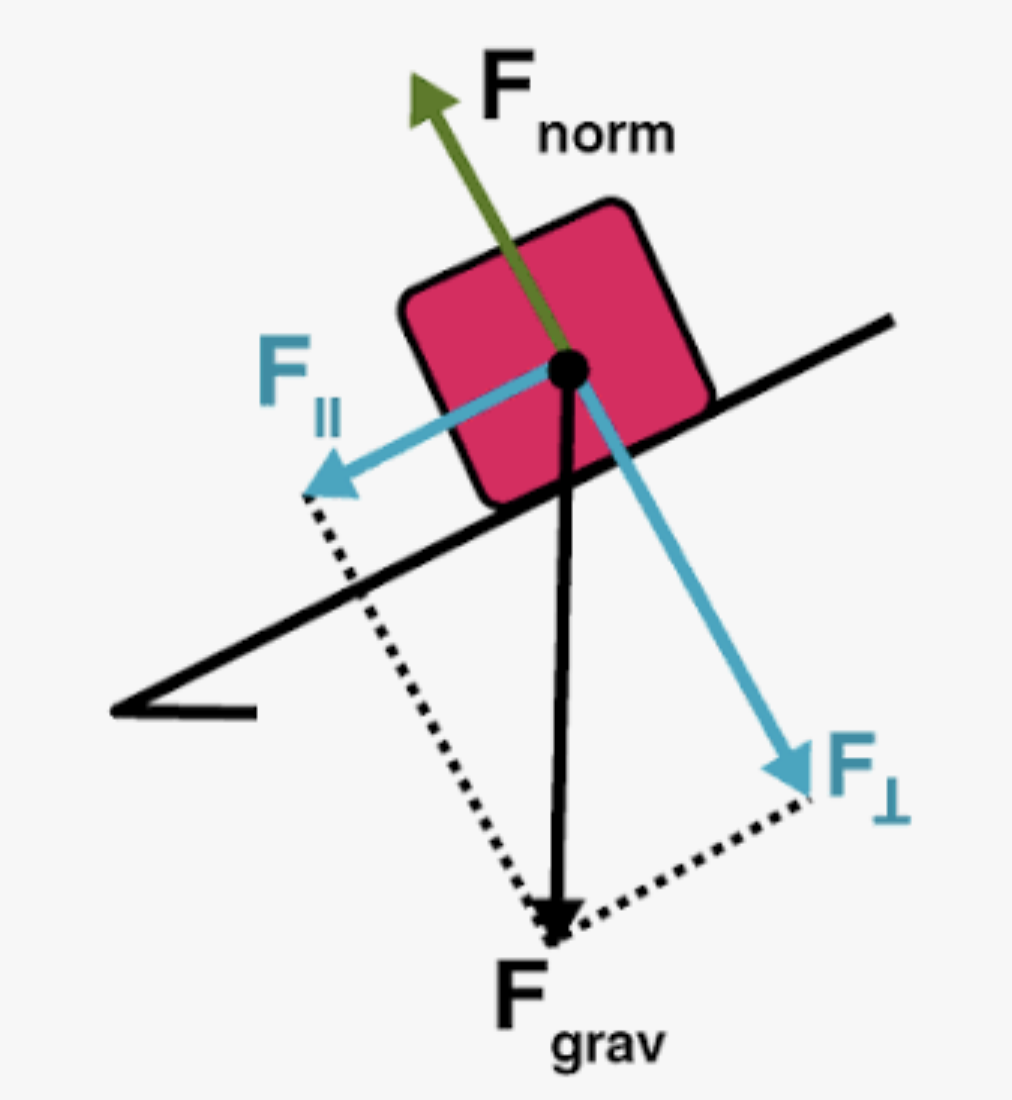
In a free body diagram on an incline plane FN (normal force) points:
Perpendicular to incline
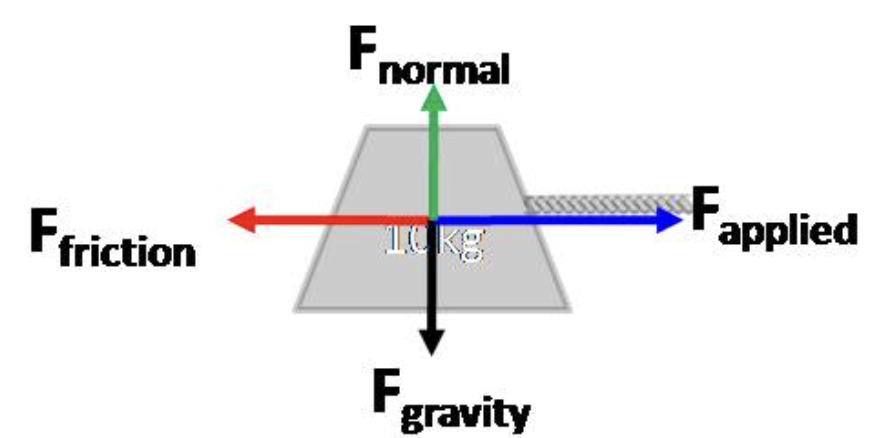
In a free body diagram on a flat surface Fg points:
Down
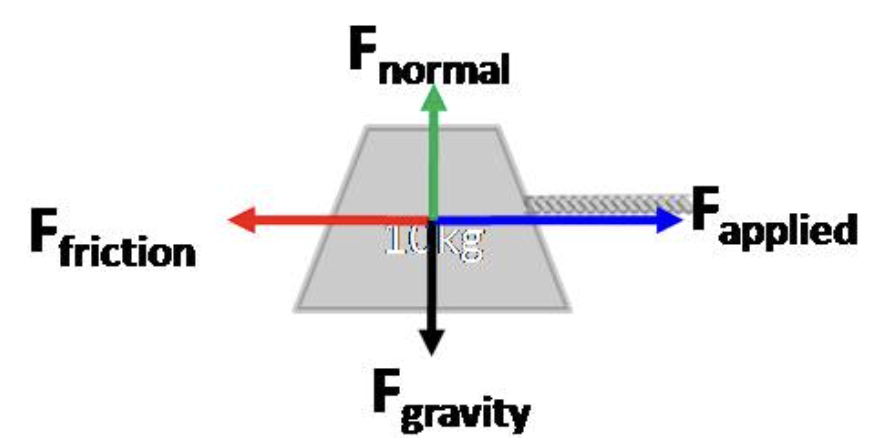
In a free body diagram on a flat surface Ff (friction force) points:
Opposite to the direction of applied force
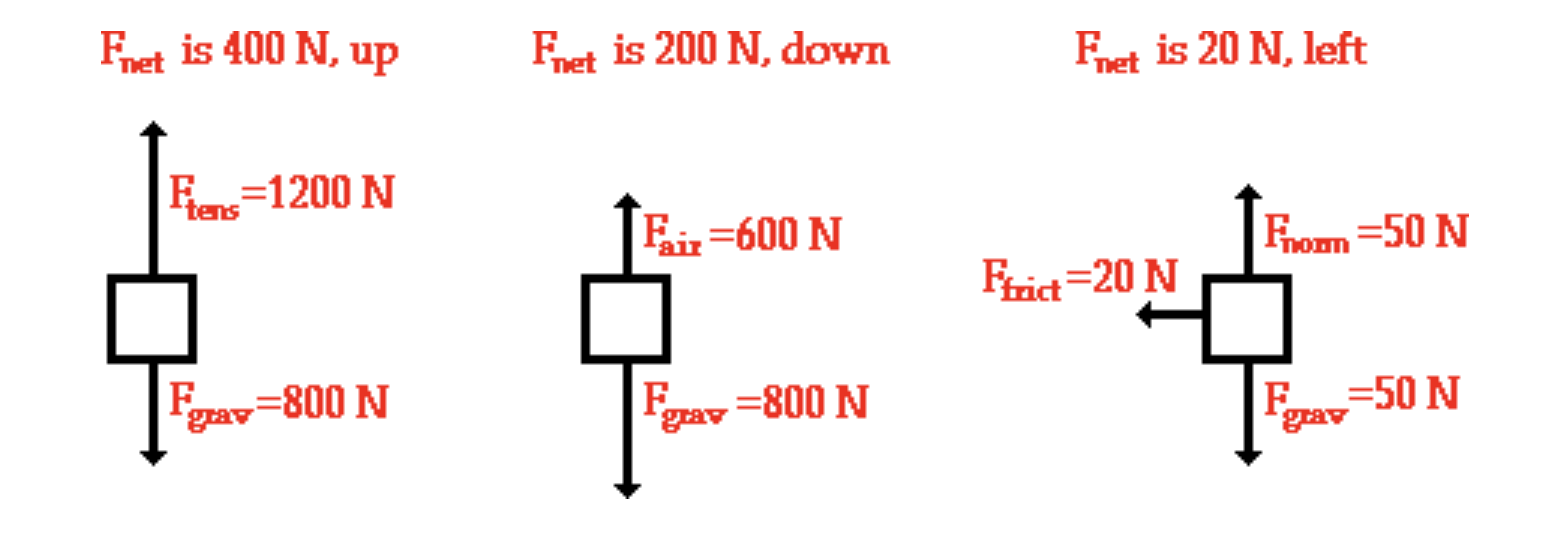
In a free body diagram the net force is:
The summation of all the forces acting on the object
When splitting into x and y components : the component adjacent to the angle uses : (sin or cos)
Cos
When splitting into x and y components : the component opposite to the angle uses : (sin or cos)
Sin
Change in position
Displacement
Change in displacement over time
Velocity
Change in velocity over time
Acceleration
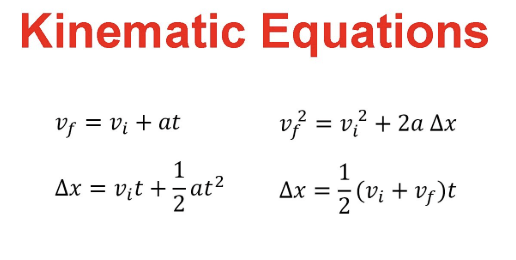
Write the kinematic equations:
In linear motion and free fall, at the top of flight the instantaneous velocity =
0
In free fall and linear motion the time of the object going up =
the time of the object going down
In projectile motion the x-component a = __ ; v = __
0 ; vcos(theta)
In projectile motion the y-component a = __ ; v = __
g ; vsin(theta)
Kinetic energy =
½ mv²
Gravitational potential energy =
mgh
Spring potential energy =
½ kx²
Work =
Fdcos(theta)
Net Work =
Change in kinetic energy
Momentum p =
mv
Impulse J =
change in p or F * change in time
Torque =
rFsin(theta)
 Note
Note  Flashcards (20)