American Civ 10: Economics Flashcards
0.0(0)
Studied by 0 people Call Kai
 Learn
Learn Practice Test
 Spaced Repetition
 Match
Match Flashcards
 Knowt Play
Card Sorting
1/84

Earn XP
Description and Tags
Last updated 10:49 AM on 10/21/22
Name | Mastery | Learn | Test | Matching | Spaced | Call with Kai |
|---|
No analytics yet
Send a link to your students to track their progress
85 Terms
1
New cards
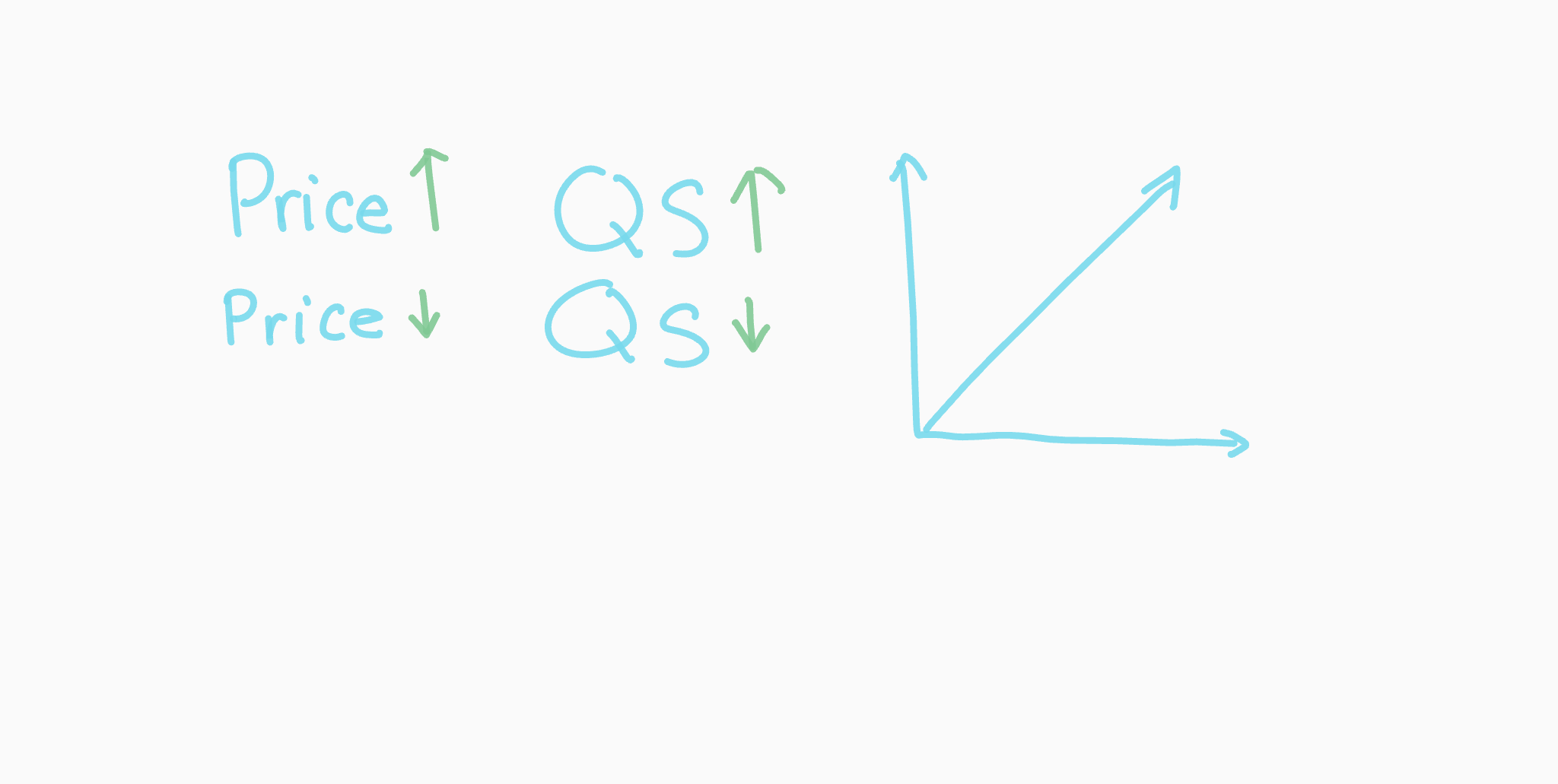
Law of Supply
the principle that states that as the price of an item increases, so will the amount of the item supplied producers are willing to supply and vice versa
2
New cards
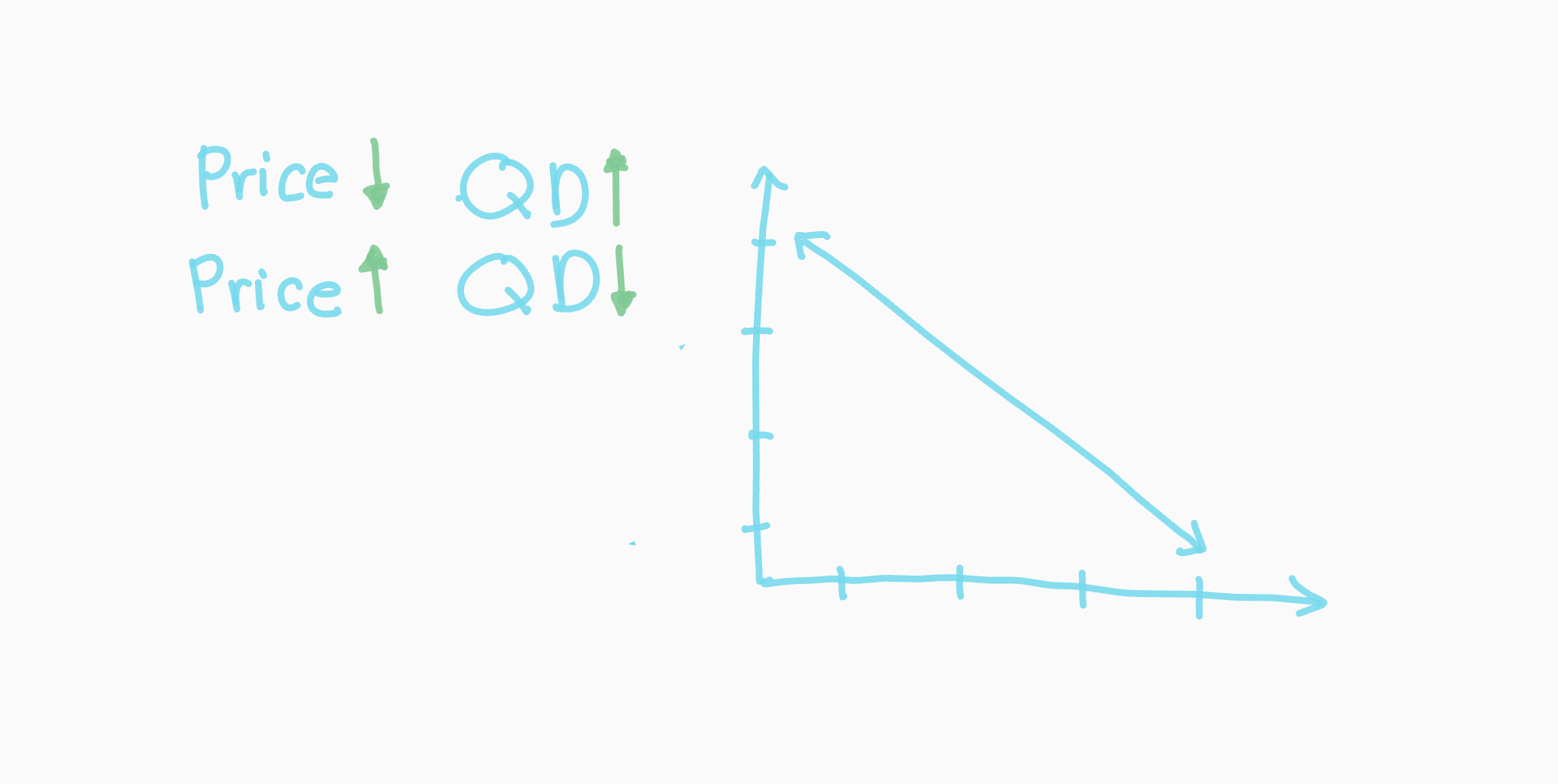
Law of Demand
the principle that as the price of an item increases, a smaller quantity of the item will be purchased and vice versa
3
New cards
Money
any object used as a medium of exchange. A store of wealth, and a measure of value
4
New cards
Deficit budget
when the government spends more money than it collects in income for one year.
5
New cards
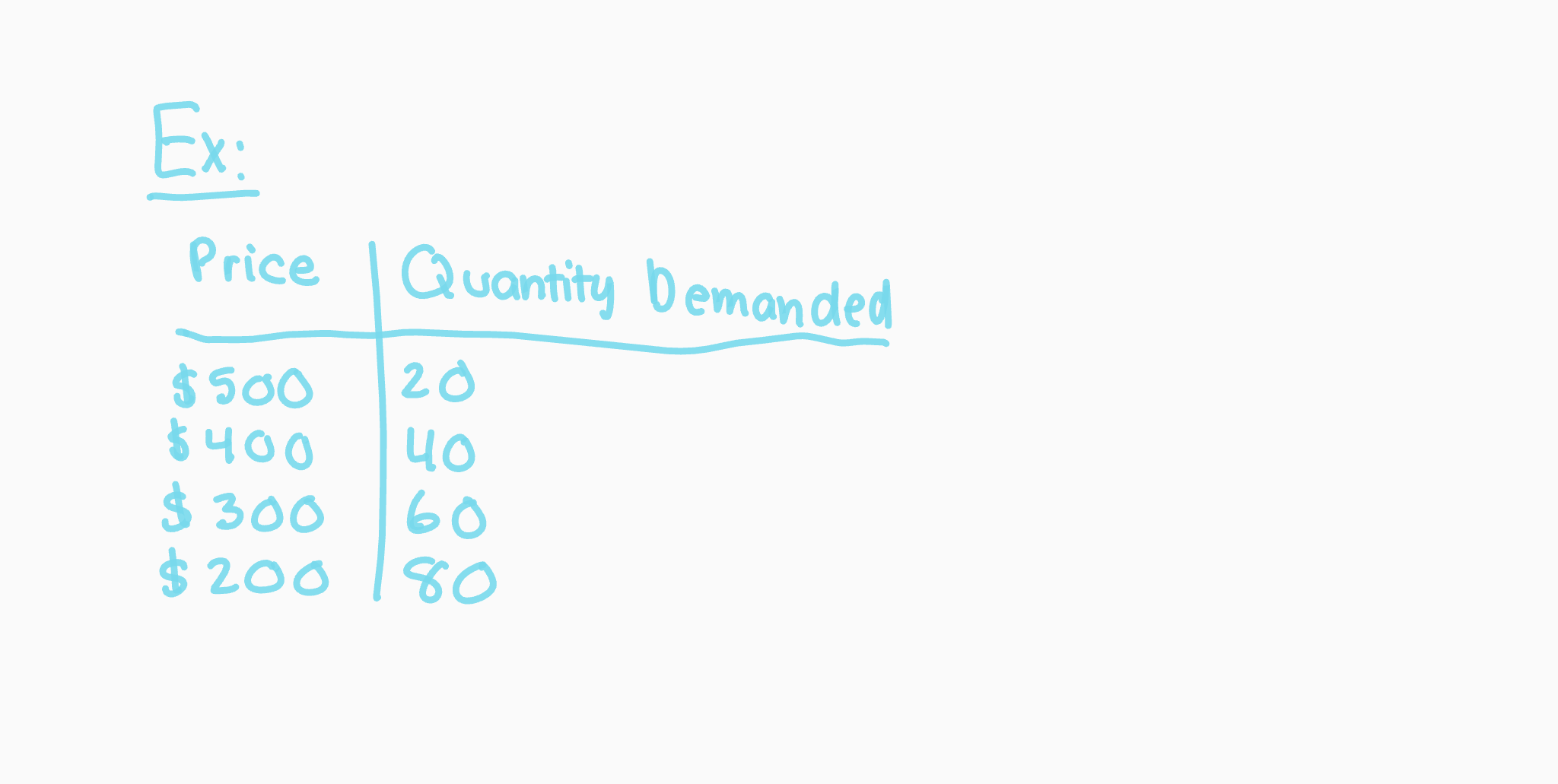
Demand schedule
a table that shows how much of a product consumers will demand at various possible prices.
6
New cards
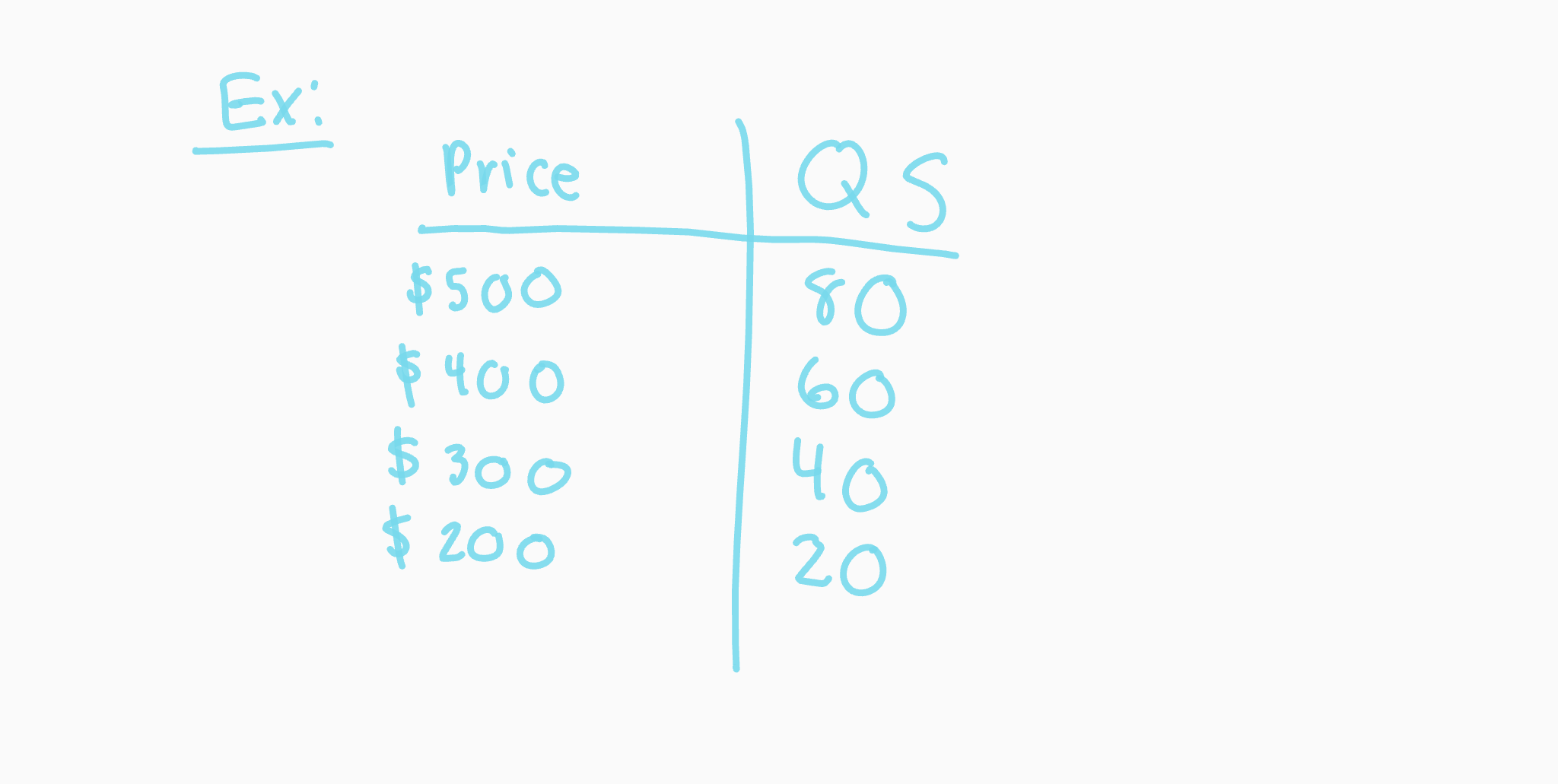
Supply schedule
a table that shows how much of a product consumers will demand at various possible prices.
7
New cards
Depression
a major decline in business activity that lasts for more than 6 months characterized by high rate of unemployment.
8
New cards
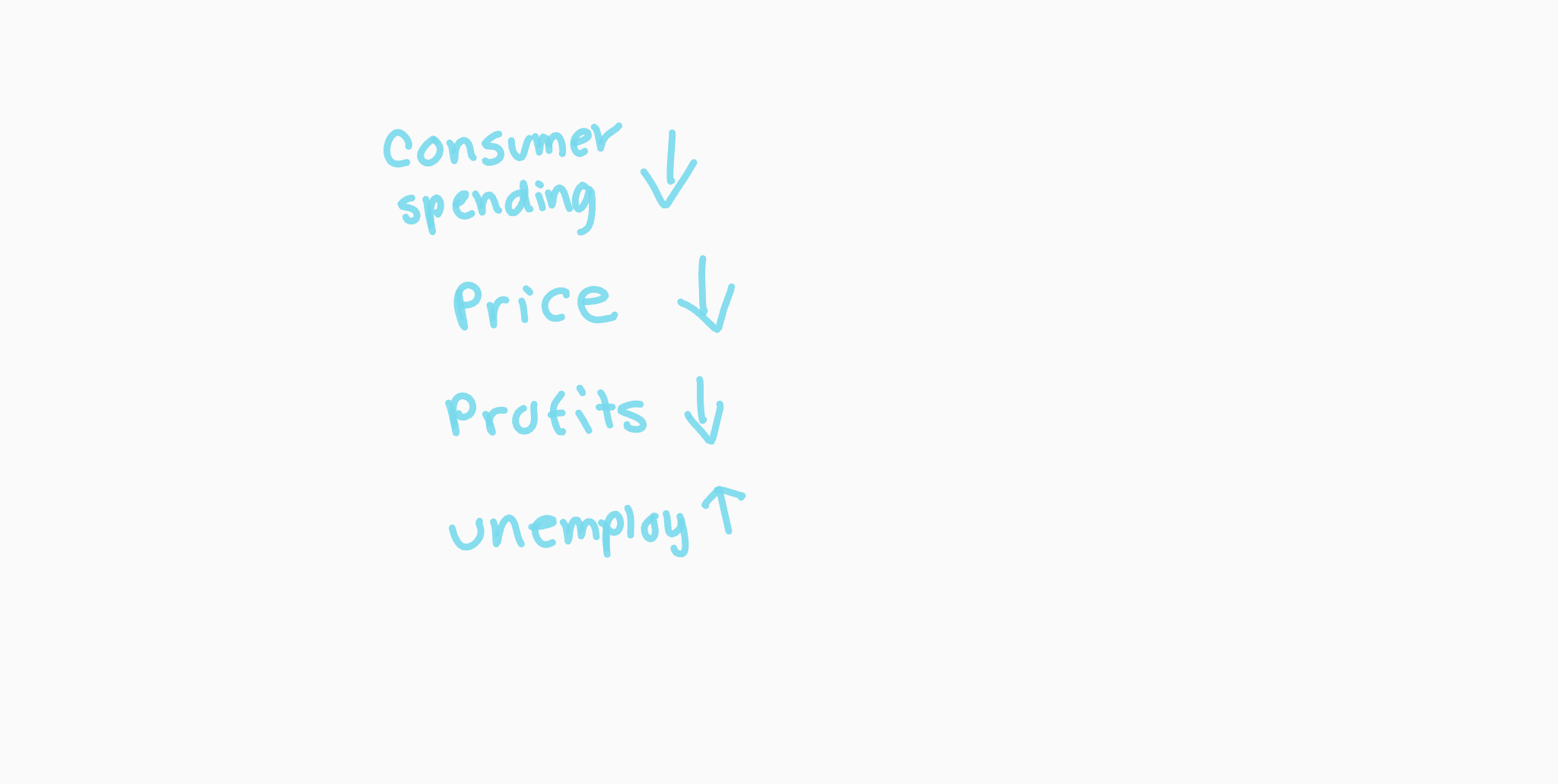
Recession
-a minor decline in business activity that lasts for less than 6 months
-gdp > ad
-(not much $ in economy)
-gdp > ad
-(not much $ in economy)
9
New cards
Capitalism
an economic system characterized by private ownership of resources, profit motive, competition, and market systems.
10
New cards
Market
any place buyer and seller meet.
11
New cards
Economics
the social science that studies how human societies use scarce resources to satisfy unlimited wants.
12
New cards
Microeconomics
the branch of economics that studies the behavior of individuals and individual firms.
13
New cards
Macroeconomics
the branch of economics that studies the large economic issues and the economy as a whole.
14
New cards
Gross domestic product
(GDP) the dollar value of all finished goods and services produced within the nations’ boundaries within one year.
15
New cards
Gross national product
(GNP) the dollar value of all finished goods and services produced within the nation’s boundaries and the foreign sector within one year.
16
New cards
Inflation
-a period of rising prices
-gdp < ad
-money value decreases
-gdp < ad
-money value decreases
17
New cards
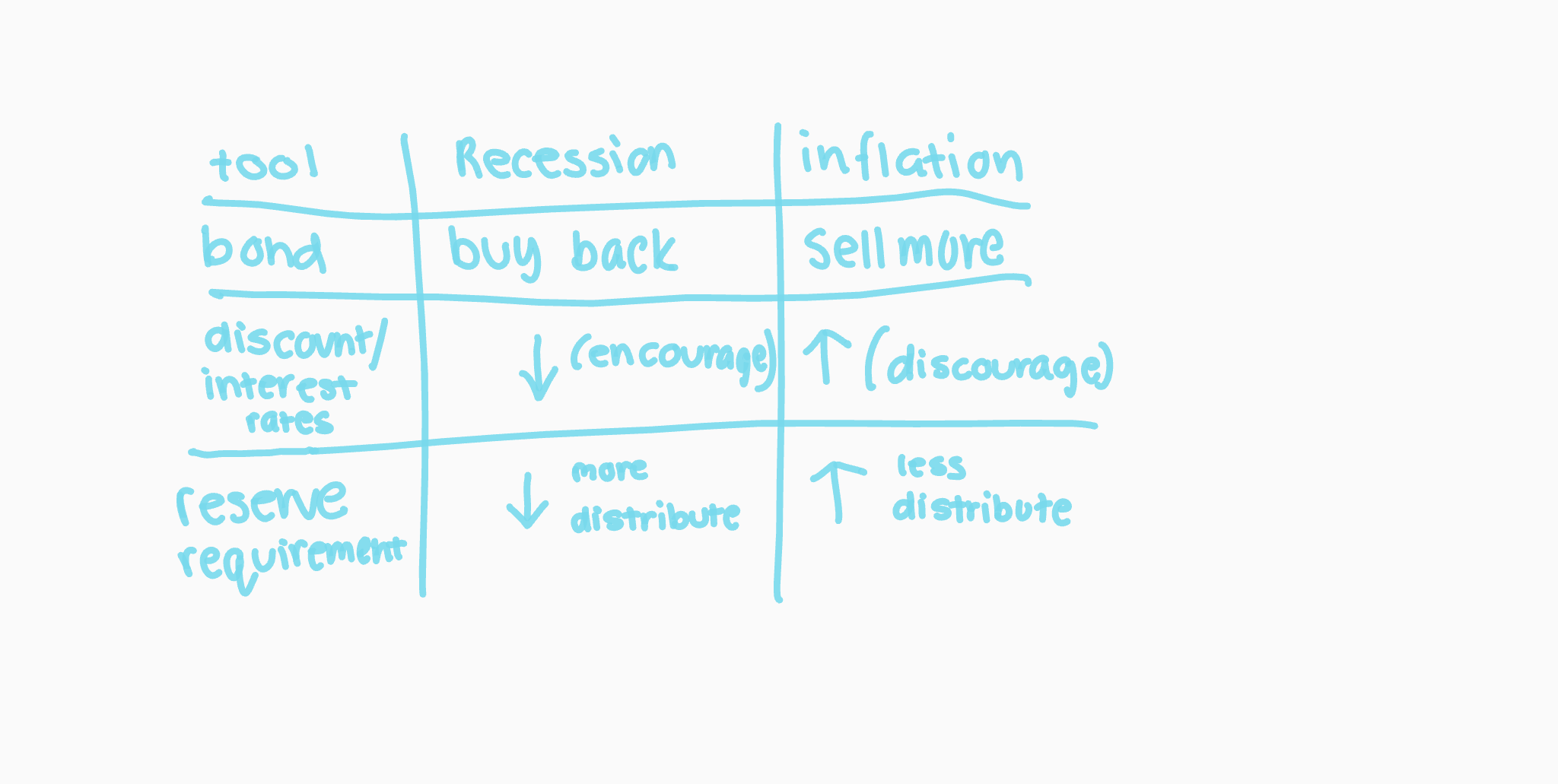
Monetary policy
the government’s adjusting the money supply and interest rates to influence changes in the economy.
18
New cards
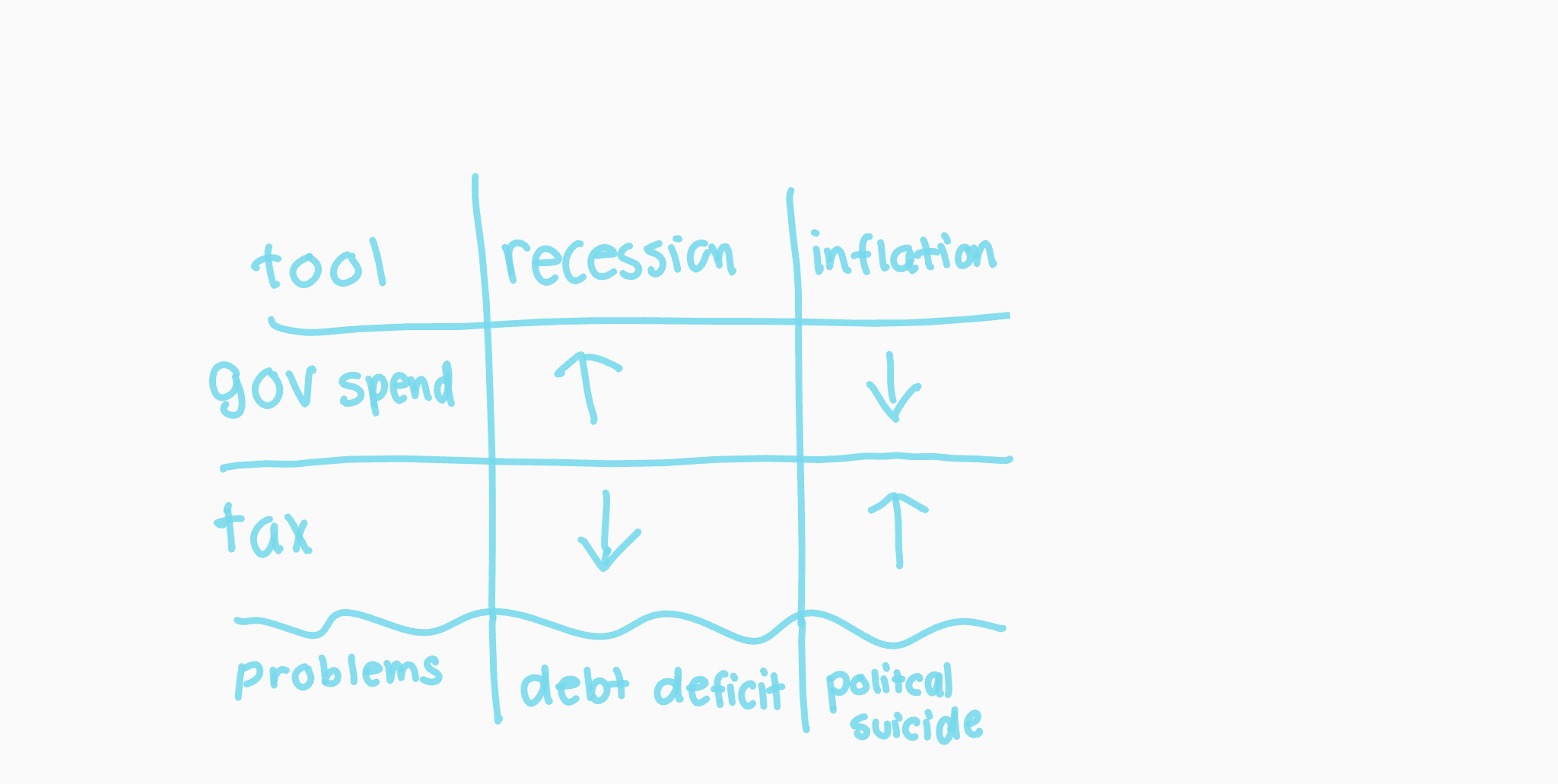
Fiscal policy
the government’s adjusting taxation and government spending to influence changes in the economy (Demand-Side/Keynesian Economics).
19
New cards
Aggregate demand
the total quantity of goods and services demanded
20
New cards
Business cycle
the pattern of growth and decline of real GNP; including four phases
21
New cards
Capital
items used to produce goods and services such as machinery, money, and tools.
22
New cards
Real gdp
Gross Domestic Product adjusted for inflation
23
New cards
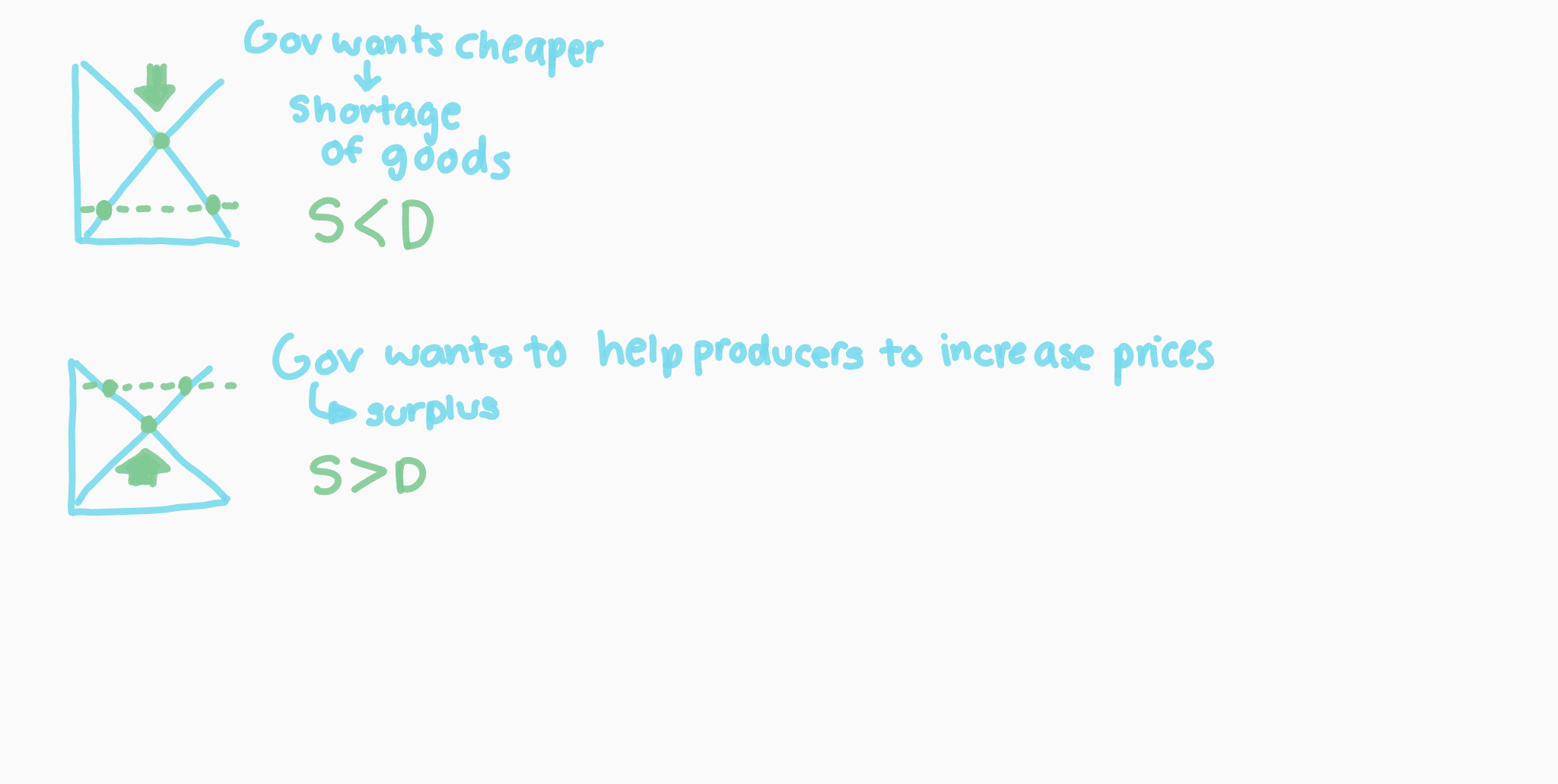
Command economy/market
an economic system where a central authority makes the major decisions and can intervene
24
New cards
Stagflation
a period of rising prices (inflation) combined with increases in unemployment.
25
New cards
Prime interest rate
the interest rate banks offer their most preferred customers.
26
New cards
Disposable income
income available to consumers after taxes are deductible.
27
New cards
Opportunity cost
the value in time, money, resources given up in making a choice.
28
New cards
Supply side economics
(trickle-down economics) the theory that government can encourage economic growth by helping businesses.
29
New cards
Equilibrium price
-the price where the quantity supplied equals the quantity demanded
-how capitalism determines price
-aka market price
-how capitalism determines price
-aka market price

30
New cards
Invisible hand theory
a theory by Adam Smith stating each person acting for their own well-being will serve the interests of society as a whole.
31
New cards
Socialism
an economic system where the resources needed to produce goods and services are owned by the government.
32
New cards
Government subsidy
a government payment to encourage or protect a certain economic activity.
33
New cards
Interest vs. interest income
interest is the price for borrowed money; interest income is what is earned by one who loans money.
34
New cards
National debt
the total amount of money the federal government borrows; the annual deficits combined.
35
New cards
Aggregate supply
the total value of goods and services that all firms produce in a specified period of time.
36
New cards
Asset
an item of value such as money, stock, land, etc.
37
New cards
Elasticity of demand/supply
how sensitive changes in the quantity demanded are to change in price.
38
New cards
Business investment
business decisions to spend on capital goods to promote economic growth.
39
New cards
Bond
a loan of money; an IOU
40
New cards
Tariff
a tax placed on imported products.
41
New cards
Protectionist trade policy
a foreign trade policy that protects domestic producers with tariffs or quotas.
42
New cards
Trade deficit
trade where spending on imports exceeds money made from selling exports.
43
New cards
law of scarcity
the condition that relates from society not having enough resources to produce the things people would like to have; "no free lunch"
44
New cards
elements of trading
-increased wealth
-increased ability to trade
($ makes it faster)
-increased ability to trade
($ makes it faster)
45
New cards
economics questions
1. what to produce?
2. how to produce?
3. for whom?
4. how much/many to make?
2. how to produce?
3. for whom?
4. how much/many to make?
46
New cards
characteristics of capitalism
1. private ownership
2. profit motive: if I do this, I make $
3. competition (sometimes)
4. free trade: buy and sell w/out much control
5. think rationally
2. profit motive: if I do this, I make $
3. competition (sometimes)
4. free trade: buy and sell w/out much control
5. think rationally
47
New cards
timeline of creation of markets
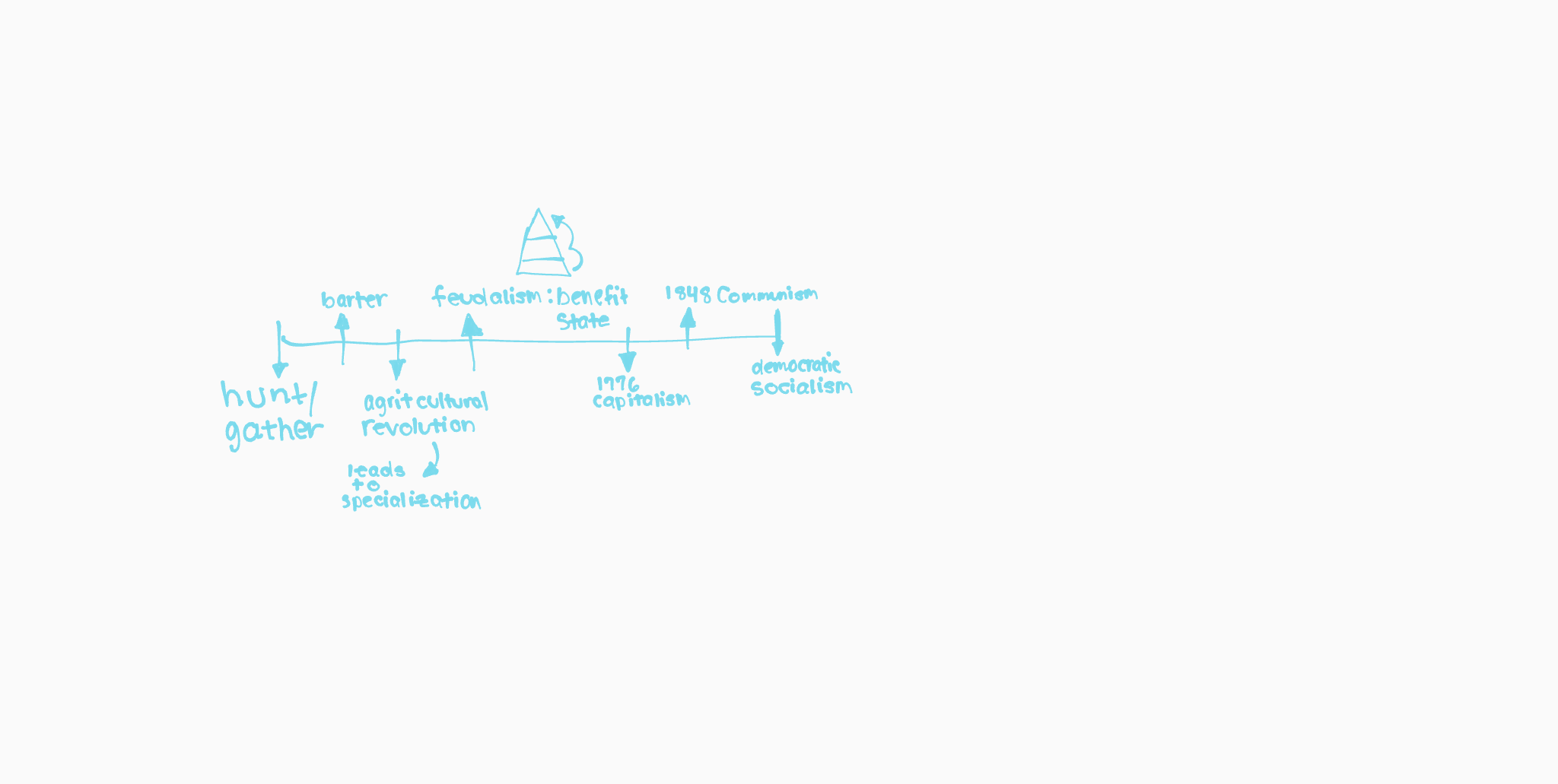
48
New cards
factors that affect demand
1. tastes and desires
2. needs and wants
3. ability to buy: do you have the $ for it?
2. needs and wants
3. ability to buy: do you have the $ for it?
49
New cards
factors that affect supply
1. costs: land, labor, capital
2. changes in tech
3. ability to make profit: "how much can you make?"
2. changes in tech
3. ability to make profit: "how much can you make?"
50
New cards
capital
start up costs, hidden costs
51
New cards
factors of production
1. land (materials)
2. labor
3. capital
4. entrepreneur
2. labor
3. capital
4. entrepreneur
52
New cards
shift: Demand Line
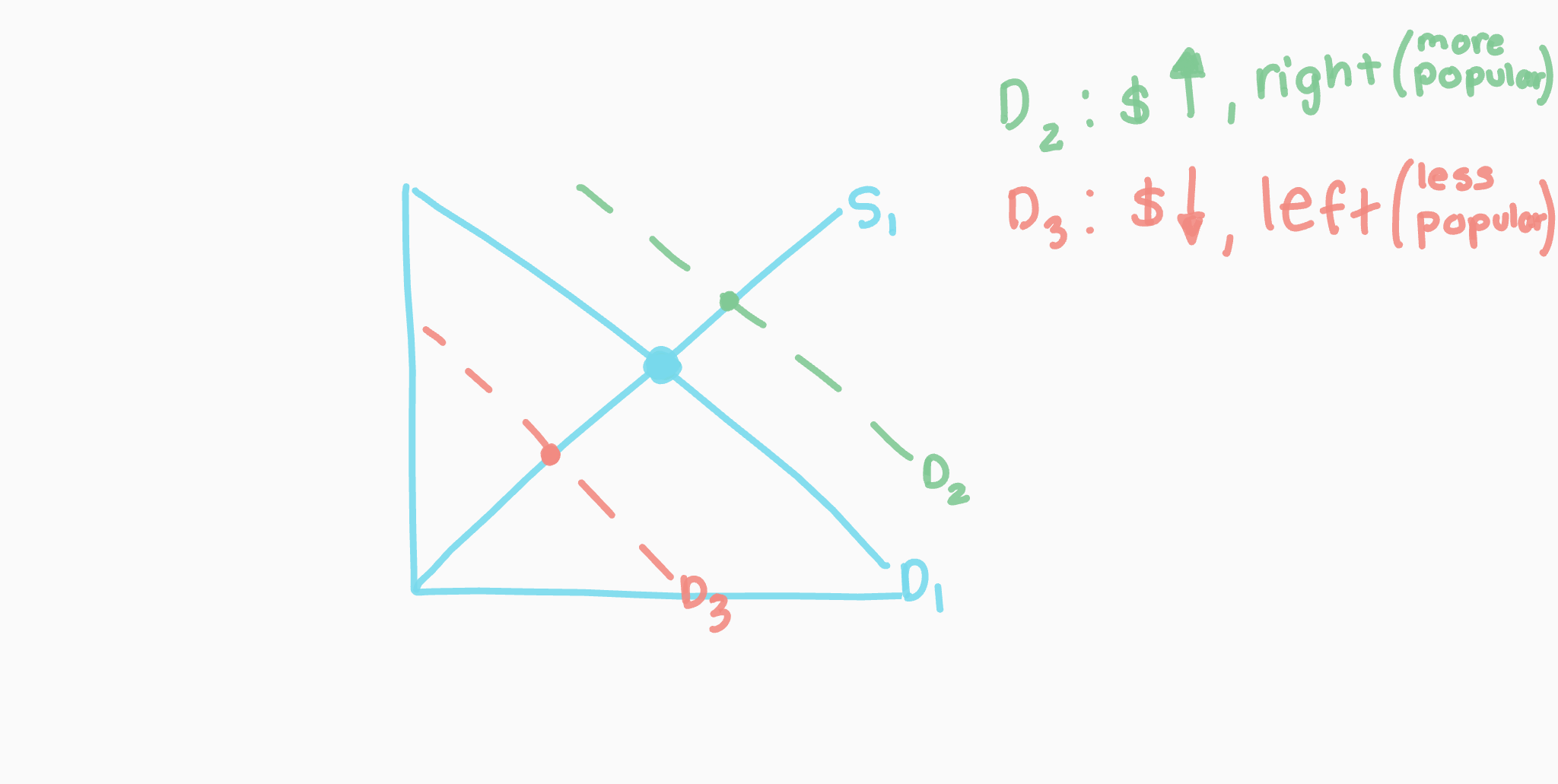
53
New cards
shift: Supply Line
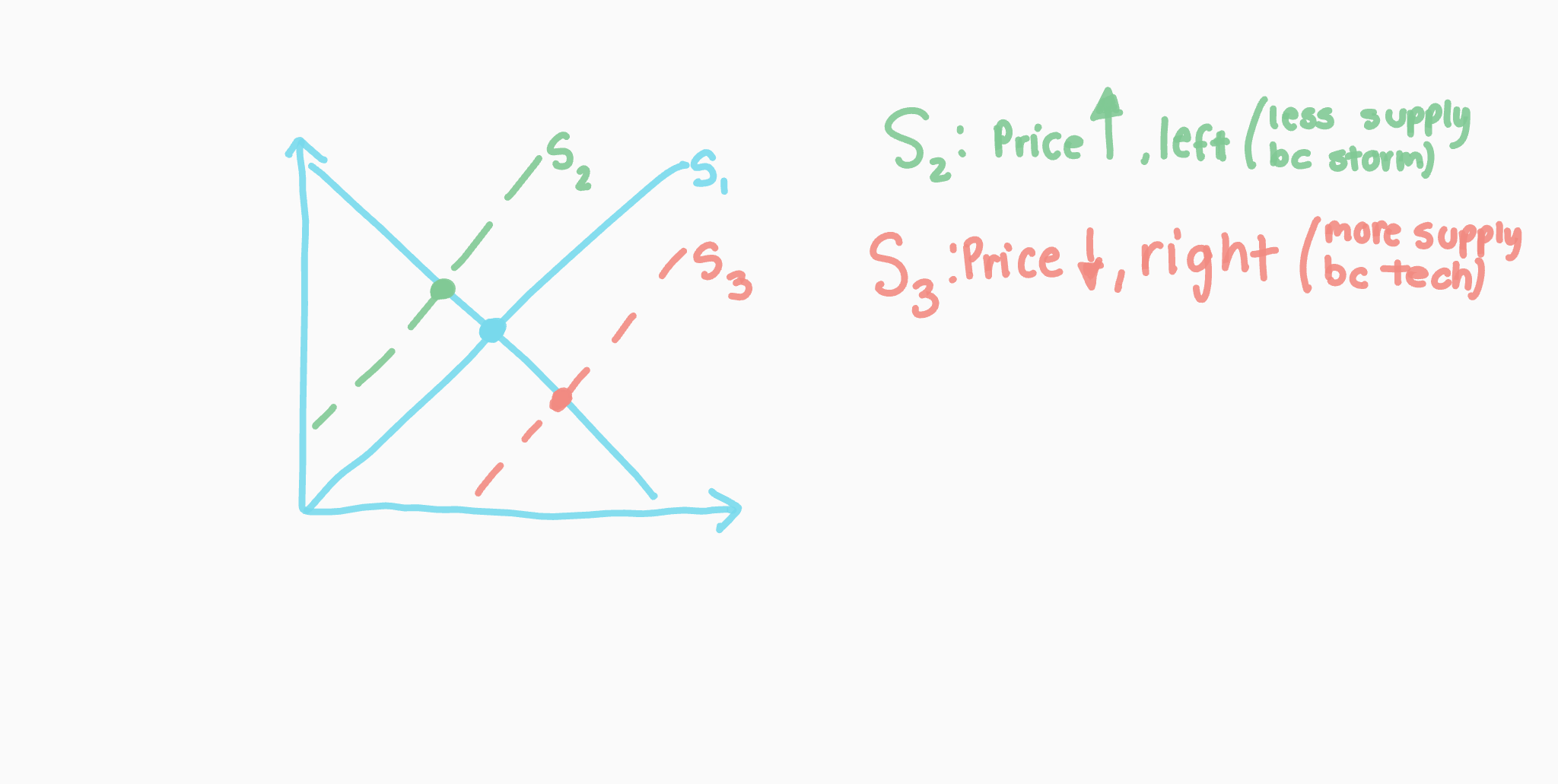
54
New cards
invisible hand: increased demand
ex: iphone
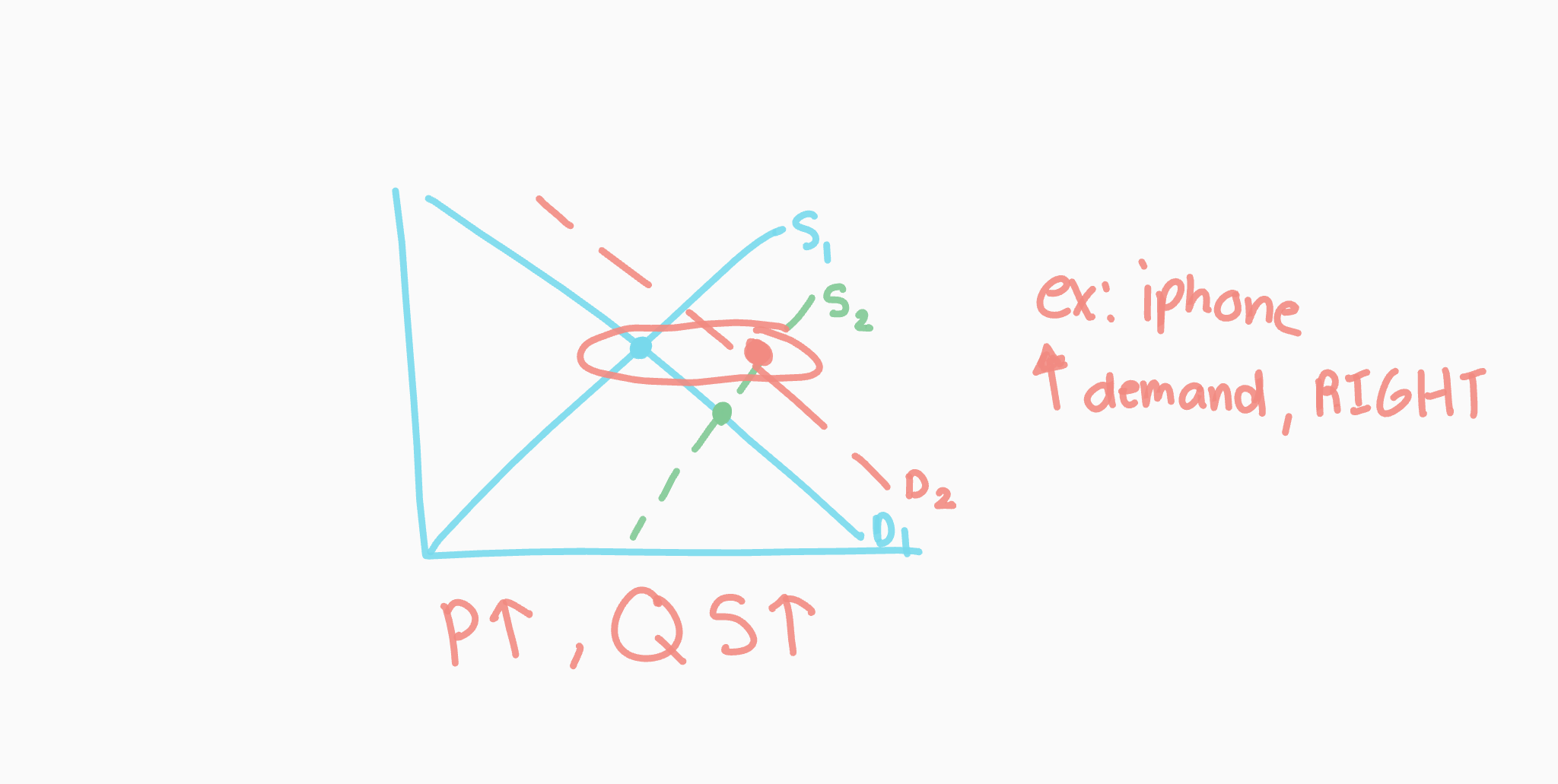
55
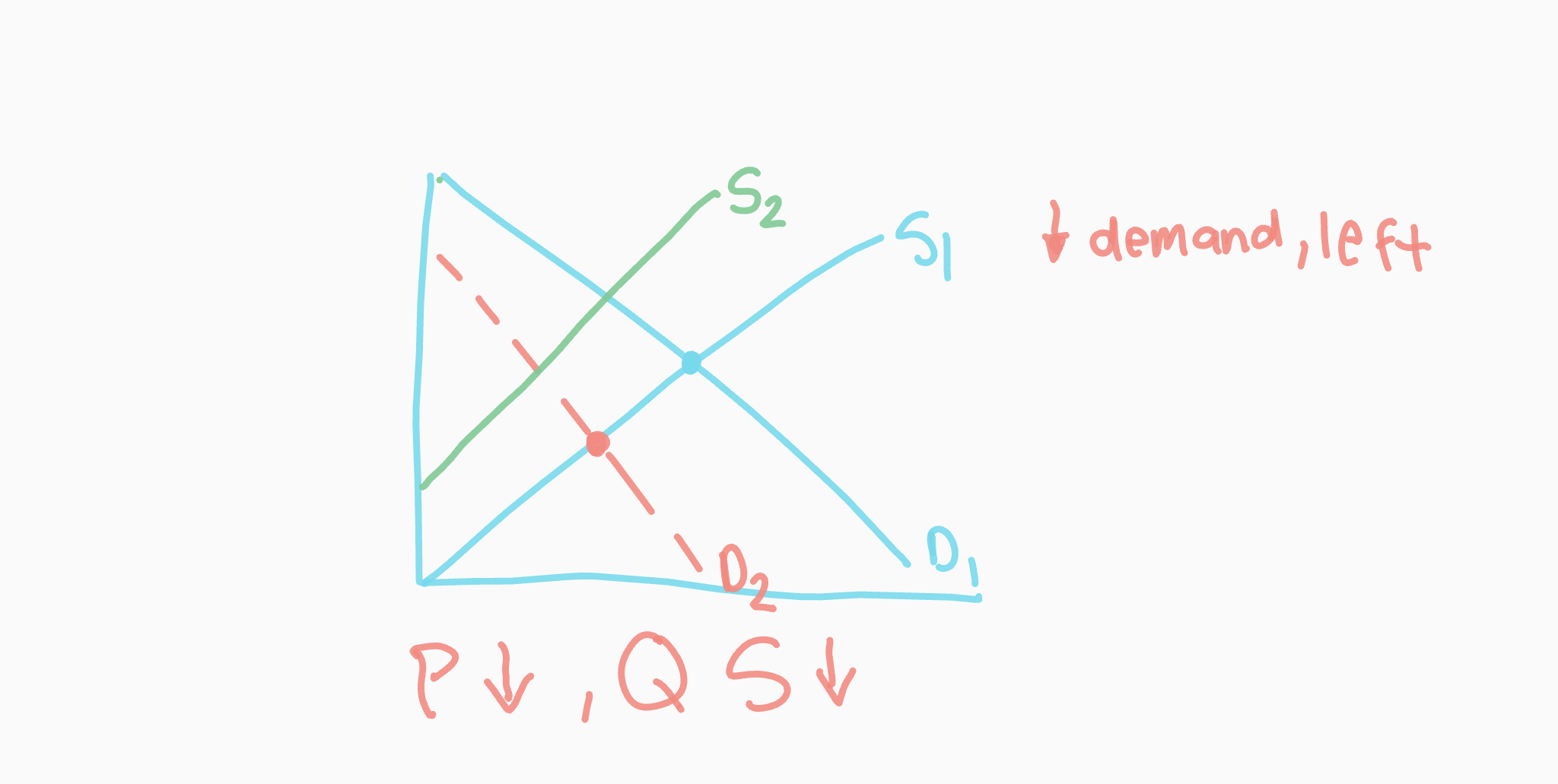
New cards
invisible hand: decreased demand
ex typewriter
56
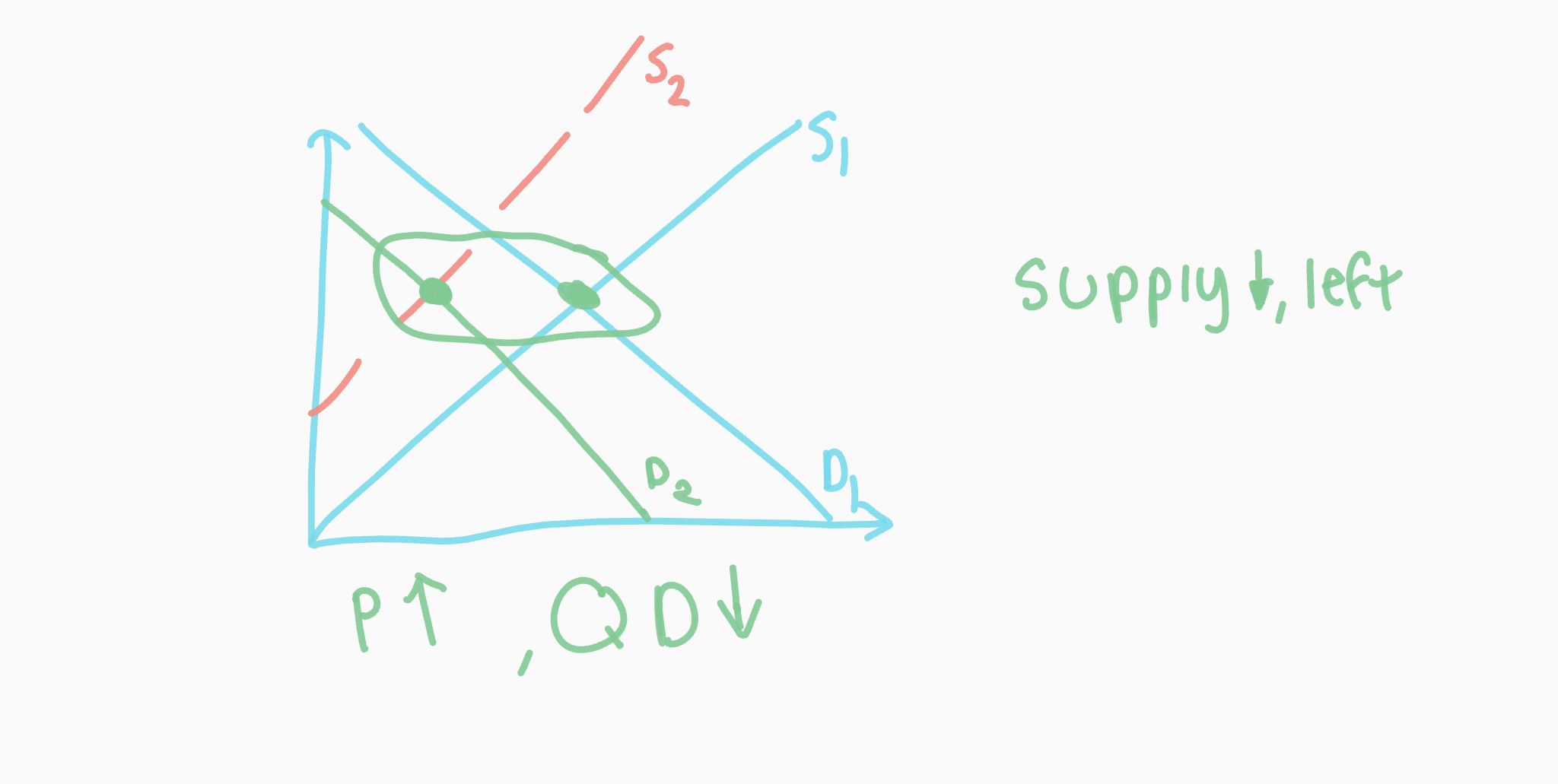
New cards
invisible hand: decreased supply
ex plane tickets this summer
57
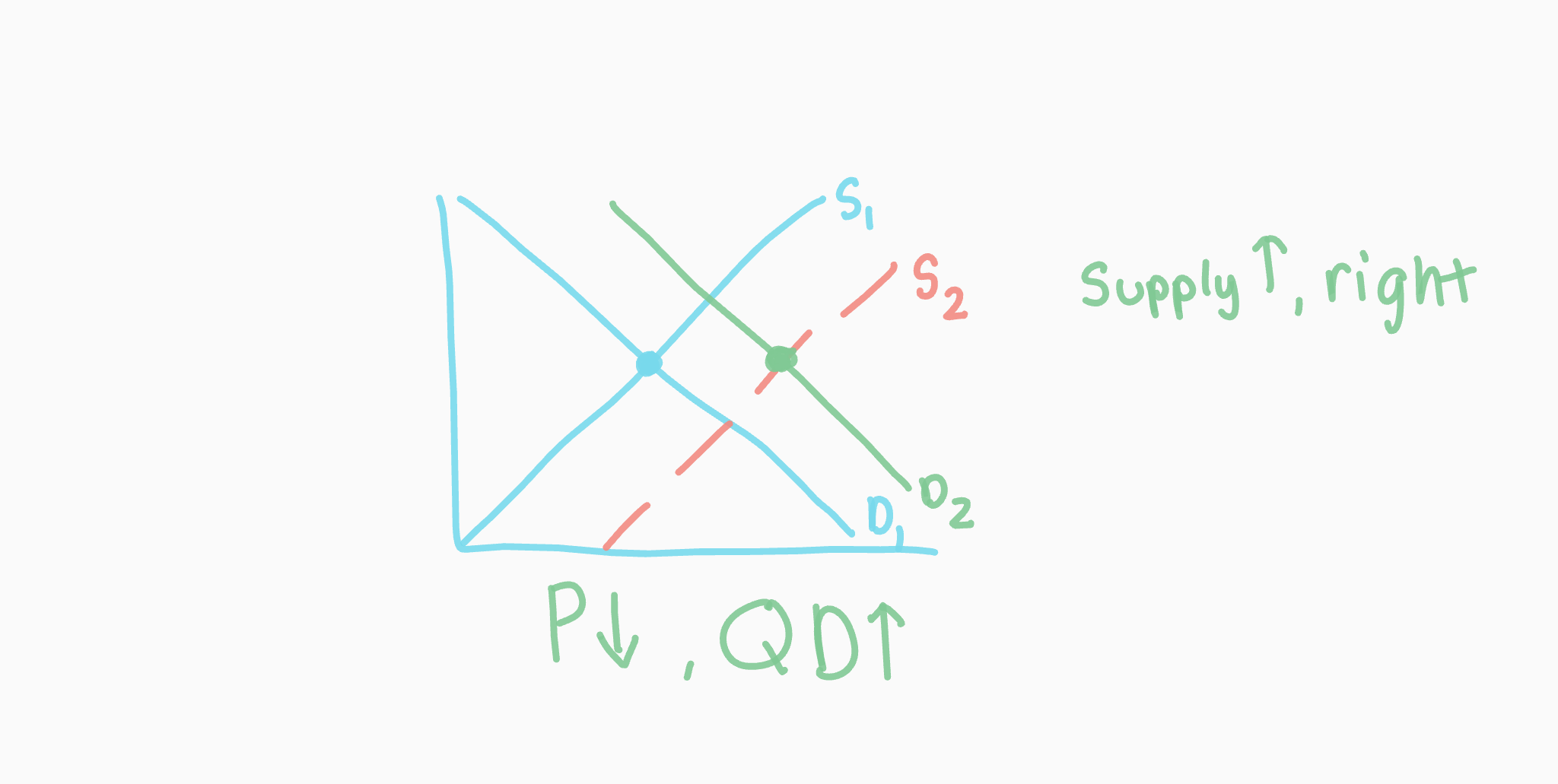
New cards
invisible hand: increased supply
ex Ford's cars
58
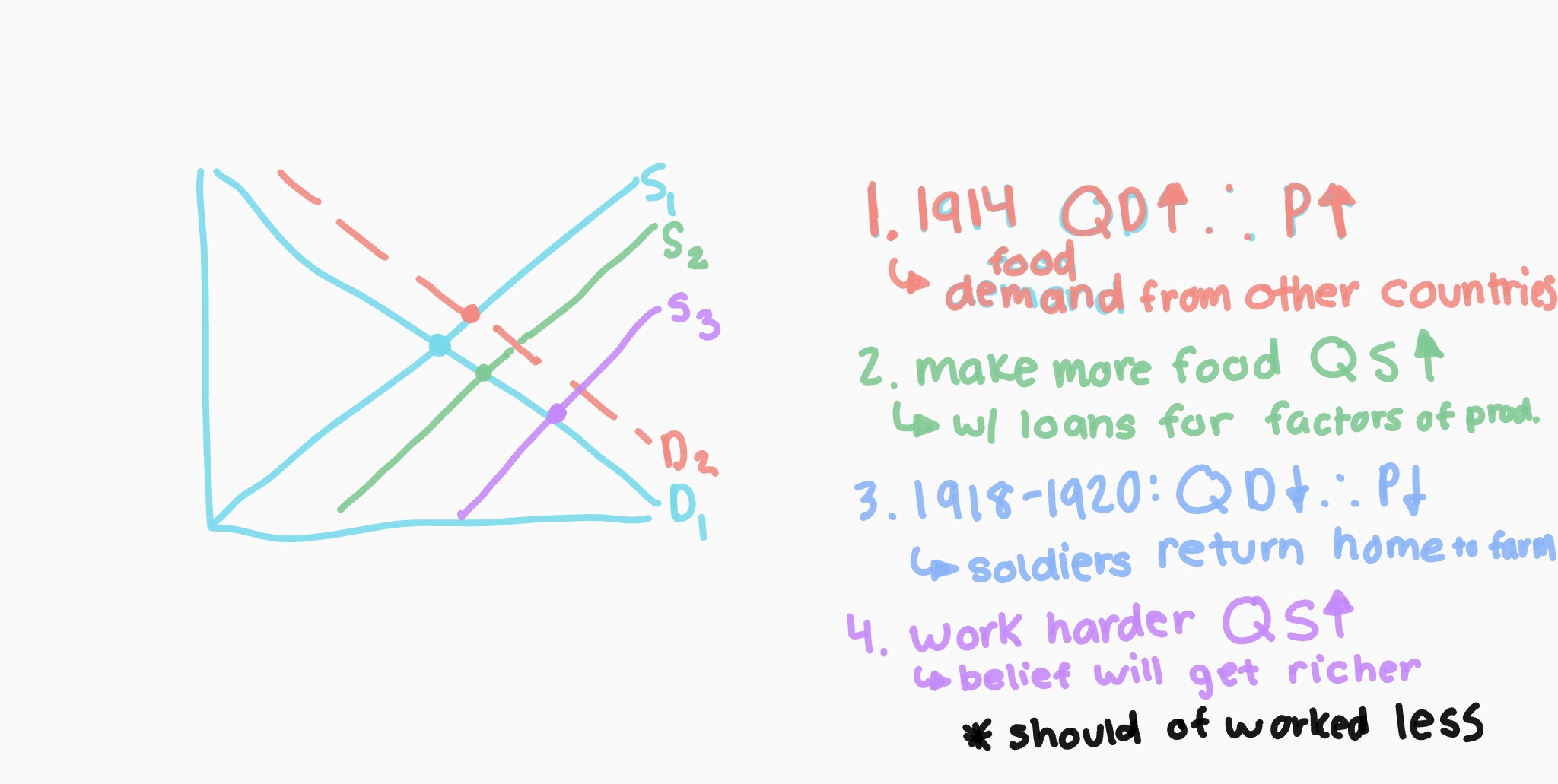
New cards
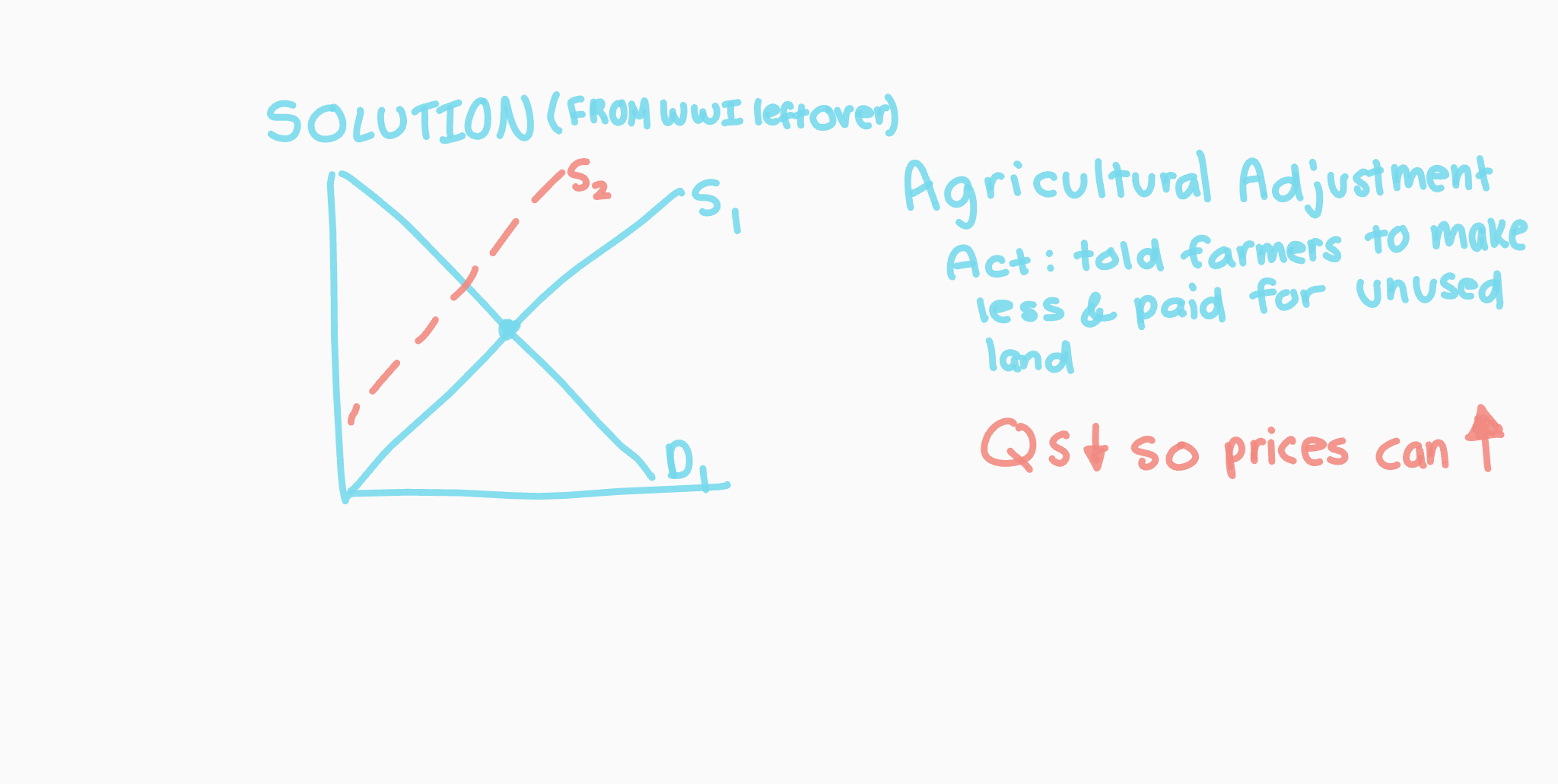
WWI economic situation
59
New cards
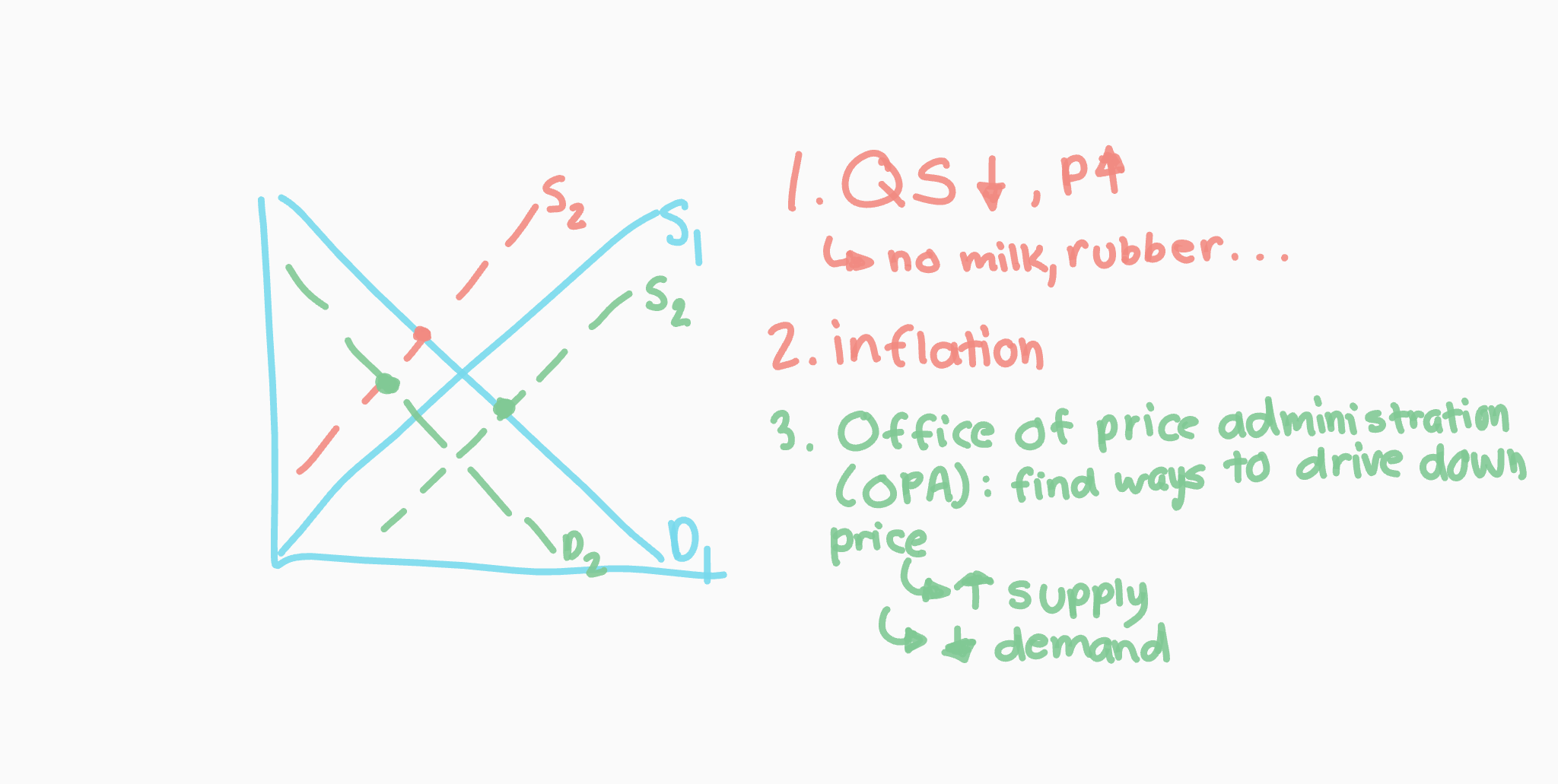
great depression economic situation
60
New cards
WWII economic situation
61
New cards
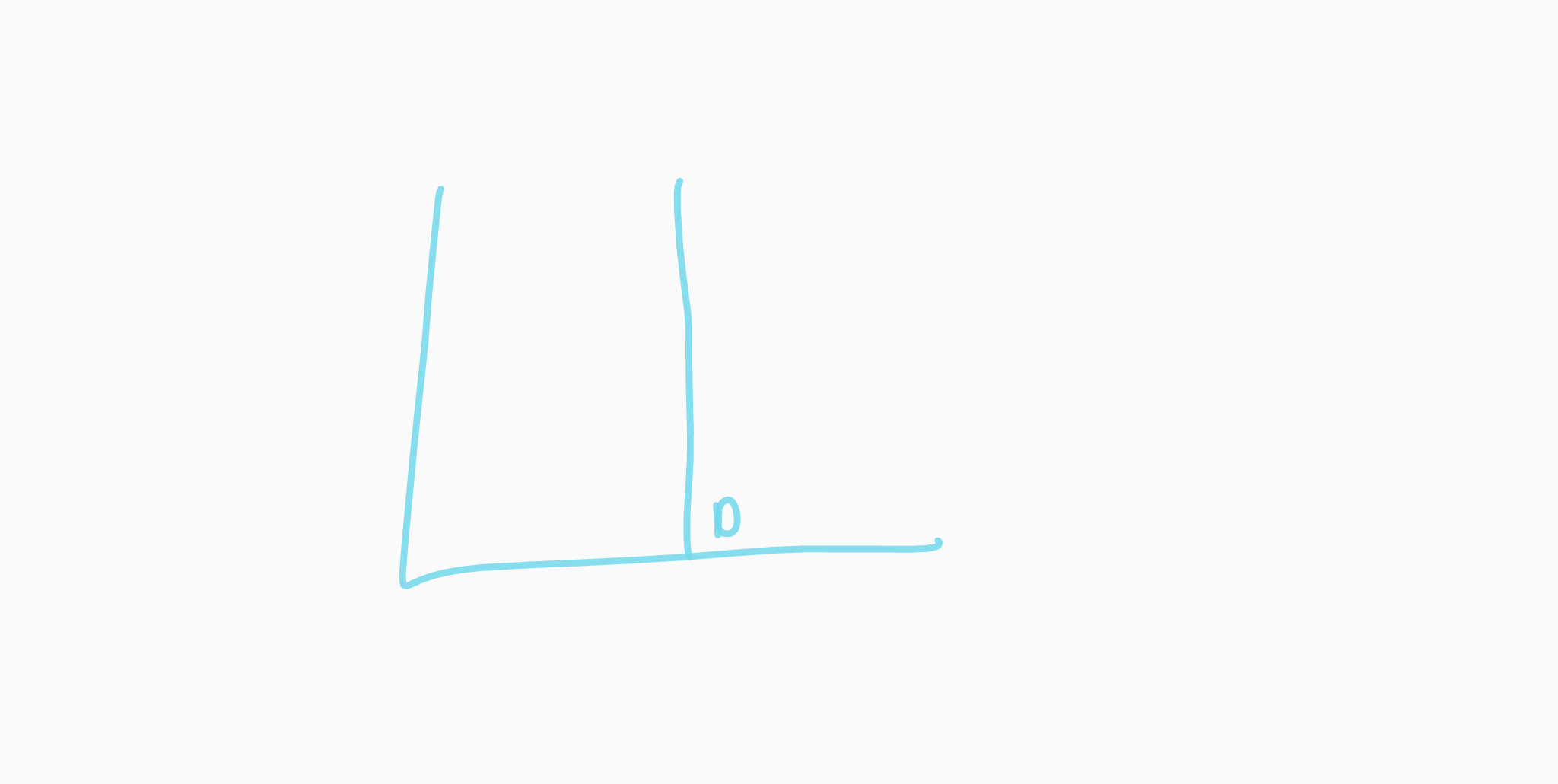
inelastic product
demand stays the same, not influenced by price
ex: college, oil, addictive products, health care, water...
ex: college, oil, addictive products, health care, water...
62
New cards
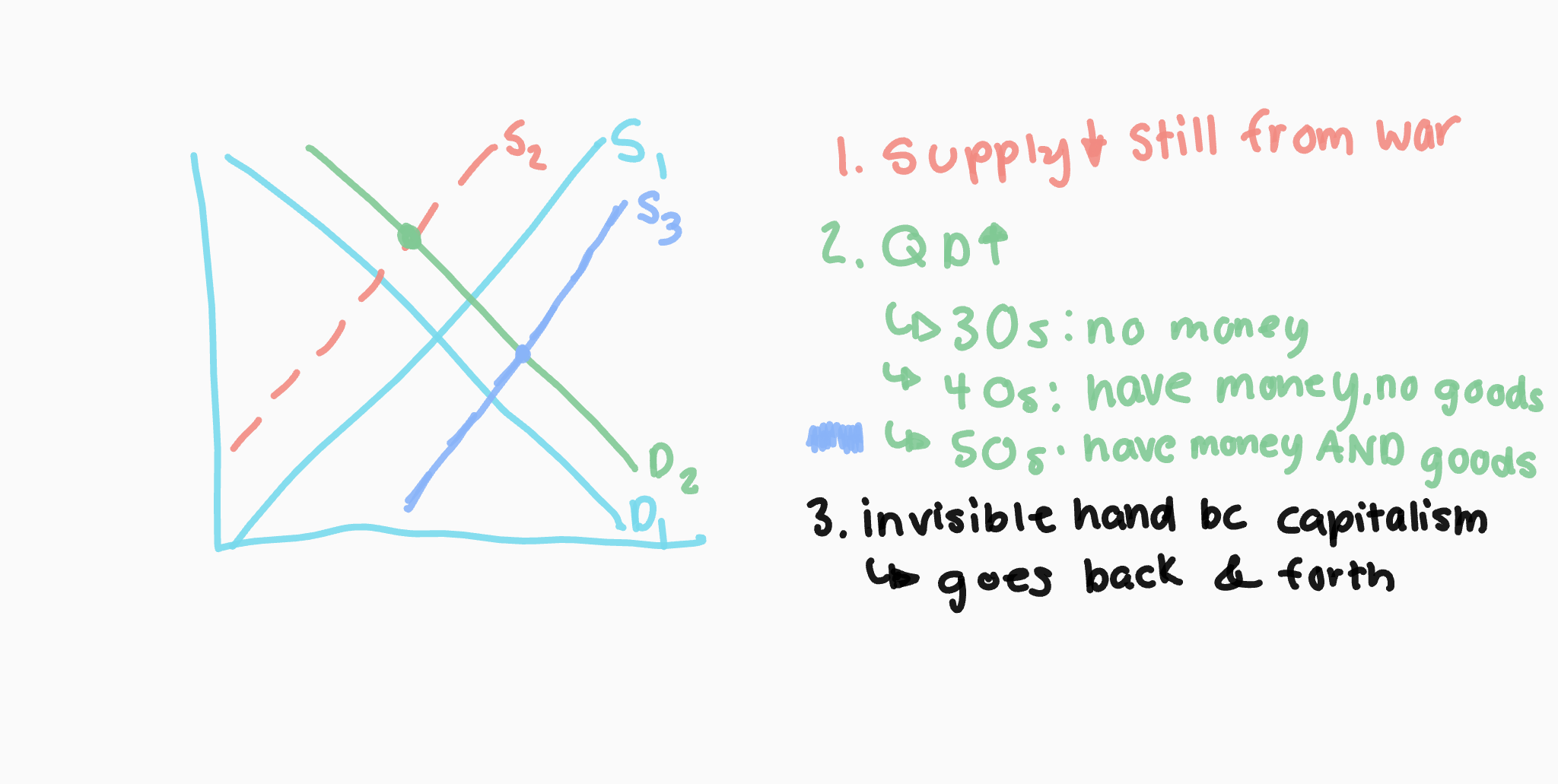
post WWII economic situation
63
New cards
business cycle
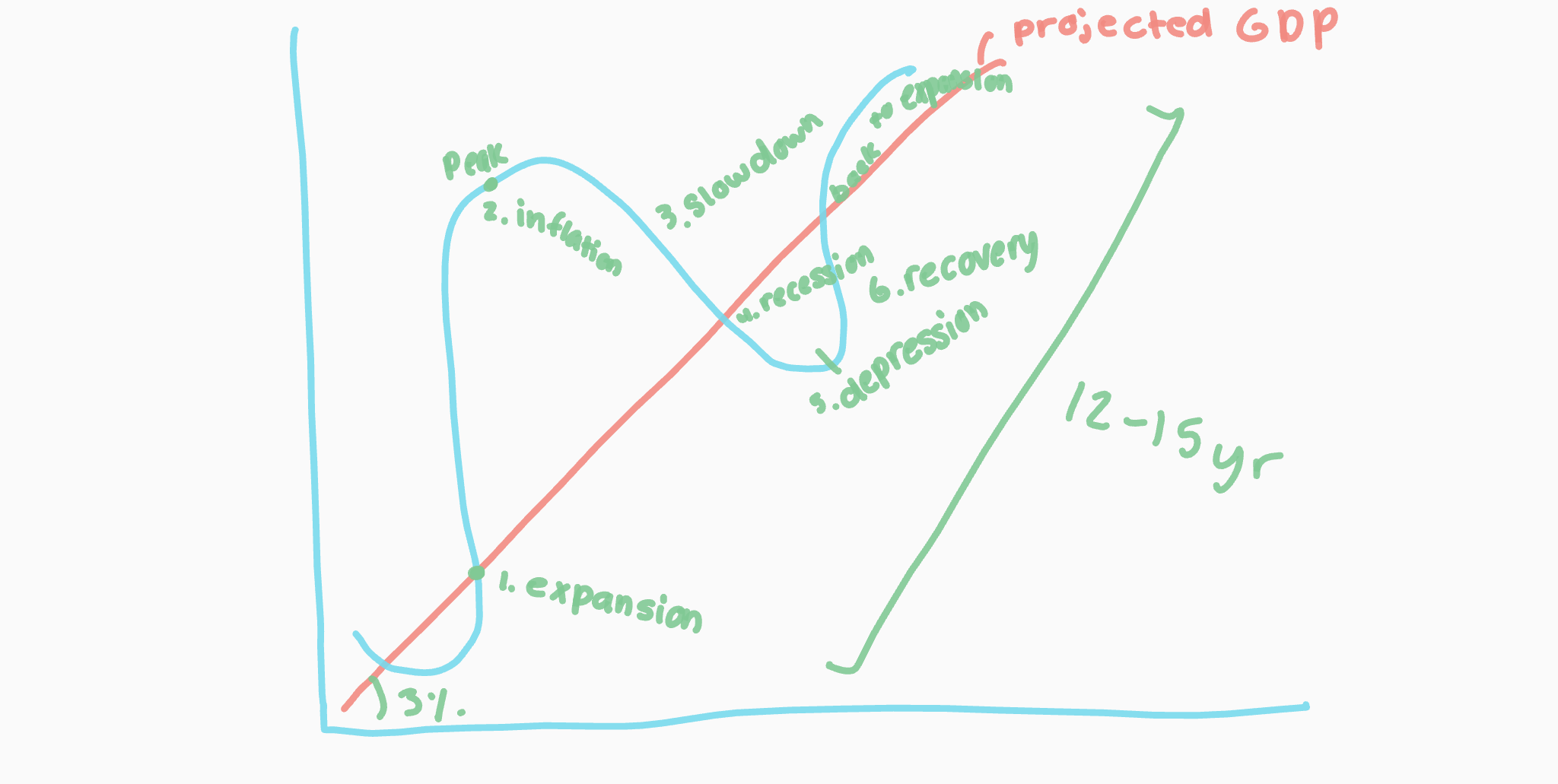
64
New cards
GDP VS GNP
Gdp: dollar value of all production and services inside a country
gnp: dollar value of production and services produced by US business/residents regardless of location
gnp: dollar value of production and services produced by US business/residents regardless of location
65
New cards
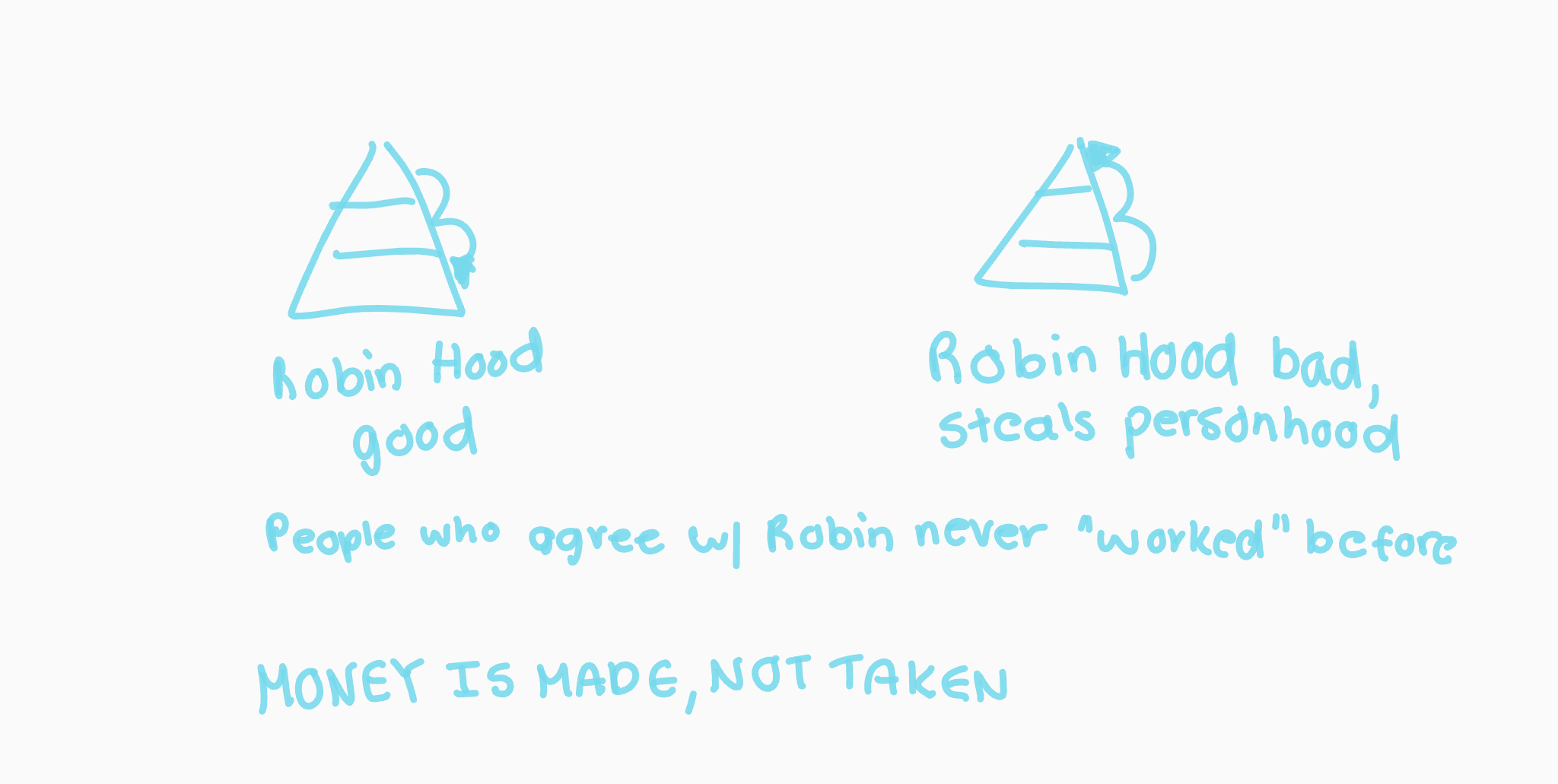
$ evil?: root of $
1. mark of achievement
2. value
3. ownership of body, mind, effort
2. value
3. ownership of body, mind, effort
66
New cards
$ evil? : money is a tool
1. takes you where you want to go
2. heirs are the worst
2. heirs are the worst
67
New cards
is $ evil?
68
New cards
twin evils of economy
inflation and unemployment: when one goes up the other goes down
69
New cards
GDP equation
GDP=consumer spending + government spending + business investments + exports - imports
70
New cards
ideal gdp
gdp= aggregate demand/ total spending
71
New cards
results of recession
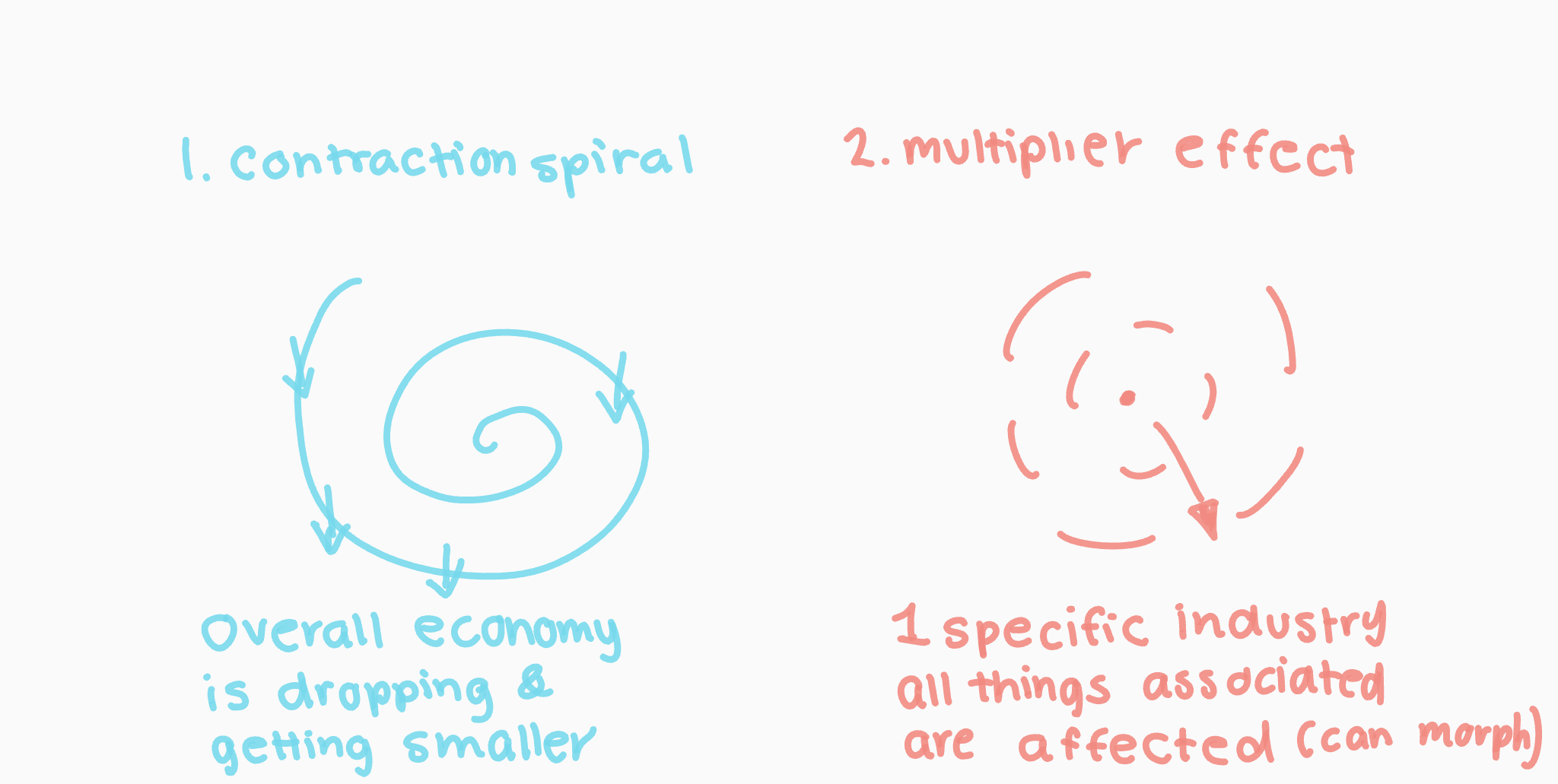
72
New cards
causes of inflation
1. gov prints too much $
2. when supply < demand
2. when supply < demand
73
New cards
types of inflation
1. demand pull: ex-only make X number of products, pandemic, more people want, I will offer more for it
2. cost push: cost of making products increase, must sell for more
2. cost push: cost of making products increase, must sell for more
74
New cards
FED system of banks
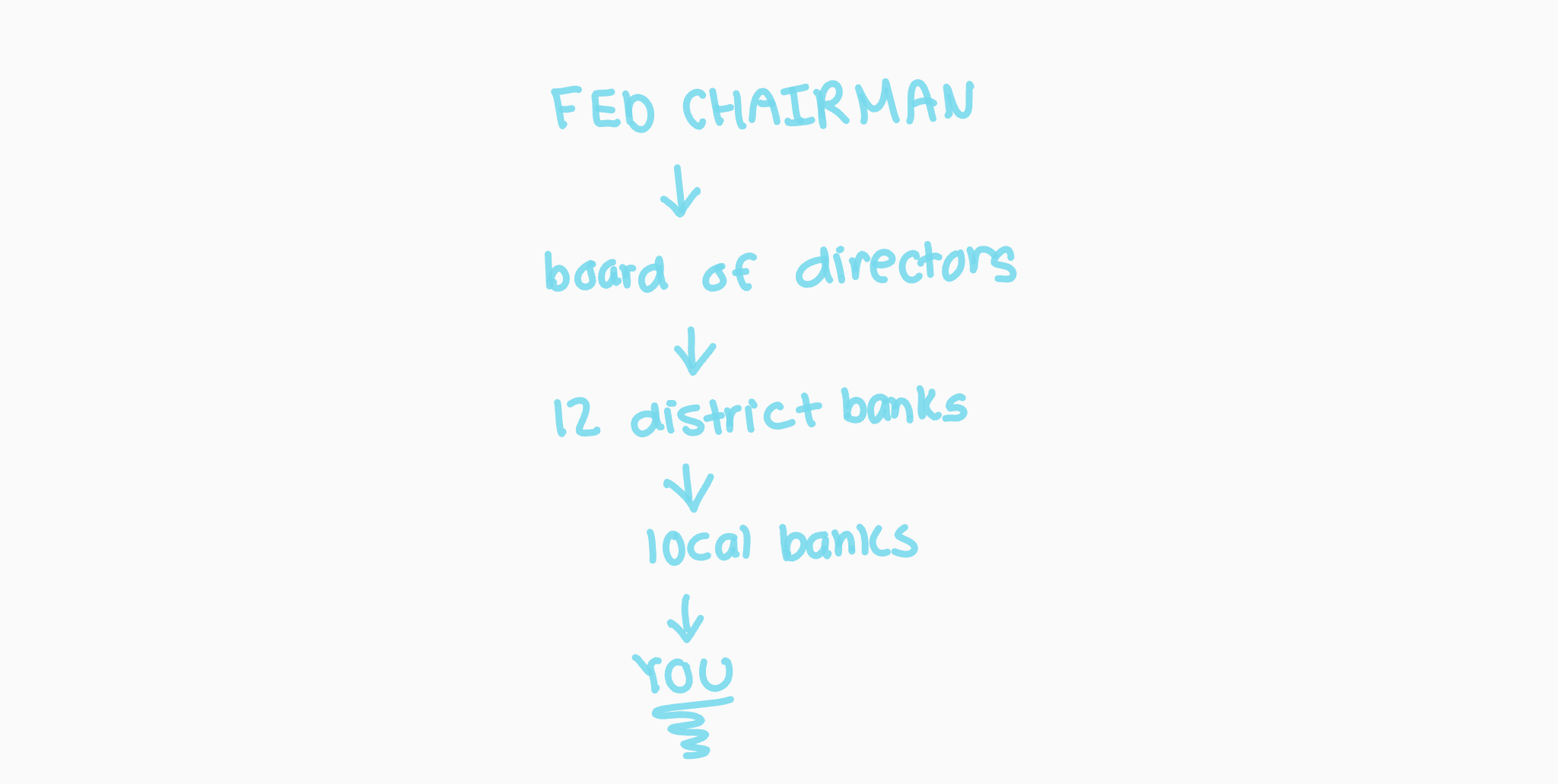
75
New cards
keynesian vs Hayek's Austrian school
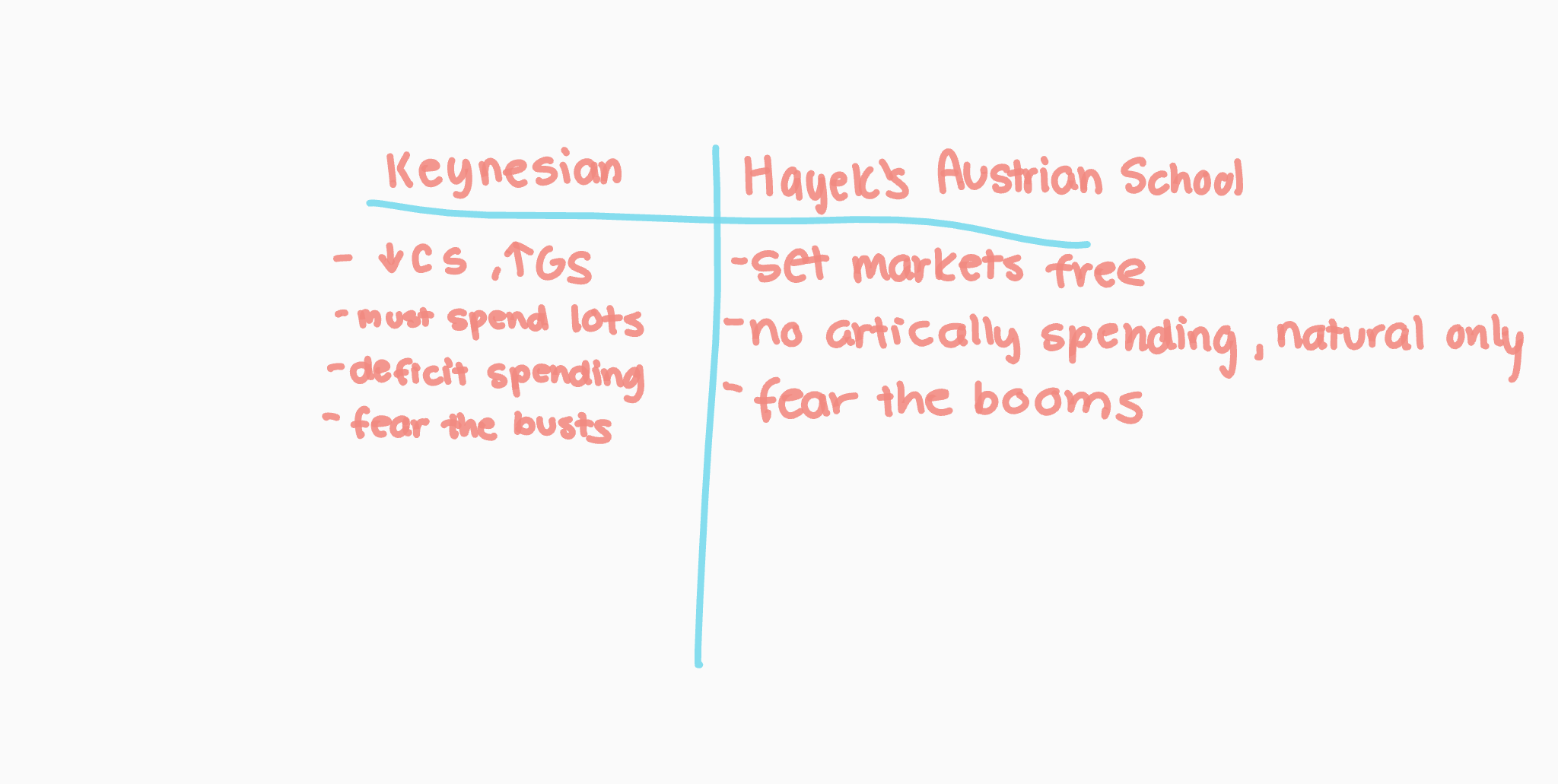
76
New cards
FDR and Gold
-Gold Reserve Act
-gov will buy your gold, illegal to keep
-gives you note based on how much gold
-not enough gold to back, turns to trust
-Why? gold is more stable
-gov will buy your gold, illegal to keep
-gives you note based on how much gold
-not enough gold to back, turns to trust
-Why? gold is more stable
77
New cards
Galbraith
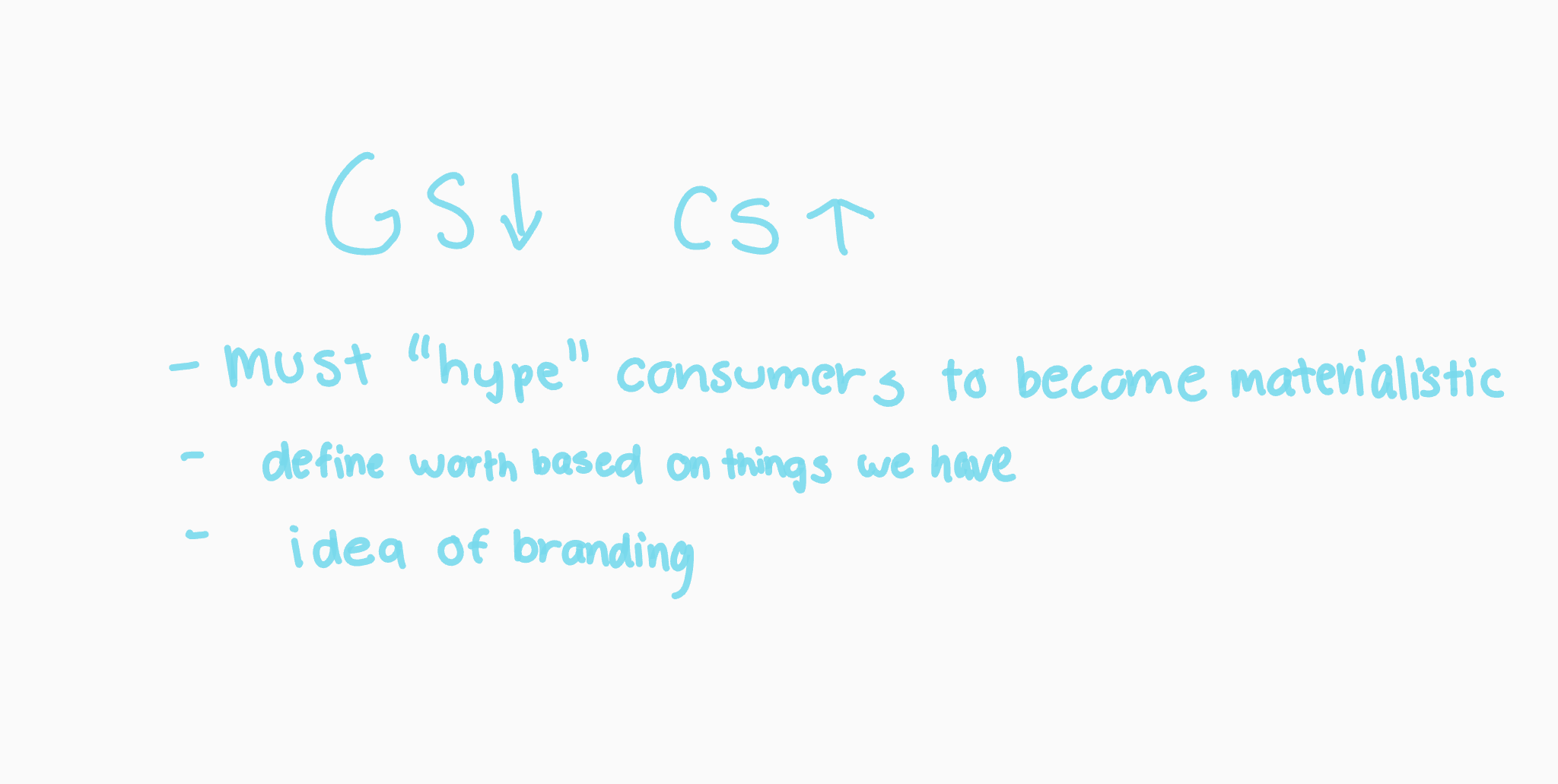
78
New cards
subprime mortgage
mortgages for people who traditionally can't afford (3-5% or even 0%)
79
New cards
traditional mortgage
put down 20%
80
New cards
ARM
adjustable rate mortgage, low at first but changes quickly
81
New cards
glass steagall act
says that banks can't invest in stock market, by FDR
82
New cards
collateralized debt obligations
-subprime + tradition = CDO
- bundle of americans' det to sell as stock
- bundle of americans' det to sell as stock
83
New cards
AIG
american insurance group, said would guarantee return
84
New cards
mr. economy
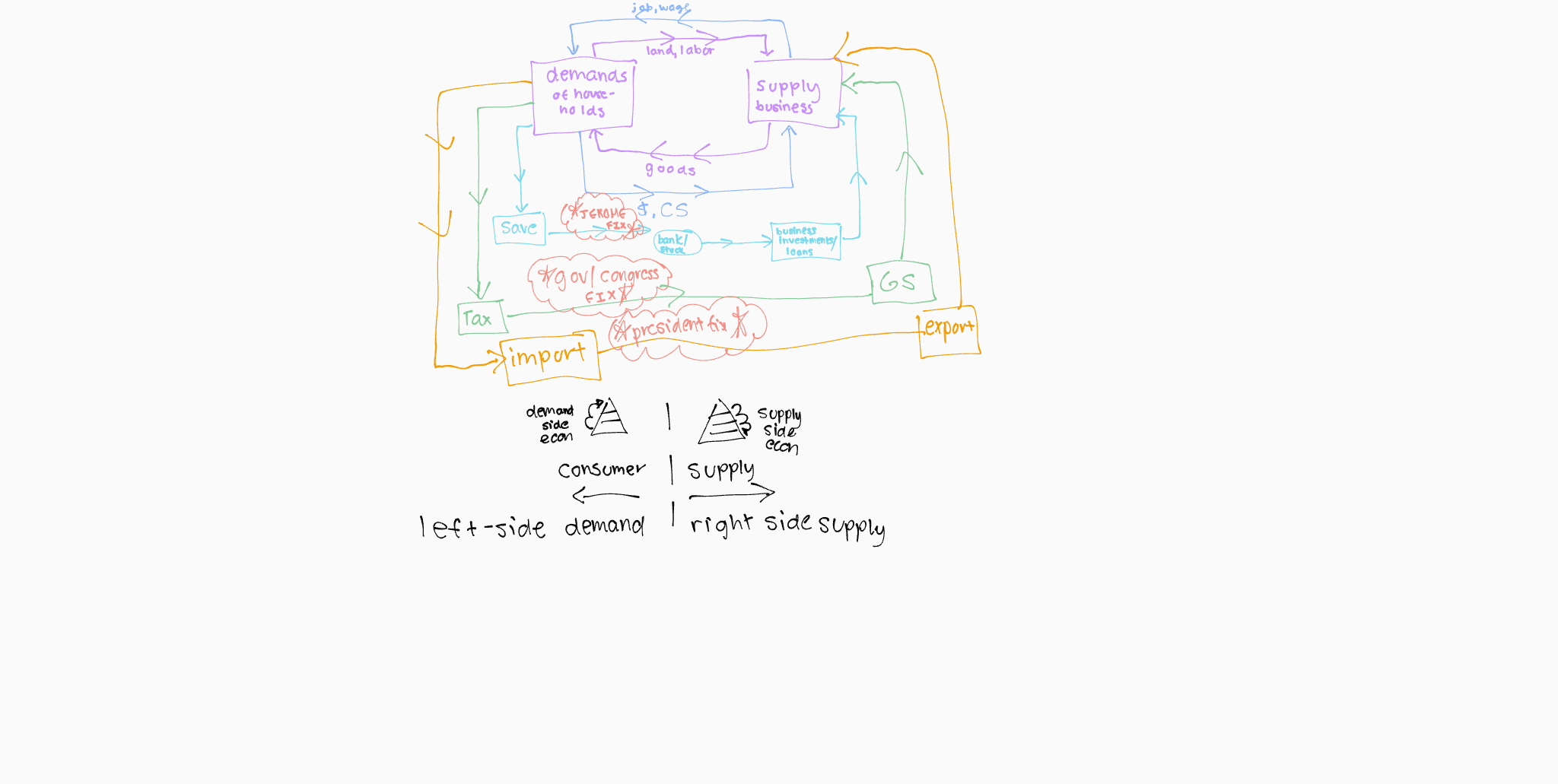
85
New cards
Consumer price index
a statistic used to measure changes in the level of prices

