Chapter 27 - The Rise of Animal Diversity
 Call Kai
 Learn
Learn Practice Test
 Spaced Repetition
 Match
Match Flashcards
 Knowt Play
1/102

There's no tags or description
Looks like no tags are added yet.
Name | Mastery | Learn | Test | Matching | Spaced | Call with Kai |
|---|
No analytics yet
Send a link to your students to track their progress
103 Terms
Animals (and how they are dangerous feeding machines)
heterotrophs that ingest their food
make life dangerous for the organisms around them
most are mobile and can detect, capture, and eat other organisms
have specialized muscle and nerve cells that allow them to move and respond rapidly
fossil and molecule evidence of animals
in sediments dating back to the Proterozoic
first macoscopic fossils of large animals date back to the Ediacaran
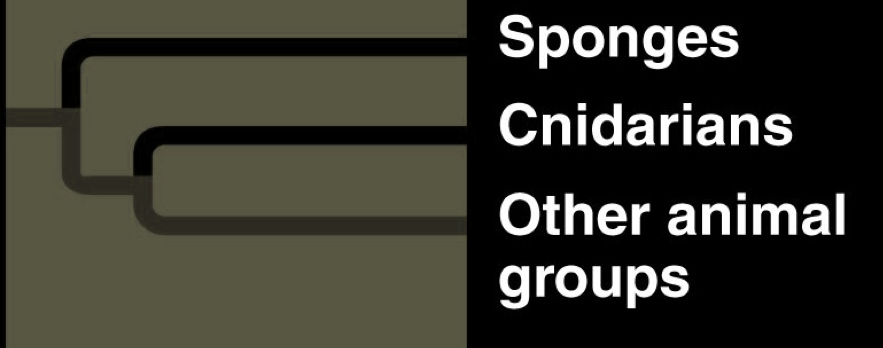
Early diverging animal groups
sponges
cnidarians
other animal groups
Phylum Porifera
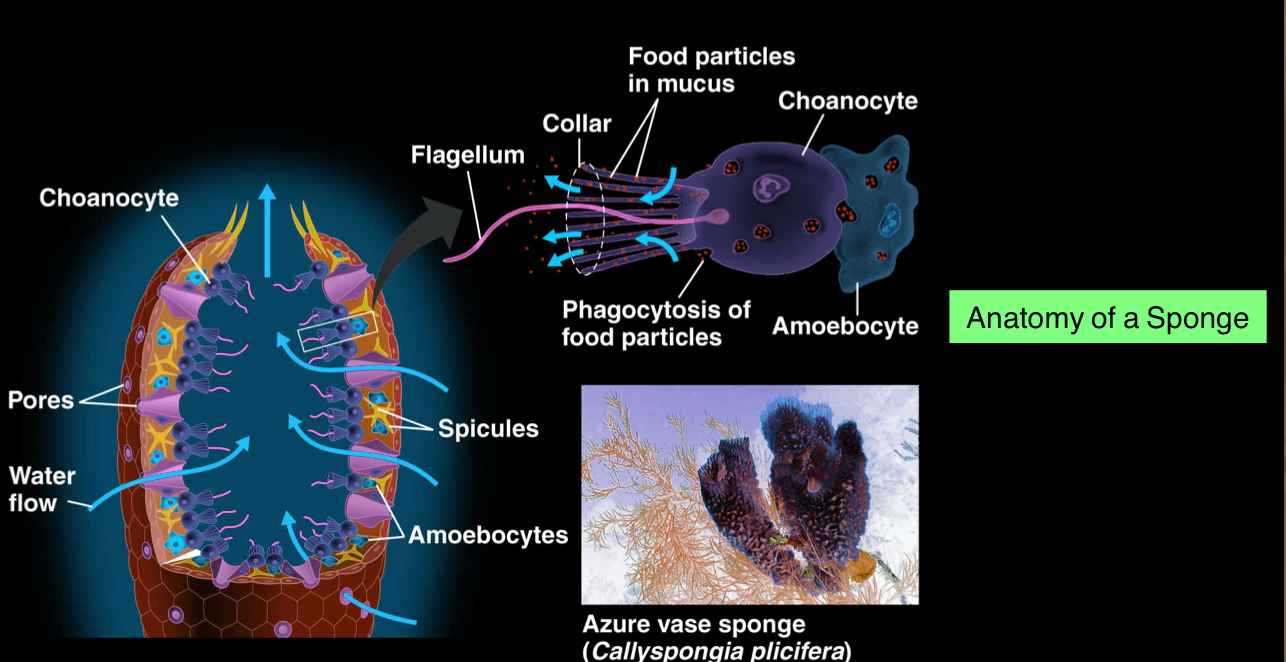
AKA sponges
live in both fresh and marine waters
lack true tissues and organs
suspension feeders - they capture food particles suspended in the water that pass through their body
Choanocytes, which are flagellated collar cells, generate a water current through the sponge to ingest suspended food
Spongocoel - cavity with pores that draws water in
Osculum - opening where water comes out
Phylum Cnidaria
one of the oldest groups in the clade Eumetazoa (animals with true tissues)
originated before the Ediacaran
wide range of both sessile and motile forms like jellies, corals, and hydras
simple radial body plan and are diploblastic
basic body plan contains a sac with a central digestive compartment ( the gastrovascular cavity)
single opening functions as a mouth and anus
Jellyfish blooms
massive increase in jellyfish in one area due to overfishing
Cambrian Explosion
happened during the Paleozoic Era
marks the earliest fossil appearance of many major groups of living animals
diversity of animals increased dramatically
3 hypotheses on what caused Cambrian explosion:
new predator-prey relationships
rise in atmospheric oxygen
evolution of the Hox gene complex
Origin of Bilaterians
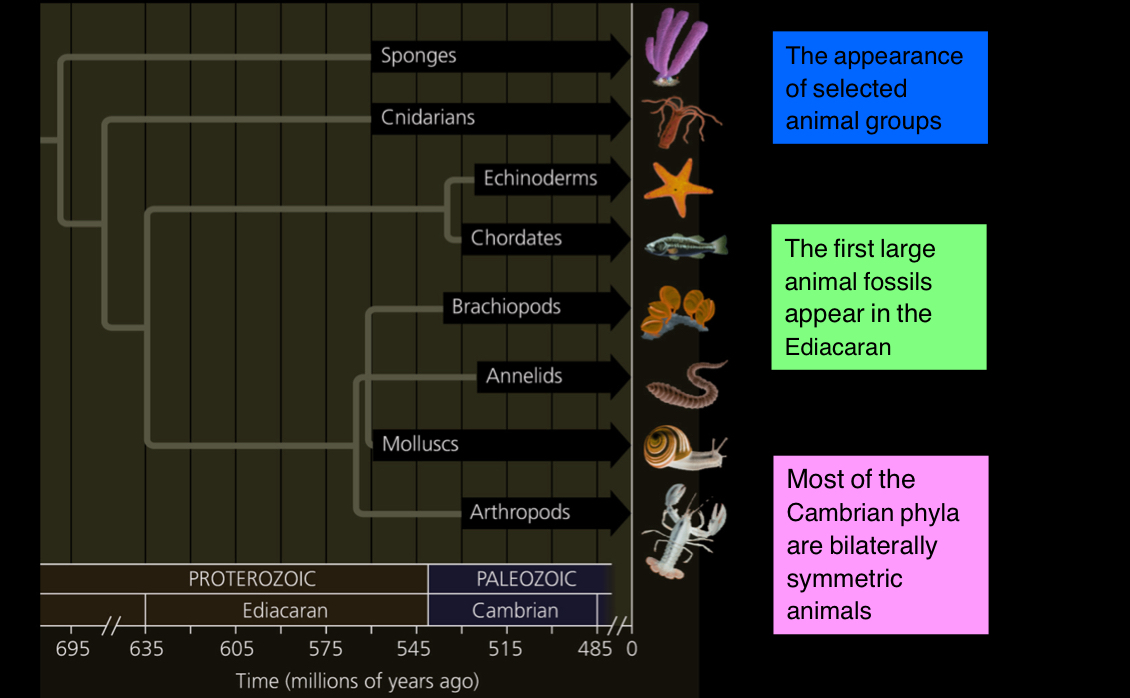
bilaterians evolved by 670 million years ago
which was 135 million years before the Cambrian explosion
prior to the Ediacaran, eukaryote fossils were microscopic and smooth-walled
how was eukaryote life changed in the Ediacaran
animals are dangerous feeding machines because of mobility, nervous system, and efficient digestive tract
the rise of predators
Animal body plans
set of morphological and developmental traits
3 elements of body plans:
symmetry
tissues
body cavities
Symmetry (and types of symmetry)
animals categorized according to symmetry or lack of symmetry of their bodies
Radial symmetry - identical body parts divided around a central axis
ex. starfish
Bilateral symmetry - two-sided symmetry
divided into two mirror-halves along one plane
bilaterally symmetrical animals have:
dorsal (top) side and ventral (bottom) side
anterior (head) and posterior (tail)
cephalization - development of a head
tissues
collections of specialized cells isolated from other tissues by membranous layers
during development, 3 germ layers give rise to the tissues and organs of the animal embryp
3 germ layers
ectoderm - covers the embryo’s surface
endoderm - innermost germ layers give rise and lines the developing digestive tube (the archenteron)
mesoderm - found between ectoderm and endoderm
found ONLY in triploblastic animals
diploblastic vs. triploblastic
diploblastic - animals that have have an ectoderm and endoderm
includes cnidarians and ctenophores
triploblastic - animals have a mesoderm layer between the ectoderm and endoderm
includes all bilaterians
tissue layers in bilaterians
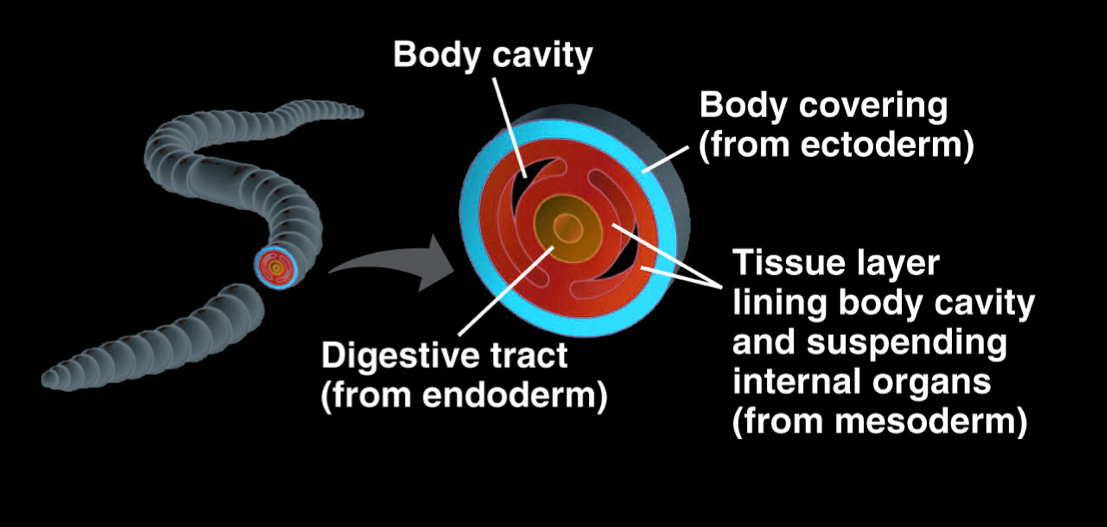
body cavity
body covering (from ectoderm)
digestive tract (from endoderm)
tissue layer lining body cavity and suspending internal organs (from mesoderm)
Body cavitiy
most triploblastic animals have a body cavity called a coelom
its fluid cushions internal organs
5 Points reflected in the animal phylogeny
Animals share a common ancestor
sponges are basal animals
Eumetazoa is a clade of animals (eumetazoans) with true tissues
most animal phyla belong to the clade Bilateria and are called bilaterians
most animals are invertebrates
groups of Bilateria
Lophotrochozoa
Ecdysozoa
Deuterostomia
Lophotrochozoa
include roughly 18 phyla
ex. mollusks, annelids, rotifers, ectoprocts
some have a feeding structure called lophophore
other go through distinct developmental stage called the trocophore larva
mollusks
include snails and slugs, oysters and clams, and octopuses and squids
most are marine but can live in fresh water or are terrestrial
soft-bodies animals, but most are protected by a hard shell
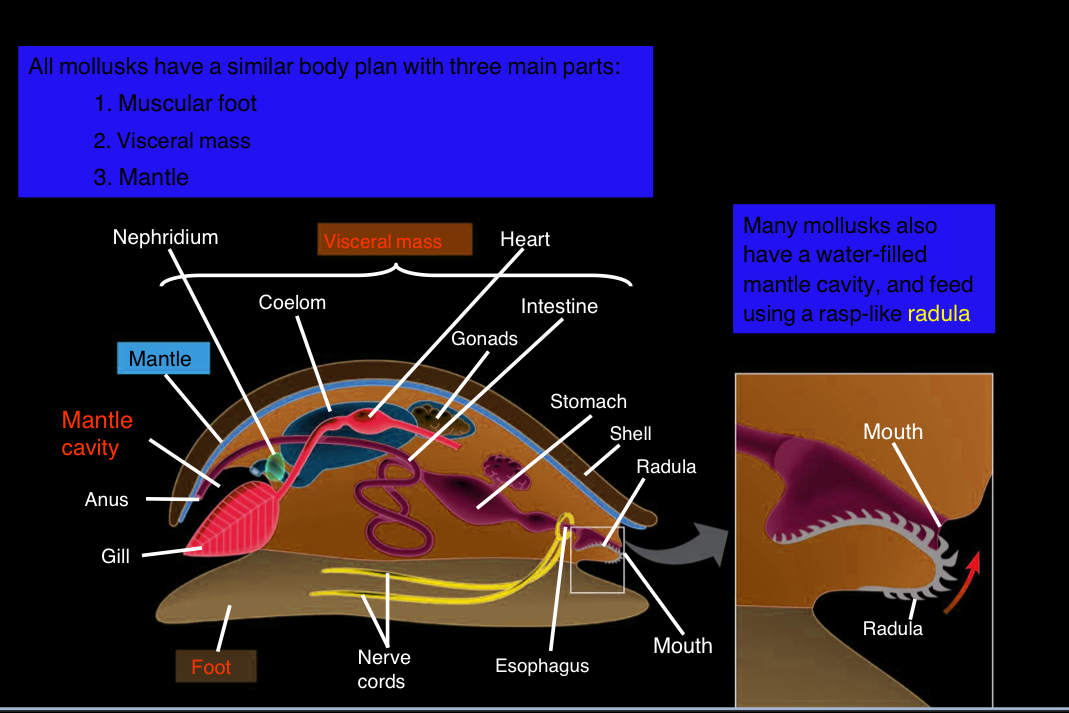
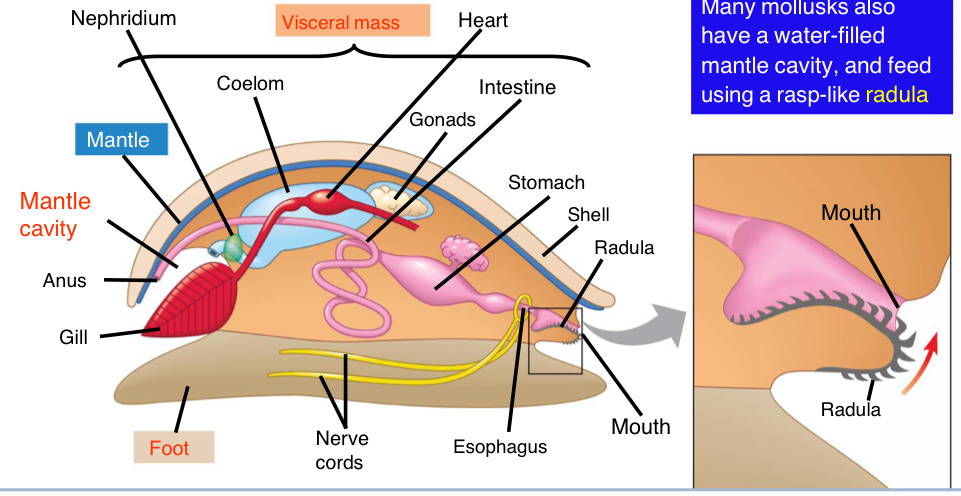
many have a water-filled mantle cavity and feed using rasp-like radula
body plan contains 3 main parts:
muscular foot
visceral mass
mantle
4 major groups of mollusks
chitons
gastropods - snails and slugs
bivalves - clams, oysters, and other bivalves
cephalopods - squid, octopus, cuttlefish, nautilus
chitons
oval-shaped marine animals encased in an armor of eight dorsal plates
gastropods
make up ¾ of mollusks
most are marine but many are freshwater and terrestrial
have a single, spiraled shell
slugs lack a shell or have a reduced shell
bivalves
include clams, oysters, mussels, and scallops
have a shell divided into two halves
cephalopods
includes squids and octopuses
carnivores with beak-like jaws surrounded by tentacles of their modified foot
most octopuses creep along sea floor in search of prey
squids use their siphon to fire a jet of water allowing them to swim very fast
annelids
body is composed of a series of fused rings
some are predators and many are parasites
earthworms are the most familiar, but this phylum consists mainly of marine and freshwater species
leeches secrete a chemical called hirudin to prevent blood from coagulating
Ecdysozoan
most species-rich animal group
cuticle - tough coat that covers Ecdysozoans
ecdysis - process where the cuticle is shed or molted
2 largest phyla of Ecdysozoans
nematodes
arthropods
Nematodes (Phylum nematoda)
AKA roundworms
found in most aquatic habitats, in the soil, in moist tissues of plants, and in body fluids and tissues of animals
Athropoda
found in nearly all habitats in the biosphere
body plan consists of segmented body, hard exoskeleton, and jointed appendages
origin dates back to the Cambrian explosion
4 arthropod lineages
Chelicerates - spiders, horseshoe crabs, scorpians, ticks, mites
Myriapods - centipedes and millipedes
insects
crustaceans - crabs, lobsters, shrimps, barnacles, and many others
Millipedes
herbivores, eat decaying leaves and other plant matter
may have been among the earliest terrestrial animals
two pairs of legs per trunk segment
centipede
carnivores
one pair of legs per trunk segment
have poison claws on their foremost trunk segment
insects
there are more species of insects than all other forms combined
live in almost every terrestrial habitat and in fresh water
Crustaceans (and the 2 types)
live in marine and freshwater
have branched appendages that are specialized for feeding and locomotion
most have separate males and females
ex. lobsters, crabs
2 types of crustaceans
isopods
decapods
isopods
small, terrestrial, freshwater, and marine species
ex. pill bugs
decapods
large crustaceans
ex. lobsters, crabs, crayfish, and shrimp
Deuterostomia: Phylum Echinoderms
have a water vascular system
network of hydraulic canals branching into tube feet that function in locomotion, feeding, and gas exchange
ex. sea stars, urchins, sea cucumbers, brittle stars
Vertebrates
have vertebrae - series of bones that make up the backbone
includes the largest organisms ever to live on Earth
4 key characters of chordates
notochord
dorsal, hollow nerve cord
pharyngeal slits or clefts
muscular, post-anal tail
Lancelets
AKA cephalocordata
bladelike shape
marine suspension feeders that retain characteristics of the chordate body plan as adults
Tunicates
AKA urochordata, AKA sea squirts
marine suspension feeders
as an adult, they draw in water through an incurrent siphon which filters food particles
more closely related to other chordates than lancelets are
Rise of vertebrates
originated in the Cambrian
some of the earliest vertebrates were conodonts
had mineralized skeletal elements in mouth and pharynx
Myllokunmingia and why it’s not considered a vertabrate
had a skull but didn’t have vertebral column, so it’s not considered a vertebrate
Fossils of early vertebrates
other armored, jawless, vertebrates had defensive plates of bone on their skin
many emerged in the Ordovician, Silurian, and Devonian
Cyclostomes (and 2 types)
jawless vertebrates
two groups
Myxini (hagfish) - have a cartilaginous skull and axial rod of cartilage derived from the notochord
but lack jaws and vertebrae
Lampreys (Petromyzontida) - have cartiliginous segments surrounding the notochord and arching partly over the nerve cord
oldest living lineage of vertebrates
Gnathostomes
jawed vertebrates
placoderms
the earliest gnathostomes that are extinct and have armored vertebrates
Chondrichthyans
sharks, rays, and relatives
skeleton composed mostly of cartilage
traits of sharks
streamlined body and are swift swimmers
carnivores
short digestive tract
spiral valve - ridge that increases the digestive surface area
acute senses
Osteichthyes and its 2 clades
ossified (bony) endoskeleton
includes bony fish and tetrapods
2 clades
Ray-finned fishes (Actinopterygii) - make up most vertebrates
lobe-fins - lungfishes and coelacanths
lateral line
pressure sensitive organ that allows fish to feel vibrations in water
3 surviving lineages of lobe-fins
lungfishes
coelacanths
tetrapods
dipnoi
AKA lungfishes
inhabit stagnant ponds and swamps
are homologous to lungs of tetrapods
have to surface to breathe air, otherwise they will drown
pros and challenges of life on land for early animals
pros:
higher oxygen concentrations in the atmosphere than in the aquatic environment
new food sources
few competitors
challenges:
scarce water
temperature fluctuations
no support against gravity
who were the first animals to colonize land (and who followed after)
arthropods (in the Ordovician)
millipedes, centipedes, spiders, and wingless insects colonized land (early Devonian)
vertebrates colonized land and forests formed (late Devonian)
by the late devonian, terrestrial animal communities were similar to those today
arthropods characteristics
appendages modified for walking, feeding, sensory reception, reproduction, and defense
appendages are jointed and come in pairs
cuticle - exoskeleton built from layers of protein and chitin that covers the body
helped arthropods colonize the land
gas exchange in arthropods
aquatic arthropods - use gills for gas exchange
terrestrial arthropods - have evolved specialized gas exchange structures
insects - tracheal systems with branched air ducts
not as efficient as lungs
Rise of the insects (and adaptations that helped them survive)
Origin dates back to the Devonian
explosion of insect diversity occurred in the Carboniferous and Permian periods
flight helped them escape predators and find food and mates, and disperse to new habitats
wings are extensions of the cuticle, so insects don’t have to sacrifice walking legs just to fly
3 Orders of insects
Lepidoterans - btterflies and moths
Hymenopterans - ants, bees, and wasps
Hemipterans - bugs
Origin of Tetrapods
many lobefins during the Devonian
one lineage of lobe-fins had their fins become progressively more like limbs while the rest of the body retained adaptations for aquatic life
Fish vs. Tetrapod characteristics
Fish
scales
fins
gills and lungs
Tetrapods
neck
ribs
fin skeleton
flat skull
eyes on top of skull
3 clades of amphibians
Urodela (salamanders)
Anura (frogs and toads)
apoda (caecilians)
Caecilians (Apodans)
legless and resemble worms but have backbones
live in moist soils and tropical habitats
some practice matriphagy
matriphagy
when embryos eat mother’s skin that she regrows
amphibians
go through metamorphosis of an aquatic larva into a terrestrial adult
“amphibian” means “both ways of life”
most have moist skin that complements lungs in gas exchange
external fertilization in most species and eggs require a moist environment
amniotes and the amniotic egg
characterized for the derived character of the clade, the amniotic egg
egg that contains membranes that protect the embryo
group of tetrapods whose living members are reptiles, birds, and mammals
other terrestrial adaptations include relatively impereable skin and ability to use rib cage to ventilate lungs
extraembryonic membranes
amnion - protects embryo in a fluid-filled cavity that cushions against mechanical shock
allantois - disposal sac for certain metabolic wastes produced by the embryo
chorion - this alongwith allantois membrane exchange gases between the embryo and the air
yolk sac - contains the yolk, a stockpile of nutrients
other nutrients are stored in the albumen (the egg white)
origin and radiation of amniotes
most recent common ancestor of amphibians and amniotes lived during the Carboniferous (350 mya)
early amniotes resembled small lizards with sharp teeth
indicates that they were predators
reptiles (and how they maintain body heat)
clade that includes tuataras, lizards, snakes, turtles, crocodilians, birds, and the extinct dinosaurs
have scales that create a waterproof barrier
lay shelled eggs on land
most reptiles are ectothermic
absorb external heat as main source of body heat
birds are endothermic
can keep body warm through metabolism
Lineages of reptiles
Tuatara - one surviving lineage of lepidosaurs
have a third (parietal) eye
Squamates - lizards and snakes
legless lepidosaurs that evolved from lizards
turtles and tortoises
turtles are the most distinctive group of reptiles alive today
boxlike shell made of upper and lower shields that are fused to the vertebrate, clavicles, and ribs
some have adapted to desserts and others live entirely in ponds and rivers
Crocodilians
alligators and crocodiles
belong to an archosaur lineage that dates back to the late Triassic
more than 2 dozen species
Birds
are archosaurs, but almost every feature of their reptilian anatomy has gone through modification for flight adaptation
about 10,000 species
derived characteristics of birds
many are adaptations for flight
flight enhances hunting and scavenging, escape from predators, and migration
requires a great amount of energy, acute vision, and fine muscle control
wings with keratin feathers
other adaptations: lack of urinary bladder, females only having one ovary, small gonads, and loss of teeth
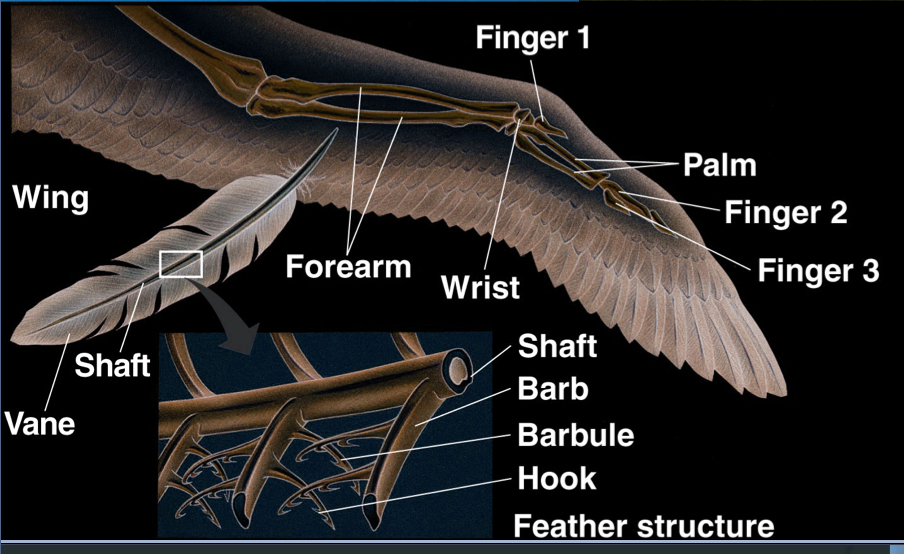
the feather
useful in flight
consists of a central air-filled shaft that radiates the vanes
vanes are made up of barbs with small branches called barbules
origin of birds
probably descended from small theropods, which are a group of carnivorous dinosaurs
feathered theropods evolved into birds by 150 mya
Archaeopteryx
Archaeopteryx
oldest bird known (~150 mya)
even though there is an even older known bird-like feathered dinosaur fossil called Xiaotingia (155 mya)
Order Passeriformes
songbirds
most diverse group of living birds
mammals
amniotes tha have hair and produce milk via mammary glands
derived characters of mammals
mammary glands that produce milk
differentiated theeth
efficient respiratory circulatory systems
relatively large brain
hair
Early Evolution of Mammals
mammals and reptiles are sister groups that have been separated for more than 300 million years
mammals evolved from synapsids in the late Triassic
non-mammalian synapsids lacked hair and laid eggs
3 living lineages of mammals in the early Cretaceous
monotremes, marsupials, and eutherians
Monotremes
small group of egg-laying mammals consisting of chidnas and platypus
Marsupials
includes opossums, kangaroos, and koalas
embryo develops within a placenta in mother’s uterus
born very early in its development
completes its embryonic development while in a maternal pouch called marsupium
most species found in Australia
what threatens Tasmanian devil populations
populations threatened by devil facial tumour disease, a transmissible form of cancer
Eutherians (placental mammals)
have a longer period of pregnancy compared to marsupials
young eutherians complete their embryonic development within a uterus, connected to the mother by the placenta
ex. ground squirrels and red foxes
Primates
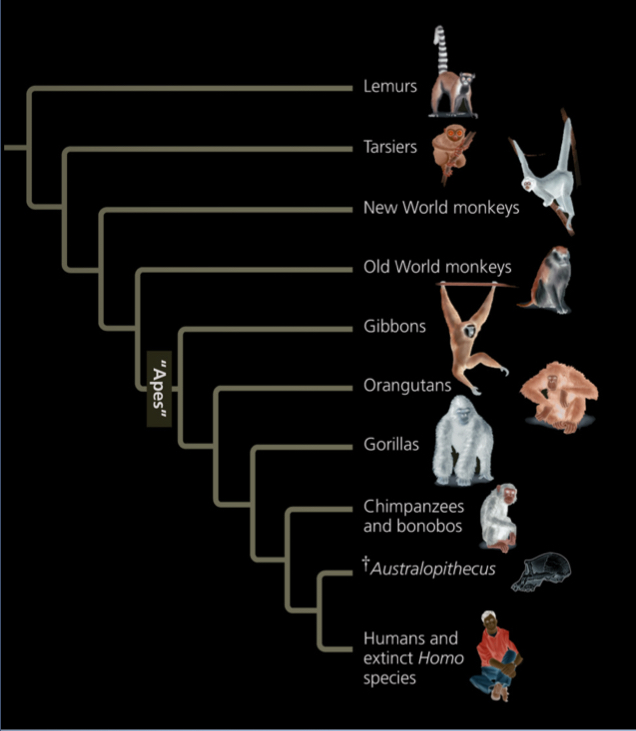
Mammalian order that includes lemurs, tarsiers, monkeys, and apes
humans are members of the ape group
earliest primates were tree-dwellers
derived characteristics of primates
most have hands and feet adapted for grasping
monkeys and apes have an opposable thumb
large brain and short jaws
forward-looking eyes close together on the face providing depth perception
complex social behaviour and parental car
Hominins
ancestor of humans
humans diverged from other apes during the Miocene (6-7 mya)
Hominins are more closely related to humans than to chimps
oldest hominin fossils are from Sahelanthropus tchadensis (6.5 mya)
Hominin evolution
early had a small brain but probably walked up right
- Ardipithecus (4.4 mya) was bipedal but had a smaller brain than Homo sapiens
Australopiths
paraphyletic assemblage of hominins that lived between 2-4 mya
some species walked fullly erect
Homo habilis
earliest fossils in genus Homo are from Homo habilis (1.6-2.4 mya)
brain 675 cm³
stone tools have been found with their fossils
which is why they’re named “handy man”
Homo erectus
left africa 1.8 mya
first hominin to leave Africa
became extinct 50,000-200,000 years ago
Homo bodoensis
lived in Africa and southeastern Europe 126,000-770,000 years ago
suggested that it was the direct ancestor of Homo sapiens
neanderthals (Homo neanderthalensis)
lived in Europe and Near East from 28,000-200,000 years ago
thick-boned with a larger brain than H. sapiens
buried their dead
made hunting tools
interbred with Homo sapiens
Homo sapiens
emerged 195,000 years ago or earlier
all living humans are descended from these African ancestors
Humans spread beyond Africa in one or more waves
reached Australia 50,000-70,000 years ago
first arrived in the New World roughly 15,000 years ago or 21,000-23,000 years ago
Ecological effects of animals on Marine ecosystems
abundance of cyanobacteria decreased in the early Cambrian
this may have been caused by activities of crustaceans and others with suspension feeding mouthparts
this causes algae (that require more light for photosynthesis than cyanobacteria) increased in population and moved to deeper water
ecological effects of animals on terrestrial ecosystems
terrestrial ecosystems had a simple structure before animals emerged
early plants harnessed energy from the sun and drew nutrients from the soil while decomposers returned nutrients to the soil
by 410 mya, plants were consumed by herbivores which were eaten by predators
detritivores consumed organic debris
ecosystems now have a complex network of interactions
example of ecological effects of animals
geese feed on grasses and other marsh plants
lesser snow geese breed in marshlands in Hudson bay
at low population numbers, this improves marsh plant growth
at high numbers, geese can destroy the marsh
Explore top notes

