Lecture 12- Enlightenment, Revolution, and Neoclassicism
 Call Kai
 Learn
Learn Practice Test
 Spaced Repetition
 Match
Match Flashcards
 Knowt Play
1/14

There's no tags or description
Looks like no tags are added yet.
Name | Mastery | Learn | Test | Matching | Spaced | Call with Kai |
|---|
No analytics yet
Send a link to your students to track their progress
15 Terms
The Age of Enlightenment
Jean-Jacques Rousseau…The Social Contract… scientific revolution
= Enlightenment thinkers condemned Baroque architecture and Rococo art for being immoral and indecent, calling for a new kind of art that would be moral and teach people right from wrong
Neoclassicism
a return to the Classicism of Antiquity as the Italian Renaissance began to be perceived as offering architectural paradigms that were untrue to the Antique. Taste was also turning away from Baroque and Rococo, and moving towards a greater appreciation of the importance of archaeology and scholarship to arrive at an architecture that was more true to the spirit of Antiquity
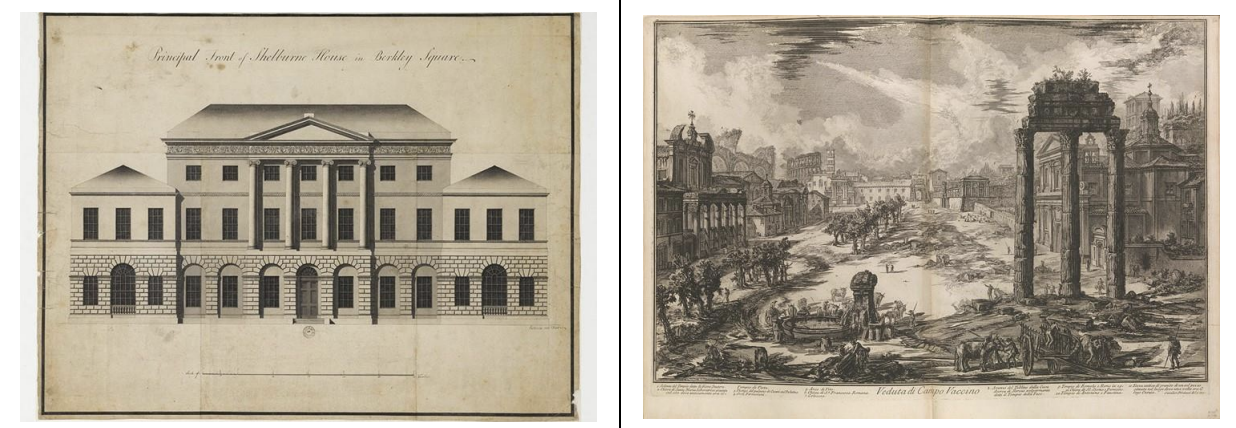
Image Identification+ Caption
Principal Front of Shelburne House in Berkeley Square, Robert Adam vs. Campo Vaccino by Giovanni Battista Piranesi
The front of the Shelburne house is a neoclassical design focused on symmetry, geometry, pilasters, and decorative features. It is pleasing to the eye with its continual horizontal features and the way it complements its surroundings. The Campo embraces a rustic, ruined, and romantic design embracing beauty in chaos and unaesthetic features.
Romanticism
insistence on individual experience, intuition, instinct, and emotion. Commonly perceived as a reaction against the rationalism of the Enlightenment, Classicism, and Neo-Classicism
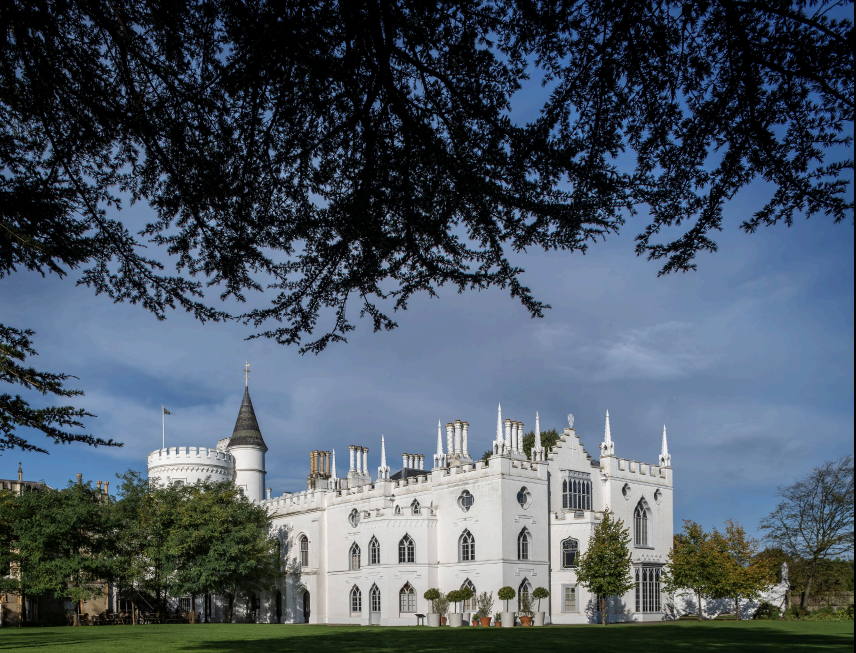
Site/ Location/ Architect
Strawberry Hill House
Twickenham, England
Horace Walpole
Marc-Antoine Laugier (1713–69)
Publication of Essai sur l’architecture (An Essay on Architecture) that solidified French movement towards rationalism and legalism and the rethinking of the role of civic institutions with a subtext of antimonarchism
The “Rustic Hut”
Palladio’s publication pointed past the classic heritage of Roman/ Greek architecture and went to a more rustic past-
rustix huts were minimal and only consisted of columns, entablatures, and pediments
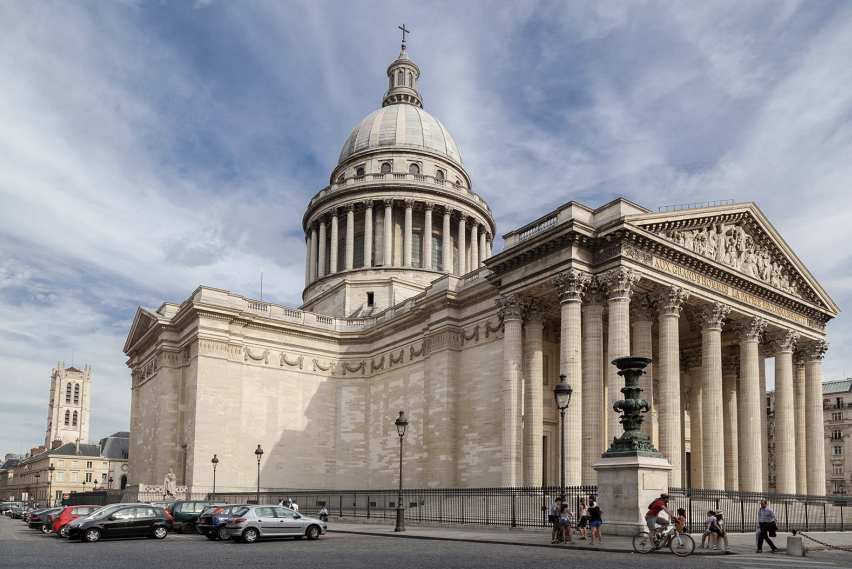
Site/ Location/ Architect
Ste-Geneviève (Panthéon)
Paris, France
Jacques-Germain Soufflot
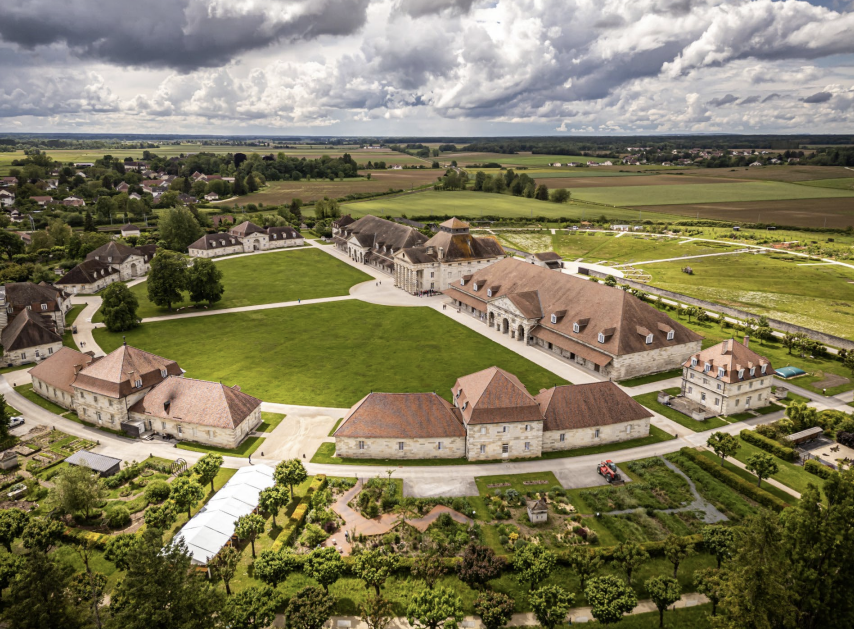
Site/ Location/ Architect
Royal Saltworks
Arc-et-Senans, France
Claude-Nicolas Ledoux
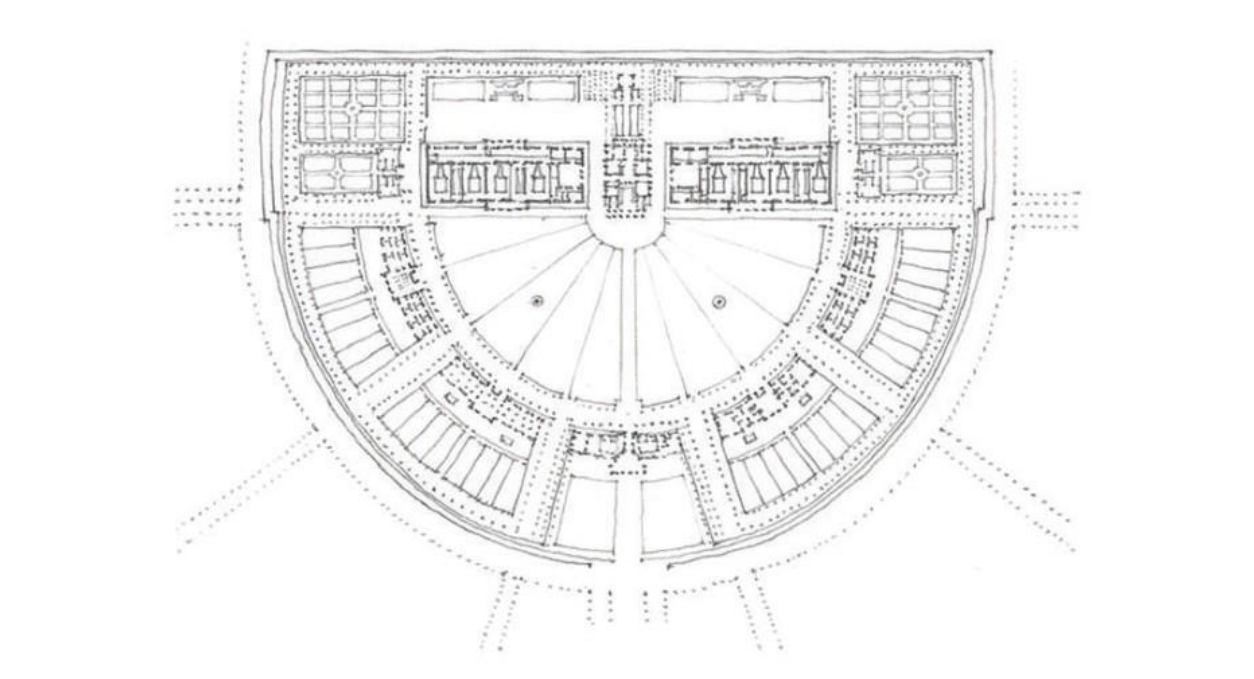
Image Identification+ Caption
Neoclassical industrial architecture
t was built on a large scale designed as a place for work and reflecting enlightened ideology.
It was used for salt production and contained heating boilers for evaporating liquid, leaving behind the salt.
Inspectors would live on site in the center with the workers’ houses around. The semicircular layout was inspired by the shape of the sun and allowed for a hierarchical organization of work.
The buildings shown include workshops, worker housing, a bakery, a chapel, and administrative offices. It also included vegetable gardens allowing workers to provide for themselves.
In all, the structure includes many enlightenment ideas in one. It was “architecture that talks”.
Site/ Location/ Architect
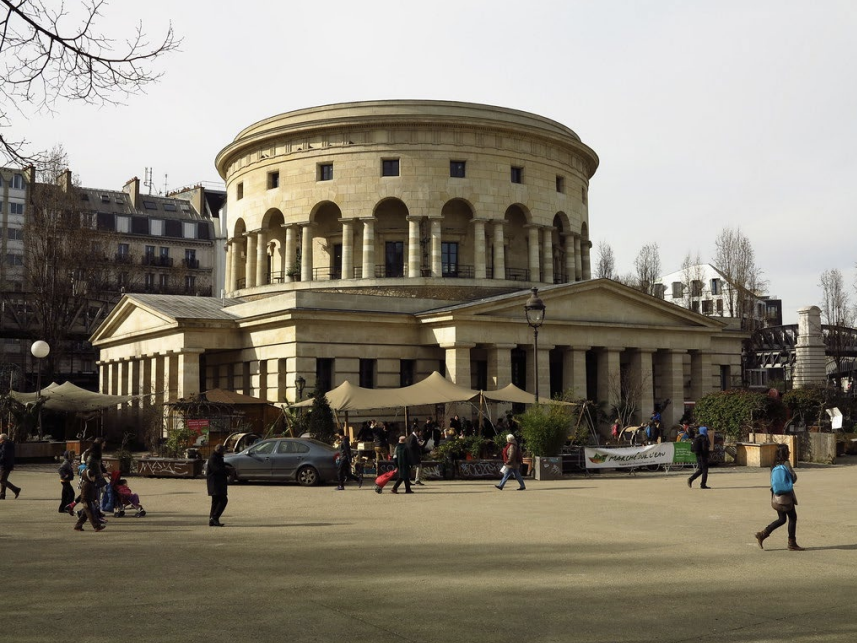
Barrière de la Villette
Paris, France
Claude-Nicolas Ledoux
Étienne-Louis Boullée
Pretty drawings guy
A Parisian architect whose importance lies in his theoretical writings and visionary drawings, as he taught generations of pupils.
responded to Laugier’s reductionist themes by stripping all unnecessary ornament from volumetrically pure forms inflated to a megalomaniac scale, repeating elements such as columns on a massive scale, and making his architecture expressive of its purpose (speaking architecture)
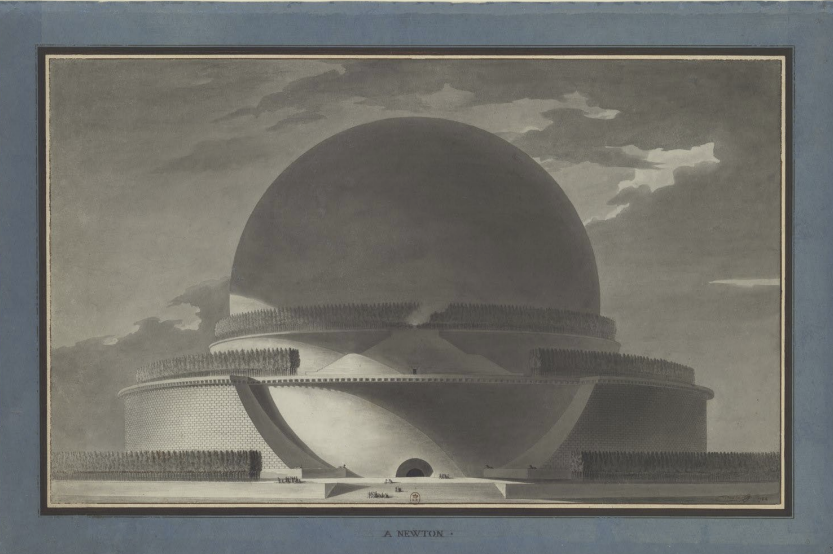
Image Identification
Cenotaph for Sir Isaac Newton
Date: 1784
Architect: Étienne-Louis Boullée
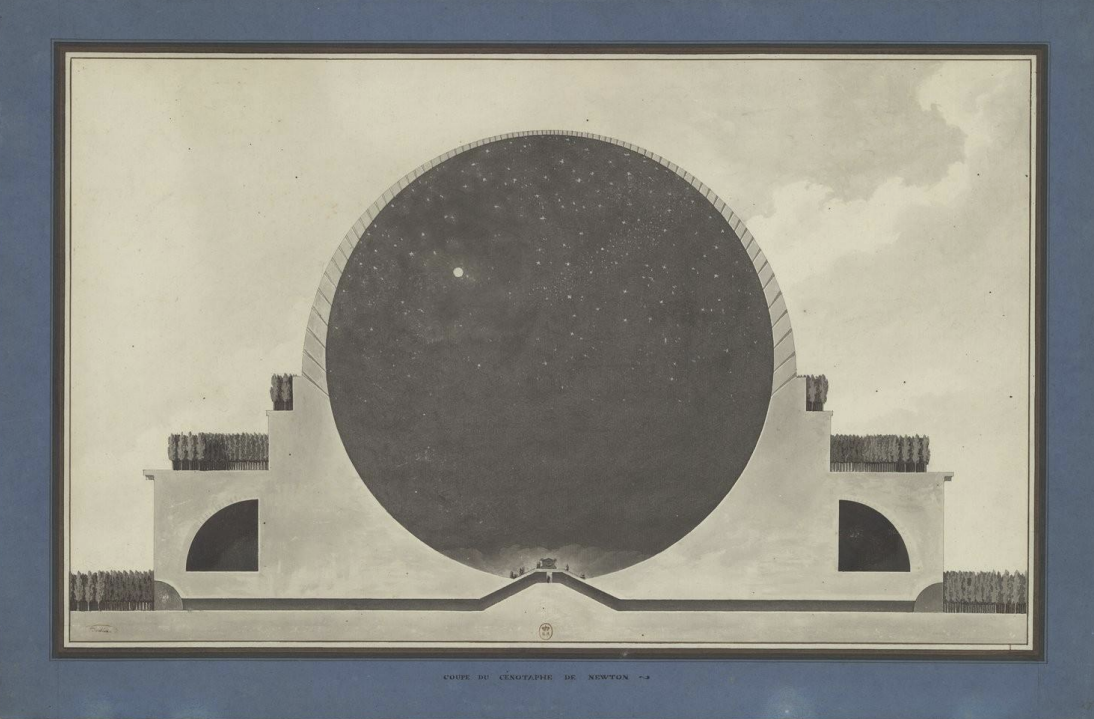
Image Identification+ Caption
Section, Cenotaph for Sir Isaac Newton
This symbolistic structure was designed by Etienne-Louis Boullee following the Neoclassical style and speaking architecture. The exterior globe was meant to be surrounded by cypress trees to represent mourning. There are also perforations within it which would create light effects so one can have a feel for what day and time it was. These light effects were also meant to work with the central lamp hung inside to represent the sun and form a celestial feel. It sought to express the idea of the heavens within, wanting people to feel insignificant before nature and the great creator. In this, the structure also embrace Newton’s cosmic theories.
French Revolution+ Napoleon Bonaparte
Impact of the Napoleonic era was introducing concepts like liberty and justice
Napoleon proved that nations could function without the paternalism of kings and princes

