Down syndrome (Trisomy 21)
 Call Kai
 Learn
Learn Practice Test
 Spaced Repetition
 Match
Match Flashcards
 Knowt Play
1/21

There's no tags or description
Looks like no tags are added yet.
Name | Mastery | Learn | Test | Matching | Spaced | Call with Kai |
|---|
No analytics yet
Send a link to your students to track their progress
22 Terms
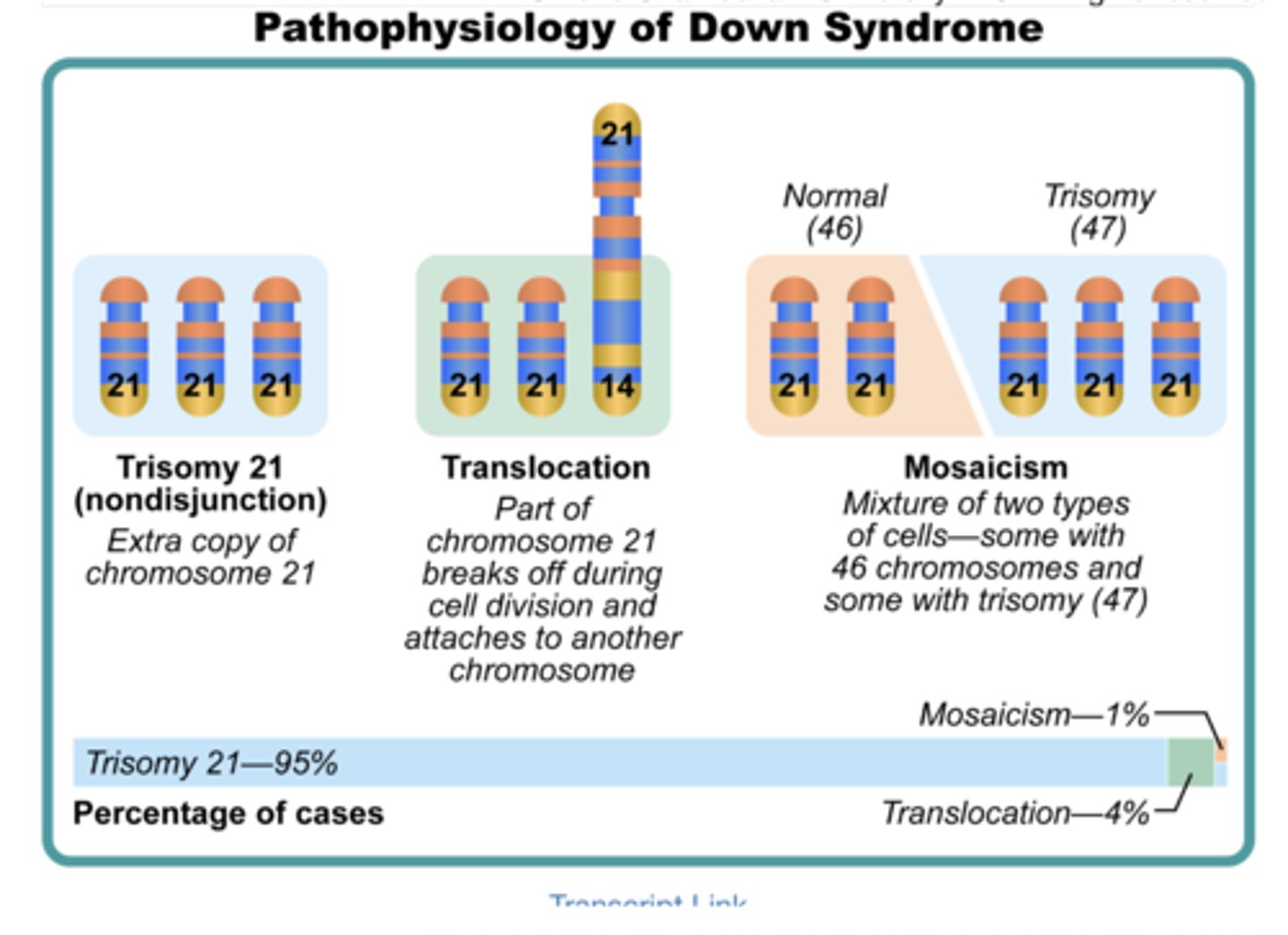
free trisomy 21
extra copy of chromosome 21 in all cells
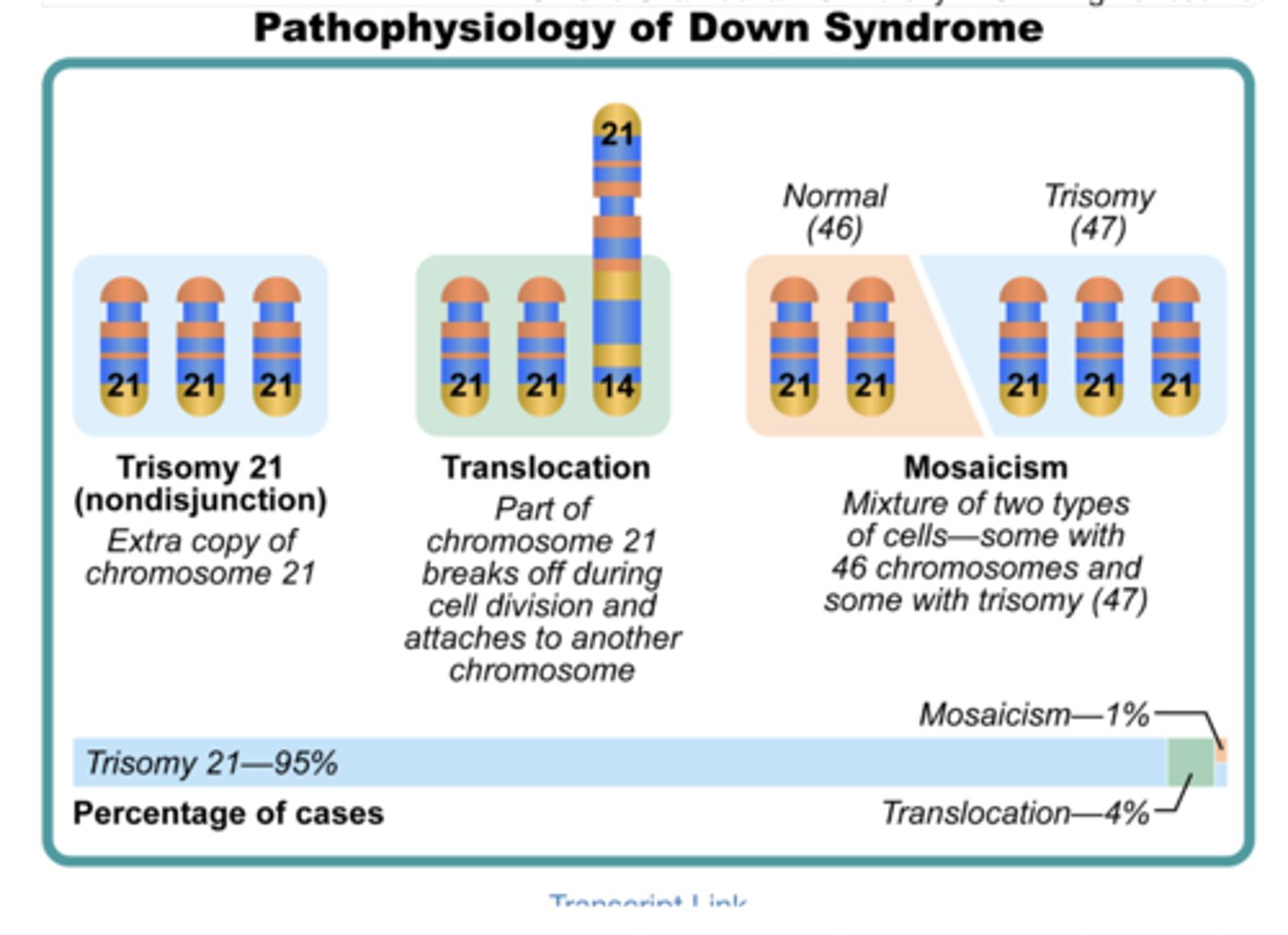
mosaic trisomy 21
error after fertilization results in 2 cells lineages: one w/ normal number of chromosomes and another with an extra chromosome 21
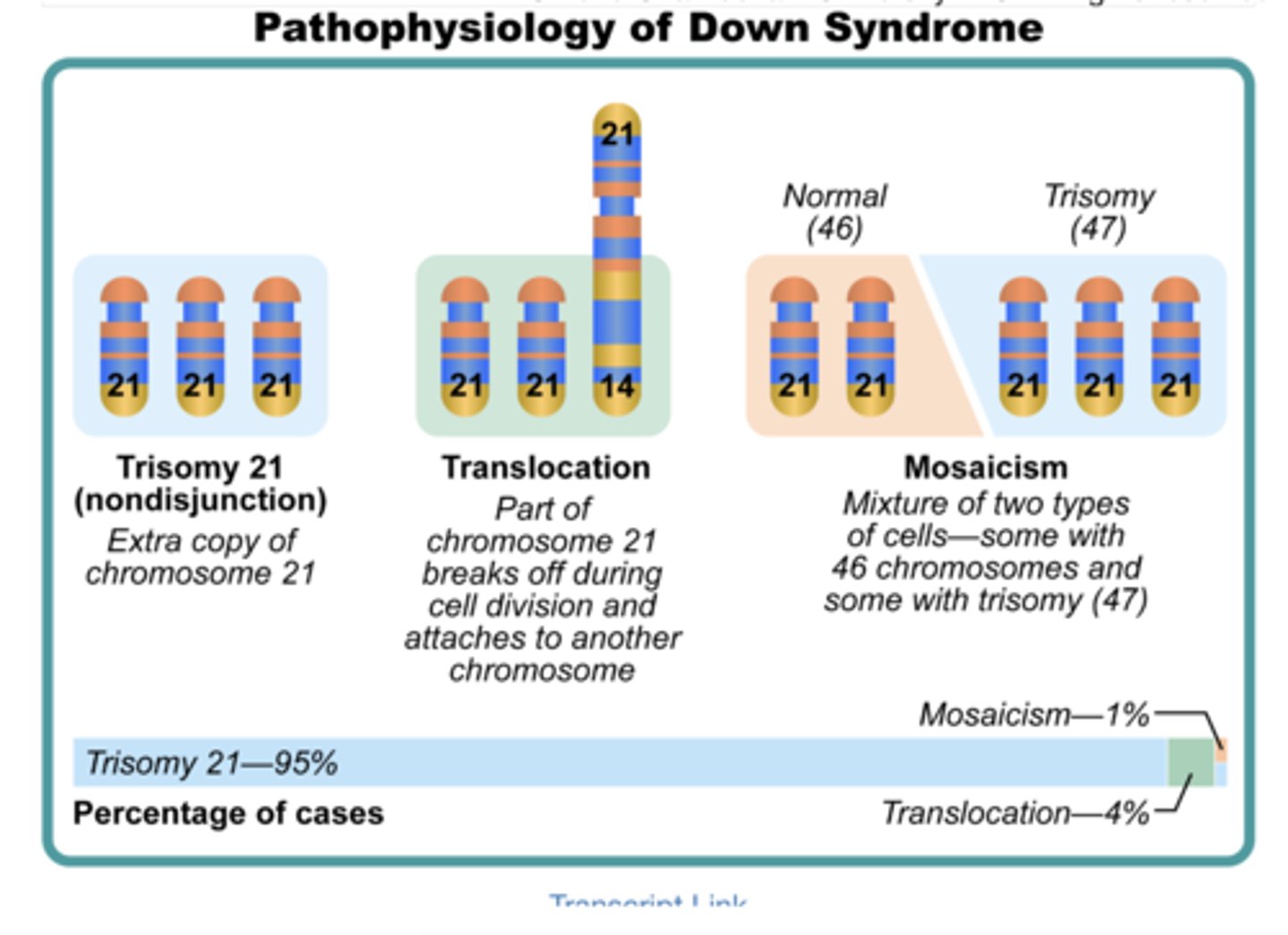
translocation trisomy 21
long arm of chromosome 21 is attached to another chromsome (usually 14)
physical features of those with trisomy 21
- small ears
- wide space between 1st and 2nd toe
- brachycephaly (flat back of head)
- hypotonia
- flat face
- upward slant of eye split
- low, flat nose bridge
- small mouth
what are the most common medical conditions associated with T21
- hearing loss
- OSA
- ottis media
- eye problems
- congenital heart defects
- thyroid disease
- hip dislocation and abnormalities
MSK associated problems in those with T21
- ligamentous laxity (AA instability)
- hypotonia
- hip instability (increased risk of subluxation/dislocation)
- pes planus
Medical management for ____ months:
- discuss the strengths of the child and positive family experiences
- how and what to tell siblings, other family members, and friends
- EI (0-3 yrs)
birth to 1 months (newborn infants)
PT management for birth to 1 months (newborn infants)
- safe handling
- c-spine precautions
Medical management for _______:
- monitor weight and follow weight-for-length curves
- ENT (otitis media; hearing tests)
- vision checks
- monitor for cardiac defects
- CBC (anemia/iron deficiency)
- thyroid checks
- OSA sxs (heavy breathing, snoring, apneic pauses)
1 month-1yr (infancy)
PT management for 1 month-1yr (infancy)
- tummy time
- rolling
- quadruped
- supine to sit
- sitting balance
Medical management for ______:
- monitor and follow weight (high risk of obesity)
- respiratory
- CBC (iron; leukemia risk)
- ENT (hearing loss)
- MSK (c-spine positioning precautions)
1-5 years (early childhood)
PT management for 1-5 years (early childhood)
- gross motor assessment (GMFM88)
- core strengthening (tall kneeling; sitting on therapy ball)
- functional transitions (STS, pull to stand)
- standing balance
- orthotics (Sure Step SMOs): pronation, hypotonia, triplanar instability in wt bearing [like walking on sand]
- treadmill training
- progress towards jumping
- interoception
- pelvic health: toilet training
t/f: orthotics should be used full time before independent walking
false
those with T21 usually walked between what months?
36-48
what is the gold standard for measuring motor function in those with T21?
GMFM-88
what does it mean that those with T21 have impaired interoception?
feeling inside of body (like knowing when you're full or have to go to the bathroom)
Medical Management ______:
- monitor weight and follow BMI trends
- emphasize healthy diet & lifestyle (constipation due to hypotonia and diet)
- ENT (yearly evaluation)
- Vision (eye exam every 2 years)
- thyroid (annually)
- cardiac
- C-spine precautions (no contact sports)
- developmentally appropriate responsbilities at home
- monitor for behavior problems
5-12 yrs (late childhood)
PT management for 5-12 yrs (late childhood)
- core stability
- balance
- jumping
- task specific training
- encourage social engagement and physical activity
- monitor hips (clicking; instability --> dislocation)
- strengthen hip jt; surgery
- orthotics (transition to insert)
- GMFM sections D-E
what may walking look like if they have hip problems with T21
- exaggerated trunk lean
- trendelenberg
Medical Management ___________:
- monitor weight and BMI
- annual CBC (iron, TSH)
- sleep disordered breathing
- cardiac (annually)
- discuss behavioral and social status
- inquire regarding sxs of acute regression
12-21 years (adolescence to early adulthood)
PT management for 12-21 years (adolescence to early adulthood)
- monitor LE alignment
- monitor functional foot orthotics
- monitor for regression
- encourage social engagement and physical activity (prepare for life after school & job training)
why do those with T21 experience regressions during early adulthood?
because they're no longer in school

