6.1.1 Cellular control
 Call Kai
 Learn
Learn Practice Test
 Spaced Repetition
 Match
Match Flashcards
 Knowt Play
1/82

There's no tags or description
Looks like no tags are added yet.
Name | Mastery | Learn | Test | Matching | Spaced | Call with Kai |
|---|
No analytics yet
Send a link to your students to track their progress
83 Terms
At which levels is Gene-expression controlled at
Transcriptional
Post- transcriptional
Translational
Post- Translational
what are Transcription factors?
Proteins that bind to DNA and switch genes on or off
Function of non coding DNA
regulate gene expression → switching on or off
what are the types of Transcriptional factors
Activators → activate transcription
repressors → repress transcription
in eukaryotes how do Transcription factors work
TF are complimentary to the DNA and bind to specific DNA sites on target genes
how can molecules control the synthesis of some proteins ?
shape of transcription factors can be altered by the binding of some molecules ( sugars)
no longer complimentary
In prokaryotes what do transcription factors bind to?
Operons
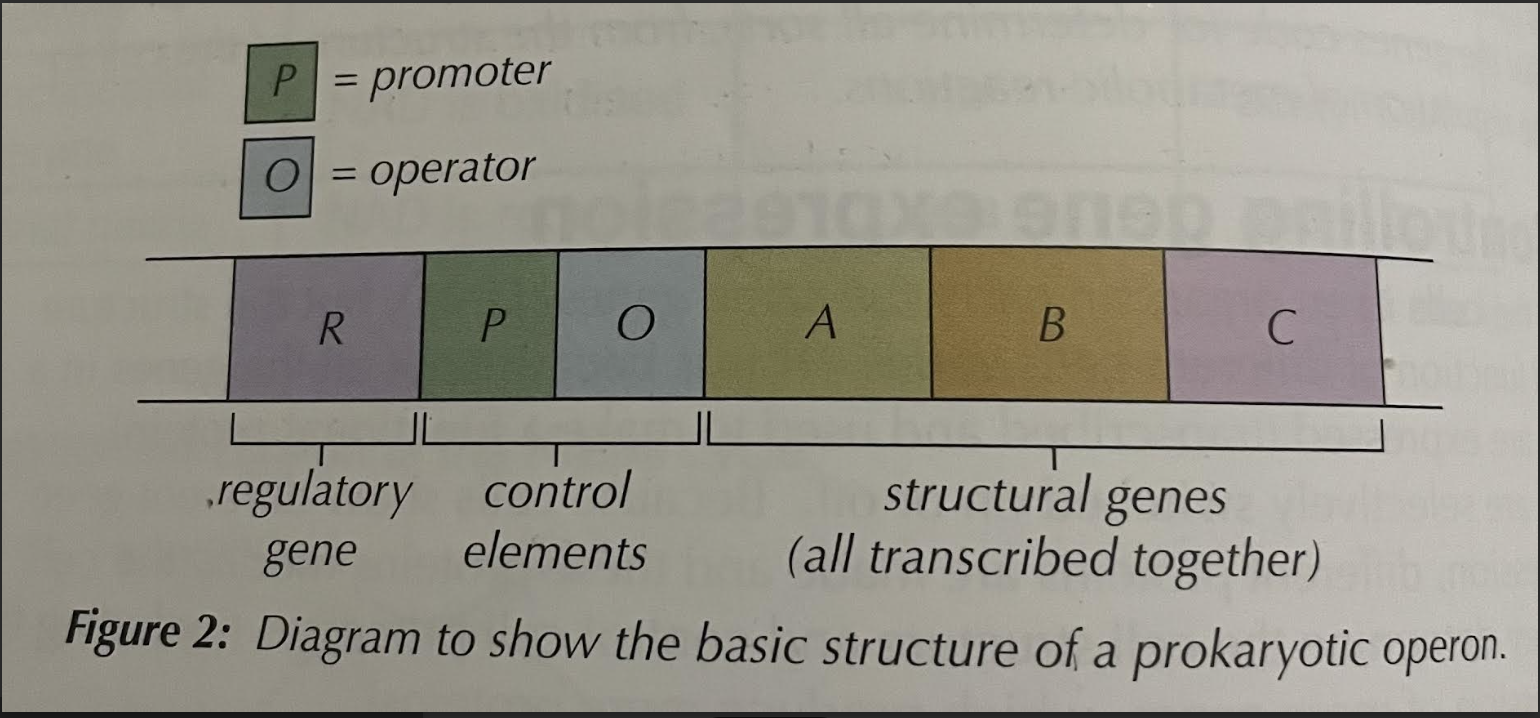
what is a operon
Section of DNA that contains structural and regulatory genes and control elements
function of structural genes
codes for proteins not involved in DNA regulation (enzymes )
what does the control element contain
the Promoter → DNA sequence that RNA Polymerase binds to ( think polymerase → Promoter PP)
the operator → DNA sequence that transcription factors bind to
Function of regulatory genes?
Codes for an activator or a repressor
Prokaryotic operon ( Image)
what is the operon in E coli called
Lac operon
which enzymes are used to help E coli digest lactose
β- galactosidase
lactose permease
what are the structural genes on the Lac operon called?
LacZ, LacY and lacA
what happens on the Lac operon when glucose is present
regulatory gene produces a lac repressor protein
binds to operator site and blocks transcription → RNA polymerase cant bind to promoter
what happens on the Lac operon when lactose is present
lactose binds to repressor altering shape → no longer complimentary
cant bind to operator site
RNA polymerase beings transcription of structural genes
what is the difference between Exons and Introns
Exons → sections of DNA that code for amino acids
Introns → Section of DNA that do not code for amino acids
what type of organisms have exons and Introns
Eukaryotic
DO prokaryotes contain Introns and why
No
mRNA is produced directly from DNA without splicing
what is a mutation?
Change in DNA base sequence
What are the types of DNA mutations
Gene mutation
Chromosome mutation
what is a gene mutation
Change in a gene DNA sequence
what is a chromosome mutation
Change in large sections of chromosomes or change in number
what are the type of mutations
Indel mutation → insertion or deletion of a base
Substitution → a base gets replaced by another base
what do Indel mutations cause
Frameshift mutation
what is a Frameshift mutation
Changes how the codon is read → codes for a different amino acid
what is a point mutation
mutation that only affects bases
what can increase the rate at which mutations occur
exposure to mutagenic agents ( UV light, ionising radiation)
which mutation has a larger affect indel or substitution
Indel → result frameshift mutations
affect more amino acids than sub
larger overall effect on protein structure
what are the types of effects a mutation can have
silent
Beneficial
Harmful
when are frameshift mutations not caused by Indel mutations
number of bases added / removed are a multiple of 3
no frameshift mutation → following codon is still the same
How can a mutation have a silent effect on protein function?
Base sequence is degenerate → mutated codon still codes for the same amino acid
Substitution of amino acid with similar properties to the original amino acid might leave 3° or 2° structure unchanged
mutation might change part of the tertiary structure away from the functional part of the protein → away from active site
Mutation is in non-coding section of DNA
How can mutations have a beneficial effect ?
enhance the functioning of a protein
passed through natural selection
How can mutations be harmful?
create a malfunctioning protein
prevents amino acid from being coded → no protein
what are some diseases caused by a harmful mutation
Cancer
sickle cell anaemia
What are the types of point mutation ?
Nonsense → codon mutated into a stop codon
Missense → codes for different amino acid in the polypeptide
Structure of chromatin
Section of DNA tightly coiled around a histone protein
What is Heterochromatin?
Tightly coiled DNA in cell division
when is Heterochromatin formed
Chromosomes becomes coiled and condense in prophase → forms Heterochromatin
Advantages of Heterochromatin being formed
prevents DNA from being damaged during cell division → tightly coiled.
What happens in Transcriptional gene control of eukaryotes
Histone is modified for chromatin remodelling
difference between heterochromatin and Euchromatin
Heterochromatin → DNA is tightly wound to histone, there’s no transcription
Euchromatin → DNA is loosely wound to histone, transcription occurs as
Why does transcription occur in Euchromatin
RNA polymerase can binds to the gene as DNA is loosely wound to histone → Transcription occurs
Why does transcription not occur in Heterochromatin
Gene is inaccessible
RNA polymerase cant bind to gene as DNA is tightly wound to the histone → no transcription.
what is Euchromatin and when is it formed?
loosely wound DNA to histone in interphase
How does Heterochromatin form Euchromatin ?
Acetylation or phosphorylation
Negatively charged ions that decrease the positive charge of the histone protein → negatively charged DNA binds more loosely → Weaker ionic bond → allows transcription to occur
How to convert Euchromatin to Heterochromatin
Methylation
Increase the hydrophobic nature of histones → more tightly wound DNA to histone
What level of gene control is the Lac operon
Transcriptional level of control in prokaryotes
What happens when there’s a lack of glucose as respiratory substrate in prokaryotes
Activate the Lac operon to break down lactose instead
What happens when there is glucose available on method
the regulatory gene ( LacI) codes for a repressor protein
repressor protein binds to the operator, blocking the promoter
RNA polymerase cant bind to promoter → No transcription
What happens when there is lactose available on Lac operon
Lactose binds to the repressor protein → changes the shape so no longer complimentary to the operator
Repressor protein unbinds from operator → allows RNA polymerase to bind to the promoter → transcribe the structural genes
Effect of cAMP on Lac operon
cAMP binds to and activates RNA polymerase
increases the activity of RNA polymerase → increases rate of transcription
What is the effect of glucose on cAMP in the Lac operon
high Glucose conc inhibits adenyl cyclase
Glucose decreases cAMP concentration in cell
less cAMP binding to RNA polymerase
decreases the rate of transcription
Effect of a nonsense mutation on Protein
Produce a Truncated (shortened ) protein
What are the two Transcriptional levels
Chromatin remodelling
Lac operon
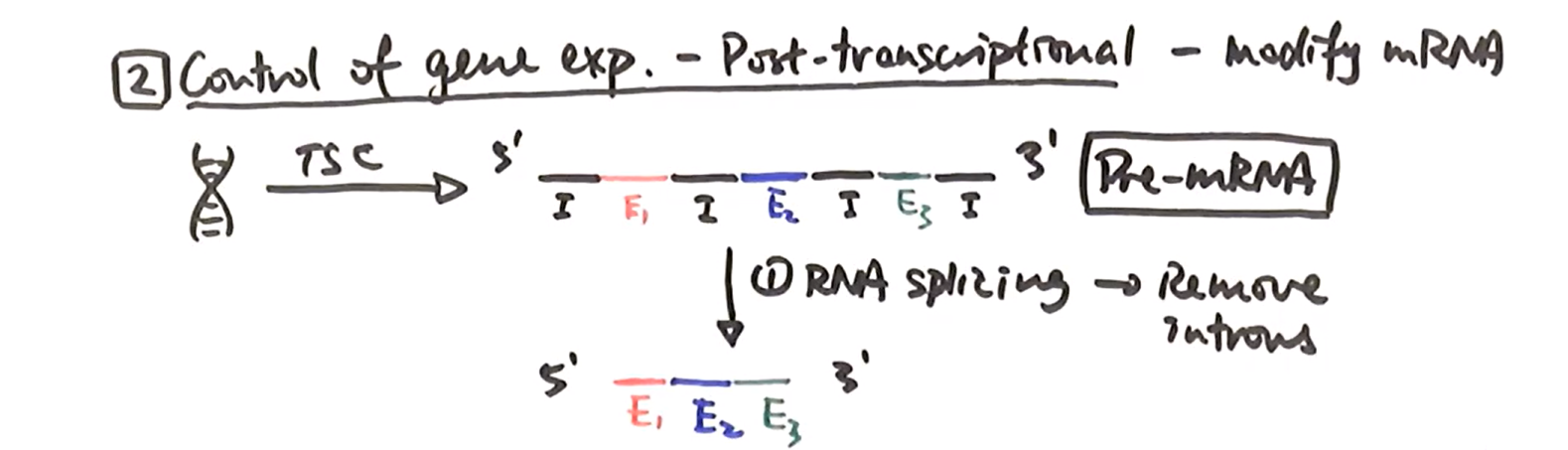
what process happens in Post - Transcriptional level eukaryotes
RNA splicing
What happens during RNA splicing
introns and exons are copied into mRNA → forms Pre- mRNA
Introns are removed from pre-mRNA → exons join together forming mature mRNA
why don’t prokaryotes under splicing ?
No introns in prokaryotic DNA
How to stabilise mRNA and prevent degradation during splicing
Add an adenine tail
Add a cap ( modified nucleotides)
splicing image
What are the ways to switch translation off at a translational level
Degrade the mRNA
add a inhibitory protein to bind to mRNA → mRNA cant bind to ribosome
What are the ways to switch translation on at a translational level
Activate the protein with cAMP → allows mRNA to bind to ribosome
alters 3D structure of protein
what type of reaction activates initiation factors at translational level
Phosphorylation by protein kinases
which molecule activates protein kinases
cAMP
what are the post- translational control of gene expression?
Add non-protein groups ( Golgi apparatus processing)
Activate and modify with cAMP
modify the amino acids
How many base pairs are in the Homeobox
180 base pairs
How many amino acids make the homeodomain
60 amino acids
what are Homeobox genes ?
Regulatory genes that control body development
what type of organism contain homeoboxes
Eukaryotic
In what kingdoms are homeobox genes found in
Fungi
Animalia
plants
Protoctista
what processes do Homeobox genes regulate
Mitosis
apoptosis
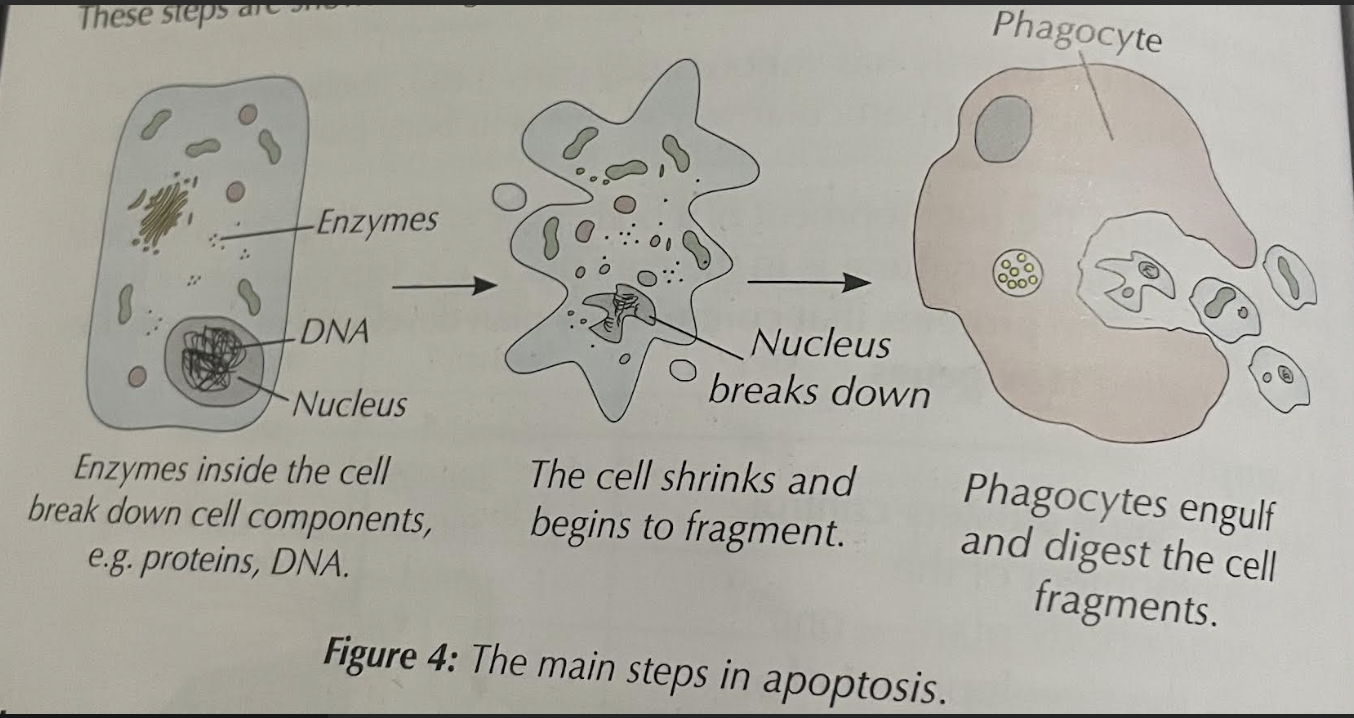
What is apoptosis
programmed cell death
which stimuli does apoptosis and mitosis respond to
Internal
External
why is the Homeobox highly conserved in eukaryotes ?
Organisms have a basic structure
where are Hox genes found
Animals only
what are Hox genes?
Homeobox genes found in animals
Suggest reason for animal with deformity
Hox genes are mutated → results in mutated body arrangement
Hox genes are regulatory genes that control body development
Hox genes are highly conserved
Apoptosis process ( Image)
Examples of apoptosis
Destroys cells between fingers and toes → prevents webbed fingers
Destroys WBC → prevents auto immune diseases
function of enzymes and phagocytes in Apoptosis
Enzymes → digest cells content
phagocytes → removes the products prevent damages to surrounding tissue
suggest role of homebox genes in brain development
Switch genes on and off in brain → form specialised nerve cells
Determine the anterior and posterior regions
Outline general role of homeobox genes
Code for body development in organisms
Regulated by mitosis and apoptosis
involved in gene regulation → switch genes on and off → determines cell identity

