Neurosensation: Circadian Rhythms
 Studied by 0 people
 Call with Kai
 Learn
Learn Practice Test
 Spaced Repetition
 Match
Match Flashcards
 Knowt Play
1/29

Earn XP
Description and Tags
Match the description to the correct definition.
Name | Mastery | Learn | Test | Matching | Spaced | Call with Kai |
|---|
No analytics yet
Send a link to your students to track their progress
30 Terms
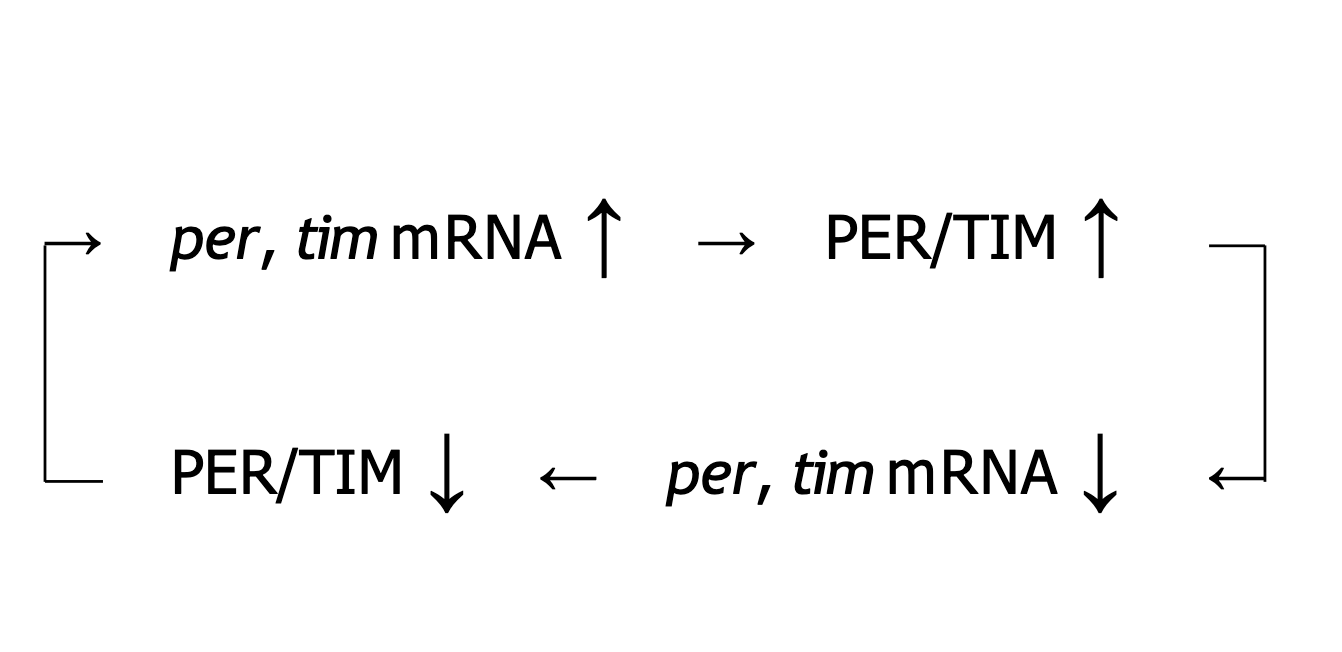
Explain the period-timeless TTFL for this image.
When the PER/TIM falls below a threshold, the translation of per and tim mRNA increases, making more PER/TIM. When there is too much PER/TIM accumulated, it inhibits its own production, leading to a rhythmic fluctuation in levels that regulates the circadian clock.
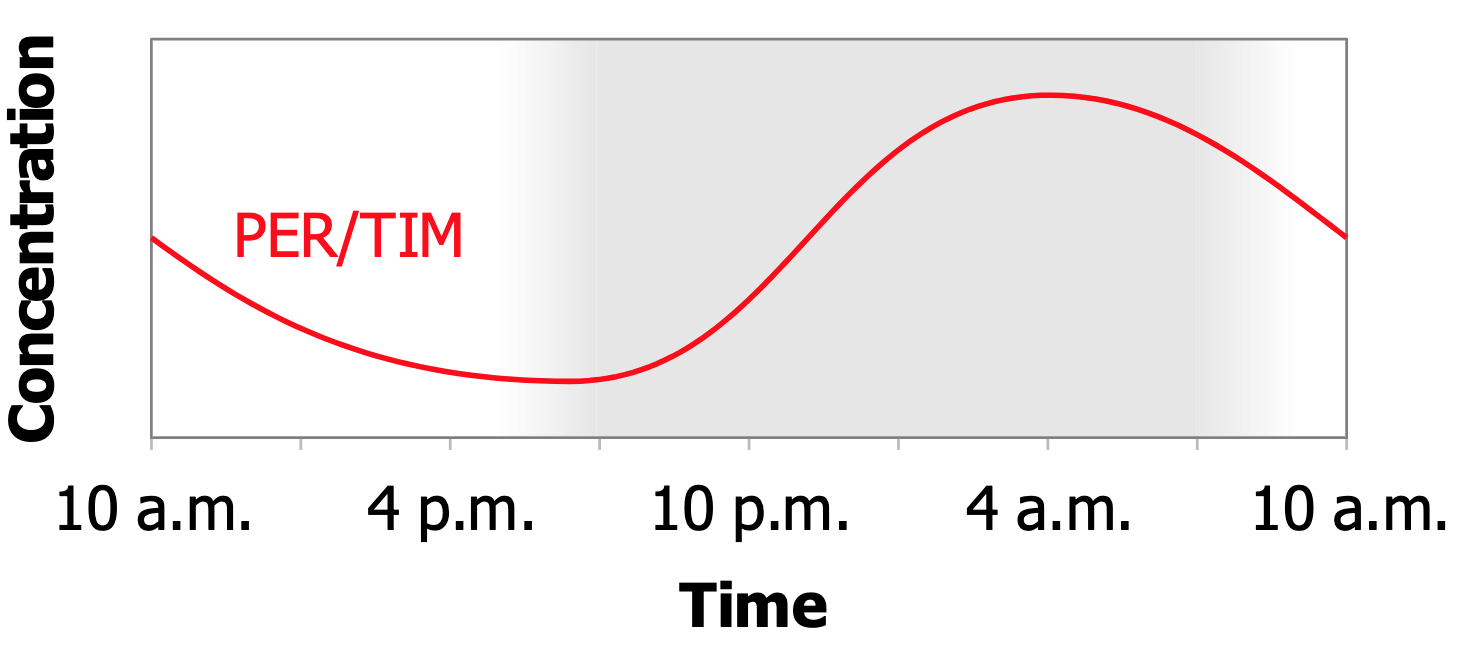
Explain how PER/TIM oscillate in a roughly 24-hour rhythm.
mRNA gets more transcripted during the day, and then they get repressed during the night.
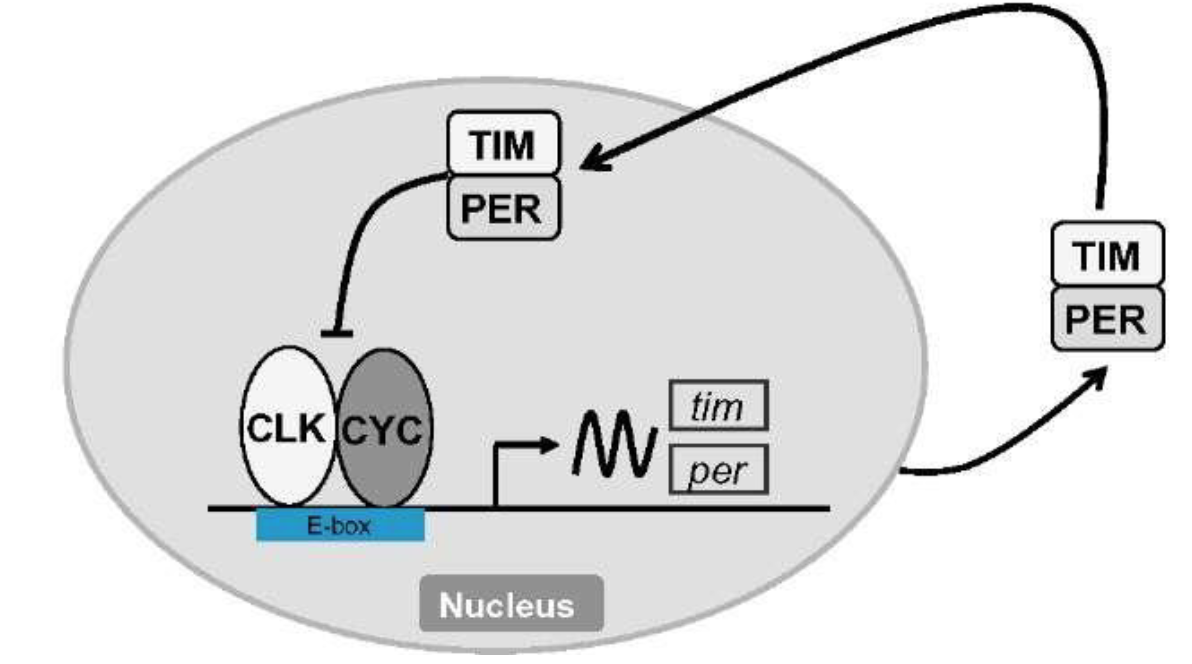
Explain how the circadian clock regulates during the day based on this image.
CLK/CYC dimer binds to DNA and stimulates the transcription of per and tim genes. Tim and Per accumulate during the day, forming heterodimers.
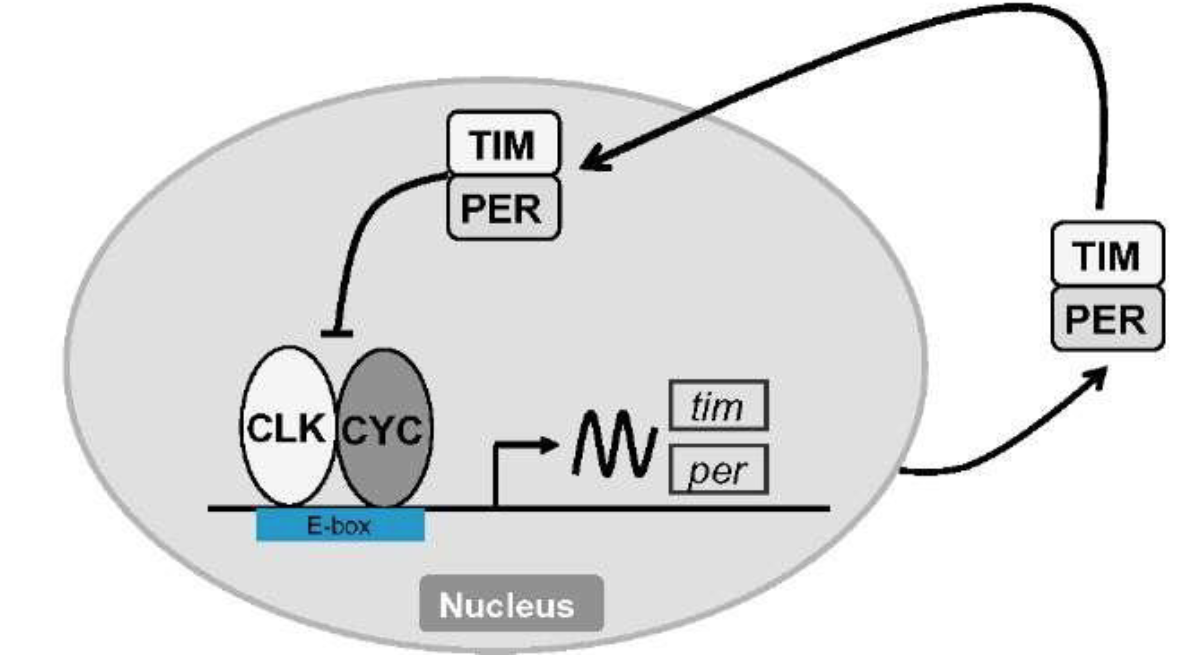
Explain how the circadian clock regulates during the night based on this image.
During the night, the levels of PER/TIM proteins increase, which inhibit CLK/CYC activity, leading to decreased transcription of per and tim genes.
Why do we expect PER and TIM levels to lag PER and TIM by several hours?
Translation is a very quick process, but the protein DBT binds to PER, causing it to break down, so that levels of PER would rise much slower, and so they do not peak until 6 hours later. This is why the cycle takes longer (near 24 hours).
In humans or other mammals, what homologs stimulate transcription? What proteins do they produce?
In humans and other mammals, the homologs CLOCK and BMAL1 stimulate transcription, producing the proteins PERIOD (PER) and CRYPTOCHROME (CRY), which are essential for circadian rhythm regulation.
What is the role of CK1£ in humans?
CK1£ is similar to the DBT protein, slowing down the rise of PER protein levels.
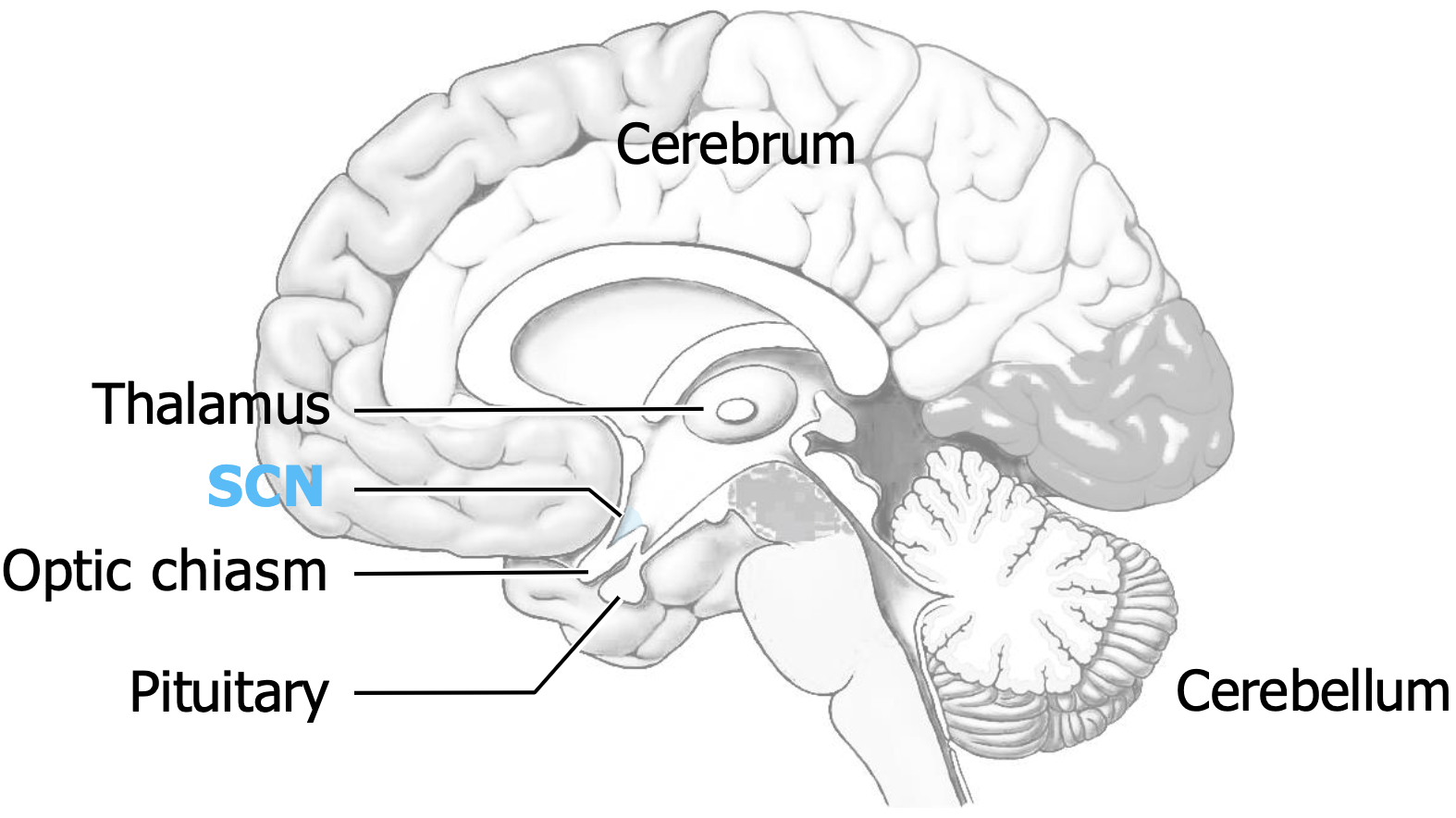
Where do signals from the melanopsin retinal ganglion cells reach?
They travel through the hypothalamic tract, reaching to the SCN. They interact with certain neurons of the SCN, making them fire and reset their clocks by a small amount.
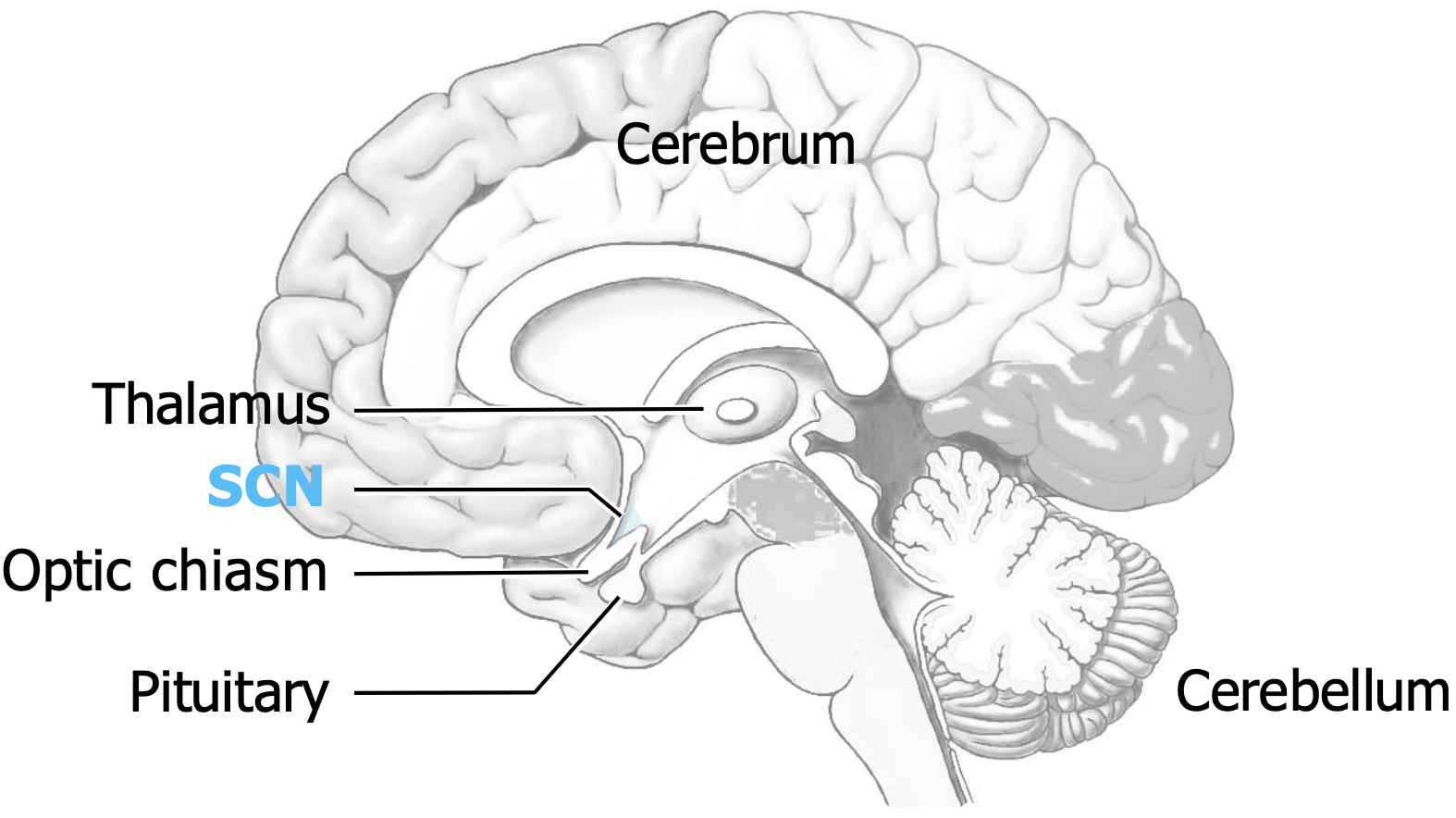
Every cells and tissue in the SCN…
operates on the same schedule.
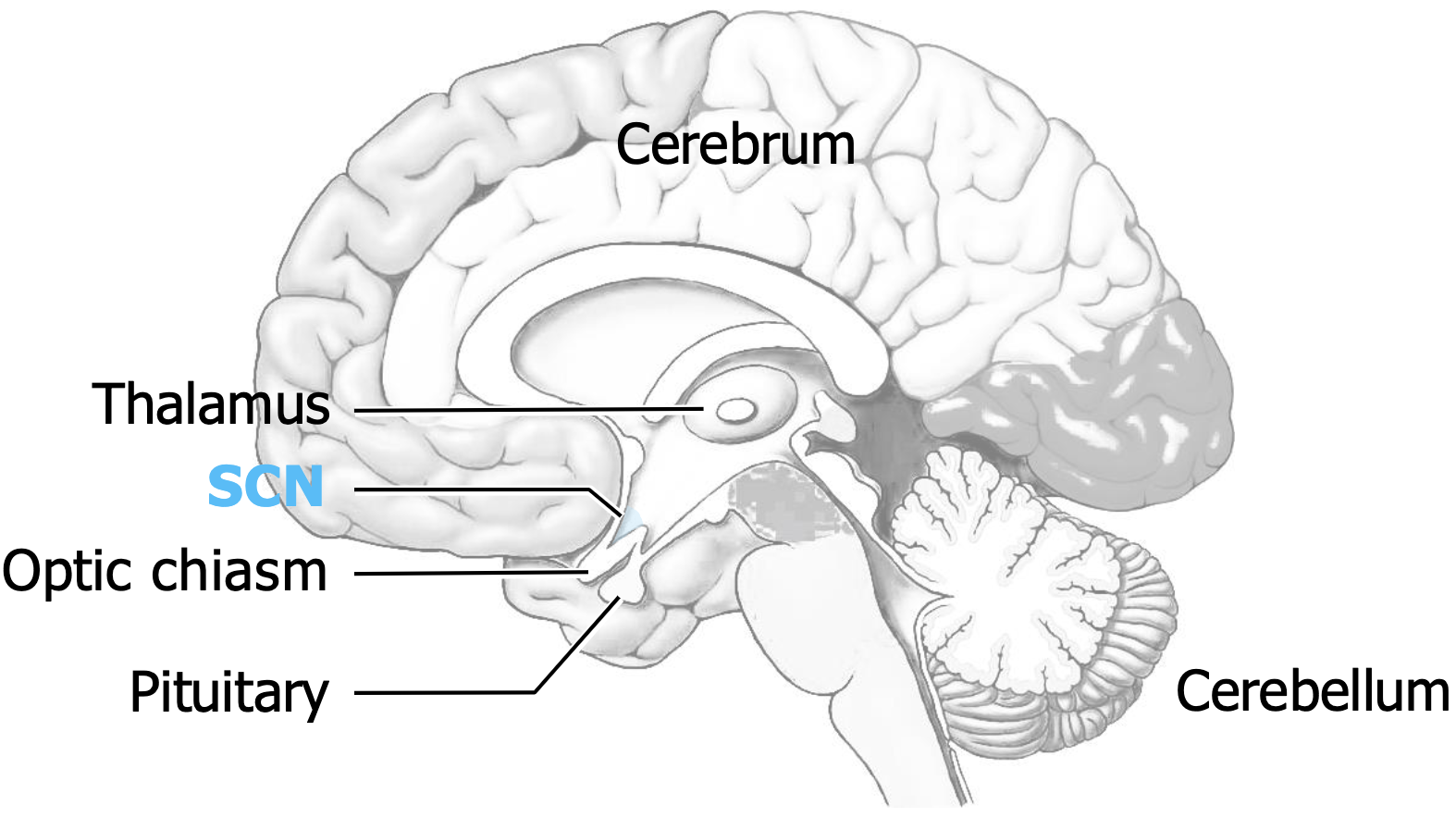
What do retinal signals in the ganglion cells cause?
Chemical changes in these SCN cells that lead to a breakdown of PER/CRY.
If PER/CRY levels drop after 4am….
the SCN sets forward a little to align with the 24 hour day.
If PER/CEY levels rise in the evening….
the SCN set backward to synchronize with the night, promoting sleep.
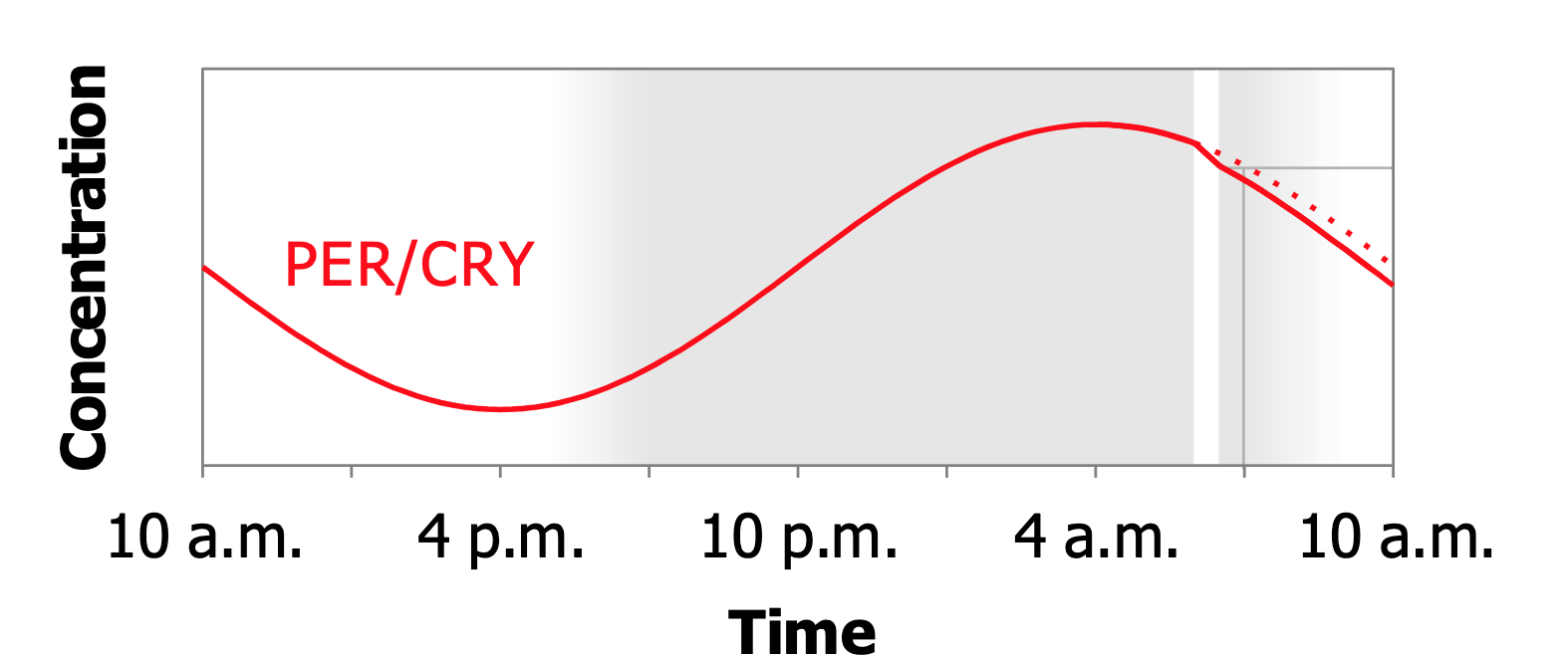
Explain the PER/CRY levels based on this graph.
At 4 pm, when the clock is set forward, PER/CRY levels are lower even without exposure to light. Around 6 am, the exposure of light causes CLK/BMAL1 to transcribe more genes, while PER/CRY levels drop.
When SCN becomes entrained to night and day….
so would the other cells with the SCN.
When SCN neurons have their clocks adjusted…
neural signals pass to other brain areas, which, in turn, secrete hormones to adjust the other intracellular clocks in the body.
When does the pineal secrete melatonin?
The pineal gland secretes melatonin primarily at night in response to darkness; melatonin levels then fall during the day to regulate sleep-wake cycles.
Where is the pineal gland located?
It’s located in the back of the diencephalon.
How could melatonin pills reduce jet lag? Give an example.
In London, England, they are 5 hours ahead of us. Your flight will start at 6 pm (but in London, it’s 11 pm). To adjust to your sleep schedule when you arrive in London, you would need to take the melatonin pills 30 minutes before 6pm. That way, SCN levels will be trained, and it will signal your body that it’s nighttime so that it aligns with the London circadian schedule.
How does the SCN excite its neurons during the day?
The SCN indirectly excites neurons in the LH so they release orexin, causing arousal.
How does the loss or dysfunction of orexin cause narcolepsy?
The loss or dysfunction of orexin-producing neurons disrupts the regulation of sleep-wake cycles, leading to excessive daytime sleepiness and episodes of sudden sleep during the day, characteristic of narcolepsy.
In the nighttime, other LH cells are active. What do they do?
They project out of the brain, releasing then neuropeptide MCH, inducing sleep.
Orexin and MCH neurons…
inhibit each other.
How could ATP make us sleepy?
When ATP levels break down, adenosine levels rise, making us sleepy.
During sleep, how do adenosine levels fall?
They are broken down by glial cells and neurons, decreasing sleepiness and promoting wakefulness. This is when ATP levels are getting restored.
Caffeine blocks adenosine receptors, but when it wears off, we crash. Why is that so?
When you’re awake, ATP levels will continue to rise with the help of coffee. When coffee wears off, there is a lot of adenosine to make you feel very sleepy, leading to a crash in energy levels.
Caffeine has a half-life of 6 hours. How could a late afternoon coffee disrupt your sleep schedule?
Consuming caffeine in the afternoon can keep adenosine levels blocked for longer, reducing feelings of sleepiness. By the time the caffeine effects wear off, adenosine levels can spike, causing difficulty falling asleep at night.
Explain non-REM sleep.
Non-REM sleep is a restorative phase of sleep characterized by a lack of rapid eye movement, divided into three stages, where the body undergoes essential processes such as tissue growth and repair, energy restoration, and memory consolidation.
Explain REM sleep.
REM sleep is a sleep phase characterized by rapid eye movement, vivid dreams, and increased brain activity. It is essential for emotional regulation, memory consolidation, and learning. Your muscle tone vanishes, so that you don’t act in your dreams.
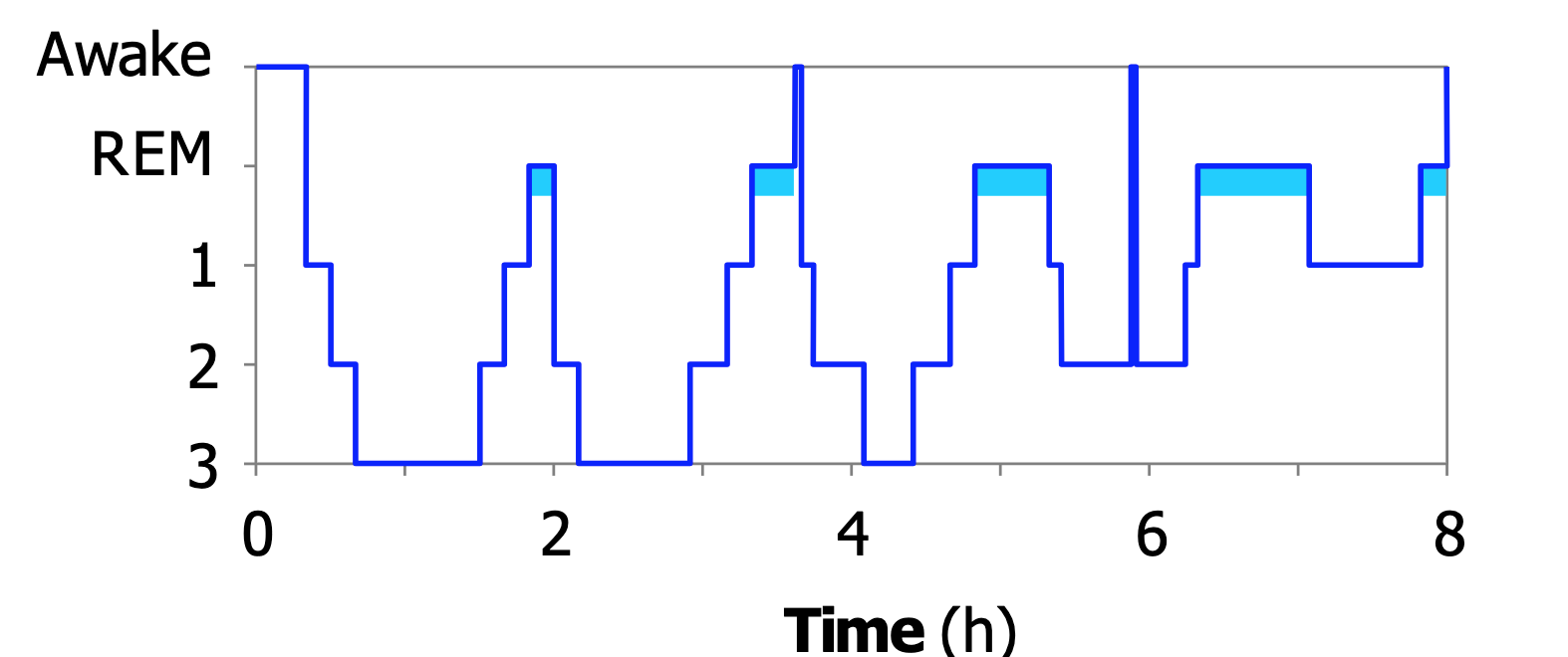
The first REM stage occurs around 90 minutes, but as sleep progresses…
the duration of REM periods increases with each cycle, often leading to longer REM phases in the latter part of the night.
After sleep deprivation….
The body experiences increased REM rebound, where more time is spent in REM sleep to compensate for lost sleep.
 Note
Note  Flashcards (114)