PSY390 Lecture 3: Genes and Genetic Variation
 Studied by 0 people
 Call Kai
 Learn
Learn Practice Test
 Spaced Repetition
 Match
Match Flashcards
 Knowt Play
1/45

There's no tags or description
Looks like no tags are added yet.
Name | Mastery | Learn | Test | Matching | Spaced | Call with Kai |
|---|
No analytics yet
Send a link to your students to track their progress
46 Terms
What is a gene?
A unit of heredity transferred from parent to offspring (definition is evolving over time)
In humans, 50% of the genetic material is from the father (sperm) and 50% is from the mother (egg)
DNA stands for…. This is what genes are made of.
DeoxyriboNucelic Acid
DNA is made of three parts. What are they? What is the DNA backbone and what are the bases?
phosphate group, sugar, nitrogenous base
backbone: phosphate & sugar
bases: adenine, cytosine, guanine, thymine
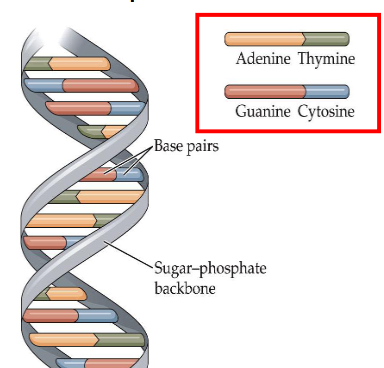
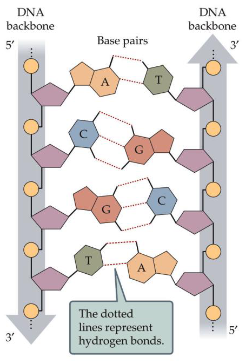
DNA usually exists as a ______ . ______ run antiparallel and are held together by ______ bonds between base pairs in each strand.
double strand
strands, hydrogen bonds
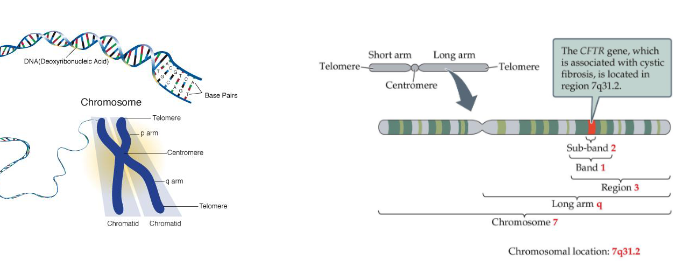
What is a chromosome? Staining reveals a ____ pattern (can be used as an “address” for genes). Long arm = ___ and short arm = __
chromosome = a long piece of double-stranded DNA → has a long arm (q) and a short arm (p)
staining reveals a band band pattern
(chromosomes are long, thread-like structures made up of DNA and proteins. They carry many genes and r found inside the nucleus of our cells.)
How many chromosomes do humans typically have? There are ____ pairs of ______ (non-sex chromosomes) and 1 pair of sex chromosomes (XX or YY).
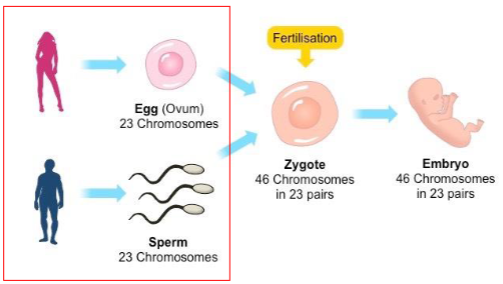
humans have 46 chromosomes, which come in pairs, with 23 inherited from each parent
22 pairs of autosomes
when the egg and sperm combine, the fertilized zygote gets one chromosome from the mother and one from the father for each type of chromosome
An enormous amount of DNA is packed into cells. Packaging of DNA affects gene _____ and _______. How this packaging changes with development and experience is called ______
gene accessibility and expression
epigenetics
Epigenetics is the study of how….
…environmental factors, behaviors, and experiences change gene expression without altering the underlying DNA sequence
The (crude) structure of a gene is composed of _____ sequences and _______ sequences
regulatory and protein-coding
What are regulatory sequences?
regulate the expression of the gene (including the promoter)
promoter = A promoter region of DNA is a specific, non-coding sequence located upstream (5’) of a gene that acts as a binding site for RNA polymerase and transcription factors, initiating transcription. It functions as a regulatory switch, determining when and where a gene is expressed within an organism.
needed to start transcription
What are protein-coding sequences?
determine the structure of the protein that will be produced
~2% of DNA encodes for the protein
central dogma
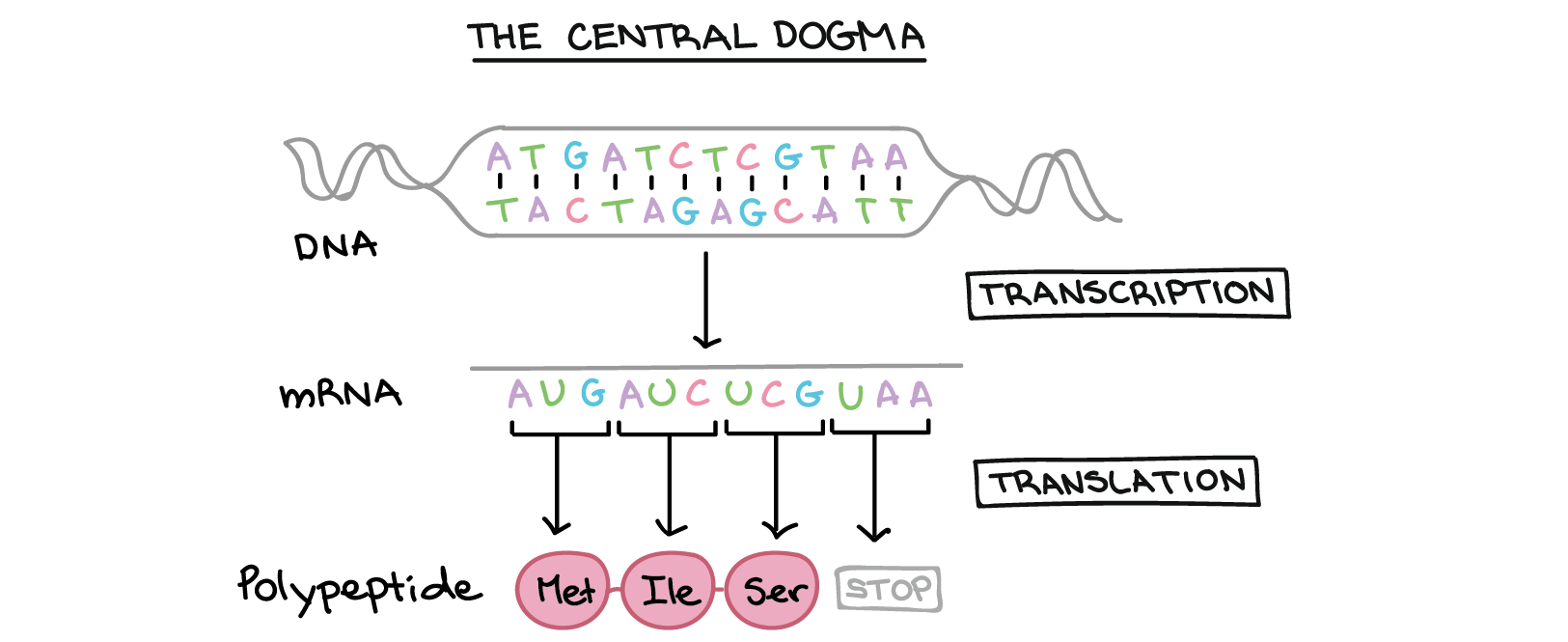
What is transcription?
describes DNA being transcribed to RNA
What does RNA stand for? What are the two main differences between RNA & DNA?
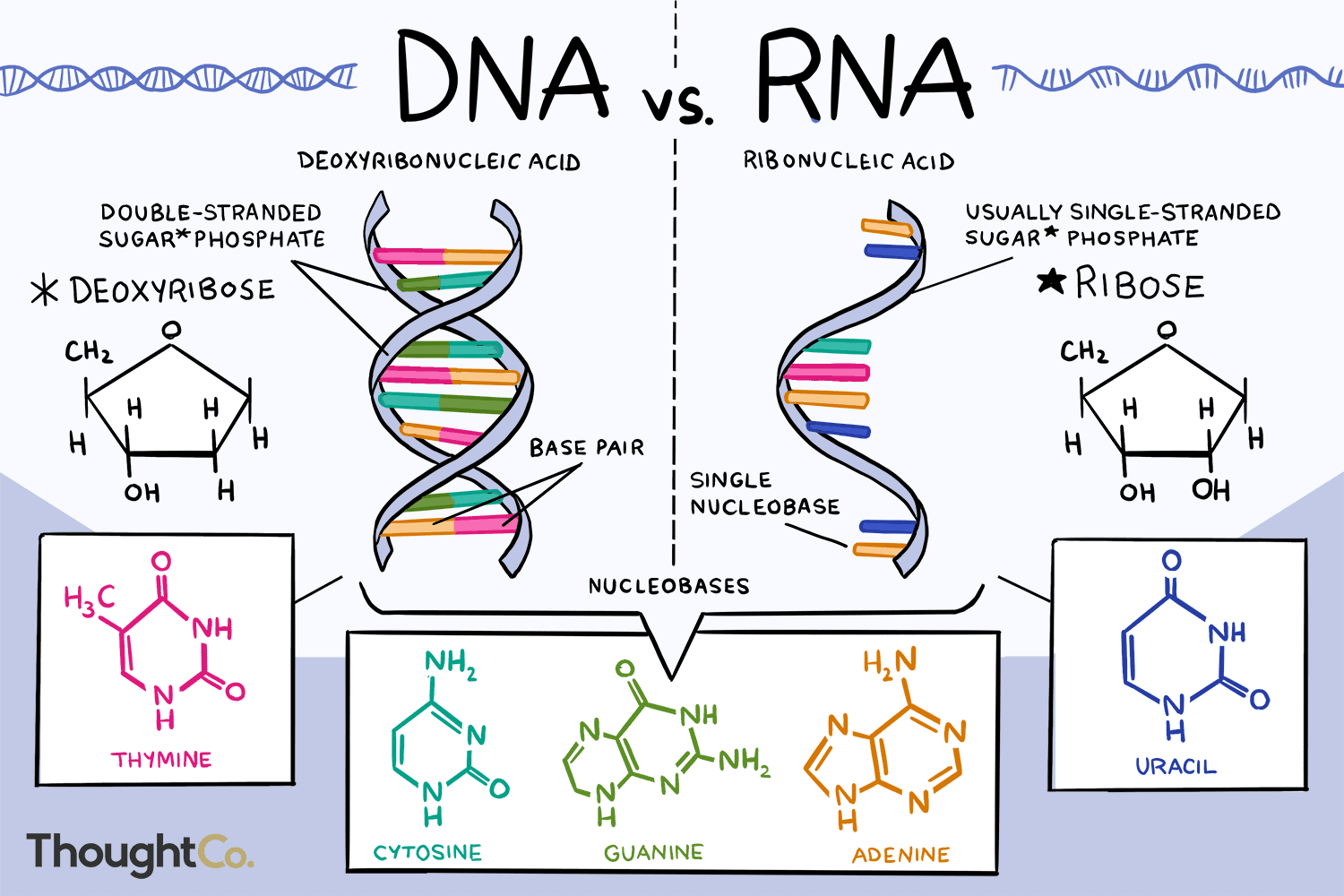
“chemical cousin of DNA”
ribose replaces deoxyribose (different sugar)
uracil base replaces the thymine base
What is the process of creating mature mRNA from an immature mRNA transcript?
Immature mRNA contains both exons (coding sequences) and introns (non-coding sequences).
Introns are removed through a process called splicing, leaving only the exons in the final, mature mRNA.
The mature mRNA is then used to synthesize proteins.
many genes r alternatively spliced, leading to variety of proteins (>80k)
Why are RNA levels important and how do they vary?
Tissue-Specific: RNA levels can vary by cell type.
Age-Specific: RNA levels can change with age.
State-Specific: RNA levels can fluctuate based on physiological state and experience.
Indicator of Gene Activity: Higher gene activity will often be accompanied by higher levels of the associated mRNAs and proteins
What is translation?
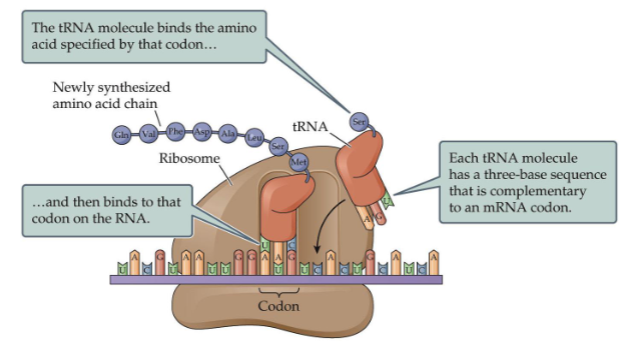
Translation: the building of a polypeptide using amino acids as directed by RNA (RNA → polypeptide)
What is a codon? Why is this important for translation?
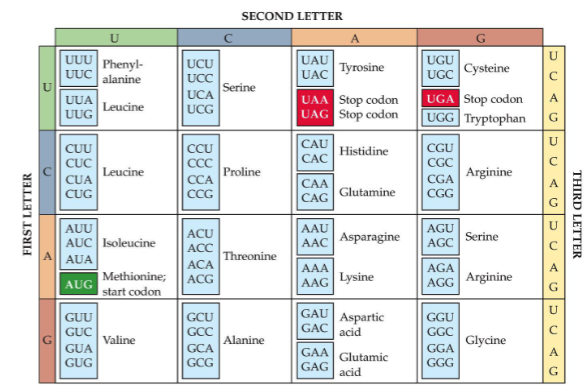
codons r groupings of 3 nucleotides on RNA (ex. AUG = methionine)
codons specify for:
amino acids
initiation of translation (start)
termination of translation (stop)
amino acids make peptides, peptides make proteins
peptide = chains of amino acids
What are 4 examples of proteins in the nervous system?
enzymes (some of which make neurotransmitters)
receptors (respond to transmitters and active neurons)
cytoskeletal elements (which make up cell structure)
transporters (which uptake and regulate neurotransmitters)
What is the role of the enzyme CYP2D6 in drug metabolism and why is its study controversial?
CYP2D6 Enzyme: Involved in drug metabolism.
Genes for CYP2D6 are correlated w drug effects.
The study of pharmacogenetics (the study between drug responses and genetics) is controversial
What is meiosis? How many chromosomes do we get from each parent?
meiosis = production of gametes (egg & sperm), which has half the genetic information
we get 1 chromosome of each type from each parent
What is meiotic recombination?
Meiotic recombination = or "crossing over," is the process during meiosis I where homologous chromosomes pair up and exchange segments of DNA.
The new chromosome (including pieces of both) is the used in the
gamete (egg or sperm)
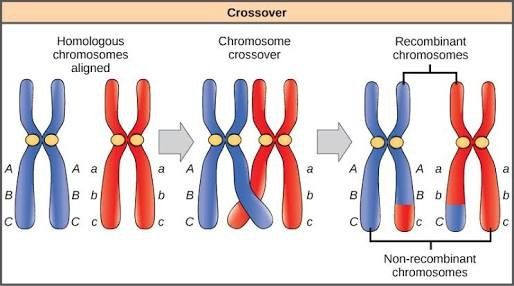
What may happen during meiotic recombination, and how does linkage affect it?
Genes on the parent chromosome may be separated (i.e. end up in different gametes)
linkage, plays a key role in recombination:
high genetic distance (Far-apart genes) are more likely to be separated.
low genetic distance (Close-together genes) are less likely to be separated.
linkage = linkage refers to the tendency of genes located close together on the same chromosome to be inherited together as a unit during meiosis, despite the shuffling of genetic material
What are 3 alternative explanations for two traits being correlated aside from gene linkage?
Single gene is involved in both traits
e.g. a gene for hair color is a gene for eye color
Biological process is shared across traits
e.g. single product affects both (e.g. melanin affects both hair and eyes)
Correlated within a population over time
e.g. in an isolated region, hair and blue eye color are more common than other traits because there are no other genetic variations
What is the difference in DNA sequence between unrelated individuals (genetic variation). To understand how genetic variation occurs, or why _____ occur naturally, must understand process by which DNA is copied.
~0.5-1% although small, it explains an impressive amt of the trait variation
mutations
Duplication processes in meiosis is imperfect, errors aka ______ occur.
mutations
100 – 200 mutations are passed down each generation, frequency of mutations goes up with age
what are mutations?
Mutations are permanent, structural changes in an organism's DNA sequence—the order of adenine, guanine, cytosine, and thymine bases. These alterations, which can range from single-base substitutions to large-scale chromosomal rearrangements, occur due to errors during DNA replication or damage from environmental factors like radiation and chemicals. While often harmless or neutral, mutations can cause diseases like cancer, drive evolution, or be inherited.
Mutations within a gene create an _____. why is this important?
alternative version of that gene (an allele).
Each gene likely has many alleles (as all it takes to make an allele is a change in one base)
Alleles may differ in the protein structure that they encode and/or its expression level
What are alleles, and how can they affect behavior?
most humans have the same ~20 000 genes
Alleles: Each gene can have different versions, called alleles.
Example: The AVP1a gene has multiple alleles (X, Y, Z).
Functional Differences: Alleles may differ in their functionality, leading to differences in behavior.
Example: A person with allele may have different social behavior than someone with allele Y or allele Z.
what are the 4 types of genetic variations?
Single nucleotide polymorphisms (SNPs)
Copy number variations (CNVs)
Variable number tandem repeats (VNTRs)
Chromosomal number variations
What is an SNP? Are they common? Consequential?
SNPs = Single nucleotide polymorphisms
type of genetic variation, change in a single nitrogenous base in a nucleotide at some point in the DNA sequence
~90% of genetic variations
~10 million known SNPs in human genome; one every ~300 base pairs
A given SNP may exist in ~1% of the population (i.e. common)
Not all SNPs are consequential; most have no major consequences
Why do SNPs matter?
A gene includes coding regions which specify proteins and non-coding regions which do not
for coding genes, SNPs can…
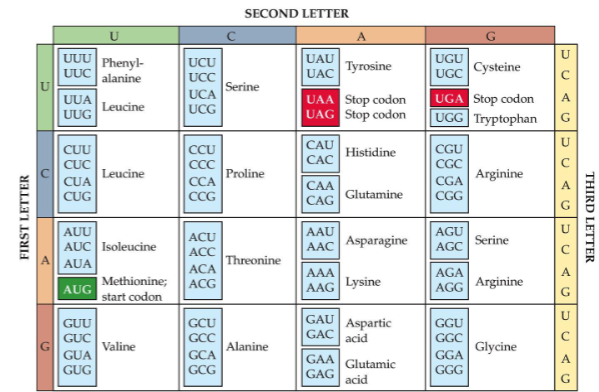
have no effect on a sequence (silent, most common, e.g. UUU > UUC)
alter a sequence (e.g. CAU > CAA)
prematurely stop the reading (e.g. UAC > UAA)
for non-coding genes, SNPs…
do not directly affect a sequence
can still hv important effects, particularly if they occur in regulatory elements → mutations here can determine when and how much protein is produced
in fact, most genetic variations associated with traits (at least diseases) hv been in non-coding regions
Give an example of SNPs in action. hint: eye colour
blue eyes → emerged ~6000-10000 yrs ago
an SNP in a non-coding region of the HERC2 gene can result in blue eyes
likely bc it regulates the levels of OCA2 gene, which is an important determinant of iris colour
what are CNVs?
CNVs = copy number variations
type of genetic variation
large DNA segments are deleted/duplicated (rare event)
5-10% of the genome might have CNVs
In a given locus, numbers vary (from 10s to 100s)
A locus (plural: loci) is the specific, fixed physical location or "address" of a gene or DNA sequence on a chromosome
Abnormal CNV numbers have been associated with autism, schizophrenia, and learning disabilities
What are VNTRs?
VNTRs = variable number tandem repeats
type of genetic variation
A short sequence repeated at a specific locus
Allele 1 (2 repeats): NNN-ATAT
Allele 2 (3 repeats): NNN-ATATAT
Excessive repeats can be detrimental
Huntington Disease, FXS
Individuals differ in VNTRs
Accordingly, VNTR number is useful for DNA fingerprinting
what are Chromosomal number variations?
type of genetic variation
Caused by unequal separation of homologous chromosomes in meiosis = non-disjunction → As a result of this error, the fertilized zygote may carry an extra chromosome (trisomy) or be missing a chromosome (monosomy)
Though many are theoretically possible, most are lethal
Several types of autosomal trisomy: ex. trisomy 21 (down syndrome)
addition of sex chromosomes also occurs
Monosomy is typically lethal, except in the case of Turner’s Syndrome (loss of a sex chromosome, XO)
.
Why do chromosomal number variations have more severe effects compared to SNPs, VNTRs, and CNVs?
Chromosomal Variations: Involve the duplication or deletion of many thousands of genes, which causes larger genetic changes than smaller variations.
Contrast this to SNPs or VNTRs (in one gene) or CNVs (several genes, potentially)
more deleterious effects, including behavioral impairments, early mortality, and infertility are common.
as a result, chromosomal number variations are unlikely to be passed on to the next generation.
these other processes are also important…
Gene translocation
Genetic imprinting
Inheritance of mitochondrial DNA (different than inheritance of nuclear DNA)
What is gene translocation? What likely arose via translocation?
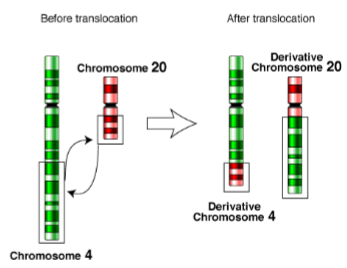
gene translocation = Exchange of genetic material between non-homologous chromosomes
Balanced (reciprocal) or unbalanced
Though many balanced translocations are harmless, some are major risk factors
variants of the disrupted in schizophrenia gene (DISC1) likely arose via translocation
what is genetic imprinting?
genetic imprinting = Phenomenon wherein the expression of a gene is affected by its parental origin (either maternal or paternal)
Best example is perhaps the case of two disorders: Angelman syndrome and Prader-Willi syndrome (Though strikingly different in symptoms, both disorders are associated with a loss of the same genetic material)
Maternal Inheritance → Angelman syndrome: Undersized head, seizures, and impulsive behaviors.
Paternal Inheritance → Prader-Willi syndrome: Obsession with food, poor muscle tone, and impaired cognition.
How do paternal and maternal DNA methylation patterns differ, and how does this affect gene activity?
Epigenetic Difference: Male and female parents have different patterns of DNA methylation.
Methylated DNA can be made inactive by blocking access to transcription machinery.
Since DNA methylation differs between parents, the active genes in mothers and fathers can also differ.
describe the mitochondria.
mitochondria is an organelle involved in energy production within the cell (ATP)
are self-replicating and have their own DNA
There are some 1000-2000 mitochondria per cell
How is mitochondrial DNA inherited, and what is an example of a mitochondrial DNA disorder? What is one strategy to prevent mitochondrial disease?
Mitochondria fit into cytoplasm of the egg but not that of the sperm
Maternal mitochondrial DNA (from egg) is inherited but paternal mitochondrial DNA (sperm) is not
Leber’s hereditary optic neuropathy, which results in blindness, is a
mitochondrial DNA disorder
The disorder is characterized by maternal inheritance
Mitochondrial diseases show a high degree of heritability
One strategy to prevent mitochondrial disease is to replace unhealthy mitochondria in the embryo with mitochondria from a donor
What are the 3 core principles of evolution by natural selection?
Individuals vary in traits
animals adaptive traits will live longer + produce more offspring (natural selection)
adaptive traits are heritable (transferred to offspring)
How do selection pressures influence adaptive traits in a population?
Selection Pressure: A severe selection pressure (e.g., disease epidemics) may favor certain traits that increase survival or reproductive fitness.
Example 1: Disease resistance traits in humans.
Example 2: Antibiotic resistance in bacteria due to antibiotic exposure.
→ Alleles for traits that improve survival or reproduction tend to increase in frequency in the population.
Without a selection pressure, allele frequencies remain stable, following the Hardy-Weinberg principle.
another example is selection pressure and food supply
How does genetic diversity contribute to a population, and what role do environmental factors play in genetic traits?
Gene Environment Interaction: The value of a gene can depend on the environment it’s in.
Example: Sickle cell anemia is a genetic disorder causing anemia (disadvantage) but also malaria resistance (advantage) in certain environments.
Genetic Diversity:
Diversity increases the range of alleles and traits in a population.
It allows the population to respond to various selection pressures.
Widespread cloning (genetically identical individuals) reduces genetic diversity, limiting the population's ability to adapt to new environmental challenges.
 Note
Note  Flashcards (33)