EX2 Beta Blockers (P'col)
 Studied by 0 people
 Call with Kai
 Learn
Learn Practice Test
 Spaced Repetition
 Match
Match Flashcards
 Knowt Play
1/24

There's no tags or description
Looks like no tags are added yet.
Name | Mastery | Learn | Test | Matching | Spaced | Call with Kai |
|---|
No study sessions yet.
25 Terms
Non-selective (First generation)
Nadolol
Propranolol
Timolol
Sotalol
β1-selective (Second generation)
Atenolol
Bisoprolol
Esmolol
Metoprolol
Non-selective (Third generation)
Carvedilol
Labetalol
β1-selective (Third generation)
Nebivolol
Propanolol
NON-SELECTIVE BETA
ANTAGONISTS (FIRST GENERATION)
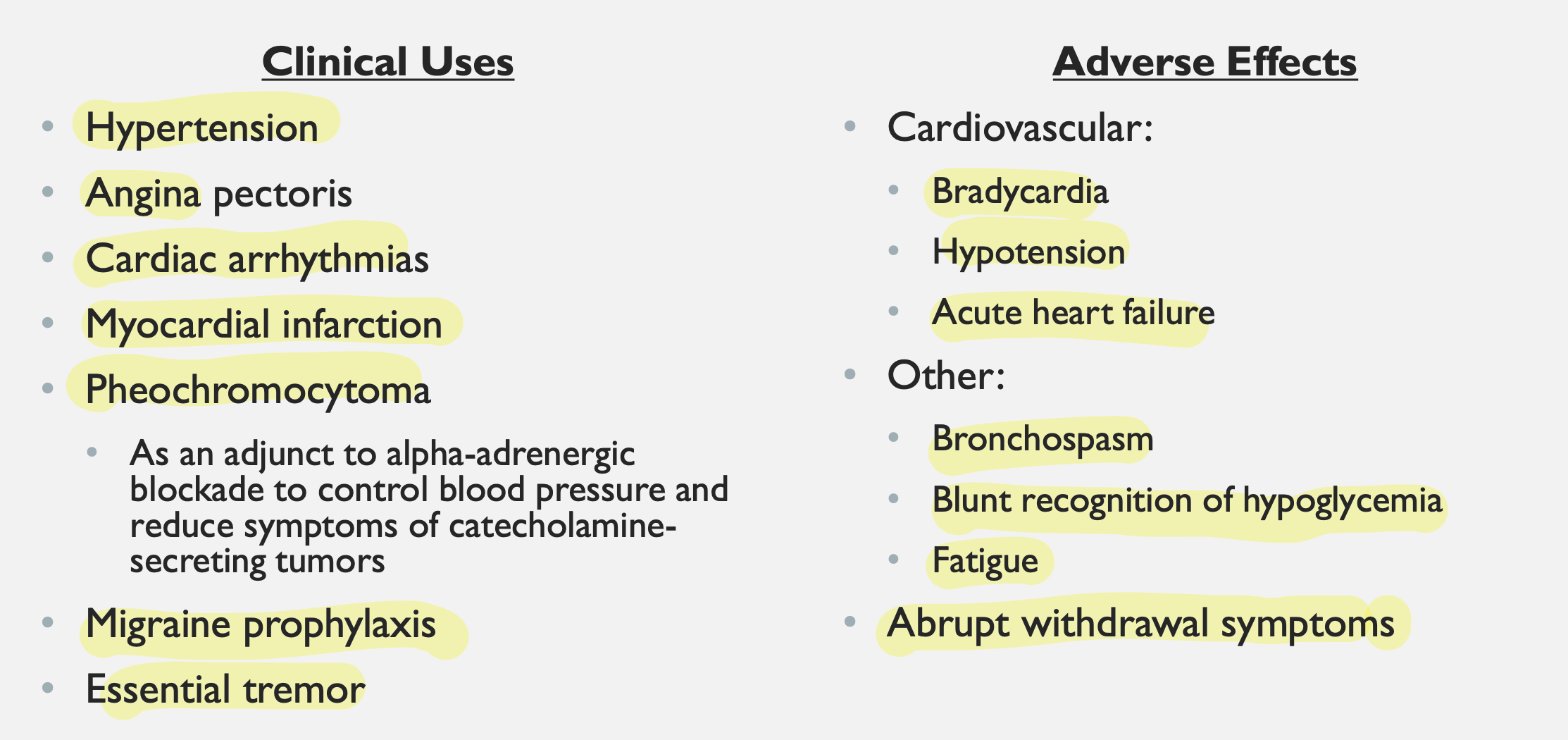
Timolol
Competitive, reversible antagonist
of β1 and β2 receptors
• Major therapeutic use
• Glaucoma
• Decreases aqueous humor formation
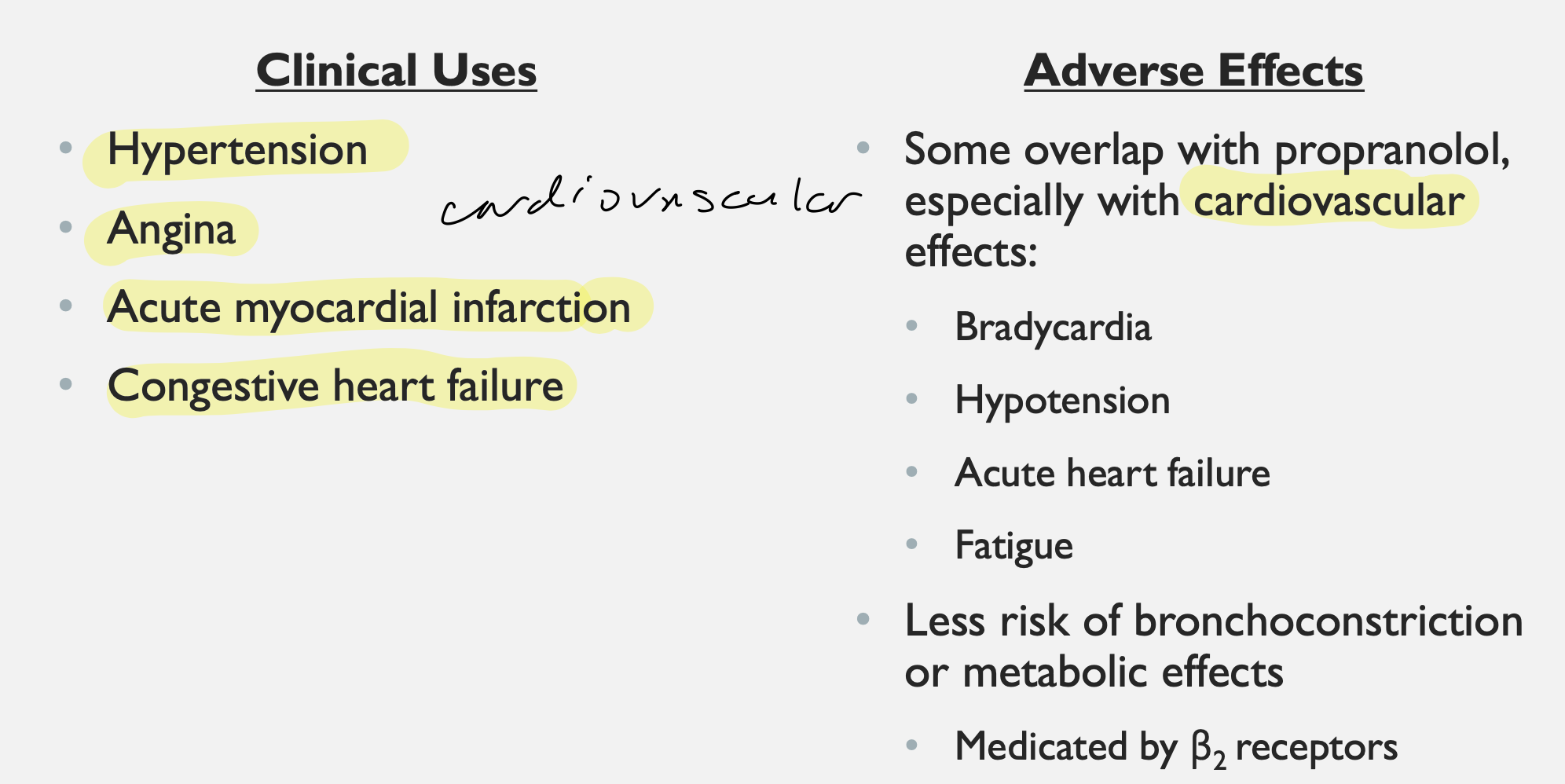
Metoprolol
BETA1-SELECTIVE ANTAGONISTS
(SECOND GENERATION)
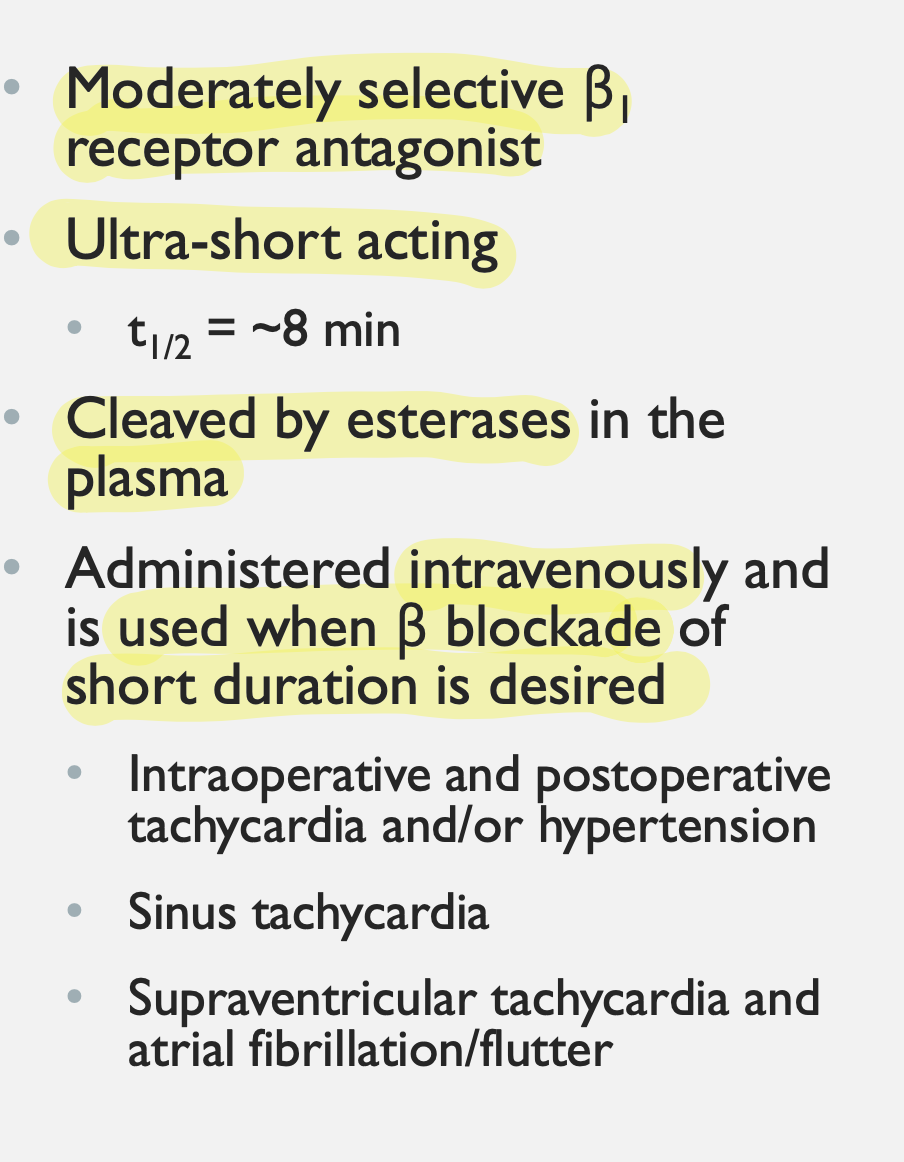
Esmolol
BETA1-SELECTIVE ANTAGONISTS
(SECOND GENERATION)
Labetalol
Third gen
• Competitive, reversible antagonist of α1
and both β receptors
• Used to treat:
• Hypertension
• Hypertensive emergencies (IV
administration
Nebivolol
Third gen
Highly selective β1 receptor antagonist
• Also stimulates NO-mediated
vasodilation
• Used to treat:
• Hypertension
Carvedilol
third gen
• Competitive, reversible antagonist of α1
and both β receptors
• Also has antioxidant and anti-
inflammatory properties
• Blocks L-type calcium channels at
higher doses
• Used to treat:
• Heart failure with reduced ejection
fraction
• Hypertension
• Reduces mortality in patients after
myocardial infarction
Clinical use of beta blockers in HTN
Effective and well-tolerated
• No longer a first-line therapy, particularly in patients over
age 60 years
• May be associated with inferior protection against stroke risk
Ischemic heart disease
Blockade of cardiac β receptors results in:
• Decreased cardiac work
• Reduction in oxygen demand
• Reduces the frequency of angina episodes
• Improves exercise tolerance in many patients with angina
• Prolongs survival of patients who have had a myocardial infarction
Strongly indicated in the acute phase of myocardial infarction
Cardiac arrhythmias
Effective in the treatment of both supraventricular and ventricular
arrhythmias
• Slows ventricular response rates to atrial flutter and fibrillation
• Increases atrioventricular nodal refractory period
• Can also reduce ventricular ectopic beats, especially if precipitated by
catecholamines
Esmolol is useful against acute perioperative arrhythmias
• Short duration of action
• Sotalol has antiarrhythmic effects involving ion channel blockade
Heart failure
• Effective in reducing mortality in patients with chronic
heart failure
• Metoprolol, bisoprolol, carvedilol
• Mechanisms are uncertain
• Beneficial effects on myocardial remodeling
• Decreases the risk of sudden death
Glaucoma
• Reduces intraocular pressure
• Reduced production of aqueous humor by the ciliary body
• Open-angle glaucoma
• Comparable efficacy to epinephrine or pilocarpine
• Better tolerated
• Beta blockers that lack local anesthetic properties are suitable for local use in the
eye
Hyperthyroidism
• Beta blockers ameliorate the symptoms of hyperthyroidism
that are caused by increased beta-adrenergic tone
Should be given to most hyperthyroid patients who do not
have a contraindication to their use
Migraine
• Preventative treatment
Established as effective
• Propranolol, metoprolol, timolol
Essential tremor
• Sympathetic activity may
enhance skeletal muscle tremor
• Propranolol
Performance anxiety
• Reduction of the somatic
manifestations of anxiety
• Propranolol
Comorbidities should always be considered
• β1-selective antagonists are preferable in patients with:
Bronchospasm
• Diabetes
• Peripheral vascular disease
• Raynaud’s phenomenon
Cardiovascular ADR
HF
Bradyarrhythmias
Exacerbate peripheral vascular disease
• Raynaud’s phenomenon
• Abrupt discontinuation
• Exacerbate angina
• Increased risk of sudden death
• Exercise intolerance
Pulmonary ADR
Block β2 receptors in bronchial smooth
muscle
• Little effect in normal individuals
• In patients with asthma or COPD, can
cause life-threatening
bronchoconstriction
Less likely with β1-selective antagonists
or β antagonists with ISA
CNS ADR
Fatigue
• Sleep disturbances (insomnia, nightmares)
• Depression
METABOLIC EFFECTS ADR
Delays recovery from
hypoglycemia
• β2-mediated effects of
catecholamine on gluconeogenesis
and glycogenolysis
• β1-selective antagonists are less
likely to delay recovery from
hypoglycemia
• Blunts the perception of
symptoms of hypoglycemia
• Tremor, tachycardia, nervousness
Can be a problem for older diabetic patients
 Note
Note  Flashcards (161)