KINE 476 Exam 5
 Call Kai
 Learn
Learn Practice Test
 Spaced Repetition
 Match
Match Flashcards
 Knowt Play
1/153

There's no tags or description
Looks like no tags are added yet.
Name | Mastery | Learn | Test | Matching | Spaced | Call with Kai |
|---|
No analytics yet
Send a link to your students to track their progress
154 Terms
HumeroULNAR joint
articulates trochlea of humerus + trochlear notch of ulna
convex: trochlea of the humerus
concave: trochlear notch of ulna
synovial joint
hinge joint
uniaxial- allows for flexion and extension
HumeroRADIAL joint
articulation of the capitulum of humerus + head of radius
convex: capitulum of humerus
concave: proximal surface of radial head
synovial joint
hinge joint
uniaxial- allows for flexion and extension
Proximal radioulnar joint
proximal articulation of the radial notch of ulna + head of radius
convex: head of radius
concave: radial notch of ulna
synovial joint
uniaxial- allowing only pronation and supination of the forearm
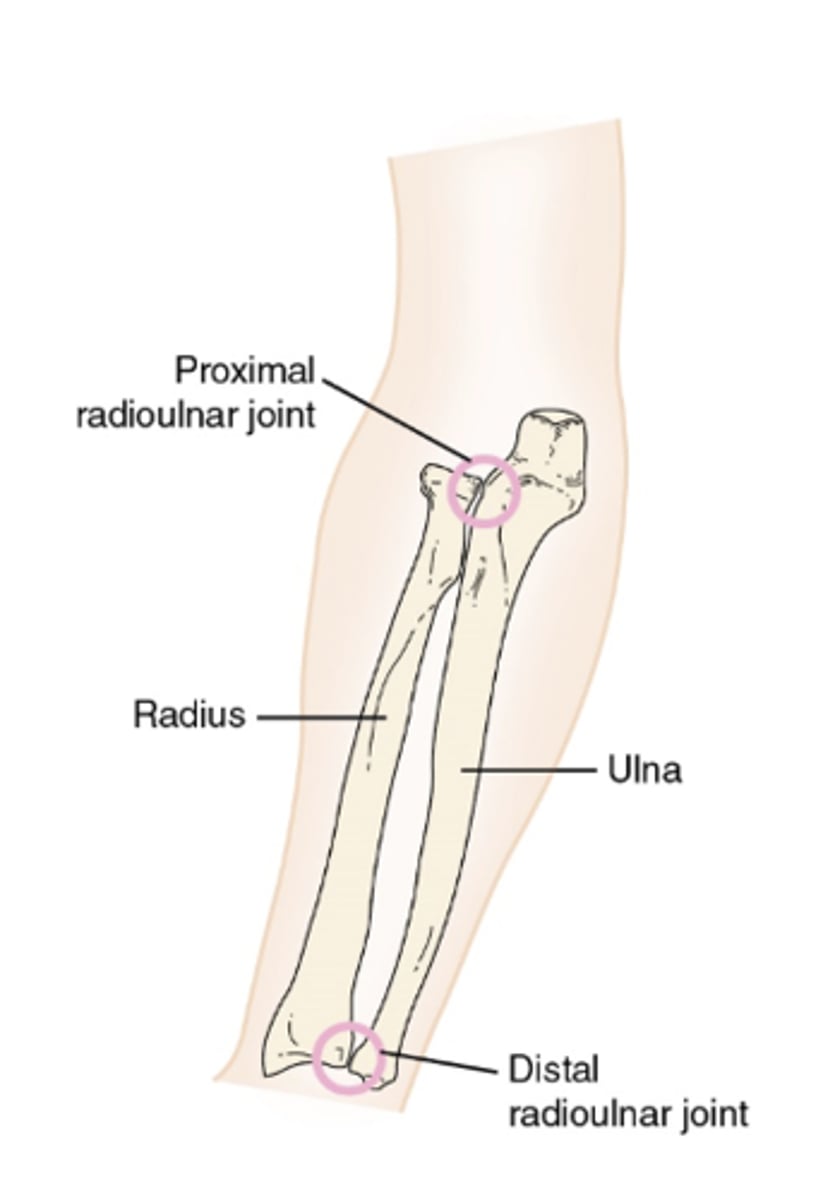
Describe the movement happening in the proximal radioulnar joint
At the proximal end, the head of the radius pivots within the radial notch of the ulna, forming the superior or proximal radioulnar joint
Distal radioulnar joint
distal articulation of the ulna and radius
synovial joint
pivot joint
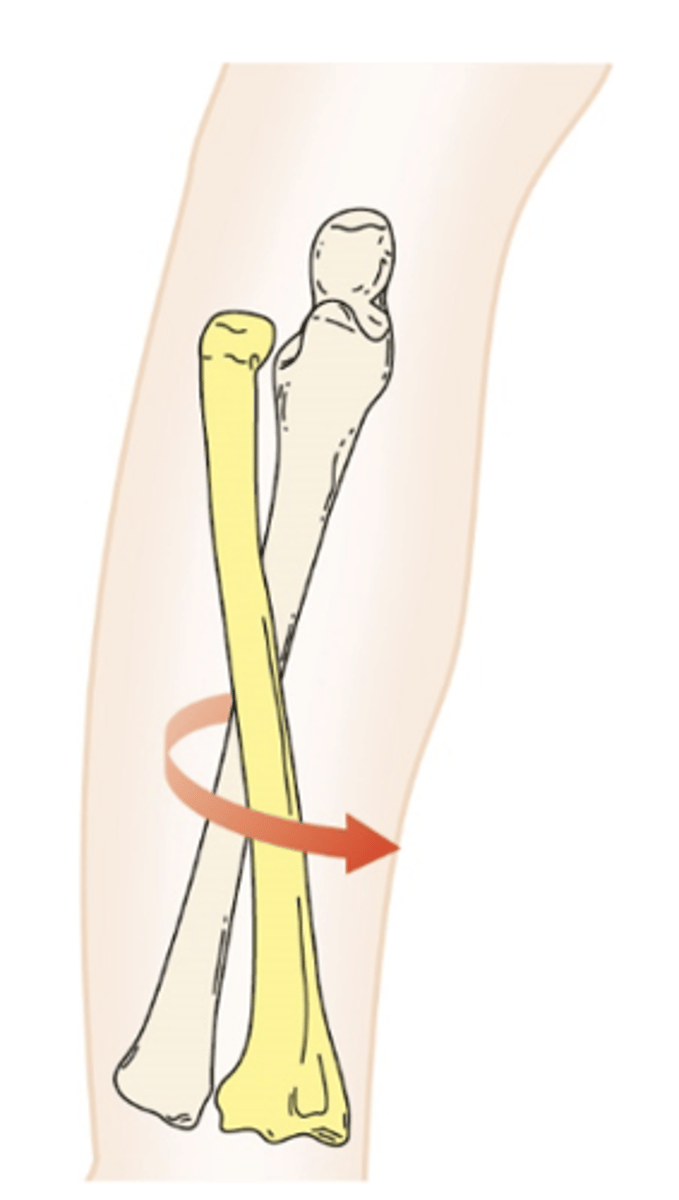
uniaxial- allowing only pronation and supination of the forearm
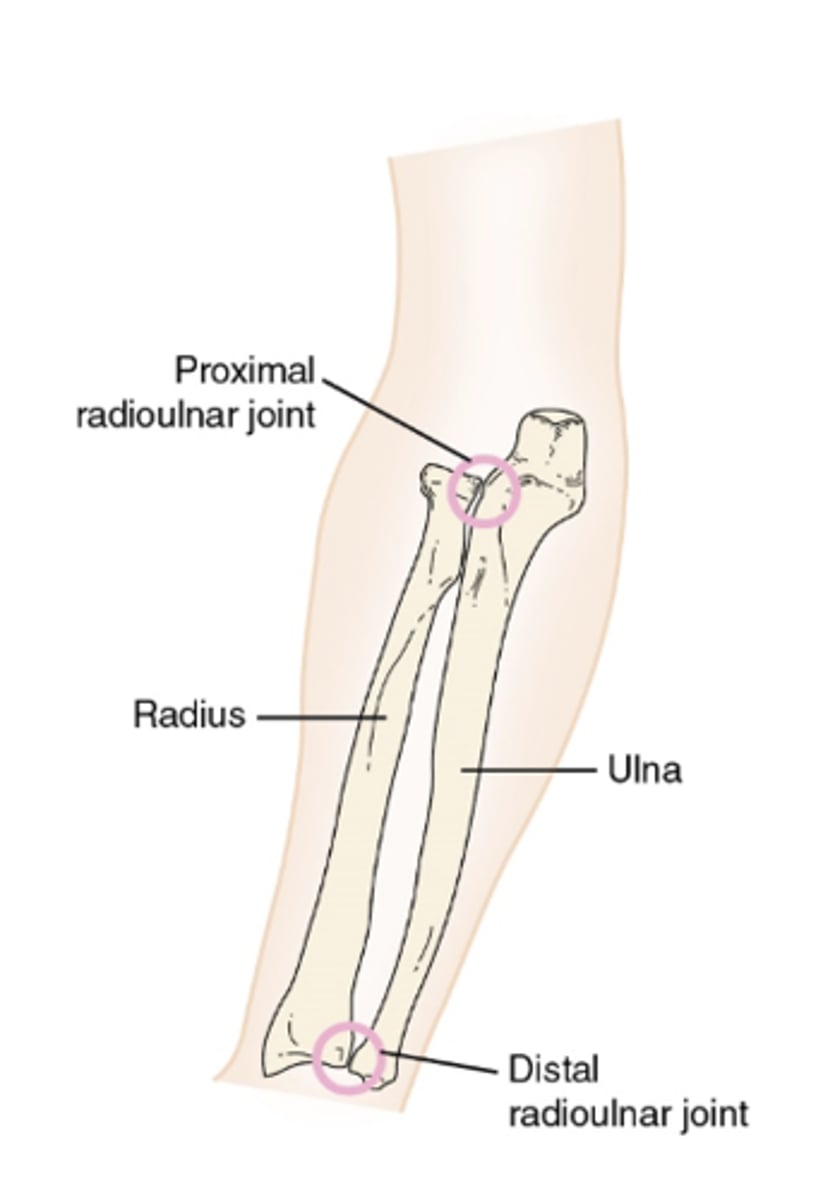
Describe the movement happening in the distal radioulnar joint
Due to the shape of the radius, the distal end of the radius rotates around the distal end of the ulna. forming the inferior or distal radioulnar joint
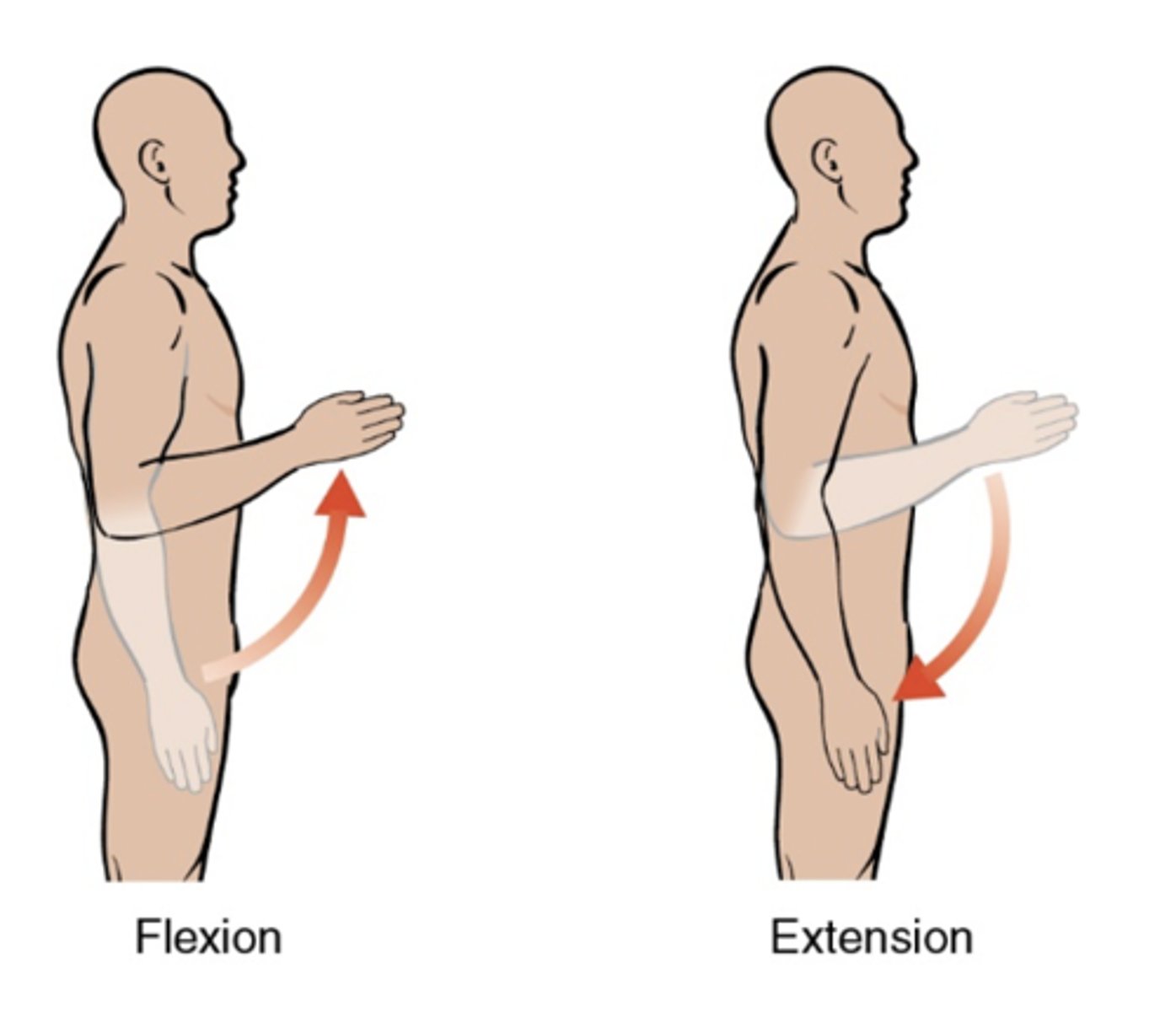
Osteokinematic motions of elbow
sagittal plane; frontal axis
flexion: 0-150 degrees
extension: 0 degrees, some have a few degrees of hyperextension
Osteokinematic motions of the forearm
horizontal plane; vertical axis
supination: palm faces anteriorly 0-80 degrees
pronation: palm faces posteriorly 0-80 degrees
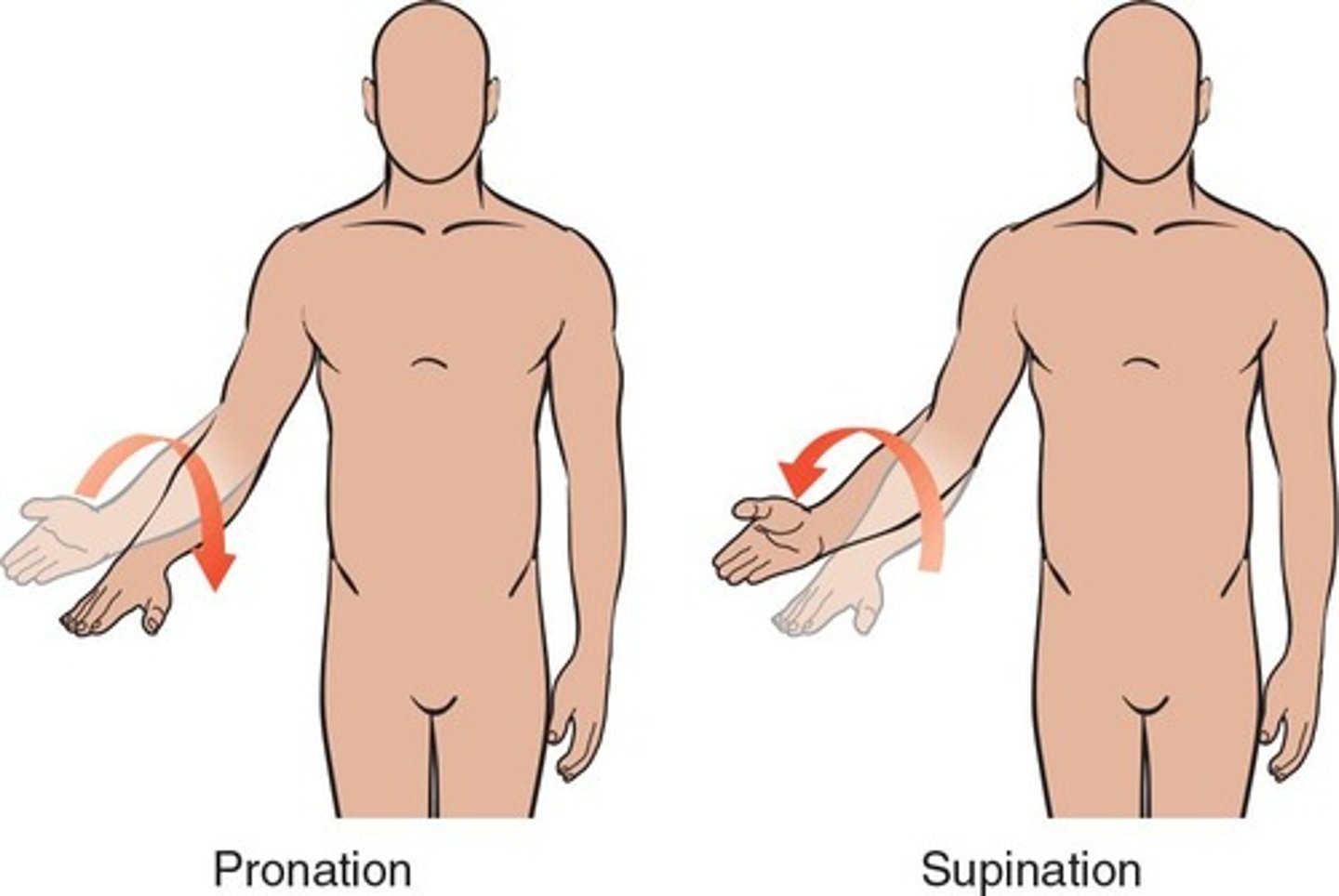
Motions of the distal radioulnar joint
The radius rolls and glides in the same direction to move over the ulna
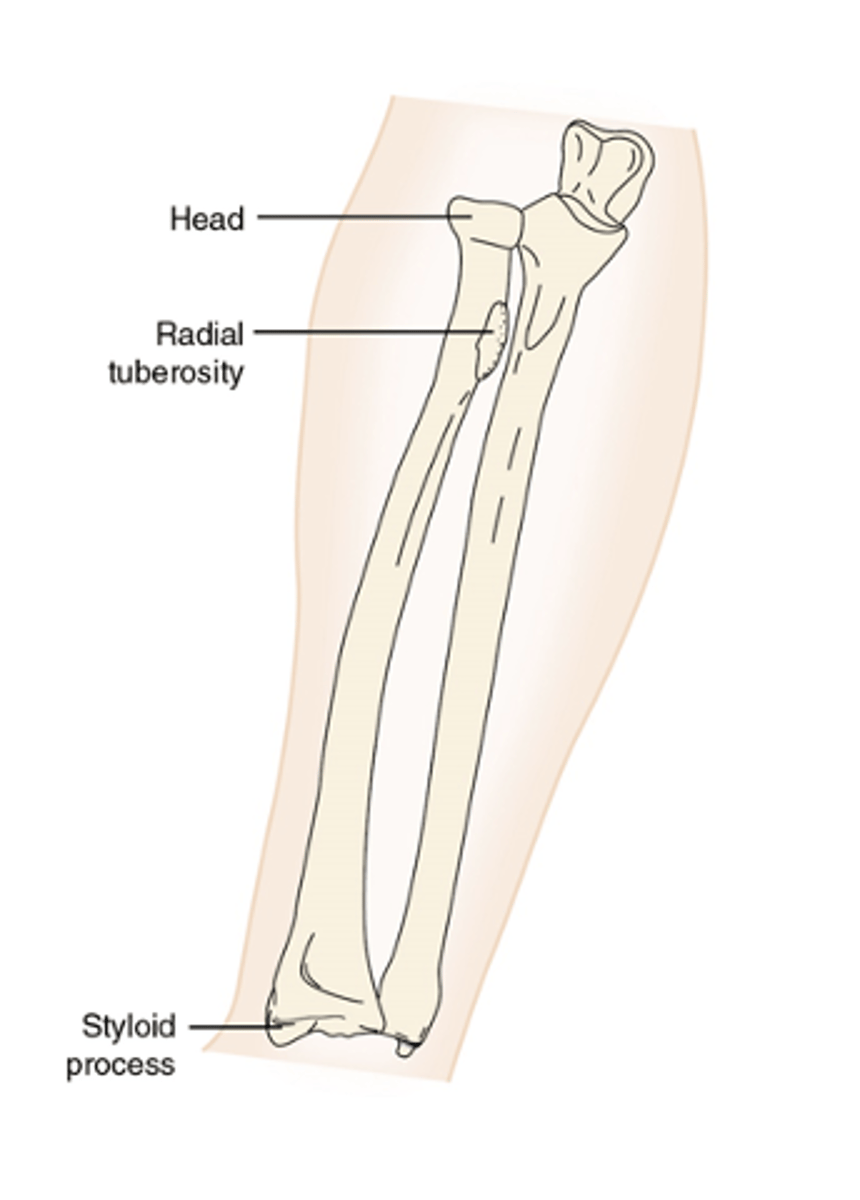
Label this
Label this
Label this:
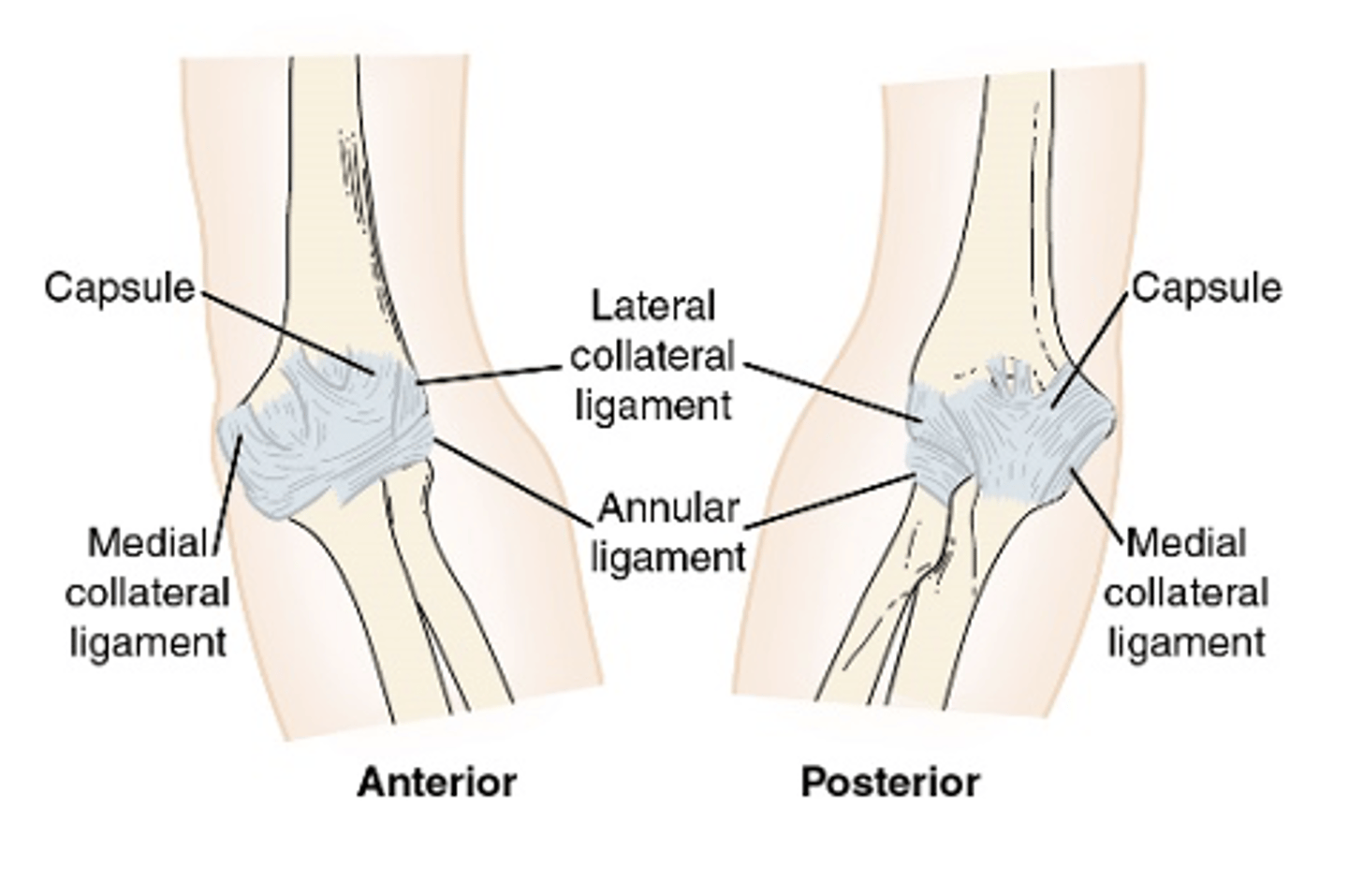
Capsule of the elbow
- surrounds elbow complex
- encompasses distal humerus, proximal radius, and proximal ulna
What is the carrying angle in the anatomical position?
Angle formed by the arm and forearm when in the anatomical position
The longitudinal axes of the humerus and forearm form this angle. This angle tends to be greater in women than in men.
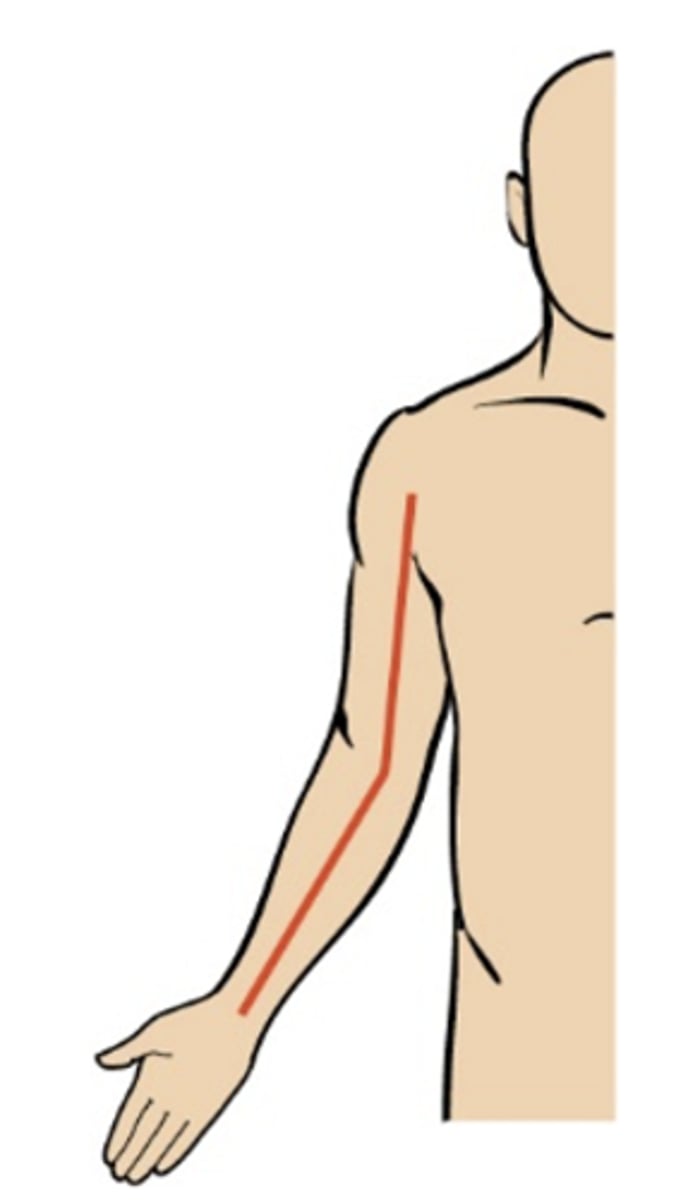
Why does the carrying angle occur?
It occurs because the distal end of the humerus is not level. The medial side (trochlea) is lower than the lateral side (capitulum).
Therefore, as the ulna and radius move around the trochlea and capitulum of the humerus, they do not move in a straight line like a typical hinge joint
How is the first vertical line drawn to determine the carrying angle?
It is drawn parallel to and over the humerus from the shoulder and extended past the elbow
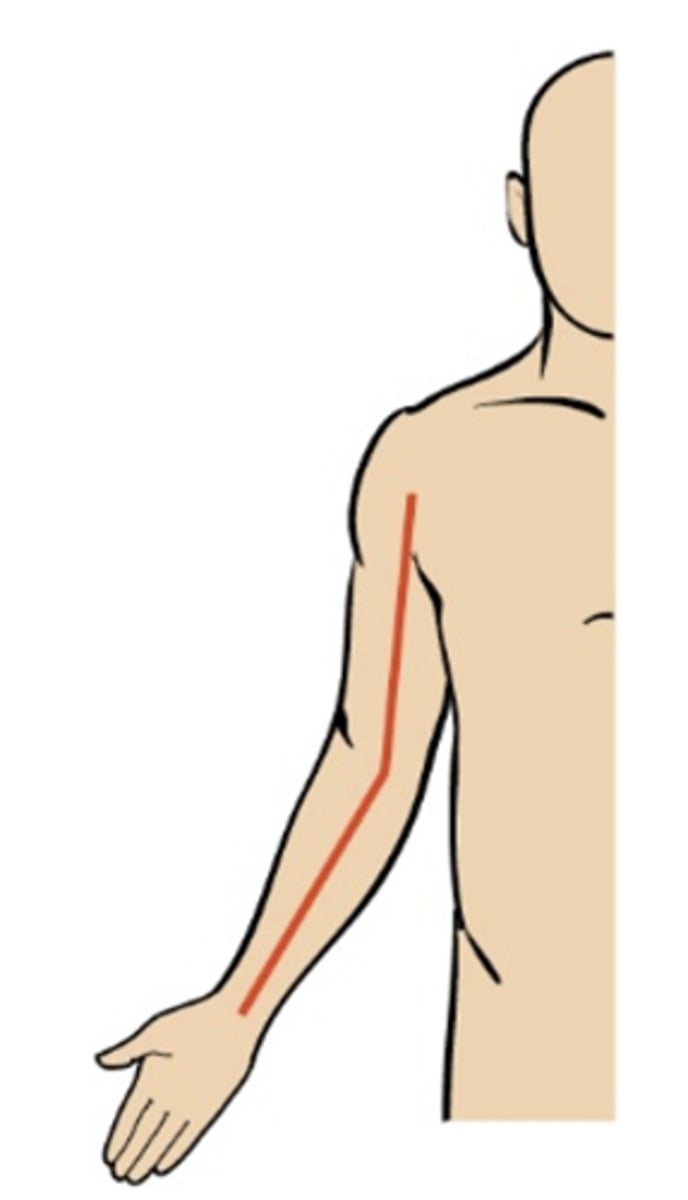
How is the second vertical line drawn to determine the carrying angle?
It is drawn parallel to and over the radius and ulna to a point proximal to the elbow
The carrying angle is measured by
the angle formed by insertion of both (first and second) lines
Which aspect of the elbow is longer in cubitus valgus?
the medial aspect of the elbow
Carrying angle in females and males (in degrees)
females: 10 to 15 degrees
males: 5 degrees
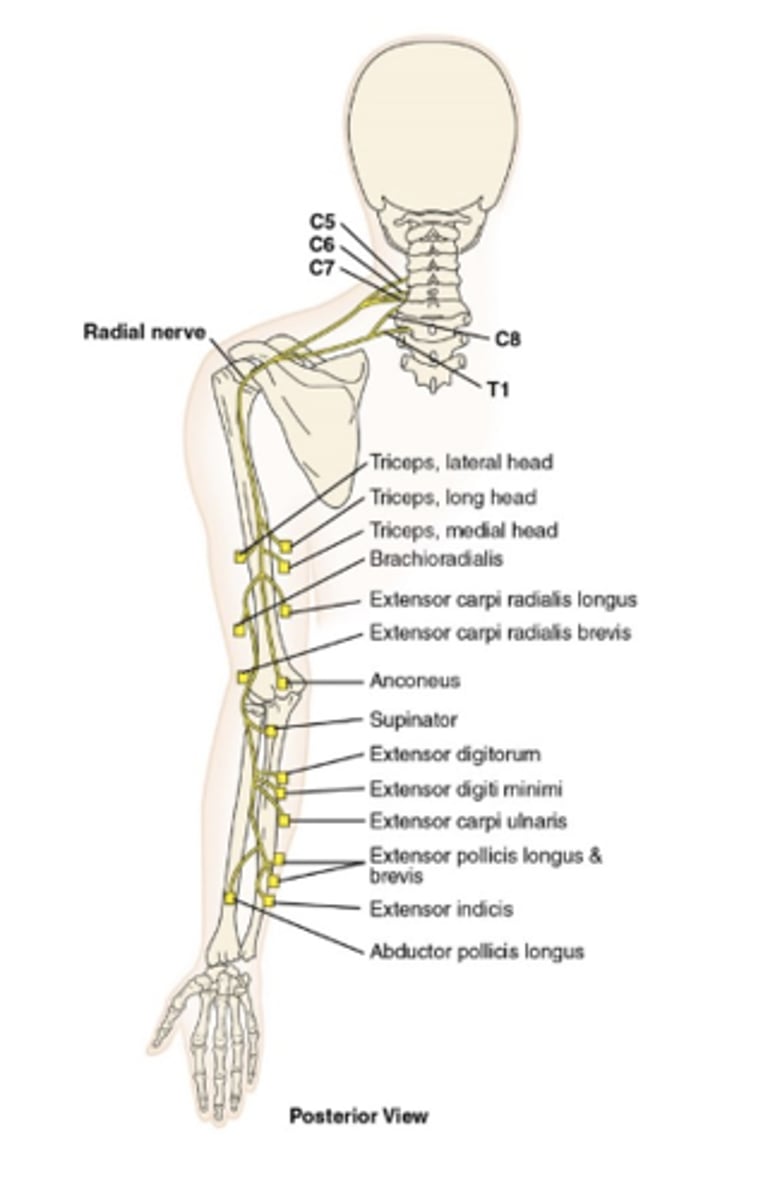
Radial nerve
nerve that runs along the thumb side of the arm and the back of the hand
innervates the posterior muscles of the wrist
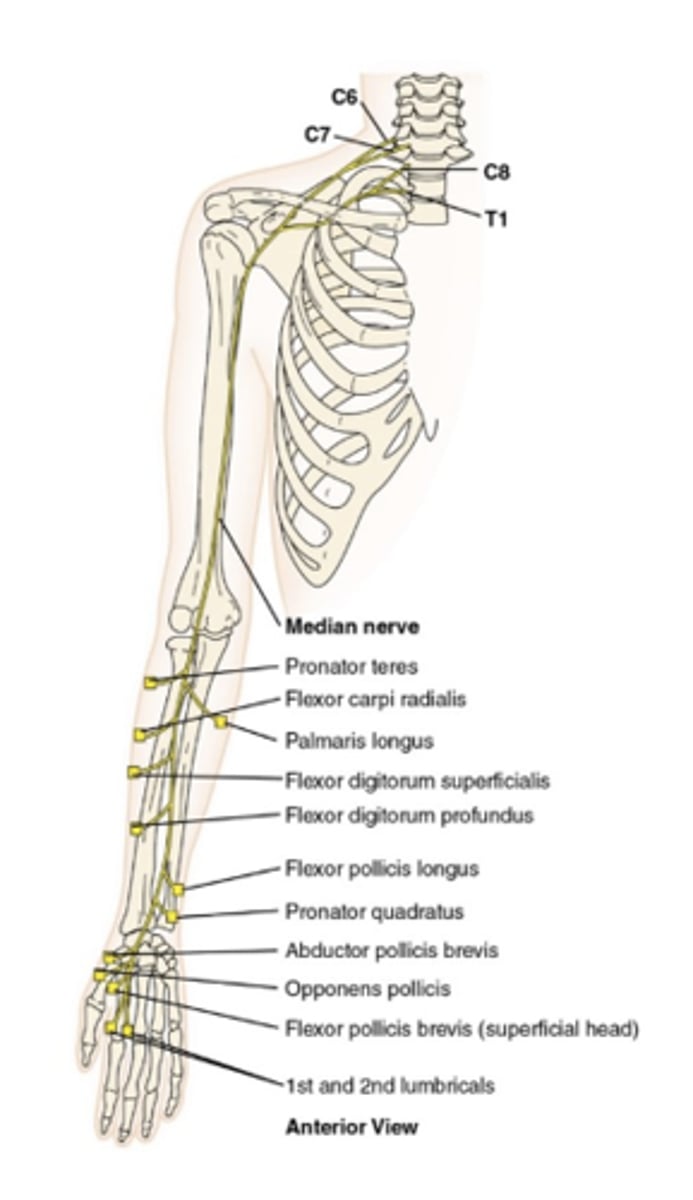
Median nerve
smallest of the three arm and hand nerves; runs along the mid forearm and extends into the hands
innervates the anterior muscles on the lateral (radial) aspect of the wrist
Ulnar nerve
sensory-motor nerve that, with its branches, affects the little-finger side of the arm and palm of the hand
innervates muscles on the medial (ulnar) aspect of the wrist
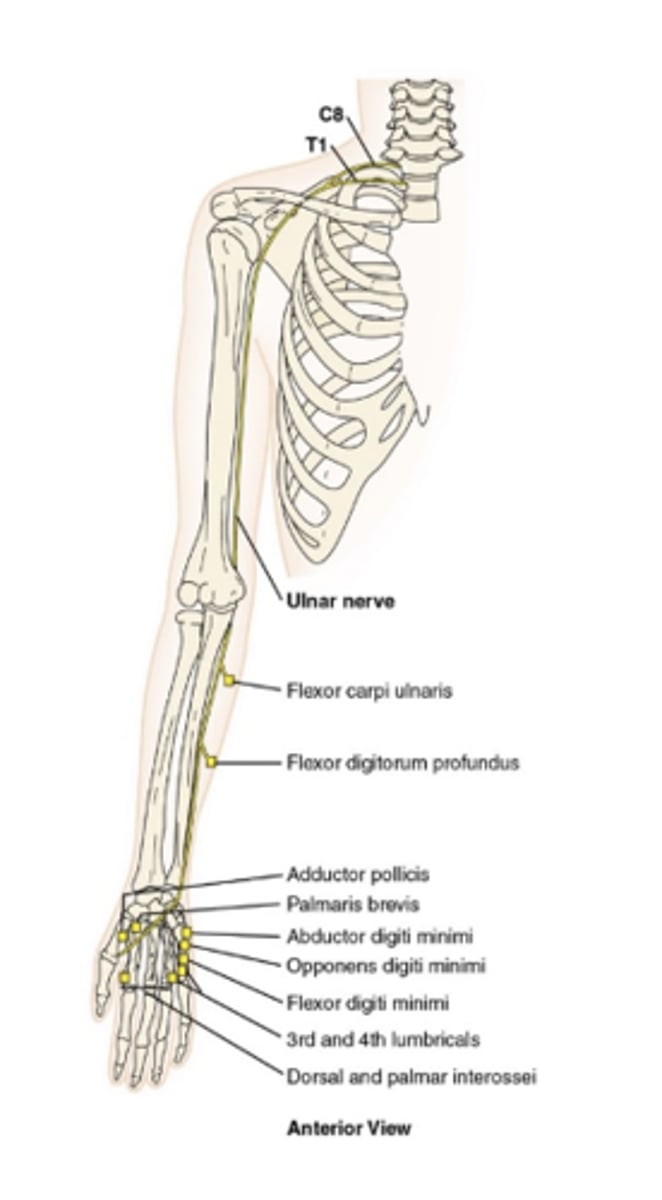
Muscles crossing the anterior aspect of the elbow joint bring the anterior surfaces of the arm and forearm closer together, producing ____________-
flexion
Muscles crossing the posterior aspect of the elbow joint bring the posterior surfaces of the arm and forearm closer together, producing ______________
extension
Muscles that originate medially, crossing the anterior aspect of the joint to insert on the radius, will pull the forearm into _______________
pronation
Muscles that originate posterior, crossing the lateral side of the forearm to insert on the radius, will pull the forearm into _________________
supination
Elbow flexion
biceps brachii
brachialis
brachioradialis
Elbow extension
triceps brachii
anconeus
forearm pronation
pronator teres
pronator quadratus
forearm supination
biceps brachii
supinator
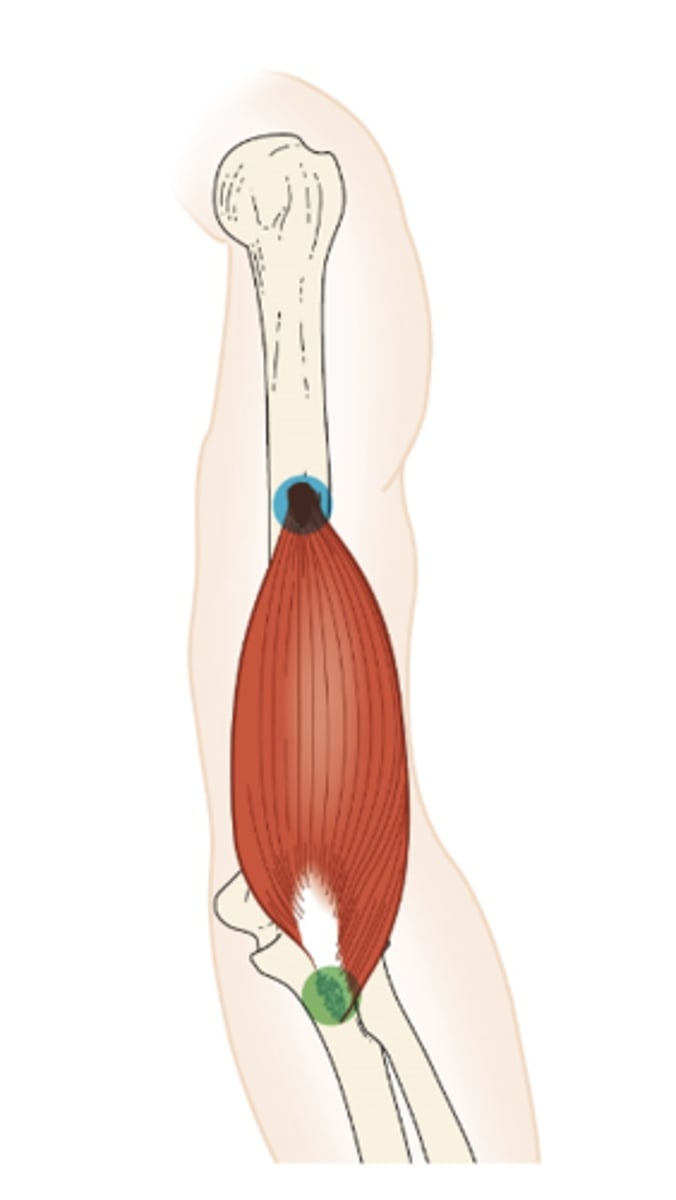
What muscle is this?
Brachialis
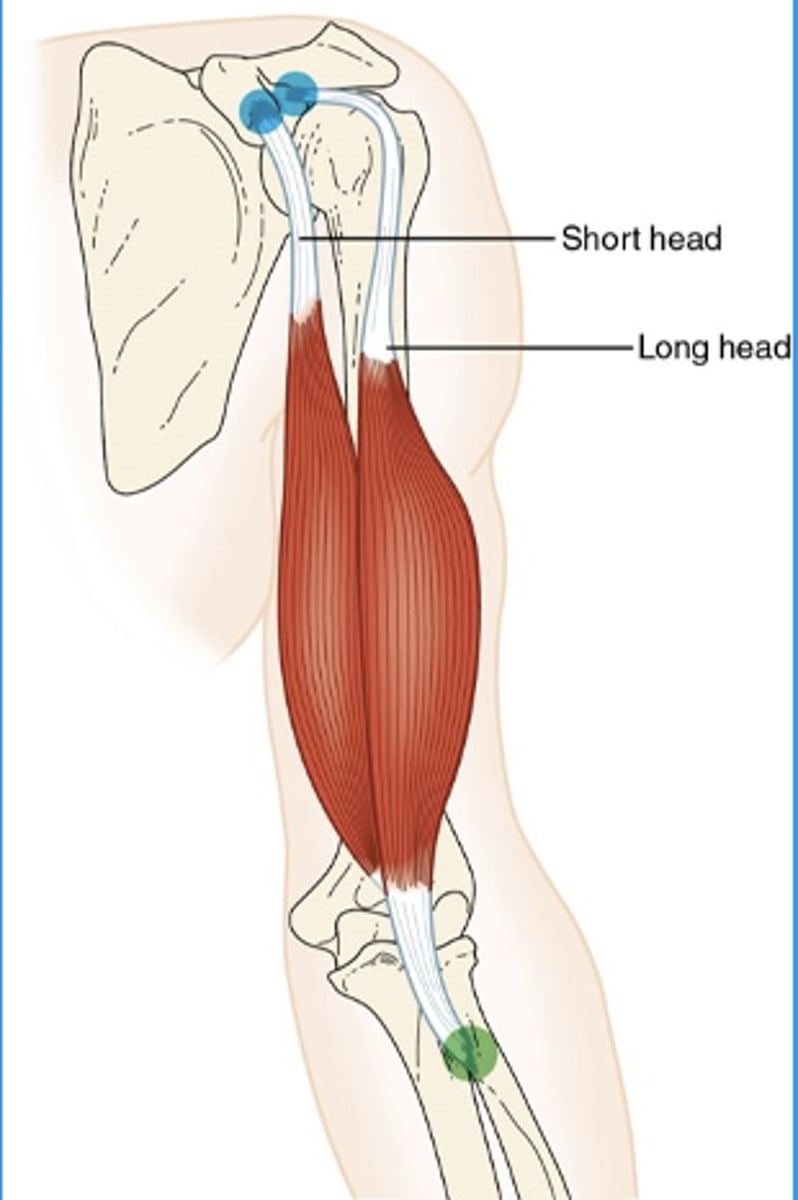
What muscle is this?
Biceps Brachii
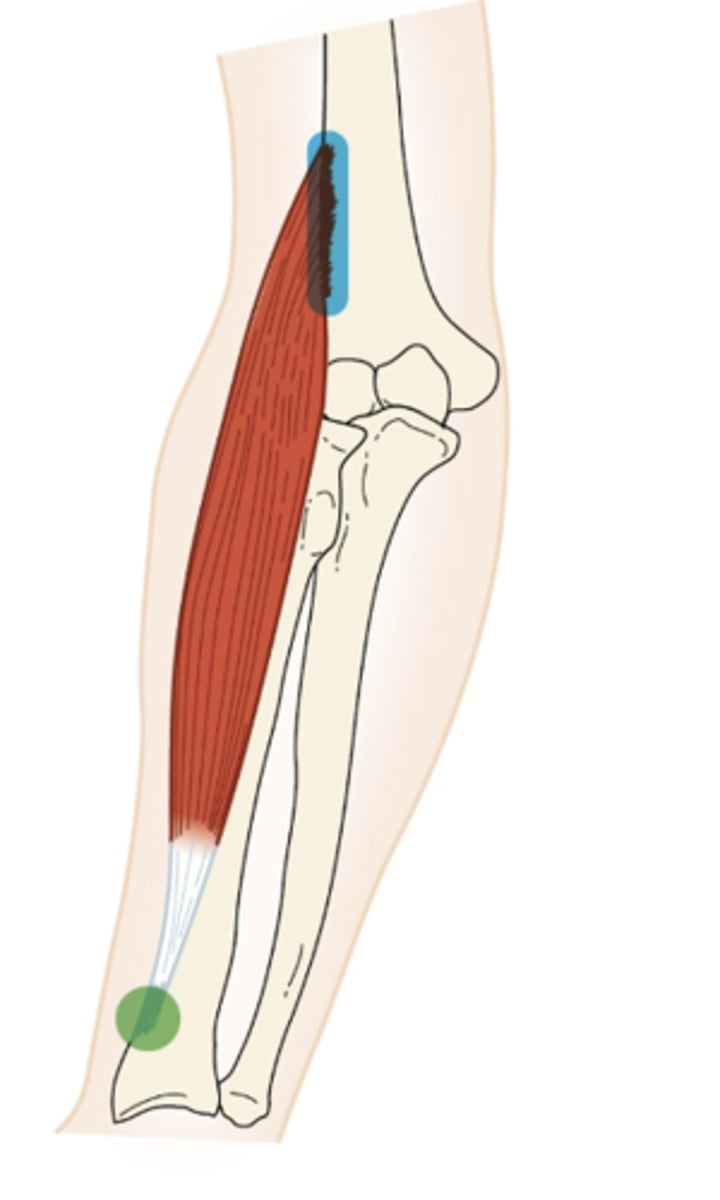
What muscle is this?
Brachioradialis
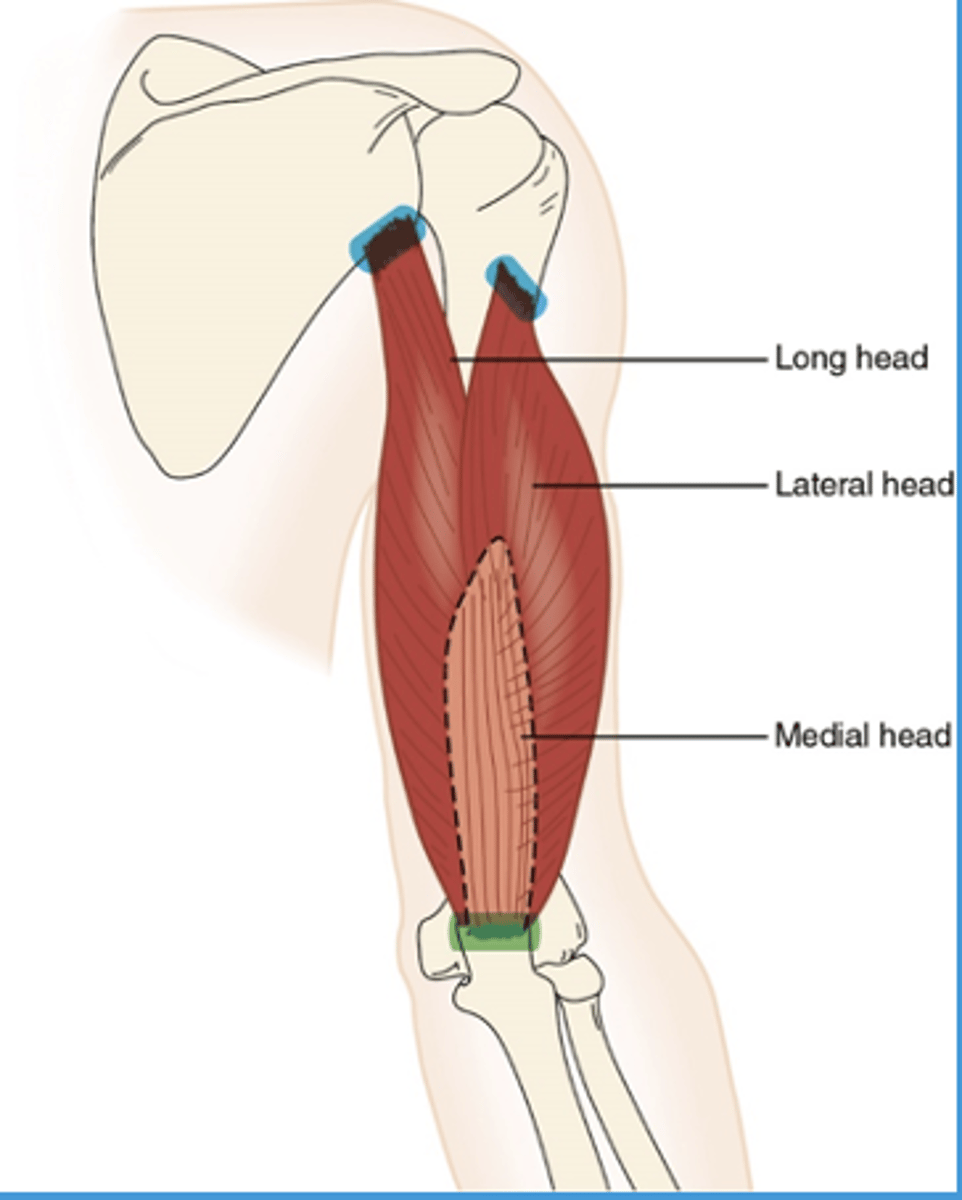
What muscle is this?
Triceps Brachii
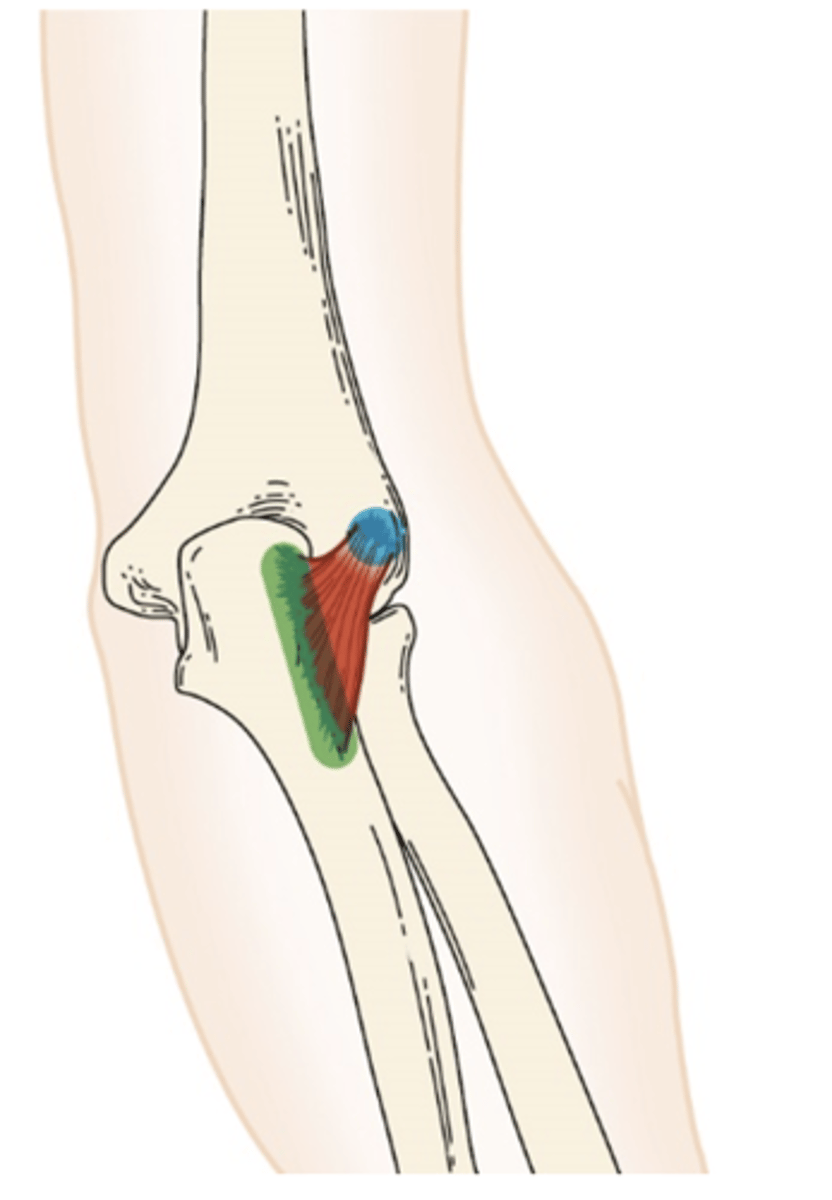
What muscle is this?
Anconeus
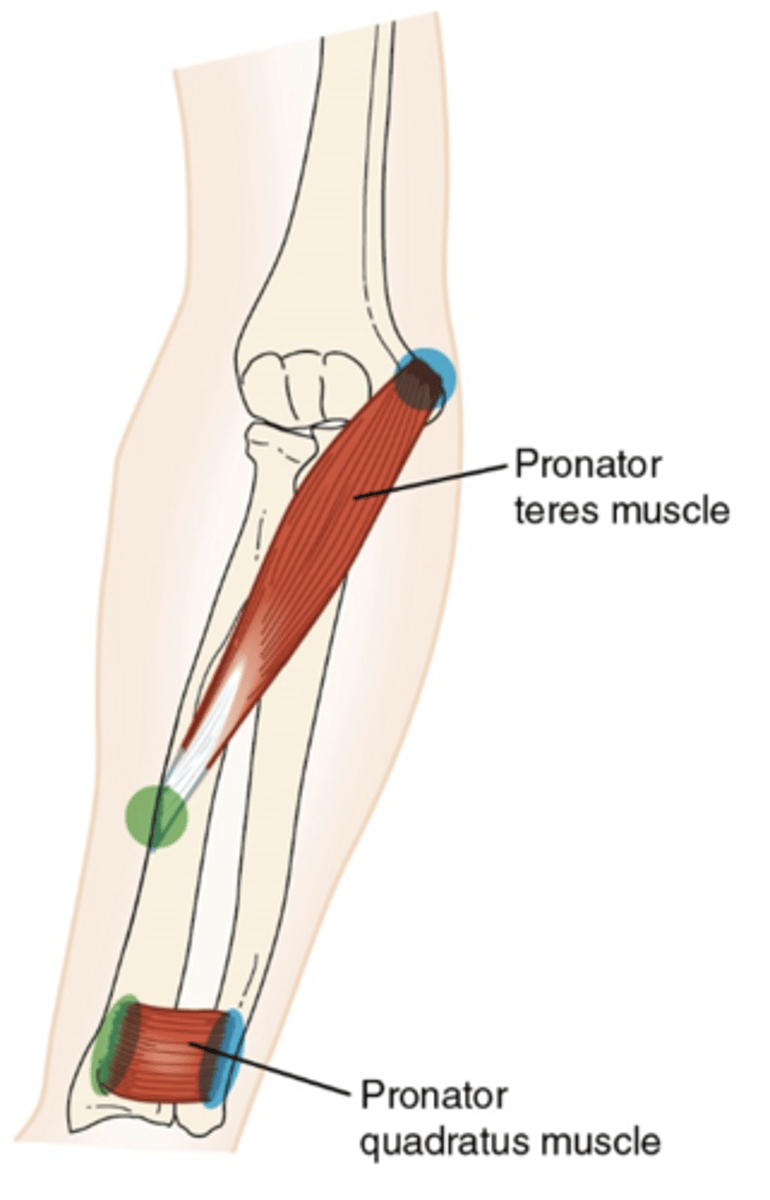
What muscle is this?
Pronator Teres
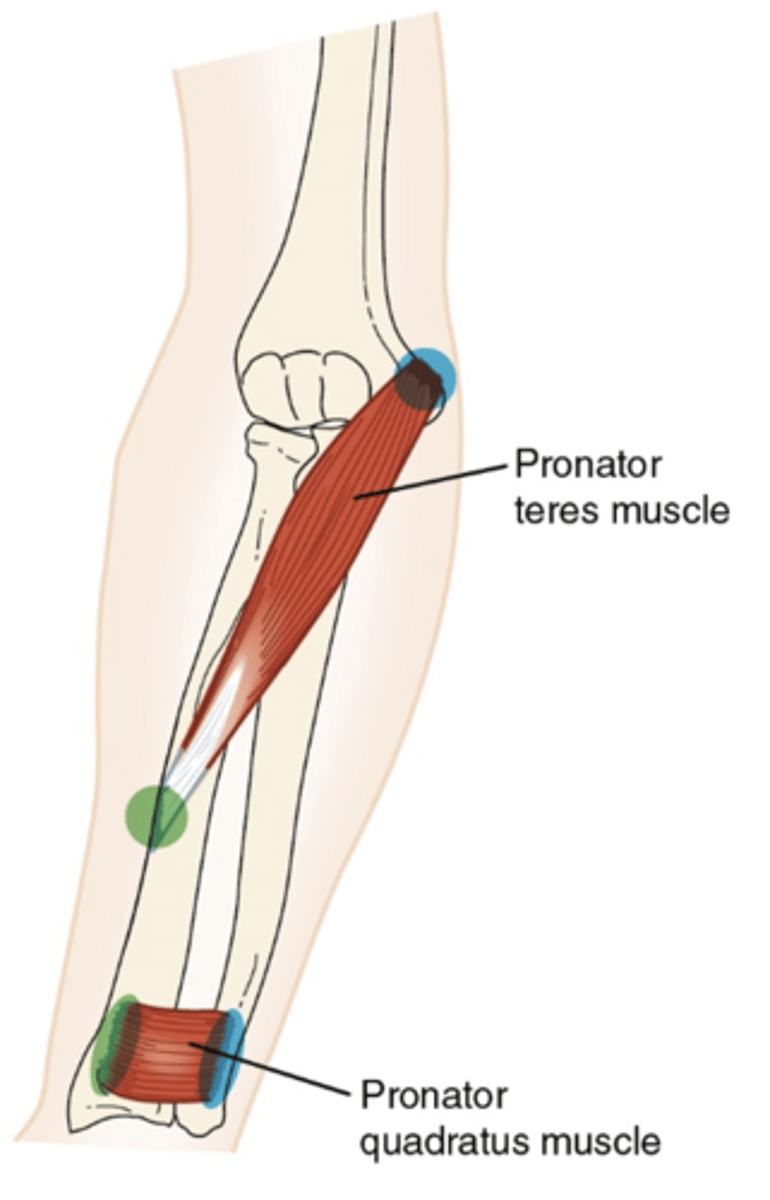
What muscle is this?
Pronator Quadratus
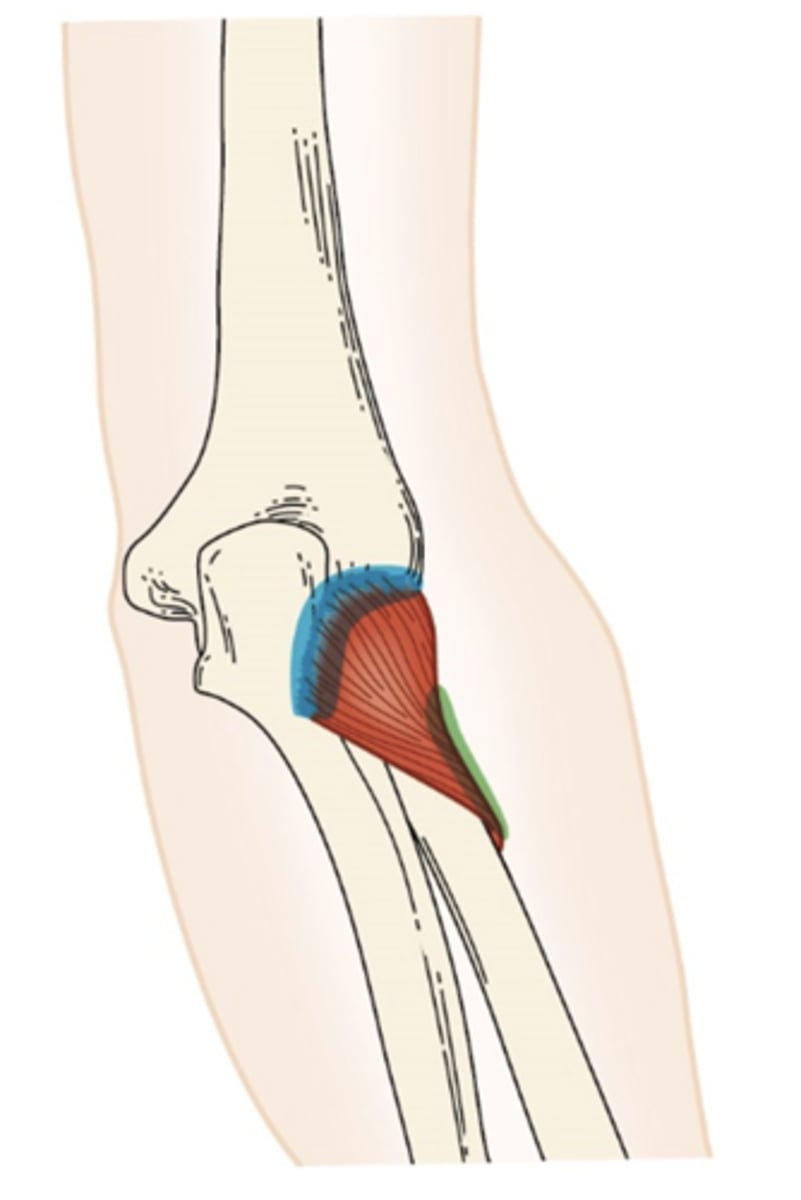
What muscle is this?
Supinator
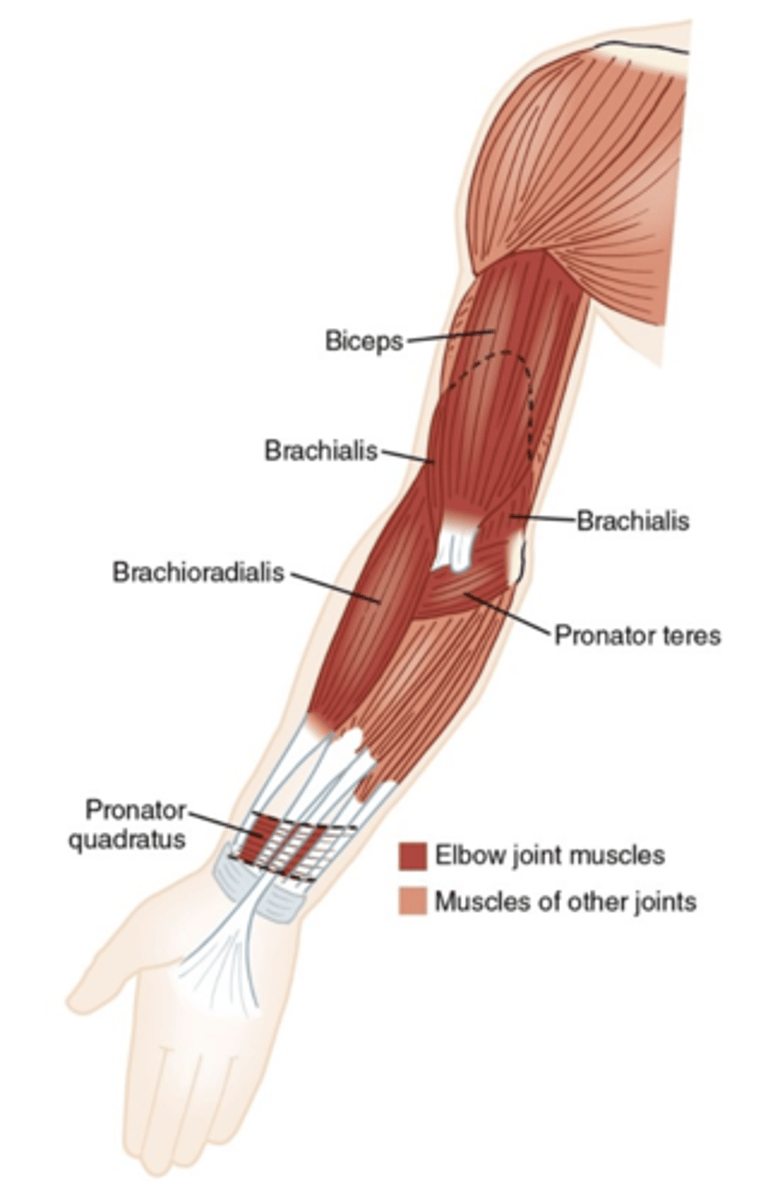
Anterior elbow muscle
Biceps brachii
brachialis
brachioradialis
pronator teres
pronator quadratus
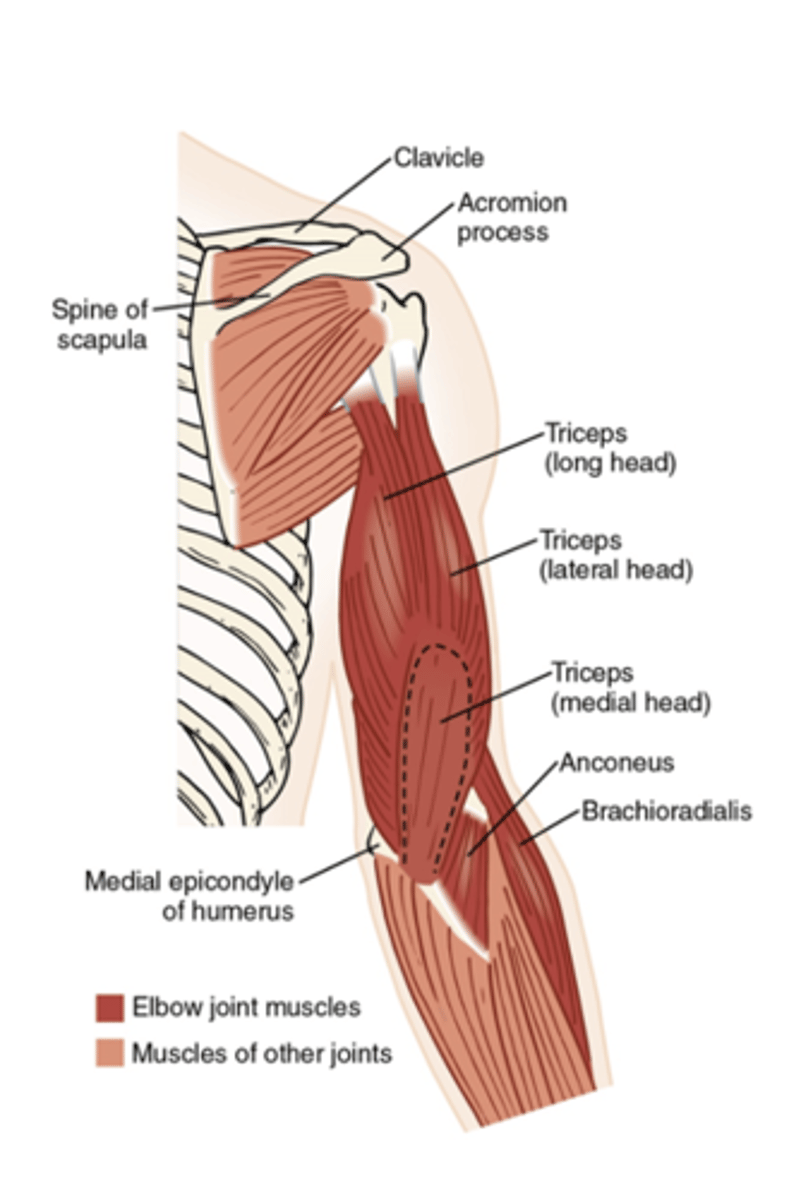
Posterior elbow muscles
triceps brachii
anconeus
supinator
brachioradialis
Radiocarpal joint (wrist joint) is the articulation between __________ and ___________ bones
radius + proximal carpal bones (scaphoid, lunate, and triquetrum)
Radiocarpal joint
biaxial condyloid joint — allowing for flexion and extension, radial deviation, and ulnar devation
Two degrees of freedom
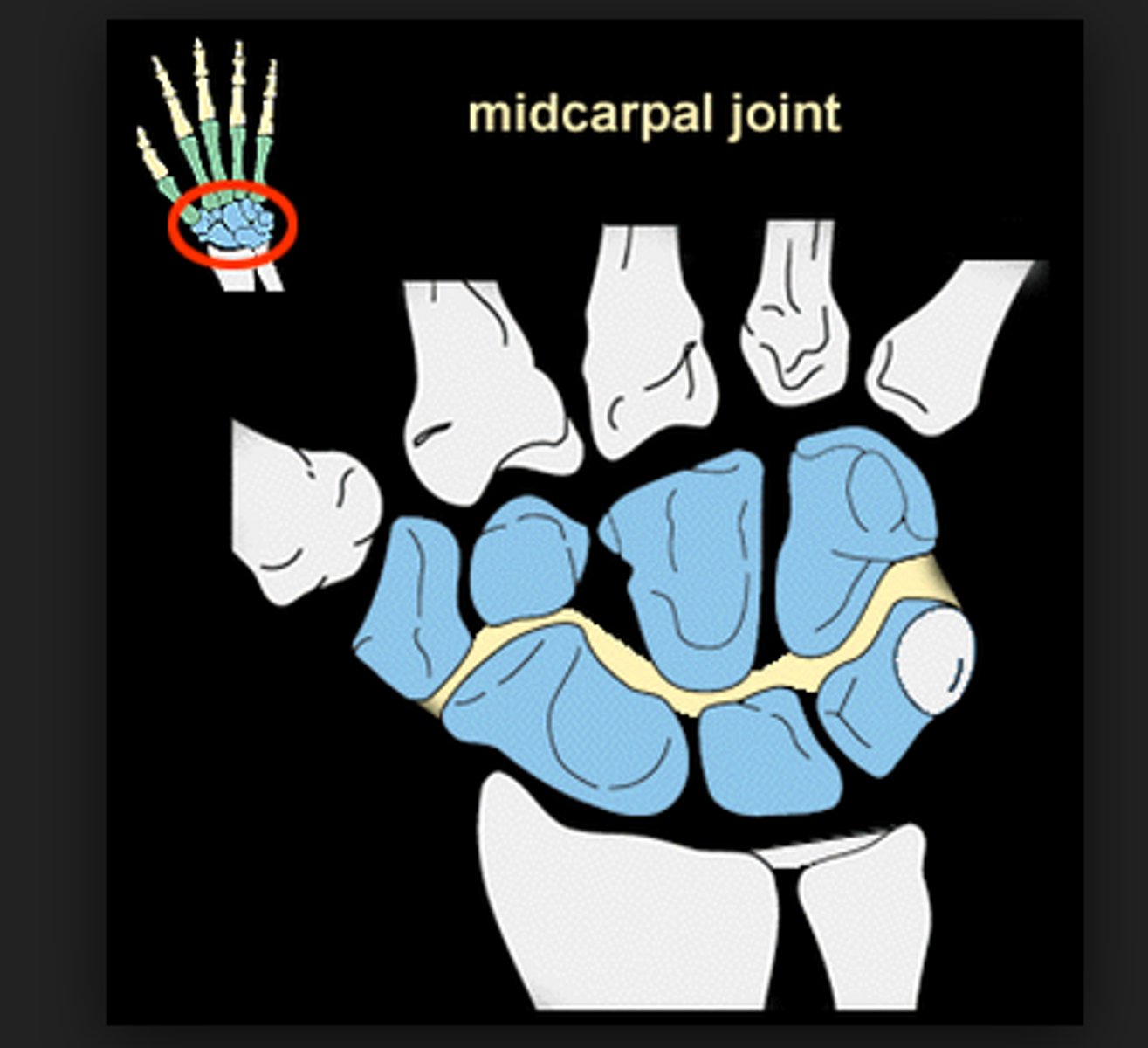
Midcarpal joint is between the _________ and ____________ row of the carpals
proximal + distal row of carpals; considered part of the wrist
Intercarpal joints are between ___________
the carpal bones in each individual row
the shape of these joints are irregular
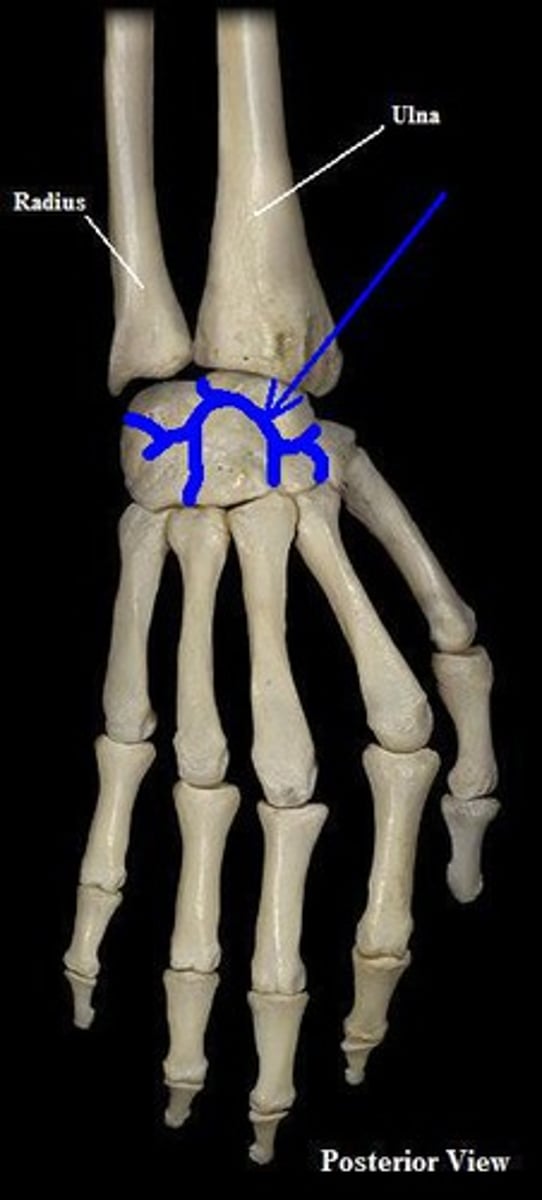
Intracarpal joints
non-axial joints
glide at each of these joints collectively contributes to movements of the wrist
Carpometacarpal joint are the articulation between ___________ and ____________
the distal row of carpal bones + the base of each metacarpal bone
these joints are NOT apart of wrist
Motions of the wrist
flexion
extension
radial deviation
ulnar deviation
Flexion/extension of the wrist
sagittal plane, frontal axis
flexion ROM: 0-80 degrees
extension ROM: 0-70 degrees
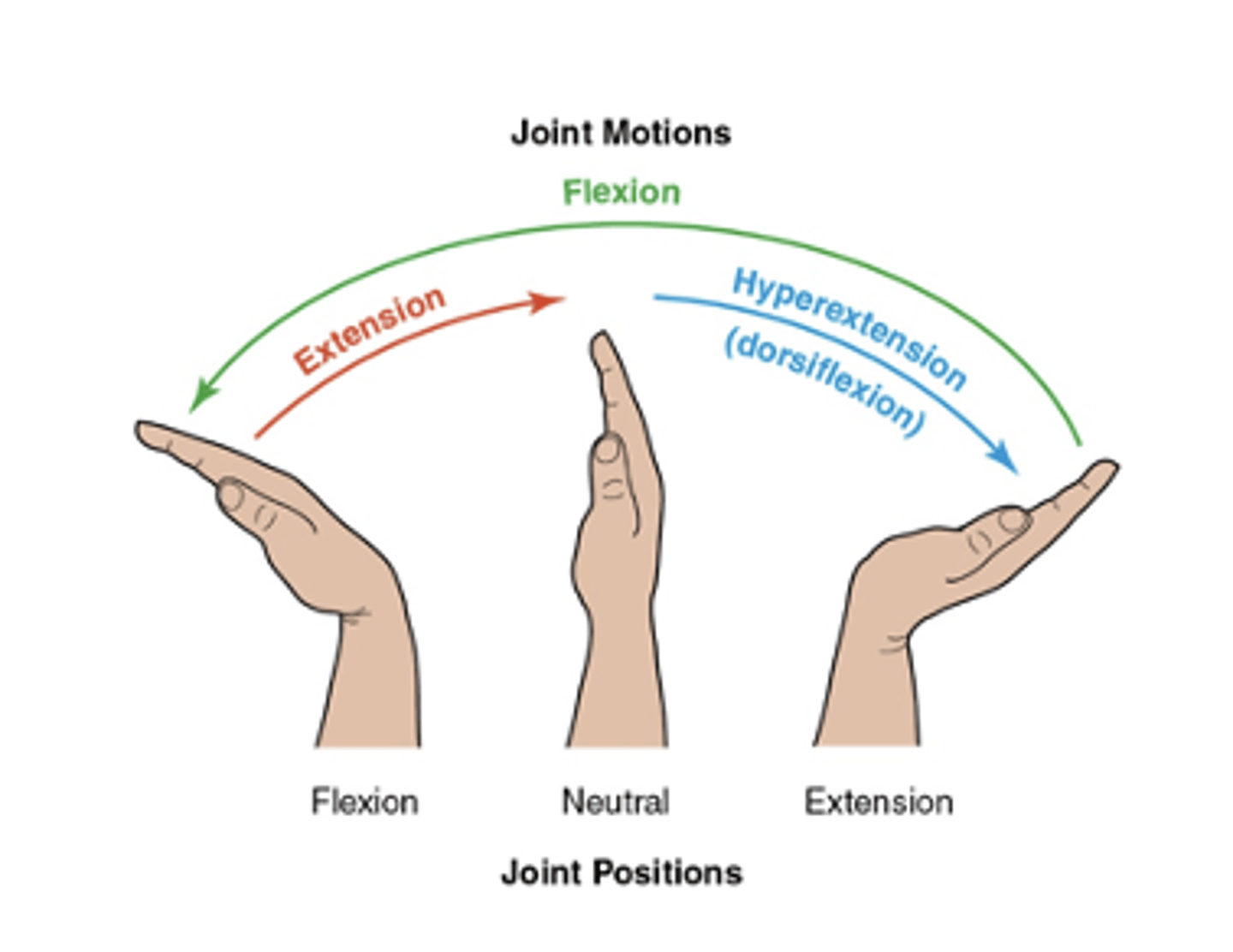
Which is greater flexion or extension?
flexion is greater than extension because of the angulation of the distal end of the radius, where the posterior aspect is more distal than the anterior aspect
Radial deviation
frontal plane, sagittal axis
Slide wrist towards radius, thumb
ROM: 0-20 degrees
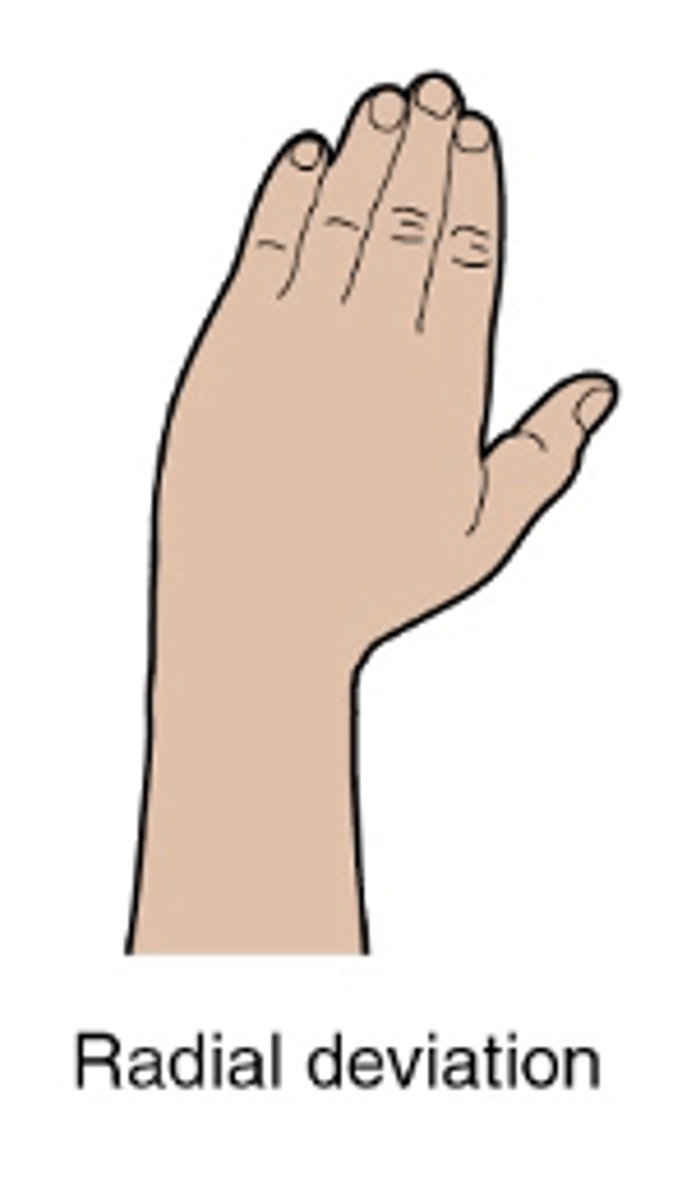
Ulnar deviation
frontal plane,sagittal axis
Slide wrist towards ulnar pinky
ROM: 0-30 degrees
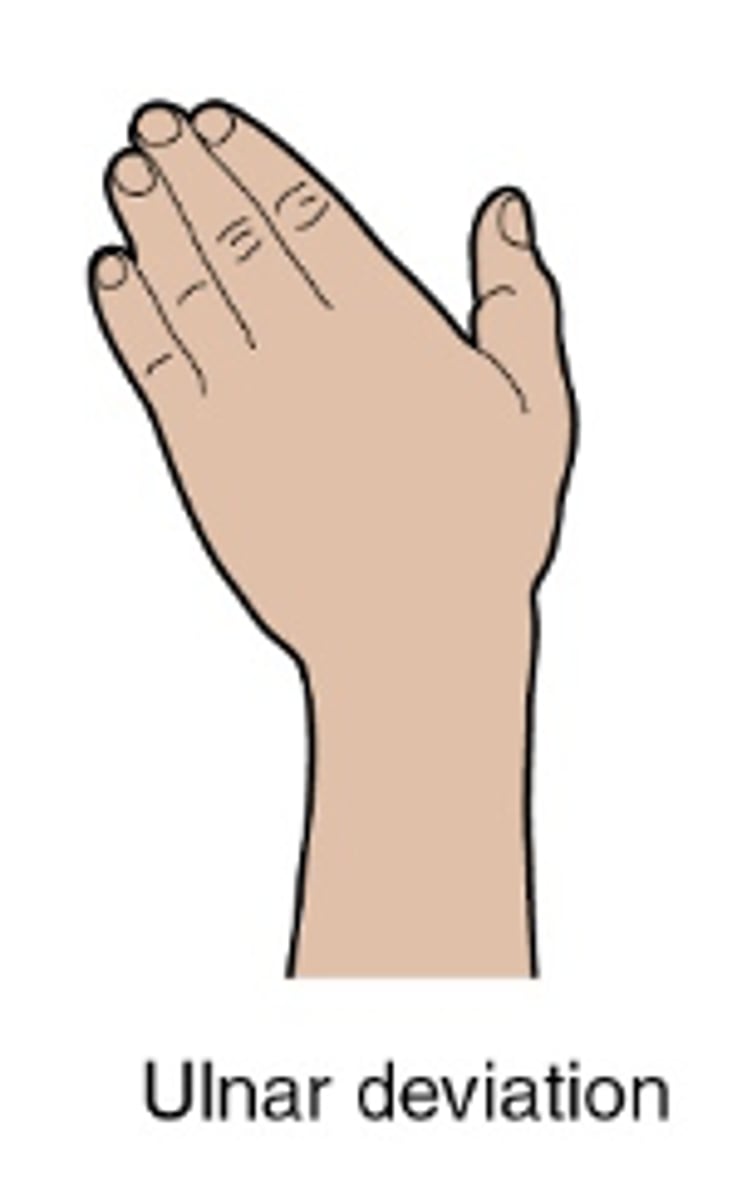
Which is greater ulnar or radial deviation?
ulnar deviation is greater than radial because of the angulation of the distal end of the radius, where the lateral aspect is more distal than the medial aspect
Circumduction of the wrist
a circular cone-shaped movement, is a combination of all four movements
Proximal row (lateral to medial)
scaphoid, lunate, triquetrum, pisiform
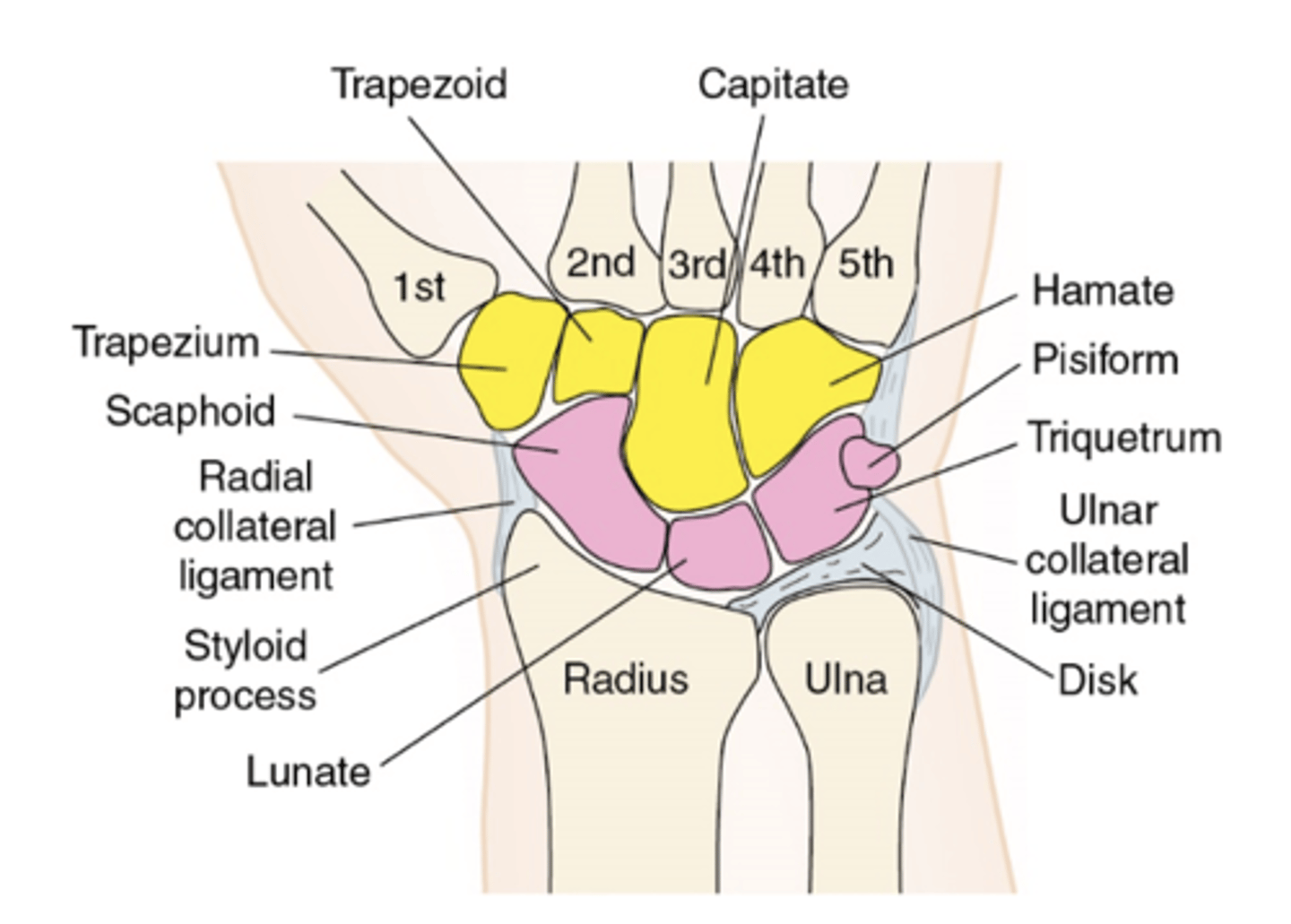
Distal row (lateral to medial)
trapezium, trapezoid, capitate, hamate
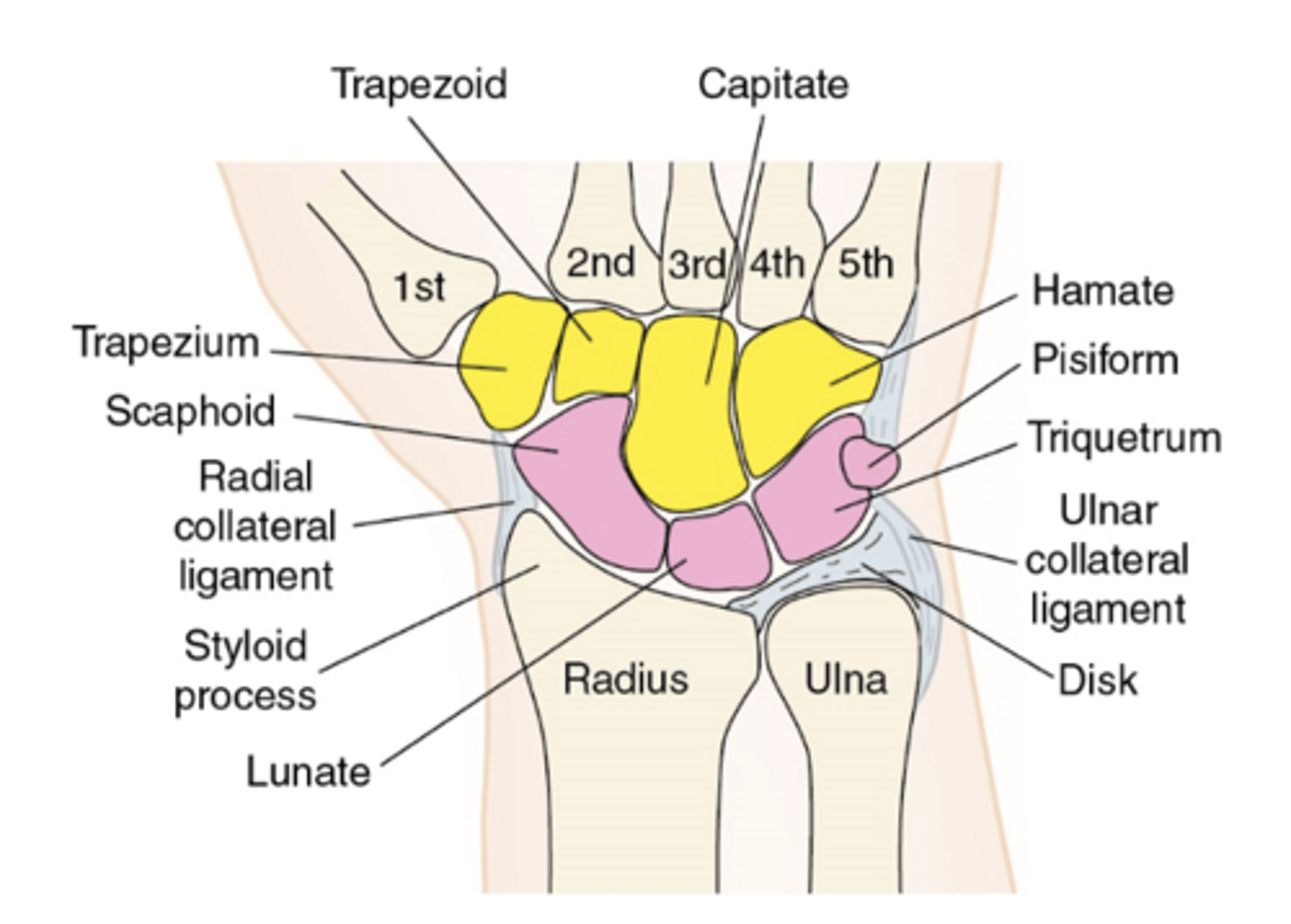
A mnemonic device for the carpal bones
Some Lovers Try Positions That They Can't Handle
Proximal row: Scaphoid, Lunate, Triquetrum, Pisiform
Distal Row: Trapezium, Trapezoid, Capitate, Hamate
Hook of the hamate
projection on anterior surface of hamate
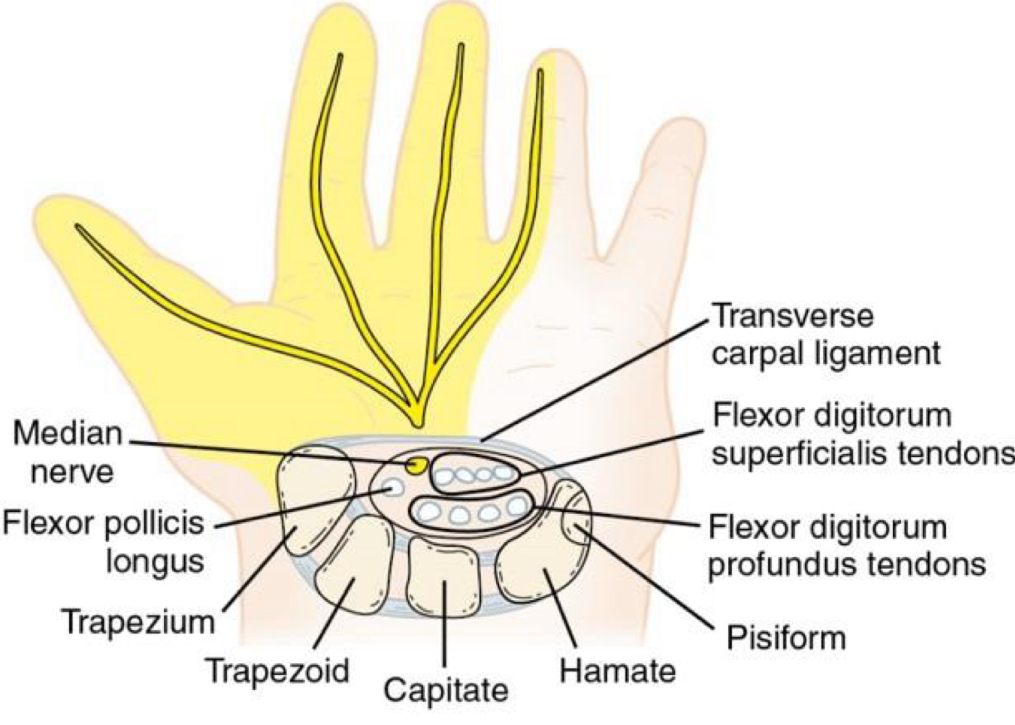
Carpal tunnel
carpal bones form a medial/lateral arch with palmar concavity
this arch connects by the palmar and transverse carpal ligaments
forming a tunnel through which external finger flexor tendons and the median nerve pass
enclosed space
compression of median nerve
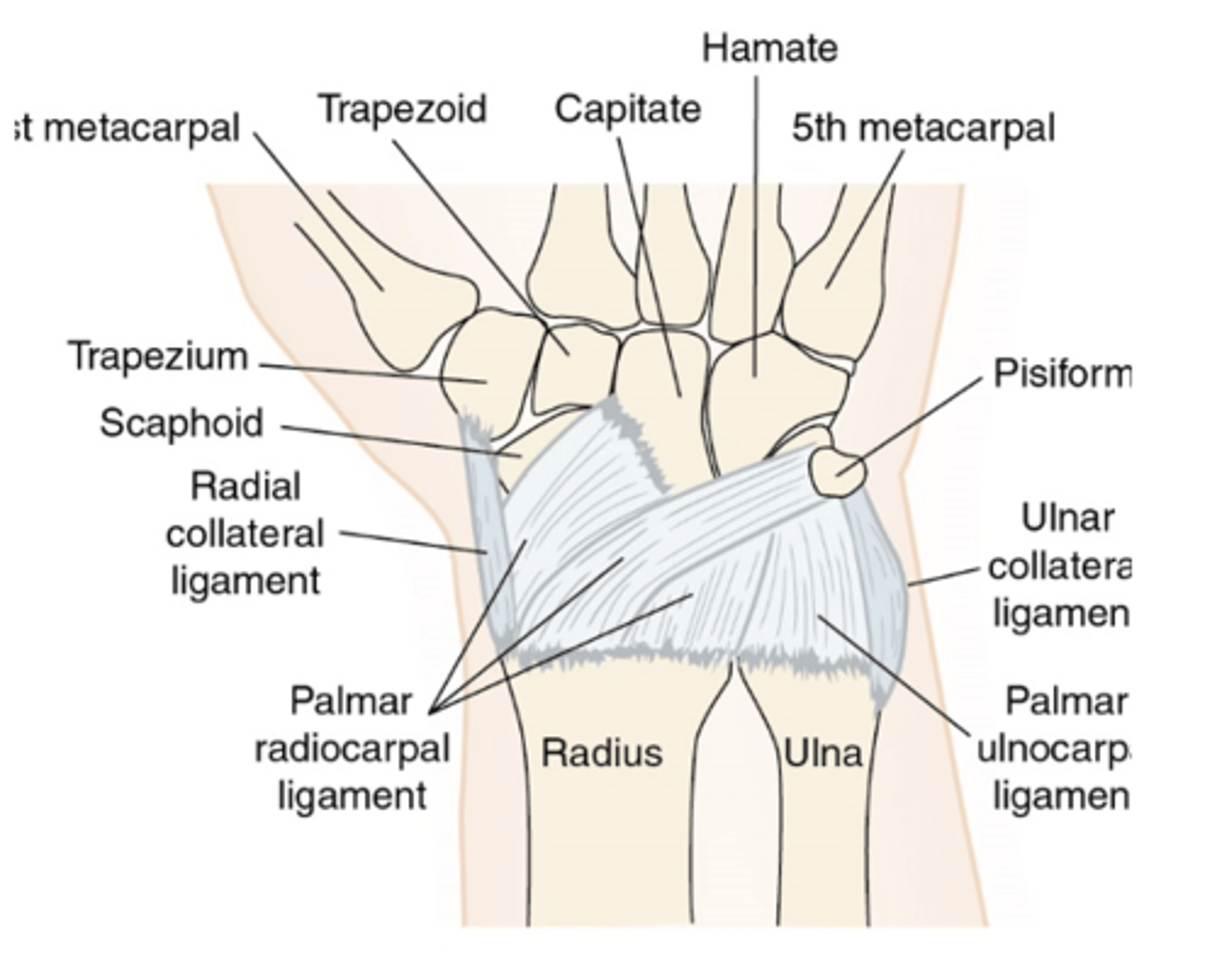
Palmar radiocarpal ligament
- broad thick ligament
- reinforces palmar aspect of capsule
- attaches to anterior surface of distal radius and palmar surfaces of proximal carpal bones and capitate
- limits wrist extension
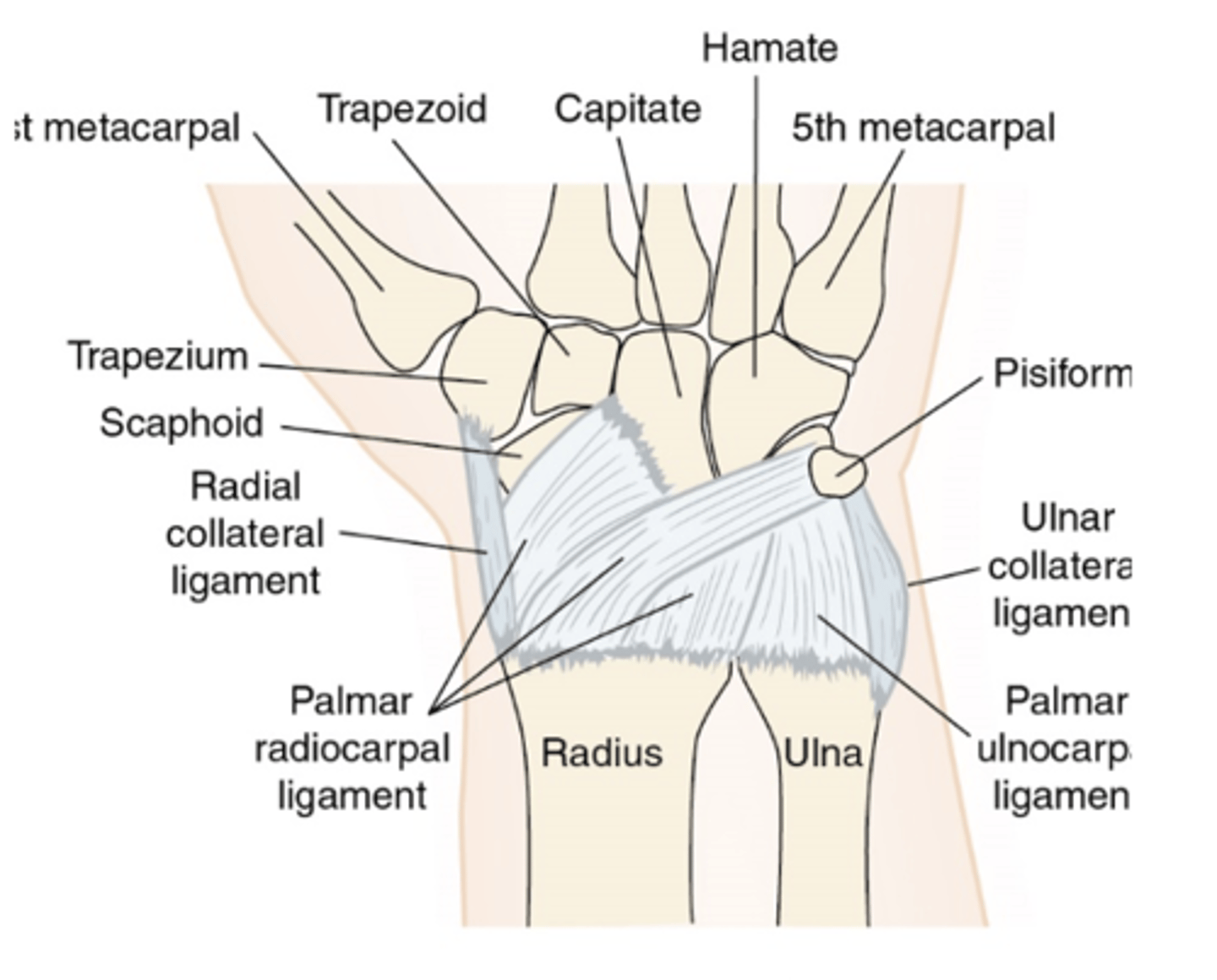
Palmar ulnocarpal ligament
- broad, thick ligament
- attaches to anterior surface of distal ulnar and palmar surfaces of proximal carpal bones
- some authorities consider this ligament part of the palmar radiocarpal ligament
- reinforces palmar aspect of capsule
- limits wrist extension
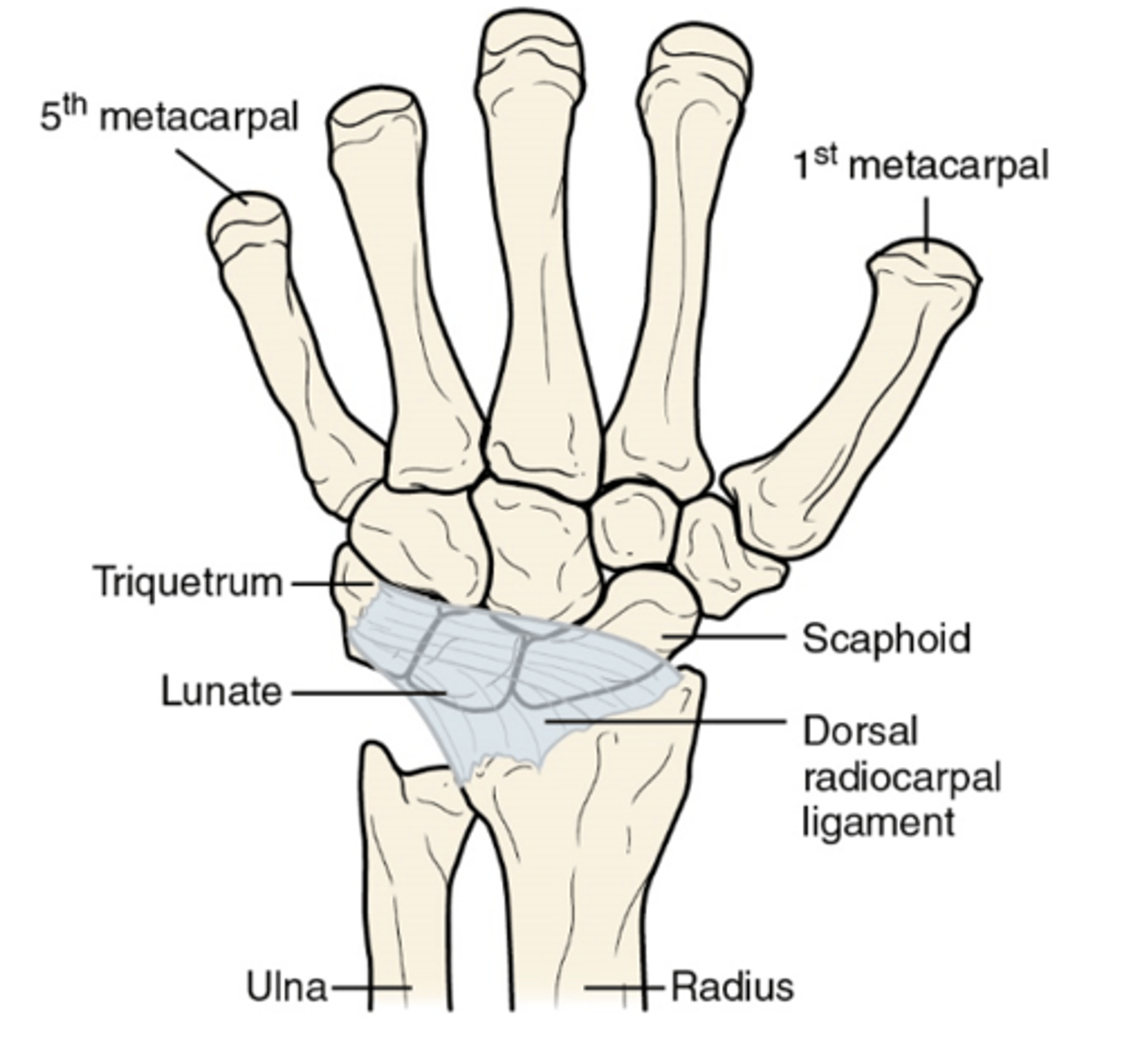
Dorsal radiocarpal ligament
- attaches to dorsal surface of distal radius and to dorsal surfaces of scaphoid, lunate, and triquetrum
- reinforces posterior aspect of capsule
- limits wrist flexion
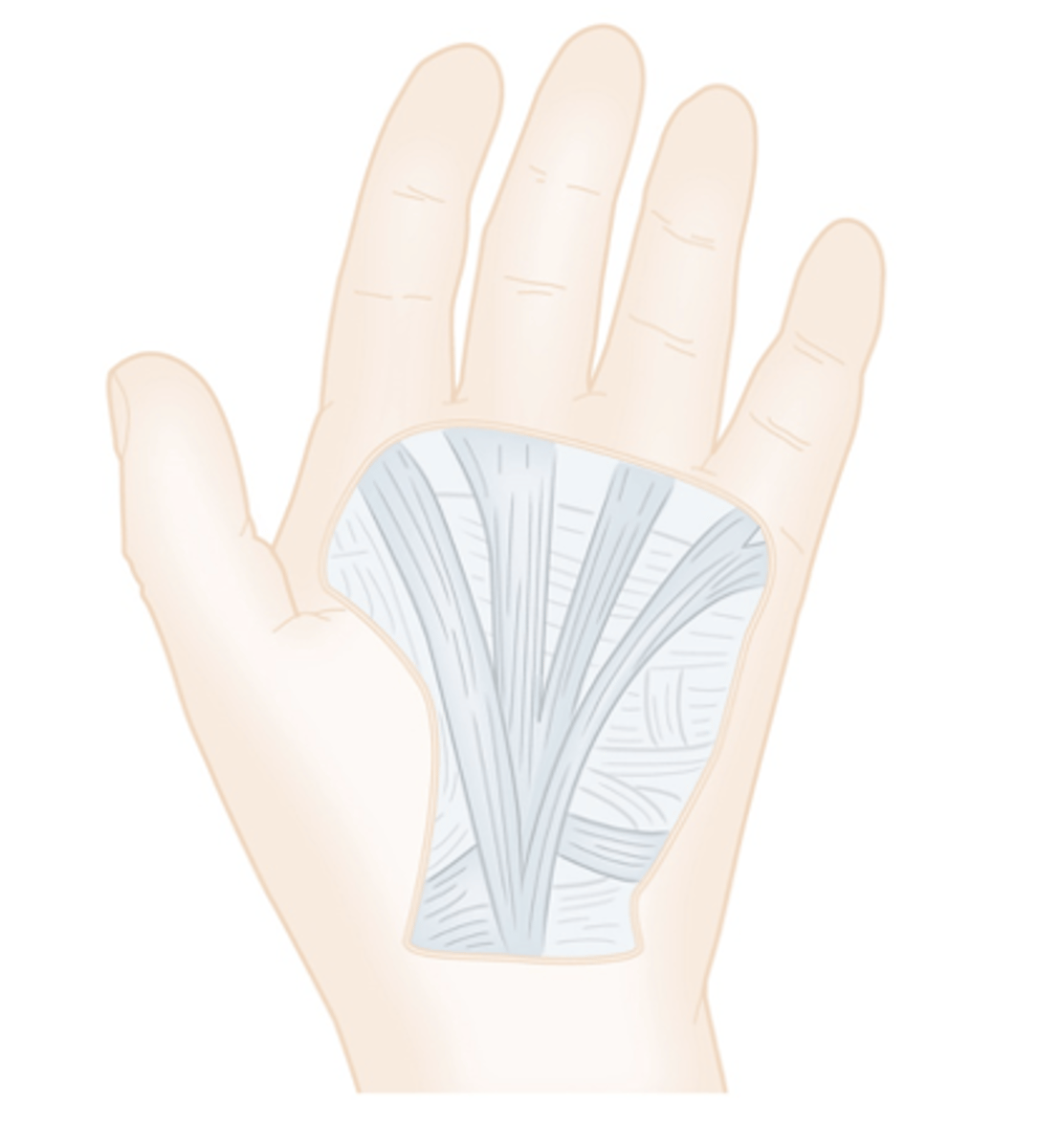
Palmar aponeurosis
- superficial, thick, triangular fascia located on palmar surface of wrist
- covers tendons of extrinsic muscle
- provides protection to structures of wrist and hand
- distal attachment of palmaris longus
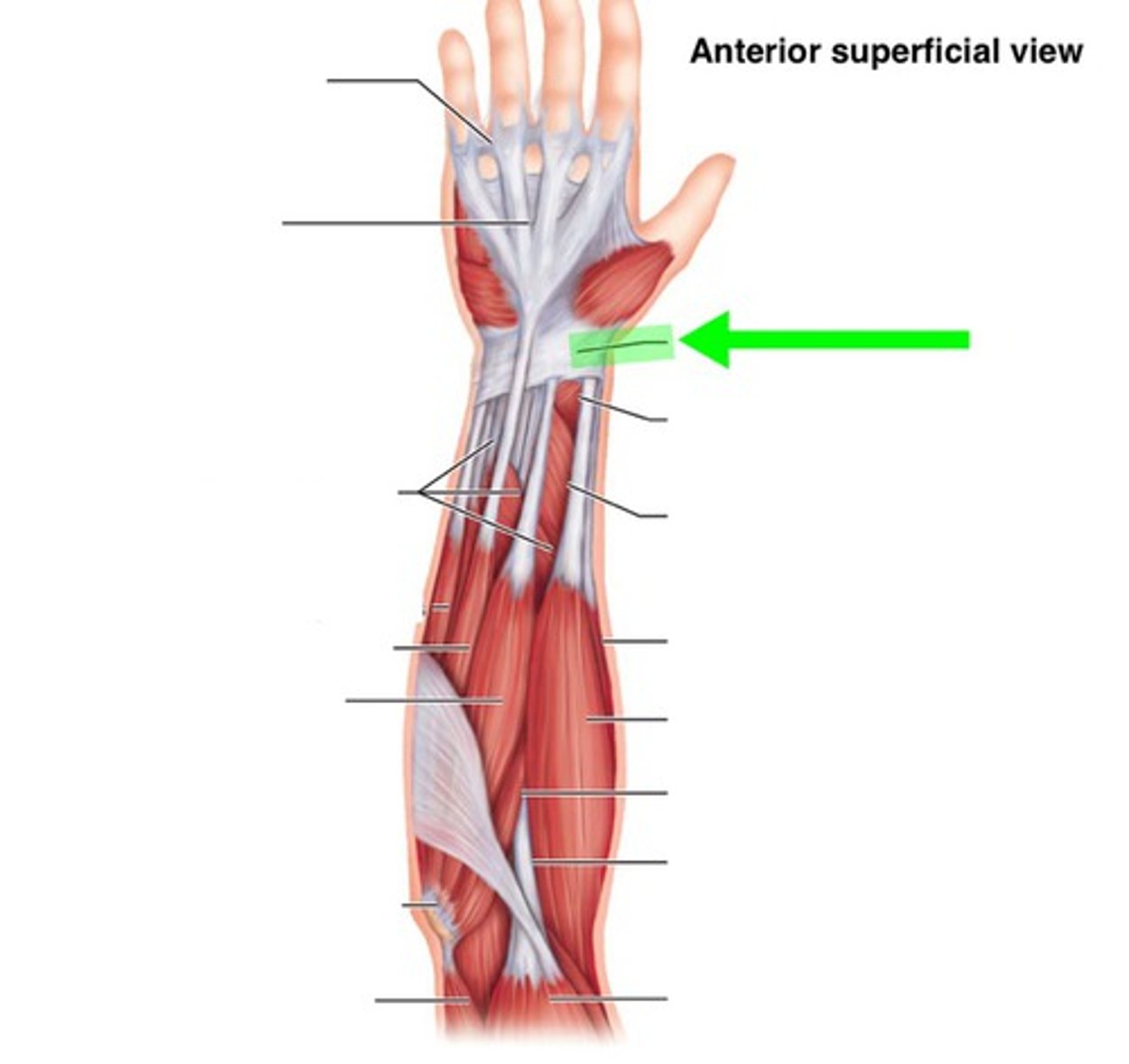
Flexor retinaculum
- horizontal fibrous band of connective tissue on palmar surface of wrist
- distal border blends with transverse carpal ligament
- attaches to styloid process of radius and ulna
- holds flexor tendons close to wrist
- maintains arch of carpal bones
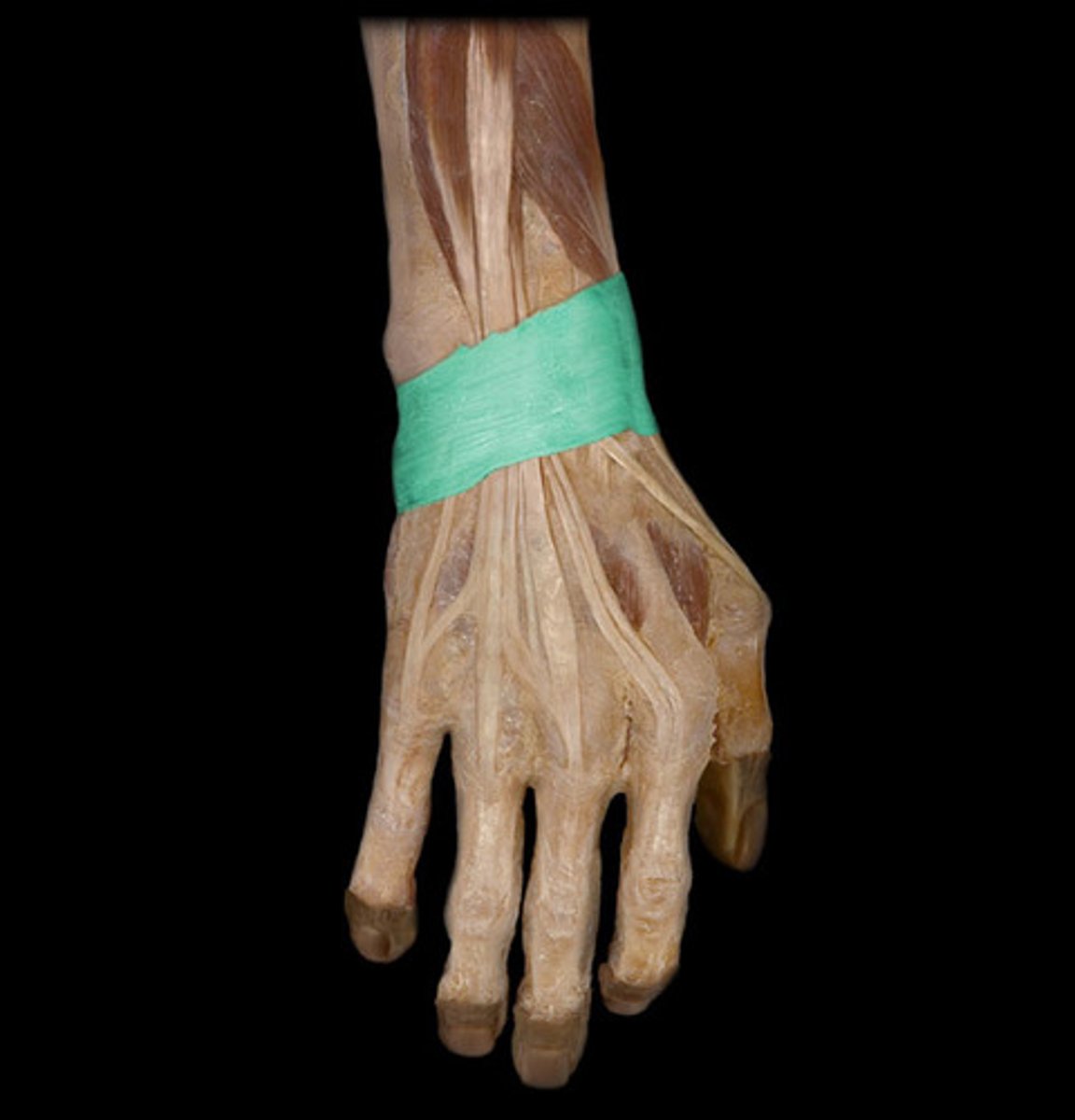
Extensor retinaculum
- horizontal fibrous band of connective tissue on dorsal surface of wrist
- attaches medially to styloid process of ulna, pisiform, and triquetrum and laterally o styloid process of radius
- holds extensor tendons close to wrist
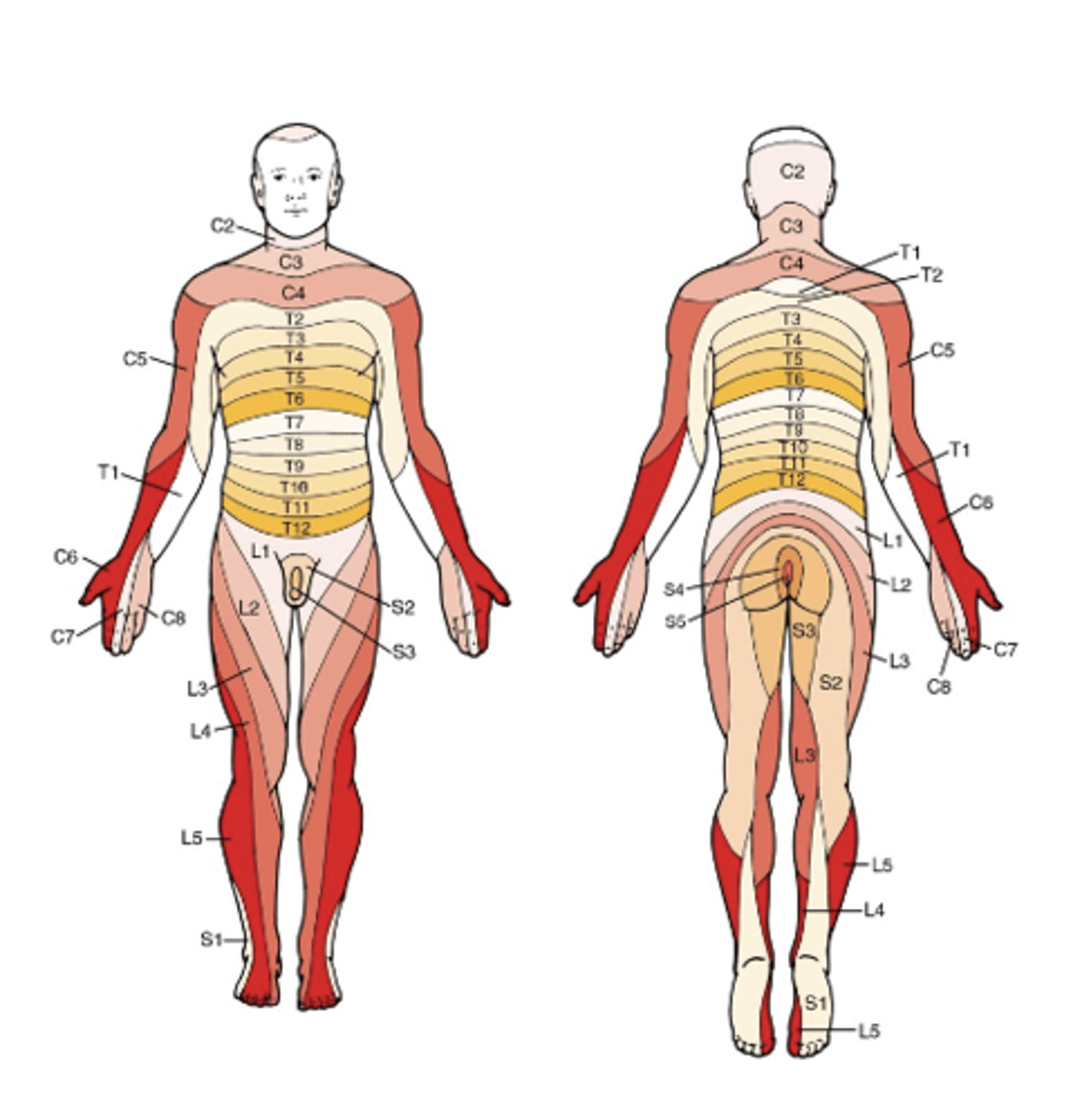
Sensory dermatomes of upper extremity
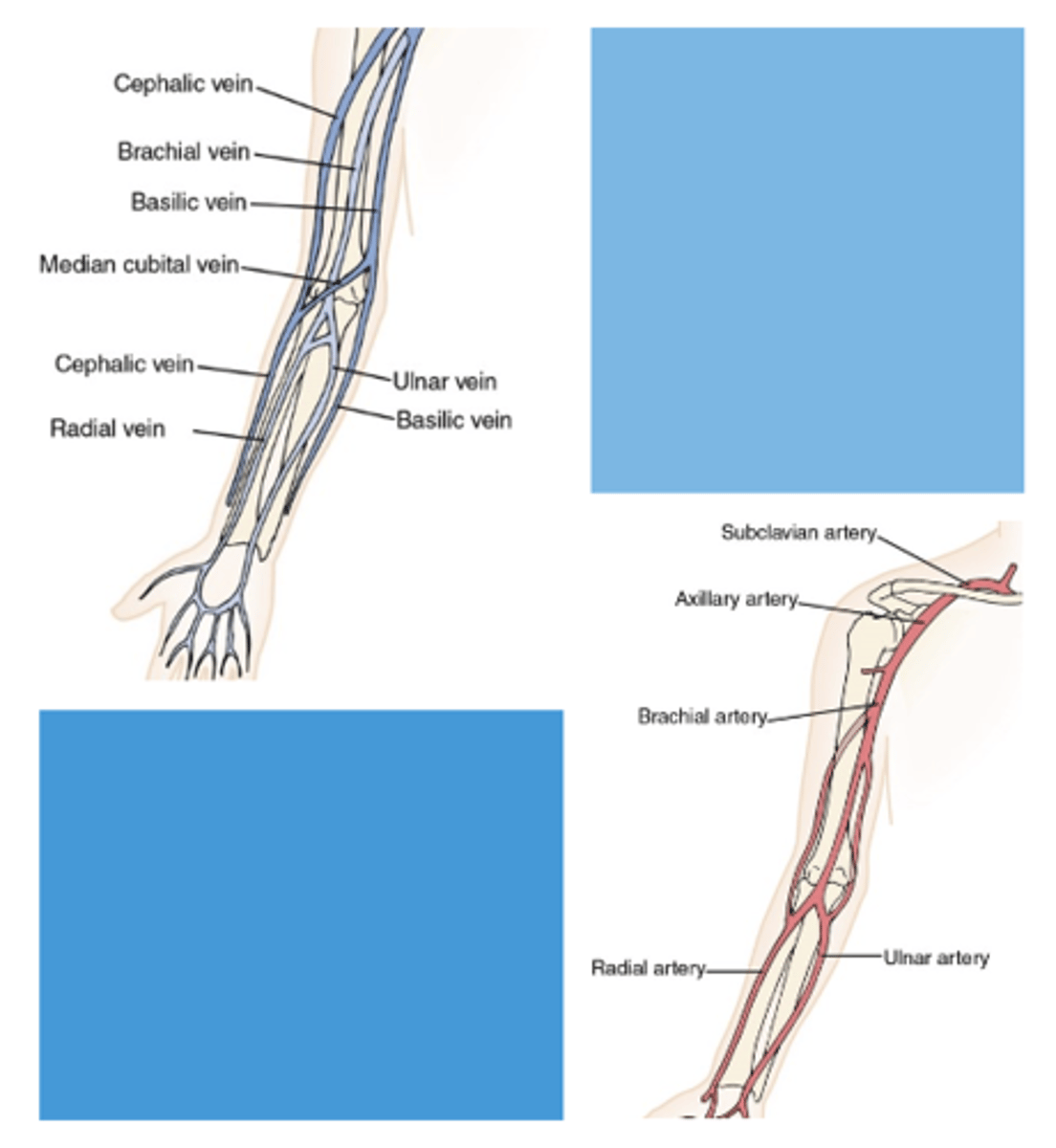
Circulation
major arteries and veins of the upper extremity
Only two muscles attach to structures of the wrist
1. flexor carpi ulnaris
2. palmaris longus
Common flexor tendon
attaches to medial epicondyle of humerus
Common extensor tendon
attaches to lateral epicondyle of humerus
Wrist muscles mostly have what line of pull?
most muscles have vertical lines of pull
There are no individual wrist muscles that produce what movement
ulnar or radial deviation
Ulnar deviation is produced by the:
flexor carpi ulnaris and extensor carpi ulnaris
synergist —work together
Radial deviation is produced by the:
flexor carpi radialis and extensor carpi radialis longus
synergist — work together
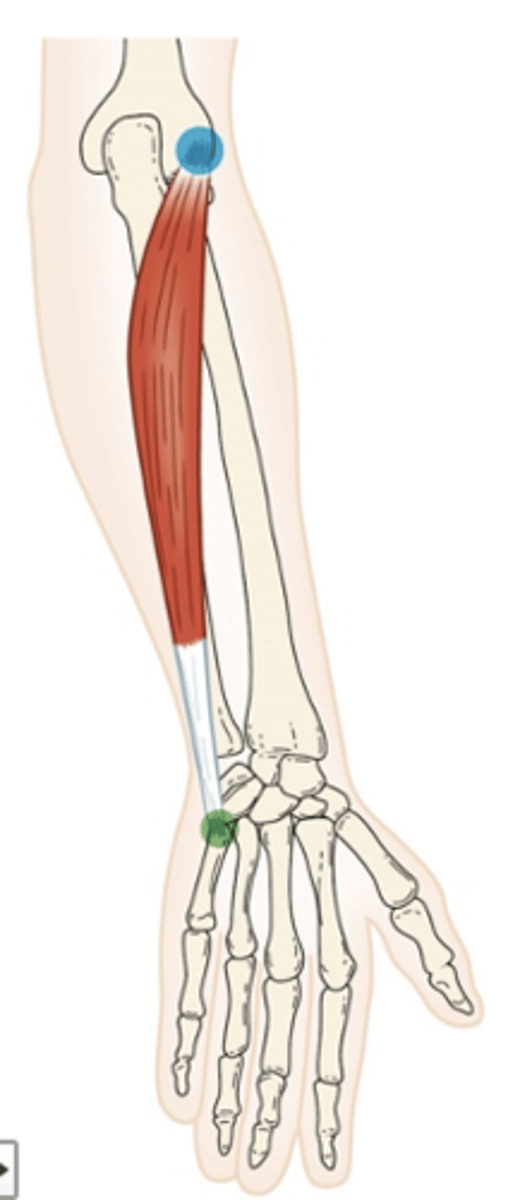
Flexor Carpi Ulnaris Muscle
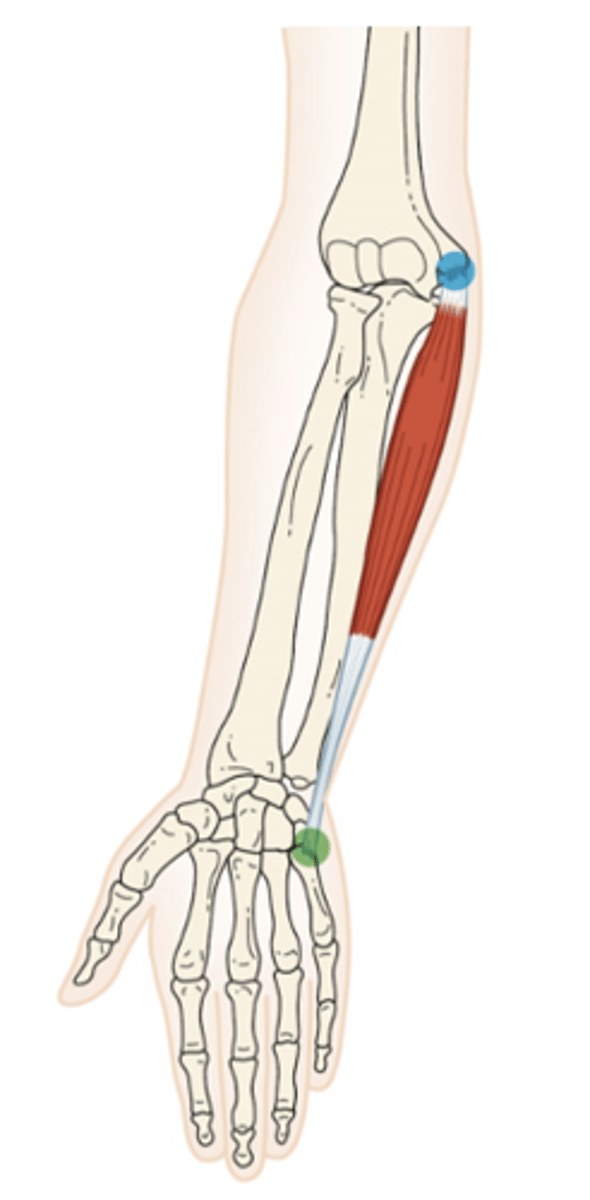
Flexor Carpi Radialis Muscle
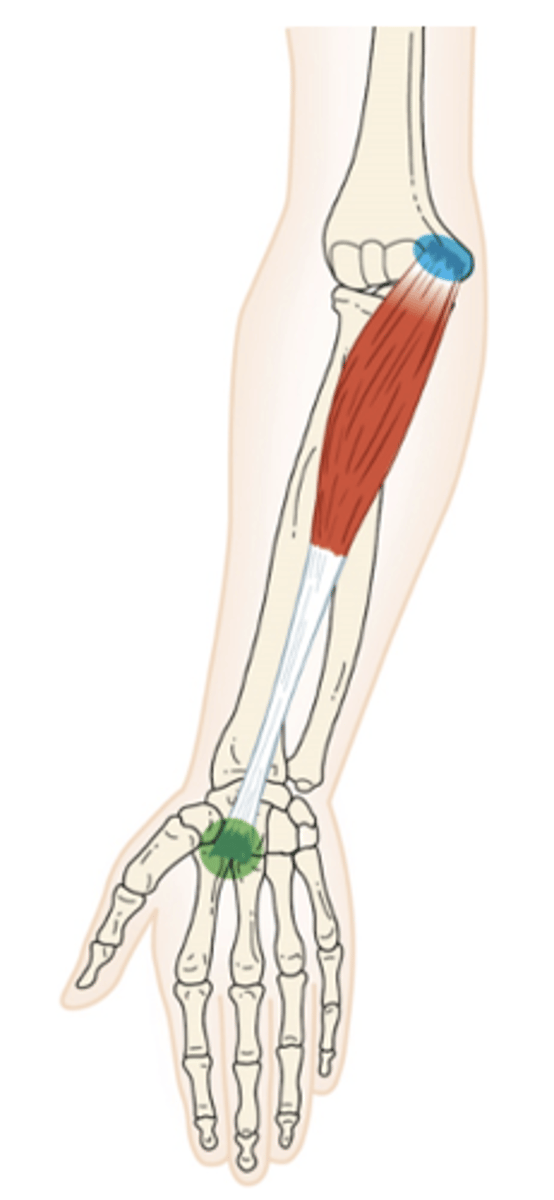
Palmaris Longus Muscle
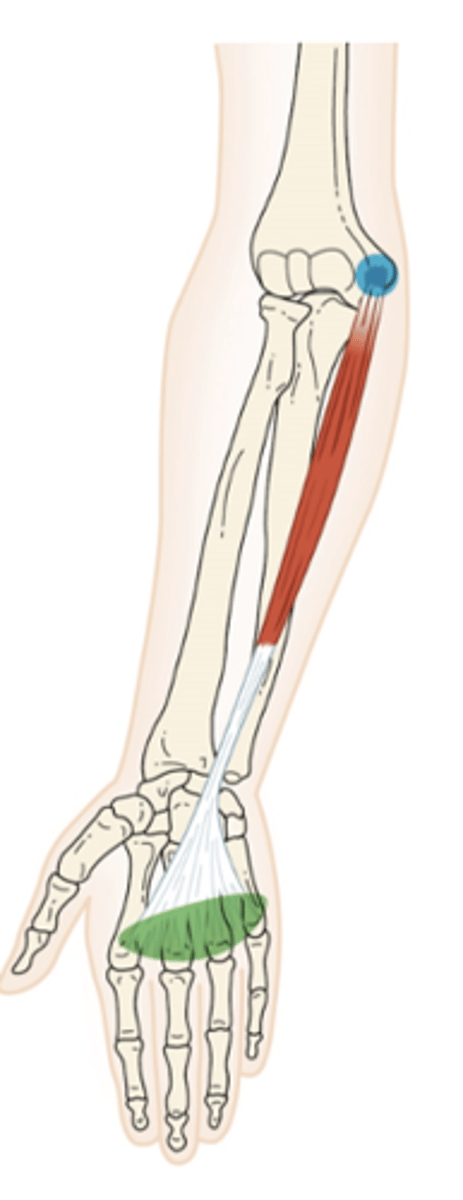
Extensor Carpi Radialis Longus Muscle
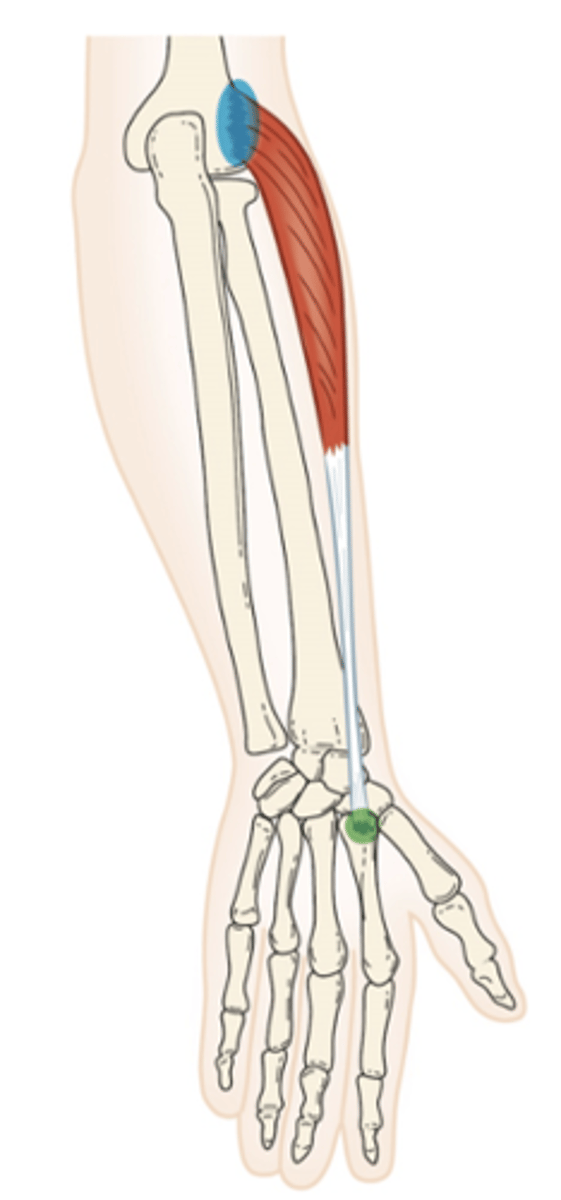
Extensor Carpi Radialis Brevis Muscle
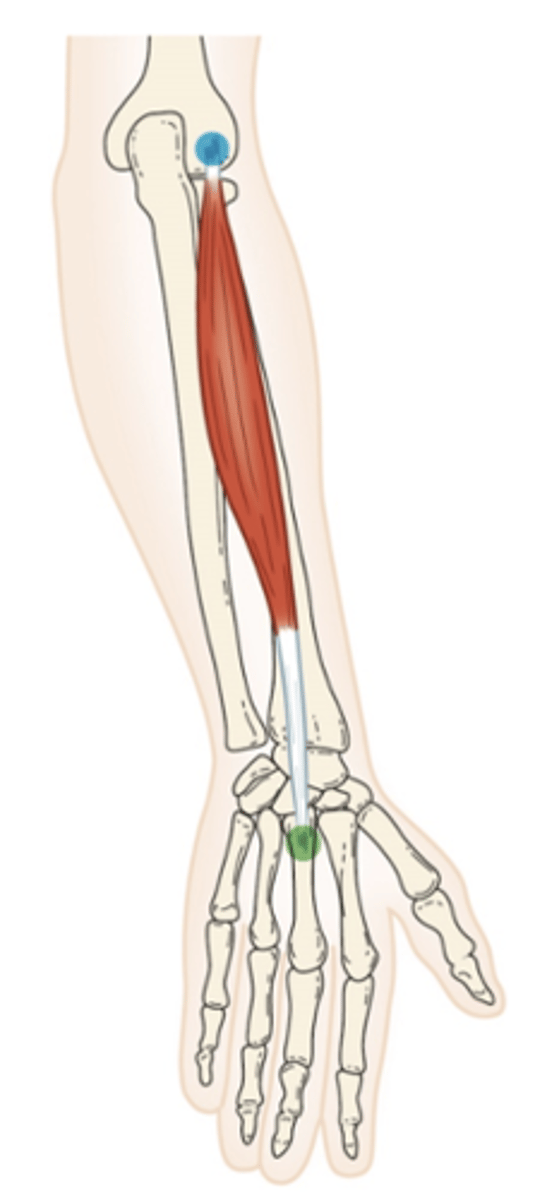
Extensor Carpi Ulnaris Muscle
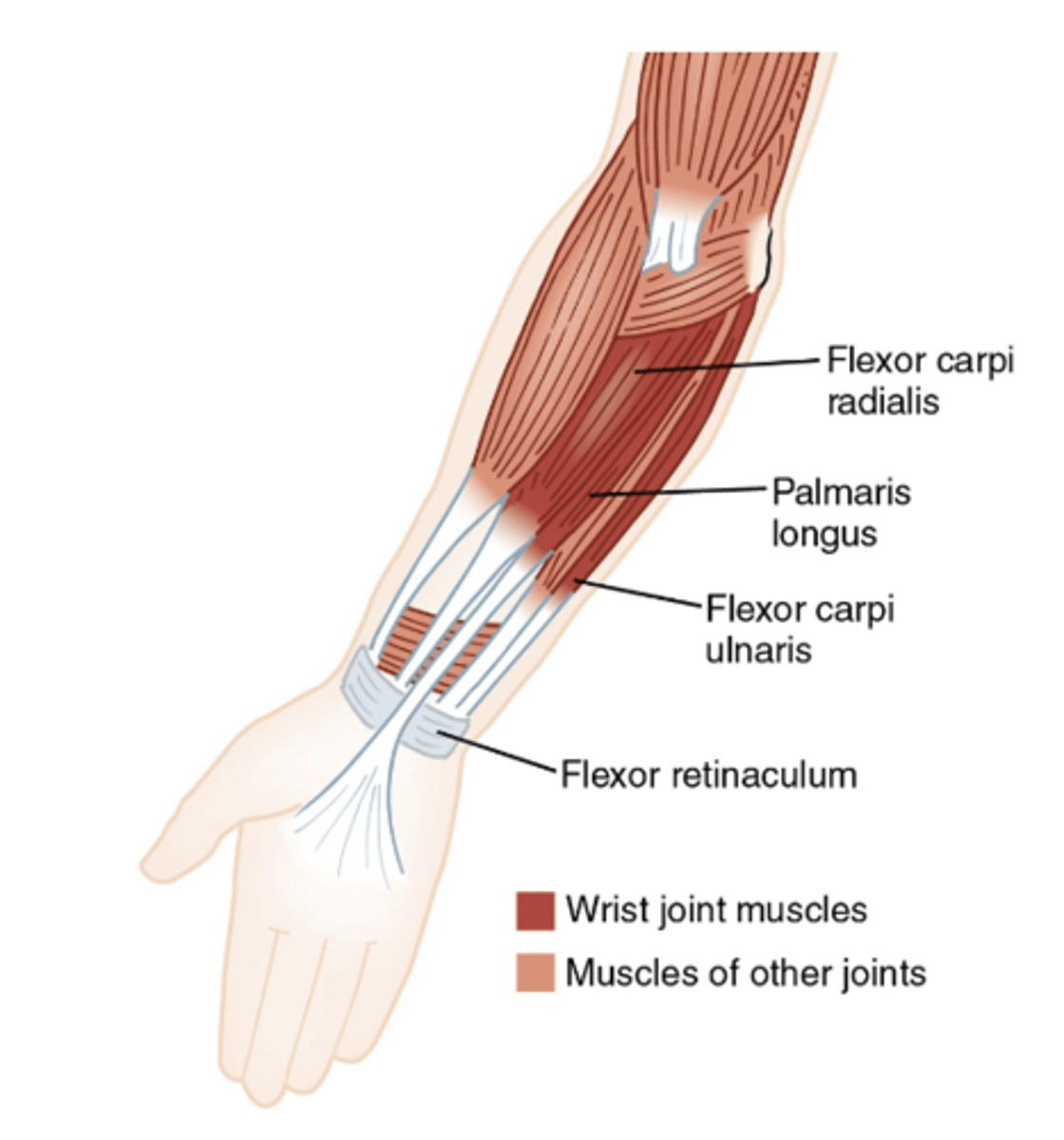
Anterior wrist muscles
flexor carpi ulnaris, flexor carpi radialis, palmaris longus
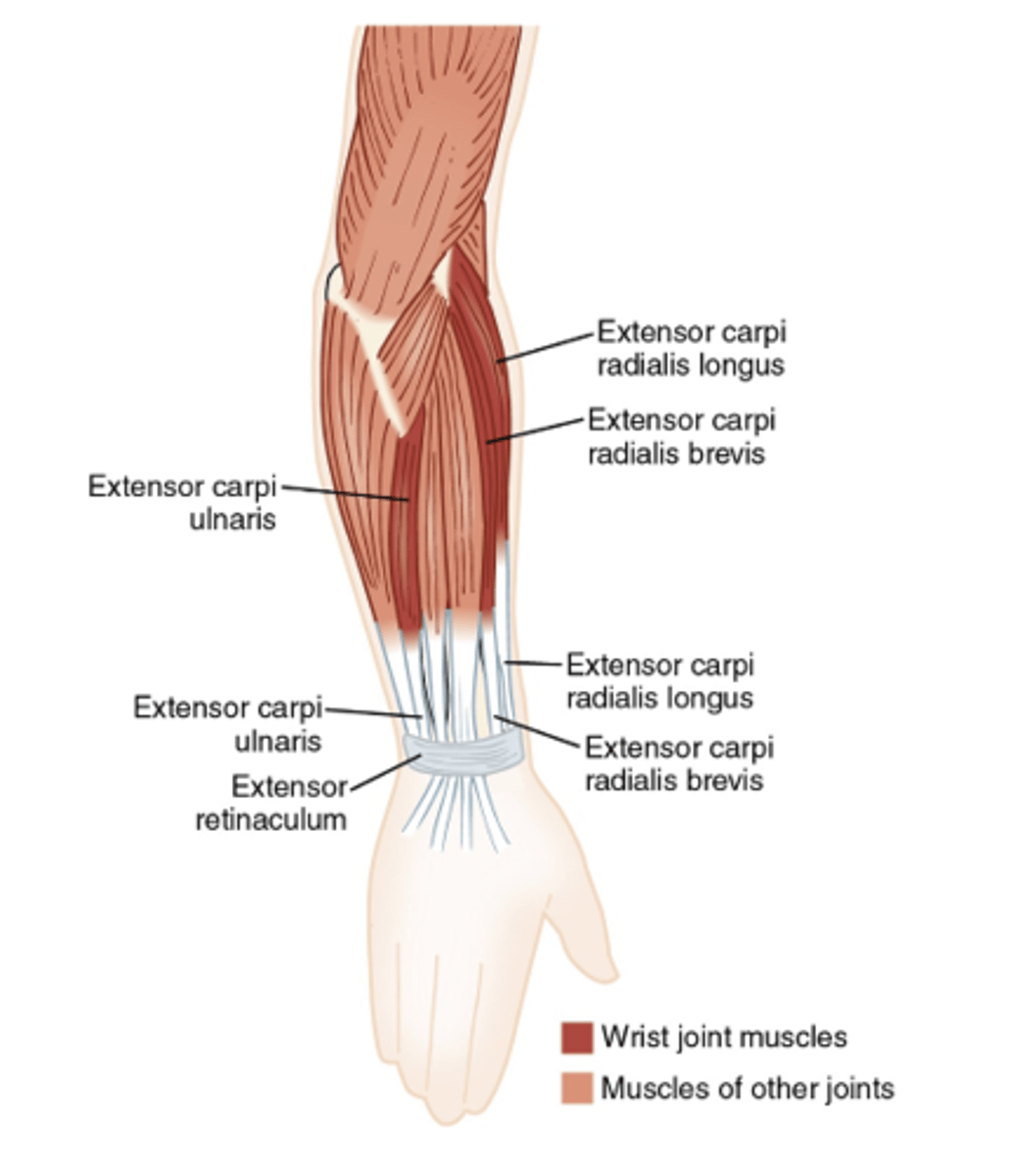
Posterior wrist muscles
extensor carpi radialis longus, extensor carpi radialis brevis, extensor carpi ulnaris
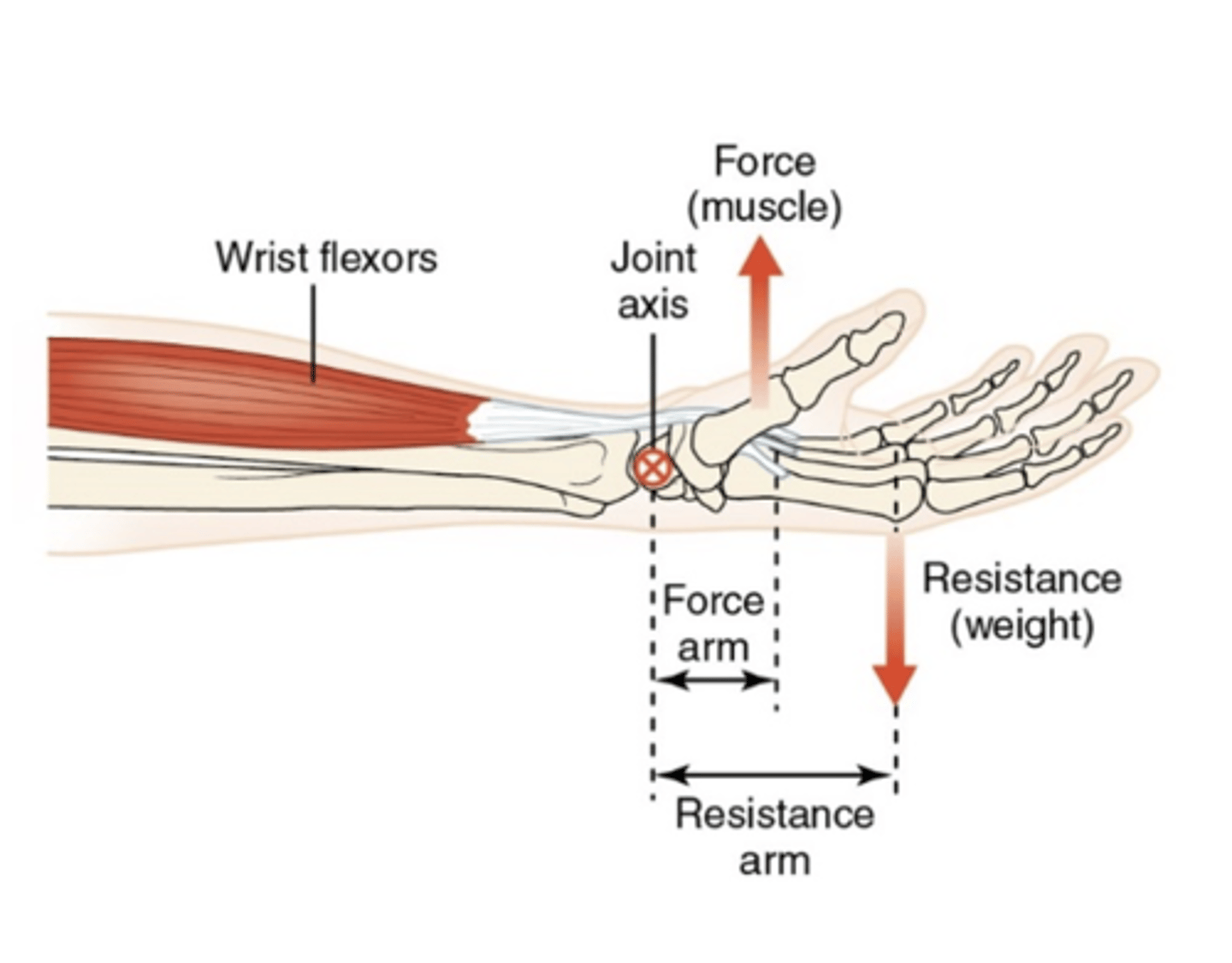
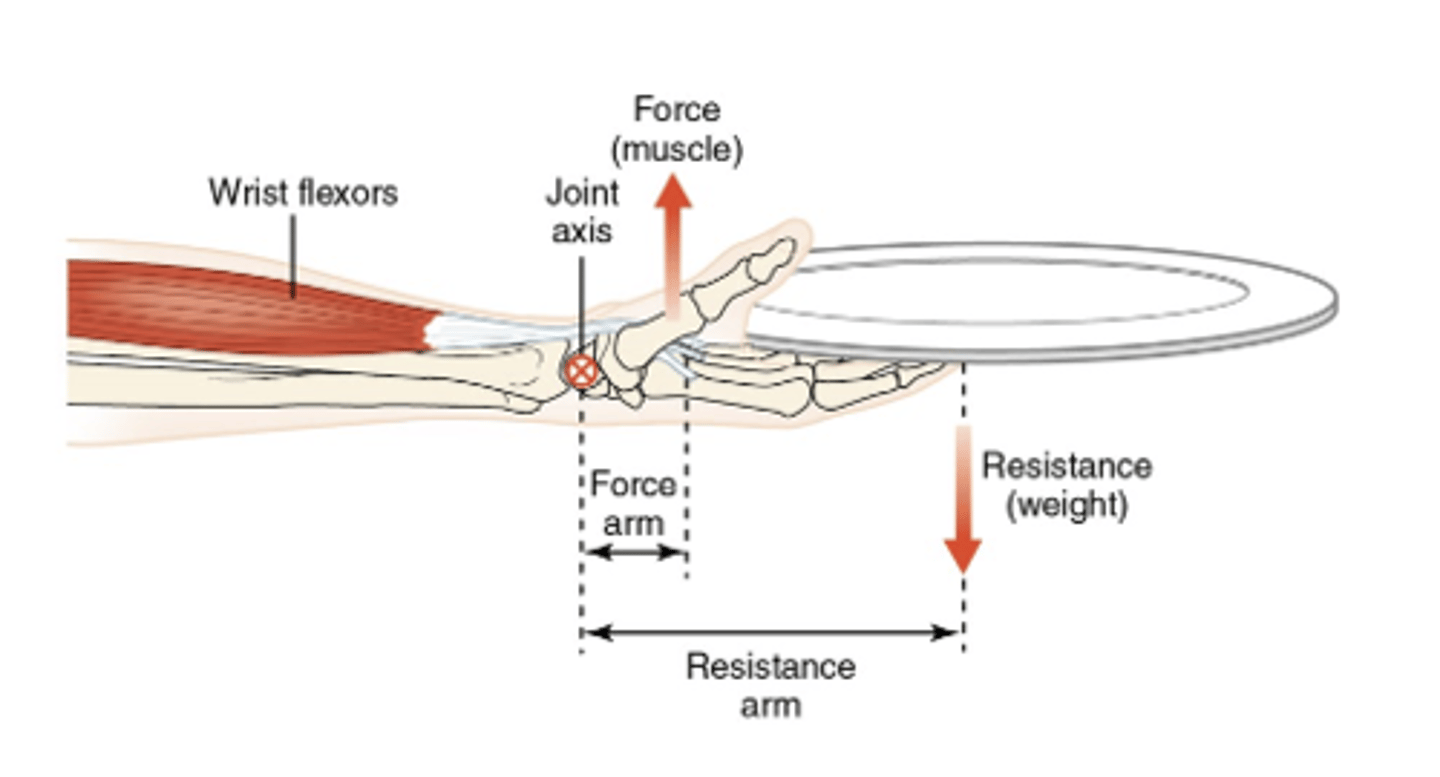
Lever system of the wrist
Force arm (FA) is less than resistance arm (RA)
relatively more force is needed to create movement
Lever system of the wrist when carrying a heavier object
RA (resistance arm) is increased
greater force is needed when holding platter
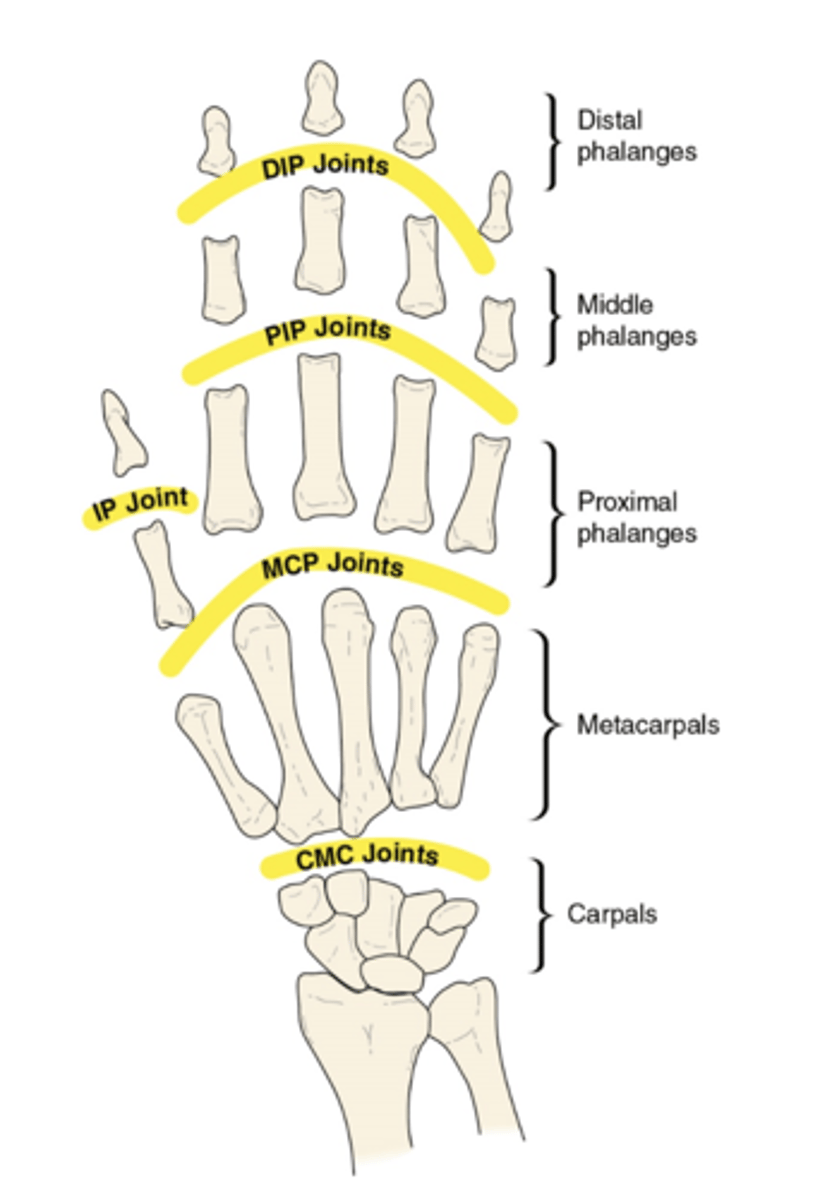
The hand consists of (3):
palm, four fingers, thumb
Two types of grasp
power and precision
Hand complex
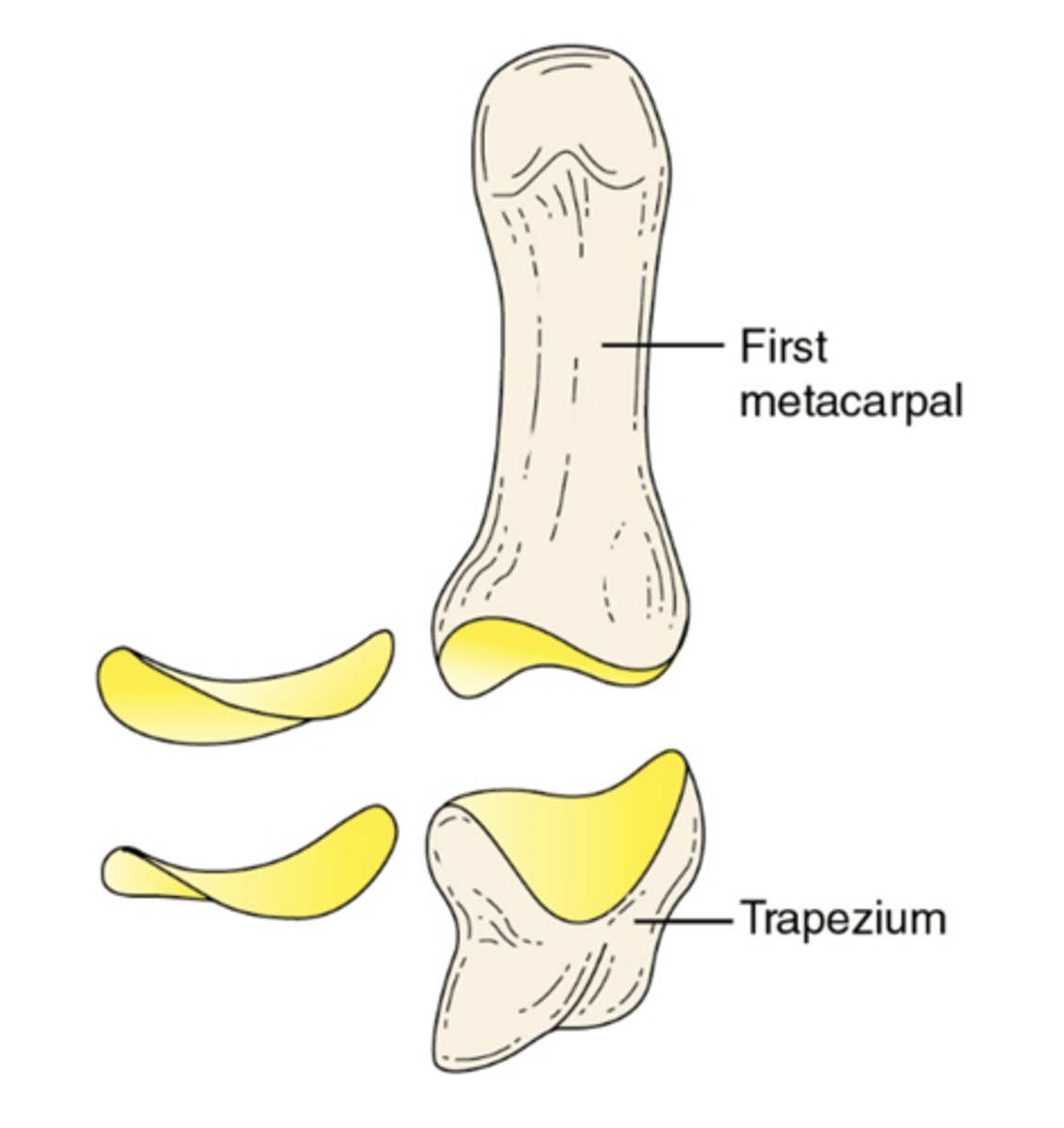
Osteokinematics: Carpometacarpal joint of the thumb (CMC)
starting position is with the side of the thumb resting against the anterior surface of the second metacarpal
triaxial
saddle joint
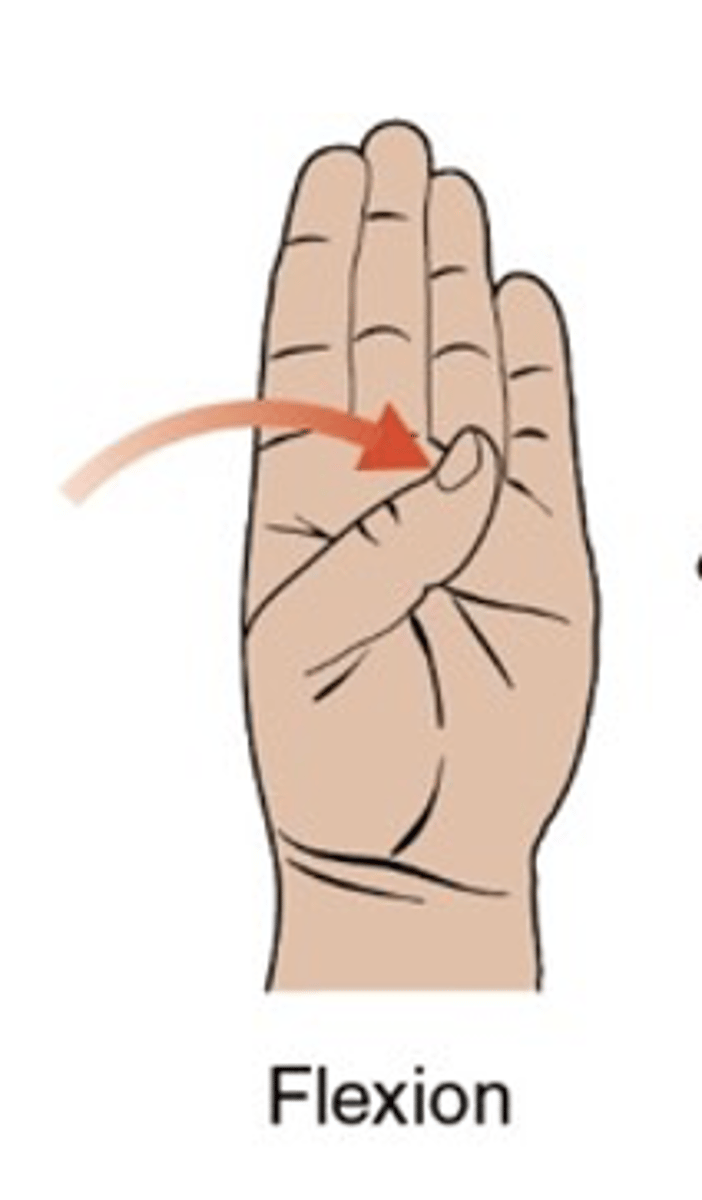
Flexion at the CMC joint
frontal planesagittal axis
- movement of the thumb medially across the palm, toward the little finger
- ROM: 0-15 degrees
Extension at the CMC joint
frontal plane, sagittal axis
movement of the thumb laterally, away from the palm and little finger
ROM: 0-20 degrees
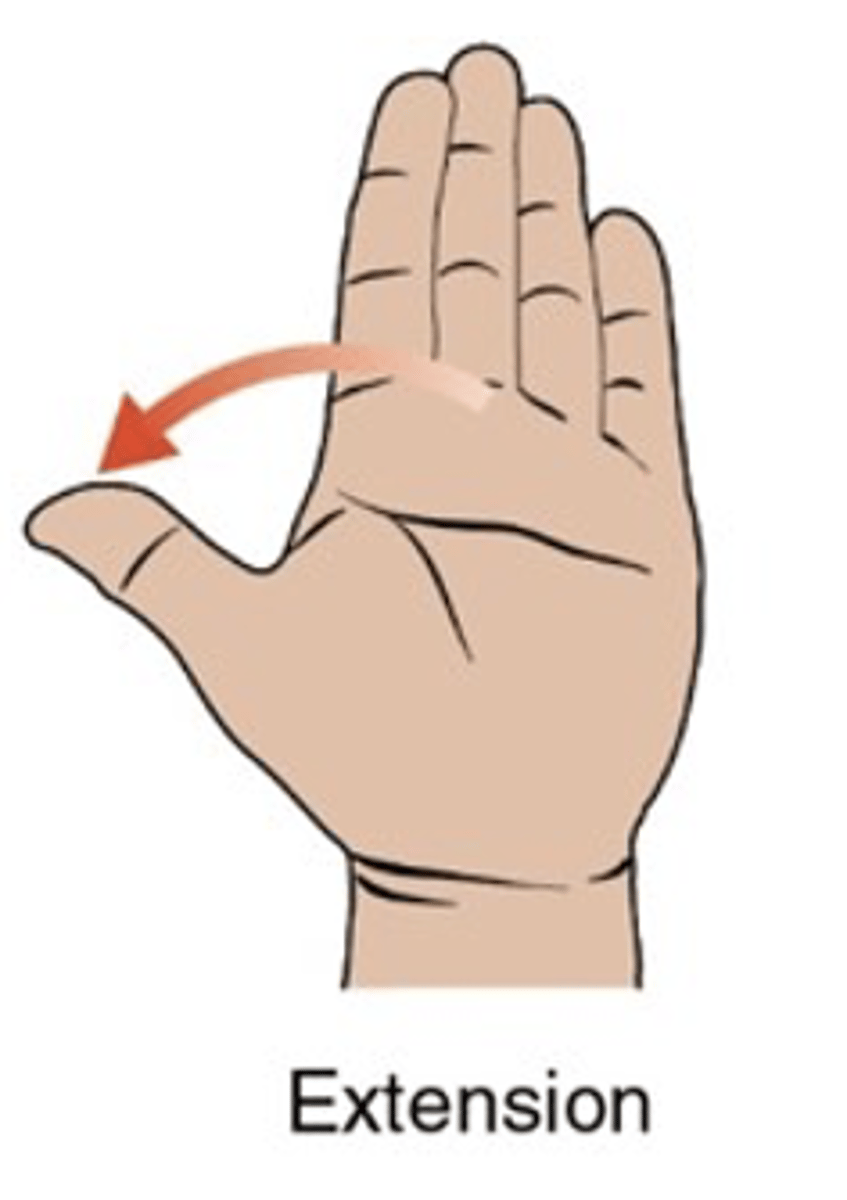
Abduction of the CMC joint
sagittal plane, frontal axis
movement of the thumb away from the palm
ROM: 0-70 degrees
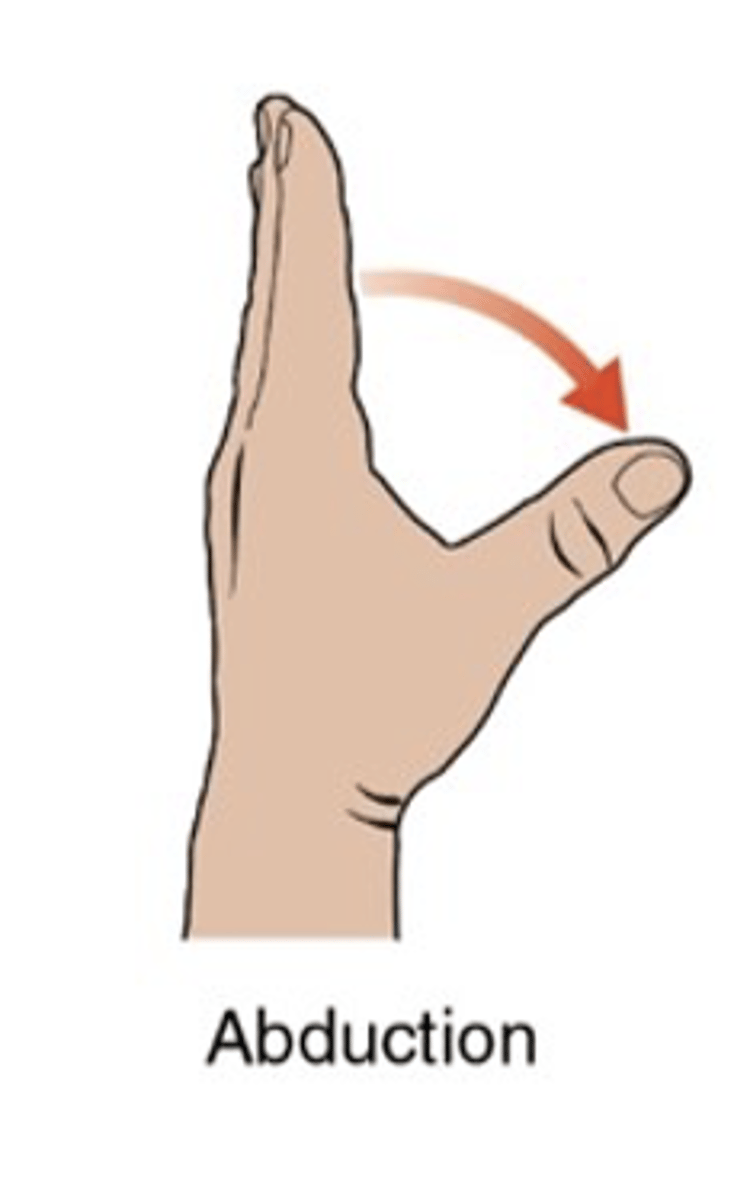
Adduction of the CMC joint
sagittal plane, frontal axis
movement of the thumb toward from the palm, returning to the starting position
ROM: 0 degrees
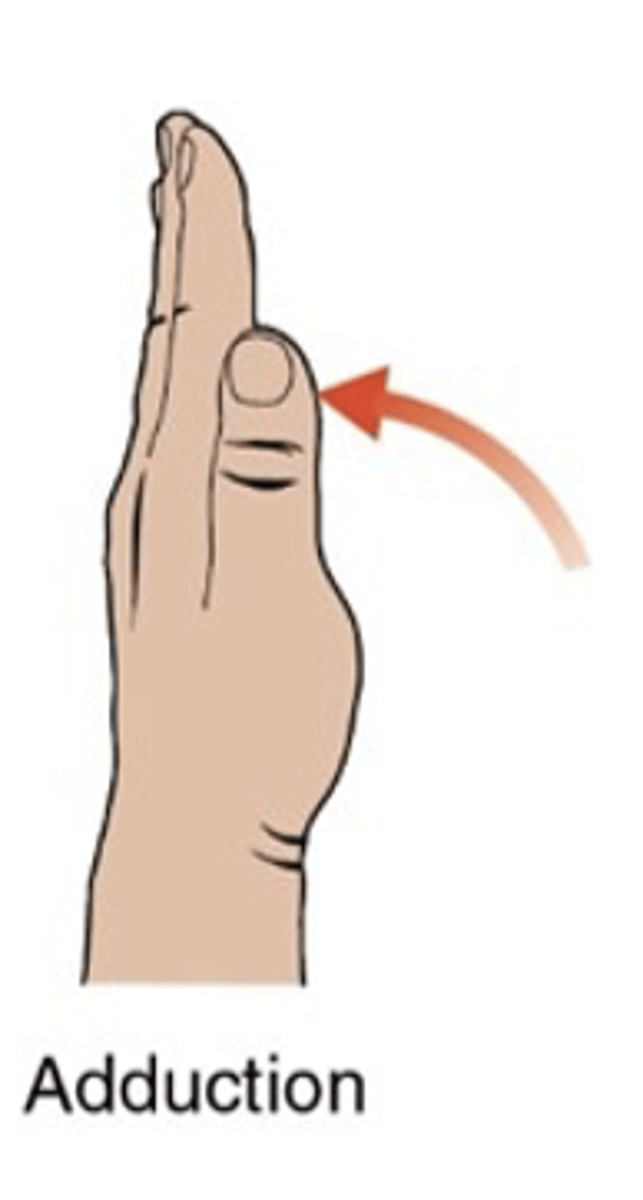
Opposition of the CMC joint
horizontal plane, vertical axis
movement in which the tips of the thumb and little finger move toward one another using a combination of flexion and abduction
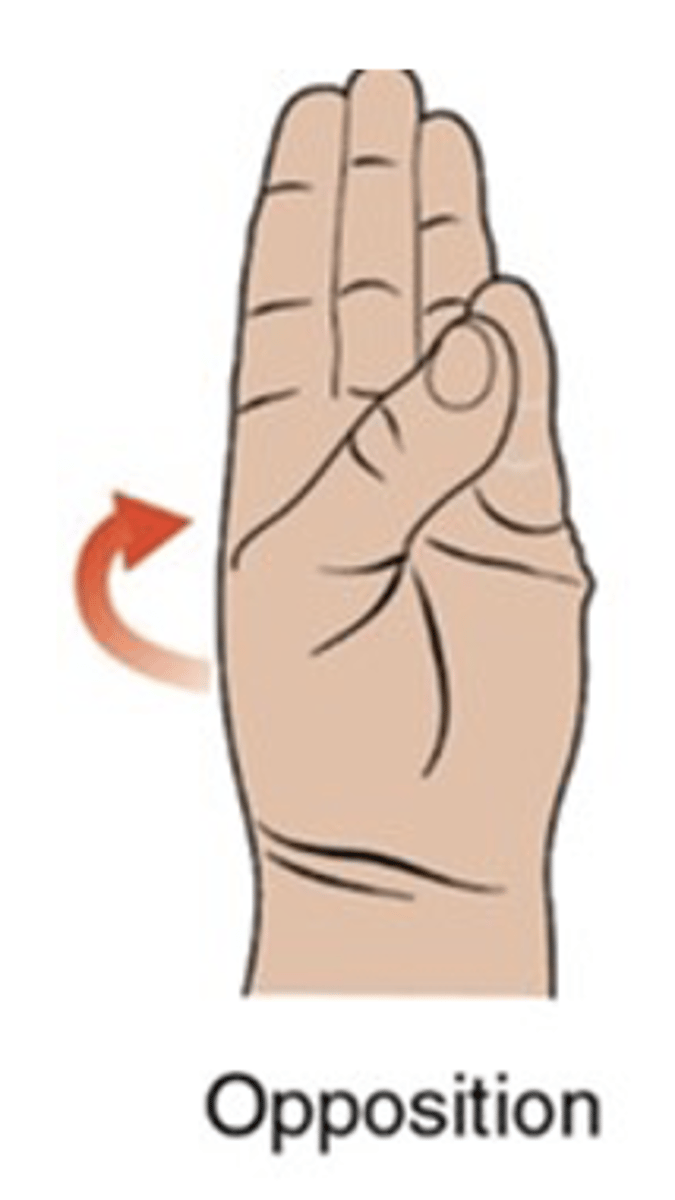
Reposition of the CMC joint
horizontal plane about a vertical axis
movement in which the tips of the thumb and little finger move away from each other using a combination of extension and adduction
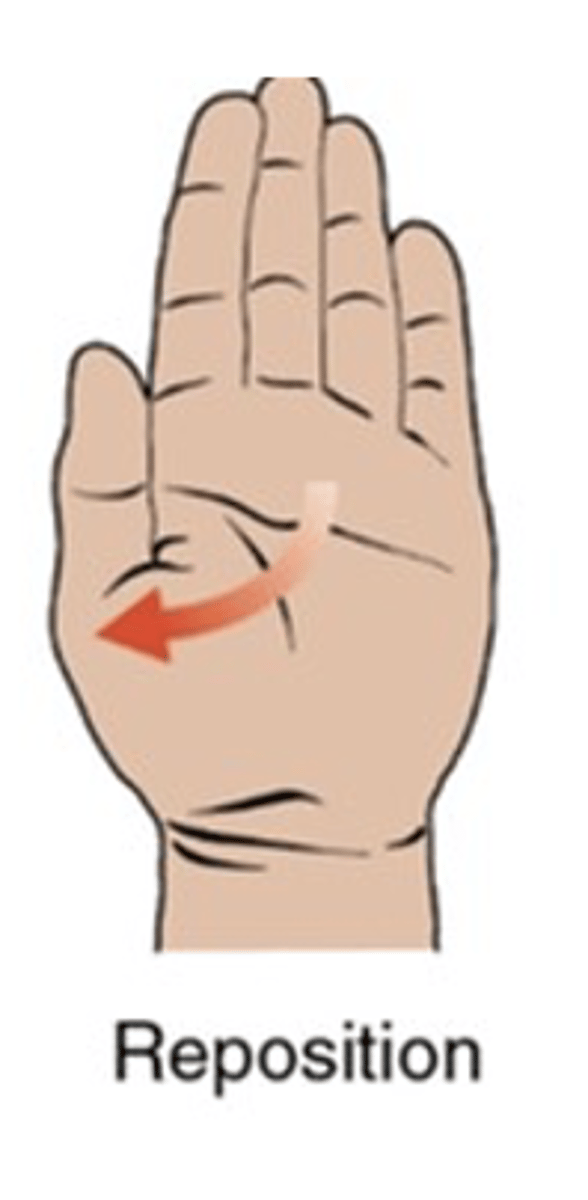
The CMC joint of the thumb
arthrokinematic motions of roll and glide in the same direction
Carpometacarpal joint of the fingers
permit minimal motion
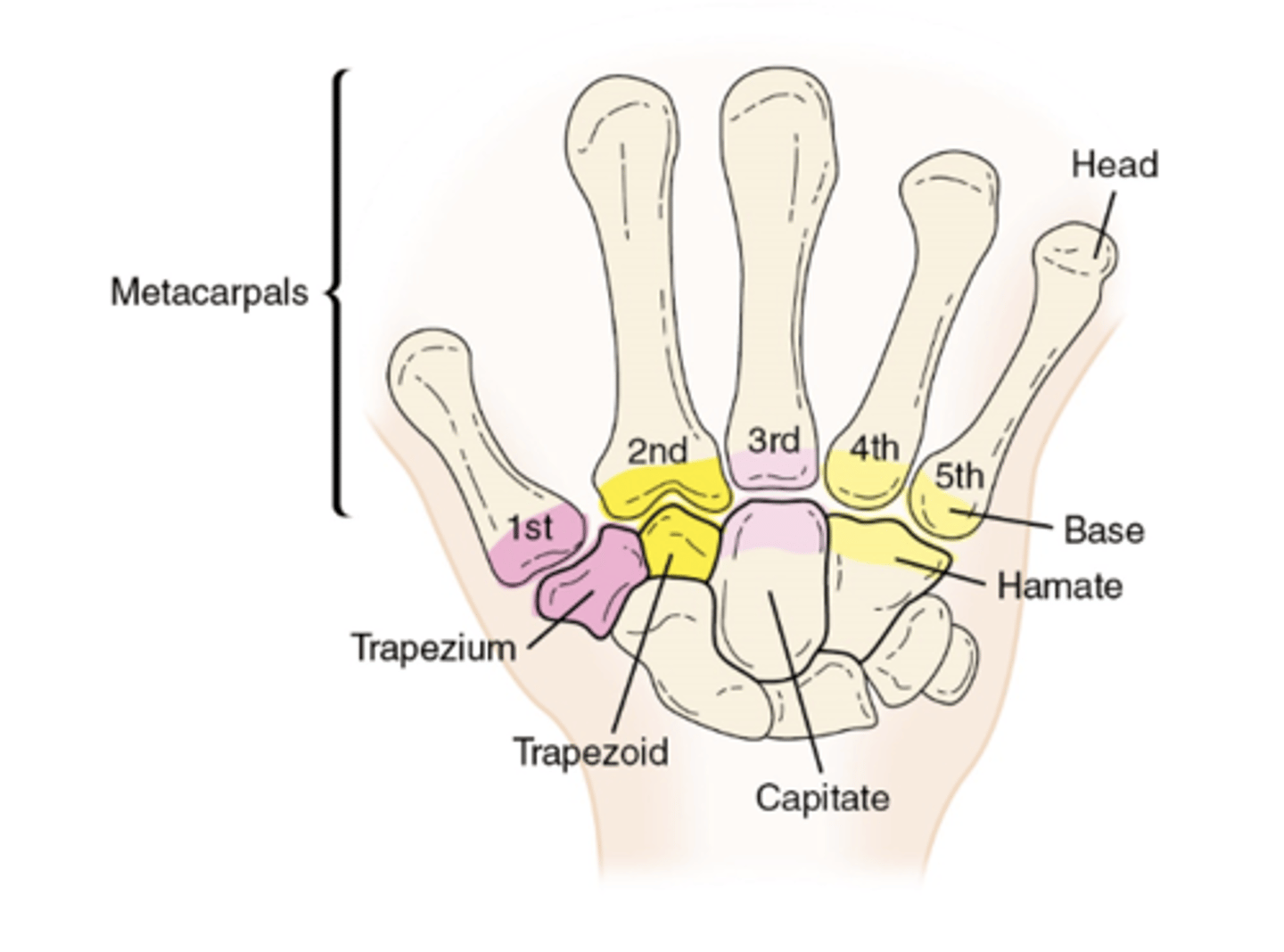
Metacarpophalangeal joints (MCP) of the thumb
unixial joint
synovial joint
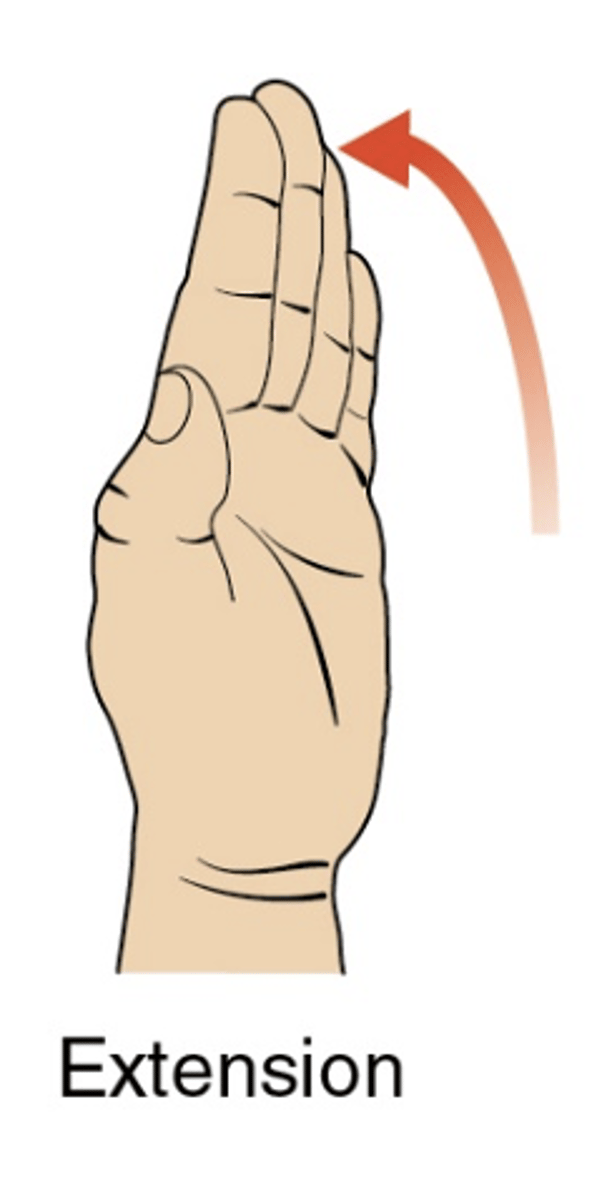
flexion and extension only:
frontal plane, sagittal axis
distal end of metacarpal is convex, and proximal end of phalange is concave
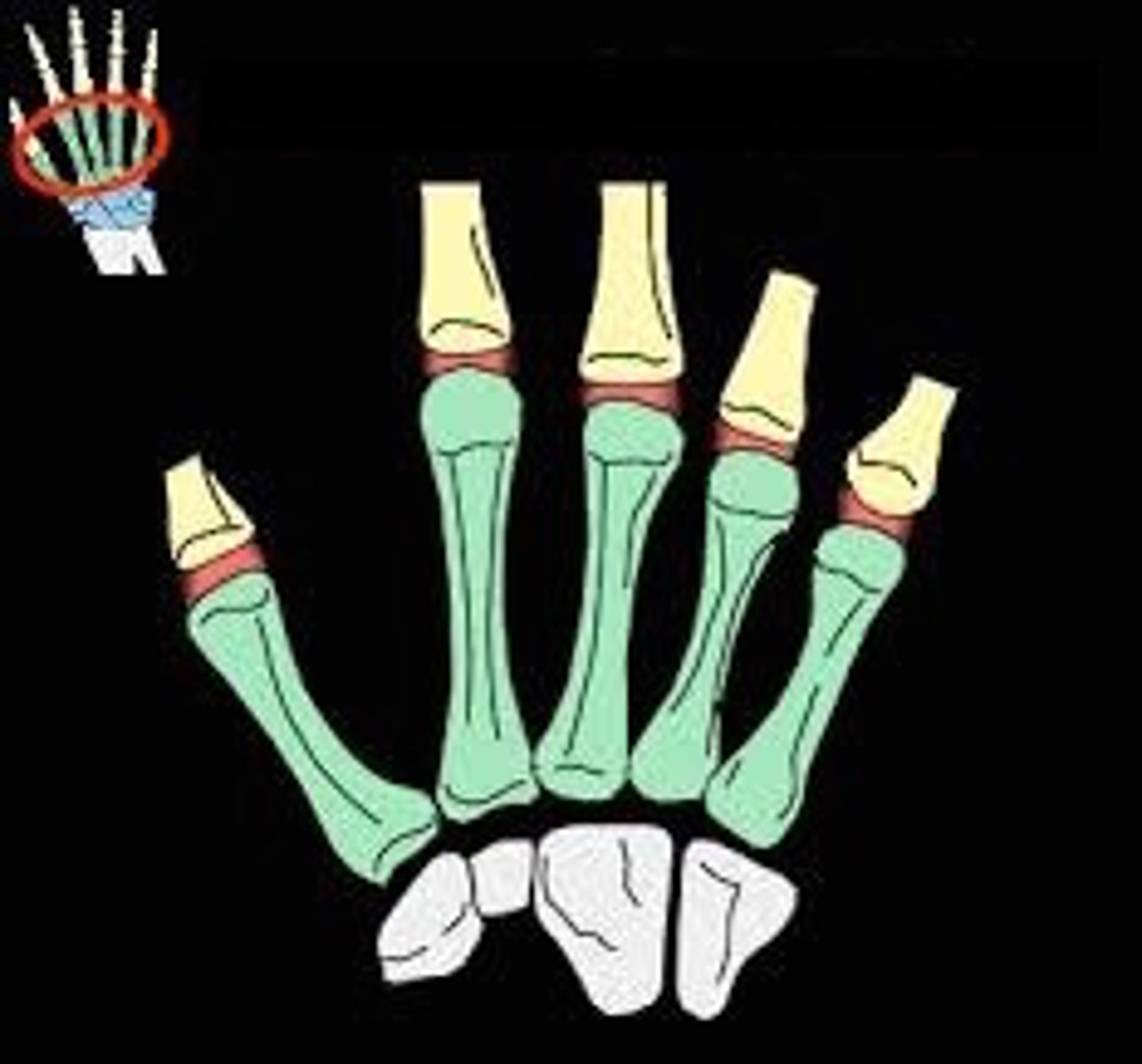
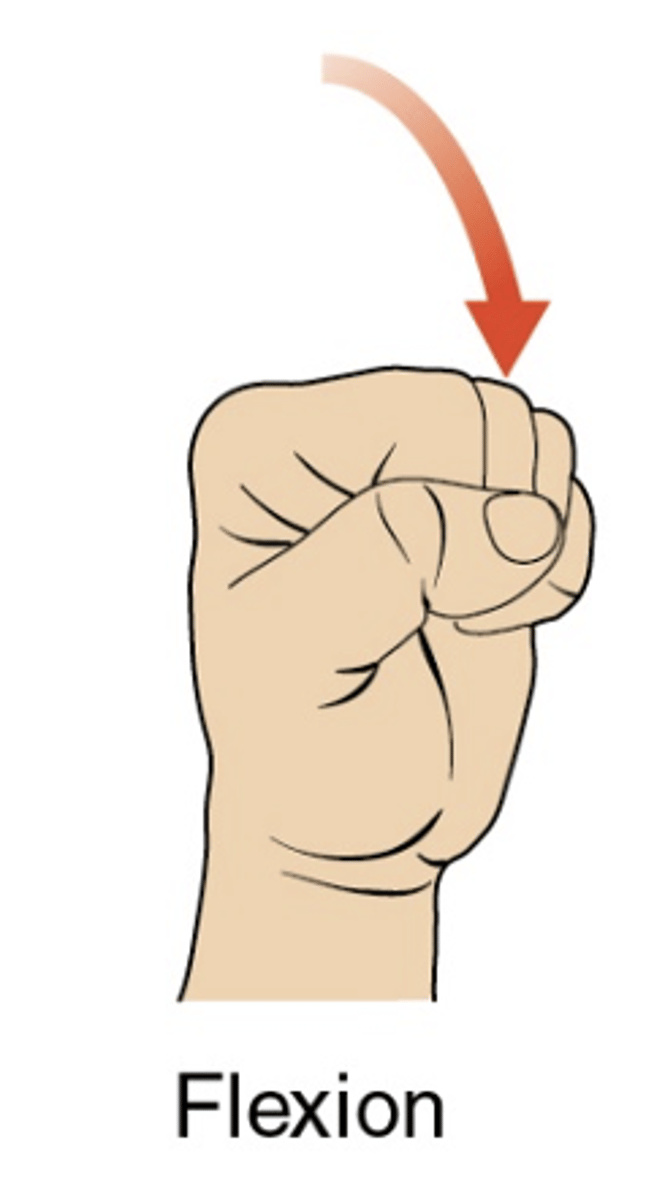
Flexion of the MCP joint of the thumb
frontal plane about a sagittal axis
first phalange rolls and glides medially
ROM: 0-50 degrees
Extension of the MCP joint of the thumb
frontal plane about a sagittal axis
first phalange rolls and glides laterally
ROM: 0 degrees
Metacarpophalangeal joints (MCP) of the fingers
synovial biaxial condyloid joint
flexion/extension
sagittal plane, frontal plane
abduction/adduction
frontal plane, sagittal axis
distal end of metacarpal is convex, and proximal end of phalange is concave