french 2.0
 Call Kai
 Learn
Learn Practice Test
 Spaced Repetition
 Match
Match Flashcards
 Knowt Play
1/56

There's no tags or description
Looks like no tags are added yet.
Name | Mastery | Learn | Test | Matching | Spaced | Call with Kai |
|---|
No analytics yet
Send a link to your students to track their progress
57 Terms
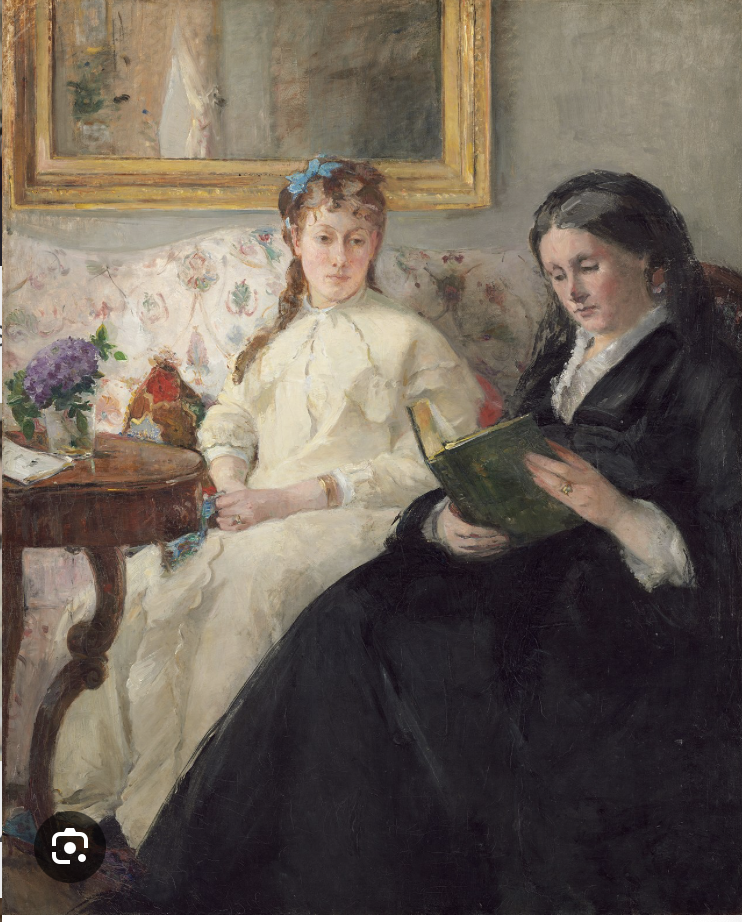
Morisot
The Mother and Sister of the Artist
1869
also understood in relation to sister Edna Morisot
also in connection to her painting from the same year The Artists sister at a window
the title of both of these paintings was renamed by large contem[oprary galleries, and were not as Morisot intended them to be viewed, placing them in a personal and domestiv space rather than a context from which she might be self-supportuing and have hired a professional model.
ap
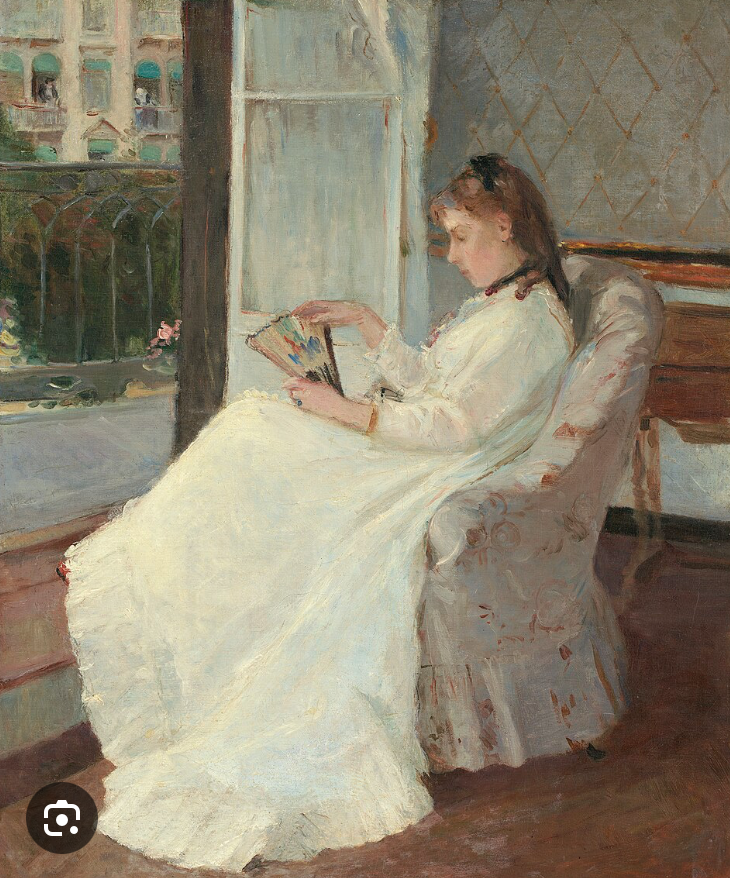
Morisot
The Artists Sister at a window
1869
the title of both of these paintings was renamed by large contem[oprary galleries, and were not as Morisot intended them to be viewed, placing them in a personal and domestiv space rather than a context from which she might be self-supportuing and have hired a professional model.
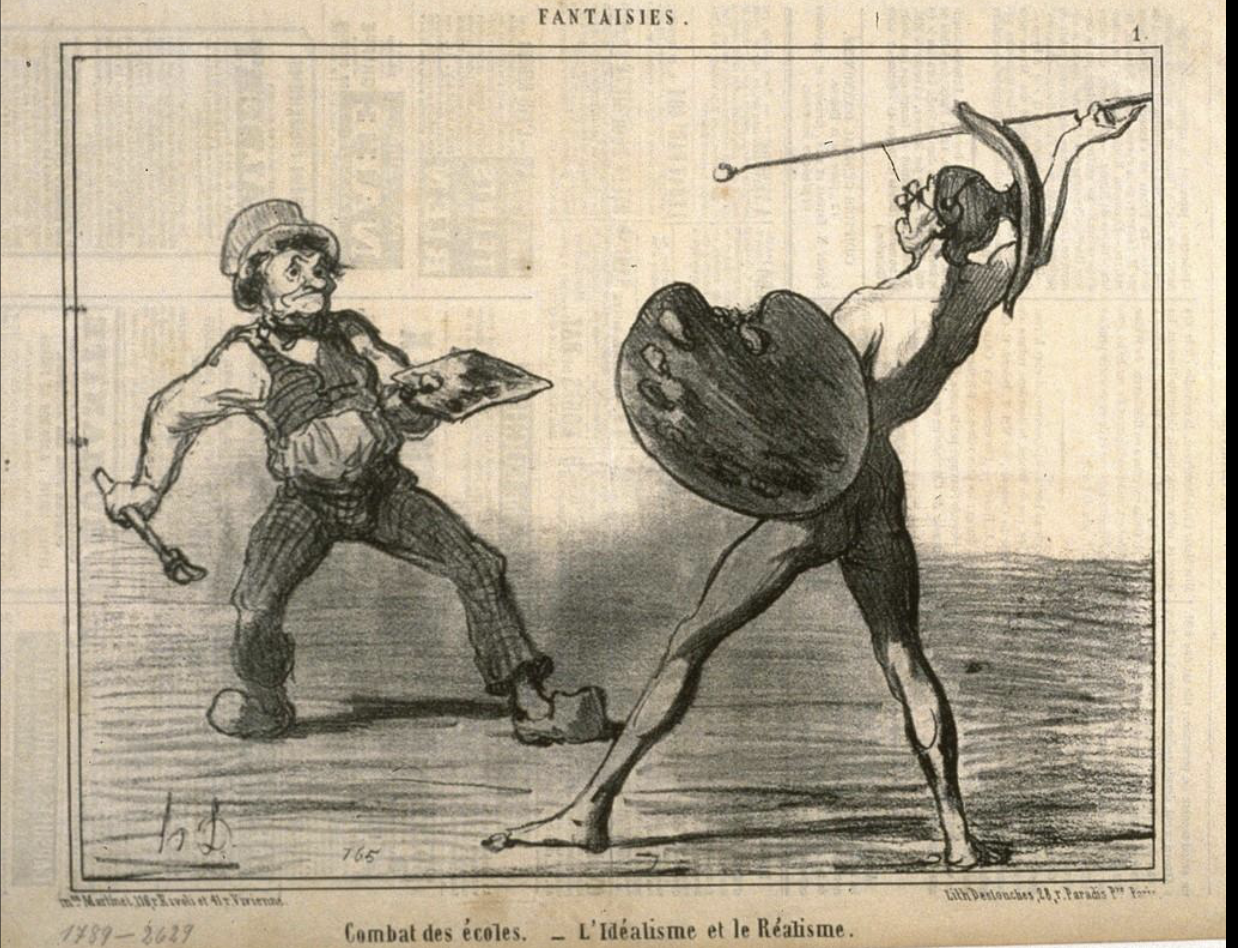
Daumier
Combat of the Schools, Idealism and Realism
1885
key terms related: dichotomy, epistemolgy
how work like this contributes to the creation and continuation of what we know/don’t know
is often interpreted as Delacroix vs Ingres, maybe Courbet vs Ingres
realism vs idealism
realist figure is depicted as a sort of lower class country individual, idealist is represented with classic features of the acadamy greco-roman body
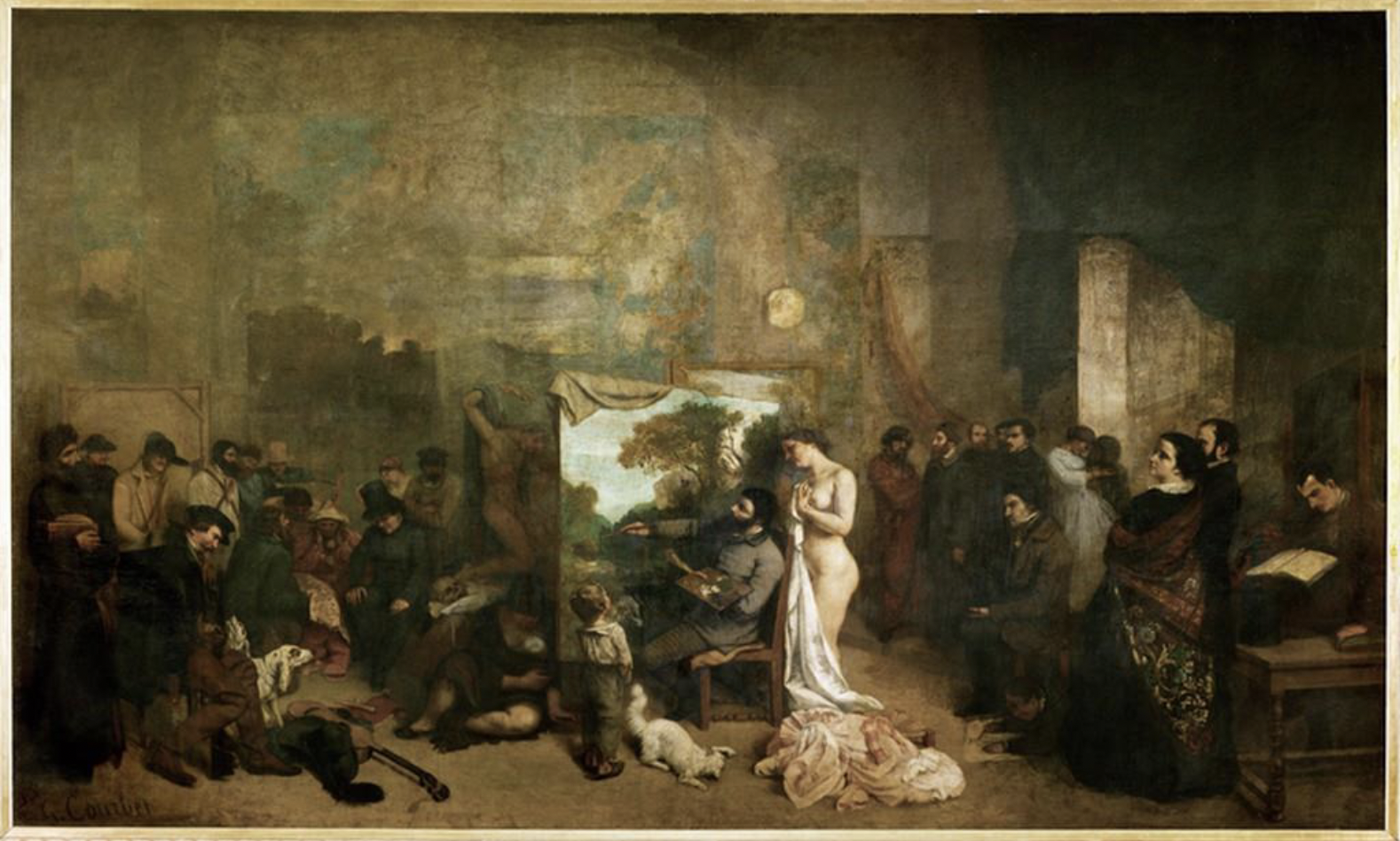
Courbet
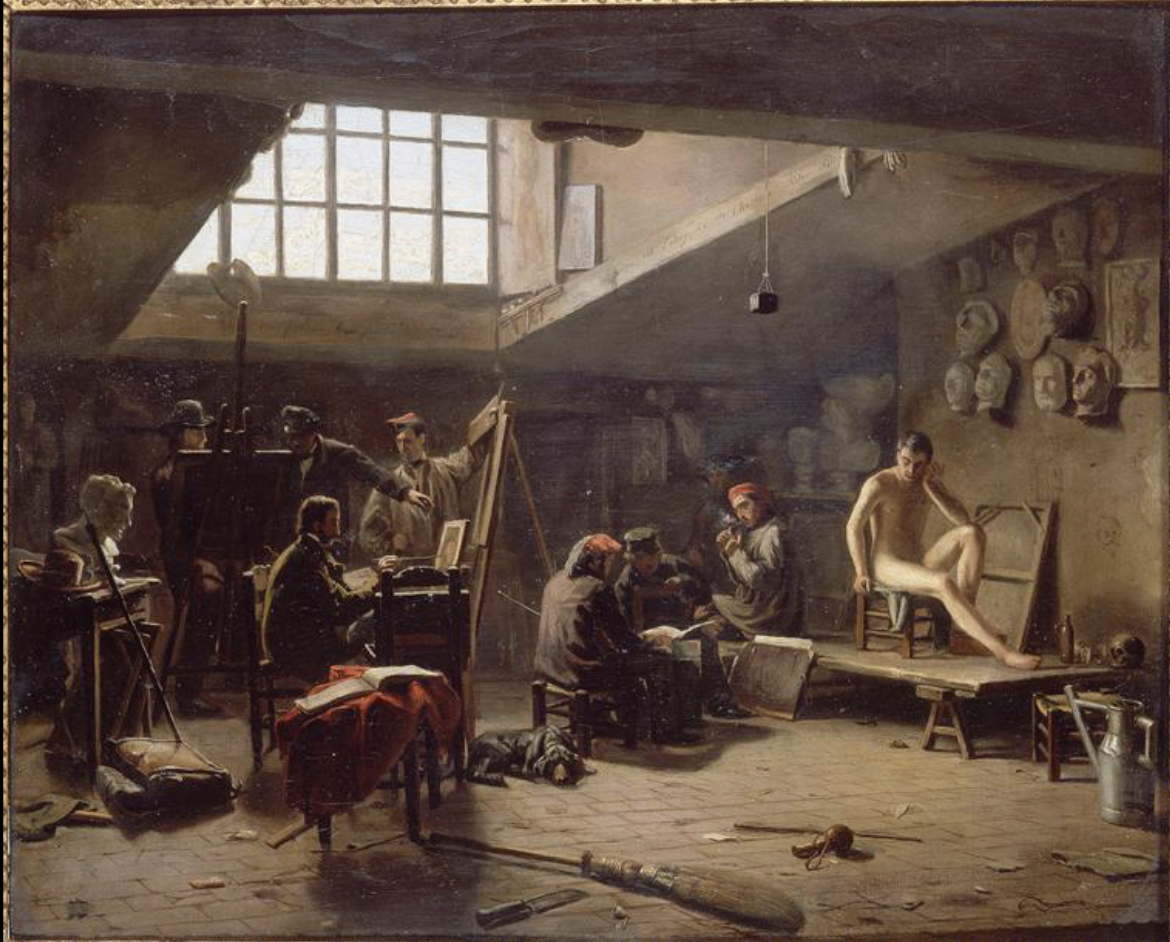
The Studio
1885
original title given by Courbet: The painters studio: a real allegory defining a phase of seven years of my life
artist run exhibition
1855 was also the year that artists could submit as many works as they wanted into the Salon, Courbet submitted 14 works, 11 of which were chosen
he still wanted to show the three that were rejected, and with his financially privilaged background he decided to advertise and create his own show.
he showed 38 paintings and a handful of drawings
this work was shown at this solo show ititled: the pavillion of realism
admission for this show was the same price as the universal expo and the saln
this work depicts his real supportersm private patrons and friends all on the rifht side of the painting as “the good peopple” alive and helpful people
on the left, he depicts the misery exploitation and trivial side of life. N.B and Fould are also here
a lot of what we know baout courbet comes from his letters, a very unusal primarry source to have and be able to source together
this speaks to the politics of primary source keeping, whos get kept, stoered and treasured, and how you might be able to view the,
so we know a lot about how he was feeling about his work getting rejected
this rejection, the development of his solo show in response, and the fact that he was not trained in the ecole de beaux arts placed him as an anti-establishment artist
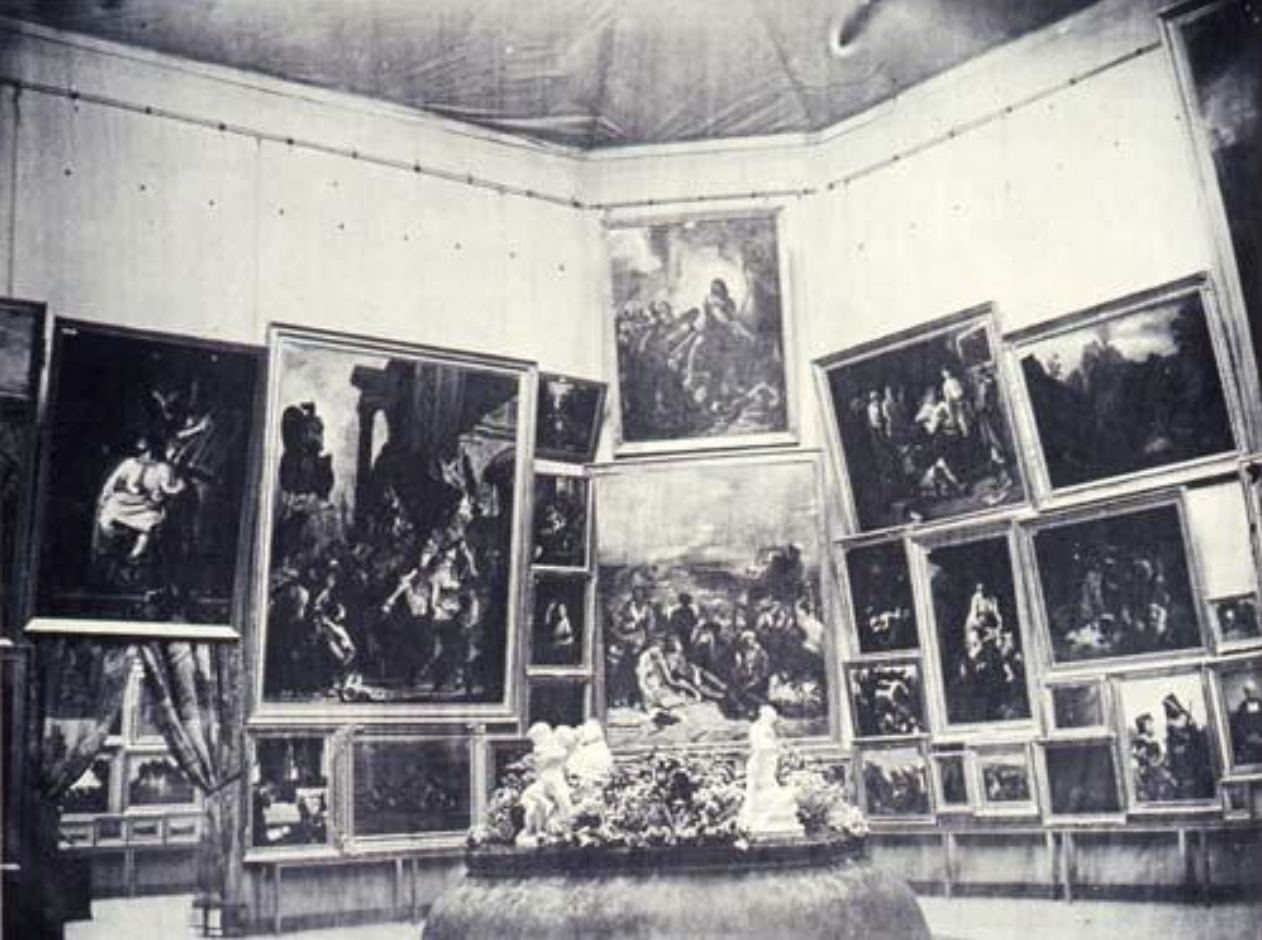
Delacroix’s Corner at the 1855 Expo
we know from his letters that he was promised hiw own room (like Ingres and Vernet), but we can see that he did in fact not have his room, and got placed in a corner instead
Delacroix is understood is very much the opposite of ingres
Ingres is an academician, whilst delacroix in not. He has a much more visiual approach to painting
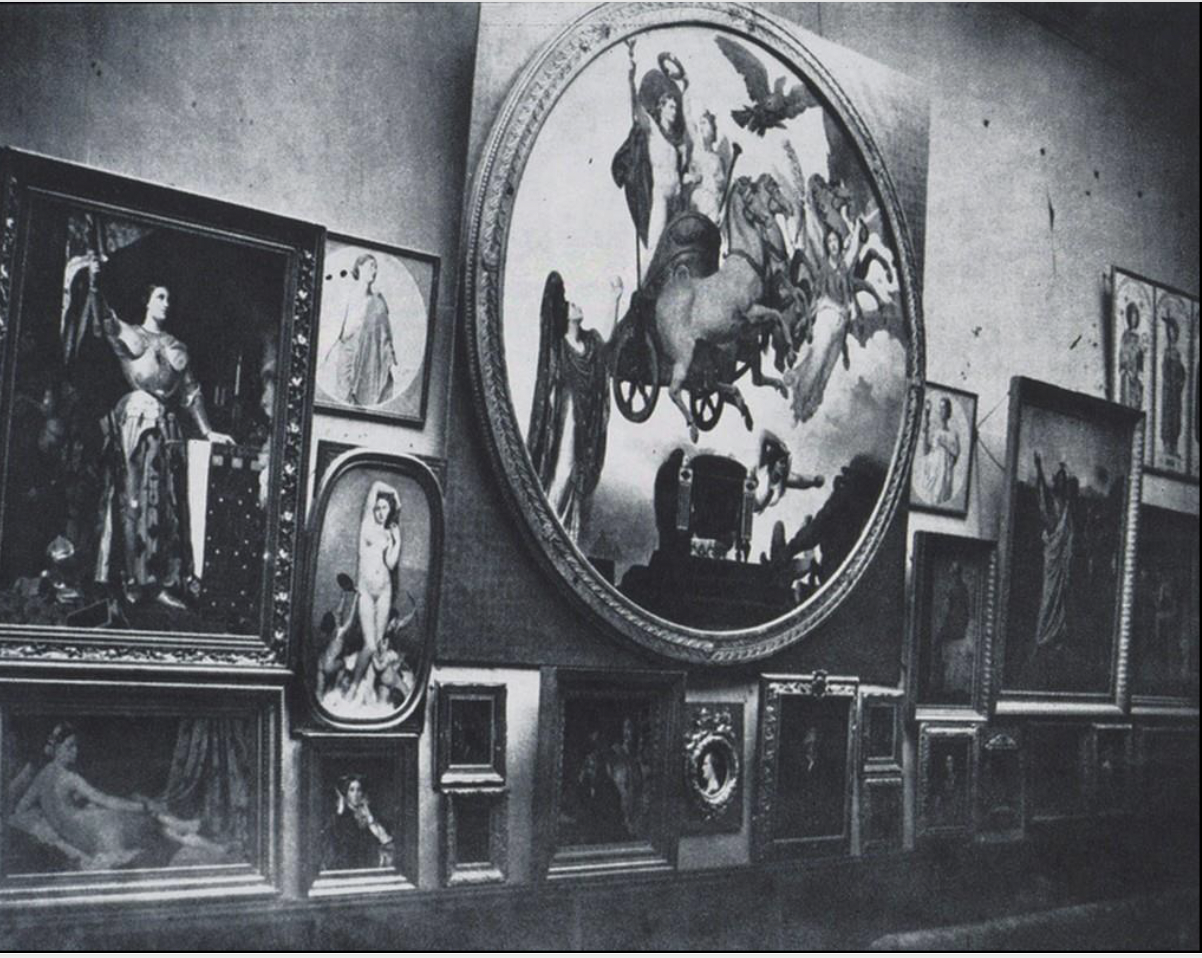
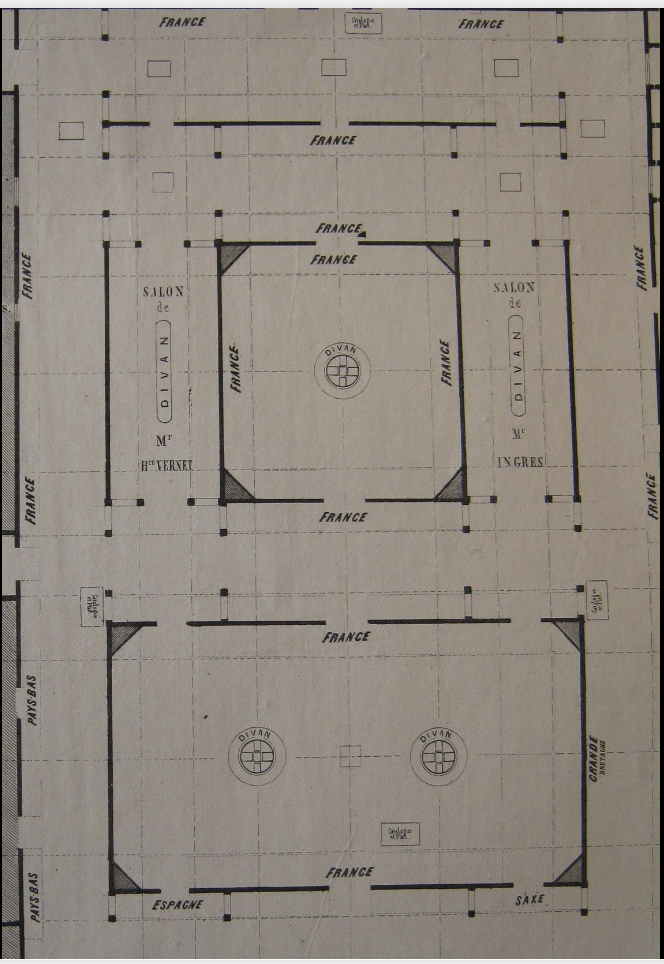
Ingres Exhibtion at the Universal Expo of 1855, Paris
Ingres sort of represented the artistic poliics of france
ingres represents the privilaged academic artists
hes an example of the privilaged artists that dont have to submit their work to juries, artists who have won the prix de rome or have been gifted the lgion of honour
certain artsits are intented to highlight specfic artists
they chose ingres
he is one of the top academicians of the time, specializing in portraiture, history painting, and allegorical painting
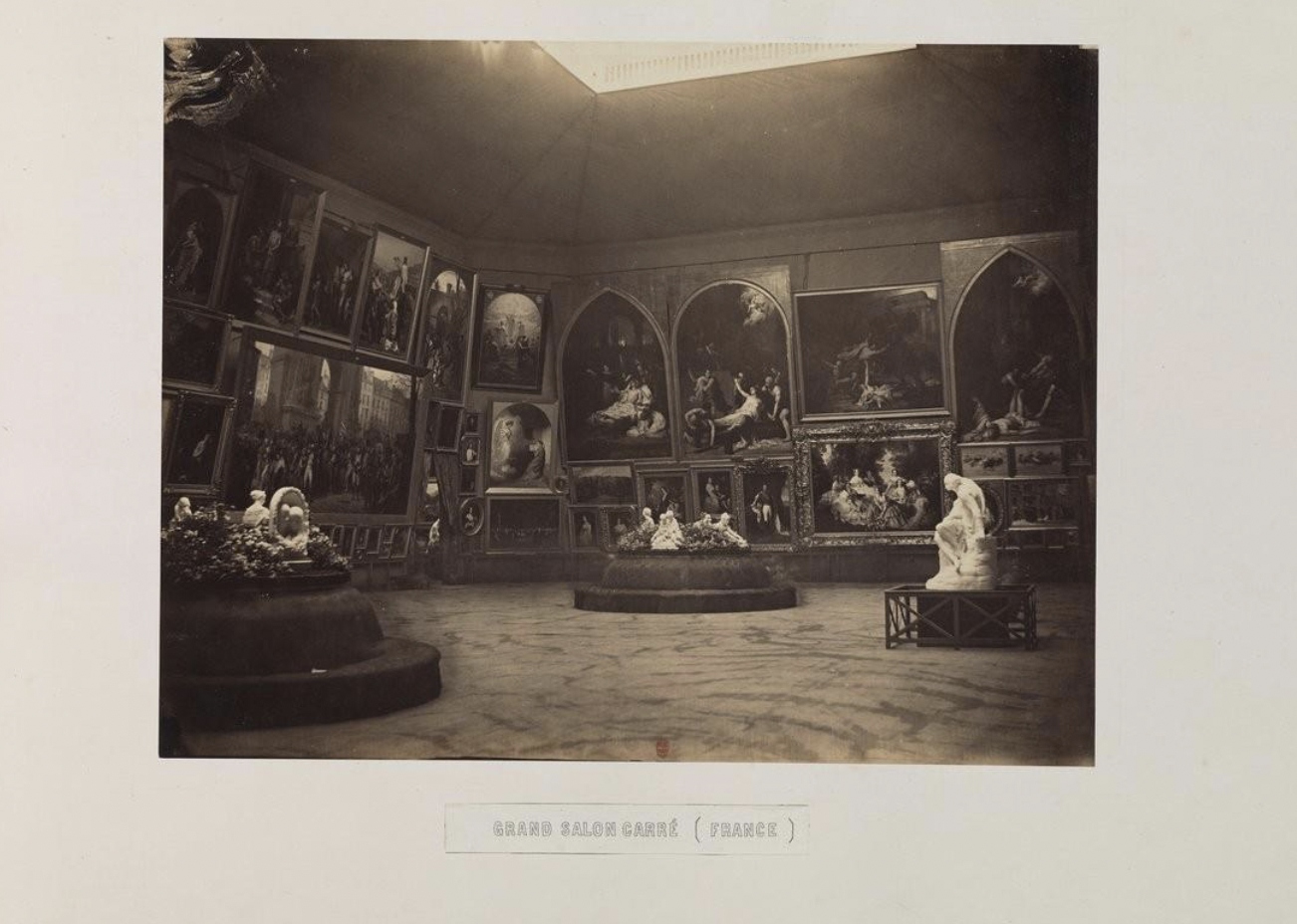
salon style hanging
clear hierarchy of genres
strategy used for the politics of french government, and military success
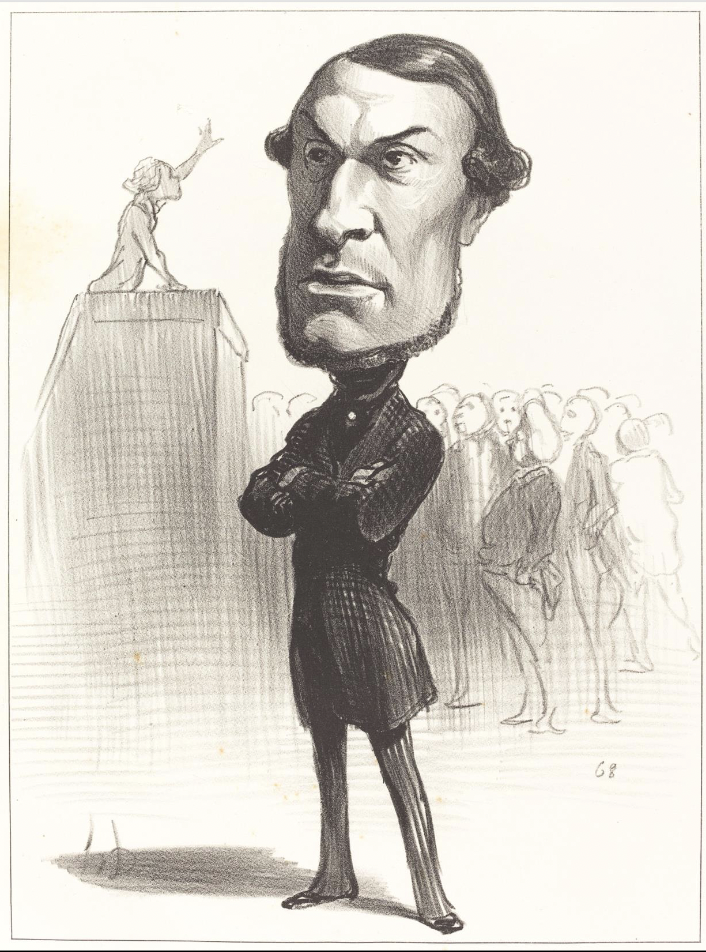
Daumier
Achille Fould
1849
Fould is the minister of state
this work primarily refers to press censorship, and discussion regarding how it was ossible for the work to be created and published
1849 was very open in regards to partial political characatures being published
important dates 1848, 1859 and 1852
1848: the revolation, all censorship laws were anulled - 6 month laters they reinstitued caution/deposits
1850: deposit, stamp fee, and any political topic had to be signed by the maker - idenitfying the artist
1852: costs increased and includd the possibility of imprisonment as punishment or publication suspension
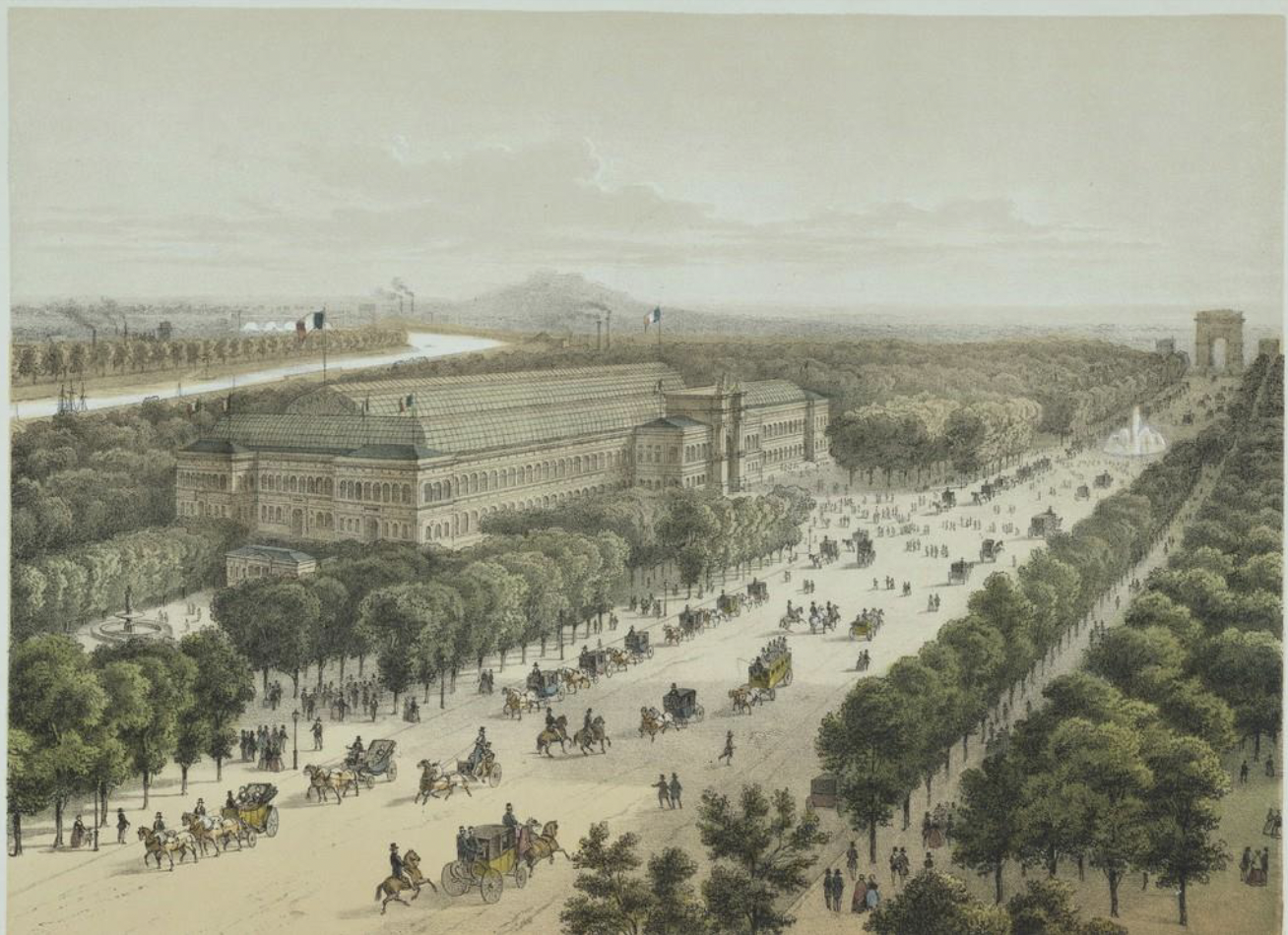
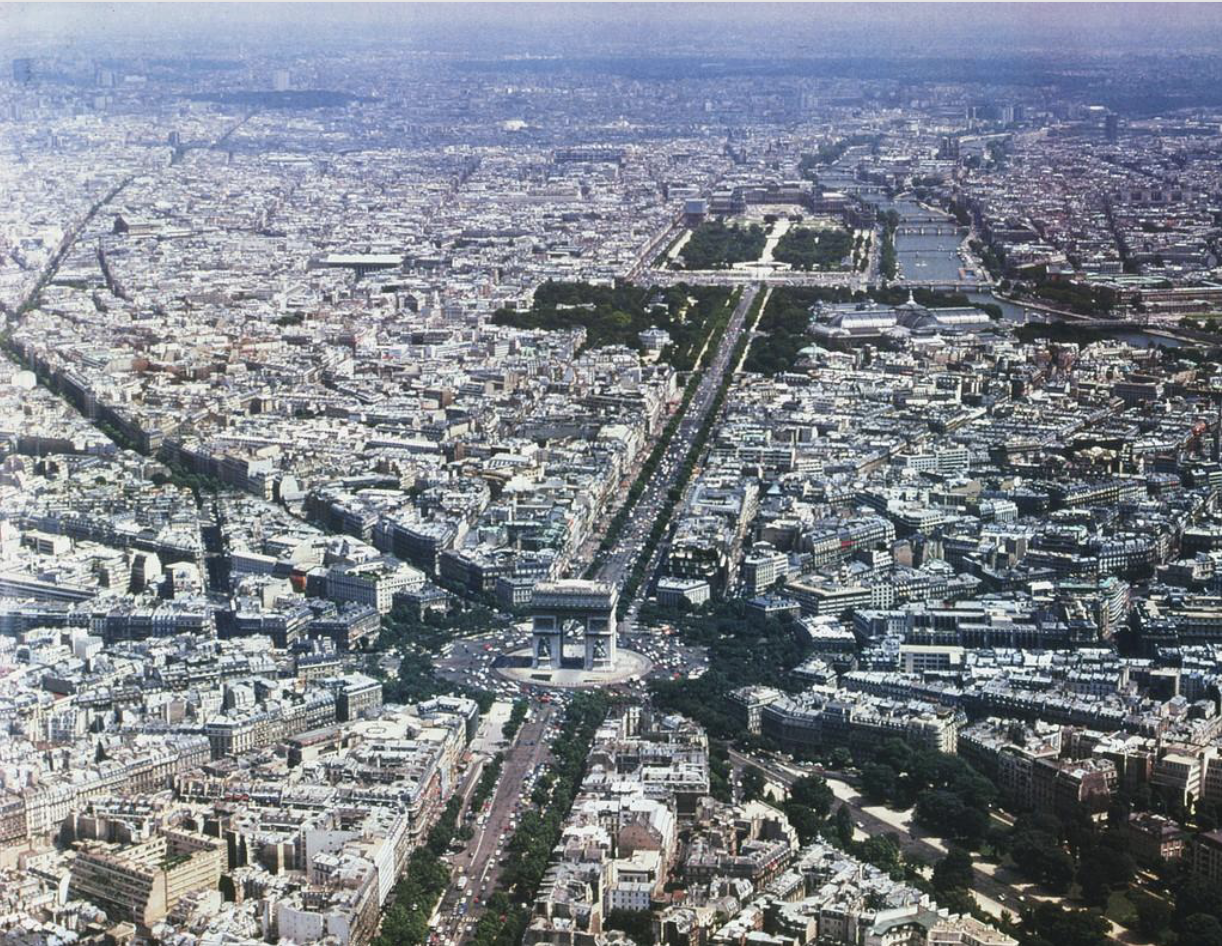
Aeriel view of the Palace of Industry on Champs-Elysees
1855
colour lithograph
this building was created specifically for the universal expo of 1855
the government didnt pay for it but created a company that would be responisble for the creation of this building
was inteded to be an income generating space
you have to pay admission to enter, or rent the space
post 1855- this is where the salon was held every year
several dozen countries from around the world send their newest technologies
the building itself was designed to use some of the most recent materials
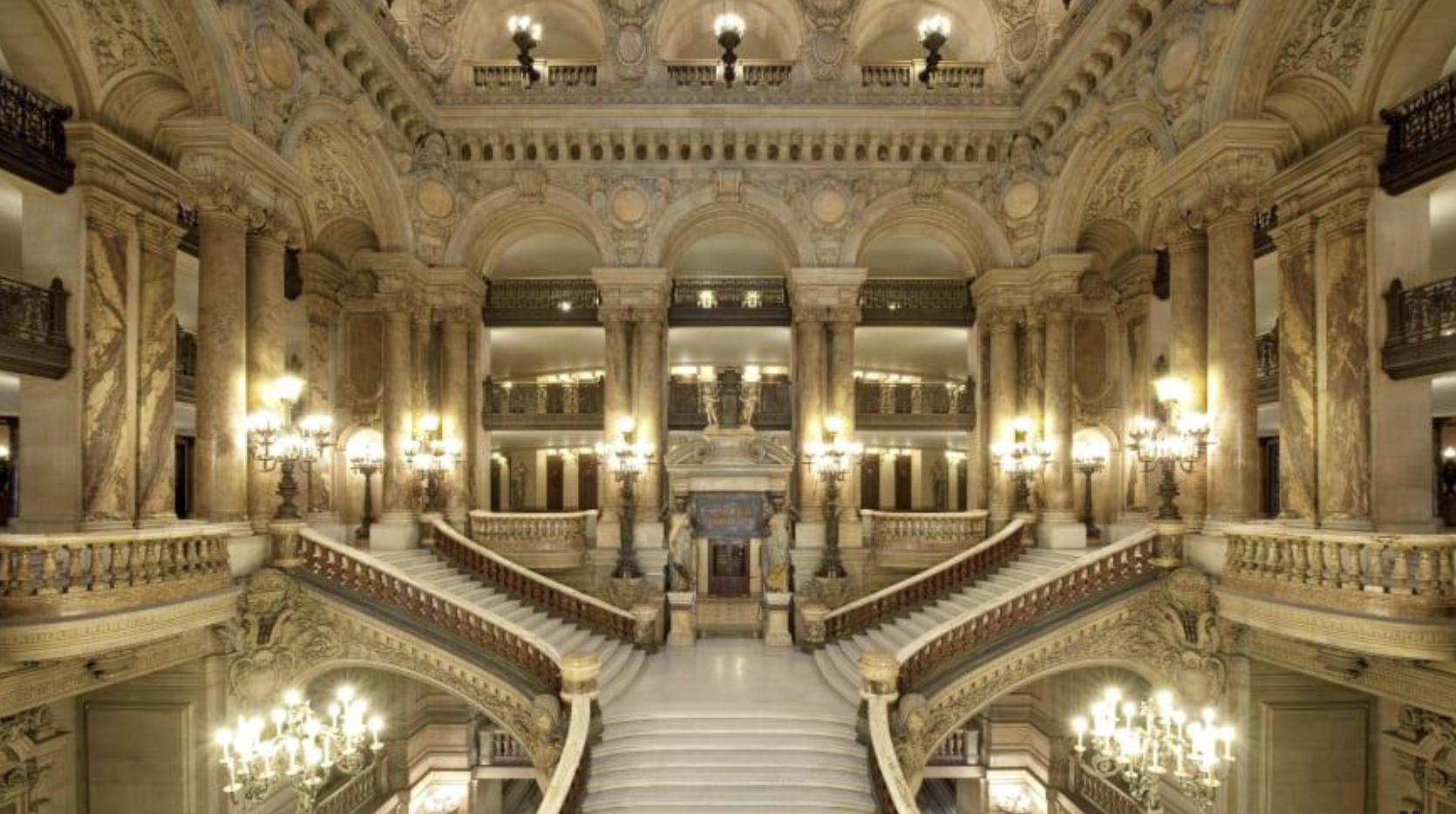
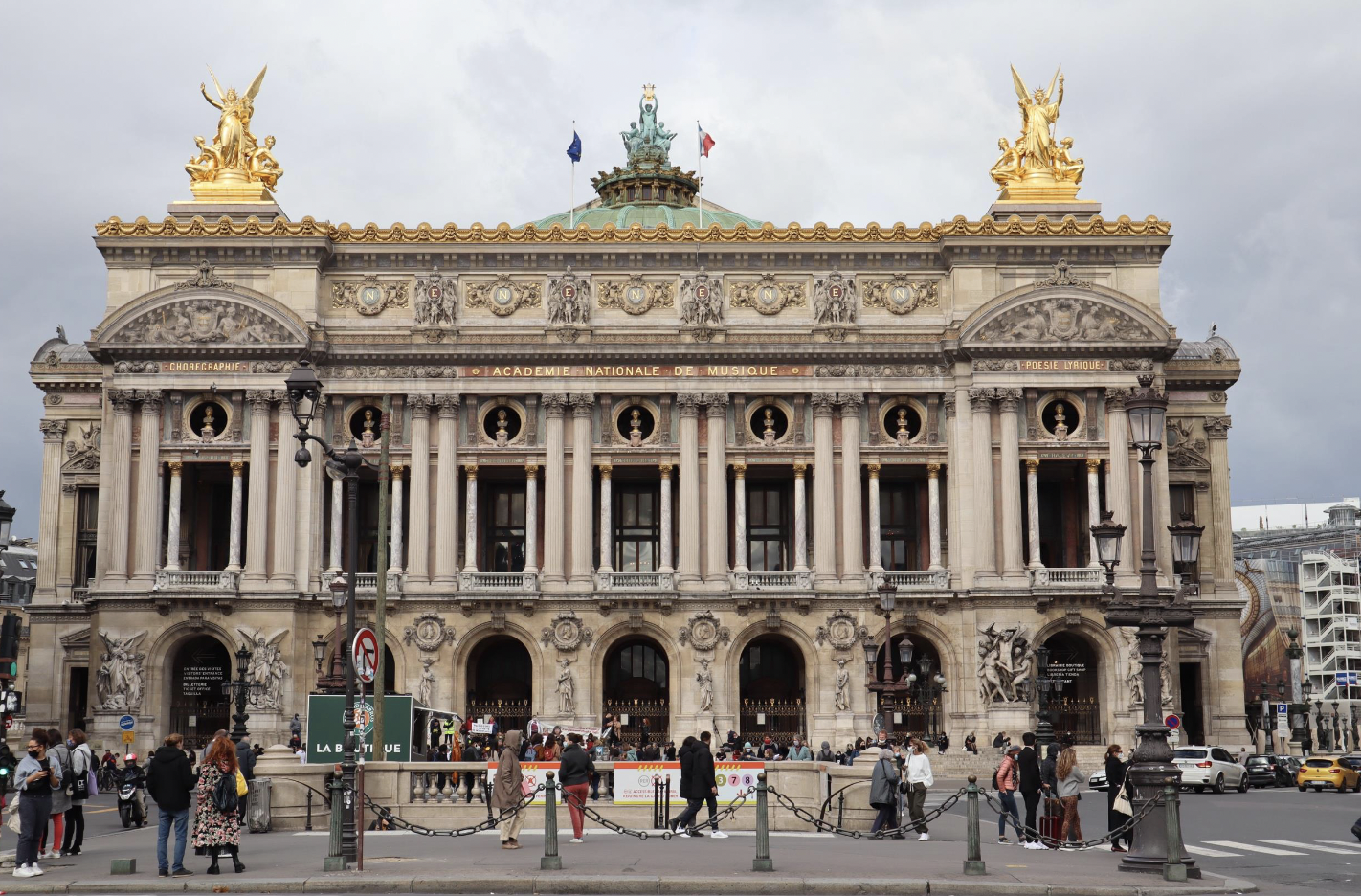
iron reinforced limestone (like the opera house)
they used some of the largest panes of glass that had ever been used at this time
the combination and use of limestone is purely aesthetic
theres still an obvious desire to keep the neo-classical aesthetic
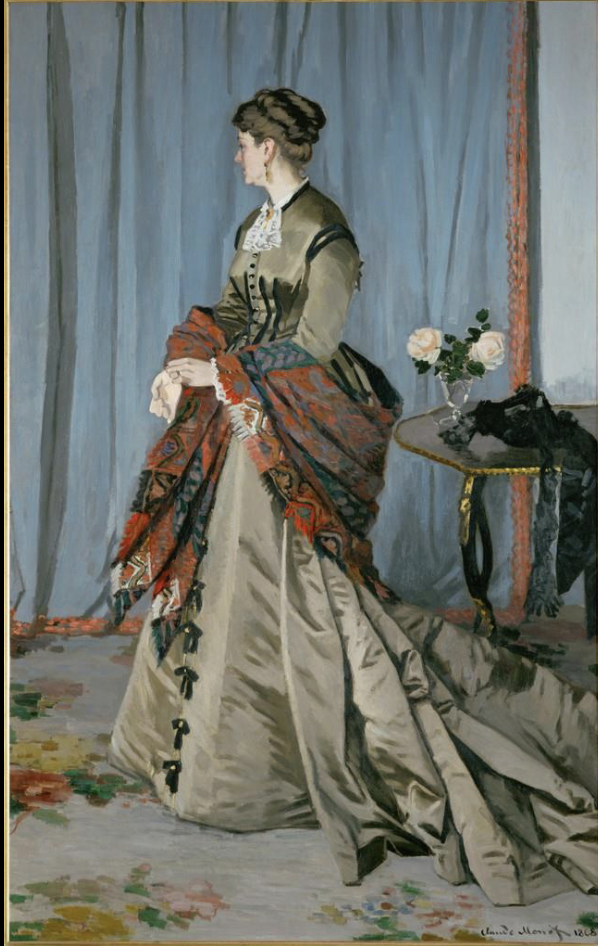
Monet
Maguerite Gaudibert
1868
this is a title given by Dr.McQueen
originally names w/ husbands name
women often lose their entire identity in the history of art and naming
the bonnet and shawl are signs of contemporary fashion - indicating the figure is haute-bourgeiousie
not a conventional portrait, the facing away classifies it as a lost portrait and is very difficult to capture
this work is a private comission
so this is a sitter, and not a model, this is a patron
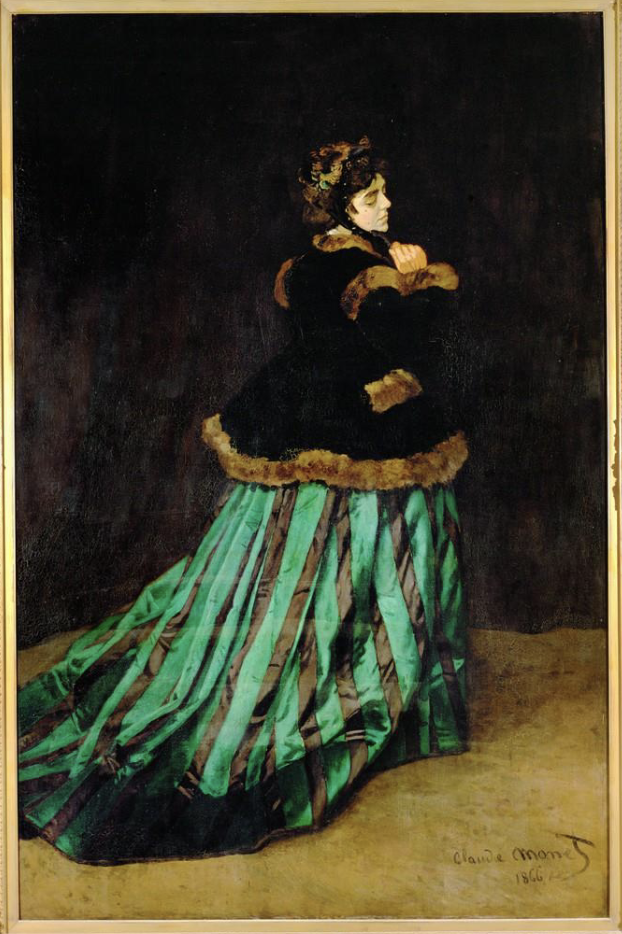
compare to the camille painting