Study Guide for Frog Dissection
 Call Kai
 Learn
Learn Practice Test
 Spaced Repetition
 Match
Match Flashcards
 Knowt Play
1/63

Earn XP
Description and Tags
Test-MUST MEMORIZE
Name | Mastery | Learn | Test | Matching | Spaced | Call with Kai |
|---|
No analytics yet
Send a link to your students to track their progress
64 Terms

Countershading- Description of the dorsal and what it is.
The frog’s top side and is darker.

Countershading- Description of the ventral and what it is.
The frog’s belly side and is lighter.
Why do frogs have Countershading?
This is for camouflage:looking down, they blend with the mud; looking. Up, they blend with the sky.
What is the Nictitating Membrane and what is it used for?
A clear “third eyelid” that protects the eye and allows the frog to see while underwater.
What is the Tympanic Membrane and what is it used for?
The circular eardrum located behind the ears; used for hearing.
Where is webbing found?
Only found on the hindlimbs (back legs) to help with swimming. Forelimbs have 4 toes; hindlimbs have 5.
MOUTH - where is the Vomarine Teeth found and what is it used for?
Located on the roof of the mouth; used to hold prey (not for chewing).
Where is the Maxillary Teeth found?
Found along the edge of the upper jaw.
Where is the Tongue located and what is it used for?
Attached at the front of the mouth so it can flip out to catch insects.
Describe Glottis.
The slit-like opening that leads to the lungs.
Describe Gullet.
The larger opening that leads to the esophagus/stomach.
Liver - function/description
DIGESTIVE - Largest organ; has 3 lobes. Produces bile.
Gallbladder - function/description
DIGESTIVE - Small green sac under the liver; stores bile.
Stomach - function/description
DIGESTIVE - First site of chemical digestion; curved shape.
Small Intestine - function/description
DIGESTIVE - Long, coiled tube where nutrients are absorbed.
Large Intestine - function/description
DIGESTIVE - Absorbs water; leads to the cloaca.
Heart - function/description
CIRCULATORY - Triangular organ at the top; has 3 chambers (2 atria, 1 ventricle)
Spleen - function/description
CIRCULATORY - Small, reddish-brown round organ; filters old blood cells.
Lungs - function/description
RESPIRATORY - Two spongy organs located behind the liver.
Kidneys - function/description
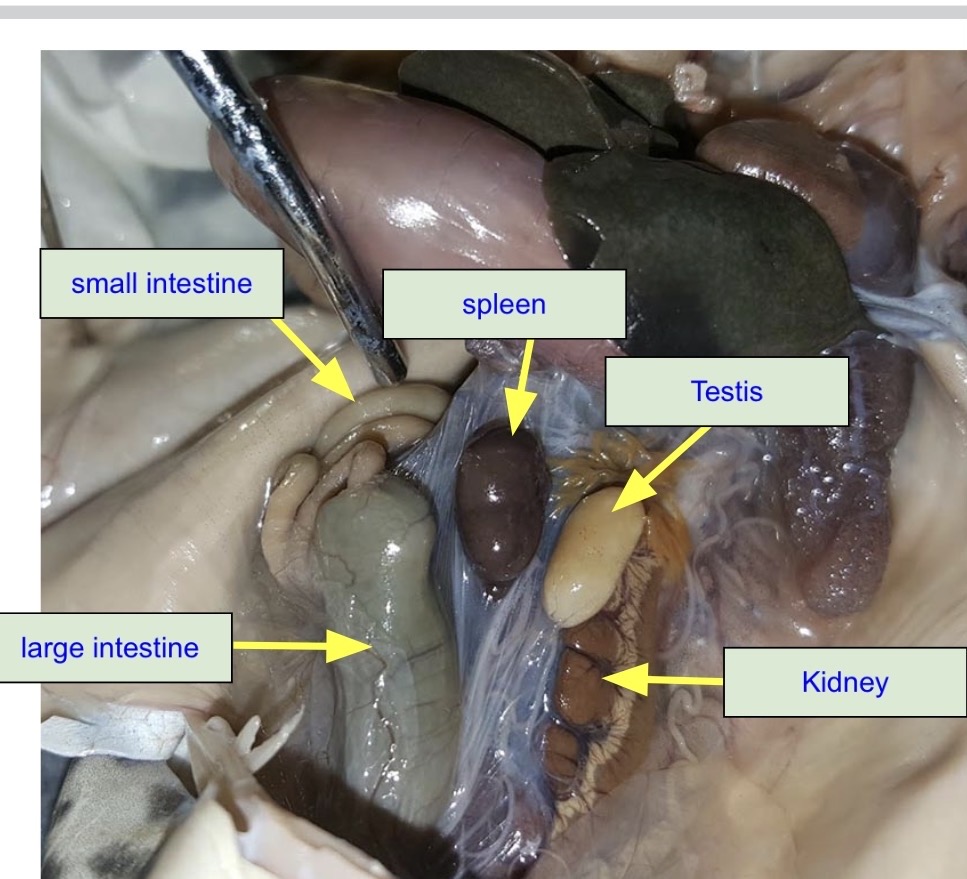
EXCRETORY - Flat, bean-shaped organs at the very back (dorsal wall).
Bladder - function/description
EXCRETORY - Empty sac at the lowest part of the body; stores urine.
Cloaca - function/description
ALL-IN-ONE - The “common exit” for digestive waste, urine, and eggs/sperm.
Fat Bodies - function/description
Bright orange or yellow “spaghetti-shaped” structures. They provide energy for hibernation and mating. If a frog is “fat,” these might cover all the other organs.
Mesentery - function/description
The clear, spider-web-like membrane that holds the intestines together and contains blood vessels.
Peritoneum - function/description
A thin, clear membrane that lines the body cavity.
Male Identification
Look for small, pale, round testes located at the top of the kidneys.
Female Identification
Oviducts: Curly, ramen-noodle-like tubes along the outside of the kidneys.
Eggs: If the frog is “gravid,” the body cavity will be filled with dark, speckled, marble-like structures.
COMPARE FROG VS. HUMANS - Heart
Frog - 3 chambers
Human - 4 chambers
Skin
Frog - Moist/Slimy (sued for breathing)
Human - Dry (used for protection/cooling)
Breathing
Frog - Lungs & Skin
Human - Lungs only
Teeth
Frog - Vomarine & Maxillary (for gripping)
Human - Many types (for chewing)
Skeleton
Frog - No ribs; fused leg bones
Human - Full rib cage; separate leg bones
Where would C be located on the image?
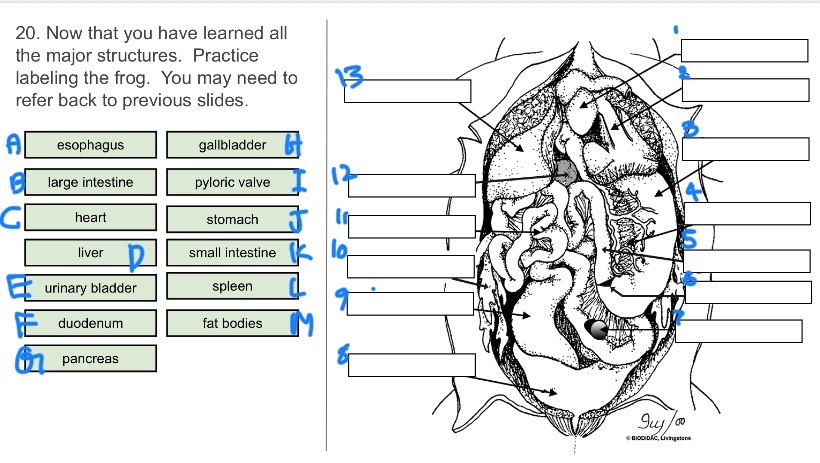
Where would K be located on the image?
11
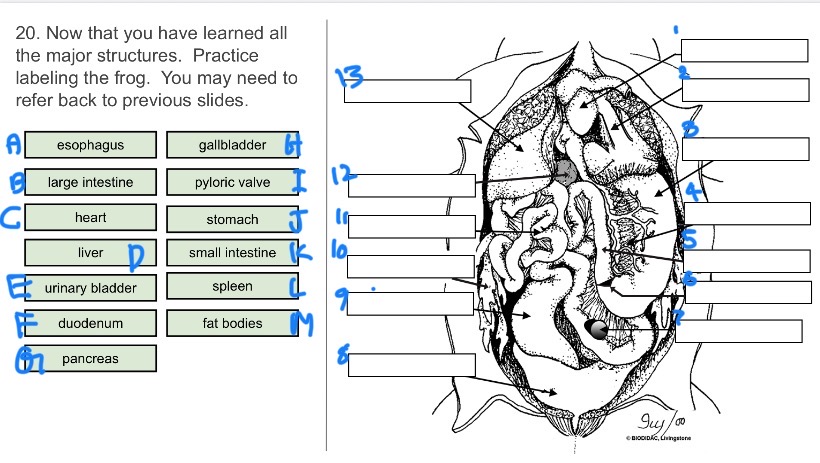
Where would M be located on the image?
10
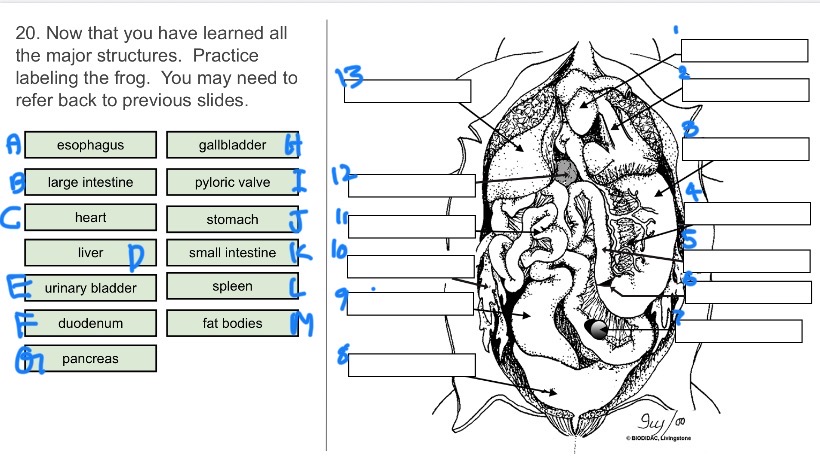
Where would D be located on the image?
13
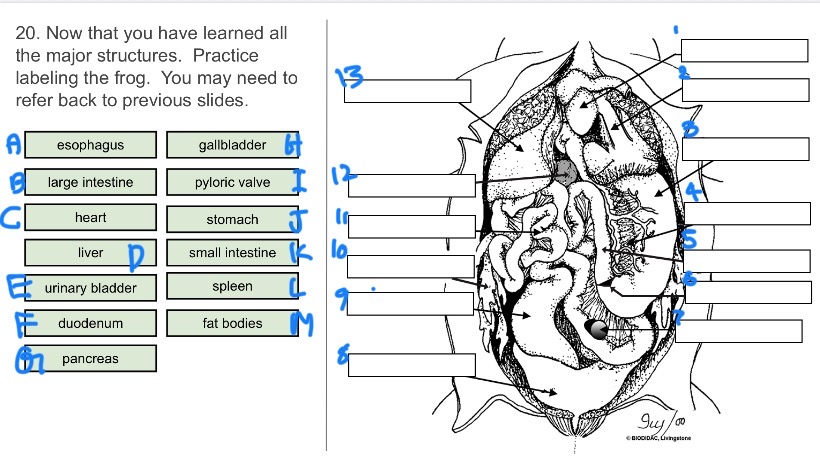
Where is G located on the image?
4
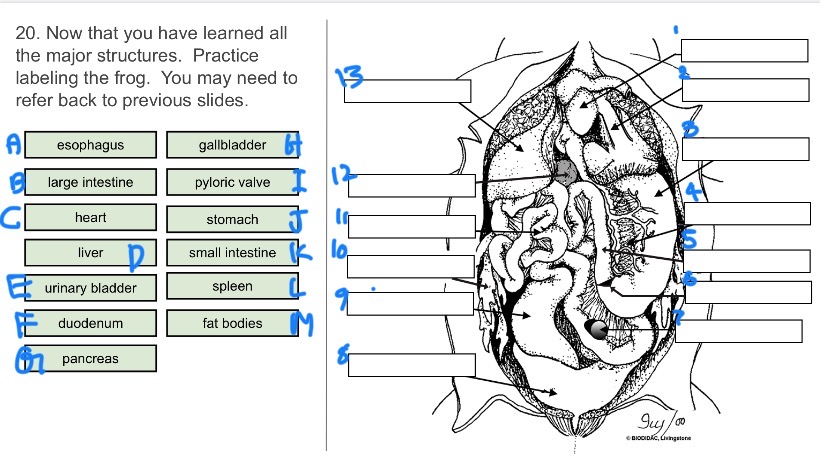
Where is A located on this picture?
2
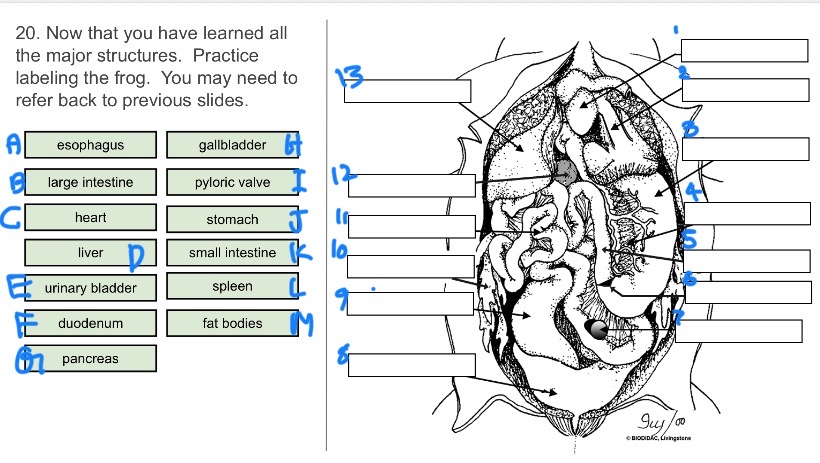
Where is L located on the picture?
7
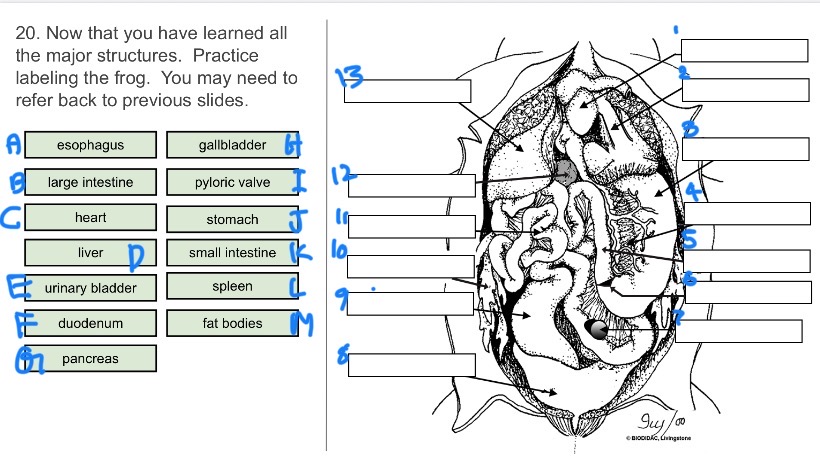
Where is H located on the picture?
12
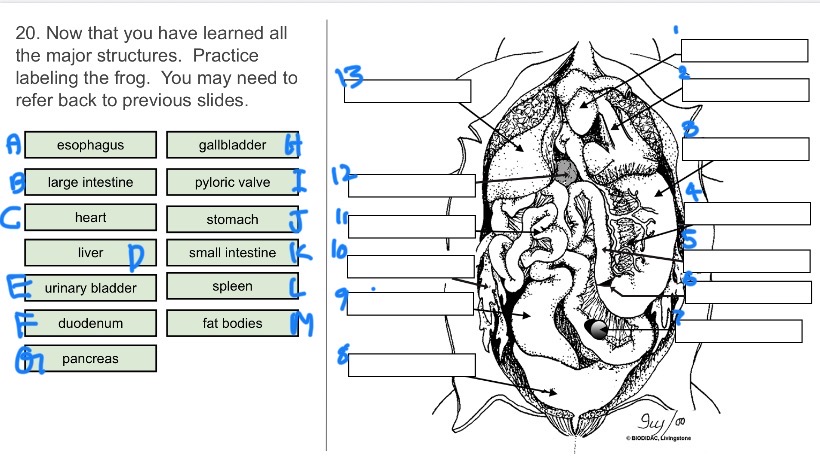
Where is B located on the picture?
9
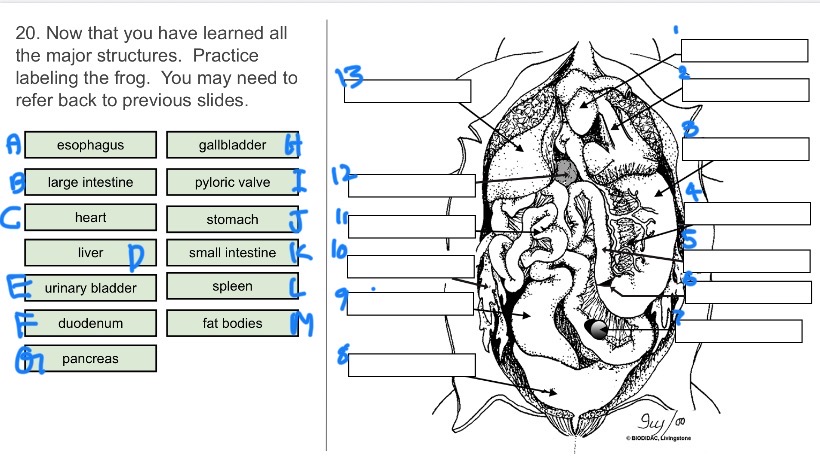
Where is i located on the picture?
6
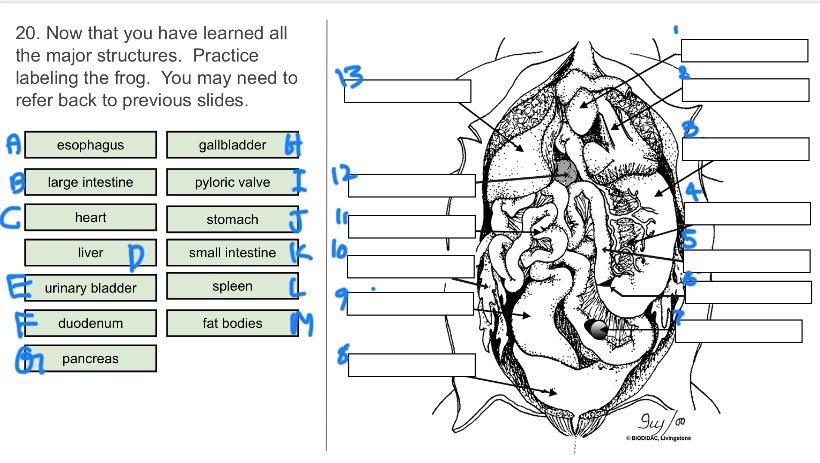
Where is E located on the picture?
8
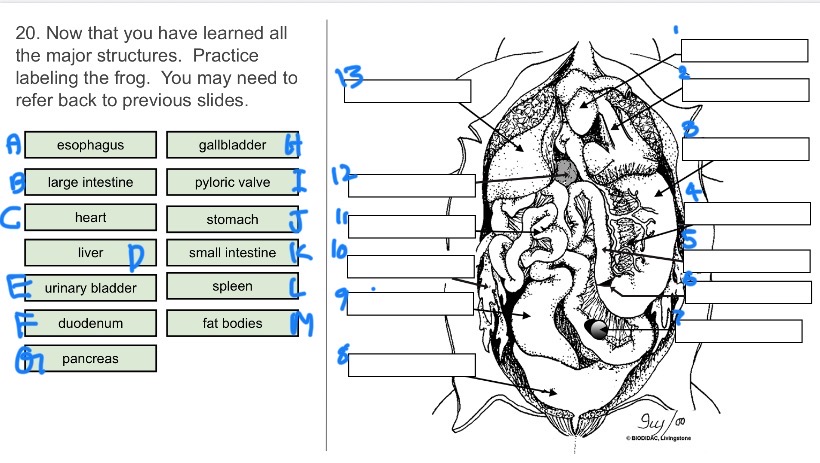
Where is F located on the picture?
5
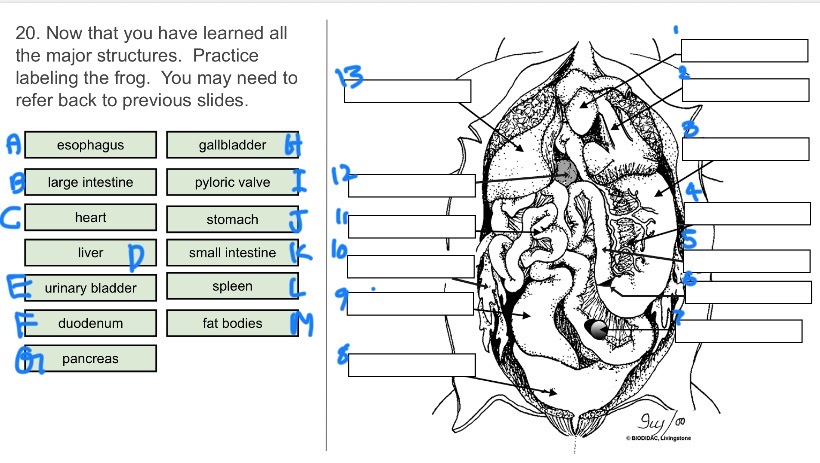
Where is J located on the picture?
3

Which letter would go into box 1?
A - Nictitating membrane

What letter would go into box 2?
C - Tympanic membrane

What letter would go into box 3?
G - Esophagus

What letter would go into box 4?
I - Glottis

What letter should go into box 6?
D - Maxillary teeth

What letter should go into box 7?
K - Vomarine teeth

What letter should go into box 8?
H - Eustachian tube

What letter should go into box 9?
J - Tongue
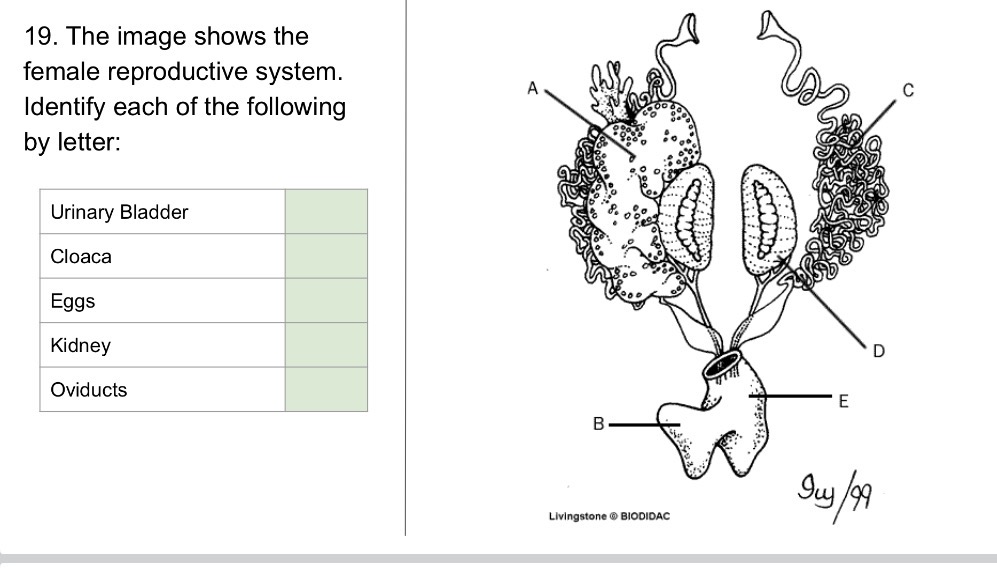
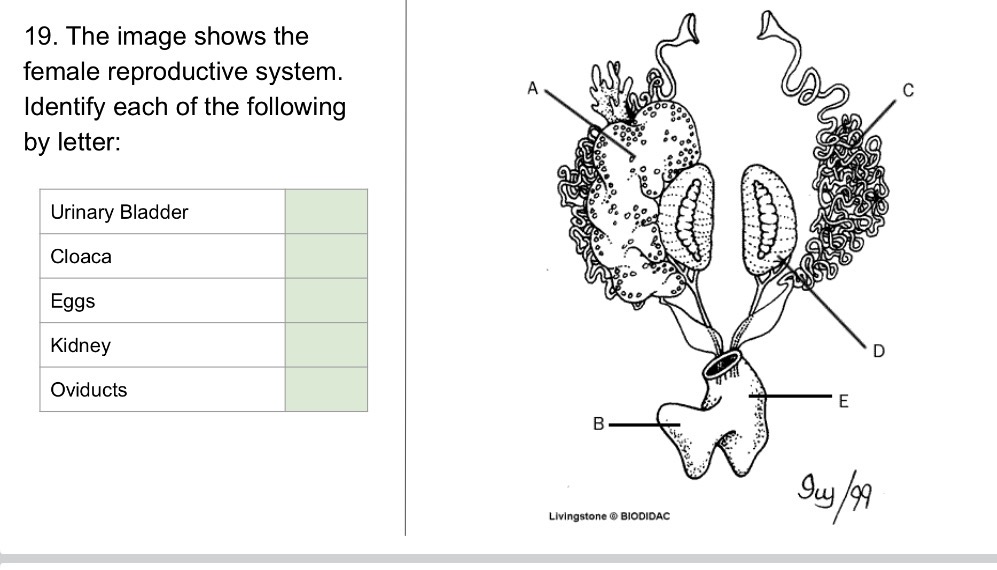
What is A?
Eggs
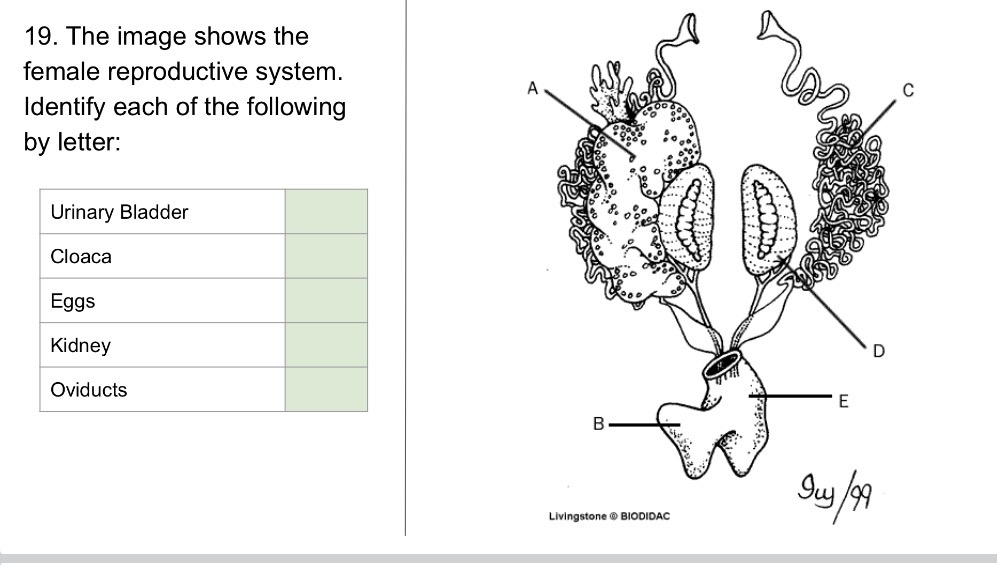
What is B?
Urinary Bladder
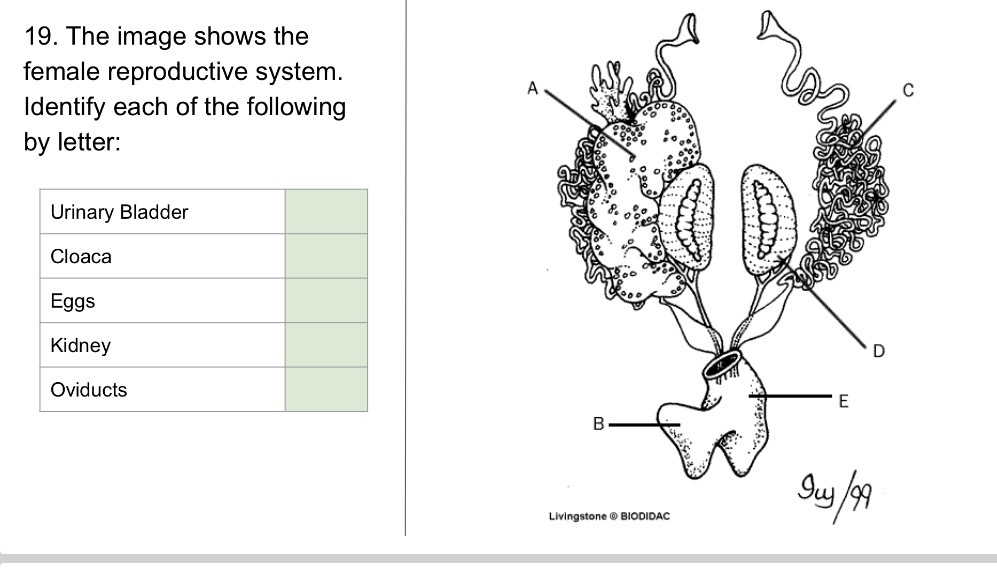
What is C?
Oviducts
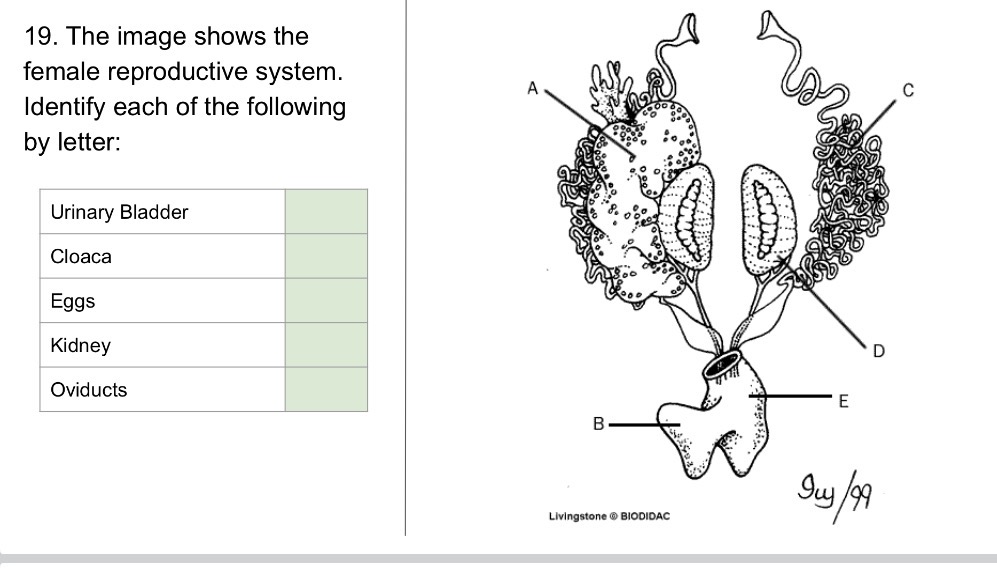
What is D?
Kidney
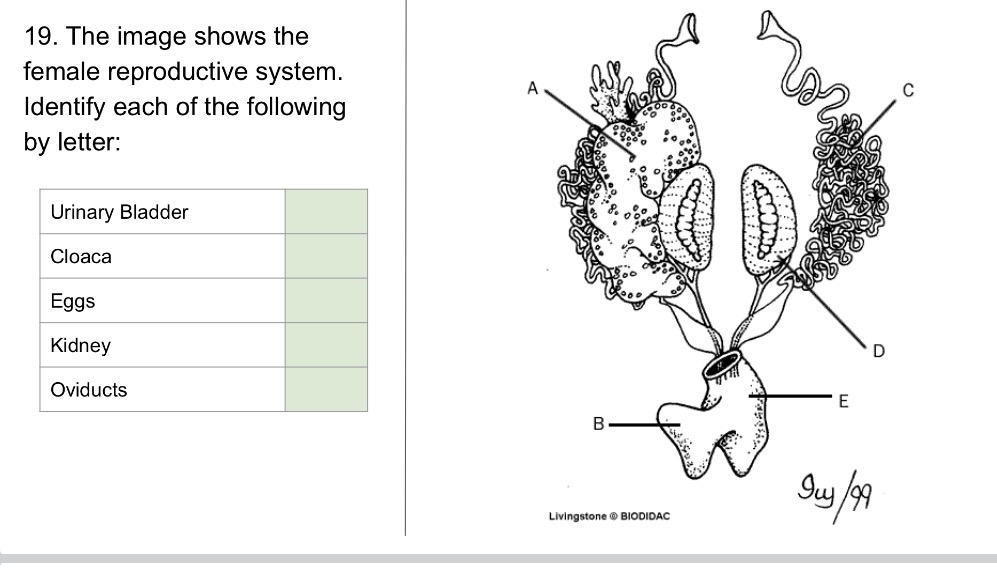
What is E?
Cloaca
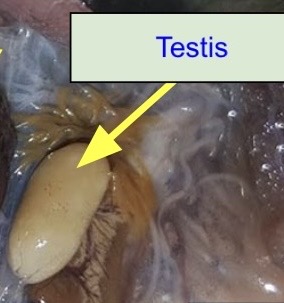
This is Testis
This is Testis

What number arrow does A - Rugae belong in?
Arrow 1

What number arrow does B - Pyloric sphincter belong in?
Arrow 2

What is arrow number 1?
C - Left Atrium

What is arrow number 2?
B - Ventricle

What is arrow number 3?
A - Right Atrium

