Prenatal, Motor, Cognitive & Social Development in Psychology
 Call Kai
 Learn
Learn Practice Test
 Spaced Repetition
 Match
Match Flashcards
 Knowt Play
1/41

There's no tags or description
Looks like no tags are added yet.
Name | Mastery | Learn | Test | Matching | Spaced | Call with Kai |
|---|
No analytics yet
Send a link to your students to track their progress
42 Terms
What does behavioral genetics study?
The interaction of genes and environment in influencing mental activity and behavior.
What are twin studies used for in behavioral genetics?
To compare monozygotic (identical) and dizygotic (fraternal) twins.
What do adoption studies compare?
The similarities between biological relatives and adoptive relatives.
What is epigenetics?
The study of how the environment affects gene expression without altering the genes themselves.
What is intergenerational trauma?
The transmission of trauma effects from one generation to the next, such as altered gene methylation in children of Holocaust survivors.
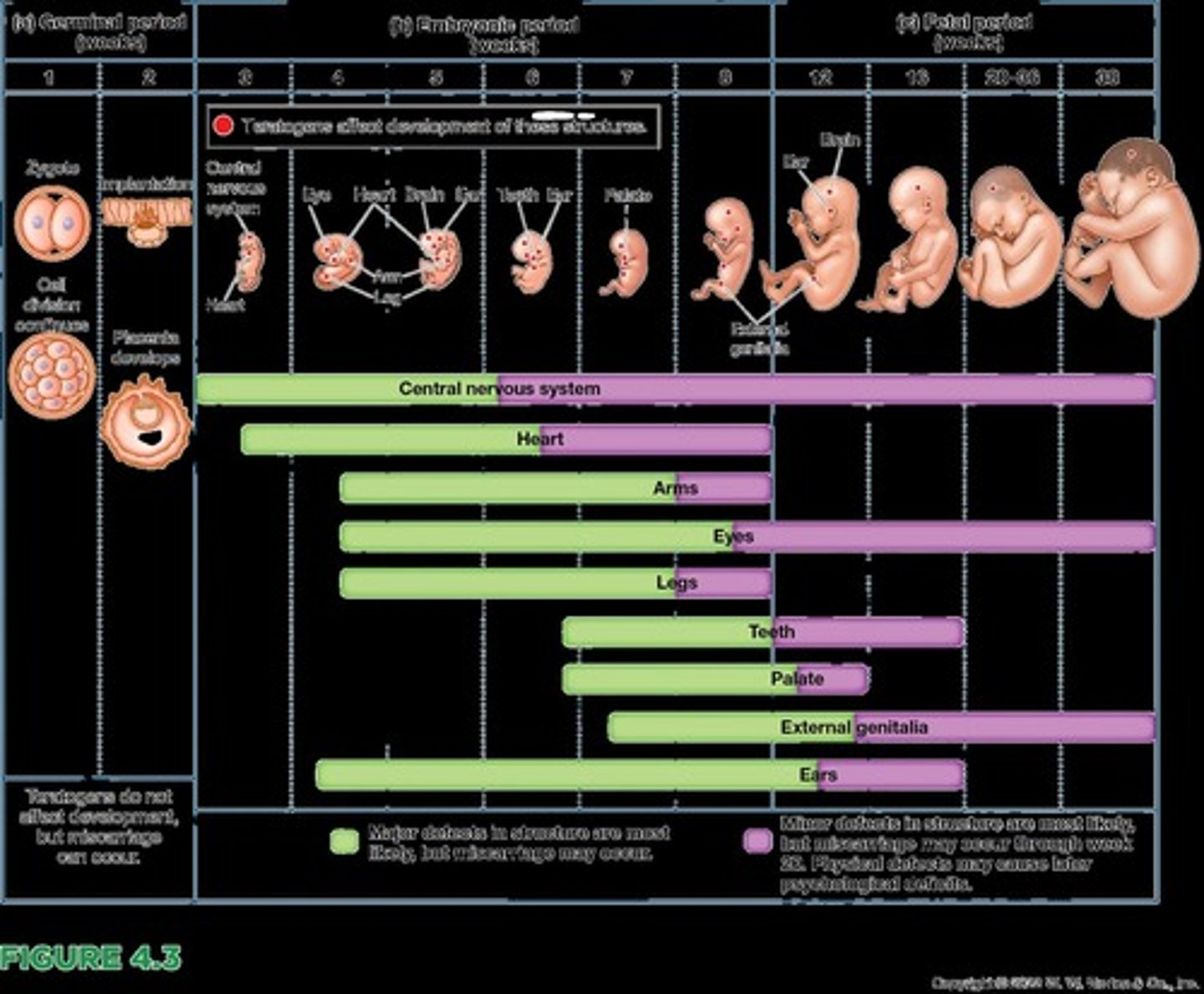
What is the germinal period in prenatal development?
The first two weeks after conception, when the zygote divides and implants in the uterine wall.
What occurs during the embryonic period?
From 3 to 8 weeks after conception, the brain, spine, major organs, and bodily structures begin to form.
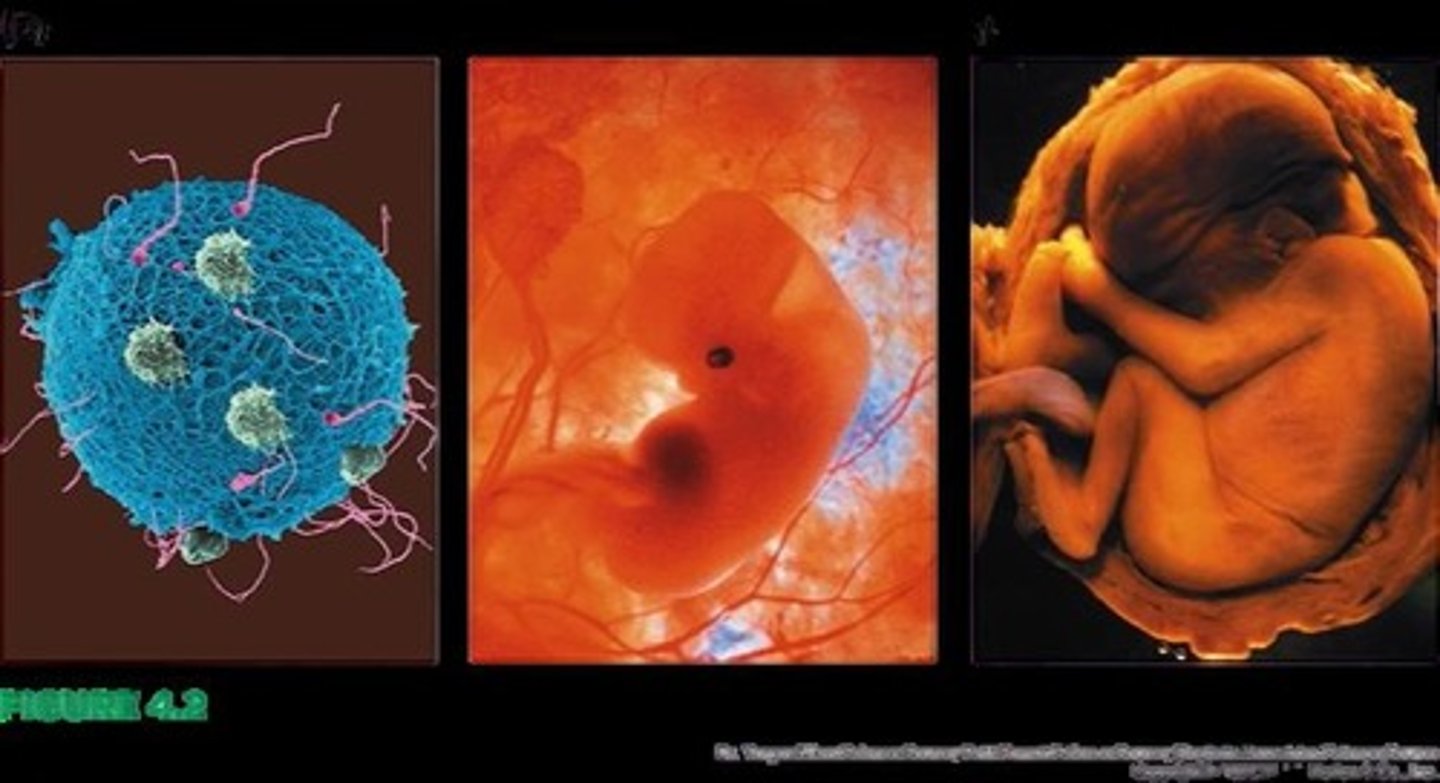
What is the fetal period?
From 9 weeks after conception until birth, during which the brain develops, bodily structures are refined, and the fetus grows.
What are teratogens?
Environmental substances that can harm prenatal development, including drugs and infections.
What is neonatal opioid withdrawal syndrome?
A condition where infants exposed to opioids in the womb show withdrawal symptoms, affecting 40-80% of such infants.
What are the symptoms of neonatal opioid withdrawal syndrome?
Irritability, excessive crying, tremors, vomiting, diarrhea, rapid breathing, and motor issues.
What is fetal alcohol syndrome (FAS)?
A condition caused by alcohol exposure in the womb, leading to brain abnormalities and developmental issues.
What can maternal viral infections lead to during pregnancy?
Miscarriage, premature delivery, low birth weight, and severe conditions like congenital measles infection.
What is the impact of the Zika virus on pregnancy?
It can cause serious birth defects such as brain abnormalities and microcephaly.
How can DNA damage in sperm affect offspring?
It can lead to miscarriage, developmental abnormalities, or increased disease risk.
What is dynamic systems theory in motor development?
A view that development is a complex, self-organizing process emerging from interactions of biology, environment, cognition, perception, and action.
What role do inborn reflexes play in newborns?
They aid survival by providing automatic responses to stimuli.
What is the rooting reflex?
An infant's instinct to turn their head and open their mouth in response to touch on the corner of their mouth.
What is the sucking reflex?
An automatic response in newborns that triggers sucking when the roof of their mouth is stimulated.
What is the grasping reflex?
An involuntary action where an infant's fingers close around an object when their palm is stroked.
How do new motor abilities affect cognitive development?
They open up new ways for infants to explore and learn about their environment.
How do motor skills influence social and emotional development?
They create opportunities for social interaction, such as approaching caregivers and initiating play.
How do motor skills impact social interaction in infants?
Motor skills create opportunities for social interaction by allowing infants to approach caregivers, share objects, and initiate play.
What are the two critical ways the brain changes during development?
1. Myelinated axons form synapses with other neurons. 2. Synaptic connections are refined over time to preserve important connections.
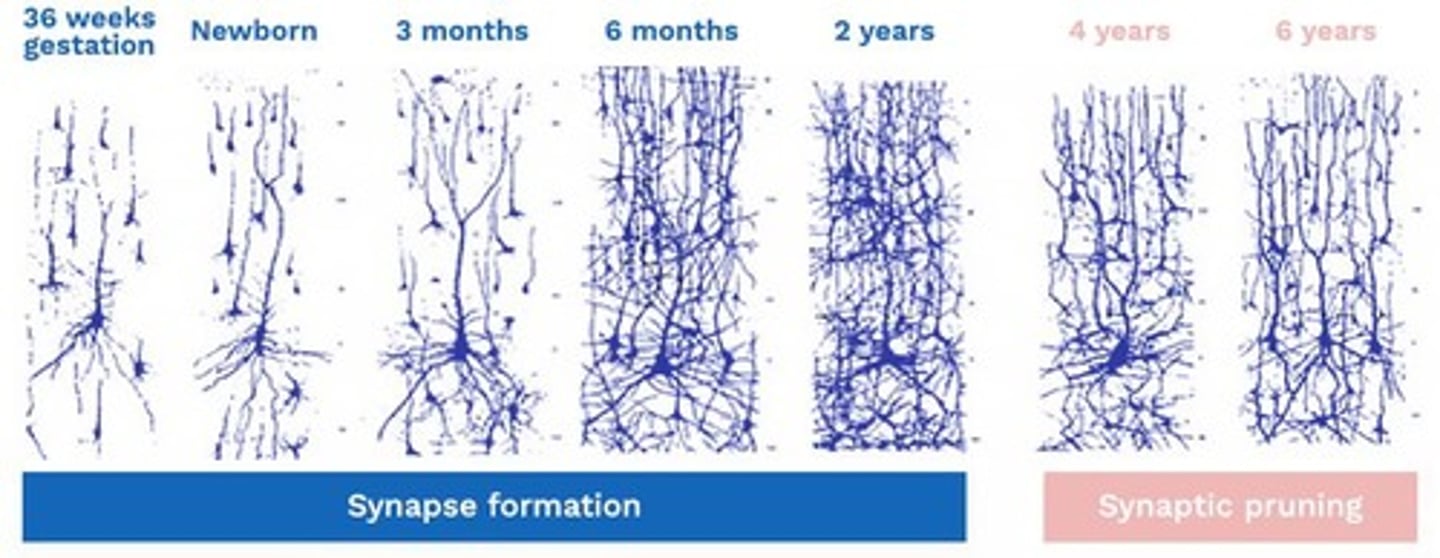
What is neurogenesis?
The process of creating new neurons in the developing brain, most active during prenatal development and early infancy.
What is dendritic pruning?
The process where the brain strengthens frequently used connections and eliminates weaker or unused ones, peaking in childhood and adolescence.
What is neuroplasticity?
The brain's ability to rewire itself by forming new neural connections, especially strong in infancy and early childhood.
What happens to the auditory cortex if cochlear implants are placed early in children born deaf?
Early sound input allows the auditory cortex to organize properly, leading to normal language and auditory processing.
What can happen if congenital cataracts are not removed quickly?
The visual cortex may never develop normal sight processing, limiting visual outcomes.
What fundamental need do all infants have?
A fundamental need to form strong connections with caretakers.
What did Harlow & Harlow's (1966) experiment demonstrate about infant attachment?
Infant rhesus monkeys preferred a soft, non-nourishing mother over a wire mother that provided food, indicating the importance of comfort and emotional connection.
What are the three attachment styles revealed by the strange-situation test?
1. Secure attachment 2. Avoidant attachment 3. Ambivalent attachment.
What characterizes secure attachment in children?
Children are confident enough to explore an unfamiliar environment as long as the caregiver is present and are easily comforted during distress.
What is assimilation in Piaget's theory of cognitive development?
The process of incorporating new information into existing frameworks for knowledge.
What is accommodation in Piaget's theory of cognitive development?
The process of creating new frameworks for knowledge or drastically altering existing ones to incorporate new information.
What are the four stages of Piaget's Theory of Cognitive Development?
1. Sensorimotor (Birth - 2 yrs) 2. Preoperational (2 - 7 yrs) 3. Concrete Operational (7 - 11 yrs) 4. Formal Operational (12+ yrs).
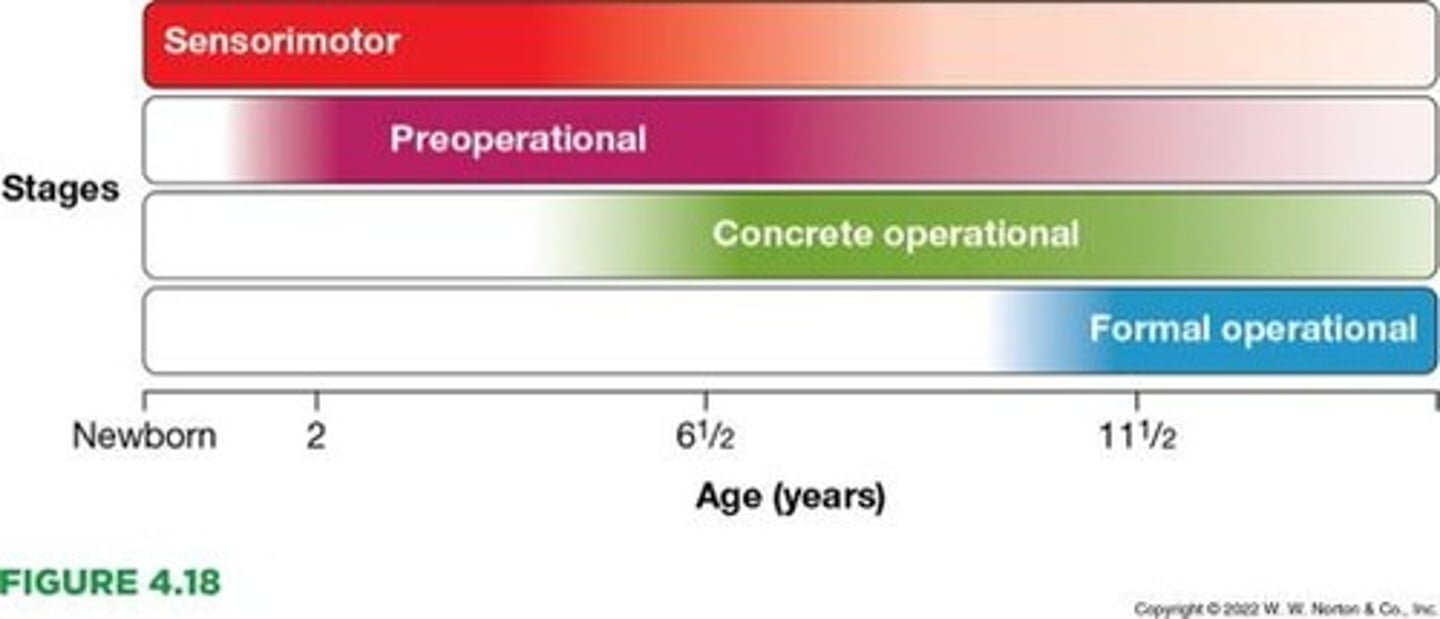
What is the key feature of the sensorimotor stage?
Knowledge is gained through senses and actions; development of object permanence.
What is the key feature of the preoperational stage?
Use of symbols and language, egocentrism, and difficulty with perspective-taking.
What is the key feature of the concrete operational stage?
Logical thinking about concrete events; understanding of conservation and reversibility.
What is the key feature of the formal operational stage?
Abstract, hypothetical, and systematic reasoning.
What is theory of mind?
The capacity to understand that other people have minds and intentions, allowing for increasingly sophisticated thinking.
How has the understanding of cognitive development changed since Piaget?
Psychologists now view cognitive development in terms of trends rather than strict stages.

