Fashion/Luxury Marketing Midterm
 Call Kai
 Learn
Learn Practice Test
 Spaced Repetition
 Match
Match Flashcards
 Knowt Play
1/67

There's no tags or description
Looks like no tags are added yet.
Name | Mastery | Learn | Test | Matching | Spaced | Call with Kai |
|---|
No analytics yet
Send a link to your students to track their progress
68 Terms
fashion definition
product
creative process
industry
combines: art, business, culture
BOTH making clothing AND how ppl consume it
self-expression form/identity
lifestyle, accessories, footwear, makeup, hairstyle, tattoos, body art
tribal belonging
individuality/differentiation
art + business + culture
DREAM FACTOR- sets industry apart
dream factor
selling of dream
emotional aspect
brands leverage to connect w consumer
fantasy/desire of lifestyle
segments of fashion industry
haute couture
ready to wear (RTW)/pret-a-porter
diffusion
bridge segment
mass market
luxury definition
exclusivity
high quality
high price
heritage
timelessness
intrinsic values
segments: absolute, aspirational, accessible
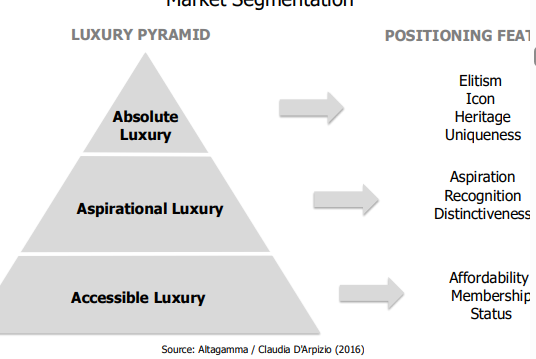
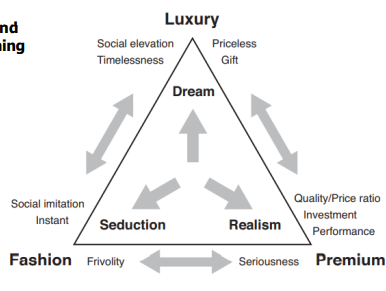
fashion v. luxury
fashion industry segments: haute couture
skill intensive labour
only afforded by few
made-to-measure clothes
(top)
ex; hermes, chanel
fashion industry
fashion design
manufacturing
retailing
supply chain management
fashion industry segments: RTW/designer brands
wider audience
high end craftsmanship
lower entry price
faster speed
(level 2)
ex; dior, DG, prada, gucci, SL, armani
fashion industry segments: diffusion
higher production volume
products consistent w brand image
(level 3)
ex; ralph lauren, marc jacobs, dkny
fashion industry segments: bridge
lower quality products
trends
little gap between creation/sales
more convenient price points
(level 4)
ex; calvin klien, diesel, coach, emporio armani, max&co
fashion industry segments: mass
basic/affordable products
more useful>fashionable
(lowest, level 5)
ex; mango, h&m, bershka, zara, mango
trends
reflection of time in which they arise
factors:
sociocultural shifts
science/tech innovations
media/art
designer creativity
textile
zietgeist: spirit of the times
longterm (5+ years)
shorterm (up to 2/3 years)
macrotrends
sustainability/ethics
inclusivity/diversity (body positivity, gray hair, races, skin texture)
gender nuetral
fad
opposite of trends
v short periods of time
micro trend
shorter trend, usually up to 2/3, sometimes 5 years
quiet luxury
backless loafers
macro trend
pervasive shift in direction
mega trends
globally sustained
impact socio, econ, culture, etc.
new era of fashion
shorter time to market (no longer top down, social media)
new values
AI
digital fashion
new sales channels
virtual fashion
metaverse
NFTs
brand
name, term, design, symbol, or feature that identifies one seller’s good/service as distinct from other sellers
ASSET defined by set of attributes: tangible & intangible
TANGIBLE: name, logo, slogan, color
INTANGIBLE: functional, symbolic, experiential
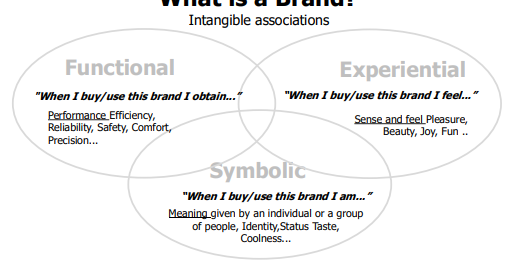
trademark
provides legal protection for the brand
identification
distinct, novel, legal
brand identity
manifests all tangible/intangible specificities of brand- unique
stylistic identity
communication identity
retail identity
brand heritage
to have strong: need to maintain internal AND external consistency
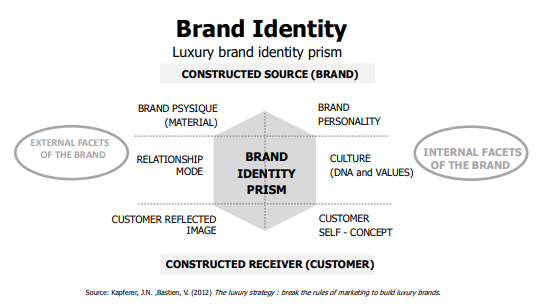
brand equity
added value company gets from product w distinct name/feature
vs. others of same kind
brand awareness
perceived quality
brand association
loyalty
brand management
strategic process of assembling/nurturing brand identity
enhance brand awareness
w purpose of increasing brand value w time
brand heritage
builds loyalty
justifies value
cultural artifact
narrative/storytelling (ex; cartier ad, burberry story, LV christmas ad)
business model
no one def. —> dif company to company
how company creates, delivers, captures value
fashion industry business models
set firms apart w:
value proposition
customer segmentation
communication
distribution channels
degree of complexity w firm’s values
4 building blocks: what (value prop) whom (client segment) how (value chain) who (revenue/gov model)
main fashion business models
luxury brands (no influence of fads, icon pieces, timelessness, exclusivity, heritage, status, HNWI, narrative communication)
designer brands/fashion griffe (dream factor, operate in many segments, vertical integration)
premium brands (connect value of brand to volumes/scales, good price-quality ratio, clear brand vision)
retailers (flow of fashionable merch at low prince, extensive distribution network, quick response, multibrands)
stages of industry analysis
define the business
determine industry segments
identify strategic groups, key success factors (KSF), growth outlooks, empty spots
drive conclusions on industry attractiveness
retailers v. fast fashion
retailers: commercializing from manufacturers, also wholesale (gap)
fast fashion: update collections actively throughout year, react to trends w complete control of supply chain (zara, hm)
conglomerates
lots dif brands under one (i.e LVMH, prada group)
share exec, financial, distribution/production, balance risk w portfolio'
higher turnover, less family, risk brand dilution w growth
stylistic identity
set of stylistic/aesthetic codes used to make brand distinct/unique
fabrics
textures
colors
prints
details
use of logo
necessary to evolve
(ex; tommy hilfiger red white box, LV print, tiffany blue, chanel CC, hermes orange, burbery print, gucci GG/print and red green line)
fashion cycle
fashion unique industry w seasonality
planning
design/product development
sell in
productino/delivery
fashion production process activities
internal/external research on fasion trends
def. of colection structure/guidelines
merchandizing plan
price positioning
collection deleveopment
collecton presentation
country branding
evoking positive associatoins in assosiations/vision of brand
—> known expertise in a product/category
country as inseperable from heritgage, culture, traditions, intangible values
COO effect
“country of origin”
implied recognition of validation, enhance product
haute couture
from 19th C Paris
= high dressmaking
fasion in most refined form
charles frederick worth (founding father)
official standards: uphold quality, material, craftsmanship
highest niche: few fashion houses
not made to be sold but for show, publicity, credibility
french- used to create dream factor, image of ultimate luxury, LOSE $
french business model
clothing as an image builder/not real business
growth in brand extention (fragrance, leather, jewelry, eyewear)
maintain high supply chain control
adopt conglomerate strategy
merges/acquisiitions to grow
dior case ex
rrevival of paris as fashion capital post WW2
volume silhouettes/long skirts = rebel against fabric economy dictating styles of war
competitive advantages:
first to name collections
first to introdue new trend every 6 months
catwalk into fashion show
first to exploit name into licensing agreements
diversified through extension
chanel case ex
chanel no. 5: scent that smells like a woman, ultimate scent of femininity
black dress: black wipes out everything else around
iconic product: 2.55 bag
italian business model
clothing is a core business
first line extension THEN brand extension (beauty, accessories, etc)
recently evolved from fasion houses (control style/image) into VERTICALLY INTEGRATED companies (control of manufacturing and reduction of wholesale)
bc high lvl craftsmanship hard to maintain
move towards highly integrated
mainly family run businesses
style-driven approach prevails in it. designer companies
challenges: talent gap, balance innovation/tradition, supply chain consolidation
italy competitive advanatage/MII
designres
entrepreneurs
textile industry
“made in italy”: licensing
licensing
lincesning agreement: brand owner/licensor gives to another entinty (licensee) w permission to use name/design for production/distribution in certain plae/channels/time
licensing lifecycle
line extensions (emerging brands/lines)
brand stretching (designer/related accessories)
brand extensions (lifestyle brands, unrelated categories)
line extension
expansion of existing product line
uses established products/name
launch slightly dif product in same category
brand extension
expand brand itself
new brand category (related or not to og. products)
successful needs to embrace consumer pov, innovate, nurture core biz
american model/growth rationale
“easy to buy, easy to wear”
creation of lifestyle and branding = more important than product
glorification of basic products via branding
menswear to sportswear rev.
growth w licensing/brand extension
lifestyle creation
american fashion
rise of casual dress 20th C
informal
accessibility
casualwear
performance
(ex; calvin klein: youthful, attention ads, Levi’s: menswear)
made in USA
“mass” (production, consumption, marketing)- high consumption
start of 19th C: menswear needed for sailors, workers, slaves
role of worker, man, society
Levi Strauss (miners, denim fabrics)
FUNCTIONALITY
department stores
key role in american fashion
retail driven biz model
big stores + new trends
move beyond mens/workwear w production, distribution, strong market orientation (slow intl. expansion)
evolution of sportswear
post WW2
american well known
women specifically
new revolutionary industry
japanese model
operate within western fashion system
cutting edge innovations
doesn’t affect western much
tradition/innovation, radical/extreme, cutting edge
chinese model
based in labor, tradition, culture
national symbolism + creativity
fashion = cultural statement
nurturing of distinct chinese style
defined cultural references
understanding of local customers/demand
—> currently biggest consumer of W lucury goods
—> trying to develop as independent
jewelry industry market segments
industry w ancient pedigree
very high
high
fine
bridge
designer
fashion
custom
(distinguish w materials: precious metals**, gemstones)
jewelry: very high
precious metal (18k gold or platinum)
precious stones (diamond) & semiprecious
v high price
haute couture/limited production
ex: cindychao, SABBA, Piaget
jewelry: high
L2
precious metal (18k)
precious/semi: color stones
serial production
med-high price
ex: cartier, graff
jewelry: fine
L3
precious metal (18/14k)
small carat diamond or semiprecious stones
med price
importance of aesthetics, serial production
ex: dior, chanel
jewelry: bridge
L4
precious metal (9k)
semiprecious, special materials (pearl, ceramic, wood)
serial oroduction
med price
ex: pamela love
jewelry: designers’
L5
nonprecious metal (brass/gold plated)
special materials
related to fashion brands
contemporary jewelry
med/low
ex: on catwalks
jewelry: fashion
L6'
nonprecious plated w gold/silver etc.
pearl, crystals, fake gems, enamel, glass
serial production
med-low
ex: pandora
jewelry: custom
“cheap” materials
metal, plastic, cords
nonprecious stones
mass production
low price
ex: zara
vintage/pre-owned market
global resurgance
esp. italy/france w cultural heritage
jewelry industry
diamond market growing + increase lab grown
sustainability influencing customers rn
2nd hand important to circular economy
many regulations w sustainability
luxury watch industry
expensive timepiece
symbol of wealth/reputation
key players: LVMH Moet, Hennessy, LV SE, Rolex SA, Compagnie Pinanciere RIchemont SA, Swatch group, Patek Phillippe, Audemars Piguit
strategy areas:
culture/education
retail partnerships
cutomer centricity
female market
online
exclusivity
rise of pre owned
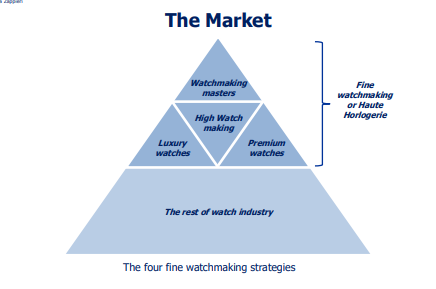
luxury watch segments
fine watchmaking (1/2):
watchmaking masters
luxury watches/high watch making/premium watches
rest of industry
watchmaking masters
high luxury
luxury/premium
designer
quartz
based on mechanisms involved
“swiss made”
most distinct
regulated by law
# of production phases in switzerland
movement is swiss
movement cased in switzerland
manufacturer does final inspection in switzerland
modern luxury dilema
luxury = exclusive, timeless, tradition
digital = accessible, instant, relevant
—> digital- key for brand awareness/sales, customer engagement, e-commerce, online correct brand positioning
digital strategy elements
experience (on/offline)
exclusivity (create exclusive platforms for consumers: limited edition)
engagement (consumers)
emotion (raise)

