Micro Biology Review/Study Questions (Lecture 1-3)
 Studied by 0 people
 Call Kai
 Learn
Learn Practice Test
 Spaced Repetition
 Match
Match Flashcards
 Knowt Play
1/46

There's no tags or description
Looks like no tags are added yet.
Name | Mastery | Learn | Test | Matching | Spaced | Call with Kai |
|---|
No analytics yet
Send a link to your students to track their progress
47 Terms
Describe three general reasons why microbiology is important
Identifying different pathogens
Finding different treatments of said pathogens
creation of new antibiotics and controlling their usage
Draw the info graphic of Koch’s postulates to show that an infectious agent is the cause for a disease
Koch’s Postulate Remember Aiir
Association
Isolation
Inoculation (Vaccine)
Re-Isolation
Name an infectious disease that may not fit Koch’s postulates based on what we know today?
HIV, Tuberculosis, Prion diseases
Name an infectious disease that may fit Koch’s postulates based on what we know today?
Anthrax
Anthrax
Easy to culture in labs
Present in all diseased host, absence from healthy host
Cause the same disease in a healthy animal when introduced
can be re-isolated from the newly infected host
What differentiates bacteria from archaea
Bacteria
Single- Celled prokaryotes (Prokaryote = prenucleus)
No membrane bound nucleus
No other membrane-bound organelles
DNA in nucleoid
Most have specific shapes
Rigid cell wall contains peptidoglycan
Multiply via binary fission
many move via flagella
Archaea
Very Similar to bacteria (Shape, Size, and appearance)
Prokaryotic
Multiple via binary fission
May move via flagella
Rigid Cell walls
Only known for Archaea
Cell walls lack peptidoglycan
Cell membrane has more branched and strong bond lipids
Ribosomal RNA sequences different
No known pathogens
RNA polymerase sensitive to alpha amanitin
Many are extremophiles
Protozoa are eukaryotic? True or False?
True
Differentiate between viruses and viroids?
Viruses affect DNA and RNA sequences
Viroids affect only RNA sequences
Differentiate between prions and viroids?
Prions - Only affect proteins
Viroids - Only affect RNA sequences
What are prions primarily composed of?
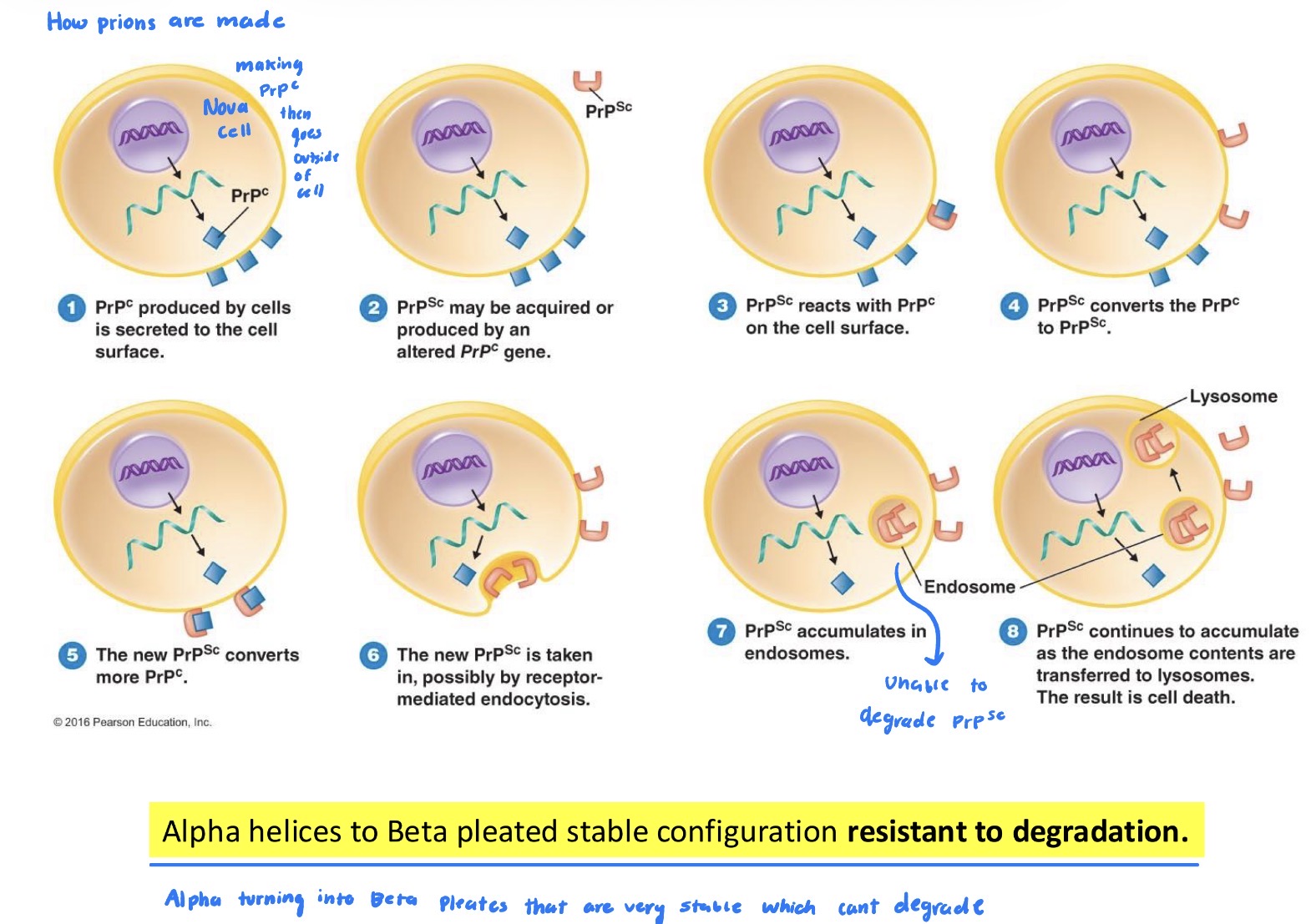
They are composed of misfolded proteins that turn healthy proteins into misfolded proteins
What happens in a cell nervous system prion diseases
Name two prions diseases-one in humans, one in animals
Humans - Creutzfeldt-Jakob Disease (CJD)
Animals - Bovine Spongiform Encephalopathy (BSE)
How can prions be transmitted from one animal to another? Can all prions cause diseases across species?
It can be transmitted by consumption of infected flesh; No not all prions causes diseases across species.
How can prion diseases be acquired by humans?
Through wounds (blood to blood contact) and by eating contaminated meats
List Characteristic features of prion diseases
Depression, anxiety, dementia, memory loss, and halluinations
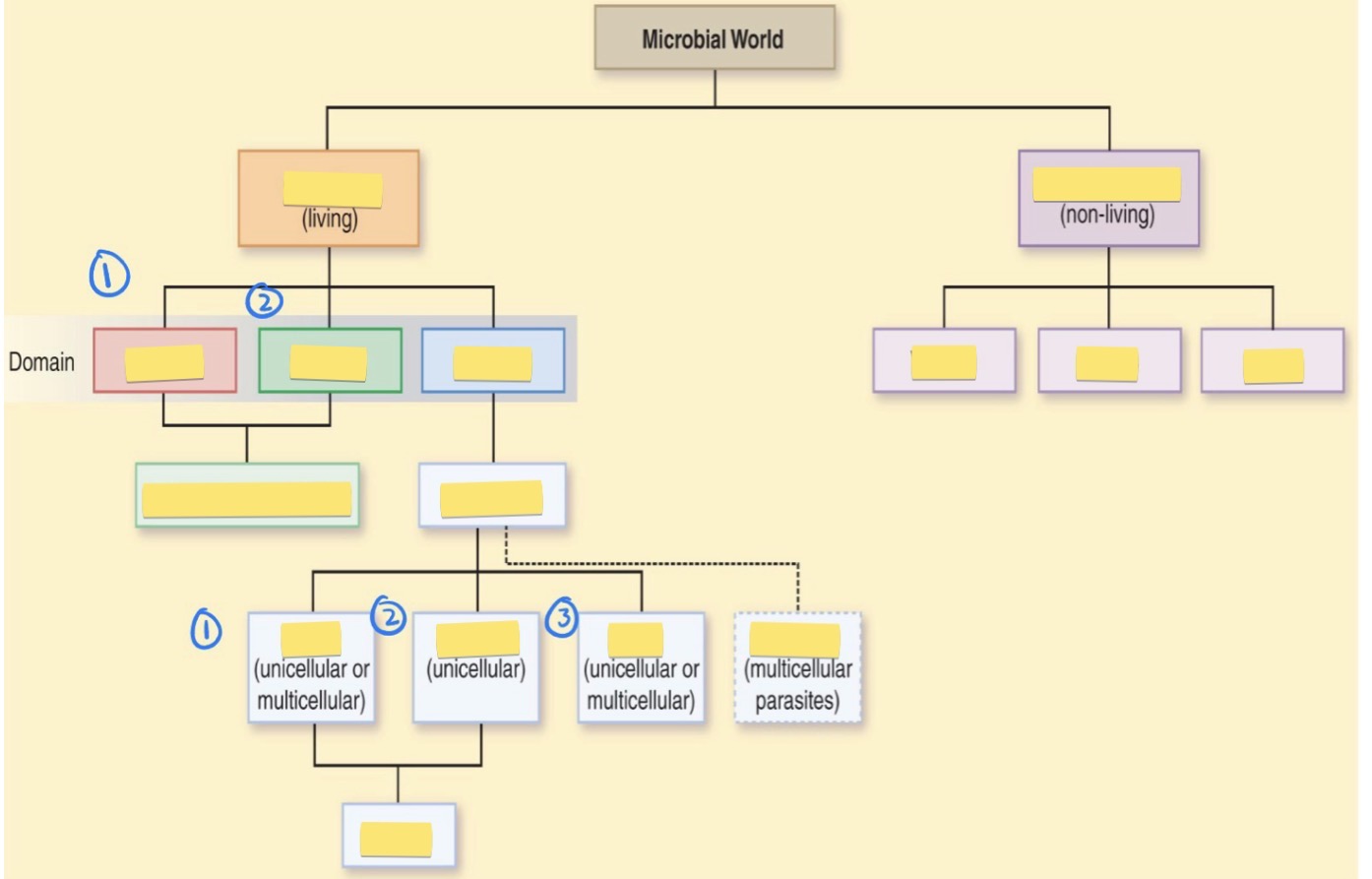
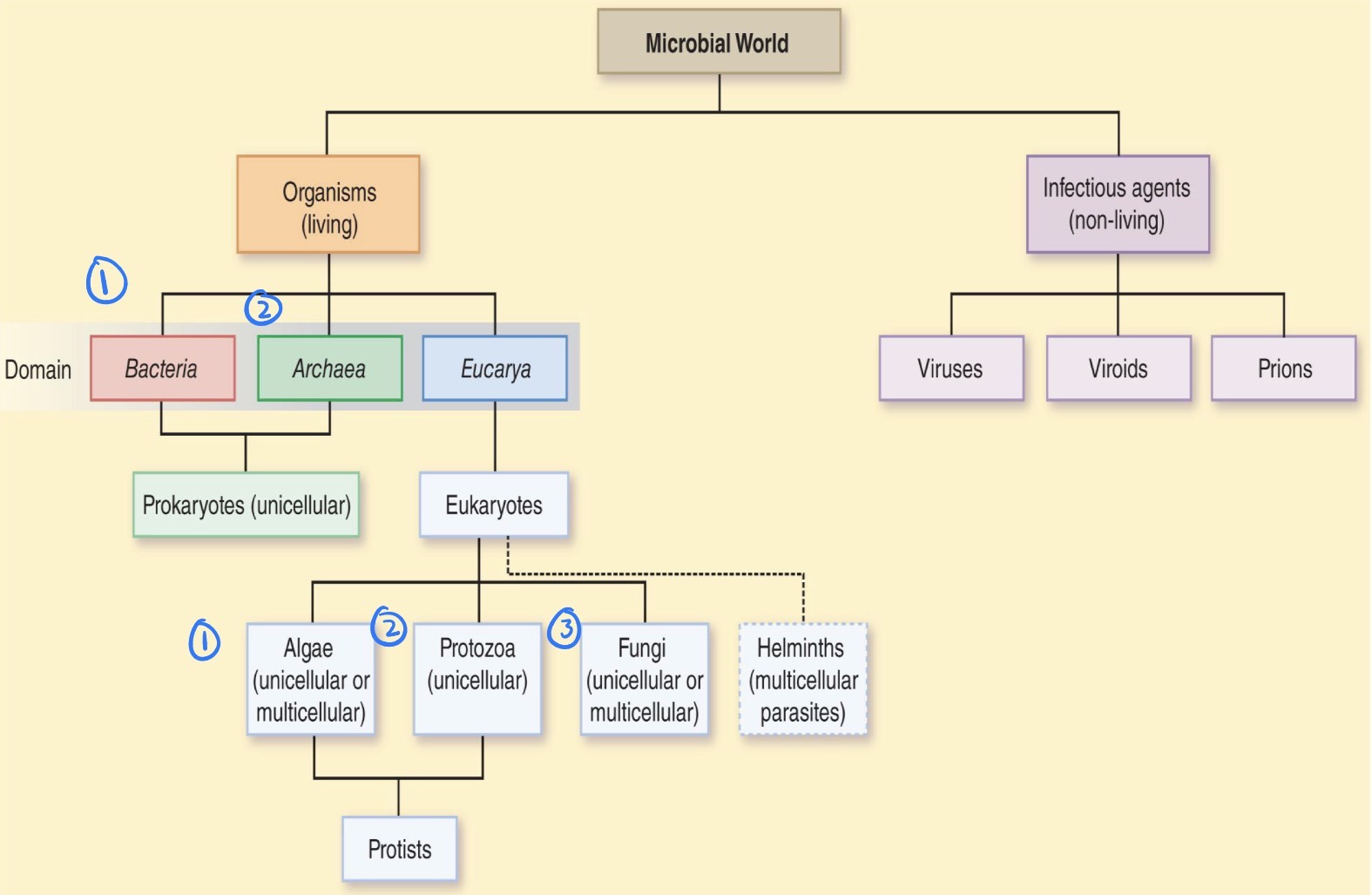
Draw the map of all members of the microbial world (without help)
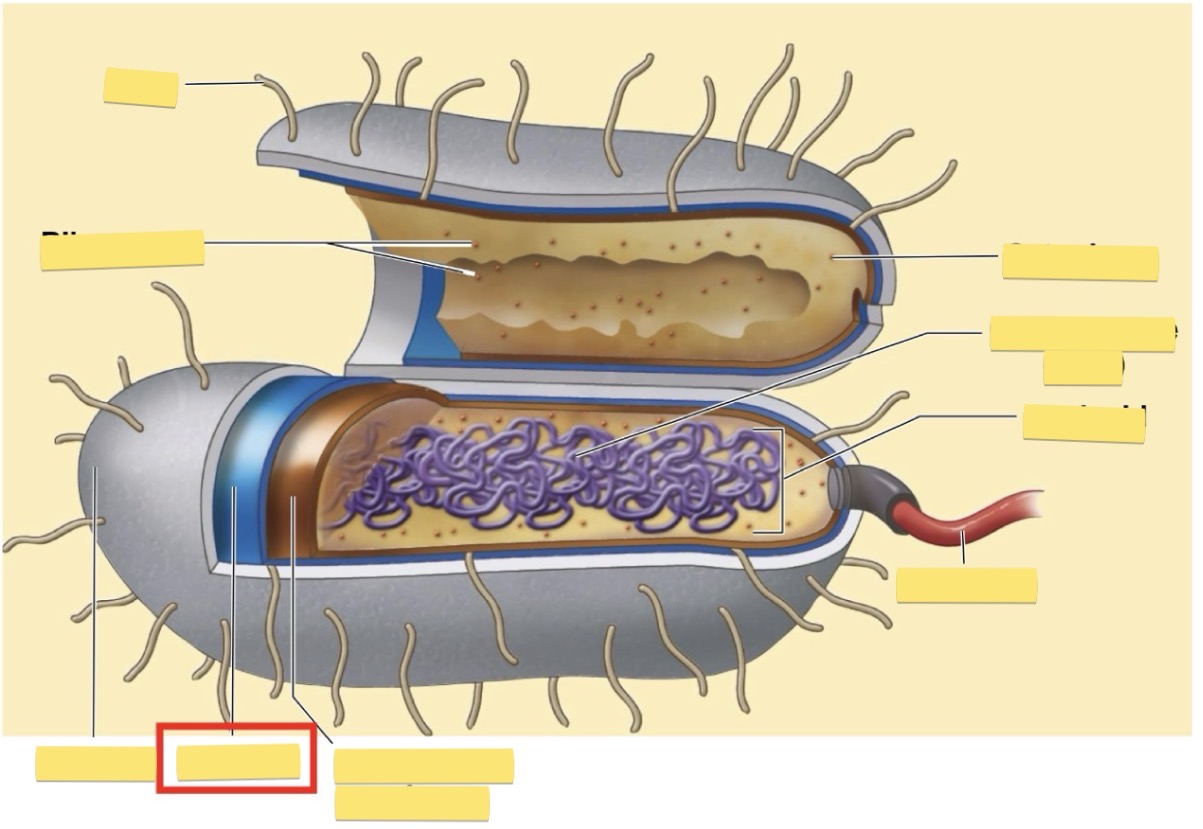
Draw and label a prokaryotic cell and its parts
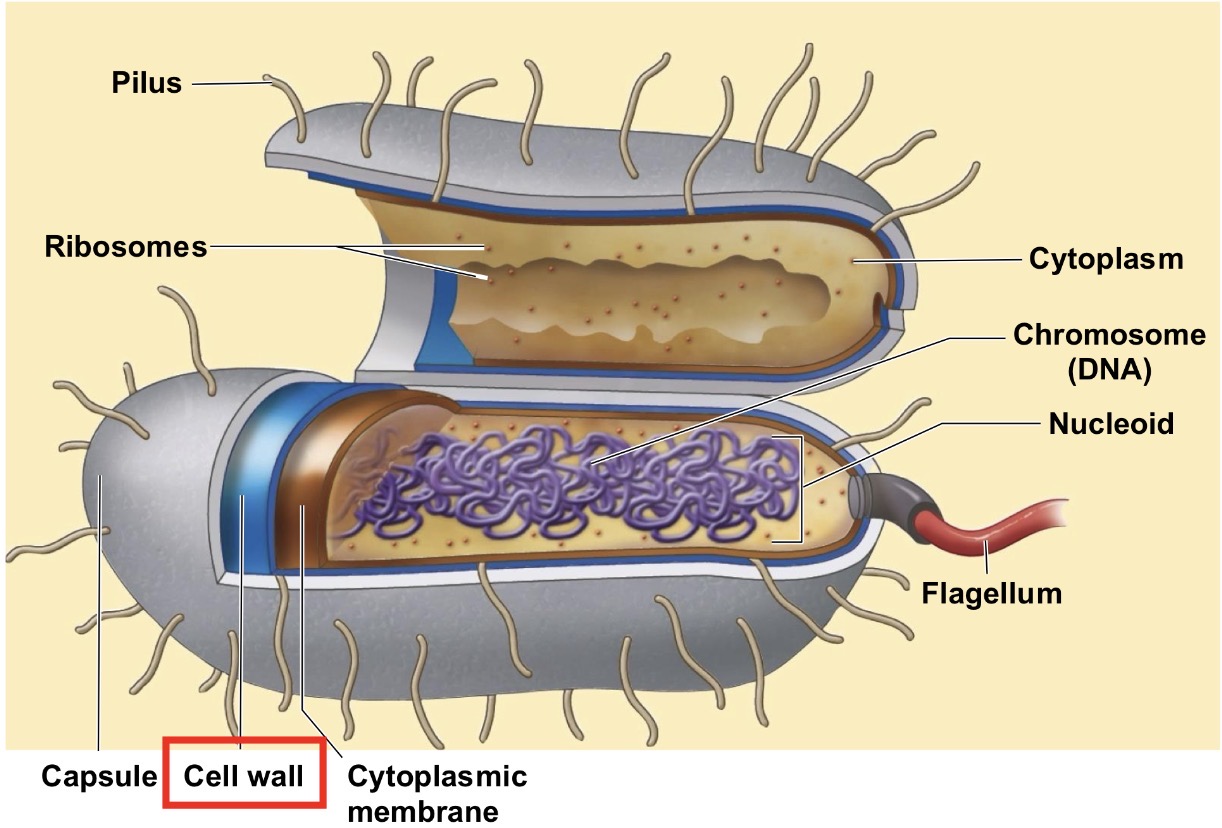
What is the general function of a capsule?
Helps colonize host: Adherence, attachment and forming biofilms
Help evade immune system attacks, aid hiding
helps prevent drying of cell
Defense against bacterial viruses
Crucial virulence factor: Loss of capsule leads to loss of pathogenicity
Some vaccines are made using capsules
What is the difference between a capsule and slime layer
Capsule:
Glycocalyx (Sugar)
Well - Organized layer, difficult to be washed off
Tightly bound to the cell wall
thicker than slime layer
acts as a virulence factor that helps to escape phagocytosis
Slime Layer:
Glycocalyx (Sugar) and Glycoprotein (Protein)
Unorganized layer and can easily washed off
Loosely bound to the cell wall
thin glycocalyx layer
mainly helps in adherence, protects the cell from dehydration and nutrient loss
Why are capsules and slime layers sometimes called a glycocalyx?
Because it is a shell of sugars.
How are capsules related to dental carries?
They are used to create a protective, sticky, bacterial, polysaccharide coating that promotes decay, or as a therapeutic, encapsulated, medicinal (probiotic) delivery mechanism designed to prevent it.
How do capsules aid biofilm formation?
enhancing adherence to surface and providing structural and protective support
How can you determine if a bacterium has a capsule?
You can use a gram stain and look at it through a microscope using a negative stain and when putting it on a sold growth media it will be a shiny/moist appearance and electron microscopes.
How are capsules important for pathogenesis?
Its a defense against white blood cells and the host immune system
Which molecule is unique to domain bacteria and not found in archea or eukarya?
Peptidoglycan (Only found in bacteria)
Draw the structure of peptidoglycan
Subunits are NAM and NAG. The peptide bridge is called Transpeptidase
What will happen to a bacterial cell if you weaken the structure of peptidoglycan?
The structural integrity would be weakened causing the cell either shrivel out or swell due to the weakening structure of the peptidoglycan.
What effect does penicillin have on peptidoglycan?
Penicillin will attack the peptidoglycan and even stop it from producing
What effect does lysozyme have on peptidoglycan?
It breaks down the existing peptidoglycan
Which Gram cell types have porins and why?
Gram Negative have porins that are located on the outer membrane and they are used for passages for ions and other molecules
Which molecule is unique to Gram Positive Cells
teichoic acids
How is the Gram-negative cell wall different from the Gram-positive cell wall?
Gram Negative Cell: (Pink)
Pink In color
Thin layer of Peptidoglycan
No Teichoic Acid
Has Outer membrane (w/ porins)
Has Lipopolysaccharides (LPS and Endotoxin)
General less susceptible to penicillin
Not sensitivity to lysozyme
Gram Positive Cells: (Purple)
Purple in color
Thick Layer of peptidoglycan
Has teichoic acid
No outer membrane
No lipopolysaccharides (LPS)
No porin protein because no outer membrane
Generally more susceptible to penicillin
Sensitive to lysozyme
Where is LPS found?
LPS is only found in Gram-Negative bacteria on the outside of the outer membrane.
What is the medical significance of LPS aka endotoxins?
Very strong PAMP
Makes Gram negative blood stream bacterial infections more deadly
Can cause Septic Shock and Multiple Organ Failure.
Why can Mycoplasma species not be treated with penicillin?
Mycoplasma - Bacteria that do not have a cell wall and they are Pleomorphic (Can change their shape). Penicillin won’t work because the drug attacks cell walls and these bacteria do not have cell walls.
What staining technique is used to stain Mycobacteria? Why cant they stain with Gram stain?
We use a staining technique called Acid Fast because their cell wall as a lot of mycolic acid which it make them impermeable to standard gram staining. Its like a waxy lipid.
What are efflux pumps? Why do they need energy to function?
Efflux Pumps - Help push harmful and non-essential molecules like antibiotics out of the cell. The reason they need energy to function is because they do Active Transportation which means they are going against the concentration gradient which requires ATP.
What is the function of type 3 secretory systems?
The function is:
Attach to other living cells/microorganisms
Once attached they start to send certain proteins
These certain proteins start to change the cell and manipulate it.
How are flagella beneficial for pathogenesis in gastric ulcers and Lyme disease?
Gastric Ulcers: Helicobacter Pylori survive the very acidic environment by secreting urease. After they start to attach and the proteins start to change the surface of the epithelial cells and damage mucus-secreting cells. The inflammation and toxins damage epithelial cells decreasing mucus production then the acidic stomach juices start to damage exposed tissue.
Lyme Disease: Borrelia Burgdorferi, It has a flexible body with flagella all along its body that allows it to bore into the host tissue like a cork screw. It can also change its shape to a cyst form and become dormant.
Give examples of 3 cell different cellular structures embedded in the cytoplasmic membrane
Ion channels, proteins, gap junctions
What are various pili useful for?
Sex Pilus - Connecting two cells and after connection they transfer DNA
Other Pilus on Escherichia coli - Used for attachment to epitheical cells
Pili on E coli Cells - Allows adherence
What are plasmids? How are they unique from the chromosome?
Plasmids: similar structure to a chromosome but they are smaller and do not carry essential genetic information.
What makes them Unique from chromosomes? They can replicate independently while the chromosome can not replicate by themself
Describe some characteristics that are commonly encoded on plasmids
Production of enzymes that destroy certain antibiotics
Code for multiple proteins
Can transfer information that can be helpful to other cells
Give an example of a gene that is always found on the chromosome but not on a plasmid.
Ribosomal RNA (rRNA) Gene
How are bacterial ribosomes different from eukaryotic ribosomes? Why is this essential information from a medical point of view?
Eukaryotic Ribosomes:
Larger
More Proteins
More RNA
Has a 60s and 40s subunits
all together is 80s
Prokaryotic Ribosome:
Smaller
Less proteins
Less RNA
Has a 50s and 30s subunit
all together is 70s
Medical point of view? The differences are important for drug targeting.
What is an endospore?
Endospore: An unique type of dormant cell produced by certain bacterial species such as members of the genera Bacillus and Clostridium
Name the only two genera that produce endospores
Bacillus and Clostridium
Use the terms sporulate and germinate in describing the "life-cycle" of a spore-forming bacterium.
Sporulation begins with endospore-forming bacteria experience limiting amounts of Carbon and Nitrogen. The cells senses starvation conditions and that triggers them to begin the 8-hour sporulation process. First, The cell stops growing but it still duplicates its DNA. Second, Septum forms, dividing the cell asymmetrically. Third, Larger compartment engulfs the smaller compartment. Fourth, endosore continues to mature, while the smaller compartment develops into a forespore, which will become the core of the endospore. Fifth, The mother cell is degraded and the endospore is released.
Germination can be triggered by a brief exposure to heat or certain chemicals. After exposure, the endospore absorbs water and swells, The spore coat and cortex then crack open, and a vegetative cell emerges. The core wall become the peptidoglycan layer of the vegetative cell.
 Note
Note  Flashcards (27)