Pathology
 Call Kai
 Learn
Learn Practice Test
 Spaced Repetition
 Match
Match Flashcards
 Knowt Play
1/28

There's no tags or description
Looks like no tags are added yet.
Name | Mastery | Learn | Test | Matching | Spaced | Call with Kai | Chat |
|---|
No analytics yet
Send a link to your students to track their progress
29 Terms
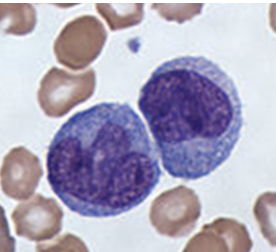
-Monocyte
- biggest leukocyte
- become macrophages
-inflammation signal- monocytes go to infection sight in tissues- elicit immune response
- 4x-5x larger than RBC
-kidney shaped nuclei
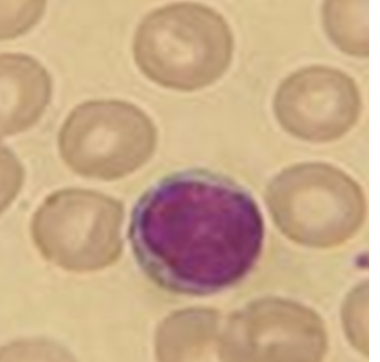
Lymphocyte
- Nk Cells- cell mediated innate immunity, defends host from tumors/virally infected cells
- T Cells- cell mediated innate and adaptive immunity
- B- Cell- humoral, antibody driven adaptive immunity
- Agranulocyte- same size as RBC
- see some cytoplasm
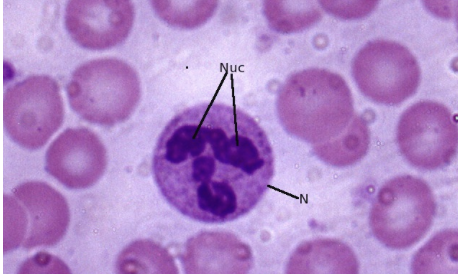
Neutrophil
- most abundant WBC type, from stem cells in bone marrow
- sense infection, migrates to it, destroys organisms by phagocytosis
- granulocyte, pale purple
- irregularly shaped nuclei (balls)
- 2x-3x larger than RBC
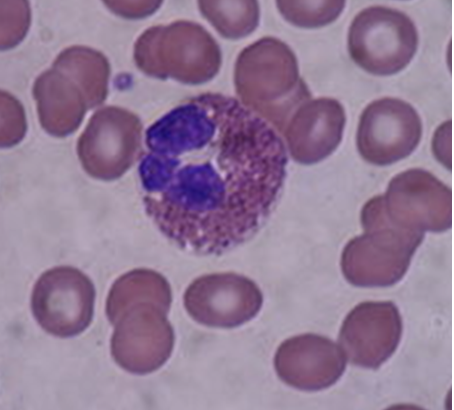
Eosinophil
- Primary defense against parasitic infection
- Granulocyte, reddish color, large, two lobed nucleus (connected with string like)
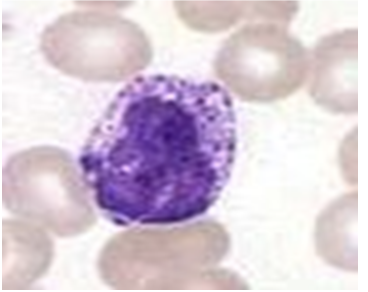
Basophil
-allergic reactions and inflammation
- Increase immune response
- anticoagulant heparin- prevents blood from clotting too quickly
- vasodilator histamine- promotes blood flow to tissues
-dark dark purple color, so dark can't see nucleus
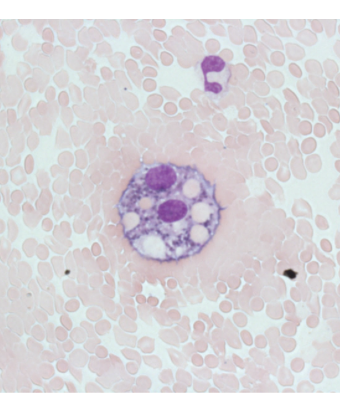
Macrophage
Monocytes become macrophages during infection
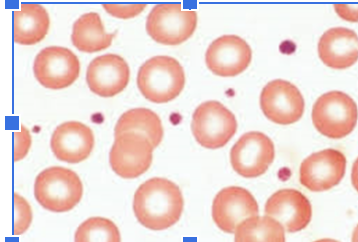
Erythrocyte
- RBC, uniform round cells with central pallor, no nucleus
- carries O2 from lungs to body and CO2 from body back to lungs
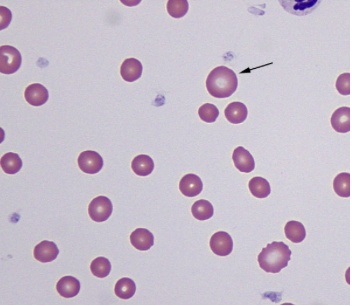
Macrocytic
- larger than normal RBC, less central pallor
- Macrocytic Anemia- bone marrow makes abnormally large RBC that lack nutrients, cant function normally
-b12/folate deficiency
-Liver disease
-MDS
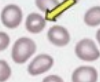
Microcytic
- small RBC, large central pallor, hypochromic
-Pyridoxine deficiency
-Thalassemia
-Iron deficiency anemia
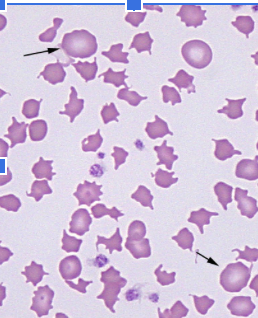
Poikilocytosis
- abnormally shaped- flat, elongated, teardrop-shaped, crescent-shaped, sickle-shaped, or can have pointy or thorn-like projections
- Causes: Sickle cell anemia, thalassemia, pyruvate kinase deficiency, hereditary elliptocytosis and hereditary spherocytosis.
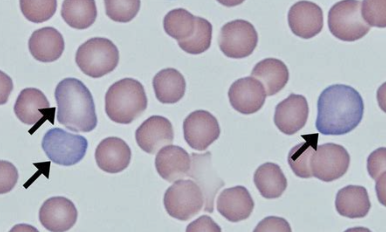
Polychromatophilia
Polychromatophilia- more staining than normal with some dyes due to an increased number of reticulocytes (immature RBC), blue-colored center
-Hemolytic anemia
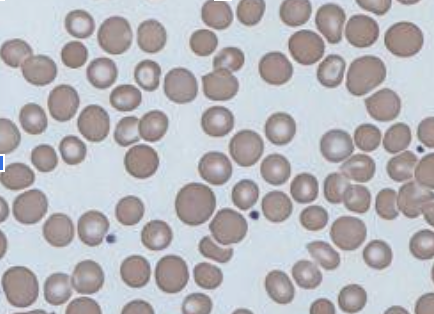
Anisochromia
Variation in color of RBC indicating variation in hemoglobin content b/w RBCs
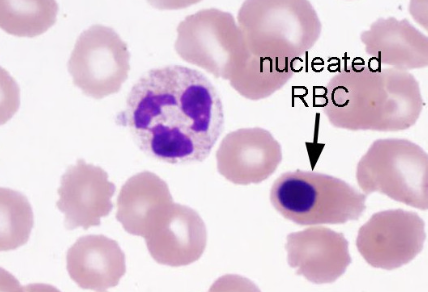
Nucleated Red Blood Cells
Severe Anemia, dark center, large RBC
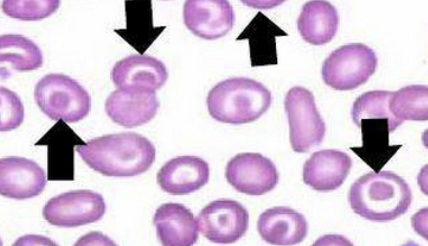
Target Cell
- Immune hemolytic anemia, hereditary spherocytosis
- central disk of hemoglobin, surrounded by pallor ring, and outer rim of hemoglobin
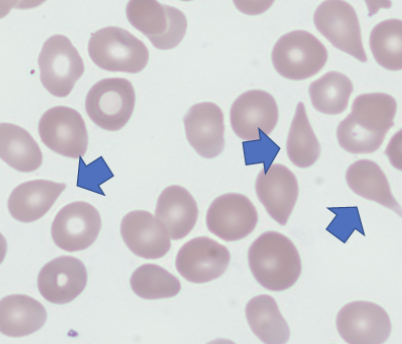
Tear drop
Anemia (megoblastic)
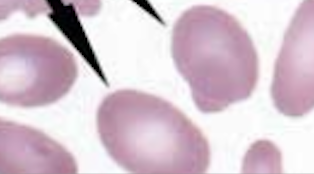
Ovalocyte
Iron deficient anemia
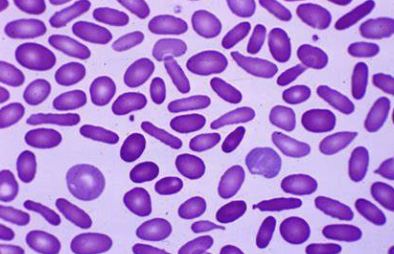
Elliptocyte
-elongated/oval shaped
- Hereditary elliptocytosis
-Severe iron deficiency anemia
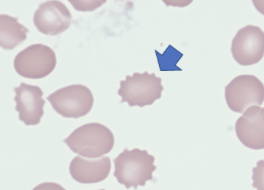
Burr Cell
Uniform short blunt projections, central pallor
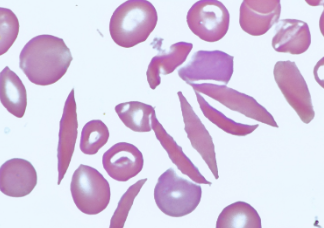
Sickle Cell
C shaped
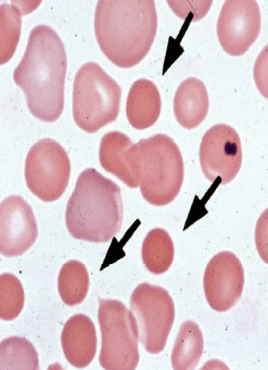
Spherocyte
- No area of central pallor, round/disk shaped
- polychromatic reticulocyte
- Hereditary Spherocytosis
- Autoimmune hemolytic anemia
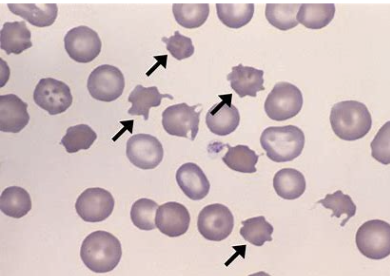
Acanthocyte
Course, irregularly spaced variably
sized clublike projections,
pointed star
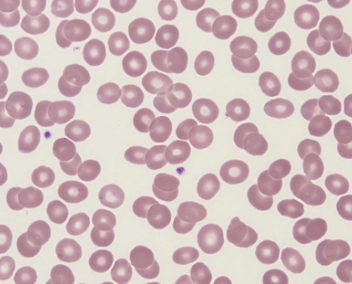
Normal Platelets
Small blood cells, purple
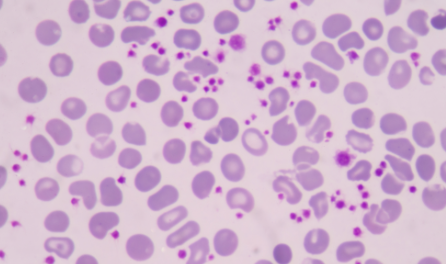
Thrombocytosis
High Platelet count
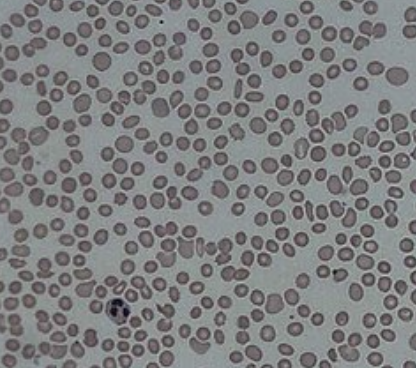
Thrombocytopenia
Low levels of platelets
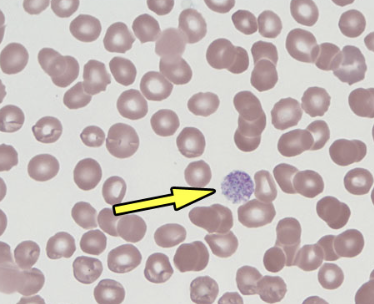
Giant platelets
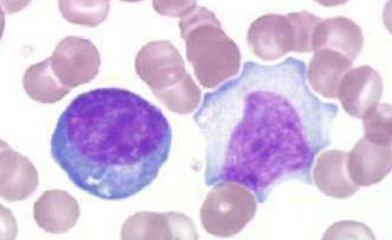
Infectious Mononucleosis (white cell abnormalities)
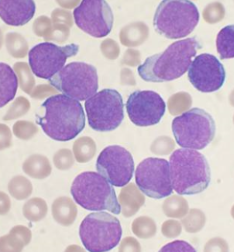
Acute Lymphocytic Leukemia (ALL)
(white cell abnormalities) blood/bone cancer
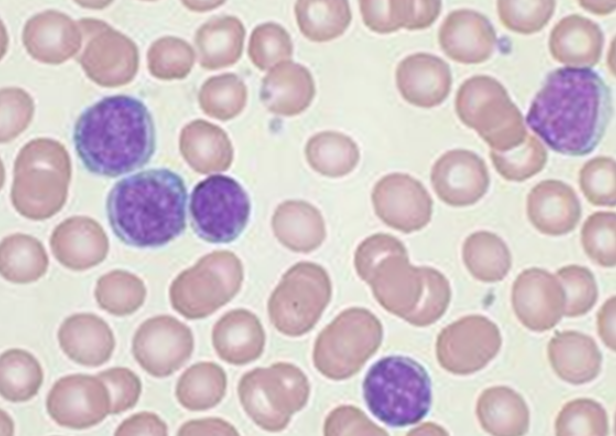
Chronic lymphocytic leukemia (CLL) (white cell abnormalities)
blood/bone cancer
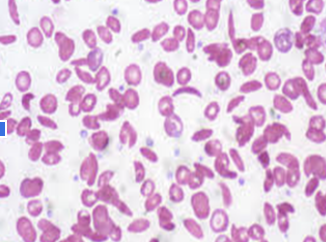
Thalassemia major
small (microcytic), pale (hypochromic), variously-shaped (poikilocytosis) red blood cells