Property Ownership
0.0(0)
Studied by 0 people Call Kai
 Learn
Learn Practice Test
 Spaced Repetition
 Match
Match Flashcards
 Knowt Play
Card Sorting
1/108

There's no tags or description
Looks like no tags are added yet.
Last updated 7:07 PM on 7/16/23
Name | Mastery | Learn | Test | Matching | Spaced | Call with Kai |
|---|
No analytics yet
Send a link to your students to track their progress
109 Terms
1
New cards
Land
The earth’s surface extending downward to the center of the earth and upward to infinity, including permanently attached natural objects
2
New cards
Real estate
Land, plus all things permanently attached to it naturally or artificially
3
New cards
Real property
Real estate, plus the interests, benefits, and rights included with real estate ownership
4
New cards
Improvements
Artificial attachments to land that include things such as fencing, buildings, and walkways
5
New cards
Ownership rights
Enjoyment, disposition, possession, control, and exclusion; often referred to as “bundle of rights”
6
New cards
Personal property
Everything owned that is not real property, aka chattel
Personal property is transferred using a bill of sale or receipt.
Personal property is transferred using a bill of sale or receipt.
7
New cards
MARIA
five basic tests to determine if an item is real or personal property
8
New cards
Method of annexation
This refers to whether the item is attached to the property and how permanent the attachment is.
9
New cards
Adaptability for use
This refers to how an item is adapted to the real property. If removing an item would change or eliminate the use of the property, it’s likely real property.
10
New cards
Relationship of the parties
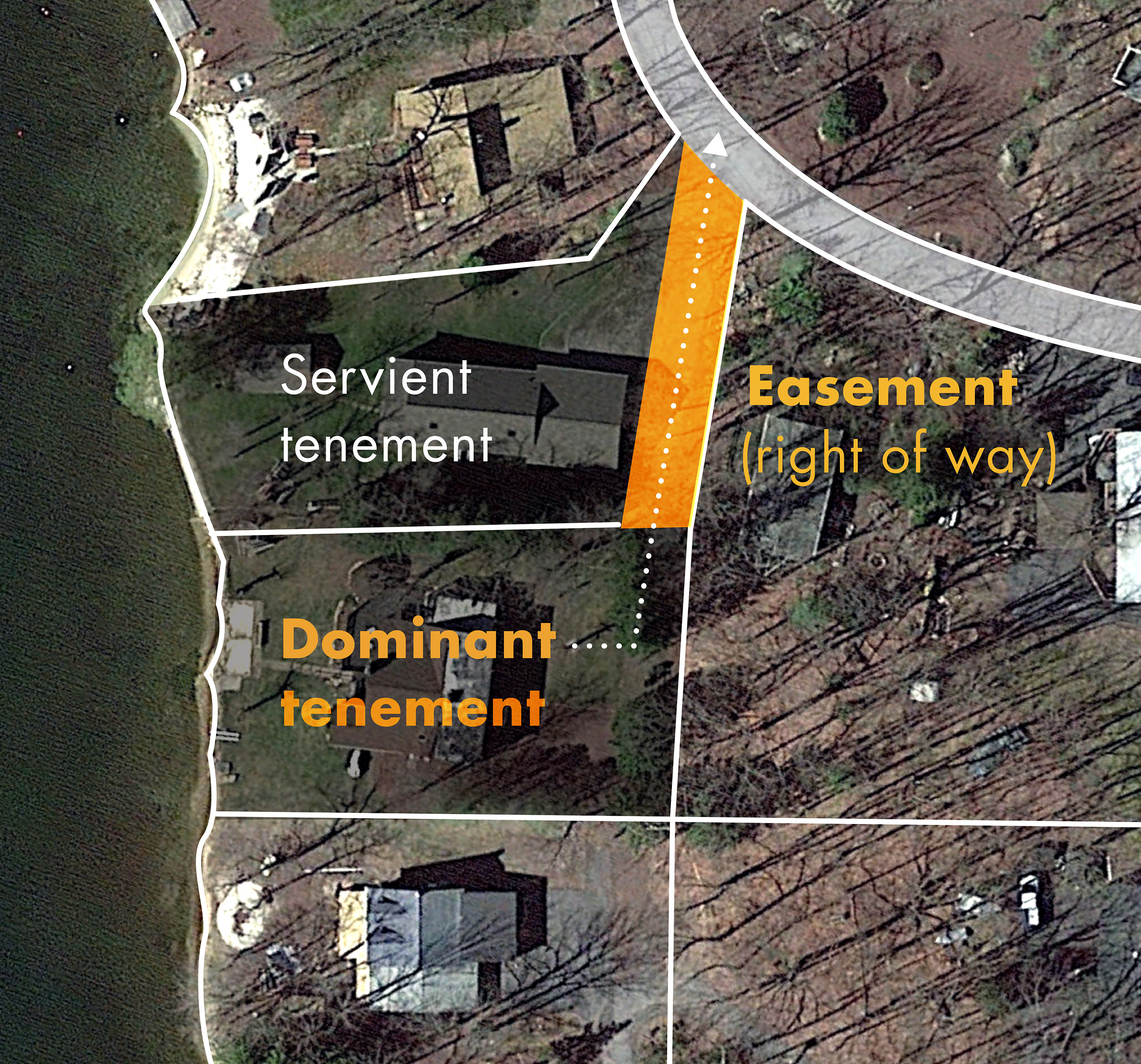
In general, the courts tend to favor a tenant’s take on an item over the landlord’s and a buyer over a seller.
11
New cards
Intention in placing
If an item was intended to be temporary, then it’s less likely to be considered real property.
12
New cards
Agreement of the parties
If the parties have agreed whether an item will stay or go, this is the simplest and first test.
13
New cards
Fixture
Anything permanently attached to the land or to permanent structures on the land. (The MARIA test helps classify items as fixtures rather than personal property.)
Fixtures are part of real property and are included (conveyed) with a sale of real property unless the parties negotiate differently.
If a fixture should be excluded from the transfer, the sales contract should clearly identify that the item is excluded from the transaction.
If the fixture's status is debatable, the contract should clarify whether the item will stay or go.
Fixtures are part of real property and are included (conveyed) with a sale of real property unless the parties negotiate differently.
If a fixture should be excluded from the transfer, the sales contract should clearly identify that the item is excluded from the transaction.
If the fixture's status is debatable, the contract should clarify whether the item will stay or go.
14
New cards
severance
Fixtures that are removed from the improvement before an agreement of sale become personal property again through the process of
15
New cards
Cultivated crop
called emblements and are considered personal property, even though they’re part of the soil.
Owners don't need to dig up the crops and take them when the land is conveyed, but those owners are entitled to the fruits of their labor and can harvest the crop when it's ready (even if the land has transferred to a new owner).
Owners don't need to dig up the crops and take them when the land is conveyed, but those owners are entitled to the fruits of their labor and can harvest the crop when it's ready (even if the land has transferred to a new owner).
16
New cards
Annexation
The process of converting personal property to real property.
17
New cards
Trade fixture
This is anything that’s attached to leased land or structures that’s used in conducting business. Rights and responsibilities differ depending on the commercial lease agreement, but usually tenants may remove trade fixtures when the lease terminates. They must repair any damage created by removing the fixtures.
18
New cards
Real Property
conveyed from one owner to another using a deed.
19
New cards
Immobility
The geographic location of land is fixed and can’t be changed.
20
New cards
Indestructibility
Improvements may deteriorate over time, but not land itself.
21
New cards
Uniqueness/nonhomogeneity
One piece of land is never exactly like another.
22
New cards
Scarcity
You can’t make more land; what we have now is what we’ll always have.
23
New cards
Improvements
A land’s value can be positively or negatively affected by the improvements made on it.
24
New cards
Permanence of investment
Some improvements are long-term, stable investments with stable returns over time.
25
New cards
Situs/location/area preference
A property’s value depends in large part on its location.
26
New cards
legal description
permits a specific parcel of property to be located by a trained surveyor.
27
New cards
Three primary types of legal descriptions
metes and bounds, lot and block (also known as recorded plat), and rectangular government survey system (RGSS).
28
New cards
Metes
the direction and distance of a line forming the property’s boundary; bounds are physical features that define the boundaries of the property. Metes-and-bounds descriptions are characterized by a point of beginning, which is where the description both begins and ends. It also uses monuments to mark boundaries
29
New cards
Monument
A permanent physical marker used in a metes-and-bounds description that can be man-made or natural. It may be a tree, creek, rock, or a stake placed in the ground.
used within a metes-and-bounds description to mark points at which there is a change in direction as one follows the boundary of the parcel.
s also the point of beginning of a legal description in the monuments system, which is infrequently used.
used within a metes-and-bounds description to mark points at which there is a change in direction as one follows the boundary of the parcel.
s also the point of beginning of a legal description in the monuments system, which is infrequently used.
30
New cards
rectangular government survey system
regulated by the U.S. Department of the Interior’s Bureau of Land Management, divides land into townships and further into sections and fractions called sections.
31
New cards
principal meridian
the north-south line that runs through an initial point in the RGSS. These descriptions also use compass point directions (northwest; southeast; etc.).
32
New cards
base line
the east-west line from which measurements originate.
33
New cards
range lines.
East-west lines of a survey are called township lines; north-south lines are called
34
New cards
Lot-and-block
systems begin with a reference to either metes and bounds or RGSS, then divide the land into lots with numerical descriptions of each parcel. A plat with the lot descriptions is recorded in the land records.
35
New cards
Livable square footage or area (aka gross living area or GLA)
may be defined differently depending on the purpose of the measurement.
GLA may include stairways and closets.
GLA may include finished attic or basement square footage if ceiling height is at least seven feet.
GLA may include stairways and closets.
GLA may include finished attic or basement square footage if ceiling height is at least seven feet.
36
New cards
Rentable area
the actual area a tenant may rent and on which the landlord bases the rent.
Rentable area typically excludes common areas, elevator shafts, stairways, and HVAC and other system equipment areas.
It may include corridors, meeting rooms, lobbies, restrooms, and a proportionate share of any common areas.
Rentable area typically excludes common areas, elevator shafts, stairways, and HVAC and other system equipment areas.
It may include corridors, meeting rooms, lobbies, restrooms, and a proportionate share of any common areas.
37
New cards
Usable area
includes the specific area(s) the tenant will use.
If the lease area doesn’t encompass an entire floor, usable area includes all office or retail space plus storage areas and private restrooms.
If the lease area does encompass an entire floor, the usable square feet encompasses everything inside the exterior walls of the building except for stairwells and elevator shafts.
If the lease area doesn’t encompass an entire floor, usable area includes all office or retail space plus storage areas and private restrooms.
If the lease area does encompass an entire floor, the usable square feet encompasses everything inside the exterior walls of the building except for stairwells and elevator shafts.
38
New cards
datum
a horizontal point of reference from which surveyors measure the depth and height of various land elevations.
39
New cards
benchmark
a point where the exact elevation is known and marked with a brass or aluminum plate. Surveyors can use this as a starting point to measure other elevations.
40
New cards
Mineral rights, aka subsurface rights
re the rights to drill or dig for minerals on the property.
41
New cards
Air rights
refer to the right to use the area in the sky above a property.
42
New cards
Water rights
especially important for agricultural use or in areas where a well is needed or water is scarce.
**The three categories of water rights include riparian rights, littoral rights, and the doctrine of prior appropriation.**
**The three categories of water rights include riparian rights, littoral rights, and the doctrine of prior appropriation.**
43
New cards
Riparian
rights address water that moves through a property, such a river or stream. Riparian rights are classified into one of two categories based on the type of water: navigable or non-navigable.
44
New cards
Littoral
rights address static water, such as a pond, lake, or ocean. Owners with littoral rights have the right to use and enjoy the static water but not divert or contain it.
45
New cards
Prior appropriation
the first party to physically take water from a source and put it to beneficial household, agricultural, or industrial use will continue to have a claim to the water.
46
New cards
Accretion
Process by which water carries rock, sand, and soil and causes land build-up
47
New cards
Alluvion
New deposits of land that are the result of accretion
* Erosion: Gradual loss of land due to a natural force
* Erosion: Gradual loss of land due to a natural force
48
New cards
Erosion
Gradual loss of land due to a natural force
49
New cards
Avulsion
A sudden loss of land by a swift, large-scale change in water flow
50
New cards
Reliction
When water gradually recedes and uncovers new land
51
New cards
encumbrance
may be monetary or physical. It limits the owner’s use of the property and can affect marketability and value.
52
New cards
Liens
financial claim or encumbrance against a property. Some of the common sources of liens are mortgages, unpaid taxes, unpaid services, and judgments.
53
New cards
General liens
affect real and personal property and include judgment liens, federal and state tax liens, and decedent’s debts.
54
New cards
Specific liens
affect the specific real property/properties to which they’re attached by agreement or law and include mortgage liens, real property tax liens, mechanic’s liens, special assessment liens, vendor and vendee liens, and HOA liens.
55
New cards
way to classify liens
voluntary or involuntary
56
New cards
A mortgage lien
because the property owner chooses to have a mortgage, is voluntary. An involuntary lien is one created without the property owner’s consent, like a property tax lien.
57
New cards
mechanic’s lien
one a vendor of goods or services places on the property and creates a cloud on the property's title.
58
New cards
attachment lien
when the courts place an encumbrance on the property of a defendant in a lawsuit for monetary damages (also known as a judgment).
the typical priority of liens is property tax lien, mechanic’s liens (if work began before the mortgage lien was recorded), first mortgage lien, and all other liens by date of recording.
the typical priority of liens is property tax lien, mechanic’s liens (if work began before the mortgage lien was recorded), first mortgage lien, and all other liens by date of recording.
59
New cards
easement
non-possessory right acquired by one party to use another party’s land for a special use. These are often acquired through a written agreement. Because an easement affects the use of a property, they have the potential to diminish the property's value.
60
New cards
servient estate;
The property on which the easement lies is the servient estate; it’s said that the servient estate suffers the easement
61
New cards
Dominant Estate
The property or individual who uses the easement holds the dominant estate; it’s said that the dominant estate enjoys the easement.
\
\
62
New cards
Easement appurtenant
Attached to a specific parcel of land, transfers (“runs”) with the land, and gives the “dominant tenement” rights to use adjoining property/servient tenement
63
New cards
Easement in gross
Granted to a specific individual or business rather than attached to the property itself
64
New cards
Easements
may be removed through express agreement, the dominant estate owner’s abandonment, the merger of estates, or when there’s no longer a need for the easement.
65
New cards
abandonment
In order to remove an easement through abandonment, the dominant estate owner must take some action that shows a clear intent to stop using the easement.
66
New cards
merger
when the owner of either the servient or dominant estate purchases the other property. A property owner can’t have an easement over his or her own land.
67
New cards
Easement by necessity
This easement type can only be created for the purpose of ingress and egress.
68
New cards
Easement by prescription
This easement isn’t legal, and is created through the continued, uninterrupted, obvious, exclusive, and adverse use of someone’s property without permission.
69
New cards
Right-of-way
A right of way provides a pass-through to other property but doesn’t allow usage of the land.
Easements are specific to the person or persons to whom the easement is granted. A right-of-way benefits anyone who needs to use it.
Easements are specific to the person or persons to whom the easement is granted. A right-of-way benefits anyone who needs to use it.
70
New cards
license
temporary permission for one person, at the discretion of the property owner, to do something on another’s land without actually possessing any interest or ownership in the land. A license is not assignable or inheritable.
71
New cards
Encroachments
are structures or objects built on another’s land without permission.
Encroachments are always by definition illegal.
A survey establishes the boundary lines of a property and may help identify both encroachments and easements
Encroachments are always by definition illegal.
A survey establishes the boundary lines of a property and may help identify both encroachments and easements
72
New cards
Deed restrictions and covenants, conditions, and restrictions (CC&Rs)
are encumbrances affecting land use.
73
New cards
freehold estate
an interest in real property where the owner’s possession of the property isn’t of fixed duration, as it would be in a lease (leasehold estate). Three types of freehold estates exist.
74
New cards
fee simple estate (aka fee simple absolute)
a type of freehold estate that conveys the most rights available. Property held as a fee simple can be sold and is inheritable.
Fee simple estates may be limited by both public and private restrictions, such as zoning ordinances or restrictive covenants.
Fee simple estates must pass through the probate process before legal distribution to heirs.
survivorship and inherited rights vary according to state and local laws and by how the title is held.
Fee simple estates may be limited by both public and private restrictions, such as zoning ordinances or restrictive covenants.
Fee simple estates must pass through the probate process before legal distribution to heirs.
survivorship and inherited rights vary according to state and local laws and by how the title is held.
75
New cards
Fee simple defeasible
is a type of freehold estate in which ownership is subject to either the occurrence or non-occurrence of a particular event. The two categories of fee simple defeasible estates are fee simple determinable and fee simple subject to condition subsequent.
76
New cards
fee simple determinable estate
the current property owner conveys ownership to a new owner as long as some event does or doesn’t occur. For example, Morris gives a plot of land to a local parks district as long as the district only uses it for youth soccer fields. He gives the possibility of reverter to his son Joe, someone else named by Joe, or Joe’s heirs if the parks district changes the property’s use. If the use changes, the estate automatically ends and the property reverts to whoever holds the possibility of reverter.
77
New cards
fee simple subject to condition subsequent estate
the current property owner conveys ownership to a new owner on a specific condition. For example, Trinity conveys her home to her son, Gabriel, on the condition that the property remains residential. If Gabriel converts the property to some other use, the estate doesn’t automatically revert to the original owner; however, Trinity (or her other heirs or successors) has the right to re-acquire full ownership. But she’ll have to go to court to do so.
78
New cards
leasehold estate
an estate in which the holder has a possessory interest in a property but no ownership.
79
New cards
estate for years
a lease that ends on a specific date and must be renewed by mutual agreement between the landlord and tenant.
80
New cards
periodic estate (aka estate from period to period)
a lease that automatically renews at the end of its term (such as a month-to-month lease).
81
New cards
estate at will
a lease without an established ending that can be terminated by either party.
82
New cards
estate at sufferance
one in which a tenant (referred to as a holdover tenant) didn’t leave when the lease expired.
83
New cards
ownership in severalty/Sole Ownership
one person owns the property with no joint interest by any other person.
With the death of an estate owned in severalty, the estate passes either according to instructions in the owner’s will or according to state law.
With the death of an estate owned in severalty, the estate passes either according to instructions in the owner’s will or according to state law.
84
New cards
Tenancy in common
a form of co-ownership in which each co-owner is entitled to possession of the whole. An owner’s ownership is inheritable and, upon the owner’s death, doesn’t necessarily pass to the other owners.
tenancy in common is generally considered the default arrangement if the deed doesn’t specify the tenancy of co-owners.
A tenancy in common owner’s debts can attach to that owner’s ownership interest.
Termination of a tenancy in common can occur by conversion to tenancy in severalty or by sale or partition.
If co-ownership is terminated by partition, then the property is divided into portions, called partitions, and each tenant owns a specific partition.
tenancy in common is generally considered the default arrangement if the deed doesn’t specify the tenancy of co-owners.
A tenancy in common owner’s debts can attach to that owner’s ownership interest.
Termination of a tenancy in common can occur by conversion to tenancy in severalty or by sale or partition.
If co-ownership is terminated by partition, then the property is divided into portions, called partitions, and each tenant owns a specific partition.
85
New cards
Joint tenancy
a form of co-ownership in which equal ownership requires unity of time, title, interest, and possession.
Joint tenancy includes the right of **survivorship**, which means that the surviving co-owner(s) will own the property of a joint tenant who dies.
Joint tenancy includes the right of **survivorship**, which means that the surviving co-owner(s) will own the property of a joint tenant who dies.
86
New cards
Survivorship
takes precedence over any devisees named in a will, as well as any heirs named by laws of descent and distribution
87
New cards
common-interest ownership
Timeshares, condominiums, and cooperatives are primary examples of
88
New cards
timeshare
owned by several joint owners, each of whom has the right to use the property under the specific terms of a time-sharing agreement.
Timeshares may be sold a couple of different ways. Fee simple ownership is more widely used than the right-to-use format, which simply provides rights to occupy the property during a specified time frame.
Timeshares may be sold a couple of different ways. Fee simple ownership is more widely used than the right-to-use format, which simply provides rights to occupy the property during a specified time frame.
89
New cards
Timeshare ownership
typically split into 52 weeks. A 1/13th interest means 1/13 of 52 weeks, or four weeks (52 ÷ 13 = 4).
90
New cards
timeshare estate.
The fee simple ownership type of timeshare is called a
91
New cards
timeshare use
The right-to-use type of timeshare is called a
92
New cards
vacation ownership
Buyers agree to a one-time purchase price and an annual maintenance fee, and in return get a selected accommodation time and have the right to use the unit for a specified number of years.
Timeshares or vacation memberships may sometimes allow owners or members to exchange their specified time slot for another.
Timeshares or vacation memberships may sometimes allow owners or members to exchange their specified time slot for another.
93
New cards
campground membership
buys the right to use the developer’s facilities and may use the campground at any time when it’s open.
94
New cards
Condominium
ownership typically involves ownership of a unit within a building and not the structure itself or any land. It also includes undivided shared interest in the common spaces.
Each unit has a separate legal description and each owner gets his/her own tax bill.
Owners pay HOA fees that go toward maintenance costs.
Each unit has a separate legal description and each owner gets his/her own tax bill.
Owners pay HOA fees that go toward maintenance costs.
95
New cards
Cooperative (co-op)
members own shares in a corporation that owns the building. Members don’t own real estate. Each owner’s right of possession of his/her individual unit comes from a proprietary lease. The corporation that owns the real estate pays the single property tax bill.
96
New cards
Townhomes
single-family homes but typically share walls with neighbors.
97
New cards
planned unit development (PUD)
mixed-use development that has both residential and commercial units, consists of a parcel of land, any improvements, and shared common areas. Developers who are building PUDs must often submit plat maps for their developments.
98
New cards
life estate
type of freehold estate in which ownership is limited to someone’s lifetime. The future owner is determined based on the life estate’s terms.
99
New cards
ordinary life estate
based on the life of the estate holder/life tenant. For example, Christine gives her son an ordinary life estate in a property, and the estate lasts until her son’s death.
100
New cards
Pur Autre Vie
is based on the life of someone other than the holder of the life estate/life tenant. For example, Jarrod grants his ex-wife, Margo, a life estate pur autre vie in a house where Jarrod’s mother Rose and Margo, who cares for Rose, both reside. The life estate stipulates that Margo’s interest in the property will cease when Jarrod’s mother dies.

