History Final Review - 18th-20th Century
 Studied by 0 people
 Call Kai
 Learn
Learn Practice Test
 Spaced Repetition
 Match
Match Flashcards
 Knowt Play
1/40

There's no tags or description
Looks like no tags are added yet.
Name | Mastery | Learn | Test | Matching | Spaced |
|---|
No study sessions yet.
41 Terms
Which dynasty took over Spain in the 18th century?
Bourbon Dysnasty
French
Ruled after War of Succession
Treaty of Utrecht was signed 1713 and confirmed Philip V as King of Spain
Who was Francisco de Goya?
Spanish court painter, painted images of Charles III and Charles IV
Festivals and scenes depicting tragedies of war
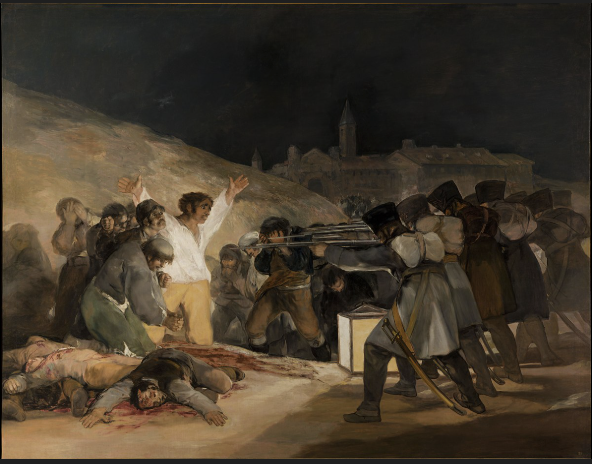
Goya Painting #1 - 3rd of May 1808
Depiction of the Peninsular War:
The painting commemorates the execution of Spanish civilians by Napoleon’s French troops after the uprising in Madrid on May 2, 1808, marking the beginning of the Peninsular War.Civilian resistance to foreign occupation:
Goya focuses on ordinary Spaniards rather than soldiers, emphasizing popular resistance and the suffering of the civilian population.Condemnation of imperial violence:
The faceless French firing squad represents dehumanized, mechanical violence, criticizing imperial oppression rather than glorifying military victory.Birth of modern war imagery:
Unlike traditional heroic battle paintings, Goya presents war as brutal, chaotic, and morally horrifying, influencing later anti-war art.The central martyr figure:
The man in white, arms outstretched, evokes Christ’s crucifixion, turning the executed civilian into a symbol of innocence and sacrifice.Use of light and composition:
The lantern’s harsh light isolates victims from executioners, heightening emotional impact and moral contrast.Expression of national trauma:
The painting reflects Spain’s collective suffering during foreign occupation and internal collapse.Political statement after the war:
Painted in 1814, after the French withdrawal, it served as a public reminder of atrocities committed during the conflict.Challenge to official historical narratives:
Goya refuses to portray clear heroes or glorified nationalism, focusing instead on human suffering.Enduring symbolic power:
The Third of May 1808 became a foundational image of resistance and a precursor to later works like Picasso’s Guernica, shaping how history and war are visually remembered.
The Peninsular War (1807-1814)
Portugal, Spain, UK and invading and occupying forces of French Empire during Napoleonic Wars
Overlaps with Spanish War of Independence
Why did Peninsular War start?
French and Spanish armies invaded and occupied Portugal 1807
Escalated after Napoleonic France invaded Spain
Napoleon Bonaparte forced Ferdinand VII and Charles IV to abdicate
Made his brother the king
Bayonne Constitution
Spaniards rebelled against French rule
Battle of Bailen was the first open field defeat of Napoleonic army in Europe
Lasted until 6th coalition
What is the Constitution of Cadiz 1812? (La Pepa)
National sovereignty, separation of powers, freedom of press, free enterprise
Abolished corporate privileges
Constitutional monarchy with parliamentary system
Universal male suffrage
Spanish citizenship to natives of territories that belonged to Spanish monarchy in both hemispheres
What were the Carlist Wars?
Royalists-Conservatives (Basque C, Valencia, Cat, Nav…): against Ferdinand VII atempts to centralization – wanted Charles V (brother) as King, not Isabella (daughter) and Mª Cristina (regent queen)
Liberals: supporting Ferdinand VII
What is the “tamborrada” in Spain?
Massive festival with 24 hours of non-stop drumming. Honors St. Sebastian. Organized by gastronomic societies, people dress up as chefs or napoleonic soldiers.
Who were the Mamluks?
Turkish, Sirian, Egyptian… slave horse soldiers under Napoleon’s army
Who was Gustavo Adolfo Becquer?
Poet/writer who is important Spanish Romantic
Work characterized by simplicity, emotional intensity
Significance of Antoni Gaudi
Antoni Gaudí (1852–1926) — key figure of Catalan modernisme.
Signature features: organic geometry, catenary structures, parabolic arches, biomorphic décor.
Materials: iron, ceramic trencadís, stained glass, stone — craftsmanship meets engineering.
Religion & myth: nature as God’s architecture; elaborate biblical iconography (Sagrada Família).
Urban vision: façades as “street theater”; dialogue with Cerdà’s Eixample plan.
Key works: Sagrada Família, Park Güell, Casa Batlló, La Pedrera (Casa Milà), Colònia Güell crypt.
Spanish Civil War
Second Republic (1931–36): reforms (secularism, land, autonomy); polarization grows.
July 1936: military coup → civil war (Republican coalition vs. Nationalists under Franco).
International dimension: Hitler/Mussolini aid Franco; USSR & International Brigades aid Republic.
Key events: Siege of Madrid; Guernica bombing (1937)
1939: Franco’s victory → dictatorship (1939–75): repression, exile, censorship, memory struggles.
Pans Labyrinth Synopsis

Image from Pans Labyrinth
Historical context – post–Civil War Spain:
The film is set in 1944, during the early years of Franco’s dictatorship, a period marked by repression, hunger, and fear.The Pale Man as a symbol of authoritarian power:
The Pale Man represents oppressive authority—silent, powerful, and deadly—mirroring the brutality of Francoist rule.The lavish banquet and hunger:
The abundant food contrasts sharply with the widespread famine and rationing experienced by civilians, especially children, in postwar Spain.Innocent curiosity versus imposed rules:
Ofelia’s temptation to eat reflects a child’s natural hunger and innocence confronting rigid, authoritarian prohibitions.Punishment for disobedience:
The Pale Man awakens only after Ofelia breaks the rules, symbolizing how authoritarian regimes respond violently to even minor acts of defiance.The consumption of children:
The Pale Man’s devouring of fairies evokes the regime’s destruction of innocence and youth through violence and repression.Eyes in the hands:
His grotesque vision suggests surveillance, distorted morality, and a regime that “sees” but does not truly understand humanity.Stillness and ritualized violence:
The slow, deliberate movements emphasize institutionalized, impersonal brutality rather than chaotic evil.Visual parallels to Captain Vidal:
The Pale Man mirrors Vidal’s cruelty, discipline, and lack of empathy, reinforcing the allegorical connection to fascist authority.Historical meaning of the scene:
The image functions as a visual allegory for life under Francoism—obedience enforced by terror, abundance reserved for the powerful, and innocence endangered by authoritarian control.
Discussion on Pans Labyrinth
How does the film visualize authoritarian power? Where do you see the Civil War’s aftermath?
What does Ofelia’s ‘disobedience’ mean in this story? When is disobedience ethical?
Fantasy vs. reality: which world tells the ‘truer’ history? Why might del Toro choose a fairytale form?
Compare monsters: Pale Man vs. Vidal. What practices/rituals make them monstrous?
Symbols of time and memory (watch, lullaby): how does the film argue about the past?
When did Franco’s dictatorship start?
1939: end of the Spanish Civil War with Franco’s victory
Beginning of an authoritarian dictatorship (1939–1975)
Nationalist-Catholic regime, close to European fascism
Especially harsh and violent in the 1940s (immediate postwar years)
Key Themes Francoism
Censorship
Loss of rights gained under second republic (divorce, voting)
Many republican women in prison
Who resisted against Franco?
1940s: anti-Franco guerrilla fighters (maquis) still active in the mountains
Families of guerrilla members are also persecuted
Francoism and The Sleeping Voice
The story is set in the early Francoist postwar period
We see the consequences of the war rather than the battlefields
Focus on women prisoners, their families, and everyday survival
The dictatorship controls bodies, children, speech, and memory
Questions on The Sleeping Voice
How does the film represent Franco’s dictatorship and the postwar years? What specific scenes show how the regime controls bodies, families, and daily life?
In what ways is the prison more than just a physical place? How does it symbolize the Franco regime, and how does it shape the women’s identities and relationships?
How do the female characters resist the regime, both openly and in more subtle, everyday ways? What kinds of “care work” (emotional, physical, political) do women perform in the film?
What does the title The Sleeping Voice suggest to you? Whose “voice” is sleeping? By the end of the film, do you feel that voice has awakened? How and through whom?
How does the film deal with memory—personal and collective? Who remembers, who forgets, and who tries to erase the past?
Historical Memory in The Sleeping Voice
Translation is a form of memory work, not just word transfer.
Gatekeepers (translators, editors, marketers, critics) guide readers toward globally legible frames: victimhood, testimony, women’s suffering, dictatorship.
This helps the book circulate internationally but can flatten local political nuance about Spain’s Civil War and Francoism.
Transition to Democracy in Spain
Franco dies (1975)
Juan Carlos I becomes king
Adolfo Suárez leads reforms
1977 first free elections
1978 Constitution approved
When was the constitution of Spain approved?
1978
Characteristics of Monarchy in Spain
No political power
Symbolic head of state
Unity, diplomacy, continuity
Shows how Spain is a modern government
Law of Historical Memory 2007
Recognition of victims
Removal Francoist symbols
Exhumations and rights for families
Promote research and education
Law of Historical Memory 2022
Reinterpret Valley of Fallen
Valley of Cuelgamuros
Francoist foundations illegal
National DNA bank
Memory as democratic duty
Franco buried in Valley of Fallen until 2019

Image Analysis - Valencia Central Market
Refer to journal entry #10

Image Analysis - Don Quixote Pablo Picasso
Abstract like Don Quixote’s inner world
Fragile figures
Quixote extremely thin and comical yet still dressed as a valiant knight
Panza more solid, represents the ties to reality
Windmills, biggest threats in the story, are incredibly small drawing attention to the reality of their threat
Visual metaphor for the story
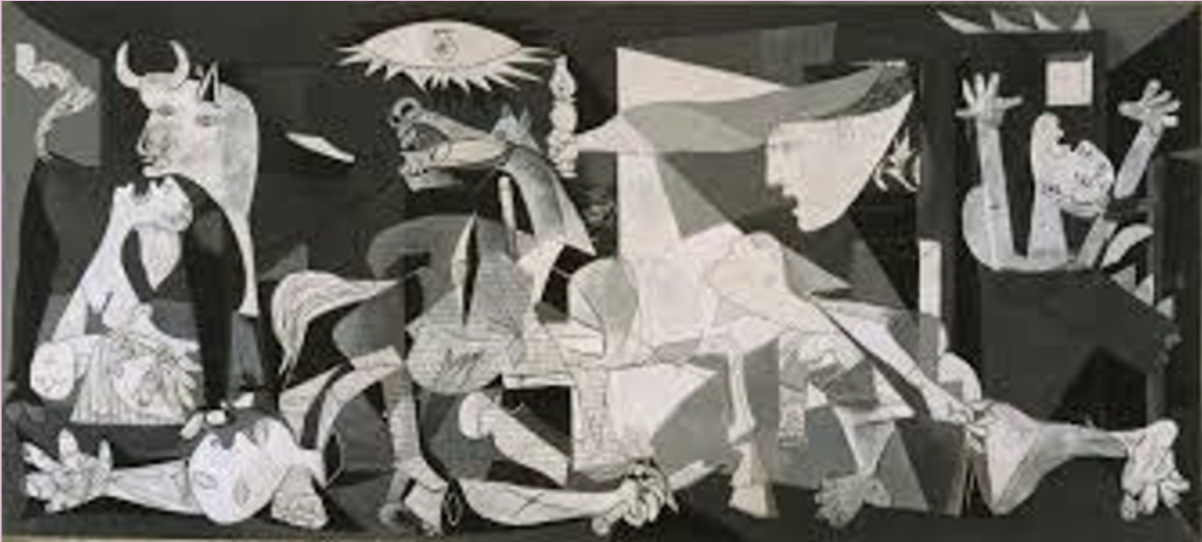
Image Analysis - Guernica Pablo Picasso
Historical context, Spanish Civil War (1936-1939)
Bombing was a modern atrocity, deliberately attacked citizens
Anti war and anti fascist statement
Monochromatic color scheme evokes the idea of a newspaper cutting, mourning, and death
Broken distorted figures reflect violence and chaos
Suffering of women and children specifically
Historical significance, art as defiance
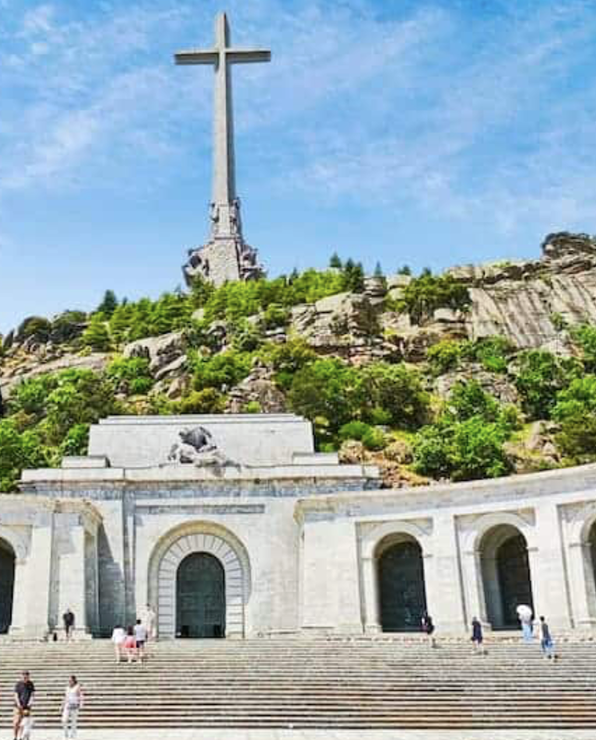
Image Analysis - Valley of Fallen
Plays into discussion of monuments being how we remember history
This is a memorial site commissioned by Franco
It was symbolic to have his remains moved
The cross above the monument is ironic in a sense
Transformed into a memorial for all victims

Image Analysis - Autonomous Regions of Spain
Regions became autonomous only after Franco dictatorship ended and constitution was made 1978
Having these regions separated helps preserve the history of Spain as a whole in addition to the individual cultures across the nations
17 nations, 1 united Spain
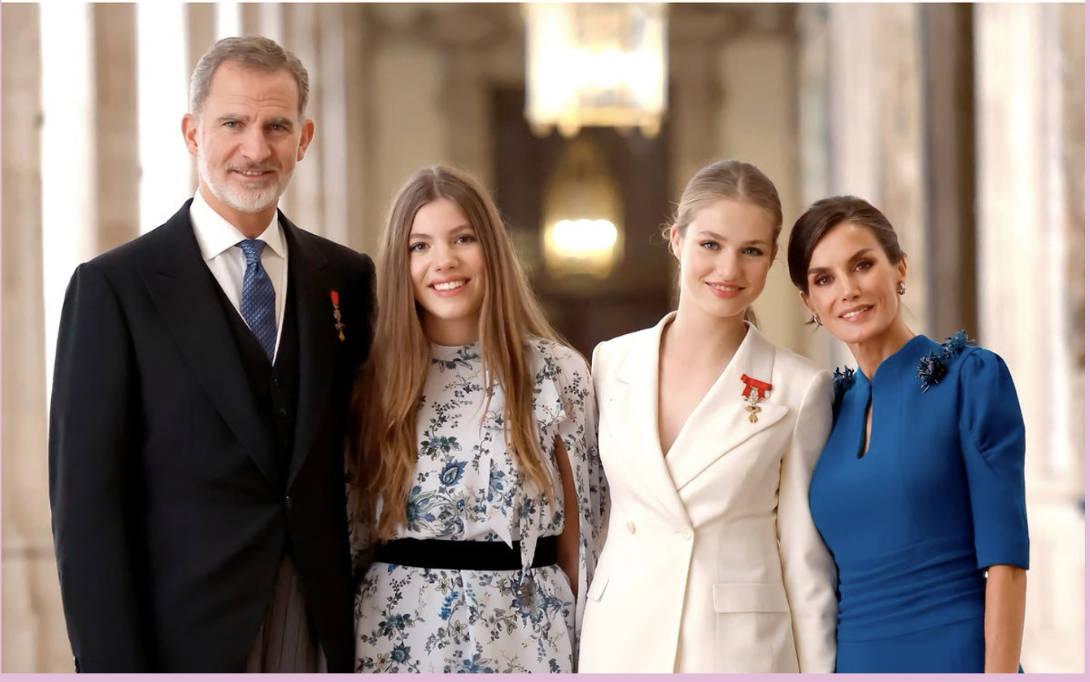
Image Analysis - Royal Family
Unified as a family portrait
Monarchs are posed elegantly but not in a way that seems superior compared to previous historical paintings
Use of photography as another way of showing they are a modern government
Attention drawn to Leonor as she is in all white and wears the medals, she will be the future queen
Excerpt #1 - Spanish Constitution (1978) — Key Democratic Principles
Historical context – Transition to democracy:
The 1978 Constitution was drafted after the death of Francisco Franco (1975), marking Spain’s peaceful transition from dictatorship to democracy.Break with authoritarianism:
By defining Spain as a “social and democratic State governed by the rule of law,” the Constitution explicitly rejects Francoist authoritarian rule and arbitrary state power.Core democratic values:
Liberty, justice, equality, and political pluralism are established as the highest values, reflecting European democratic ideals and aligning Spain with other Western democracies.Popular sovereignty:
The statement that national sovereignty resides in the Spanish people affirms that political power comes from citizens rather than a dictator or military authority.Parliamentary monarchy as compromise:
Retaining the monarchy while limiting its power reflects a political compromise designed to ensure stability and continuity during the democratic transition.Unity of the Spanish nation:
The emphasis on the “indissoluble unity” of Spain responds to historical fears of fragmentation following civil war and regional tensions.Recognition of regional autonomy:
By guaranteeing autonomy to nationalities and regions, the Constitution addresses long-standing regional identities (such as Catalonia and the Basque Country) suppressed under Franco.Balance between unity and diversity:
The text attempts to reconcile national unity with regional self-government, a central challenge in modern Spanish history.Equality before the law:
The explicit prohibition of discrimination represents a major advance in civil rights compared to previous regimes, particularly regarding gender, religion, and political opinion.Long-term historical significance:
The Constitution laid the legal foundation for modern democratic Spain and remains central to ongoing debates about national identity, autonomy, and democracy.
Excerpt #2 - Historical Memory Law (2007) — Moral Reparation
Historical context – confronting the past:
The Historical Memory Law was passed decades after the Civil War (1936–1939) and Francoist dictatorship (1939–1975), reflecting Spain’s delayed effort to address unresolved historical injustices.Legacy of the “pact of forgetting”:
The law responds to the earlier pacto del olvido during the democratic transition, when political stability was prioritized over public reckoning with past repression.Acknowledgment of state responsibility:
By stating that democracy has a “debt” to victims, the law recognizes institutional responsibility for suffering caused by political violence and repression.Moral rather than judicial focus:
The emphasis on “moral reparation” highlights symbolic recognition and dignity rather than widespread criminal prosecutions.Recognition of injustice:
Declaring convictions and sanctions from the Civil War and dictatorship as “radically unjust” challenges the legal and moral legitimacy of the Francoist regime.Inclusion of silenced voices:
The law seeks to restore memory to those excluded from official history, particularly political dissidents, religious minorities, and civilians targeted by repression.Personal and family memory:
Emphasizing individual and family remembrance reflects the intergenerational impact of violence and repression in Spanish society.Democratic values and historical truth:
Incorporating victims’ experiences into “democratic memory” reinforces values of human rights, transparency, and accountability.Controversy and division:
The law has generated political debate, revealing ongoing tensions in Spanish society over how to interpret and remember the Civil War and dictatorship.Historical significance:
The Historical Memory Law represents a key step in Spain’s evolving relationship with its past, signaling a shift from silence toward acknowledgment and remembrance.
Excerpt #3 - Bécquer — The Miserere (Excerpt 1)
Bécquer was a key figure of Spanish Romanticism, a movement that emphasized emotion, mystery, the supernatural, and the past, all of which are central to this excerpt.
Setting in a ruined monastery:
The abandoned, destroyed religious space reflects Spain’s historical decline and the loss of former spiritual and political unity, a common Romantic concern.Holy Thursday as historical and religious context:
Holy Thursday commemorates Christ’s suffering, aligning the story with themes of sacrifice, death, and unfinished redemption.The Miserere as a symbol of collective guilt:
The Miserere (Psalm 51) is a prayer for mercy, suggesting repentance, suffering, and humanity’s need for forgiveness after catastrophe.The supernatural as historical memory:
The ghostly monks represent the persistence of the past and how historical trauma continues to haunt the present.Unfinished hymn and interrupted history:
The monks’ inability to complete the Miserere mirrors historical destruction—wars, violence, or disasters—that abruptly cut cultural and spiritual traditions short.Nature reflecting emotional tone:
The storm, darkness, and cold rain reflect Romantic ideas of nature mirroring inner anguish and historical tragedy.The narrator as witness rather than participant:
Like a historian, the narrator does not change events but observes and transmits memory, reinforcing the importance of remembering the past.Limits of language and historical representation:
The narrator’s inability to fully write the Miserere suggests that some historical suffering cannot be completely captured in words.Meaning within Spanish historical identity:
The excerpt reflects Spain’s struggle to reconcile its glorious religious past with destruction, loss, and uncertainty in the modern era.
Excerpt #4 - Miguel Hernández — Lullaby of the Onion (Excerpt 1)
Historical context – Civil War and repression:
Miguel Hernández wrote the poem while imprisoned by the Francoist regime, making it a direct product of war and dictatorship.Poverty and hunger as historical reality:
The onion symbolizes extreme deprivation experienced by Republican families during and after the Civil War.Personal suffering as collective experience:
The poem transforms Hernández’s personal hardship into a universal representation of civilian suffering.The child as symbol of innocence:
The baby represents purity and hope amid historical violence and repression.Contrast between innocence and suffering:
The poet’s desire to shield the child from reality highlights the cruelty of a society marked by war and hunger.Sacrifice of the parent:
Hernández assumes sorrow so his child may laugh, reflecting moral resistance through love.Poetry as resistance:
The poem affirms human dignity in the face of political repression and material deprivation.Imagery of hunger and nourishment:
The struggle between nourishment and hunger underscores the fragility of survival in post-war Spain.Emotional realism:
Hernández’s language avoids abstraction, grounding historical trauma in physical, emotional experience.Historical and cultural significance:
The poem stands as one of the most powerful literary testimonies of Civil War suffering and repression.
Excerpt #5 - Democratic Memory Law (2022) — Victims and Non-Repetition
Historical context – deepening democratic reckoning:
The 2022 Democratic Memory Law builds on earlier memory legislation, reflecting Spain’s continued effort to confront the legacy of the Civil War and Francoist repression.Expansion beyond moral recognition:
Unlike earlier laws, this text emphasizes concrete state responsibilities, including investigations, exhumations, and identification of victims.Recognition of a broad category of victims:
The law includes those persecuted for political, ideological, or religious reasons, highlighting the systematic nature of repression.State responsibility and accountability:
By affirming the State’s duty to search for the disappeared, the law acknowledges institutional responsibility rather than private or familial obligation.Right to truth and reparation:
Families’ rights to truth and dignity reflect international human rights standards.Nullification of Francoist judgments:
Declaring these rulings null challenges the legal foundation of the dictatorship and symbolically restores victims’ honor.Democratic values versus authoritarian practices:
The law frames Francoist repression as incompatible with modern democratic principles.Education and public memory:
Emphasis on teaching and remembrance ensures that historical knowledge is passed to future generations.Non-repetition as a democratic goal:
Memory is presented not only as remembrance but as prevention against future abuses.Historical significance:
The law represents a mature stage in Spain’s democratic consolidation, shifting from silence to active remembrance and accountability.
Excerpt #6 - Spanish Constitution (1978) — Territorial Pluralism & Identity
Historical context – the Democratic Transition:
This section of the Constitution reflects the urgent need, after Franco’s death, to rebuild Spain as a unified yet democratic state.Reaction against centralization:
Francoism imposed strict political and cultural centralization; recognizing regional autonomy marks a decisive break from that model.Unity of the Spanish Nation:
The emphasis on national unity reflects lingering fears of fragmentation rooted in the Civil War and earlier regional conflicts.Recognition of “nationalities and regions”:
The careful language acknowledges distinct historical identities (e.g., Catalonia, Basque Country, Galicia) without explicitly endorsing separatism.Institutionalization of diversity:
Autonomy in education, language, and culture allows regional identities to be preserved and expressed legally.Self-government within constitutional limits:
Autonomy is framed as conditional, ensuring that regional power does not undermine the constitutional order.Solidarity among territories:
The call for solidarity aims to prevent economic and political inequality between regions.Balance between diversity and cohesion:
The Constitution attempts to reconcile pluralism with national cohesion—one of Spain’s central historical challenges.Preventing conflict through compromise:
This framework reflects the Transition’s broader strategy of political negotiation and consensus.Long-term historical impact:
Territorial pluralism remains one of the most debated and defining aspects of modern Spanish democracy.
Excerpt #7 - Bécquer — The Miserere (Excerpt 2)
Romantic historical imagination:
Bécquer situates the story in a distant, tragic past, reflecting Romanticism’s fascination with ruins, guilt, and collective sin.The Miserere as moral confession:
The hymn symbolizes repentance for a grave moral failure rather than a purely religious ritual.Famine as historical catastrophe:
Hunger reflects real historical crises in premodern Spain, grounding the supernatural tale in social reality.Moral responsibility and guilt:
The monks’ decision to close the doors suggests ethical failure in the face of human suffering.Collective sin and punishment:
Their deaths and the destruction of the abbey imply divine or moral retribution.The uncompleted hymn as eternal guilt:
The inability to finish the Miserere represents unresolved responsibility and unatoned sin.Voices of the suffering poor:
The cries of the starving overwhelm religious ritual, highlighting social injustice.Haunting as historical memory:
The recurring echo of the Miserere suggests that past moral failures cannot be silenced.Holy Thursday as symbolic timing:
The repetition on Holy Thursday links repentance, suffering, and failed redemption.Meaning within Spanish cultural history:
The story critiques moral indifference and emphasizes the enduring consequences of collective ethical choices.
Excerpt #8 - Miguel Hernández — Lullaby of the Onion (Excerpt 2)
Historical context – imprisonment and repression:
This excerpt reflects Hernández’s incarceration under the Francoist regime, situating the poem within post–Civil War repression.Hunger as political consequence:
Poverty and scarcity are presented as outcomes of war and dictatorship rather than natural conditions.Love as resistance:
The poet’s effort to create joy amid hunger transforms parental love into an act of defiance.The child as embodiment of the future:
The baby represents hope beyond the poet’s likely fate.Imprisonment versus emotional freedom:
Although physically confined, Hernández finds spiritual liberation through his child’s laughter.Generational continuity:
The poem emphasizes survival and endurance across generations despite repression.Contrast between innocence and historical violence:
The child’s ignorance of war underscores the cruelty of the historical context.Language of tenderness amid brutality:
Soft imagery contrasts with harsh reality, intensifying the emotional impact.Poetry as testimony:
The poem documents suffering while preserving human dignity.Historical and symbolic significance:
The text stands as a literary testament to resilience, hope, and moral resistance in one of Spain’s darkest periods.
Why is memory political?
Silence pact after transition
Left vs right interpretations
Generational differences
Monuments = narratives
Memory does not equal history
 Note
Note  Flashcards (65)