Nutrition Module 3: Metabolism and Digestive System
 Call Kai
 Learn
Learn Practice Test
 Spaced Repetition
 Match
Match Flashcards
 Knowt Play
1/82

There's no tags or description
Looks like no tags are added yet.
Name | Mastery | Learn | Test | Matching | Spaced | Call with Kai |
|---|
No analytics yet
Send a link to your students to track their progress
83 Terms
ATP is a ______ battery.
charged
ADP are _____ battery.
drained
What is metabolism?
The biochemical reactions that take place within a living organism to maintain life
Catabolic and Anabolic reactions are ____
coupled
What is a metabolic rate?
the amount of energy spent in a certain time
What are the 4 factors of BMR?
height, weight, age, and sex
_____ and _____ also account for variations in BMR.
genetics and hormones
BMR stands for
Basal metabolic rate
RMR stands for
resting metabolic rate
_____ _____ _____ is the number of calories you burn as your body performs basic function.
basal metabolic rate
____ ____ ____ is the number of calories burned if you stayed in bed all day. it includes energy required for digestion.
resting metabolic rate
The _____ ____ is a long muscular tube which provides space for digestion followed by selective absorption for molecules.
digestive system
_____ is the process by which large molecules from plants and animals we ate are mechanically and chemically broken down into building blocks, or subunits.
digestion
_____ is the process by which these building blocks are taken up through the cells lining the GI tract and enter the blood or lymph.
absorption
____ is elimination of non-absorbed waste from the body
excretion
____ of microbes that enter with food.
elimination
What are the four functions of the digestive system?
digestion, absorption, excretion, and elimination
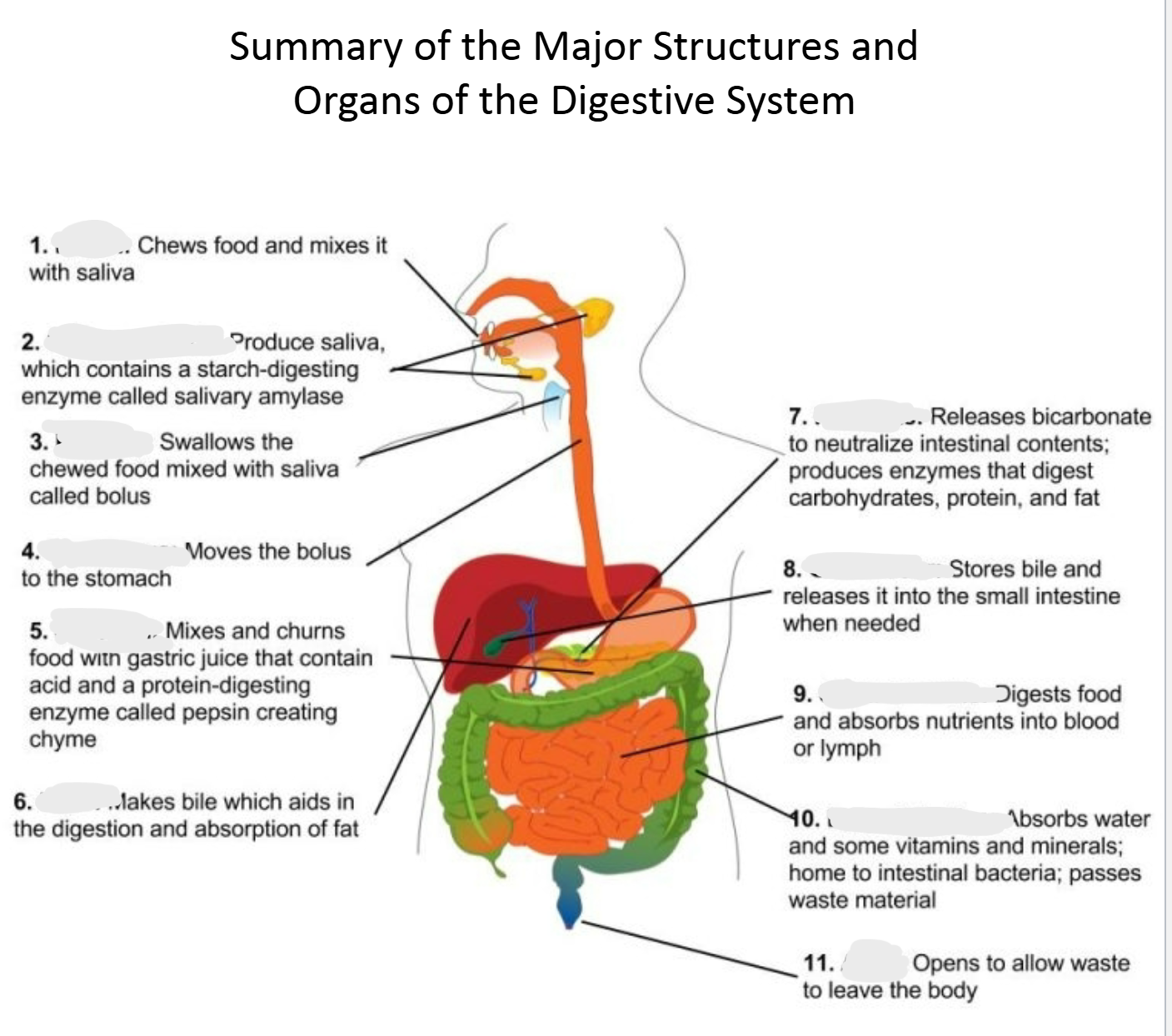
What are the names of the organs? 1,11,7
mouth, anus, pancreas
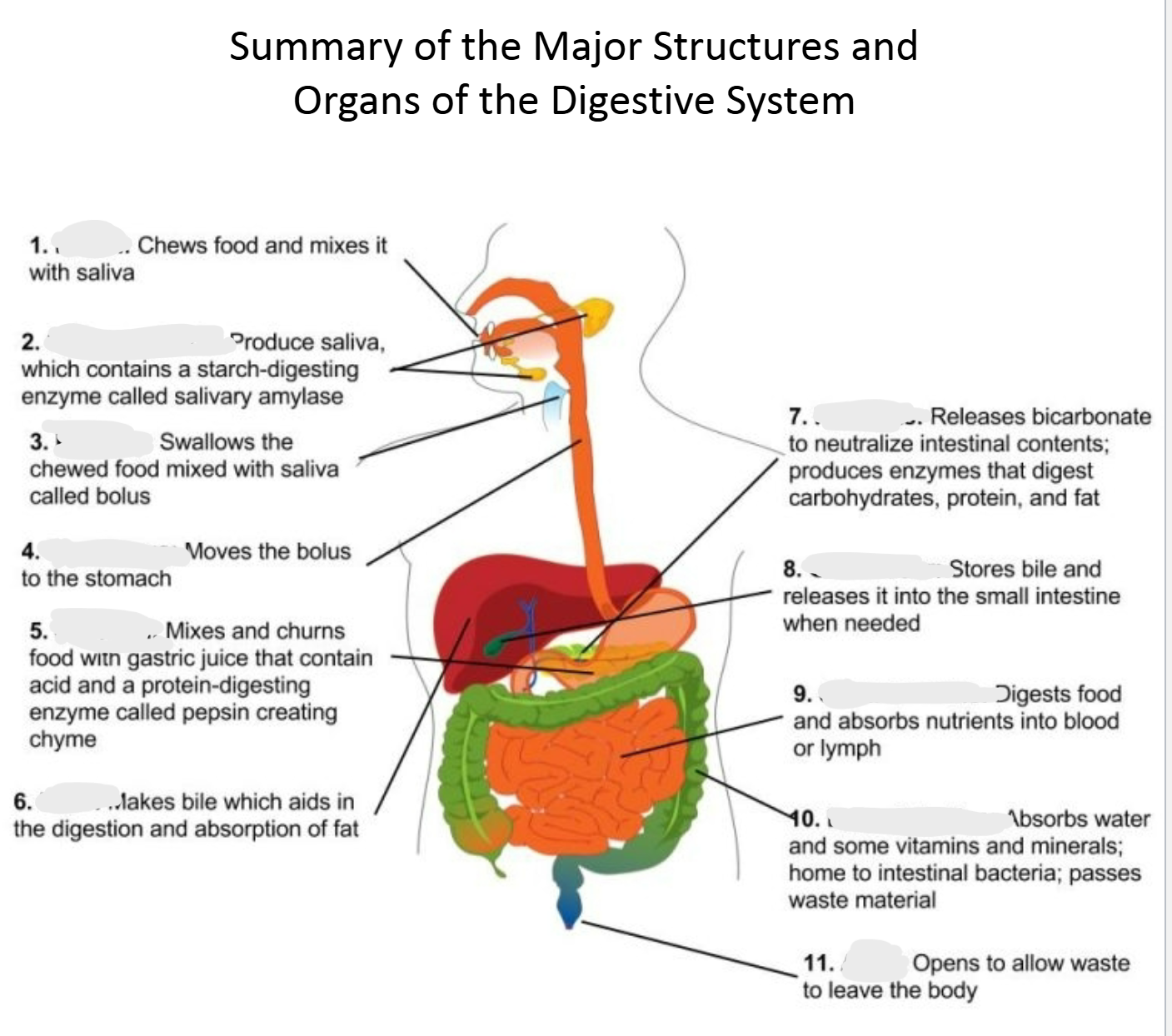
What are the names of the organs? 3,6,9
pharynx, liver, small intestine
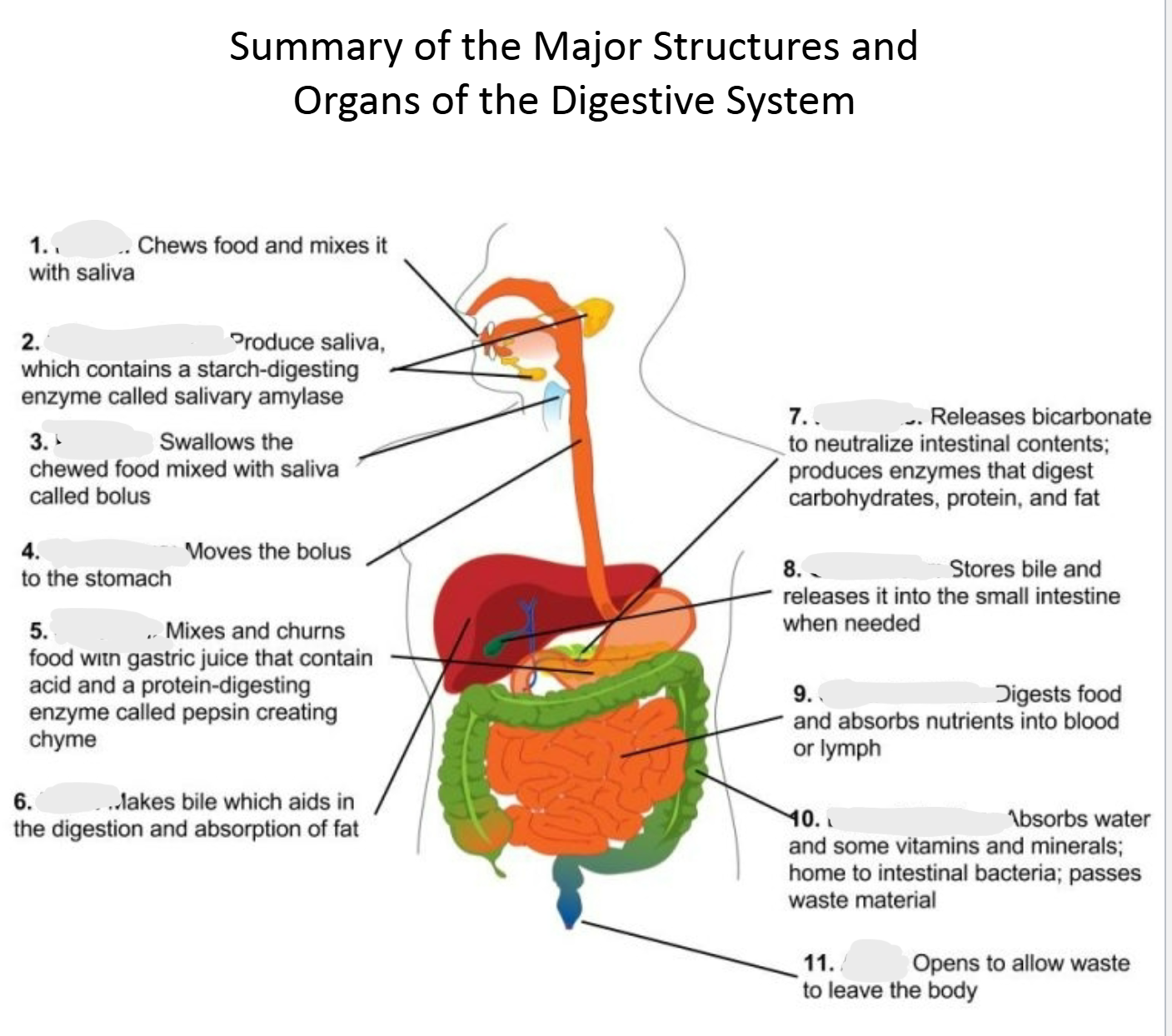
What are the names of the organs? 2,4,5
salivary glands, esophagus, stomach
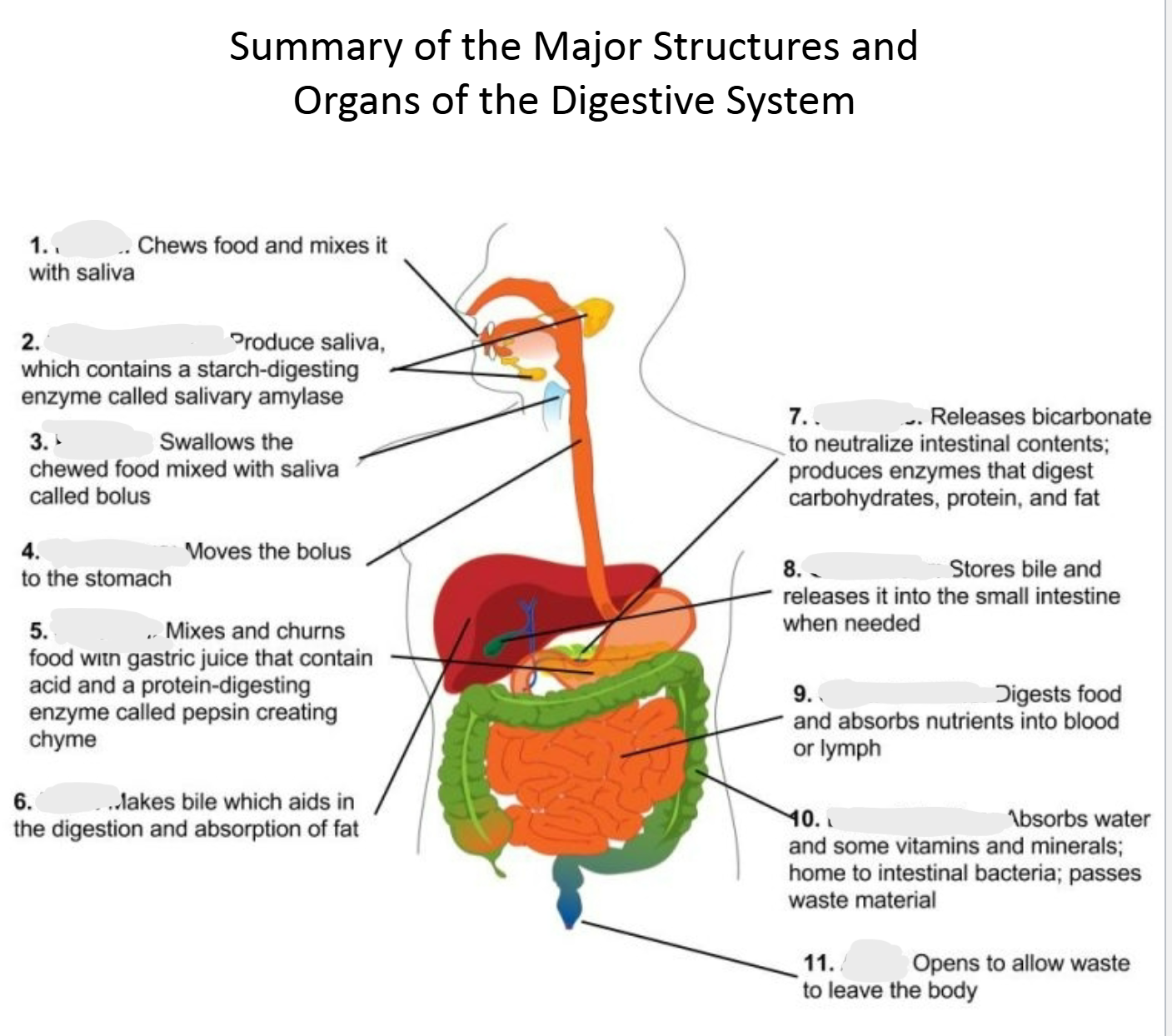
What are the names of the organs? 8, 10
gallbladder, large intestine
______ squeezes food as it moves through the GI tract
peristalsis
What are enzymes?
proteins that speed up chemical reactions
The substrate of amylase is ___
starch
The substrate of lipase is ____
lipids
The substrate of peptidase, protease, and pepsin is ___
peptides
The substrate of lactase is ____
lactose ( a carbohydrate)
The substrate of sucrase is ____
sucrose
What are the 7 major parts of the GI Tract?
mouth
esophagus
stomach
small intestine
large intestine
rectum
anus
Fats are broken down into smaller components in the ___ _____
small intestine
hydrochloric acid is found in the ____
stomach
Enzymes are made and secreted to GI tract by ____ ____
accessory organs
What are the 4 accessory organs in the GI Tract?
salivary glands
liver
gallbladder
pancreas
What is the function of salivary glands?
lubrication
What are two examples of enzymes in the salivary glands?
amylase and lipase
What is the function of the liver? (there are two)
secretes bile; purifies blood from small intestine
What is the function of the gallbladder?
stores bile
What is the function of the pancreas?
digestive enzymes
What is an example of an enzyme in the pancreas?
peptidase
Food moves from mouth to anus by _____
peristalsis
What are sphincters?
muscular rings that prevent backflow or early release of food
_____ is a mass of food mixed with saliva that moves from the mouth through the esophagus to the stomach.
bolus
____ is a watery mixture of partially digested food and secretions from liver and pancreas that moves through intestines
chyme
____ is a mass of undigested fiber, tough connective tissues, bacteria, and old intestinal cells formed in the large intestine and excreted
feces
_____ is a tube from pharynx to stomach
Esophagus
_____ prevents food from entering the trachea
Epiglottis
What does the lower esophageal sphincter (LES) prevent?
Backflow of stomach contents into esophagus
What organ produces bile?
Liver
Where is bile stored?
Gallbladder
What are the three segments of the small intestine?
Duodenum, Jejunum, and Ileum
In the _____, mixing of food with pancreatic juices and bile occurs.
Duodenum
In the ____, it is the site of nutrient and water absorption
Jejunum
_____ absorbs nutrients and water not previously absorbed
Ileum
What are the 8 molecules absorbed in the small intestine?
Glucose
Amino acids
Fats
Bile acids
Vitamins
Most minerals
Water
Alcohol
What is the most important protease from the pancreas?
Trypsin
The ____ is a large gland
Pancreas
Name this common disease of the GI Tract.
Stomach acid or bile flows into esophagus and irritates the lining
Acid reflux
What are the symptoms of acid reflux?
Burning chest pain after eating and increases when lying down
Chronic acid reflux is called _____
GERD (gastroesophageal reflux disease)
Name this common disease of the GI Tract.
Stomach acid erodes the lining of the stomach, esophagus, or duodenum
Peptic ulcers
What can cause acid reflux?
Obesity, high fat diet, laying down after eating, NSAIDs
What are the two treatments for peptic ulcers?
Antibiotics and antacids
Name this common disease of the GI Tract.
Increased fluidity, frequency, or amount of bowel movements
Diarrhea
What common disease of the GI Tract can these symptoms cause?
Stomach pains
Weight loss
Lack of appetite
Nausea/vomiting
Peptic ulcers
What common disease of the GI Tract can these symptoms cause?
Infections, microorganisms
Malabsorption
Excessive fiber
Diarrhea
What common disease does this treatment match?
Lifestyle changes
Antacids
Meds that decrease acid production
Surgery
Acid reflux
What common disease does this treatment match?
Prevent dehydration through fluids and electrolytes
Dietary changes
Diarrhea
what common disease of the GI Tract is described as difficult or infrequent bowel movements
Constipation
What common disease does this treatment match?
Lifestyle changes
Increase fluid and fiber
Increase physical activity
Regular bowel habits
Constipation
What common disease does these causes match?
Ignoring urge to poop
Low fiber diet
Muscle or nerve problems
Dietary supplements
Constipation
Formation of abnormal diverticuli is called _____
Diverticulosis
When food gets stuck in diverticuli, they become inflamed and rupture, leading to ____, which is FATAL.
Diverticulitis
What are the two treatments for diverticulosis and diverticulitis?
Antibiotics and fiber
_____ disease is an autoimmune disease that leads to a chronic response against dietary gluten
Celiac
What does celiac disease do to the villi of the small intestine?
Flatten
These symptoms describe which common disease of the GI Tract?
Diarrhea
Cramps, bloating, flatulence
Fatigue
Weight loss
Anemia
Celiac disease
what is the treatment for celiac disease?
Avoid gluten
Which common disease of the GI Tract causes irritation of the intestinal lining after consuming gluten and NO damage to intestines?
Gluten intolerance
Gluten intolerance symptoms are similar to what other common disease of the GI Tract?
Celiac disease
What is the treatment for gluten intolerance?
Avoid gluten
_____ ___ ___ is a autoimmune disease that is a chronic, immune response to dietary gluten
Irritable bowel disorder
The following symptoms describe which common disease of the GI Tract?
Diarrhea
Cramps, bloating, flatulence
fatigue
Headaches
Joint pain
Brain fog
Weight loss
Gluten intolerance
____ _____ ____ and _____ disease have the same symptoms.
Diarrhea
Cramps, bloating, flatulence
Fatigue
Weight loss
Anemia
Irritable bowel disorder, celiac

