MICROBIO EXAM 2: 9-16
 Studied by 0 people
 Call Kai
 Learn
Learn Practice Test
 Spaced Repetition
 Match
Match Flashcards
 Knowt Play
1/94

There's no tags or description
Looks like no tags are added yet.
Name | Mastery | Learn | Test | Matching | Spaced | Call with Kai |
|---|
No analytics yet
Send a link to your students to track their progress
95 Terms
Chap 9 learning objective 1
What structural elements do viruses have?
How do we name and classify viruses?
Chap 9 learning objective 2
How do viruses multiply?
What are acute, latent, and persistent infections ?
Chap 9 learning objective 3
How do we study viruses?
Chap 9 learning objective 4
What are prions?
What is the structure of a virus?
Viruses have a genome, protective layer, and spikes
Genomes carry the nucleic acid DNA, the protective layer is a capsid, and the spikes are for a way to get into a cell
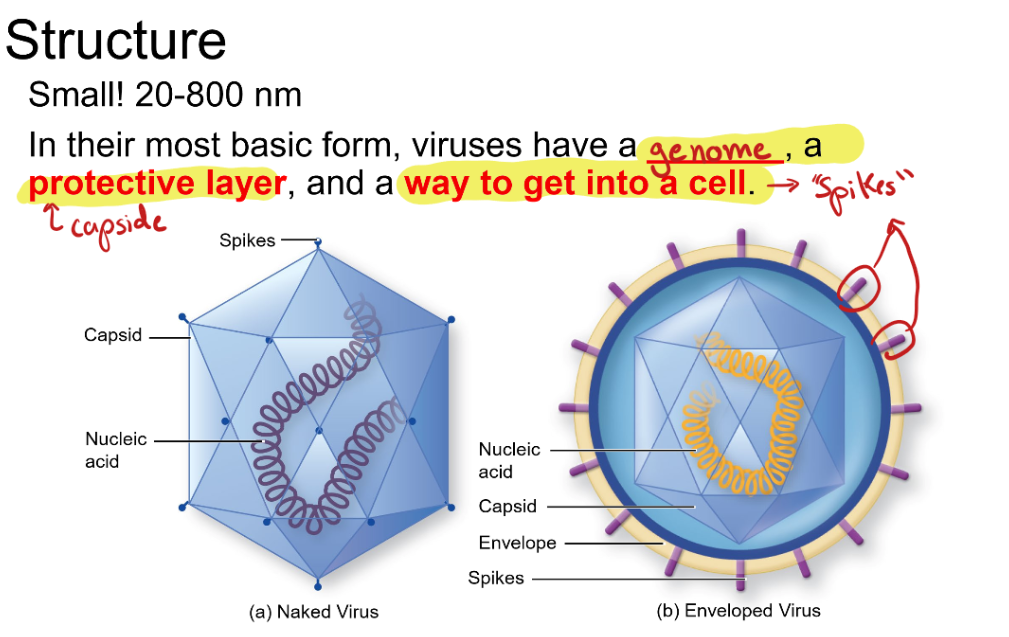
What are the functions for spikes/glycoproteins in viruses
Allows binding of viruses to target cells to gain entry into cell
What does a capside do and whar are the types of virus capsids
Capside protect the genome from damage to ensure DNA transfer to the host cell is complete
There is helical, wraps around genome. Icosahedral which creates many triangles around the genome, and complex
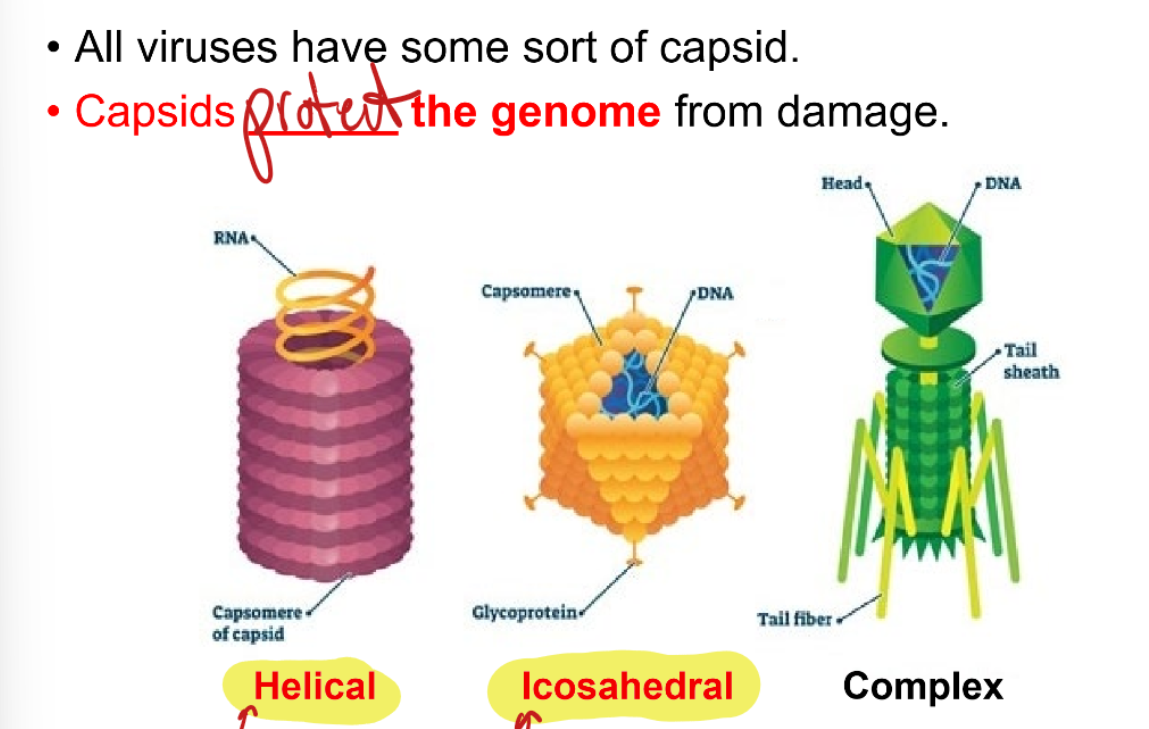
Helical Capsid - boundary
Rod shaped capsomeres wrapped around the nucleic acid. It is called nucleocapsid
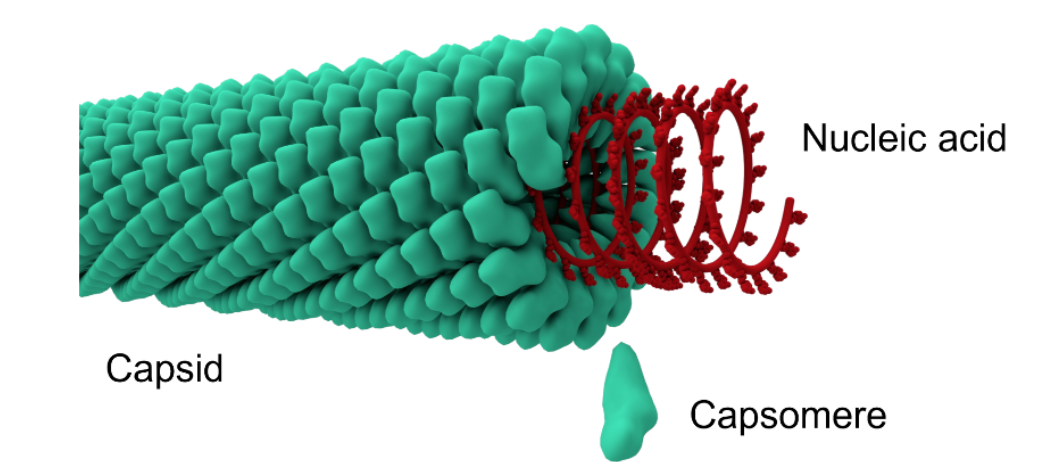
Icosahedral Capsid - boundary
Capsomeres create triangular shapes surrounding genome. Creating an icoasahedron
Envelope - boundary
Envelopes are optional for viruses, creates another layer of protection, and helps evade the immune system by stealing glycoproteins from host cell DNA
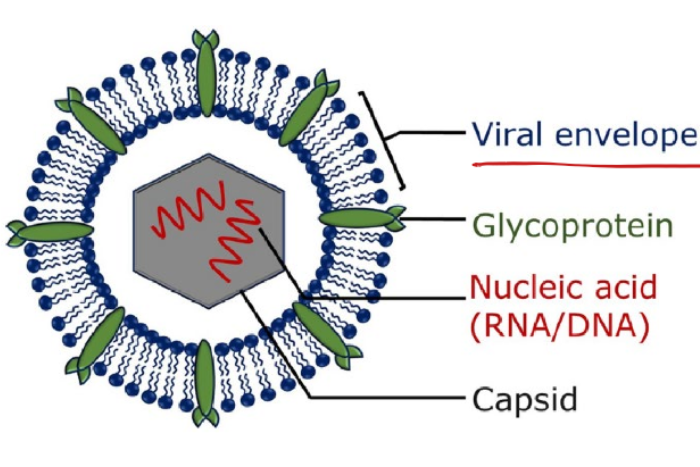
What are the different kinds of envelope boundaries?
Naked (Icosahedral and Helical) versus Envelope (Icosahedral and Helical)
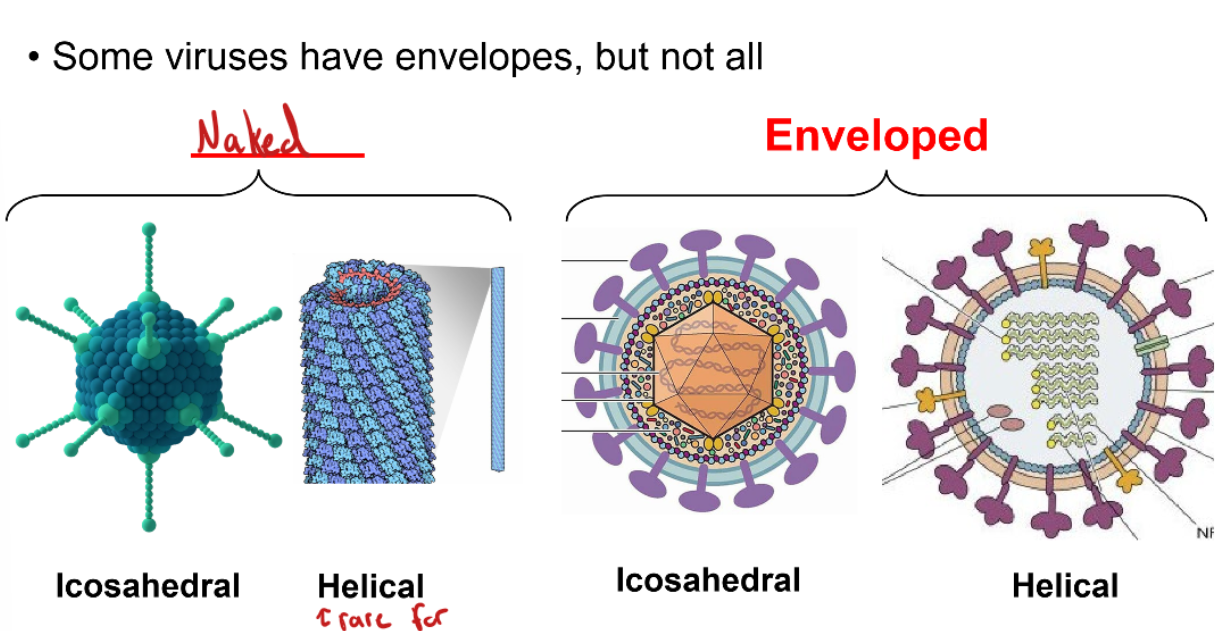
What are the characteristics of internal - nucleic acids (genomes)?
Genomes within viruses may be RNA or DNA. They made be single or double stranded. Lastly, negative or postive sense RNA
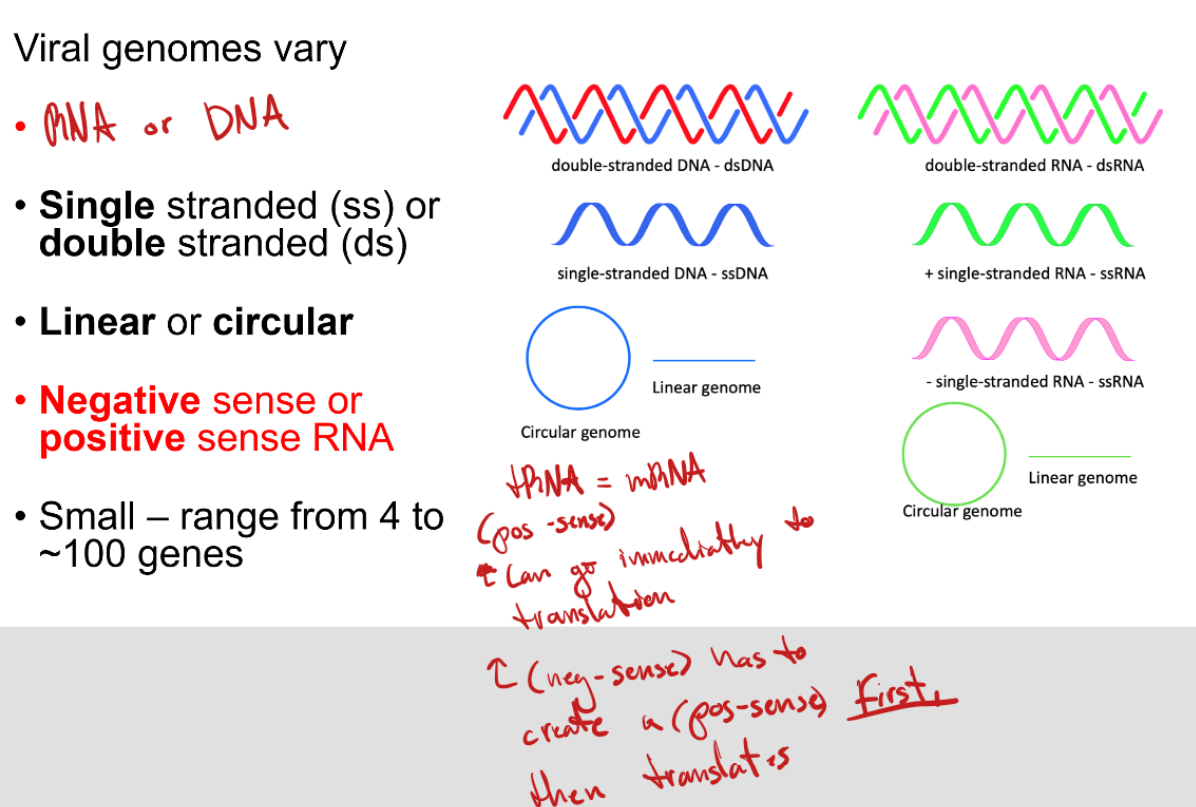
What is the difference from negative and positive sense between internal nucleic acids
Negative sense RNA has to be transformed to a positive sense first, then it translates. While a positive sense RNA can translate immediatley to mRNA
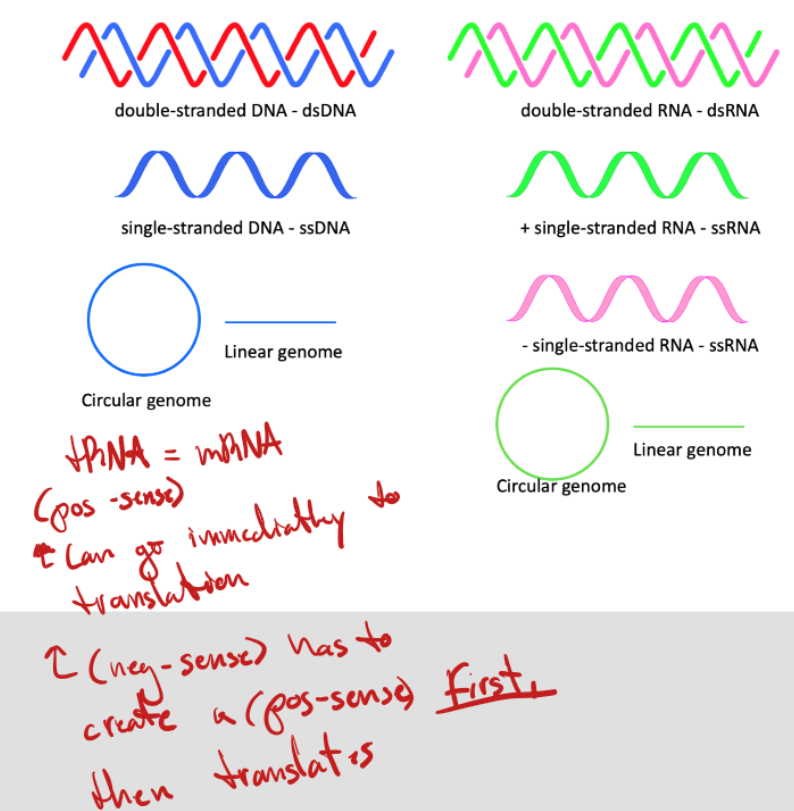
What if internally we need other substances? What does the virus do?
The virus will replicate or copy nucleic acids from polymerases. This is called RNA Dependent RNA Polymerase (RDRP) to produce necessary RNA or proteins.
Reverse transcriptase takes the RNA of the viral genome and translates it to DNA by negative sense to positive sense. This is brought over via capsid.
What are the different kinds of viral multiplication?
Attachment - virus binds to its receptors using spikes(glycoproteins)
Entry - virus enters the cell
Replication - virus makes copies of its viral proteins
Assembly - virus assembles components into virions
Release - virus leaves cell to infect others
Viral multiplication - attachment characteristics
Viral glycoproteins (spikes) determine the host range, which is the spectrum of hosts a virus can infect. These spikes recognize and bind to specific receptors on the host cell surface. Entry receptors help initiate viral entry
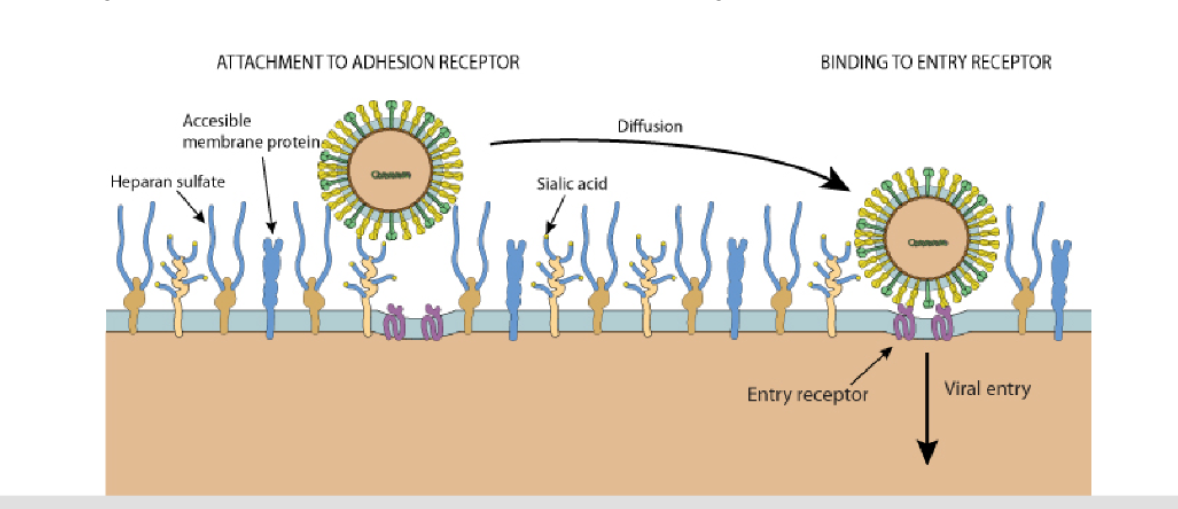
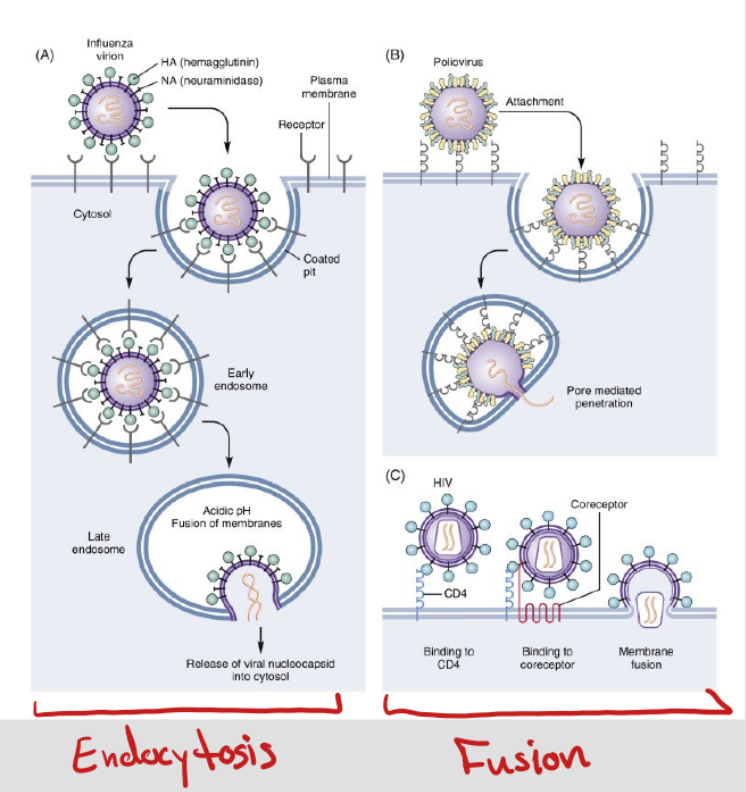
Viral multiplication - entry characteristics
There are 2 types of viral entry:
Endocytosis - Virus is engulfed by the cell through a vesicle.
Fusion - The virus envelopes with the host cell
Viral multiplication - replication and production
In replication and production, the nucleic acid (genome) of the virus must be replicated and the viral proteins (capsids) must be made regardless.
This will occur all in the nucelus of the cell and RNA viruses will be completed in the cytoplasm.
What are three essential components of a virus
Genome, capsid, and spikes
What shapes may the capsid be
Icoasahedral and helical
purpose of an envelope? Do all viruses have an envelope?
No it is optional, purpose of an envelope is to create another layer of protection and disguise from host immune cells. No envelope means naked virus.
What could a genome look like?
DNA, RNA, + / -, single and double stranded
What might a virus carry into the cell with them
Extra enzymes if needed, RNA and Retroviruses will bring in RDRP and RT
What are the steps of virual multiplication
Attachment, enter (endocytosis/fusion), replication of the genome structure, assembly, and release
How do viruses enter and exit host cells
Entry, through endocytosis (vesicle engulfing) and fusion (virus merges with cell membrane). Virus exits by lysis (pressure bursts) and exocytosis (vesicles leaving) and budding (growing + being picked up naturally)
What are infection curves?
Acute, happens and dies. Persistent/chronic, happens and continues to live in body. Latent, happens, becomes dormant, and then if triggered again it infects in the body
How to study viruses outside of human hosts
Needs to be a living cell that will incubate the virus
What are prions
Misfolded proteins that keep misfolding proteins in a domino effect fucking up everything ane can only be killed by incineration. Very fatal, causes plaque leading to neuro diseases
Genome, gene, genotype, phenotype, structural, and regulatory genes
Genome, all genetic material. Gene, all genetic material required to make 1 protein. Genotype, genetic makeup. Phenotype, physical makeup. Structural, proteins that create structure of microbe. Regulatory, proteins that regulate expression of genes
Replication
DNA to DNA
Transcription
DNA to RNA
Translation
RNA to protein
Splicing/stuttering
One gene making multiple proteins, resulting to benefits of gene variation
What is an operon
It is a gene that is regulated to work together
Induction and Repression
Induction, is the on state. RNA is transcribed (anabolic) !! Repressed, off state, NO RNA transcribed!! (catabolic)
How does the lactose operon in E. Coli work
The operon will be repressed, but if lactose is PRESENT it will be induced transcribing RNA
Phase variation
A phenomenon where bacteria change their surface proteins to evade the immune response. This allows them to adapt and survive in different environments.
DNA recombination
To increase genetic variation, sharing DNA from donor to recipient
Conjugation
Donor gives DNA via pilus to reciepient
Transformation
Donor explodes and reciepient picks up dead donor DNA
Transduction
Donor cell infected with virus transfers DNA to recipient cells.
Transpons
USES 1 CELL ONLY, switching spots within cell to create different DNA
Mutations
Point mutation, addition, deletion, or substitution of a nucleotide
What causes mutations to occur
Spontaneous during replication of DNA or induced when a microbe is exposed to a mutagen ( UV Rays)
What is a mutation in DNA called
Point mutation
Missense, nonsense, silent, and frameshift definitions
Missense, amino acid swap. Nonsense, early stop codon in translation. Silent, codon different but produces same protein. Frameshift, deletion or addition which leads to different amino acid thread
What can restriction of endonucleases do
Recognize and cut dna in certain sites
Purpose of PCR
Make many copies of a gene
What do PFGE results tell us
If we are able to identify source of outbreak is from the SAME SOURCE
How do we use DNA Recombination to our advantage
By editing genes to create proper help within the body
Goal of gene therapy
To replace defective genes with a working copy
Different between gene addition and editing
Addition is giving a functioning gene while gene editing is fixing a mutated gene, not removing or adding anything
Pros and Cons of viral vectors to deliver genes
Pros, can target specific cells. Cons, it can create an immune response trigger
Goals of clinical microbiology
Determine if a pathogen is present, identify pathogen correctly, and to characterize the pathogen
Phenotypic, genotypic, immunologic assay
Gram stain, DNA/RNA, and immunologic is looking for antigeno r antibody
Indirect ELISA
Antibodies
Direct ELISA
Antigens
Sterlization
Everything is removed, prions and endospores
Disinfection
Kills all pathogens
Sanitization
Lowering # of microbes
Antisepsis
Disenfects living tissue too
-cide and -static
cide means to kill and static means to inhibitthe growth of microorganisms.
3 categories of control methods
Mechanical (barrier), physical (pump), and chemical (chemical)
What factors influence the effectiveness of control measures
Population size, composition, concentration, and temperature
What microbs are most resistant to least
Prions + endospores, least are enveloped viruses
How to test effectiveness
Phenol test or in-use tests (swapping location for growth)
How to differentiate 5 terms for antimicrobials
Broad spectrum, narrow spectrum, antibitoics, antimicrobrial, and prophylaxis
Kirby-Bauer and E-test purposes
KB - looking at susceptibility of a microbe and ET - looking at sensitivity of a microbe. Susceptible means it can kill the microbe while resistant has no effect
What is MIC? What is the therapeutic window?
Minimum amount of chemical needed to inhibit the genetic creation of a microbe. The therapeutic window is the range between the minimum effective dose and the minimum toxic dose of a drug.
Why might an antimicrobial treatment not work as intended?
It cannot reach the site of infection, the microbe may be resistant, or the dosage may be insufficient.
How od antimicrobial drugs work?
By attacking a specific microbe and destroying all of it so there is no survival
Five main targets of antimicrobial drugs?
Cell wall synthesis, protein synthesis, nucleic acid synthesis, metabolic pathways, and cell membrane function.
B-Lactam affecting cell wall
B-Lactam antibiotics (penicillin) are more effective on gram-positive bactera than gram-negative bacteria due to the thicker peptidoglycan layer in their cell walls.
Vancomycin affecting cell wall
Prevents proper peptidoglycan production, important for treating methicillin-resistant (MRSA)
Quinolone antibiotics affecting nucleic acids
Inhibits DNA transcription and replication by inhibiting microbe-specific enzymes
Drugs that affect target protein synthesis
Block successful translation at the ribsome/mRNA level
Drugs that target cytoplasmic membrane
Polymyxin interacts with phospholipids causing distortion and leakage of cell contents of the bacteria, leading to cell death.
Drugs that target folic acid synthesis
Folic Acid: An essential vitamin required for DNA synthesis and cell replication. Bacteria synthesizes folic acid. Sulfonamides are inhibited by blocking the enzymes required for folic acid synthesis
How should you consider treating fungi, protozoa, helminths, viruses, and biofilms?
If eukaryotic (fungi, protozoa) do not kill human cells, for helminths you need to kill all life cycle stages, for viruses target inhibition host cell pathways via vaccines, and for biofilms remove them or add antimicrobials to disrupt.
Five ways that microbs acquire drug resistance
Synthesis of new enzymes that inactivate the drug
A microbial cell does not let drug in
Drug is eliminated
Binding sites for drug are decreased
Microbe uses an alternate pathway to bypass the drug's effects.
How do Beta-Lactamases work
They do not allow synthesization of the bacterial cell wall by breaking down beta-lactam antibiotics, rendering them ineffective against resistant bacteria.
MecA gene functions
MecA is an antibacterial resistance gene used by MSRA
Penicillin attacks peptidoglycan by binding to its target (Penicillin-Binding Protein)
MecA allows the bacteria to make another version of the target protein called PBP2a which penicillin can’t bind to
How do populations of microbes acquire resistance?
A group of bacteria, some of which are resistant to antibiotics
Antibiotics kill bacteria causing the illness as well as good bacteria protecting the body from infection
Resistant bacteria now have preferred conditions to grow and take over
Bacteria can transfer their drug-resistance to other bacteria, causing more problems
Common adverse reactions hosts have to antimicrobials
Toxicity to organs: Drug damages human organs
Allergic reactions: Drug triggers the immune system
Microbiome: Helpful microbes are killed
What is a superinfection and how does this happen?
Superinfection: After destruction microbes which are usually present in small numbers overgrow and cause disease
(i.e. - UTI becoming a yeast infection)
What is the microbiome/normal flora? How do they work?
Microbes colonize in/on a host that do not normally cause disease
They work by having a host defense, influenced by enviornment/genetics and competing with harmful pathogens for resources.
Differences of colonization, infection, and disease
Colonization: Act of microbes taking up long-term residence in a human host
Infection: The entry and multiplication of microbes in host tissues
Disease: Any deviation from health, including when a microbial infection damages or disrupts host tissues and organs
+Microbial antagonism: Normal flora is colonized, normal flora creates a hostile environment for other organisms, and normal flora keeps each other in check
Opportunistic pathogen versus true pathogen
Opportunistic pathogens: Cause disease when host’s defenses are compromised
True pathogens: Capable of causing disease in healthy people with normal immune defences
Pathogenicity: An organism’s potential to causes disease
Stages of infection disease
Portals of entry
The route of microbe entry into a host + infectious dose (ID) the minimum number of microbes required to establish infection
Attachment and interaction with microbiome
Microbes need to gain stable foothold on host tissues via spikes
Surviving host defenses
Host immune system recognizes “foreign microbes” and attacks phagocytes
Causing disease
Through enzymes/toxins (virulence factors), indirectly inducing host defenses and producing EXCESSIVE RESPONSE
 Note
Note  Flashcards (44)