Blood Disorders and Fetal Circulation
 Call Kai
 Learn
Learn Practice Test
 Spaced Repetition
 Match
Match Flashcards
 Knowt Play
1/85

There's no tags or description
Looks like no tags are added yet.
Name | Mastery | Learn | Test | Matching | Spaced | Call with Kai |
|---|
No analytics yet
Send a link to your students to track their progress
86 Terms
CO binds to your _____, prevents ____ from binding
hemoglobin, oxygen
____ is a silent killer as people often die in their sleep when a heater fails
carbon monoxide poisoning
carbon monoxide deaths are more likely to occur in ____
winter
most common anemia
iron deficiency
iron-deficiency anemia treated with
iron supplements
aplastic anemia
bone marrow does not produce enough RBC
____ anemia due to extreme blood loss
hemorrhagic anemia
pernicious anemia
b12 deficiency
sickle cell anemia is a ____ disorder
genetic
_____ anemia has abnormally shaped blood cells
sickle cell
in sickle cell anemia, parents can be _____
carries/asymptomatic
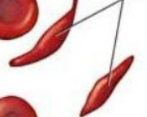
sickle cell
symptoms of sickle cell anemia (5)
pain, lethargy, lifelong anemia (low red blood count), organ failure, stroke
sickled red blood cells are stiff and angular, causing them to become
stuck in small capillaries
_____ is codominant
sickle cell anemia
sickle cell anemia:
AA
normal
sickle cell anemia:
Aa
sickle cell trait (few symptoms)
sickle cell anemia:
aa
sickle cell anemia
sickle cell anemia:
if both parents are carriers, child has a ____ chance of having the disease
1/4
____ is cancer of the blood
leukemia
leukemia: overproduction of ____ that take place of ____
wbcs, rbcs
leukemia treatments
bone marrow transplants, chemotherapy, radiation
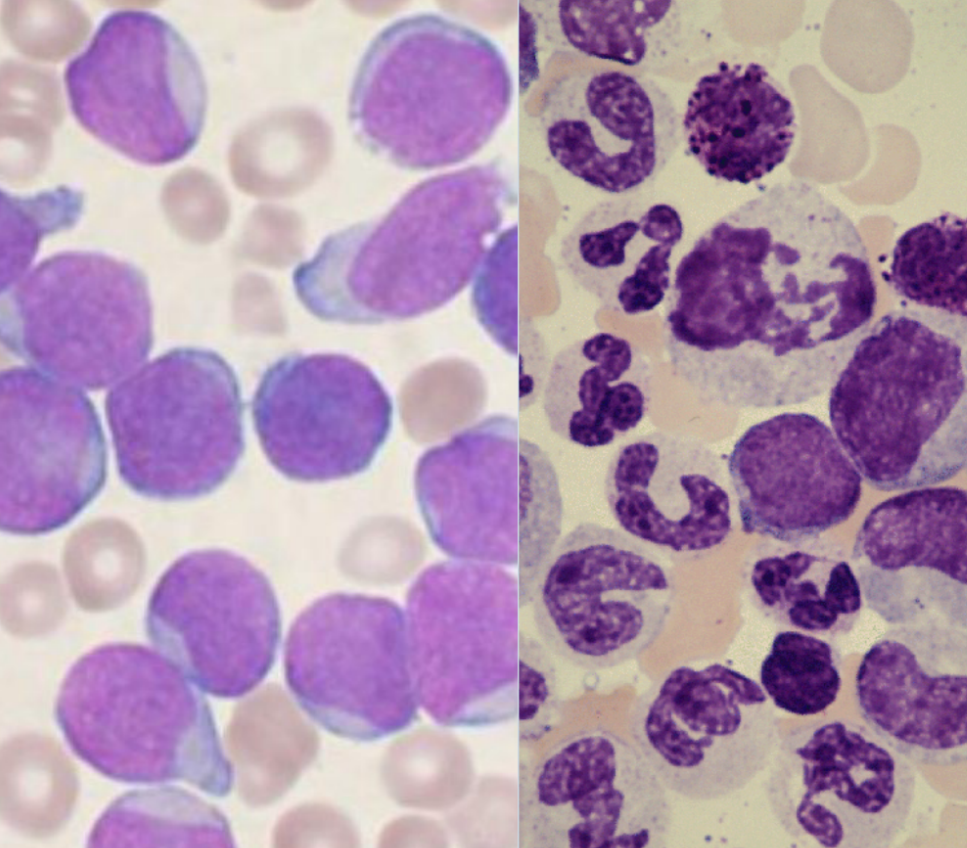
left
leukemia
“mono” or “the kissing disease”
mononucleosis
mononucleosis is an infection usually caused by the
epstein-barr virus
“mononucleosis” refers to an increase in ____ in the blood stream
lymphocytes
____ is very common, and many people have been exposed to the virus at some time in childhood
ebv
septicemia
blood poisoning
in septicemia, a _____ enters the bloodstream
infection
____ can be deadly but is often treated with antibioticis
septicemia
septicemia also called
sepsis
thromocytopenia
low production of platelets
thrombocytopenia causes (2)
bleeding or bruising
thrombocytopenia:
a bruise is caused when tiny blood vessels are ____ as the result of a ____ to the skin
damaged/broken, blow
thromocytopenia:
the raised area of a bump or bruise results from blood _____ from these injured blood vessels into the ____ as well as from the ____ to the injury
leaking, tissues, body’s response
hemophilia
failure of the blood to clot
hemophilia treatment
blood transfusions that include clotting agents
hemophilia is carried on the
X chromosome

hemophilia
normal
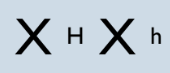
hemophilia
carrier
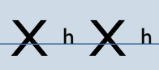
hemophilia
hemophiliac

hemophilia
normal

hemophilia
hemophiliac
jaundice in newborns is caused by the
liver not functioning fully
jaundice:
_____ builds up, causing a yellow color
bilirubin
jaundice treatment
fluorescent lights (bili lights)
hemochromatosis
body stores/absorbs too much iron
hemochromatosis:
humans have no mechanism for elimination of
excess iron
hemochromatosis:
multiple transfusions of _____ can result in iron overload
red blood cells
hemochromatosis can also be
hereditary
chromatosis:
iron chelation therapy
removal of excess iron from the body with special drugs
associated disorders of _____:
liver disease, diabetes, heart abnormalities, skin discoloration, joint pain, sexual dysfunction, thyroid disease, fatigue, weight loss, weakness, abdominal pain, brain fog, mood swings, depression, anxiety
hemochromatosis
iron is the site where
oxygen binds to hemoglobin
beta thalessemia
reduces the production of hemoglobin which results in anemia
beta thalassemia:
the ____ gene provides instructions for making a protein called ____, which is a component of a hemoglobin
HBB, beta-globin
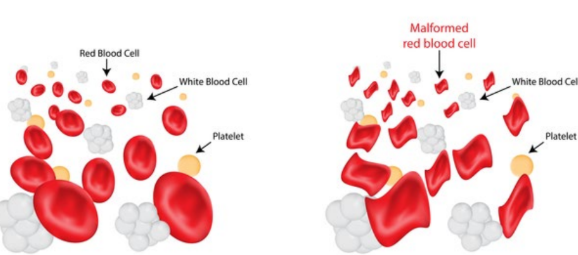
beta thalassemia
_____ is a circulatory organ unique to pregnancy
placenta
placenta develops jointly from the ____ and ____ structures to fill this need
embryo, uterine wall
(1 or 2) umbilical vein(s) carries ____ blood from the pregnant person to the fetal _____ via the ____ to the ____ that pumps it into fetal circulation
1, oxygen-rich, inferior vena cava, ductus venosus, heart
(1 or 2) umbilical arterie(s) carry ____ fetal blood, including wastes and carbon dioxide, to the ____. remnants of the ____ remain in the adult
2, oxygen-depleted , placenta, umbilical arteries
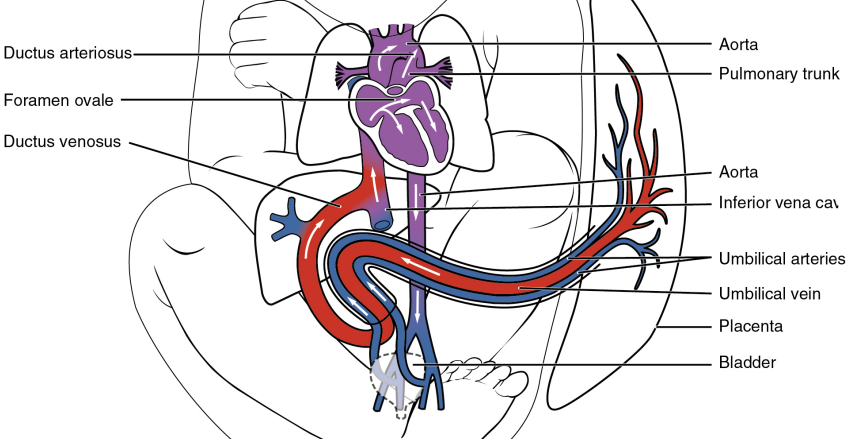
placenta
three shunts in the fetal heart
ductus venosus, foramen ovale, ductus arteriosus
____ occurs when temporary blood vessels branch from the _____, allowing much of the freshly oxygenated blood from the ___ to bypass the ____ and go directly to the ____
ductus venosus, umbilical vein, placenta, fetal liver, fetal heart
the ductus venosus closes slowly during the first weeks of infancy and degenerates to become the ____
ligamentum venosum
____ is the opening in the _____ that allows blood to flow from the ____ to the ____
foramen ovale, interatrial septum, right atrium, left atrium
foramen ovale:
a valve associated with this opening prevents
backflow of blood during the fetal period
foramen ovale:
as the newborn begins to ____ and ____, this shunt ____
breathe and blood pressure in the atria increases, closes
foramen ovale:
the ____ remains in the interatrial septum after ____. marking the location of the former foramen ovale
fossa ovalis, birth
_____ is a short, muscular vessel that connects the ____ to the ____
ductus arteriosus, pulmonary trunk, aorta
ductus arteriosus:
most of the blood pumped from the ____ into the ___ is diverted into the ____. only enough blood reaches the ____ to maintain the developing ____
right ventricle, pulmonary trunk, aorta, fetal lungs, lung tissue
ductus arteriosus:
when the newborn takes the first breath, pressure within the lungs ____ and both the lungs and the pulmonary vessels ____
drops, expand
ductus arteriosus:
as the amount of oxygen increases, the _____ in the wall of the ductus arteriosus ____, sealing off the passage
smooth muscles, constrict
ductus arteriosus:
eventually, the ____ and ____ components of the ductus arteriosus degenerate, leaving only the ____ component of the ligamentum arteriosum
muscular, endothelial, connective tissue
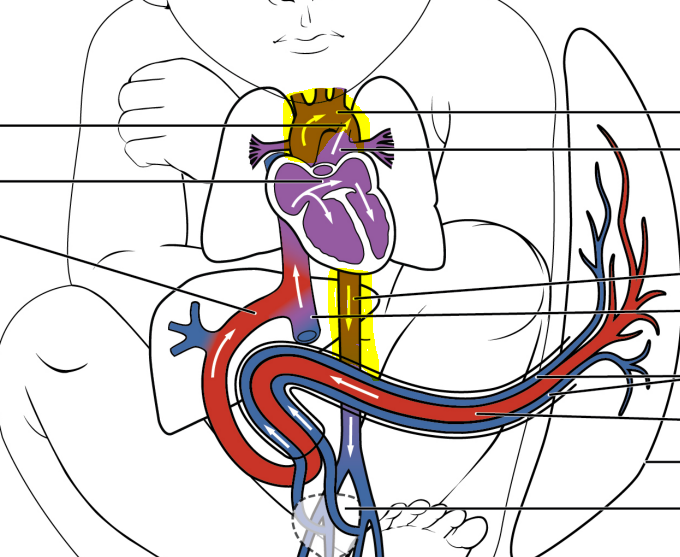
aorta
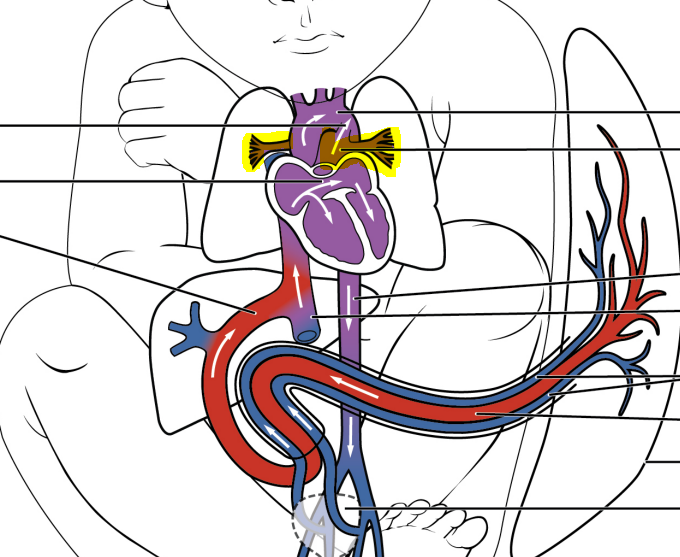
pulmonary trunk
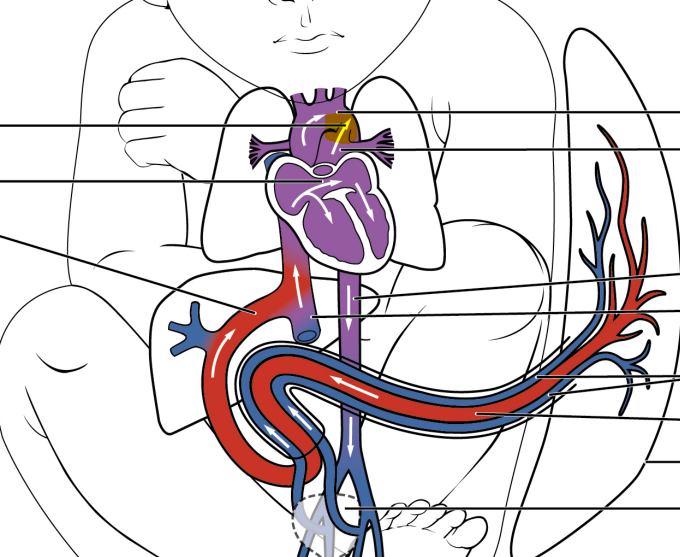
ductus arteriosus
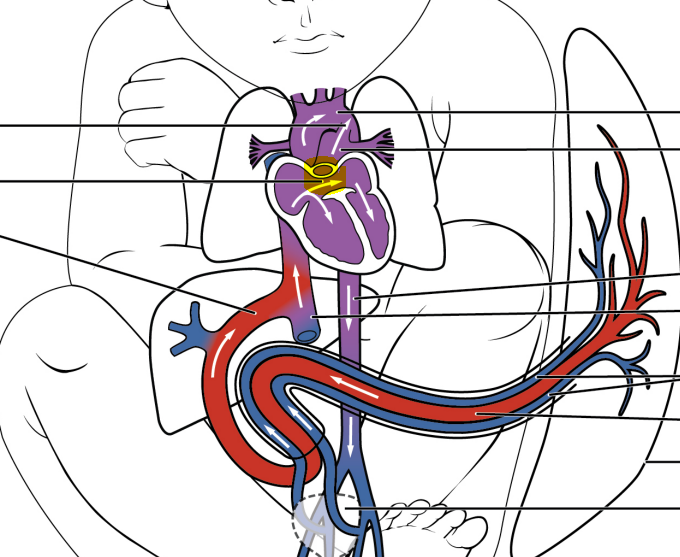
foramen ovale
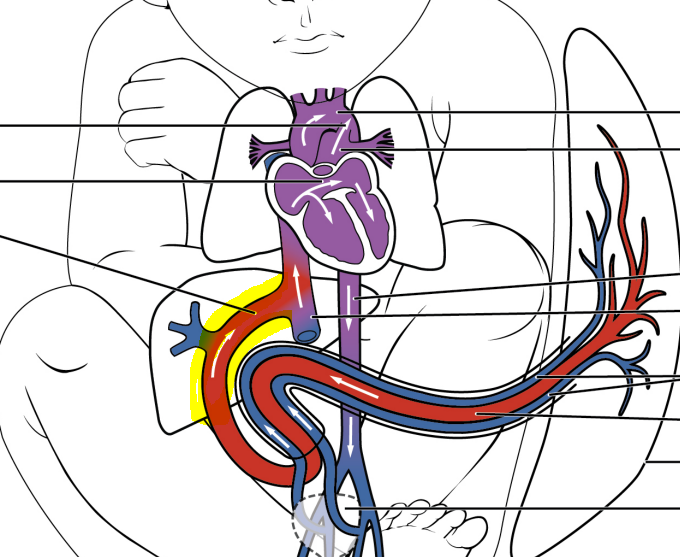
ductus venosus
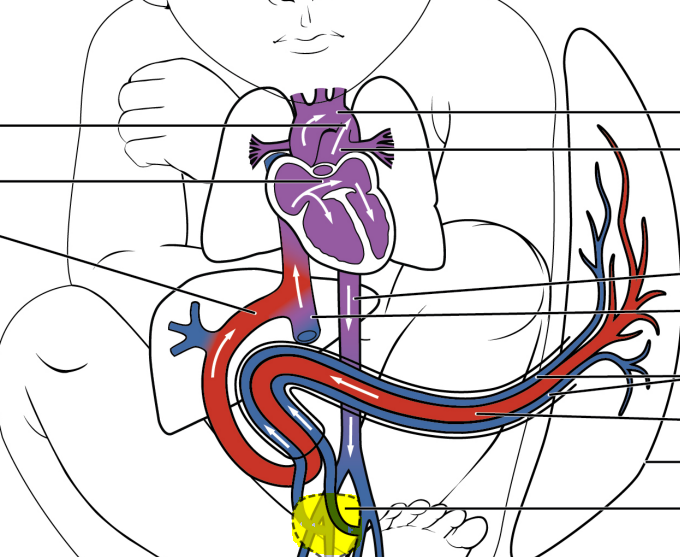
bladder
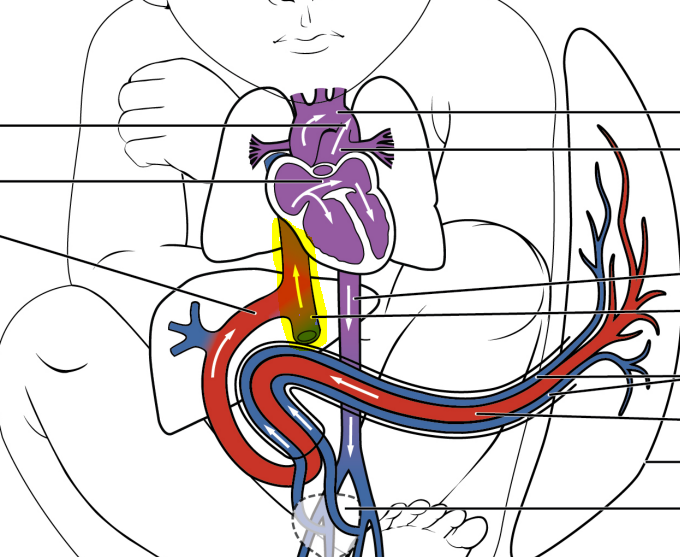
inferior vena cava
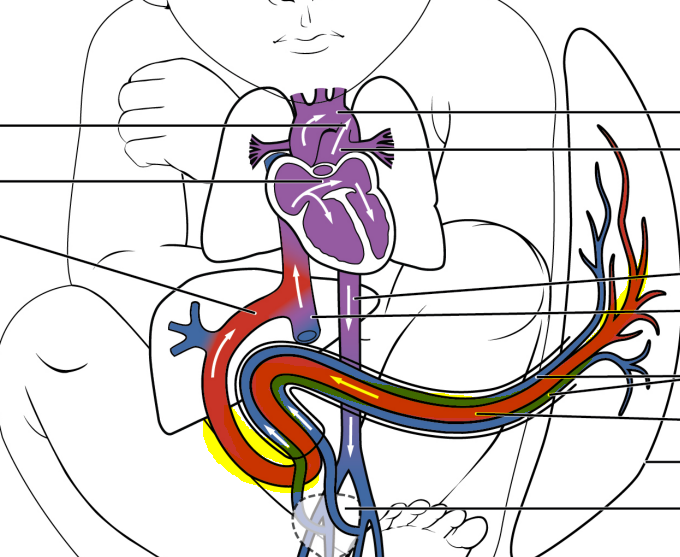
umbilical vein
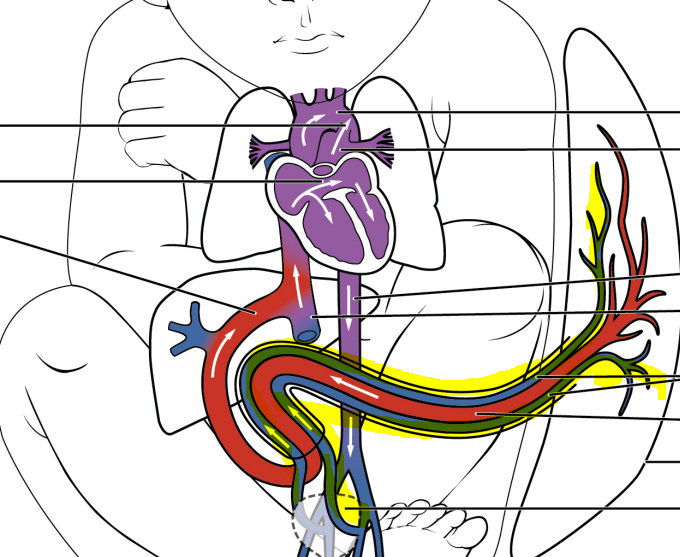
umbilical arteries
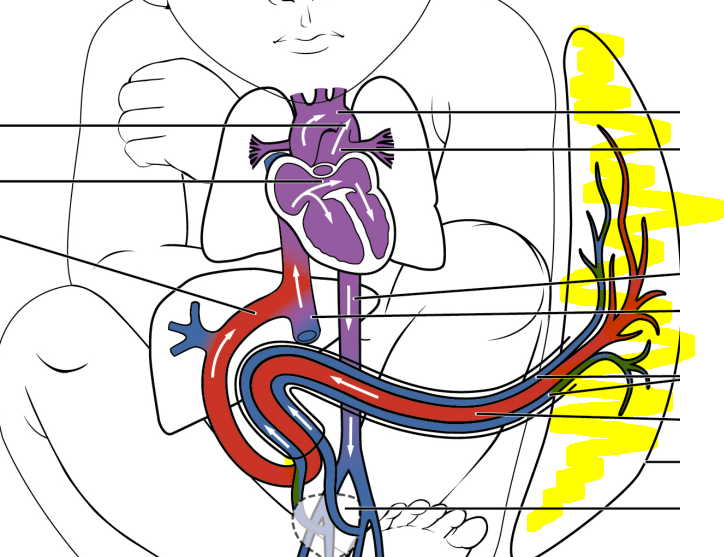
placenta
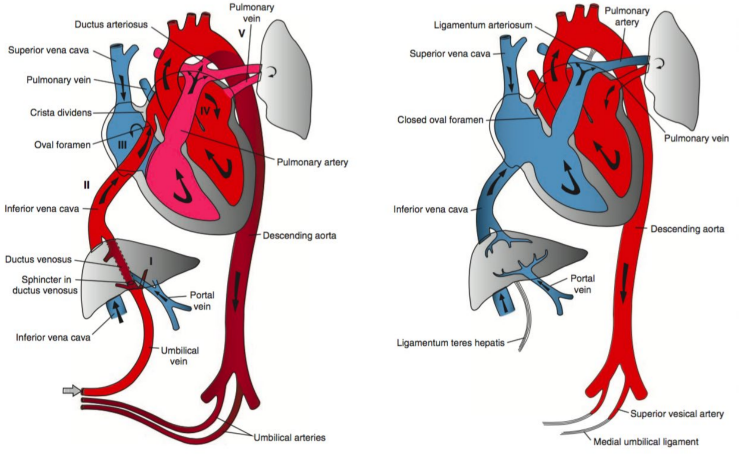
left
fetal circulation
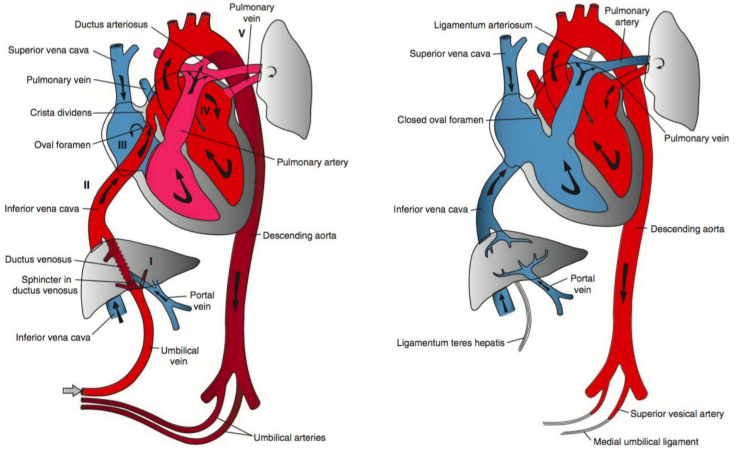
right
post transition circulation
all babies are born with very low levels of ____ because it does not _____. therefore, it is recommended to give newborns _____ within ____ hours
vitamin K, cross the placental wall, a single shot of vitamin K at birth, six

