Molecular genetics
 Studied by 0 people
 Call Kai
 Learn
Learn Practice Test
 Spaced Repetition
 Match
Match Flashcards
 Knowt Play
1/53

Earn XP
Description and Tags
Name | Mastery | Learn | Test | Matching | Spaced | Call with Kai |
|---|
No analytics yet
Send a link to your students to track their progress
54 Terms
What is the genetic structure of DNA?
DNA, chromatin, chromatin fibres, chromosome sacffold, condesed scaffold, chromosome
What s contained in each chromosome?
genes in linear order, autosomes - chromosome pair 1-22, sex chromosomes - 23rd chromosome pair
Human kayotype
46 chromosomes - 23 pairs
What is polymorphic?
alternative forms of one gene
What is oligomorphic?
a few forms of one gene
What is monomorphic?
no polymorphism - all exact same genes
What can cause genetic mutation?
deletions or incertions of one or a few nucleotides usually destroy a message by shifting the reading frame
What are stop codons?
codons that don’t code any amino acids and are always located at the very end of the protein coding part of the gene - TAG, TGA and TAA
How is a mutation different to polymorphism?
polymorphism is a gentic variation that occurs with a frequency of > 1% in ethnically diverse population
Mutations can be….
inherited, spontainous through DNA errors in replication/repair, from exposure to mutagenic agents
What are the types of DNA mutation?
nonsence mutation, missence mutation, frameshift mutation
What are the major classes of genetic diseases?
chromosomal, monogenic - classic mendelian, multifactoral - multiple genetic and environmental factors, polygenic - many genes, independent of environmental factors, somatic disorders - mutations occur in somaric cells, michrondrial disorders - mutation in mitrochondrial genome
What are monogenic disorders?
change in one or both copies of a particular pair of genes
What are the three types of monogenic disorders?
autosomal dominant - clinical evident if one chromosome affected
autosomal recessive - both chromosomes must be affected
X-linked - females either heterozygous or homozygous for affected genes, males affected if inherit mutant gene
What conditions are autosomal dominant inheritance?
Huntington disease, neurofibromatosis type 1, marfan syndrome, familial hypercholesterolemia, familial adenomatous polposis, prader-willi
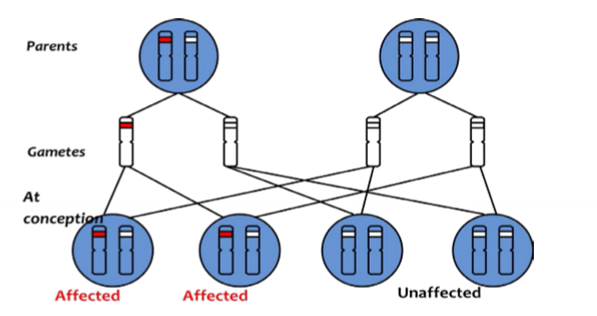
How are autosomal dominant conditions inherited?
mainly from Aa X aa, affected can be Aa or AA, all must have one affected parent, 50% offspring affected, both males and females affected and no alternation of sexes
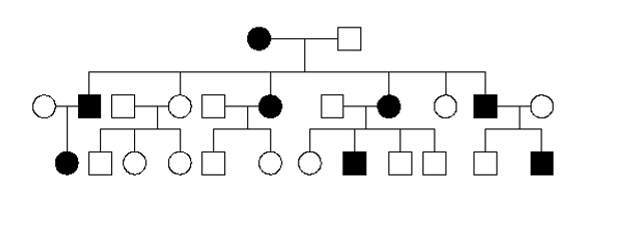
What is achondroplasia?
autosomal dominant condition, short limbs, normal size head and body, 1 in every 15,000-40,000 live births, Gly380Arg change in transmembrane domain of FGFR3 , >80% are de novo gene mutatio, homozygous dominant is fatal
What are some autosomal recessive inheritance condtions?
sickle cell disease, cystic fibrosis, congenital deafness, phenylketonuria, spinal muscular atrophy, recessive blindness
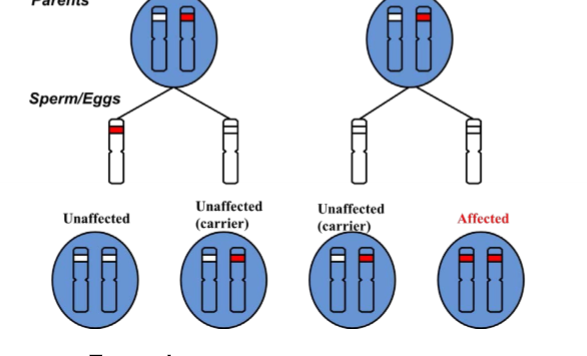
How are autosomal recessive conditions inherited?
more deleterious than dominant ones so more rare, to produce affected indivuals need Aa x Aa or Aa x a, affected person is aa for diseased allele, skipps generations, common affected homozygotes will not live to reproduce
What is sickle cell anaemia?
autosomal recessive condition, heterozygous more resistant to malaria so more common in people from where malaria occurs
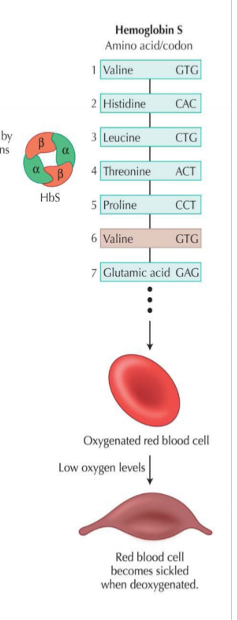
What causes sickle cell anaemia?
aused by mutation in β-haemoglobin gene on chromosome 11, single nucleotide substitution, most common is Haemoglobin S which is GTG to GAG exchanging Val (hydrophobic) to Glu (hydrophilic), mutant Hb polymerizes under low O₂ distorting red blood cell shape and affecting O₂ transport
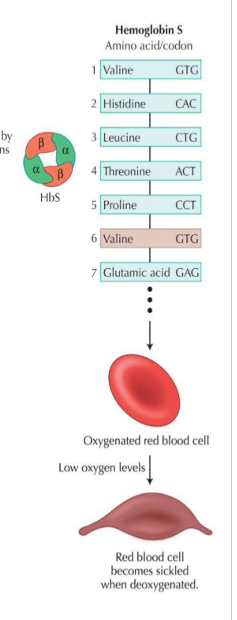
What are the symptoms associated with sickle cell anaemia?
Vaso-occlusive/pain crisis - 60% ischaemia, treated with fluids, analgesia, and O₂
Dactylitis/hand-foot syndrome - painful swelling of hands and feet that occurs in infants
Cholelithiasis
Retinopathy
What is cystic fibrosis caused by?
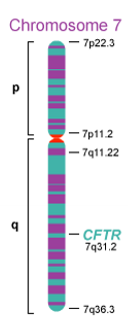
autosomal ressessive condition, caused by mutations in the CF transmembrane conductance regulator gene, encodes protein expressed in the apical membrane of exocrine epithelial cells, locus 7q31.2, poor correlation between CFTR genotype and severity of lung diseasw suggests influence from secondary genetic characteristics and environmental factors
If every affected person has an affected parent what must this mean?
must be a dominant pedigree
What are some X-linked recessive conditions?
fragile X syndrome, haemophilia, duchenne muscular dystrophy, fabry disease, retinitis pigmentosa, hunter syndrome, ocular albinism
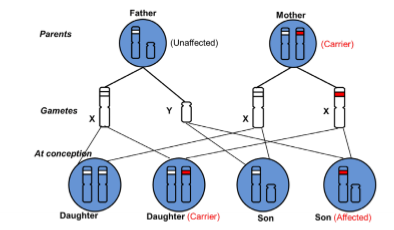
How are X-linked recessive conditions inherited?
acts as recessive traits in females, and dominant trait in males (affected males cannot pass it to their sons but can pass to daughters)
What is Haemophilia?
X-linked recessive bleeding disorder, severity linked to amount of clotting factor in blood (70%< 1% normal amount this is severe haemophilia), some can bleed to death from small cuts
What is haemophilia B?
inherited deficency of factor IX, most associated with point mutations, deletions in 3%
What is haemophilia A?
inherited deficency of factor VIII, around 50% due to inversion mutation in intron 1-22, remainder genetically hetrozygous: noncence mutations prevent factor production, missence mutation affect factor production, activity or half-life >600 identified
What are the effects of haemophilia?
bleeding around elbow, retinal bleed, repeated bleeds into joints produces severe artheritis
How is haemophilia managed?
joint immonilisation and physical therapy, COX-2 inhibitors and/or careful use of opoids, factor replacement: 1U/kg of factor VIII increases plasma level by around 2% (around 1% for factor IX), half-life of factor VIII 8-12 hours, factor IX 18-24 hours, volume of distibution of factor IX about twice as high as for factor VIII
How are X-linked dominant conditions inherited?
very rare, males and females both affected, males are typically more affected than females, commonly fatal in males
What are some examples of X-linked dominant conditions?
Rett syndrome, incontinentia pigmenti type II and aicardi syndrome
What is Rett syndrome?
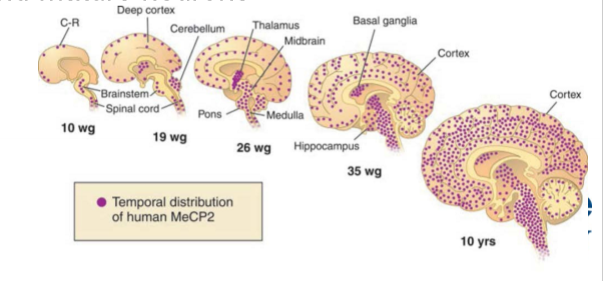
neurodevelopmental disorder, early development normal, loss of language, cognative and motor abilities from 6-12 months, caused by mutations in X-linked MECP2, encoding methyl-CpG-binding protein 2, highly expressed in brain, may function in maintenence of developing and mature neurones
How are conditons that are Y-linked dominant inherited?
Y chromosome very small so vary rare cases of pure Y-linked disease, every son of an affected father will be affected, female offspring can’t be affected, diseases often include symptoms of infertility
How are mitrocondrial diseases inherited?
mitrocondrial DNA inherited only through the egg, sperm mitrocondria never contribute to the zygote, >700 disease-associated mtDNA mutations, many associated with female infertility and ability to carry babies to term
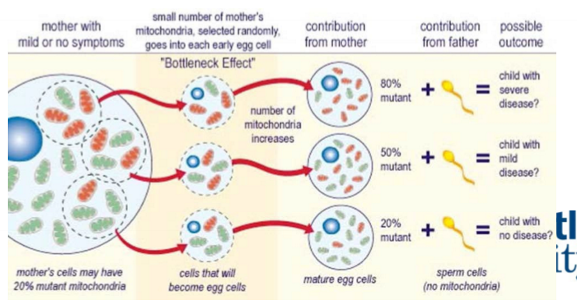
What is a potential treatment for mitrocondrial diseases?
three person IVF, egg from mother, sperm from father, mitrocondria from donor, worry about long term affects
What are polygenic disorders?
most genetic traits are polygenetic, traits are coded by a number of altered and unaltered genes working together
What are some examples of polygenetic disorders?
Alzheimer’s, diabetes, cancer, eczema
What are multifactorial disorders?
inheritance controlled by many genes and the effects of the environment, doen’t conform to classic mendelian genetic priniciples, due to complex genetics, harder to identify affected genes so less known
What are some examples of multifactorial disorders?
cogenitial disorders: cleft lip/palate, congenital hip dislocation and heart defects, neural tube defects, pyloric stenosis
adult onset: diabetes mellitus, epilepsy, hypertention, ischaemic heart disease, depression, schozophrenia
What are numerical chromosome abnormalities?
gain or loss of complete chromosomes, serious often lethal especiallt autosomal annomalies, autosomal monosomies can be catastrophic
What is the common cause of numerical chromosome abormality?
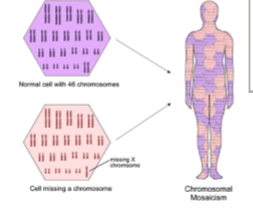
non-disjunction normally in germ cells at meiosis but occasionally in somatic cells resulting in mosaicism
What is translocation in genetics?
a section of a gene shifts from one chromosome onto another
What is inversion in genetics?
a section of DNA gets snipped off and reinserted the wrong way round
What causes Down syndrome?
trisomy 21 - 95% have three seporate copies of chromosome 21
Robertsonian translocation - 4% have the extra copy of chromosome 21 due to this
Mosaicism - 1% with normal and trisomy 21 cells occurs postzygotically (milder features due to normal cells)
What are the features of down syndrome?
round face, flattened nose bridge, small irregular teeth, short stature, heart defects, >60% spontainously aborted, 20% stillborn (1 in 700 live births)
What is Edwards syndrome (trisomy 18)?
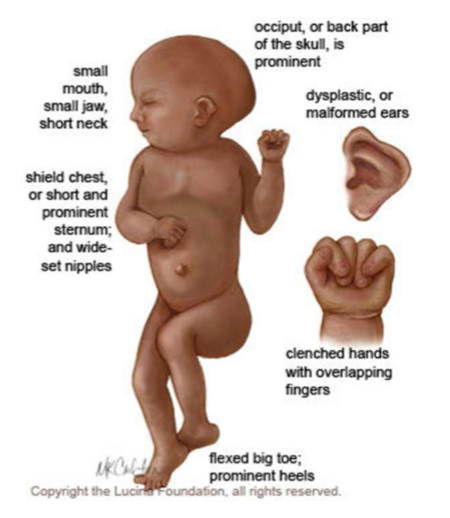
47,XX +18, 1 in 3000, multiple malformations (Heart, kidney in particular), clenched hands with overlapping fingers, 90% mortalitity before 5 months
What is Patau syndrome (trisomy 13)?
47,XX+13,1 in 5000, multiple malformations, affects midline structures particularly incomplete lobation of brain, cleft lip and congenital heart disease, most die in a few weeks
What is klinefelter syndrome?
47 XXY, 1 in 1000 males, infertility (atrophic testes don’t produce sperm), poorly developed 2ry sexual characteristics, tall
What is Turner syndrome?
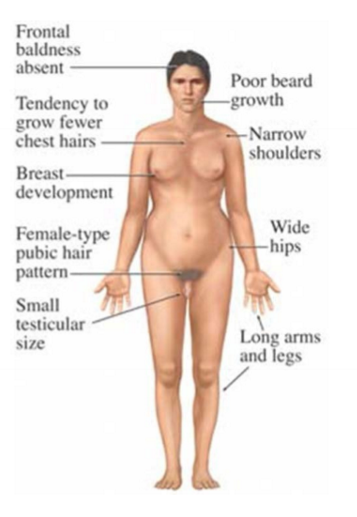
45 X, 1 in 5000 females, 99% lost sponraneously in pregnancy, short stature, primary amenorrhoea (overies involute before birth), congenital heart disease (coarctation of aorta) in 20%
How do changes in number of chromosomes occur?
usually isolated occurances
What are the treatments for genetic diseases?
correct metabolic consequences of disease by administration of missing product or limiting availibility of substrate
replace absent enzyme or protein or increase its activity
remove excess stored compound
correct basic genetic abnormality e.g. gene therapy
What are the three theoretical types of gene therapy?
replacement - replace mutant gene with normal one
correction - murated area of affected gene corrected whilst rest unchanged
augmentation - intro of foreign genetic material into cell to compensate for defective product of mutant gene (currently avaible - somatic gene therapy)
 Note
Note  Flashcards (99)