L3 fractures and faults
 Studied by 0 people
 Call with Kai
 Learn
Learn Practice Test
 Spaced Repetition
 Match
Match Flashcards
 Knowt Play
1/78

There's no tags or description
Looks like no tags are added yet.
Name | Mastery | Learn | Test | Matching | Spaced | Call with Kai |
|---|
No analytics yet
Send a link to your students to track their progress
79 Terms
brittle deformation
permanent- non recoverable- change due to growth of fractures and/or sliding on pre-existing fractures
forms when bending exceeds critical threshold
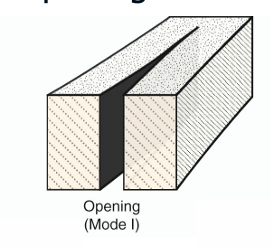
extension
shows extension (movement) perpendicular to fracture walls
mode 1
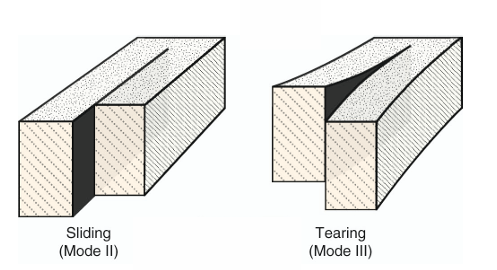
shear
shows movement parallel to fracture walls- displacement is minimal
sliding (mode 2) and tearing (mode 3)
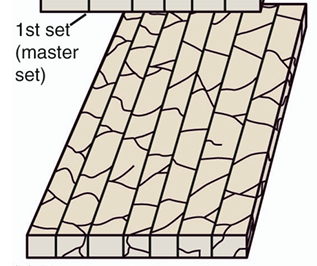
joint sets
have similar orientation and morphology
can be systematic or non-systematic
has a repeating pattern
joint system
two or more joint sets
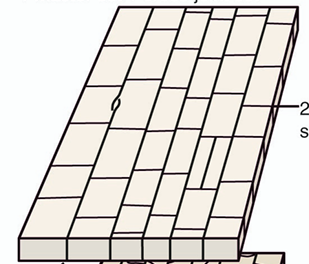
orthogonal joint set
form in a rock with previous fractures
polygonal joint set
form in a rock without previous fractures
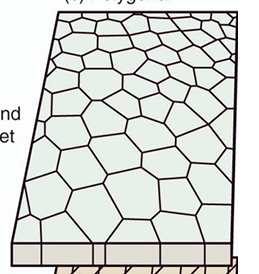
regular set + irregular, non systematic joint set
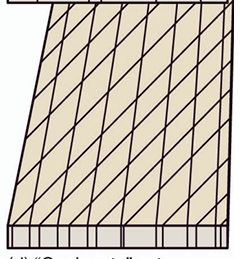
conjugate sets
2 joint sets formed at the same time
joints
a type of extensional fracture that shows a small wall-perpendicular opening with no or little shear offset.
systematic joints
joints that are straight, parallel and repeat themselves with more or less constant spacing
non-systematic joints
joints that have irregular geometry, orientation and spacing do not define sets.
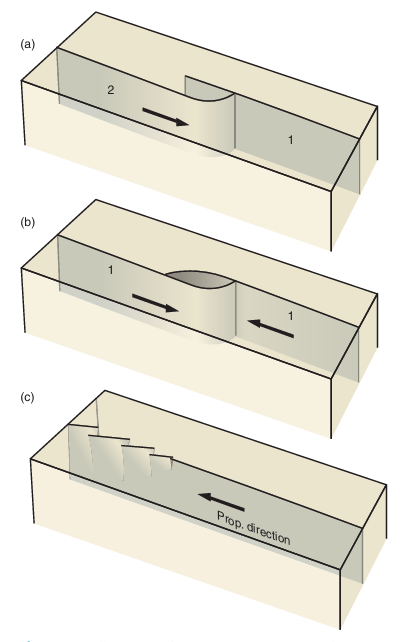
joint tip interaction
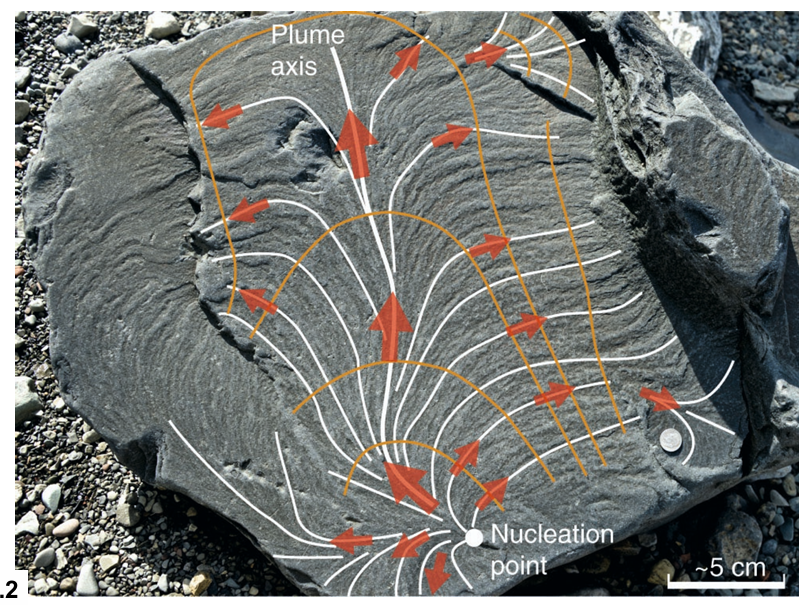
plumose structures
characterized by feather-like markings that radiate from a point of origin on joint surfaces, indicating the direction of joint propagation.
fracturing is most common in …
the upper crust
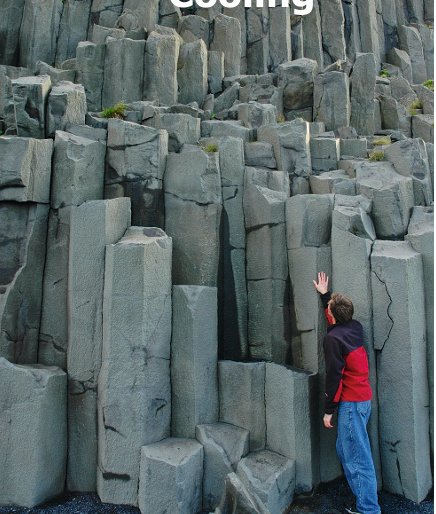
columnar joints
when lava cools and contracts, leading to the formation of fractures
as layer thickness increases…
spacing of joints increases
measuring joint density
average spacing of joints in a set
number of joints in a given area
total length of joints in a given area
surface area of all joints in a given volume
classification of faults are based on
orientation of the fault surface (strike/dip)
nature of the displacement or offset across the fault
also
character of the fault surface
fault
any surface or narrow zone with visible shear displacement along the zone.
in the upper crust
can be a discrete fracture or discontinuity that accounts for all of the displacement
fault damage zone
the volume of brittlely deformed wall-rock, that is higher than the background level, that surrounds the fault core
joints and microfaults very abundant
joints and microfaults
are often very abundant in damage zones
fault breccia
an unconsolidated fault rock consisting of less than 70% matrix
fault gauge
Fine-grained, clay-like, crushed rock Davis "like talcum powder with dispersed hard grains..."
Typically forms when wall rocks are relatively weak and incompetent
cataclastic rocks
less than 30 vol % are present in the fine grained matrix
significant grain size reduction due to strain
significant grain size reduction due to strain (grain size >0.1 mm < 10 mm …can be extreme
can accompany mylonitization
looks like fault gauge but is cohesive
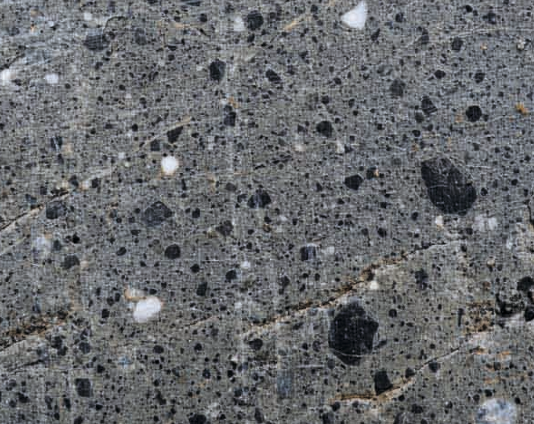
damage zone thickness increases …
as fault displacement increases
slickenlines
generally straight fine-scale shallow lines on fault surface which record direction of slip
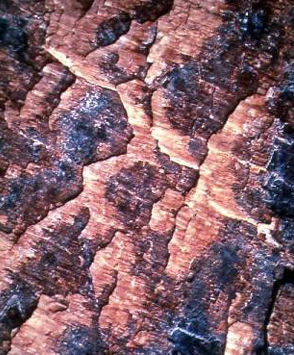
slickenside
Smooth surface on fault caused by frictional polishing during movement (or due to neomineral surface coatings) - not present on many fault surfaces due to non-formation or erosion
Pseudotachylite
Black, extremely fine-grained dike-like features…seem to intrude the country rocks
can actually be glassy
represents a small volume of melt generated by frictional heating during a seismic event (earthquake)
lineaments
linear topographic features of regional extent that are believed to reflect crustal structure
straight or curved
more common near recent faults, but occur with old ones as well
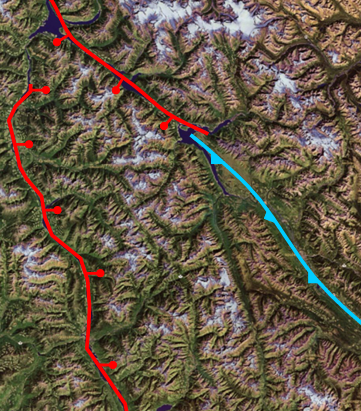
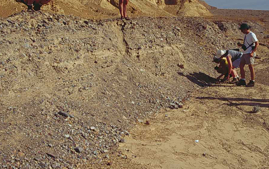
fault scarps
vertical displacements produced by faults at the surface (typically several feet)
usually the inclination and height are quickly reduced by erosion…
can provide a tool for timing the relative age of faults
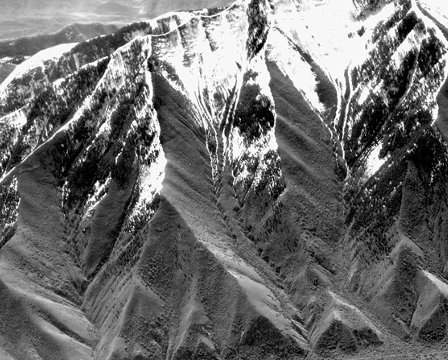
triangular facets
form when large fault scarps are dissected by erosion
geophysics
important tool for recognizing faults
shows breaks in the physical properties in the subsurface
a fault has maximum displacement…
near the center
a fault has the least displacement …
near the tip point
fault trace
the intersection between the fault surface and an arbitrary surface
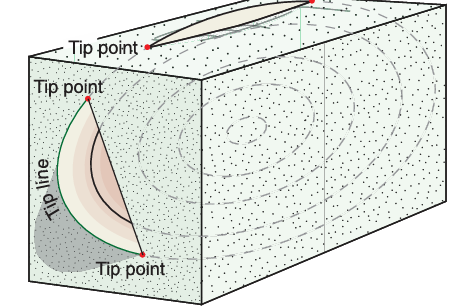
tip points
the endpoints of the fault trace
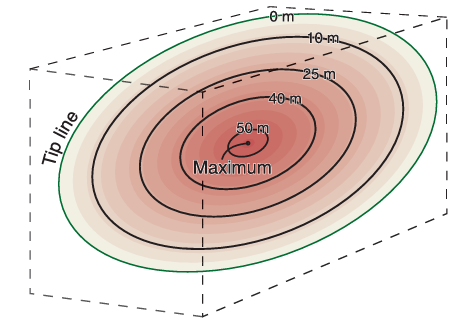
tip line
the zero displacement line that outlines a fault
process zone
invisible on seismic data
area ahead of the tip where the rock is '“processed” prior to fault propagation
fault tip
invisible on seismic data
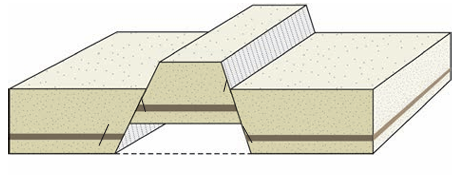
horst
normal faults dipping away from each other create an upthrown block
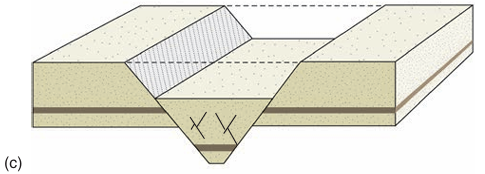
graben
normal faults dipping toward each other create a downthrown block
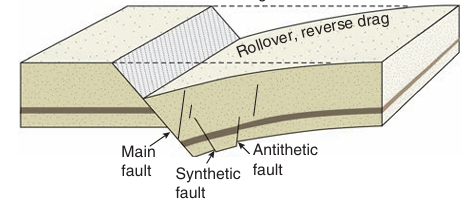
half graben
main fault with antithetic (dips toward main fault) and synthetic (dips in same direction as main fault) faults
relay ramps
form from overlapping faults
footwall
block sitting below the fault surface
hanging wall
block sitting above the fault surface
normal fault/ normal-slip fault
hanging wall moves down with respect to footwall
dip slip
extensional faults
ideally 60 degrees
thrust fault/ thrust-slip fault
hanging wall moves up
compressional fault
less than 45 degrees, usually 30 degrees
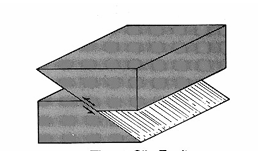
strike slip fault
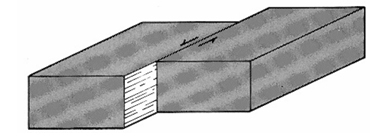
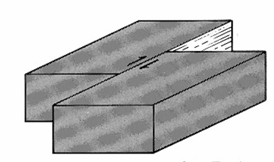
horizontal translation or movement
left handed or right handed
left handed (sinistral) strike slip fault
right handed (dextral) strike slip fault
dip slip
translation directly up or down fault surface
extensional or compressional
low angle normal fault
called detachment fault
less than 45 degree dip
reverse-slip fault
hanging wall moves up
compressional fault
more than 45 degree dip
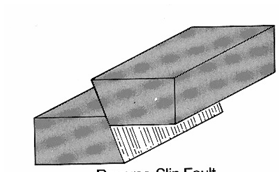
oblique-slip fault
inclined
displacement between strike-slip and dip-slip movement
name using main component of movements eg. sinistral-normal or sinistral-reverse
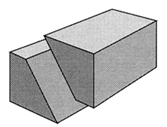
rotational (scissor) fault
changes both magnitude and sense of slip along strike
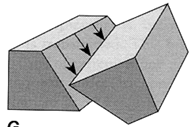
slip
actual relative displacement
the displacement vector between two points that were adjacent before faulting
net slip
Common terminology for slip emphasizes the fact we often don’t know the actual path blocks took to their present position
can be broken down into strike slip and dip slip components
can be further divided into: vertical slip, horizontal dip slip, horizontal slip
components to completely describe slip
orientation of the slip line on the fault plane (fault = strike/dip)
rake in the fault plane- angle between strike of FP and slip line
trend and plunge of the slip line
magnitude of displacement (distance)
relative displacement - eg footwall up to the west
how do we measure slip?
must find two points, called “piercing points” that were adjacent before faulting
points
lines
points
quite rare in geology
ex, fossil cut by a fault
lines
are very common
intersect planes at a point
eg, dike and bedding, unconformity and bedding
facies changes
edges of sand lenses
lines of constant thickness
drag folds
distortion of bedding (or any pre faulting structures such as foliation, fractures, etc.) from shearing of rock bodies past one another; forms some ideal relationships
axes are ideally perpendicular to slip direction
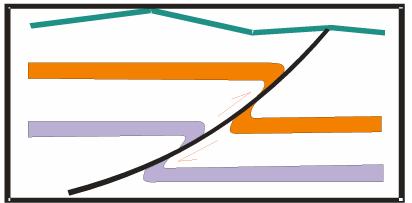
normal fault drag fold
hanging wall dragged in syncline, footwall into anticline
exception with listric (shallowing dip with depth) faults of rollover anticlines
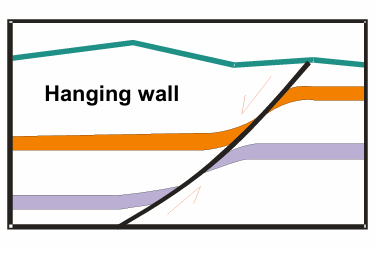
strike-slip drag folds
beds curl into fault away from movement
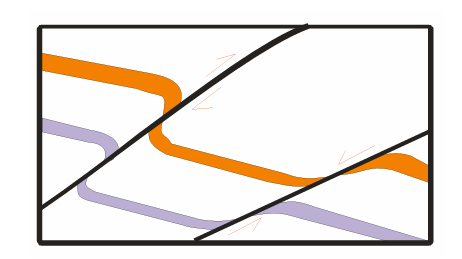
separation
apparent relative displacement
we usually observe this on faults not slip
has no direct relation to slip
throw
vertical component of dip separation
heave
horizontal component of dip separation
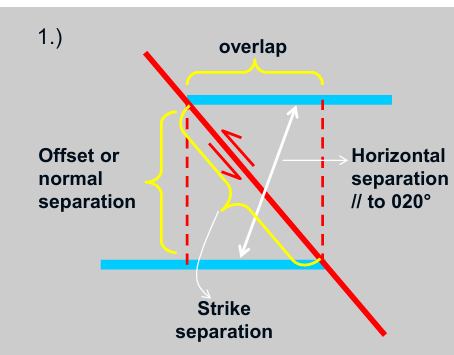
left lateral fault map view
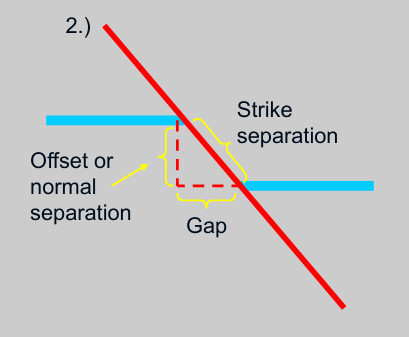
right-lateral fault map view
stratigraphic throw (stratigraphic separation)
thickness of strata between two points now adjacent along a fault
measured in various planes (map view and x section)
true separation
separation perpendicular to trace of the plane of the fault
strike separation
component of separation parallel to the strike of the fault
dip separation
component of separation parallel to the dip of the fault
horizontal separation
separation in a specified horizontal direction
vertical separation
separation measured vertically b/w a plane and its extension from the other side of a fault
overlap
amount of along strike overlap of strata viewed across fault
gap
amount of along strike gap of strata viewed across fault
offset (normal separation)
amount of separation of strata measured across the fault perpendicular to strike of strata
 Note
Note  Flashcards (20)