23. canine vaccines
 Studied by 9 people
 Call Kai
 Learn
Learn Practice Test
 Spaced Repetition
 Match
Match Flashcards
 Knowt Play
1/18

There's no tags or description
Looks like no tags are added yet.
Name | Mastery | Learn | Test | Matching | Spaced | Call with Kai |
|---|
No analytics yet
Send a link to your students to track their progress
19 Terms
what are examples of mild adverse vaccine reactions?
hair loss, hair color change at injection site
lethargy, fever, soreness, stiffness
refusal to eat
conjunctivitis, sneezing
oral ulcers
common to very common, transient
what are examples of moderate adverse vaccine reactions?
transient immunosuppression — seen especially with combination of CDV/CAV vaccines in naive pups, leading to secondary infections
facial edema — acute reaction, seen within hours
allergic uveitis (blue eye) — not as common anymore; caused by CAV-1 in older vaccines
others
uncommon to common (1 in 10,000 to 1 in 1,000)
what are examples of severe adverse vaccine reactions?
vaccine injection site sarcomas
anaphylaxis (type I hypersensitivity)
hypertrophic osteodystrophy (HOD) - arthritis, polyarthritis
dermatomyositis
others
uncommon to rare
what is masticatory muscle myositis? what is its pathogenesis/clinical signs?
autoimmune disease
production of antibodies against 2M muscle fibers (type II hypersensitivity)
painful inflammation of muscles of head and jaw
difficult eating
loss of muscle mass
can be triggered by vaccination
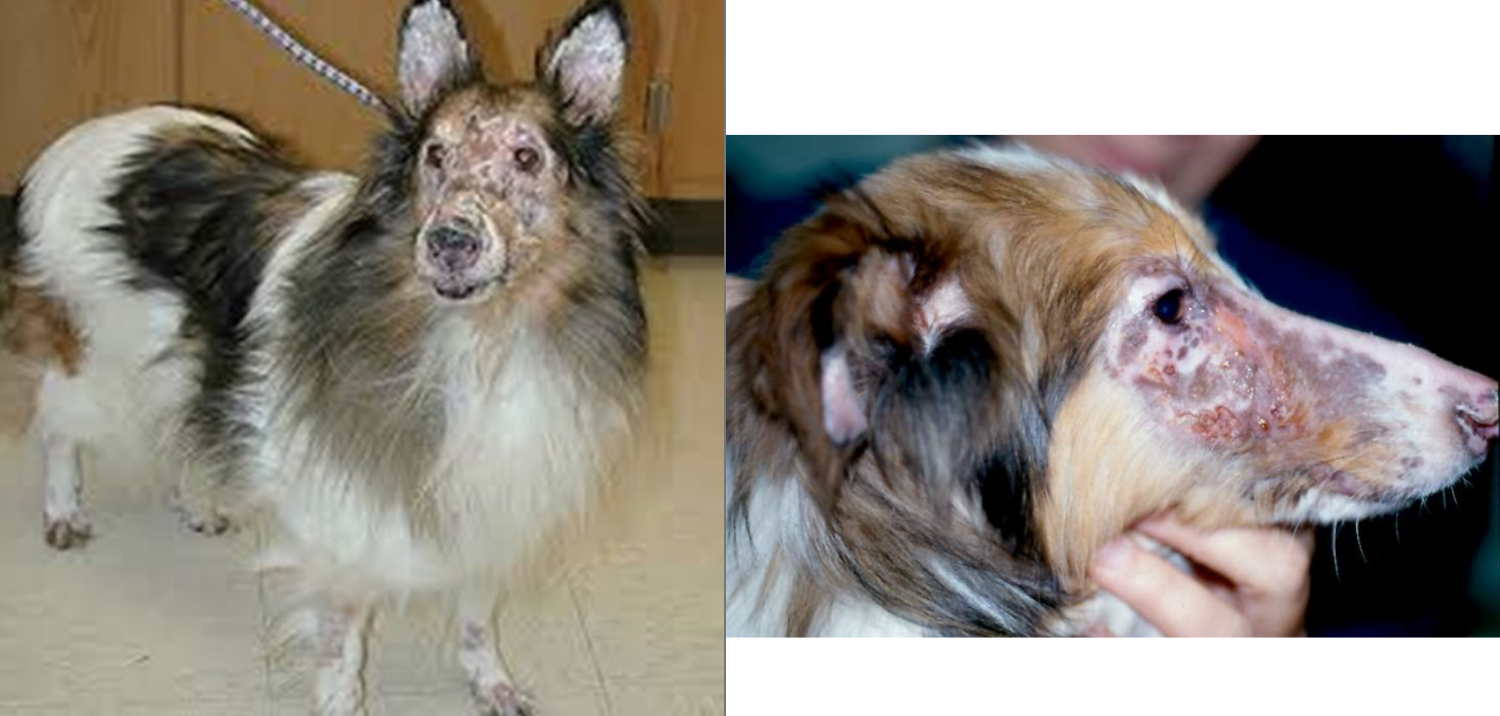
what is dermatomyositis?
immune-mediated vasculopathy which has been linked to vaccination in genetically predisposed dogs
type III hypersensitivity → Ag/Ab complex formation → lodge in capillaries
which of the canine vaccines induce sterilizing immunity?
CAV
CPV
CDV
what makes a vaccine a core vaccine?
provides long-term, highly effective cellular and/or humoral immunity against disease agents that cause significant clinical signs, including death
sterilizing antibody-mediated immunity common
ALL puppies and kittens should receive these vaccines
what makes a vaccine a non-core vaccine?
provides partial immunity, for a short term, and/or protects against diseases that are neither highly virulent nor universally prevalent
limited geographic distribution
self-limiting or treatable
should (or should not) be used based on risk of the disease for each individual
what are the core vaccines for dogs?
canine parvovirus-2 (CPV-2)
canine distemper virus (CDV)
canine adenovirus (CAV)
rabies virus
(leptospira bacterin)
why do puppies receive multiple doses of vaccines?
usually don’t know exactly when passively derived maternal antibody is no longer able to block vaccination
what is the “window of susceptibility”/critical period (in relation to neonatal vaccination)?
when maternally-derived antibody has declined to a level that is no longer protective against wild type virus BUT still at a level that will block active response to vaccination
why don’t we give core vaccines weekly?
immune system is overwhelmed when interval not respected
increases risk of adverse reactions such as immunosuppression or hypertrophic osteodystrophy
what is the vaccine schedule for the leptospira bacterin vaccine? what kind of protection does it provide?
killed vaccine — 2 doses initially
booster yearly
provides protection from disease, but not infection (no titer testing)
does not stop shedding (zoonotic)
what are the canine non-core vaccines?
canine parainfluenza
canine influenza
bordetella bronchiseptica
lyme (borrelia burgdorferii)
rattlesnake vaccine
what is the vaccine schedule for canine influenza?
killed vaccine → 2 doses needed at first
booster yearly if risk of disease remains (ex. boarding, dog shows)
what is the vaccine schedule for bordetella bronchiseptica? what are the risk factors for bordetella?
killed bacterin (parenteral) → 2 doses needed, 2-3 weeks apart
avirulent live bacteria intranasal/oral → 1 dose needed; protection within days
booster yearly
DO NOT give avirulent Bb parenterally!!
indicated for dogs that board or go to doggy daycare
what is the vaccine schedule for lyme?
2 initial doses are required 2-4 weeks apart
booster annually when risk remains
decreased severity of disease but may not prevent infection → tick prevention is paramount
what protection does the rattlesnake vaccine provide? how many doses are required?
Western Diamondback rattlesnake neurotoxin with some cross protection against Eastern Diamondback venom
no protection against Mohave rattlesnake venom
antibody against the neurotoxin slows it down, giving more time to seek treatment
2 initial doses
what canine vaccine is NOT recommended?
canine coronavirus
 Note
Note  Flashcards (33)