Anthropology Unit Test Review - HSP3U1
 Call Kai
 Learn
Learn Practice Test
 Spaced Repetition
 Match
Match Flashcards
 Knowt Play
1/53

There's no tags or description
Looks like no tags are added yet.
Name | Mastery | Learn | Test | Matching | Spaced | Call with Kai | Chat |
|---|
No analytics yet
Send a link to your students to track their progress
54 Terms
Anthropology
The scientific study of humans, including their origins, behaviours, and physical, social, and cultural development
Psychology
The scientific study of the human mind, mental states, and human behaviour
Sociology
The scientific study of humans social behaviour, including individuals, groups, and society
Yanomami and Napoleon Chagnon
What is culture?
shared system of beliefs, values, and traditions
Cultural Anthropology
study of cultural variation
immerse in cultures
interviews
Ethnology
study of comparisons between cultures
immerse themselves into a culture to take notes
Linguistic Anthropology
study of history and structure of language
Archaeology
study of physical remains of past cultures
Research tools for cultural anthropologists
participant observation, interivews
Informants
advantages - access to inside info.
disadvantages - not always trusted (reliability/credibility)
Structured Interviews
advantages - gets set answers, no training needed
disadvantages - not flexible to change in convo
Semi-structured Interviews
advantages - flexible but on topic with set questions
disadvantages - different answers can be difficult to compare
Unstructured Interviews
advantages - very flexible to adapt questions, good for broad interest
disadvantages - may stray off topic, no control, difficult to analyze
Participant Observation
advantages - gain deep understanding of cultures
disadvantages - presence may change results, bias, time
Ethnology Method
kinship, participant observation, ethnography
Ethnography
descriptions of cultural customs found by anthropologists
Subjective
observations based on feelings, opinions, or biases
Objective
observations that are pure facts, not interfered with by emotion or bias
Reflexivity
reflecting on your own beliefs, biases, and emotions and understanding how they may affect views on the world
Margaret Mead and Derek Freeman
ethnologists who both studied the same tribe years apart and found different conclusions:
Margaret said that girls were not pressured and feet free with sexuality
Derek said margarets conclusins were wrong because she was a stranger asking personal questions so they lied
Schools of Thought
Theories to make sense of evidence gathered:
Cultural Relativism
Functional Theory
Cultural Materialism
Feminist Anthropology
Postmodernism
Cultural Relativism
Main Concepts: An anthropologist cannot compare two cultures because each culture has its own internal rules that must be accepted - everyone sees cultures through the lens of their own
Key Terms: Ethnocentric - Believing ones culture is superior to others
Key Anthropologists: Franz Boas - promoted it
Real World Example: If you were born and raised in the US, your views on Canada would be different than Canadians
Functional Theory
Main Concepts: Every belief, action, and relationship in a culture functions to meet the needs of individuals
importance of interdependance
meet needs of individuals = success
Key Terms: Interdependance - everyone depends on eachother
Key Anthropologists: Bronislaw Malinowski - cultures can be compared but cultural evolutionism is bad
Real World Example: Tobriand Islands - ceremonial exchange of necklaces and armbands allow social interaction, other trades, and builds relationships
Cultural Materialism
Main Concepts: Materials or conditions within the environment influence how a culture develops, and how their ideas and ideology develops
if something isnt valuable, it dissappears
Key Terms: Infastructure - material resources
Structure - societys social systems
Superstructure - societys ideas. values, symbols, religion
Key Anthropologists: Marvin Harris - 1960s
Real World Example: Sacred cow - cows shouldne be eaten because they’re good for pulling in farms
Feminist Anthropology
Main Concepts: Ensure female voices are heard and included in research
Key Terms: Culturally constructed - created or shaped by culture
Key Anthropologists: Ernestine Friedl -freedom of women depended on their contributions to food supply (main food berries or meat)
Real World Example: Forager societies where women bring home more food than men
Postmodernism
Main Concepts: It is impossible to have any true knowledge about the world because we cant study subjects in a detached, objective way because of personal relationships
Key Terms: Subculture - small group within a large group
Key Anthropologists: Sam Dunn (music study)
Real World Example: Subculture of heavy metal fans
Historical Linguistics
What questions are asked? - how are different languages related and what does this tell us about past humans?
Challenges: lack of records (lost languages), lang. constantly changes
Purpose of Studying: what can language tell us about past humans?
Key Findings: lang. evolves, connections btwn cultures
Structural Linguistics
What questions are asked? - rules of lang?, how is lang structured?
Challenges: constantly changing, unconcious rules, slang, no direct translations
Purpose of Studying: analyze how humans connumicate, find patterns in lang.
Key Findings: all lang. have rules
Sociolinguistics
What questions are asked? - how is lang. different through social groups (age, class, gender, ethnicity), formal vs informal
Challenges: social factors constantly change, biases
Purpose of Studying: understand how lang represents social status/relationships
Key Findings:language changes depending on social factors, people adjust lang. based on context
Evolution
how things change and adapt to the environment over time
Three Sub-disciplines of Physical Anthropology
paleoanthropology, primatology, human variation
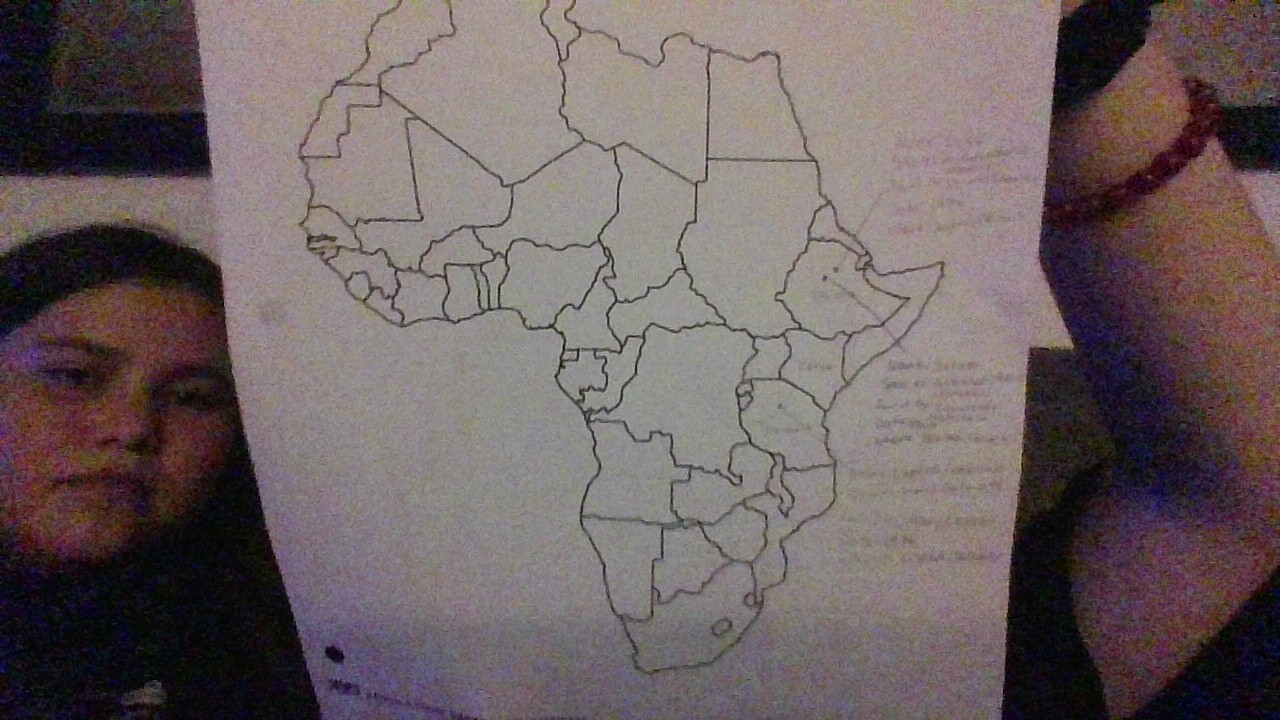
Map of Africa
Human Evolution Timeline

Paleanthropology
study fossils, skeletons, ancient tools, animal bones…
Hominins
human-like ancestors that lived with humans
Fossils
cool rocks :)
LUCY
skeleton from 3.2 million years ago
found by Donald Johanson - 1974
Ethiopia
SELAM
3yr old female fossil
most complete to date
2006
ethiopia
Charles Darwin
species are forced to evolve or become extinct - natural selection
this helped people accept evolution as a fact
first humans were in africa
Natural Selection
those who changed to fit the environment survived, while those who didnt went extinct
Raymond Dart
found a skull in africa in 1924 to prove humans began in africa
Louis and Mary Leakey
proved african origin with radiometric dating in 1959
Radiometric Dating
finding the age of a fossil
Bipedalism
habitually walking on two legs
began 3.6 million years ago
Laetoli Footprints
foundy by mary leakey
proved bipedalism - shape of feet
in tanzania
Primatology
study of primates
Similarities between primates and humans
bond between mothers and infants is important for survival
primates have longest infant dependency
primates have dominance heiarchies
agression among males for food and females
body language
similar body parts
groom one another
Differences between primates and humans
humans adapted to bipedalism
humans have longer infant dependency
symbolic language and physical ability of speech in humans
humans live in groups and mate in pairs
humans develop beliefs that guide their actions
Human Variation
study of genetic differences between people and populations
Three Principles of Natural Selection
variation - every species has variety
heritability - traits are passed on to offspring
environmental fitness - better adapted=stronger=more offspring=pass on strong traits
Race vs Culture
someone behaviour or personality is based on their culture. NOT race
Social Science
The study of society and social behaviour
Kinship
a relationship by blood (culturally defined relationships)