Gas exchange in insects ppq
 Call Kai
 Learn
Learn Practice Test
 Spaced Repetition
 Match
Match Flashcards
 Knowt Play
1/14

Earn XP
Name | Mastery | Learn | Test | Matching | Spaced | Call with Kai |
|---|
No analytics yet
Send a link to your students to track their progress
15 Terms
How do insects prevent water loss
Insect adaptations to prevent water loss:
Insects have a small surface area to volume ratio where water can
evaporate from
2. Insects have a waterproof exoskeleton
3. Spiracles, where gases enter and water can evaporate from, can open and
close to reduce water loss
What are spiracles in insects
the openings to the tracheal system on the surface of an insect's body. The spiracles can open and close, allowing the insect to regulate the flow of air into the tracheal system.
What structures are involved in the tracheal system
trachea, tracheoles, spiracles
What are the functions of the structures
Spiracles are round, valve like openings, running along the
length of the abdomen. Oxygen and carbon dioxide enter
and leave via the spiracles, The trachea attach to these
openings
The trachea is a network of internal tubes
The trachea tubes have rings within them to strengthen the
tubes and to keep them open
The trachea branch into smaller tubes, deeper into the
abdomen of the insect called tracheoles. These extend
throughout all the tissues in the insect to deliver oxygen to
all respiring cells,
What are the ADAPTATIONS FOR EFFICIENT DIFFUSION
1.Large number of fine tracheoles - large surface
area
2. Walls of tracheoles are thin and short distance
between spiracles and tracheoles - short diffusion
pathway
3. Highly branched / large number of tracheoles so large surface area (for gas exchange);
4. Tracheae provide tubes full of air so fast diffusion (into insect tissues);
5. Fluid in the end of the tracheoles that moves out (into tissues) during exercise so faster diffusion through the air to the gas exchange surface; OR Fluid in the end of the tracheoles that moves out (into tissues) during exercise so larger surface area (for gas exchange);
6. Body can be moved (by muscles) to move air so maintains diffusion / concentration gradient for oxygen / carbon dioxide;
(i) Name the structure through which gases enter and leave the body of an insect.
(ii) Name the small tubes that carry gases directly to and from the cells of an insect.
(i) Spiracle; Accept: Spiracles 1
(ii) Tracheole/trachea;
(b) Explain the movement of oxygen into the gas exchange system of an insect when it is at rest.
1. Oxygen used in (aerobic) respiration; 2. (so) oxygen (concentration) gradient (established); Accept description of gradient Ignore: ‘along gradient idea’ unless direction is made clear Ignore: movement through gas/water Reject: gradient in wrong direction 3. (so) oxygen diffuses in; 2 and 3. Accept: oxygen moves down a diffusion gradient for 2 marks
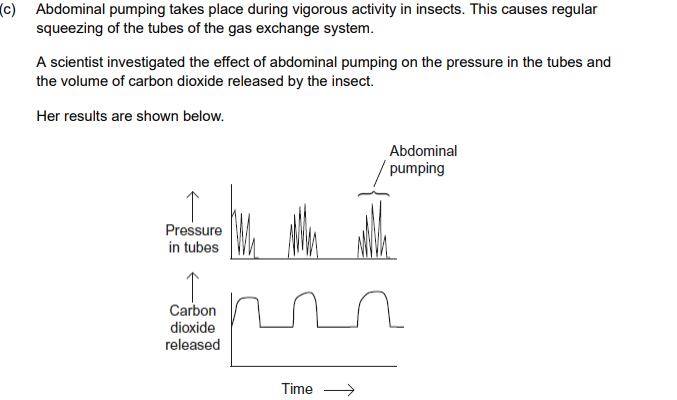
Describe and explain these results.
1. Abdominal pumping/pressure in tubes linked to carbon dioxide release; MP1 relates to description of link shown in graphs 2. (Abdominal) pumping raises pressure in body; Needs idea of causation, not just description of correlation 3. Air/carbon dioxide pushed out of body /air/carbon dioxide moves down pressure gradient (to atmosphere); Reject ref to concentration gradients/diffusion
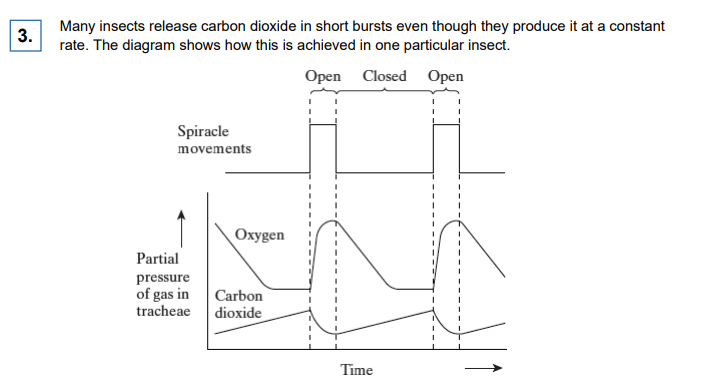
(a) Using information from the diagram, suggest what stimulates the spiracles to open
increasing carbon dioxide concentration / partial pressure;
Explain what causes the oxygen concentration in the tracheae to fall when the spiracles are closed.
(oxygen is used in) respiration therefore diffuses (from tracheae) to tissues; oxygen unable to enter organism;
The insect lives in dry conditions. Suggest an advantage of the pattern of spiracle movements shown in the diagram.
spiracles not open all the time; therefore there is less water loss (by diffusion through spiracles);
(a) Describe how the structure of the insect gas exchange system:
• provides cells with sufficient oxygen • limits water loss. Explain your answers.
1. Spiracles (lead) to tracheae (that lead) to tracheoles;
2. Open spiracles allow diffusion of oxygen from air OR Oxygen diffusion through tracheae/tracheoles;
3. Tracheoles are highly branched so large surface area (for exchange);
4. Tracheole (walls) thin so short diffusion distance (to cells) OR Highly branched tracheoles so short diffusion distance (to cells) OR Tracheoles push into cells so short diffusion distance;
5. Tracheole walls are permeable to oxygen; 6. Cuticle/chitin in tracheae impermeable so reduce water loss;
7. Spiracles close (eg.during inactivity) preventing water loss; Accept
8. (Tiny) hairs around spiracles reduce evaporation
Amoebic gill disease (AGD) is caused by a parasite that lives on the gills of some species of fish. The disease causes the lamellae to become thicker and to fuse together. AGD reduces the efficiency of gas exchange in fish. Give two reasons why
(b) 1. (Thicker lamellae so) greater / longer diffusion distance / pathway; Q Neutral: ‘thicker’ diffusion pathway
2. (Lamellae fuse so) reduced surface area; Accept: reduced SA:VOL
The volume of water passing over the gills increases if the temperature of the water increases. Suggest why.
Increased metabolism / respiration / enzyme activity;

