Comprehensive Physics: Liquids, Buoyancy, and Fluid Mechanics
 Call Kai
 Learn
Learn Practice Test
 Spaced Repetition
 Match
Match Flashcards
 Knowt Play
1/39

There's no tags or description
Looks like no tags are added yet.
Name | Mastery | Learn | Test | Matching | Spaced | Call with Kai | Chat |
|---|
No analytics yet
Send a link to your students to track their progress
40 Terms
What is pressure in a liquid?
The force per unit area that a liquid exerts on an object, which is depth dependent.
How does pressure change when you swim deeper in water?
Swimming deeper increases the weight of water above you, thus increasing pressure.
What is the relationship between pressure and the shape of a container?
Pressure at a particular depth is the same regardless of the shape of the container.
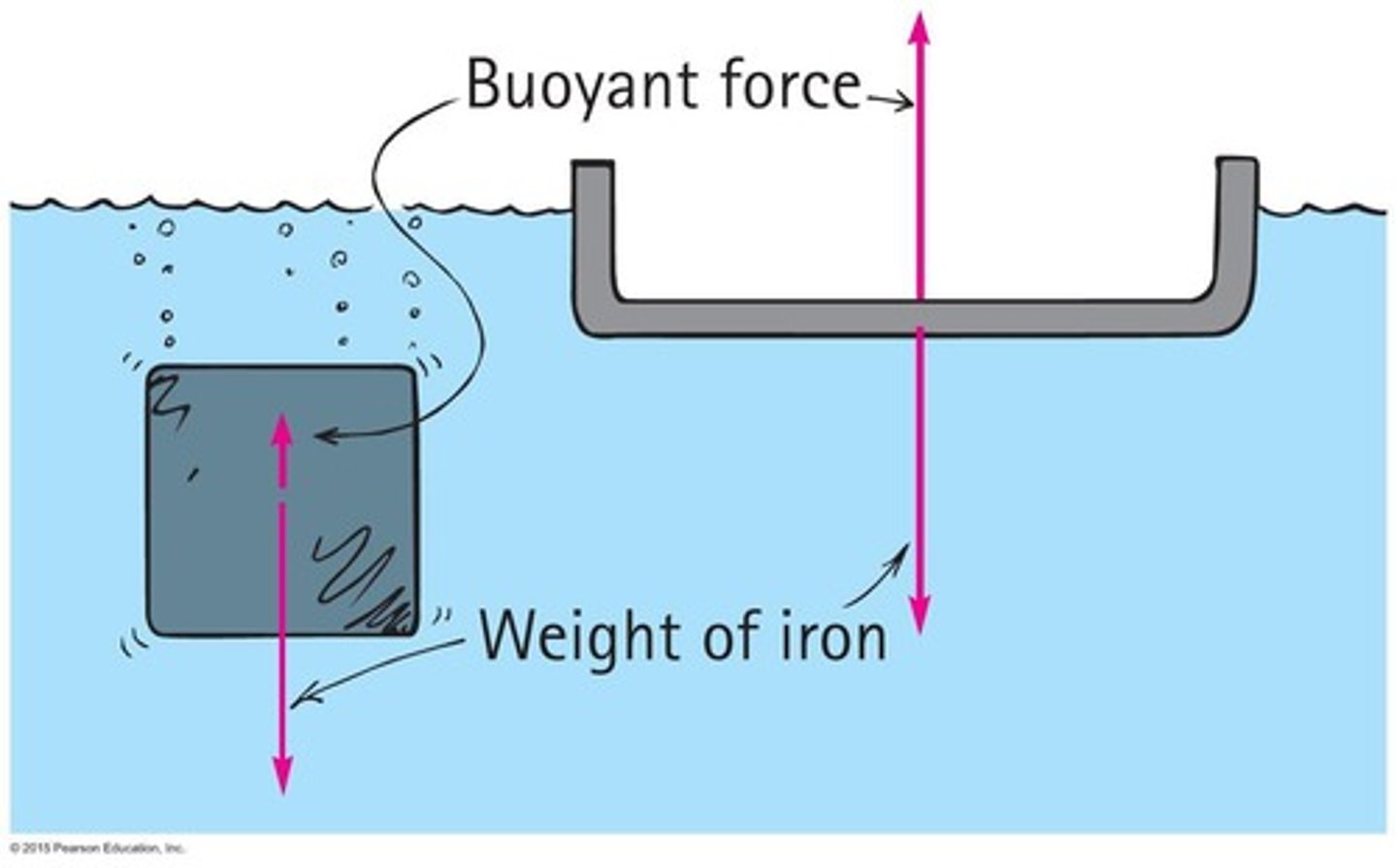
What is buoyancy?
The apparent loss of weight of a submerged object, equal to the weight of the water displaced.
What does the displacement rule state?
A completely submerged object displaces a volume of liquid equal to its own volume.
What is the buoyant force?
The net upward force that a fluid exerts on an immersed object, equal to the weight of the water displaced.
When does an object sink in a liquid?
An object sinks when its weight is greater than the buoyant force acting on it.
What is Archimedes' Principle?
It states that an immersed body is buoyed up by a force equal to the weight of the fluid it displaces.
How is the apparent weight of a submerged object calculated?
Apparent weight = weight out of water - buoyant force.
What happens to the buoyant force when a fish expands its air bladder?
The buoyant force increases as the fish's density decreases.
What occurs when a submarine takes water into its ballast tanks?
The submarine's density increases, causing it to sink.
What is the principle of flotation?
A floating object displaces a weight of fluid equal to its own weight.
Why is it easier to float in saltwater compared to freshwater?
In saltwater, the buoyant force is greater due to the higher density of the water.
What is the effect of depth on liquid pressure?
Pressure increases with depth due to the weight of the liquid above.
How does pressure act in a liquid?
Pressure acts equally in all directions on an object submerged in a liquid.
What happens to the pressure exerted on the bottom of a boat?
The pressure acts upward on the bottom of the boat due to water pressure.
What is the relationship between buoyant force and submerged object weight?
If the weight of the submerged object equals the buoyant force, it remains at any level.
What happens to the density of a fish when it decreases the size of its air bladder?
The density of the fish increases.
What is the role of surface area in pressure?
A larger surface area results in lower pressure exerted on a surface.
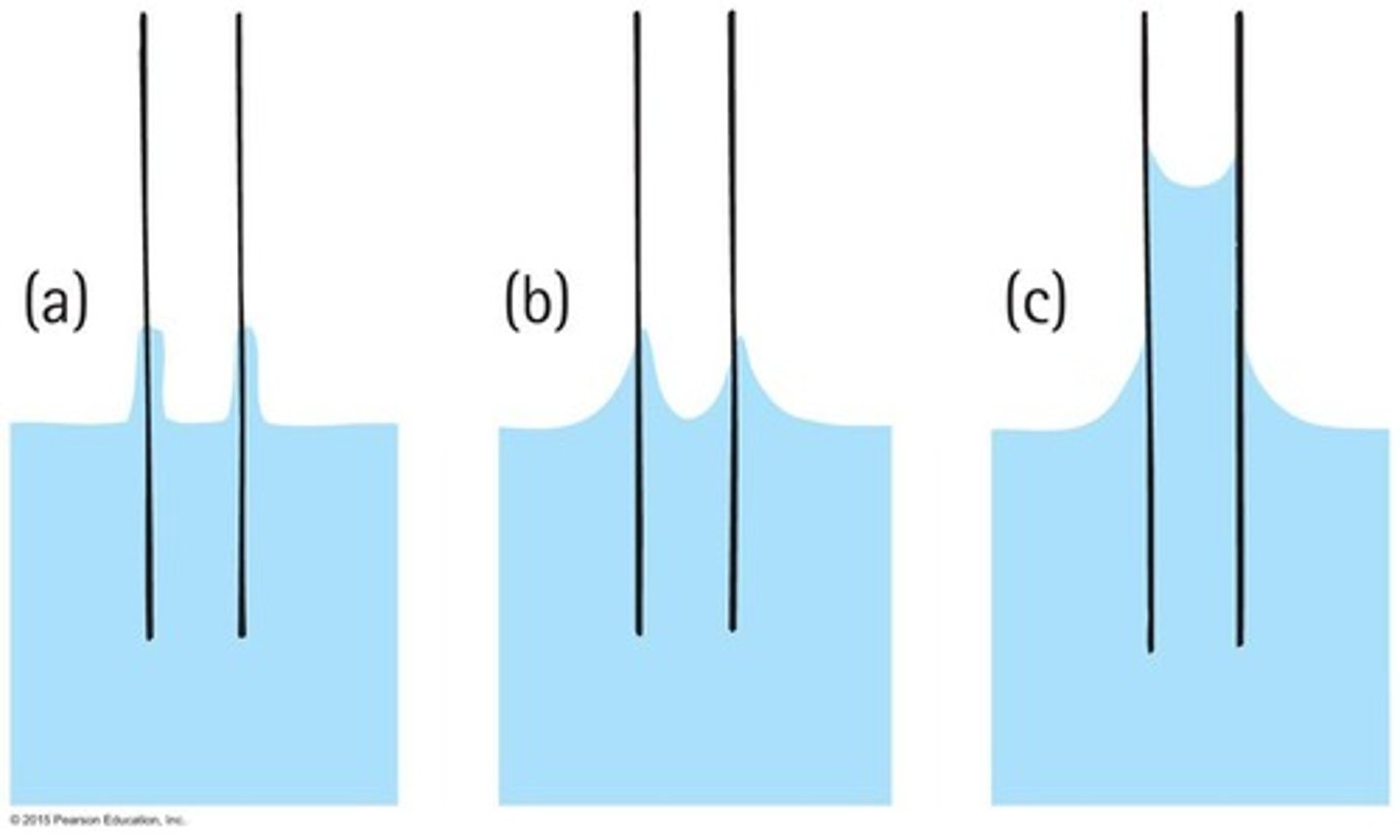
What is capillarity?
The ability of a liquid to flow in narrow spaces without the assistance of external forces.
What is surface tension?
The cohesive force at the surface of a liquid that causes it to behave as an elastic sheet.

How does the buoyant force relate to the weight of water displaced?
The buoyant force on an object is equal to the weight of the water it displaces.
What happens to the buoyant force when a submerged object is moved deeper?
The buoyant force remains constant as it depends on the weight of the displaced fluid.
What is the significance of Pascal's Principle?
It states that pressure applied to a confined fluid is transmitted undiminished in all directions.
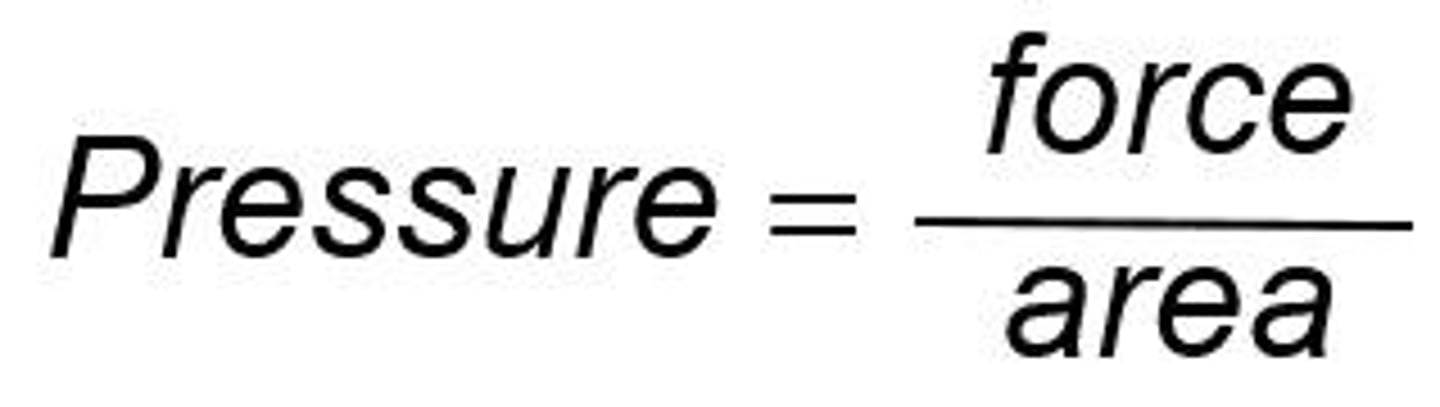
What is the equation for pressure?
Pressure (P) = Force (F) / Area (A), measured in Pascals (Pa).
What happens to a life preserver filled with lead pellets when submerged?
It will displace more water than a Styrofoam-filled preserver, but the person will drown as it submerges.
What is the relationship between the weight of an object and the weight of the water it displaces when floating?
The weight of the object is equal to the weight of the water displaced.
What principle is illustrated by Scotland's Falkirk Wheel?
The principle that two caissons of equal weight will remain balanced regardless of the boats inside them.
What does Archimedes' Principle state about denser fluids?
Denser fluids exert a greater buoyant force on a body than less dense fluids of the same volume.
How does Archimedes' Principle apply to air?
The more air an object displaces, the greater the buoyant force on it; if it displaces its weight, it hovers.
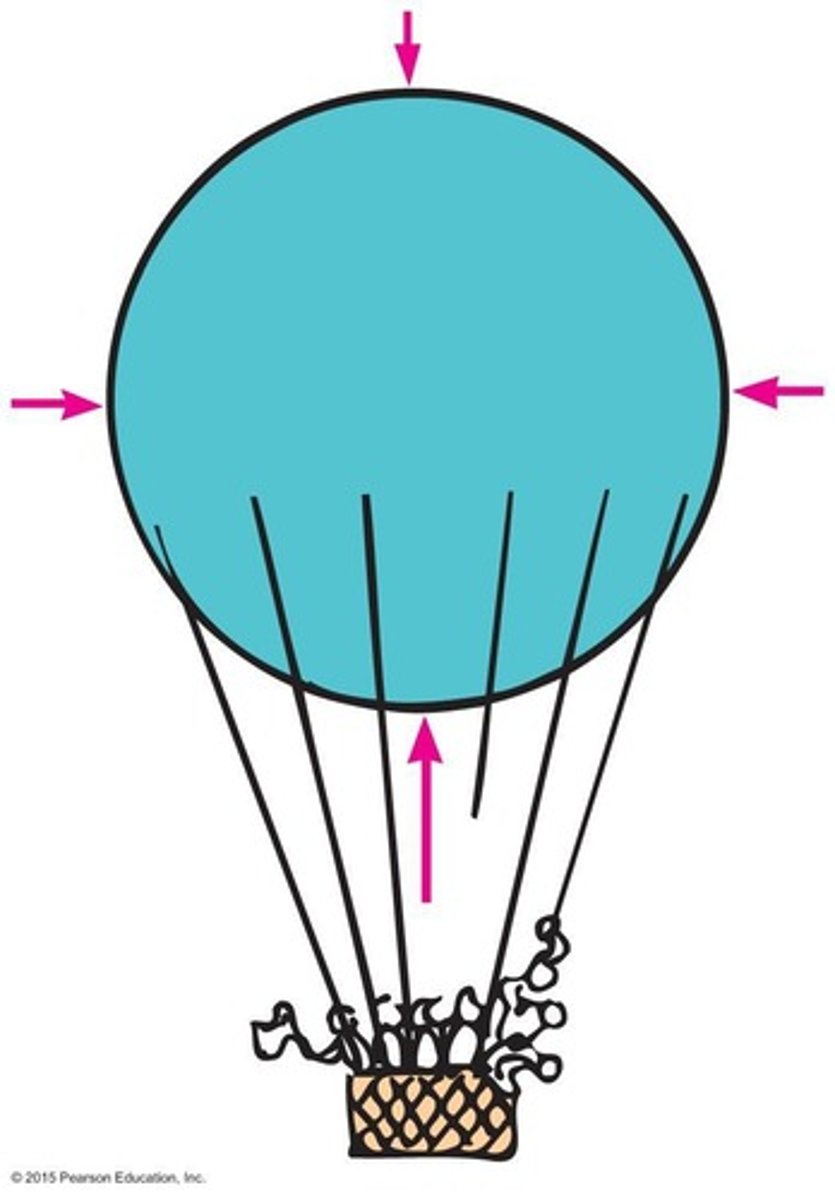
Is there a buoyant force acting on you while sitting in class?
Yes, due to the displacement of air, but it is much less than your weight.
What determines whether an object floats or sinks?
An object floats if its weight is less than the buoyant force of the liquid it displaces.
What are the three rules for objects in fluids?
1. Denser objects sink. 2. Less dense objects float. 3. Equal density objects neither sink nor float.
What is the buoyant force on two identical blocks submerged in water, one lead and one aluminum?
The buoyant force is the same on both blocks since they displace the same volume of water.
What does Pascal's Principle state?
A change in pressure at any point in an enclosed fluid at rest is transmitted undiminished to all points in the fluid.
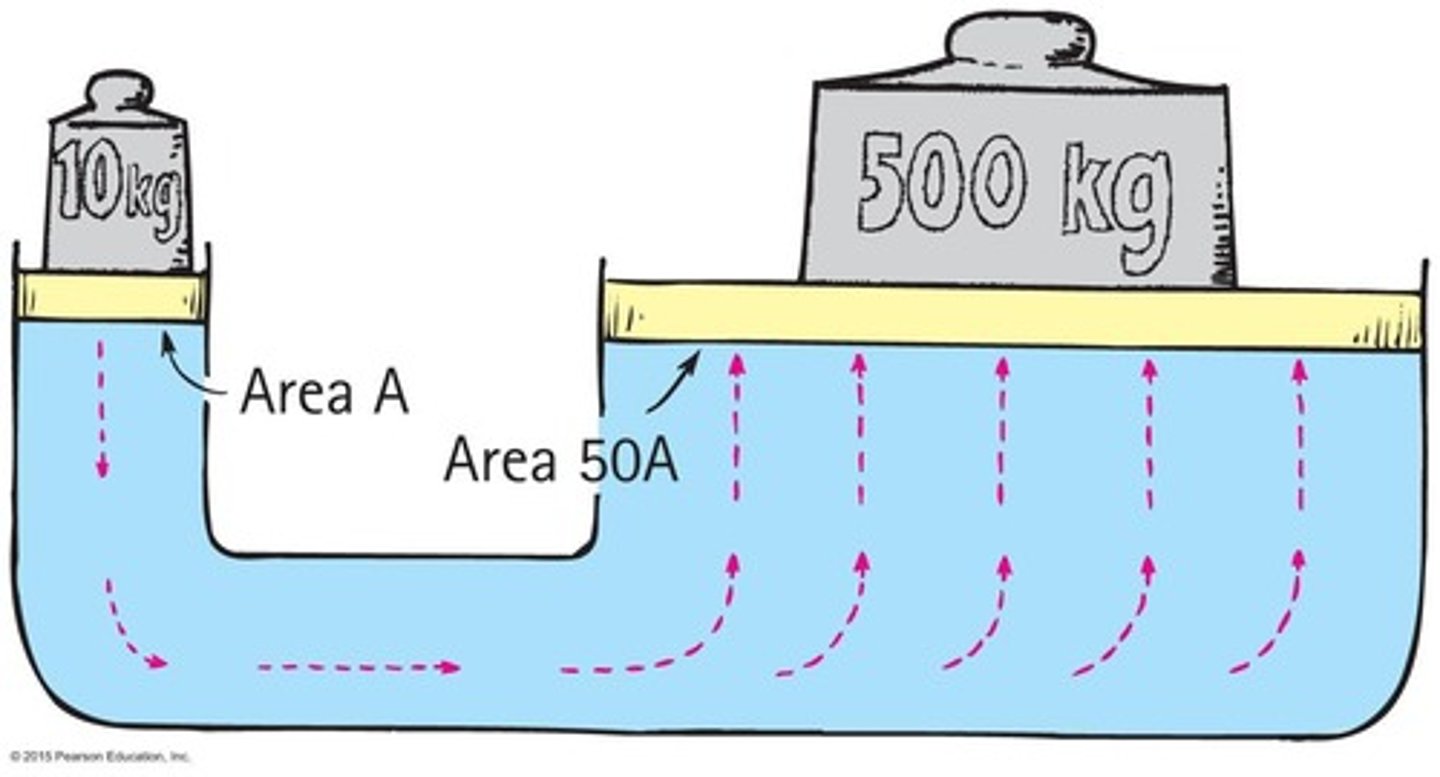
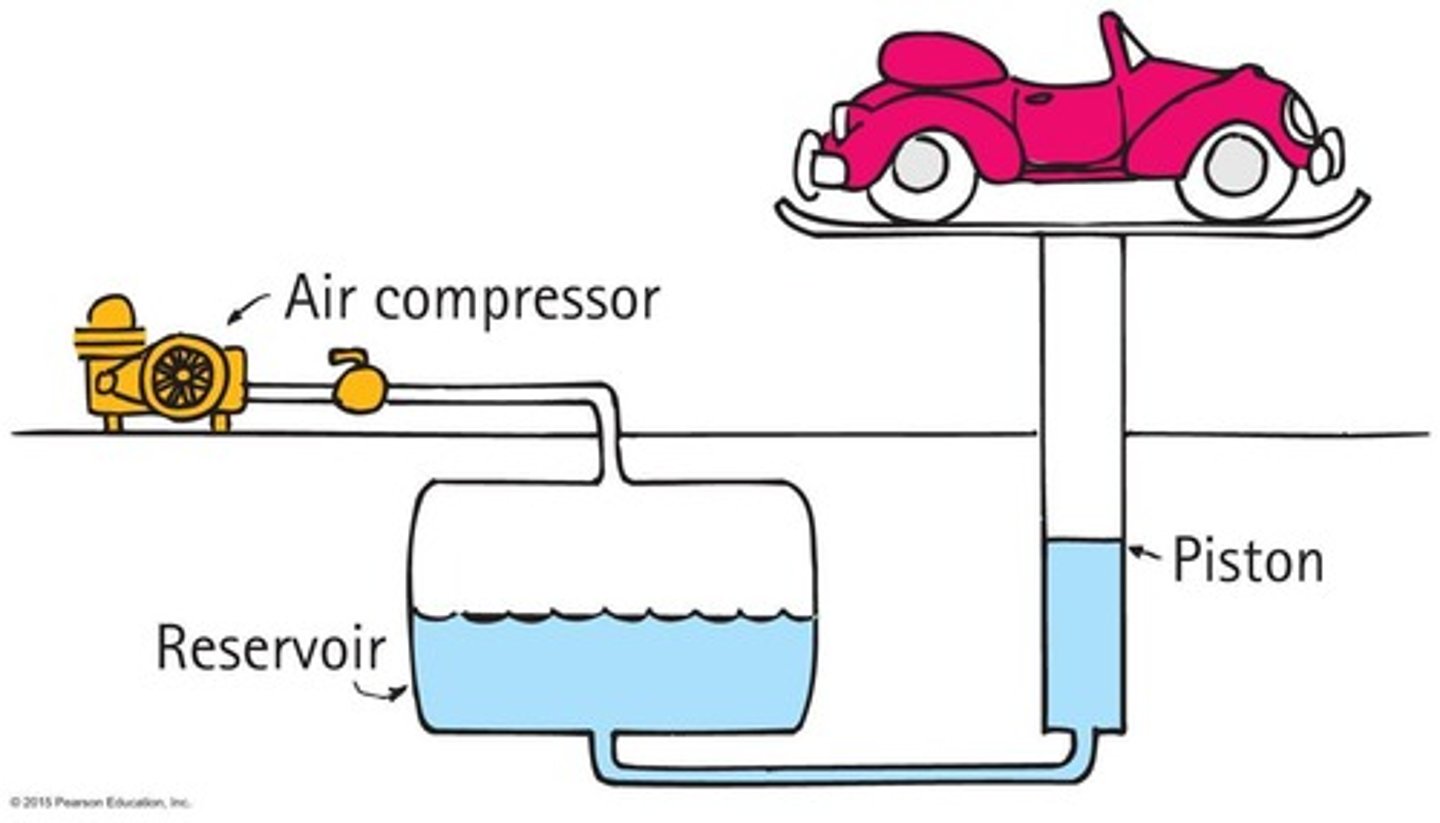
How does Pascal's Principle apply in hydraulic devices?
Pressure applied to one piston is transmitted to another piston, allowing a small force to lift a larger load.
Why are drops of liquid spherical?
Surface tension forces the drop into the shape with the least surface area for a given volume, which is a sphere.
What factors affect surface tension?
The type of liquid, the presence of surfactants (like soap), and the temperature of the liquid.
What determines the height of liquid rise in capillarity?
The weight of the liquid and the narrowness of the tube; lighter liquids rise higher.
Give an example of capillarity in action.
Oil rising in a wick or hair getting wet in a bathtub.