Public Health 3100: Non-experimental Quantitative Study Designs
 Studied by 0 people
 Call Kai
 Learn
Learn Practice Test
 Spaced Repetition
 Match
Match Flashcards
 Knowt Play
1/14

There's no tags or description
Looks like no tags are added yet.
Name | Mastery | Learn | Test | Matching | Spaced | Call with Kai |
|---|
No analytics yet
Send a link to your students to track their progress
15 Terms
Nonequivalent Comparison Group Design
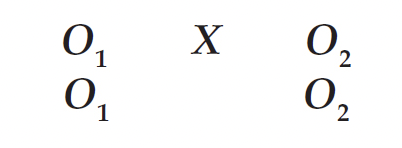
In this design, there are two groups. Both are assessed at baseline; one group is exposed to the intervention and the other is not. Both groups are measured again at post-test and the results are compared.
Time Series Study Design

There are three measurements before the intervention and three after the intervention. Useful for understanding the process of how behaviors or factors change over time, or how interventions or policies influence these behaviors or factors.
Cross-sectional Studies
Widely used in public health research, particularly in exploratory or descriptive research. In these studies, the researcher examines a phenomenon by collecting and analyzing data from one point in time, or gets a “cross-sectional” view of the phenomenon. Surveys assessing a topic of interest at one point in time are cross-sectional.
Longitudinal Studies
There is a time order for data collection. By collecting data at different time points, researchers are able to determine whether the change in the independent variable precedes the change in the dependent variable. Useful when looking at changes in prevalence of behaviors or diseases over time.
Trend Studies/Repeated Cross-sectional Studies
Designed to capture data at two or more time points from different samples of the same population. Appropriate for seeking information on the change of some phenomenon within populations over time.
Cohort Studies
Data is collected at two or more time points from individuals or groups with a common starting point.
The Framingham Heart Study
A cohort study that began in 1948 to identify common factors or characteristics contributing to cardiovascular disease. The original cohort included 5,209 men and women between the ages of 30 and 62 from the town of Framingham, Massachusetts. Over the course of 70 years, five more cohorts have been added and data are collected from these groups on a regular basis.
Panel Studies
Data are collected at two or more points in time from the same individuals, but unlike cohort studies, may not have a common starting point. Focuses on individual changes
One-shot Case Study

A design in which measurement of one group takes place after an intervention. There is no covariation, baseline measurement, or comparison group. This study design might be useful to explore perceptions, behaviors, or practices after a natural disaster or some sort of unexpected occurrence for which no baseline data was be collected prior to the event.
One-group pretest-posttest

There is a baseline measurement before and after the intervention. Because there can be comparisons of these two measurements, the research can explore covariation. However, the design has low internal validity, mainly due to the threats of history, maturation, and testing. Without a comparison group, there is no certainty the outcome may not be due to some other factor. Sometimes this type of study is done out of convenience.
Posttest-only with Nonequivalent Groups
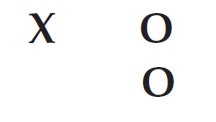
This design takes the one-shot case study design and adds a comparison group, both only measured at posttest. Because there is no random assignment, there is no way of knowing whether the groups are comparable. Although it may be considered better than a one-shot case study, this design has low internal validity due to the potential for selection bias. The researcher has no way of knowing how much the groups differed in purchasing behavior prior to the outbreak event.
Single-case Study Design
An individual is assessed on the dependent variable multiple times prior to and after the intervention. The multiple data points show trends and sustainability of intervention outcomes. The multiple measures reduce the threats to internal validity, but factors, such as history, may still be a limitation. Some studies of this type use more than one baseline and intervention phase. If the trend is in the desired direction during the intervention phases, but not the baseline phases, there is more evidence to demonstrate history may not be a threat to the study’s internal validity.
External Validity
The extent to which a study’s findings are applicable or generalizable to other populations and settings.
Population External Validity
How well the research on a sample can be generalized to other samples or the whole population. If your study sample were a group of adolescents, would the results be generalizable to all adolescents?
Ecological External Validity
How well the results can be generalized to other settings or contexts. For example, if your study results identify specific correlates of physical activity for adults in an urban community, would those correlates be generalizable to suburban or rural settings?
 Note
Note  Flashcards (178)