Homeostasis and Adaptation
 Studied by 0 people
 Call Kai
 Learn
Learn Practice Test
 Spaced Repetition
 Match
Match Flashcards
 Knowt Play
1/42

There's no tags or description
Looks like no tags are added yet.
Name | Mastery | Learn | Test | Matching | Spaced | Call with Kai |
|---|
No analytics yet
Send a link to your students to track their progress
43 Terms
Homeostasis
any self-regulating process by which biological systems tend to maintain stability while adjusting to conditions that are optimal for survival
feedback loops
generally describes resting conditions
Example parameters of homeostasis
blood pressure
oxygen and carbon dioxide tensions
blood concentrations of glucose and other metabolites
blood and tissue osmotic pressures
blood pH
core temperature
what is homeostasis challenged by
external and internal stimuli
ex) heat, cold, lack of oxygen, hydration, food intake, psychological stresses, exercise
most disruptions are mild and temporary
steady state
internal environment is relatively constant, but the parameter is not necessarily at resting or “normal” levels
energy expenditure may be required
balance has been achieved
components of feedback loops
receptor (sensor)
control center
effector
receptor - feedback loops
monitors changes, sends input in the form of nerve impulses or chemical signals to a control center
control center - feedback loops
sets the range of values within which a controlled condition should be maintained, evaluates input it receives from receptors, and generates output commands
effector - feedback loops
body structure that receives output from the control center and produces a response or effect that changes the controlled condition
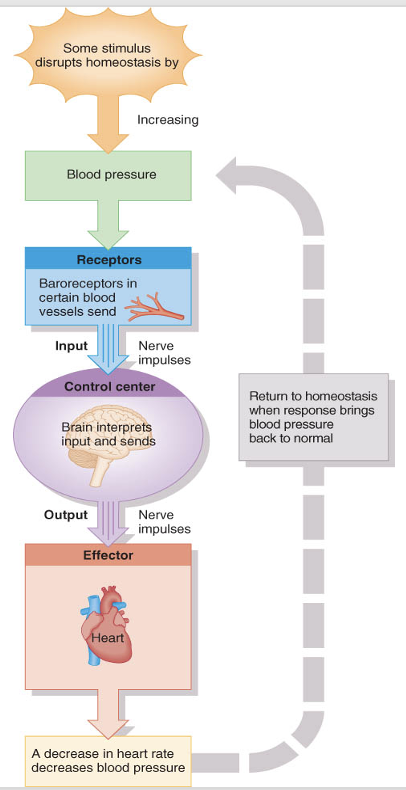
negative feedback loops
how most of our physiological control systems operate
response that reverses the original stimulus
the activity of the effector produces a result that opposes the stimulus
example of negative feedback loop
blood pressure regulation by heart rate
feed-forward control
anticipatory response of a physiological parameter to prepare the body for change
often a learned anticipatory response to a known cue
usually acts in concert with negative feedback systems
examples of feed-forward control
increase in HR and ventilation in anticipation of exercise
increase in salivation and digestive enzyme secretion in anticipation of a meal
ability to use appropriate force and smooth movements when picking up an object
anticipatory postural adjustments
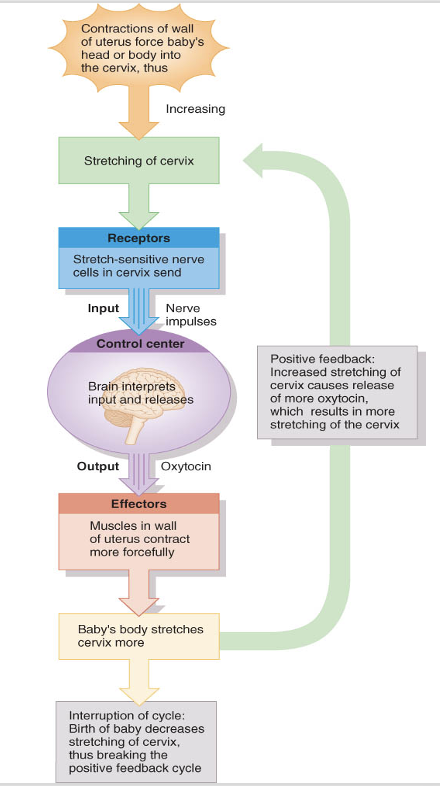
positive feedback loop
response that enhances the original stimulus
positive feedback system reinforces a change in a controlled condition
examples of positive feedback loop
labor and delivery
action potentials
urge to urinate
exercise as a challenge to homeostasis
body must quickly respond to prevent drastic alterations in the internal environment
steady state may not be possible when demands of exercise are very large
examples of how exercise can challenge homeostasis
increased demands on regulating core temperature because of heat production
increased demands on regulating arterial blood gases because of increased cellular respiration
increased demands on regulating blood glucose levels because of increased cellular energy demand
increased production of CO2 during exercise which the body must get rid of
adaptation
cellular changes that occur in response to an altered environment
cells are constantly exposed to changes in their environment
cells can adapt to acceptable changes in their environment by modifying metabolism or growth pattern
importance of discussing physiology of adaptation
how the body adapts to a stressor (exercise training adaptations, chronic disease)
certain adaptations in growth act as a fertile ground for the later development of neoplasia
nomenclature is used in clinical work
physiological stimuli for adaptation
those which are within an acceptable range
examples of physiological stimuli for adaptation
exercise training
change in the female reproductive system during pregnancy
age related changes in skeletal muscles
pathological stimuli for adaptation
those that cause a severe disturbance to cell function
examples of pathological stimuli for adaptation
nutritional: severe deprivation of nutrients or calories
immune: allergic reactions
endocrine: over or under production of hormones
physical agents: cigarette smoke, asbestos
chemical agents: drugs
infections: viruses, bacteria, fungi, parasites
anoxia: poor blood flow
genetic: chromosomal disorders
exercise training results in cellular adaptation
change in the structure or function of a cell or organ system that results in an improved ability to maintain homeostasis and steady states during stressful conditions
occurs through cellular signaling mechanisms
example: exercise training results in cellular adaptation
skeletal muscle adaptations to aerobic and resistance exercise training
acclimations
ability to adapt to an environmental stressor
ex) ability to acclimatize to exercise in the heat
skeletal muscle adaptations to aerobic exercise training: changes in cellular contents and structure
increase in the number and size of mitochondria
increase in myoglobin content and capillary density
myoglobin carries and stores oxygen in muscle cells
increase in glycogen and triglyceride content
skeletal muscle adaptations to aerobic exercise training: changes in cellular biochemical properties
increased ability to oxidize fats and carbohydrates
improved H+ ion buffering capacity
down-regulation of myosin ATPase to slow-twitch isoform
skeletal muscle adaptations to aerobic exercise training: physiological implication
improved aerobic endurance, particularly during submaximal aerobic exercise
improved delivery of O2 rich blood to muscles
improved ability to utilize fats and carbs to produce ATP using aerobic metabolism pathways
decreased production of lactic acid during exercise
improved ability to buffer acids produced during exercise
overtraining continuum
fatigue → overreaching (functional or non-functional) → overtraining syndrome

fatigue - overtraining continuum
recovery is rapid, usually within 24-48 hours
functional overreaching - overtraining continuum
recovery takes longer (up to 2 weeks) but is all part of a planned program to improve performance longer term (ex training camps)
non-functional overreaching - overtraining continuum
recovery takes even longer (weeks, sometimes months). the negatives outweigh the positives, there is no long term gain
overtraining syndrom - overtraining continuum
recovery takes a very long time, sometimes many months
difference between overreaching and overtraining
amount of time needed for performance restoration (not the type or duration of training stress or degree of impairment)
training adaptations
occur because we have overloaded the body with a repeated stimulus, thus inducing adaptation
happens as long as the overload is appropriate
when we overtax the body with an inappropriate stimulus, we run into the risk of non-functional overreaching and overtraining
cellular adaptation to an increased functional demand
hypertrophy
hyperplasia
these can occur independently or together and are reversible processes, reflected by an increase in size and weight of an organ
hypertrophy
increase in cell size
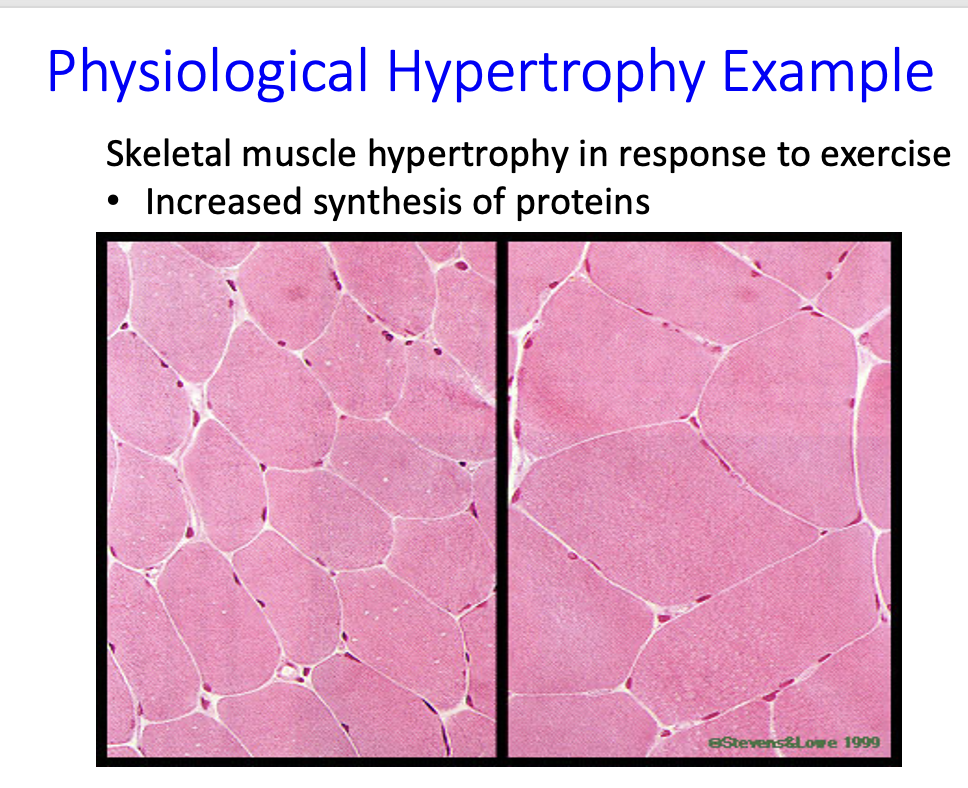
hypertrophy example
skeletal muscle hypertrophy in response to exercise
increased synthesis of proteins → size and volume of individual fibers increase
number of fibers does not increase
hyperplasia
increase in cell number
cellular adaptation to an decreased functional demand
atrophy
hypoplasia
mixture of the two
reflected in a reduced size and mass of an organ
atrophy
reduction in the cell volume of a tissue by elimination of cytoplasms and structural proteins
hypoplasia
reduction in cell number through apoptosis
common causes of atrophy
denervation
immobilization
reduced endocrine stimulation
ischemia
aging
cell components removed by degradative systems

