Socket Fit - TF
 Call Kai
 Learn
Learn Practice Test
 Spaced Repetition
 Match
Match Flashcards
 Knowt Play
1/33

There's no tags or description
Looks like no tags are added yet.
Name | Mastery | Learn | Test | Matching | Spaced | Call with Kai |
|---|
No analytics yet
Send a link to your students to track their progress
34 Terms
What should you always recommend to patients when getting a new prosthesis?
Get new shoes! Great for alignment
What do I need to ensure patient remains safe?
ALL fittings must take place inside of the parallel bars! Walker used if not bars are present
Gait belt is lower voluntary control/requires transfer assist
No walking unless the distal socket and attachment plate are wrapped with fiber glass!
Fitting sequence
Proper orientation
Socket comfort
Overall prosthesis height/length
Ischial containment and trimline check
Suspension check
Stance symmetry - width and AP placement
Knee/foot stability - weight distribution
Dynamic alignment
Donning and orientation
Ensure socket is oriented to anatomy
Assist patient with donning if necessary
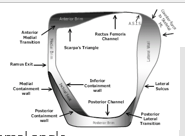
Orientation to anatomy
IT containment strut angle matches ramal angle
Adductor longus tendon at anterior-medial corner
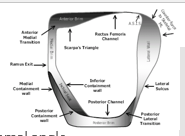
Donning sock
Should have some resistance as it’s pulled down the limb. Unloading, pull as loading
Seal-in liner donning
Should take two or three cycles of loading and unloading
Palpate the ischium
Move anteriorly along the ramus - ramus exiting without impingement, appropriate flare to medial brim, adductor roll?
Find adductor tendon
Medial brim trimline assessment
Place one hand on the proximal lateral brim, other on the ipsilateral iliac crest
Pull socket toward you gently but firmly
Lateral displacement test
Push on proximal lateral socket and contralateral iliac crest
Medial displacement test
How much displacement are you looking for in the medial and lateral displacement tests?
<1/2”
What should you look for when assessing skin fit?
Look for even blanching (lighter shade)
Areas of darker shade indicate gapping
No areas of excessive pressure/blanching
Areas of darker shade indicate what in a skin fit?
Gapping
Burning sensation during seated assessment
Posterior brim is too wide
Distal gapping
First assess ischium location - tells us if we need to increase volume of the socket
Check to see if socket is too tight or too long
If there is distal gapping and the socket is too tight, what do you do?
Loosen fit to place ischium in correct location
If there is distal gapping and the socket is too long, what do you do?
Distal padding
What does the skin look like and what does the patient feel if it is a loose fitting socket?
Patient feels short and has perinium pain - add pads or socks
Skin proximal-medial/distal-lateral pressures or redness. Initially skin is pink but darker once socket is doffed
What does the skin look like and what does the patient feel if the socket is tight fitting?
Patient will feel tall with minimal ischial containment, having low pressure/pain
Skin will have distal redness due to no contact
What coloring of skin do we want?
Even marble pink color of skin
Weight shifting initially
Have patient step forward and back in the parallel bars to simulate heel strike and toe off
Dynamic alignment goals of gait
Smooth transition from IC to LR
Knee stability throughout stance
Minimal trunk compensation
Symmetric step lengths and timing
Symmetric knee motion during swing
High socket pressures in the sagittal plane during early stance - why?
Proximal anterior, distal posterior
Trying to pull knee into extension
High socket pressures in the coronal plane during midstance - why?
Proximal medial, distal lateral
Femur is trying to abduct for good lateral rotation - connection to lateral gapping/ischial containment
When a person is wearing a TF prosthesis, where does the socket normally apply pressure on the limb during midstance in the coronal plane?
Proximal medial, distal lateral
A person wearing a TF prosthesis will normally experience greater pressure at the anterior proximal and distal posterior socket during which phase of gait?
Early stance
What role does the gluteus medius play during gait in a TF prosthesis?
It abducts the femur against the lateral wall of the socket to lift the pelvis
Which of these factors are considered part of the voluntary control?
A. Muscle strength
B. Component type
C. All of these
D. Alignment
Muscle strength
Which factor or factors effect suspension choice for a TF prosthesis?
A. All of these are correct
B. Patient preference
C. Effect on energy consumption
D. Limb length
All of these
Trim line at the inguinal crease
Anterior brim
Loads medial aspect of the ischium - relieves the ramus and adductor longus
Medial brim
Prevents ramus from sliding downward into the socket
M/L dimensions
Provides reliefs over the greater trochanter and counter pressure to keep ischium in place
Lateral wall
Accommodate muscular groups of the thigh and wide pressure distribution
A/P dimension

