Psychology MCAT
 Call Kai
 Learn
Learn Practice Test
 Spaced Repetition
 Match
Match Flashcards
 Knowt Play
1/171

There's no tags or description
Looks like no tags are added yet.
Name | Mastery | Learn | Test | Matching | Spaced | Call with Kai |
|---|
No analytics yet
Send a link to your students to track their progress
172 Terms
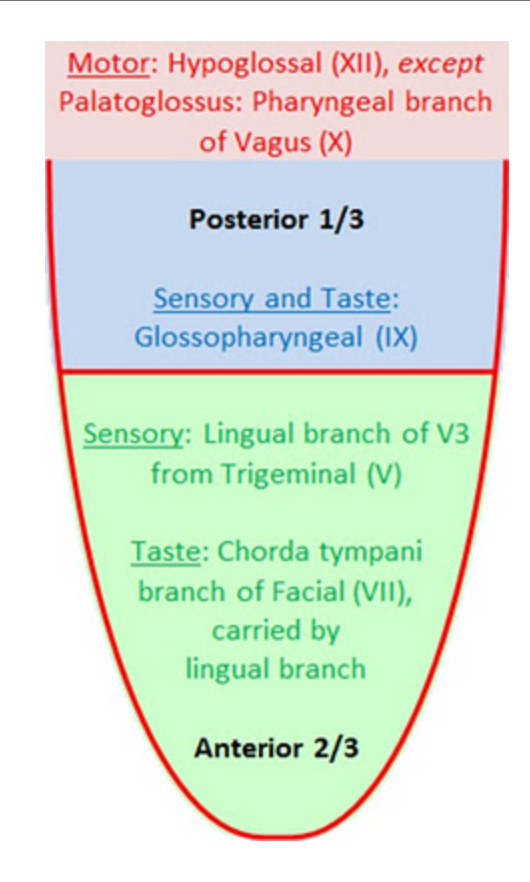
tongue innervation
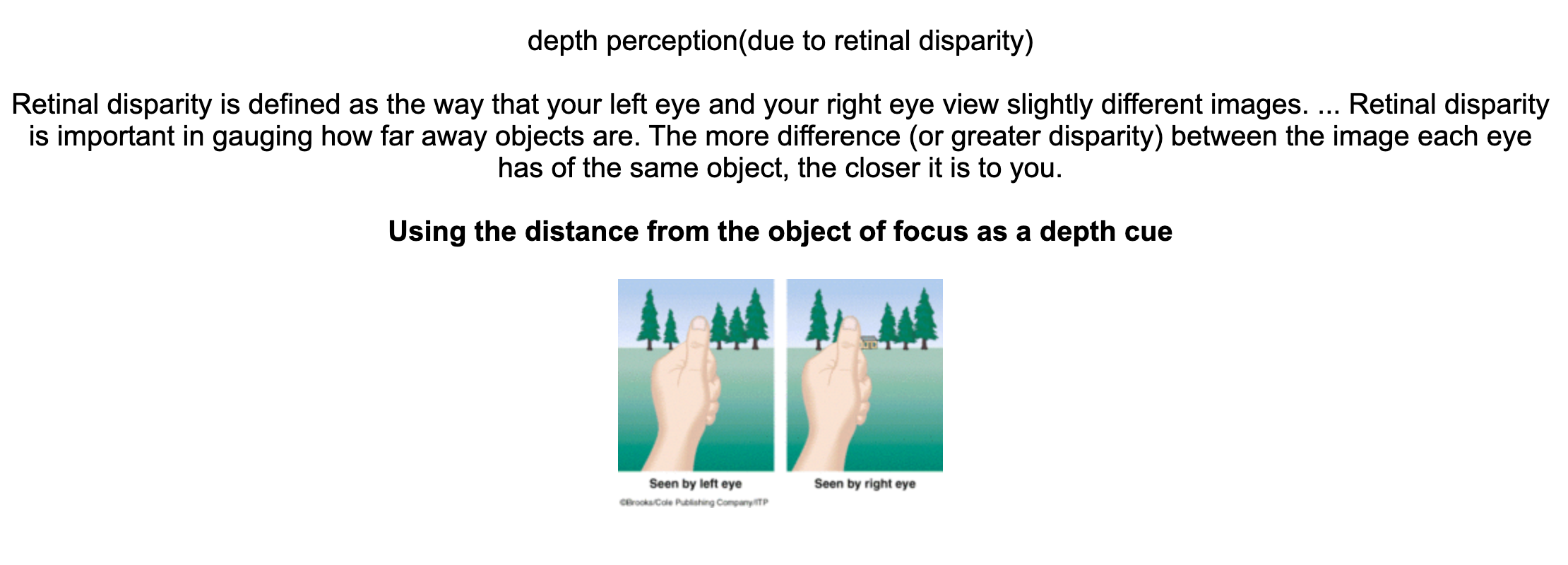
what cues are taken into account when perceptually organizing?
depth, form, motion, constancy
binocular cues provide
depth perception
convergence
gives depth perception based on how much eyes are turned inward, if eyes need to turn a lot to converge, the object is close
how does the inner ear adapt to loud noises?
Given enough reaction time, the tensor tympani muscle contracts and pulls TM taut. Tight TM transfers less kinetic energy to ossicles and endolymph in cochlea.
Thus, the perception of sound decreases even if the source remains at the same intensity.
If the source of the sound is sudden and intense enough, tensor tympani is too slow to react and TM may rupture.
proprioception
sense of self in space
just noticeable difference
A positive or negative change in intensity from background that you can detect correctly 50% of the time
Changes greater than the JND are easily detected
Changes smaller than the JND are difficult to detect
the hawthorne effect
The Hawthorne Effect, also called the observer effect, is the phenomenon where people change their behavior as a result of being knowing they are being observed. This is a type of bias.
parameters
data associated with population
statistics
data associated with samples
internal validity
whether or not you actually identified causality in a study between the independent and dependent variable
external validity
whether or not the causality you identified in your research can actually be generalized to the population you say it generalizes to
satistically significant
An intervention's effects are statistically significant when it can be said that they do not happen due to random chance. This is usually indicated with p values of less than 0.10 or 0.05
Hill’s Criteria
For two things that are correlated, Hill's criteria can be used to determine if they are actually correlated. Hill's criteria is as follows.
1. Temporality
2. Strength
3. Dose-Response Relationship
4. Consistency
5. Plausibility
6. Consideration of Alternative Explanations
7. Experiment
8. Specificity
9. Coherence
MNEMONIC: The Strange Doctors Consistently Poll Cats, Elephants, Snakes, and Crocodiles
Hill Criterion of Temporality
This criterion states that for an independent variable to be causing a depedent variable, it must occur before the dependent variable in the study.
Hill Criterion of Strength
This criterion says the higher the correlation between an independent variable and a dependent variable, the more likely that they are causally related.
Hill Criterion of Dose-Response Relationship
This criterion states that the more an increases in the independent variable increases the dependent variable, the more likely the independent variable is causing the dependent variable.
Hill Criterion of Consistency
As you increase the number of settings in which you can relate an independent variable to a dependent variable, the more likely there is an actual causal relationship between them.
Hill Criterion of Plausibility
The more reasonable the mechanism of action between the independent variable and the dependent variable, the more likely they are actually causally related.
steps of the scientific method
1. Generate a testable question.
2. Gather Data and resources
3. Form a hypothesis
4. Collect new data
5. Analyze the data
6. Interpret the data and existing hypothesis
7. Publish
8. Verify results
Hill Criterion of Consideration of Alternative Explanations
The more plausible alternative explanations for a phenomenon, the less likely your explanation is right.
On the other hand, if you can show that your explanation is the only plausible one and there aren't any other plausible explanations, your explanation is much more likely to be right.
Hill Criterion of Experiment
This criterion states that if you really want to determine a causal relationship, you need to use an experiment.
Hill Criterion of Specificity
This criterion states that the more specific the dependent variable is in regards to the independent variable, the more likely they are causally related.
For example, if the dependent variable only ever changes when I change the independent variable, they are very likely to be causally related.
However, if I can change the dependent variable by changing 10 other variables, then it is way less likely that the independent variable and the dependent variable are causally linked.
Hill Criterion of Coherence
This criterion states that the general body of scientific knowledge is pretty accurate, and if a causal relationship is claimed that is consistent with and fits well in the modern understanding, it is more likely to be a true causal relationship.
detection bias
Detection bias arises when educated professionals use their knowledge in an inconsistent way by seraching for an outcome disproportionately in certain populations.
selection bias
Selection bias is when the sample differs from the population in a non-representative way.
different types of research errors
1. Bias
2. Confounding
3. Random error
FINER method
The FINER method is a way of determining whether or not a particular scientific enterprise is worthwhile.
1. F - Is the necessary research going to be Feasible?
2. I - Do other scientists and the world at large find this question Interesting?
3. N - Is this question Novel or has it already been asked and researched?
4. E - Is this study going to be Ethical?
5. R - Is this study contributing anything Relevant to the world or is it just some pet project?
positive control
used to ensure a change in the dependent variable when it is expected
negative control
used to ensure no change in the dependent variable when no change is expected.
observational studies
These are subclassified as
1. Cohort Studies
2. Cross-sectional studies
3. Case-control studies
what is informative influence?
look to group for guidance when you have no knowledge of the topic
public conformity
outwardly changing but inside you maintain core beliefs
group polarization
when opinion/decision of a group pushes to an extreme. this happens because all criticism is directed to dissenting/minority view and all praise is directed to shit that supports the majority opinion
what is social anomie? (anomic conditions)
breakdown of social bonds between an individual and their community
Without attachment to society, people will experience
purposelessness, and aimlessness. Periods of rapid social change are often
associated with anomie
compliance
Change of behavior based on request of another
Based on rewards/punishments
No internalization
identification
when you dress/act a certain way to be like someone you look up to
will do this as long as they maintain respect for that individual
normative social influence
if we do something to gain respect/support of peers, we're complying with social norms
because of this we might go with group outwardly, but internally believe something differently
whats the deal with Solomon Asch's line experiments? (what is gestalt psychology)
gestalt psychology - believed
not possible to understand human behaviour by breaking down into parts, people must
be understood as whole
showed that people would conform even though they knew they were right or because they doubted themselves
demonstrated informational and normative social influence
what is ecological validity?
does the experiment relate to the real-life settings?
demand characteristics
describes how participants change behaviour to match
expectations of experimenter. Conformed because that’s what experimenter
wanted them to do. Unconscious
guess hypothesis and try to match it
whats the deal with Milgram's experiments?
tested how far people would go to obey authority, even when it meant hurting others. The researchers deceived participants into thinking they were shocking learners for giving wrong answers.
what is the main point of the zimbardo/stanford prison experiment?
deindividuation (loss of self) and control over the prisoners.
the situational influence (situational attribution) took precedence over dispositional attribution (action due to internal characteristics)
the bad behavior caused cognitive dissonance - guards knowing their behavior was wrong, tried to reduce mental distress - overly justified their behaviors - everything happened because prisoners were whims or they deserved it (changing cognition)
internalization - subjects internalized roles - incorporated roles into beliefs, and let it influence their attitudes/cognitions/behaviors
factors that can influence conformity
group size- 3-5 means you'll conform
unanimity- more people that agree means more likely conformation
group status- trust four doctors over four gardeners about health
group cohesion-connectedness to the group makes conformation more likely
observed behavior- if behavior is observed you conform
public response-if we think we'll be met with acceptance vs shunning
prior commitments-if we said something earlier that goes agaisnt group we are less likely to then conform
feelings of insecurity- insecurity means youll conform
deindividuation
act badly in a group because you think you blend in
social facilitation theory
increase likelyhood that the most "dominant response" will occur in presence of others. can be either positive or negative
Social facilitation can be defined as a tendency for individuals to perform differently when in the mere presence of others. Specifically, individuals perform better on simpler or well-rehearsed tasks and perform worse on complex or new ones
Social facilitation refers to when people do better in front of others
social interference/inhibition refers to when people do worse
folkway
Ways of the folks
basically like a common courtesy/manner.
no consequences for not complying
describes a specific situation
Ex: saying thanks to the cashier, telling friend his zipper is open
more
based on MORALs/beliefs
don't have serious consequences
a norm based on MORAL VALUES, such as being truthul
group polarization
Caused by echo chambers
when opinion/decision of a group pushes to an extreme. this happens because all criticism is directed to dissenting/minority view and all praise is directed to shit that supports the majority opinion
what is symbolic interactionism?
society is a product of everyday interactions of individuals
communicate using symbols (hand gestures)
what is the theory of differential association?
Posits that deviance is learned from those whom we associate with
(symbolic interactionism)
deviance is learned behavior that results from continual exposure to others who violate norms.
Differential association theory suggests that deviance is learned through interaction. For example, someone goes to prison for drug possession and learns from incarcerated sellers how to efficiently sell drugs. The passage does not discuss learning criminal behaviors from others.
labeling theory
Primary deviance --> Consequence --> Punishment (+label) --> Internalization of label --> Secondary deviances
Act of labeling produces further deviance
(symbolic interactionism) (social constructionism)***
a behavior is deviant if society has judged it to be deviant and labled it as such. No behavior is inherently deviant (ex. killing someone is okay if in self defense but bad if out of anger). Labeled as primary or secondary deviance
Labeling theory suggests that when someone is labeled as deviant, the act of being labeled produces further deviance. The initial act is called primary deviance and, if labeled, results in social stigma such as disapproval by others. Internalization of the deviant label leads to further acts of deviance, called secondary deviance.
If an individual is convicted of a crime and labeled a criminal, employment and housing become more difficult, and police are more likely to monitor the individual's activities. These obstacles facilitate the individual's internalization of the label "criminal," making it more likely that person will commit another crime and be caught again. So the response to actions (labeling and social stigma), not the initial actions themselves, creates deviance
primary deviance
The first instance of a deviant behavior
Can be met with mild/no reaction, in which case, doesn't impact person's self-esteem
Can also be met with punishments and labeling
monocular cues
If you can perceive the cue with just one eye, it is a monocular cue
Weber’s law
The ratio of incremental intensity to background intensity is constant. Above this threshold, one will notice the change in intensity
ΔI = Ik
absolute threshold of sensation
minimum intensity of stimulus needed to be correctly detect it 50% of the time
subliminal stimulus
stimulus that is below our absolute threshold of sensation
A stimulus we failed to detect (a miss)
thermoception
temperature
mechanoception
pressure
nociception
pain
proprioception
body position
non adapting neuron
neuron fires at constant rate regardless of stimulus
slow adapting neuron
neuron fires rapidly at first then tapers off
fast adapting neuron
Fires an AP on start of stimulus and fires a second AP when stimulus terminates.
what portion of the inner ear helps determine strength of rotation/movement of head?
endolymph inside semicircular canals
otolithic organs
utricle and saccule
calcium carbonate crystals that drag hair cells with the help of gravity to determine linear acceleration
what is signal detection theory
discerning between important and unimportant stimuli.
can have hit, miss, false alarm, or correct rejection
what is d' (d prime, signal detection theory)
strength of a signal
what is c (signal detection theory?)
strategy used
what is the liberal strategy (signal detection theory?)
Say yes liberally, even to equivocable stimuli.
Will get all the hits but also false alarms
what is the conservative strategy? (signal detection theory)
Say yes only when confident
Will get all correct rejections but may get misses too
what is bottom-up processing? accuracy level?
Sensory input guides perception
Processing of sensory stimuli without use of background knowledge or assumptoms
As a result, inductive reasoning is less prone to errors of assumption and is more accurate if done correctly.
Inductive reasoning
what is top-down processing?
Beliefs, ideas, expectations guide perception
uses background knowledge to influence perceptions (cube illusion). theory driven
theory down to detail
Deduction
what is gestalt's law of similarity?
Elements that are similar to each other tend to be perceived as a group
what is absolute threshold of sensation?
minimum intensity of stimulus needed to be correctly detect it 50% of the time
what is c (signal detection theory?)
strategy used
what is gestalt's law of pragnanz
Complex elements are perceived as the simplest form that explains all aspects of the stimulus

Mnemonic: Praggnanandhaa (chess player) looks for the simplest move in a complex chess position
Mnemonic: Pragnanz is German for "good figure", which means the best interpretation of something is the simplest. Aka the law of simplicity
what portion of the inner ear helps determine strength of rotation/movement of head?
endolymph inside semicircular canals
what is gestalt's law of proximity?
elements placed close together are perceived as being more related than those further apart
what is gestalt's law of continuity?
Elements on a line, linear or curved, are perceived as more related than those positioned randomly.
what is d' (d prime, signal detection theory)?
strength of a signal
what is gestalt's law of closure?
Connecting the dots when given hints on an object's form
what is gestalt's law of symmetry?
Elements that are symmetrical to each other tend to be perceived as a unified group
what is the conjunctiva?
thin layer of cells that line the inside of eyelid and anterior sclera
cornea
covers over pupil, serves to bend light primarily.
compose of thick connective tissue
what is the liberal strategy (signal detection theory?)
Say yes liberally, even to equivocable stimuli.
Will get all the hits but also false alarms
anterior chamber of eye
Area between cornea and iris
filled with aqueous humor - provides pressure to maintain shape of the eyball - allows nutrients and minerals to supply cells of cornea/iris
aqeous humor
Fluid composing the anterior and posterior chambers (between the cornea and the lens), provides support in front of pupil and nourishes tissues
pupil
opening in middle of iris. opens and closes due to iris contraction.
iris
Gives the eye color - muscle that constricts/relaxes to change the size of the pupil
Shutter of the eye
what is the conservative strategy? (signal detection theory)
Say yes only when confident
Will get all correct rejections but may get misses too
lens of eye
located behind pupil, bends light towards fovea. changes shape based on suspentory ligaments
ciliary body
suspensory ligaments+ciliary muscle
bottom up processing and its accuracy level
Sensory input guides perception
Processing of sensory stimuli without use of background knowledge or assumptoms
As a result, inductive reasoning is less prone to errors of assumption and is more accurate if done correctly.
Inductive reasoning
otolithic organs
utricle and saccule
calcium carbonate crystals that drag hair cells with the help of gravity to determine linear acceleration
posterior chamber
area between iris and lens, filled with aqueous humor
top-down processing
Beliefs, ideas, expectations guide perception
uses background knowledge to influence perceptions (cube illusion). theory driven
theory down to detail
Deduction
vitreous chamber
filled with vitreous humor, jelly like substance, gives pressure to eyePosterior segment of eyeball, behind the lens
signal detection theory
discerning between important and unimportant stimuli.
can have hit, miss, false alarm, or correct rejectionte
retina
Light sensitive tissue cobtaining photoreceptors lining the posterior interior eye

