Plants - transport systems
 Studied by 0 people
 Call Kai
 Learn
Learn Practice Test
 Spaced Repetition
 Match
Match Flashcards
 Knowt Play
1/13

There's no tags or description
Looks like no tags are added yet.
Name | Mastery | Learn | Test | Matching | Spaced |
|---|
No study sessions yet.
14 Terms
Why do plants need a transport system?
Metabolic demands
Size
Surface area : volume ratio
Why do plants need a transport system - metabolic demands?
cells containing chlorophyll make glucose and oxygen in photosynthesis
underground parts don’t photosynthesise = they need waste products removed and glucose and oxygen supplied
hormones need to be transported to areas where they have an effect
mineral ions absorbed by roots need to be transported to all cells (in order to make proteins)
Why do plants need a transport system - size?
some are very large e.g. the coastal redwood tree
need very efficient systems to move substances up and down the whole plant
Why do plants need a transport system - SA : Vol ratio?
leaves have large SA : Vol ratio
whole plant (stems, trunks, roots) have relatively small SA : Vol ratios
cannot rely on diffusion alone to provide cell with everything they need
Structure of the leaf
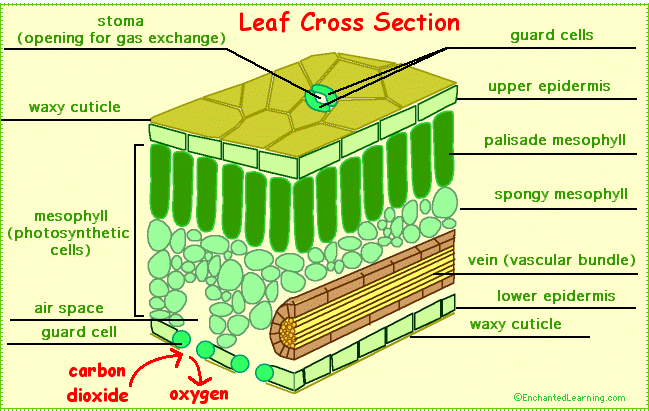
What is vascular tissue?
Xylem
Phloem
Found together throughout the plant in vascular bundles.
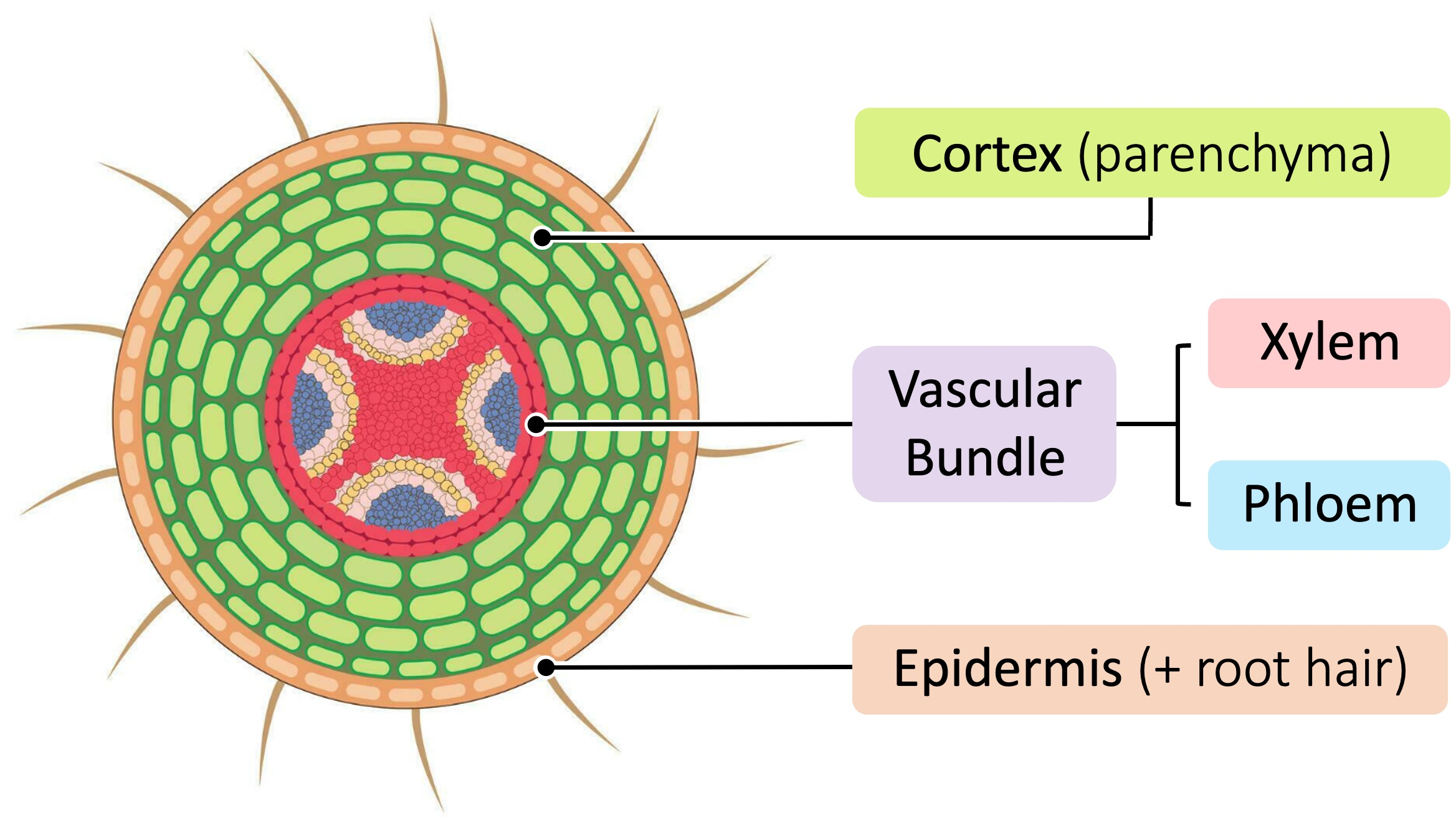
Arrangement of vascular bundles in the roots
Vascular bundles in the middle = withstand tugging forces as plant is blown in the wind
Xylem tissue is the strongest so is in the centre (X structure)
Phloem in four separate sections
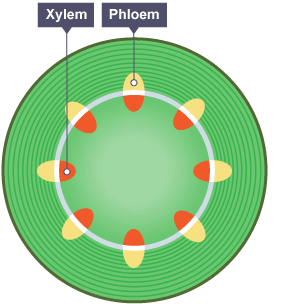
Arrangement of vascular bundles in the stem
Vascular bundles are arranged in a ring around the outer part of the stem
Helps withstand bending forces
Vascular tissue forms complete rings (tree rings) in older woody stems
Vascular tissues in stems
Xylem is located on the inside of each vascular bundle
In between xylem and phloem is a layer of meristem cells called the cambium
Cambium can divide to form new xylem and phloem
Arrangement of vascular bundles in the leaf
Midrib = main vein carrying the vascular tissue and helping to support the leaf
smaller branching veins spread through the leaf functioning both in transport and support
Vascular bundle in the leaf
xylem is located on the top of the phloem
this only applies to dicotyledonous plants, other plants have different structure
Structure of xylem vessels
consist of xylem vessel elements: dead cells stacked end-on-end to make a continuous tube
cells contain no cytoplasm - hollowed out to form a lumen
the walls of the xylem are strengthened by lignin
Development of xylem
living cells become elongated and the cytoplasm produces lignin
lignin becomes embedded in cell wall
this gradually kills the cells and end walls disintegrate
this forms hollow tubes
Lignin
Can form different patterns to provide support whilst still allowing flexibility
rings (anhular)
spirals
broken rings (reticulate)
 Note
Note  Flashcards (50)