🇨🇦 Lecture 3: Introduction to the Dairy Industry
 Call Kai
 Learn
Learn Practice Test
 Spaced Repetition
 Match
Match Flashcards
 Knowt Play
1/11

There's no tags or description
Looks like no tags are added yet.
Name | Mastery | Learn | Test | Matching | Spaced | Call with Kai |
|---|
No analytics yet
Send a link to your students to track their progress
12 Terms
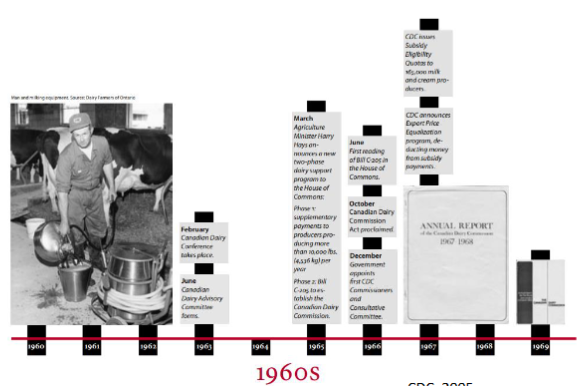
Large Evolution in the 60’s – Quota Established
Supply Management
Officially Adopted in 1972
Optimizes milk production
vs. maximizing milk production (USA)
Milk supply = milk demand
Avoids surpluses and wasted milk
Stability in milk prices and producer profits
Part of Canada’s legislation
Supply Management: 3 pillars
PPI
Producer pricing
Production discipline
Imports management
Producer Pricing
Producers receive fair price for milk
Prices set by Canadian Dairy Commission and Provincial Boards
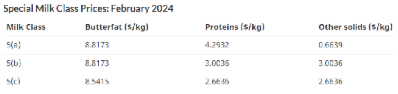
Producers paid based off milk components (mainly butterfat and protein)
Price set to cover on-farm production costs + profit margin
Consumer cost of living is also considered
Dairy producers are not subsidized in Canada
Other countries subsidize dairy due to large fluctuations in market
Production Discipline
Stable supply of Canadian dairy products to meet Canadian consumer demands
Producers must purchase quota, entitling them to produce certain amount of milk
Quota in Alberta vs Ontario
Quota in Alberta = $52,987/kg of butterfat/day (Dec 2024)
Free trade
Quota in Ontario = $24,000/kg of butterfat/day (Dec 2024)
Price is capped
How much would quota cost for the average farm in Ontario?
Average herd: 98 cows
Average milk production: 35 kg/day
Average fat production: 4%
98 cows × 35 kg milk/day × 0.04 percent butterfat production × $24,000/kg butterfat/day = Over $3.3 million
Quota Flexibility
Some flexibility allowed with quota
Small margins (~1-2%) acceptable for overproduction or underproduction
Financial penalties for under or overproducing
How do dairy producers predict and control milk production?
Cow nutrition
Number of cows
Underproduction credits
Producers can “save credits” when underproducing to allow overproduction later
Producers can sell underproduction credits to other producers
Imports Management
Limited foreign dairy imports to ensure Canadian demands are primarily supplied by Canadian dairy
Changes to dairy import rules:
Previously there were few imports of dairy products
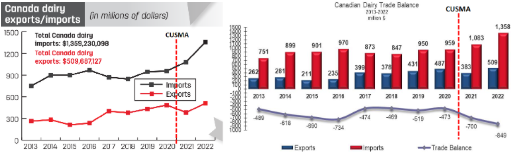
2020: Changes to North American Free Trade Agreement (NAFTA)
Canada-United States-Mexico Agreement (CUSMA) created
Allows additional dairy imports into Canada
Compromises Canadian Dairy Industry
Canada vs US Dairy
Canadian dairy farms:
~ 1.3 million dairy cows + heifers
Supply management
No federal subsidies
ProAction
No bST (bovine somatotropin)
Local supply to meet local demand
US dairy farms:
~ 9.3 million dairy cows + heifers
Free market
Dairy is heavily subsidized
bST
Milk produced for domestic use and exports

Bovine Somatotropin (bST)
a.k.a. recombinant bST (rbST) or bovine growth hormone
Produced naturally by cows
Genetically-engineered hormone supplemented to cows to increase milk
Legal in USA
No risk to human health
Illegal in Canada and all EU countries
May increase mastitis, infertility, and lameness