Bacteriology
0.0(0)
Studied by 3 people Call Kai
 Learn
Learn Practice Test
 Spaced Repetition
 Match
Match Flashcards
 Knowt Play
Card Sorting
1/60

Earn XP
Description and Tags
Last updated 6:40 AM on 2/16/23
Name | Mastery | Learn | Test | Matching | Spaced | Call with Kai |
|---|
No analytics yet
Send a link to your students to track their progress
61 Terms
1
New cards
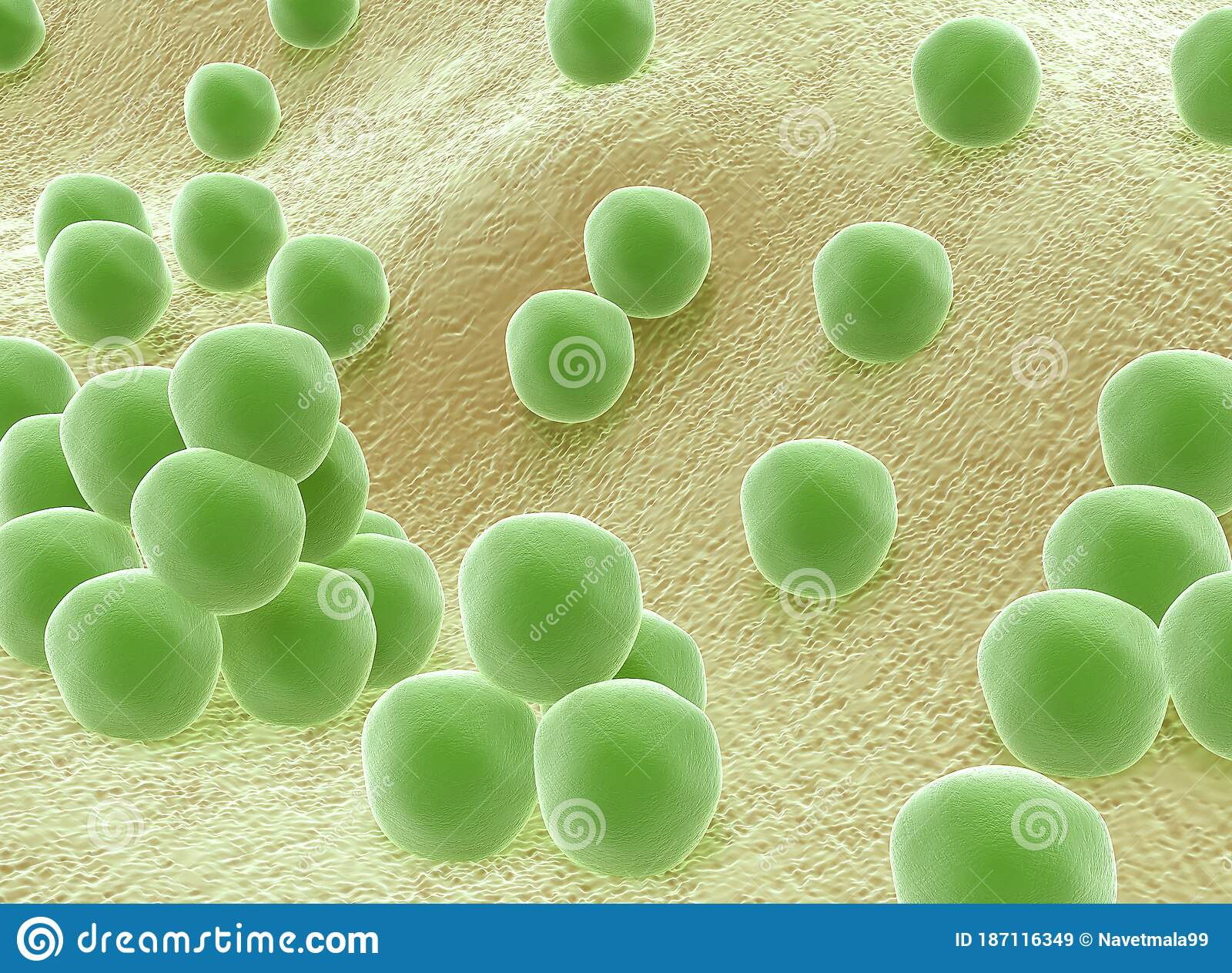
***Cocci***
* **Spherical or oval shaped**
* **Appears singly**
* **Treatment is usually 3-6 months of fluconazole or another type of antifungal.**
* **Appears singly**
* **Treatment is usually 3-6 months of fluconazole or another type of antifungal.**
2
New cards
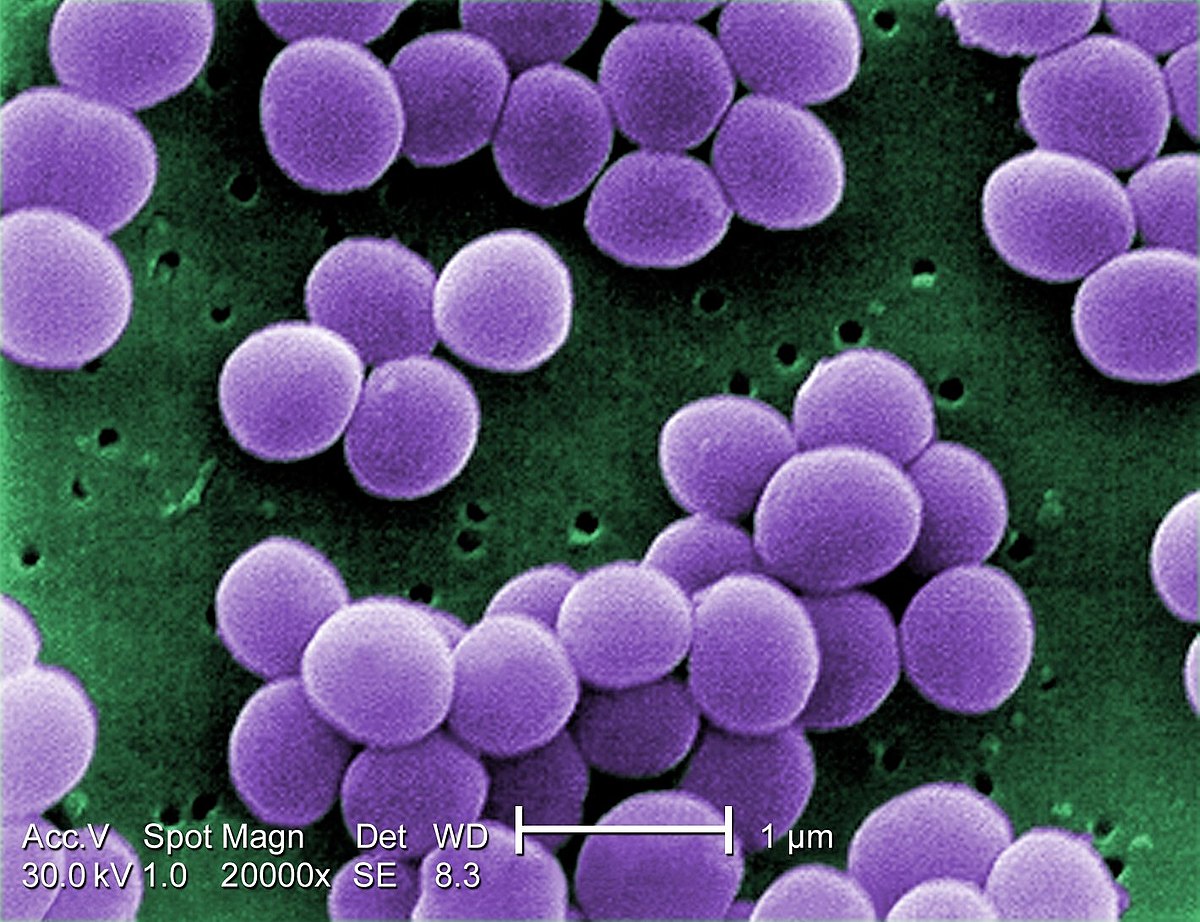
***Staphylococci***
* Grows in clusters, includes many pathogenic species,
* Causes boils, skin infection, pus-forming, abscesses
* Treated with antibiotics
* Causes boils, skin infection, pus-forming, abscesses
* Treated with antibiotics
3
New cards
***Streptococci***
* **Occurs on a single line**
* **As they grow it tends to form pairs or chains that may appear bent or twisted**
* **Pus-forming bacteria**
* **Commonly found in throat and on skin, ex. strep throat**
* **Treated with antibiotics**
* **As they grow it tends to form pairs or chains that may appear bent or twisted**
* **Pus-forming bacteria**
* **Commonly found in throat and on skin, ex. strep throat**
* **Treated with antibiotics**
4
New cards
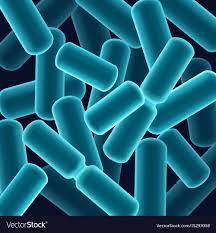
***Bacilli***
* **Rod shaped**
* **Gram-positive**
* **Some infections are Tuberculosis, Tetanus,**
* **Treated with antibiotics**
* **Gram-positive**
* **Some infections are Tuberculosis, Tetanus,**
* **Treated with antibiotics**
5
New cards
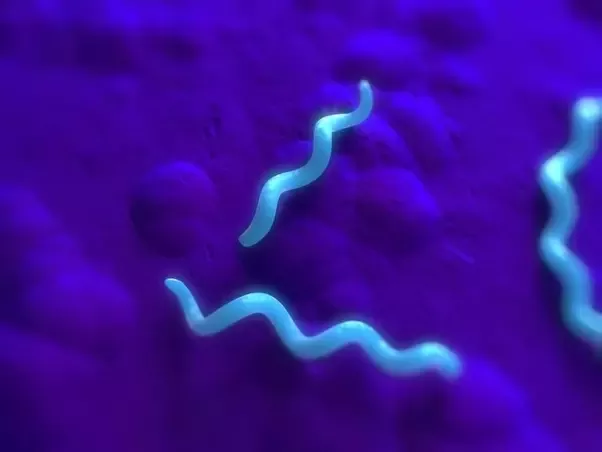
***Spirilla***
* **Group of bacteria characterized by a corkscrew (spiral) appearance**
* **Can cause Lyme Disease & Syphilis**
* **Treated with antibiotics**
* **Can cause Lyme Disease & Syphilis**
* **Treated with antibiotics**
6
New cards
**Bacteria are so small they can only be seen with the aid of a What ?**
Microscope
7
New cards
What are the two categories of Bacteria?
gram-positive bacteria and gram-negative
8
New cards
**Body tissues being invaded by disease-causing or pathogenic bacteria result in a(n):**
Infections occur when body tissues are invaded by disease-causing, or pathogenic, bacteria.
9
New cards
**What is an example of a Parasitic Disease ?**
Can be bloodborne and include malaria, babesiosis, Chagas disease, leishmaniasis, and toxoplasmosis.
10
New cards
A pimple or an abscess is an example of what ?
local infection
11
New cards
A Reaction due to extreme sensitivity to certain foods, chemicals and or other normally harmless substances is considered what?
allergy can be anaphylactic
12
New cards
**The active stage and inactive or spore-forming stage of bacteria are referred to as the**
life cycle of bacteria.
13
New cards
**A submicroscopic structure capable of infesting almost all plants and animals is a?**
A virus
14
New cards
**A common human bacteria that can be transferred through skin-to-skin contact or unclean implements ? A Hint the new spa in Whitby that we talked about .**
common ways for them to spread unclean hands, coughing, open sores, sharing drinks/towels, unsanitary salon conditions,
15
New cards
when does infection occur
Infection occurs when disease causing pathogenic bacteria/virus enter the body and multiply interfering the body's state (pink eye, strep throat, sinus infection)
16
New cards
**Organisms that live in or on another living organism and draw their nourishment from the host organism are?**
parasite. Parasites occur among all the major groups of living things.
17
New cards
**How Do Pathogens Enter the Body? Name at least 2**
enter our bodies through the mouth, eyes, nose, open wounds or bites that breach the skin barrier.
18
New cards
Infection
infections are carried by blood (HIV, Flu) contagious and passed through person from person through contact
19
New cards
Symptomatic
you have symptoms
20
New cards
Asymptomatic
no symptoms but carrying it around
21
New cards
Is it easier to catch Hepatitis or HIV ?
Hepatitis B is easier to catch than HIV because it can be 100 times more concentrated in an infected person's blood.
22
New cards
**Disease-causing bacteria or viruses that are carried through the body in the blood or body fluids are called What?**
Bloodborne pathogens
23
New cards
**What is Immunity? What types of immunity are there ?**
Immunity is your body's ability to recognize germs to prevent them from causing illness.
\
Natural: A combination of inherited (genetic) antibodies from parents and or grandparents. As well as living a healthy lifestyle (eating well, getting proper rest and daily exercise).
\n
Naturally Acquired: The immune system produces antibodies that stay in the body after having a disease and recovering from it. When exposed to the pathogen again, the antibodies fight it off to prevent infection.
\n
Artificially Acquired: Vaccinations against pathogens prior to being exposed in order for your body to develop antibodies. (Examples the flu shot, tetanus, HPV, covid)
\
\
\
Natural: A combination of inherited (genetic) antibodies from parents and or grandparents. As well as living a healthy lifestyle (eating well, getting proper rest and daily exercise).
\n
Naturally Acquired: The immune system produces antibodies that stay in the body after having a disease and recovering from it. When exposed to the pathogen again, the antibodies fight it off to prevent infection.
\n
Artificially Acquired: Vaccinations against pathogens prior to being exposed in order for your body to develop antibodies. (Examples the flu shot, tetanus, HPV, covid)
\
\
24
New cards
**A contagious skin disease that is caused by the itch mite is what?**
scabies
25
New cards
examples of local infections?
Abscesses, pimple, and urinary bladder infections
26
New cards
**What can viruses cause?**
can cause colds, can cause chicken pox, mumps measles, smallpox, yellow fever and rabies. It can also cause HIV (AIDS), hepatitis and polio
27
New cards
**The type of immunity that the body develops after vaccinations is?**
Artificially Acquired:
Vaccinations against pathogens prior to being exposed in order for your body to develop antibodies. (Examples the flu shot, tetanus, HPV, covid)
Vaccinations against pathogens prior to being exposed in order for your body to develop antibodies. (Examples the flu shot, tetanus, HPV, covid)
28
New cards
Name some common ways to spread infection?
\
* the air as droplets or aerosol particles.
* faecal-oral spread.
* blood or other body fluids.
* skin or mucous membrane contact.
* sexual contact.
* Nose, mouth, or eyes to hands to others:
* sneezing, coughing, or rubbing the eyes and then can be transferred to other family members or friends.
* the air as droplets or aerosol particles.
* faecal-oral spread.
* blood or other body fluids.
* skin or mucous membrane contact.
* sexual contact.
* Nose, mouth, or eyes to hands to others:
* sneezing, coughing, or rubbing the eyes and then can be transferred to other family members or friends.
29
New cards
**What %percentage must alcohol be to disinfect ?**
70% or higher
30
New cards
**If salon tools accidentally contact blood, body fluid what must you do?**
**immerse in EPA-registered hospital disinfectant solution or 10% bleach solution**
31
New cards
There are 3 Steps to decontamination
\
1. Sanitation
2. Disinfection
3. Sterilization
Salons Focus on Sanitation and Disinfection
Sterilization is used for medical settings
1. Sanitation
2. Disinfection
3. Sterilization
Salons Focus on Sanitation and Disinfection
Sterilization is used for medical settings
32
New cards
**Should you Dilute disinfectants that are labeled Concentrate?**
yes.
33
New cards
**If label says “complete immersion” this product can not be used as what ?**
**If label says “complete immersion” this product can not be used as a spray disinfectant**
34
New cards
**Single-use items that do not have the capacity to be disinfected after each client use must be?**
discarded
35
New cards
**What Can Vinegar be used for in the hair industry and what is it considered?**
Vinegar and can be used to remove minor mineral deposits on the hair that accumulate over time. (ie. like the copper content in chlorine for competitive swimmers or if you have a pool).
36
New cards
**The level of protection required by the salon to kill most organisms, with the exception of bacterial spores, is:**
__***Disinfection:***__
* This is the second step of decontamination.
* Kills MOST (not all) microorganisms that are on NON-LIVING surfaces (shears, clippers, trimmers and multi use tools).
* A chemical agent that destroys bacteria, fungi and viruses.
* Avoid skin contact
* All bottles must be labeled correctly.
* This is the second step of decontamination.
* Kills MOST (not all) microorganisms that are on NON-LIVING surfaces (shears, clippers, trimmers and multi use tools).
* A chemical agent that destroys bacteria, fungi and viruses.
* Avoid skin contact
* All bottles must be labeled correctly.
37
New cards
**What are some of the things you should do to keep yourself safe when using disinfectant?**
* **Always wear Gloves**
* **Safety glasses when mixing and using disinfectants.**
* **When mixing disinfectants that require them to be diluted always add them to the water NOT the water to the disinfectant (detergents will foam which can lead to an improper mixing ratio and a possible backsplash onto yourself).**
* **Never get disinfectant on your skin, if contact occurs: IMMEDIATELY wash the area thoroughly with soap and warm water and dry well.**
* **Carefully measure all products according to the manufacturer's instructions.**
* **Always place products in MARKED/ LABELED containers.**
* **Change disinfectants daily (See your local health department regulations on what they require as it may differ from manufactures direction and area or region your business is in).**
\n
* **Safety glasses when mixing and using disinfectants.**
* **When mixing disinfectants that require them to be diluted always add them to the water NOT the water to the disinfectant (detergents will foam which can lead to an improper mixing ratio and a possible backsplash onto yourself).**
* **Never get disinfectant on your skin, if contact occurs: IMMEDIATELY wash the area thoroughly with soap and warm water and dry well.**
* **Carefully measure all products according to the manufacturer's instructions.**
* **Always place products in MARKED/ LABELED containers.**
* **Change disinfectants daily (See your local health department regulations on what they require as it may differ from manufactures direction and area or region your business is in).**
\n
38
New cards
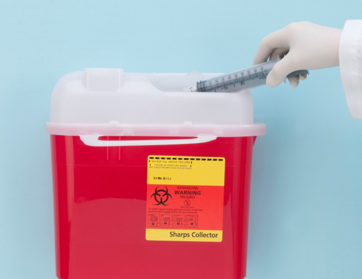
**What is a Sharps Container and what is it used for?**
**For barbering straight blades, tools and equipment are disposable, then proceed with using the proper disposal method. Sharps container for implements that can puncture skin (blades, lances or needles).**
39
New cards
**What is a Chelating Agent ?**
* A Chelating Agent (is a chemical compound that binds tightly to metal ions.) In the medical field a chelating agent is used to remove toxic metals from the body).
\
EXAMPLE: Vinegar
\
EXAMPLE: Vinegar
40
New cards
**Cleaning is also known as what?**
__***Sanitation***__
41
New cards
**Substances used to destroy bacteria and viruses on surfaces such as implements and combs are what?**
* **sanitization Cleaners Laundry wiping out sinks removing hair from Combs and brushes keeping food and drinks out of the salon sweeping the floor remove all visible dirt from a surface.**
42
New cards
**Disinfection is what step ?**
**&**
**what does it do?**
**&**
**what does it do?**
* Step 2.
* Kills MOST (not all) microorganisms that are on NON-LIVING surfaces (shears, clippers, trimmers and multi use tools).
* A chemical agent that destroys bacteria, fungi and viruses.
* Avoid skin contact
* All bottles must be labeled correctly.
* Kills MOST (not all) microorganisms that are on NON-LIVING surfaces (shears, clippers, trimmers and multi use tools).
* A chemical agent that destroys bacteria, fungi and viruses.
* Avoid skin contact
* All bottles must be labeled correctly.
43
New cards
**An important action than can prevent the transfer of microorganisms from one person to another is?**
Wash hands and surfaces often.
44
New cards
Nonpathogenic
* Harmless and does not cause diseases
* Can perform many useful functions
* They help the body break down food protect against infection and stimulate the immune system
* Can perform many useful functions
* They help the body break down food protect against infection and stimulate the immune system
45
New cards
Pathogenic
* Harmful because they can cause diseases
* Have distinct shapes that help identify them
* Have distinct shapes that help identify them
46
New cards
Bacterial growth and reproduction
bacteria consist of an outer cell wall containing liquid copper protoplasm. Cells manufacture their own food from what they can absorb from the surrounding environment. They give off waste products that grow and reproduce. The lifecycle of bacteria consists of two distinct phases: the active stage in the inactive or spore forming stage
47
New cards
Active Stage
During the active stage, bacteria grow and reproduce. Bacteria multiply best in warm, dark, damp, or dirty places where food is available. When conditions are favorable, bacteria grow and reproduce. When they reach their largest size, they divide into two new cells. This division is called mitosis (my-TOH-sis). The cells that are formed are called daughter cells. When conditions become unfavorable and difficult for them to thrive, the bacteria either die or become inactive.
48
New cards
Inactive or Spore-Forming Stage
Certain bacteria, such as the anthrax and tetanus bacilli, coat themselves with waxy outer shells that are able to withstand long periods of famine, dryness, and unsuitable temperatures. In this stage, spores can be blown about and are not harmed by disinfectants, heat, or cold. When favorable conditions are restored, the spores change into the active form and begin to grow and reproduce. Although spores are dangerous: if they enter the body during a surgical procedure and become active, the pose little to no risk to clients in a salon
49
New cards
Bacteria
One-celled microorganisms with both plant and animal characteristics. Some are harmful, some are harmless. Also known as microbes or germs.
50
New cards
Infectious
Communicable by infection from one person to another person or from one infected body part to another.
51
New cards
Microbes/germs
Non Scientific synonyms for disease-producing bacteria.
52
New cards
\-ology
Suffix meaning "study of" (e.g., microbiology).
53
New cards
Parasite
An organism that grows, feeds, and shelters on or in another organism, while contributing nothing to the survival of that organism.
54
New cards
Toxin
Any of various poisonous substances produced by some microorganisms.
55
New cards
Virus
A parasitic submicroscopic particle that infects cells of biological organisms. A virus is capable of replication only through taking over the host cell's reproduction machinery.
56
New cards
Diagnosis
Determination of the nature of a disease from its symptoms.
57
New cards
Contamination
The presence, or the reasonably anticipated presence, of blood or other potentially infectious materials on an item surface or visible debris/residues such as dust, hair, skin, etc.
58
New cards
Systemic Disease
Disease that affects the body generally, often due to under- or over-functioning of internal glands/ organs.
59
New cards
Exposure incident
Contact with non-intact skin, blood, body fluid or other potentially infectious materials that results from performance of an employee's duties (previously called Blood Spill).
60
New cards
Occupational Disease
illnesses resulting from conditions associated with employment, such as prolonged and repeated overexposure to certain products or ingredients.
61
New cards
HIV/AIDS
HIV (Human Immunodeficiency Virus) is the virus that causes AIDS (Acquired Immune Deficiency Syndrome). AIDS is a disease that breaks down the body's immune system. HIV is spread from person to person through blood and through other body fluids, such as semen and vaginal secretions. A person can be infected with HIV for many years without having symptoms, but testing can determine if a person is infected within 6 months after exposure to the virus according to the Centers for Disease Control and Prevention.

