L5-gas exchange in humans
 Studied by 1 person
 Call Kai
 Learn
Learn Practice Test
 Spaced Repetition
 Match
Match Flashcards
 Knowt Play
1/5

There's no tags or description
Looks like no tags are added yet.
Name | Mastery | Learn | Test | Matching | Spaced | Call with Kai |
|---|
No analytics yet
Send a link to your students to track their progress
6 Terms
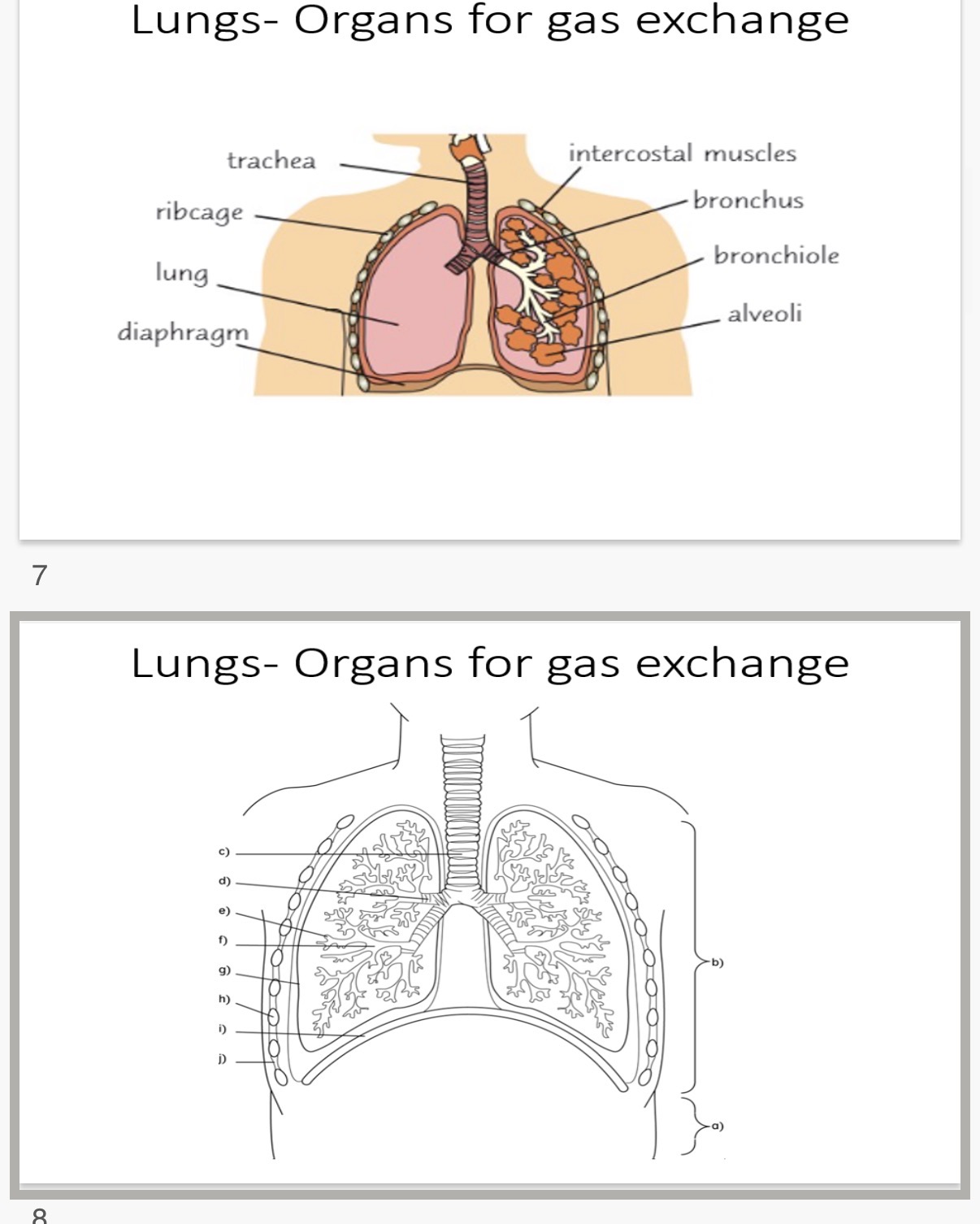
Humans need to get oxygen into the blood (for …1?) and they need to get rid of carbon …2? (made by respiring cells).
Info:This is where breathing (ventilation) and the gas exchange system comes in...
1) As you breathe in, air enters the …3? (windpipe).
2) The trachea splits into two …4? - one bronchus leading to each …5?.
3) Each bronchus then branches off into smaller tubes called …6?.
4) The bronchioles end in small 'air sacs' called …7? (this is where gases are exchanged).
5) The ribcage, intercostal muscles and …8? all work together to move air in and out (see below).
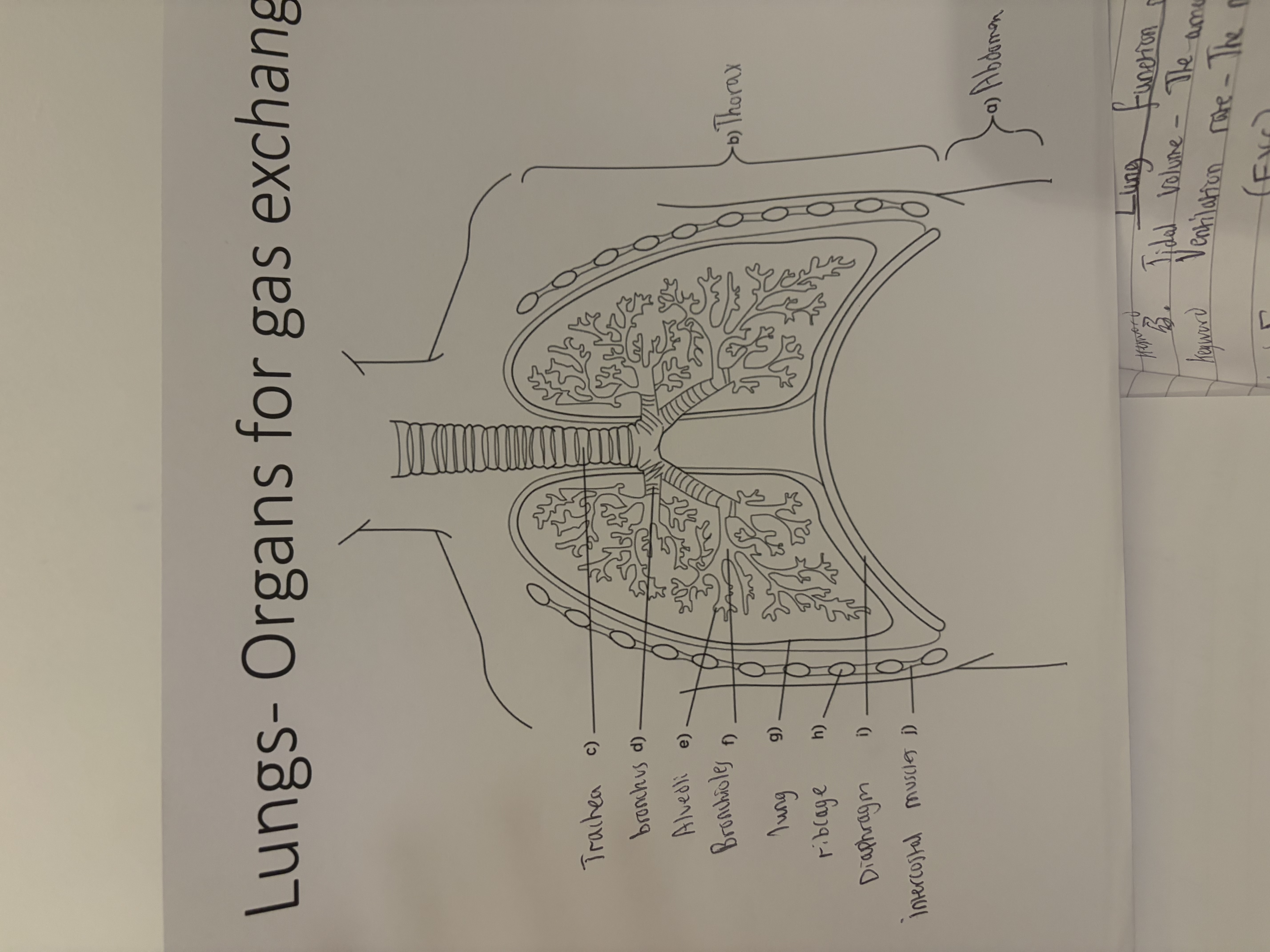
9.Label the diagram?
1.respiration. 2.dioxide. 3.trachea. 4.bronchi 5.lung. 6.bronchioles. 7.alveoli. 8.diaphragm
Ventilation- pressure changes
1.The pressure changes in the lungs are brought about by the movement of 2 sets of muscles. Name and explain what the muscles are?
• The diaphragm - a sheet of muscle that separates the thorax and the abdomen.
• The intercostal muscles:
• Internal intercostal muscles - contraction leads to expiration
• External intercostal muscles - contraction leads to inspiration
Ventilation:
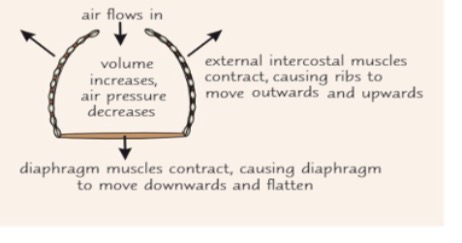
Ventilation consists of inspiration and expiration. It is controlled by the movements of the diaphragm, internal and external intercostal muscles and ribcage
Inspiration steps:
1) The external intercostal and diaphragm muscles …1?
2) This causes the ribcage to move upwards and …2? and the diaphragm to flatten, increasing the …3? of the thoracic cavity (the space where the lungs are).
3) As the volume of the thoracic cavity increases, the lung pressure …4? (to below atmospheric pressure).
4) Air will always flow from an area of higher pressure to an area of lower pressure (i.e. down a pressure gradient)so air flows down the trachea and into the …5?.
5) Inspiration is an …6? process - it requires energy
Expiration steps:
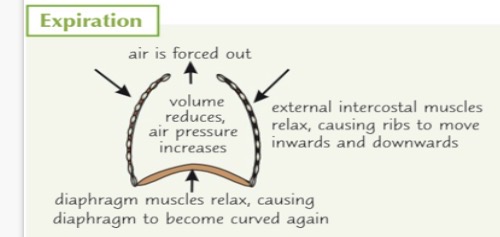
1) The external intercostal and diaphragm muscles ...7?
2) The ribcage moves downwards and …8? and the diaphragm becomes curved again.
3) The volume of the thoracic cavity …9?, causing the air pressure to …10? (to above atmospheric pressure).
4) Air is forced down the pressure gradient and out of the ...11?.
5) Normal expiration is a …12? process— it doesn't require energy.
6) Expiration can be also be forced to occur (e.g. if you want to blow out the candles on your birthday cake).
7)During forced expiration, the external intercostal muscles relax and internal intercostal muscles …13?, pulling the ribcage further down and in. During this time, the movement of the two sets of intercostal muscles is said to be antagonistic (opposing).
1.contract. 2.outwards. 3.volume. 4.decreases. 5.lungs. 6. Active. 7.relax 8.inwards 9.decreases 10.increase. 11.lungs. 12.passive. 13.contract
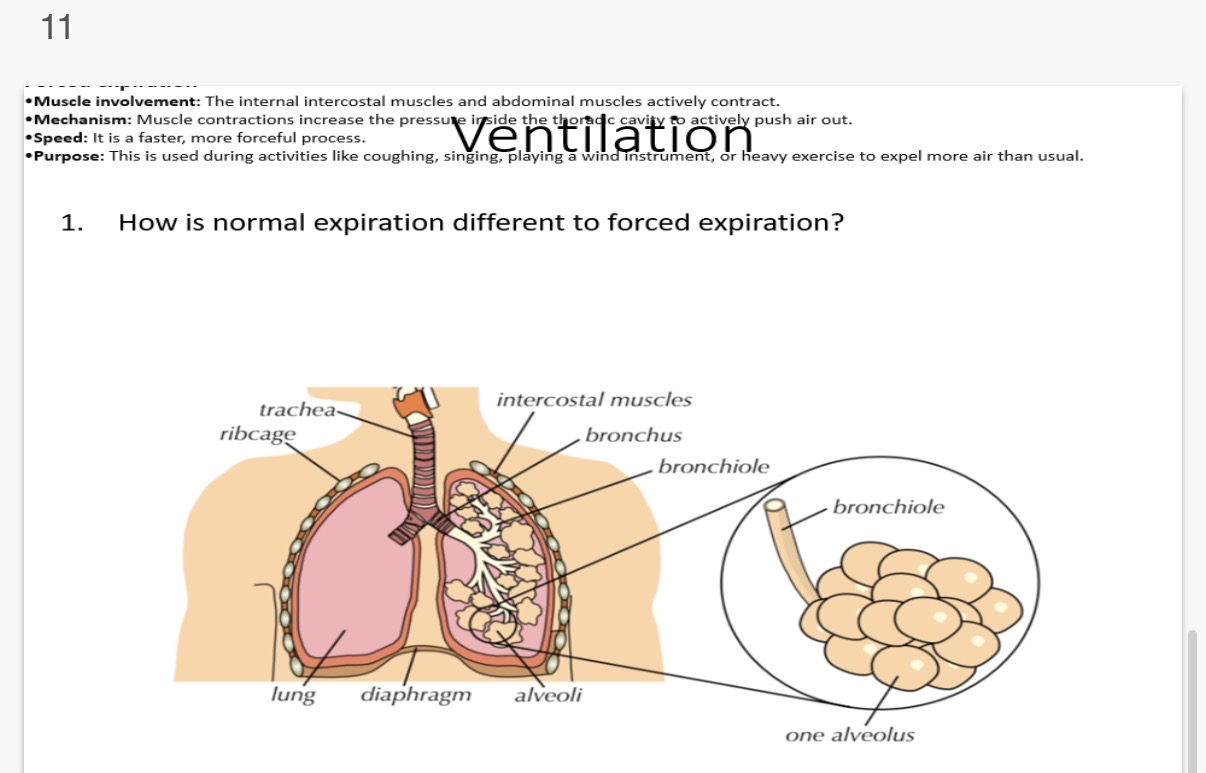
Name the 4 differences between normal expiration and forced expiration?
1.Muscle involvement-In passive expiration the external intercostal muscles and diaphragm relax but in the forced expiration the internal intercostal and abdominal muscles contract.
In forced expiration,the contraction of muscles increases the pressure in the thoracic cavity to push air out but in normal expiration, the natural elastic recoil of the lungs and chest wall pushes air out.
Normal expiration is a slower process whereas forced expiration is a faster process
Normal expiration is the normal resting exhalation that occurs most of the time(primarily for metabolic function)whereas forced expiration occurs during activities like coughing,singing and heavy exercise which requires people to expel more air than usual.
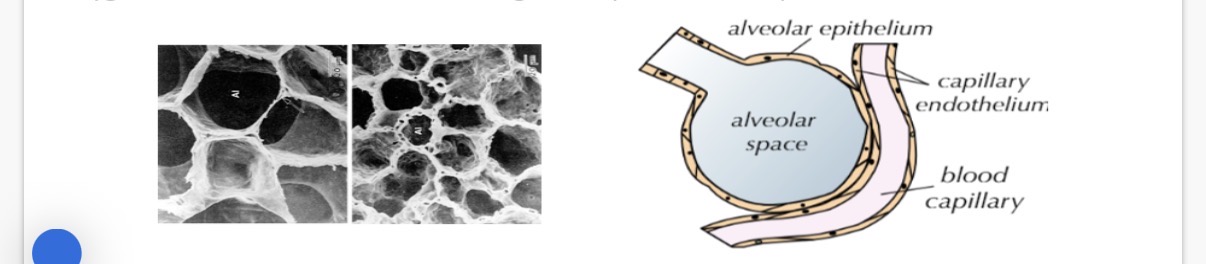
Alveoli- Gas exchange
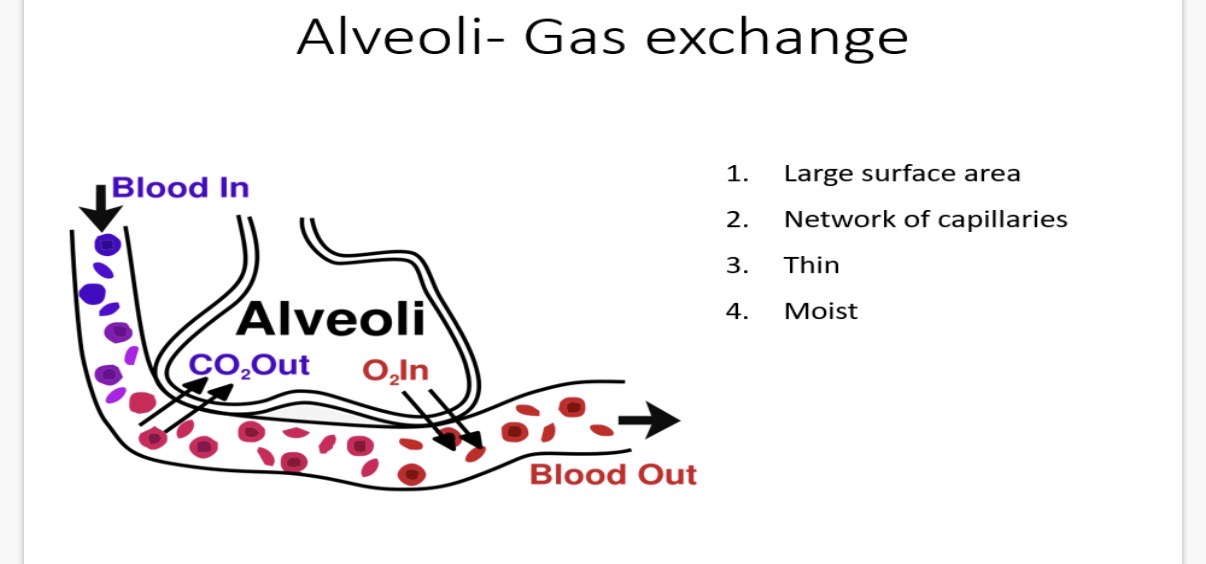
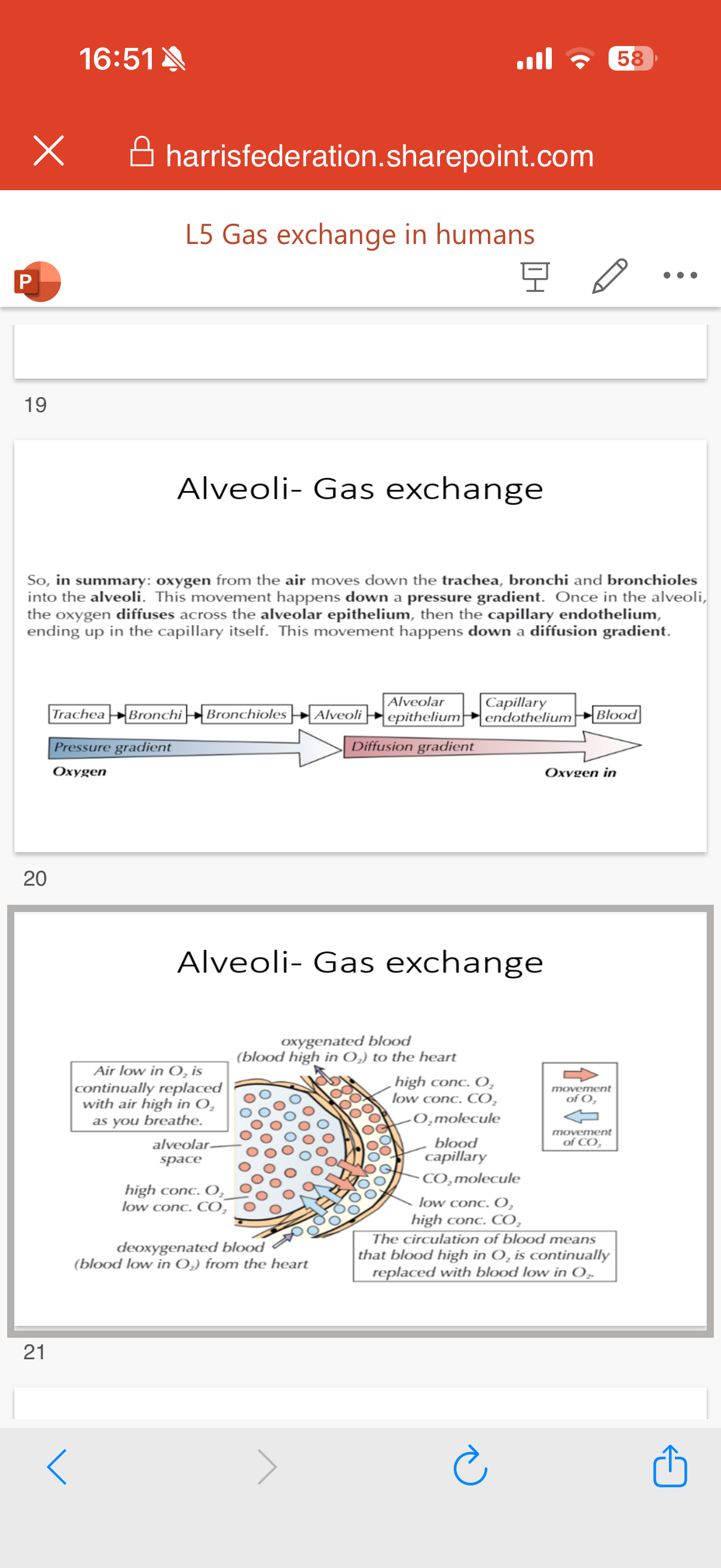
The exchange of oxygen and carbon dioxide occurs between the alveoli and the capillaries(they connect arteries and veins) in the …1?.
Oxygen and carbon dioxide are exchanged in a process of …2? diffusion.
The oxygen diffuses …3? the alveoli and into the blood capillaries, before being carried away to the rest of the body for aerobic …4?. The blood in the capillaries has a relatively …5? concentration of oxygen and a …6? concentration of carbon dioxide and so the carbon dioxide diffuses from the blood and into the alveoli and is then ...7?.
Info:Alveoli gas exchange consists of thin network of capillaries and thin alveoli which have a large surface area and this occurs in moist conditions
1.lungs. 2.simple. 3.from. 4.respiration. 5.low. 6.high. 7.exhaled
More images for visualisation:
 Note
Note  Flashcards (49)