Lab 11: EENT (models) corrected

0.0(0)
studied byStudied by 0 people
0.0(0)
full-widthCall Kai
learnLearn
examPractice Test
spaced repetitionSpaced Repetition
heart puzzleMatch
flashcardsFlashcards
GameKnowt Play
Card Sorting

1/60

encourage image

There's no tags or description

Looks like no tags are added yet.

Study Analytics
Name
Mastery
Learn
Test
Matching
Spaced

No study sessions yet.

61 Terms

1
New cards

Frontalis

O: Cranial aponeurosis

I: Skin of eyebrows

A: Raises eyebrows
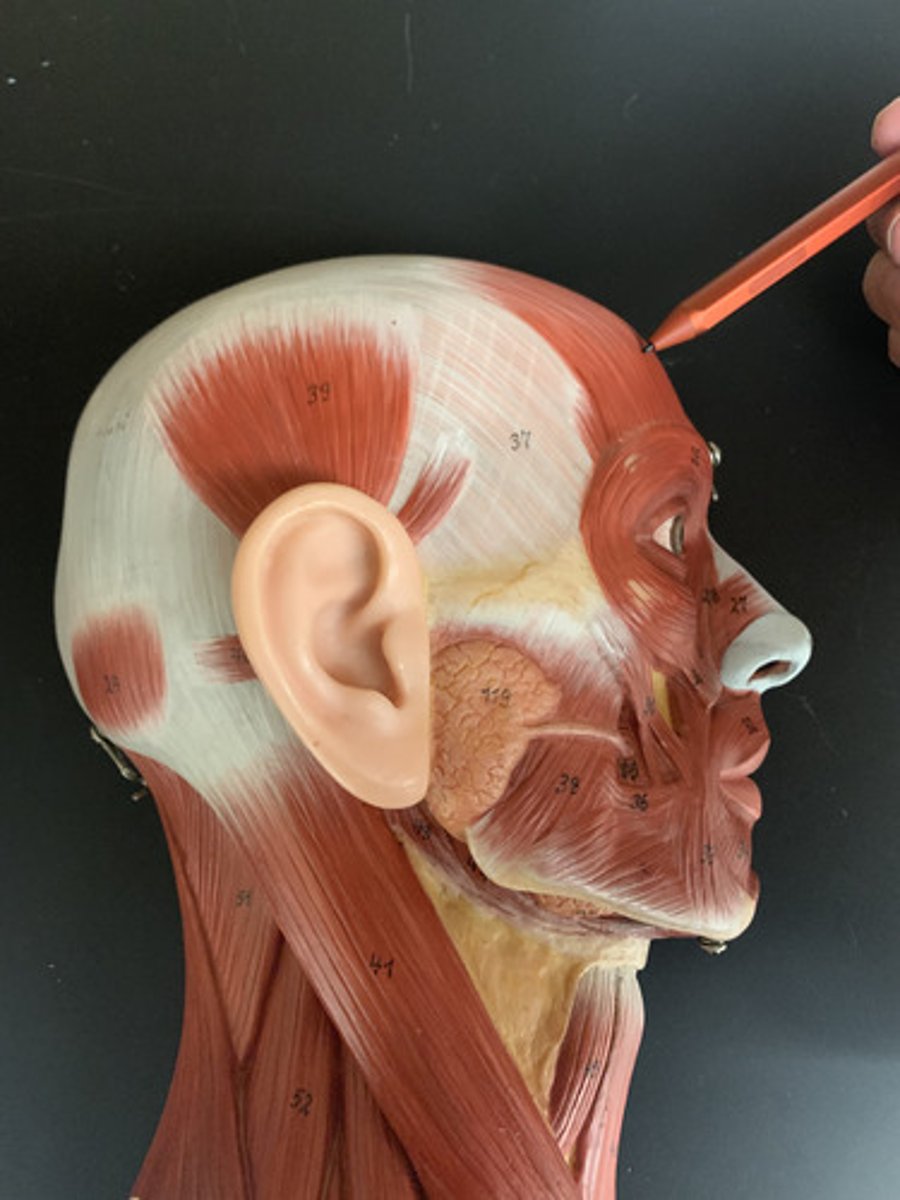
<p>O: Cranial aponeurosis</p><p>I: Skin of eyebrows</p><p>A: Raises eyebrows</p><p></p>
2
New cards

Orbicularis oculi

Origin: Medial margin of orbit

Insertion: Skin around eyelids

Action: Closes eye
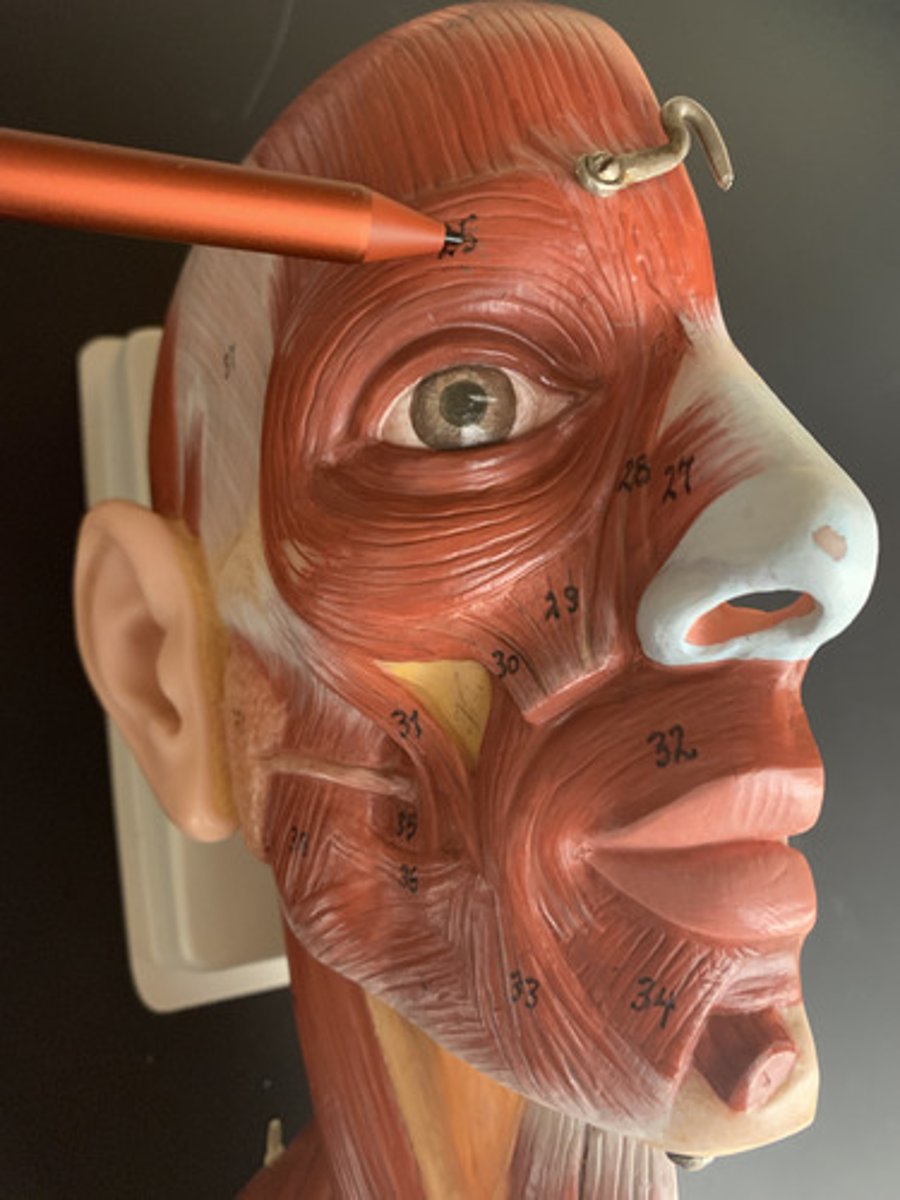
<p>Origin: Medial margin of orbit</p><p>Insertion: Skin around eyelids</p><p>Action: Closes eye</p><p></p>
3
New cards

Nasalis

Origin: superior maxilla

Insertion: nasal cartilage

Action: dilates/contracts nostrils
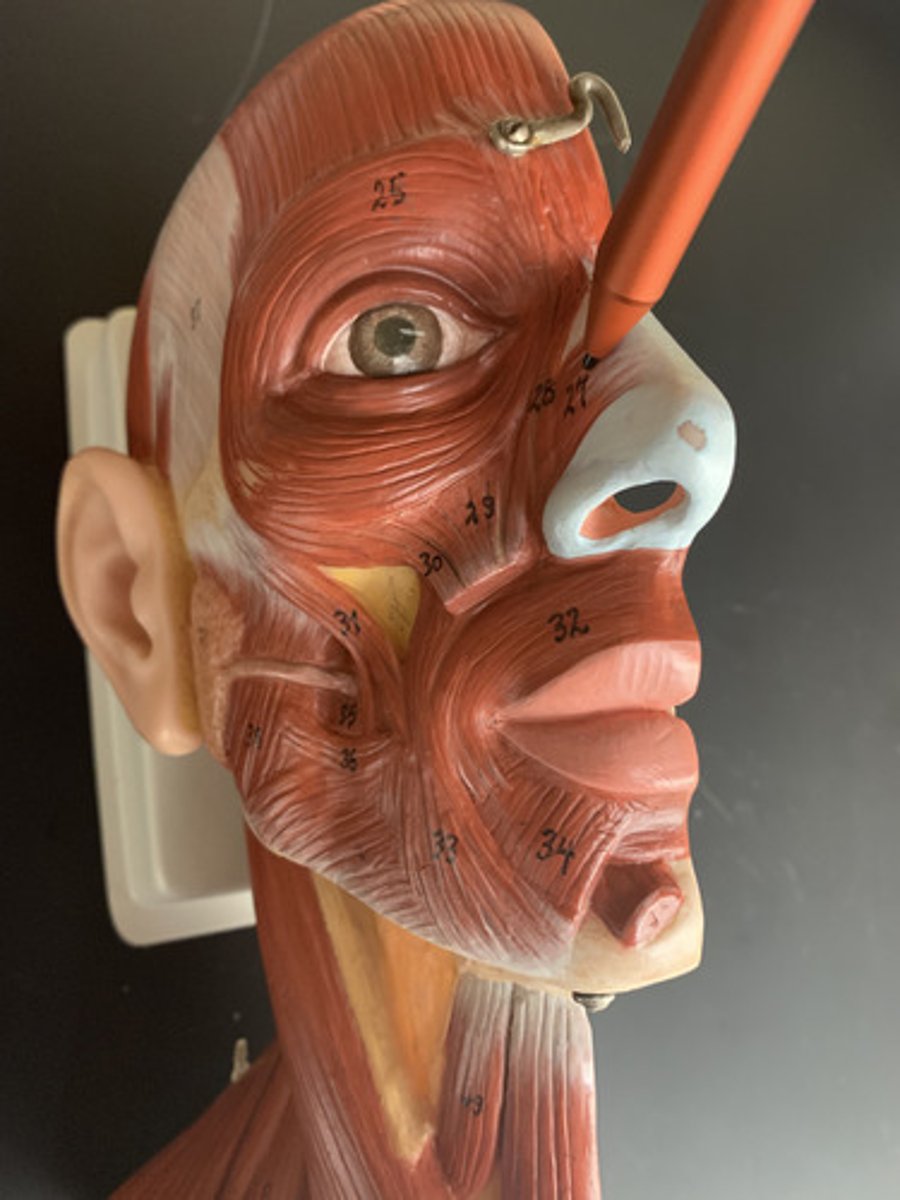
<p>Origin: superior maxilla</p><p>Insertion: nasal cartilage</p><p>Action: dilates/contracts nostrils</p><p></p>
4
New cards

Levator labii superiorus

Origin: Infraorbital margin of maxilla

Insertion: Upper lip

Action: Elevates upper lip

<p>Origin: Infraorbital margin of maxilla</p><p>Insertion: Upper lip</p><p>Action: Elevates upper lip</p><p></p>
5
New cards

Levator anguli oris

Origin: Canine fossa of maxilla

Insertion: Corners of upper and lower lips

Action: Draws corner of mouth up and medially
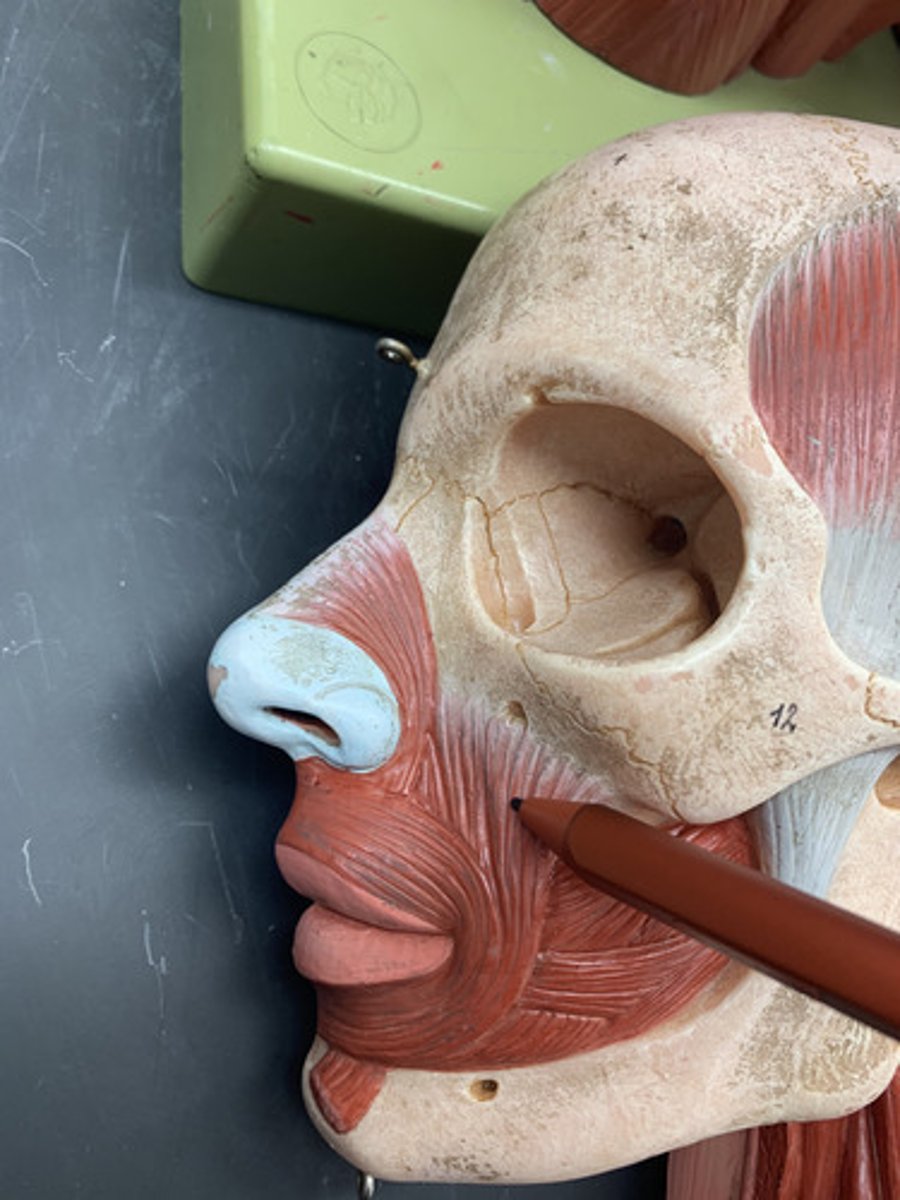
<p>Origin: Canine fossa of maxilla</p><p>Insertion: Corners of upper and lower lips</p><p>Action: Draws corner of mouth up and medially</p><p></p>
6
New cards

Zygomaticus major

O: zygomatic bone

I: angle of mouth

A: raises angle of mouth
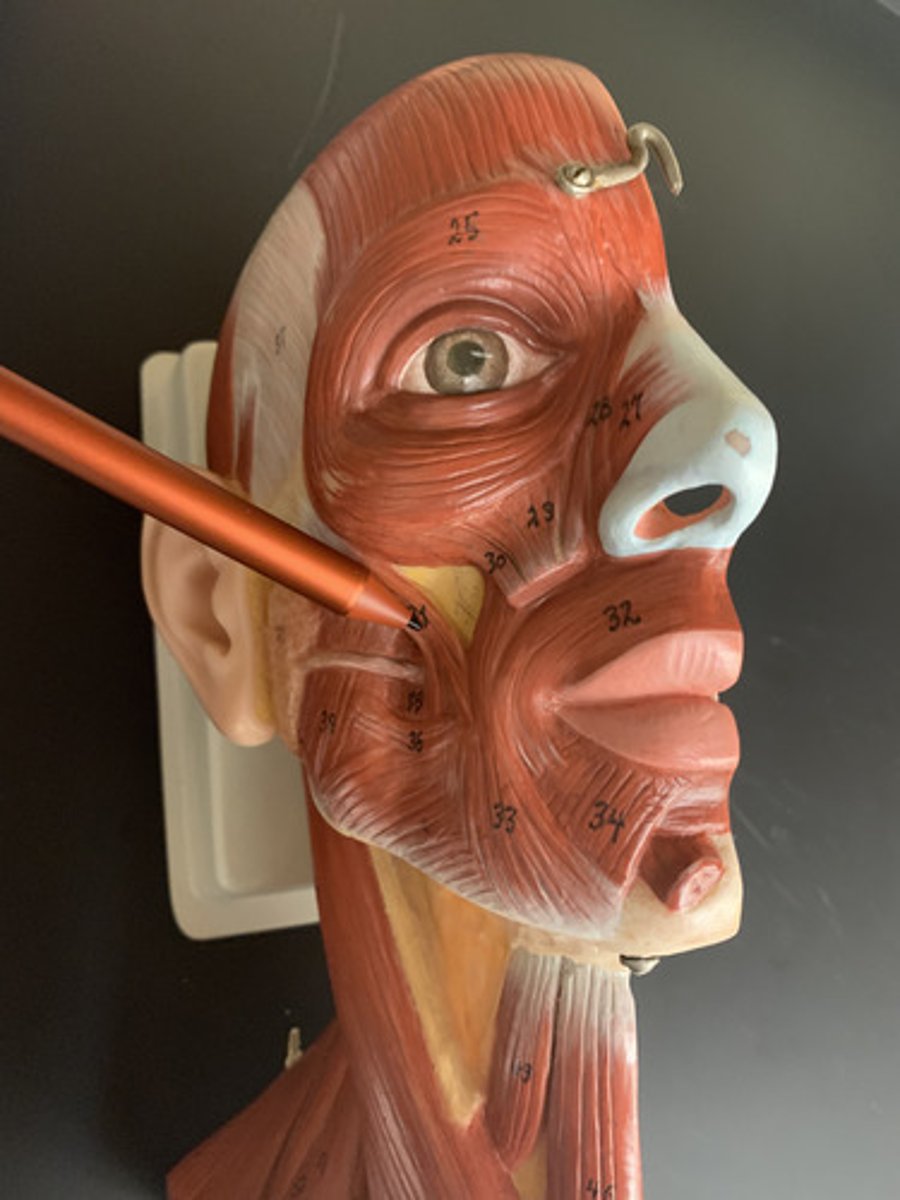
<p>O: zygomatic bone</p><p>I: angle of mouth</p><p>A: raises angle of mouth</p><p></p>
7
New cards

Orbicularis oris

O: Maxilla and mandible

I: Lips

A: Compresses, purses lips
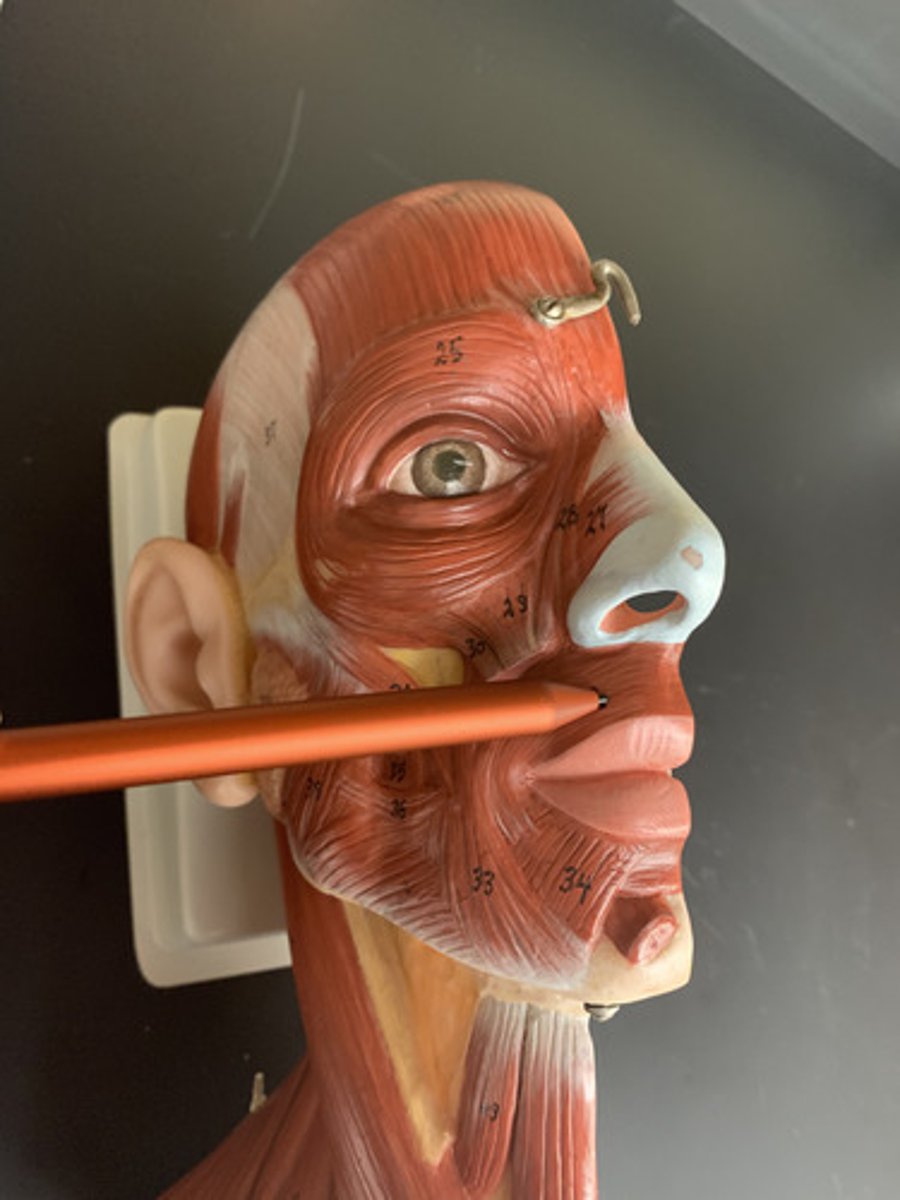
<p>O: Maxilla and mandible</p><p>I: Lips</p><p>A: Compresses, purses lips</p><p></p>
8
New cards

Depressor anguli oris

O: mandible

I: angle of mouth

A: depresses angle of mouth

Inn: Facial nerve (CN VII)
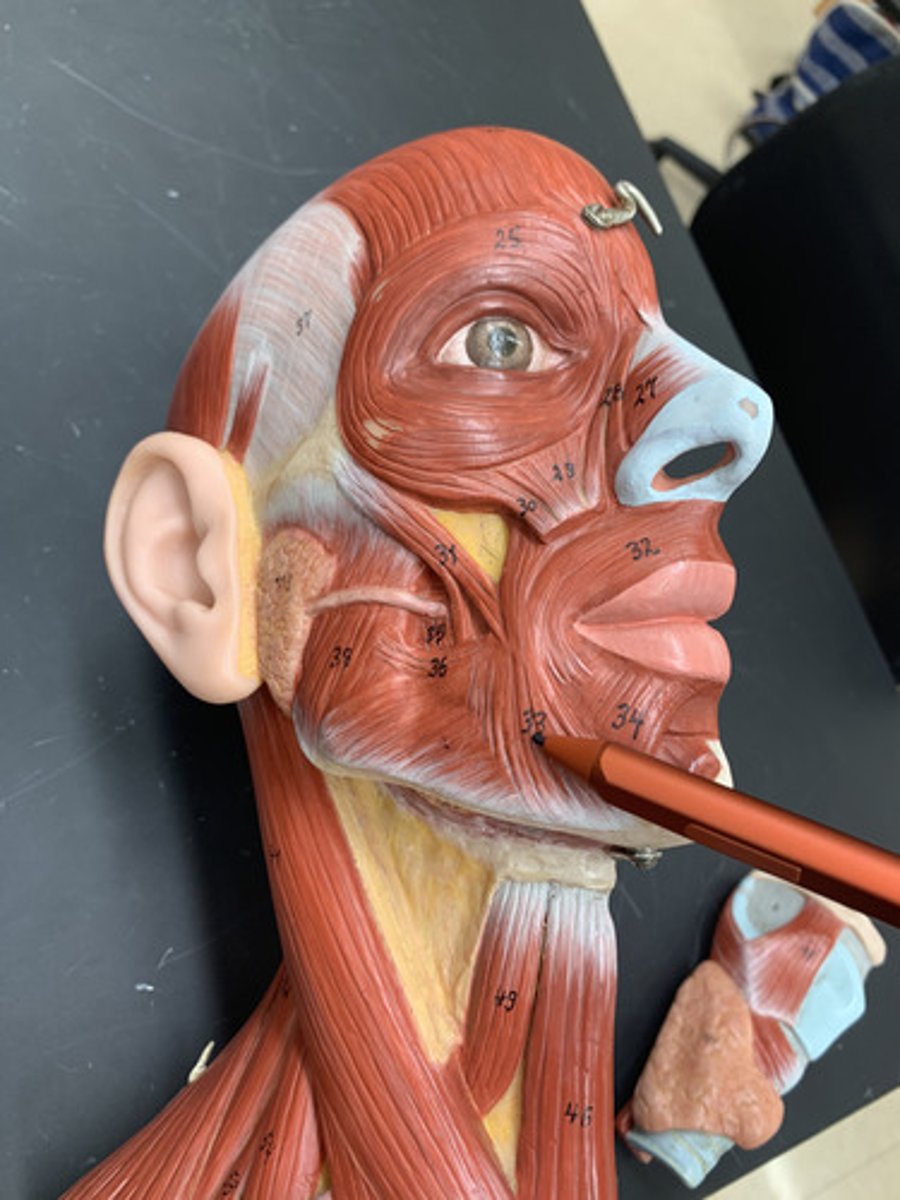
<p>O: mandible</p><p>I: angle of mouth</p><p>A: depresses angle of mouth</p><p>Inn: Facial nerve (CN VII)</p>
9
New cards

Depressor labii inferioris

O: mandible

I: skin of lower lip

A: depresses lower lip
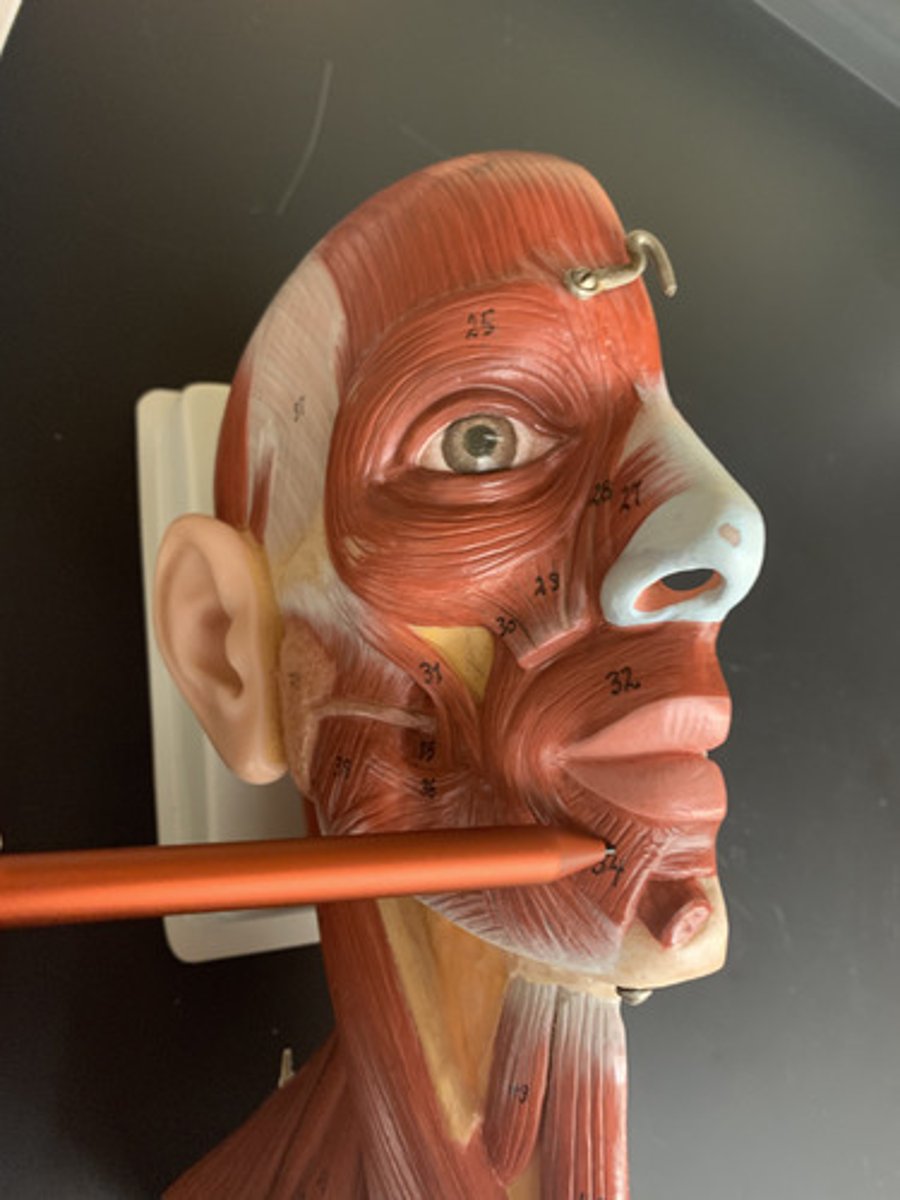
<p>O: mandible</p><p>I: skin of lower lip</p><p>A: depresses lower lip</p><p></p>
10
New cards

Mentalis

O: body of the mandible

I: skin of the chin

A: elevates, protracts, and depresses lower lip
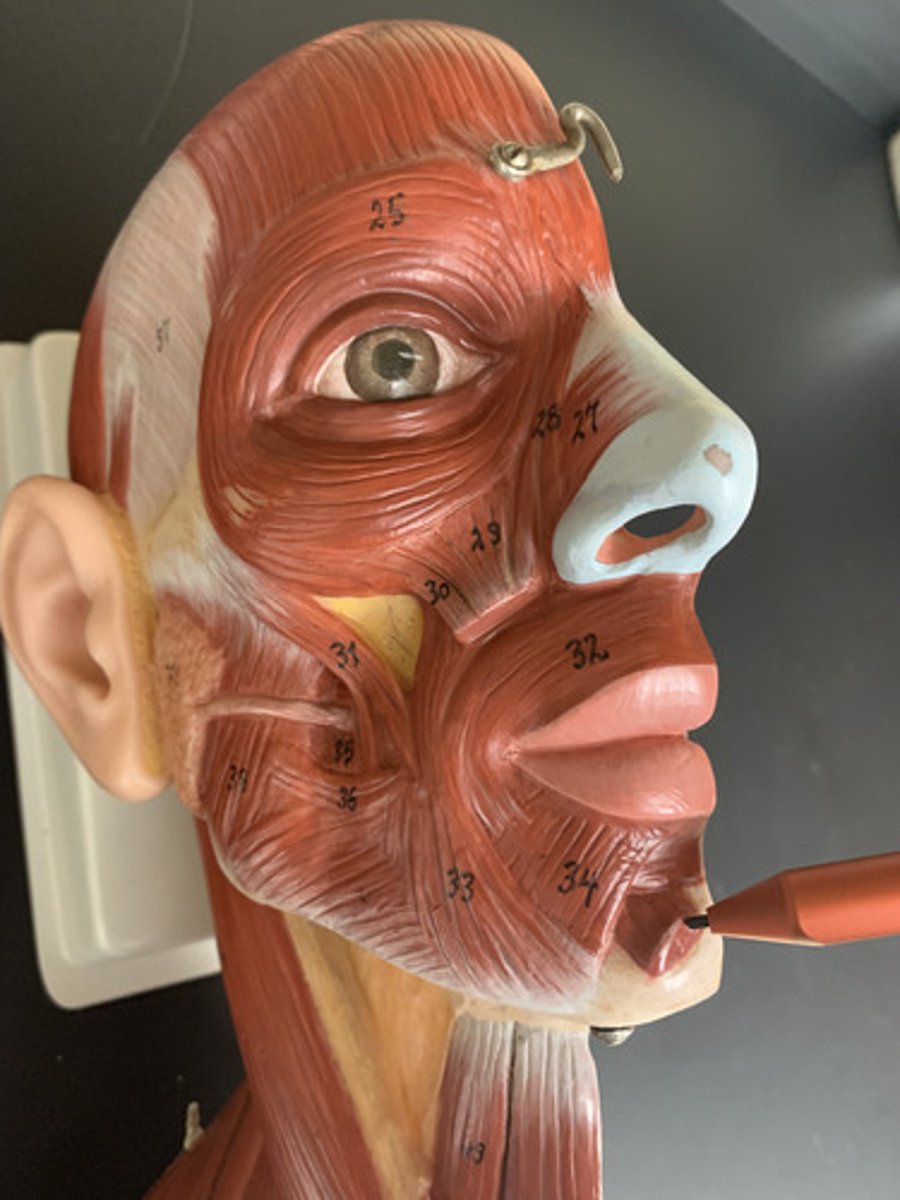
<p>O: body of the mandible</p><p>I: skin of the chin</p><p>A: elevates, protracts, and depresses lower lip</p><p></p>
11
New cards

Risorius

O: fascia associated with masseter

I: angle of mouth

A: draws angle of mouth to side
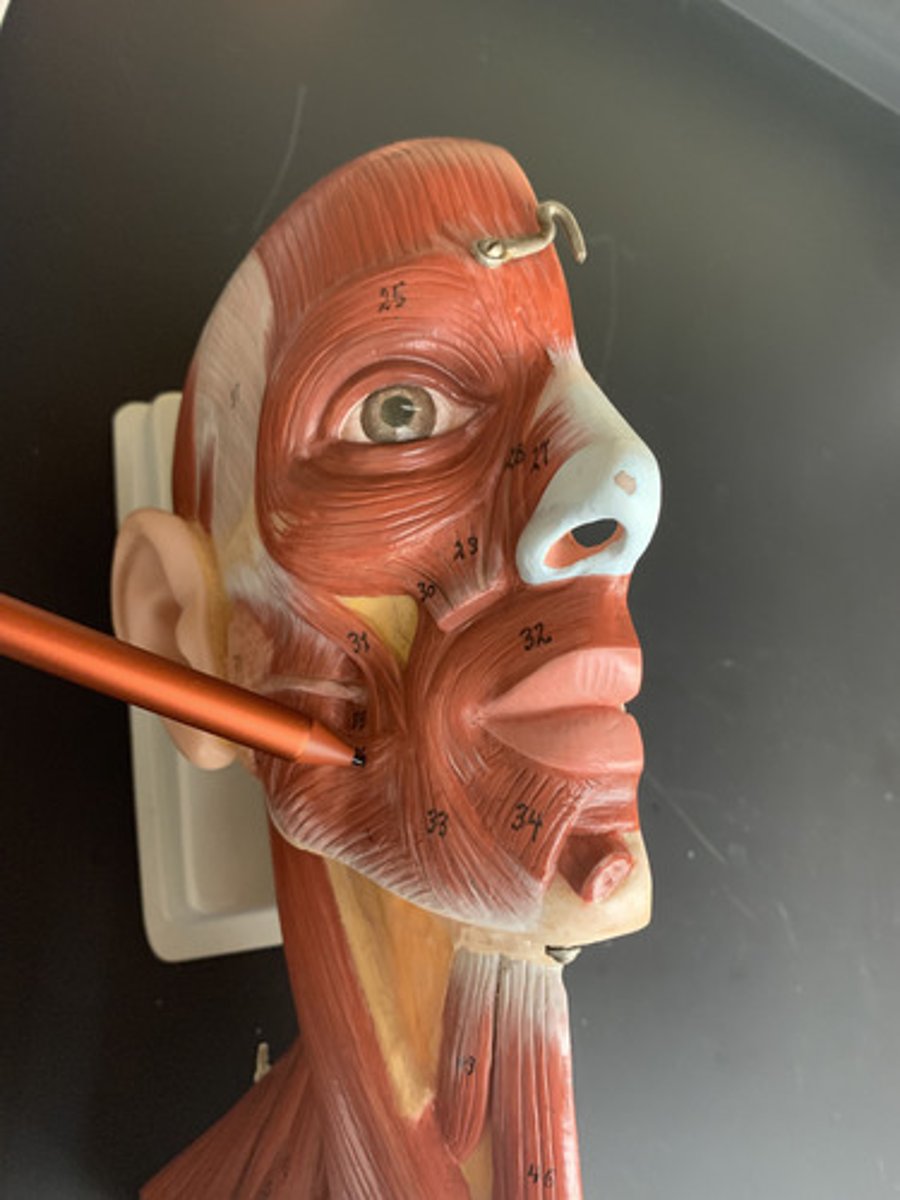
<p>O: fascia associated with masseter</p><p>I: angle of mouth</p><p>A: draws angle of mouth to side</p><p></p>
12
New cards

Cornea

The clear tissue of the fibrous tunic that covers the front of the eye
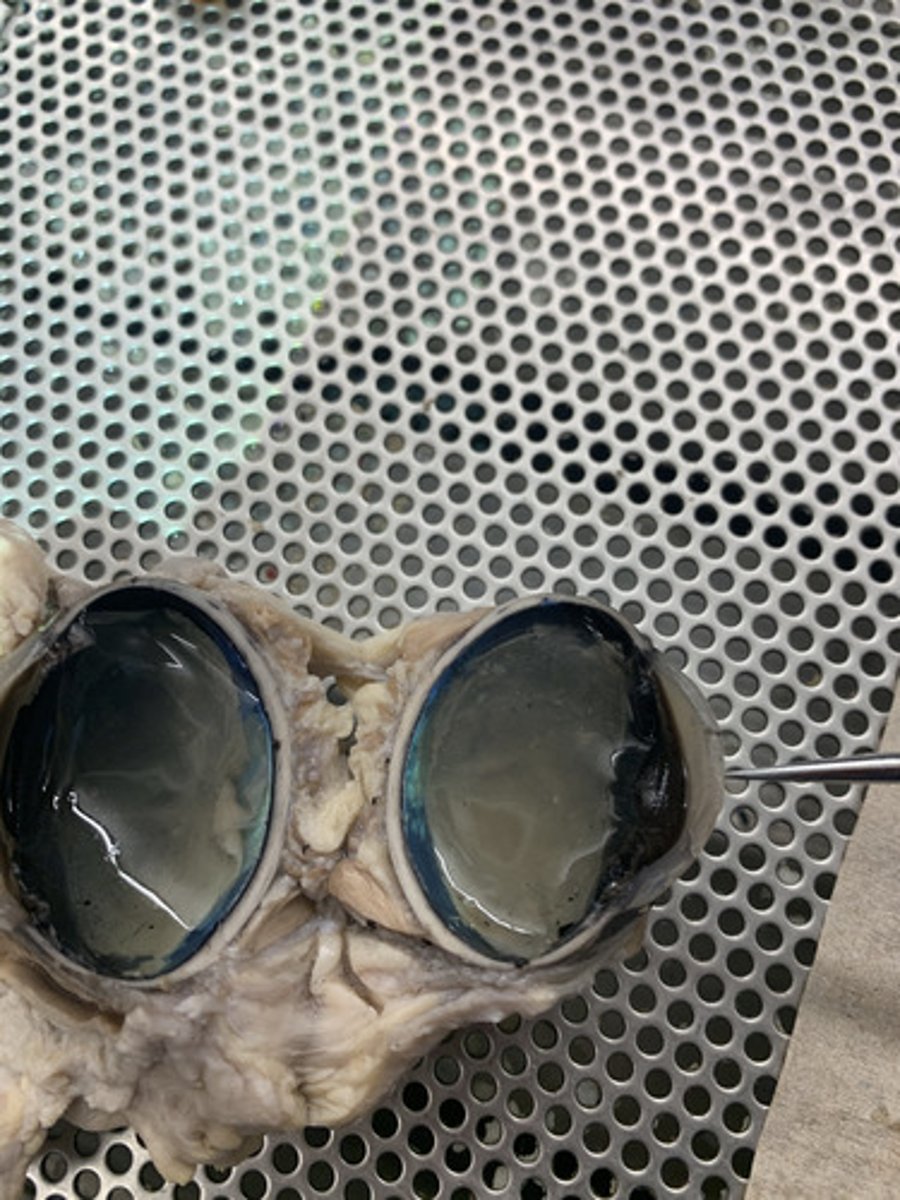
<p>The clear tissue of the fibrous tunic that covers the front of the eye</p>
13
New cards

Sclera

white part of the fibrous tunic
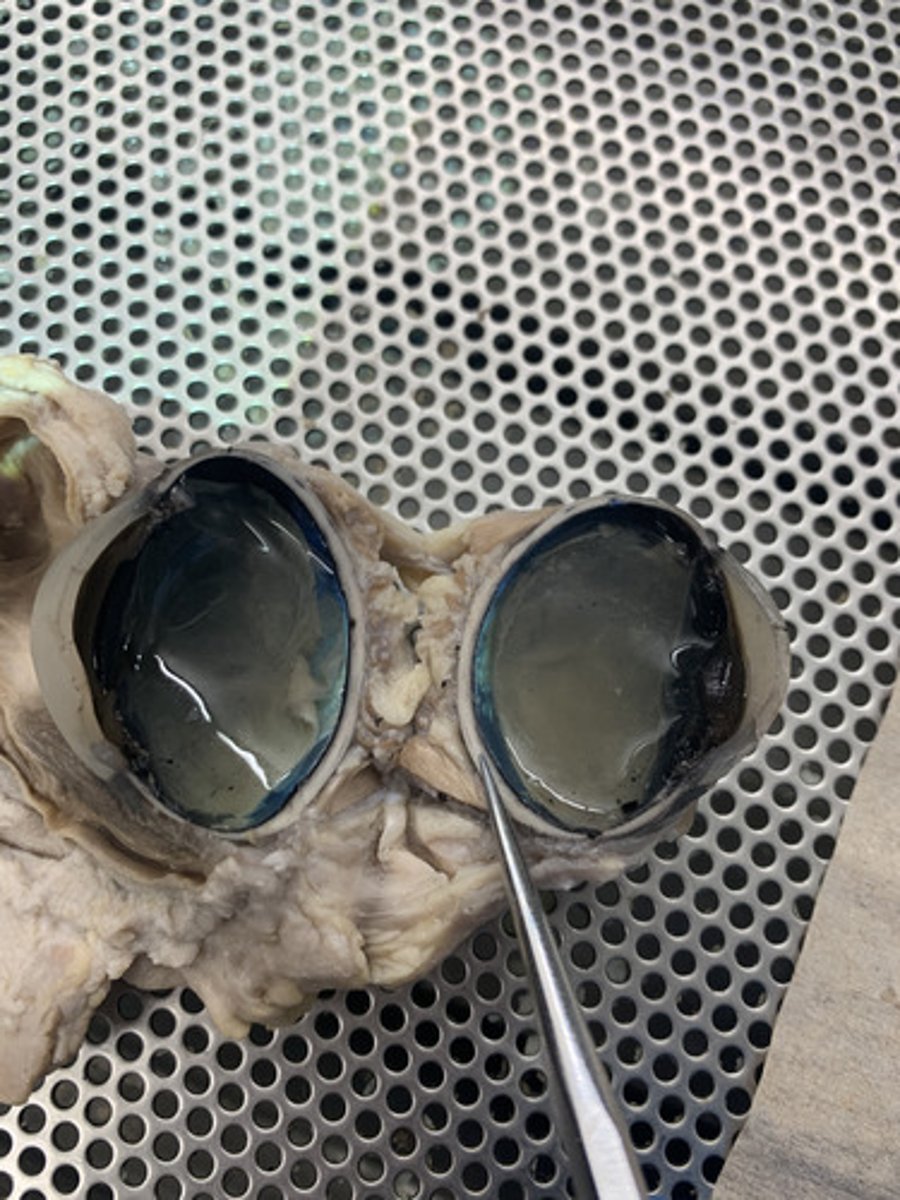
<p>white part of the fibrous tunic</p>
14
New cards

Lens

the transparent structure behind the pupil that changes shape to help focus images on the retina
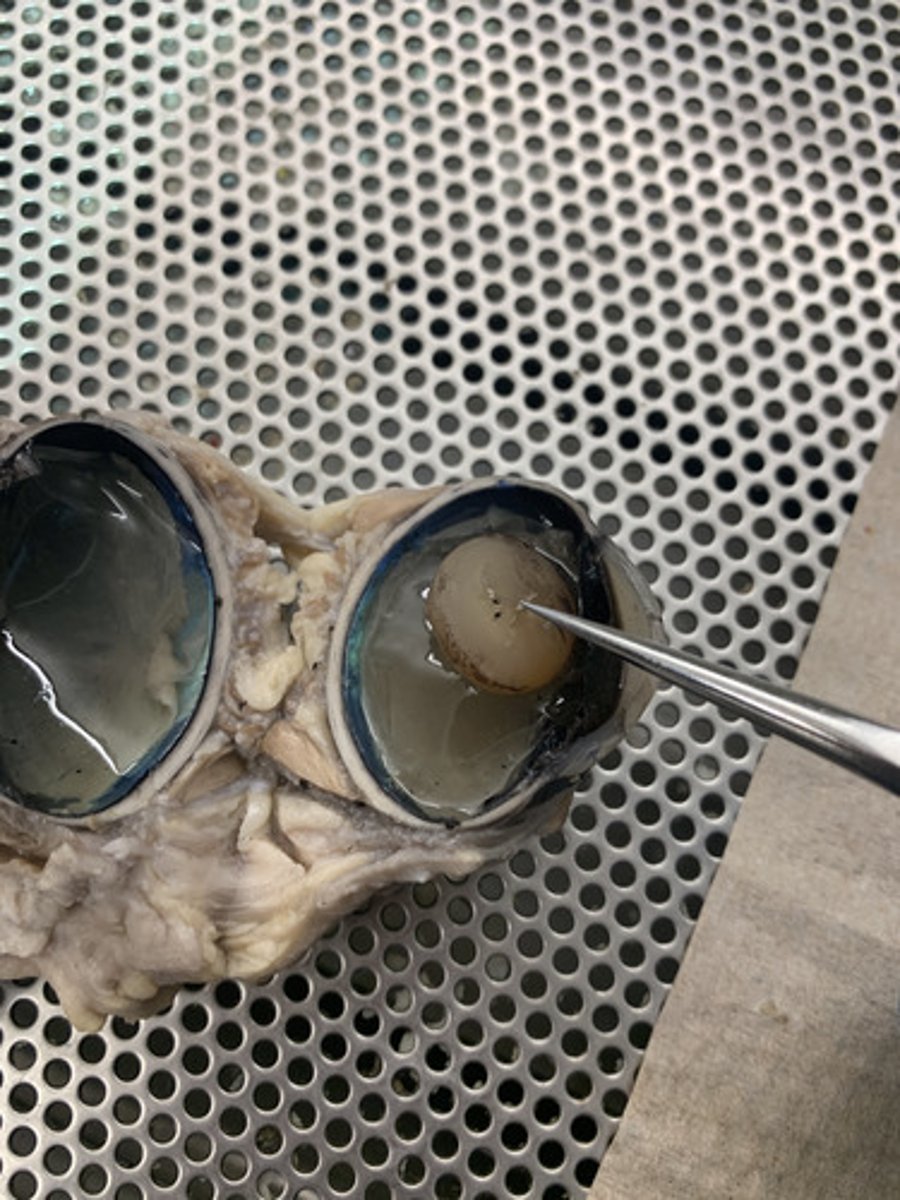
<p>the transparent structure behind the pupil that changes shape to help focus images on the retina</p>
15
New cards

Retina

the light-sensitive inner surface of the eye, containing the receptor rods and cones plus layers of neurons that begin the processing of visual information
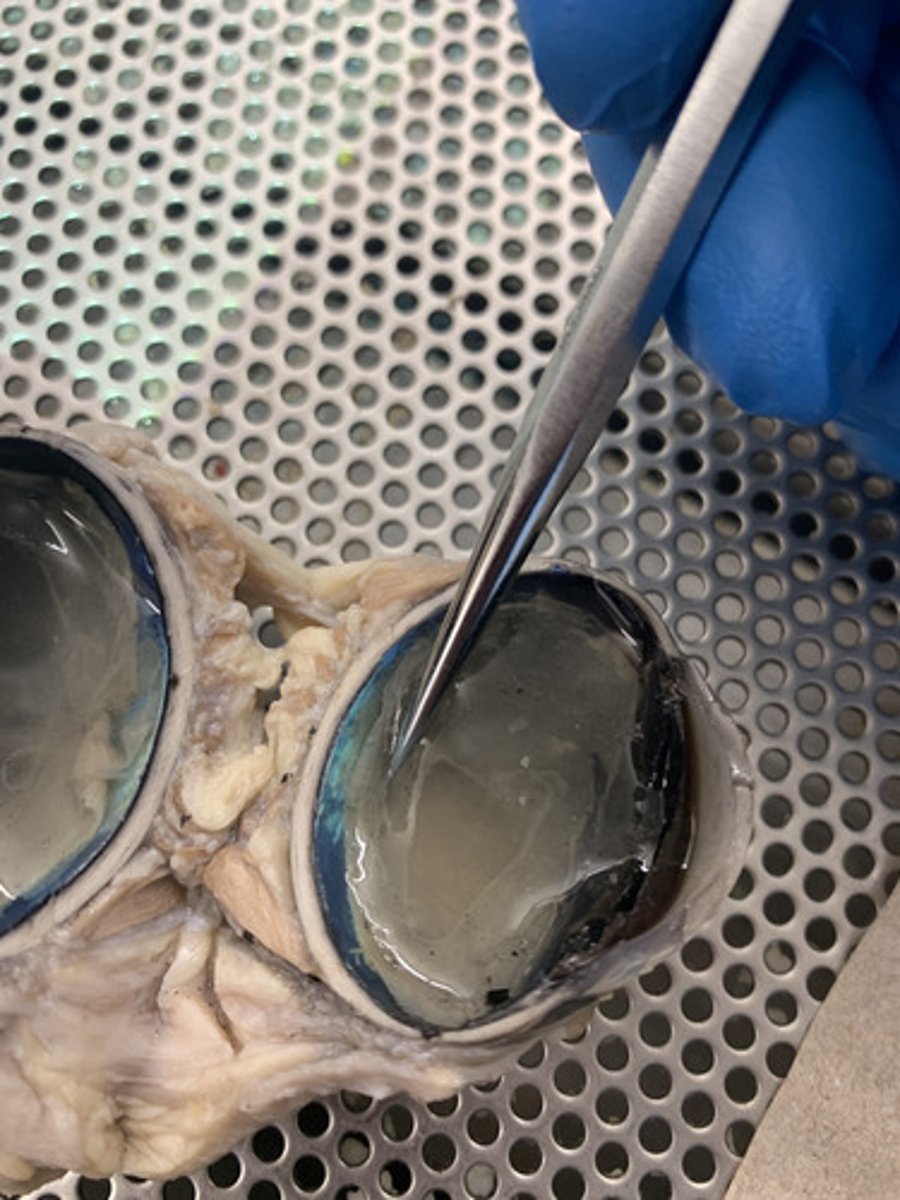
<p>the light-sensitive inner surface of the eye, containing the receptor rods and cones plus layers of neurons that begin the processing of visual information</p>
16
New cards

Vitreous humor

jellylike substance found behind the lens in the posterior cavity of the eye that maintains its shape
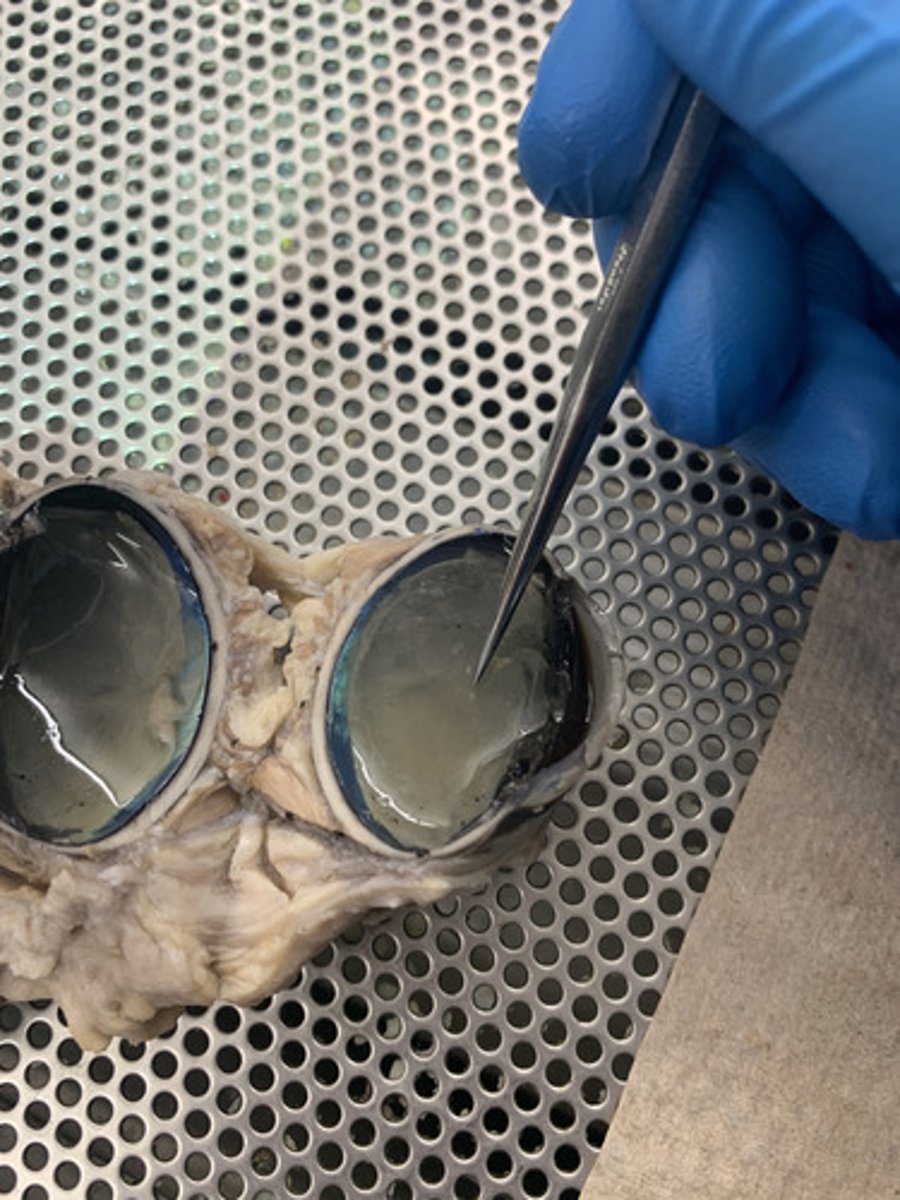
<p>jellylike substance found behind the lens in the posterior cavity of the eye that maintains its shape</p>
17
New cards

Ciliary body

ring of tissue behind the peripheral iris that is composed of ciliary muscle and ciliary processes
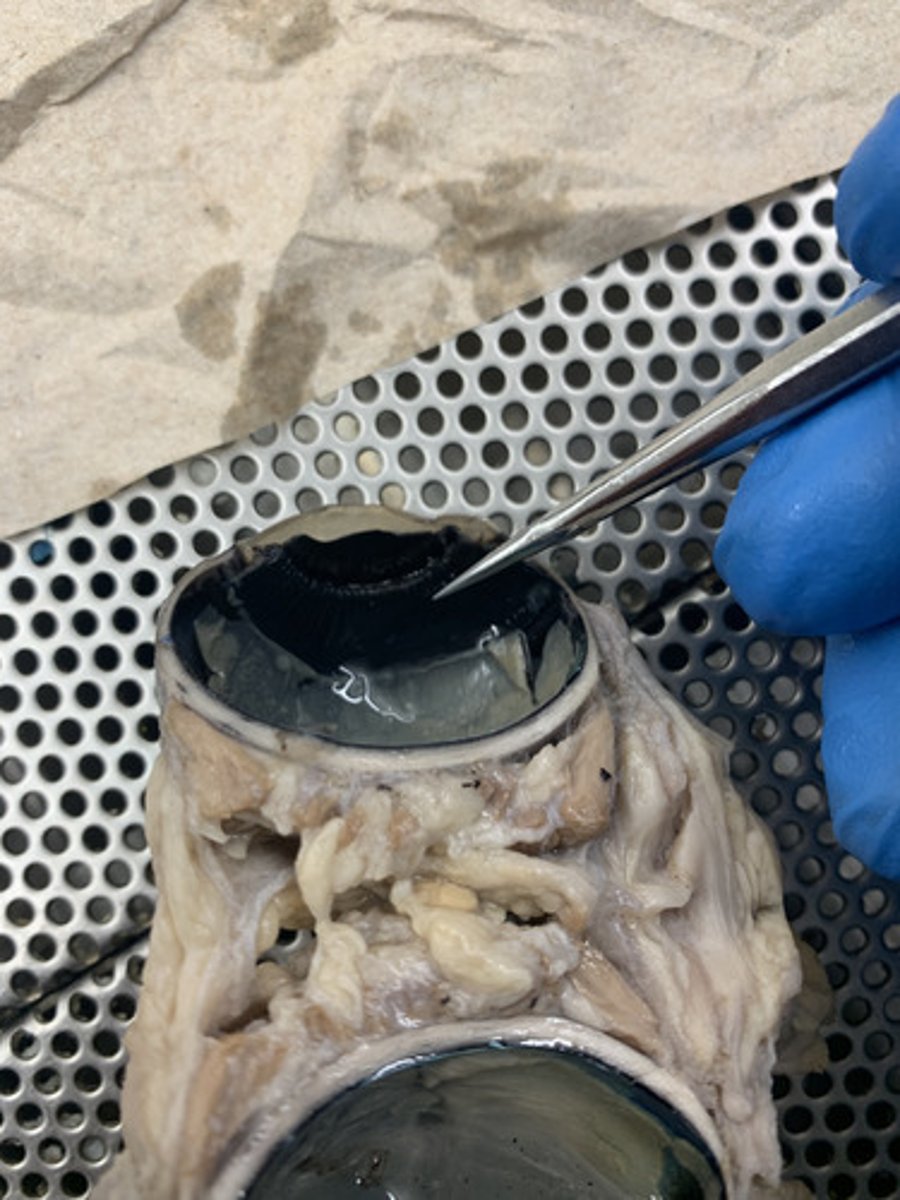
<p>ring of tissue behind the peripheral iris that is composed of ciliary muscle and ciliary processes</p>
18
New cards

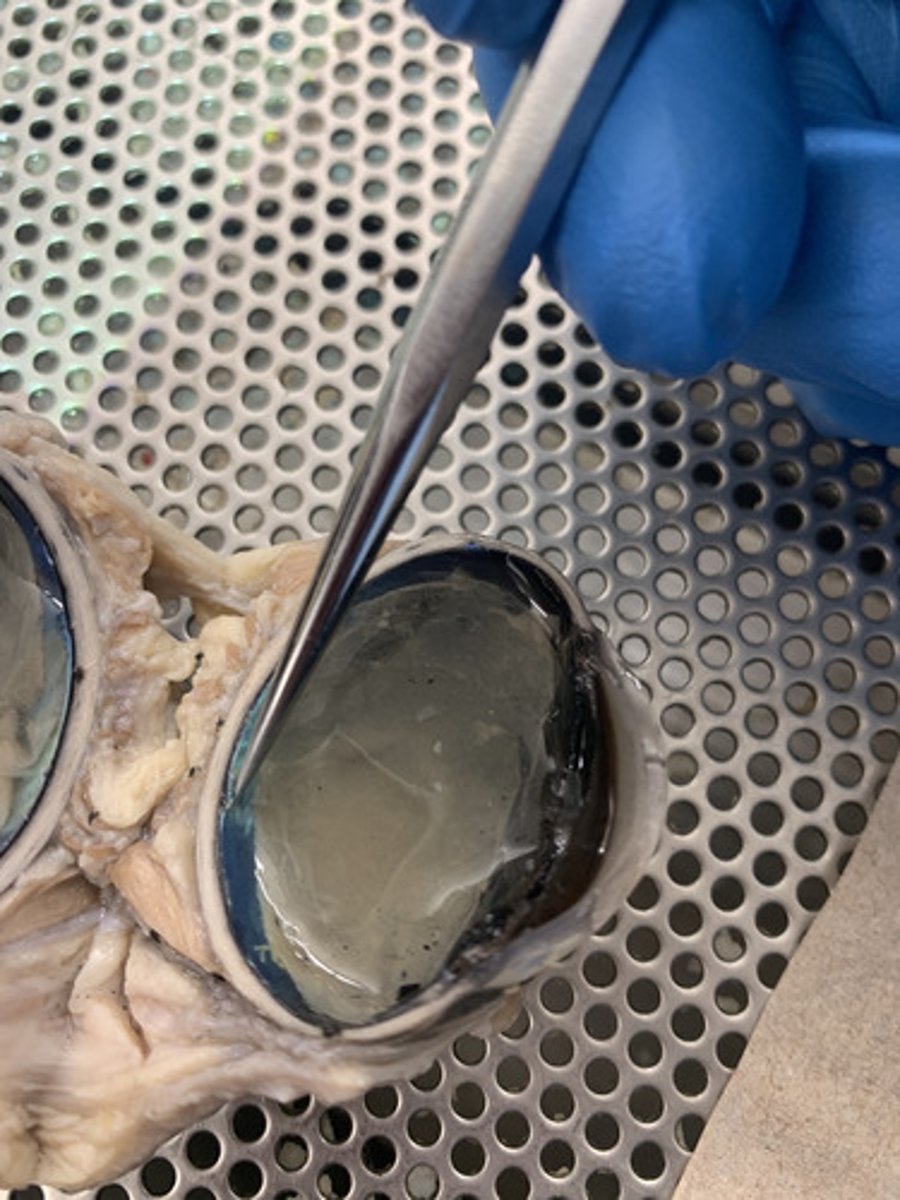
Choroid

middle, vascular layer of the eye, between the retina and the sclera
<p>middle, vascular layer of the eye, between the retina and the sclera</p>
19
New cards

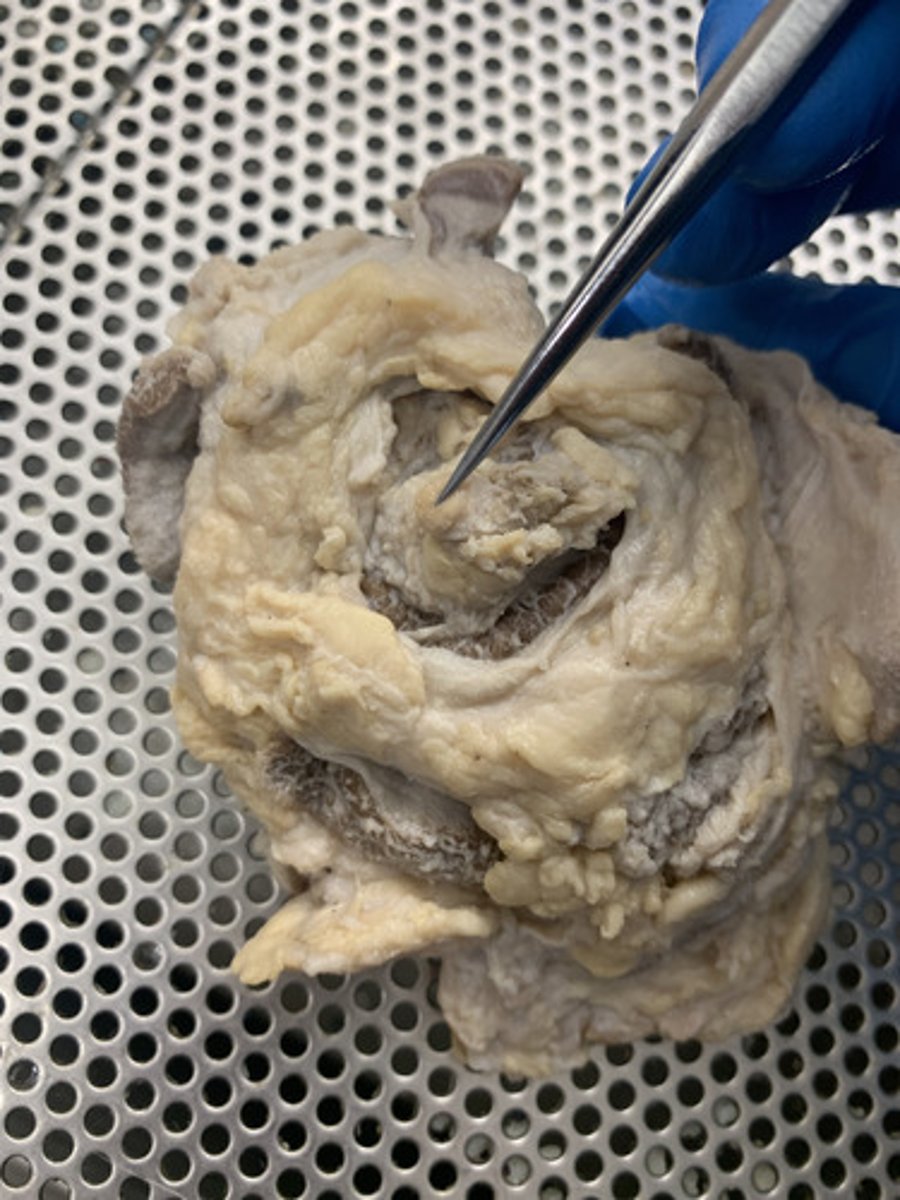
Optic nerve (CN II)

the nerve that carries neural impulses from the eye to the brain
<p>the nerve that carries neural impulses from the eye to the brain</p>
20
New cards

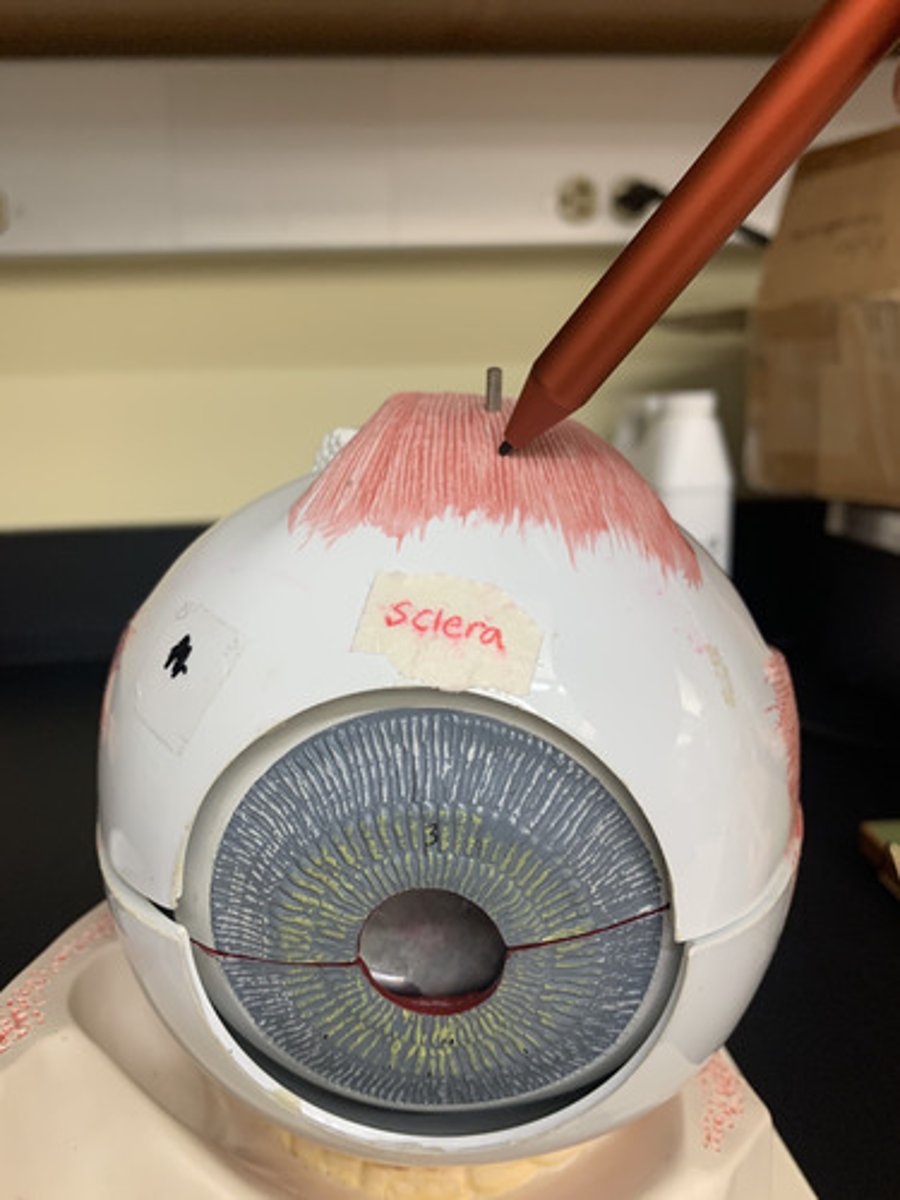
Superior rectus

Origin: common tendinous ring

Insertion: superior sclera of eye

Action: elevates front of eye
<p>Origin: common tendinous ring</p><p>Insertion: superior sclera of eye</p><p>Action: elevates front of eye</p><p></p>
21
New cards

Inferior rectus

Origin: Common tendinous ring

Insertion: inferior sclera of eye

Action: depresses front of eye

<p>Origin: Common tendinous ring</p><p>Insertion: inferior sclera of eye</p><p>Action: depresses front of eye</p><p></p>
22
New cards

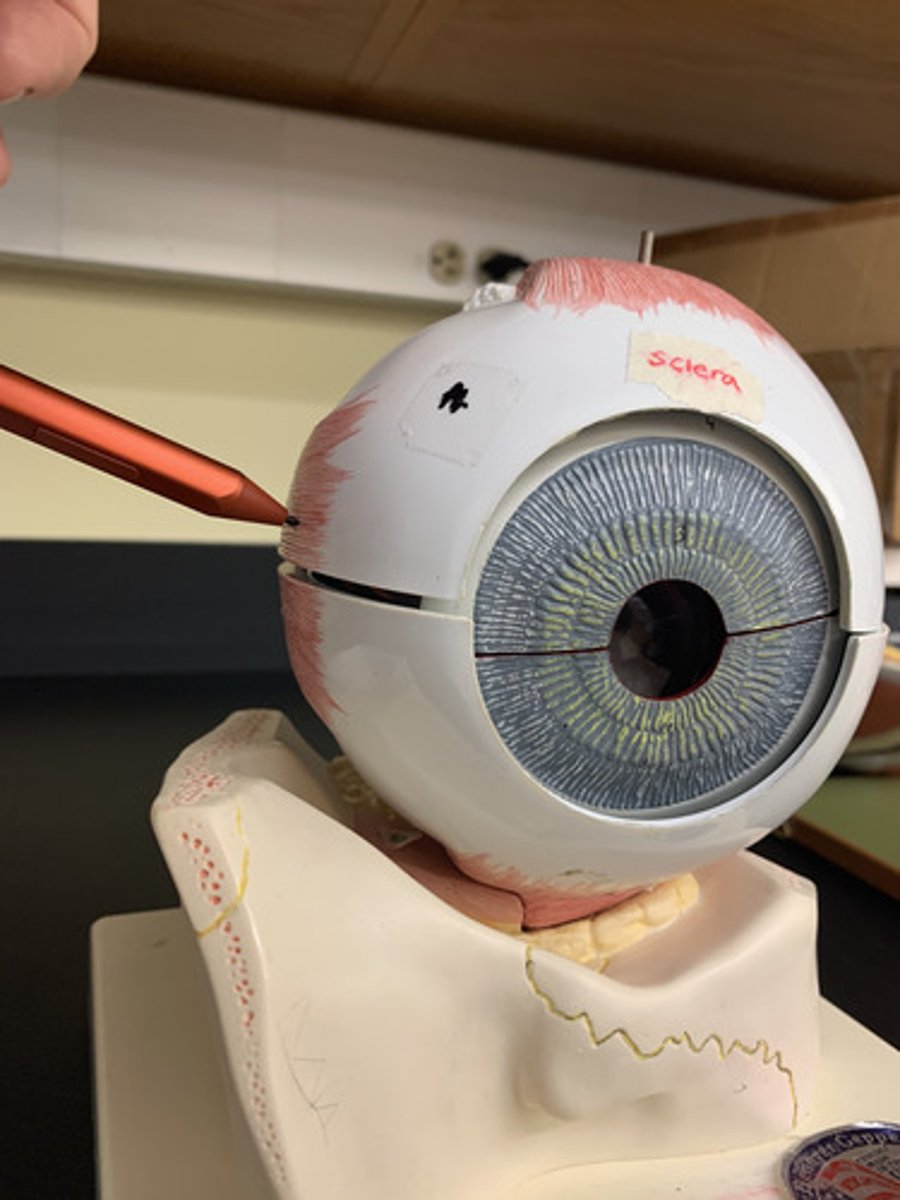
Medial rectus

Origin: Common tendinous ring

Insertion: medial sclera of eye

Action: moves front of eye medially
<p>Origin: Common tendinous ring</p><p>Insertion: medial sclera of eye</p><p>Action: moves front of eye medially</p><p></p>
23
New cards

Lateral rectus

Origin: Common tendinous ring

Insertion: lateral sclera of eye

Action: moves front of eye laterally
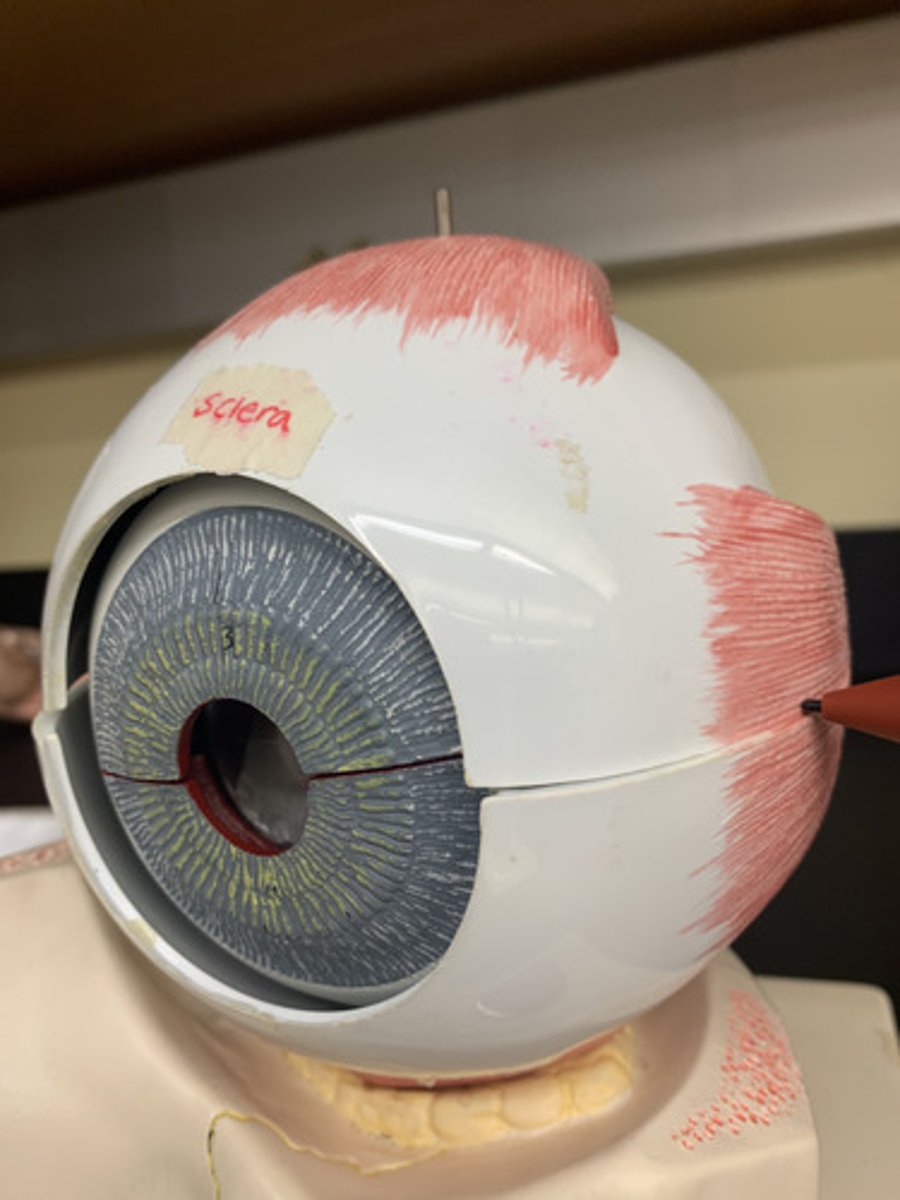
<p>Origin: Common tendinous ring</p><p>Insertion: lateral sclera of eye</p><p>Action: moves front of eye laterally</p><p></p>
24
New cards

Superior oblique

Origin: Common tendinous ring

Insertion: Superolateral sclera of eye

Action: depresses, abducts and medially rotates eye
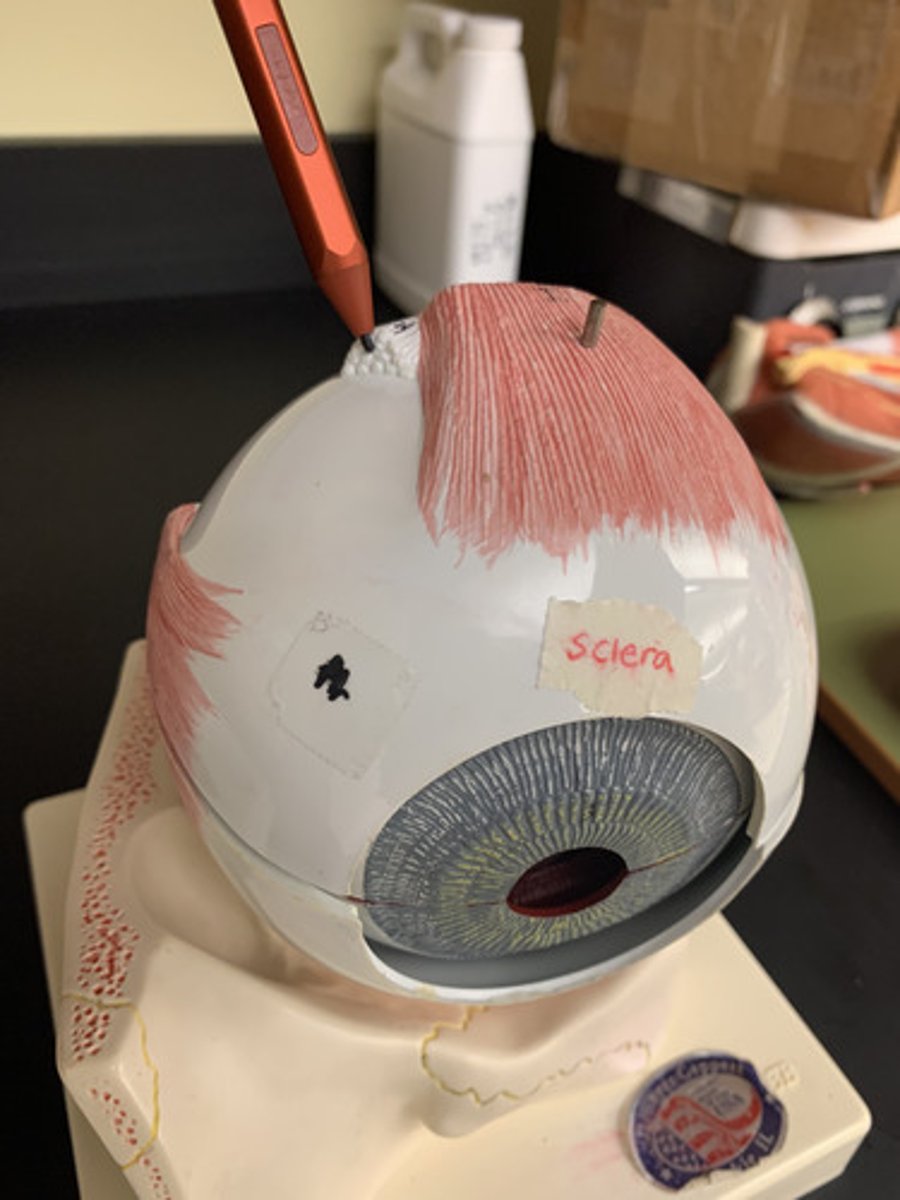
<p>Origin: Common tendinous ring</p><p>Insertion: Superolateral sclera of eye</p><p>Action: depresses, abducts and medially rotates eye</p><p></p>
25
New cards

Inferior oblique

Origin: Common tendinous ring

Insertion: Inferolateral sclera of eye

Action: Elevates, abducts and laterally rotates eye

<p>Origin: Common tendinous ring</p><p>Insertion: Inferolateral sclera of eye</p><p>Action: Elevates, abducts and laterally rotates eye</p><p></p>
26
New cards

Auricle

external portion of the ear

<p>external portion of the ear</p>
27
New cards

Tympanic membrane

The eardrum. A structure that separates the outer ear from the middle ear and vibrates in response to sound waves.
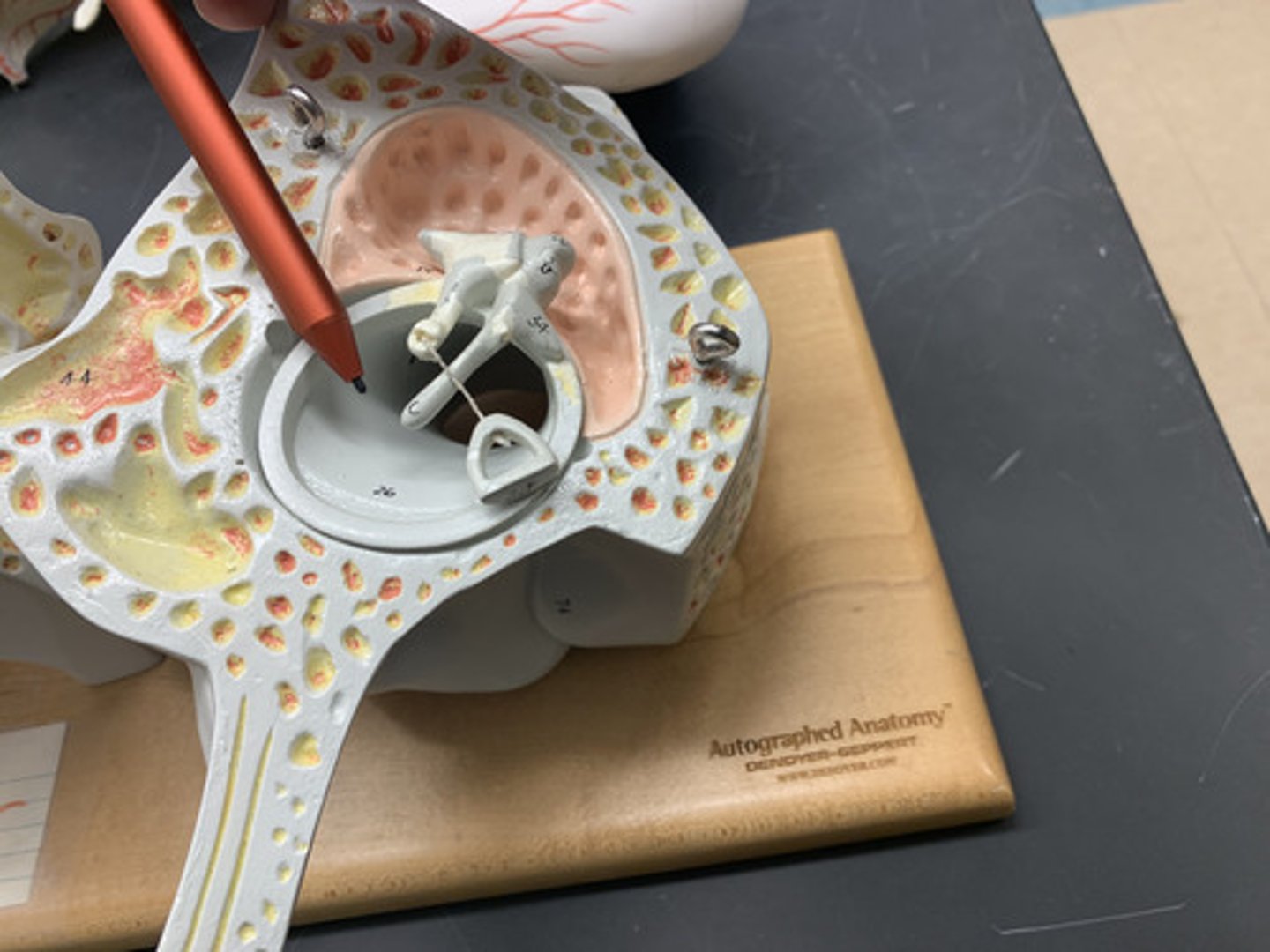
<p>The eardrum. A structure that separates the outer ear from the middle ear and vibrates in response to sound waves.</p>
28
New cards

Malleus

hammer; first of the three auditory ossicles of the middle ear
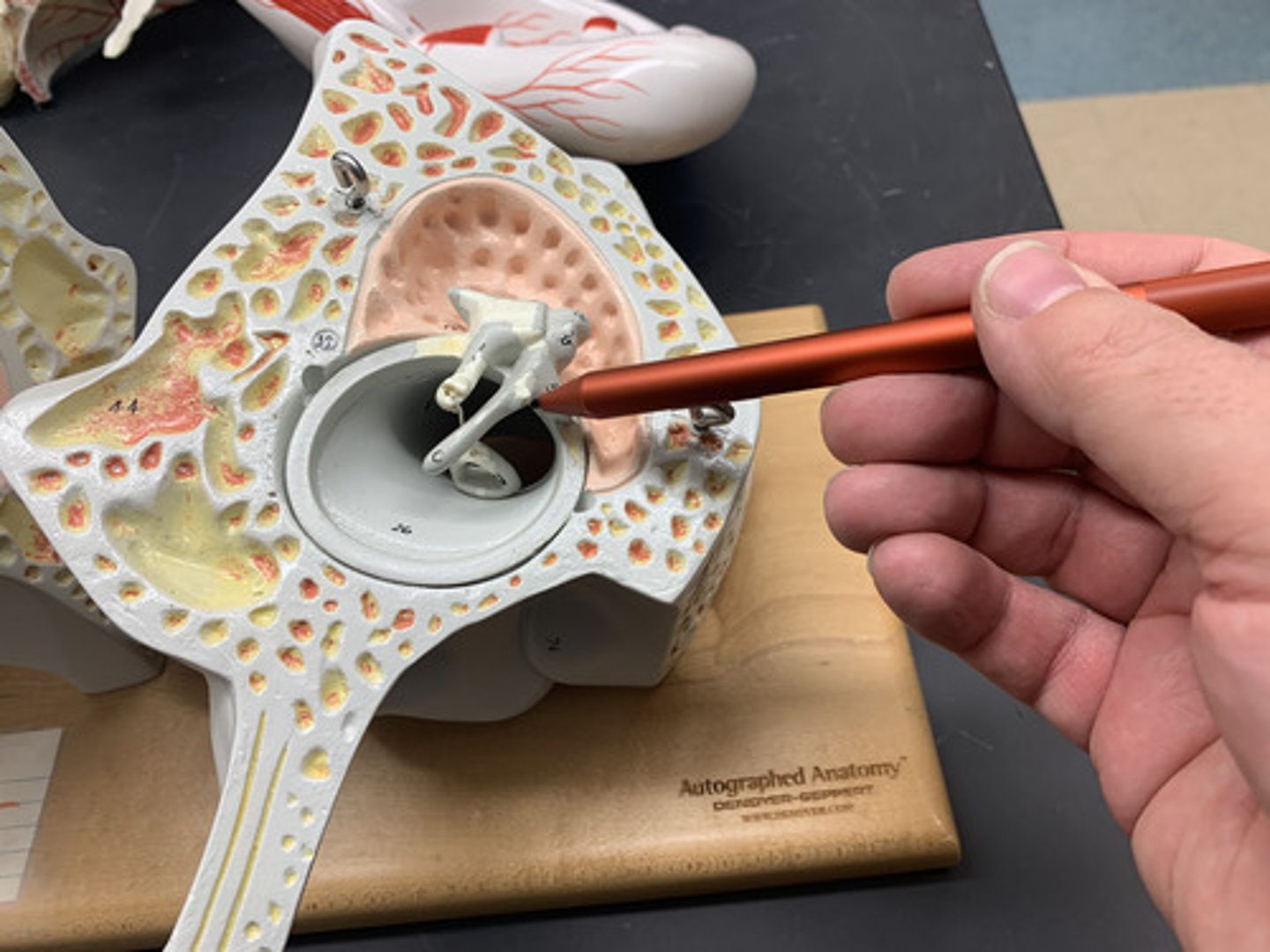
<p>hammer; first of the three auditory ossicles of the middle ear</p>
29
New cards

Incus

anvil; middle of the three auditory ossicles of the middle ear
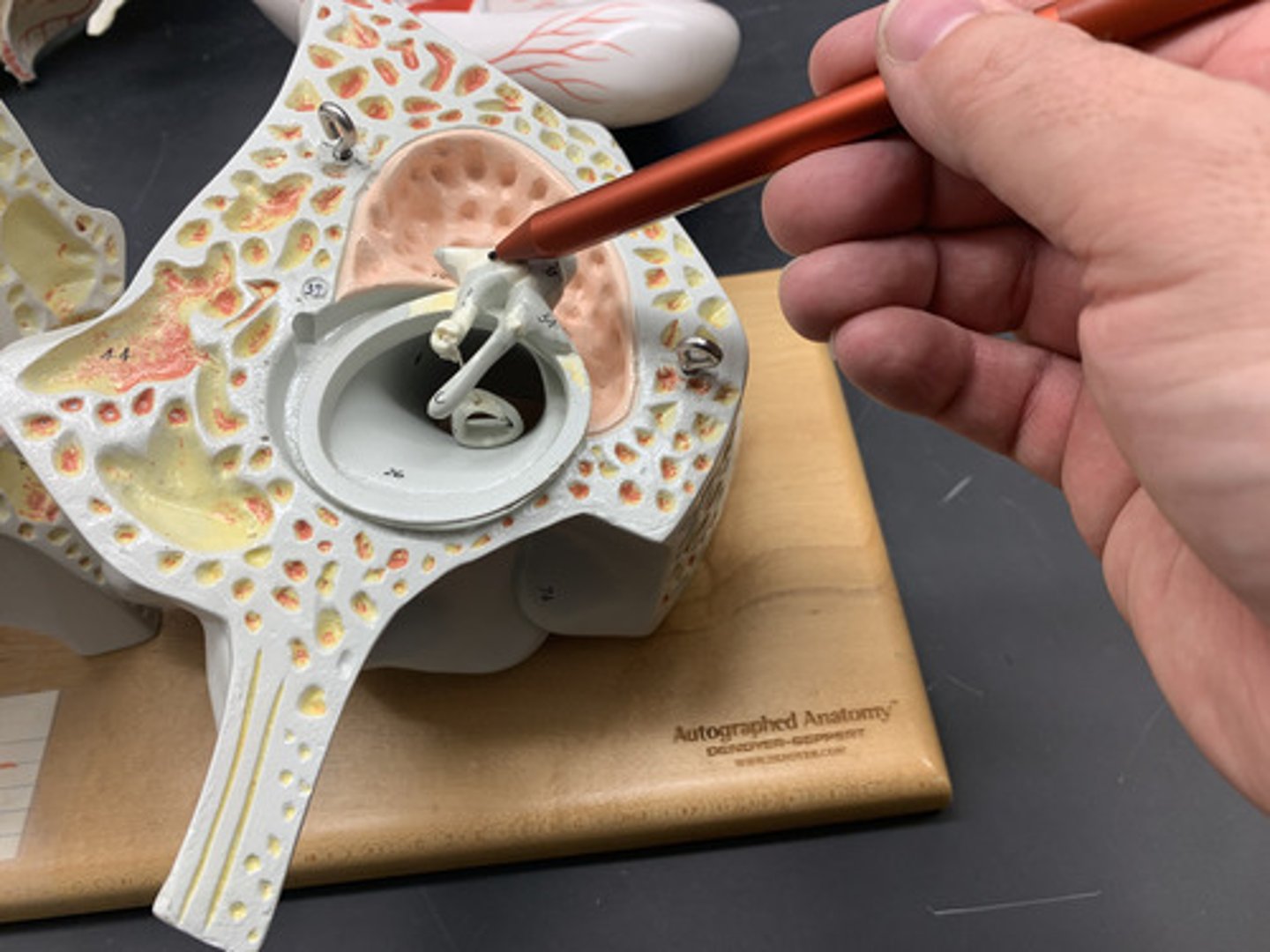
<p>anvil; middle of the three auditory ossicles of the middle ear</p>
30
New cards

Stapes

stirrup; last of the three auditory ossicles of the middle ear
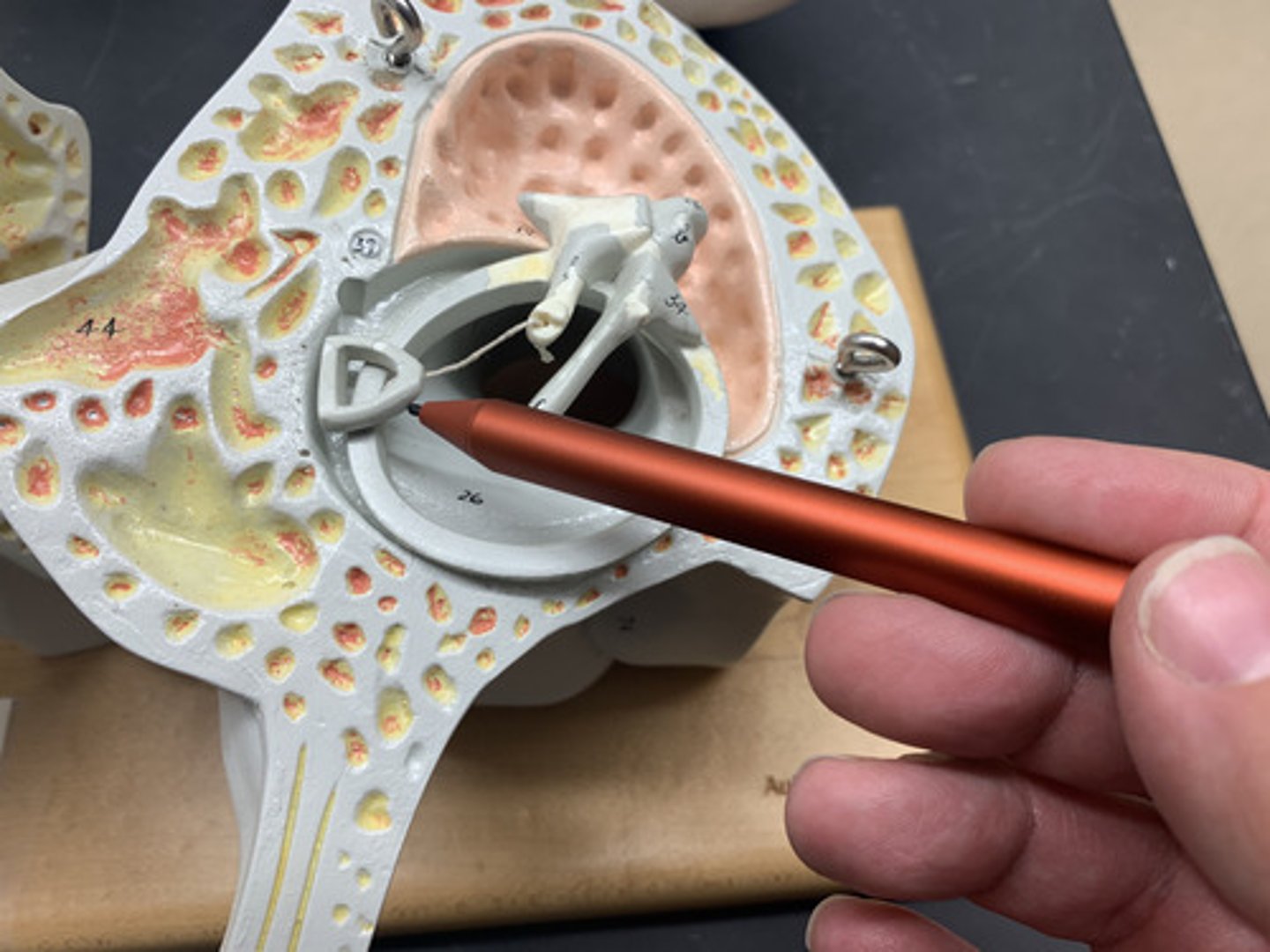
<p>stirrup; last of the three auditory ossicles of the middle ear</p>
31
New cards

Cochlea

a coiled, bony, fluid-filled tube in the inner ear; sound waves traveling through the cochlear fluid trigger nerve impulses
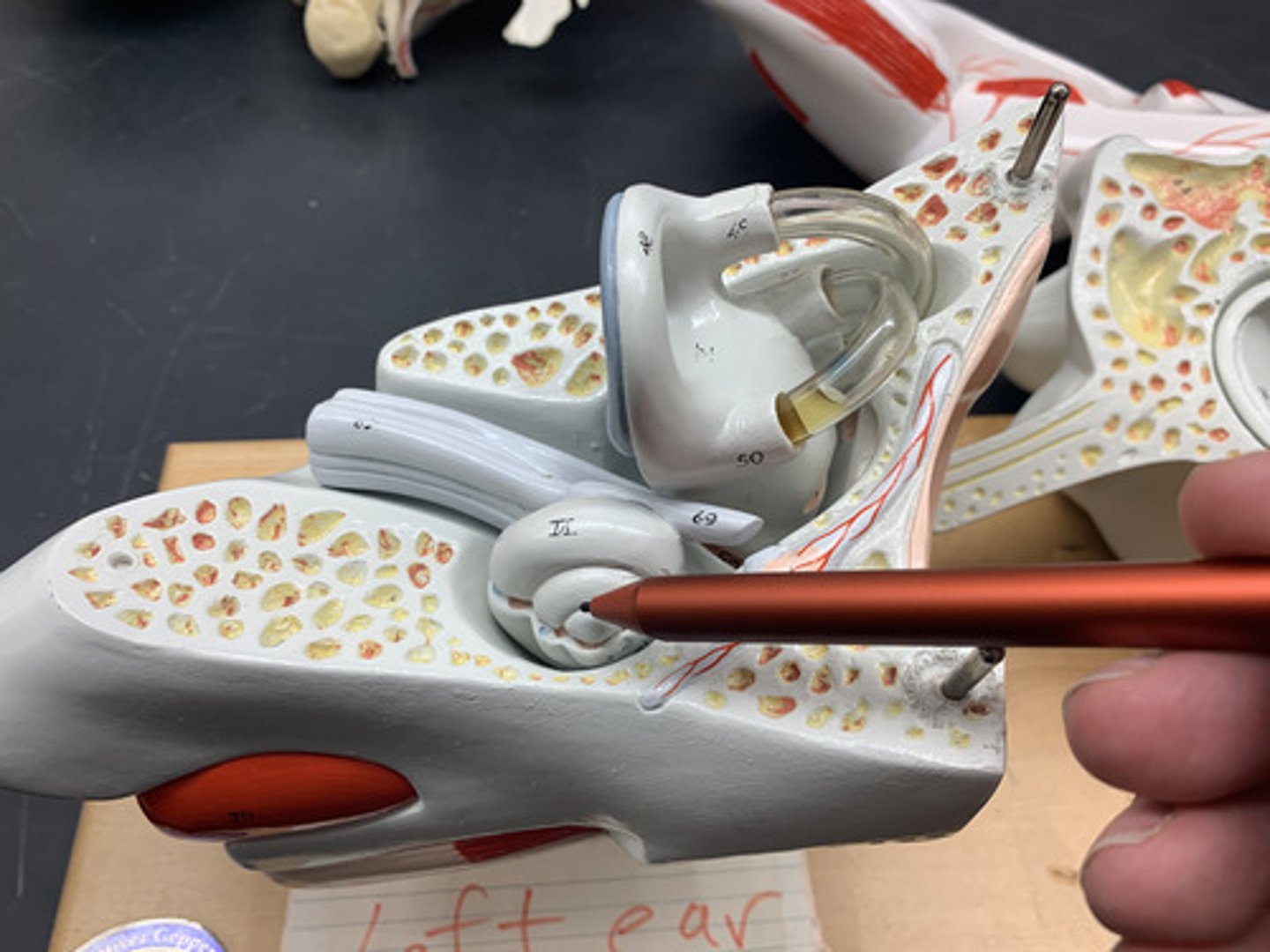
<p>a coiled, bony, fluid-filled tube in the inner ear; sound waves traveling through the cochlear fluid trigger nerve impulses</p>
32
New cards

Semicircular canals

three fluid-filled canals in the inner ear responsible for our sense of rotational balance
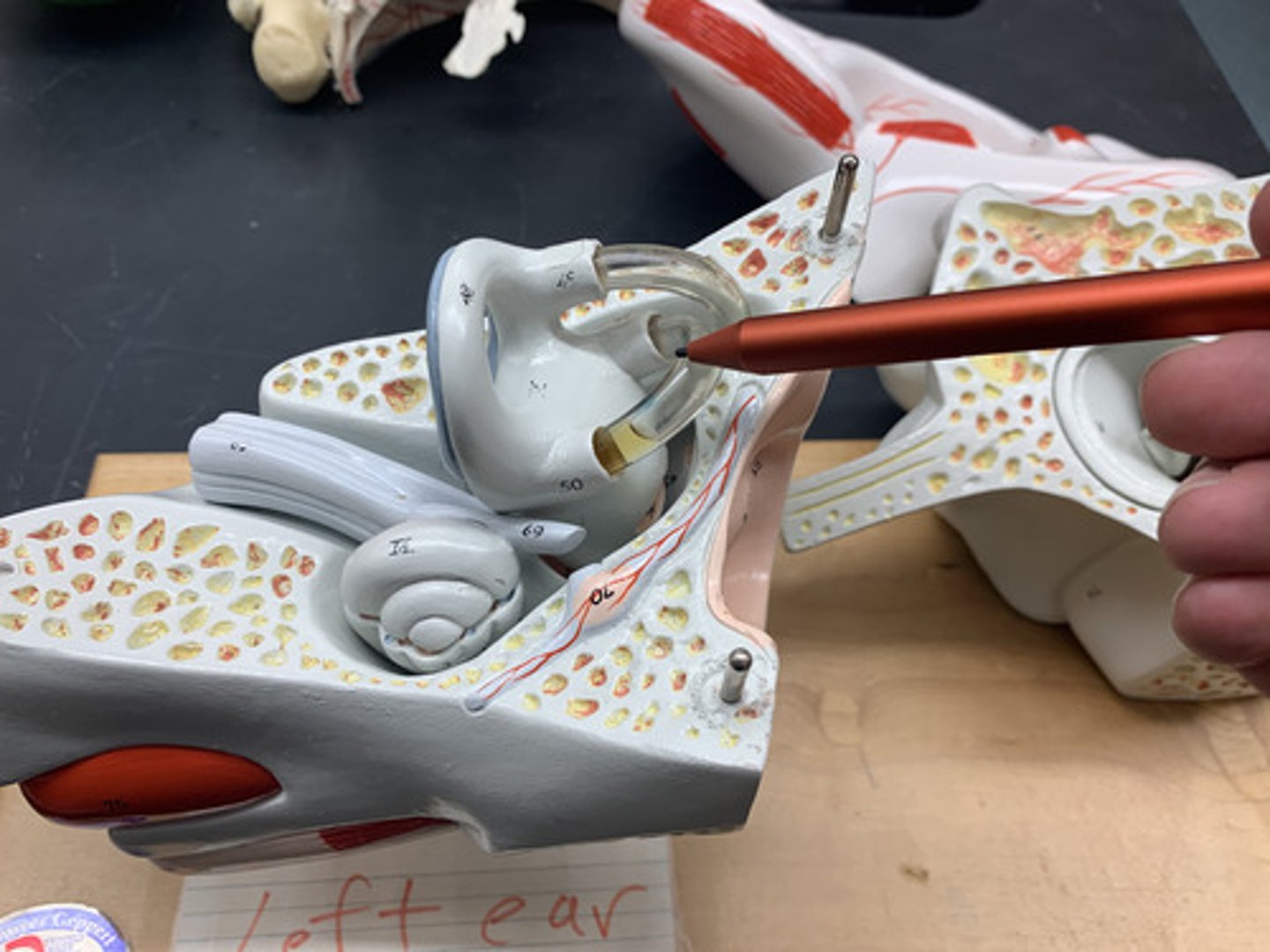
<p>three fluid-filled canals in the inner ear responsible for our sense of rotational balance</p>
33
New cards

Vestibule

Fluid filled spaces responsible for our sense of balance
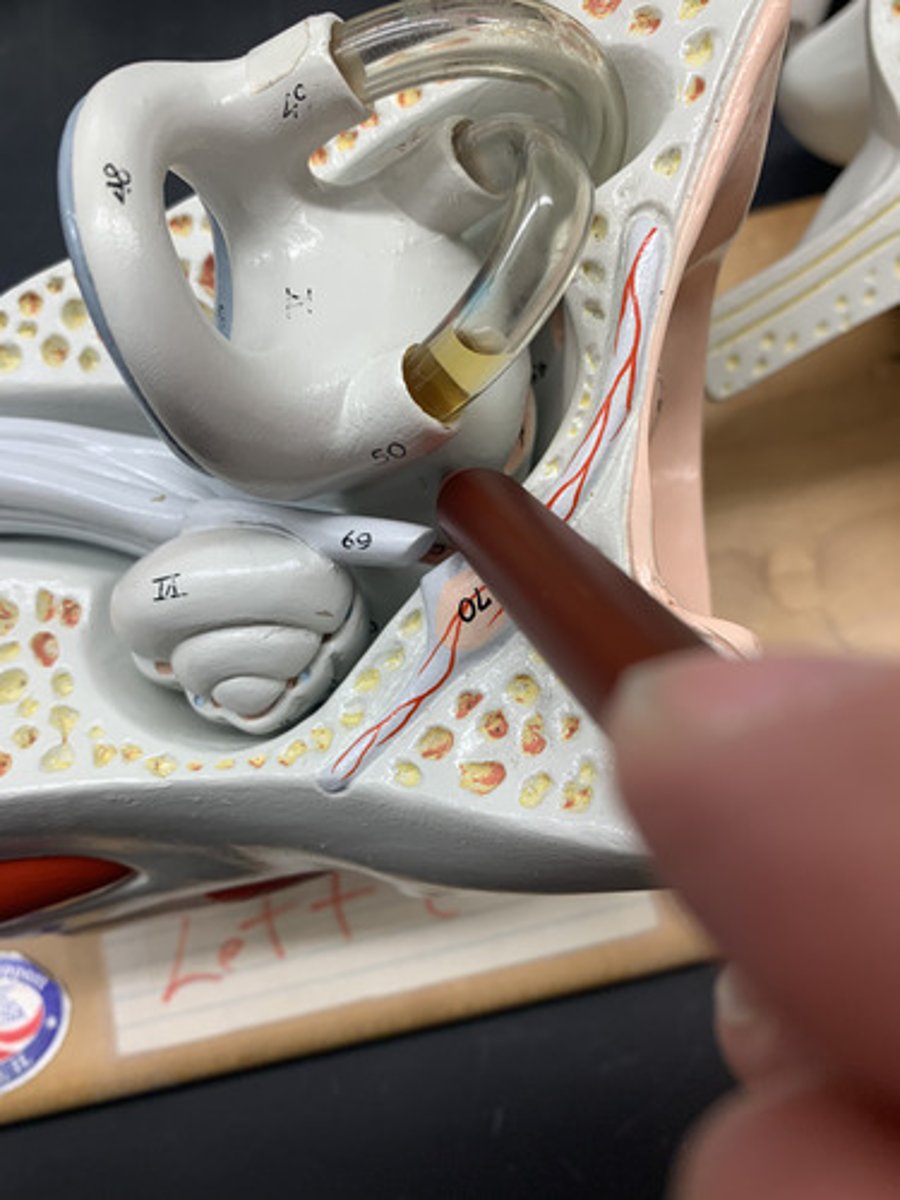
<p>Fluid filled spaces responsible for our sense of balance</p>
34
New cards

Vestibulocochlear nerve (CN VIII)

cranial nerve that collects sensory information about hearing and balance
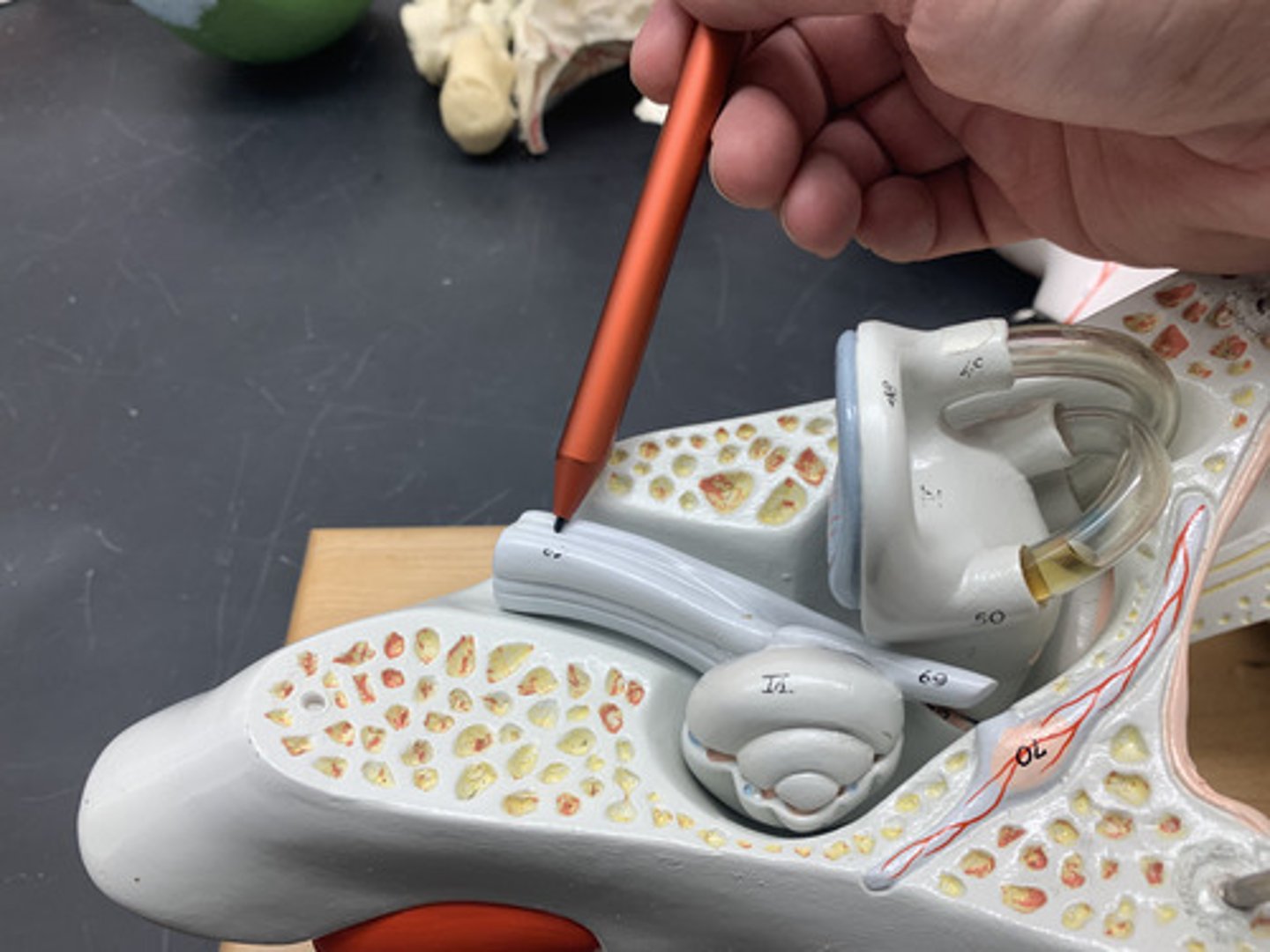
<p>cranial nerve that collects sensory information about hearing and balance</p>
35
New cards

Eustachian tube

A narrow tube between the middle ear and the throat that serves to equalize pressure on both sides of the eardrum
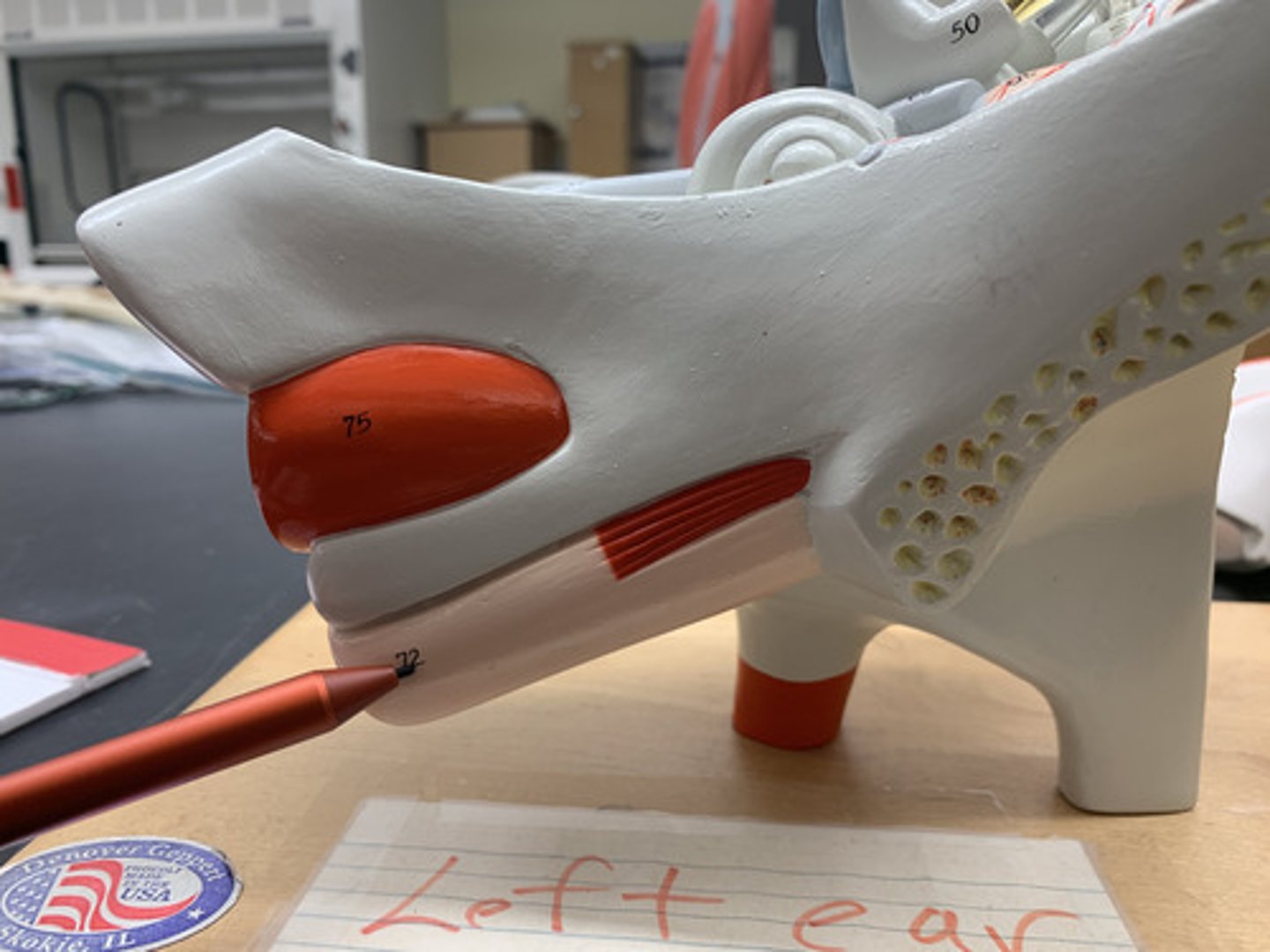
<p>A narrow tube between the middle ear and the throat that serves to equalize pressure on both sides of the eardrum</p>
36
New cards

Masseter

Origin: zygomatic arch

Insertion: angle of mandible

Action: elevates & protracts mandible
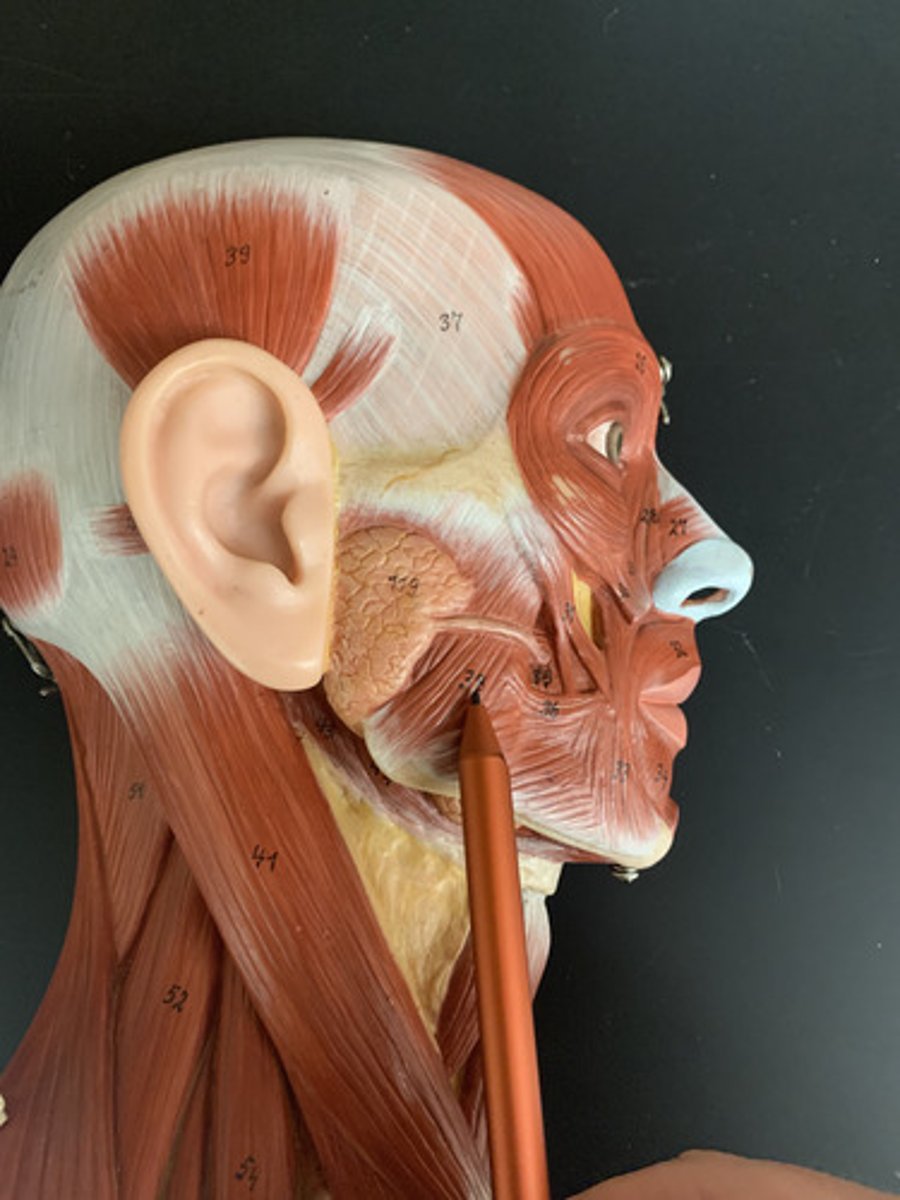
<p>Origin: zygomatic arch</p><p>Insertion: angle of mandible</p><p>Action: elevates &amp; protracts mandible</p><p></p>
37
New cards

Temporalis

O: temporal fossa

I: coronoid process of mandible

A: Elevates & retracts mandible
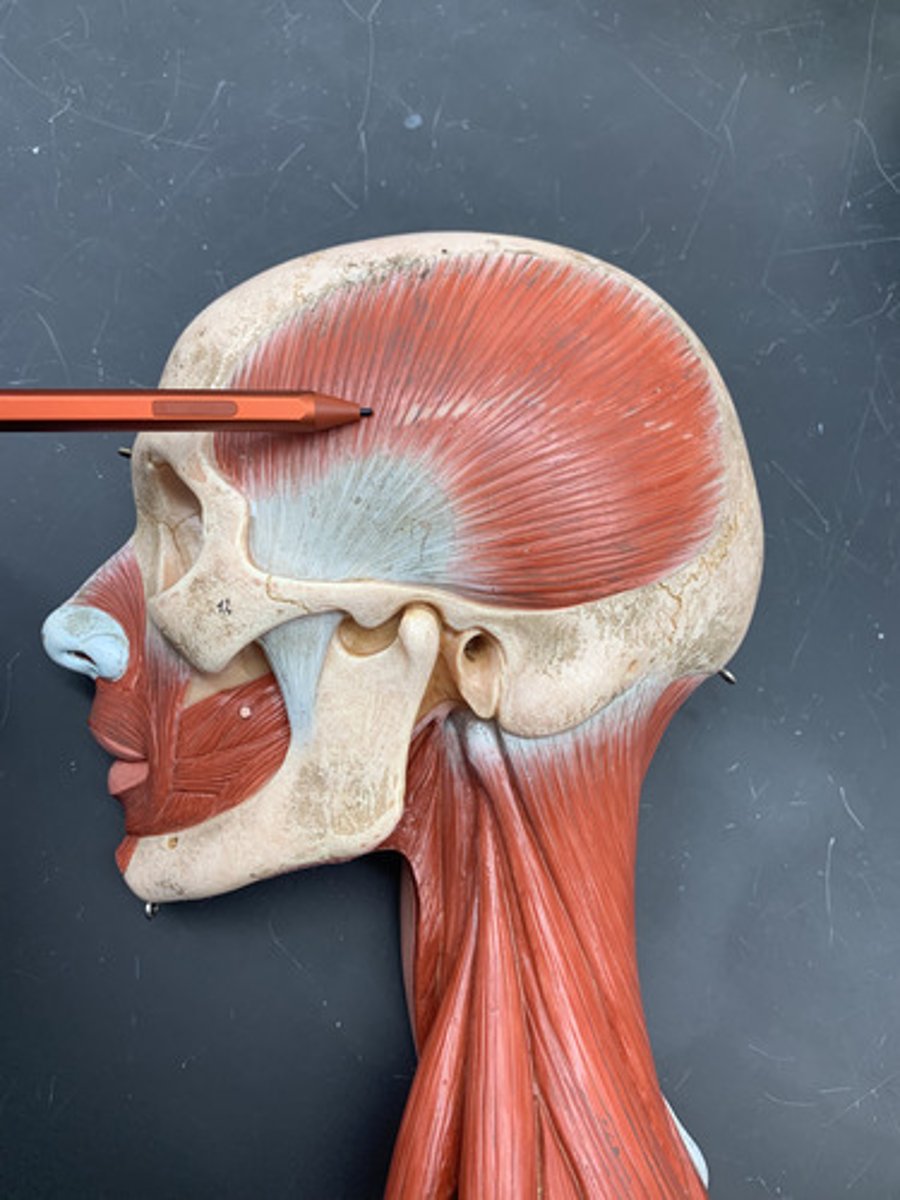
<p>O: temporal fossa</p><p>I: coronoid process of mandible</p><p>A: Elevates &amp; retracts mandible</p><p></p>
38
New cards

Genioglossus

O: Mandible, internal surface

I: Bottom of tongue, body of hyoid

A: Protrudes tongue
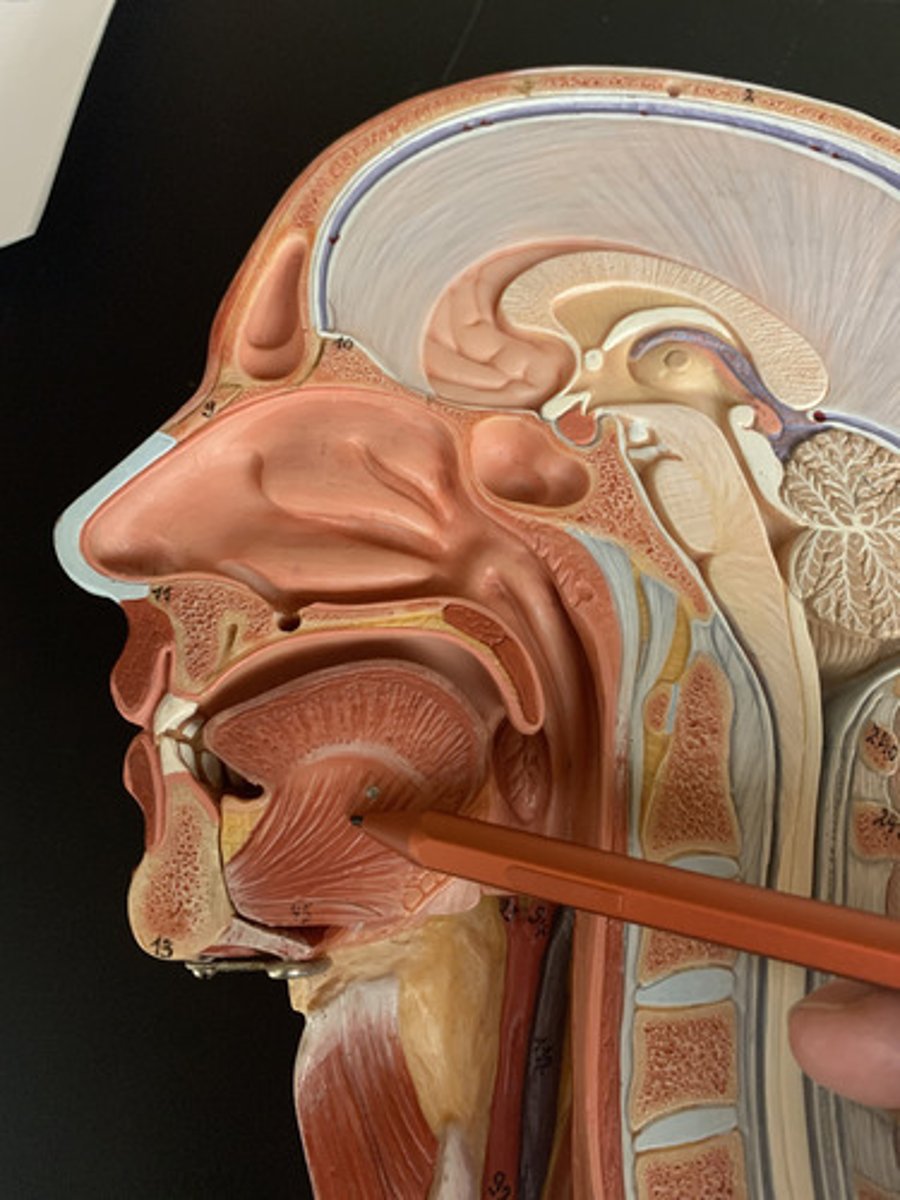
<p>O: Mandible, internal surface</p><p>I: Bottom of tongue, body of hyoid</p><p>A: Protrudes tongue</p><p></p>
39
New cards

Hyoglossus

Origin: Hyoid bone

Insertion: Tongue

Action: Depresses tongue
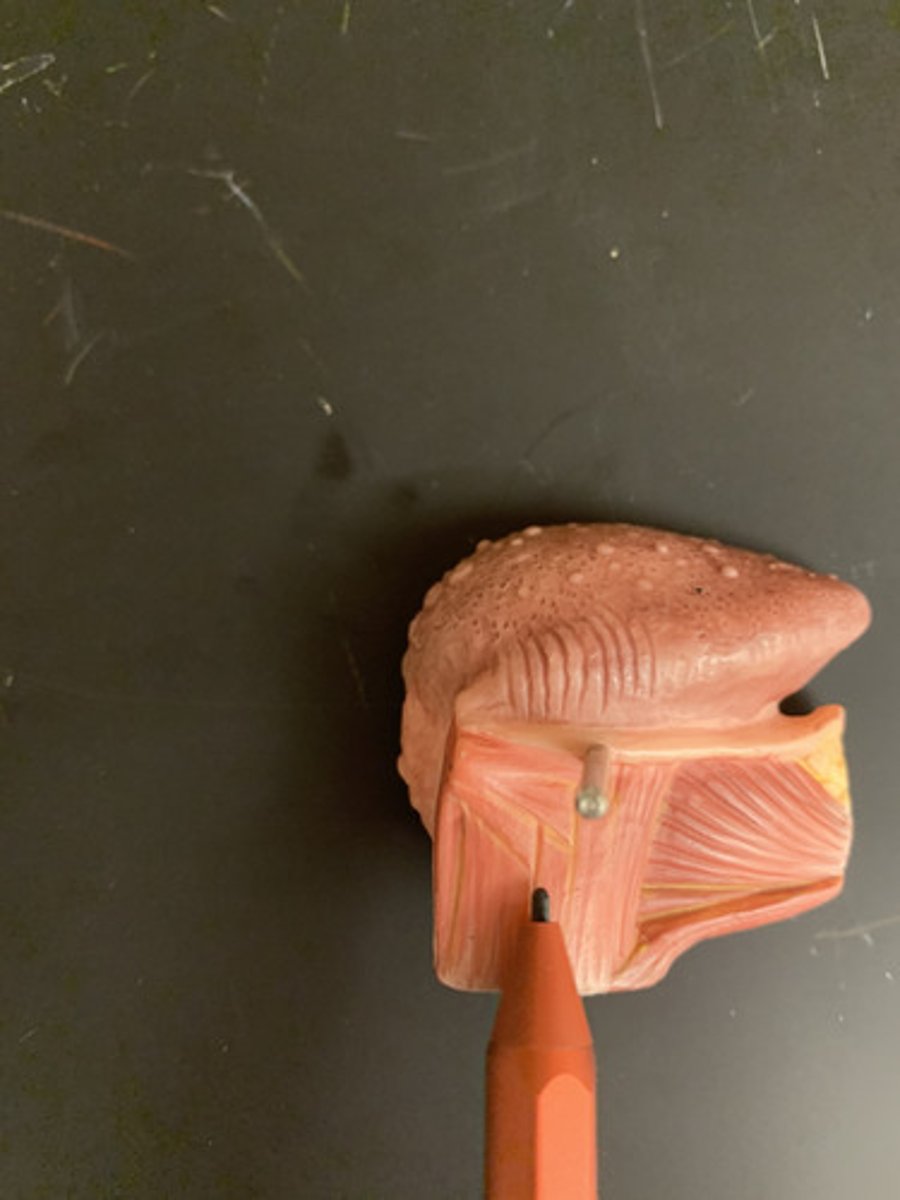
<p>Origin: Hyoid bone</p><p>Insertion: Tongue</p><p>Action: Depresses tongue</p><p></p>
40
New cards

Cricothyroid muscle

O: arch of the cricoid cartilage

I: inferior border of the thyroid cartilage

A: draws the thyroid cartilage forward, lengthening the vocal ligaments
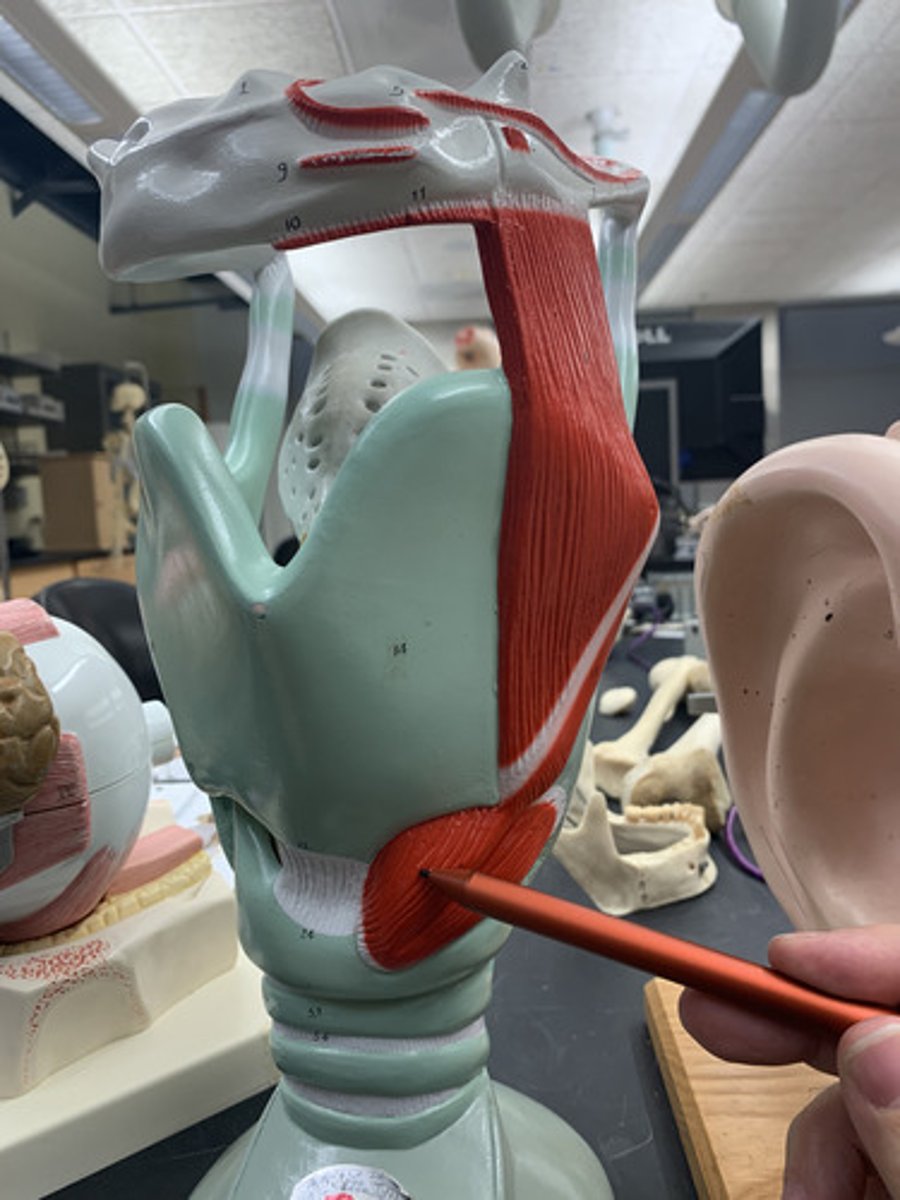
<p>O: arch of the cricoid cartilage</p><p>I: inferior border of the thyroid cartilage</p><p>A: draws the thyroid cartilage forward, lengthening the vocal ligaments</p><p></p>
41
New cards

Posterior cricoarytenoid muscle

O: Cricoid cartilage

I: Arytenoid cartilage

A: Abduct vocal folds
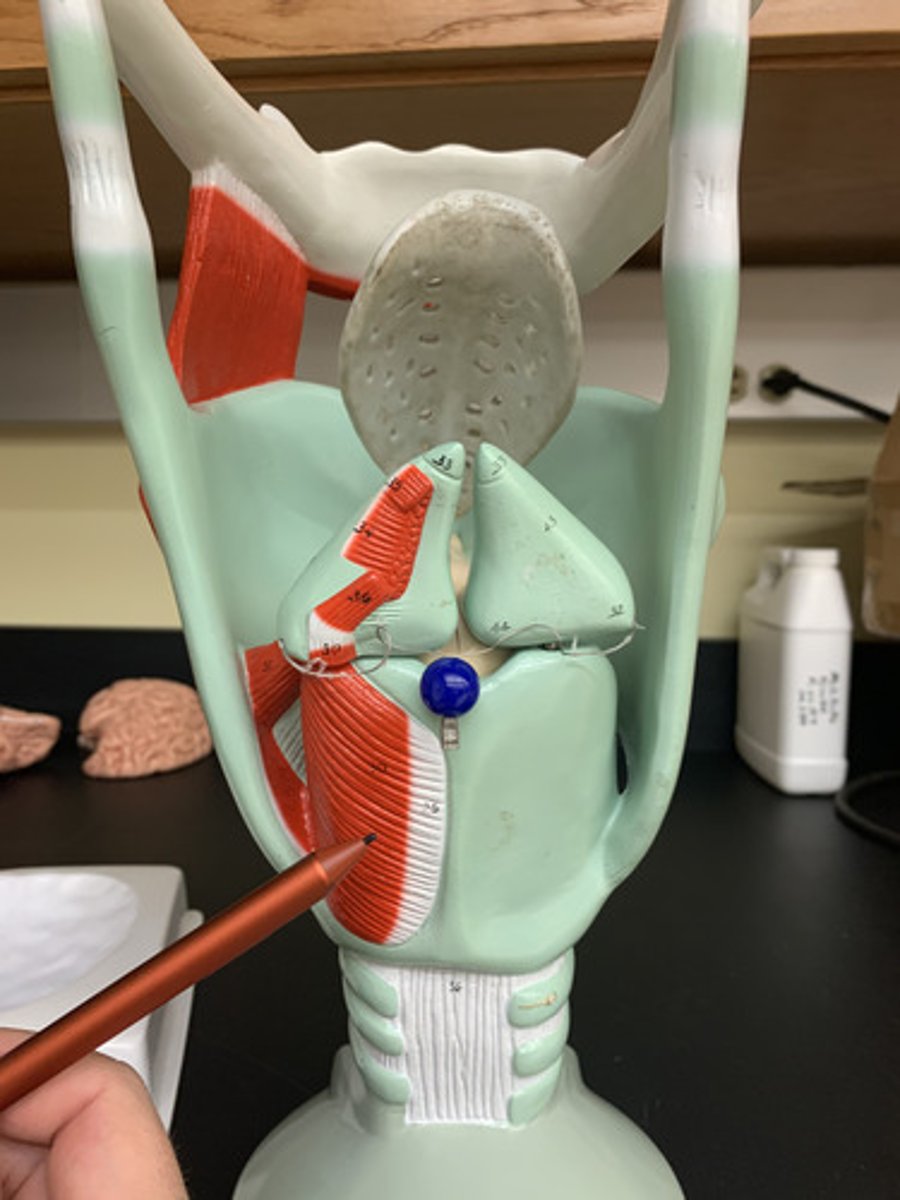
<p>O: Cricoid cartilage</p><p>I: Arytenoid cartilage</p><p>A: Abduct vocal folds</p><p></p>
42
New cards

Arytenoideus muscle

O & I: Contralateral sides of arytenoid cartilage

A: Adduct vocal folds
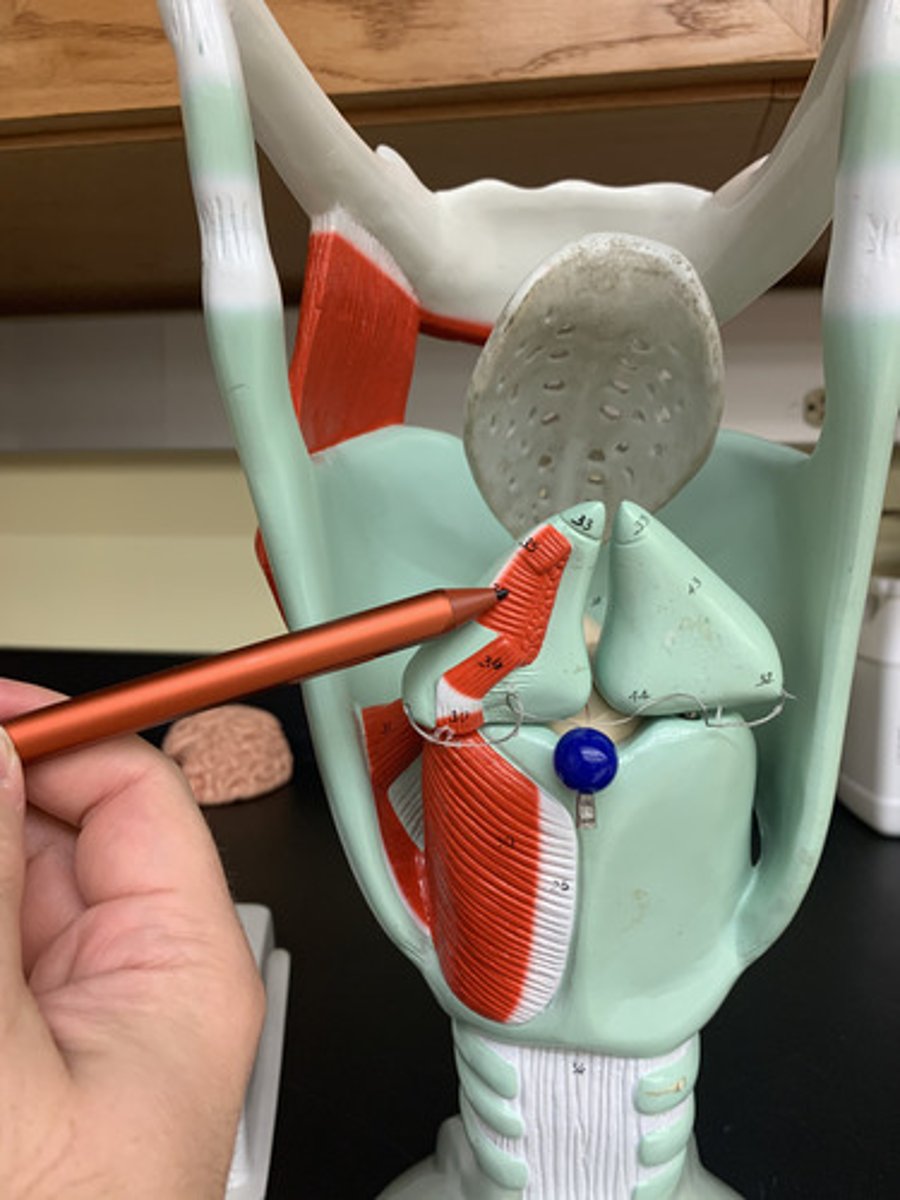
<p>O &amp; I: Contralateral sides of arytenoid cartilage</p><p>A: Adduct vocal folds</p><p></p>
43
New cards

Frontal sinus

cavity within the frontal bone
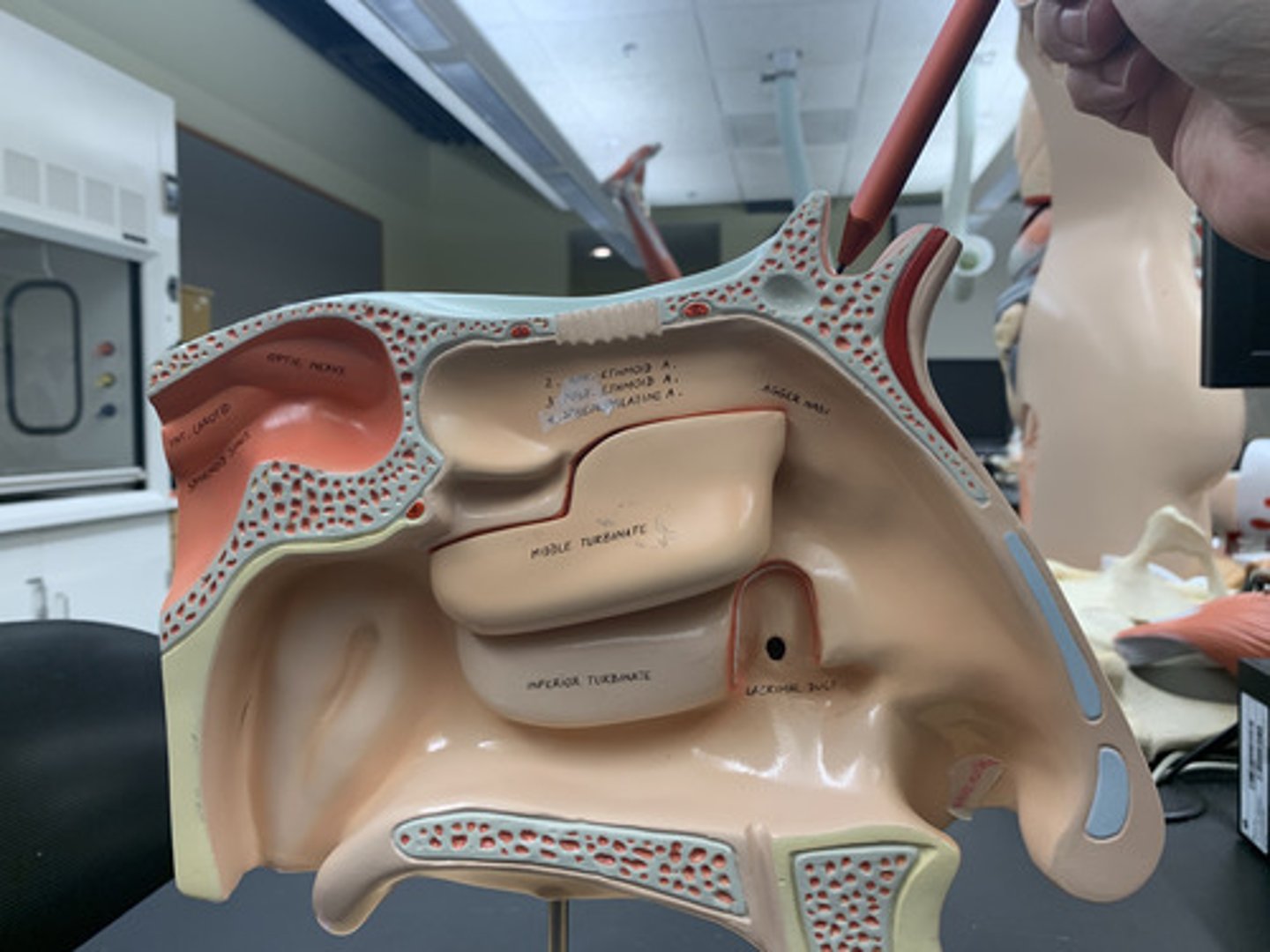
<p>cavity within the frontal bone</p>
44
New cards

Sphenoid sinus

sinus above and behind the nose
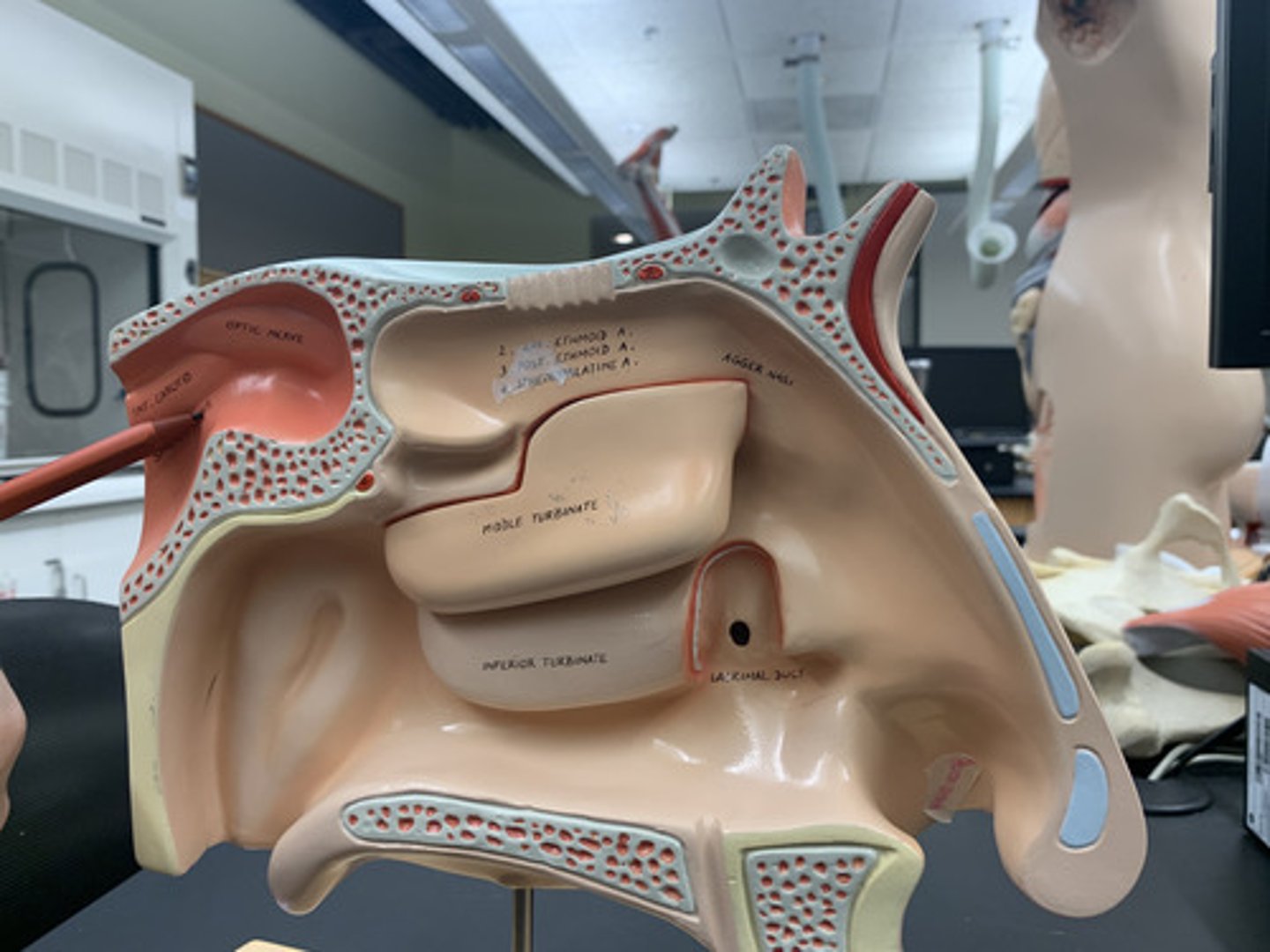
<p>sinus above and behind the nose</p>
45
New cards

Superior nasal concha

Most superior bony ridge of ethmoid bone that extends from lateral wall of nasal cavity

<p>Most superior bony ridge of ethmoid bone that extends from lateral wall of nasal cavity</p>
46
New cards

Middle nasal concha

Lower bony ridge of ethmoid bone that extends from lateral wall of nasal cavity
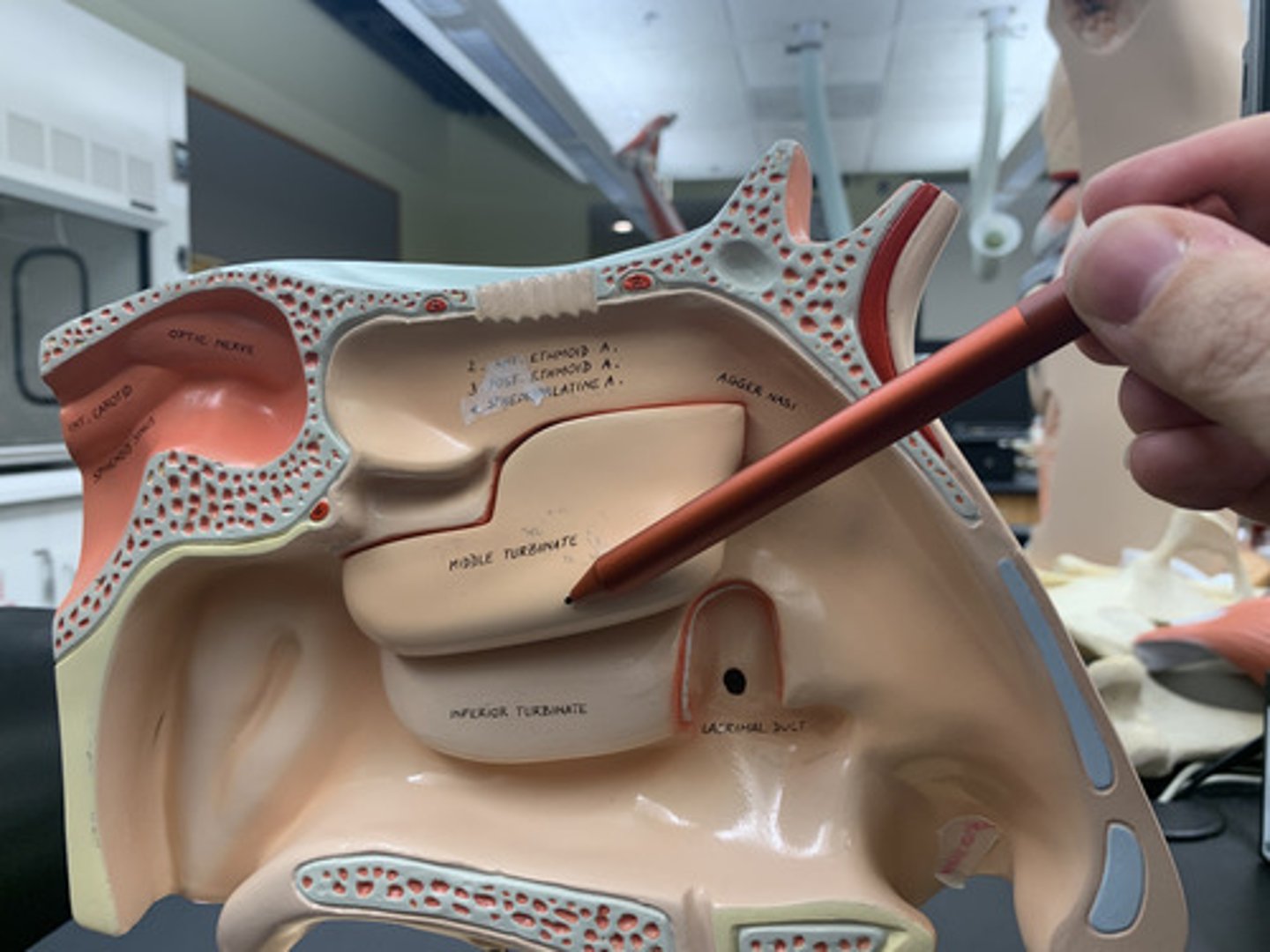
<p>Lower bony ridge of ethmoid bone that extends from lateral wall of nasal cavity</p>
47
New cards

Inferior nasal concha

Lowest bony ridge extending from lateral nasal cavity wall; its own complete bone
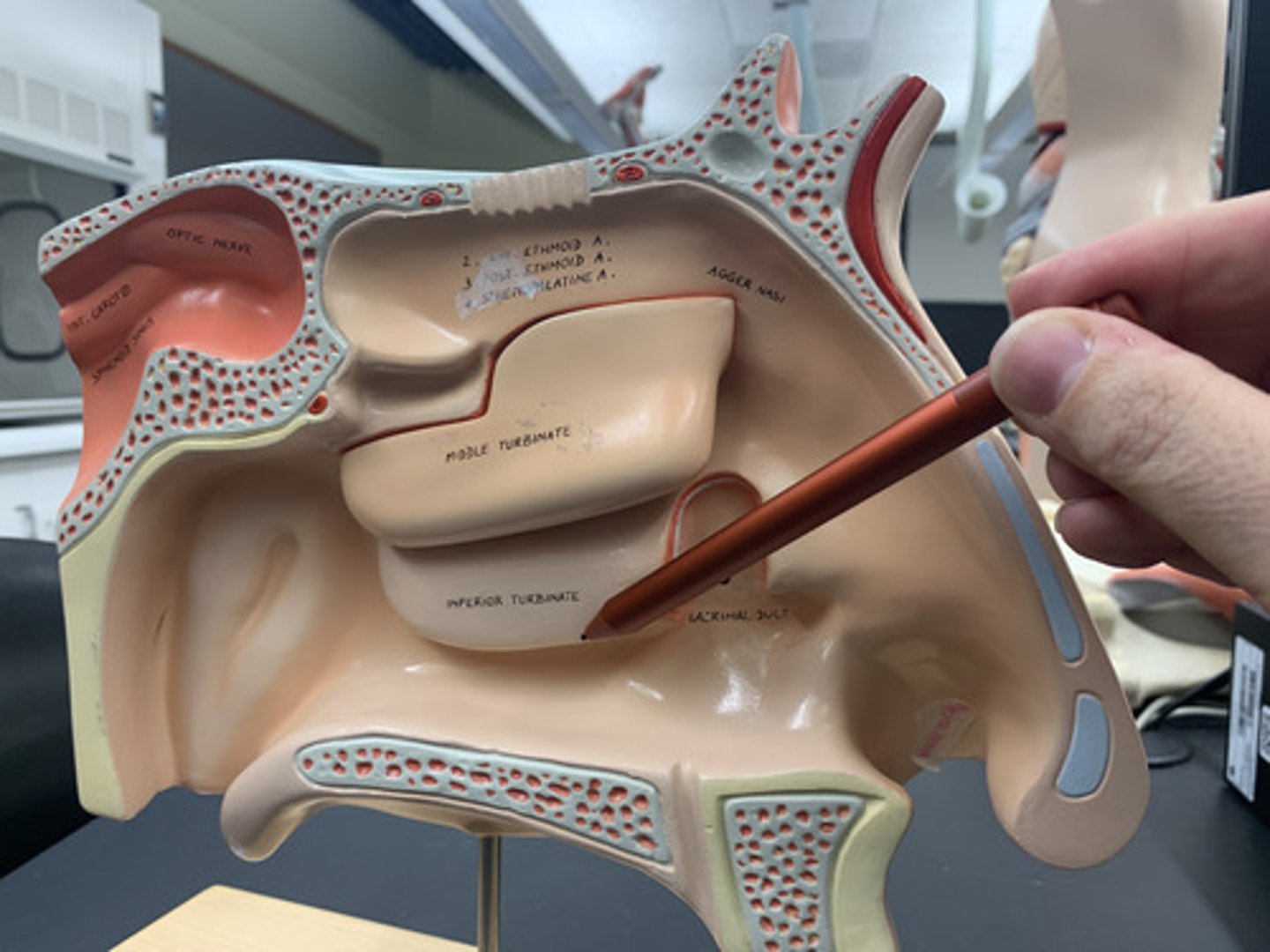
<p>Lowest bony ridge extending from lateral nasal cavity wall; its own complete bone</p>
48
New cards

Superior nasal meatus

"valley" between upper two conchae
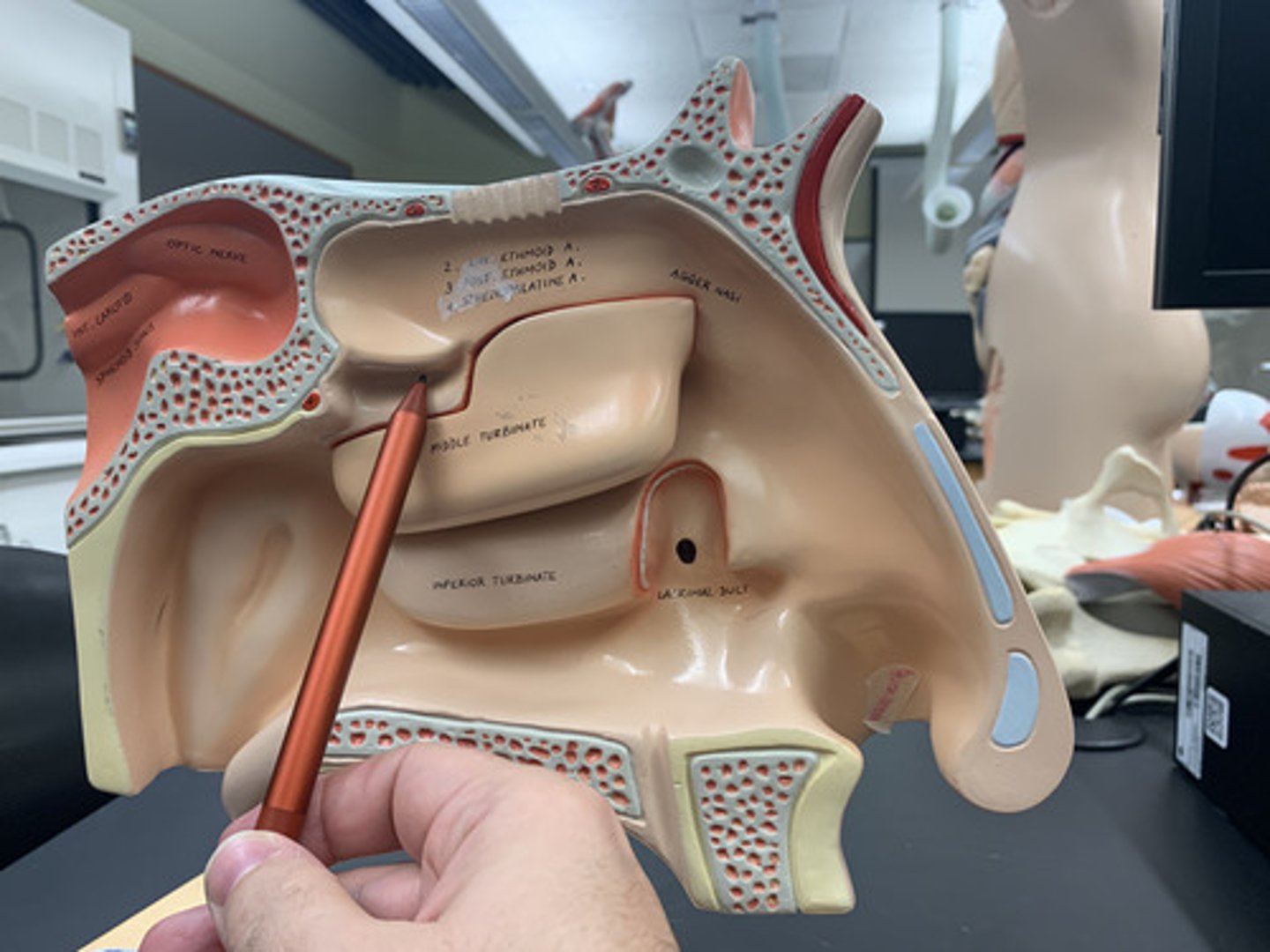
<p>"valley" between upper two conchae</p>
49
New cards

Middle nasal meatus

"valley" between lower two conchae
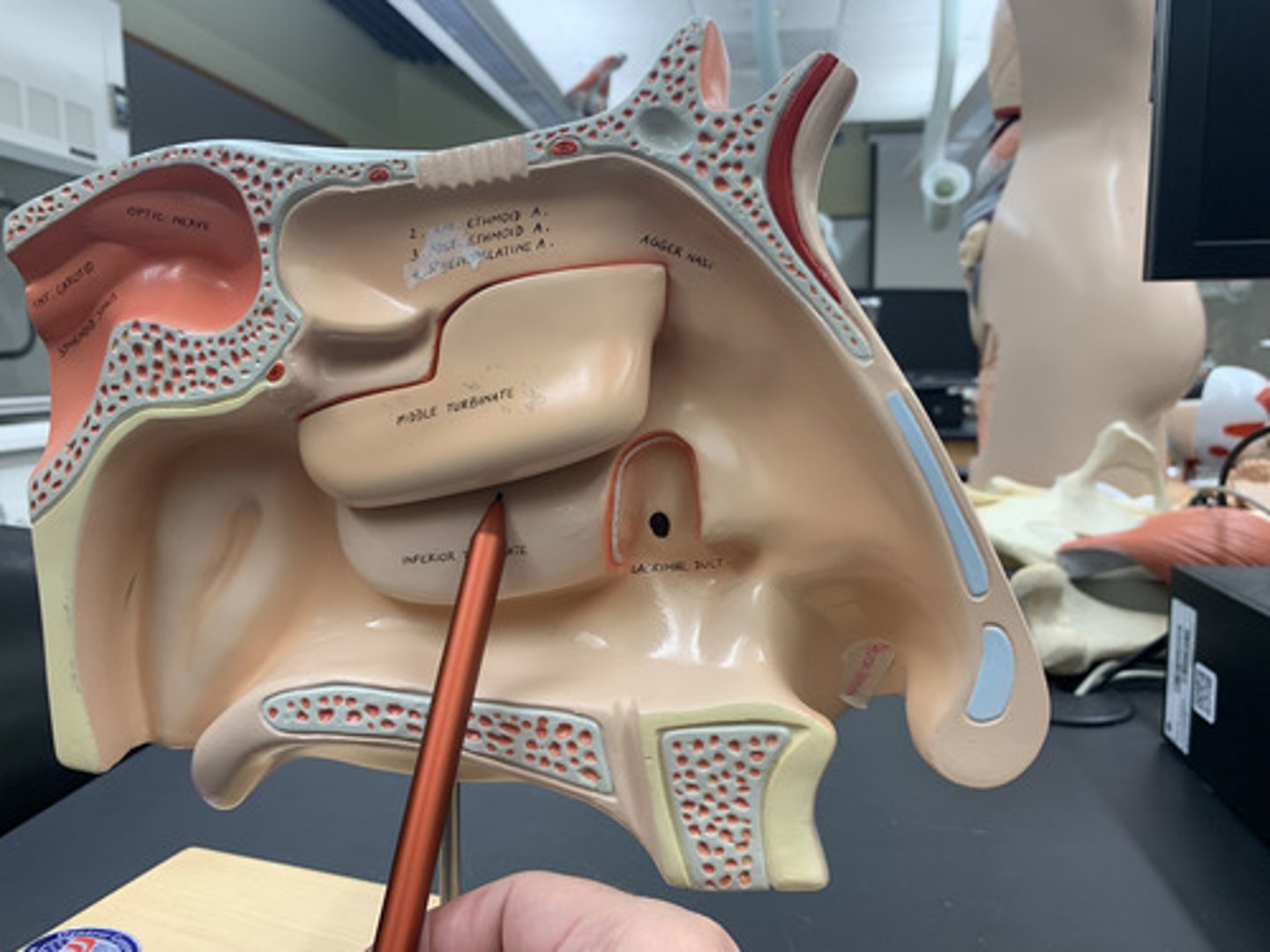
<p>"valley" between lower two conchae</p>
50
New cards

Inferior nasal meatus

"valley" under the inferior nasal concha
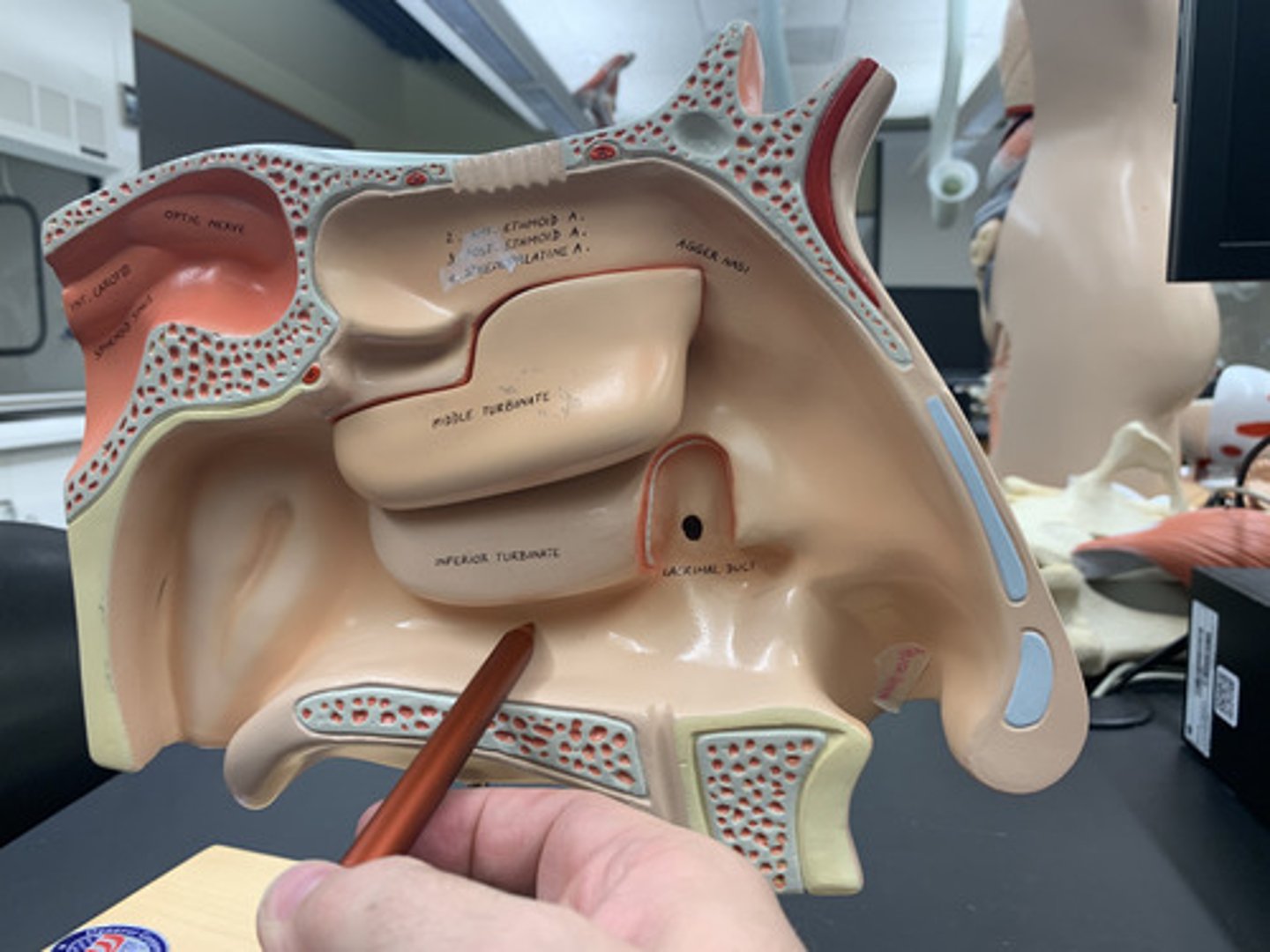
<p>"valley" under the inferior nasal concha</p>
51
New cards

Nasopharynx

region of the pharynx at the back of the nose and above the soft palate

<p>region of the pharynx at the back of the nose and above the soft palate</p>
52
New cards

Oropharynx

central portion of the pharynx between the roof of the mouth and the upper edge of the epiglottis
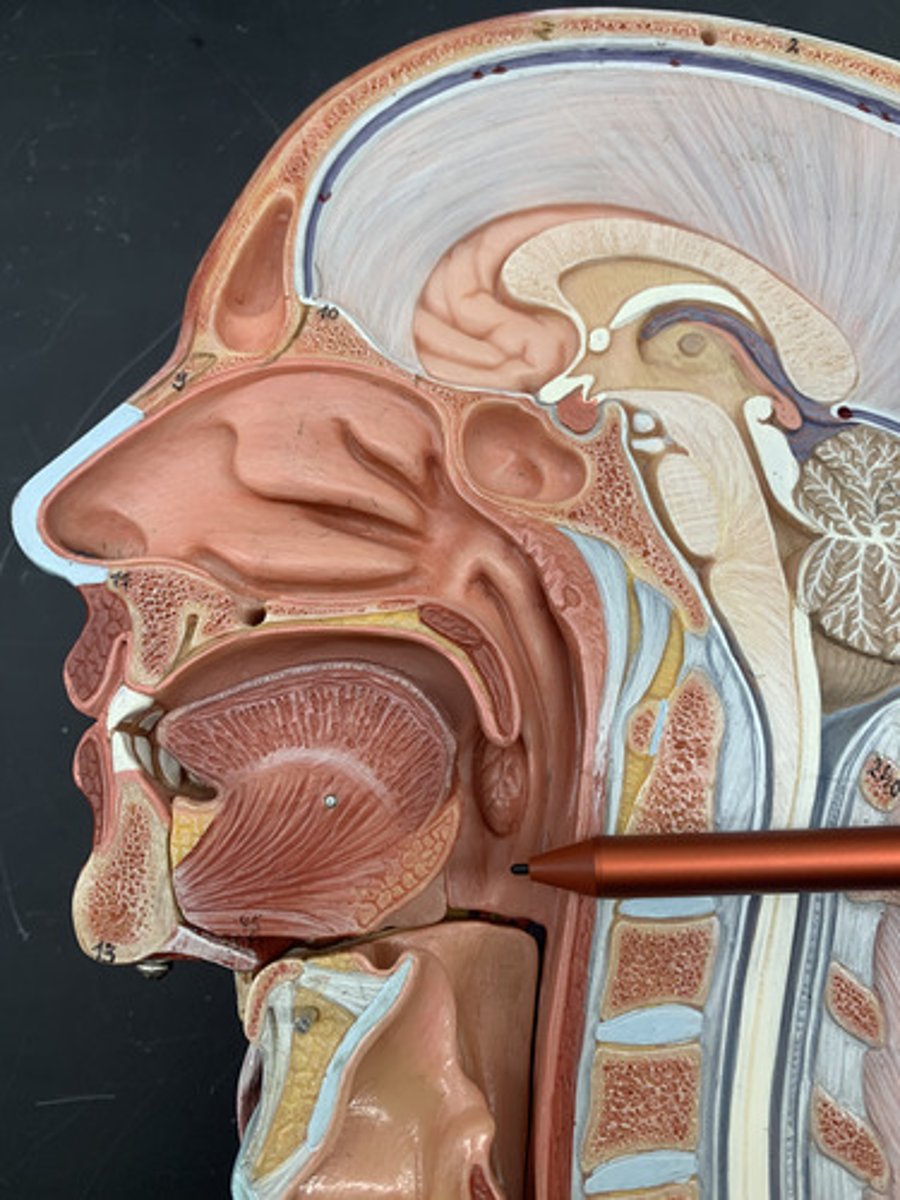
<p>central portion of the pharynx between the roof of the mouth and the upper edge of the epiglottis</p>
53
New cards

Laryngopharynx

lower part of the pharynx, just below the oropharyngeal opening into the larynx and esophagus
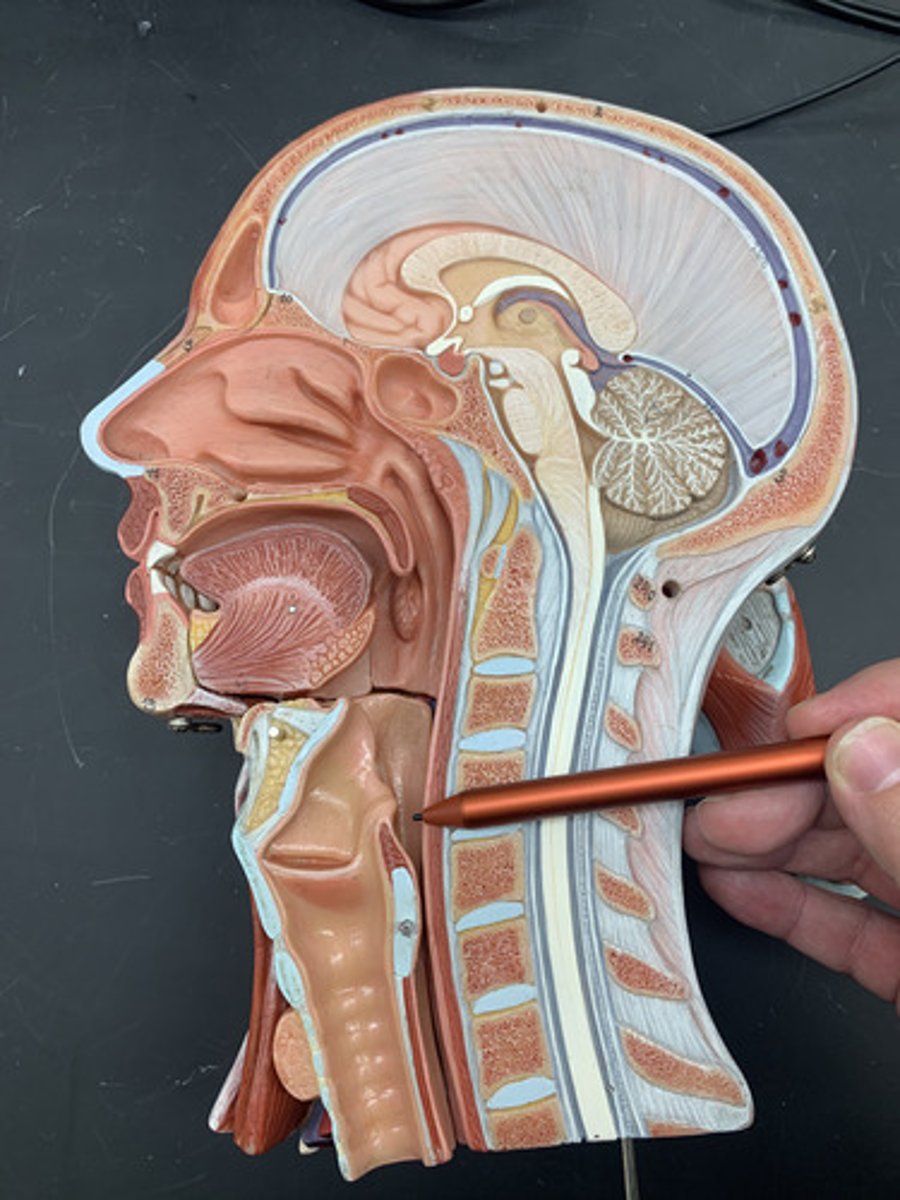
<p>lower part of the pharynx, just below the oropharyngeal opening into the larynx and esophagus</p>
54
New cards

Nasal vestibule

space contained within the flexible tissues of the nose

<p>space contained within the flexible tissues of the nose</p>
55
New cards

Soft palate

a muscular flap that closes off the nasopharynx during swallowing or speaking
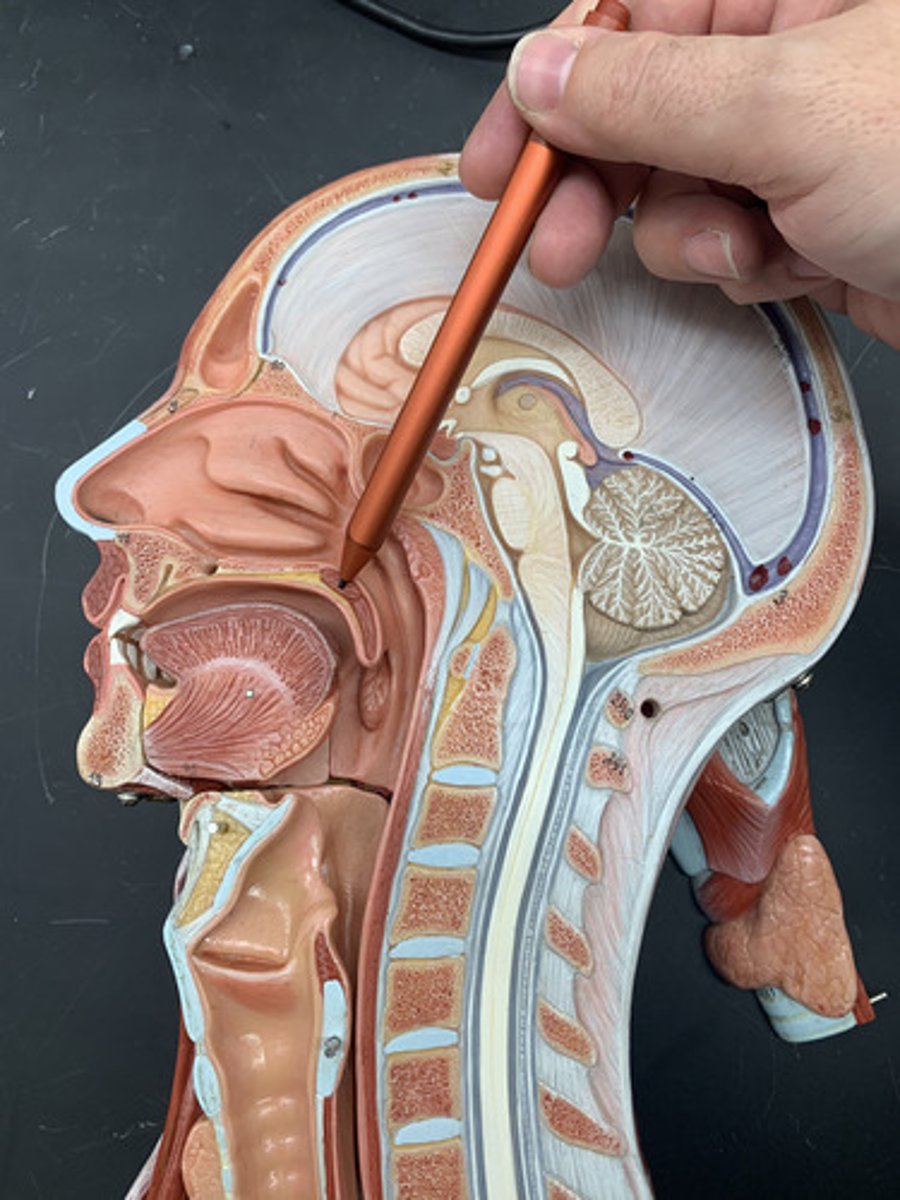
<p>a muscular flap that closes off the nasopharynx during swallowing or speaking</p>
56
New cards

Hard palate

bony anterior (front) portion of the palate
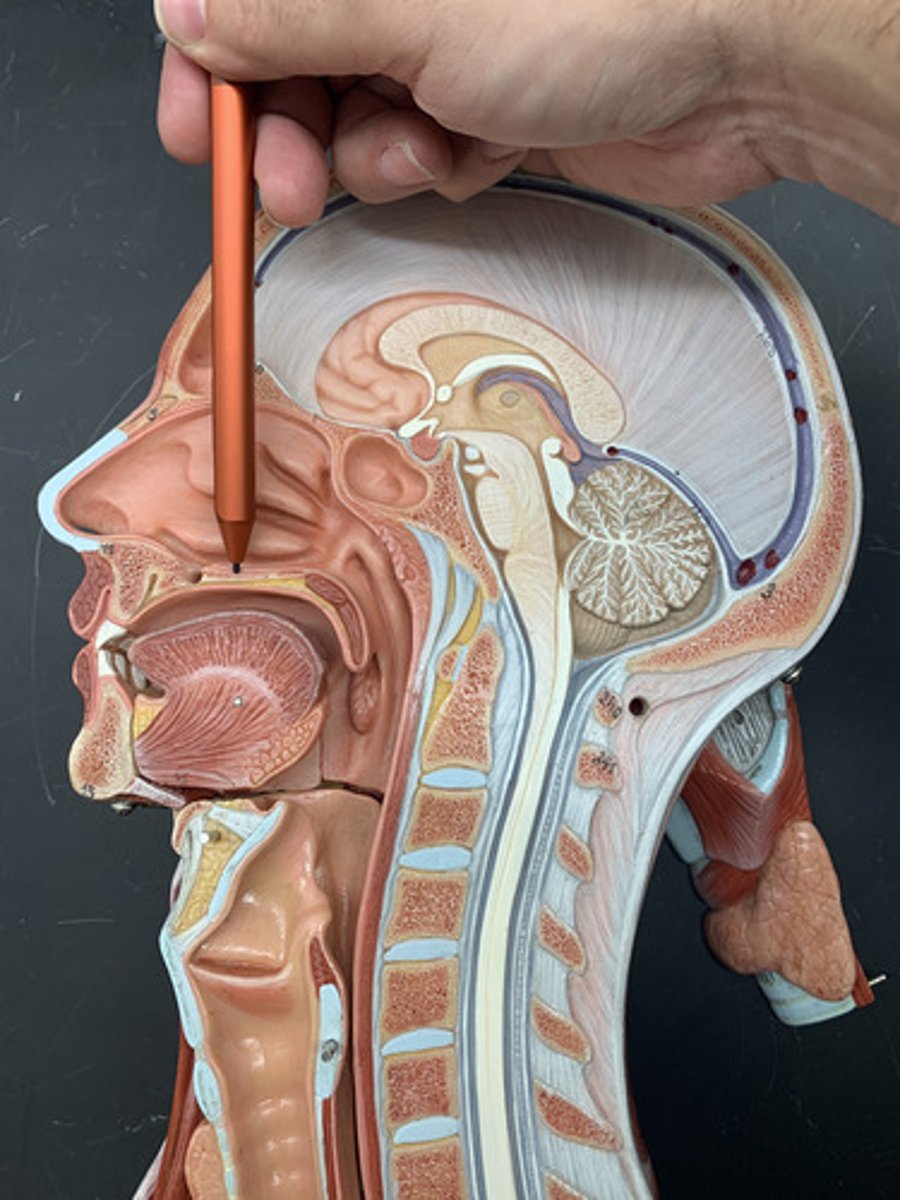
<p>bony anterior (front) portion of the palate</p>
57
New cards

Uvula

free projection hanging down from the middle of the soft palate
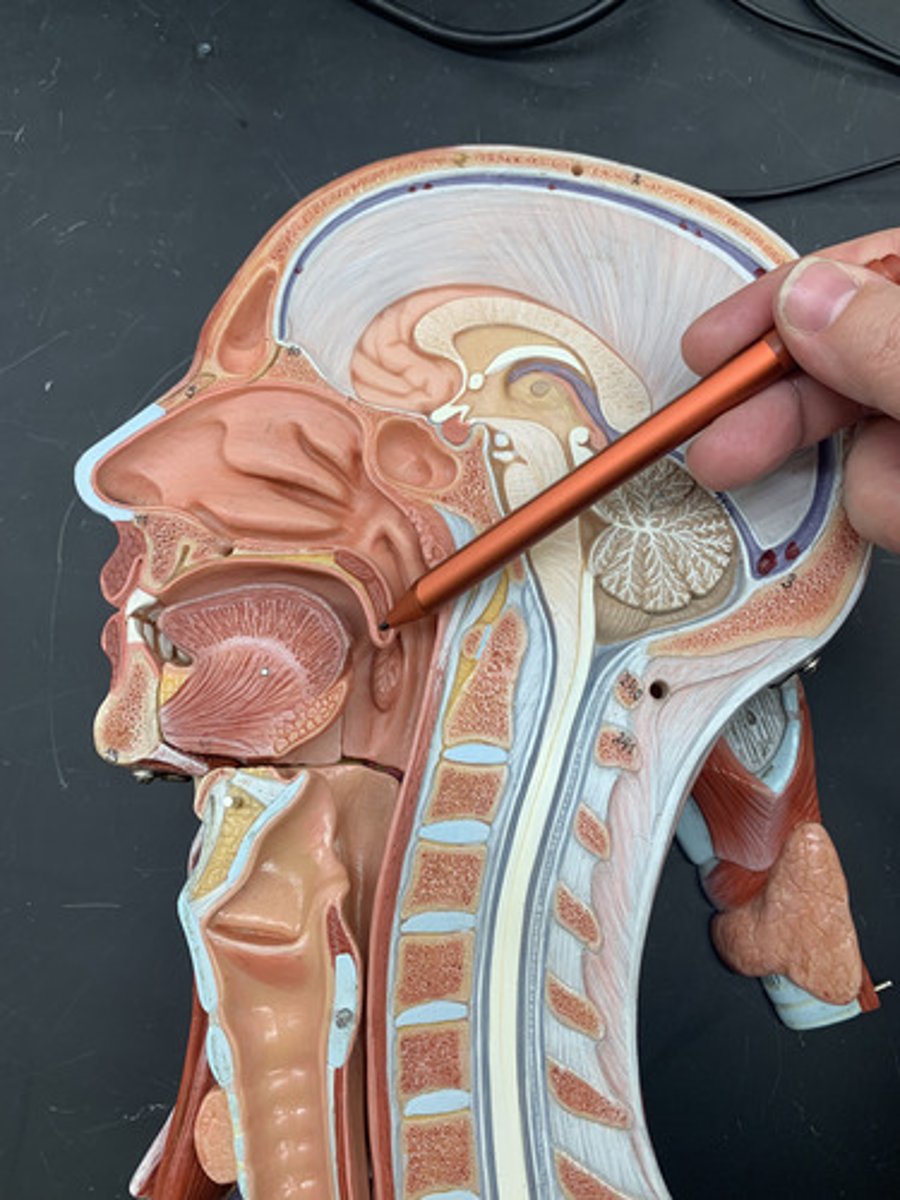
<p>free projection hanging down from the middle of the soft palate</p>
58
New cards

Pharyngeal tonsil

also called adenoids; located in posterior wall of nasopharynx
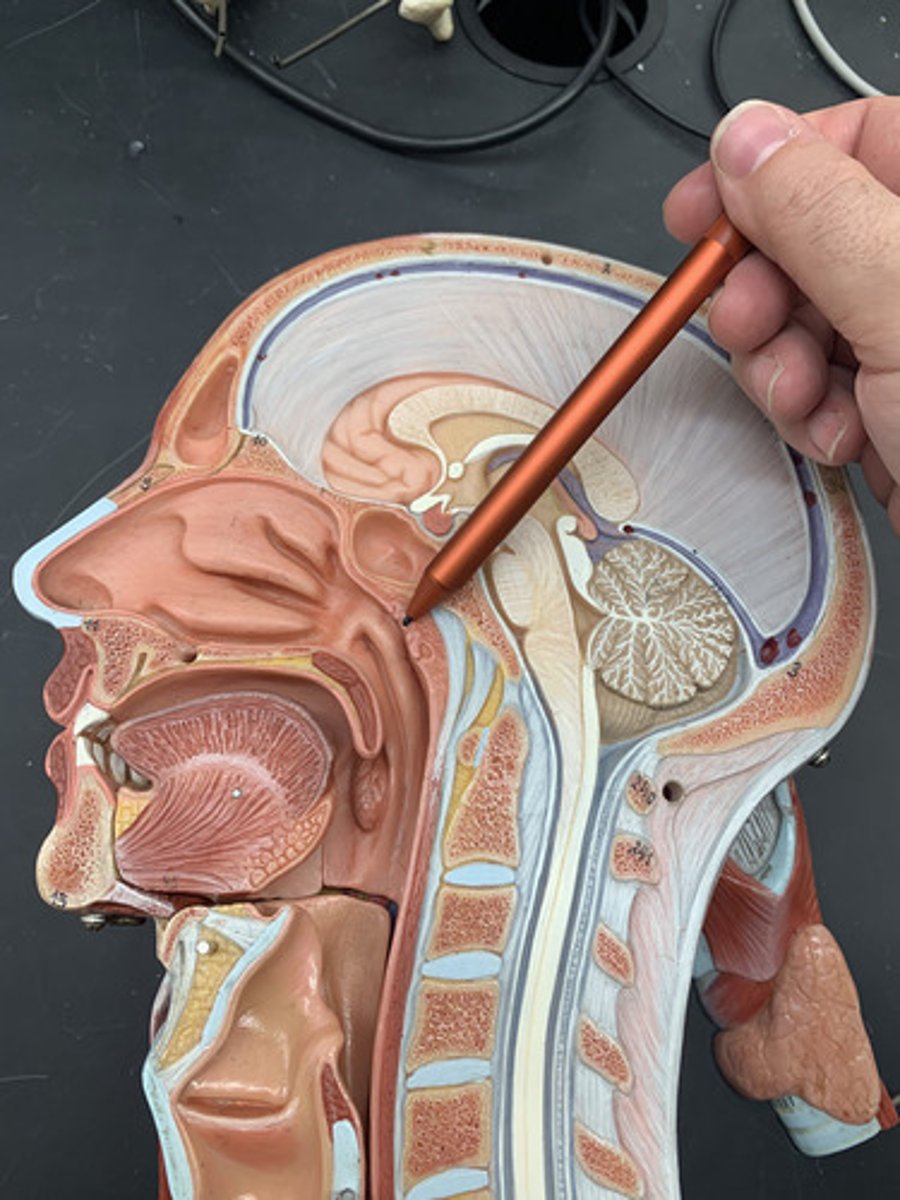
<p>also called adenoids; located in posterior wall of nasopharynx</p>
59
New cards

Palatine tonsil

one of a pair of almond-shaped masses of lymphatic tissue in the oropharynx
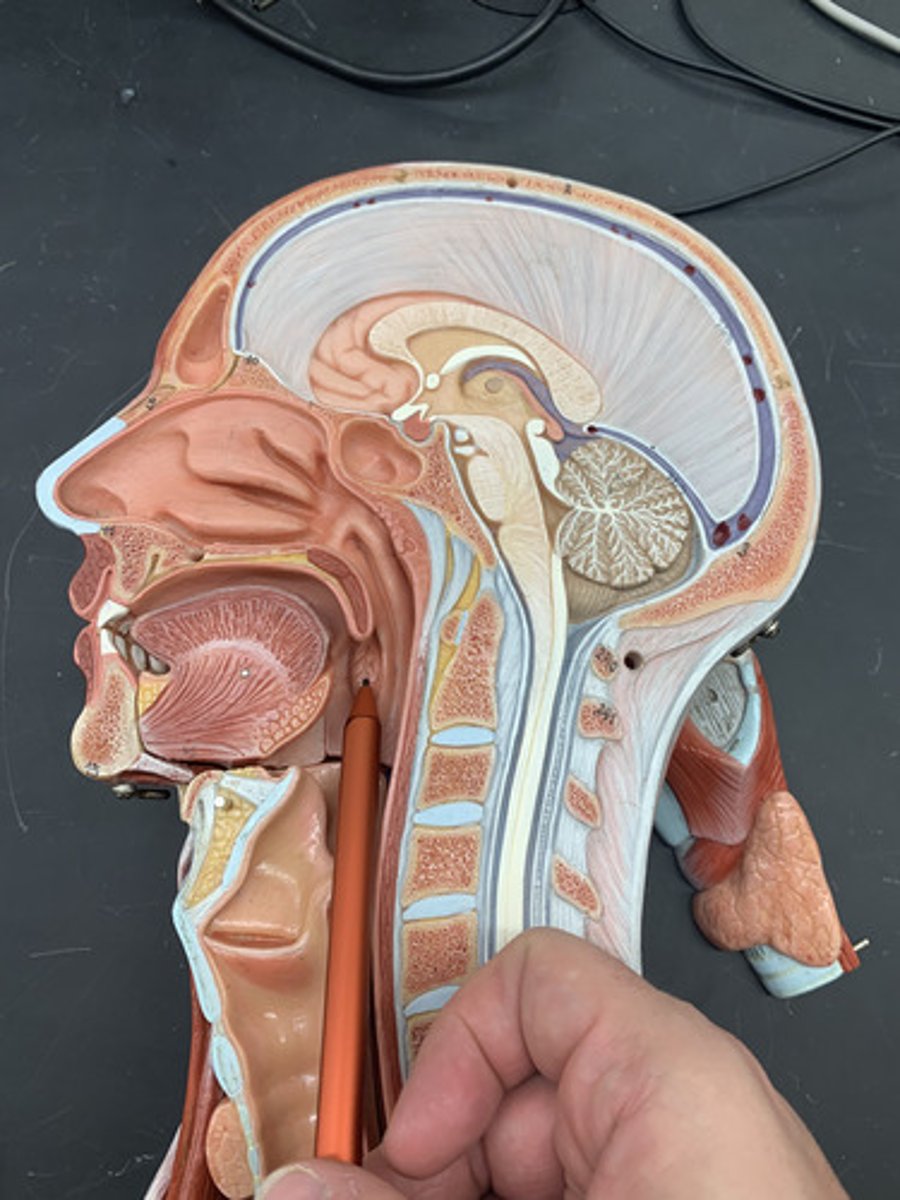
<p>one of a pair of almond-shaped masses of lymphatic tissue in the oropharynx</p>
60
New cards

Lingual tonsil

mass of lymphoid tissue located at the base of the tongue
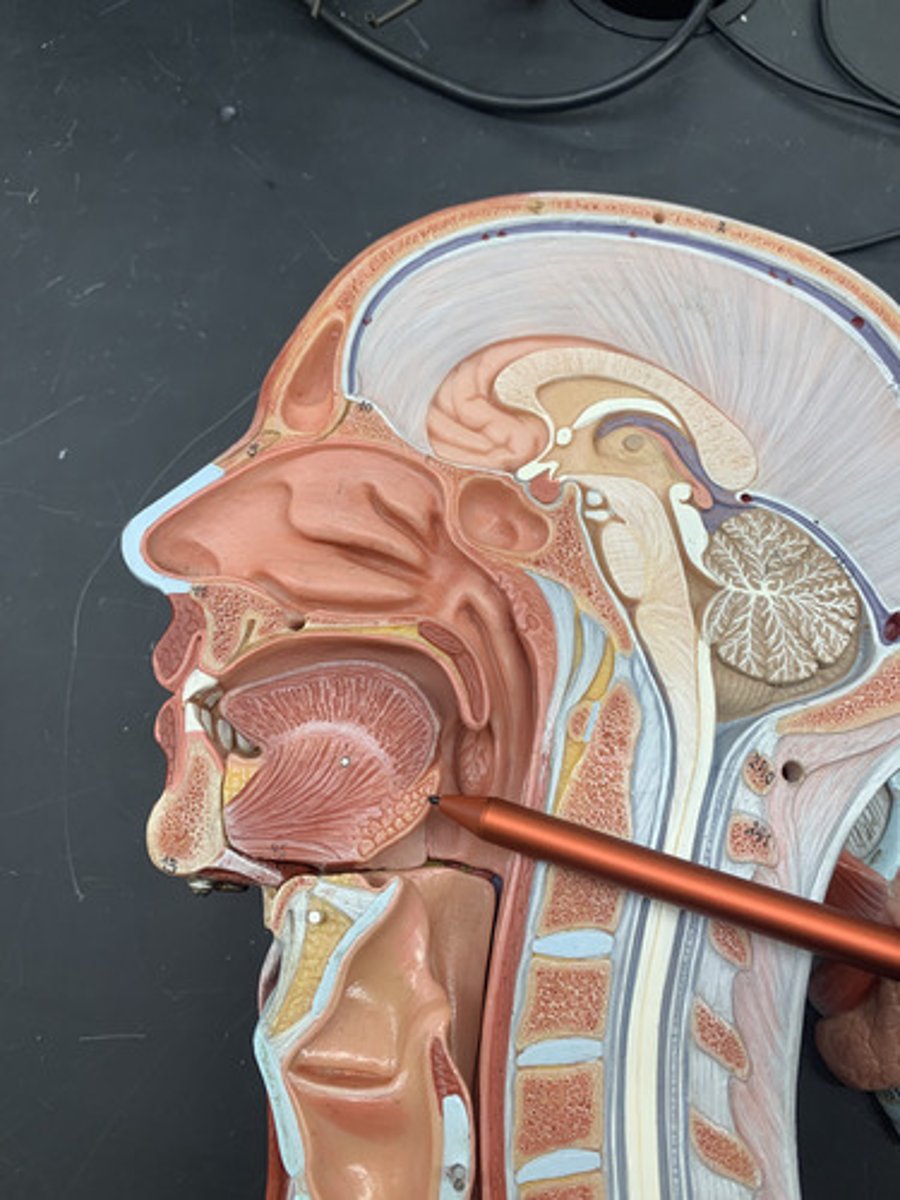
<p>mass of lymphoid tissue located at the base of the tongue</p>
61
New cards

Vallate papillae

largest taste buds with 8-12 forming "V" at back of tongue
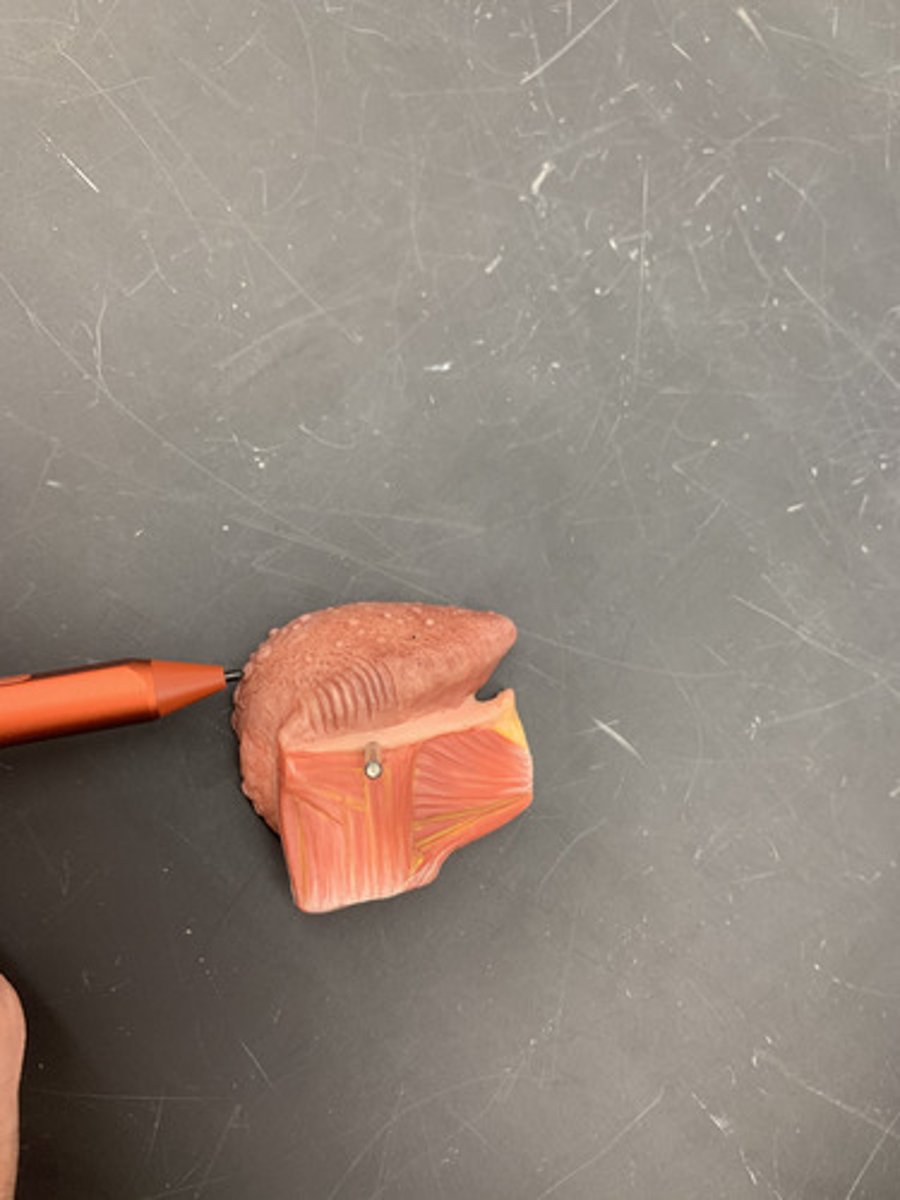
<p>largest taste buds with 8-12 forming "V" at back of tongue</p>