Biology: Evolution Terms
 Call Kai
 Learn
Learn Practice Test
 Spaced Repetition
 Match
Match Flashcards
1/15

There's no tags or description
Looks like no tags are added yet.
Name | Mastery | Learn | Test | Matching | Spaced | Call with Kai |
|---|

16 Terms
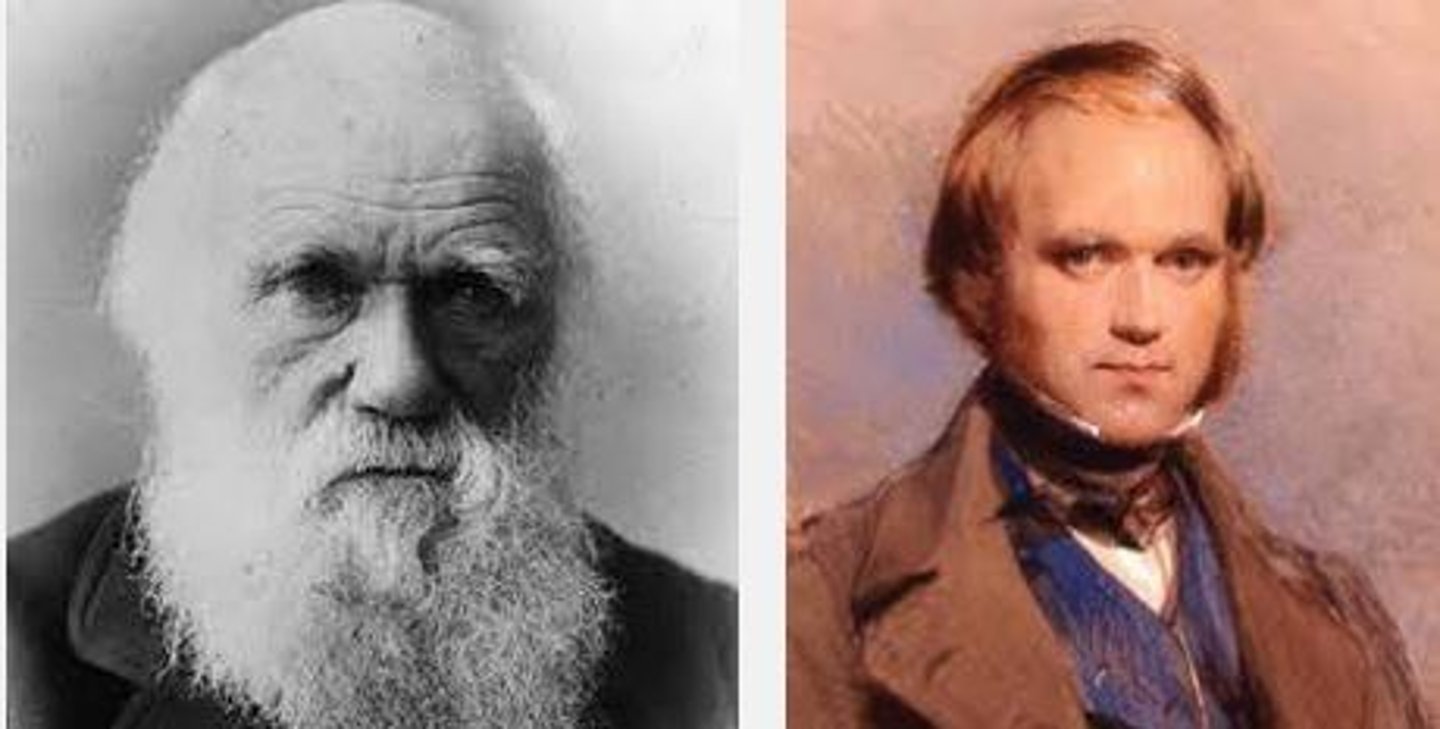
Charles Darwin
English natural scientist who formulated a theory of evolution by natural selection (1809-1882)
Evolution
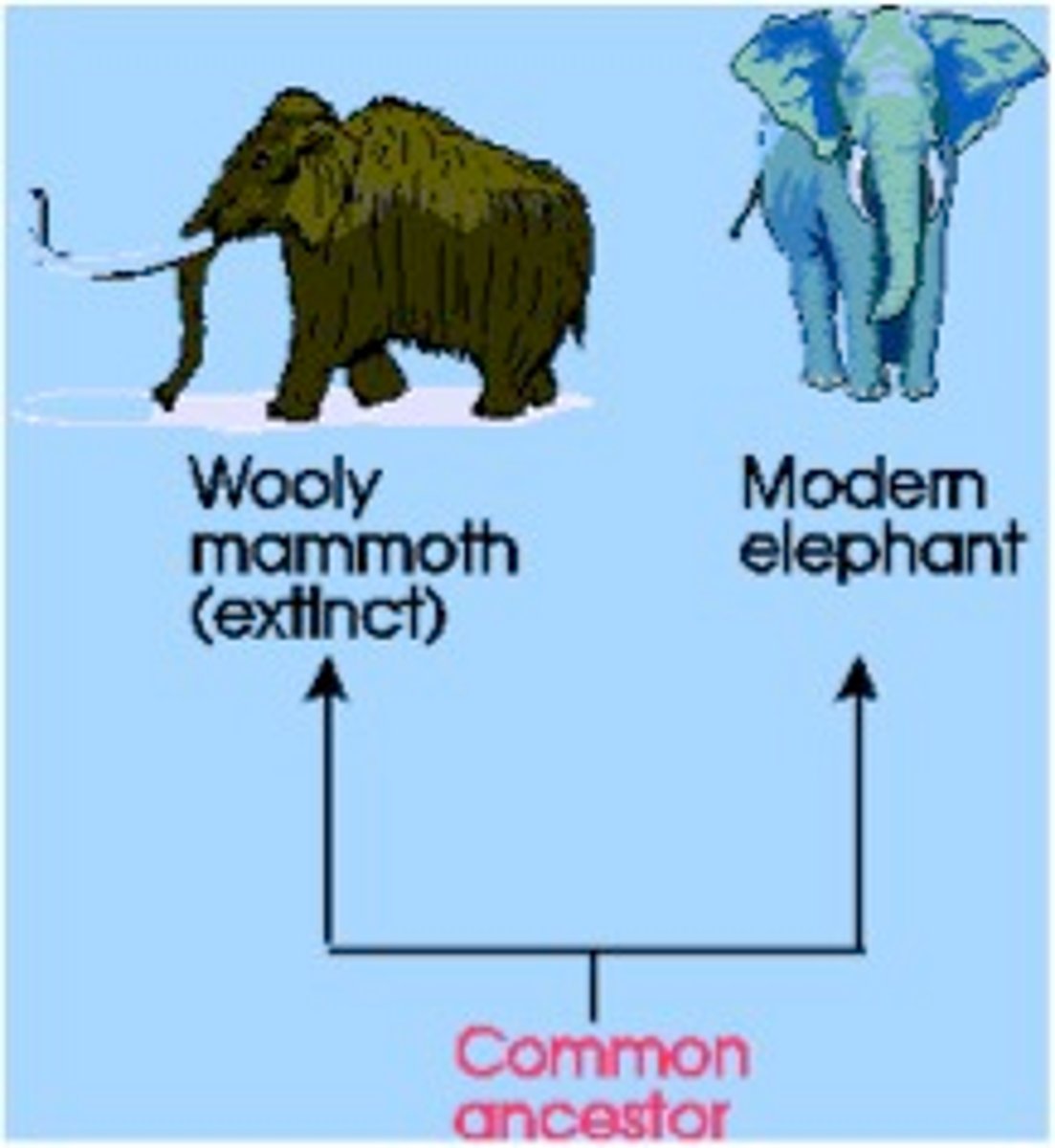
Change in a kind of organism over time; process by which modern organisms have descended from ancient organisms.
natural selection
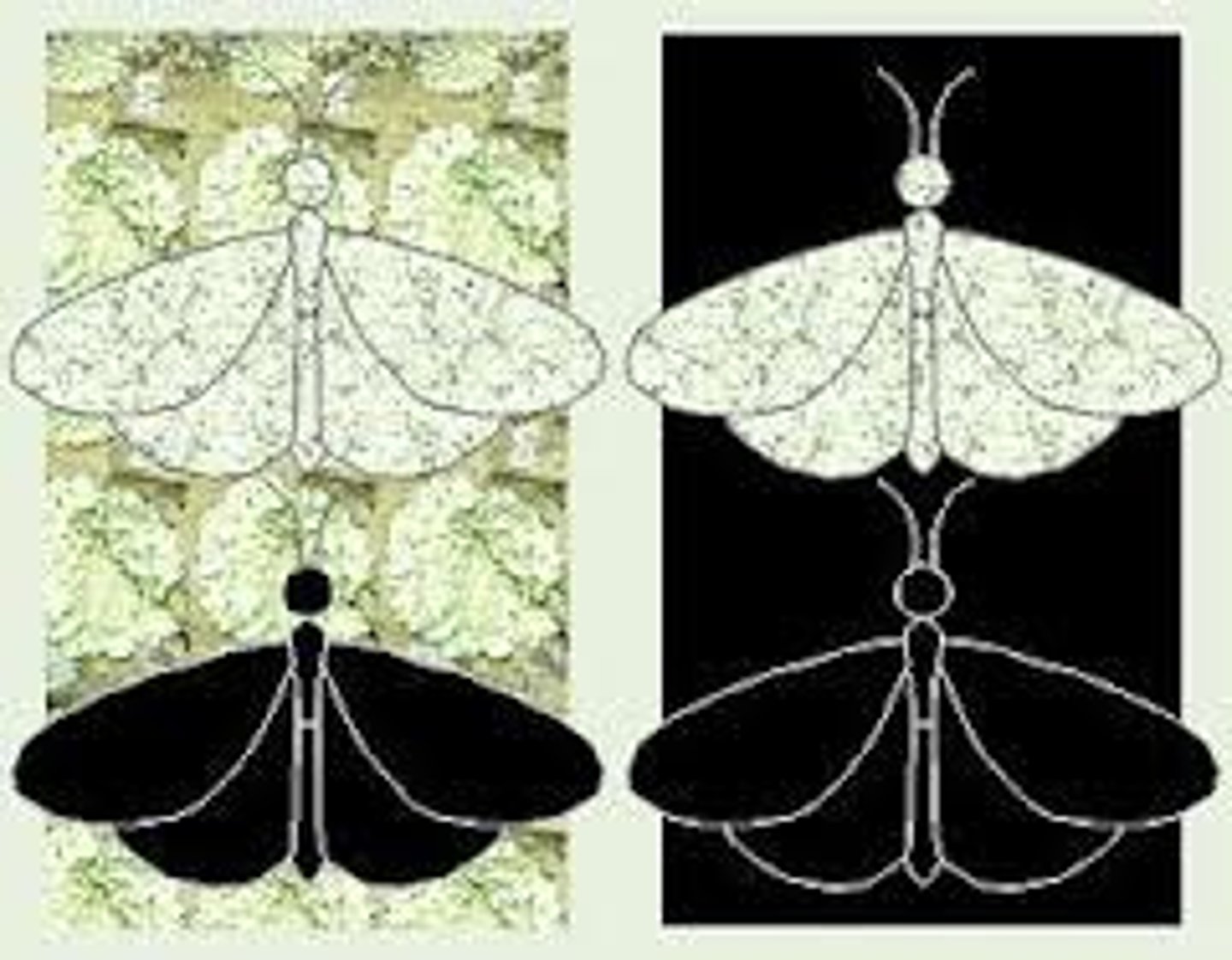
A natural process resulting in the evolution of organisms best adapted to the environment (these organisms survive and reproduce more frequently passing on their genes)
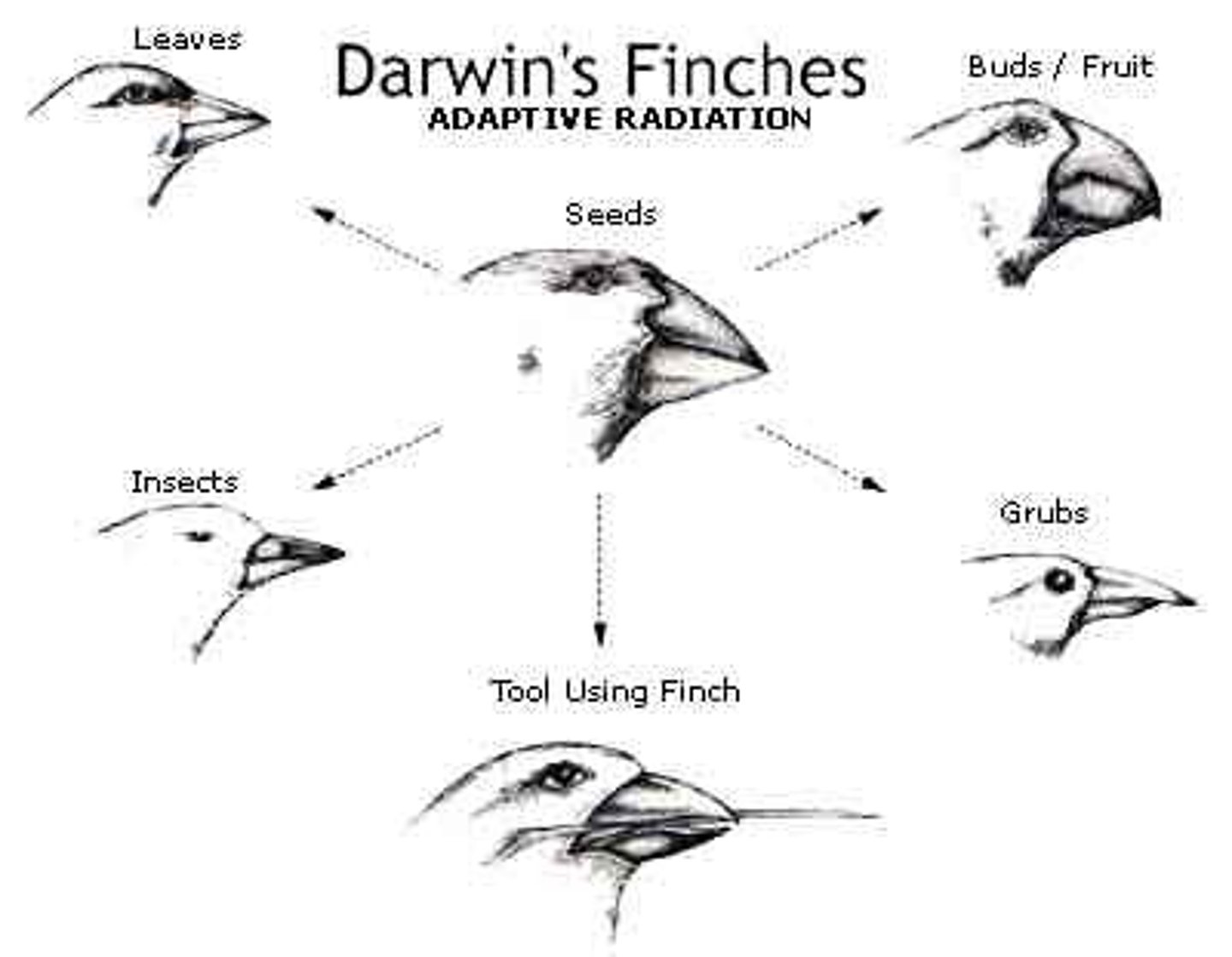
adaptation
A characteristic that improves an individual's ability to survive and reproduce in a particular environment.
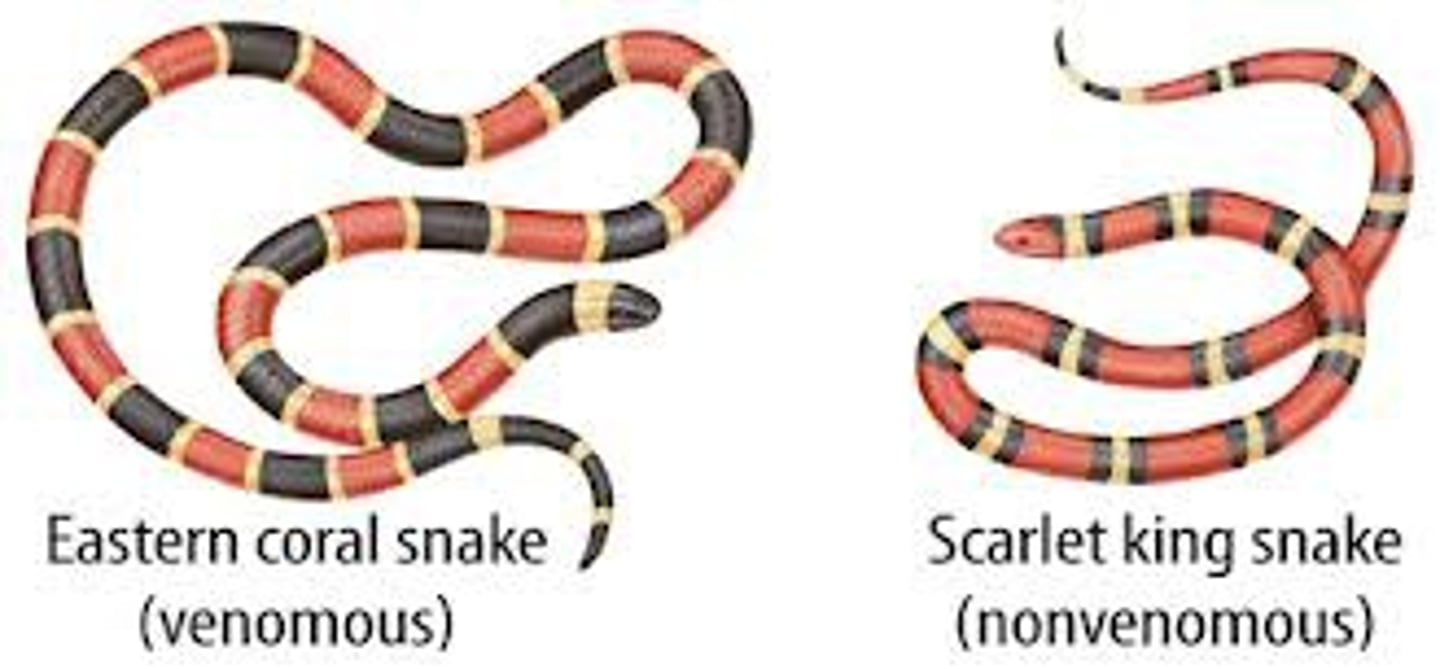
mimicry
Ability of an animal to look like another more harmful animal
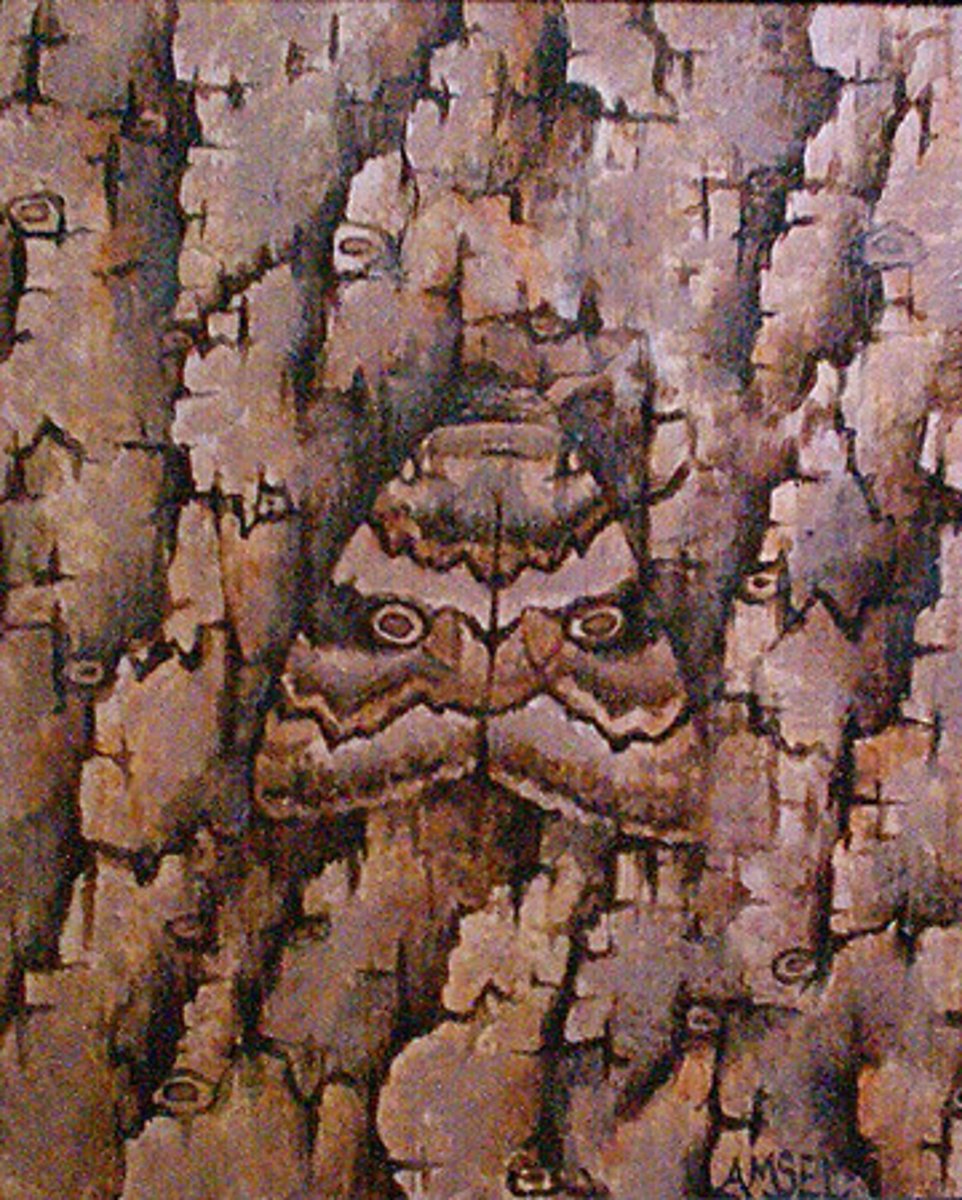
camoflage
the act of concealing the identity of something by modifying its appearance
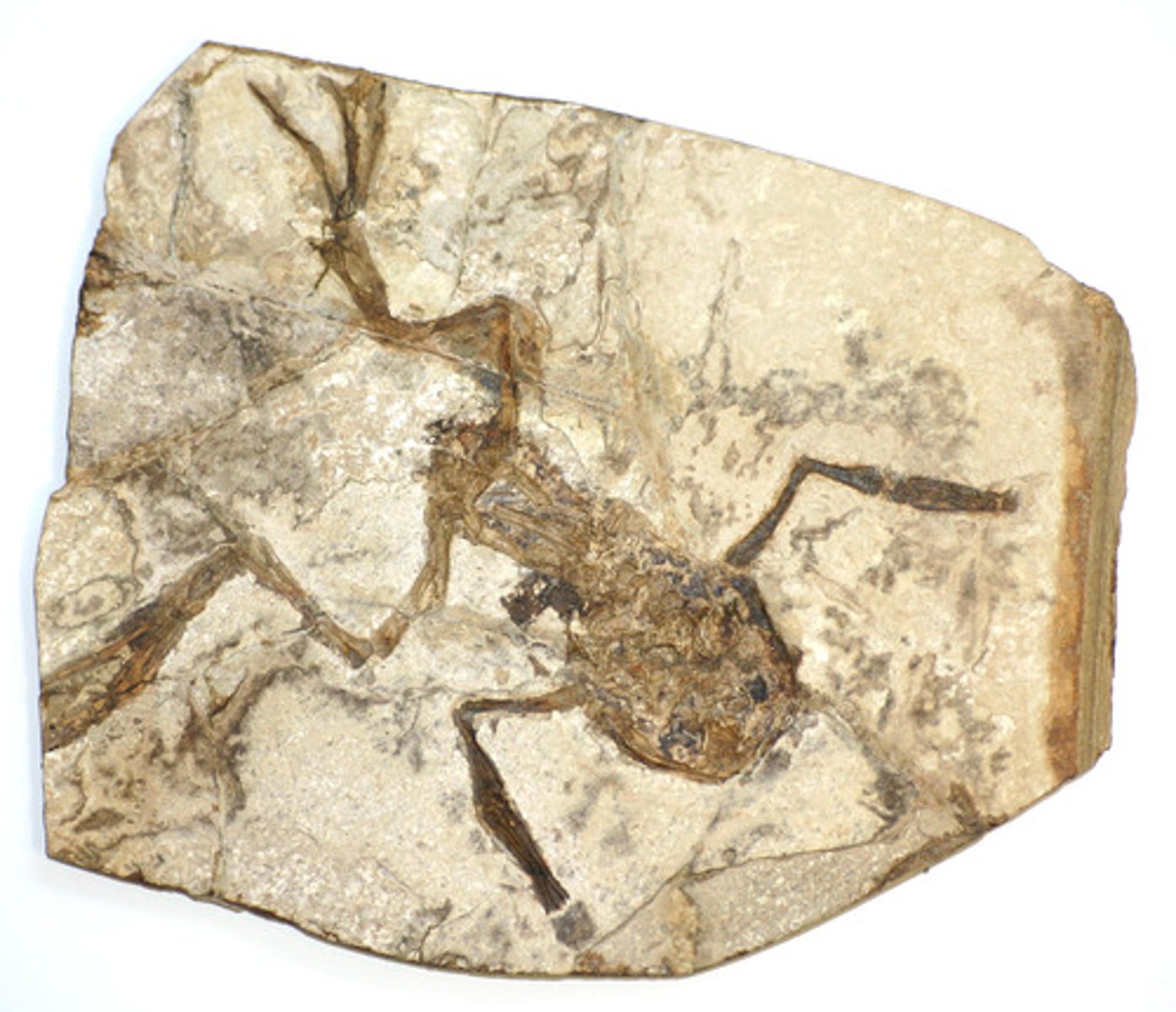
Fossil
The preserved remains or traces of an organism that lived in the past
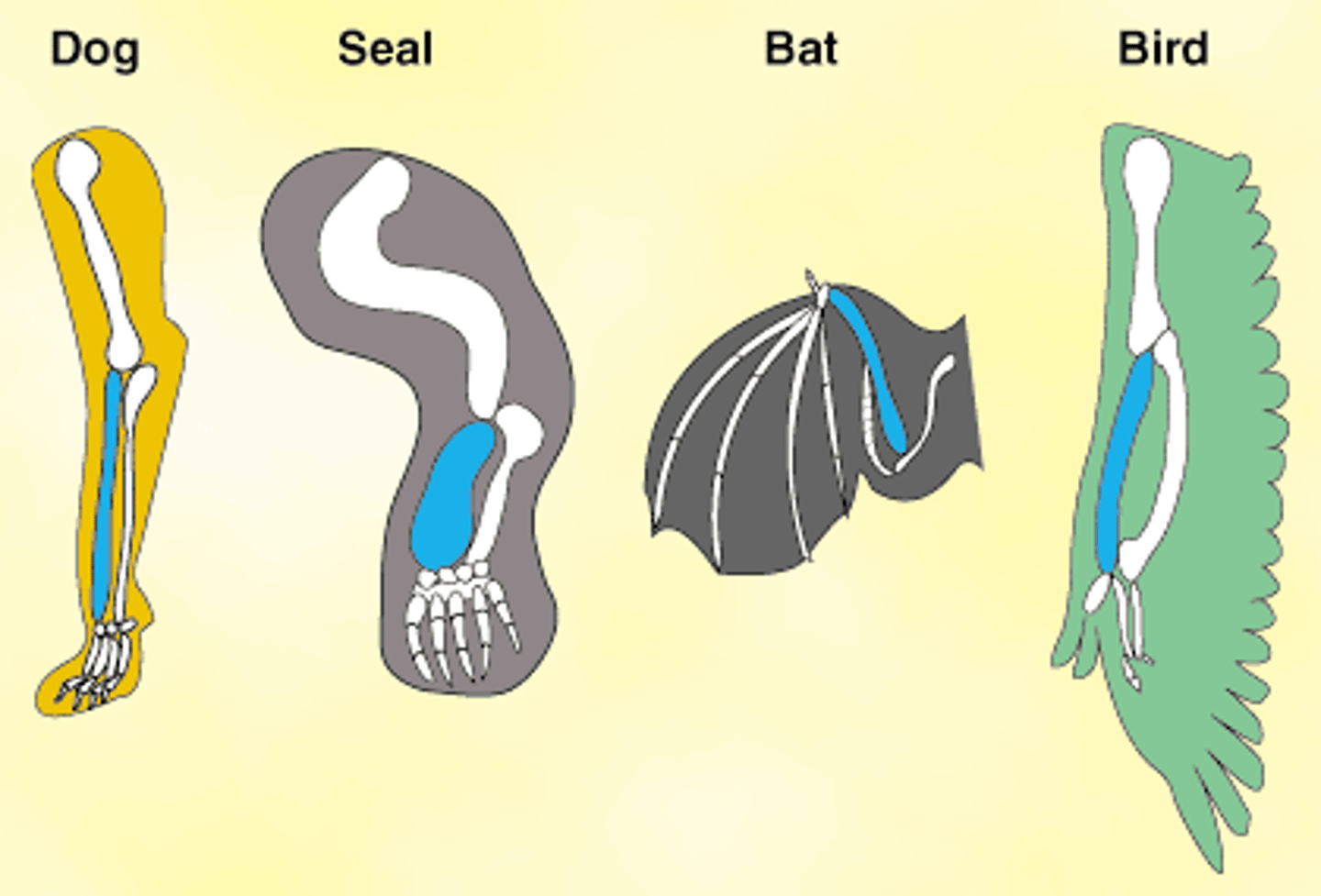
homologus structures
structures that are similar in different species of common ancestry
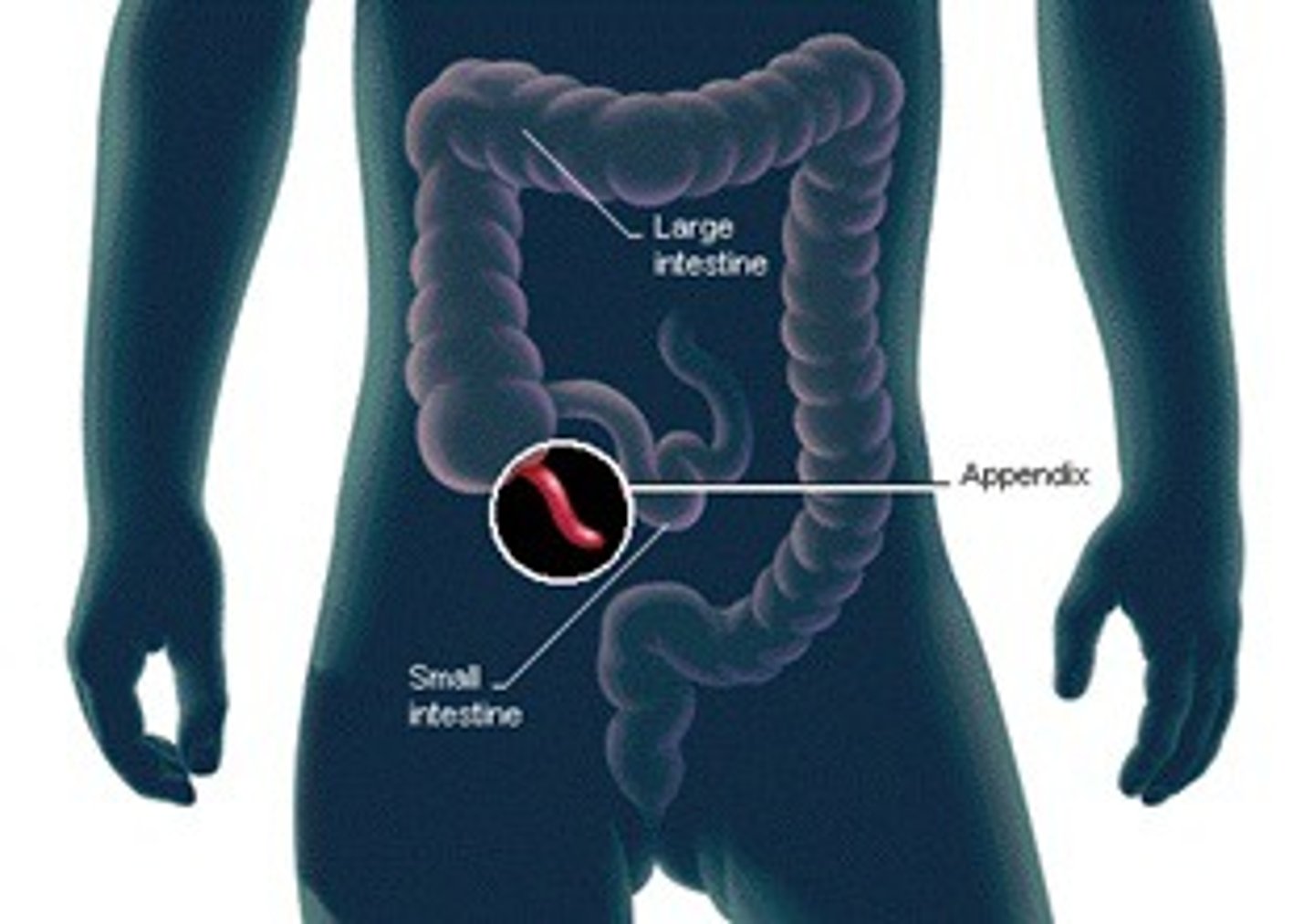
vestigal structures/organs
a structure in a present day organism that no longer serves its natural purposes/// ex. leg bones in snakes
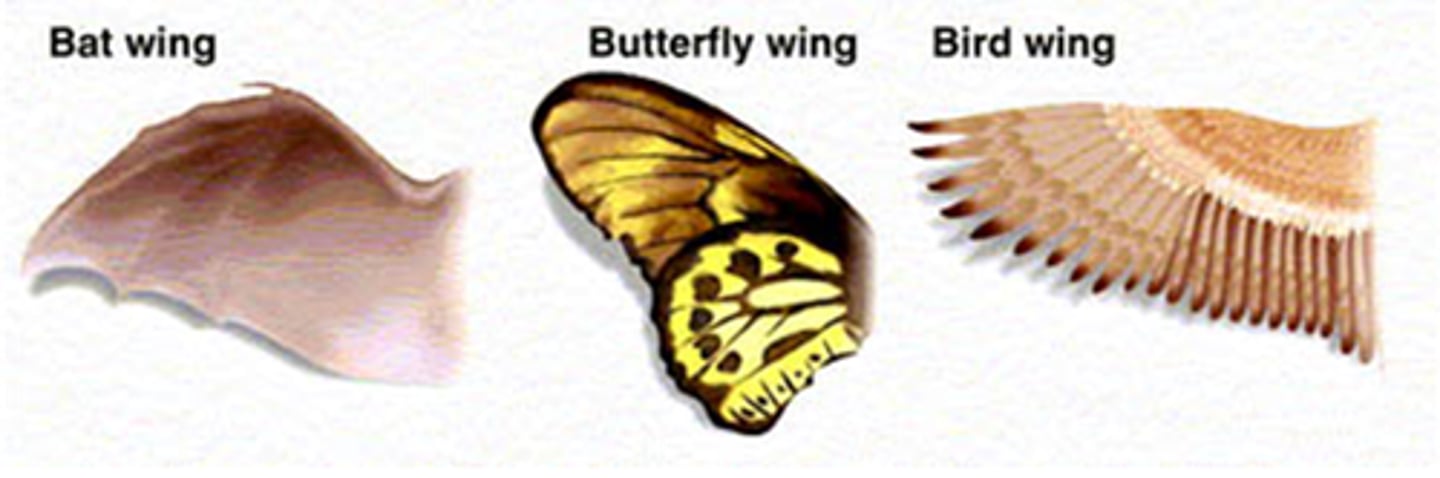
analogus structures
structures that perform a similar function but are not similar in origin
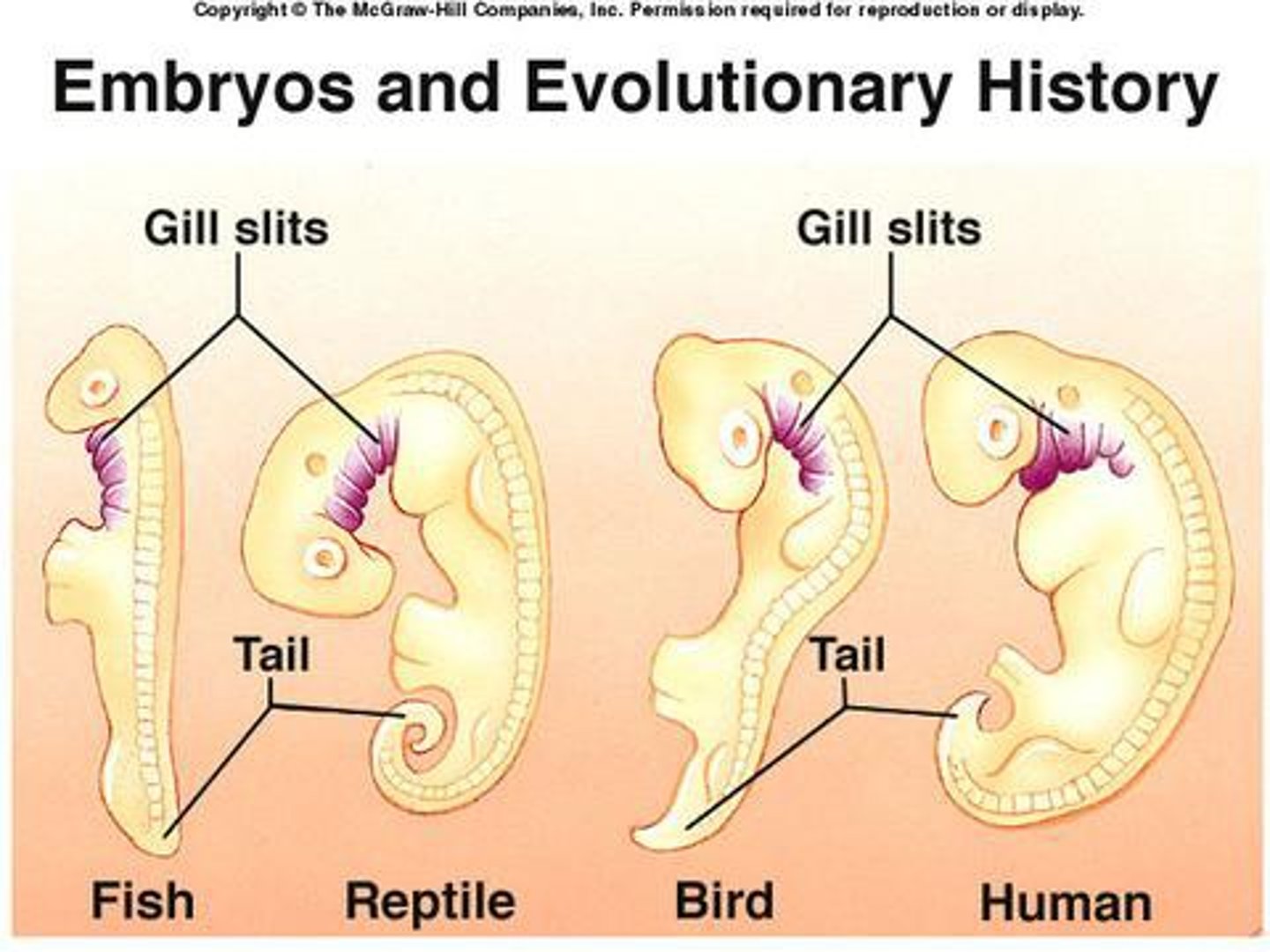
Embryology
study of embryos and their development
gene pool
All the genes, including all the different alleles for each gene, that are present in a population at any one time
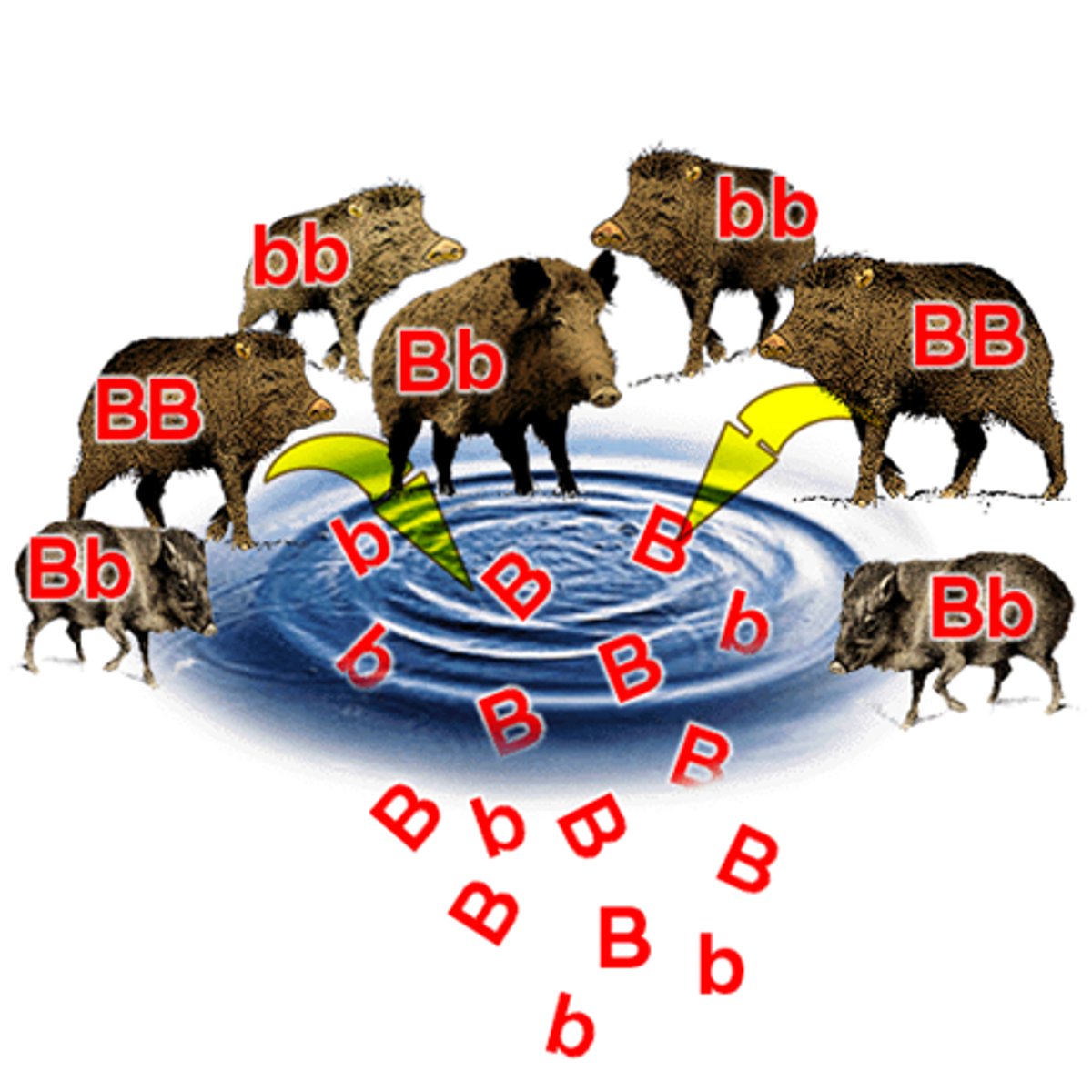
Allelic Frequency
(Gene Frequency)
the proportion of a particular gene variation, compared to all variations of that gene, in a population
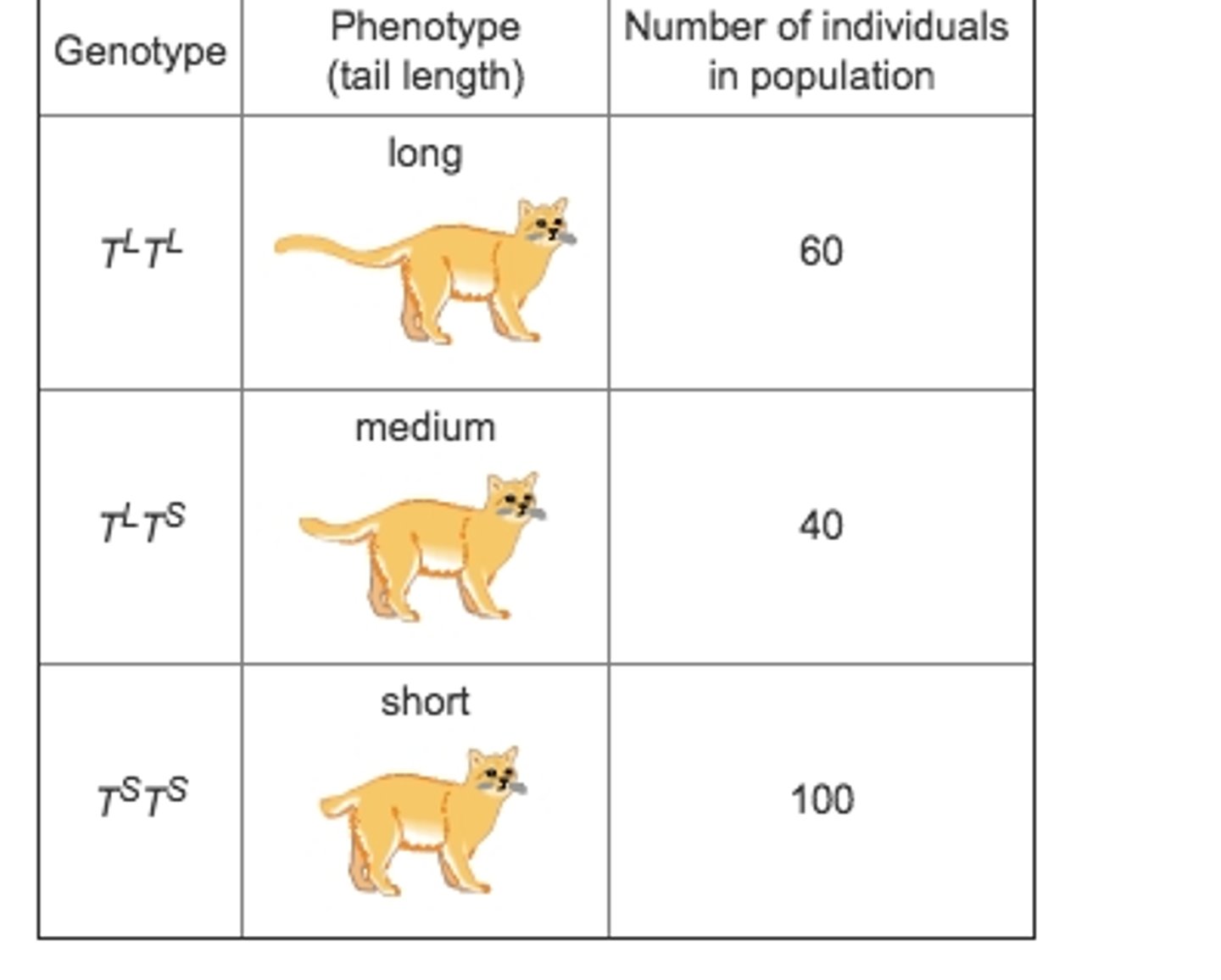
genetic equilibrium
condition in which the frequency of alleles in a population remains the same over generations
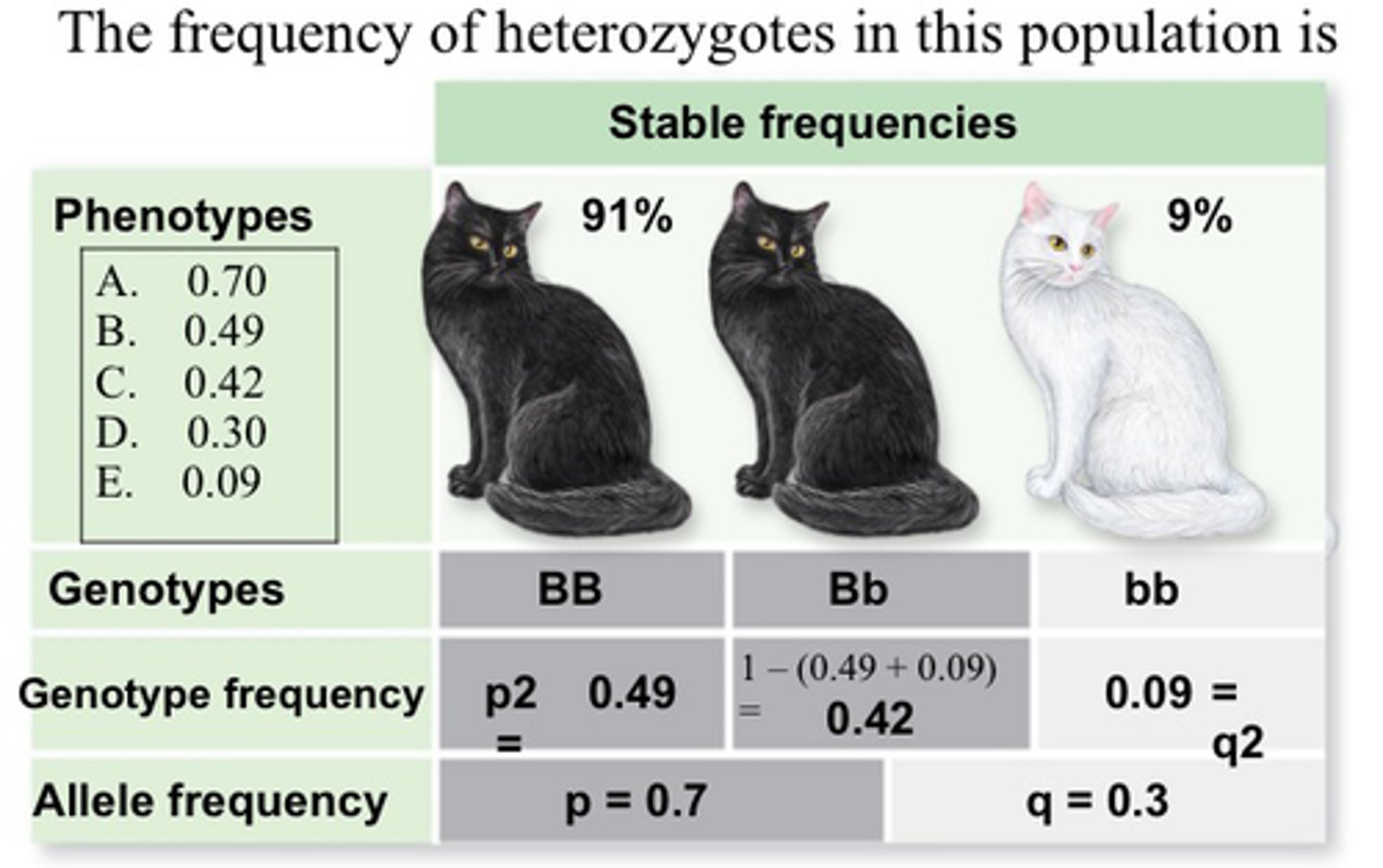
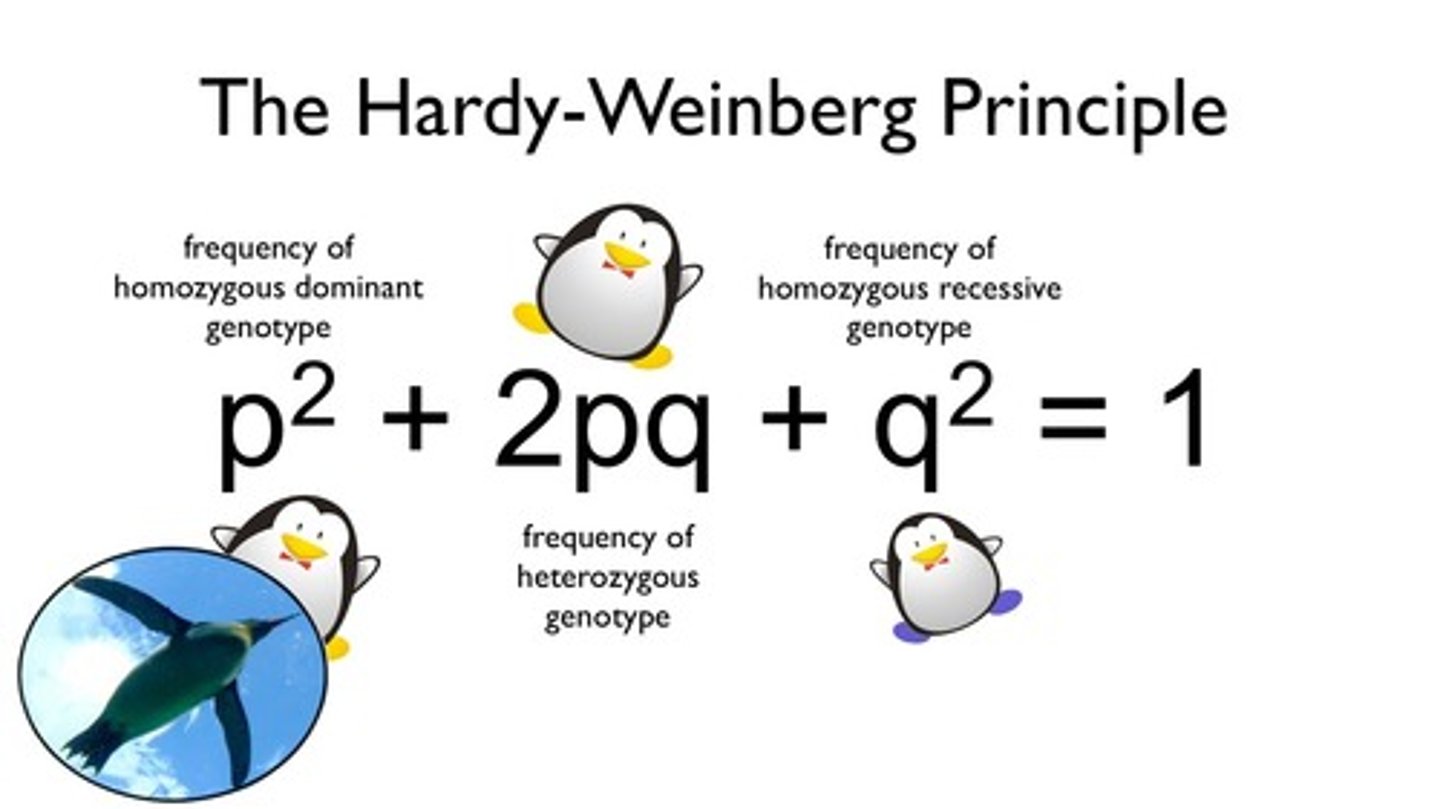
Hardy-Weinberg equilibrium
The condition describing a non-evolving population (one that is in genetic equilibrium).