Inflation and Money
 Call Kai
 Learn
Learn Practice Test
 Spaced Repetition
 Match
Match Flashcards
 Knowt Play
1/23

Earn XP
Description and Tags
lecture 10
Name | Mastery | Learn | Test | Matching | Spaced | Call with Kai |
|---|
No analytics yet
Send a link to your students to track their progress
24 Terms
inflation
a generalized rise in overall level of prices
consumer price index(CPI)
an index that tracks the average price consumers pay over time for a representative “basket” of goods and services
basket is a metaphor for the list of goods and services people typically buy
inflation rate
the annual percentage increase in the average price level
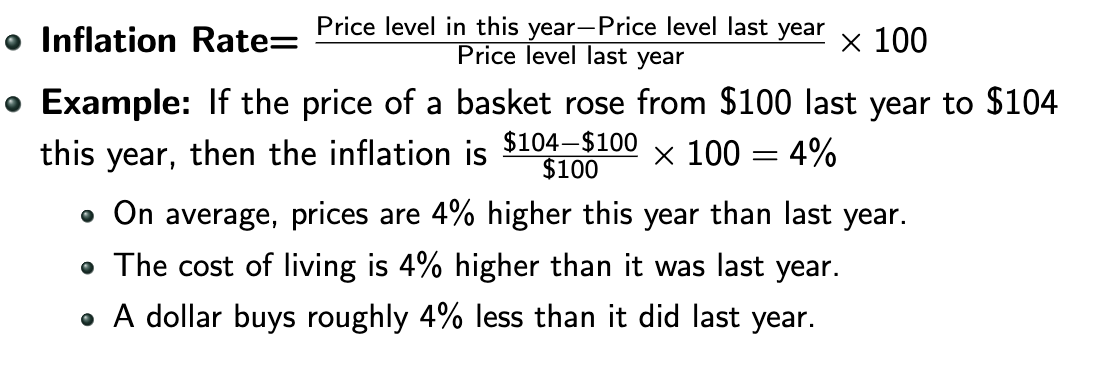
how to measure inflation
find out what people buy
collect prices
tally up cost of basket
calculate inflation as the percentage change in the prices of the basket
deflation
a generalized decrease in overall level of prices
Challenges to CPI
overstates cost of living because it tracks the changing price of a fixed basket of goods
misses:
quality improvements (which hide price decreases)
new products (iPhone example)
substitutions(when prices rise, you substitute what is in the basket to find CHEAPER ways to achieve the same quality of life
substitution bias
the overestimation of the cost of living that occurs because people substitute toward godos whose prices rise by less
personal consumption expenditure deflator (PCE deflator)
basket includes items you consume but dont directly pay for
core inflation
used by forecasters to examine underlying trend in inflation
excludes food and energy because those prices are often volatile
producer price index (PPI)
a price index that tracks the prices of inputs into the production process
GDP deflator
a price index that tracks the prices of all goods and servoces produced domestically
(nominal gdp/real gdp) times 100
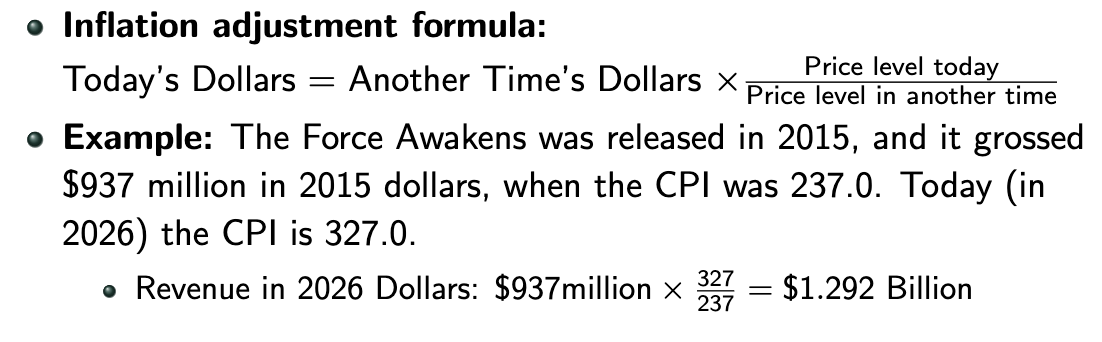
inflation adjustment formula
nominal variable
a variable measured in dollars (whose value may fluctuate over time)
real variable
a variable that has been adjusted to account for inflation
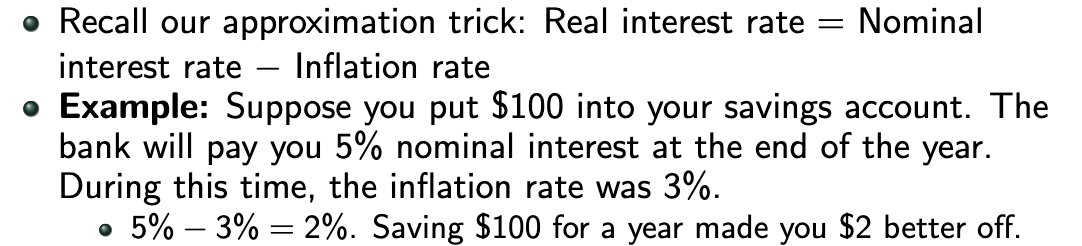
nominal interest rate
the states interest rate without a correction for the effects of inflation
real interest rate
the interest rate in terms of changes in your purchasing power
money illusion
the (mistaken) tendency to focus on nominal dollar amounts instead of infaltion-adjusted amounts
can distort decisions
lead to mis pricing
create nominal wage rigidity
what is money?
an asset regularly used in transactions
what does money do?
provide 3 key functions:
medium of exchange
unit of account
story of value
different forms of inflation
hyperinflation
expected inflation
unexpected inflation
hyperinflation
extremely high rates of inflation
menu costs
the marginal cost of adjusting prices
shoe- leather costs
the costs incurred trying to avoid holding cash
inflation fallacy
the mistaken belief that inflation destroys purchasing power
Explore top notes

