8.2 - Transfer of genetic information
 Call Kai
 Learn
Learn Practice Test
 Spaced Repetition
 Match
Match Flashcards
 Knowt Play
1/20

There's no tags or description
Looks like no tags are added yet.
Name | Mastery | Learn | Test | Matching | Spaced | Call with Kai | Chat |
|---|
No analytics yet
Send a link to your students to track their progress
21 Terms
What is the definition of genotype & phenotype?
Genotype: the combination of alleles an organism possesses
Phenotype: the observable characteristics of an individual, determined by both genotype & environment
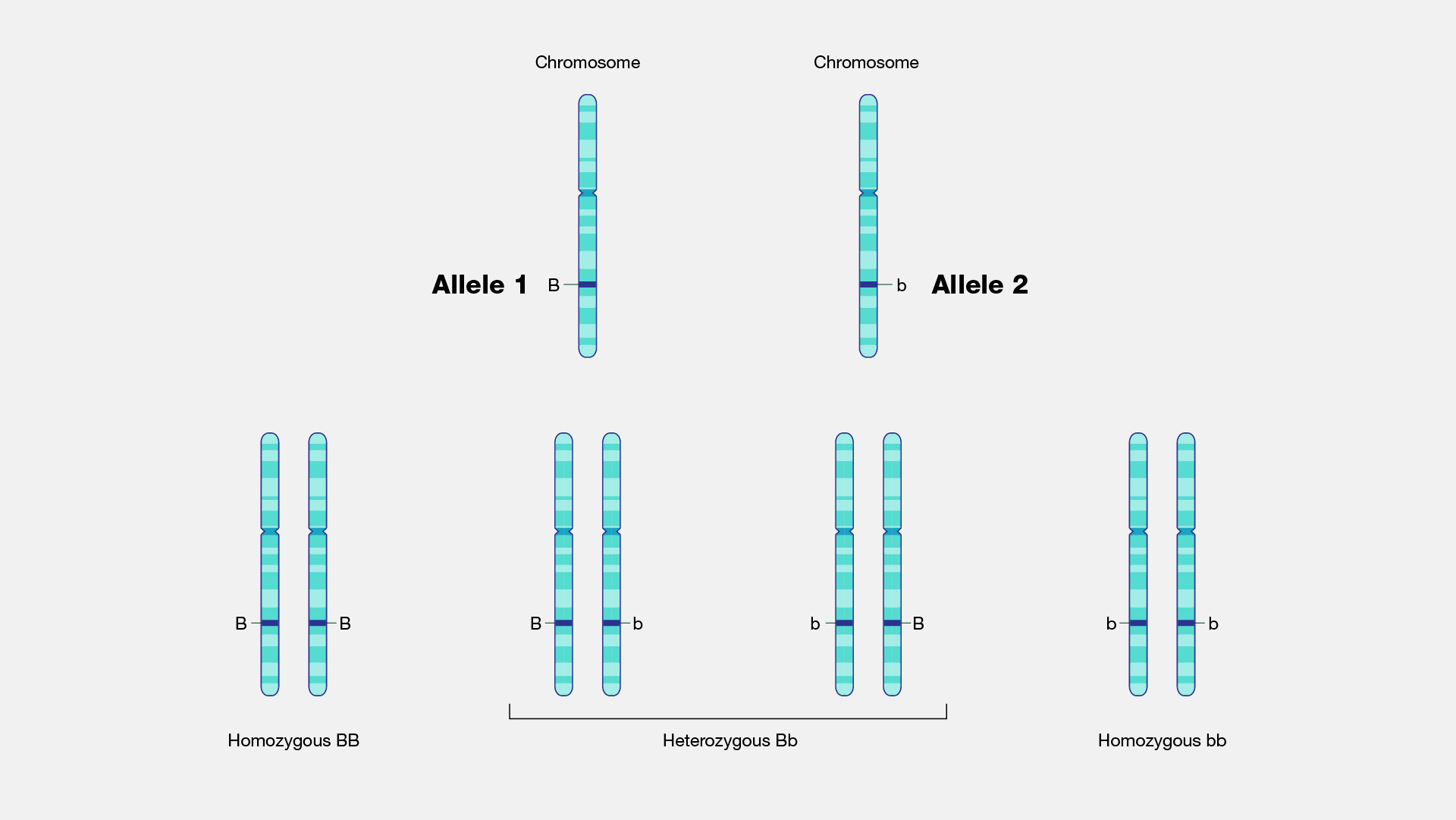
What is an allele?
Different forms of a particular gene, found at the same locus (position) on a chromosome
What is the definition of dominance & recessive?
Dominance: a trait which is present if an individual has at least one copy of the allele
Recessive: a trait which is only present when an individual has two copies of the allele & can be masked by a dominant allele
What is the definition of codominance & multiple alleles?
Codominance: two dominant alleles for a gene in a heterozygous organism equally contribute to the phenotype
Multiple alleles: a gene with more than two alleles which can code for a characteristic
What is the definition of homozygote & heterozygote?
Homozygote: an organism which has two of the same versions of a gene (both alleles are dominant or recessive)
Heterozygote: an organism which has two different versions of the same gene (one allele is dominant, the other is recessive)
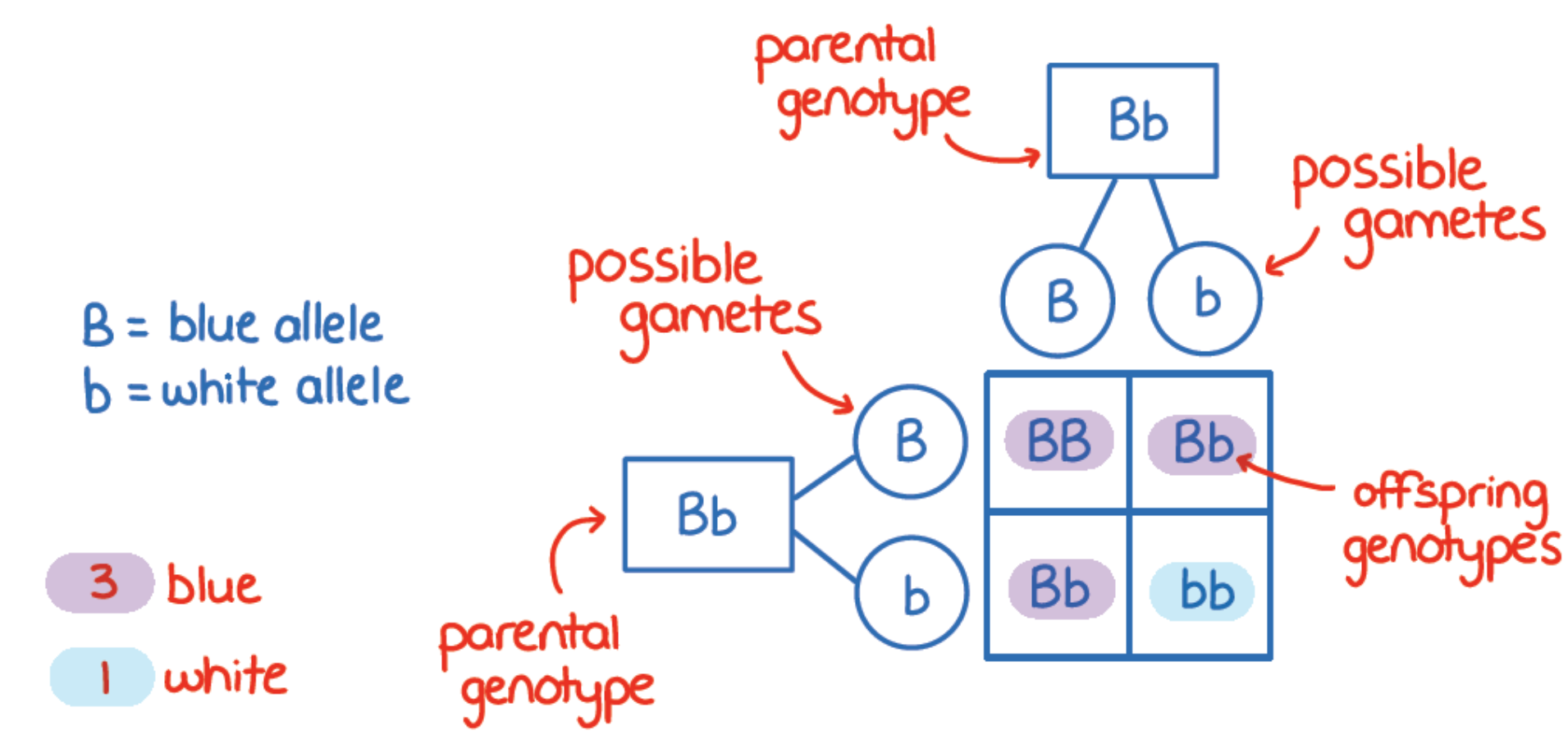
Draw a genetic cross diagram for two heterozygous parents with blue eyes & determine the offspring’s ratio:
(B) = blue allele
(b) = white allele
What is a pedigree diagram?
Used to trace the pattern of inheritance of a specific trait through generations of a family → provides information, such as:
whether a trait is caused by a dominant or recessive allele
whether a trait is more likely to be inherited by males or females
the genotype of individuals in the family
the probability that an individual in the family will inherit a trait
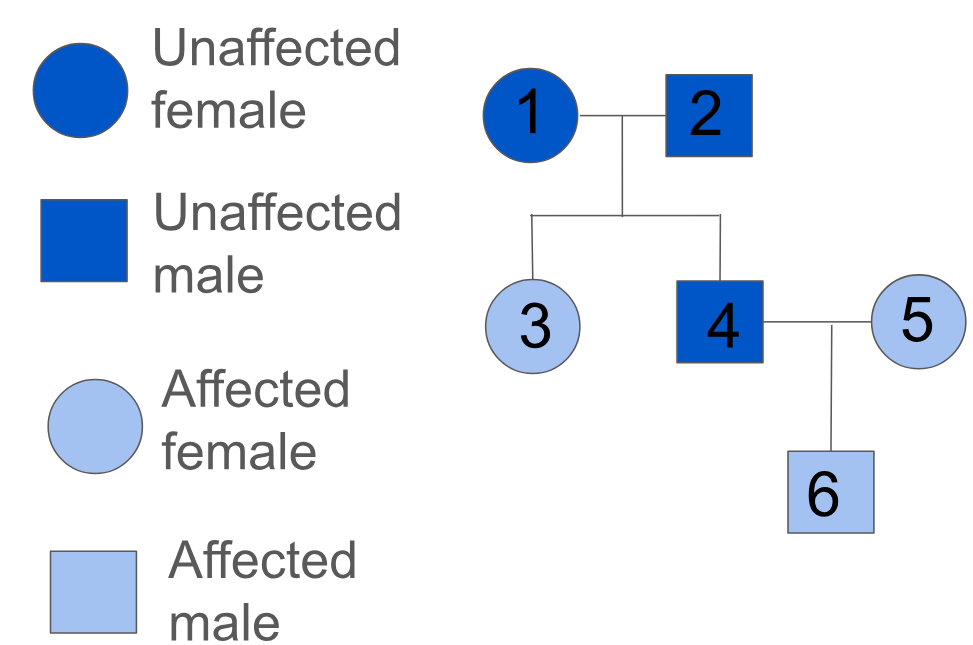
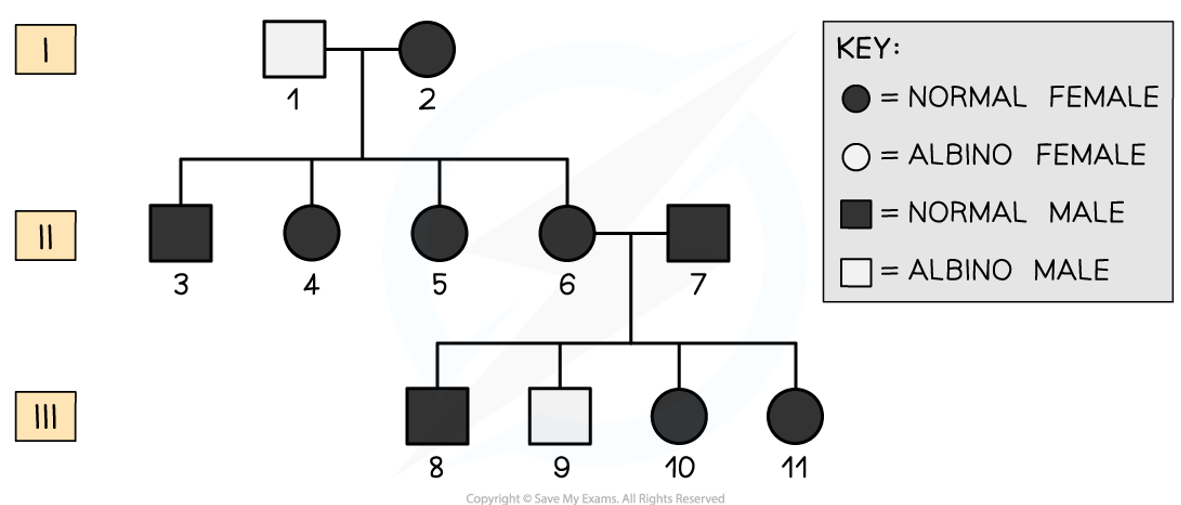
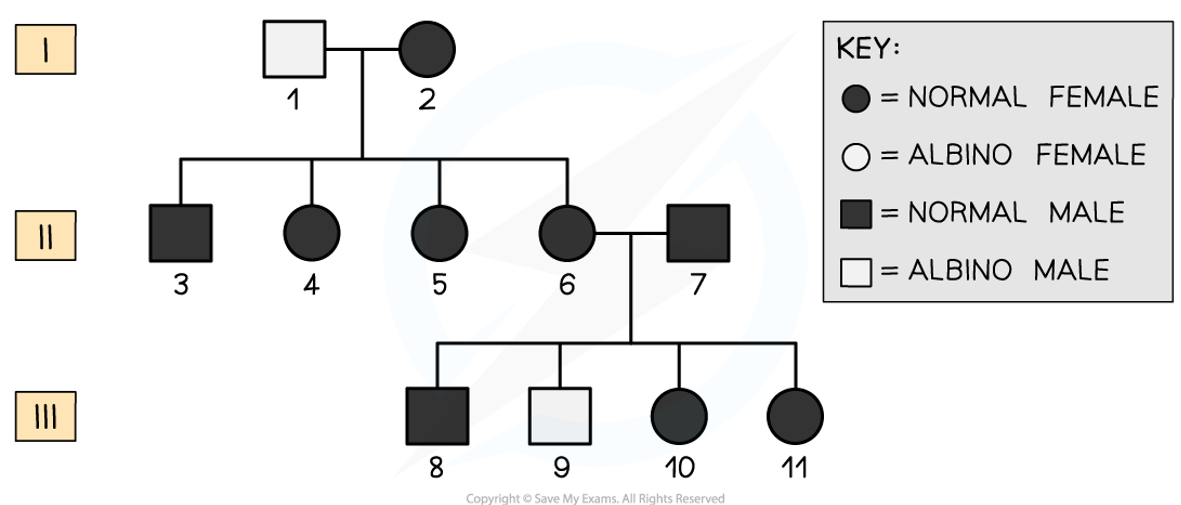
The pedigree diagram traces the inheritance of albinism through several generations. (A) = normal allele; (a) = albinism allele
Using the pedigree chart, deduce & explain the following:
the type of allele that causes albinism
the genotype of individuals 9 & 7
the possible genotypes of 10 & 11
Question 1:
Albinism is caused by a recessive allele
Person number 9 is an affected individual, despite parent 6 & 7 being unaffected
6 & 7 must both be carriers of the recessive allele & 9 has inherited one recessive allele from each parent
Question 2:
The genotype of person 9 must be homozygous recessive (aa) & the genotype of 7 must be heterozygous (Aa)
Person 9 is an affected individual with albinism; as this is determined by the recessive allele, they must have two copies of the albinism allele
Person 7 must be heterozygous, as he does not have albinism but has passed on the recessive allele to person 9
Question 3:
The possible genotypes of 10 & 11 are heterozygous (Aa) or homozygous dominant (AA)
They are both unaffected individuals, so must possess at least one dominant allele (A), however, it is possible they each might have inherited a recessive alle (a) from one parent (both parents must have a copy of the recessive allele for person 9 to have albinism)
How are non-interacting, unlinked genes inherited?
Can be monohybrid or dihybrid:
monohybrid = a phenotypic characteristic is controlled by a single gene
dihybrid = two phenotypic characteristics are controlled by two different genes present on two different chromosomes
What is meant by autosomal linkage?
Two or more genes are located on the same, non-sex chromosome:
only one homologous pair is needed for all four alleles to be present
for genes that aren’t linked, two homologous pairs are needed
What is an example of autosomal linkage?
Drosophila (fruit flies): the colour & length of wing are autosomally linked, meaning they are inherited pairs
Referring to meiosis, explain why autosomally linked genes are inherited in pairs
Genes on the same chromosome, particularly those closest together, are unlikely to undergo recombination (independent assortment & crossing over) during meiosis
Therefore, they are inherited as if they were the same gene
What is meant by sex-linkage & what is an example?
An allele is located on one of the sex chromosomes, meaning its expression depends on the sex of the individual (e.g. haemophilia)
Why are males more likely to express a recessive sex-linked allele than females?
Most sex-linked alleles are located on the X chromosome
Therefore, males only get one copy of the allele (XY), so will express this characteristic even if it’s recessive
Since females get two alleles (XX), this is less likely
What is the chi-squared test?
A statistical test to find out whether the difference between observed & expected data is due to chance or a real effect
What are the key ideas for the chi-squared test?
Observed (O): what you counted for each phenotype/class
Expected (E): what you should get from the genetic ratio, scaled to your total
X2 compares O & E across categories → smaller X2 usually means differences could be due to chance
Degrees of freedom (df) = number of categories - 1
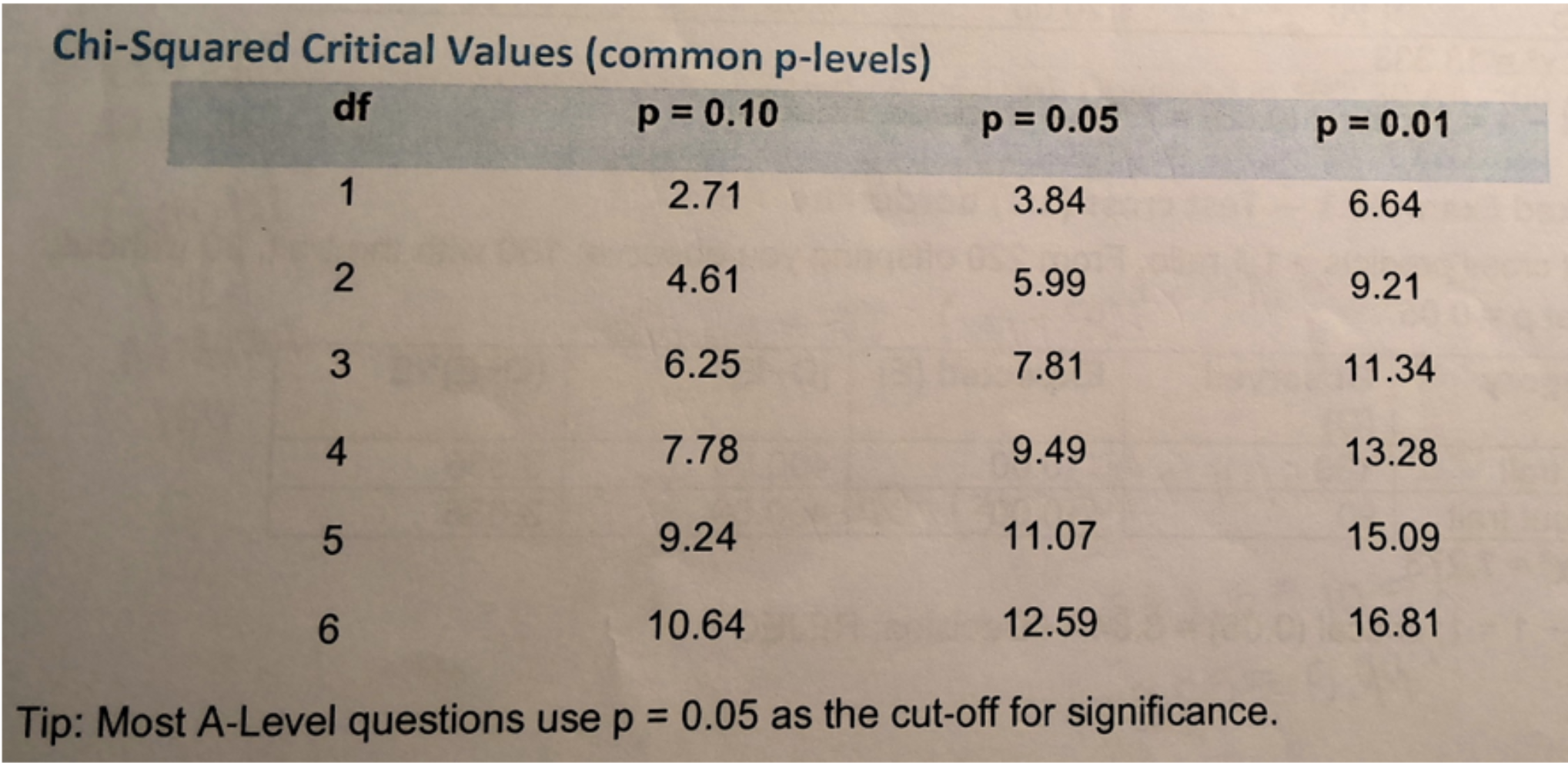
Decision rule at p= 0.05
if X2 is less than or equal to the critical value, accept the null hypothesis
if X2 is greater than or equal to the critical value, reject the null hypothesis
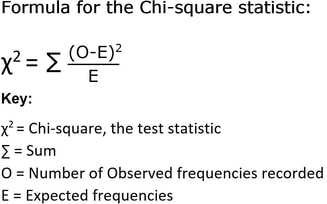
What is the formula for the chi-squared test?
(apply to each category, then sum):
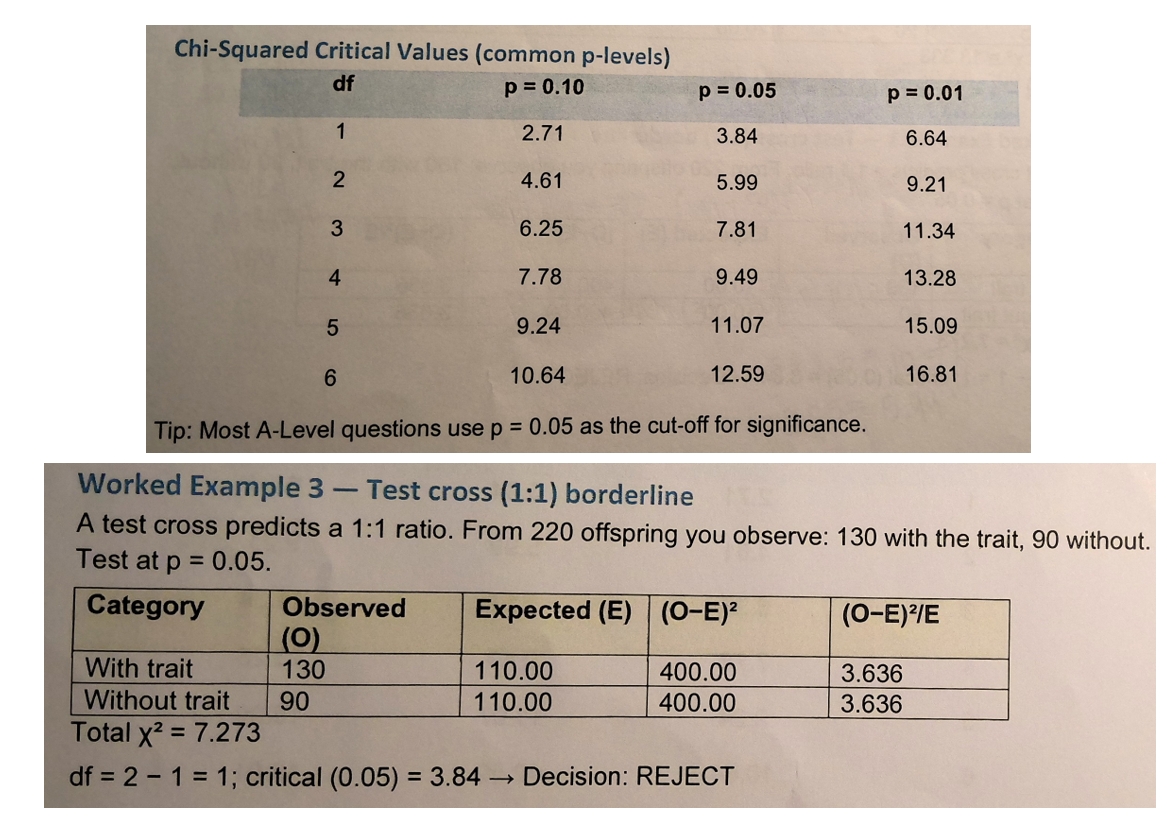
What is the method for chi-squared?
State the genetic hypothesis & its expected ratio
Find expected counts: multiply each ratio fraction by the total
Compute (O - E)2 / E for each category & add them to get total X2
Work out degrees of freedom: df = number of categories - 1
Use the critical values table (usually p = 0.05) to decide accept/reject
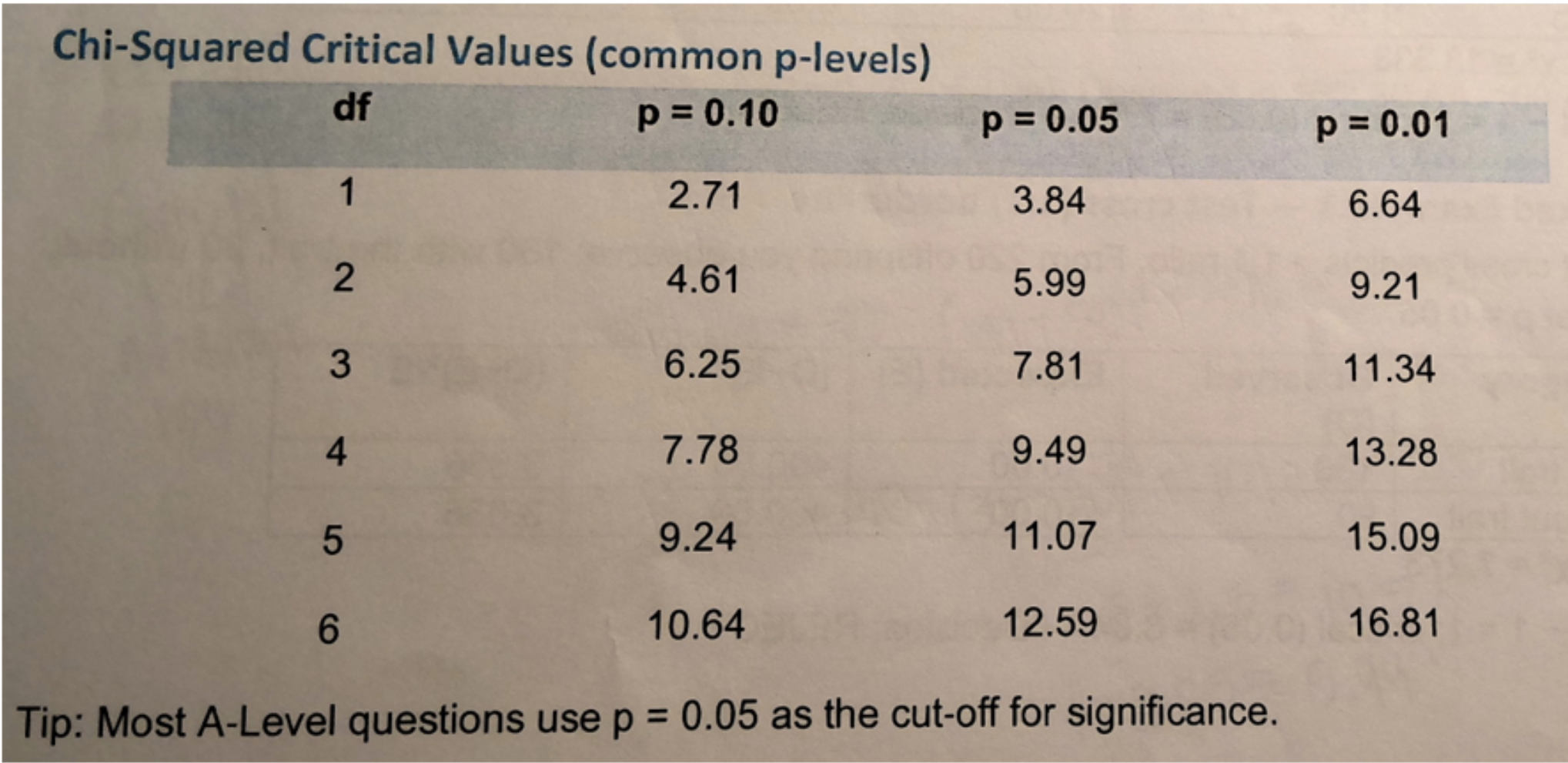
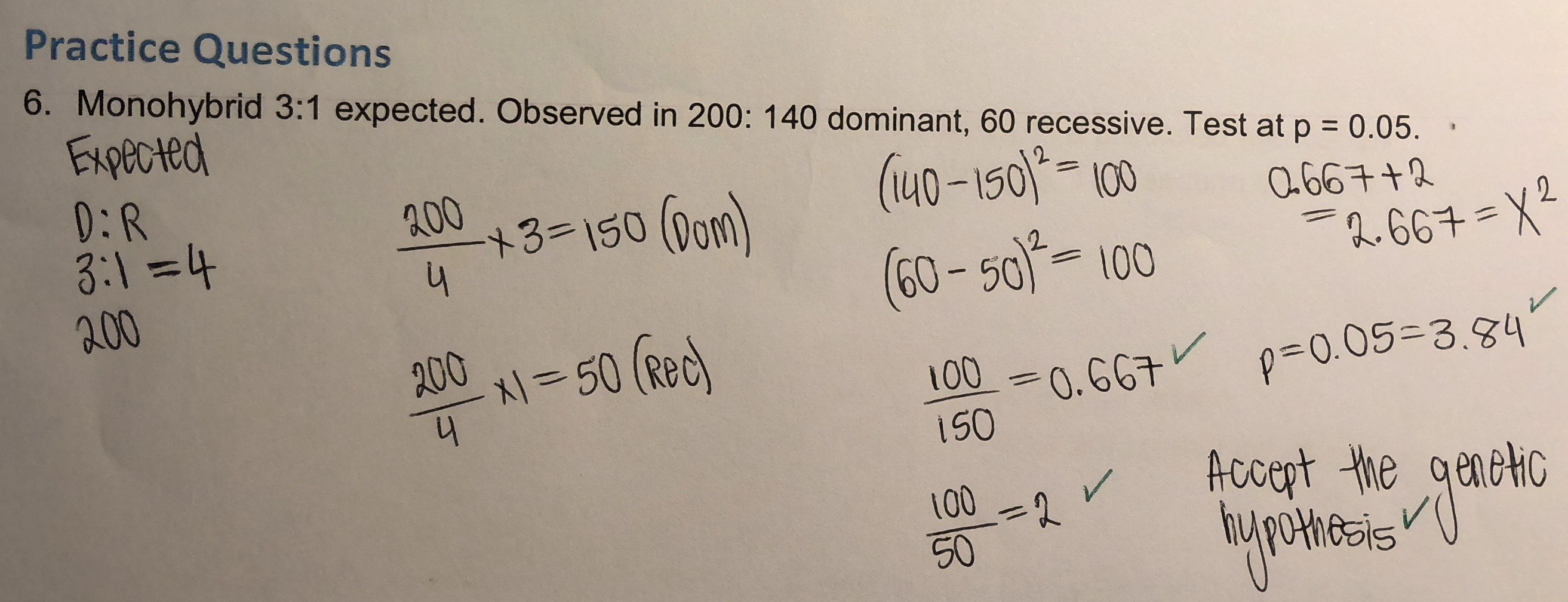
Answer this chi-squared question:
Monohybrid 3:1 expected. Observed in 200: 140 dominant, 60 recessive. Test at p = 0.05
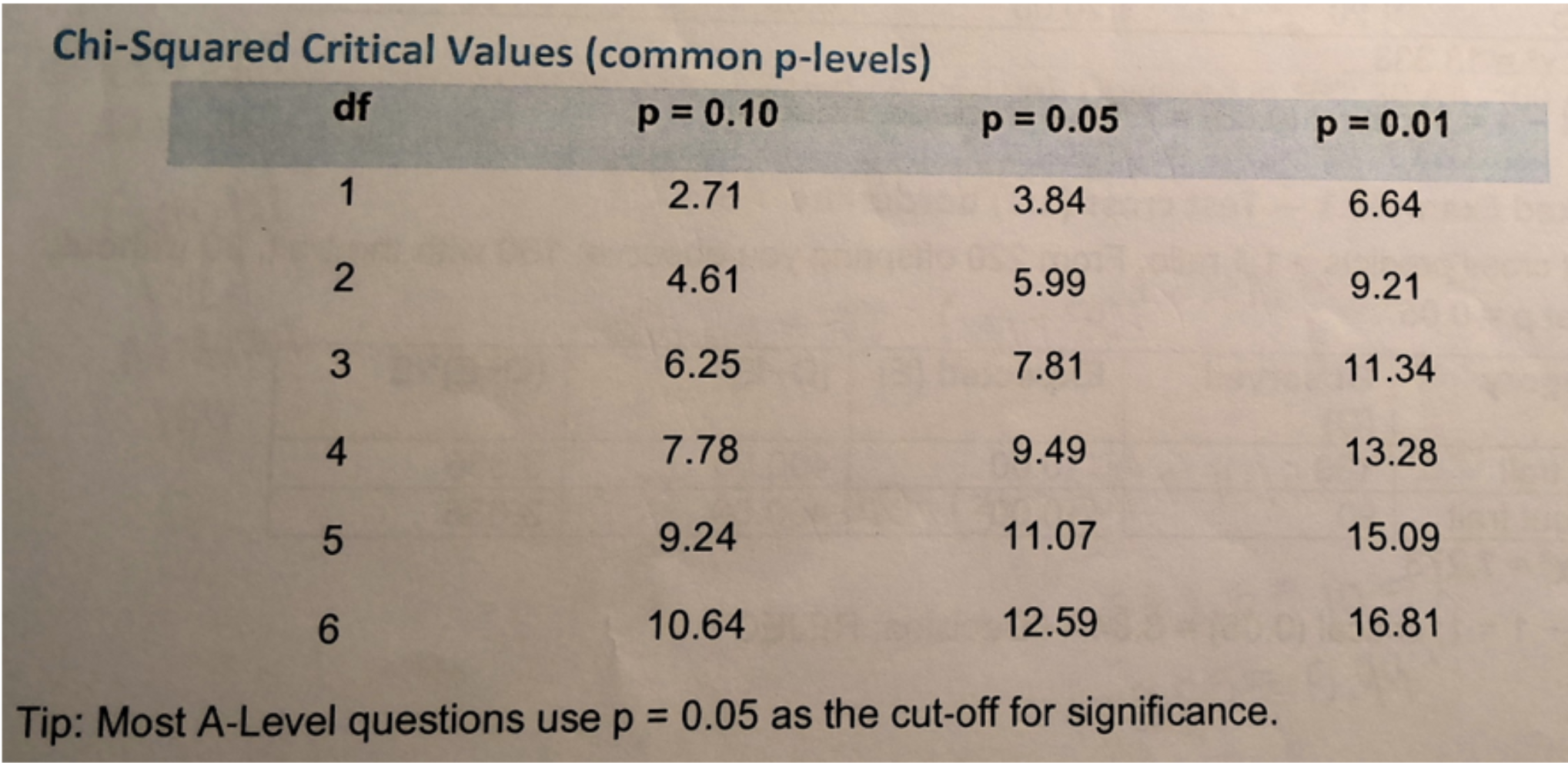
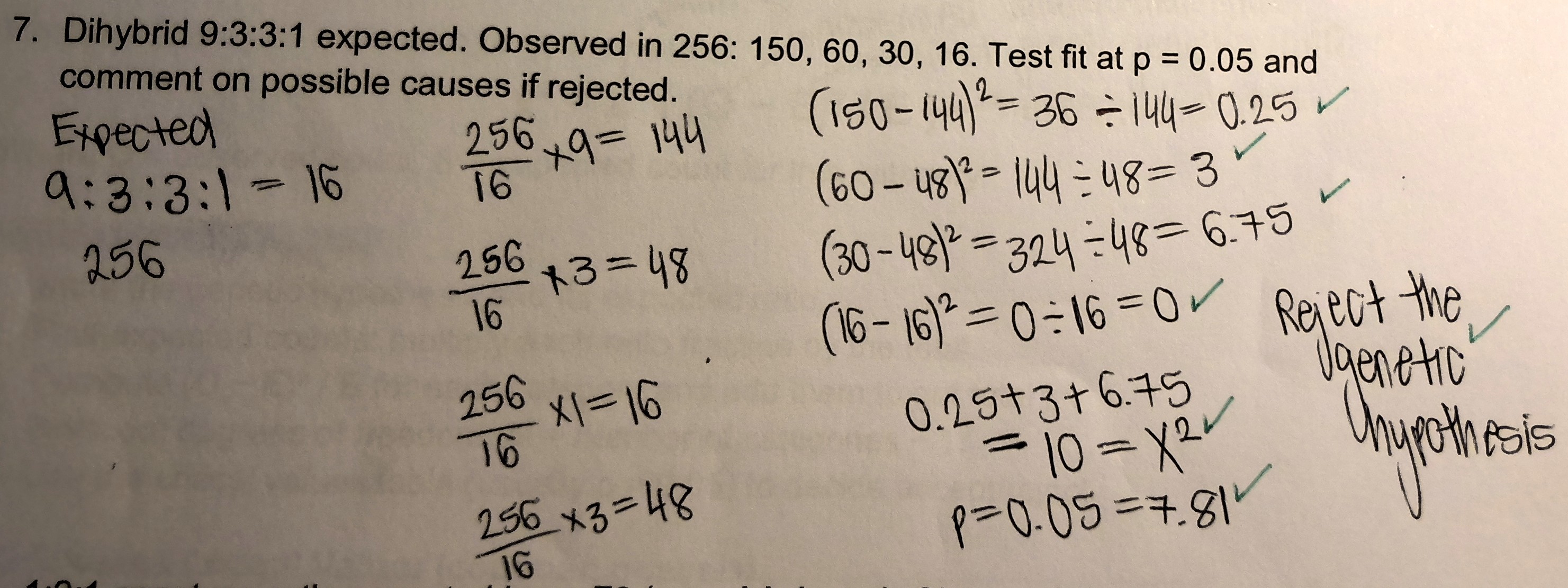
Answer this chi-squared question:
Dihybrid 9:3:3:1 expected. Observed in 256: 150, 60, 30, 16. Test fit at p = 0.05
Answer this chi-squared question:
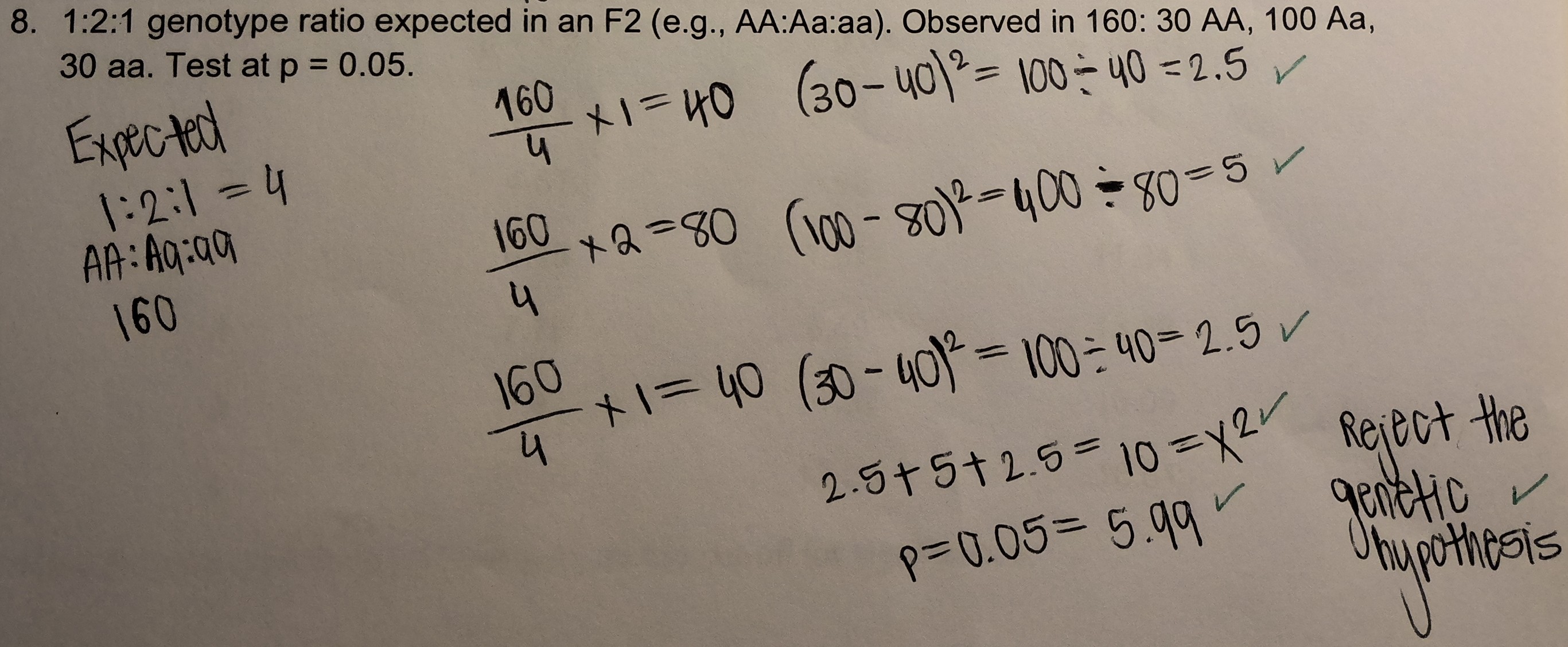
1:2:1 genotype ratio expected in an F2 (e.g. AA:Aa:aa). Observed in 160: 30AA, 100Aa, 30aa. Test at p = 0.05